29 Motivating Desk Decor Items That Inspire Productivity

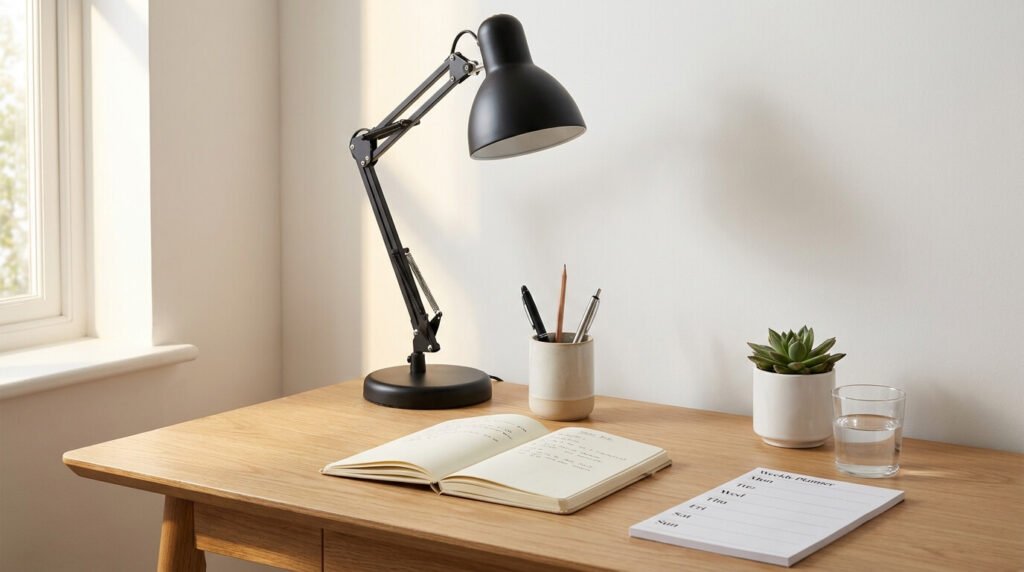
Disclosure: As an Amazon Associate we earn from qualifying purchases. Some links on this page may be affiliate links — if you click through and make a purchase, we may receive a small commission at no extra cost to you.
Your desk is where ideas happen, decisions get made, and work actually gets done. But the way it looks affects how motivated you feel to sit down and do any of that. A bare, cluttered, or uninspiring desk makes it harder to focus. A desk that is thoughtfully set up — with a few items that serve a real purpose and look good doing it — makes you want to be there. These 29 desk decor items are grounded in how people actually work. Each one earns its spot on your surface by doing something useful, keeping you focused, or making the space feel like yours.
1. A Quality Desk Lamp with Adjustable Brightness
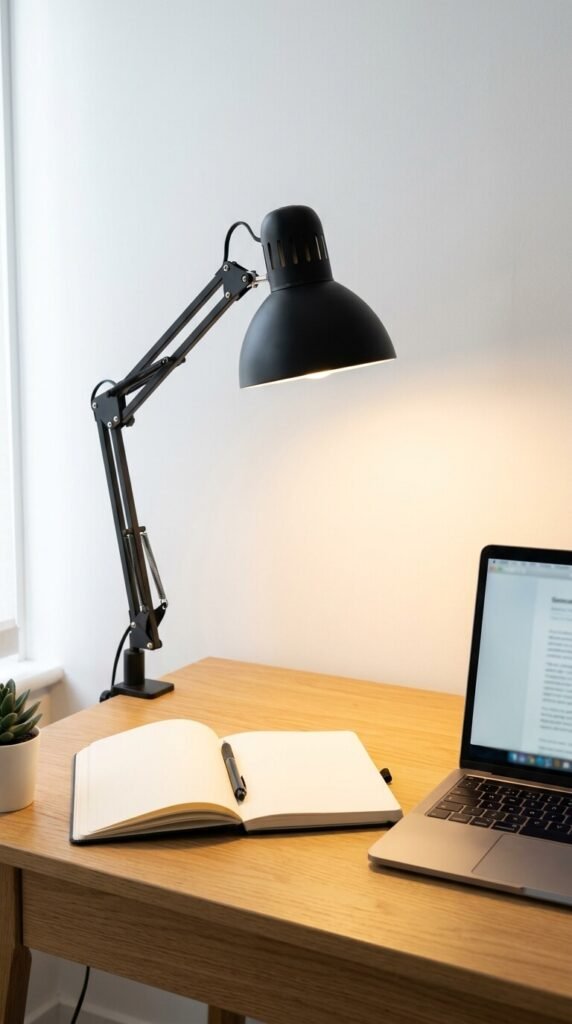
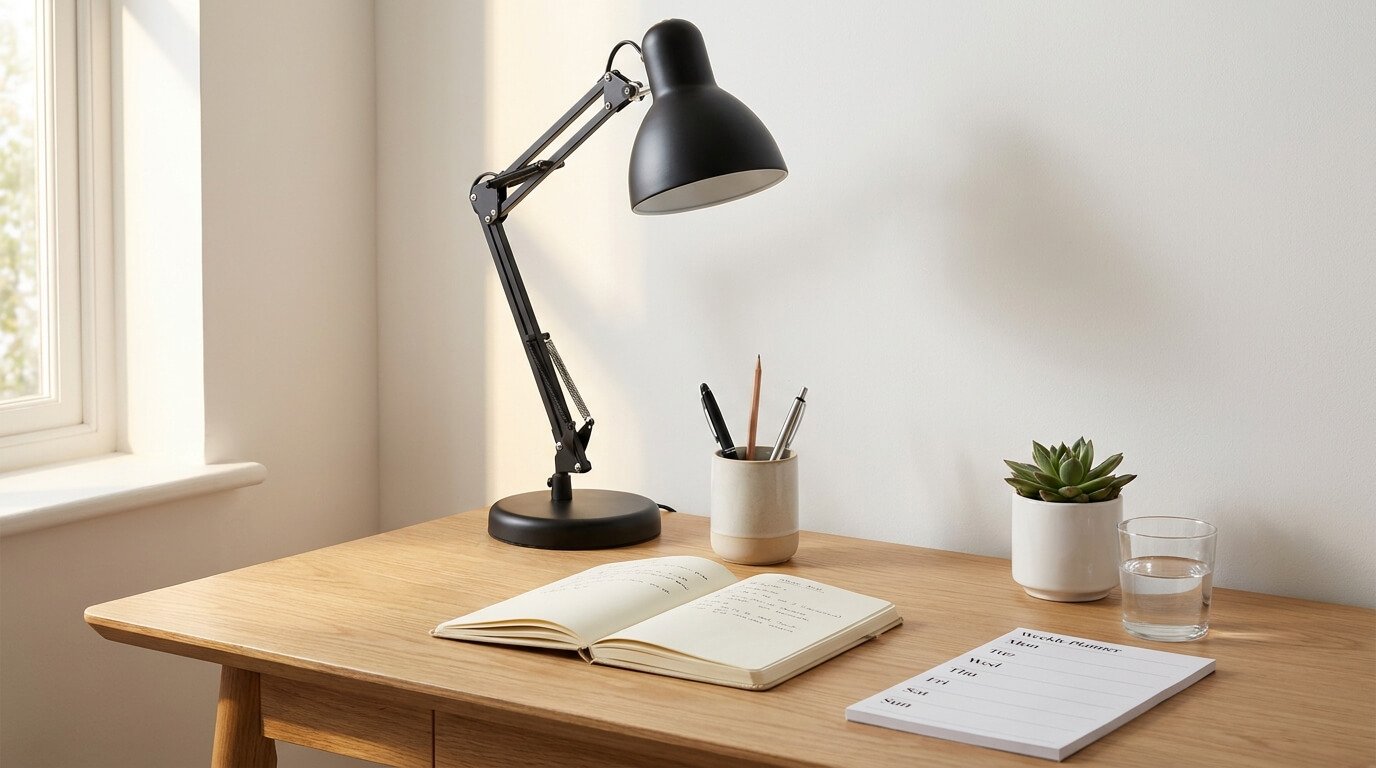
Good lighting is the foundation of a productive desk setup. An adjustable lamp with warm and cool light settings lets you shift from focused task work to relaxed reading without straining your eyes. Look for lamps with a color temperature dial — 4000K for focus, 2700K for wind-down. Clip-on or arm-mounted lamps save surface space. A reliable adjustable desk lamp costs $25–$50 at most home or office supply stores and makes more difference to how you feel at the desk than almost any other single item.
2. A Ceramic Pen and Pencil Cup
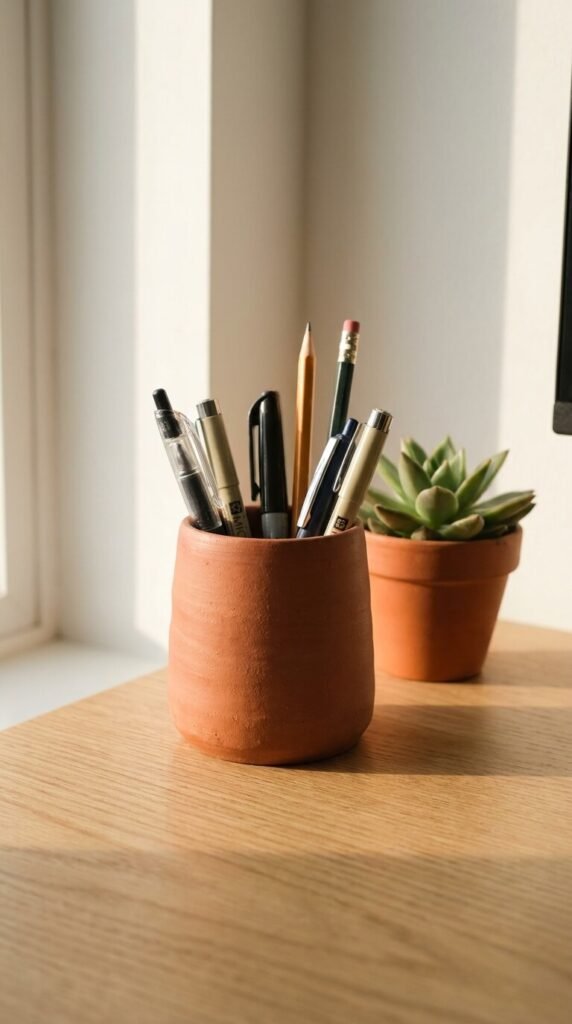
A ceramic pen cup is one of the cheapest and most effective desk upgrades available. Choose a handmade-looking matte ceramic over a plastic organizer and the whole desk feels more considered. A short, wide cup holds enough without tipping. Terracotta, matte white, and warm grey all work in most office color schemes. A simple ceramic cup costs $5–$12 at a home store or pottery market. Keep only the pens you actually use inside it — four or five maximum — and the desk looks cleaner immediately.
3. A Desk Pad or Large Mousepad
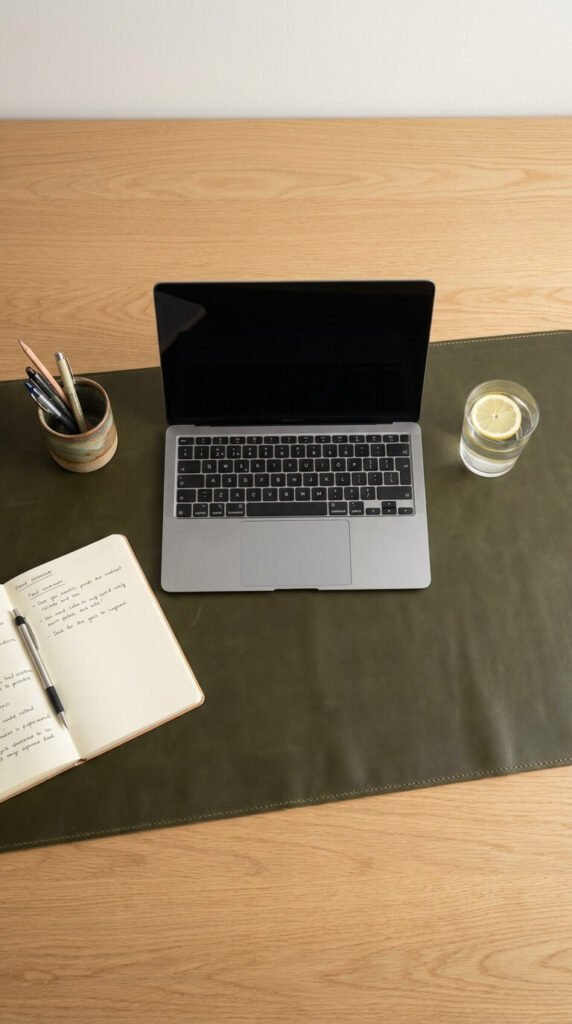
A desk pad pulls every item on your surface together into one cohesive zone. It defines your workspace visually and protects the desk surface at the same time. Leather, cork, and felt options all work. A large desk pad in a muted color — olive, charcoal, or warm grey — makes even a budget desk look more professional. Full-size desk pads start at $15–$25. Cork desk pads are an affordable and sustainable option that adds warm texture without looking corporate.
4. A Small Potted Plant
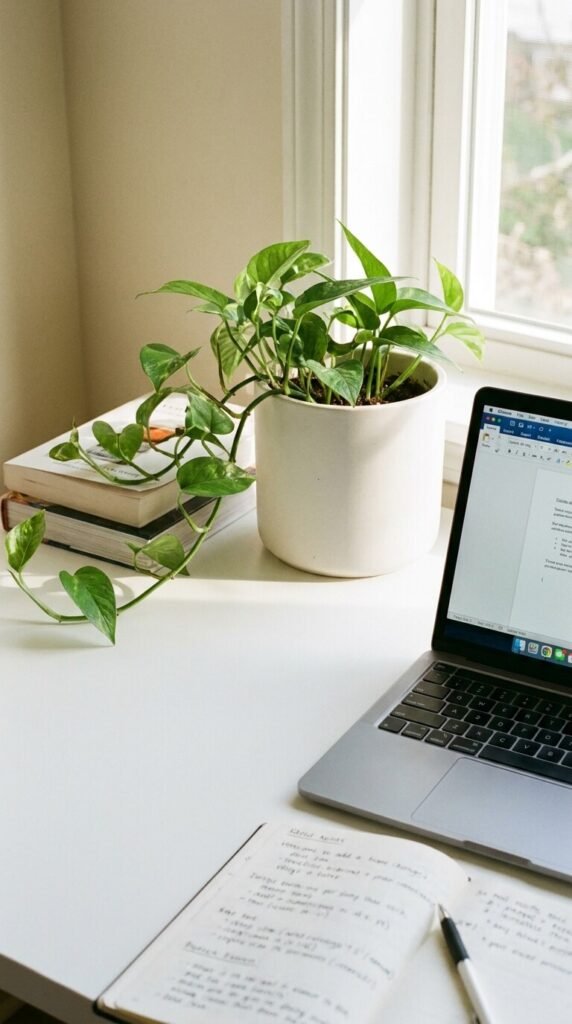
A plant on the desk is one of the most researched and consistently supported desk additions for focus and mood. Even a small pothos or snake plant in a simple ceramic pot adds visual softness to a screen-heavy environment. Plants also give your eyes somewhere natural to rest during screen breaks. A small pothos cutting costs almost nothing — ask anyone who has one, they will happily give you a cutting. A four-inch pot from a garden center runs $3–$8.
5. A Weekly or Daily Planner Pad
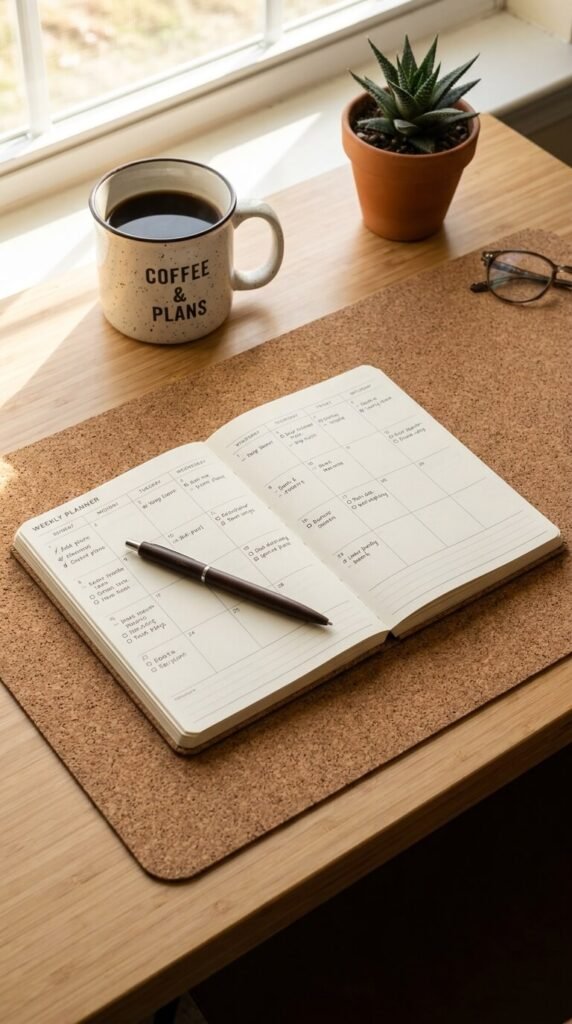
A physical planner pad on the desk does something a digital calendar cannot — it keeps your priorities visible all day. Seeing your tasks written out in front of you reduces the cognitive load of trying to remember what comes next. A weekly layout gives context; a daily layout gives focus. Simple planner pads cost $8–$15 for a full pad. When the desk is styled around the planner — with clear space around it — the whole setup signals that real work happens here.
6. A Motivational Quote Print
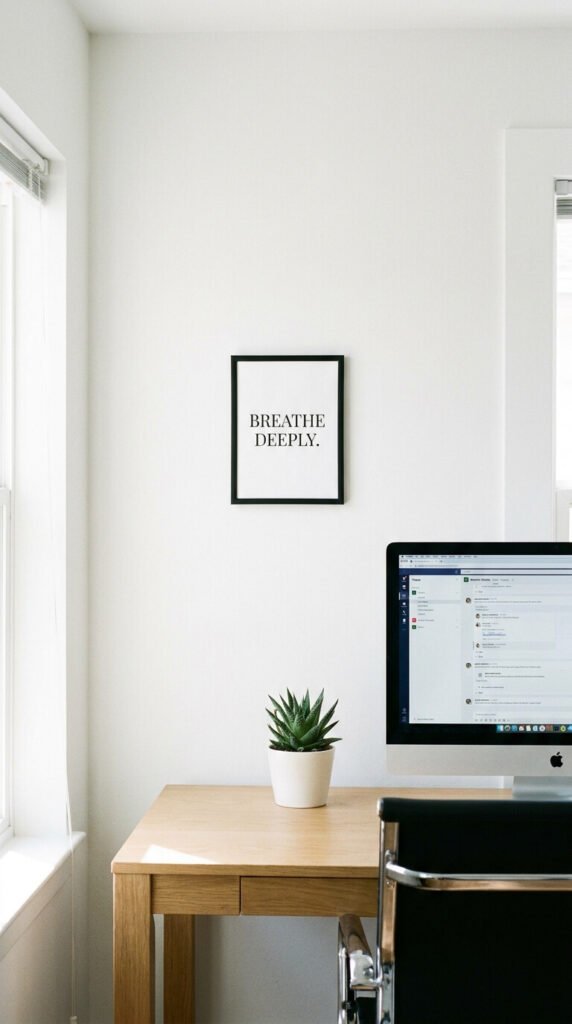
A single well-chosen quote print above or beside the desk gives you something to look at when focus slips. Keep it small — 5×7 or 4×6 — and in a simple frame so it reads as a detail rather than an attempt at decor. Choose a phrase that genuinely means something to you, not one that feels generic. Print it at home in a simple sans-serif font on white paper and frame it for under $5. Changing it every few months keeps it from becoming invisible wallpaper.
7. A Solid Mechanical or Quality Ballpoint Pen
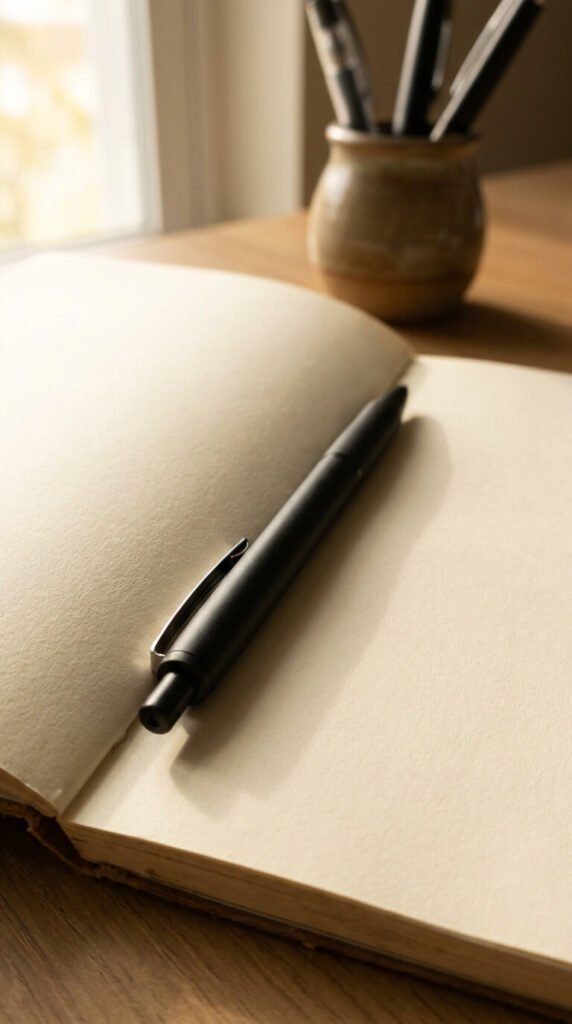
The pen you reach for most often should be one you actually enjoy using. A pen that writes smoothly and feels good in your hand makes a small but real difference to how much you enjoy the act of writing. It also looks better sitting on your desk or notebook than a chewed-up ballpoint. A quality gel or ballpoint pen costs $3–$12. Brands like Uniball, Pilot, and Zebra make excellent everyday pens that feel considered without being precious.
8. A Minimal Cable Management Box
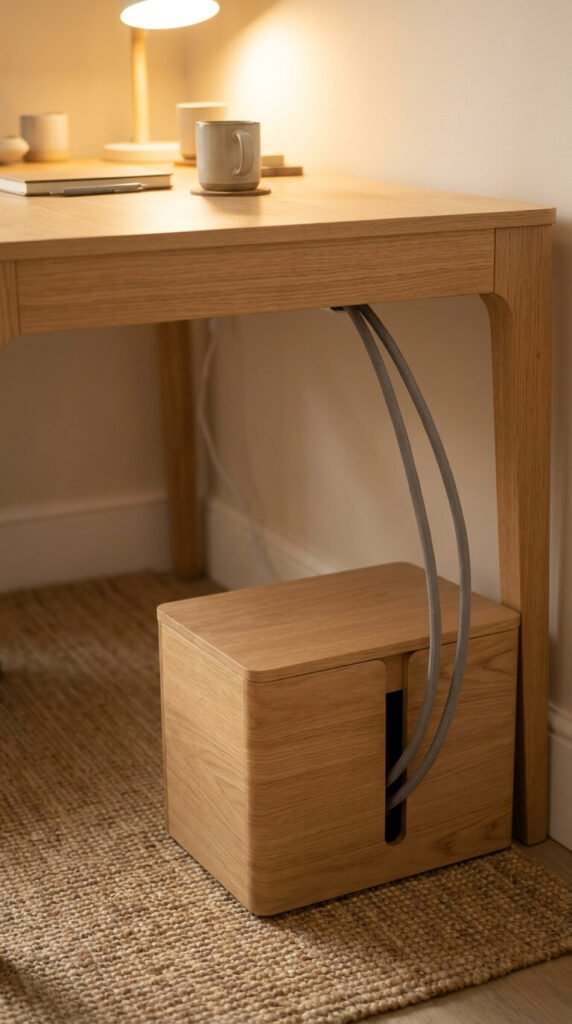
Visible cable clutter is one of the fastest ways to make a neat desk look chaotic. A cable management box hides your power strip and excess cord lengths completely. It sits on the floor or desk and only clean cables run from it to your devices. Wooden cable boxes match most desk finishes and cost $15–$25. Alternatively, use hook-and-loop cable ties to bundle cables along the underside of the desk for almost nothing. Removing visual cord clutter is one of the most impactful zero-effort desk changes you can make.
9. A Desk Clock with a Clean Face
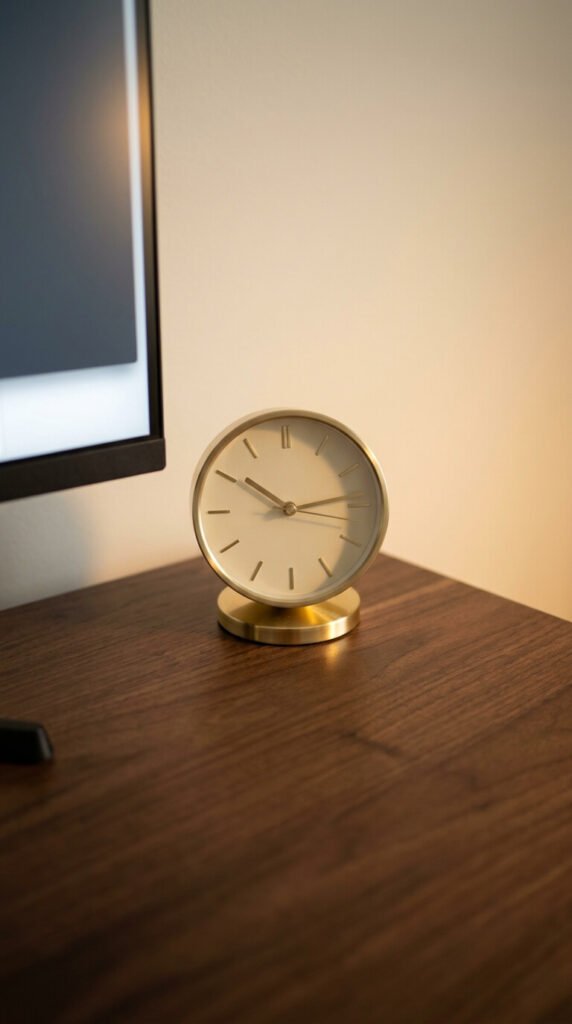
A small desk clock keeps you aware of time without requiring you to check your phone. Choose a simple analog face in a clean round or square form — brass, black, or natural wood. Knowing the time at a glance reduces phone pickups, which are one of the biggest focus disruptors at any desk. A small analog desk clock costs $15–$30. Place it at the far back corner of the desk where it is visible in your peripheral vision without dominating the surface.
10. A Corkboard or Memo Board for Visual Reminders
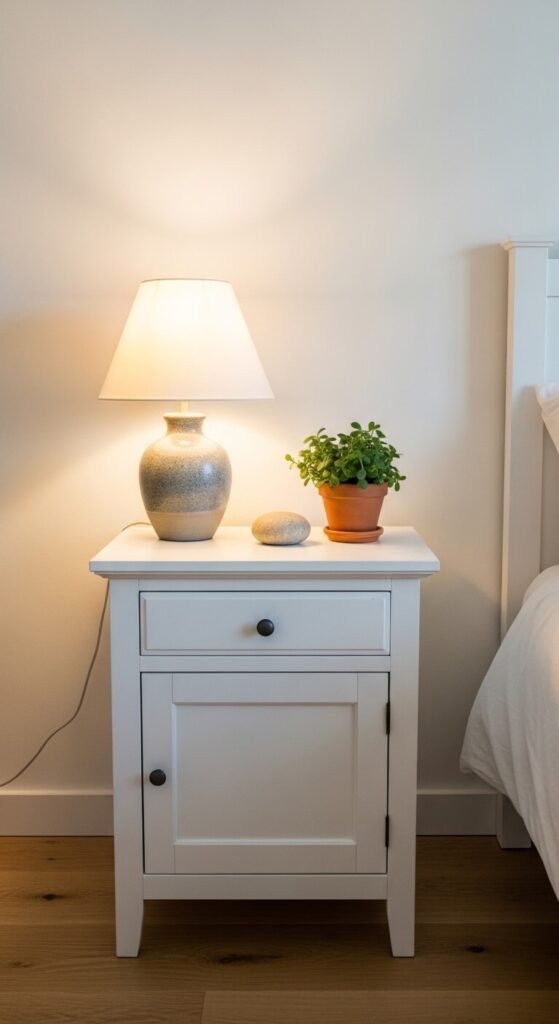
A corkboard above the desk gives you a physical place to pin priorities, references, and reminders you need visible while you work. Use it for your current project’s key deadlines, a printed calendar, and one or two personal images that remind you why you are working. A square or rectangular cork tile costs $5–$10 at a craft store. Mount it directly in your eye line above the monitor. Keeping it lightly filled rather than covered prevents it from becoming background noise.
11. A Bookend Set for Reference Materials
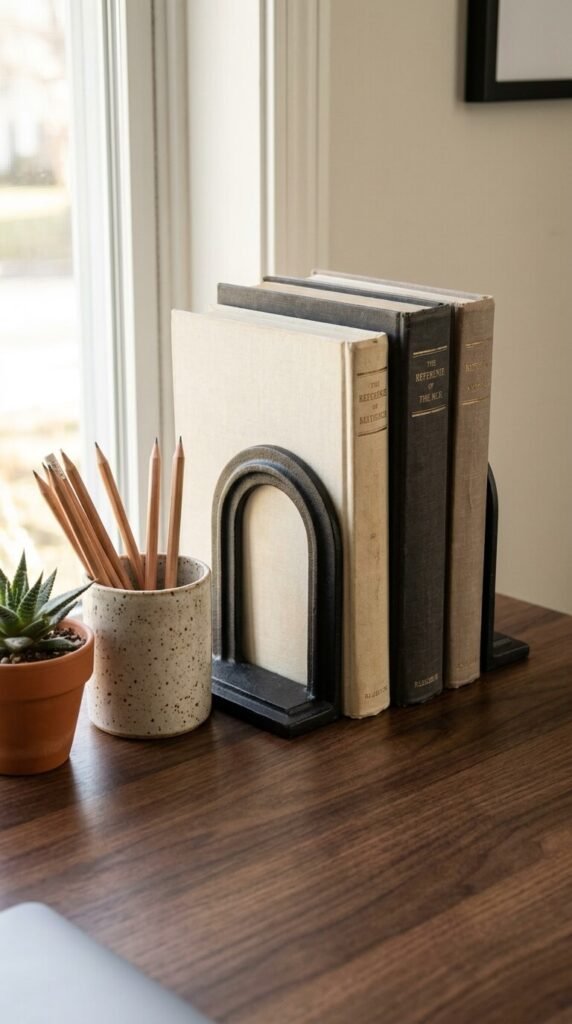
A pair of bookends on the desk keeps reference books upright and accessible while looking purposeful. Choose bookends in a material and finish that matches your desk aesthetic — brass for warm tones, matte black for modern setups, marble for something more refined. Keep only three to five books between them — the ones you actually reference while working. Decorative bookends cost $15–$35. The books themselves become part of the decor when their spines are in cohesive tones.
12. A Reusable Water Bottle or Ceramic Mug
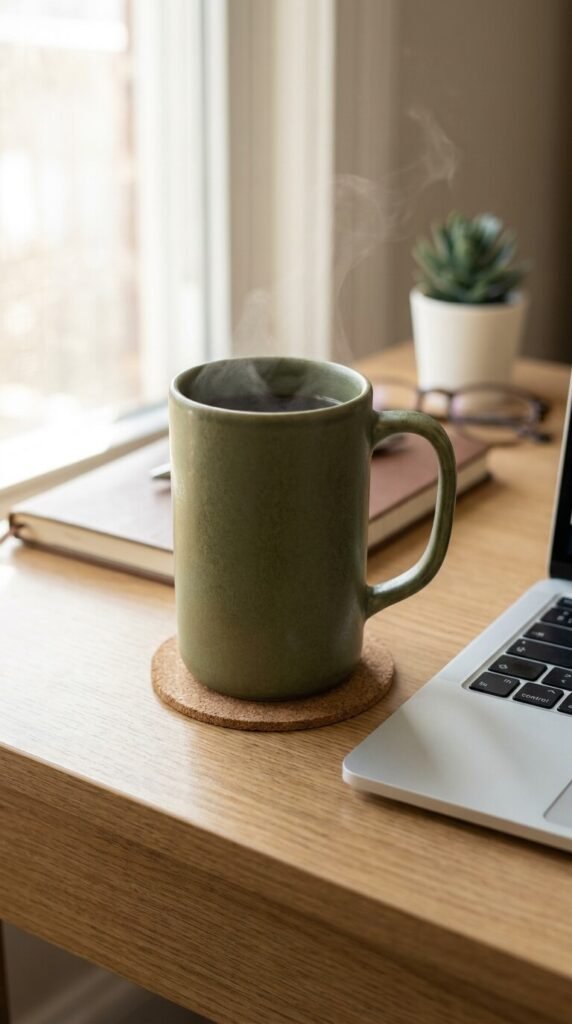
Staying hydrated while you work improves focus and reduces the afternoon energy slump. A beautiful mug or water bottle on the desk makes this habit easier because you actually want to reach for it. Choose something in a tone that works with the rest of your desk — a matte ceramic mug in olive, charcoal, or cream. Set it on a cork or stone coaster to protect the surface. This is an item you already own — it just takes choosing the right one to put on the desk.
13. A Small Whiteboard or Erasable Notepad
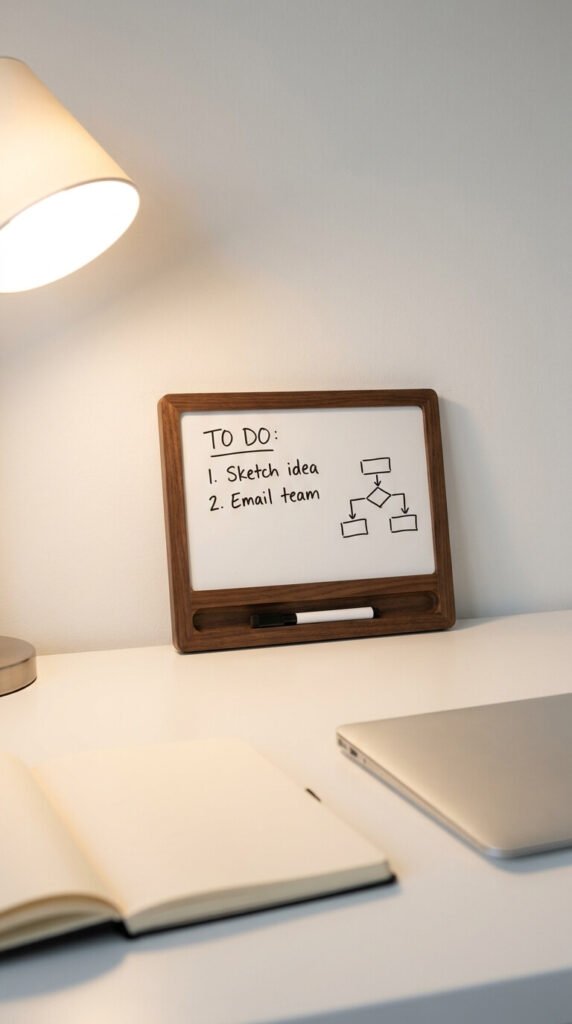
A small desktop whiteboard or erasable notepad gives you a space for quick notes, ideas, and session goals that you do not need to keep permanently. Writing your top three tasks for the day on a small whiteboard before you start work is a focus habit used by many productive people. A small framed desktop whiteboard costs $10–$20. An erasable weekly planner pad serves a similar function. Either one keeps your main notebook clear for deeper thinking and longer notes.
14. A Minimal Desk Organizer Tray
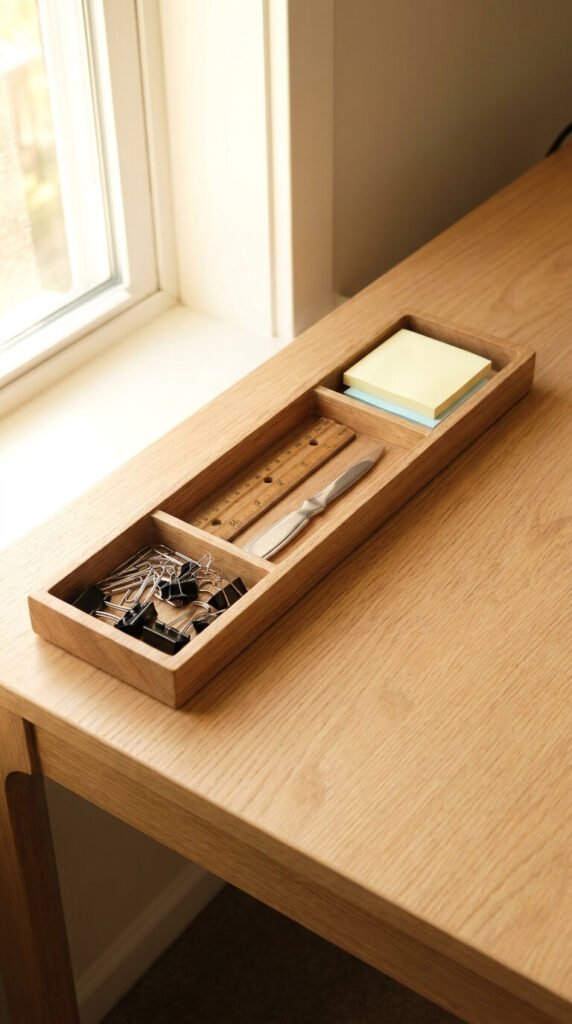
A divided desk tray gives every small item a designated slot so nothing gets lost under papers or behind the monitor. Wooden, marble, or matte metal organizer trays look clean on a desk surface and cost $10–$25 depending on size and material. Keep only items you use daily in the tray — paper clips, sticky notes, a small ruler. If an item does not get used at least weekly, it does not deserve a spot on the surface. The tray is a decision-making tool as much as an organizer.
15. A Framed Photo of Someone You Love
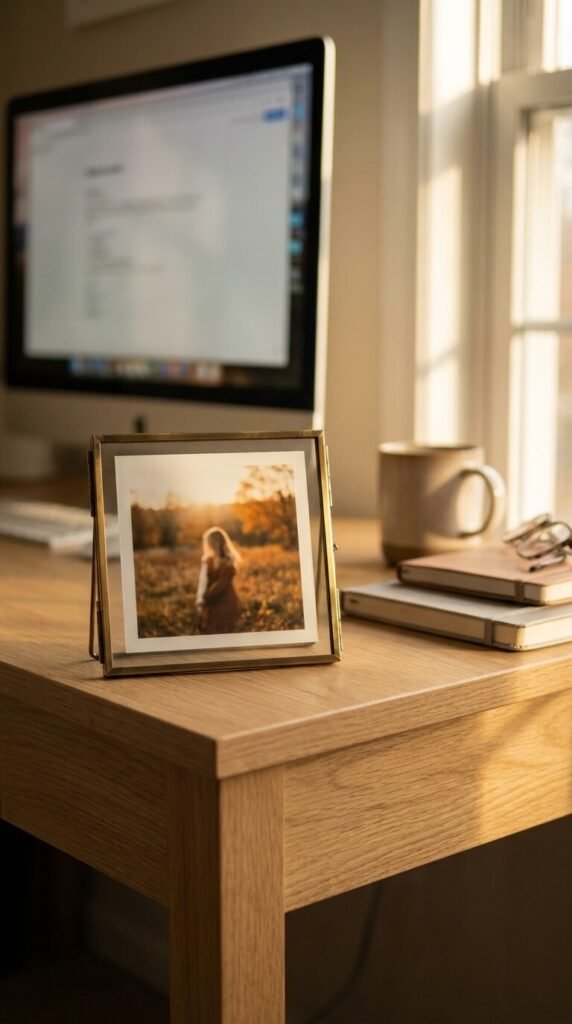
A single photo of someone you love on your desk serves a real function beyond decoration. Research consistently shows that brief visual contact with loved ones reduces stress during difficult work sessions. Keep it in a small, simple frame — nothing that demands attention, just something that catches your eye during a pause. A 4×4 or 4×6 print in a thin frame costs almost nothing. Place it at the back corner of the desk where it is visible without sitting in your direct work zone.
16. A Desk Humidifier for Air Quality
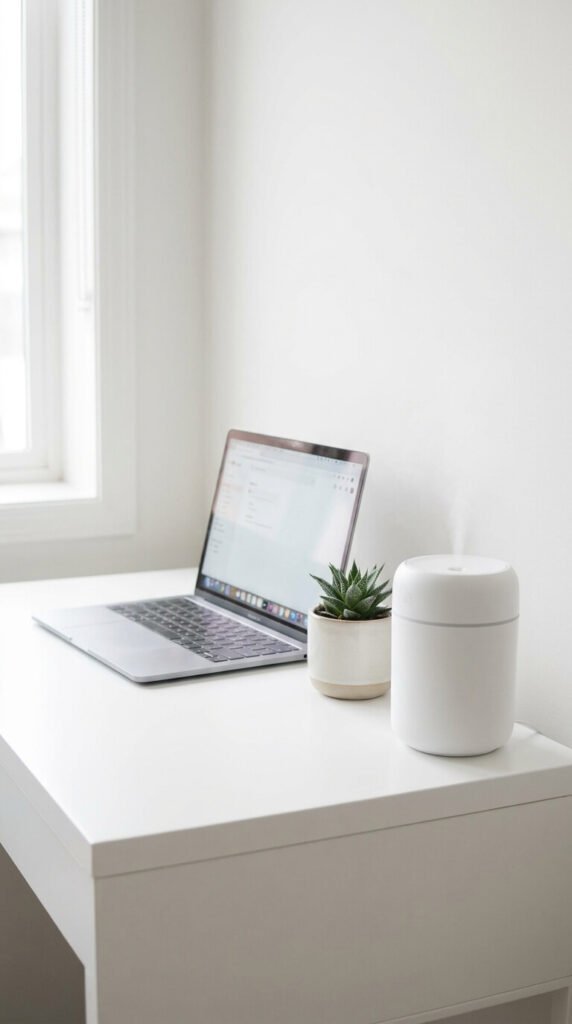
Dry air in a home office — especially in winter — causes eye strain, dry throat, and fatigue that can feel like lost focus. A small desk humidifier adds moisture to the air around your workspace without taking up much room. Compact ultrasonic humidifiers in white or neutral finishes cost $20–$35 and look clean on a desk. Fill it with distilled water for best results. If you spend long hours at a desk and the room air is dry, this is one of the most practical additions on the list.
17. A Vision Board Card or Printed Goal Sheet
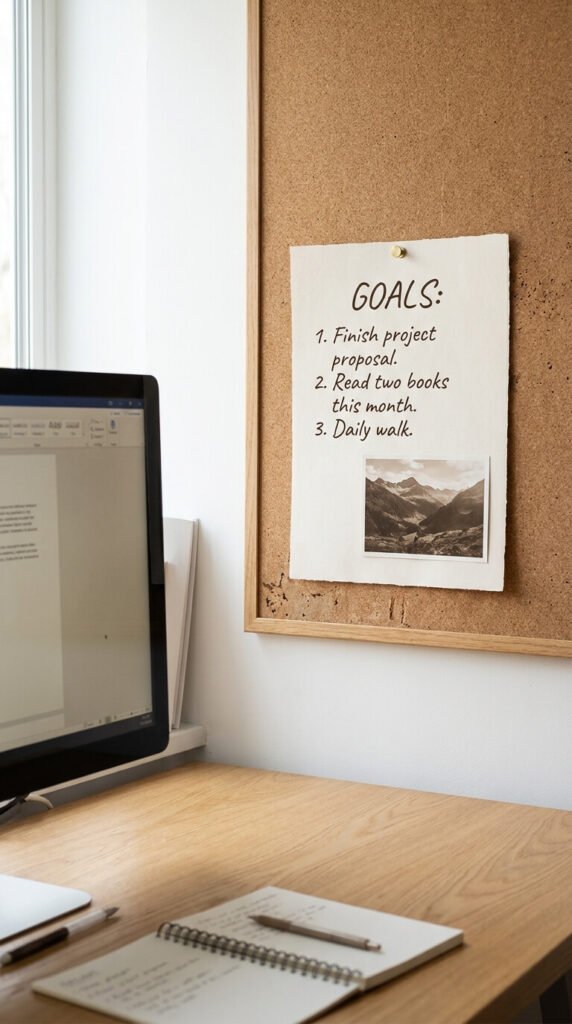
Keeping your long-term goals visible while you work keeps the day’s small tasks connected to a larger purpose. A single printed goal sheet or vision card pinned above your monitor at eye level takes under ten minutes to make. Write your top three goals for the quarter, print it in a clean simple format, and put it where you will see it daily. Change it when the goals change. This costs nothing and works better when it is simple and personal rather than elaborate and decorative.
18. A Small Aromatherapy Diffuser
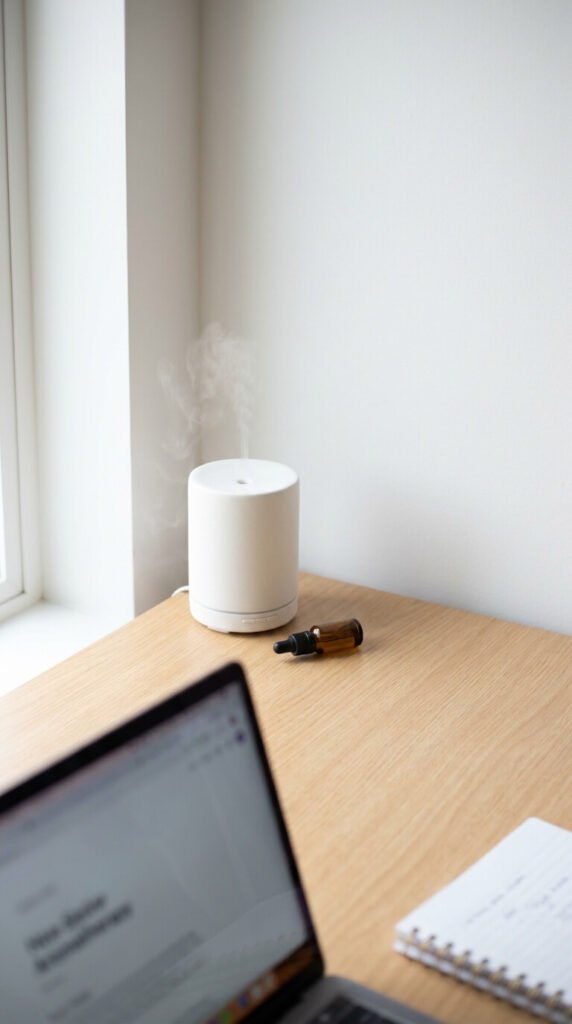
Scent has a direct effect on mental state, and a small diffuser at the desk is one of the easiest ways to use this. Peppermint and rosemary are commonly associated with alertness and focus; citrus scents like lemon and orange are linked to elevated mood during work. A compact ultrasonic diffuser in white or ceramic costs $20–$35. Add three to four drops of oil and run it for the first hour of your work session. It becomes a ritual that signals the start of focused work time.
19. A Noise-Canceling Headphones Stand
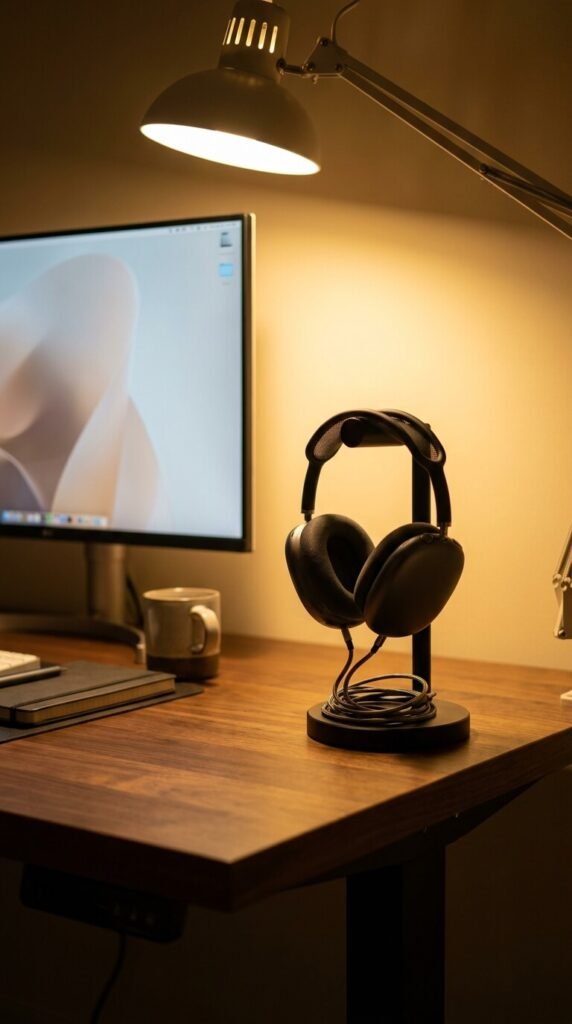
If you use headphones while working, where they live when not in use matters more than most people think. A simple headphone stand keeps them upright and accessible without taking up the same surface footprint as just dropping them flat. It also prevents cable tangles and keeps the desk looking organized. A metal or wooden headphone stand costs $10–$20. Some clip to the edge of the desk to free up surface space entirely. This is the kind of small organizational item that makes a daily routine feel more considered.
20. A Sticky Note Holder or Index Card Box
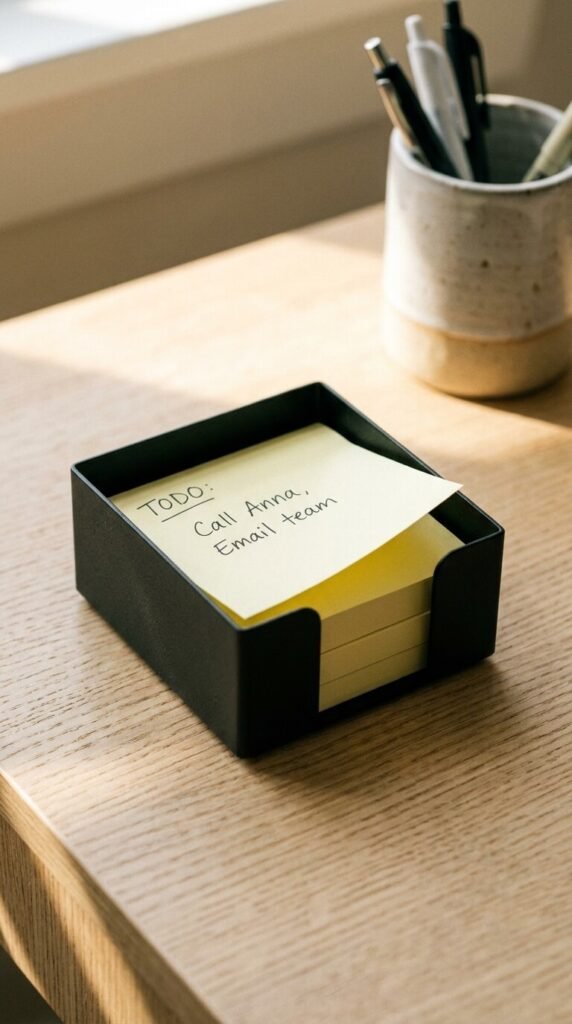
A dedicated sticky note holder keeps your notes from becoming scattered paper chaos. A small metal or wooden holder keeps the pad upright, makes it easy to tear one off cleanly, and looks intentional on the desk rather than like something that got left out. Combine it with a small metal card box for reference index cards. The pair costs under $15. Keeping analog note-taking tools on the desk reduces the habit of grabbing your phone to jot something down, which typically leads to distraction.
21. A Desk Shelf or Riser for Monitor Height
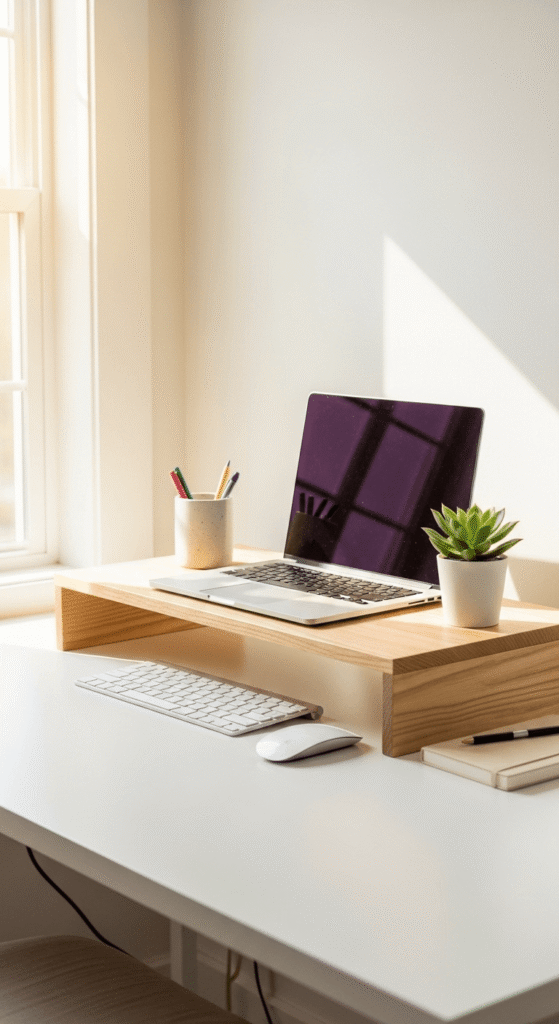
A monitor riser or desk shelf improves your posture and creates useful storage space at the same time. Elevating your screen to eye level reduces neck strain during long work sessions. The shelf below the riser holds your keyboard, notebook, or a few small items you need accessible but not on the main surface. A bamboo or solid wood riser costs $20–$35 and immediately makes the desk look more structured. It is one of those items where function and aesthetics genuinely reinforce each other.
22. A Tabletop Inspiration Board
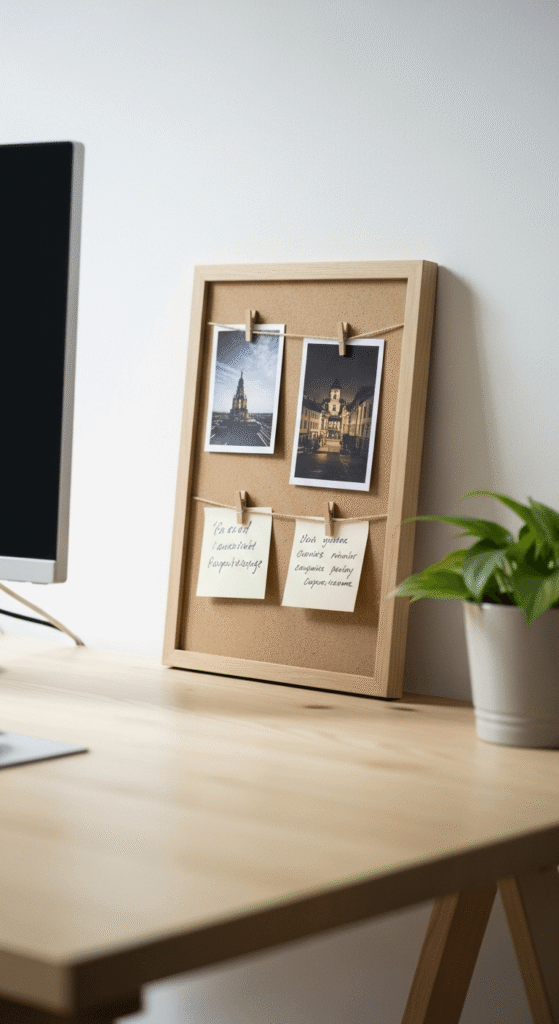
A small tabletop inspiration board leaning at the back of the desk gives you a rotating display of images, quotes, and references that fuel your specific work. Unlike a wall-mounted board, this one moves with you if you change desks or work rooms. Use binder clips or small magnets to attach printed images, sketches, or reference cards. A small wooden frame from a craft store costs $5–$10. Print images from your computer for free. Change the content every few weeks to keep it genuinely useful.
23. A Stone or Concrete Paperweight
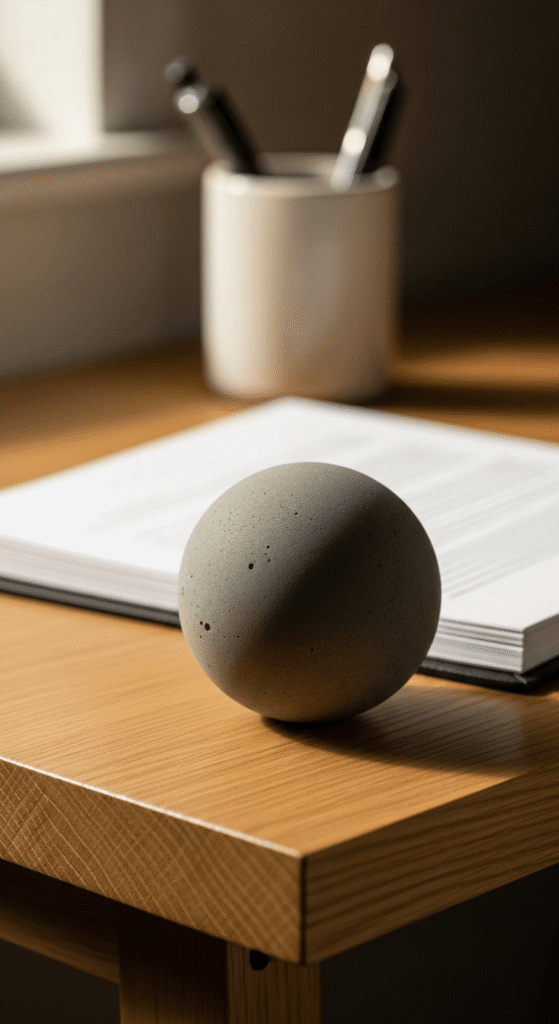
A good paperweight keeps documents flat and adds a satisfying tactile object to the desk. Stone spheres, concrete cubes, and marble pieces all work well and look clean against wood or leather desk surfaces. A smooth stone from a walk or a river stone serves exactly the same function for free. A polished marble or concrete object from a home store costs $8–$20. The weight of it in your hand during a thinking pause is one of those small physical pleasures that make desk time feel grounded.
24. A Minimal Wall Calendar
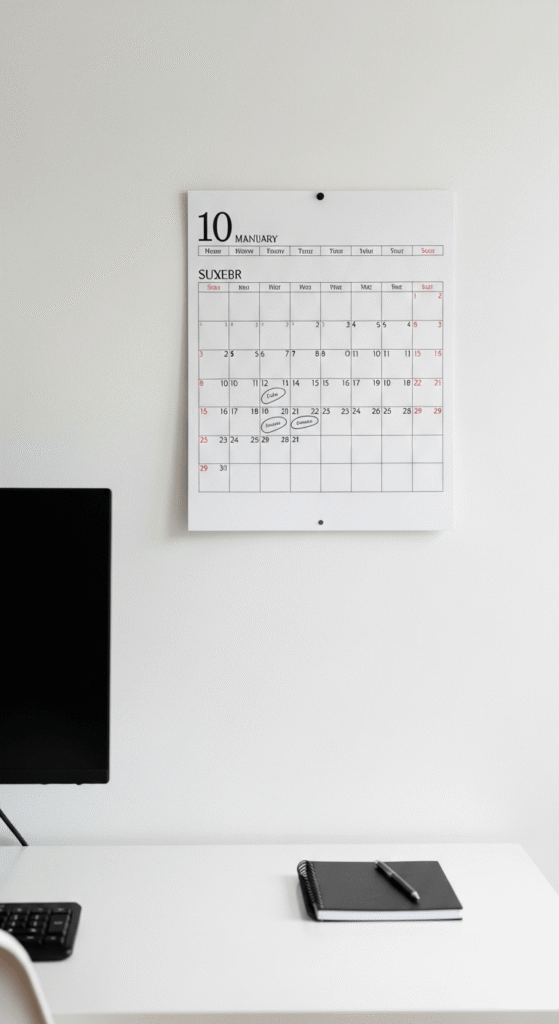
A single monthly wall calendar above the desk gives you a visual map of the month in one glance. Simple black-and-white grid calendars cost under $10 for a full year and look clean against any wall color. Hang it directly above the desk at eye level. Write your key deadlines and commitments by hand — the act of writing them reinforces them in memory. A physical calendar also keeps your desk free from the distraction of opening a calendar app, which is rarely a one-tap experience.
25. A Small Succulent or Cactus
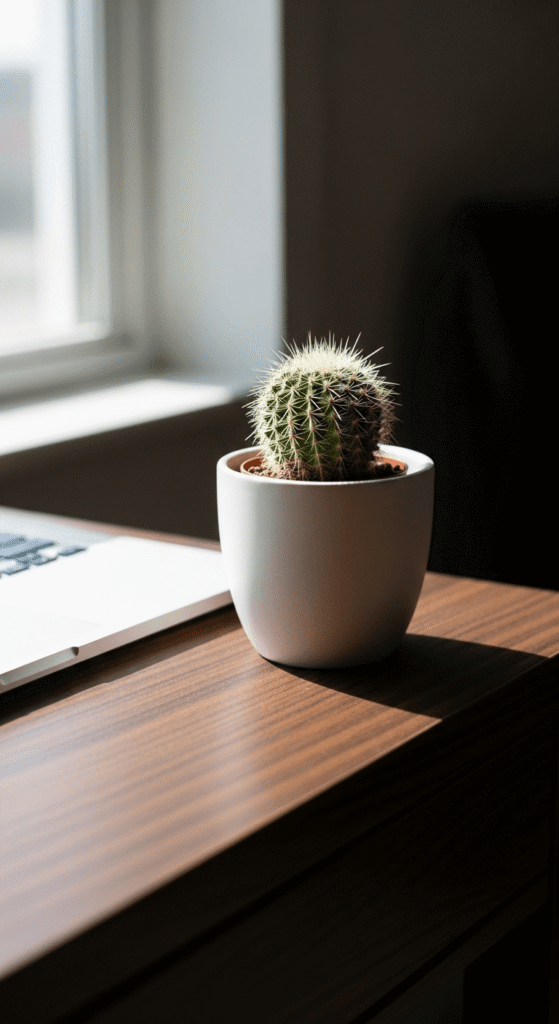
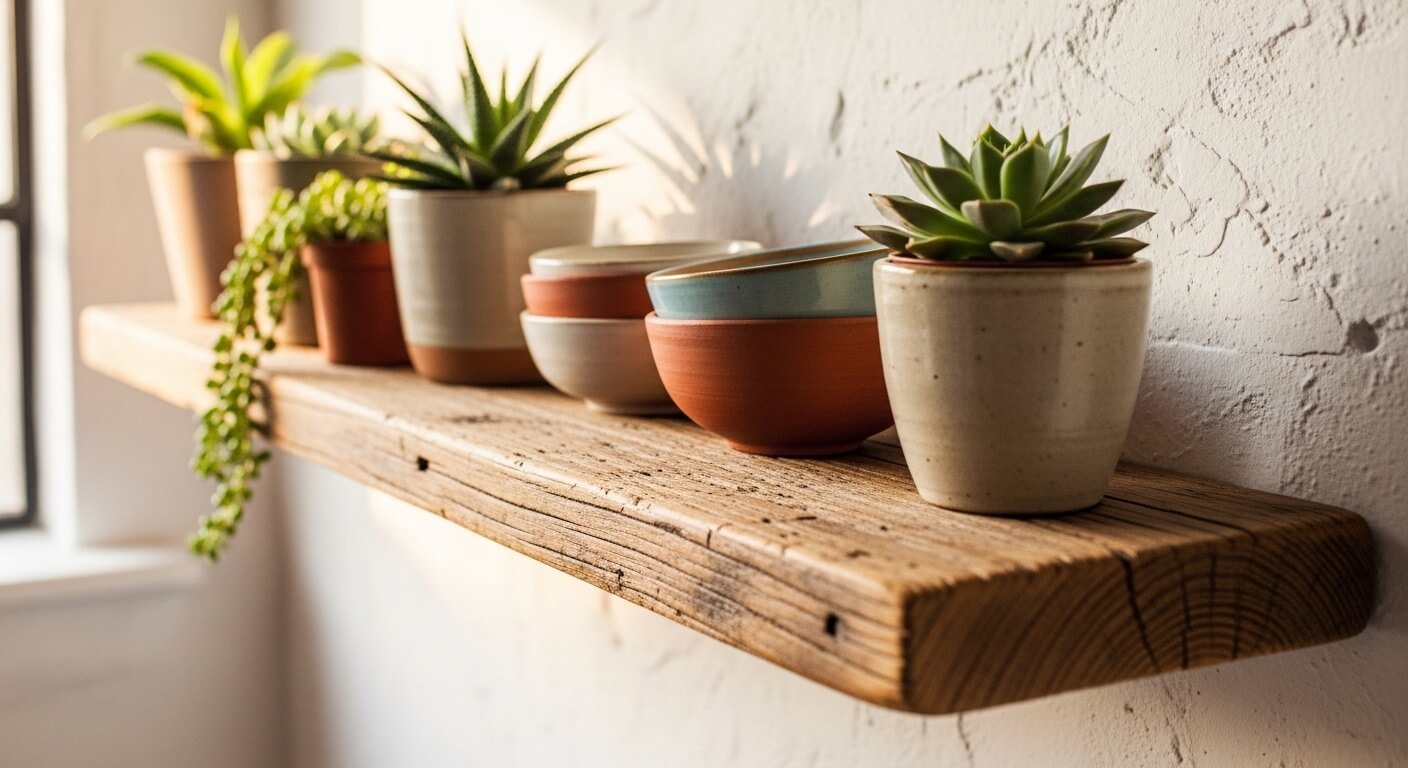
A cactus or small succulent on the desk is the lowest-maintenance plant option for a workspace. They survive on minimal water and moderate light — two things a home office can reliably provide. A two or three-inch pot sits at the desk corner without interfering with work. A small cactus from a garden center costs $2–$5. Choose a simple matte ceramic pot so the whole thing reads as a designed detail. The visual effect of having something alive on the desk is the same regardless of the plant’s size.
26. A Printed Habit Tracker
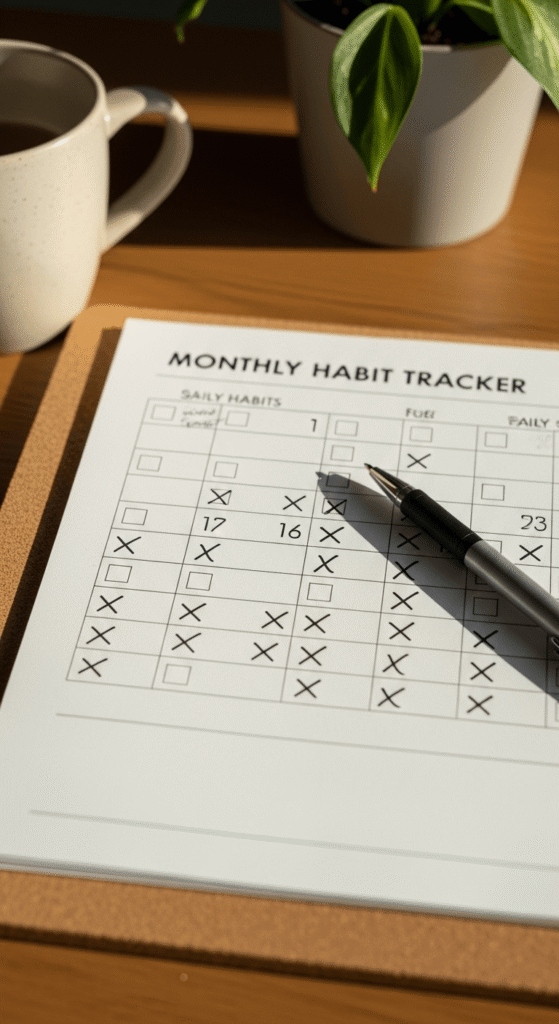
A printed habit tracker on the desk keeps your personal productivity routines visible and measurable. Tracking daily habits by hand — exercise, deep work sessions, reading, water intake — takes less than a minute and makes patterns immediately visible. Print a simple monthly grid from any free template online. Keep it on your desk pad where you can fill it in at the start or end of each day. The tracker costs nothing to create and becomes more motivating the more consistently you fill it in.
27. A Good Quality Notebook

The notebook you write in most days deserves to be one you enjoy opening. A cloth or leather-covered hardcover notebook with quality paper feels better to use than a spiral pad and looks significantly better on the desk. Dot-grid pages work for both writing and diagrams. A good quality A5 notebook costs $10–$20 and lasts for months of daily use. Keep it open to your current page during work sessions so it is always ready and never gets buried under other papers.
28. A Task Light for Evening Work
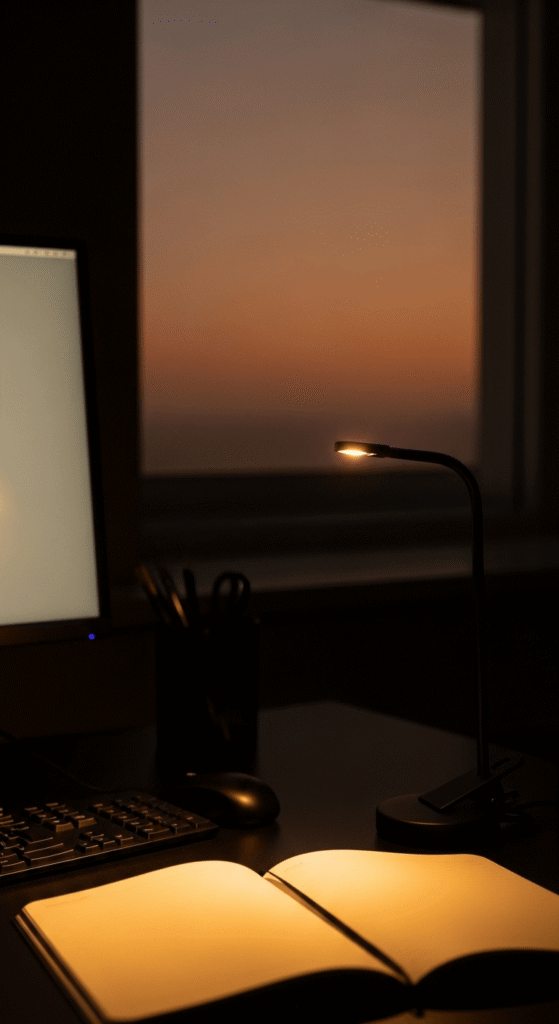
A clip-on task light used specifically for evening work sessions helps maintain focus without lighting the whole room. Keeping the main overhead lights low and using a focused task light is a work habit that many people find helps them stay in a concentrated state. A clip-on LED task light costs $15–$25 and attaches to the back edge of the desk or monitor. Use a warm-to-cool adjustable model so you can shift from focused afternoon work light to a warmer tone as the evening progresses.
29. A Personal Object That Means Something
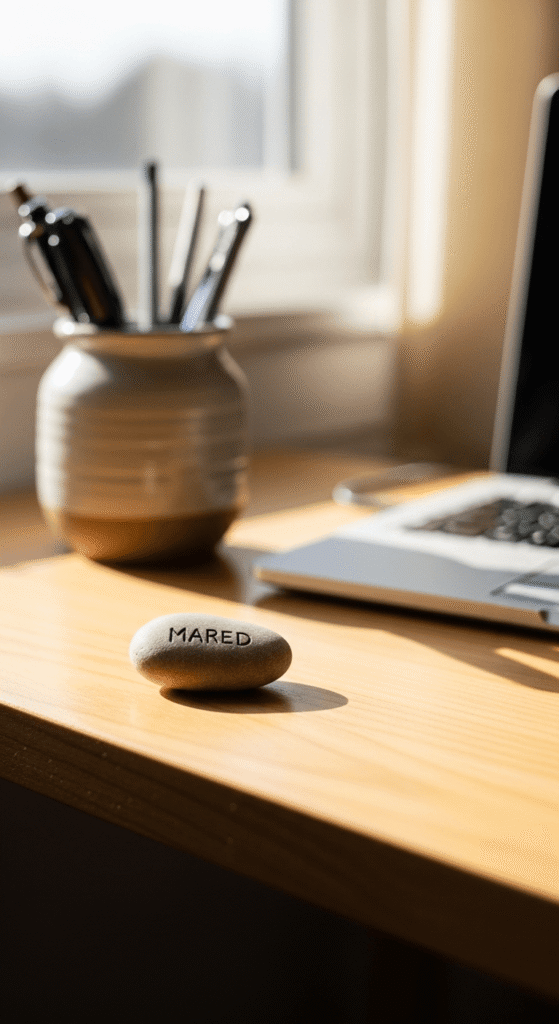
Every productive desk has at least one object that belongs only to that person and no design guide could prescribe. A small item that carries personal meaning — a stone from a trip, a small gift, a handmade object — makes the desk feel like yours rather than a setup from a catalog. It does not need to be beautiful to anyone else. Its function is to remind you, briefly and without effort, of something that matters. That kind of grounding is one of the most underrated forms of focus support available.
Conclusion
A productive desk is not about having every item on this list. It is about having the right few things for how you specifically work. Start by removing what does not earn its place — the things that sit there out of habit rather than purpose. Then add one or two items from this list that address your actual friction points: better lighting, visible goals, a plant that makes the surface feel alive. Build slowly. Edit often. The desks that work best are the ones that reflect a real person doing real work — not a staged photo, just a space that makes you want to sit down and get started.