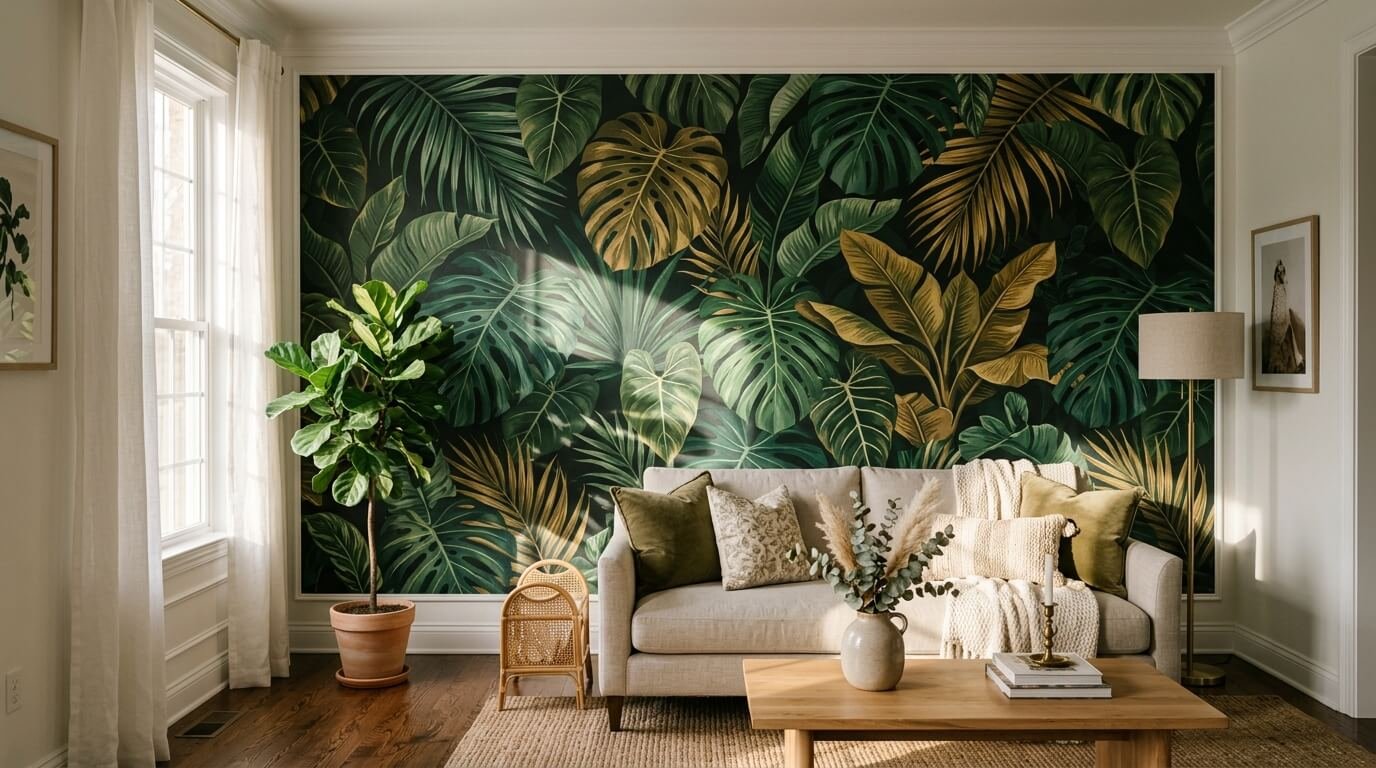
25 Practical Pet-Friendly Decor Choices That Look Chic


Disclosure: As an Amazon Associate we earn from qualifying purchases. Some links on this page may be affiliate links — if you click through and make a purchase, we may receive a small commission at no extra cost to you.
Living with pets does not mean living with an ugly home. That is the myth this article is here to put down. The truth is that most of the choices that make a home pet-friendly — durable fabrics, wipeable surfaces, easy-clean rugs, concealed storage — also happen to make a home more practical, more considered, and in many cases, more beautiful. The key is knowing which materials, products, and design approaches hold up to claws, fur, and the occasional accident while still looking like a home someone cares about. These 25 pet-friendly decor choices prove that chic and practical can absolutely share the same floor.
1. Washable Slipcover Sofas
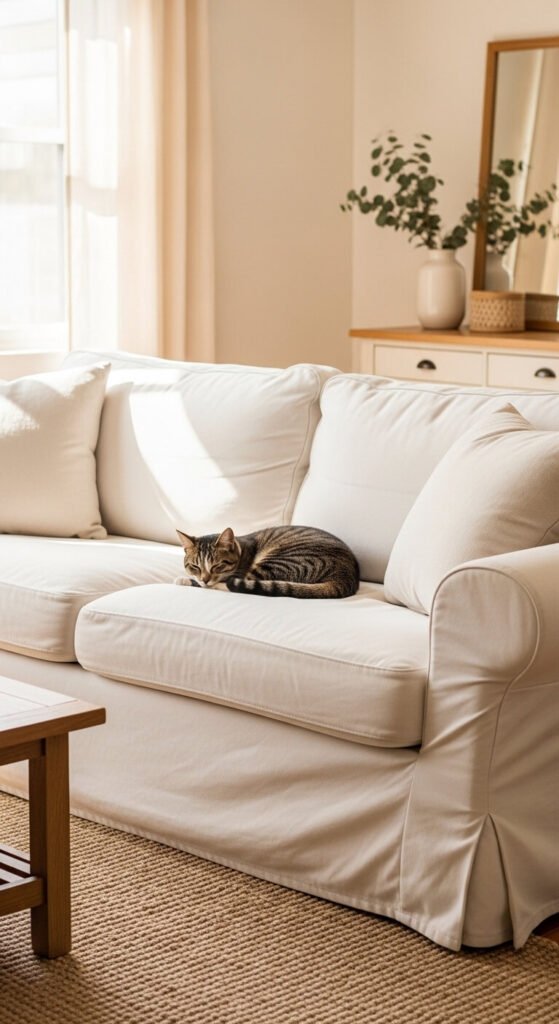
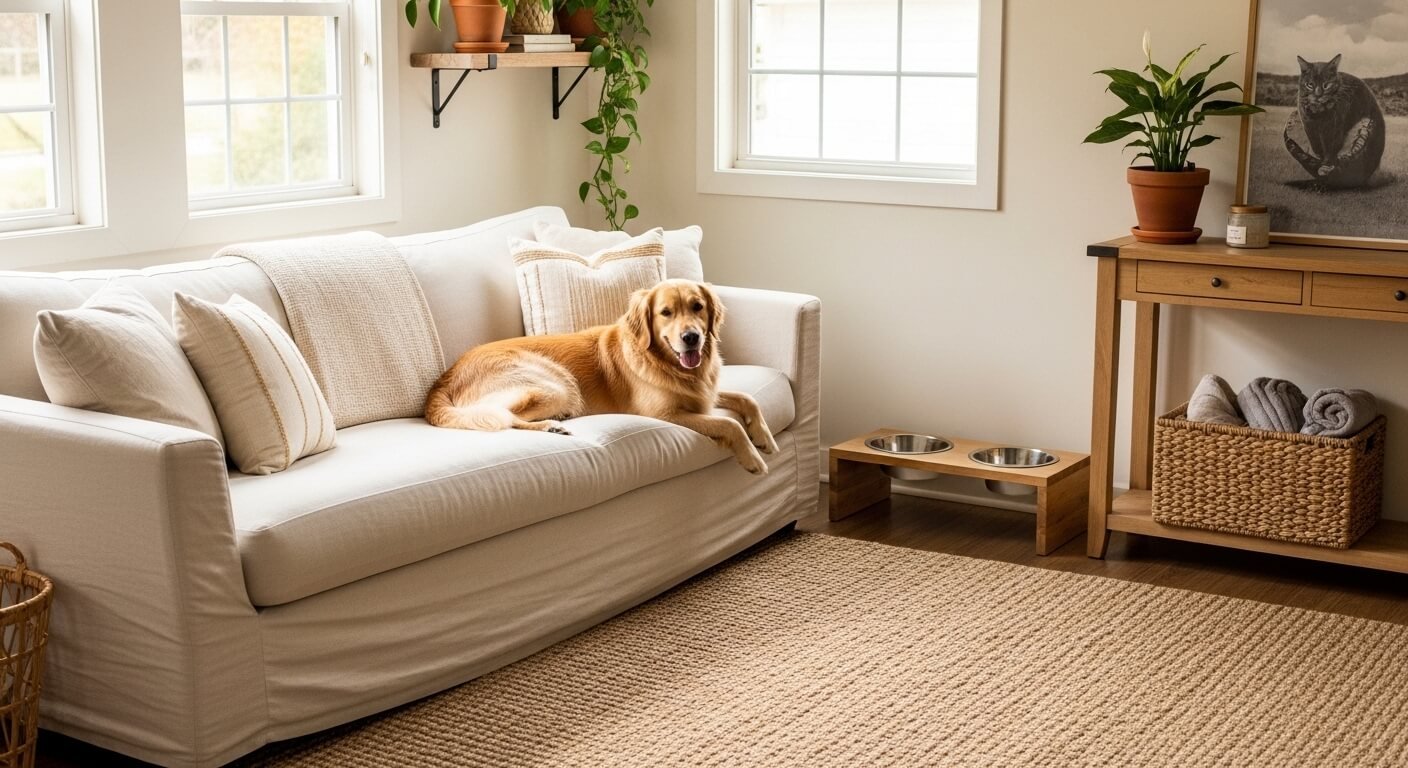
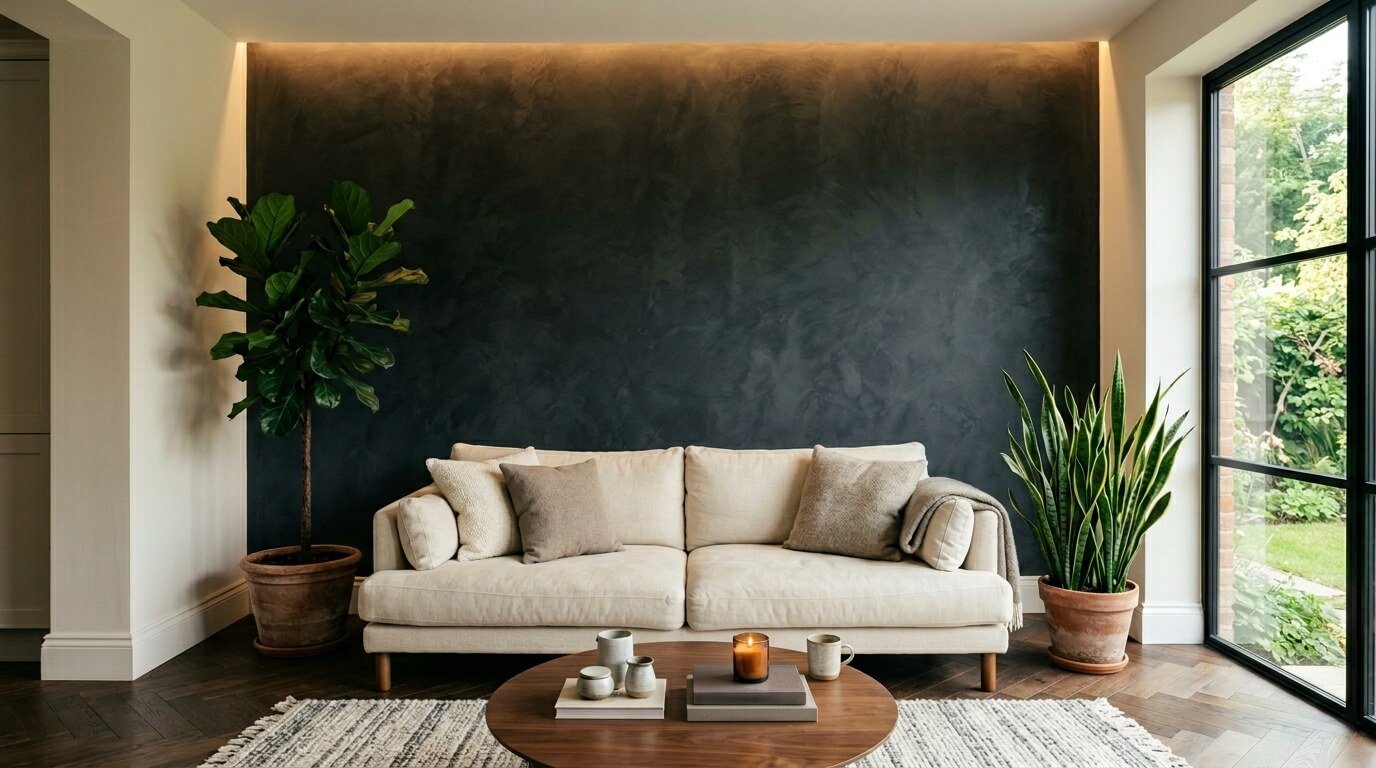
A slipcover sofa is one of the most practical investments a pet owner can make. The cover zips or pulls off and goes straight into the washing machine — fur, muddy paw prints, and everything else included. Linen-look cotton slipcovers in cream, grey, or natural tones look relaxed and intentional rather than like a sofa in protective wrapping. Brands like IKEA and several Etsy shops sell replacement slipcovers for popular sofa models starting at $40–$80. Your sofa stays clean and your pet gets their favorite spot without any daily standoff.
2. Performance Fabric Upholstery
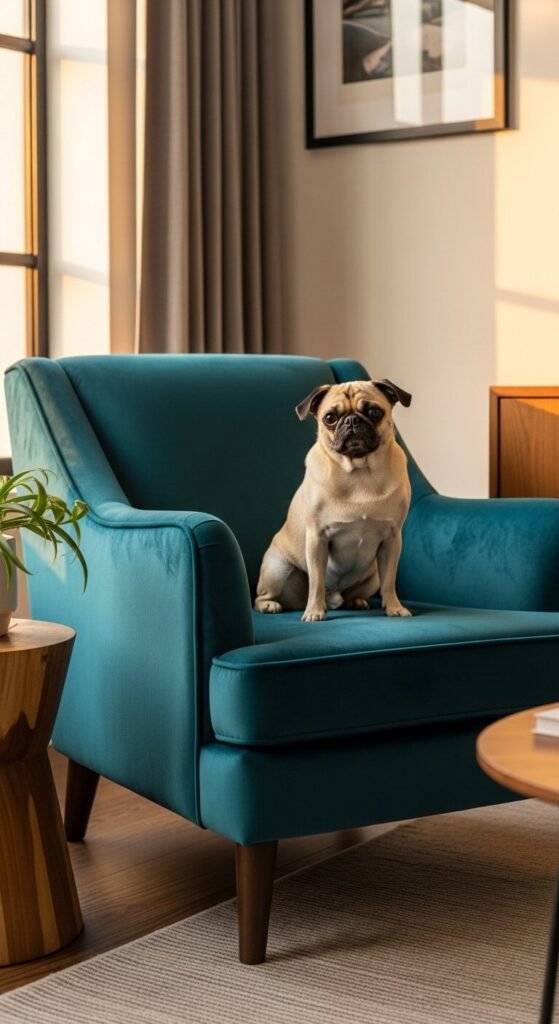
Performance fabrics look like regular upholstery but are engineered to resist stains, moisture, and wear. Brands like Crypton, Sunbrella, and Revolution make fabrics that wipe clean with a damp cloth and resist pet odors long-term. Many furniture retailers now offer performance fabric options at no extra cost. When shopping for a sofa or chair, simply ask whether the fabric is performance-rated. It looks identical to regular upholstery in photos and in person — the difference only shows up when something spills.
3. Low-Pile or Flatweave Rugs
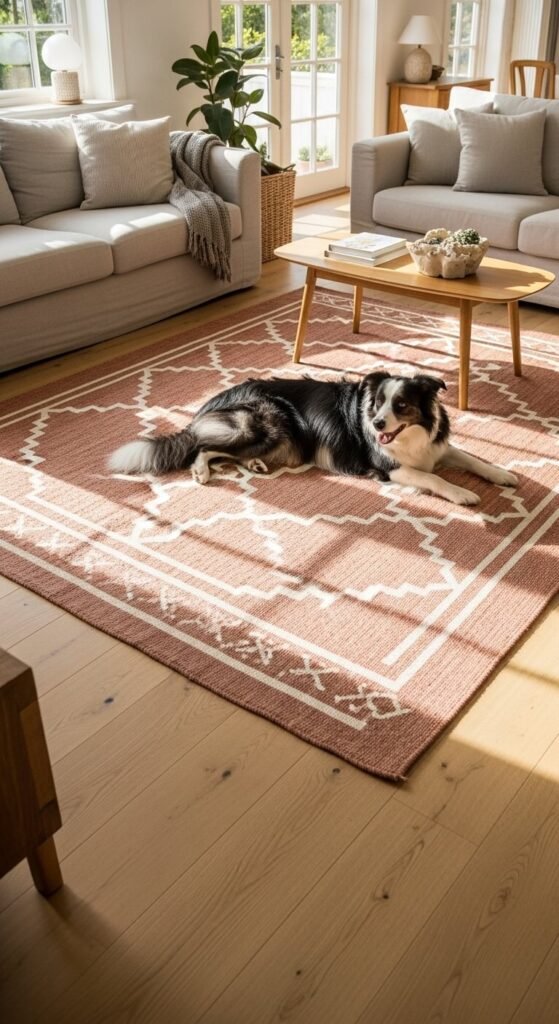
High-pile and shag rugs are a fur trap. Flatweave, low-pile, and indoor-outdoor rugs are the practical alternatives that still look excellent. Fur sits on top of a flatweave rather than embedding in the pile, making vacuuming actually effective. Many flatweave cotton rugs are also machine washable up to a certain size. Dhurrie rugs, kilim rugs, and sisal-look polypropylene rugs all fall into this category. A large flatweave rug costs $40–$120 depending on size and material — far less than replacing a shag rug every two years.
4. Elevated Pet Bowls in a Wooden Station
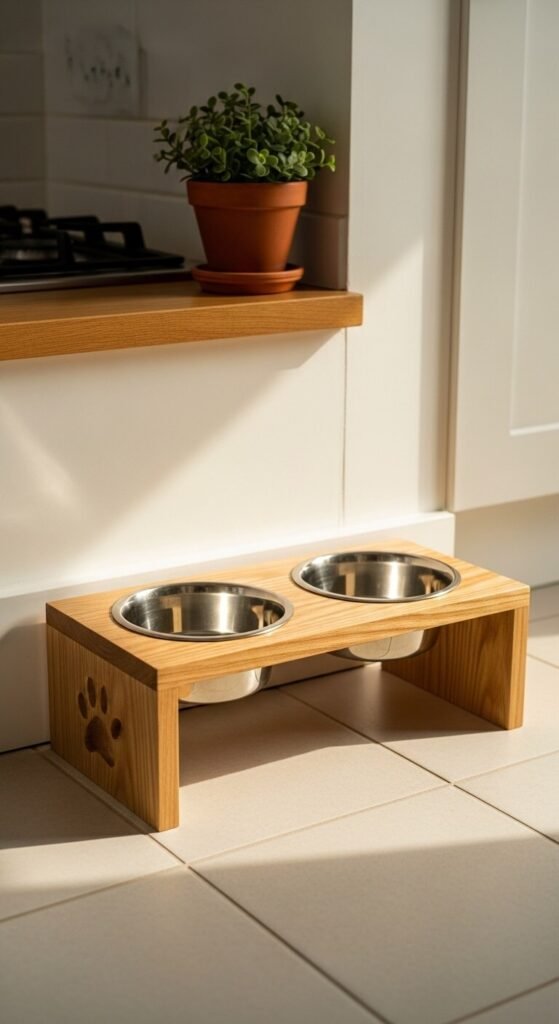
A wooden elevated bowl station makes the feeding area look like it was designed to be there rather than tolerated. Raised bowls are also better for dogs ergonomically, reducing strain on their neck and shoulders during meals. Simple wooden bowl stations cost $25–$60 depending on size and finish. You can also build a basic one from a short wooden crate or a slice of butcher block with two holes cut out. Stainless steel bowls drop in and lift out easily for daily washing.
5. Stylish Pet Beds That Match the Room
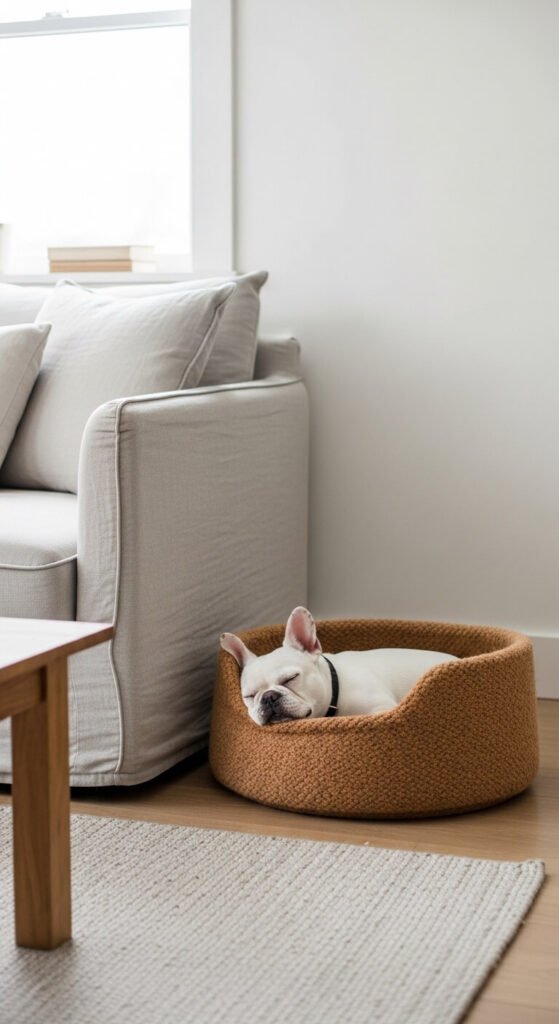
A pet bed that matches your room’s palette essentially disappears into the decor. Choose beds in neutral tones — oatmeal, warm grey, charcoal, or terracotta — rather than bright primary colors or novelty prints. Round wool-look beds, low-profile linen-covered cushions, and wicker basket beds all work as room decor in their own right. Many pet bed covers are removable and machine washable, which is the single most important feature after style. A good-looking washable pet bed costs $25–$60 at most pet or home stores.
6. Indoor-Outdoor Rugs for High-Traffic Areas
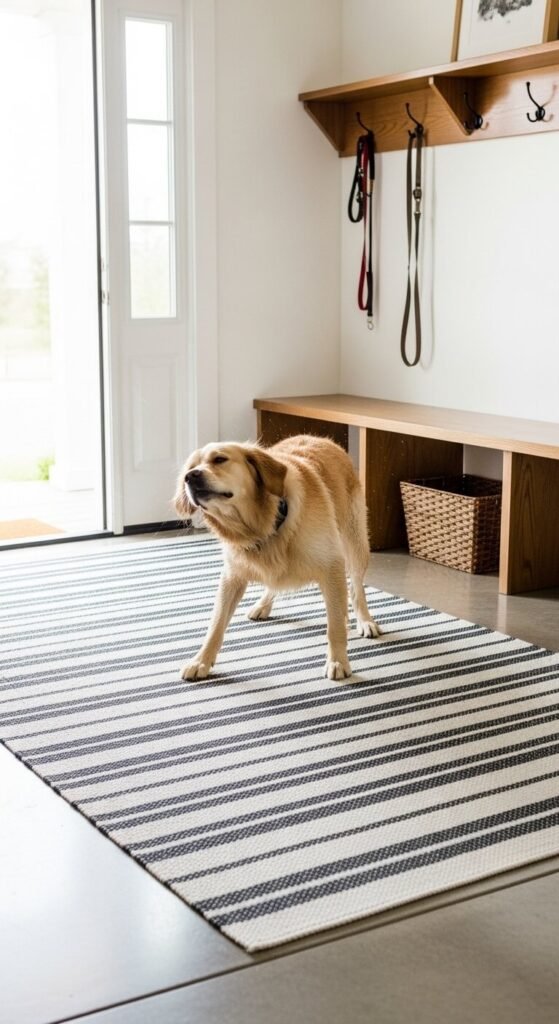
Indoor-outdoor rugs are made from polypropylene, which means they are essentially waterproof, stain-resistant, and easy to hose down. Use them in entryways, mudrooms, kitchens, and anywhere your pet enters from outside. They come in stripes, geometric patterns, and solid colors that look as good as any indoor rug. A large indoor-outdoor rug costs $30–$80. When they get truly dirty, take them outside and rinse with a garden hose. They dry quickly and return looking clean with almost no effort.
7. Slip-Resistant Stair Treads
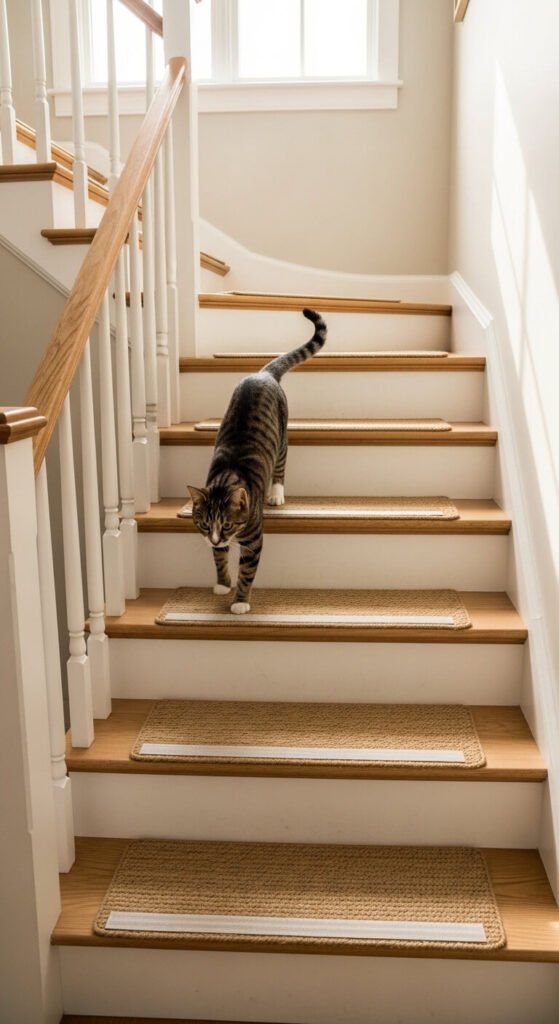
Hardwood stairs are slippery and genuinely risky for dogs, especially older ones with joint issues. Jute or wool stair treads grip the step, give paws traction, and add warmth and texture to an otherwise cold hardwood staircase. They come pre-cut with non-slip backing or attach with double-sided tape. A set of 13 jute stair treads costs $40–$70. They look intentional on the staircase rather than like a safety measure and dramatically reduce the sound of a dog running up and down stairs at full speed.
8. Concealed Litter Box Furniture
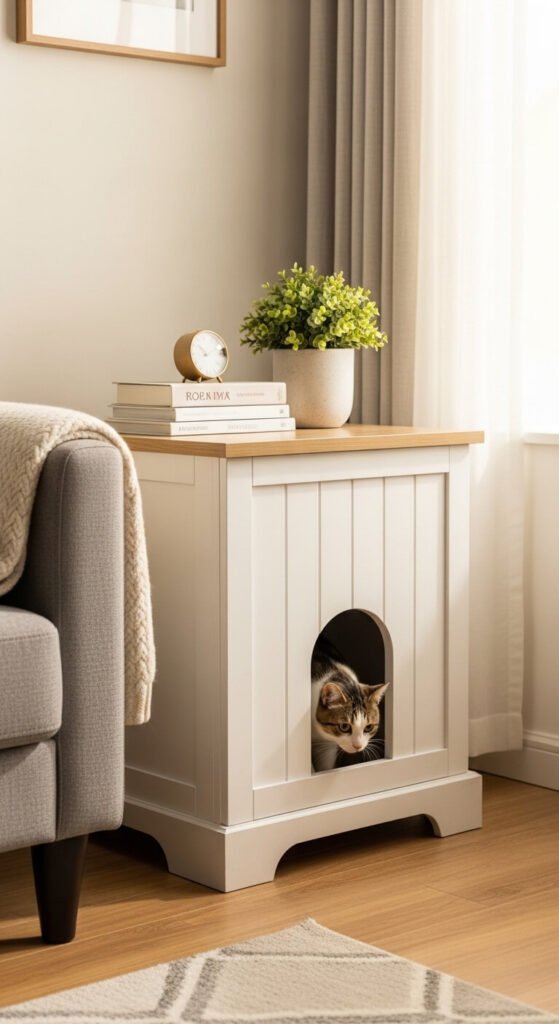
A litter box hidden inside a piece of furniture is one of the cleanest solutions in pet-friendly decorating. Cabinets, benches, and side tables with a small entry hole cut into one side conceal the litter box completely and can hold a small plant or books on top. Several furniture companies make purpose-built litter furniture, but a basic unfinished cabinet from a hardware store with a hole cut in the side works equally well. Paint it to match the room and it disappears into the decor entirely.
9. Wipeable Walls and Washable Paint
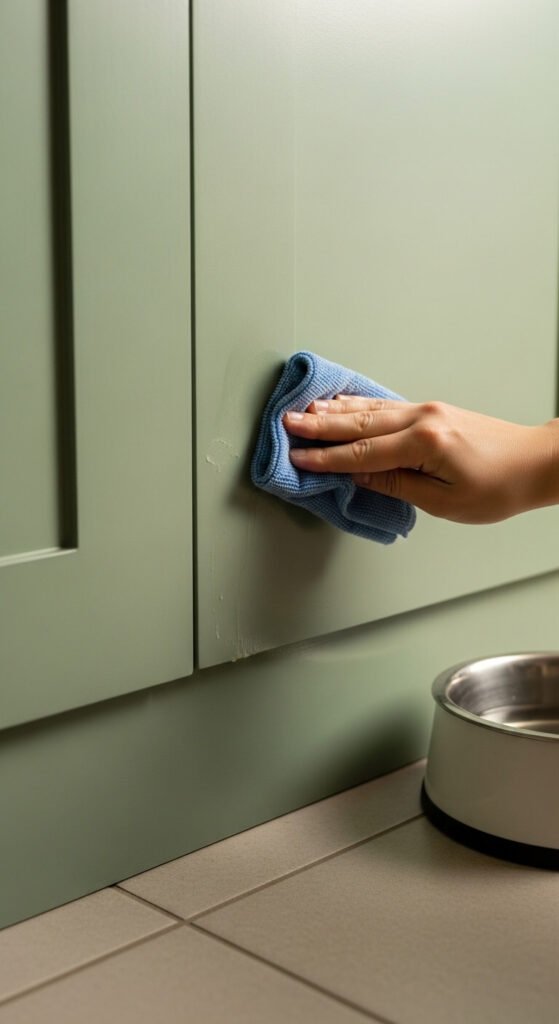
Most standard paint finishes show every smudge, drool mark, and muddy nose print. Eggshell and satin paint finishes are much more wipeable than matte and hold up significantly better in homes with pets and children. The upgrade in sheen is subtle and the paint costs the same as standard finishes. Wipe down walls near feeding stations, door frames, and lower wall sections with a damp cloth rather than repainting every year. This is one of the lowest-effort and highest-impact pet-friendly home choices available.
10. Durable Ceramic or Stone Floor Tiles
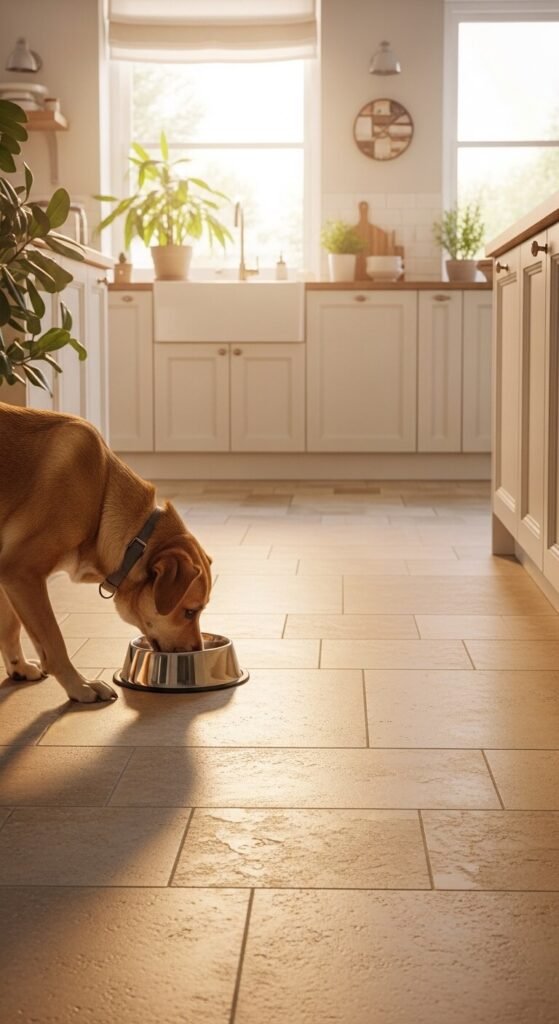
Hard tile floors are essentially indestructible around pets. Porcelain and ceramic tiles do not scratch from claws, do not absorb odors, and clean with a damp mop in seconds. Large-format stone-look tiles in warm beige or grey tones look modern and high-end. For any existing rooms where tile is not an option, luxury vinyl plank flooring is the next best choice — it is scratch-resistant, waterproof, and significantly more affordable than replacing hardwood. New tile or vinyl plank flooring is a longer-term investment but one that pays off over years of pet ownership.
11. Woven Storage Baskets for Pet Toy Chaos
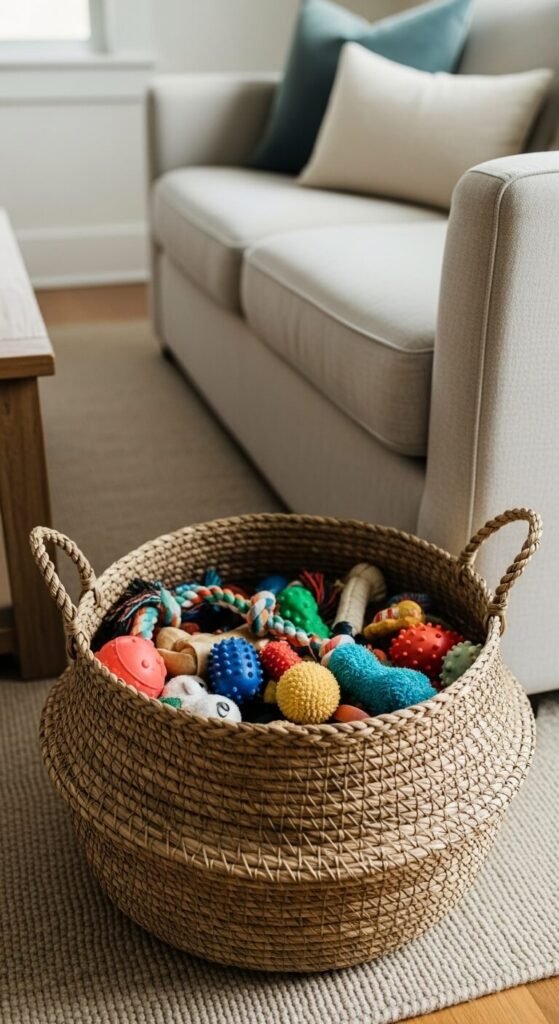
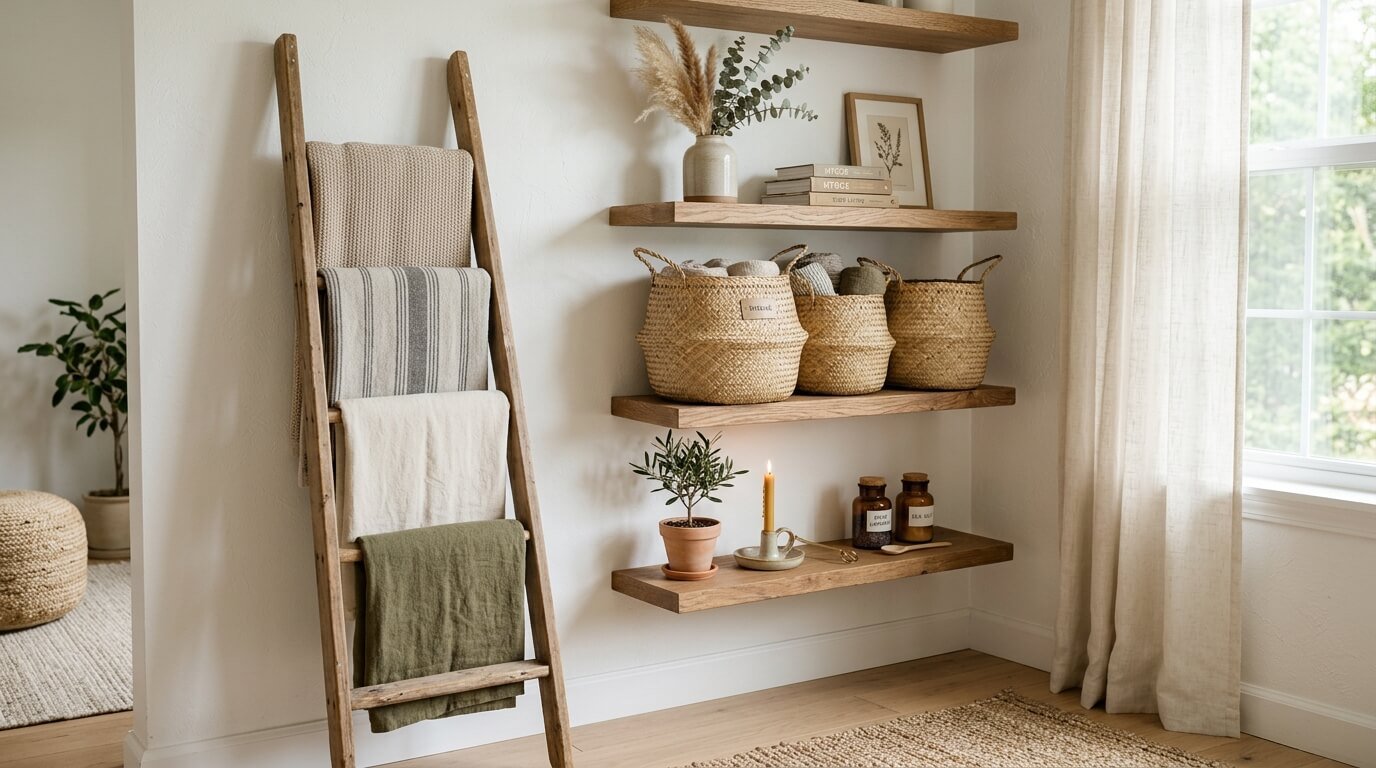
A large woven basket on the living room floor for pet toys solves the scattered-toy problem without hiding everything away. The basket itself becomes a decor object — a seagrass or rattan basket in a neutral tone fits into almost any room aesthetic. Keep it accessible so your pet can dig through it and so tidying up takes about five seconds. A large woven basket costs $15–$30 at most home stores. The toys can be as colorful and chaotic as they like inside it — the basket contains and frames them.
12. Microfiber Furniture for Easy Fur Removal
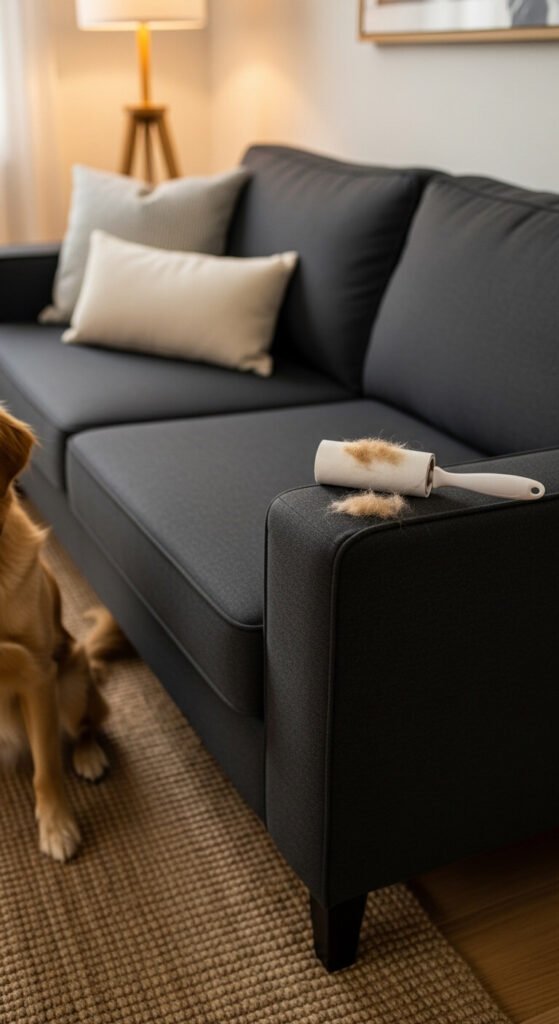
Microfiber is one of the most practical sofa fabrics for pet owners because pet fur lifts off the surface cleanly with a slightly damp rubber glove or a lint roller rather than embedding into the weave. It is also stain-resistant and easy to spot clean. Tightly woven microfiber in darker tones — charcoal, navy, dark brown — shows fur less between cleanings. Many microfiber sofas are also significantly cheaper than fabric alternatives, making them a practical budget choice that does not sacrifice style.
13. Built-In Dog Crate Furniture
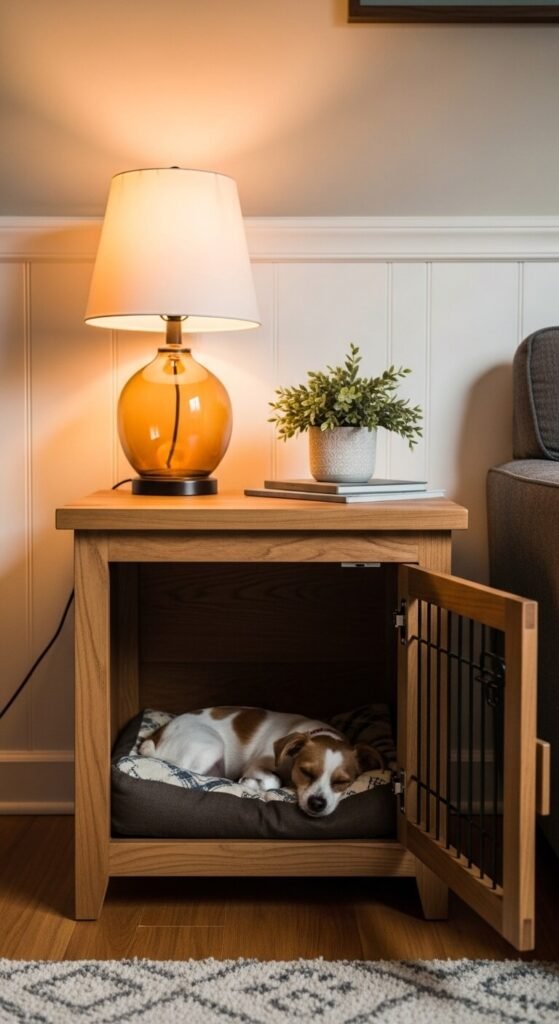
A crate that doubles as a side table removes the visual intrusion of a wire cage from the living room entirely. Dog crate furniture encloses the crate within a wooden cabinet that holds a lamp or plant on top, giving the crate a cozy den feeling and the room a functional piece of furniture. Ready-made dog crate furniture starts at $80–$150. DIY versions using a basic wooden frame built around an existing wire crate cost much less. The dog gets a secure, dark den space and you keep your room looking pulled together.
14. Wall-Mounted Leash and Collar Hooks
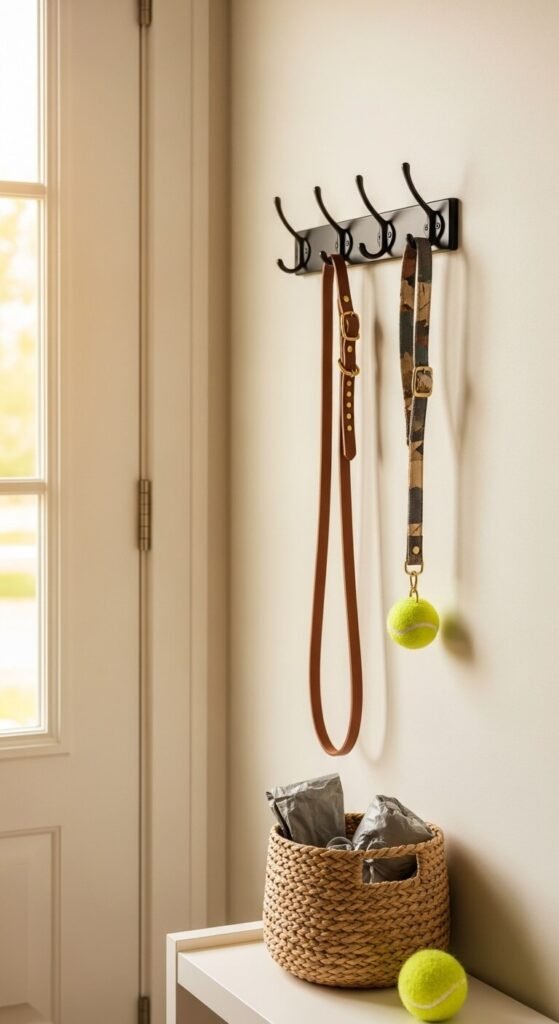
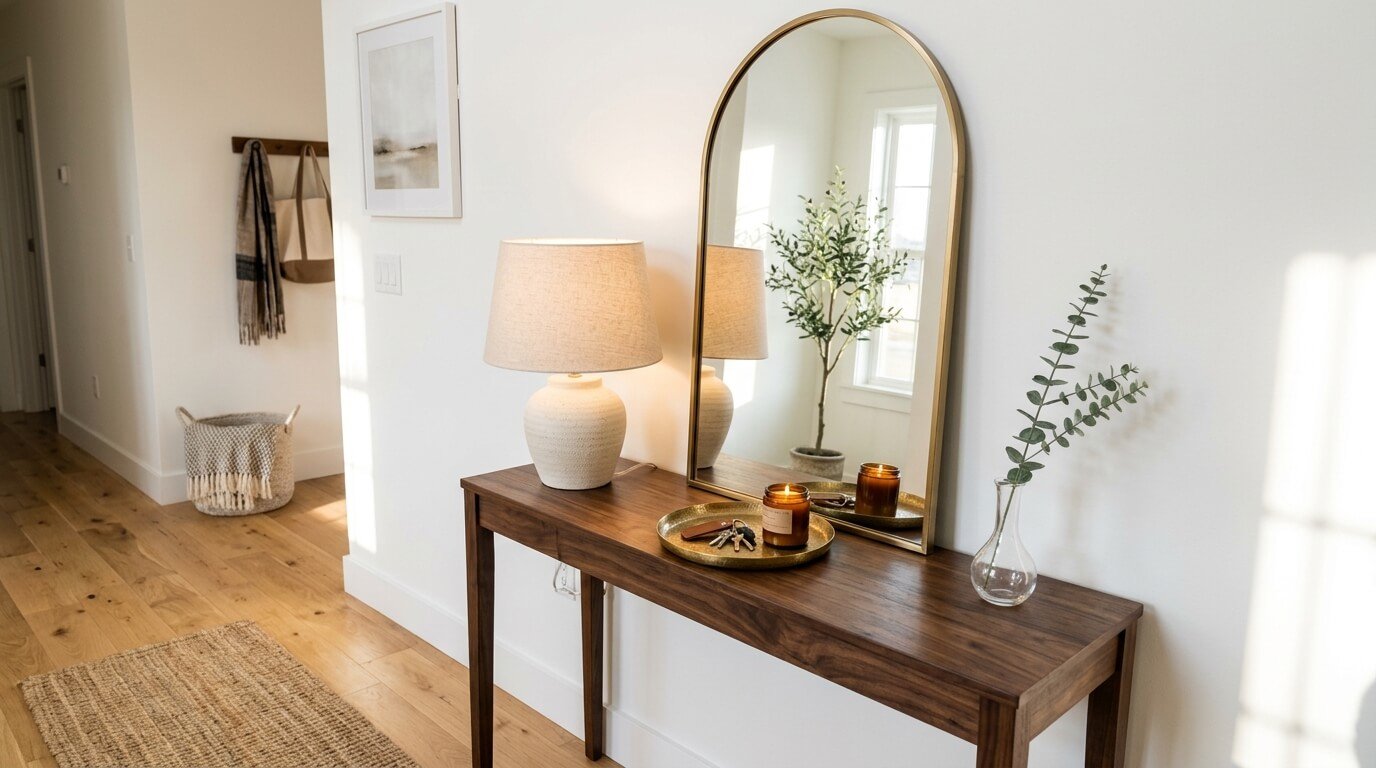
Leashes and collars left on the floor or draped over furniture make any room look chaotic. Three small wall hooks near the front door, mounted at a practical height, give leashes and collars a home that looks intentional. Use hooks in a finish that matches your other hardware — matte black, brass, or nickel. Mount them at medium height so they are accessible and visible from the door. A set of three matching hooks costs $10–$20. Add a small basket below for bags and a ball and the whole zone works as a functional and styled entry feature.
15. Pet-Safe Houseplants as Decor
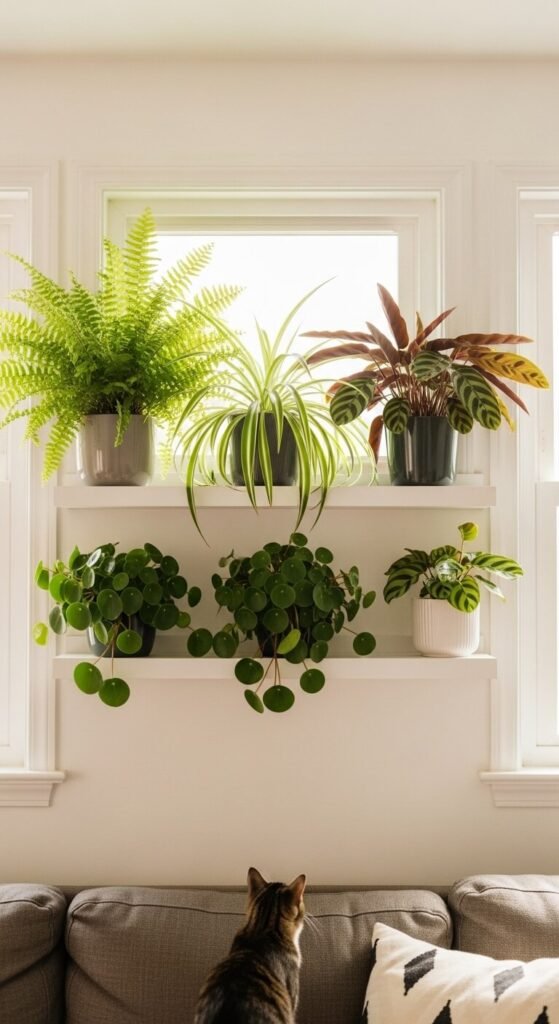
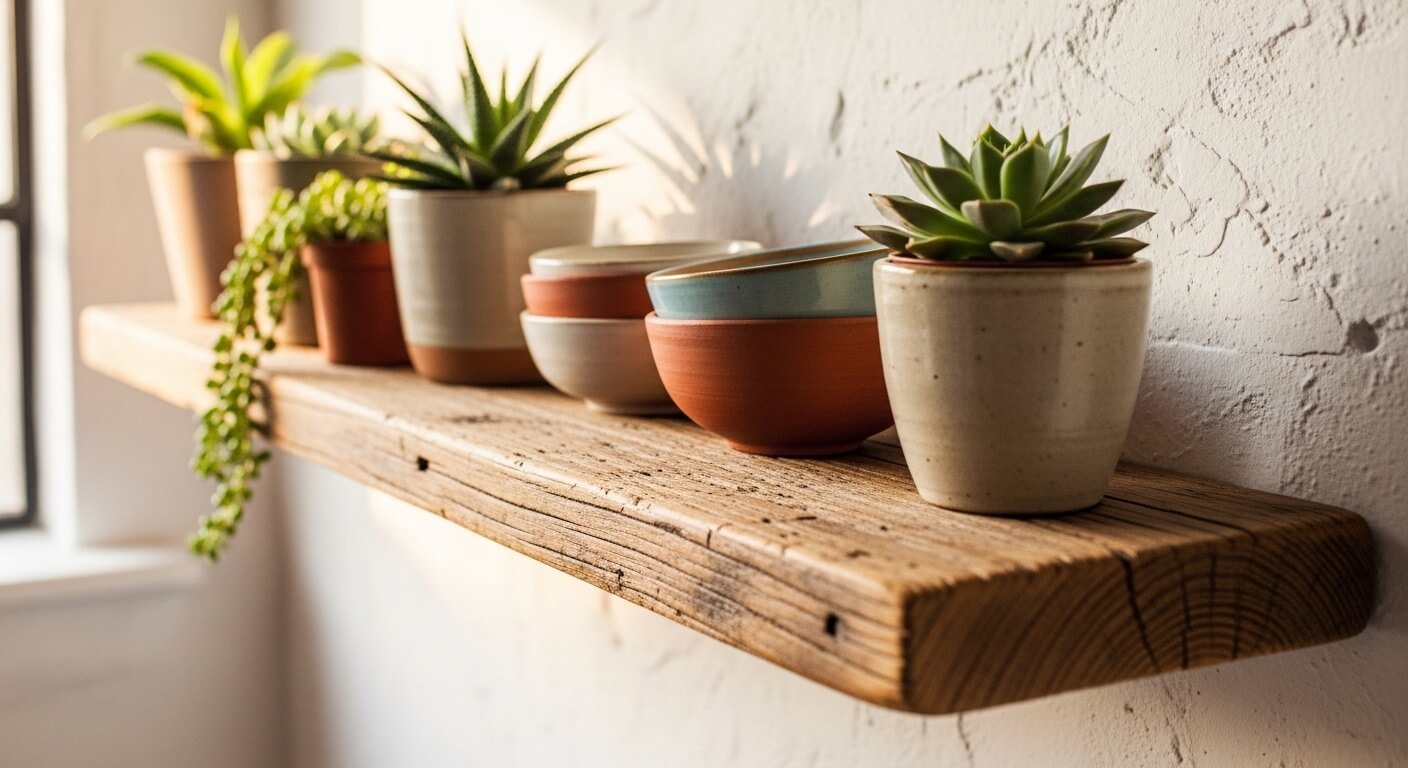
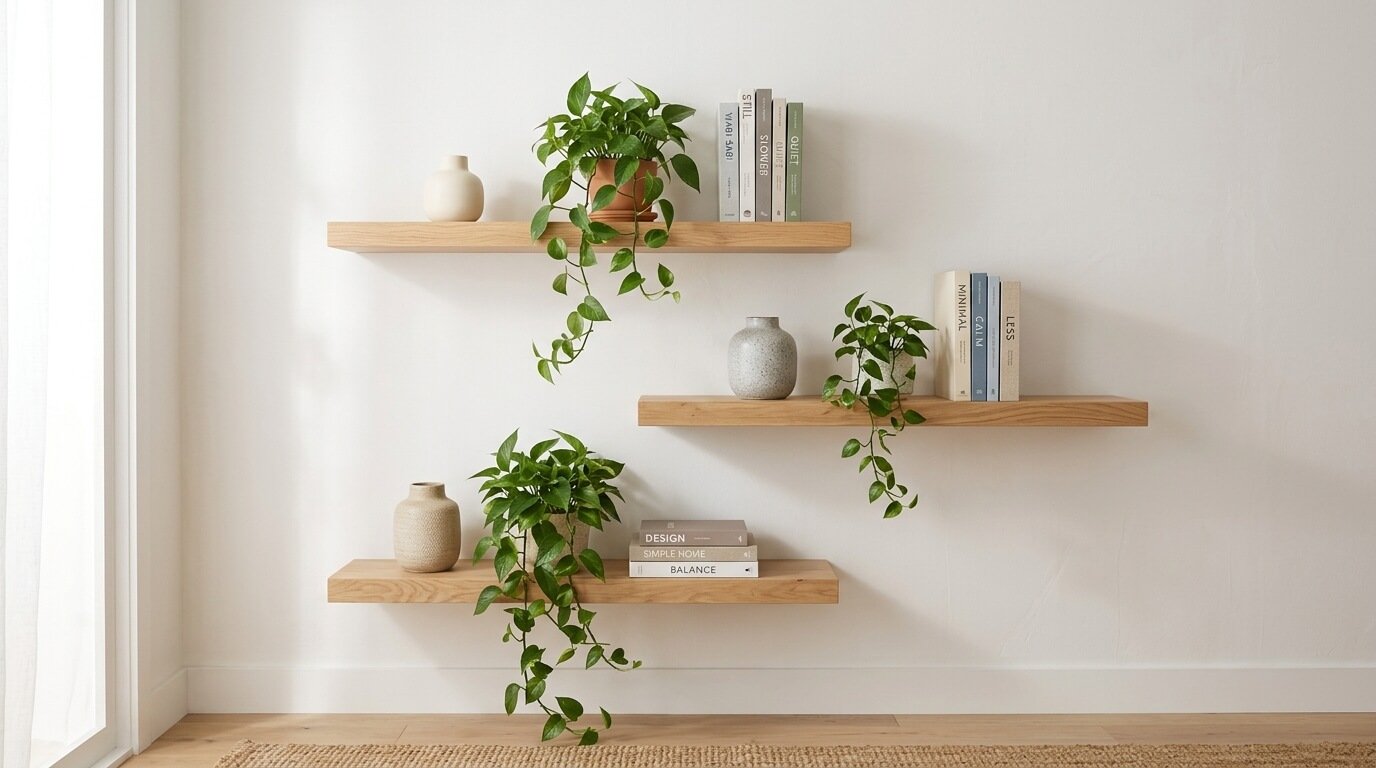
Many popular houseplants are toxic to cats and dogs. Pet-safe alternatives include spider plants, calathea, peperomia, boston fern, and areca palms — and they are all genuinely beautiful. Mount them on high floating shelves or hang them in ceiling planters where pets cannot reach them. If you want plants at floor level, stick with non-toxic varieties and check the ASPCA toxic plant database before buying. This lets you keep a plant-filled home without creating a hazard — and without having to choose between green decor and your pet’s safety.
16. Outdoor-Grade Throw Blankets for Pet Zones
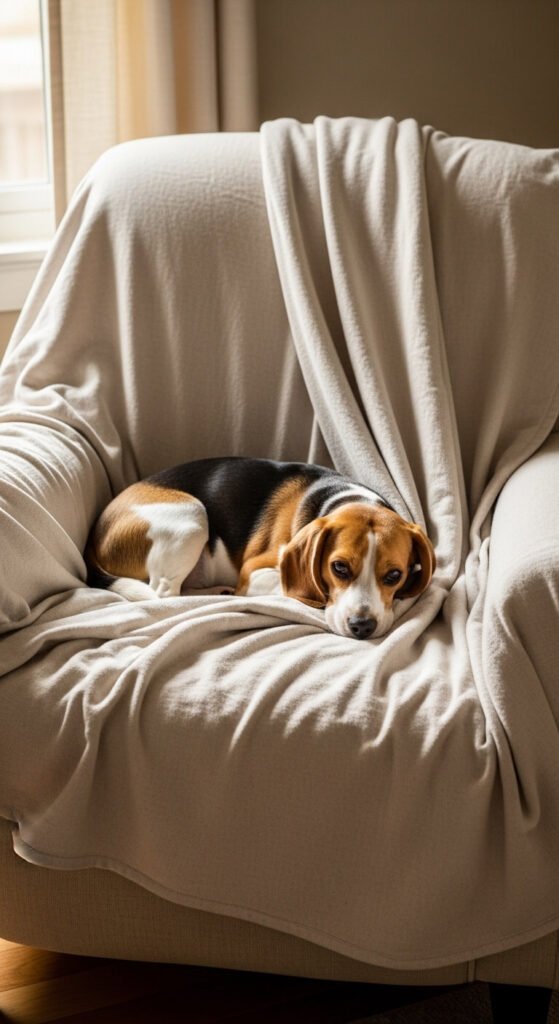
Designating your pet’s favorite chair spot with a performance throw blanket protects the upholstery and keeps fur contained. Outdoor-grade or performance fabric throws wipe clean, wash easily, and do not pill or trap fur the way regular knit blankets do. Keep one draped over each pet-frequented seat. Wash it weekly. The throw protects the sofa and your pet has a comfortable, established spot. Performance throws in neutral tones cost $20–$40. They look like a styled layering piece on the sofa — not a protective cover.
17. Hardwood Alternatives: Luxury Vinyl Plank
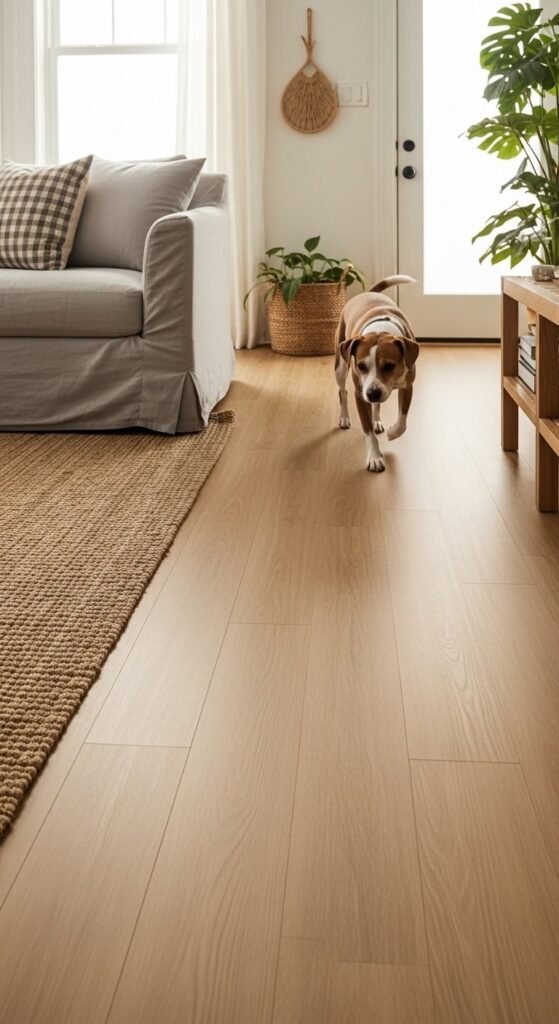
Real hardwood floors scratch, dent, and show water damage from pet bowls and accidents. Luxury vinyl plank flooring looks virtually identical to hardwood in photos and in person, costs significantly less, and is completely scratch-resistant, waterproof, and easy to clean. It is a floating floor that can be installed over almost any existing surface. A good quality LVP costs $2–$5 per square foot. For pet owners planning a renovation or dealing with damaged hardwood, LVP is a practical upgrade that looks genuinely upscale and handles everything a pet household delivers.
18. A Dedicated Pet Corner with Styled Storage
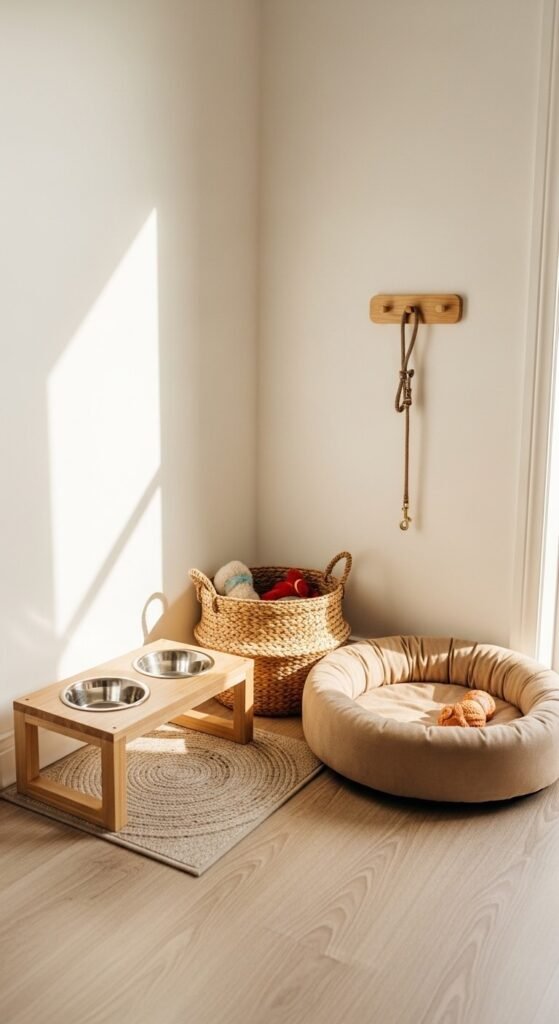
Giving your pet’s belongings a dedicated zone in one room keeps everything organized and contained. Group the bed, bowl station, toy basket, and leash hook in one corner and keep everything in a consistent color palette. When the pet zone is cohesive and contained, it reads as a designed feature rather than scattered pet clutter across multiple rooms. This also trains everyone in the household — including pets — to know where things live. The whole corner costs nothing to set up if you already own the pieces; it just requires arrangement.
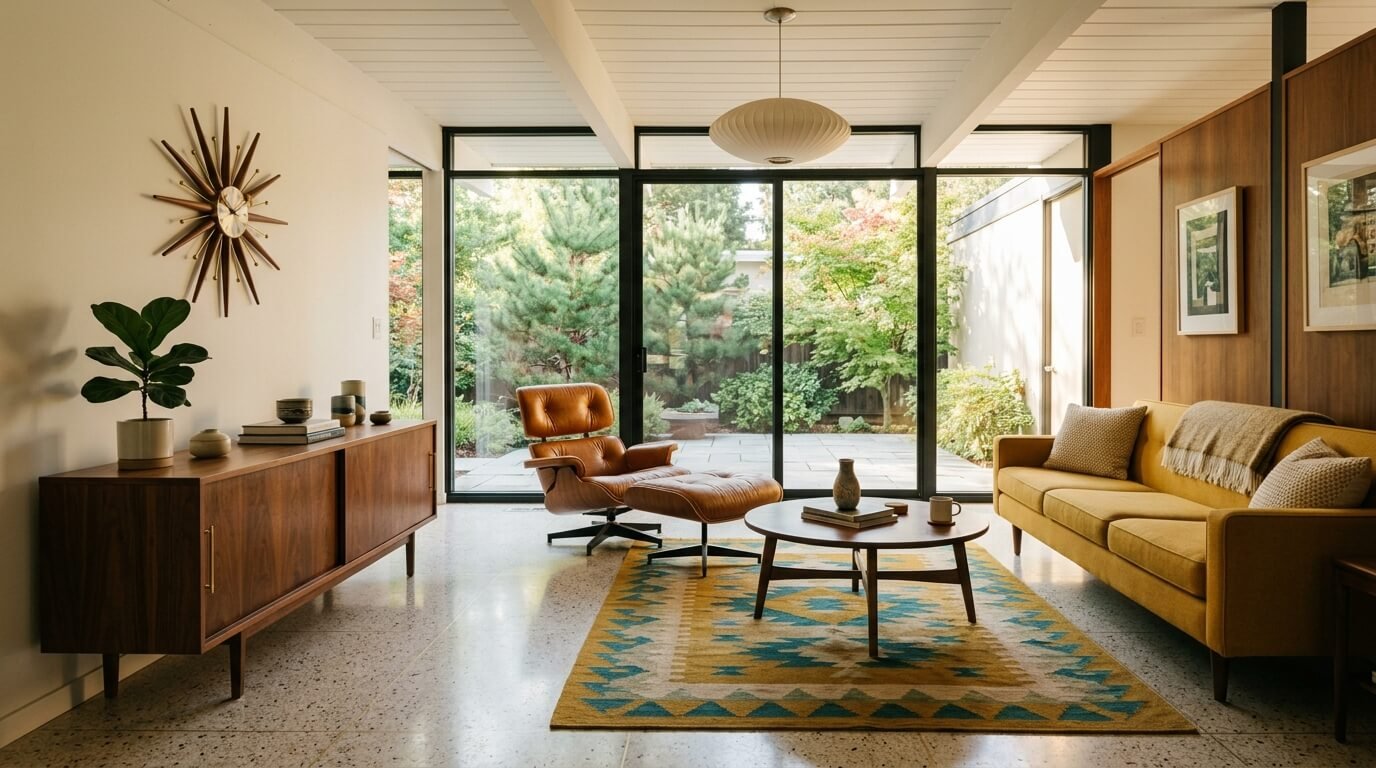
19. Furniture with Legs for Easy Vacuuming
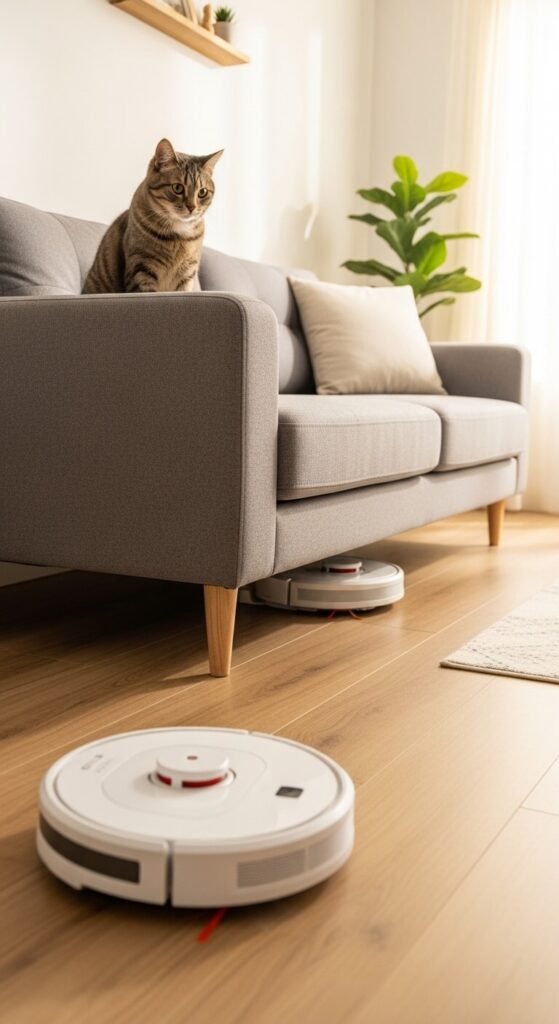
Furniture that sits directly on the floor creates fur-trapping dark zones that are almost impossible to vacuum under. Sofas, chairs, and sideboards raised on legs allow a robot vacuum or a standard vacuum to reach underneath daily. This one detail keeps pet hair from building up into a layer under every piece of furniture. When shopping for new furniture, check the leg height before buying. A minimum of five or six inches gives most vacuum heads full clearance. Existing furniture can sometimes be raised with furniture leg extenders for about $10–$20.
20. Scrubbable Mud Room Flooring
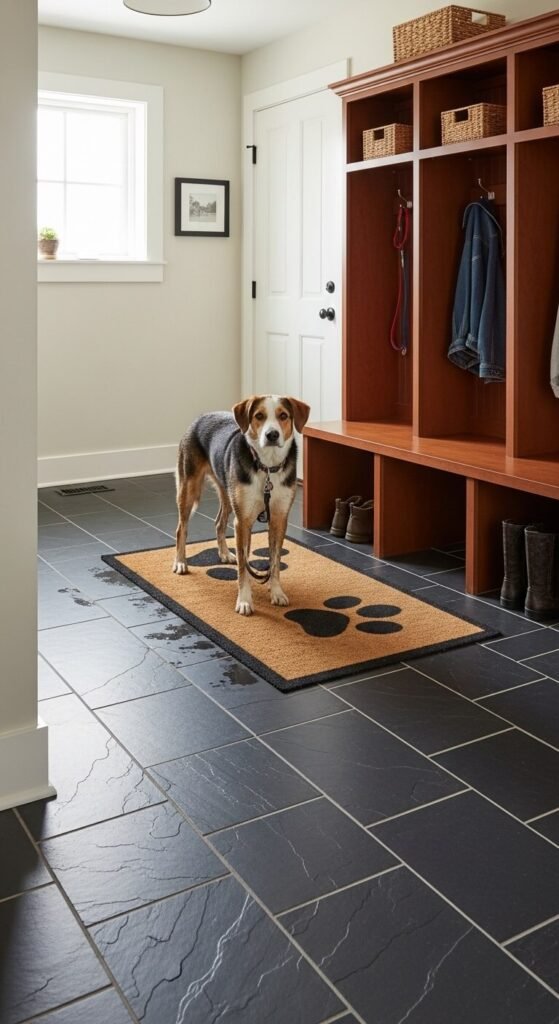
A mudroom or back entryway with scrubbable flooring is the best line of defense in any pet household. Slate-look ceramic tiles, sealed concrete, or large-format porcelain all handle mud, water, and paw prints without absorbing any of it. Add a washable pet doormat directly inside the door so paws get most of the mud before your pet walks through the rest of the house. A good absorbent pet doormat costs $15–$30. Combined with a wipeable floor, this one zone prevents most of the mess from spreading further.
21. Curtains Instead of Blinds
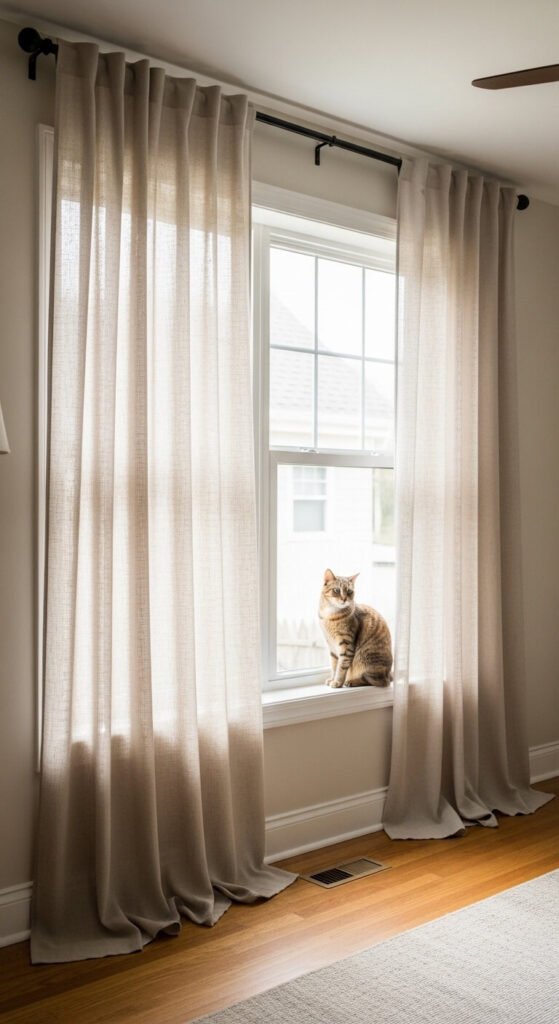
Cats destroy horizontal blinds. It is not a matter of if but when. Switching to floor-length curtain panels removes the problem entirely and typically looks better anyway. Linen, cotton, and linen-look polyester curtain panels drape beautifully, come in dozens of neutral tones, and cannot be tangled or bent by a cat’s paw. They hang from a single rod and take about ten minutes to install. Budget curtain panels cost $15–$30 per panel at most home stores. The swap improves the room’s aesthetic and eliminates a daily frustration simultaneously.
22. Stainless Steel Pet Bowls as Decor Objects
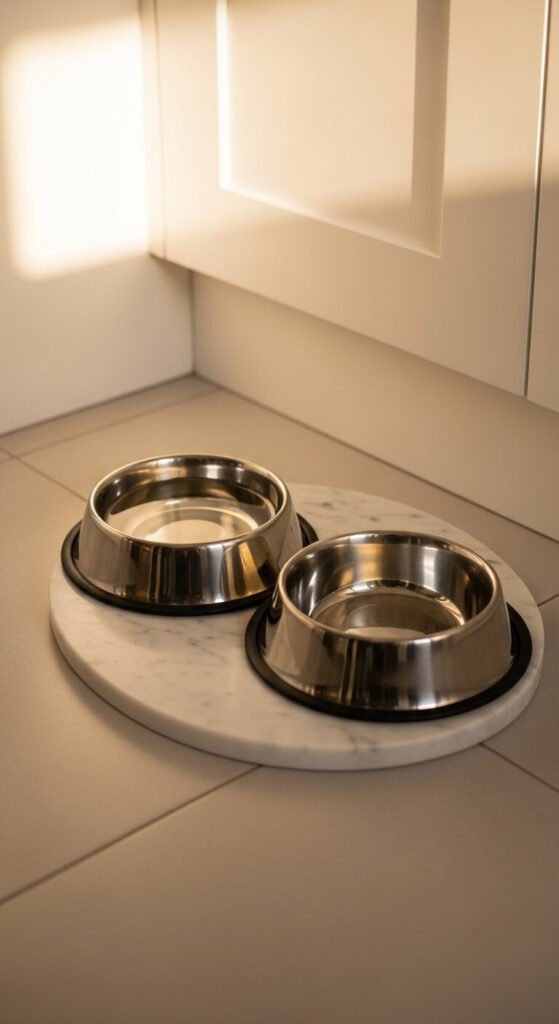
Stainless steel bowls on a marble or slate slab on the kitchen floor look significantly more considered than plastic bowls sitting directly on the floor. A round marble cheese board or a small stone tile from a hardware store acts as a tray to contain water splashes and frames the bowls as a styled zone. Stainless steel bowls cost $5–$10 each, are dishwasher safe, and do not harbor bacteria the way plastic bowls do. The slab costs $5–$15 and makes the entire feeding area look like it was designed to be there.
23. Outdoor Furniture Fabric Indoors
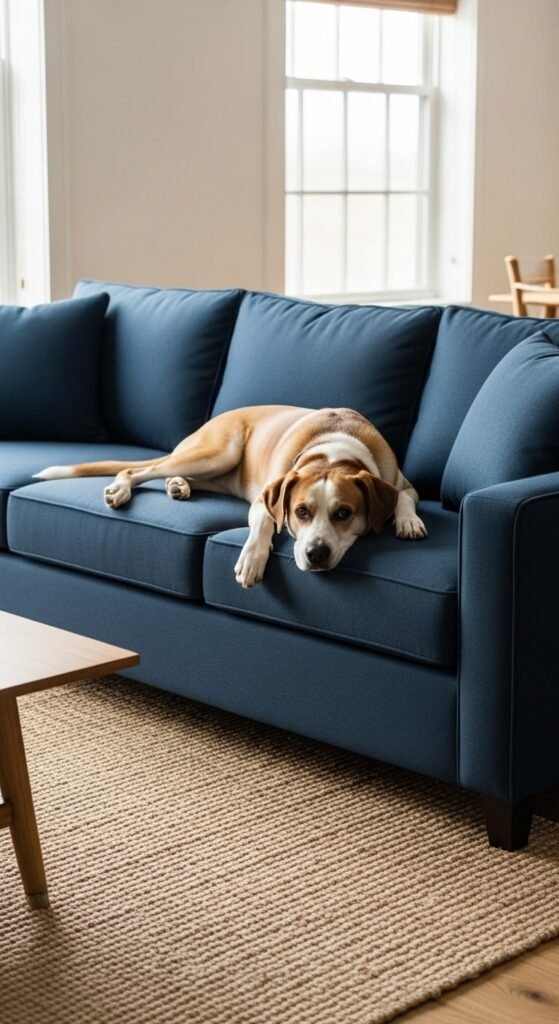
Outdoor furniture fabrics are now available in colors and textures indistinguishable from standard upholstery. Sunbrella and similar outdoor fabrics used on indoor sofas and chairs handle pet claws, wet fur, and spills with no lasting damage. Many furniture makers offer this option — ask specifically when ordering custom or semi-custom pieces. If you are reupholstering an existing sofa, specifying an outdoor-grade fabric typically adds $50–$100 to the total cost for a full sofa. For a piece that will face years of pet use, that premium is immediately justified.
24. Decorative Gates That Match the Interior
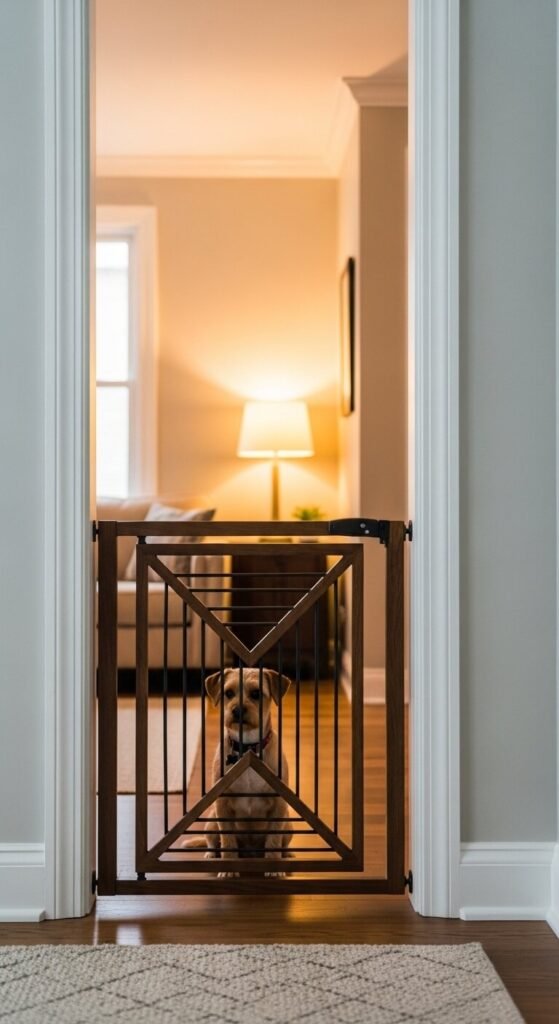
A pet gate does not have to be a white plastic eyesore. Decorative wooden and metal pet gates with geometric designs look like a designed architectural feature rather than a barrier. They come in finishes to match common door and furniture tones — dark walnut, natural oak, matte black. A well-designed decorative gate costs $60–$120 and installs with a pressure mount in most doorways. The difference between a standard plastic gate and a wooden one is enormous in terms of how the room reads — and the functionality is identical.
25. Dark or Pattern Upholstery in Pet Zone Rooms
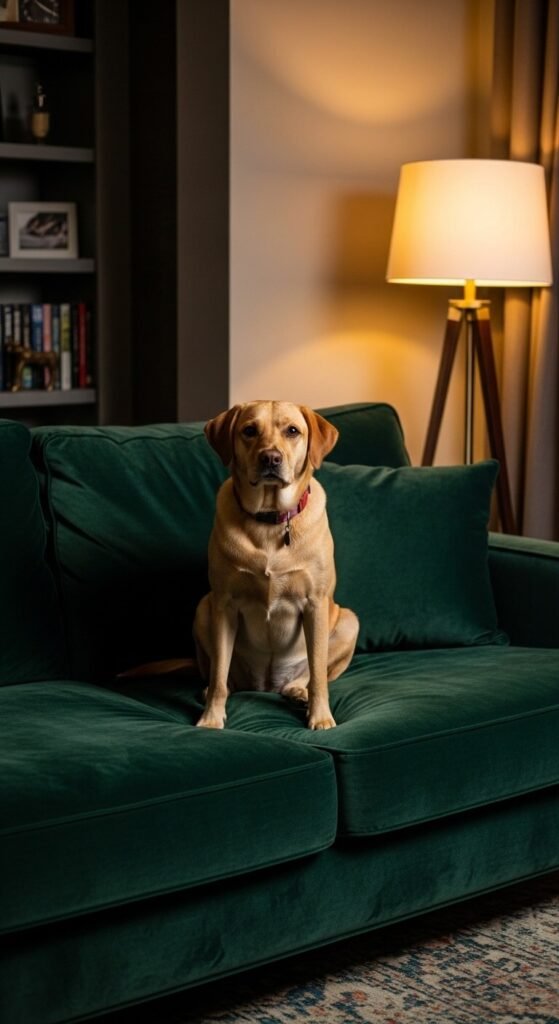
Choosing upholstery that is close in tone to your pet’s fur color is one of the most practical decor strategies for pet owners. A tan dog on a cream sofa shows every hair. The same dog on a warm caramel or deep olive sofa shows almost none between cleanings. This does not mean sacrificing color — it means choosing color thoughtfully. Dark greens, deep navies, warm taupes, and medium greys all hide the most common pet fur colors effectively. Patterned upholstery — tweed, boucle, subtle texture — also hides fur and minor wear far better than solid light-toned fabrics.
Conclusion
A pet-friendly home and a chic home are not opposites. They are the same home, designed with a little more thought. The choices that protect your floors, your furniture, and your walls from pet damage tend to be the same choices that make a home more durable, more practical, and more honest about how it is actually lived in. Start with one area that frustrates you most right now — a sofa that shows every hair, a floor that shows every scratch, a feeding zone that looks like an afterthought — and pick one idea from this list to change it. Small, deliberate upgrades add up faster than a full renovation and cost a fraction of the price. Your pets are not the problem. They are part of the home. The decor just needs to reflect that.