29 Exotic Moroccan Decor Textiles That Create Rich Layers


Disclosure: As an Amazon Associate we earn from qualifying purchases. Some links on this page may be affiliate links — if you click through and make a purchase, we may receive a small commission at no extra cost to you.
There is a reason Moroccan interiors stop people in their tracks. The layering of textiles — one rug over another, cushions stacked three high, a throw draped just so — creates a visual and tactile richness that most modern interiors simply do not have. This style draws from centuries of craft tradition: Berber weavers in the Atlas Mountains, artisan dyers in the souks of Marrakech, and embroiderers in Fez who spent lifetimes perfecting a single stitch. You do not need to travel to Morocco to bring this into your home. You need to understand which textiles matter, how they are used, and how to layer them in a way that feels abundant without feeling chaotic. This guide covers 29 of the most impactful Moroccan textile touches you can add — from statement rugs to hand-stitched cushion covers — all with practical, budget-conscious advice.
1. The Beni Ourain Rug as a Foundation Layer
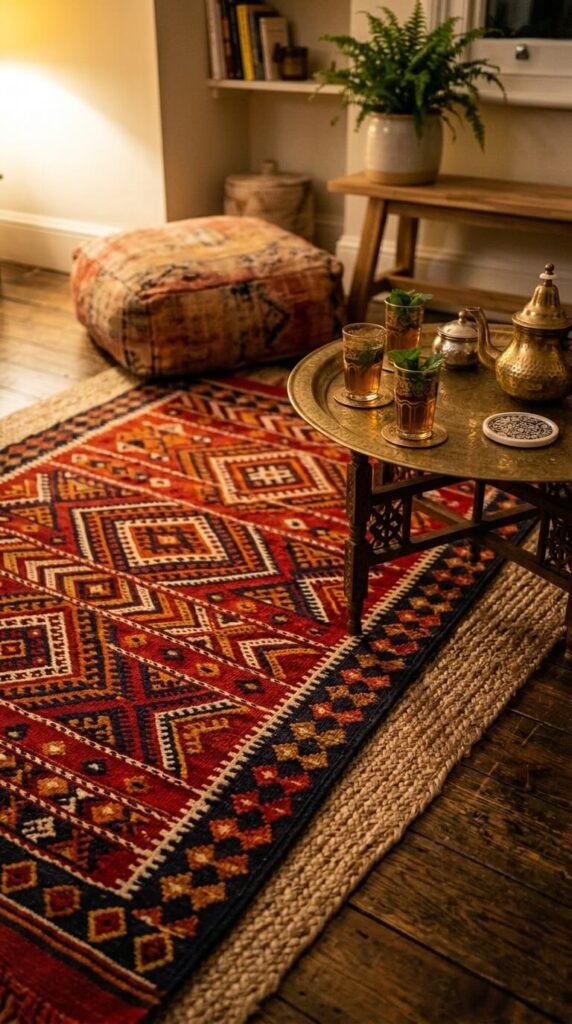
Start with the floor. A Beni Ourain rug is the single most recognized Moroccan textile in the world. Hand-knotted by Berber women in the Middle Atlas Mountains, these rugs feature bold, irregular black geometric patterns on a thick ivory wool ground. No two are identical. They anchor a room immediately. Authentic pieces run $300–$800 depending on size, but quality reproductions exist for under $150. Look for high pile, natural wool smell, and slightly uneven knotting — signs of genuine handwork. Place one under a low sofa or bed frame as your base layer.
2. Kilim Flat-Weave Rugs for Color and Pattern
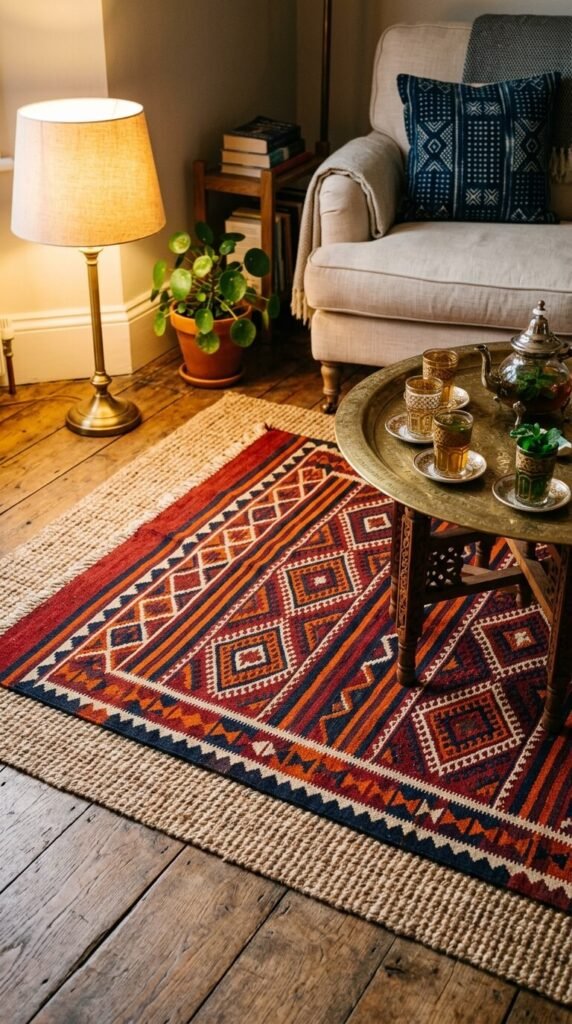
Where Beni Ourain rugs stay quiet, kilim rugs shout. These flat-woven textiles are bold, geometric, and full of color — deep reds, burnt orange, cobalt, and black in sharp angular patterns. Kilims are lighter than pile rugs and work well layered on top of a neutral base rug. This double-rug technique is a hallmark of Moroccan interiors. Vintage kilims can be found at estate sales and online vintage markets for $80–$200. Use a smaller kilim runner over a larger neutral rug to add a pop of pattern without overwhelming the space.
3. Handira Wedding Blankets as Wall Hangings
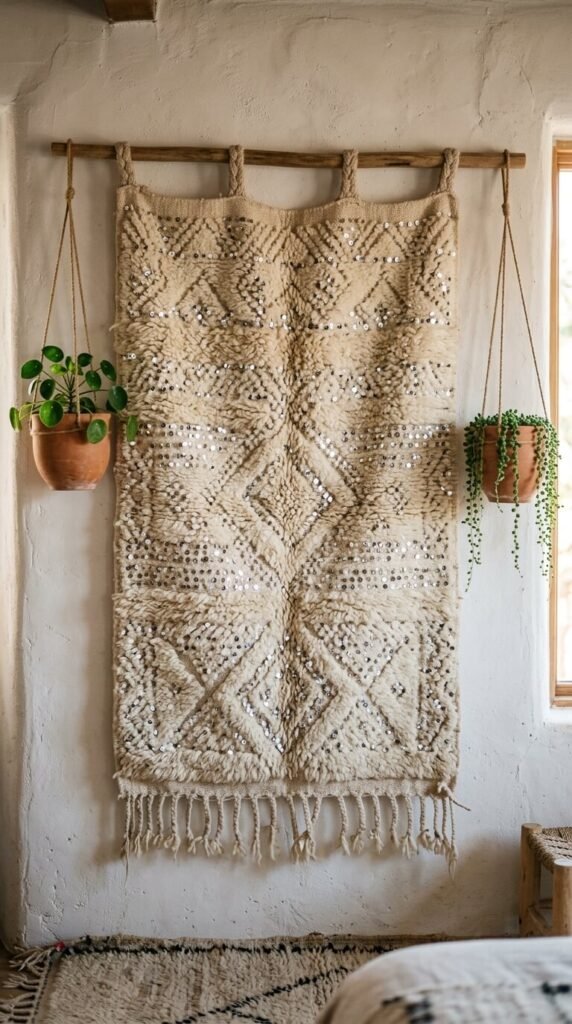
A handira is a traditional Berber wedding blanket, woven by hand from natural wool and studded with silver sequins. They were originally worn as cloaks by Moroccan brides. Today, they make extraordinary wall hangings. The mix of rough natural wool and glinting metallic sequins is unlike anything else. Vintage handiras run $150–$400 on Etsy or at specialty importers. Hang one on a bare white wall using a wooden dowel threaded through the top edge. The sequins catch light throughout the day and turn into something almost architectural.
4. Cactus Silk Cushion Covers in Jewel Tones
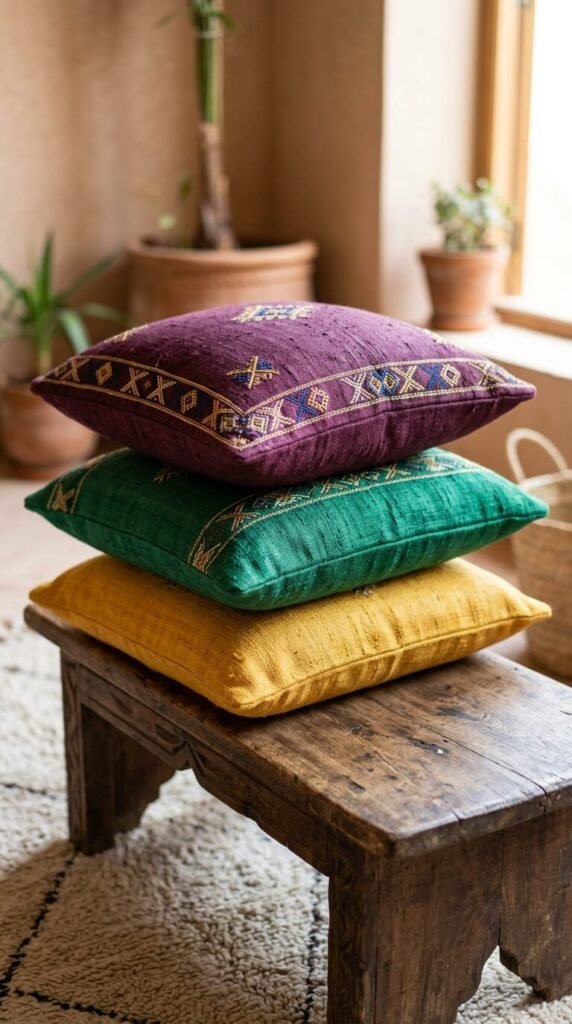
Cactus silk — also called sabra silk — is made from the fibers of the agave cactus plant. It is one of Morocco’s most distinctive textile exports. The fabric has a natural luster and drapes beautifully. It comes in jewel tones: emerald, deep plum, saffron, cobalt. Used as cushion covers, it brings an iridescent quality to any seating area. Cactus silk cushion covers are surprisingly affordable at $15–$35 each. Stack four to six on a low sofa or bench. The colors need no other decoration — they do the work on their own.
5. Embroidered Rabati Cushion Covers
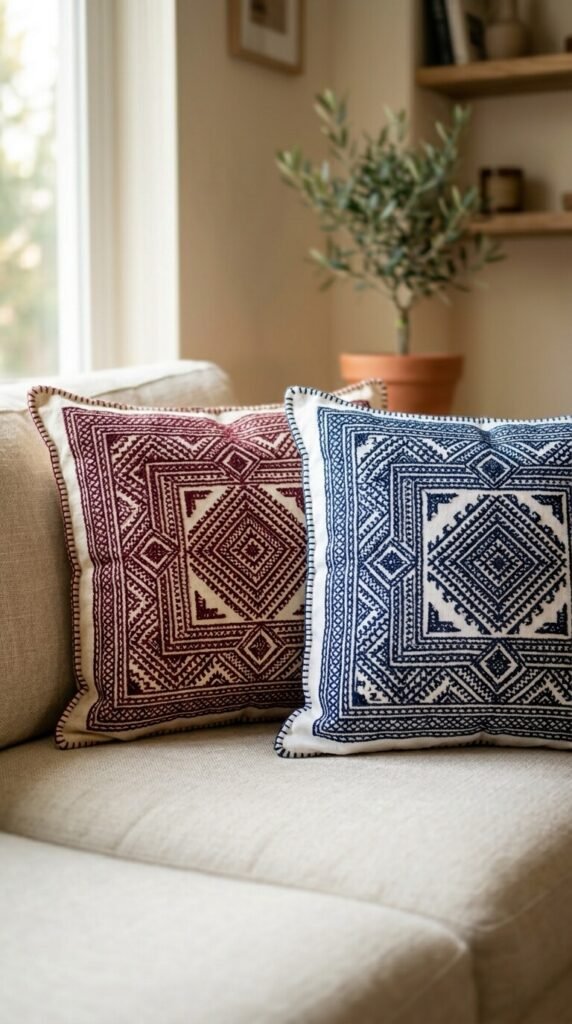
Rabat — Morocco’s capital — is famous for a specific style of embroidery. Rabati embroidery uses a counted-stitch technique on linen or cotton, producing dense geometric or floral patterns in a single color thread on a contrasting base. Navy on white. Burgundy on ivory. Black on cream. The effect is graphic and refined. These cushion covers are available from Moroccan import shops online, typically $25–$55. Mix two or three on a neutral sofa alongside cactus silk covers. The contrast between matte embroidery and shiny silk is part of the Moroccan layering approach.
6. Moroccan Pouf Ottomans in Leather or Fabric
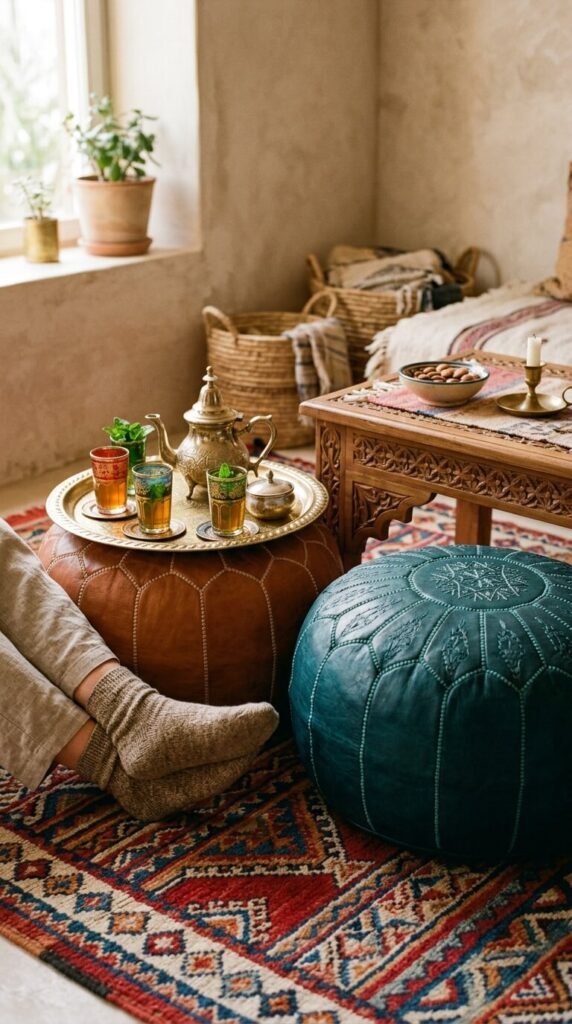
The Moroccan pouf is one of the most functional textile pieces you can add. Traditionally made from hand-stitched goatskin leather in Fez, they serve as footrests, side tables, and extra seating. Leather poufs come in natural tan, rich burgundy, dark teal, and black. Fabric versions in embroidered velvet or kilim textile are also widely available and usually cheaper ($30–$60 vs $80–$150 for leather). Place two or three at different heights around a low table. They create a casual, inviting arrangement that is central to the Moroccan living room aesthetic.
7. Wool Pom-Pom Blankets as Sofa Throws
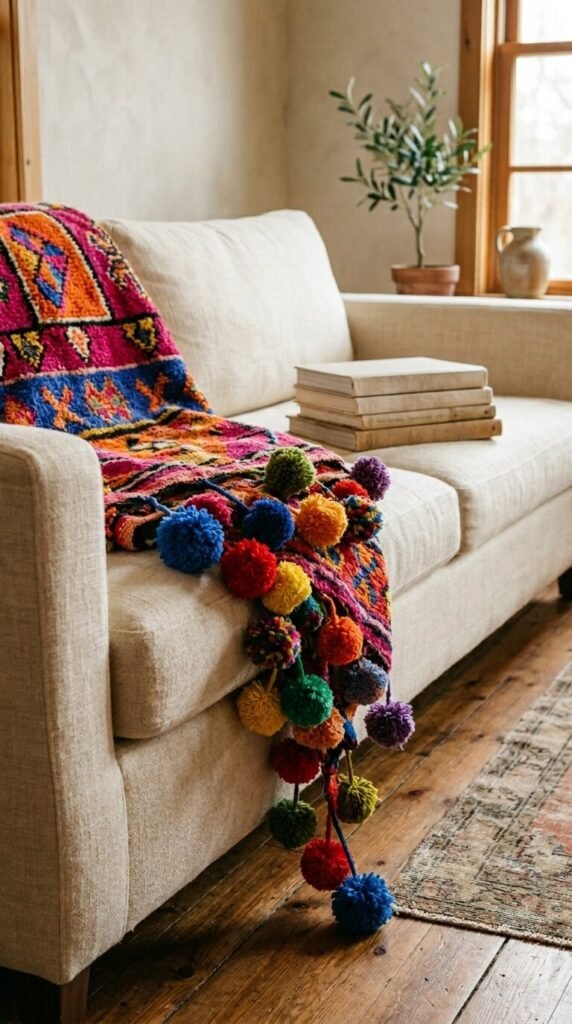
Few Moroccan textiles are as immediately joyful as the pom-pom blanket. Hand-loomed in wool with rows of colorful yarn pom-poms stitched along the borders, these throws are a staple of Marrakchi home decor. Drape one over the arm of a sofa, fold it at the foot of a bed, or use it as an actual blanket. The pom-poms add playful texture that contrasts well with more serious pieces like embroidered cushions. Moroccan wool pom-pom blankets are widely available online for $40–$90. They wash well and last for years.
8. Sabra Silk Table Runners in Geometric Patterns
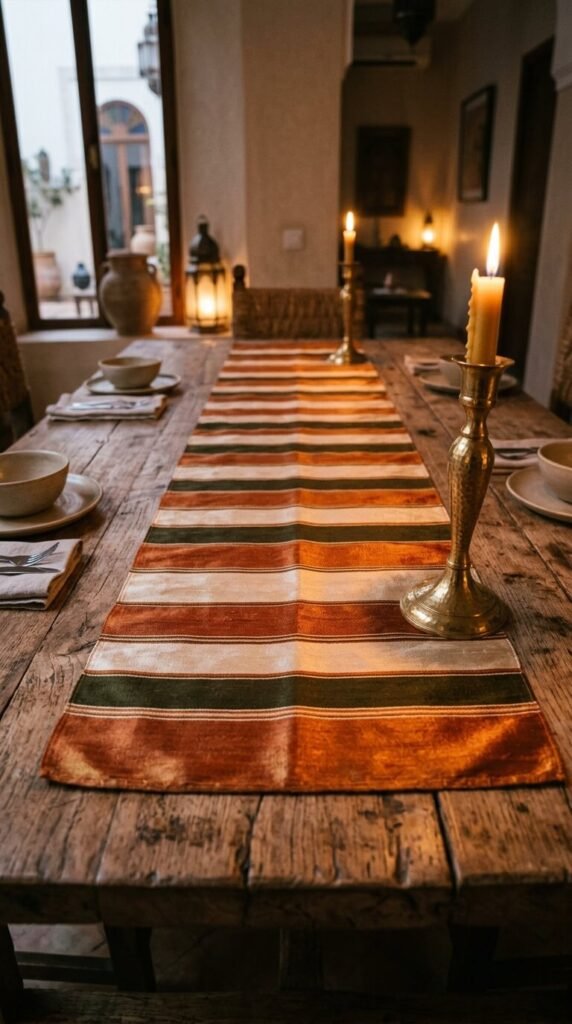
Take the beauty of cactus silk off the cushions and onto the dining table. Sabra silk table runners in striped or geometric patterns bring Moroccan richness to a surface that often gets neglected in decor. The natural luster of the fabric catches candlelight in a way cotton and linen simply cannot. Look for runners in striped terracotta, saffron, and olive combinations — classic Moroccan palette. They cost $20–$45. Pair with mismatched brass candlesticks and a low centerpiece of dried flowers or terracotta bowls. The table becomes part of the decor story.
9. Hand-Loomed Berber Wool Throws
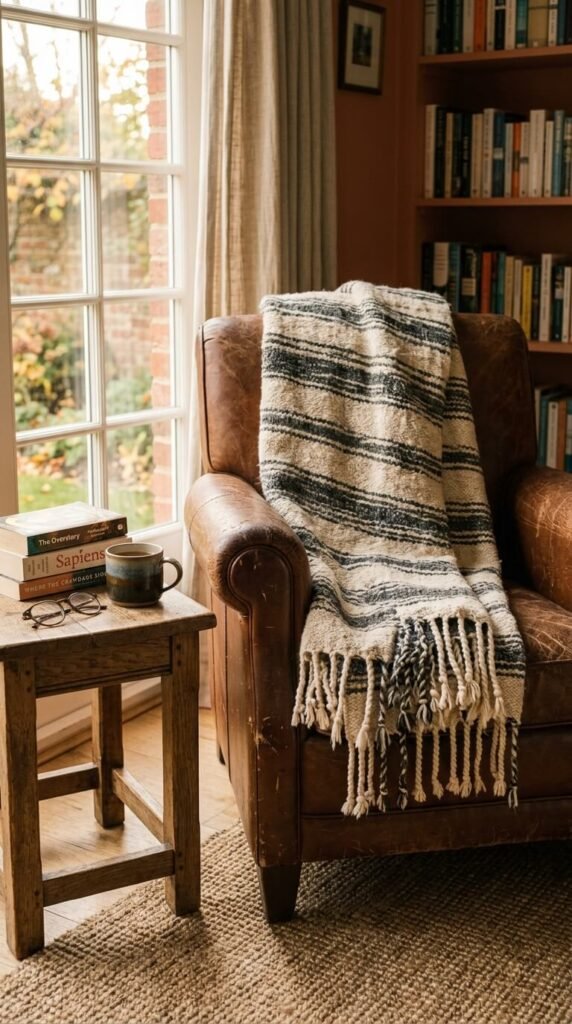
Berber wool throws are heavier and more rustic than the pom-pom blankets. Hand-loomed by Atlas Mountain communities, they typically feature natural undyed wool in cream, charcoal, and brown stripes with knotted fringe at each end. The texture is dense and slightly rough — exactly what makes them feel authentic. Drape one over a leather armchair or at the foot of a bed. They warm up minimal interiors without adding visual clutter. These throws run $60–$120 for genuine handmade pieces. The undyed natural wool means no color fading over time.
10. Hammam Towels as Decorative Throws
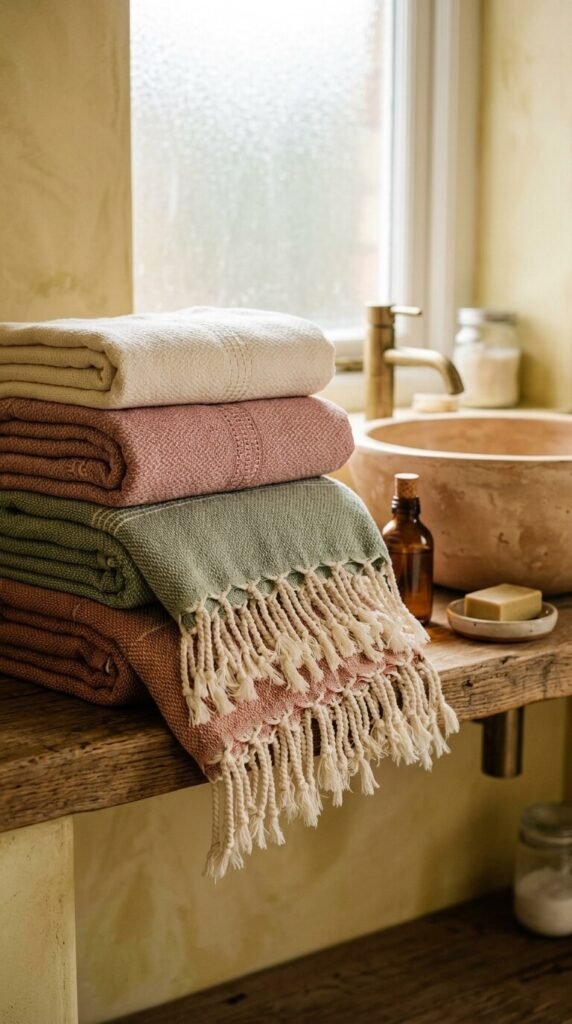
The hammam towel — also called a peshtemal — is a flat-woven cotton textile used in Moroccan bathhouses. Lightweight, quick-drying, and beautiful, they have crossed over from bathrooms into living spaces entirely. Use them as throws over chair backs, drape them over sofa arms, or fold them into a basket as decorative objects. In the bathroom, they add an immediate spa-like quality. Hammam towels come in muted earthy tones and cost $15–$30 each. Stack three in complementary tones for a color-coordinated display that is also genuinely useful.
11. Tasseled Curtain Tiebacks in Silk or Wool
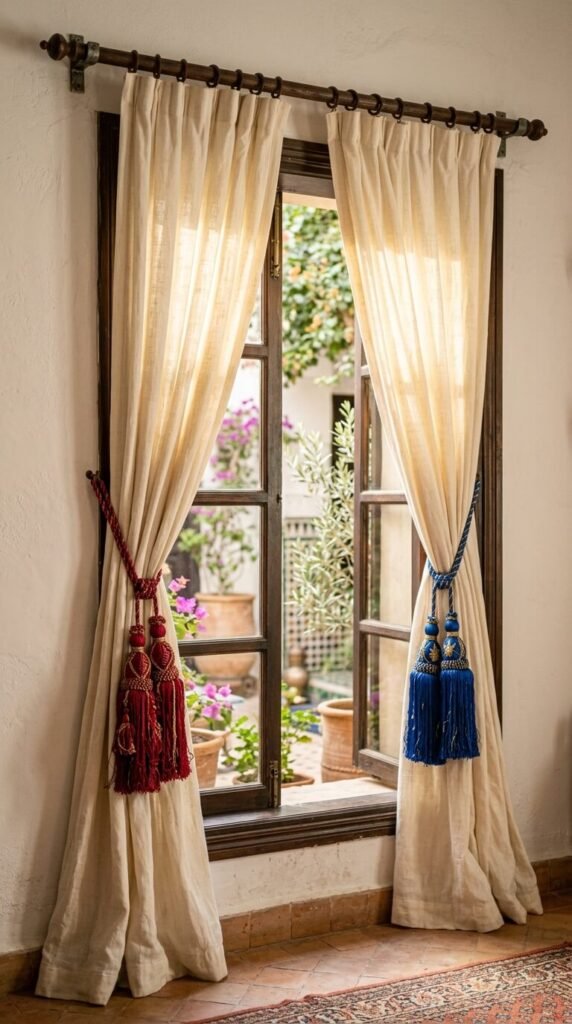
Curtains become Moroccan with one small addition: tasseled tiebacks. Hand-twisted silk or wool tassels in jewel tones — ruby, cobalt, emerald — transform the most basic linen panel into something from a Marrakech riad. You can buy tasseled tiebacks online for $10–$25 a pair. Or make your own: wrap thick yarn around a piece of cardboard, tie at the top, cut at the bottom, and twist into a cord. Hang them on simple hooks beside the window. The tassel drapes against the curtain fabric and adds color without any painting or installation.
12. Embroidered Velvet Seat Cushions for Dining Chairs
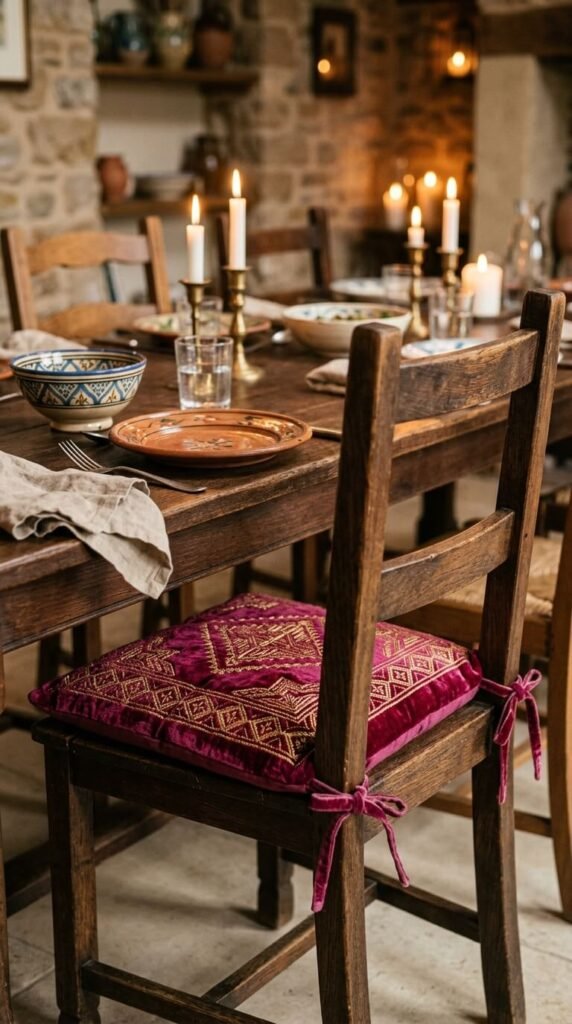
Dining chairs are often an afterthought in decor. A Moroccan embroidered velvet cushion tied to each seat changes that entirely. Velvet in magenta, teal, or deep gold with gold or silver thread embroidery turns a basic wooden chair into something you want to look at. Chair cushion pads are easy to source; you can reupholster an existing pad with a yard of Moroccan velvet fabric for under $20. Or buy pre-made cushion covers from Moroccan import stores for $18–$35. Tie them to chair legs with fabric cords for a traditional look.
13. Moroccan Woolen Hanbel Rugs as Bed Runners
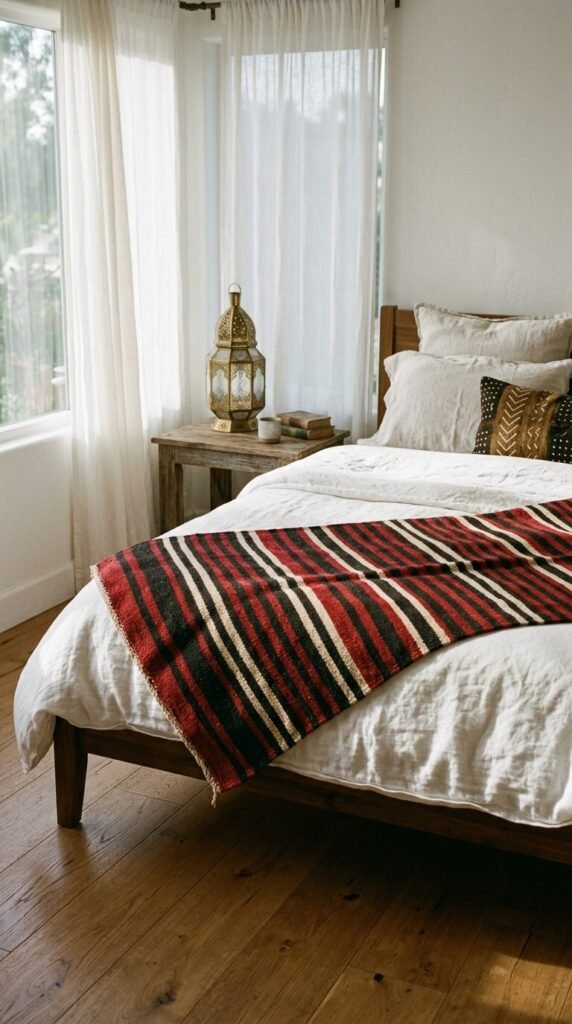
A hanbel is a flat-weave Moroccan rug made from natural wool, typically in bold horizontal stripes. Most Western homes use these as floor rugs, but Moroccan tradition places them across the foot of a bed as a decorative and practical runner. The bold stripes work beautifully against plain white linen bedding. The contrast is dramatic without being overwhelming. Hanbel rugs run $80–$180 depending on size. A smaller piece (approximately 3×5 feet) works perfectly as a bed runner without spilling too far onto the floor.
14. Fringed Wool Pillowcases With Tribal Motifs
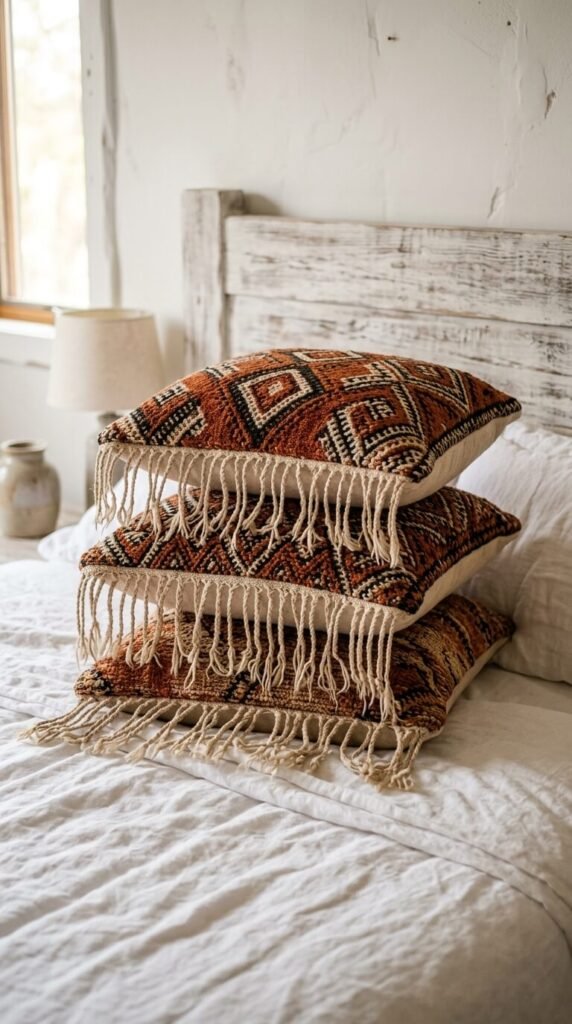
Fringed tribal wool pillowcases are one of the most textural additions you can make to a bedroom. Handwoven in earthy tones with geometric diamond motifs, these pillow covers sit at the intersection of blanket and cushion. The fringe detail at the bottom edge adds movement and depth. Mix three on a bed in complementary colors — rust, charcoal, and ivory work particularly well together. Look for them from Berber textile importers online. Prices range from $25–$55. They are thicker than standard pillowcases and keep their shape over time.
15. Moroccan-Patterned Fabric Lampshades
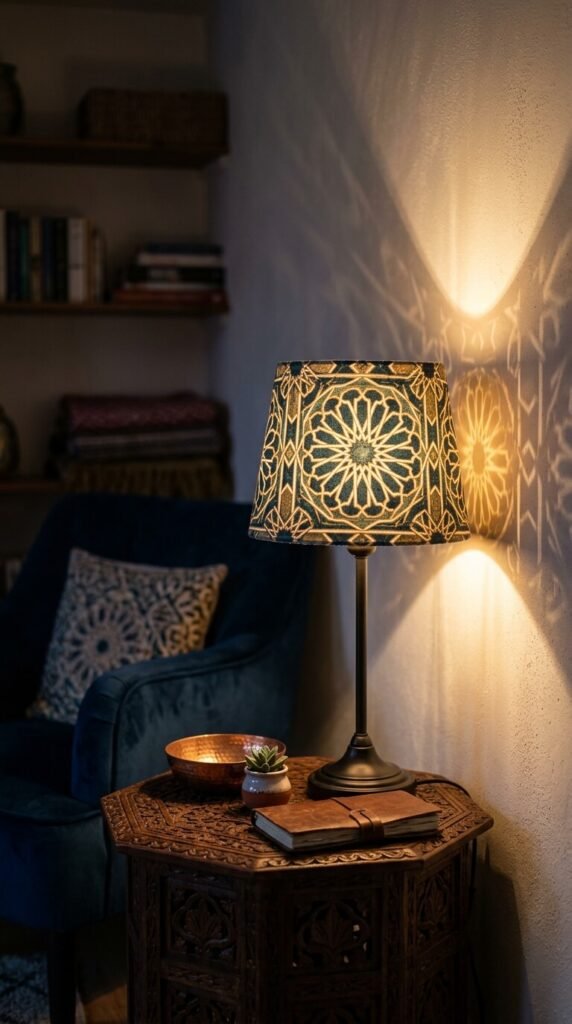
Light changes everything, and patterned fabric lampshades are a low-cost way to make it Moroccan. Look for shades in geometric cut-velvet, printed cotton, or embroidered linen in classic Moroccan patterns — star lattice, interlocking diamonds, arabesque. When lit from inside, patterned shades project soft shadow patterns onto surrounding walls. You can also recover an existing shade with Moroccan-print fabric using fabric glue. A yard of Moroccan-print cotton costs $8–$15. The result is a completely custom lampshade for under $20. The shadows it creates at night are an added visual reward.
16. Draped Canopy Fabric Above the Bed
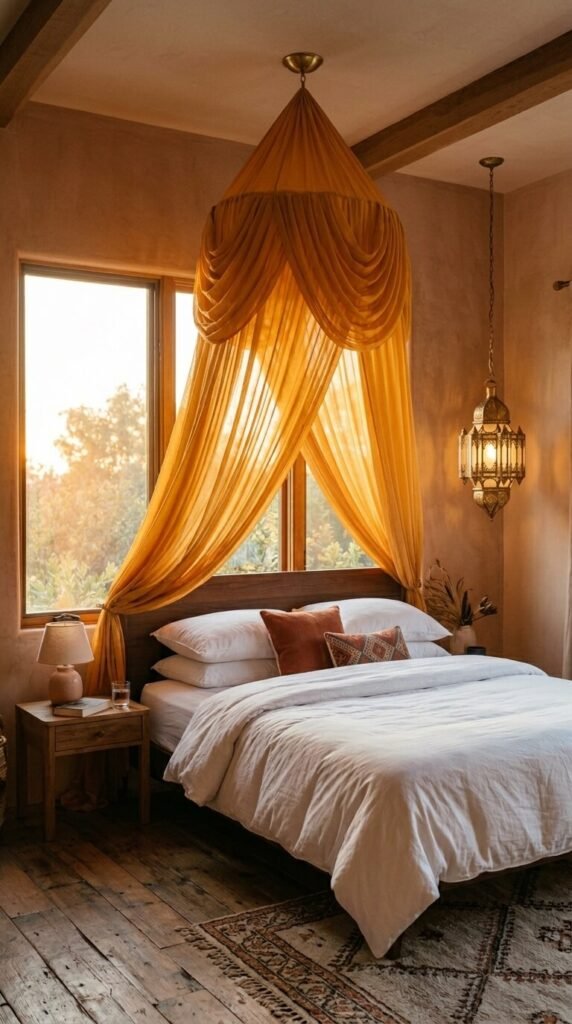
Nothing creates the feeling of sleeping inside a Marrakech riad like a draped bed canopy. The technique is simple: fix a ceiling hook above the center of your bed, drape several lengths of sheer fabric through a ring at the hook point, and let them fall on either side of the headboard. Saffron, ivory, and dusty rose are classic Moroccan canopy colors. Use 4–6 yards of lightweight cotton voile or sheer linen per side. The fabric costs $5–$12 per yard. Total cost: under $60 for a completely transformed bedroom ceiling.
17. Henna-Patterned Cotton Bedspreads
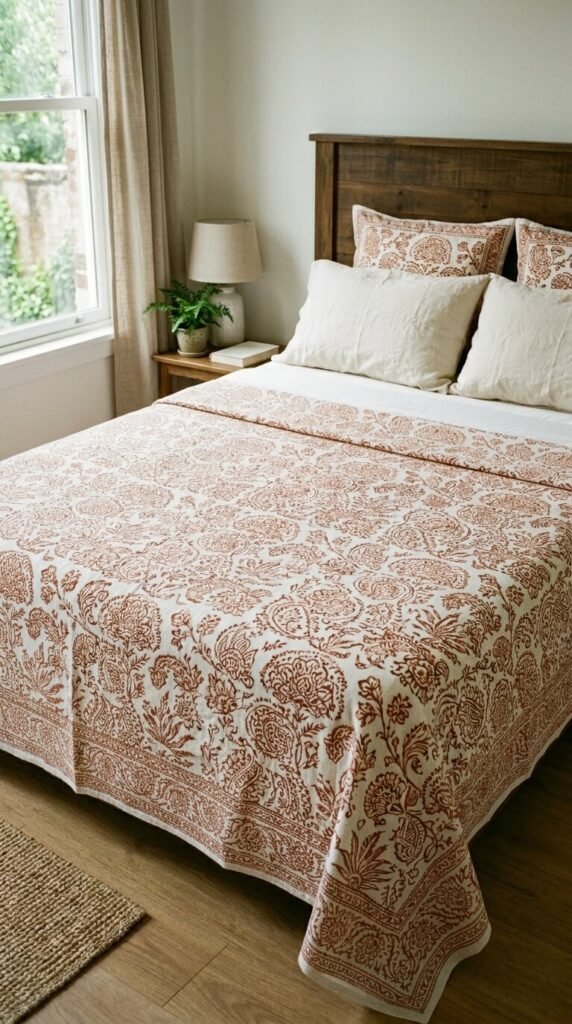
Henna-patterned bedspreads translate the intricate swirling designs of Moroccan henna body art directly onto cotton fabric. Typically printed in a single ink color — terracotta, deep indigo, or black — on a white or cream base, these bedspreads make a bold graphic statement without introducing multiple colors. They work as a focal point in a room where everything else stays neutral. Indian block-print bedspreads with similar patterns are available for $40–$80 and are visually nearly identical to Moroccan-made versions. Pair with plain white or natural linen pillowcases to let the pattern breathe.
18. Woven Storage Baskets Lined With Textile Scraps
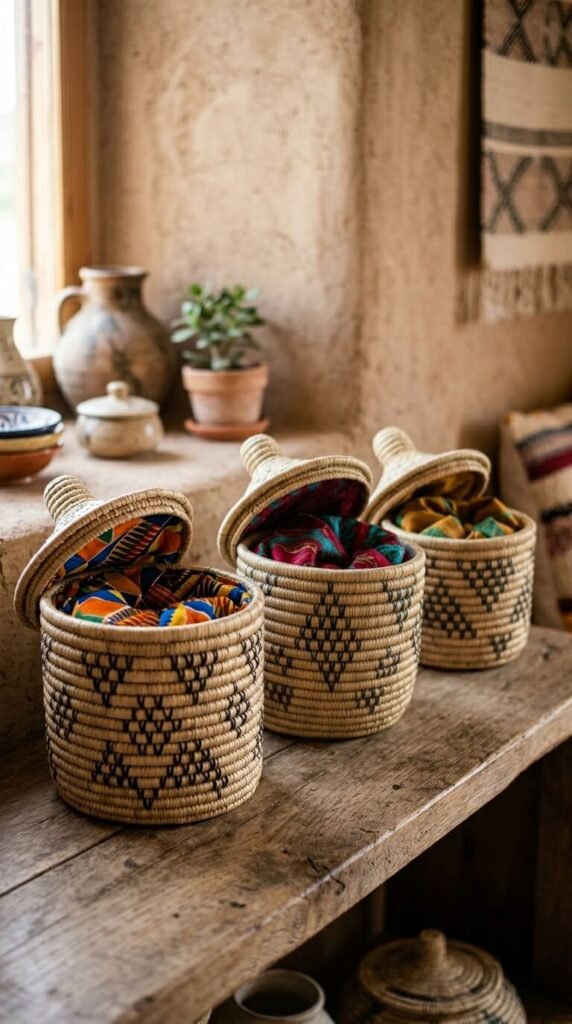
Storage baskets are not just organizational — they are textile objects in their own right. Moroccan coiled baskets in natural palm leaf with black geometric stitching have become widely recognized for their design quality. Line the inside with a scrap of cactus silk or kilim fabric to add a surprise of color when the lid is lifted. A lining takes 20 minutes and a small amount of fabric glue. Lined baskets make beautiful gift objects too. The baskets themselves cost $15–$45 depending on size. Stack two or three on a shelf in graduating sizes.
19. Moroccan Tent Fabric as a Statement Headboard
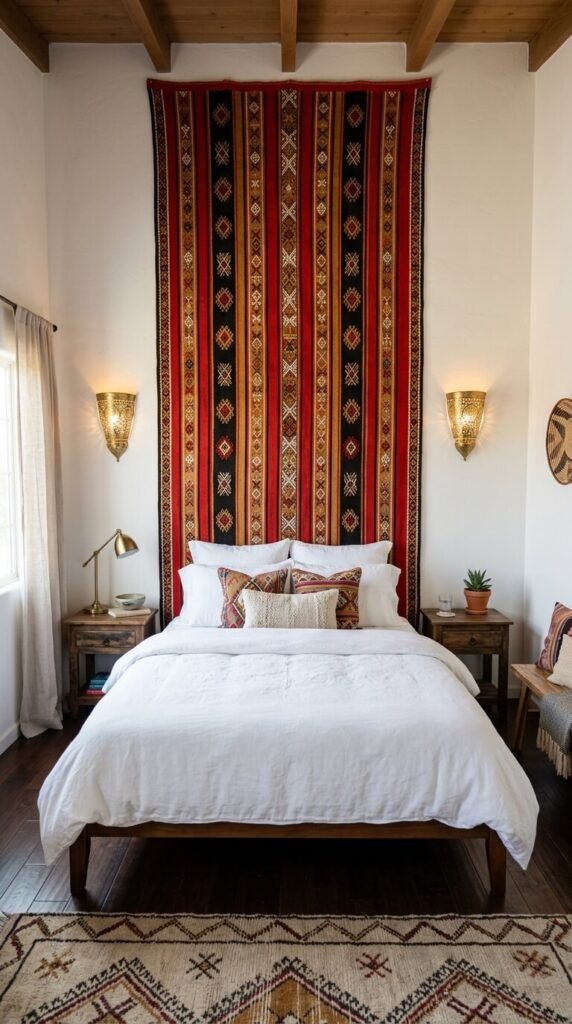
Moroccan tent fabric — used in traditional wedding and celebration tents (khaimas) — comes in bold vertical stripes of red, black, gold, and white. It is heavy, tightly woven, and meant to be seen. Hung flat on a wall behind a bed as a faux headboard, it makes an immediate and dramatic statement. Cut a panel to the width of your bed and hem the edges. Attach with wooden curtain clips on a ceiling-mounted rod. The fabric is sold by the yard from Moroccan textile importers. Expect to spend $40–$80 for enough to cover a queen-width headboard.
20. Leather-Trimmed Wool Clutch Bags as Decor Objects
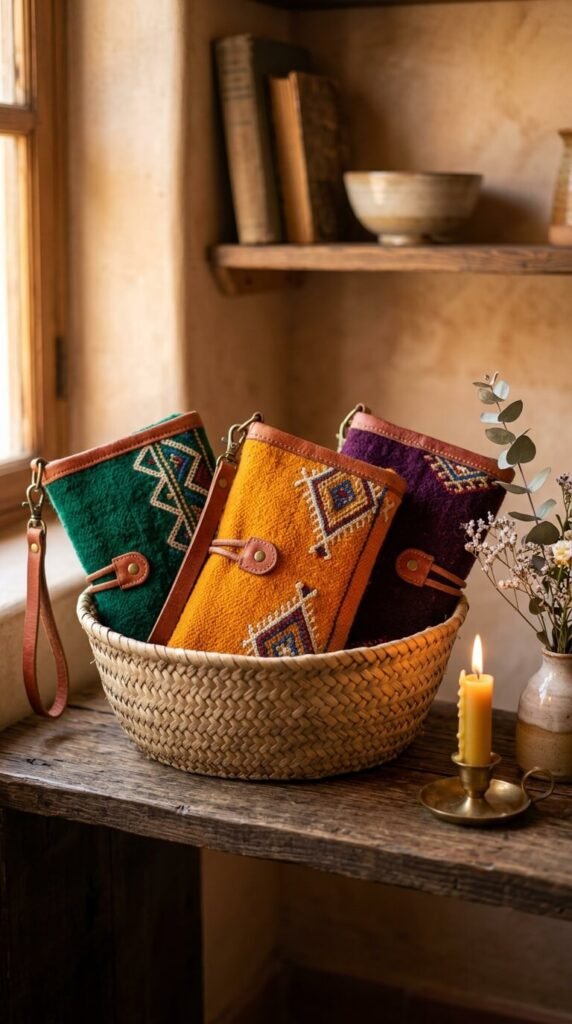
Small Moroccan leather-trimmed textile pouches are not just accessories — they function beautifully as decor objects. Arranged in a basket or lined up on a shelf, their rich colors and geometric embroidery add an artisan layer to any surface display. Use them to store small items like matches, lip balm, or earrings while displaying them openly. They make excellent conversation pieces. These pouches cost $12–$25 each from Moroccan craft importers or Etsy. Group three in complementary tones. The combination of leather and embroidered wool is distinctly Moroccan.
21. Embroidered Linen Hand Towels in the Bathroom
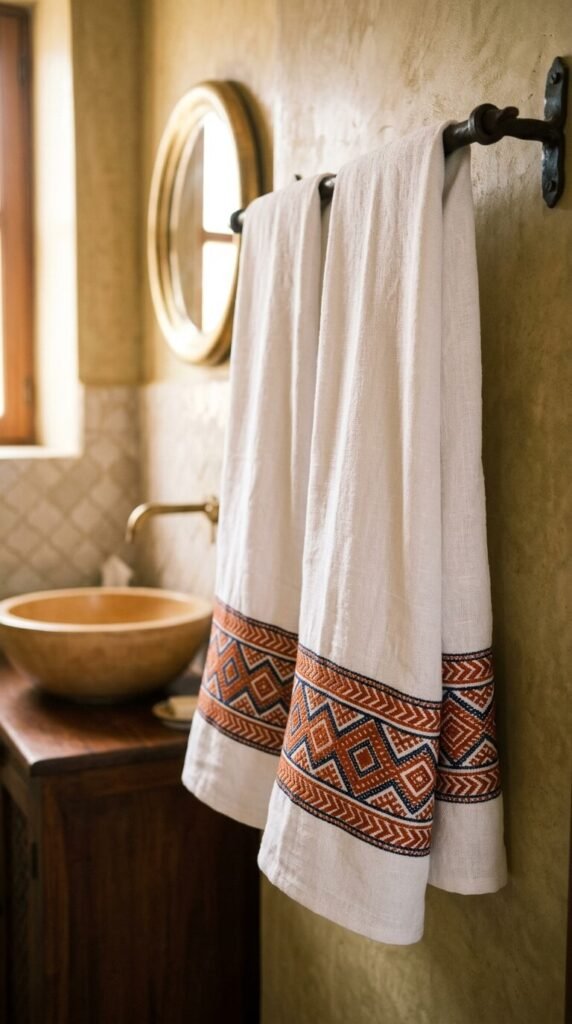
The bathroom is often overlooked in Moroccan decor schemes — but it is one of the easiest rooms to transform. Embroidered linen hand towels with a band of geometric Moroccan embroidery along the border cost $12–$25 each and replace plain towels completely. Look for cross-stitch or satin-stitch borders in single-color thread — terracotta on white linen, navy on cream. They add color without requiring any renovation. Pair with a small Moroccan ceramic soap dish and a reed diffuser. The whole bathroom update can cost under $50.
22. Floor-to-Ceiling Curtain Panels in Moroccan Print Cotton
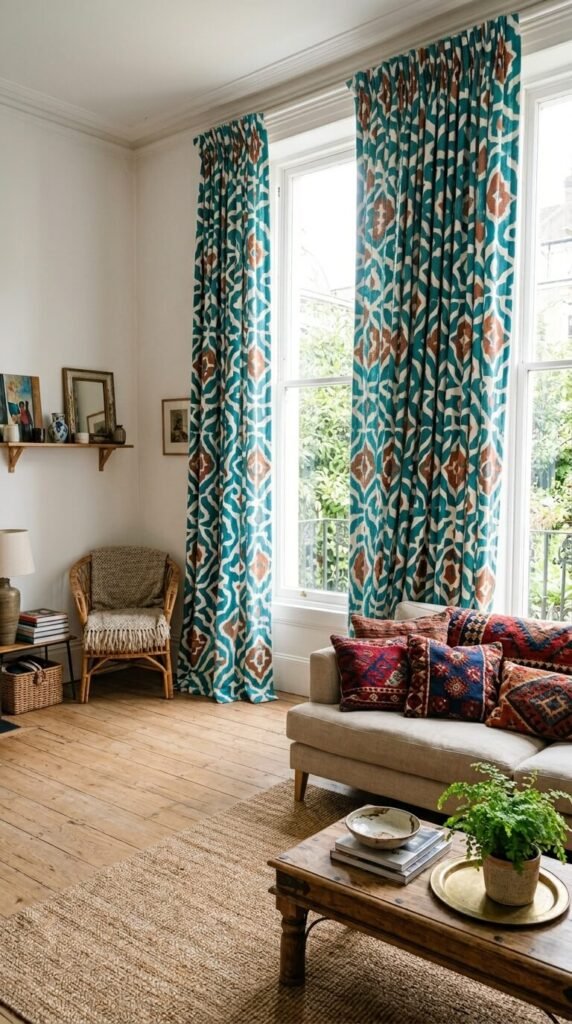
Moroccan print cotton comes in large-scale tile patterns — think zellige mosaic or arabesque in teal, terracotta, and white — that look extraordinary as full-length curtain panels. The key is volume: hang the rod high and wide, use plenty of fabric so the panels fall in full generous folds, and let them puddle slightly at the floor. The scale of the pattern reads best at full length. Cotton canvas or twill in Moroccan prints costs $8–$18 per yard from fabric retailers. A pair of floor-length panels for a standard window takes 6–8 yards total.
23. Moroccan-Style Pouffe Covered in Kilim Textile
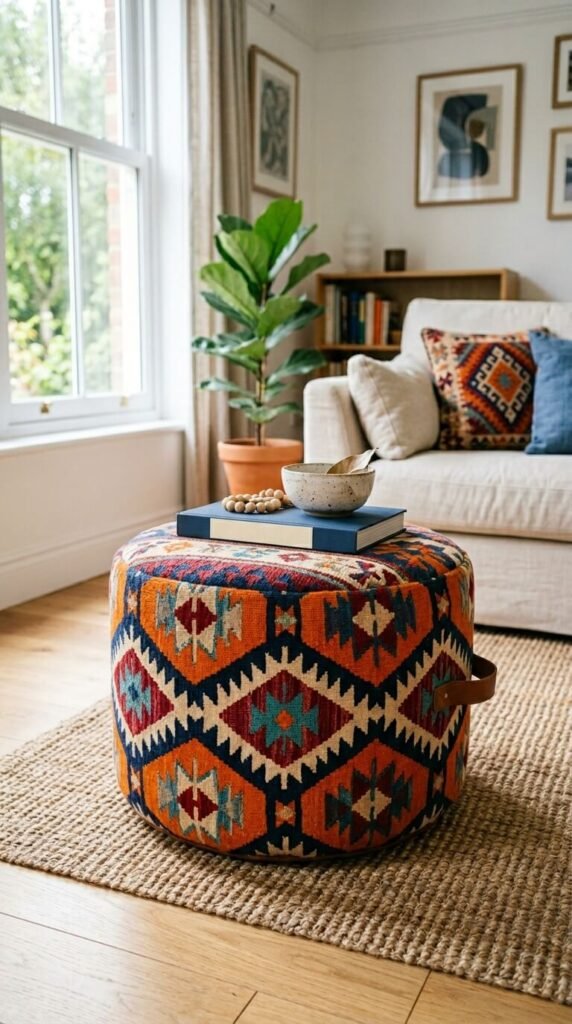
A plain storage ottoman becomes a Moroccan statement piece when reupholstered in kilim textile. Buy a cheap drum-shaped ottoman ($20–$40 from discount home stores) and recover the top and sides with a kilim fabric remnant. Remnant kilim pieces sell for $15–$30 at fabric outlets and vintage markets. Use a staple gun to pull the fabric tight around the base. The whole project takes under an hour. The result is a custom, handsome piece that looks far more expensive than it is. Use it as a side table, footrest, or extra seat.
24. Wool Fringe Trim on Existing Soft Furnishings
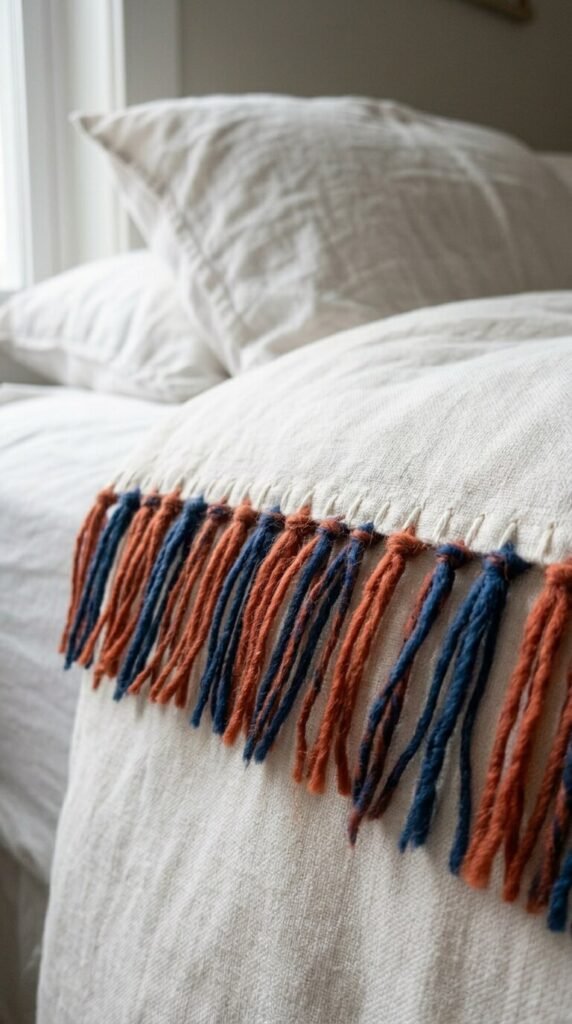
This is a $10 DIY that looks like a $200 upgrade. Wool fringe trim in earthy Moroccan tones — terracotta, indigo, cream — can be hand-stitched along the hem of an existing duvet cover, curtain panel, or throw blanket. The trim sells by the yard at fabric and craft stores. A full duvet hem takes about 4–5 yards. Stitch it by hand or machine using a simple running stitch. The result adds movement, texture, and color to something plain you already own. You are not buying new textiles — you are giving existing ones a Moroccan identity.
25. Moroccan Lattice-Print Fabric as Drawer Liners
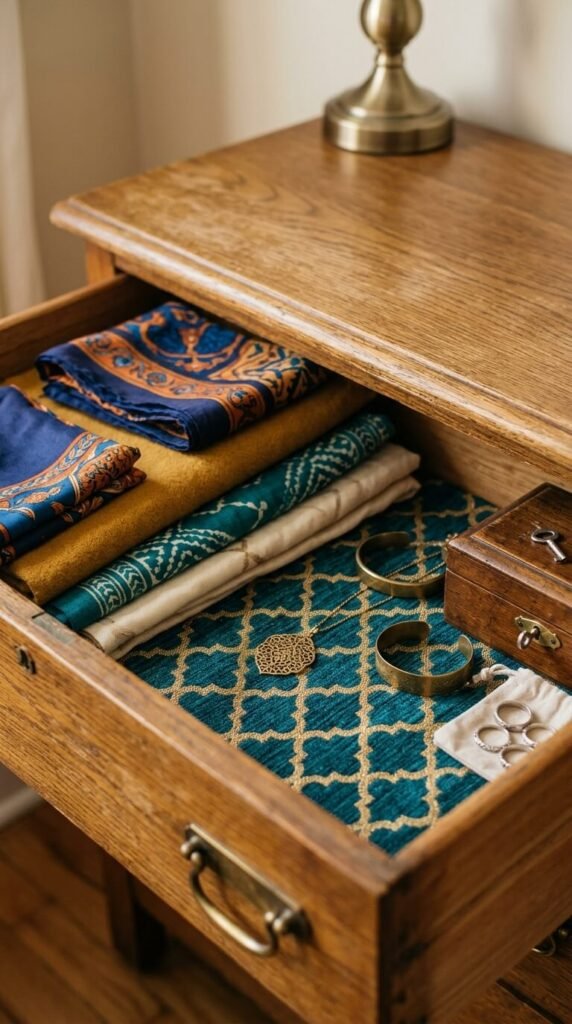
Drawer liners are not a traditional decor category, but they are a genuine pleasure. Cut a sheet of Moroccan-print cotton fabric slightly larger than each drawer base, fold the edges under, and press with a warm iron. No adhesive needed — the fabric sits flat. Every time you open the drawer, you see color and pattern. The scent of natural dye is an added benefit. This uses a fraction of a yard of fabric per drawer. A single fat quarter (18″x22″) covers two small drawers and costs $3–$6 at fabric stores. A small pleasure, but a real one.
26. Sequined Kaftan Fabric as a Decorative Wall Panel
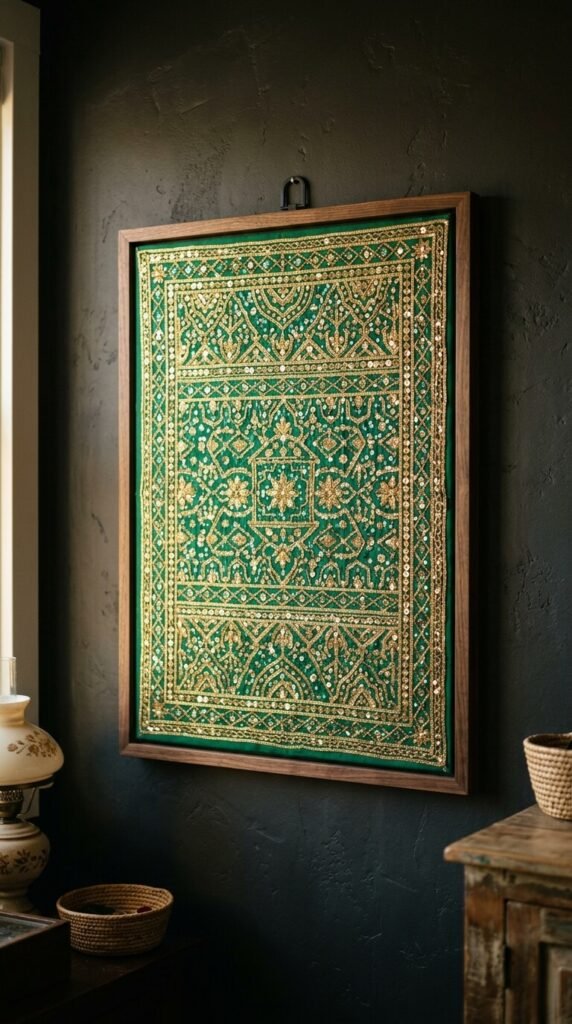
Kaftan fabric — the embroidered, sequined textile used in traditional Moroccan celebration garments — makes breathtaking wall art when stretched over a canvas frame. Buy a half yard of sequined kaftan fabric from a Moroccan fabric importer ($20–$40). Stretch it over a wooden canvas stretcher bar frame the way you would stretch a painting. Staple the back tightly. Hang it like a piece of art. When light hits it, the sequins create a shifting, luminous surface. This is more alive than any print. The frame itself costs $10–$15 from an art supply shop.
27. Striped Wool Blankets as Outdoor-to-Indoor Pieces
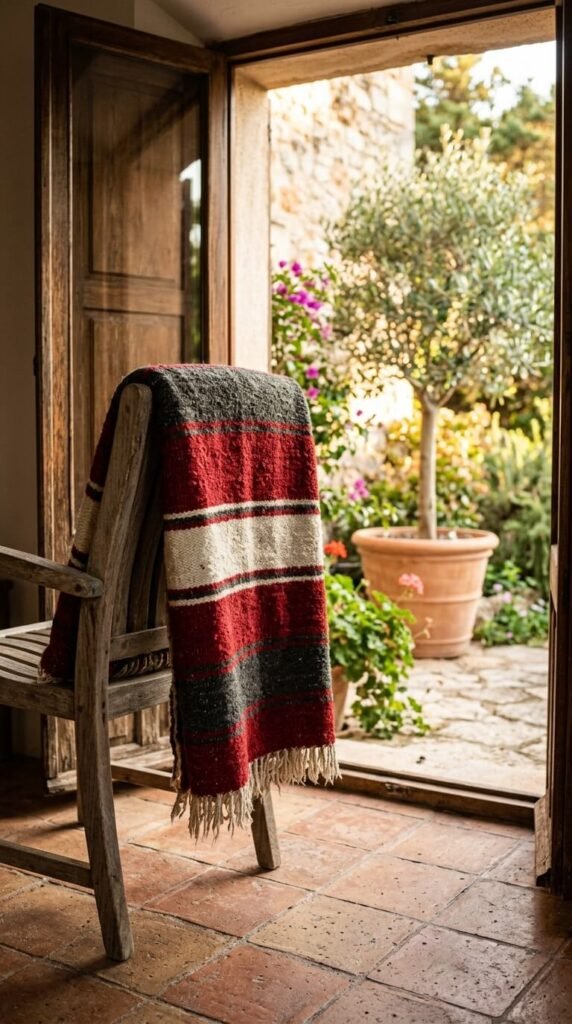
The Moroccan striped wool blanket — heavier than the pom-pom blanket, simpler than the Berber throw — moves easily between outdoor and indoor spaces. Drape one over a garden chair pulled indoors, fold it across an outdoor bench for evenings, or use it as a ground cloth for a low outdoor seating setup. These blankets are durable, weather-resistant when dry, and wash well. They typically come in bold classic combinations: red and white, black and cream, or multicolor circus stripes. Prices run $35–$75. One blanket works in at least three different settings.
28. Embroidered Cotton Tablecloth for Everyday Use
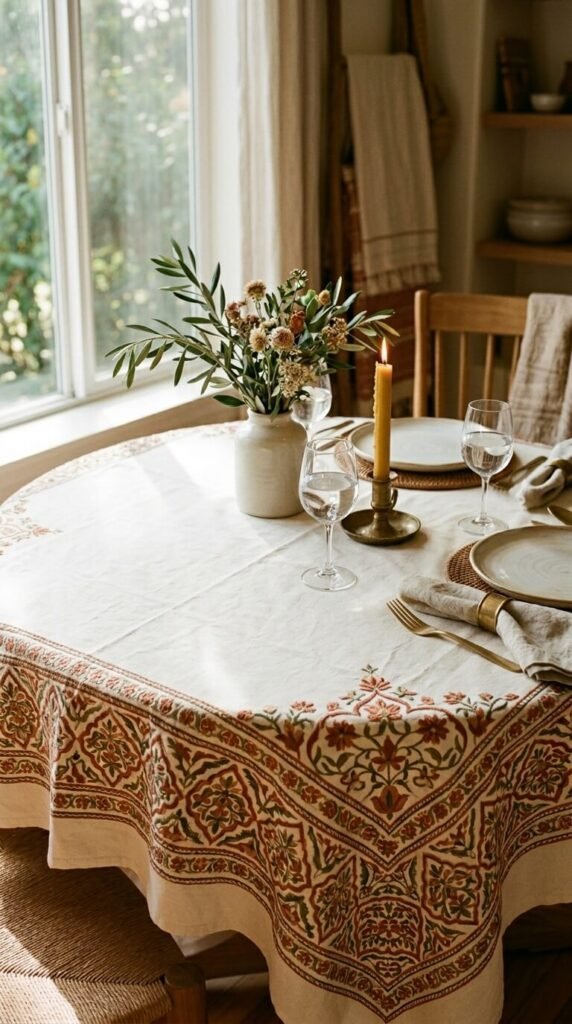
A Moroccan embroidered cotton tablecloth is one of the most underrated textile investments for the home. Unlike decorative items that only show on special occasions, a tablecloth is used daily. The embroidery on Moroccan tablecloths — typically a dense floral and geometric border in warm thread colors — is so well executed that it makes every meal feel more considered. These tablecloths are widely available from Moroccan home textile shops online, starting at $35–$70. They are fully washable. The cotton softens with each wash and the embroidery holds its color for years.
29. Layering Multiple Textiles on a Single Surface
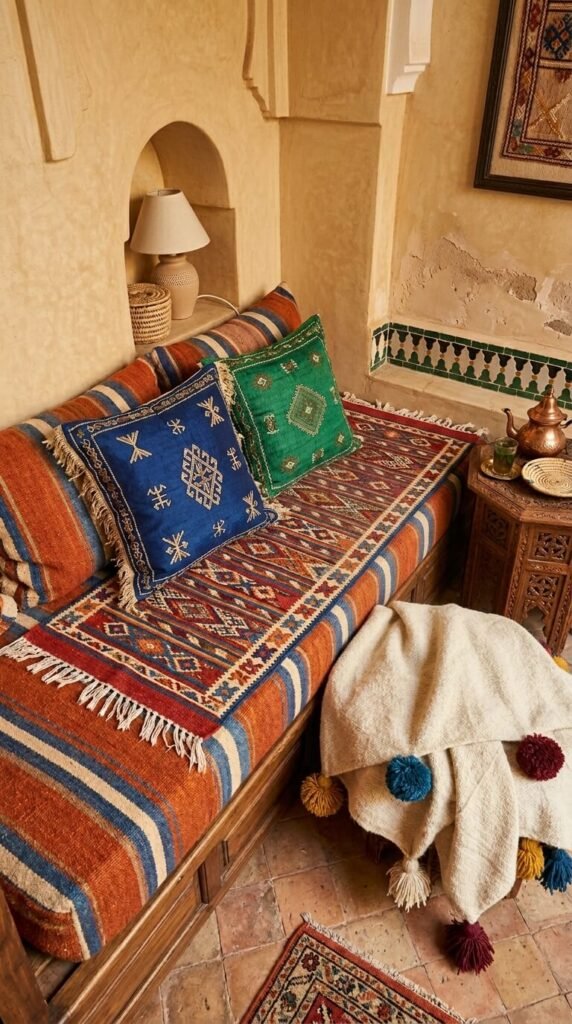
The real secret of Moroccan decor is intentional layering. No single textile does everything on its own. It is the combination — a kilim rug over a jute base, a cactus silk cushion beside a wool tribal pillow, a pom-pom throw over embroidered linen — that creates richness. The rule is: vary texture, scale, and finish. Rough next to smooth. Matte next to shiny. Large pattern next to small. Keep color families warm and connected (terracotta, saffron, deep jewel tones) but do not match. Matching kills the layered effect. Contrast keeps it alive.
Conclusion
Moroccan textiles are not decoration in the Western sense — they are a way of living. Each woven rug, embroidered cushion, and draped blanket carries a tradition of craft that stretches back generations. When you bring these pieces into your home, you are not just adding color and texture. You are introducing a philosophy of generosity — in scale, in layering, in sensory richness — that most modern interiors have completely abandoned. You do not need to do all 29 things at once. Start with one rug, one set of cushion covers, one throw. Let the room tell you what it wants next. The layering builds itself over time, and the result is a home that feels genuinely alive.