28 Modern Geometric Decor Patterns That Add Visual Interest

Disclosure: As an Amazon Associate we earn from qualifying purchases. Some links on this page may be affiliate links — if you click through and make a purchase, we may receive a small commission at no extra cost to you.
Geometric decor works because it brings order and intention to a room without removing warmth. The repeating angles, clean lines, and mathematical patterns of geometric design create visual interest that organic shapes cannot — your eye follows the pattern, counts the repetitions, finds the symmetry. Whether you prefer bold black-and-white contrast, soft terracotta triangles, or brass hexagonal accents, geometric patterns translate across every room and every budget. This guide covers 28 specific geometric decor patterns and pieces worth adding to your space, with practical advice on how to use each one effectively and where to find affordable options.
1. Hexagonal Mirror Cluster
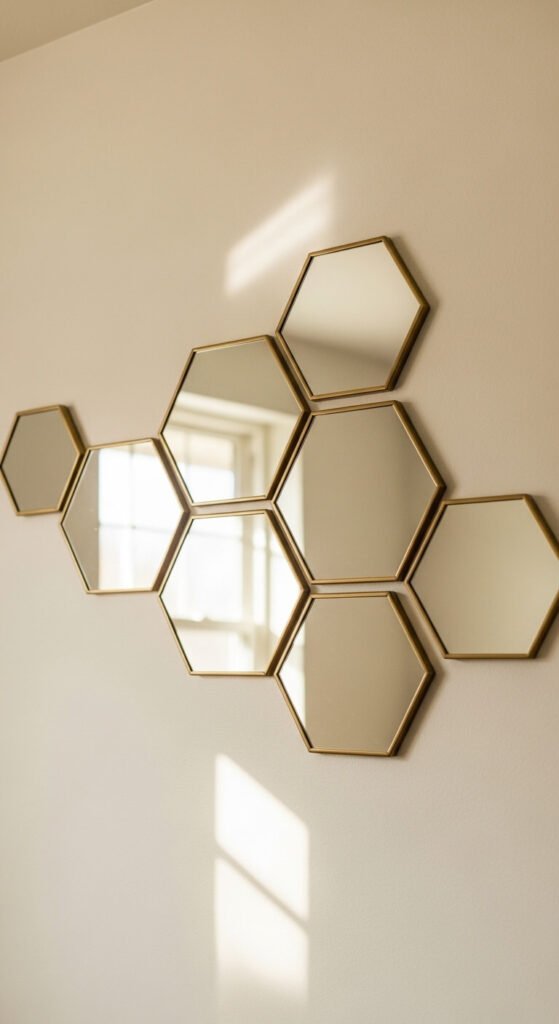
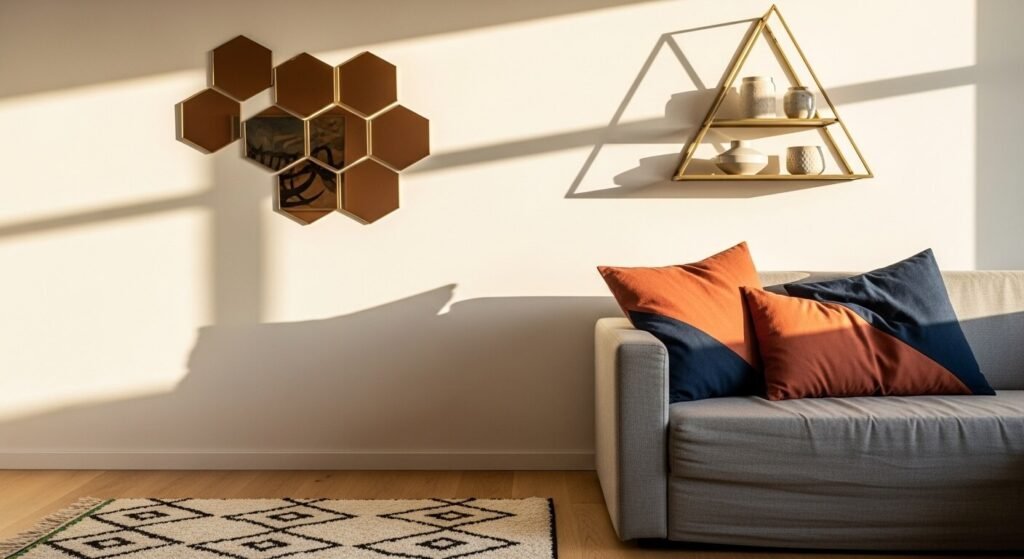
A hexagonal mirror cluster uses the honeycomb shape — one of geometry’s most satisfying repeating forms — to create a wall display that reflects light and adds depth at the same time. Arrange seven to nine hexagonal mirrors in a loose honeycomb grouping, varying the sizes slightly for a more natural flow. Thin brass frames are the most common and versatile option. Individual hexagonal mirrors cost $8–$20 each from home decor retailers. Plan the arrangement on the floor first before hanging. Use adhesive strips for lightweight mirrors. The cluster reads as a single artwork while the individual mirrors remain clearly distinct.
2. Diamond-Pattern Geometric Rug
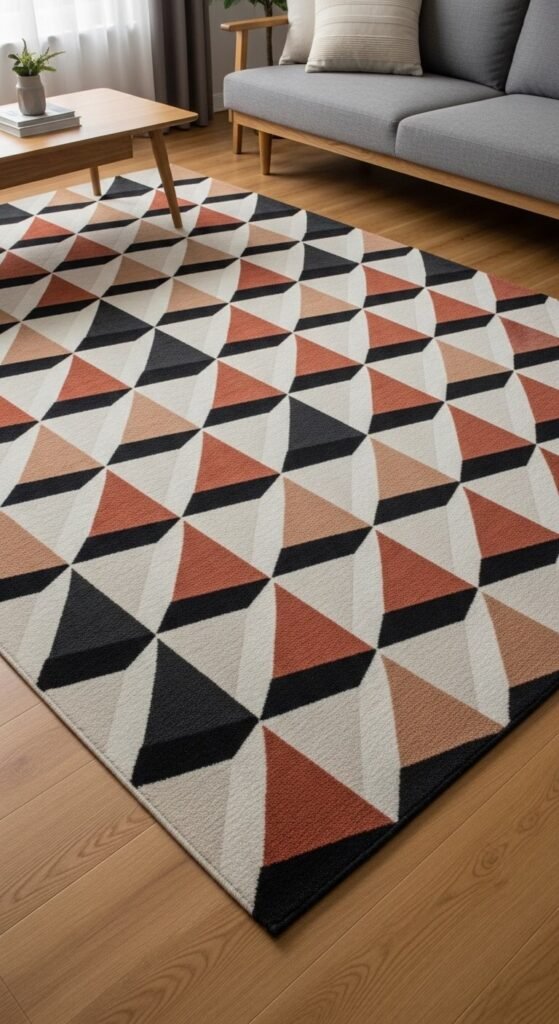
A diamond-pattern geometric rug establishes the visual tone of an entire room from the floor up. The repeating diamond grid creates a strong horizontal field of pattern that anchors furniture and defines the seating zone. Black, white, and terracotta is the most widely used color combination — it works with nearly any furniture color. Geometric rugs in this pattern are widely available from $60–$200 depending on size and material. For a budget option, a flat-weave cotton version in standard 8×10 feet costs $80–$120. Place furniture partially on the rug so the pattern remains visible around the edges of the seating area.
3. Geometric Painted Accent Wall
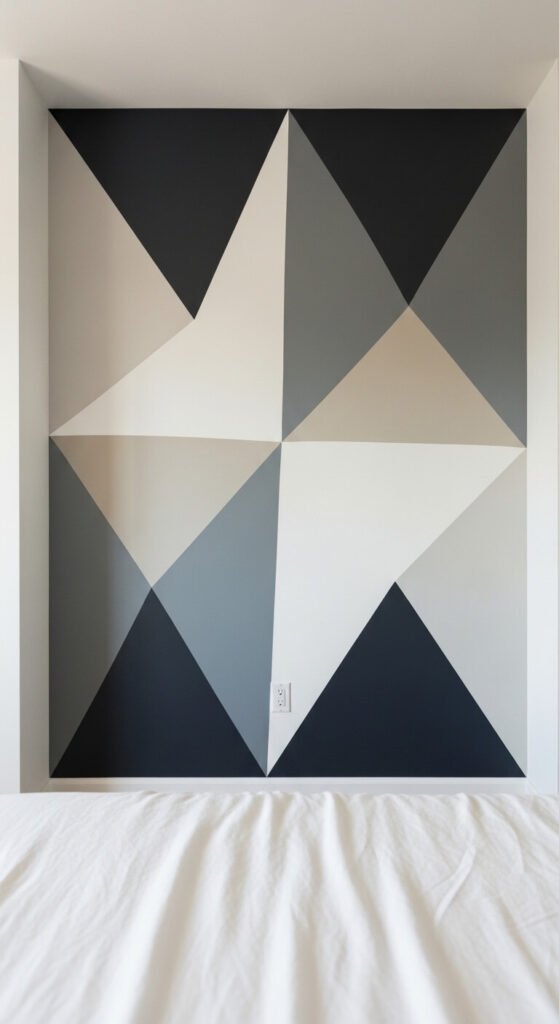
A geometric painted accent wall costs under $30 in materials and produces a result that looks like expensive custom wallpaper. Use painter’s tape to mask off repeating triangle, chevron, or diamond shapes. Paint in two or three tonal variations of the same base color for a subtle effect, or use high contrast colors for something more graphic. Plan the pattern on paper first to calculate the repeat. Watch tutorials on YouTube for triangle and chevron masking techniques — both are beginner-level projects. The tape lines do the precision work; you just fill in the shapes with a roller. Peel tape while paint is still slightly wet for the cleanest edges.
4. Brass Geometric Terrarium or Display Case
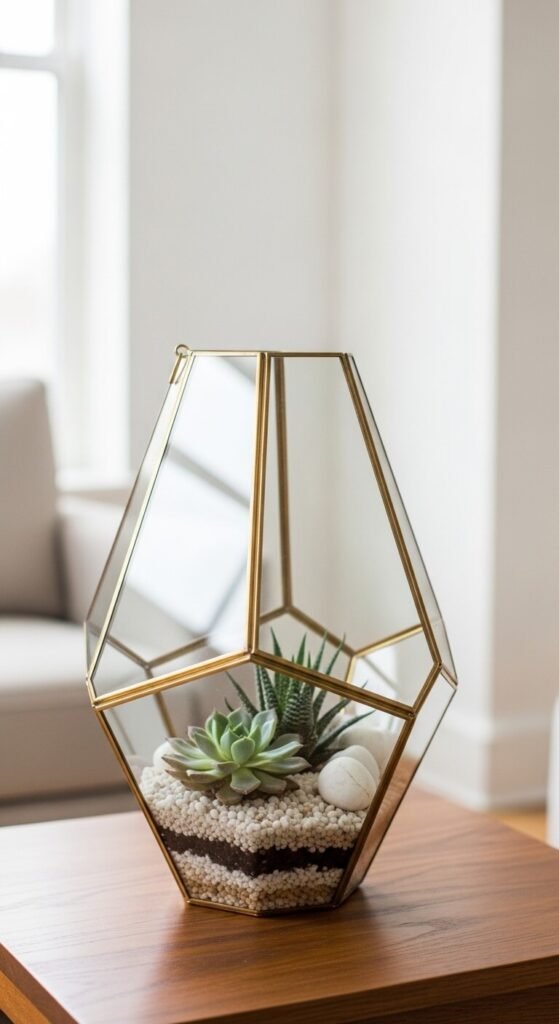
A brass geometric terrarium is both a display case and a sculptural object. The faceted diamond or pentagonal form in thin brass rod and glass creates a strong geometric silhouette on any surface. Use it to display a small succulent, an air plant, or a decorative object — the geometric frame becomes part of the display. These are widely available for $20–$50 depending on size. They also work as standalone sculptural objects without any plant inside. The brass tone warms up minimal interiors and works alongside other brass hardware and fixtures. Place on a side table, bookshelf, or bathroom counter.
5. Chevron-Pattern Throw Pillow Set
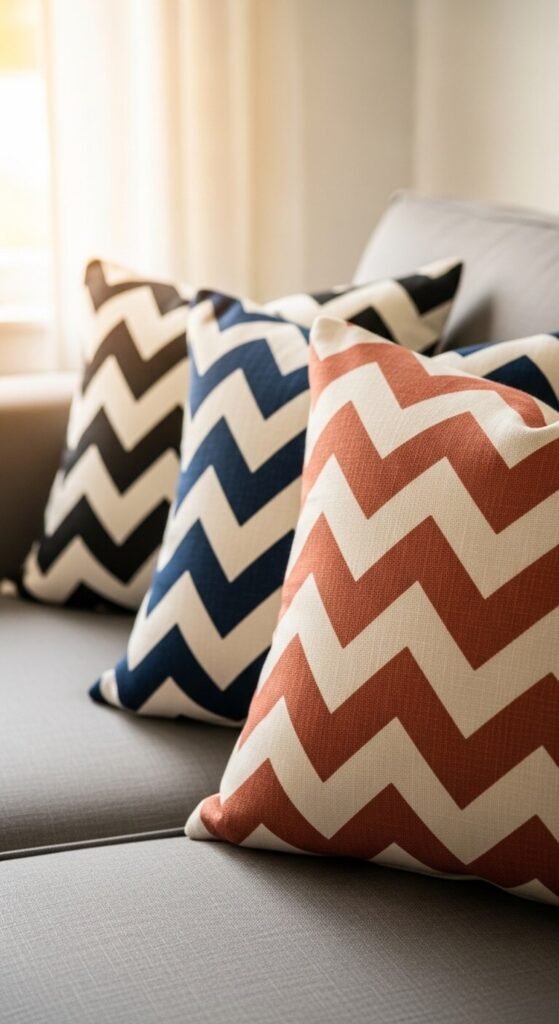
Chevron throw pillows introduce the zigzag pattern in a soft, low-commitment way. The repeating V-shapes create strong directional movement across the fabric — more dynamic than a static diamond or grid. Mix two or three chevron pillows in different color combinations on a neutral sofa: black and white alongside terracotta and cream creates pattern layering without clashing. Single chevron cushion covers cost $12–$25 from most home textile retailers. If you sew, chevron fabric from a fabric store costs $5–$10 per meter and a basic envelope cushion cover takes 30 minutes to make. Start with two pillows and add a third in a different colorway.
6. Geometric Tile Backsplash in the Kitchen
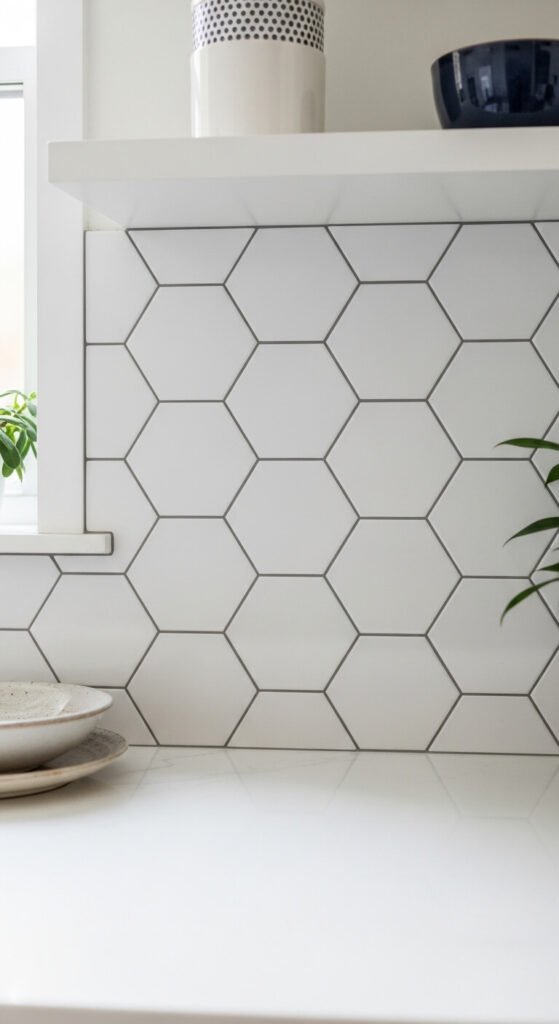
A geometric tile backsplash brings structured pattern to a kitchen or bathroom at a fixed location that does not compete with other room elements. Hexagonal, chevron, and elongated subway tile patterns are the most widely used options. Hexagonal matte white tiles with dark grout create a graphic honeycomb effect for $4–$12 per square foot. If a full backsplash installation is outside budget, use peel-and-stick geometric tile panels — these cost $20–$40 per panel and install in minutes with no adhesive or grout. A single panel behind a sink or stove gives the same visual effect as a full tile installation.
7. Triangle Shelf Set in Geometric Arrangement
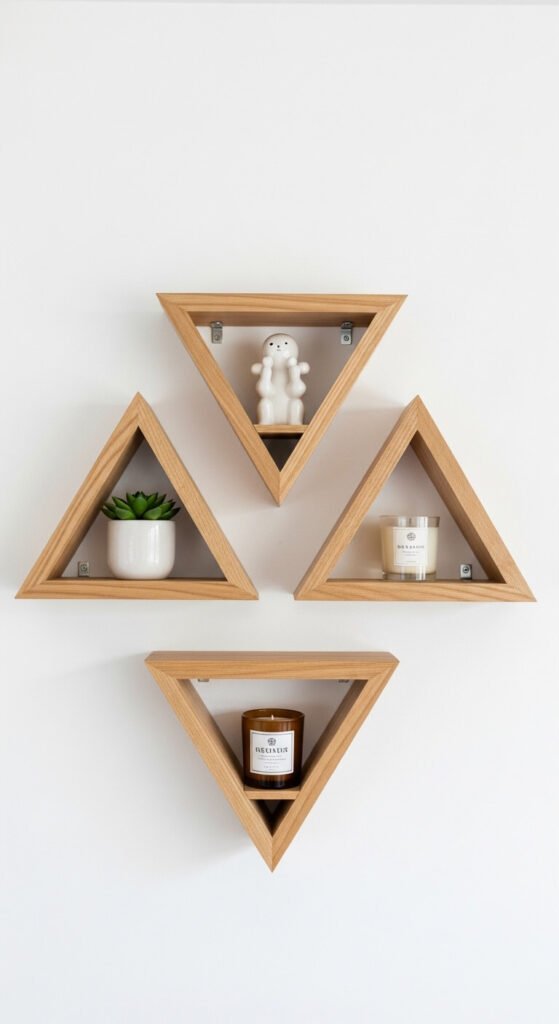
Triangle wall shelves arranged in a geometric grouping function as both storage and wall art. The shelves themselves create a geometric pattern against the wall — the shape of each shelf reads as clearly as any hung print. Arrange three in a compact triangle formation: two pointing up, one pointing down, with their edges nearly touching. Each shelf holds a small plant, a candle, or a ceramic object. Natural oak triangle shelves cost $15–$30 each. Install with basic wall anchors. The combination of the geometric shelf forms and the small styled objects creates a composed wall moment that takes minimal effort to achieve.
8. Geometric Wallpaper on a Single Accent Wall
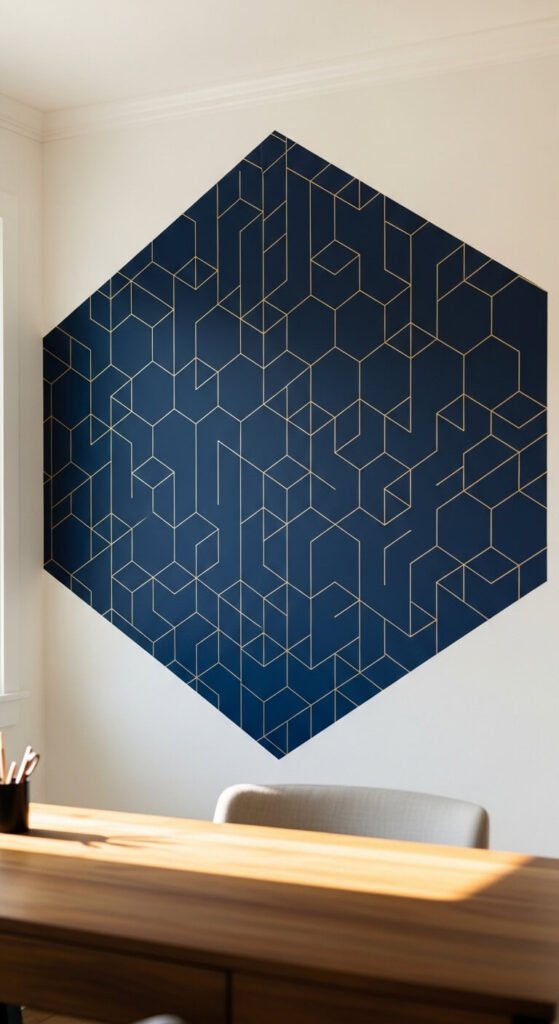
Geometric wallpaper on a single accent wall delivers maximum pattern impact with minimum wallpaper cost. One wall in a home office, bedroom, or dining room typically uses one to two rolls — compared to four or five for a full room. Large repeating geometric patterns — hexagons, triangles, interlocking circles — work best on accent walls where the pattern has room to repeat without feeling claustrophobic. Peel-and-stick geometric wallpaper costs $20–$50 per roll and requires no paste. Standard paste wallpaper in geometric patterns costs $15–$40 per roll. Either option installed on a single wall costs under $100 and dramatically changes the character of the room.
9. Geometric Metal Wall Art
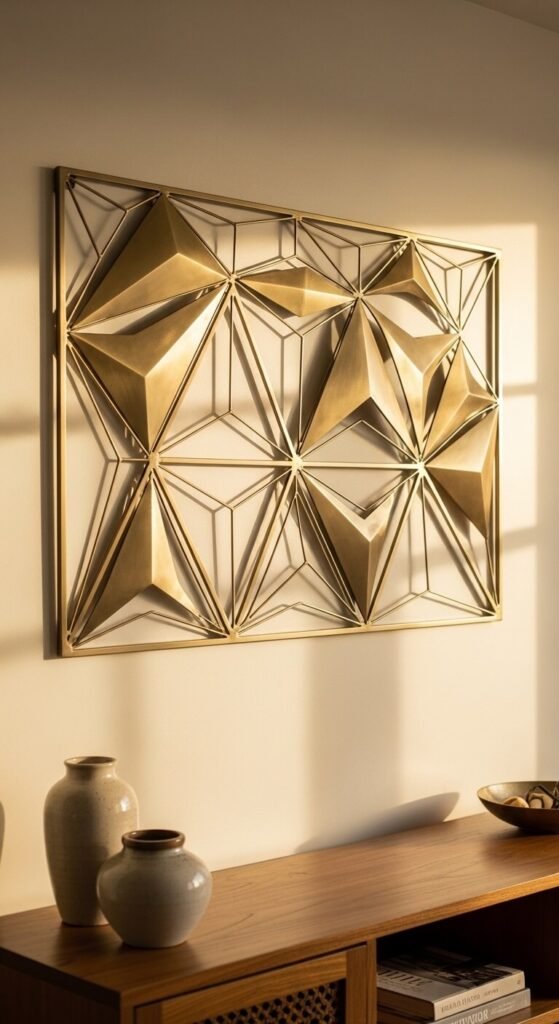
Geometric metal wall art brings three-dimensional texture to a wall through the raised surfaces and shadows of the metal itself. Brushed brass, matte black, and copper geometric wall sculptures work well above a console, sofa, or bed. The shadow lines the raised metal edges cast onto the wall change with the angle of light throughout the day, making the piece dynamic rather than static. Geometric metal wall art in standard sizes costs $35–$90. Look for pieces with a deliberate geometric logic — interlocking triangles, concentric hexagons — rather than random angular shapes. The geometric precision is what makes these pieces read as intentional.
10. Herringbone Pattern Wood Floor or Panel
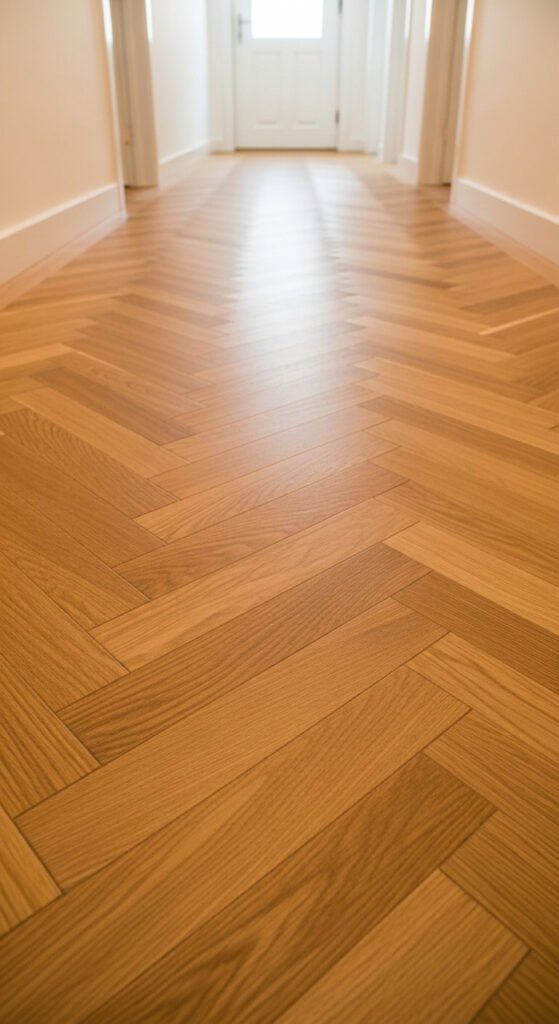
Herringbone patterning — alternating rectangular planks at 45-degree angles to create a zigzag — is one of the most sophisticated geometric floor and wall patterns in interior design. It reads as expensive because it requires more material and careful installation than a standard straight lay. For walls and backsplashes, herringbone tile patterns in subway or elongated tile cost $5–$15 per square foot. For floors, herringbone laminate flooring gives the pattern at a fraction of solid wood cost — $2–$6 per square foot. Herringbone backsplash panels in peel-and-stick format are available for $25–$45 per panel for a zero-installation option.
11. Geometric Pendant Light
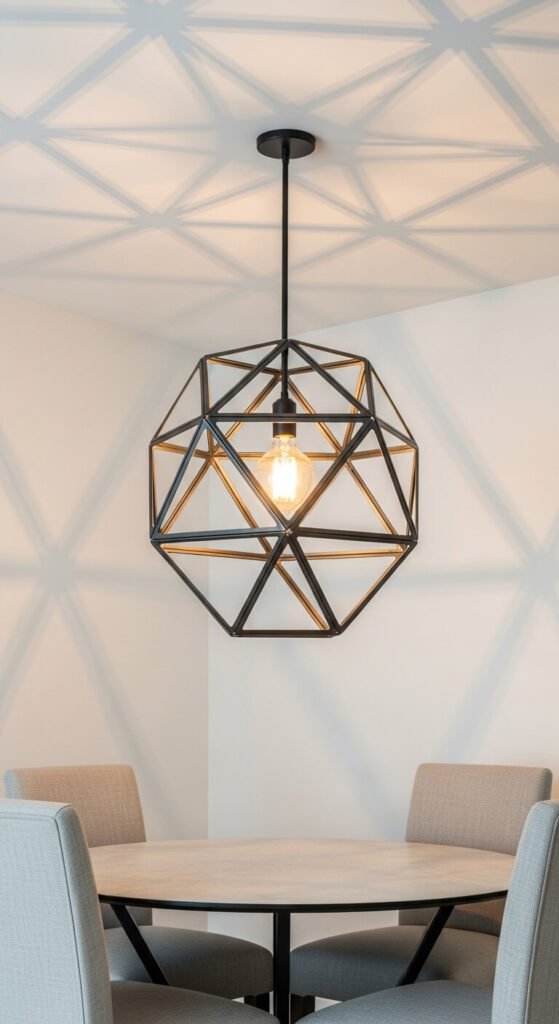
A geometric pendant light is the most impactful single fixture change in a dining room, kitchen, or bedroom. Faceted polyhedron shapes — icosahedrons, dodecahedrons, diamond forms — in matte black or brass project geometric shadow patterns onto the ceiling and walls when lit. This light-and-shadow effect doubles the visual presence of the fixture without any additional decor. Geometric pendant lights cost $40–$120. Standard pendant wiring fits most fixtures, so replacing an existing pendant is a straightforward swap. Pair with a warm Edison or globe bulb for the richest shadow contrast. One geometric pendant changes the entire ceiling plane of a room.
12. Geometric Concrete Planters
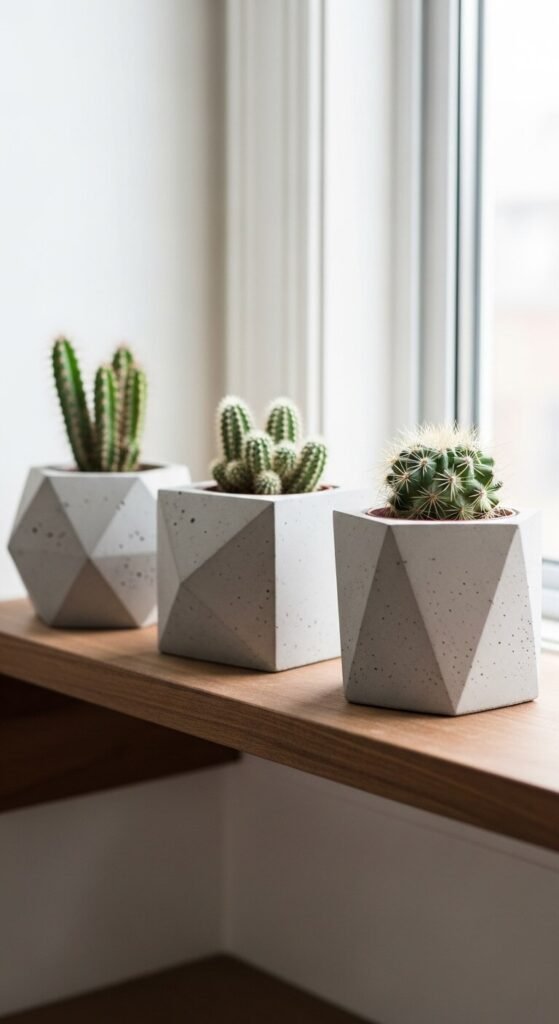
Geometric concrete planters bring structural, angular form to a shelf or windowsill plant display. The hard-edged faceted shapes contrast with the organic softness of the plants inside — that tension between geometric container and living plant is what makes these work. Hexagonal prisms, angled cubes, and truncated pyramids are the most common forms. Ready-made geometric concrete planters cost $10–$25 each. For a DIY version, pour concrete into cardboard molds cut into geometric shapes — total cost under $15 for a set of three. The concrete cures in 24 hours. Sand rough edges with medium-grit sandpaper. The result looks identical to store-bought versions.
13. Interlocking Circle Pattern Textiles
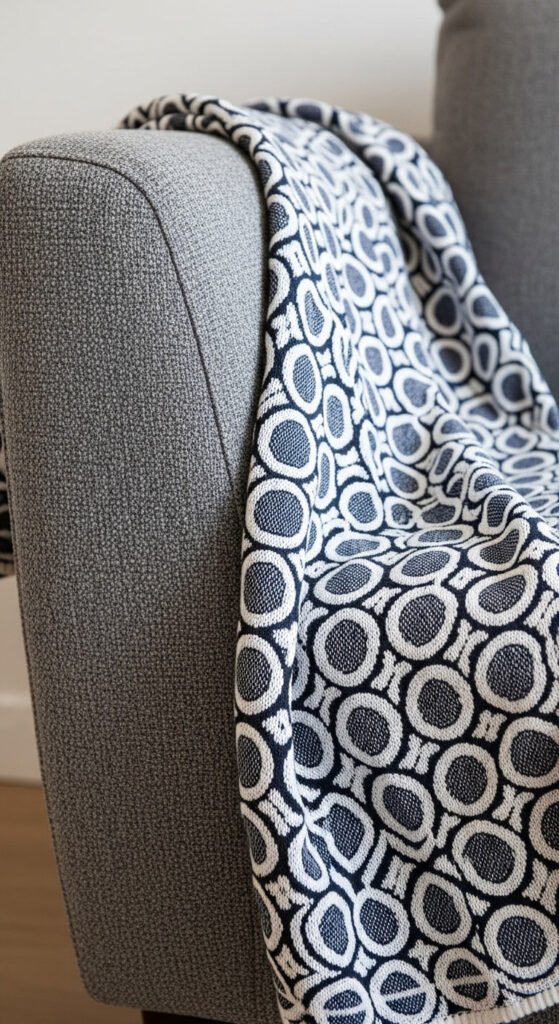
Interlocking circle textiles — throws, cushion covers, and curtains using the linked ring or chain geometry — create a softer geometric pattern than angular shapes. The curves of interlocking circles feel less rigid than triangles and chevrons while still delivering mathematical structure and visual repetition. This pattern works in living rooms and bedrooms where angular geometric patterns might feel too sharp. Throws with interlocking ring patterns cost $25–$55 from home textile retailers. Use one draped over a sofa arm or folded across the foot of a bed. The pattern reads from across the room without being aggressive.
14. Geometric Stair Riser Patterns
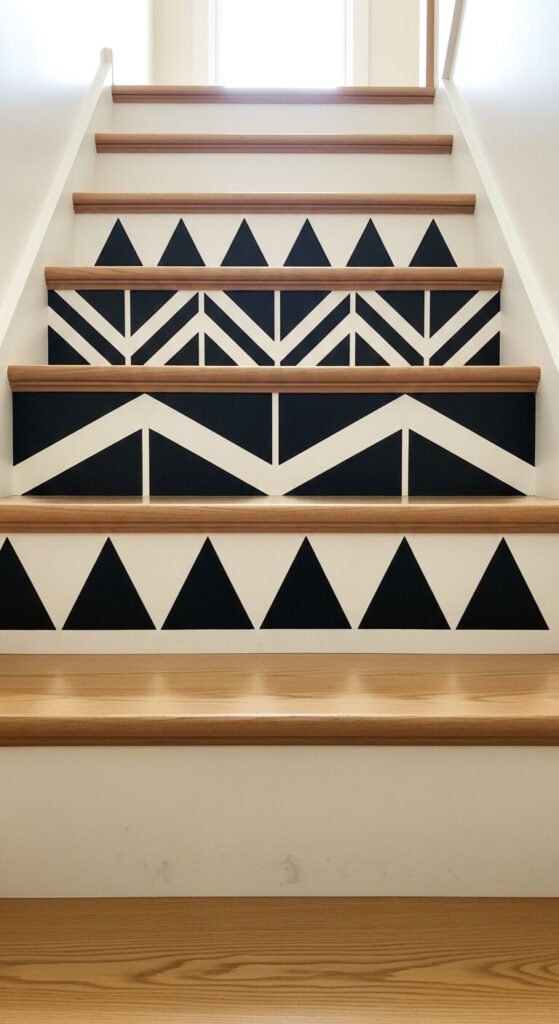
Geometric painted stair risers transform a plain staircase into a gallery of pattern without changing the structure or spending much money. Paint each riser with a different geometric motif — chevrons, triangles, diamonds, stripes — in a consistent color palette. Black and white is the most graphic and cleanest option. Sand and prime the risers first if they are natural wood. Use painter’s tape for clean edges. The full project costs $15–$30 in paint and supplies. Take reference photographs of each riser design before painting to maintain consistency. The finished staircase creates an unexpected geometric detail that most visitors comment on immediately.
15. Hexagonal Bathroom Floor Tile
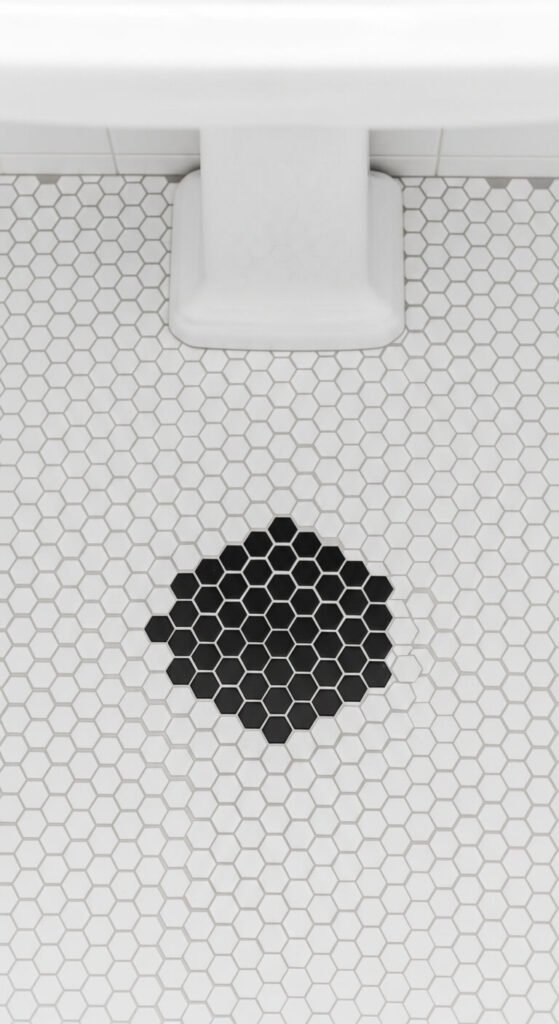
Hexagonal floor tiles in a bathroom create a geometric pattern that has been used in interiors for over a century without ever looking dated. The honeycomb arrangement of hexagons is inherently satisfying — the shapes tile perfectly without gaps or waste. Classic white hex with white grout is the most minimal option. Black hex accents within a white field — a diamond shape, a border, or a centered medallion — add graphic interest without requiring a fully patterned floor. Hex floor tile costs $3–$10 per square foot. Peel-and-stick hex tile panels cost $20–$40 each for a no-grout, rental-friendly alternative.
16. Geometric Woven Basket Collection
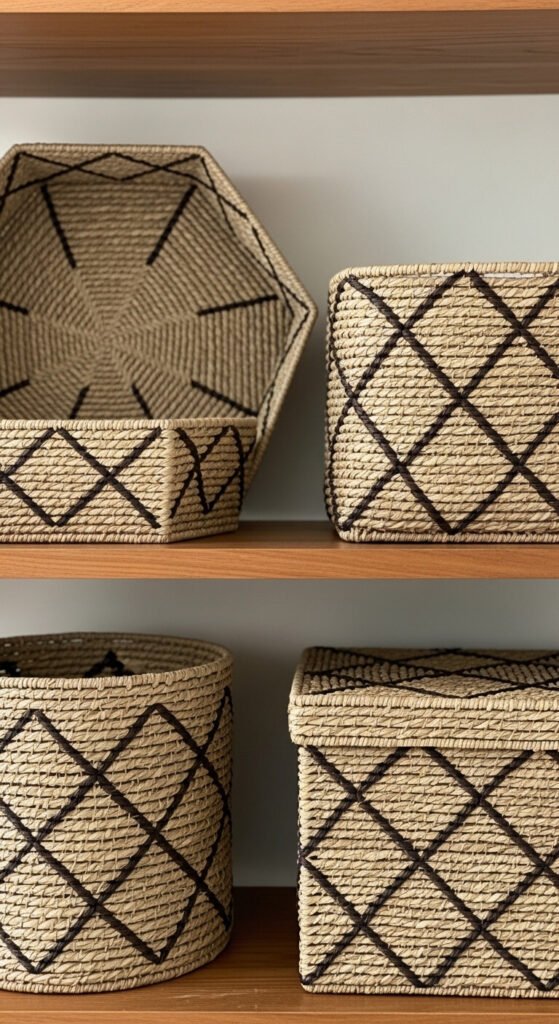
Geometric woven baskets bring natural texture and mathematical pattern together in a single functional object. Look for baskets with woven geometric motifs — diamonds, chevrons, or triangle rows — created through contrasting fiber colors in the weave itself. The pattern is structural rather than printed, which gives these baskets a more crafted quality than plain woven options. A set of four matching geometric baskets for a shelf costs $40–$80 total. Use them for storage on open shelving — remotes, books, small items — so the geometric weave pattern faces outward as the visible display surface.
17. Grid-Pattern Pegboard Wall Organizer
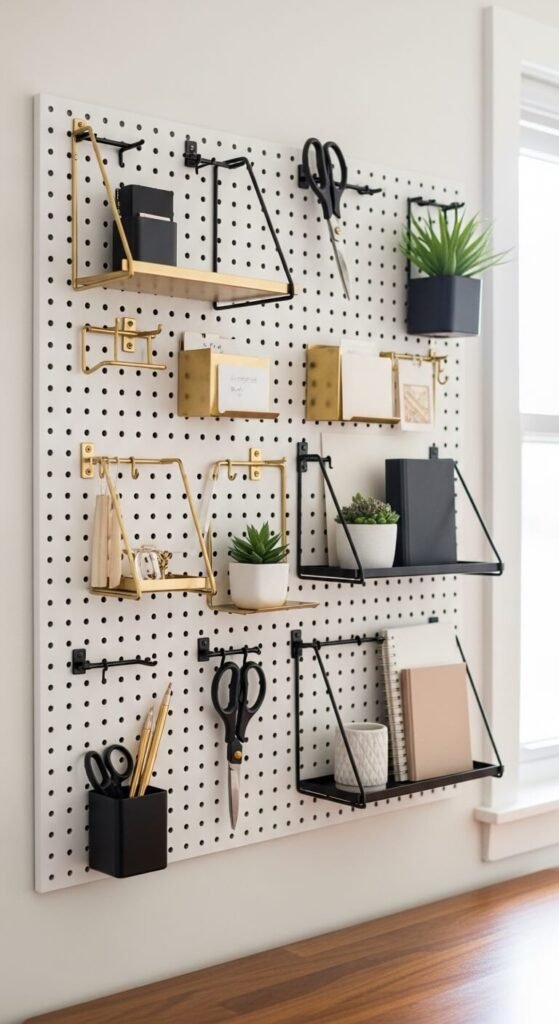
A grid-pattern pegboard uses the regular geometric grid of its holes as the structural basis for an organized wall display. The spacing of the holes enforces a geometric regularity on whatever you attach — hooks, shelves, and holders all align to the grid automatically. Paint the pegboard in a matte color — white, black, or sage — rather than leaving it raw for a more deliberate look. Standard 24×48-inch pegboards cost $15–$25. Add brass or black metal accessories for $2–$5 per piece. The grid itself is the geometric decor — the accessories complete the pattern. This is one of the few geometric elements that is also fully functional.
18. Geometric Throw Blanket with Triangle Pattern
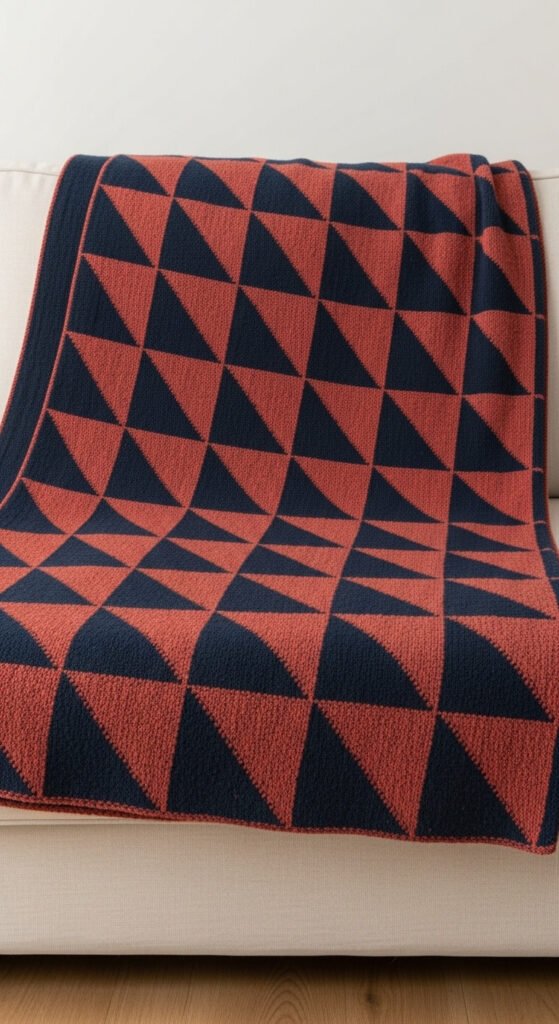
A triangle-pattern throw blanket is one of the most affordable ways to add geometric pattern to a living room or bedroom. A woven triangle grid in two strong colors — navy and terracotta, black and cream, forest green and natural — creates a bold repeating pattern that reads clearly from across the room. Drape it over a sofa back, fold it across a bed foot, or hang it from a ladder shelf. Woven cotton geometric throws cost $25–$55. This is a low-commitment, easy-to-swap geometric element. Change the throw seasonally to shift the color balance of the room without changing any furniture.
19. Geometric Mirror with Angular Frame
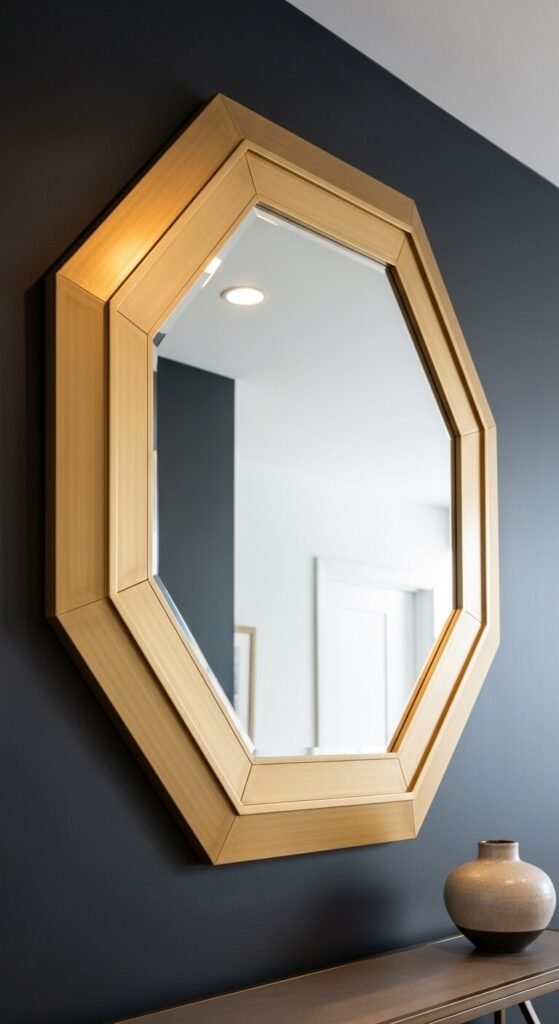
An angular geometric mirror frame — octagonal, hexagonal, or diamond-shaped — replaces a standard round or rectangular mirror with a shape that has clear geometric character. The frame itself becomes part of the design. An octagonal mirror with a matte gold or brass frame reads as deliberately chosen rather than default. These are widely available in sizes from 20–36 inches for $45–$120. Hang in a hallway, above a console, or on a bathroom wall. The angular frame reflects light differently than a round or square mirror — the geometry of the shape determines how the reflection interacts with the room around it.
20. Moroccan-Inspired Geometric Tile Pattern
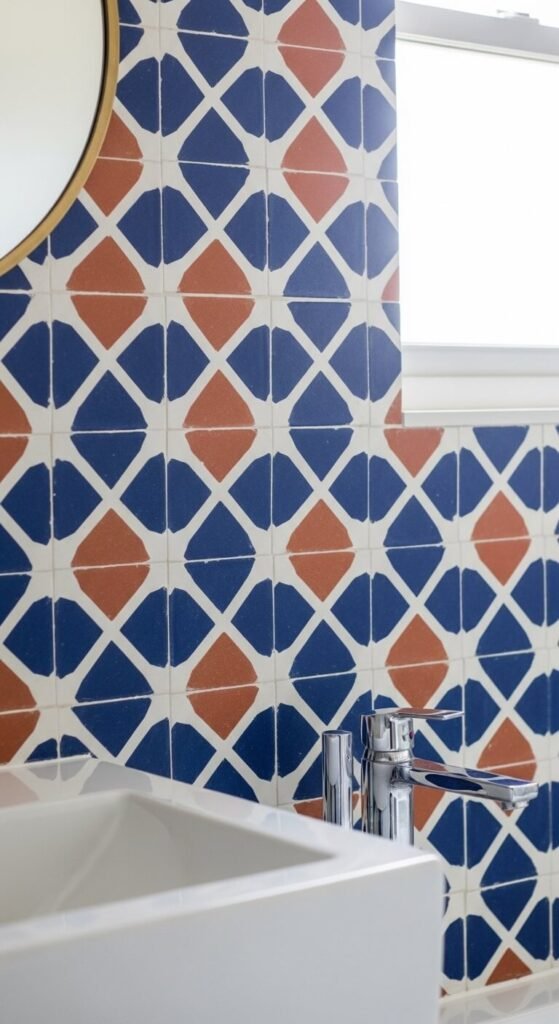
Moroccan geometric tile patterns — built on the eight-pointed star, interlocking diamond, and arabesque forms — are among the most complex and visually rewarding geometric patterns in interior design. Traditional encaustic cement tiles in these patterns cost $8–$20 per square foot. Ceramic versions with printed Moroccan patterns cost $3–$8 per square foot. For a rental-friendly approach, Moroccan pattern peel-and-stick tiles cost $30–$60 for a panel covering a small bathroom wall. Even a single tiled alcove or a narrow shower niche in Moroccan pattern creates a focused geometric moment that reads as a design decision rather than a decorative afterthought.
21. Geometric String Art Wall Piece
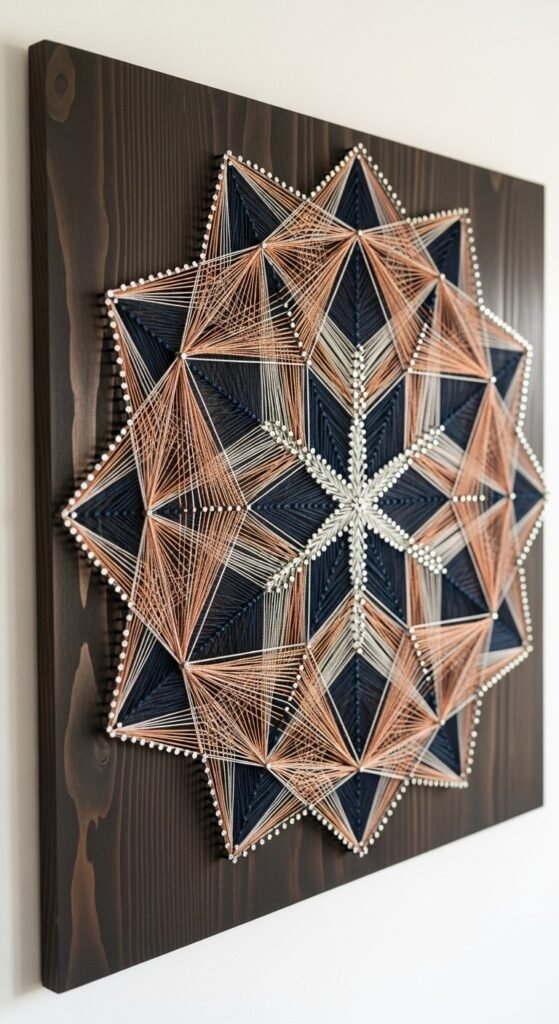
Geometric string art creates complex geometric patterns — stars, mandalas, triangles — by winding colored thread between small nails hammered into a painted or stained wooden board. The overlapping thread layers build up a dense, layered geometric form with depth and color variation. A basic geometric string art kit costs $15–$25 and includes the board, nails, thread, and pattern template. Custom versions on a 24-inch square board cost $20–$30 in materials. The finished piece looks like something from a design boutique. String art is also an accessible project for older children — the pattern template does the precision work, and winding the thread is satisfying rather than difficult.
22. Geometric Cushion Cover with Block Print
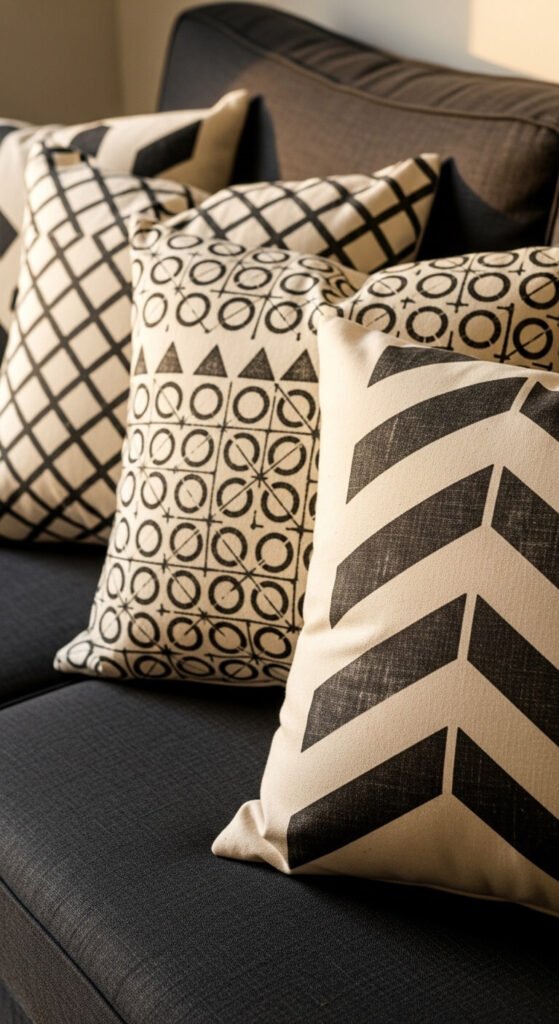
Block-print geometric cushion covers have a handmade quality that machine-printed textiles lack — the slight imperfection of the stamped edges makes the geometric pattern feel crafted rather than manufactured. Buy ready-made block-print cushion covers for $15–$30 each, or make your own. Carve a geometric stamp from a rubber eraser or a piece of dense foam and stamp your pattern onto plain cotton fabric using fabric ink. A DIY stamped cushion cover costs under $10 in materials. The repeating geometric stamp creates a consistent pattern across the fabric without requiring a printing machine. Wash on a cold gentle cycle to preserve the stamped ink.
23. Geometric Candle Holders and Tray Display
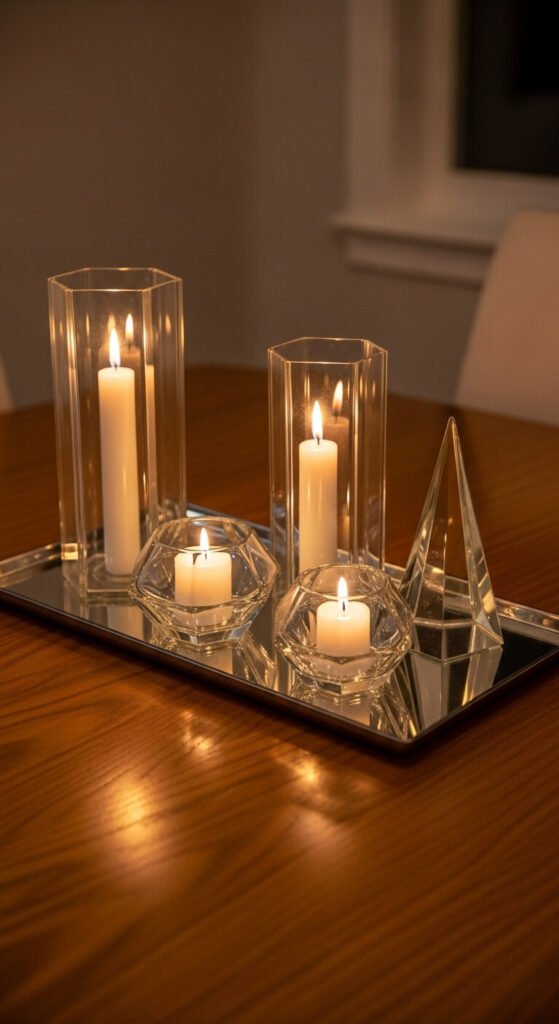
A geometric candle holder display on a tray uses faceted glass vessels to scatter and multiply candlelight across a surface. Faceted prism, hexagonal, and diamond-shaped glass holders create a light display at night that plain cylinder holders cannot match. Group four or five in different heights and shapes on a rectangular tray. The tray contains the arrangement visually and makes it easy to move. Individual faceted geometric candle holders cost $8–$20 each. As a tray display, the total cost is $30–$60. Use white or cream pillar candles to keep attention on the geometric glass forms rather than the candle color.
24. Geometric Patterned Wallpaper Bookshelf Back
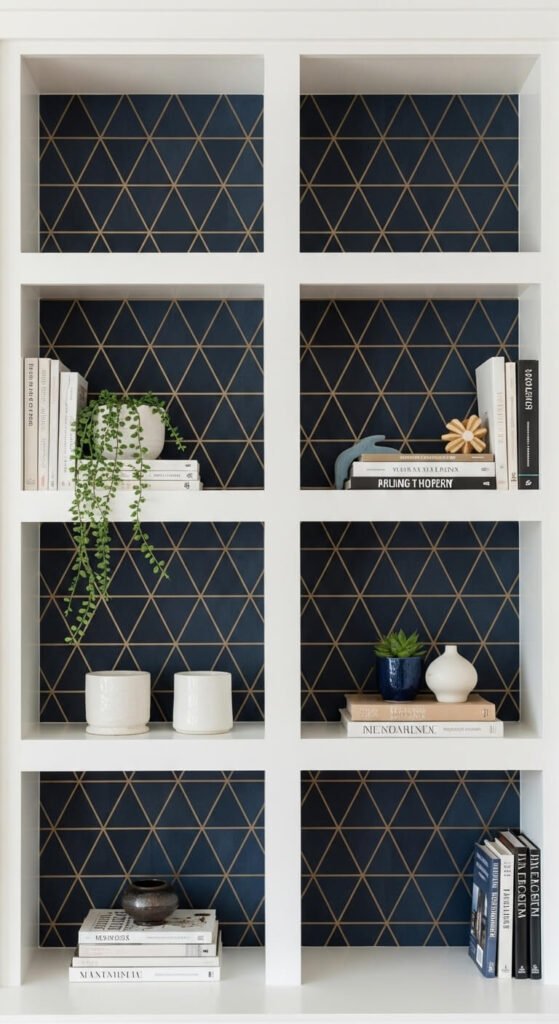
Geometric wallpaper on bookshelf backs is a small-scale application that delivers a disproportionately large visual impact. Instead of covering a full wall, you line only the back panel of a bookcase — a much smaller surface. The geometric pattern shows through the gaps between books and objects, creating a layered backdrop to the display. Peel-and-stick wallpaper cuts easily to fit each shelf panel with scissors. A single roll of peel-and-stick geometric wallpaper covers an entire standard bookcase back for $20–$40. This is a weekend project with no mess, no paste, and reversible results — suitable for rental apartments.
25. Geometric Laser-Cut Wooden Wall Panel
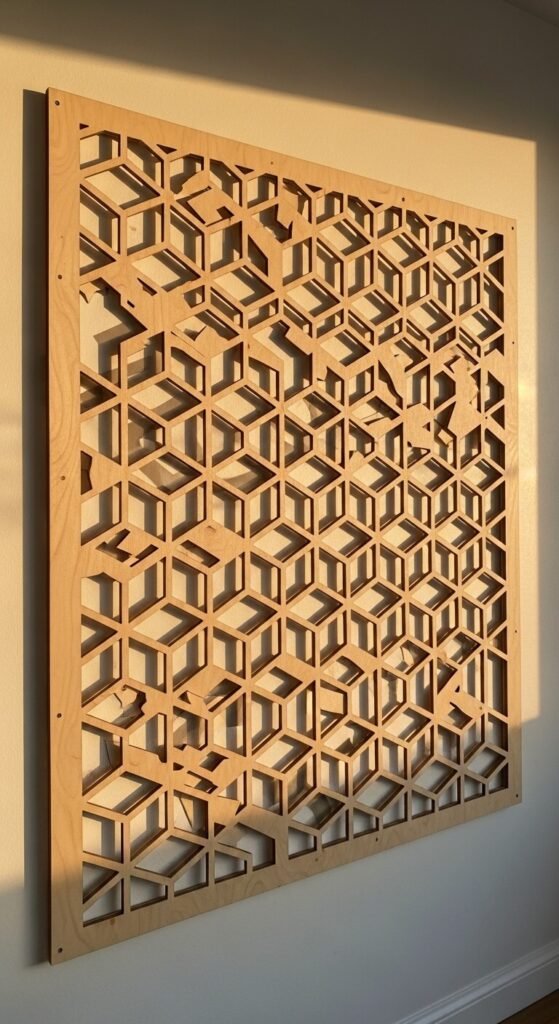
A laser-cut geometric wooden panel uses negative space — the shapes cut away from the wood — to create its pattern. The cut-out hexagons, triangles, or interlocking circles cast sharp geometric shadows on the wall behind, doubling the visual presence of the panel. Mount on small standoff screws to leave a gap between the panel and the wall so shadows form clearly. Laser-cut geometric wooden panels in standard sizes cost $40–$90 from Etsy makers who produce custom geometric work. For a DIY version, many makerspaces and community laser-cutting services cut custom designs for $15–$30 per panel from a supplied file.
26. Geometric Storage Ottoman with Pattern Fabric
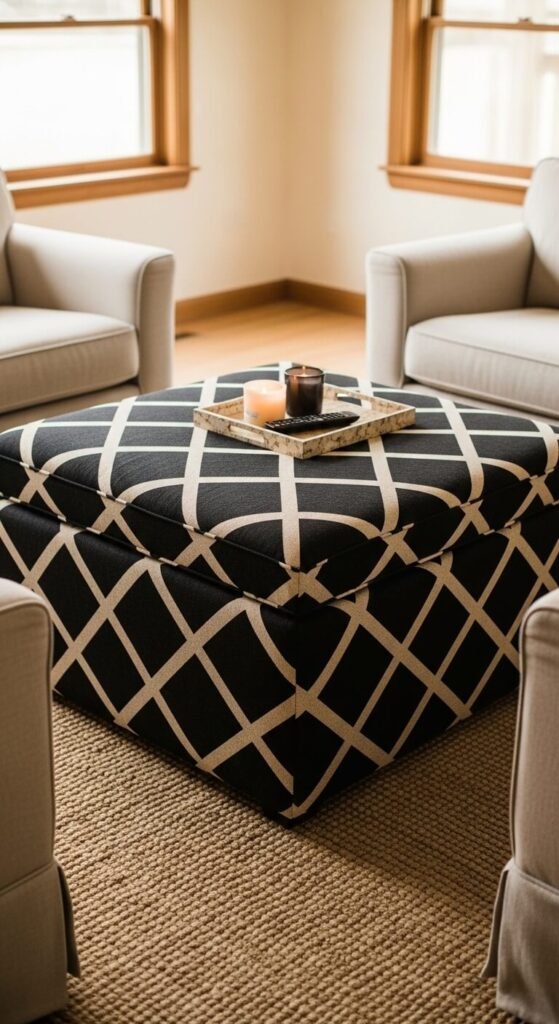
A geometric patterned storage ottoman serves three functions simultaneously: storage, seating, and a patterned centerpiece for the living room. The geometric fabric — a diamond grid, a chevron, or a hexagonal tile print — covers a large surface area in the center of the room, making it one of the most visible pattern decisions in the space. Storage ottomans in geometric upholstery cost $80–$180 new. Reupholstering a plain existing ottoman with geometric fabric costs $15–$30 in fabric. Cut the fabric, staple to the ottoman base, and trim the edges. The geometric pattern on the flat top surface reads clearly whether the ottoman is being used as a table or a seat.
27. Geometric Framed Print Series in Bold Color
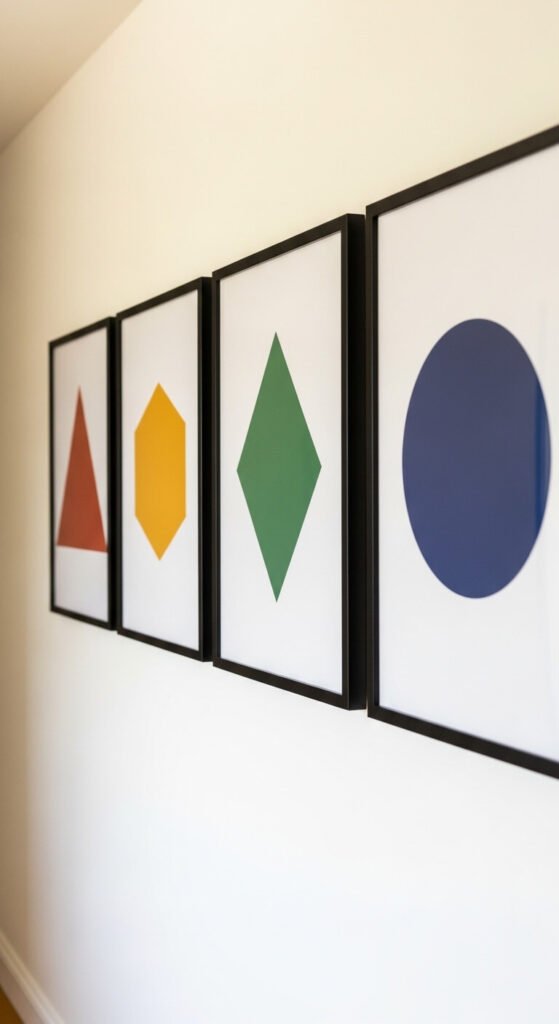
A geometric color block print series displays simple flat geometric shapes — one shape per print — in bold solid colors. Each print is nothing more than a single triangle, hexagon, or circle in a strong color on a white background. The power of this approach comes from the series: four or five prints side by side create a color palette and a geometric vocabulary for the room simultaneously. Download and print simple geometric shapes for free using any word processor or design tool. Print at A4 or A3 and frame in matching black frames. The full series costs under $20 including frames. Minimal, graphic, and completely adjustable.
28. Geometric Garden Path or Patio Pattern
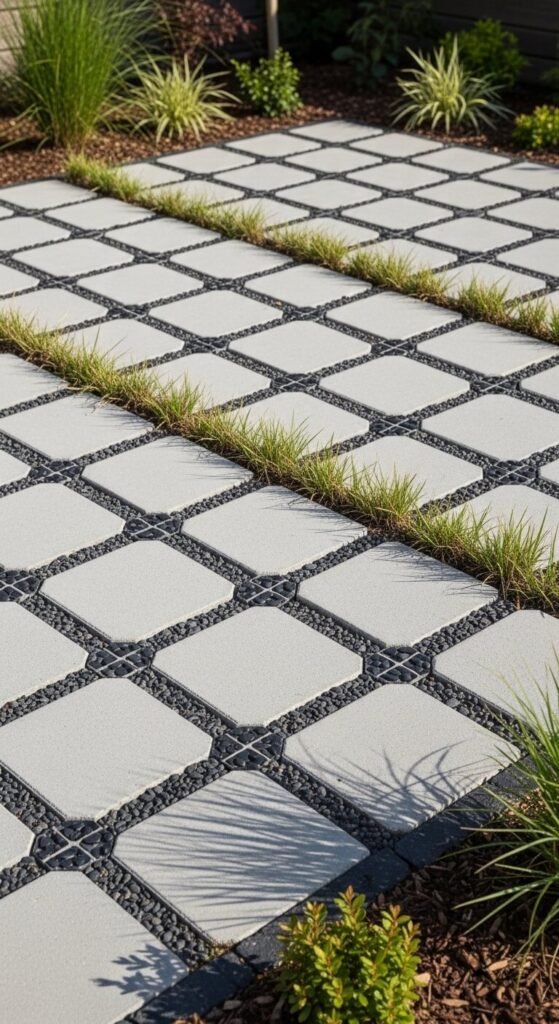
A geometric garden path or patio pattern extends mathematical structure from inside the home to the outdoor space. Concrete pavers in running bond, diagonal grid, or basketweave patterns each create a different geometric reading on the ground plane. Adding small pebble inserts at junction points, alternating paver sizes, or mixing two paver tones creates more complex geometry without specialist skills. Standard concrete square pavers cost $1–$4 each. A 3×3 meter patio uses approximately 36 standard pavers — total material cost $40–$150. Lay on a compacted sand base with consistent joint spacing. The geometric ground pattern defines and structures an outdoor space the same way a rug does indoors.
Conclusion
Geometric decor patterns work because they bring deliberate structure to a space — and deliberate structure reads as confident design. Each item in this guide applies geometric logic at a different scale: a floor tile pattern, a wall panel, a cushion cover, a mirror cluster. Most cost under $50 to implement, and many can be completed in an afternoon. The key is choosing a geometric language — angular or curved, bold or subtle, monochrome or color — and applying it consistently across two or three elements in the same room. You do not need to fill every surface with pattern. One strong geometric rug, one angular pendant light, and one patterned accent wall work together as a cohesive system. Start with the piece that is easiest to change, and build from there.