
26 Organic Botanical Decor Prints That Connect With Nature

Disclosure: As an Amazon Associate we earn from qualifying purchases. Some links on this page may be affiliate links — if you click through and make a purchase, we may receive a small commission at no extra cost to you.
Botanical decor prints bring the logic and beauty of the natural world directly onto your walls. Unlike trend-driven art, plant and nature illustrations have been used in homes for centuries — from Victorian herbarium studies to mid-century line drawings to modern watercolor prints. They work across almost every interior style: minimal, maximalist, boho, Scandinavian, and traditional. The appeal is consistent because the subject matter is timeless. This guide covers 26 specific botanical decor print ideas worth adding to your home, with practical tips on where to source them, how to display them affordably, and how to style them alongside other natural decor elements.
1. Vintage Herbarium Botanical Prints
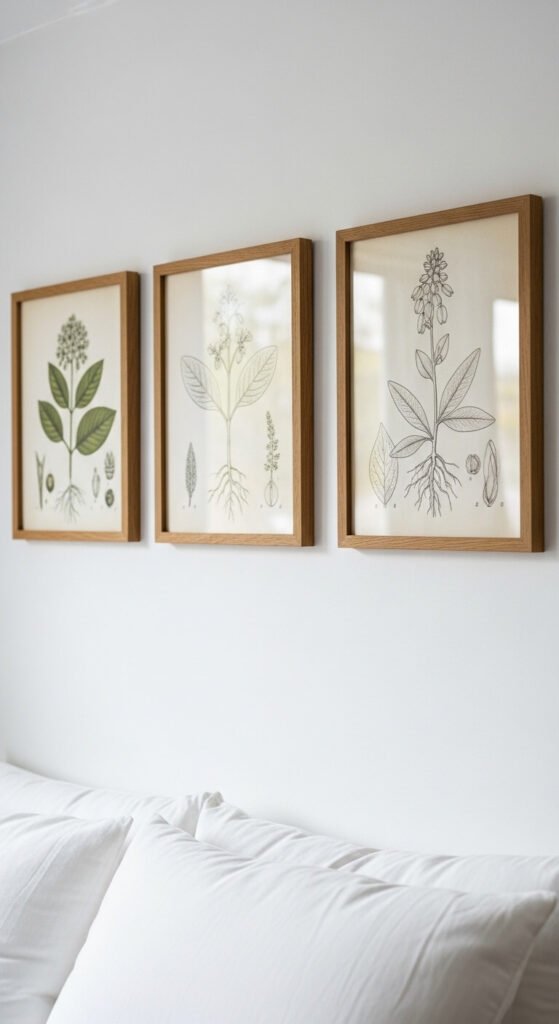
Vintage herbarium prints are scientific plant illustrations originally created for botanical reference books in the 18th and 19th centuries. Thousands of these drawings are now in the public domain and available for free download from library archives, the Biodiversity Heritage Library, and the Smithsonian online collections. Print them at home or through an online print service on cream or natural-toned paper for the most authentic result. A high-quality printed herbarium illustration costs $3–$8 to produce. Frame in simple oak or black frames for $5–$15. A row of three or four creates an immediately scholarly, nature-connected wall display.
2. Tropical Leaf Print Gallery Wall
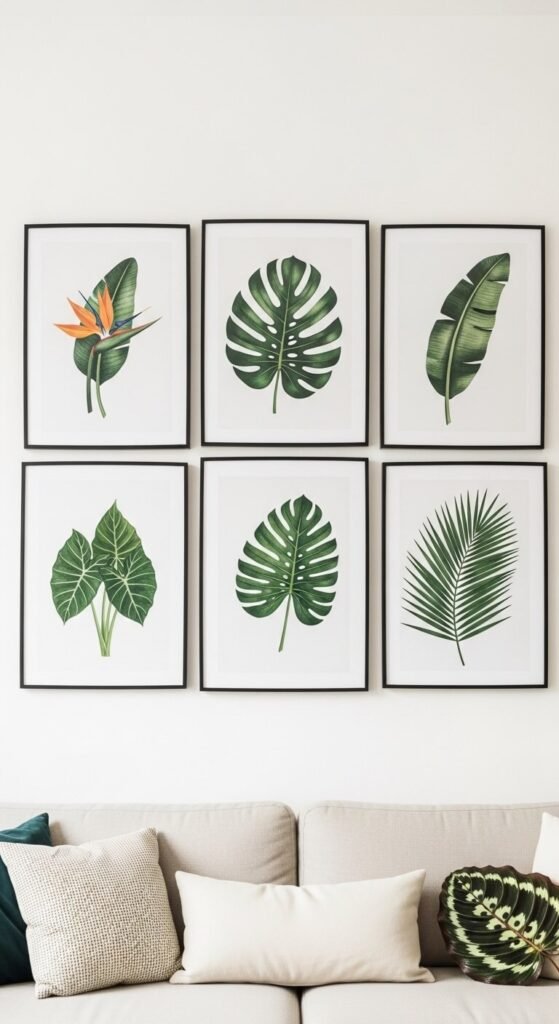
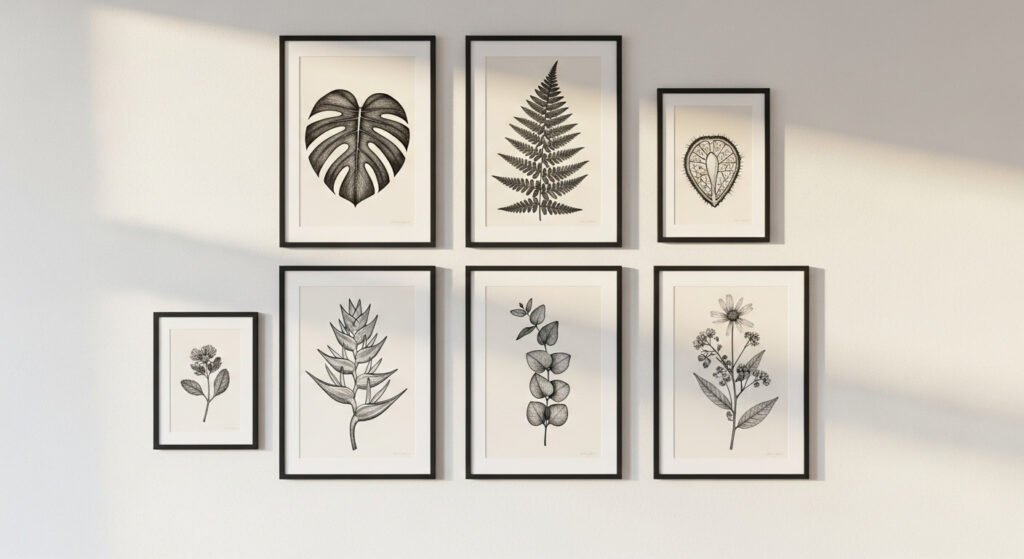
A tropical leaf gallery wall groups prints of large-leaf tropical plants into a single cohesive display. The visual impact comes from scale contrast — a wide banana leaf beside a detailed monstera beside a graphic palm frond. Keep all frames matching — same thin black or natural wood profile — so the variety in the prints themselves reads as intentional rather than random. Free tropical leaf illustrations are available from botanical archives. Alternatively, photograph your own tropical houseplants against a white background and print the images as art. A six-print gallery wall with printed and framed images costs $30–$60 total.
3. Single Oversized Botanical Print as a Focal Point
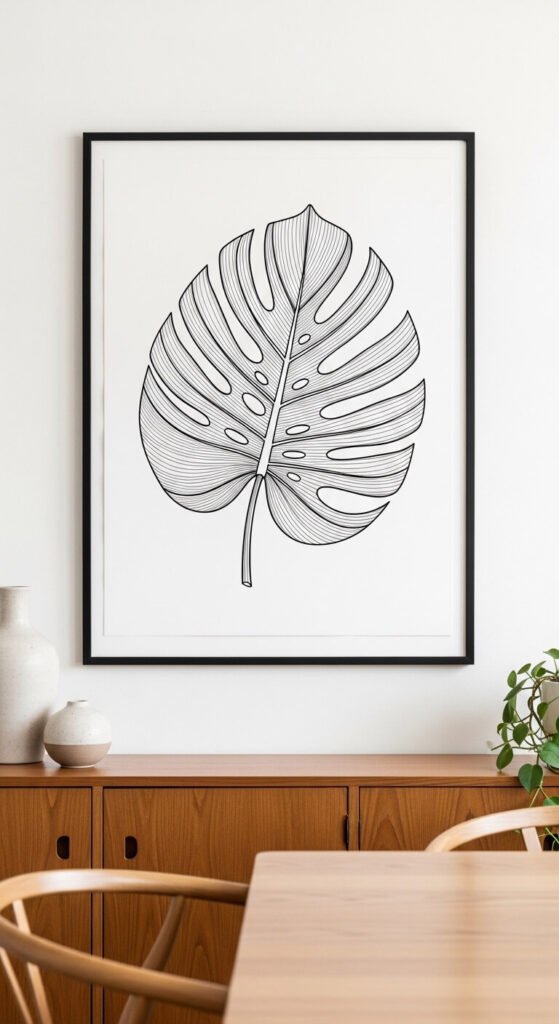
A single oversized botanical print used as the only piece on a wall makes a stronger statement than a cluster of small frames. The large scale gives the plant illustration the same presence a portrait or landscape painting would have. Choose a print with strong graphic quality — a single monstera leaf, a detailed fern frond, or a palm branch — in black on white or deep green on cream. Print sizes of 24×30 or 18×24 inches work best for this approach. Online print services produce large format prints for $10–$20. Add a simple black frame and the total cost stays under $40.
4. Watercolor Botanical Prints in Soft Tones
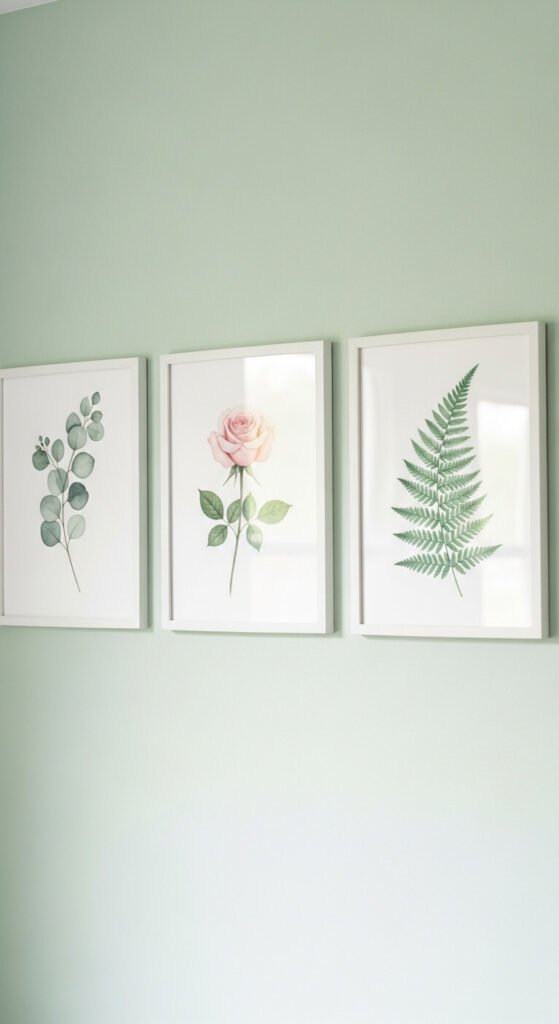
Watercolor botanical prints use soft, diffused color to depict plants in a way that feels delicate rather than graphic. Blush roses, eucalyptus sprigs, and fern fronds in muted watercolor tones work especially well in bedrooms, bathrooms, and reading corners. Many watercolor botanical artists sell affordable digital downloads on Etsy for $3–$8 per print. Download, print at home or at a copy shop, and frame. A set of three matching watercolor prints in white frames costs under $30 total. Hang in a horizontal row at eye level for the cleanest, most considered display approach.
5. Pressed Real Fern Print on Fabric
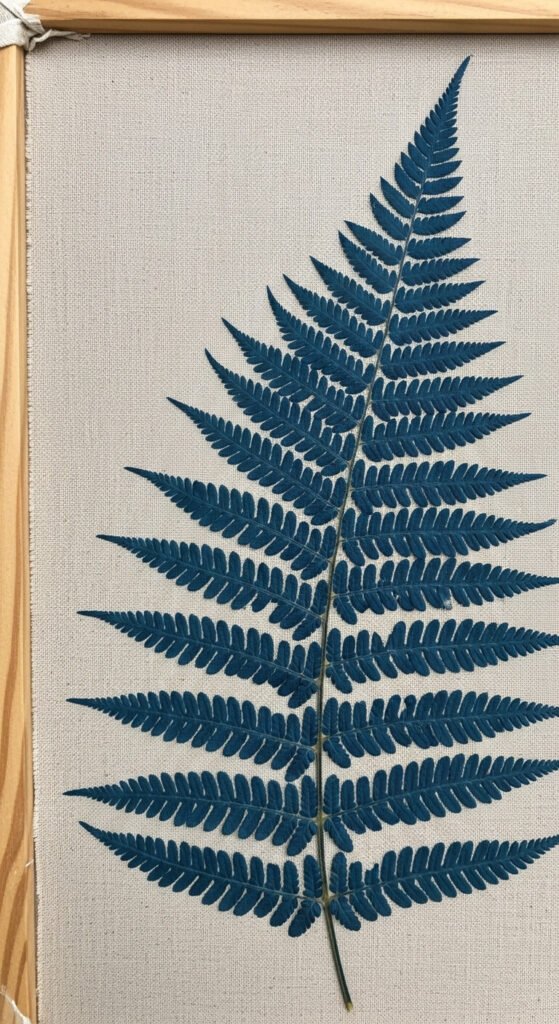
A cyanotype or ink-print fern on fabric is a DIY botanical print you make yourself using real plant material. Cyanotype printing uses UV-sensitive solution on fabric or paper — place a fern frond on the treated surface, expose it to sunlight for a few minutes, and rinse to reveal a detailed blue-white plant silhouette. Cyanotype kits cost $15–$25 and include enough solution for 20–30 prints. Stretch the finished fabric over a canvas frame for a piece that looks completely original. No two cyanotype prints are identical. This is the most hands-on botanical print project in this guide — and produces genuinely one-of-a-kind wall art.
6. Black-and-White Cactus and Succulent Prints
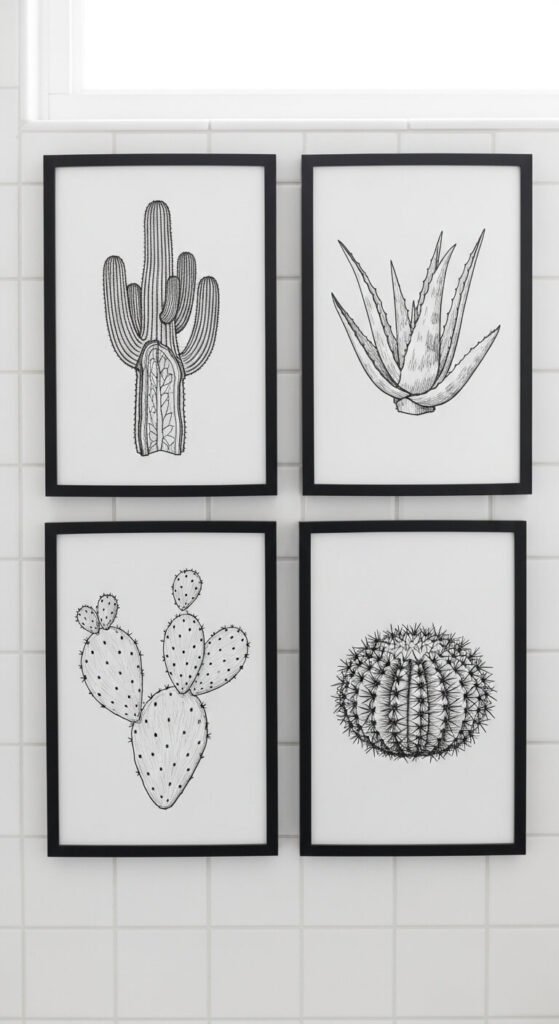
Black-and-white cactus and succulent prints work particularly well in bathrooms and minimal interiors where a clean, graphic aesthetic reads better than color. The fine line art style — used in classic botanical illustration — shows the structure of each plant clearly: the ribbing on a barrel cactus, the geometric rosette of a succulent, the cross-section of a prickly pear. Free cactus illustrations are widely available from botanical archives and plant illustration databases. Print four in matching sizes and frame in identical black frames in a two-by-two grid. Clean, affordable, and indefinitely current as a design choice.
7. Mushroom and Fungi Botanical Study Prints
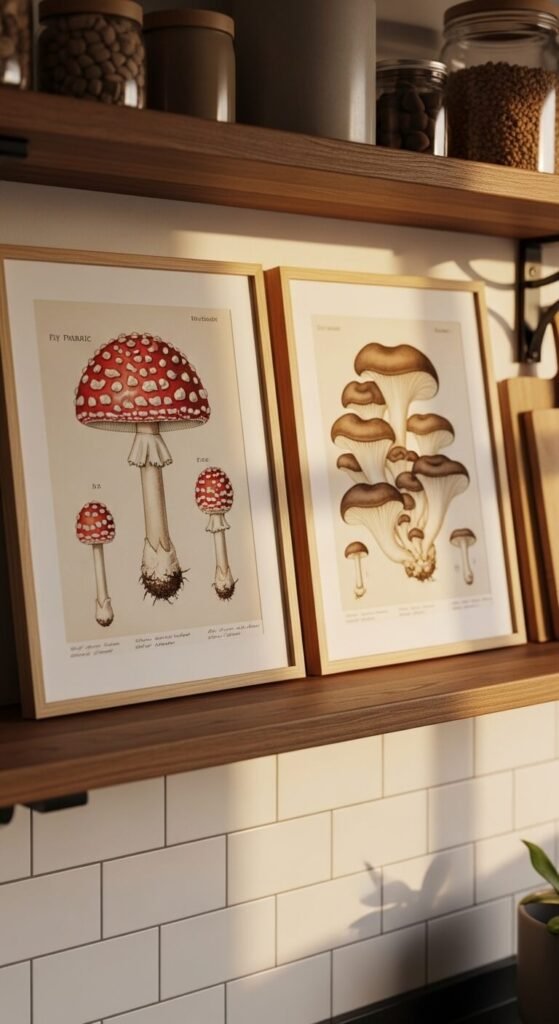
Mushroom and fungi botanical prints are among the most interesting and underused botanical print subjects. Vintage mycology illustrations from the 19th and early 20th centuries show mushrooms in extraordinary detail — cross-sections, spore patterns, cap undersides — often with handwritten species notes. These are freely available from public domain archives and look striking in a kitchen, study, or bathroom. A fly agaric or oyster mushroom illustration has a visual interest that standard leaf prints do not. Print on cream-toned paper to preserve the aged quality of the original source material. Frame in simple warm wood tones.
8. Botanical Print Triptych Above a Bed
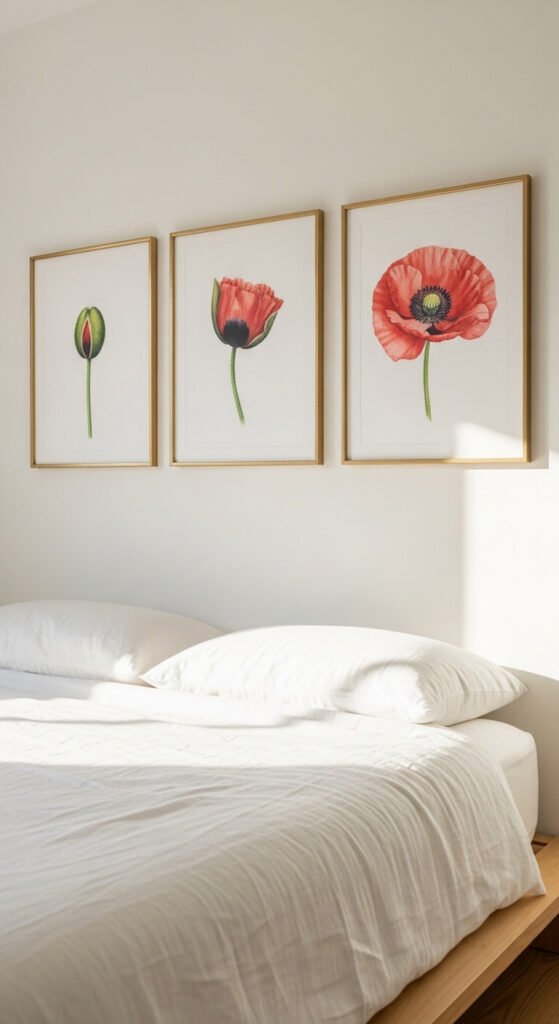
A botanical triptych presents three related prints as a single unified artwork above a bed or sofa. The most effective approach uses the same plant at different stages — a bud, a half-open bloom, and a fully open flower — or three specimens from the same plant family. The sequential nature gives the triptych a narrative quality that a random grouping lacks. Print three images in matching sizes. Frame in identical frames. Space them evenly — two to three inches apart — and hang at the same horizontal height. This creates a deliberate, gallery-quality display for under $40 using printed digital downloads and affordable frames.
9. Large Tropical Leaf Print on Linen Canvas
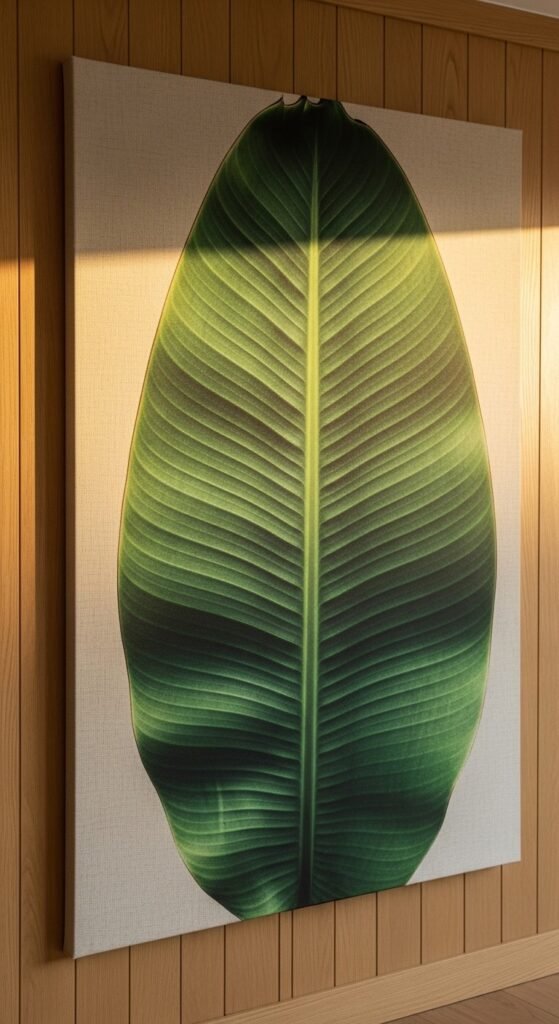
A tropical leaf print on linen canvas has a warmth and softness that standard paper prints cannot match. The texture of the linen adds a tactile quality to the image — visible under raking light — that makes the print feel more like original art. Print a close-up photograph of a banana leaf, monstera, or palm frond on canvas through an online printing service. A 20×24-inch canvas print costs $25–$45. Leave the edges raw for a contemporary look, or stretch over a wooden frame. Hang without a glass frame for a relaxed, studio-art feel. The natural green tones work well against white, warm white, or sage walls.
10. Seaweed and Coastal Plant Prints
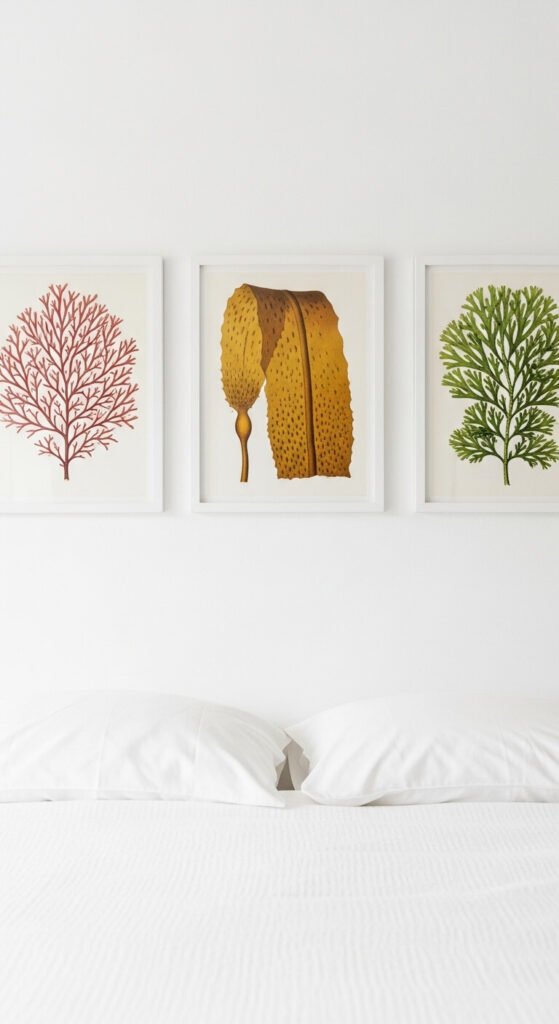
Seaweed and coastal plant prints draw from the same Victorian natural history tradition as herbarium studies but with a marine focus that suits coastal, bathroom, and relaxed living room settings. Anna Atkins — the 19th-century botanist credited with creating the first photographically illustrated book — produced hundreds of cyanotype seaweed prints that are now in the public domain. Many of these are freely downloadable in high resolution. Print on cream or pale blue-tinted paper for a coastal tone. A set of three seaweed prints in white frames costs under $25 and gives a bathroom or bedroom a quiet, nature-connected quality.
11. Geometric Botanical Line Art Prints
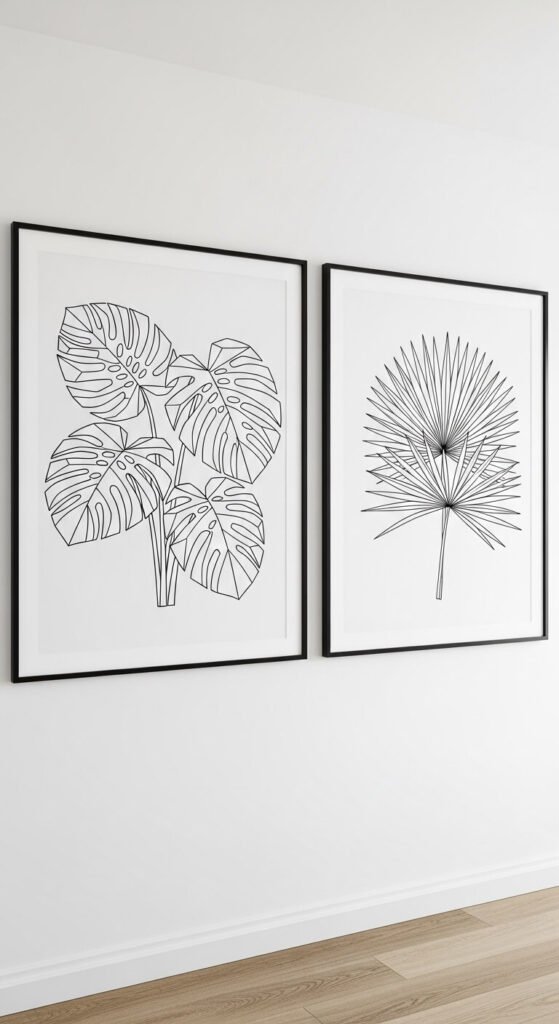
Geometric botanical line art reimagines plant forms through angular, faceted shapes — a style that sits between botanical illustration and abstract art. Monstera leaves, palm fronds, and tropical plants work particularly well because their strong structural forms translate clearly into geometric planes. These prints suit modern and Scandinavian interiors where pure botanical illustration might feel too traditional. Many independent illustrators sell geometric plant prints as digital downloads for $4–$10 each on Etsy and Creative Market. Print at A3 or larger for maximum impact. Add a wide white mat inside the frame to give the art more breathing room against the wall.
12. Botanical Print Set in Matching Clip Frames
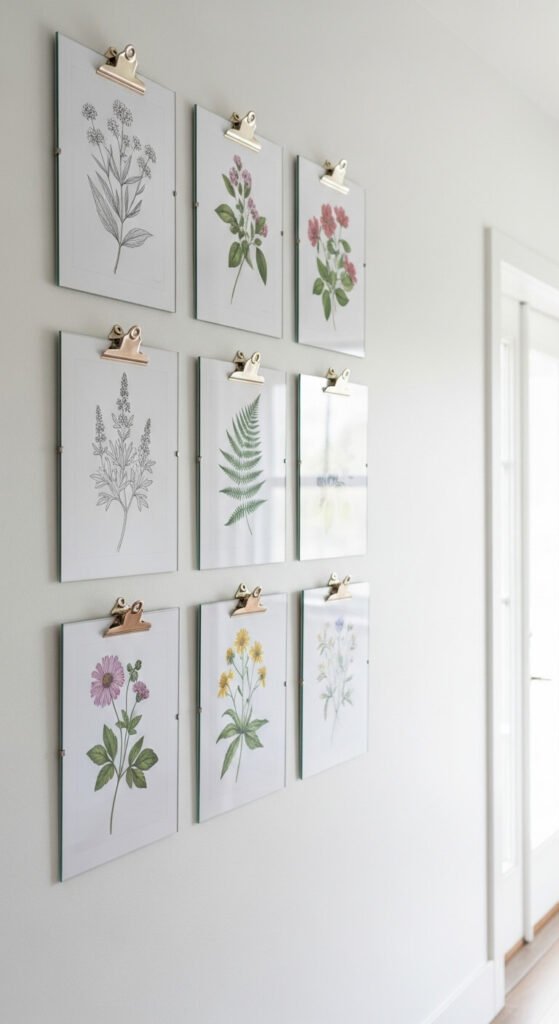
Clip frame botanical displays use frameless glass-and-clip frames that cost $2–$5 each, making a large botanical print collection genuinely affordable. A set of eight prints in clip frames costs $15–$40 total including printing. The minimal frame profile keeps attention on the prints rather than the frames. This approach works well for hallways and rental apartments where you may want to swap prints regularly. Print botanical images in a mix of styles — some line art, some watercolor — for variety within a cohesive display. Clip frames hold any paper weight up to about 200gsm and are widely available in standard A4 and A5 sizes.
13. Dried Botanicals Mounted Directly to Wall
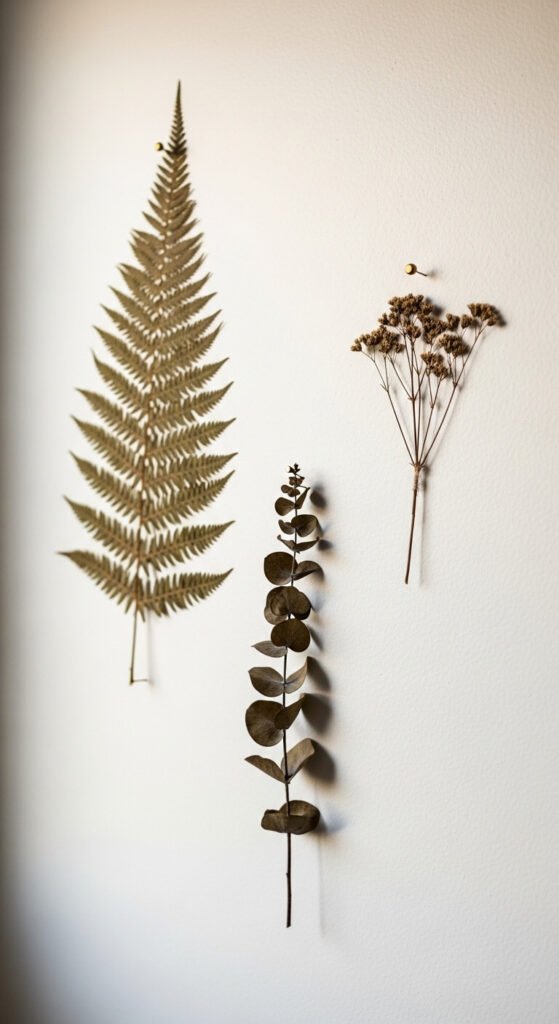
Dried botanicals mounted directly to a wall skip the frame entirely and use the plant material itself as the art. A large pressed fern pinned flat against white plaster, a dried eucalyptus branch secured with two small brass map pins, or a cluster of dried wildflowers mounted in a loose arrangement — these are all zero-cost options if you have access to garden plants. Pressing takes two to three weeks in a heavy book. Mount using map pins, adhesive putty, or thin staples. The dried material casts its own shadow onto the wall, adding a three-dimensional quality that no framed print can replicate.
14. Botanical Fabric Wall Hanging
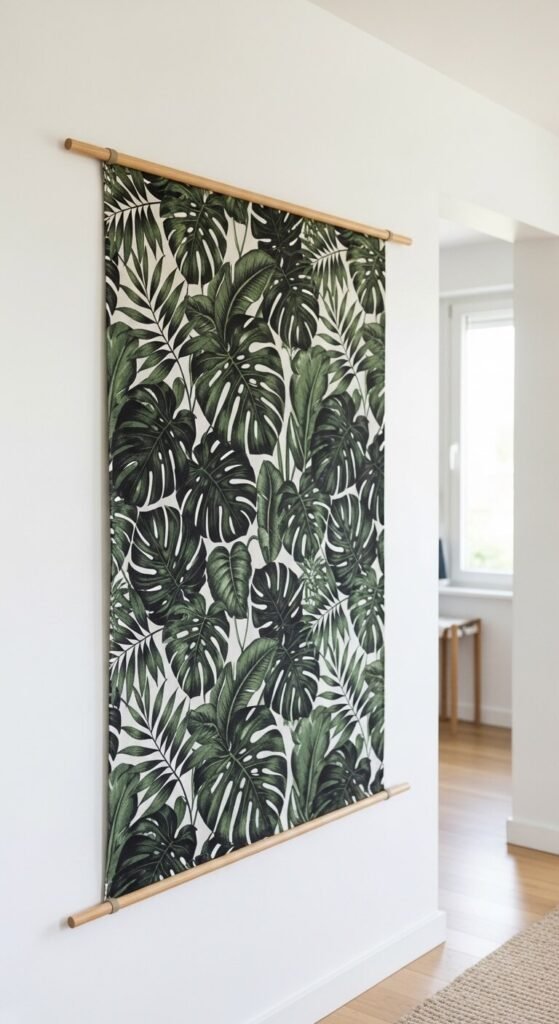
A botanical print fabric hanging uses printed textile rather than paper to bring plant imagery onto a wall. The softness of the fabric and the slight texture of the weave give botanical prints a warmth that rigid framed prints lack. Fabric with tropical or botanical prints is widely available from online fabric retailers for $6–$15 per meter. Cut to size, hem the top and bottom edges, and thread a wooden dowel through the top hem for hanging. The total cost for a 60x80cm fabric hanging is $10–$20. The botanical pattern reads as art while also softening the acoustic quality of the wall behind it.
15. Watercolor Herb Print Kitchen Set
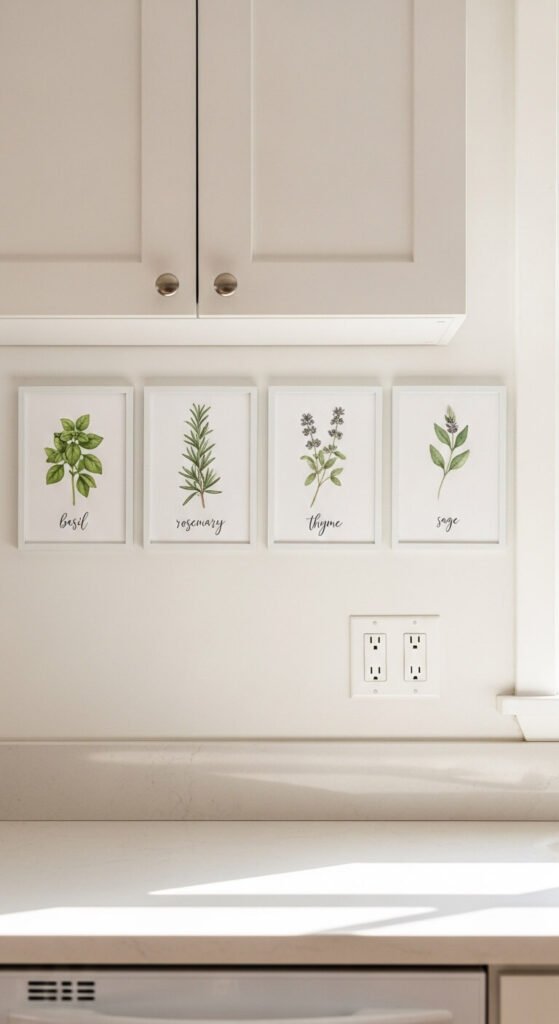
A watercolor herb print set in a kitchen is one of the most practical-feeling botanical displays in the house. The subject matter — basil, rosemary, thyme, sage — connects directly to what happens in the kitchen every day. Sets of four matching herb prints are widely available as digital downloads for $5–$12 on Etsy. Print at home on white card stock and frame in matching white or natural wood frames. A complete set of four framed prints costs under $30. Hang in a tight horizontal row just above the counter or backsplash. The small scale and clear subject matter work particularly well in a busy kitchen environment.
16. Fern Frond Print Series in Deep Green
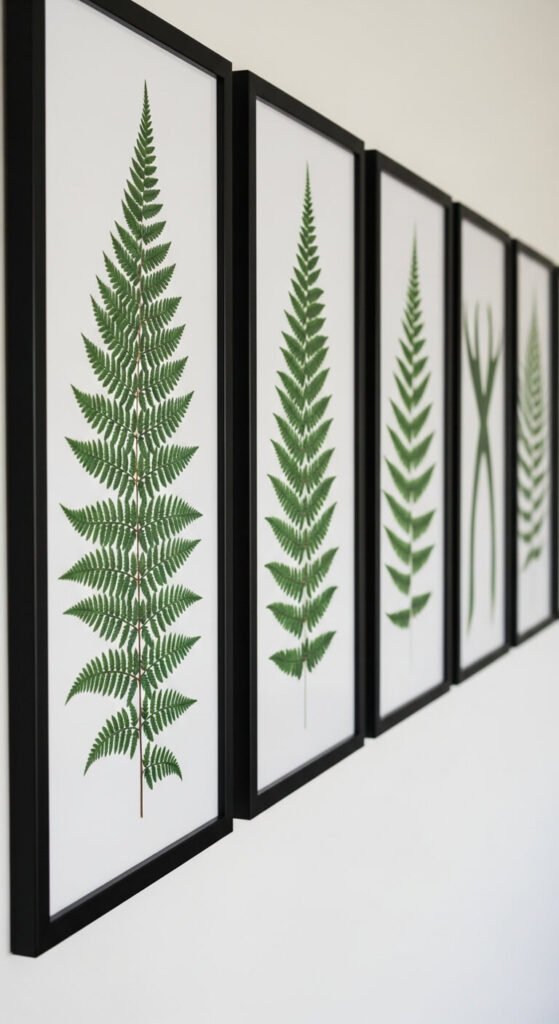
A fern frond print series displaying different fern species side by side creates a naturalist display that rewards close attention — each variety has a completely different leaf structure and growth pattern. This type of species comparison is one of the oldest traditions in botanical art. Source individual fern illustrations from public archives or purchase a matching digital set. Print five in the same size and frame identically. Hang in a horizontal row at eye level. The deep forest green ink on white paper works well in studies, libraries, home offices, and reading corners where the intellectual quality of the natural science aesthetic feels appropriate.
17. Abstract Botanical Silhouette Prints
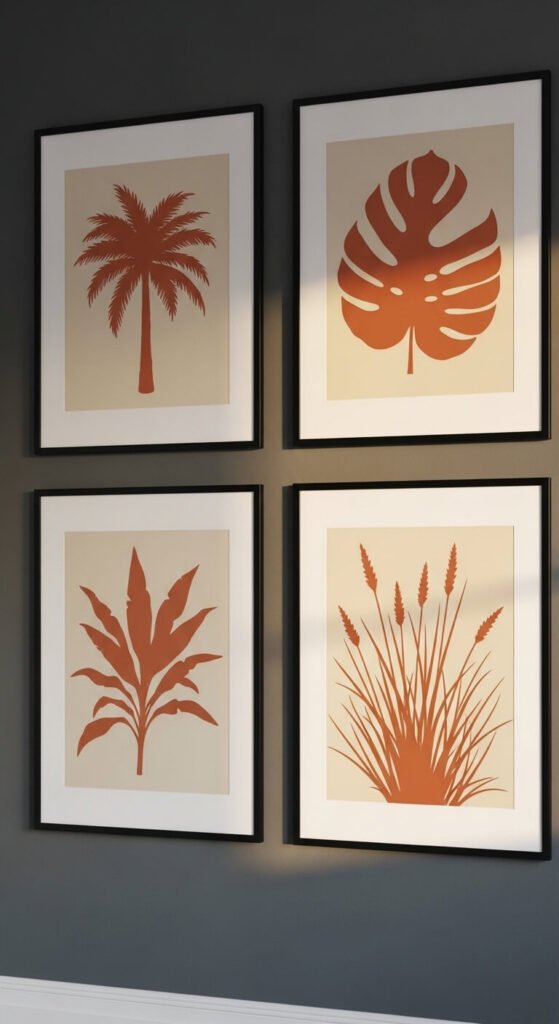
Botanical silhouette prints reduce plant forms to flat, solid shapes — no internal detail, no line work, just the outline of the plant in one color against a plain background. This style works in more graphic, contemporary interiors where traditional botanical illustration might feel too detailed. Terracotta on cream, black on white, and deep green on blush are all effective color combinations. You can create your own silhouette prints by photographing a plant against a bright window, converting the image to a flat silhouette in any free photo editing tool, and printing the result. Total DIY cost: under $10 including paper and frame.
18. Sepia-Toned Botanical Illustration Print
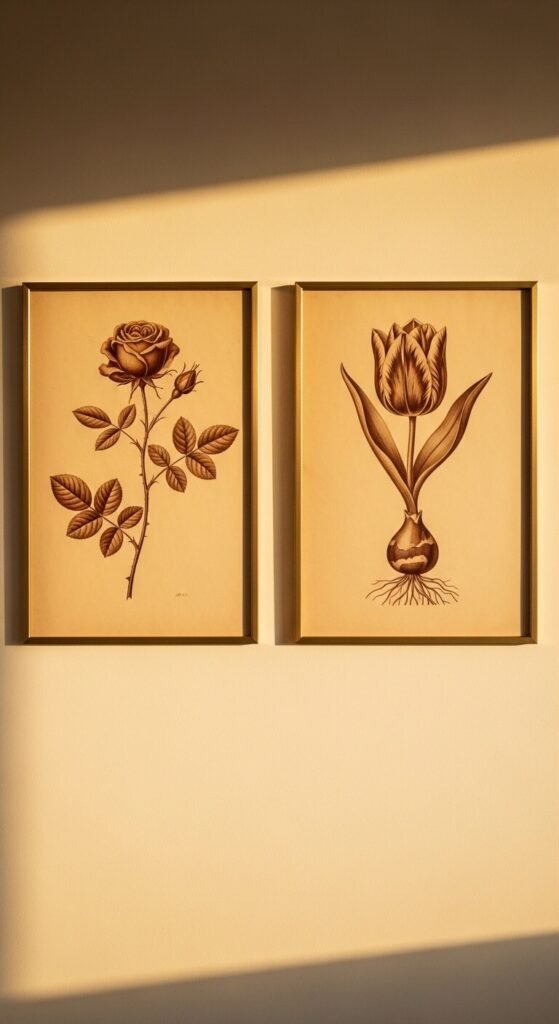
Sepia-toned botanical prints give botanical illustration the warm, aged quality of antique photography. The brown tones work better than black-and-white in warm interiors with cream walls, wooden floors, and natural materials. Convert any botanical line art to sepia tone using a free photo editing tool before printing — the process takes two minutes. Print on warm-toned cream paper rather than bright white for the most authentic antique look. A pair of sepia botanical prints in brass or warm gold frames costs $15–$25 total. They suit traditional, rustic, and warm-toned Scandinavian interiors particularly well.
19. Botanical Map and Habitat Prints
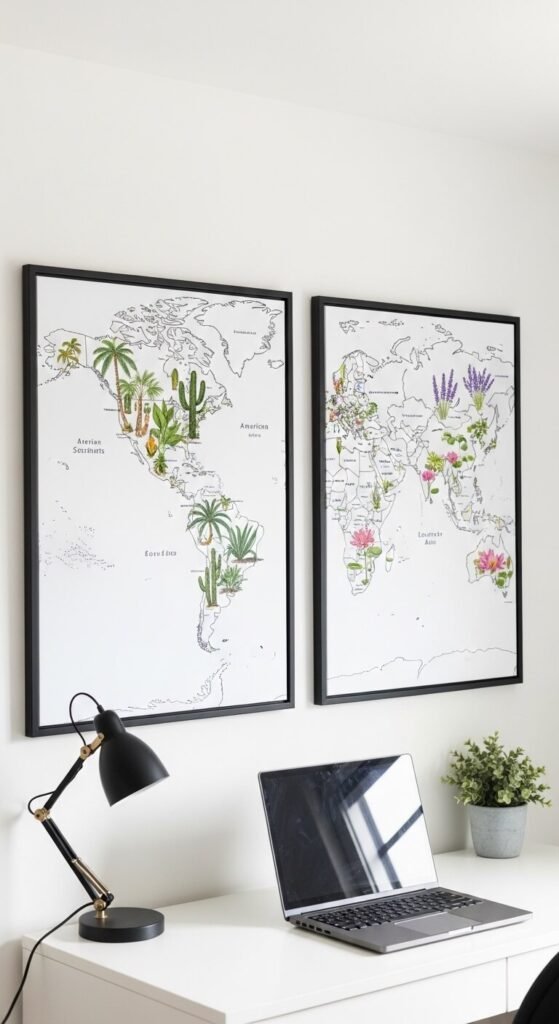
Botanical habitat maps combine geography and botanical illustration in a single print — showing where specific plant families originate across the world. These prints work well in home offices, studies, and children’s rooms where the educational quality adds value. Many illustrated plant world maps are available as digital downloads for $5–$12. Larger printed versions — 24×36 inches — make a strong statement on a study or library wall. This is a botanical print with a specific point of view: it tells a story about where plants come from rather than simply depicting them. That context makes these prints more interesting the longer you look at them.
20. Japanese Woodblock Botanical Prints
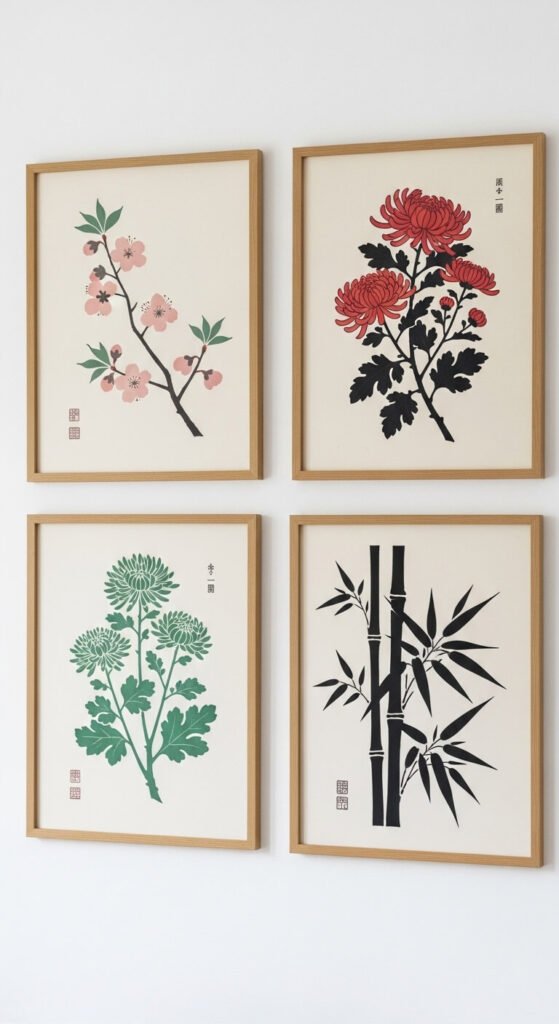
Japanese woodblock botanical prints bring a completely different aesthetic tradition to botanical decor — flat planes of color, strong ink outlines, and a graphic clarity that Western botanical illustration rarely achieves. Cherry blossom, chrysanthemum, wisteria, and bamboo are the most common subjects. Many historic Japanese woodblock prints are in the public domain and freely downloadable in high resolution from museum digital archives. Print on slightly warm paper to complement the limited color palettes. Frame in natural bamboo or simple black frames. A set of three creates a cohesive display that feels considered and culturally specific rather than generically decorative.
21. Lino-Cut Botanical Print on Handmade Paper
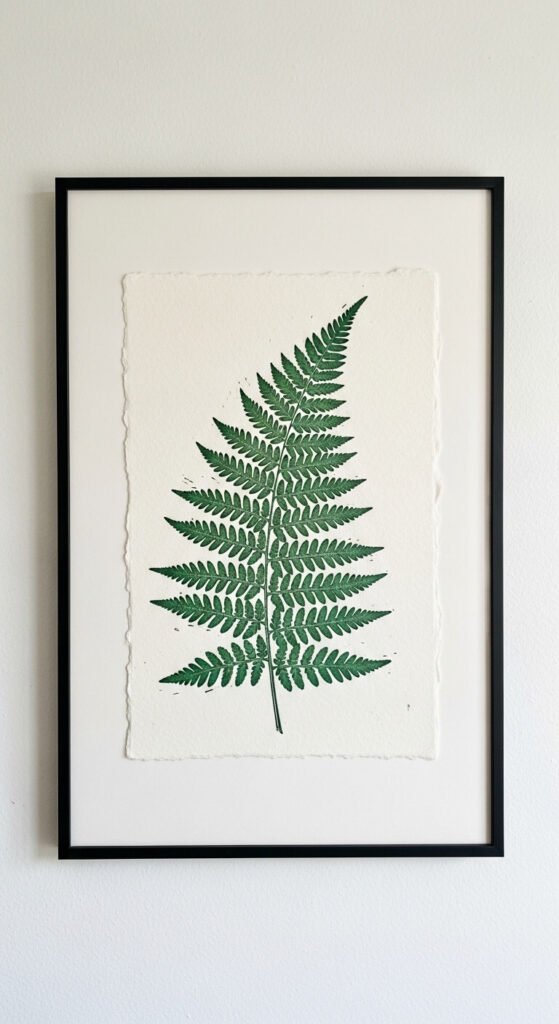
A lino-cut botanical print is a handmade print you carve and print yourself using a lino block and water-based printing ink. Carve a fern, leaf, or simple flower form into the block and press onto paper to create prints in any quantity. Lino-cutting kits cost $12–$20 and include the block, carving tools, and basic ink. Use handmade paper with natural rough edges for the most distinctive result. The slight variations in ink coverage from one print to the next mean each one is technically unique. Frame in a simple mat and frame. The tactile quality of a hand-printed lino image is something no digital print can replicate.
22. Monstera Leaf Print in Bold Color
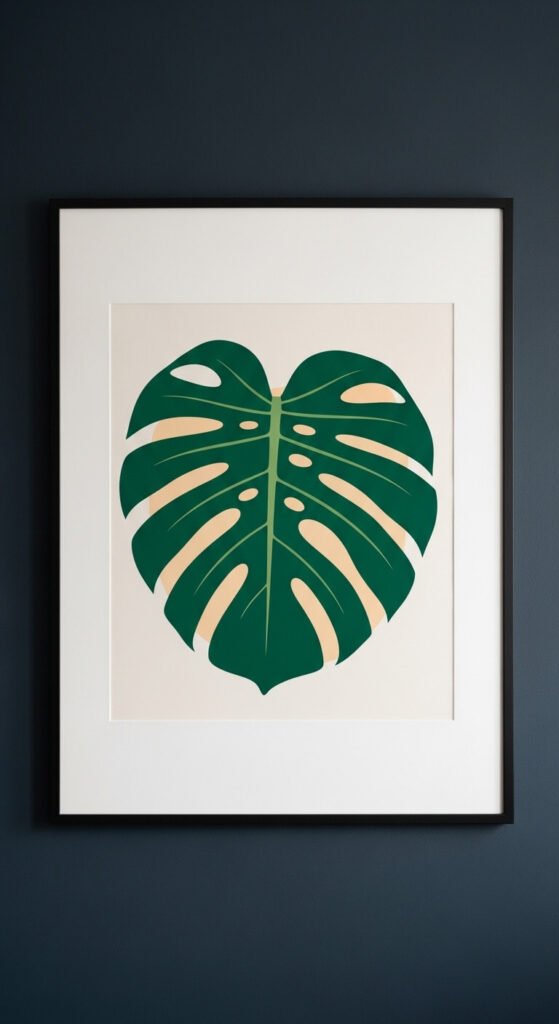
A bold color monstera print works particularly well on dark or deeply colored walls where a natural cream-and-green palette pops clearly. A single deep emerald leaf on cream paper in a wide-mat frame against a navy or charcoal wall creates a graphic, high-contrast display. The monstera is one of the most recognizable plant silhouettes and consistently reads well at large scale. Monstera digital art prints are widely available for $4–$10 on Etsy. Print at A2 or larger. Mount with a wide mat to give the image more presence. This is the boldest, most graphically driven botanical print approach in this guide.
23. Botanical Print Wallpaper Panel
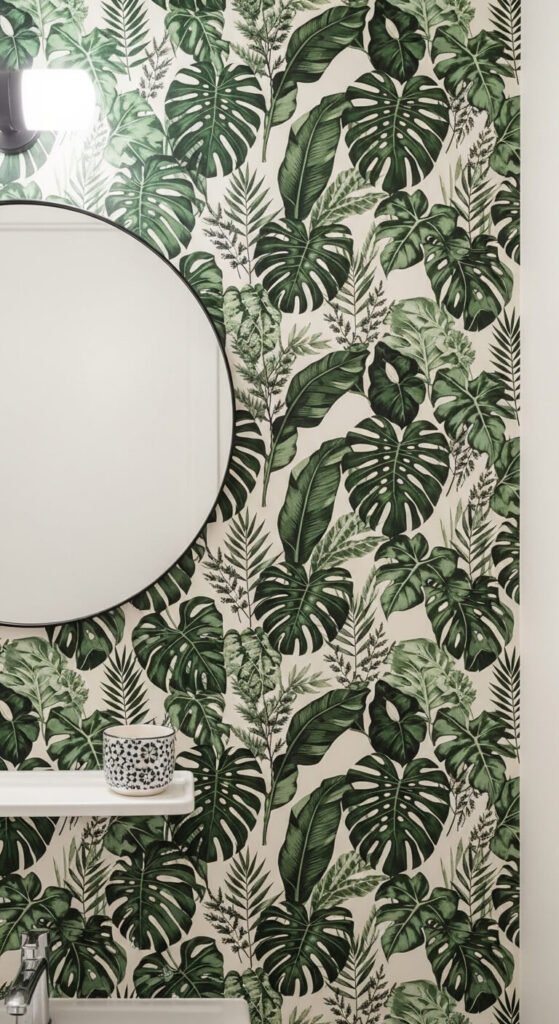
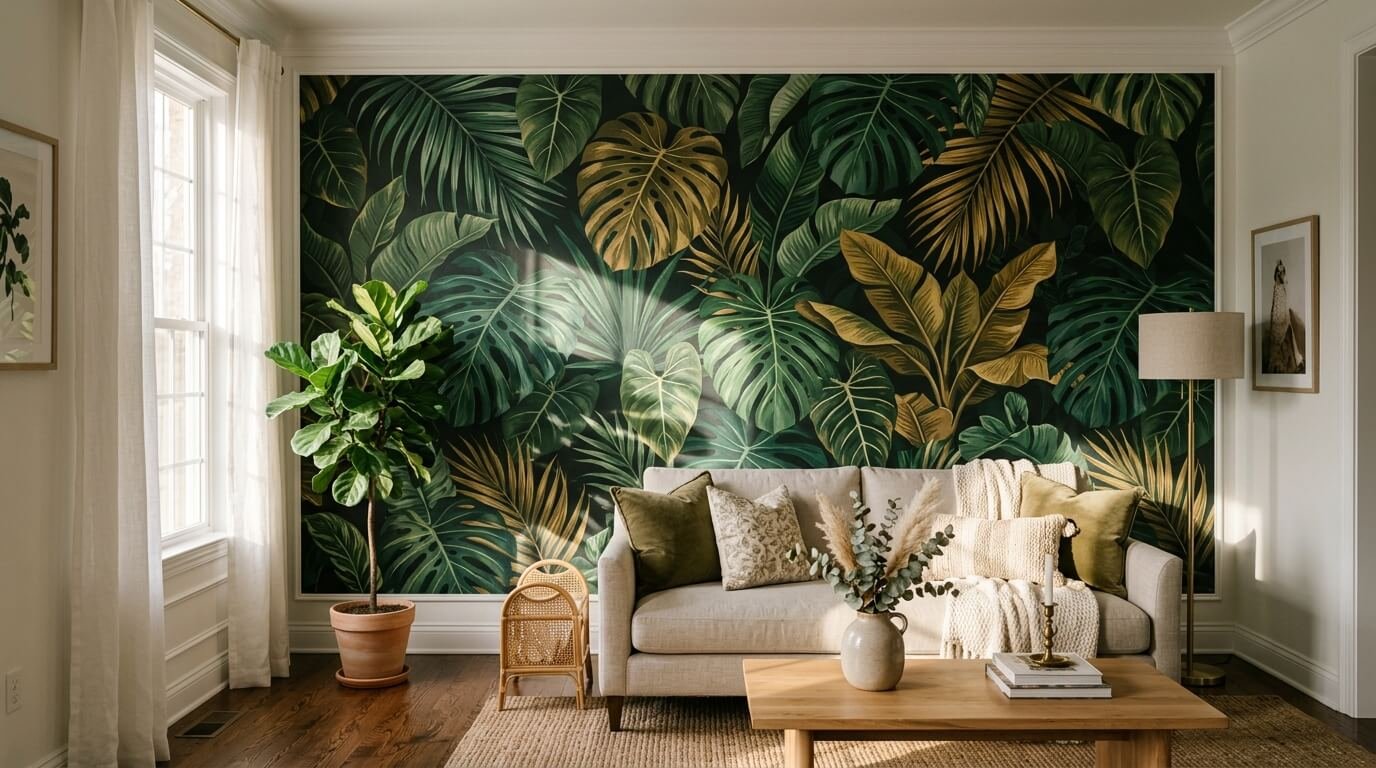
A botanical wallpaper panel on a single accent wall delivers the visual impact of a full botanical mural without wallpapering an entire room. Apply botanical print wallpaper to just one wall — behind a bed, in a bathroom, or at the back of a bookshelf — and leave the remaining walls plain. This approach uses less paper, costs less money, and creates a more considered result than full-room botanical wallpaper. Peel-and-stick botanical wallpaper is widely available from $20–$50 per roll and requires no paste or professional installation. A single bathroom or bedroom accent wall typically uses one to two rolls.
24. Illustrated Seed Packet Prints
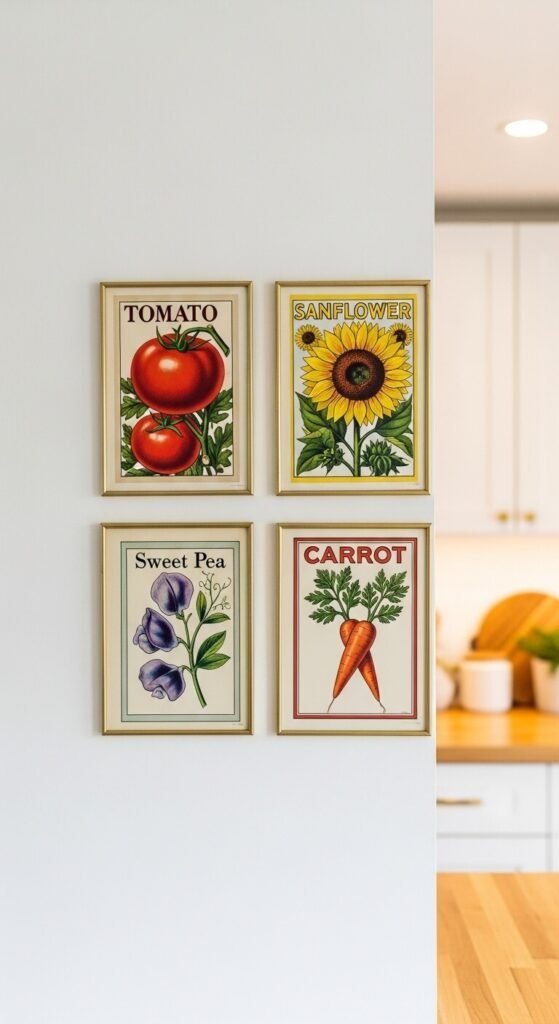
Vintage seed packet illustrations are a form of botanical art that doubles as kitchen decor with a sense of humor and history. Pre-1920s seed catalog and packet illustrations used detailed botanical artwork to sell seeds — the results are often beautiful, specific, and completely charming. Many are in the public domain and freely available from agricultural library archives. Print four or six in matching sizes on warm cream paper. Frame in brass or warm wood frames. A set of four in a kitchen or dining room costs under $30 total and generates more conversation than most conventional botanical prints because the subject matter is specific and recognizable.
25. Tree Ring Cross-Section Print
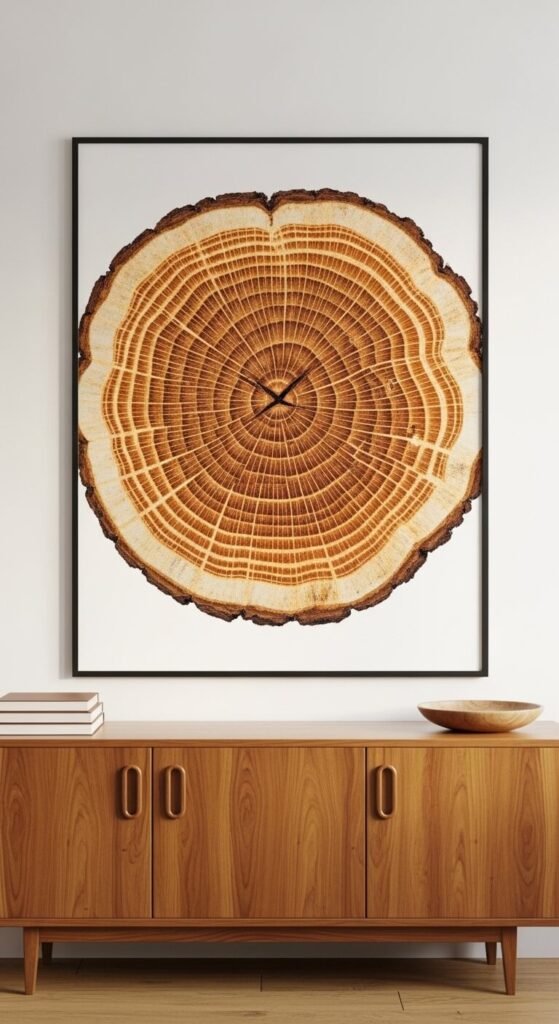
A tree ring cross-section print is a botanical decor choice for people who find standard leaf prints too predictable. The concentric growth rings of a tree trunk are both scientifically interesting and visually striking — the warm amber and brown tones work well in rooms with wooden furniture and natural materials. High-resolution photographs of polished wood cross-sections are available from stock photo sites, or source a real thin-cut wood slice and photograph it yourself. Print at large scale — 20×20 inches minimum — for the ring detail to read clearly. This print type suits a home office, living room, or hallway with a strong natural material aesthetic.
26. Botanical Alphabet Print Set for a Children’s Room
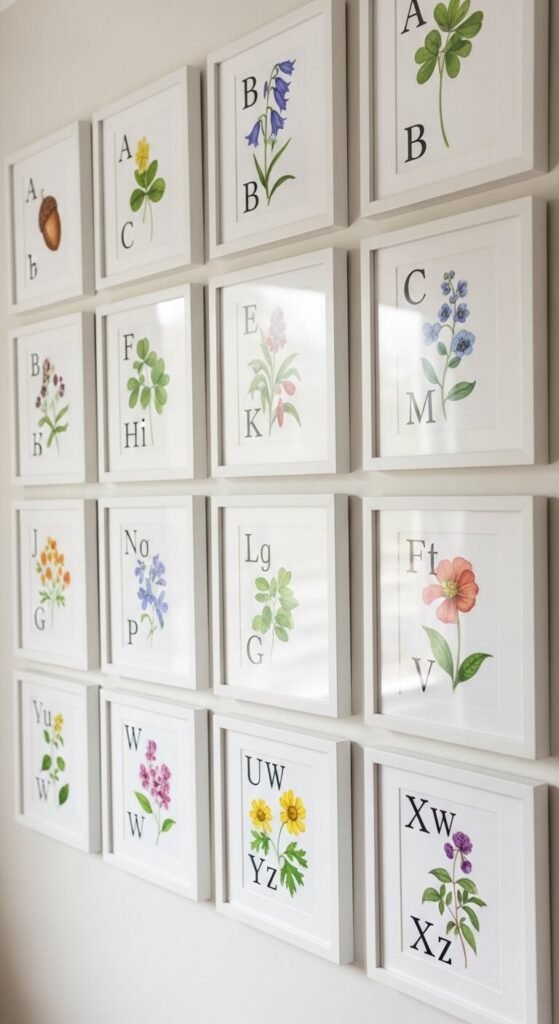
A botanical alphabet print set gives a children’s room wall both educational content and genuine botanical art. Each of the 26 prints pairs a letter with a plant — acorn, bluebell, clover, dandelion — illustrated in soft watercolor. Complete digital sets are available on Etsy for $8–$15 and include all 26 prints sized to print at home. Frame all 26 in matching simple white frames and arrange in a grid. The full grid fills a significant wall area and costs $30–$50 total. This is one of the few botanical print approaches that is equally appropriate for a child’s room and for an adult space — the botanical quality stands independently of the alphabet context.
Conclusion
Botanical decor prints connect a room to the natural world in a way that feels considered rather than decorative. A well-chosen plant illustration — whether it is a freely downloaded Victorian herbarium study, a hand-printed lino-cut fern, or a bold digital monstera — brings the structure, color, and logic of nature directly onto your walls. The 26 ideas in this guide range from zero-cost DIY prints to $50 digital download sets, which means there is an entry point for every budget and every skill level. Start with the subject that genuinely interests you — a plant you grow, a landscape you love, a species you find beautiful. Print it, frame it, and put it somewhere you will see it every day. That daily visual connection to the natural world is exactly what botanical decor does best.