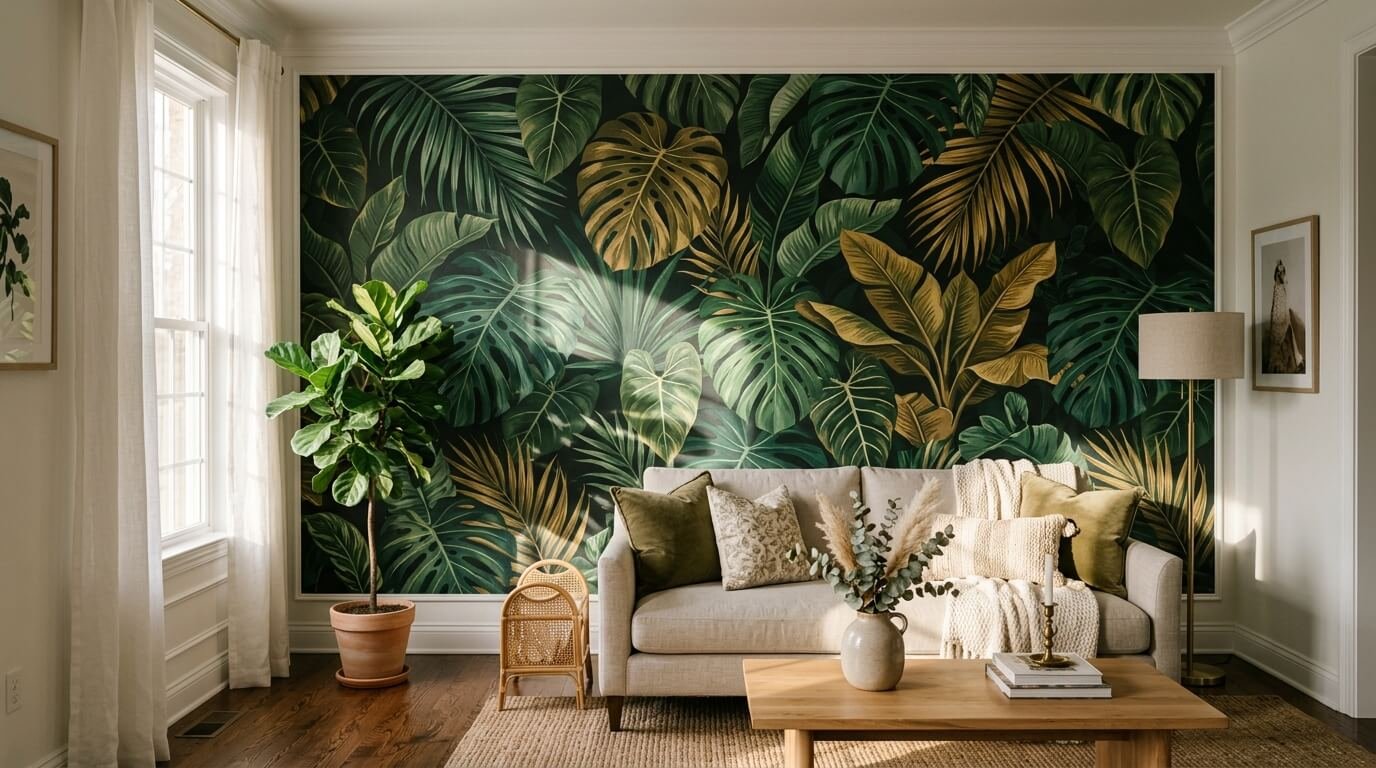
25 Beautiful Floral Decor Arrangements That Brighten Spaces

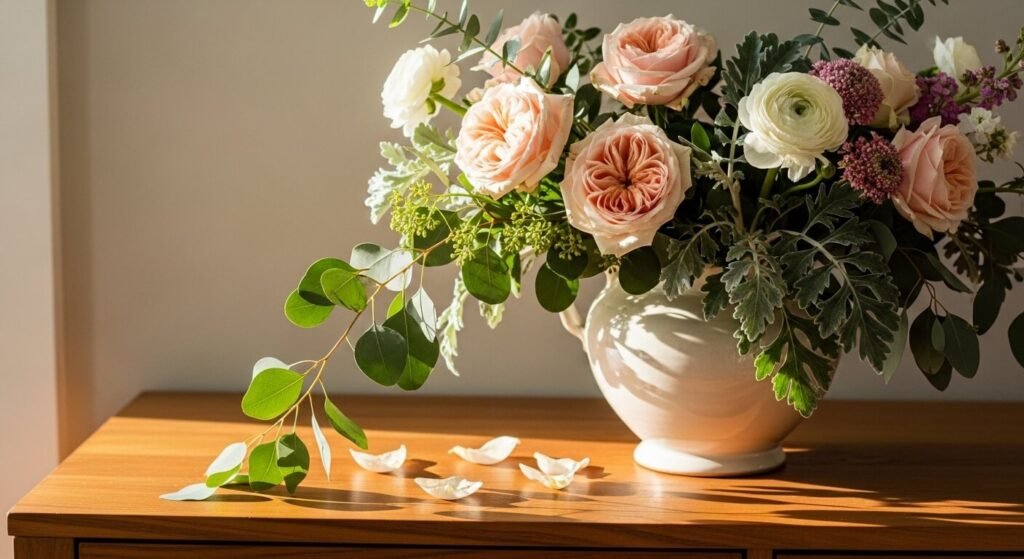
Disclosure: As an Amazon Associate we earn from qualifying purchases. Some links on this page may be affiliate links — if you click through and make a purchase, we may receive a small commission at no extra cost to you.
Floral decor has a way of making any room feel more alive. The color, the scent, the organic shape of petals and stems — these details change the entire atmosphere of a space in a way that furniture and paint simply cannot. Whether you work with fresh flowers, dried botanicals, silk stems, or paper blooms, the right floral arrangement brings warmth and personality to a room without requiring a decorator or a large budget. This guide covers 25 specific floral decor arrangements worth trying, with practical tips on how to make or style each one affordably at home.
1. Single-Stem Bud Vase Cluster
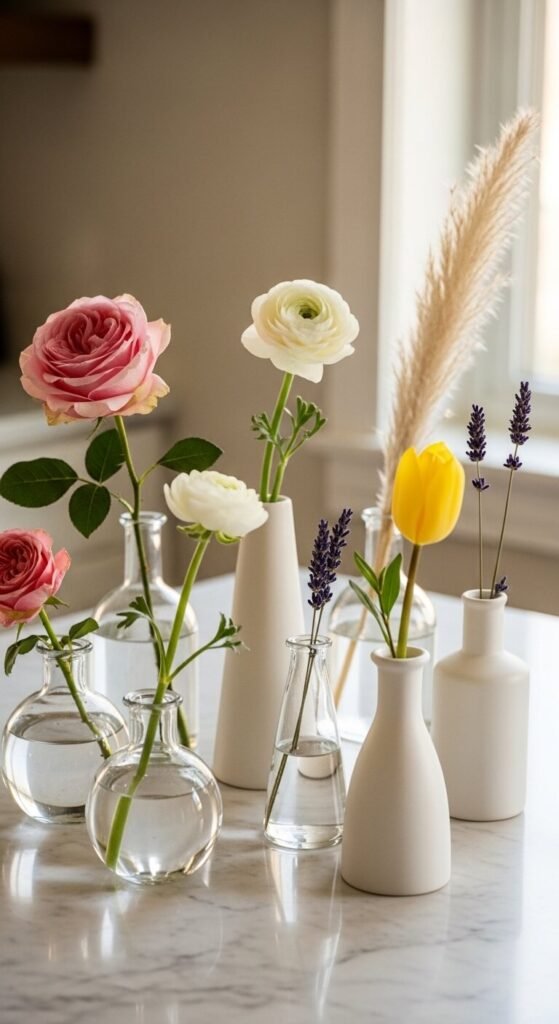
A cluster of single-stem bud vases is the most flexible and forgiving floral arrangement you can create. Each vase holds just one stem, so there is no arranging skill required. The variety comes from the flowers themselves and the slight differences in vase shape and height. Group five to nine vases together — odd numbers look more natural. Mix clear glass with matte ceramic for texture contrast. Single stems from a grocery store cost $1–$3 each. You can rotate one or two stems at a time as they fade, keeping the cluster looking full without replacing the entire arrangement.
2. Dried Pampas Grass Floor Arrangement
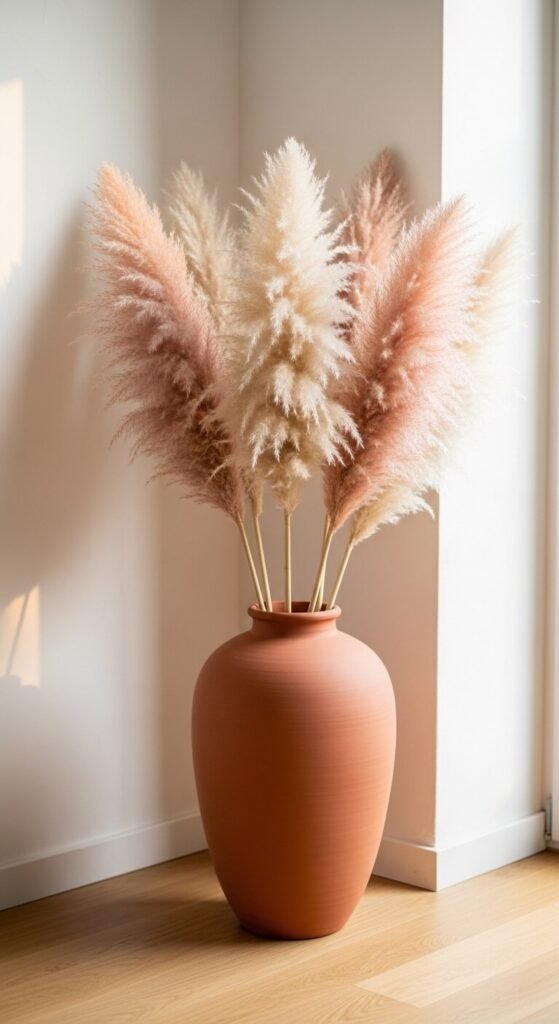
A dried pampas grass floor arrangement fills a corner with height and soft texture without requiring any maintenance. Pampas grass never wilts, never drops petals, and improves in appearance as it dries fully over time. Place three to five stems in a large floor vase — terracotta, cement, or neutral ceramic all work well. Dried pampas bundles cost $15–$30 for a full pack online. Individual stems at florist markets cost $3–$6 each. Add a stem or two of dried lunaria or bleached eucalyptus for variety. One floor arrangement in a bare corner changes the entire feel of a living room.
3. Wildflower Mason Jar Centerpiece
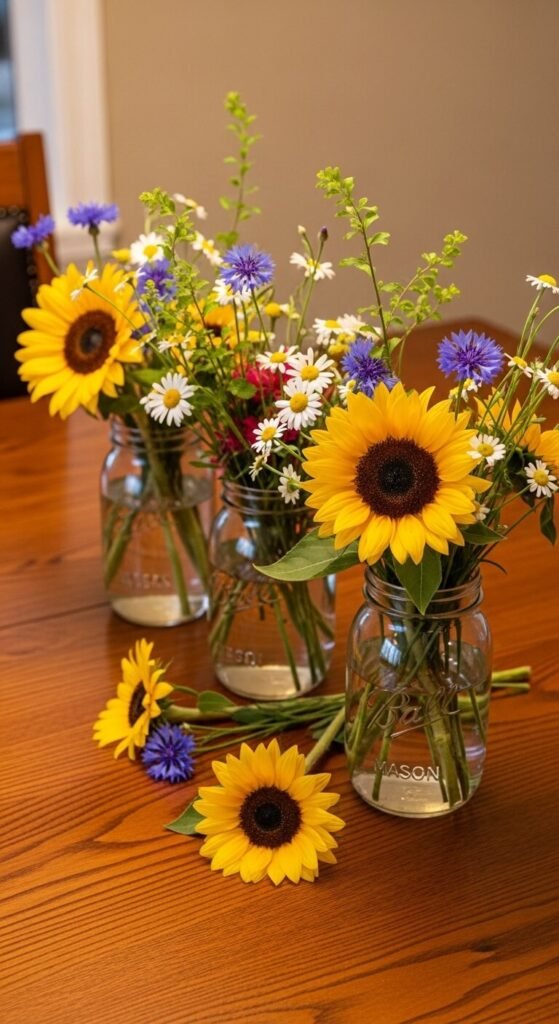
A wildflower mason jar centerpiece is the most relaxed and affordable table arrangement you can make. The informal, unstructured look is intentional — these should not look like a formal florist arrangement. Use sunflowers, daisies, cornflowers, or whatever is available at a local market or grocery store for the least money. Three jars in slightly different sizes create more visual interest than a single large jar. Fill them two-thirds full with water and trim stems at different heights before placing them. Total cost: $8–$15 for the flowers. The mason jars are free if you already own them, or $1–$2 each otherwise.
4. Botanical Print and Dried Flower Gallery Wall
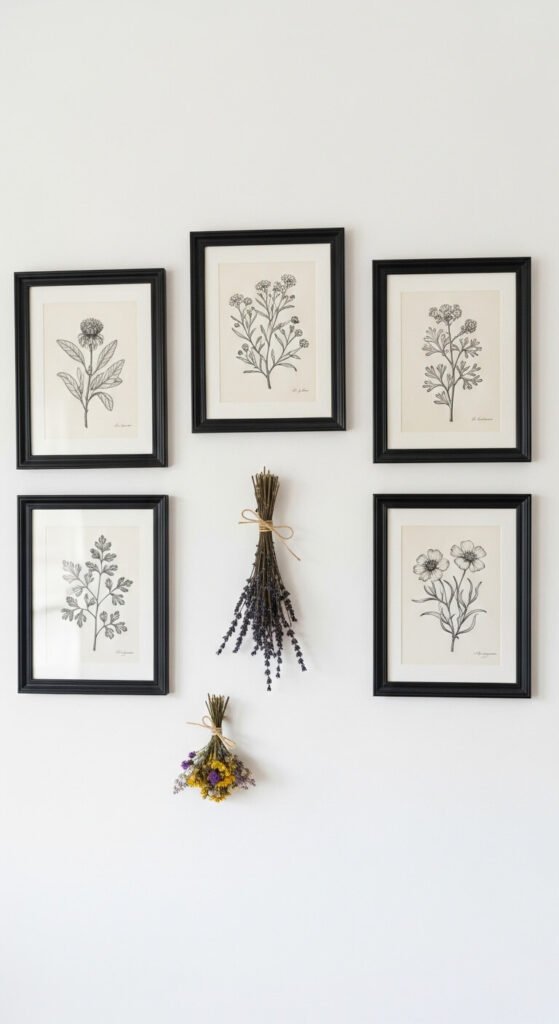
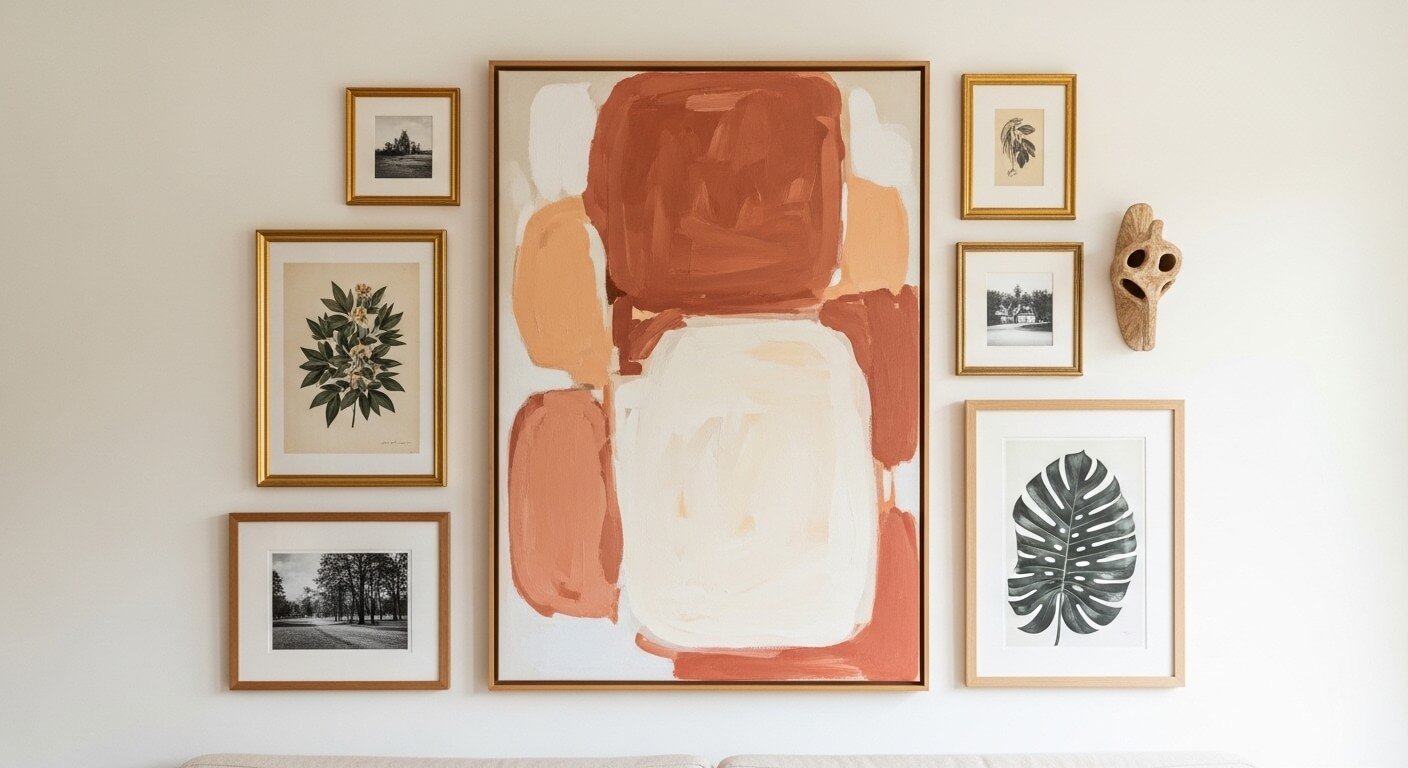
A botanical gallery wall mixes framed prints with small dried flower bundles pinned directly to the wall. The combination of flat printed images and real dried material adds dimension that a standard picture gallery lacks. Print botanical illustrations at home for free from public domain sources — many 19th-century botanical drawings are freely available online. Frame them in simple black or natural wood frames for $5–$15 each. Pin small bundles of dried lavender, eucalyptus, or statice between frames with a small tack. The scent from the dried botanicals adds a sensory layer that print alone cannot deliver.
5. Oversized Statement Vase with Garden Roses
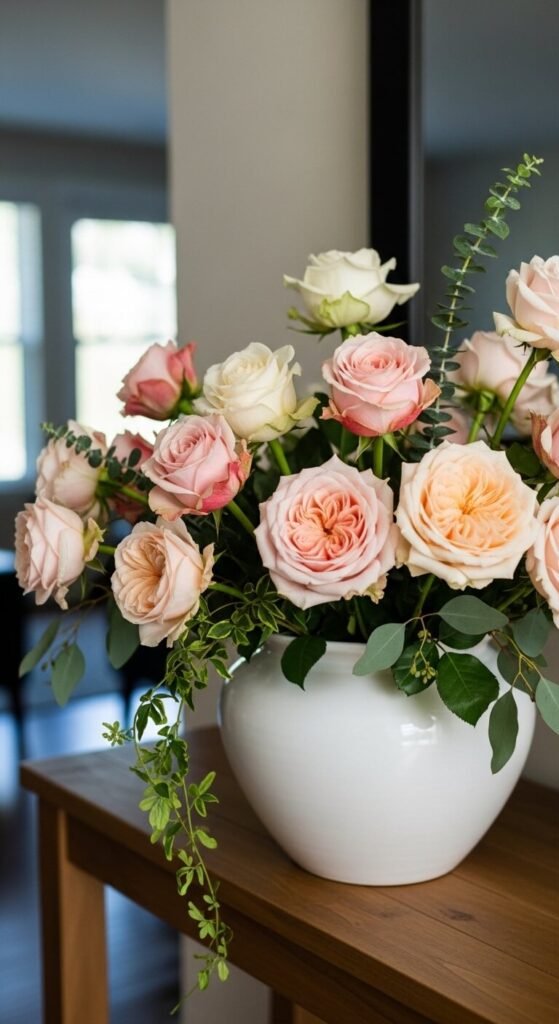
An oversized statement vase filled with garden roses is the most classic and consistently effective floral arrangement for a living room or entryway console table. The key is using a wide-mouthed vase so the stems can spread naturally without being forced into a tight neck. Mixed bloom stages — tight buds alongside fully open flowers — give the arrangement depth. Buy grocery store roses when they are still budded and let them open at room temperature. A bunch of 12–15 stems costs $10–$18. Cut stems at a 45-degree angle, remove lower leaves, and change water every two days for maximum vase life.
6. Hanging Dried Flower Bundles
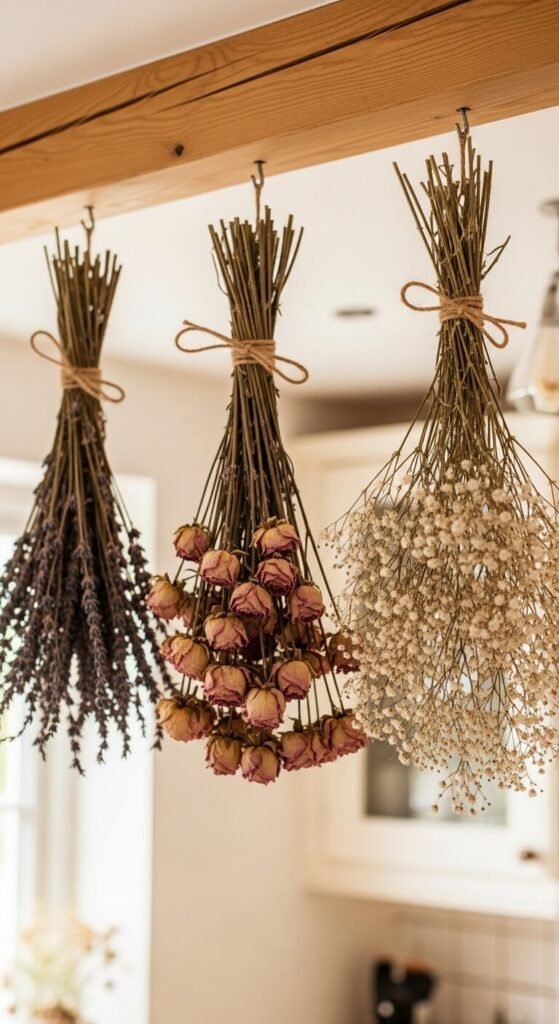
Hanging dried flower bundles tied with twine and suspended from ceiling beams, curtain rods, or wall hooks are one of the oldest forms of floral decor — and one of the most effective. The upside-down drying method preserves the shape and color of the blooms better than laying them flat. Tie fresh bundles of lavender, roses, statice, or baby’s breath in small groups and hang them to dry for two to three weeks. Once dry, they last for months or years. Buy fresh bundles from a market for $3–$8 each. Hang in a kitchen, bedroom, or bathroom for fragrance and texture overhead.
7. Low Centerpiece Bowl with Floating Blooms
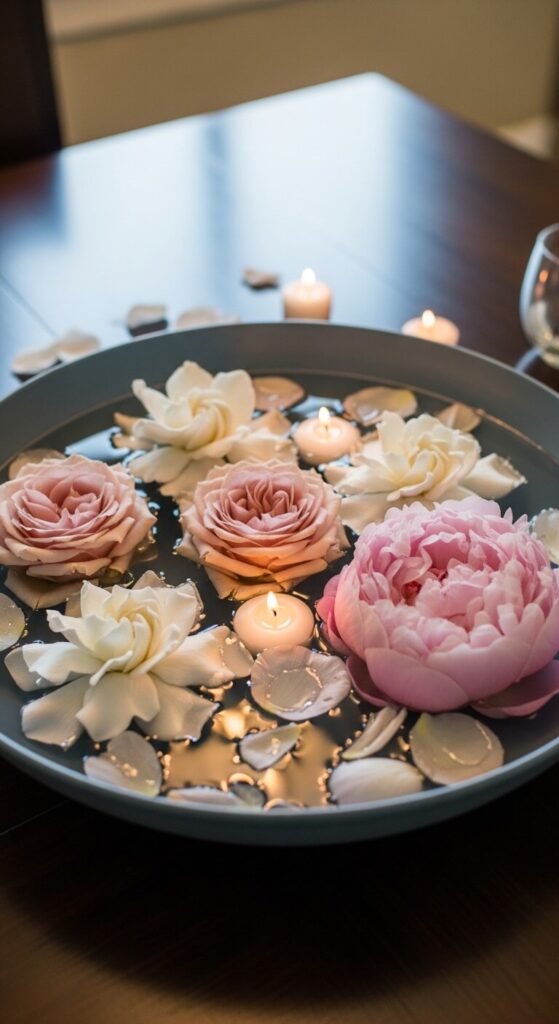
A floating bloom bowl places open flower heads directly on the surface of water in a wide, shallow vessel. This arrangement works at eye level for dining tables — there is no tall arrangement blocking sightlines across the table. Use large, fully open blooms that float well: peonies, roses, gardenias, and camellias all work. Remove the stem entirely and float the head face-up. Add a few floating candles between the blooms. Use a matte ceramic or stone bowl in a neutral or earthy tone. The whole arrangement costs $10–$20 and takes five minutes to assemble. Change the water daily to keep blooms fresh.
8. Pressed Flower Art in Frames
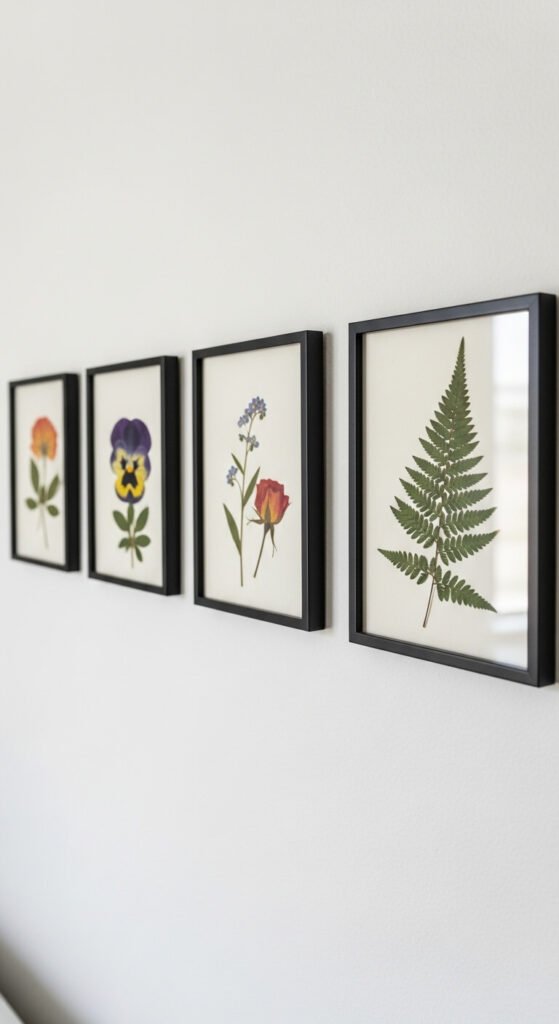
Pressed flower art preserves real flowers in a flat, frame-ready form that lasts for years without water or maintenance. Press flowers between the pages of a heavy book or in a flower press for two to three weeks. Mount them on watercolor paper or card with a small dab of clear-drying craft glue. Frame in simple $5–$10 frames. You can press flowers from your own garden for free, or buy small bunches of pansies, violas, or wildflowers specifically for pressing. A row of four matching frames with different pressed specimens makes a cohesive, personal wall display that costs under $30 total.
9. Seasonal Wreath for the Front Door
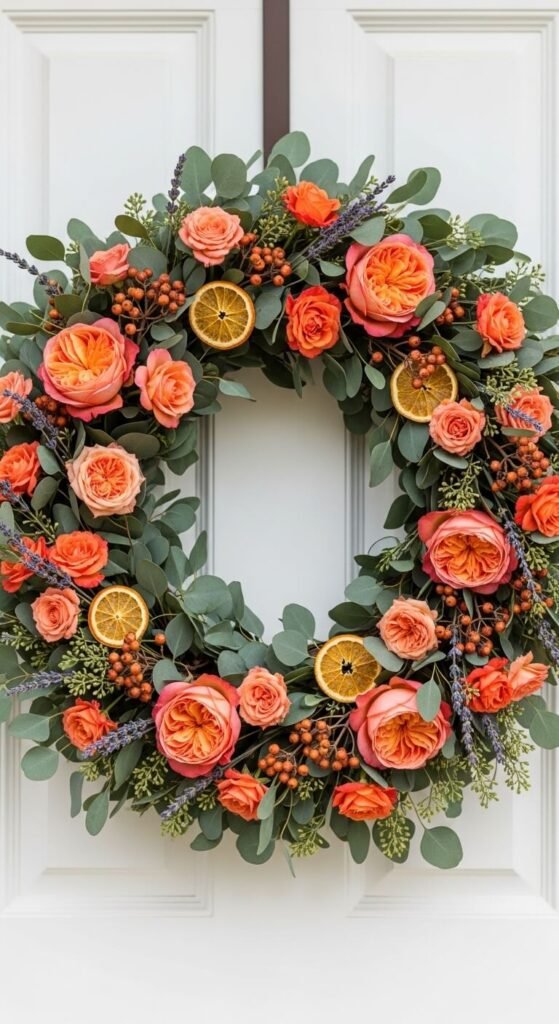
A seasonal floral wreath changes the feel of a front door with almost no effort. Use a foam or wire wreath ring as the base. Push in eucalyptus stems first for full coverage, then add flower clusters — dried or silk flowers last longer outdoors than fresh. Dried orange slices, berry clusters, and cinnamon sticks add seasonal variation without requiring fresh flowers. A complete DIY wreath costs $15–$30 in materials. Ready-made seasonal wreaths sell for $40–$90. Swap the botanical additions each season to give the same base ring a completely different look without buying a new wreath.
10. Herb Pot Arrangement for the Kitchen
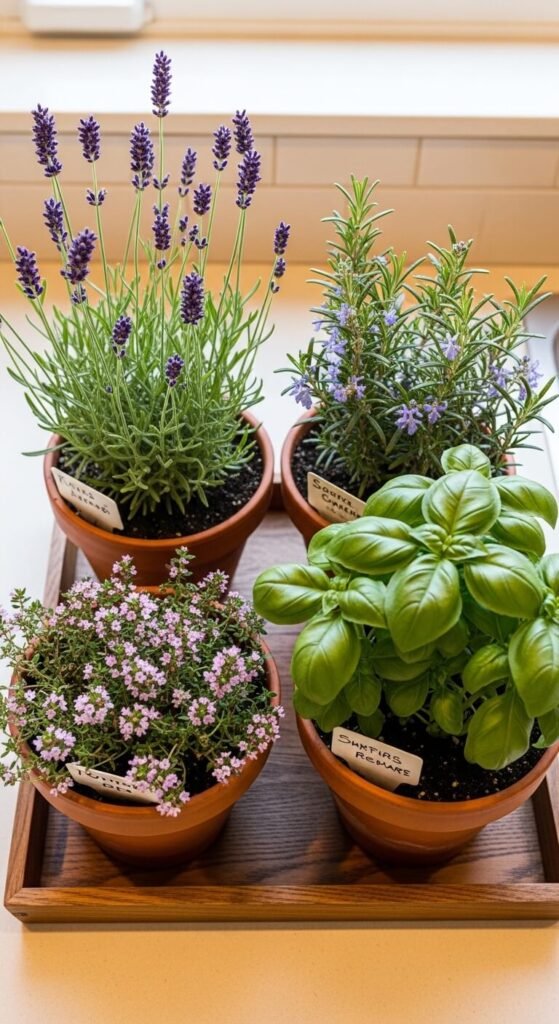
A flowering herb arrangement on a kitchen counter serves double duty — it looks like a styled floral display while also providing fresh herbs for cooking. Lavender, rosemary, thyme, and basil all produce small blooms when allowed to flower. Arrange four matching terracotta pots on a wooden tray or cutting board. The tray groups them visually into a single display. Small herb plants from a garden center cost $2–$4 each. The total arrangement costs under $20 and continues growing. This is the only floral arrangement in this guide that actively improves your meals while sitting on the counter.
11. Tall Branch and Blossom Arrangement
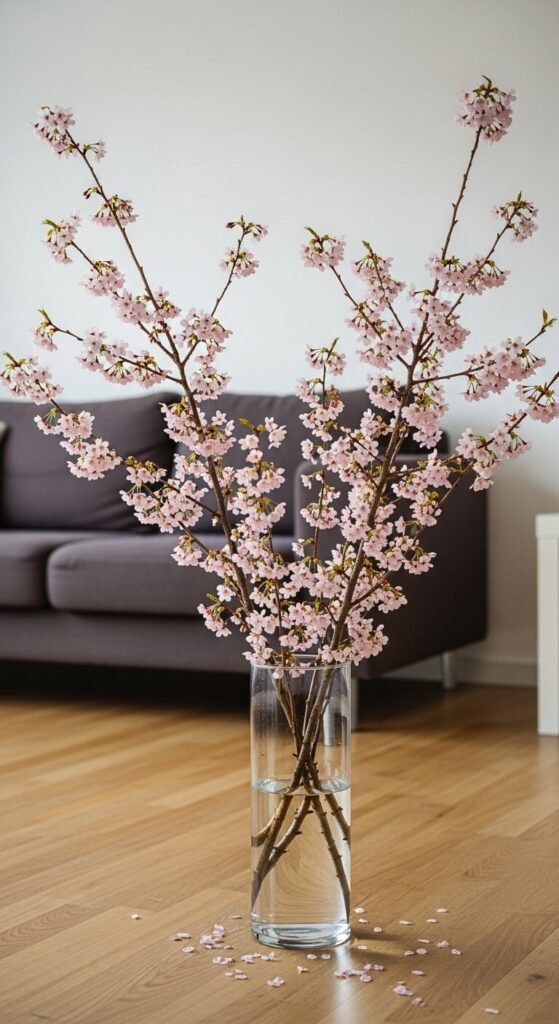
A tall branch arrangement uses the height and sculptural structure of a branch to fill vertical space in a room. Cherry blossom, quince, dogwood, and magnolia branches are the most dramatic options. Source them from your own garden, a neighbor’s tree, or a florist. Place in a tall, heavy vase — it needs weight at the base to balance the branch height above. A single large branch or two paired branches in a floor vase can fill a corner the way a floor plant would, but with the softness of petals rather than leaves. Replace branches as they finish blooming.
12. Dried Flower Wreath for Bedroom Wall
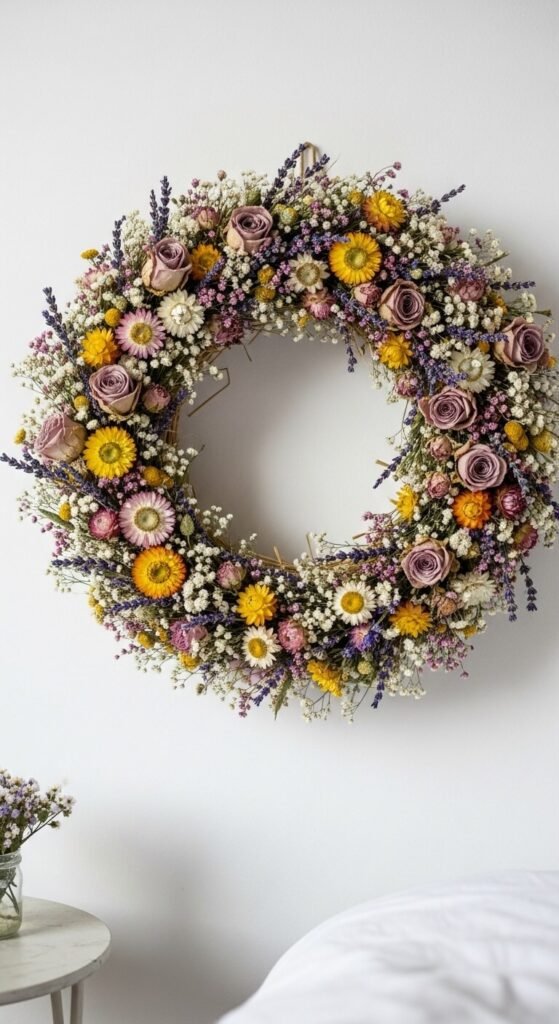
A densely packed dried flower wreath for a bedroom wall is a long-lasting alternative to a framed print. The tactile quality of real dried petals and stems adds dimension that flat art cannot match. Build one on a straw or foam ring base by hot-gluing or wiring in dried flower heads — roses, strawflowers, statice, and baby’s breath are the easiest to work with. Materials for a 14-inch wreath cost $20–$35. Ready-made dried wreaths sell for $45–$85. Hang with a simple nail or adhesive hook. A dried wreath lasts six months to a year in a bedroom away from direct sunlight.
13. Flower Crown as Room Decor
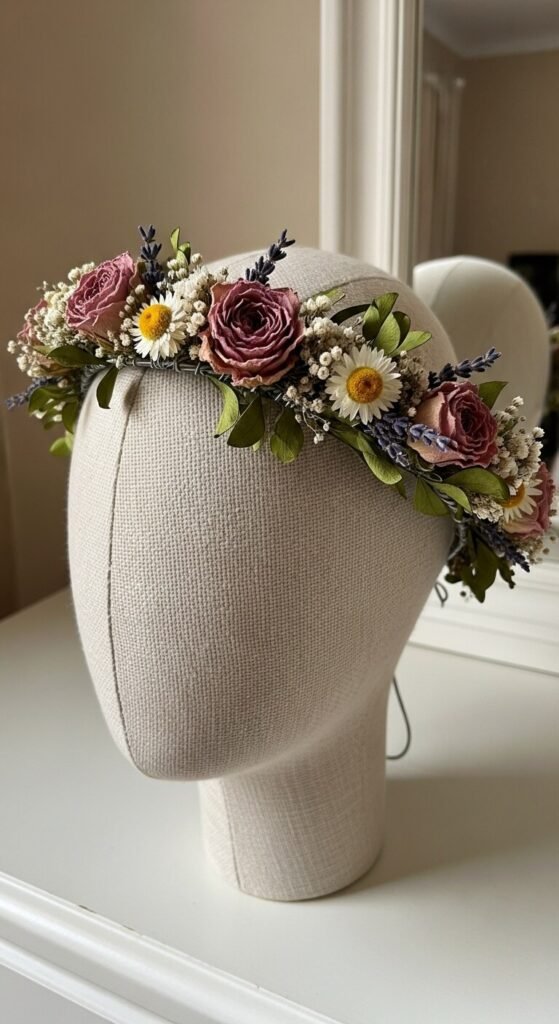
A dried flower crown displayed on a dresser or shelf is an unusual and personal way to bring floral decor into a bedroom. Make one on a wire base by wiring in clusters of dried flowers — roses, chamomile, lavender, and small leafy stems. Display it on a ceramic head, a wooden stand, or a wall hook. The wire base costs $3; the dried flowers cost $15–$25 for a full set of materials. This approach treats a wearable object as a decor piece — it gives the dresser or shelf a sculptural, handmade quality that a conventional vase arrangement does not.
14. Windowsill Herb and Flower Pot Row
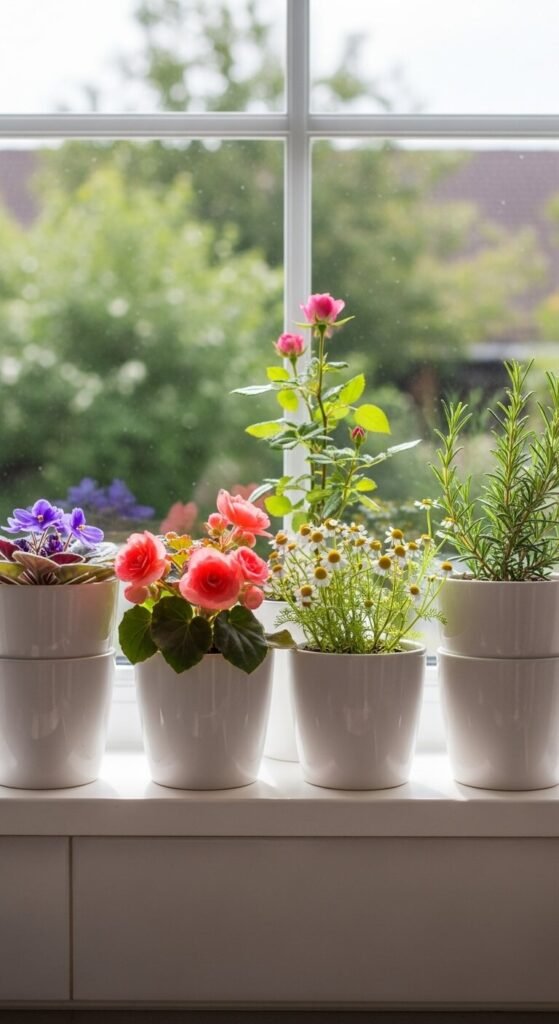
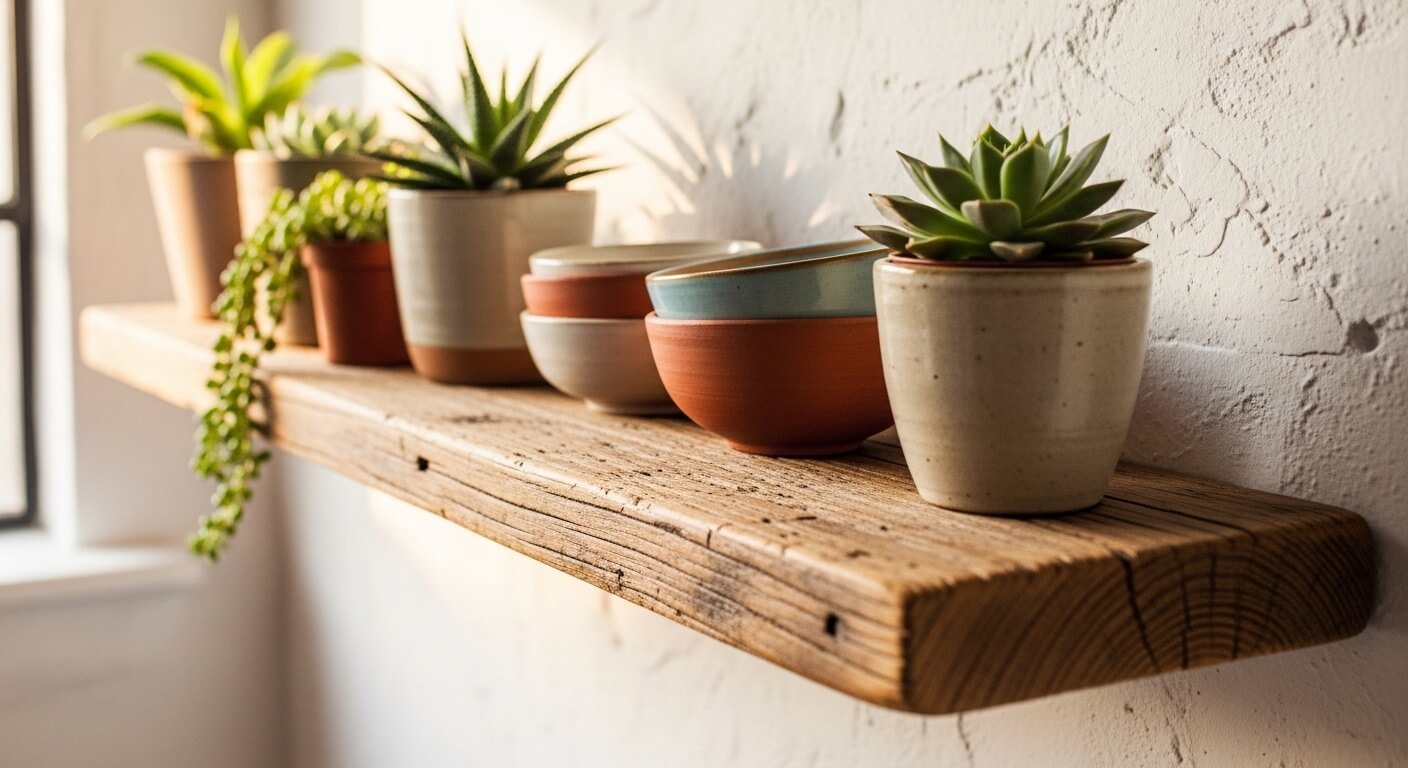
A windowsill pot row of small flowering plants turns a plain kitchen or bathroom window ledge into a living floral display. Use matching pots — white ceramic, small terracotta, or matching glazed pots — so the plants feel like a collection rather than random clutter. African violets, begonias, small potted roses, and chamomile all flower reliably on a sunny windowsill. Pot plants from a garden center cost $3–$6 each. A row of five costs under $30. Keep them consistently watered and in good light. Replace any plant that stops flowering with a new one to keep the row looking full.
15. Flower Arrangement in a Book Vase
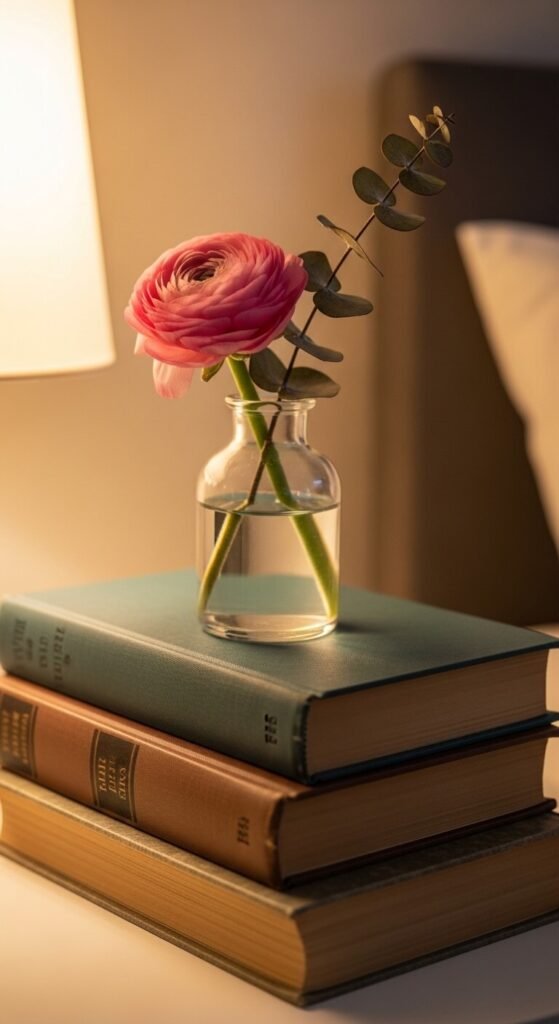
A single stem vase on a stack of books is one of the simplest styled moments you can create in a bedroom or living room. Stack two or three hardcover books with interesting spines on a nightstand or shelf. Rest a small bud vase on top with one or two stems — a ranunculus, a garden rose, or a dried eucalyptus sprig. The books add height variation. The vase adds a living detail. The combination looks deliberately styled without requiring any effort. Use a book stack you already own. The stem costs $2–$3. This is the most affordable arrangement in this guide — under $5 total if you already own a bud vase.
16. Eucalyptus Bathroom Shower Bunch
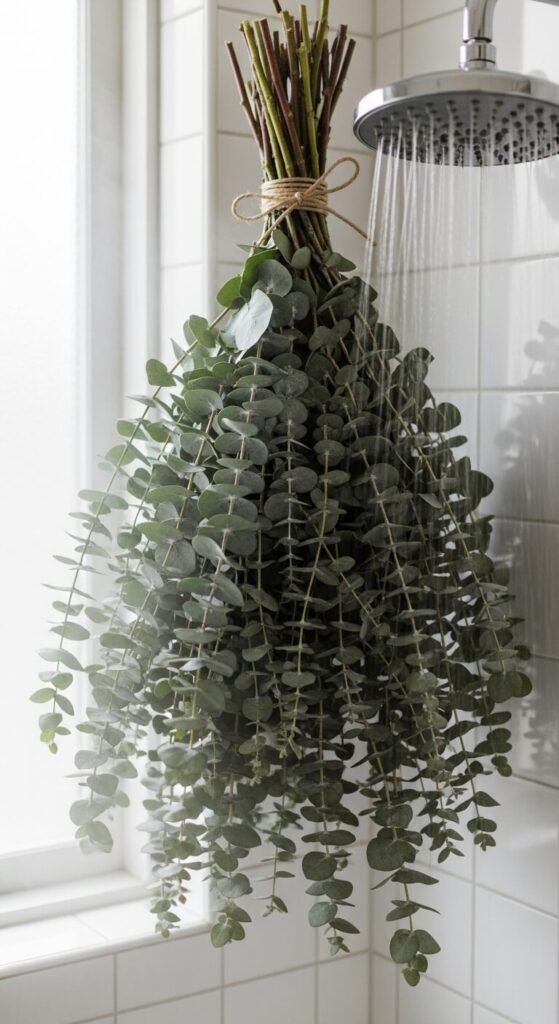
A fresh eucalyptus bunch hung from the shower head releases a natural aromatic scent when steam activates the essential oils in the leaves. Tie a bundle of six to eight stems with twine and hang it from the shower head so the bundle hangs clear of direct water. The leaves last two to three weeks before drying out — at which point they can be moved to a vase as dried decor. A fresh eucalyptus bunch costs $5–$10 from a florist or market. This is genuinely the lowest-effort floral decor in the guide: hang it, shower, and the bathroom fills with a spa-like fragrance automatically.
17. Silk Flower Arrangement for Long-Term Display
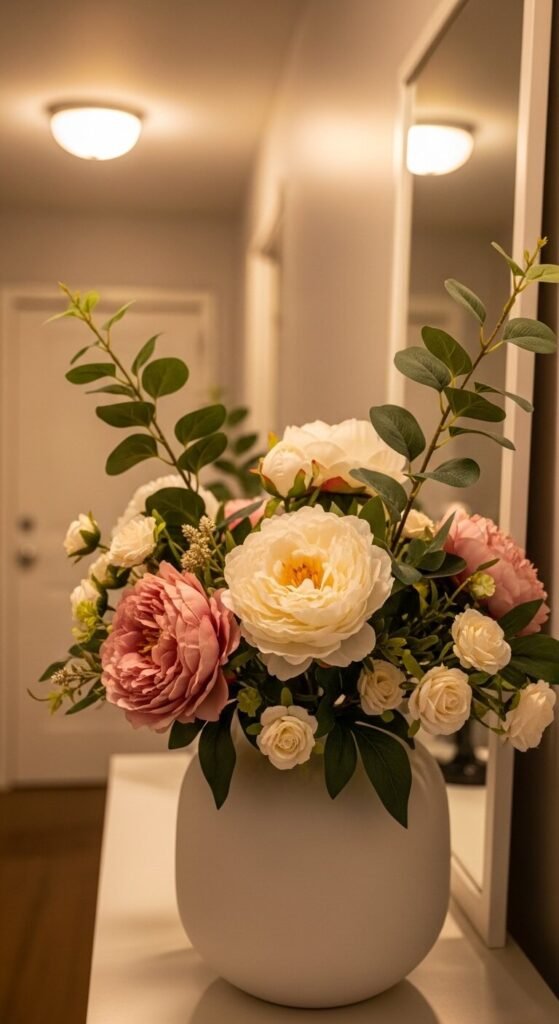
A high-quality silk flower arrangement provides permanent floral decor in spaces where fresh flowers are impractical — an entryway, a bathroom with no natural light, or a low-traffic room. Avoid cheap plastic-looking silk flowers. Look for stems with realistic petal texture and natural color variation — these cost $4–$10 per stem but look genuinely convincing in a well-lit arrangement. Build the arrangement the same way you would with fresh flowers: start with greenery, add large blooms, fill gaps with smaller stems. Dust occasionally with a dry cloth. A quality silk arrangement in a good vase costs $40–$80 and lasts indefinitely.
18. Terrarium with Tiny Flowering Plants
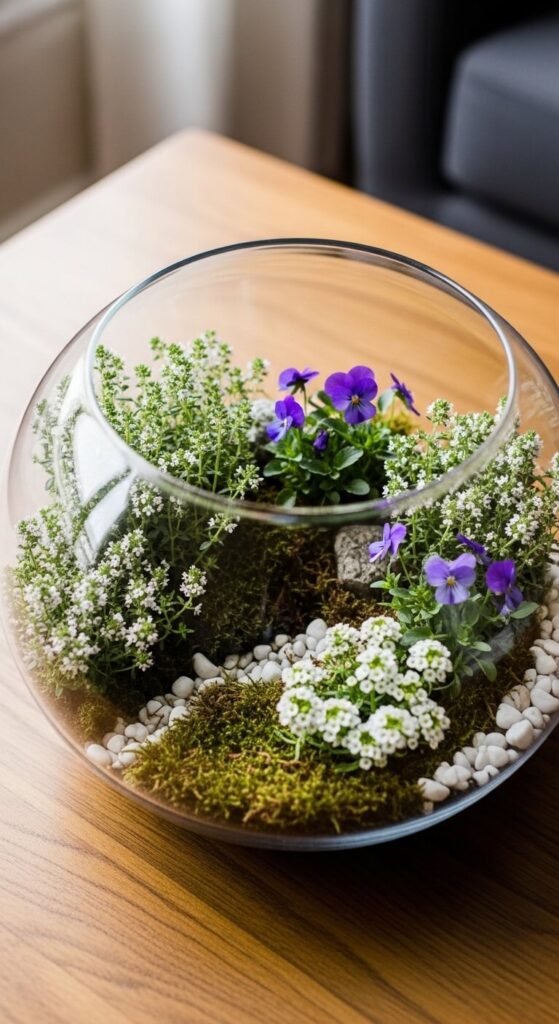
A terrarium with tiny flowering plants creates a small contained garden that sits on a coffee table, bookshelf, or windowsill as a living decorative object. Use an open glass container — a geometric terrarium, a wide bowl, or an old fish tank. Layer pebbles, activated charcoal, potting mix, and moss. Plant miniature flowering varieties: small violas, white alyssum, thyme in flower, or miniature African violets. The glass container costs $10–$25. Plants cost $2–$4 each. The full terrarium costs under $40. Keep it in bright indirect light and water sparingly. The flowers rotate through blooming cycles, so there is almost always something in flower.
19. Dried Orange and Cinnamon Floral Bowl
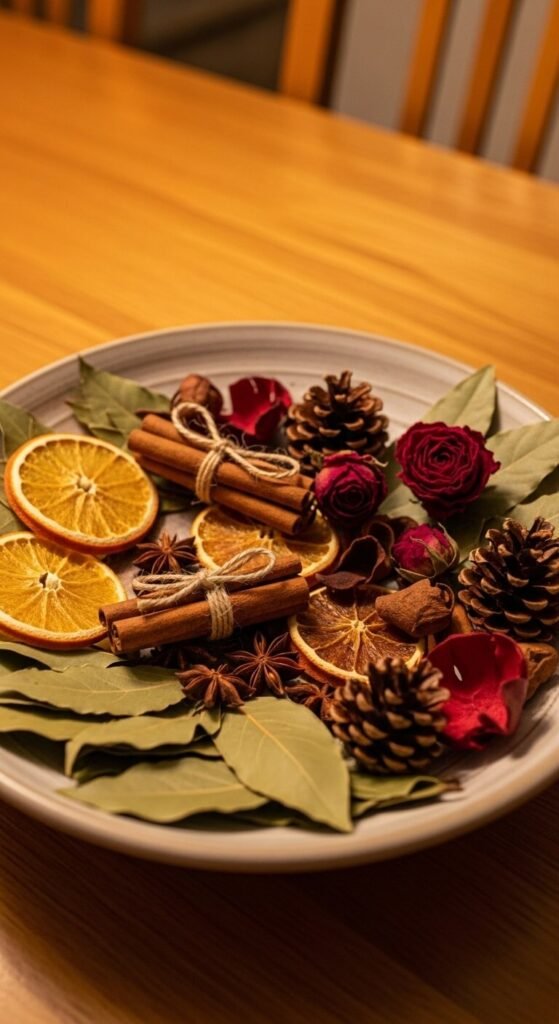
A dried floral bowl filled with aromatic dried materials creates both visual and sensory interest on a sideboard, coffee table, or kitchen counter. Mix dried orange slices, cinnamon sticks, dried rose heads, bay leaves, small pine cones, and star anise in a wide ceramic bowl. The warm tones and fragrance make this arrangement particularly well-suited to autumn and winter. All materials cost $10–$20 in total from a craft store or market. Add a few drops of orange or clove essential oil to the bowl periodically to refresh the fragrance as the natural scent fades. No water, no maintenance, no wilting.
20. Flower Arrangement in a Vintage Pitcher
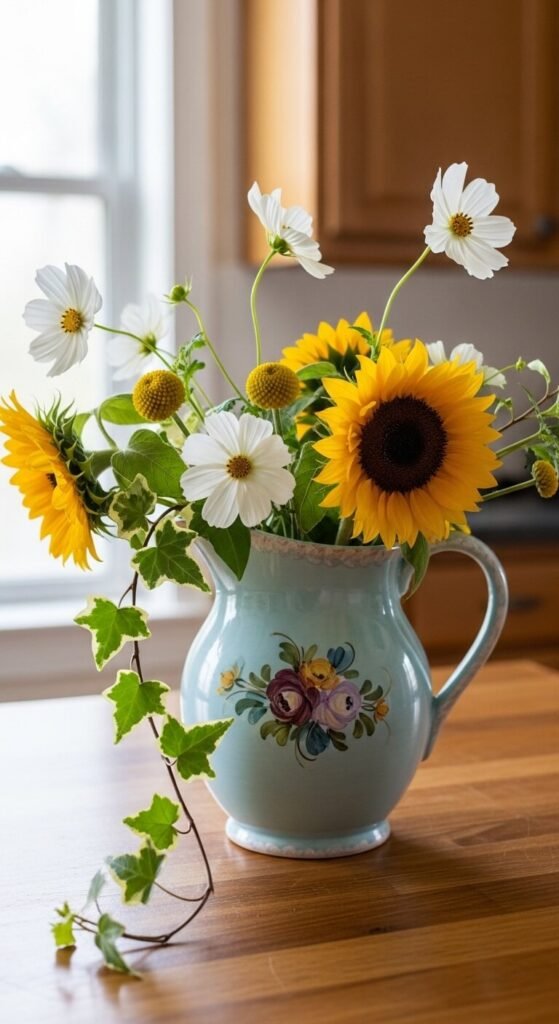
A vintage pitcher used as a flower vase gives a floral arrangement a character that standard glass vases rarely match. The painted or glazed surface of the pitcher becomes part of the arrangement. Look for pitchers at thrift stores and estate sales — they cost $3–$12 and are far more interesting than most new vases. Fill loosely with mixed grocery store flowers: sunflowers, cosmos, chrysanthemums, and trailing ivy or greenery. The informal, garden-picked look works in kitchens, dining tables, and shelves. Using a found object as the vessel is part of what makes this arrangement feel personal rather than purchased.
21. Paper Flower Wall Installation
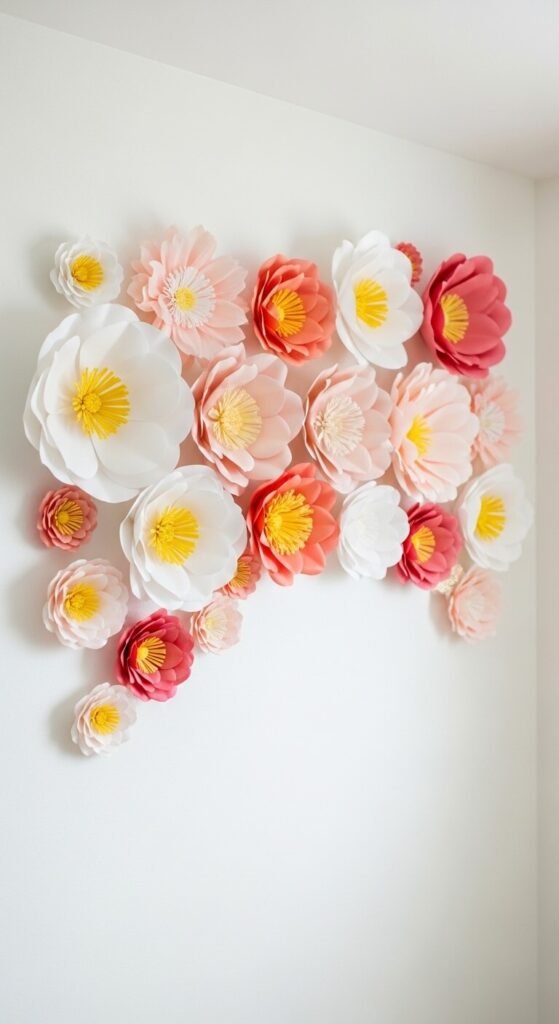
A paper flower wall installation creates a large-scale floral display that costs far less than fresh flowers and lasts indefinitely. Make individual flowers from crepe paper or tissue paper — basic rose, peony, or poppy shapes are beginner-friendly and widely templated online. Mount them directly to the wall with small adhesive dots or tacks. A cluster of 15–20 flowers in complementary colors covers a substantial wall area. Total materials cost $15–$25 for a full installation. This works especially well in a bedroom, a nursery, or as a photo backdrop. The paper texture catches light differently than plastic and reads as genuinely handmade.
22. Wildflower Seed Jar Gift and Display
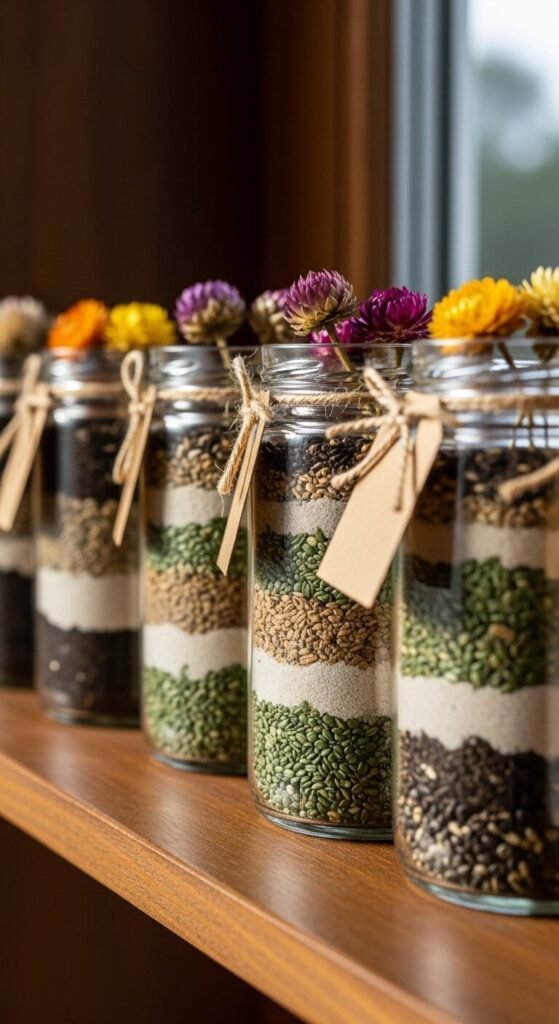
Wildflower seed jars displayed on a shelf work as a decorative object while also being genuinely useful. Layer potting mix, sand, and wildflower seeds in a glass jar in distinct bands — the layered visual is the display. Add a few dried flower heads on top and a paper tag tied with twine. These make excellent handmade gifts. Buy mixed wildflower seed packets for $3–$5 each. The jars cost $1–$2. A row of five jars with different seed varieties on a shelf costs under $25 total. When the recipient is ready to plant, they simply tip the jar into a pot or garden bed.
23. Cascading Floral Table Runner
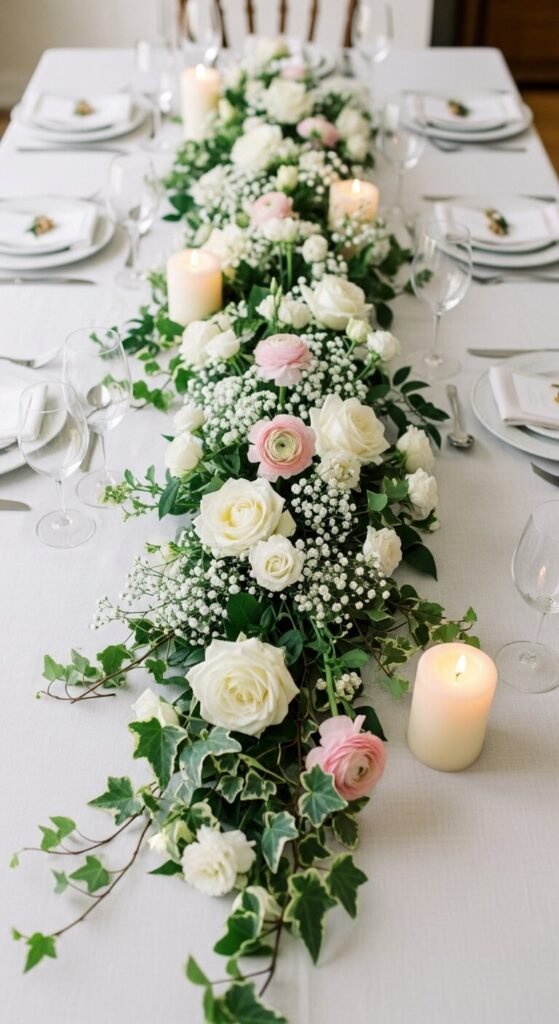
A cascading floral table runner places loose flower heads and greenery directly on the table surface — no vase required. The arrangement runs the full length of the table as a continuous display. Work from the center outward, laying down leafy stems first, then tucking flower heads in at regular intervals. Use grocery store flowers to keep costs low: roses, ranunculus, and baby’s breath cost $15–$25 total for a six-foot runner. Place pillar candles at each end. Assemble this arrangement on the day of a dinner party — it lasts beautifully for a full evening and can be composted after without guilt.
24. Potted Orchid as a Long-Term Floral Display
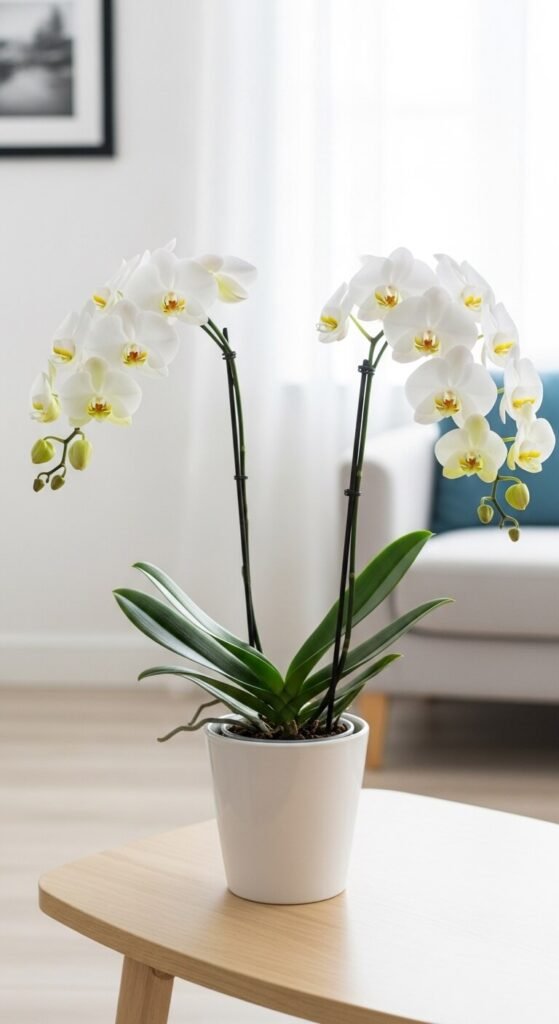
A potted phalaenopsis orchid is the most long-lasting living floral display you can buy. A healthy orchid in bloom holds its flowers for six to ten weeks — longer than almost any cut flower arrangement. After blooming, cut the stem above a node joint and the plant will often rebloom within a few months. A potted orchid costs $12–$25 at most grocery stores and garden centers. Place it in bright indirect light and water sparingly — once a week is usually sufficient. One orchid on a side table or bathroom counter provides weeks of floral color for the price of a single bunch of roses.
25. Foraged Greenery and Wildflower Arrangement
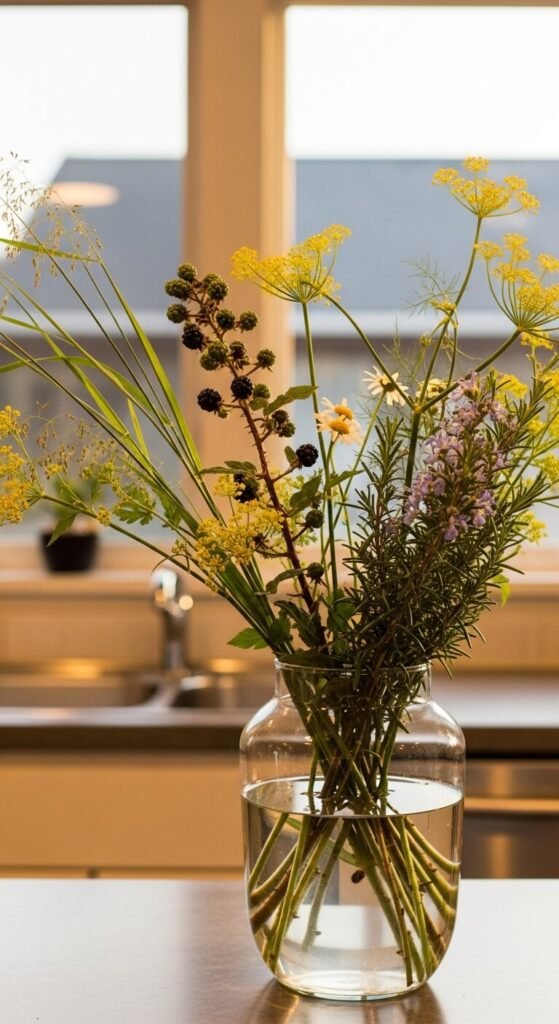
A foraged greenery arrangement uses plant material collected from a garden, a hedgerow, or a roadside rather than purchased flowers. Wild grasses, blackberry cane, fennel, rosemary, and roadside daisies combine in a loose, unstructured way that looks more interesting than most bought bouquets. The arrangement costs nothing except the vase — and many homes already have a suitable glass vessel. Foraging is legal on most public land for personal use; always avoid protected species. Cut stems at an angle, strip lower leaves, and place in water immediately. The variety of textures and natural scale differences make foraged arrangements particularly alive-looking.
Conclusion
Floral decor does not require a florist’s skill or a florist’s budget. Most of the 25 arrangements in this guide cost under $25 to create, and several cost nothing at all beyond materials you already own. The consistent thread across all of them is attention — choosing stems that work together, placing them in a vessel that suits them, and putting the arrangement somewhere it will actually be seen. Start with what is easiest for your space and skill level: a single stem in a bud vase, a eucalyptus bunch in the shower, a pressed flower in a frame. Add more as you build confidence. Floral decor rewards simple action. You do not need a perfect arrangement — you need one that is actually there, bringing color and life to the room you spend time in every day.