28 Dramatic Accent Wall Decor Treatments That Command Attention


Disclosure: As an Amazon Associate we earn from qualifying purchases. Some links on this page may be affiliate links — if you click through and make a purchase, we may receive a small commission at no extra cost to you.
One wall can do more work than the rest of the room combined. A well-executed accent wall creates instant depth, defines a space architecturally, and gives any room a focal point that makes it feel designed rather than decorated. Whether you rent or own, have $50 or $5,000 to spend, there is a treatment on this list that works for your walls. From limewash plaster to reclaimed wood, sculptural panels to dramatic paint techniques, these 28 accent wall ideas cover every room, style, and skill level — with practical steps and real budget guidance for each one.
1. Limewash Paint Accent Wall
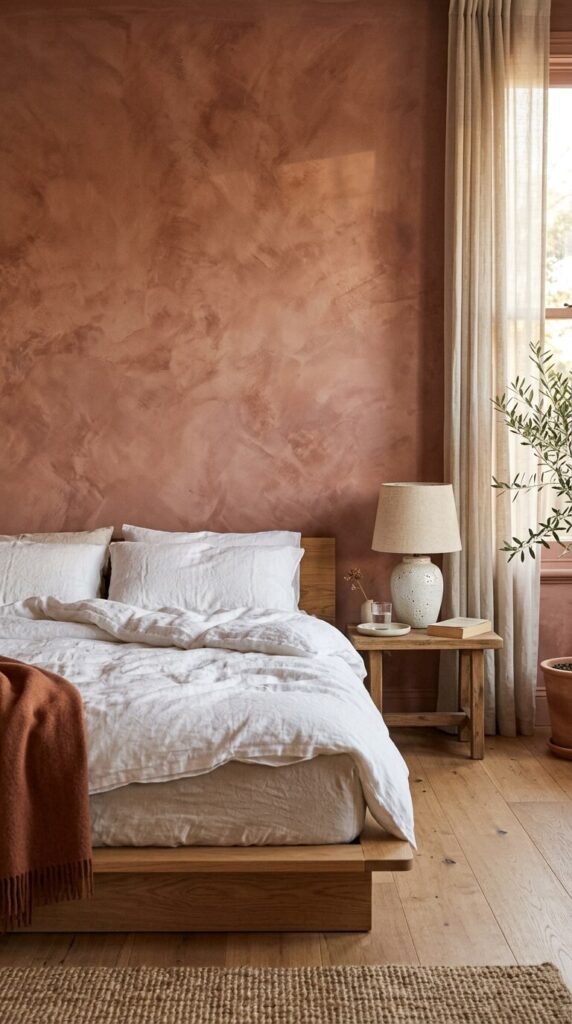
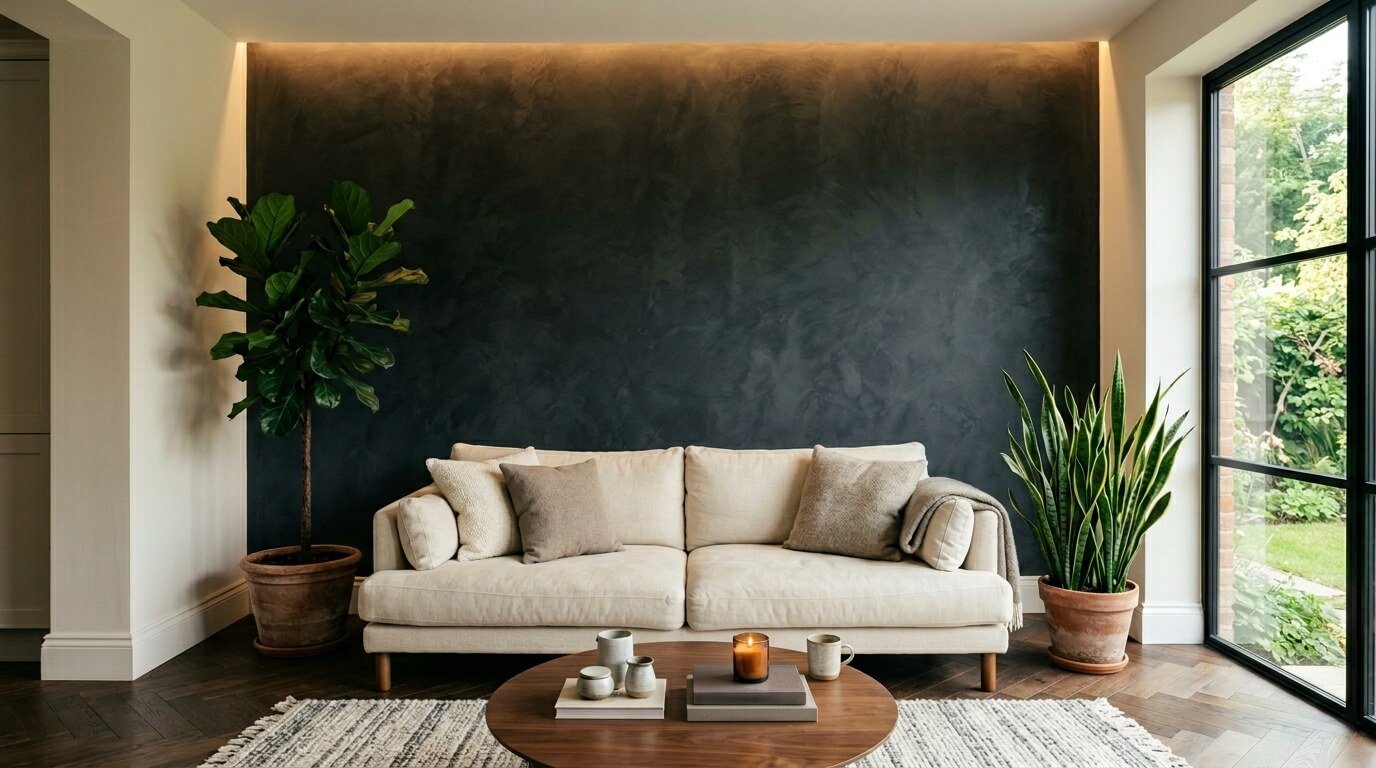
Limewash paint is the most talked-about wall treatment right now — and for good reason. It creates a soft, aged, layered appearance that looks like European plaster without the cost. Apply over any painted wall using a large brush in overlapping crosshatch strokes for an organic, uneven finish. Brands like Portola Paints and Roman Clay are popular, but budget-friendly limewash kits on Amazon run $40–$80 for a full accent wall. The more layers you apply, the deeper the texture reads. No special skills required — the technique is forgiving by design.
2. Reclaimed Wood Plank Wall
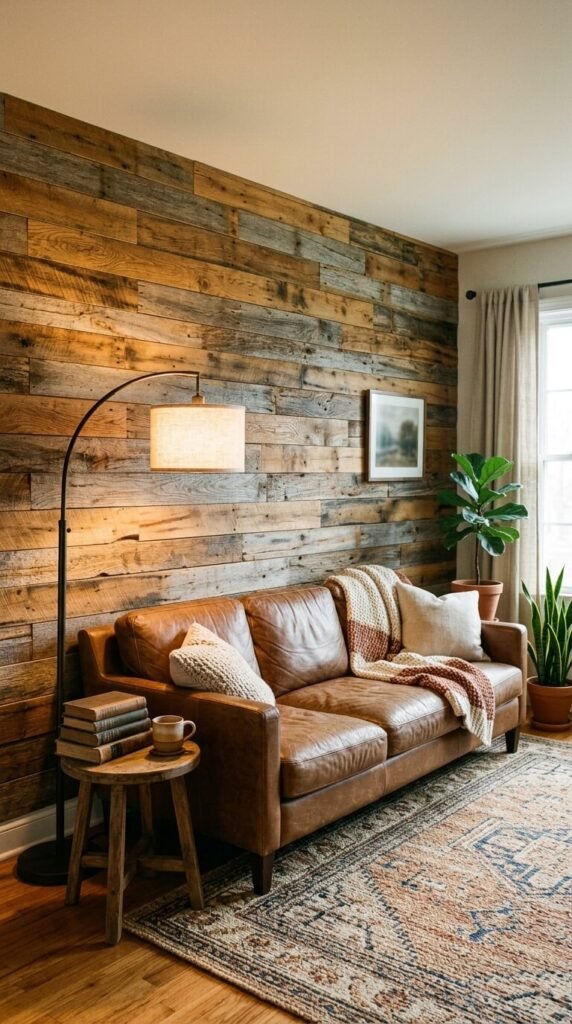
A reclaimed wood wall adds warmth, texture, and character that no paint color can replicate. Pallet wood, cedar planks, or shiplap boards all work well as DIY accent wall materials. Sand lightly, stain or seal to your preferred tone, and attach with construction adhesive and brad nails. Full DIY reclaimed wood walls cost $50–$200 in materials depending on the size of the wall. Buy pre-cut shiplap from home improvement stores for a cleaner, faster install. The mix of natural grain variation across boards is what gives this treatment its handcrafted, one-of-a-kind quality.
3. Dramatic Dark Paint Accent Wall
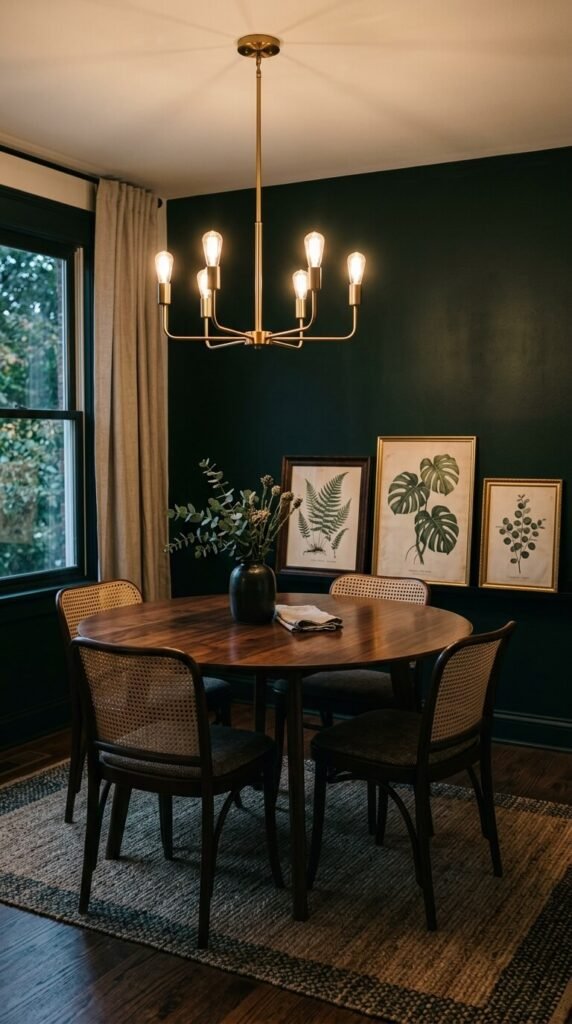
A single wall painted in a deep, dark color is the fastest and most affordable dramatic accent treatment available. Forest green, charcoal, navy, deep plum, or near-black tones completely change the perceived depth of a room. The dark surface makes furniture and accessories pop by contrast. One quart of quality paint covers a standard accent wall and costs $20–$40. Use a satin or eggshell finish — it reflects just enough light to keep the wall from feeling flat while still looking refined. Two coats are all you need for full impact.
4. Shiplap Horizontal Planks
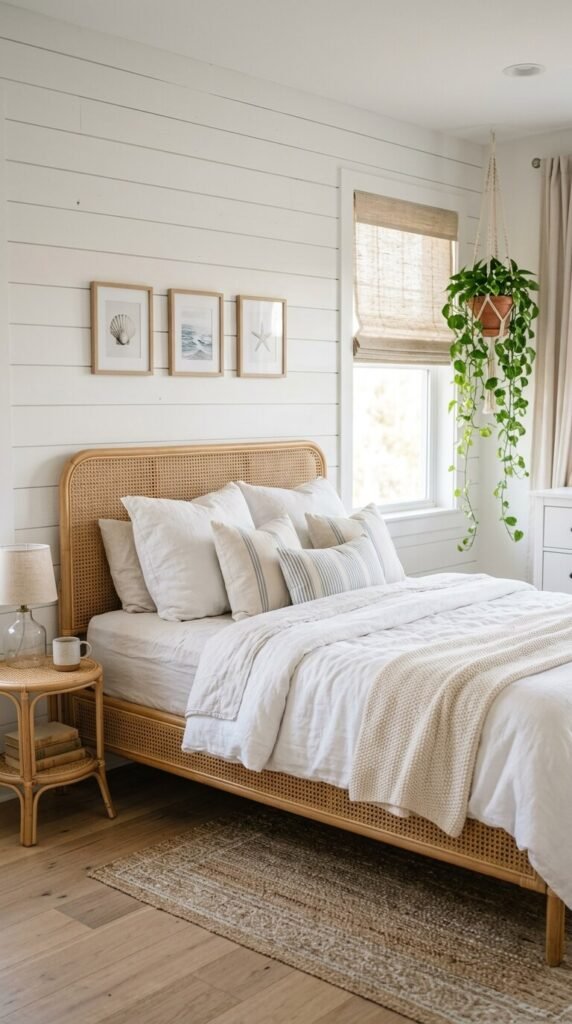
Shiplap has stayed relevant because it adds architectural detail to flat, featureless walls at a very reasonable cost. Horizontal installation makes a room feel wider. Vertical installation makes ceilings feel taller. Pre-primed MDF shiplap boards from home improvement stores cost $1–$3 per linear foot. Paint white for coastal and farmhouse aesthetics, or go bold — navy, sage, or black shiplap is having a major moment right now. A standard accent wall takes about four hours to install with a nail gun or construction adhesive and finish nails.
5. Gallery Wall With Oversized Anchor Piece
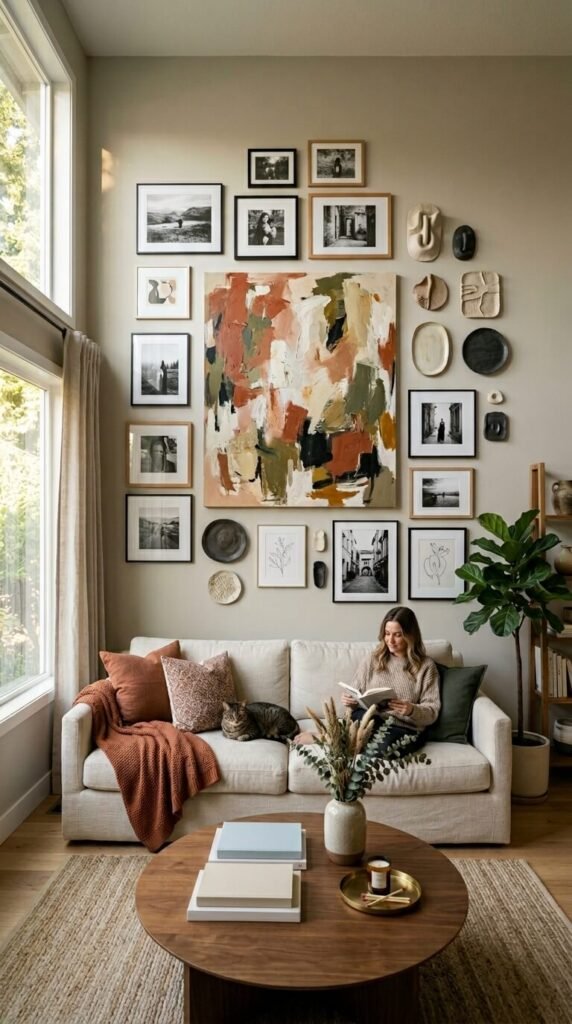
A gallery wall done well is one of the most personal accent wall treatments available. The key is starting with one oversized anchor piece — at least 24×30 inches — and building around it. Mix framed art, unframed prints, mirrors, and wall-mounted objects for dimension. Lay your arrangement on the floor first before putting anything on the wall. Paper template method: trace each frame on craft paper, tape to the wall, and nail through the paper — no measuring errors. Full gallery walls can be assembled for $50–$300 depending on how many pieces you source secondhand.
6. Venetian Plaster Treatment
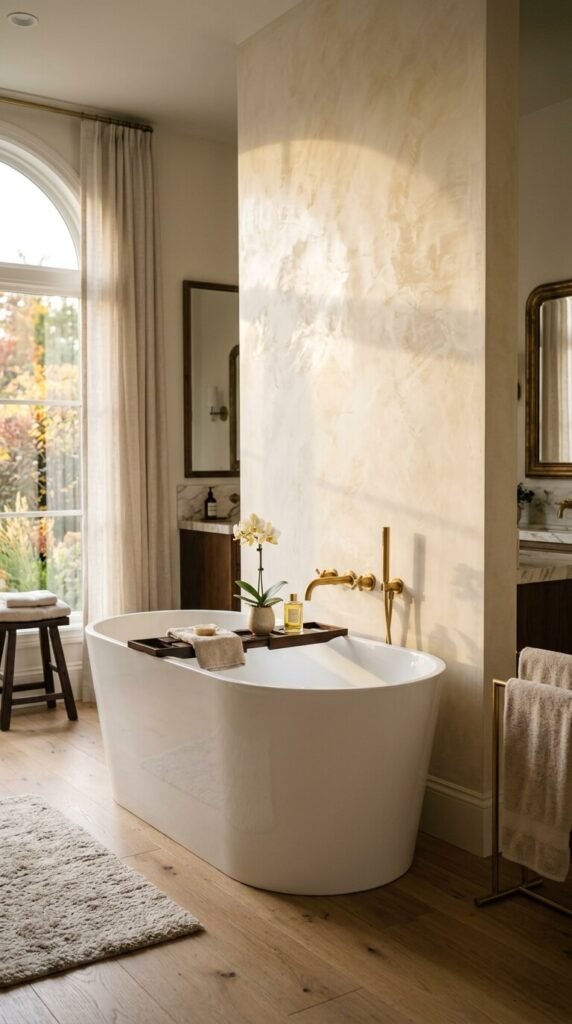
Venetian plaster creates a luminous, marble-like surface with extraordinary depth. Real Venetian plaster is applied in thin layers with a steel trowel and burnished while still damp to create its signature sheen. The technique takes practice but is learnable from YouTube tutorials. Professional application costs $10–$25 per square foot. For a DIY approach, ready-to-use Venetian plaster products from brands like Meoded simplify the process significantly and cost $60–$120 for a full accent wall. This treatment works best in small spaces — bathrooms, entryways, and powder rooms — where the luxurious surface is seen up close.
7. Floor-to-Ceiling Bookshelf Wall
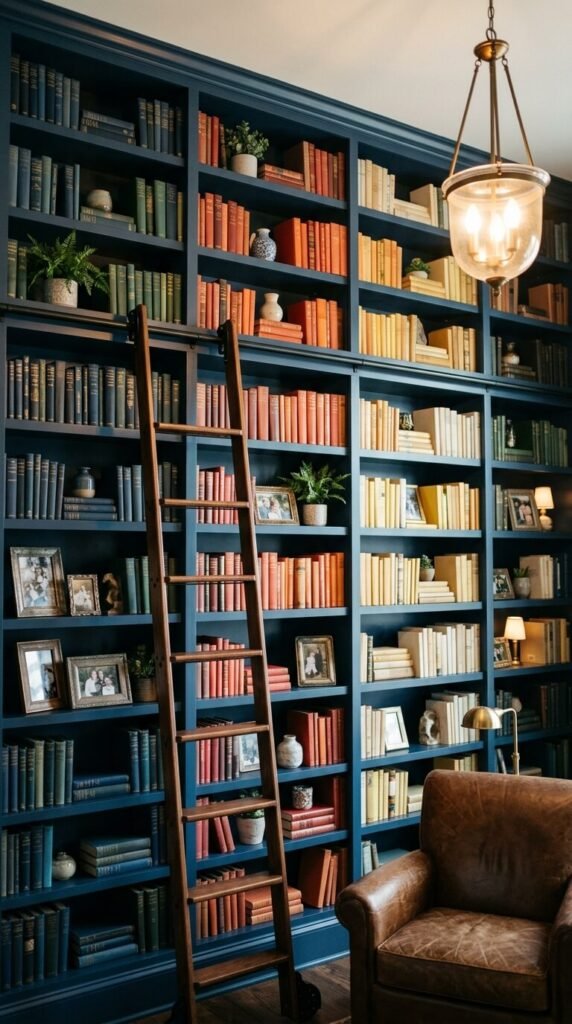
A full bookshelf wall is both functional and visually spectacular. Paint the shelves and wall cavity the same dark color — navy, forest green, or charcoal — and the whole installation reads as one cohesive, architectural accent. IKEA Billy bookcases cost $60–$120 each and, when installed floor-to-ceiling with added crown molding at the top, look like high-end built-ins for a fraction of the cost. Style shelves with books turned spine-in for a uniform, color-block effect, then add objects, plants, and art to break up the visual rhythm.
8. Geometric Wood Molding Grid
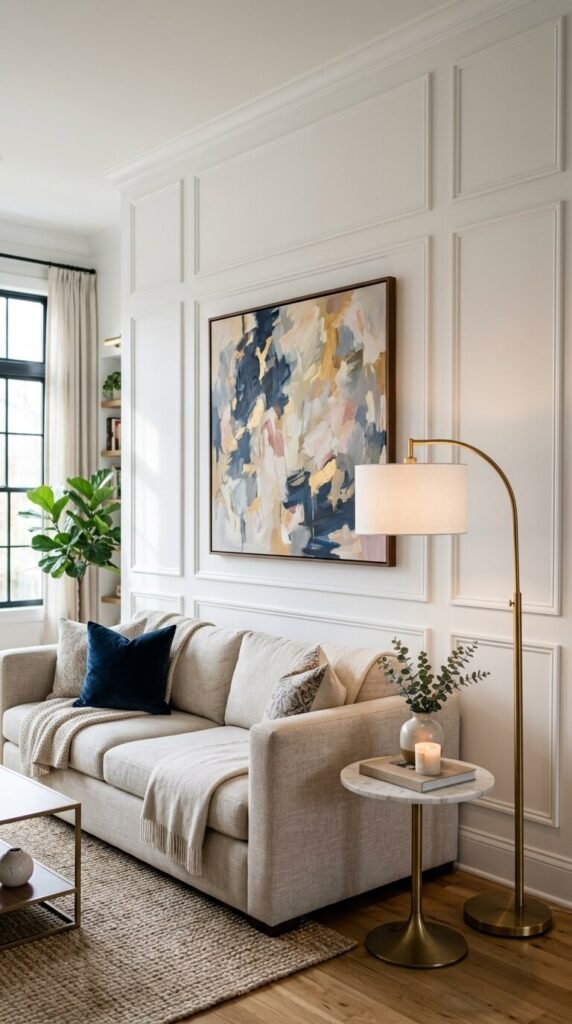
Applied wood molding in a geometric grid pattern is one of the most cost-effective ways to add architectural character to a plain wall. Pre-primed MDF trim strips from any hardware store cost under $2 per linear foot. Mark your grid with a level and pencil, cut molding to size with a miter saw or hand saw, and attach with construction adhesive and a nail gun. Paint the entire wall and molding the same color for a seamless, built-in look. The total material cost for a standard accent wall runs $60–$150, and the result looks like custom millwork.
9. Concrete and Microcement Wall Finish
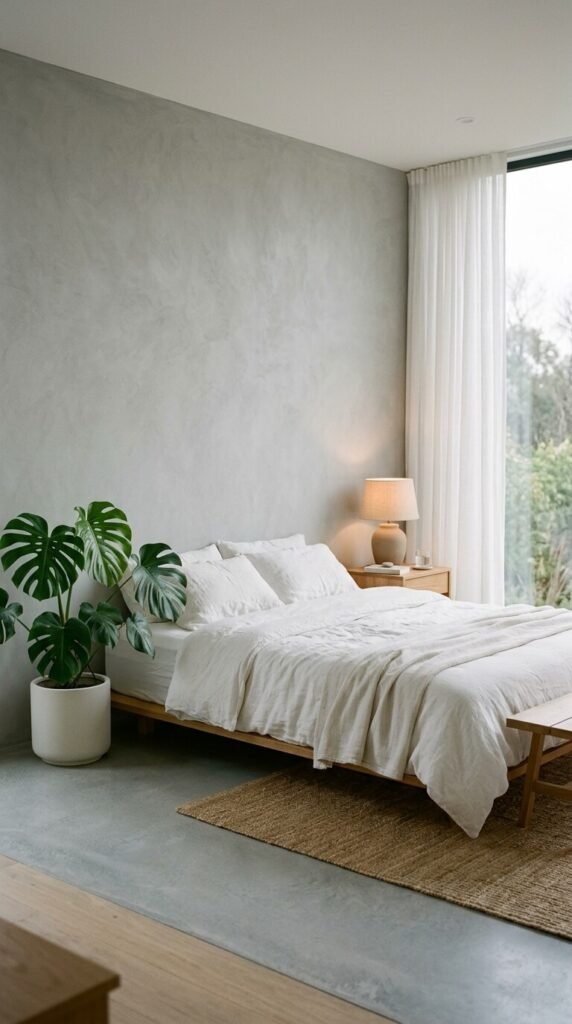
Microcement and concrete-effect wall finishes bring an urban, industrial depth to bedrooms and living spaces. Microcement is a thin-coat trowel-applied finish that can go directly over existing paint or plaster. It cures hard and can be left raw or sealed with a matte or satin sealer. Professional application runs $15–$30 per square foot. DIY microcement kits from specialty suppliers cost $80–$200 for a full accent wall and take a weekend to apply. Cool gray, warm sand, and slate tones are the most popular finishes. Pair with natural wood and minimalist furniture for the strongest effect.
10. Painted Mural Accent Wall
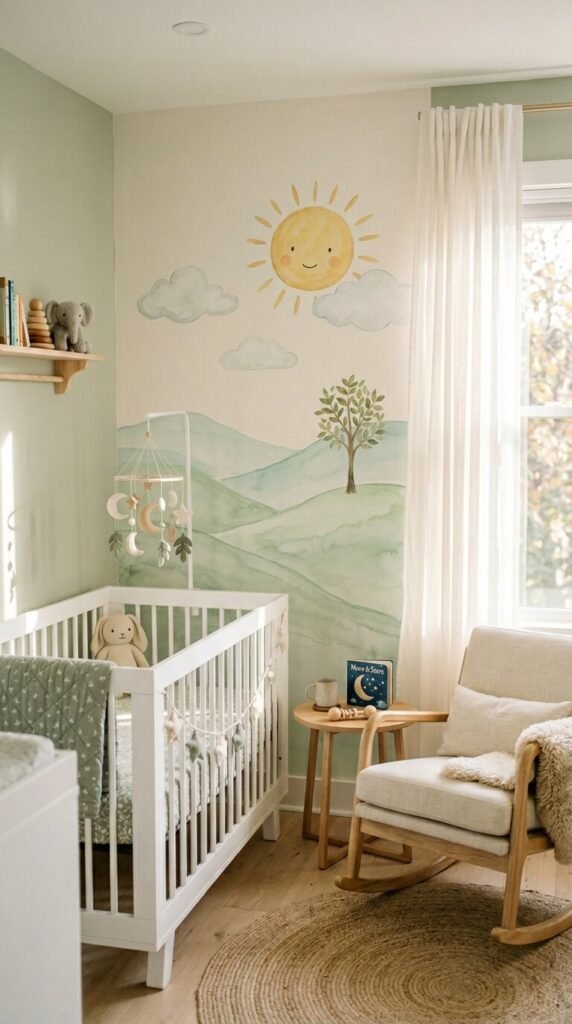
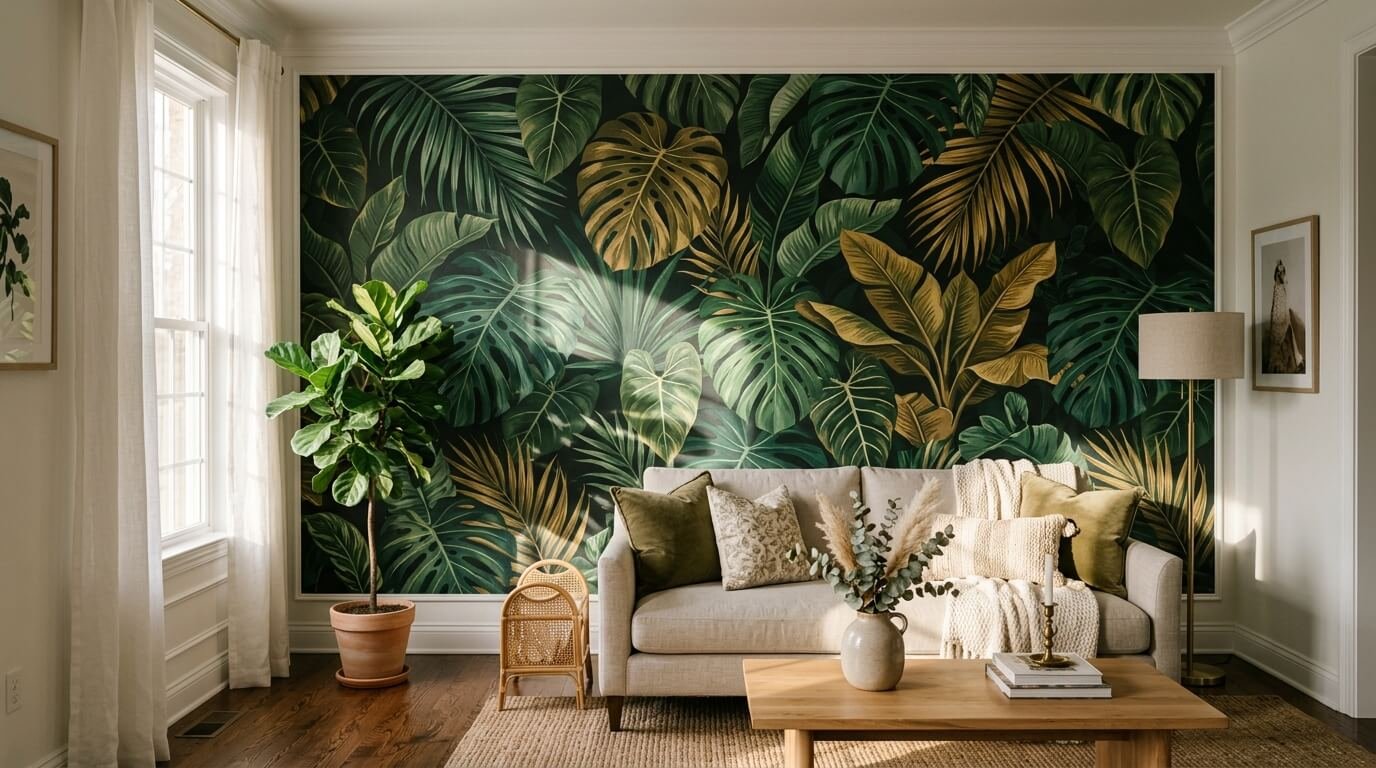
A painted mural turns an accent wall into a one-of-a-kind artwork. You don’t need to be a professional artist — simple graphic murals in flat colors or soft washes are achievable for most beginners. Use low-tack painter’s tape to create clean geometric shapes, or follow a projected image (from a phone projector app) as a guide for organic forms. Mural paints from craft stores cost $20–$60 total. For rooms where you want more complexity, hiring a local mural artist typically costs $300–$800 for a single wall — far less than many assume.
11. Fluted Wood Panel Accent Wall
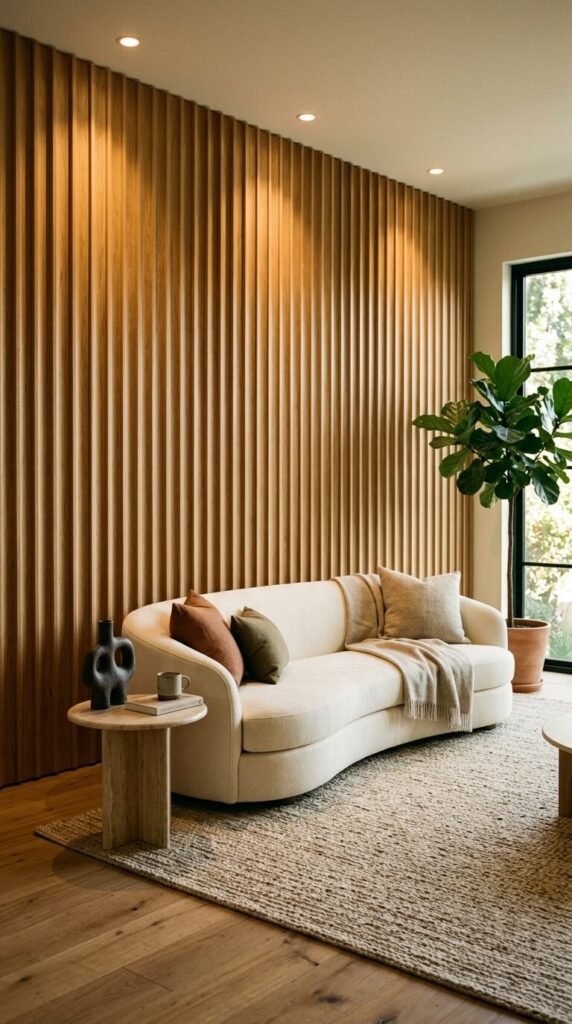
Fluted wood panels — vertical ridged planks that create a rhythmic, sculptural surface — are one of the strongest current accent wall trends. The vertical ridges catch light differently across the day, making the wall look alive and dynamic. Pre-made fluted MDF panels are available at most home improvement stores for $30–$80 per panel. For a DIY option, attach thin dowel rods vertically to a painted backing board at regular intervals for a similar effect at lower cost. Paint the dowels and board the same color for a unified look, or leave natural for warmth.
12. Woven Rattan Panel Wall
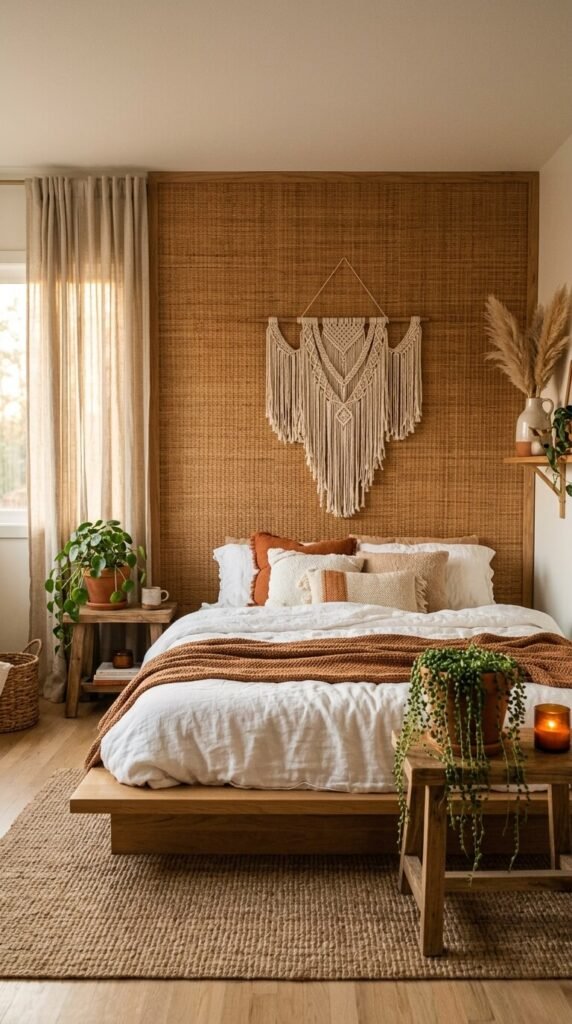
Rattan and cane panel walls bring an organic, hand-crafted texture that works beautifully in boho, coastal, and Japandi interiors. Pre-made cane webbing sheets are available online and at craft stores for $20–$60 per sheet. Frame them in thin wood strips or staple directly to a backing board. For a full accent wall, budget $80–$200 in materials. Mount with construction adhesive or a French cleat system for easy removal. This is a great renter-friendly option because the panel system can be removed without damaging walls. Pair with natural linen and woven textiles throughout the room.
13. Stone Veneer Accent Wall
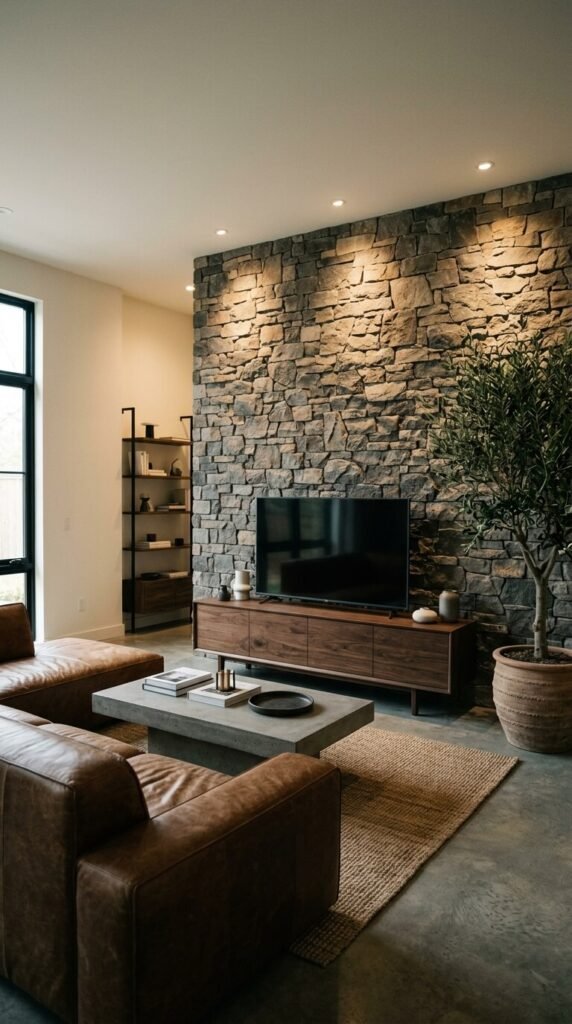
Natural stone veneer — thin slices of real stone adhered to the wall surface — creates the look of a full masonry wall without the structural requirements. Stacked ledgestone, river rock, and slate are the most popular profiles. Veneer panels from home improvement stores cost $6–$15 per square foot. Install with heavy-duty construction adhesive and fill joints with matching grout or mortar for a natural finish. A standard accent wall runs $300–$600 in materials for a DIY install. Keep the surrounding room simple — stone walls are visually strong and don’t need competition.
14. Ombre Wall Paint Treatment
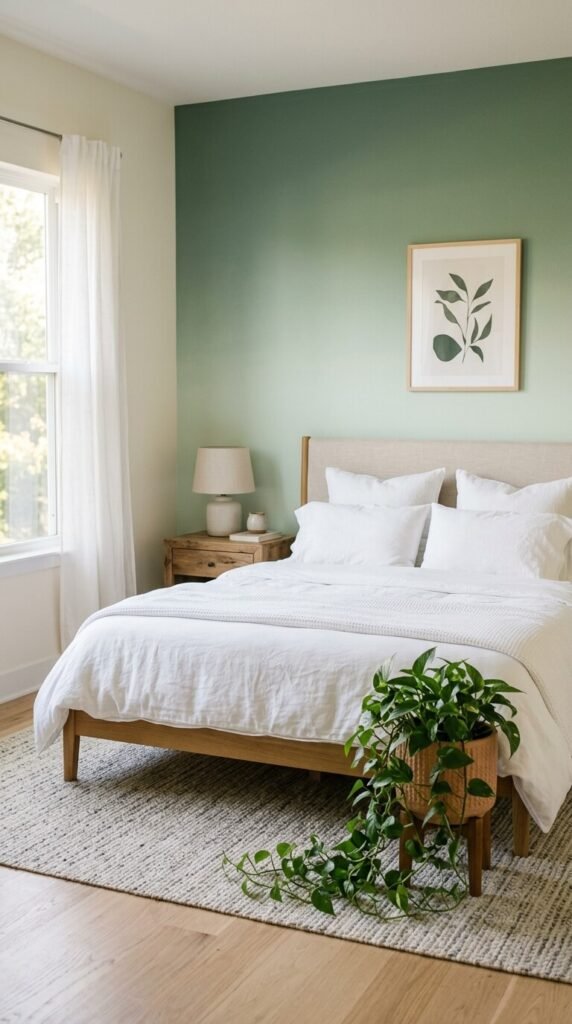
An ombre paint wall transitions from one color at the top to a lighter version — or a different color entirely — at the bottom. The technique requires two or three related paint tones and a dry brush blending step while the paint is still wet. Use a wide brush to feather the colors together in the transition zone — the overlap area is only about 12 inches wide. Two quarts of paint total is usually enough. Total cost: $25–$55. This treatment works best on accent walls in bedrooms and nurseries where a soft, atmospheric quality suits the room’s purpose.
15. Pegboard Utility Accent Wall
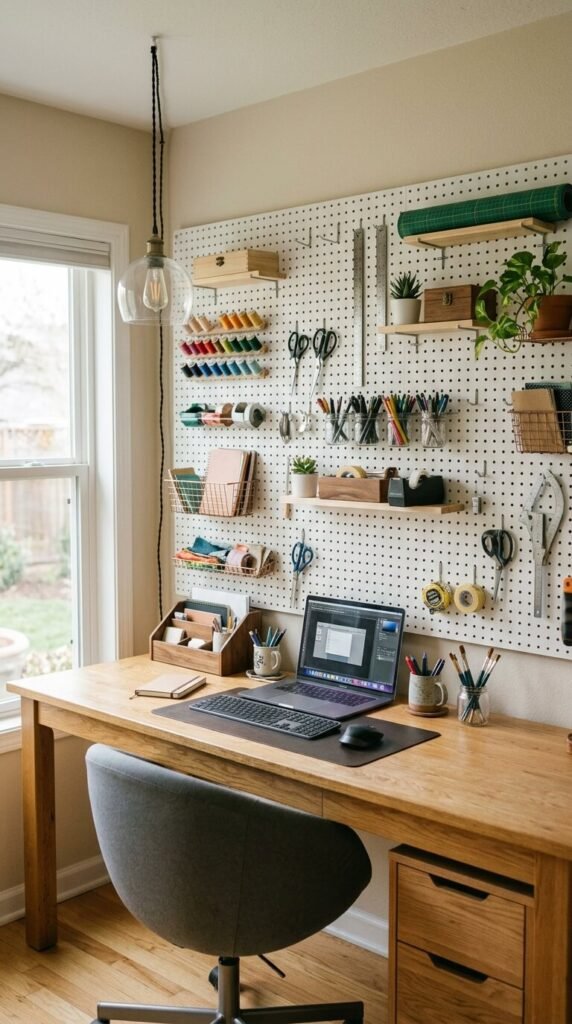
A painted pegboard wall is one of the most practical accent wall treatments for home offices, craft rooms, garages, and kitchens. A 4×8-foot sheet of pegboard costs $20–$35 at any home improvement store. Paint it any color, mount it with standoff hardware (to leave space behind for hooks), and load it with pegboard hooks, small shelves, and baskets. Color-block the pegboard in a contrasting tone to the room walls for a bolder graphic look. Total cost for a full accent wall: $50–$120. It’s genuinely functional and genuinely decorative at the same time.
16. Brick-Effect Textured Paint
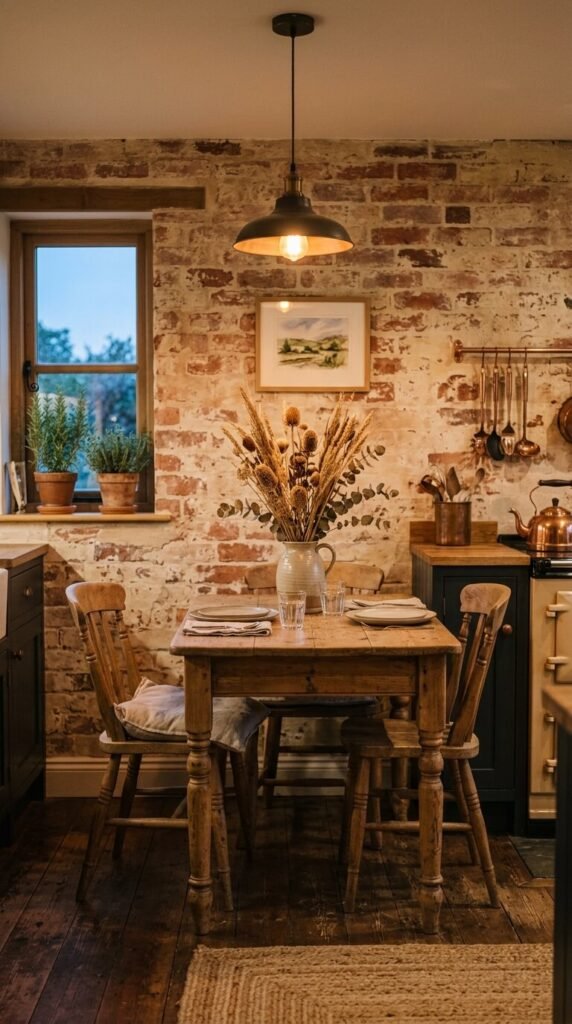
Brick-effect textured paint uses a specialty roller cover or stamp to press a mortar-line grid into thick paint, creating a realistic tactile brick surface. Pre-made brick stamp rollers are available online for $15–$30. Apply a base coat in brick red or warm tan, then use the stamp roller with a slightly darker tone for the mortar lines. The technique takes about two to three hours for a standard accent wall. Total cost: $30–$60 in paint and supplies. Great for renters who want an industrial look without actually installing brick veneer panels.
17. Floating Shelf Display Wall
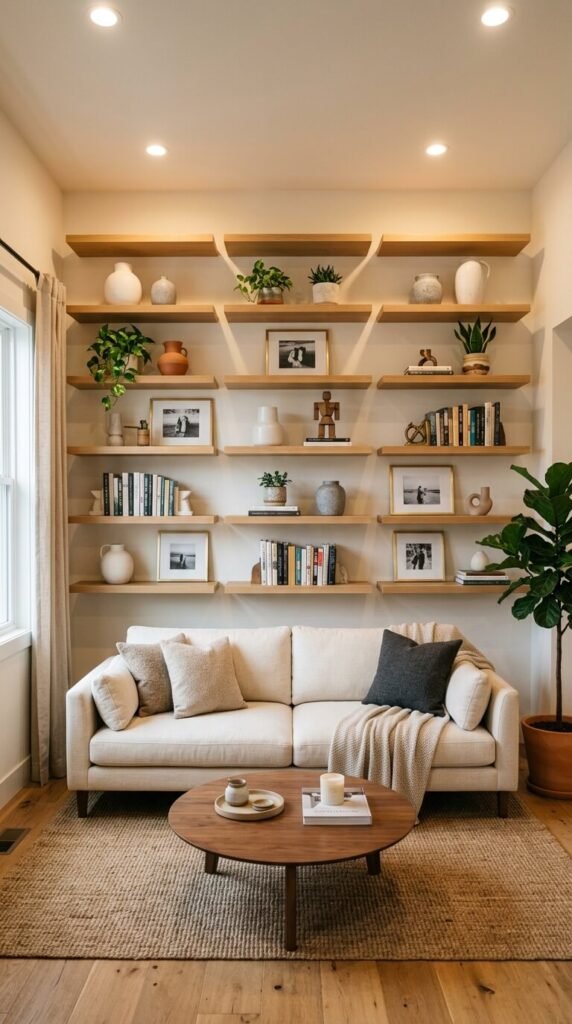
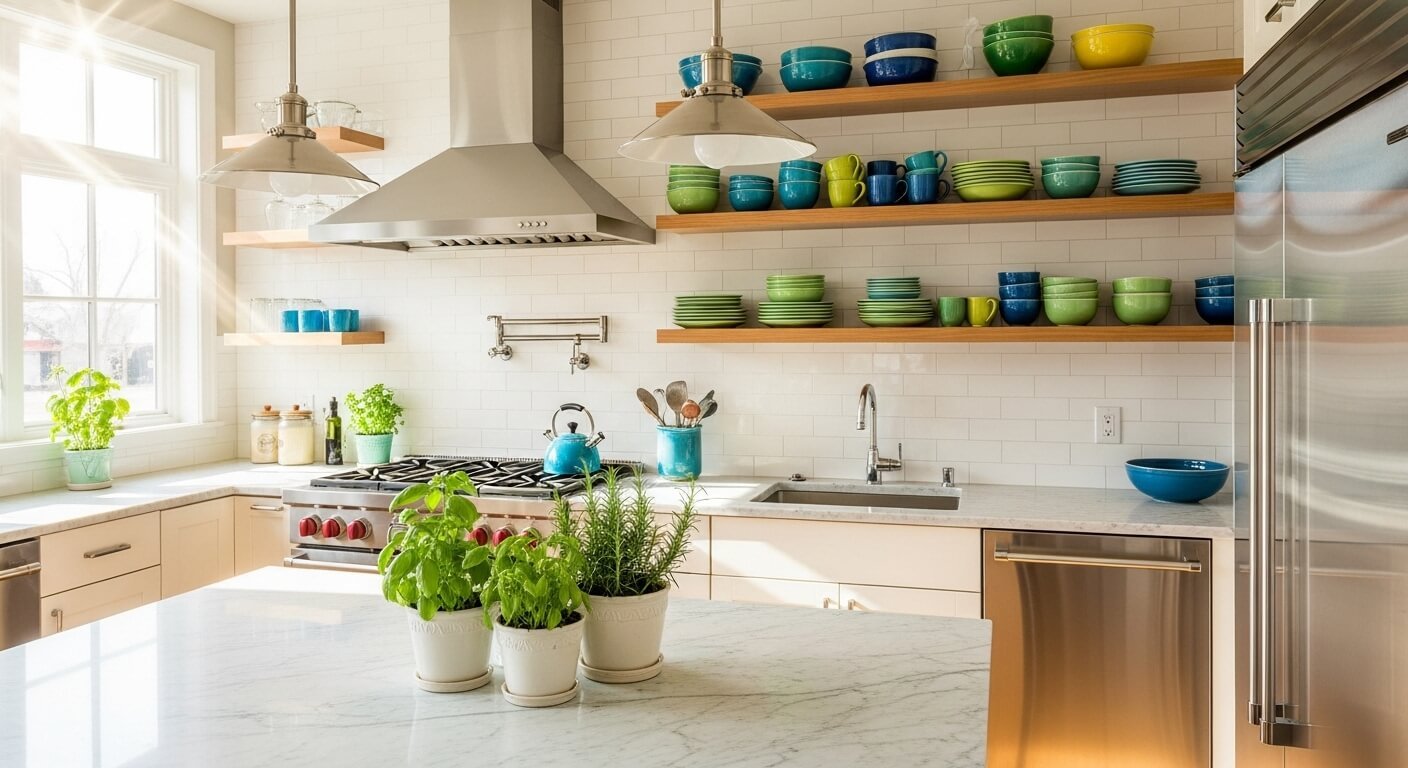
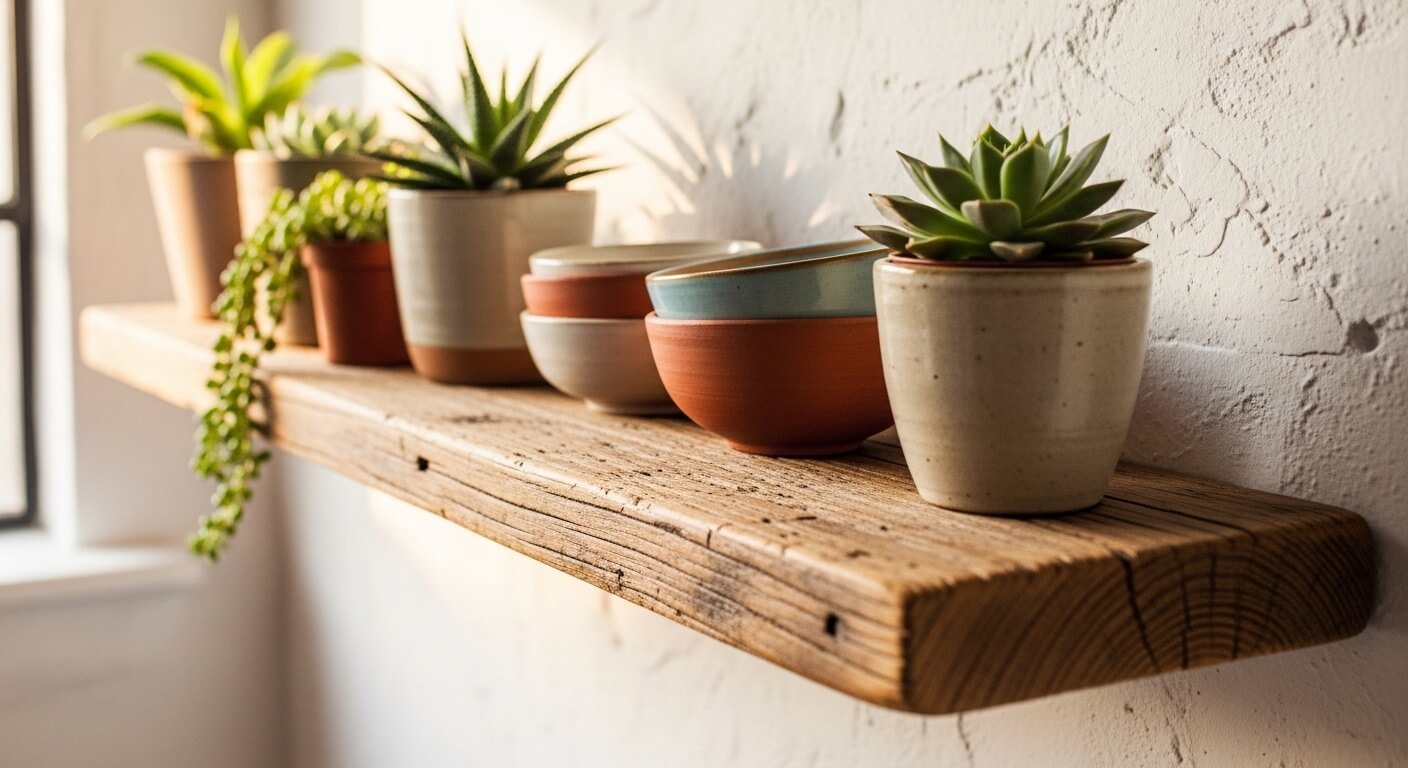
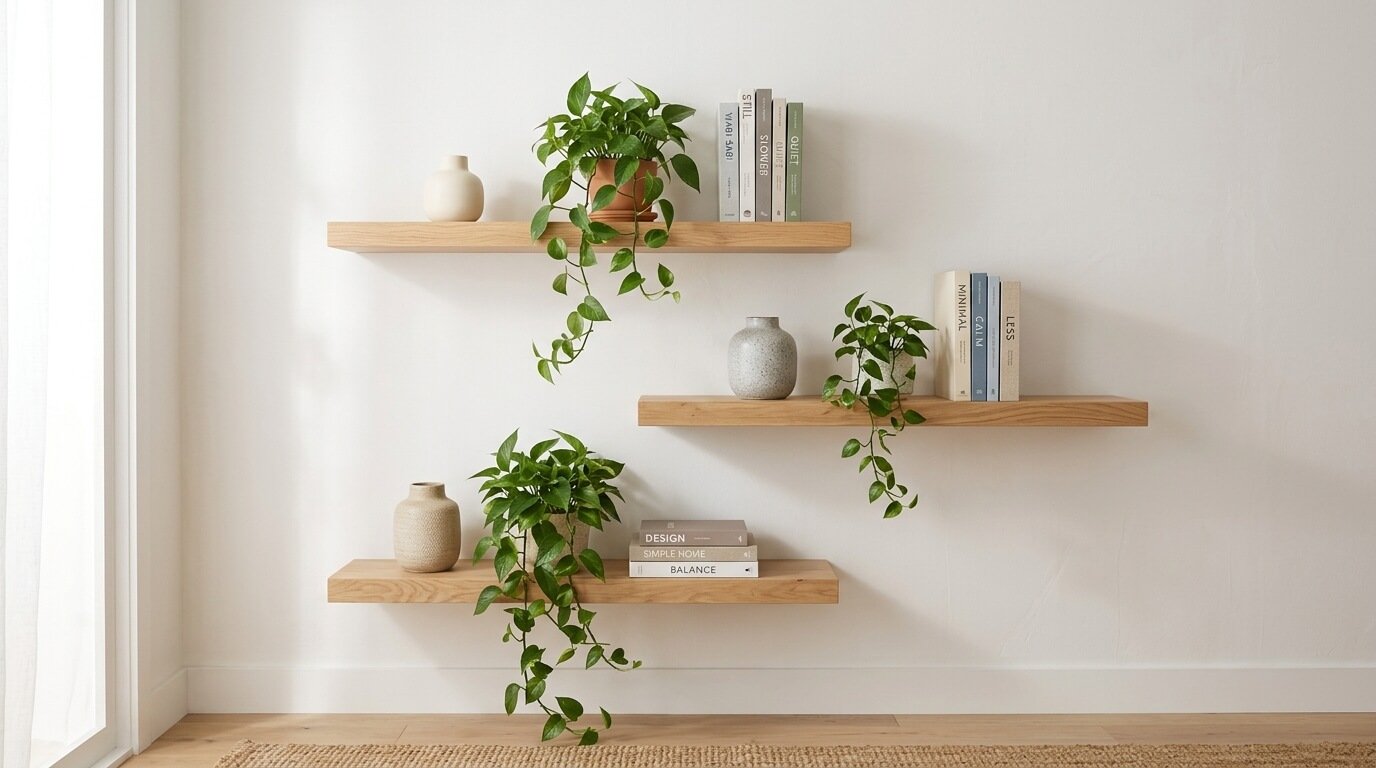
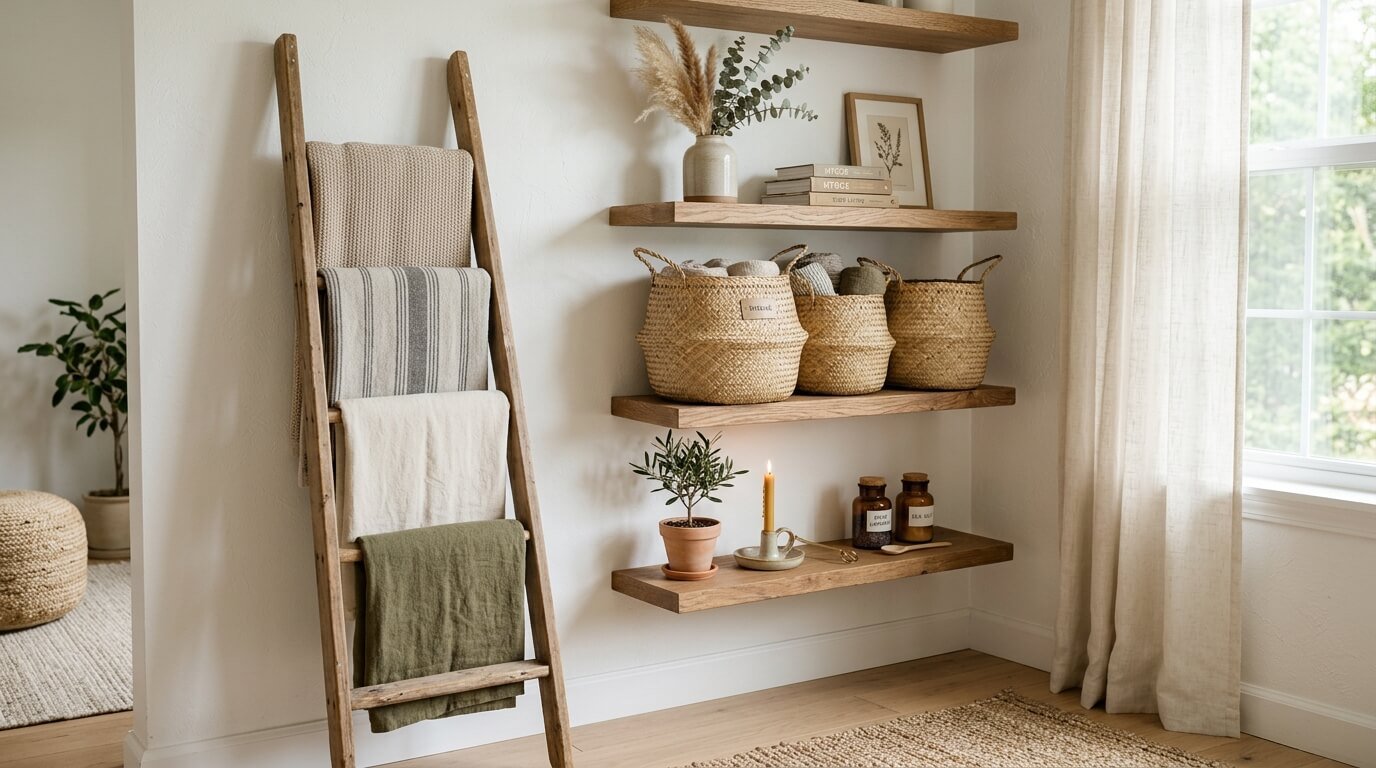
A wall of floating shelves creates a living, constantly evolving accent treatment that also solves storage problems. Stagger shelves at different heights rather than aligning them in a flat grid — asymmetry looks more intentional and designed. Use shelves of different depths — 6-inch, 8-inch, and 10-inch — to add further dimension. IKEA Lack shelves run $10–$15 each; solid wood floating shelves cost $25–$60 each. Style in odd numbers — groups of three or five objects per shelf — for the most visually pleasing arrangement. Swap in seasonal items to keep the wall feeling current year-round.
18. Textured Wallpaper With Dimensional Pattern
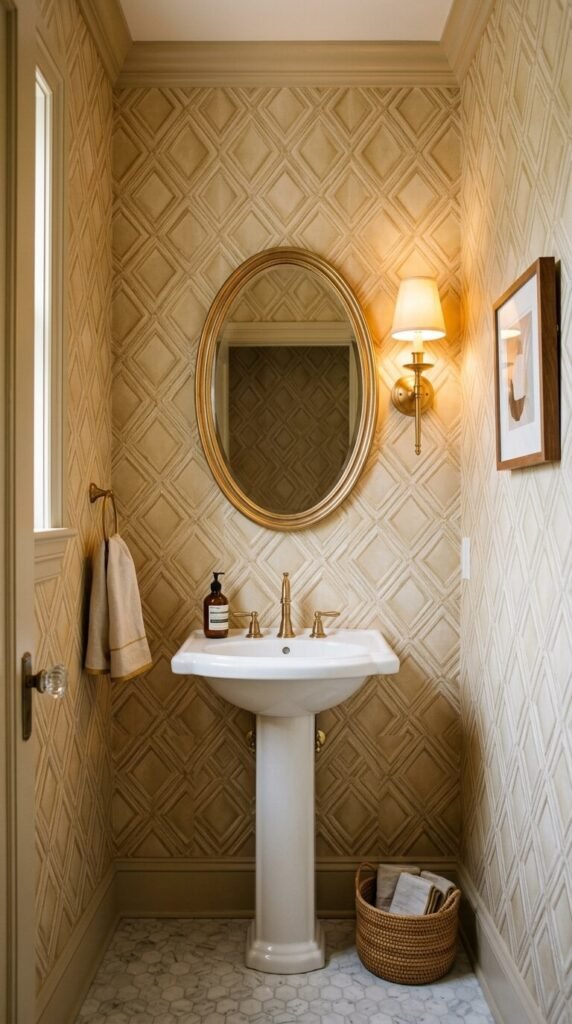
Textured wallpaper adds a three-dimensional quality that flat paint or printed wallpaper cannot match. Raised geometric patterns — diamonds, herringbone, basket weave — catch light differently throughout the day and create a surface that reads as luxurious from across the room. Vinyl embossed wallpapers run $30–$80 per roll and are beginner-friendly to hang. Powder rooms and entryways are ideal spaces because the close viewing distance lets the texture be fully appreciated. Paint over white or off-white embossed wallpaper in any color for a custom, bespoke-looking treatment.
19. Black Chalkboard Paint Wall
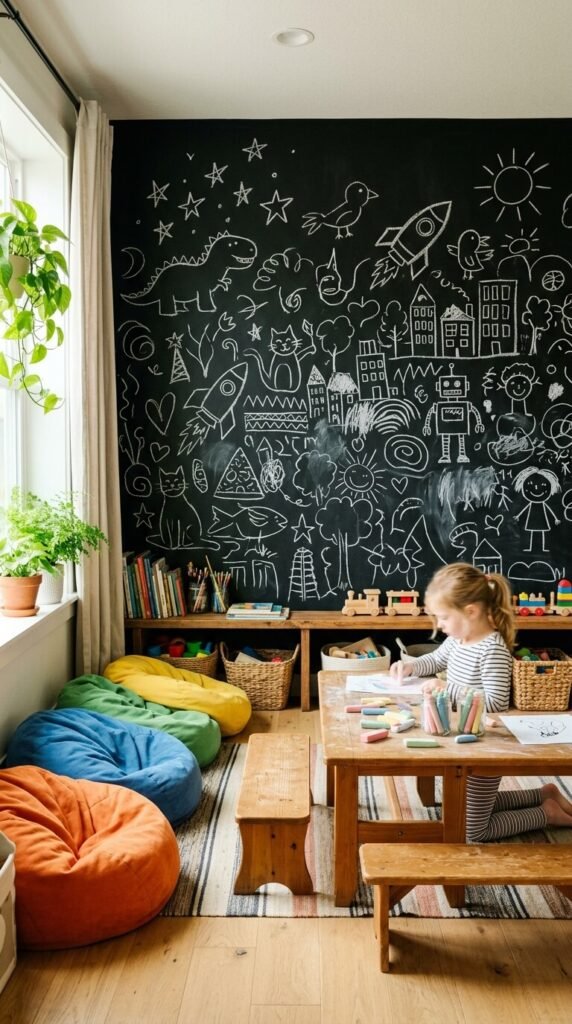
A chalkboard paint wall is interactive by nature — it changes with whoever inhabits the space. Chalkboard paint from any hardware store costs $20–$35 per quart and applies like regular paint. Use a roller for the smoothest surface, then let it cure for 48 hours before using chalk. This treatment works in kitchens (for a menu board), playrooms (for free drawing), home offices (for planning), and dining rooms (for a moody dark accent wall). Sand lightly between coats for a very smooth writing surface. Season the wall first by rubbing a piece of chalk sideways across the entire surface before first use.
20. Macrame or Textile Fiber Wall Hanging
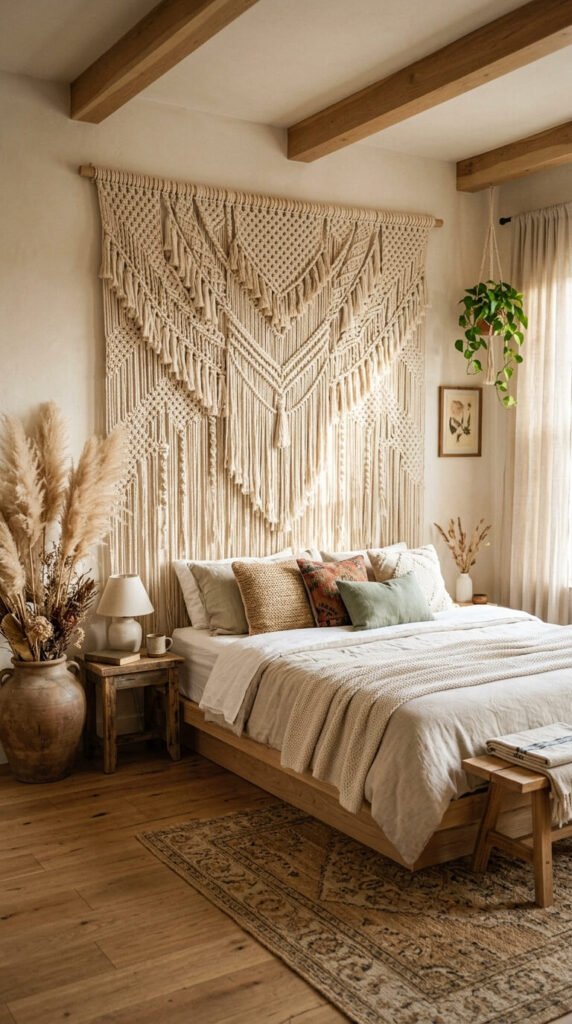
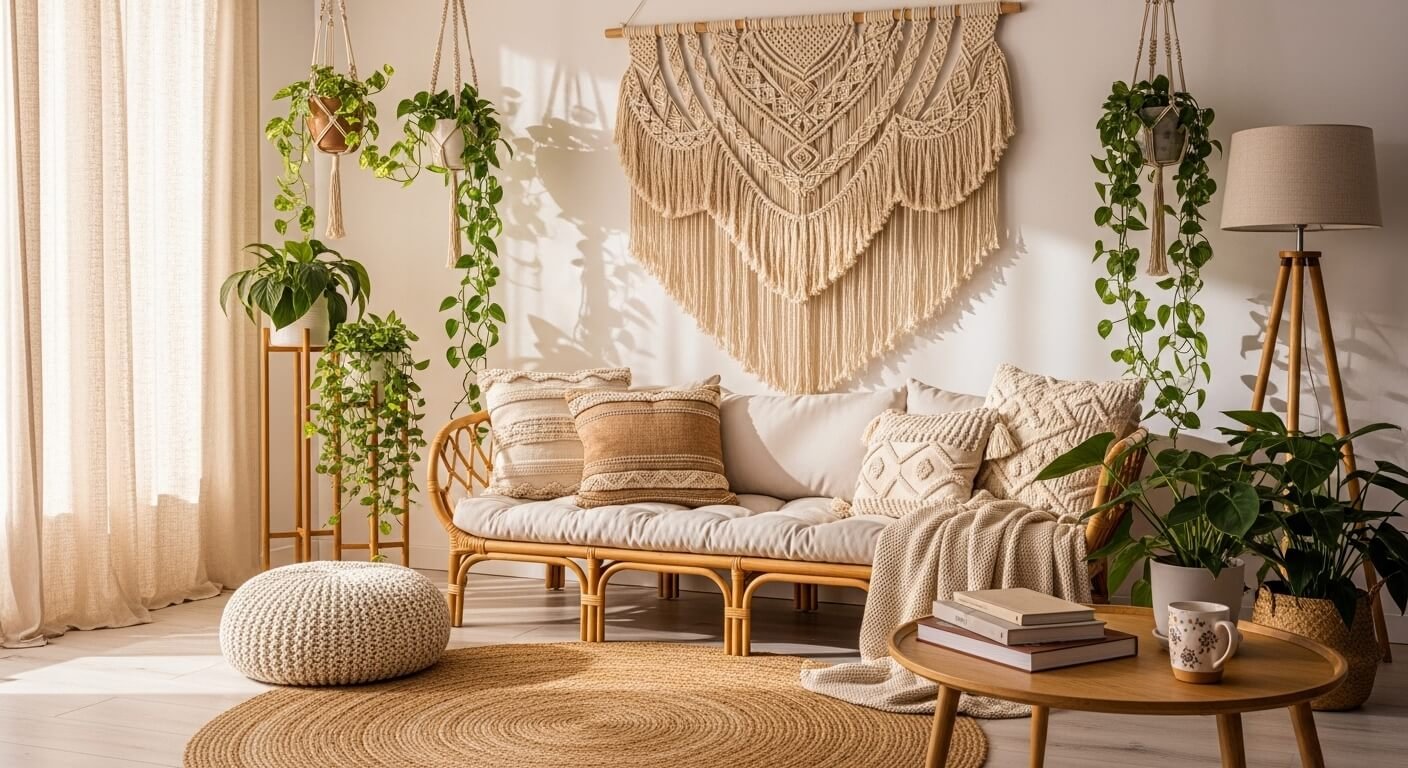
A large macrame or woven fiber piece used as the primary accent wall treatment creates softness and handcraft that no paint or panel can replicate. Commission a custom piece from an Etsy maker or purchase large woven wall hangings in the 48-to-60-inch width range for a genuinely impactful result. Prices range from $80–$300 depending on size and complexity. Hang from a single wooden dowel rod mounted with two wall hooks. This is a fully renter-friendly treatment — nothing more than two small nail holes. Pair with natural linen, rattan, and dried botanicals for a cohesive look.
21. Metallic Venetian Finish Accent Wall
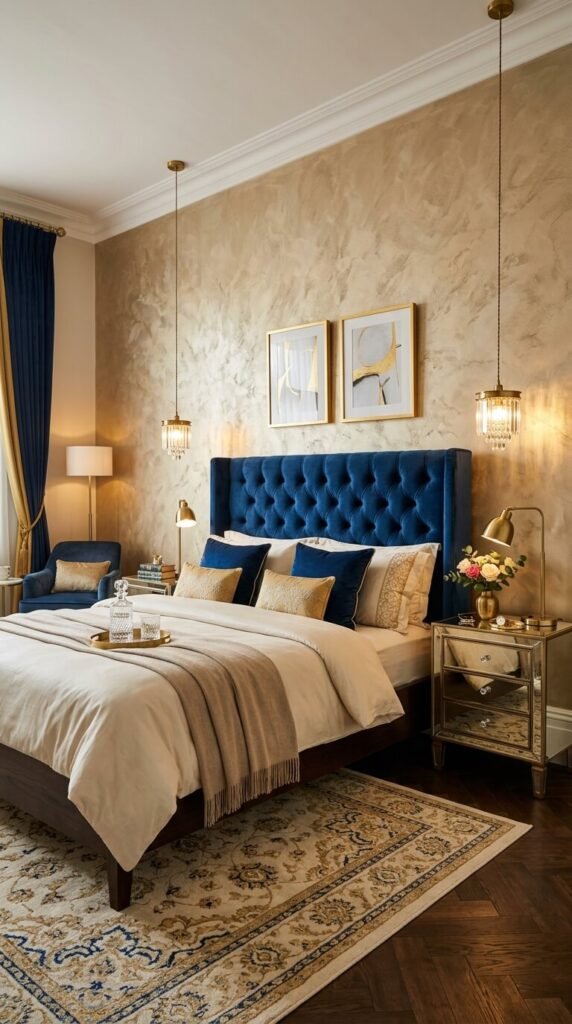
Metallic Venetian plaster takes the classic plaster technique and adds gold, bronze, copper, or silver mica pigment to the mix. The burnished metallic surface glows warmly under lamp light and shifts in tone as natural light moves through the day. DIY metallic plaster products from brands like Portola or Pure & Original cost $80–$150 for an accent wall. Apply with a steel trowel in overlapping strokes, burnish while damp. Best used in bedrooms, dining rooms, and entryways where evening lighting amplifies the metallic quality. Pair with deep jewel-tone fabrics for a rich, layered effect.
22. Tongue-and-Groove Vertical Paneling
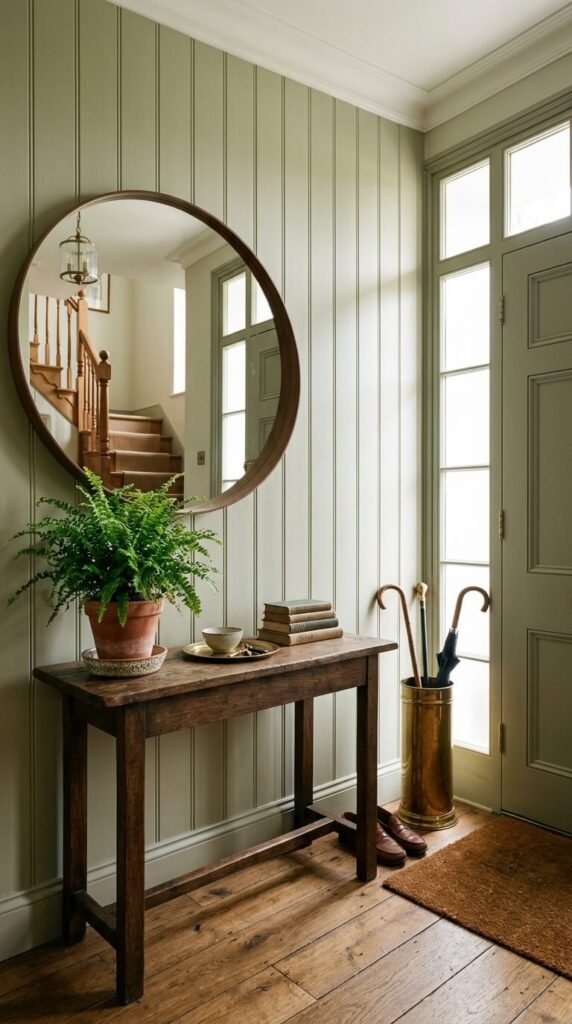
Tongue-and-groove vertical paneling adds instant architectural character to entryways, bedrooms, and living rooms. Pre-primed tongue-and-groove boards from home improvement stores cost $1.50–$4 per linear foot. Install vertically for height, horizontally for a coastal look. Paint in a single color — the same tone across all panels and the wall — for a seamless, high-end finish. Adding a chair rail or cap rail at mid-height gives the treatment a more formal, built-in appearance. Total material cost for a standard accent wall runs $100–$250 depending on wall size and panel type chosen.
23. Hanging Plate or Ceramic Wall Installation
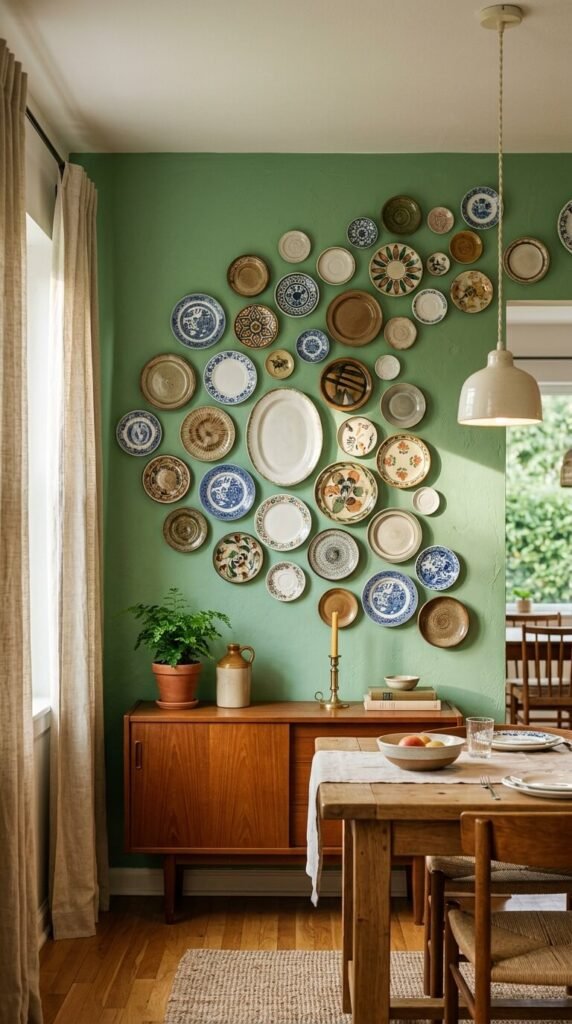
A curated arrangement of decorative plates creates a wall treatment that is deeply personal and endlessly customizable. Mix sizes, patterns, and finishes — the contrast between large and small, matte and glazed, is what makes the arrangement work. Source plates from thrift stores, antique markets, and online ceramicists for a collected, grown-over-time quality. Plate hanging discs cost under $10 for a pack of 20 and are easy to apply. Map your arrangement on paper first. Full installations typically cost $50–$200 total depending on sourcing. Dining rooms, kitchens, and entryways are the most natural locations.
24. Mirror Mosaic or Mirrored Panel Wall
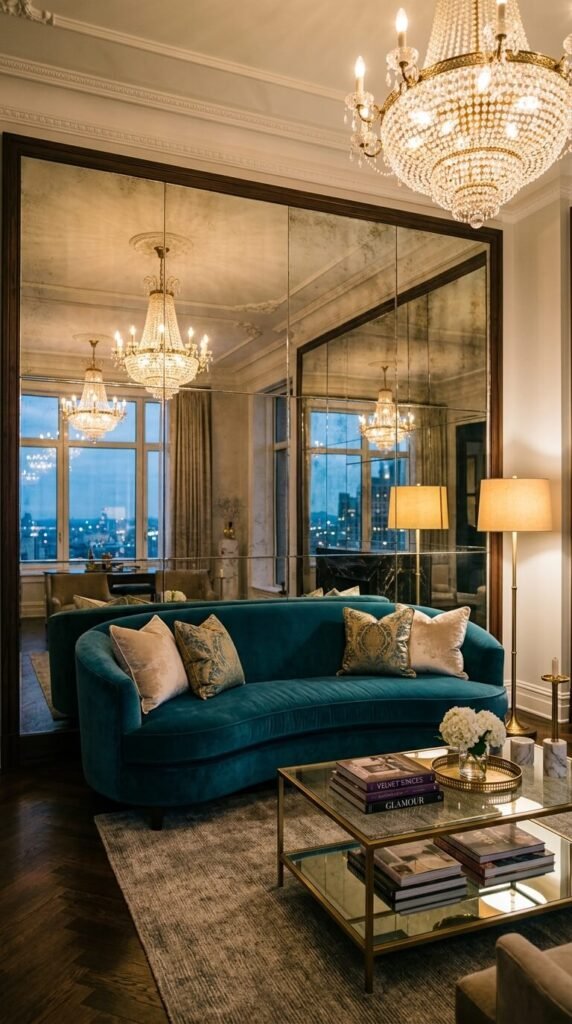
A mirrored accent wall doubles the perceived size of any room and amplifies natural and artificial light simultaneously. Antique mirror tiles — with a slightly aged, foxed surface — look far more elegant than standard clear mirror panels. Adhesive mirror tiles run $20–$60 for enough to cover a standard wall. For a high-end look, use large mirror panels from a glass supplier cut to a custom size and installed with mirror adhesive and clips. Best used in living rooms, dining rooms, and entryways where the reflection creates depth. Dark rooms especially benefit from the added light bounce.
25. Stenciled Pattern Accent Wall
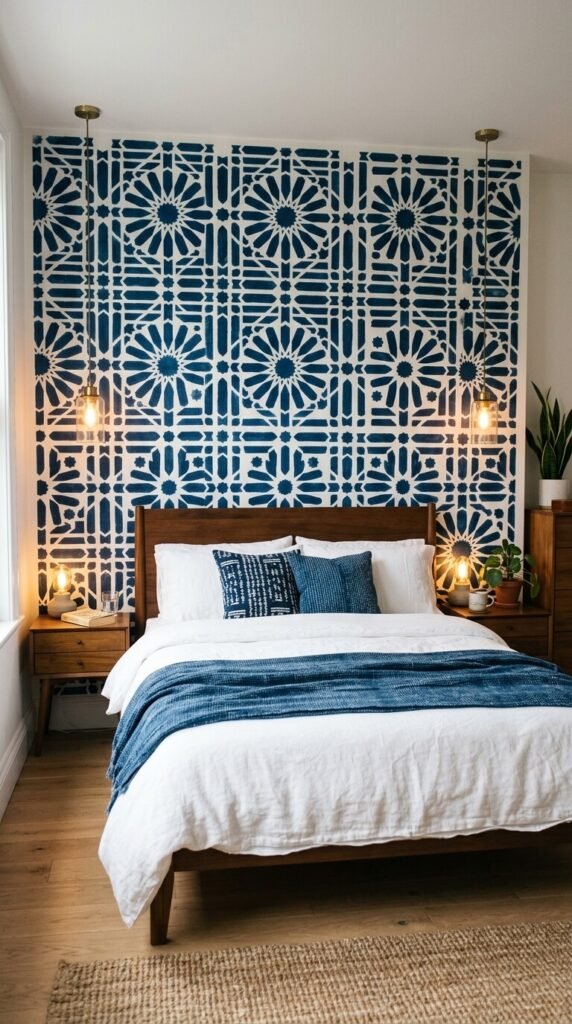
Wall stencils allow you to create complex repeating patterns with nothing more than paint, a roller, and patience. Moroccan tile, geometric lattice, damask, and herringbone are among the most popular stencil patterns. A quality reusable stencil from a brand like Royal Design Studio costs $25–$50. Use a dense foam roller rather than a brush to prevent bleeding under the edges. One accent wall takes about four to six hours depending on scale. Total cost including paint: $40–$80. The result is indistinguishable from expensive wallpaper when done carefully.
26. Cork Board Tile Accent Wall
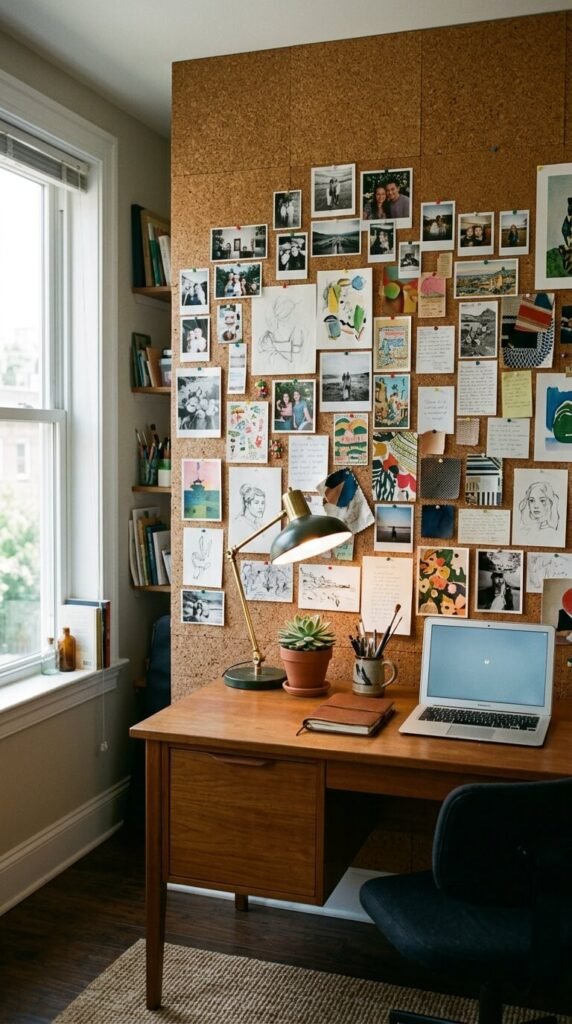
Cork tiles used as a full accent wall are functional, sound-absorbing, and visually warm. Natural cork in its raw honey tone has a beautiful organic texture that works well in home offices, studios, and teen bedrooms. Self-adhesive cork tiles run $25–$60 for enough to cover a standard accent wall. Install in a herringbone or offset brick pattern rather than a straight grid for a more designed look. Paint cork tiles in a solid color — black, white, or navy — for a more graphic, intentional appearance while preserving the pinnable functionality underneath.
27. Sculptural 3D Wall Panels
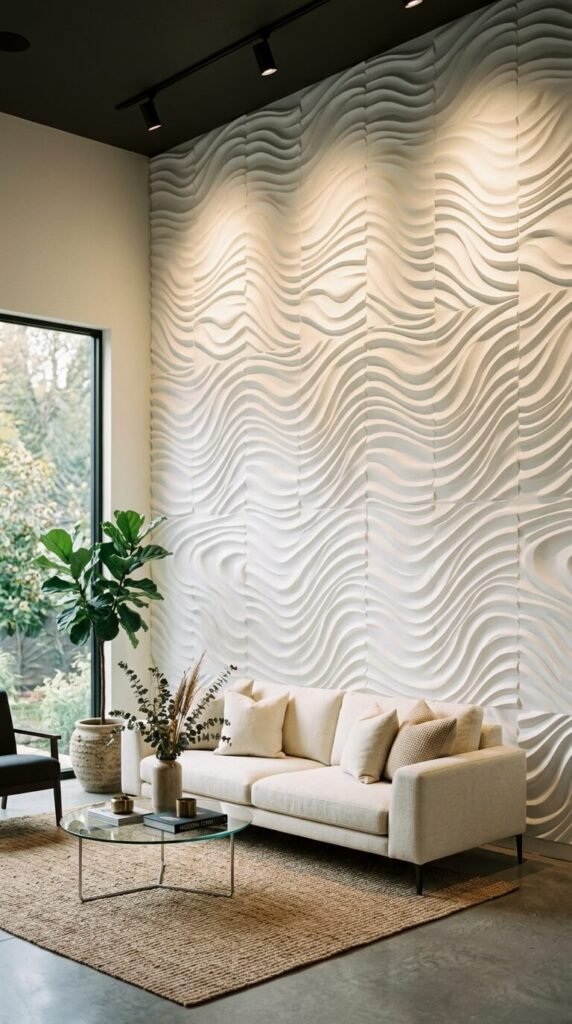
Three-dimensional wall panels in repeating organic shapes — waves, scales, diamonds, or abstract forms — create an accent wall that functions as architectural sculpture. Lightweight PVC or gypsum 3D panels are available online for $3–$8 per square foot and install with construction adhesive over any flat surface. Once installed, paint the entire surface in a single color — white is most common — to unify the pattern and let the shadow play do all the visual work. The effect changes dramatically as the light source shifts from morning to evening. Ideal for living rooms and dining spaces with directional lighting.
28. Living Moss or Plant Wall Panel
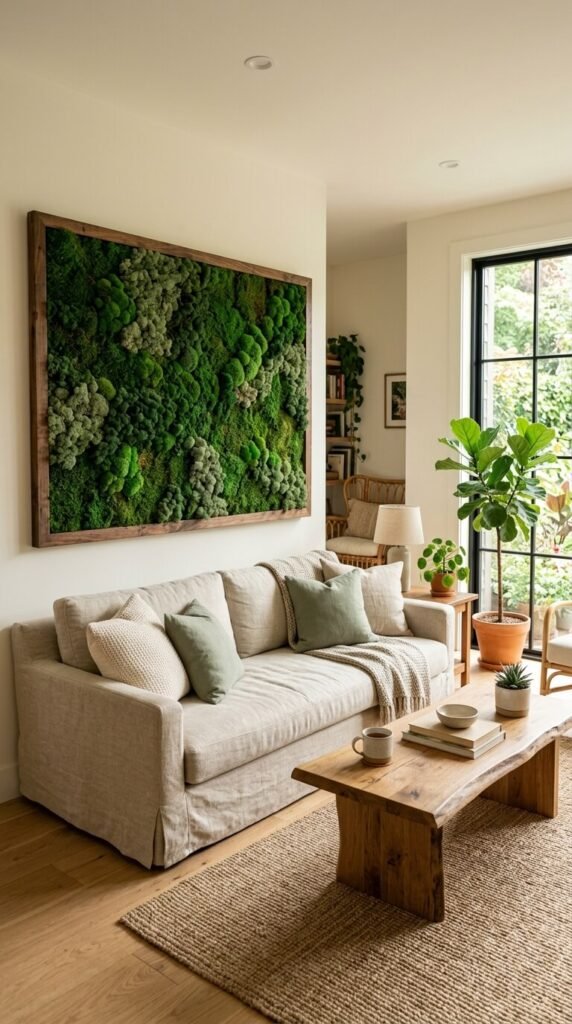
A preserved moss wall panel brings a biophilic, living quality to a room — without watering, sunlight, or maintenance. Preserved reindeer moss panels hold their color and texture for years and require nothing beyond occasional dusting. Pre-made framed moss panels run $80–$300 depending on size. For a DIY version, buy loose preserved moss in bulk online ($20–$40 per bag), mount a plywood backing on the wall, and attach the moss with a hot glue gun in your preferred arrangement. Pair with natural wood furniture, indoor plants, and linen textiles to build a complete nature-inspired room concept.
Conclusion
Every room in your home has at least one wall that is working harder than the others — or should be. The 28 treatments in this list prove that an accent wall is never just a backdrop. It can be a sculpture, a texture, a gallery, a garden, or a graphic statement. You don’t need a big budget or professional help to make one of these work. Pick the treatment that fits your room, your skill level, and what you want the space to feel like. Order a sample, buy a quart of paint, or grab a stencil kit. One wall is all it takes to make a room feel completely, unmistakably yours.