27 Glamorous Art Deco Decor Accents That Celebrate The Twenties


Disclosure: As an Amazon Associate we earn from qualifying purchases. Some links on this page may be affiliate links — if you click through and make a purchase, we may receive a small commission at no extra cost to you.
Art Deco is the most unapologetically glamorous design style ever created. Born in the 1920s and roaring through the 1930s, it was a celebration of modernity, luxury, and geometric precision at a moment when the world wanted to forget what came before and live beautifully. Bold sunburst patterns, rich jewel tones, lacquered surfaces, polished chrome, stepped architectural forms, and exotic materials defined an era that believed interiors should feel like events. Today, Art Deco elements bring drama and sophistication to any room without requiring a full period commitment. Whether you are adding one gilded mirror or transforming an entire space, every accent on this list delivers that signature twenties glamour with unmistakable confidence.
1. Sunburst and Fan-Shaped Mirrors
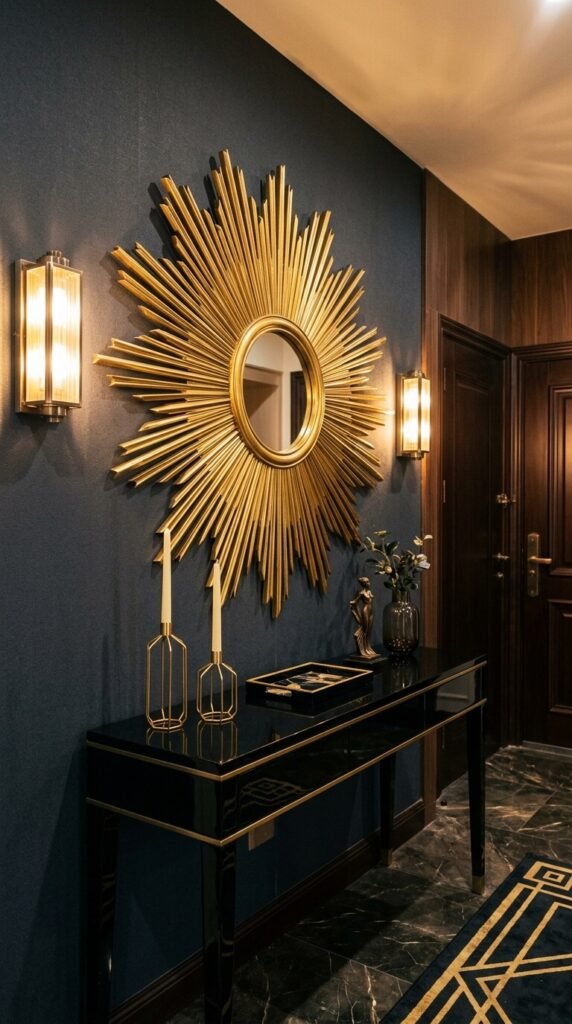
A gold sunburst or fan-shaped mirror is the single most recognizable Art Deco wall accessory. The radiating geometric rays — symmetrical, bold, and commanding — reference the solar motifs and architectural crowns of the era. New polished brass sunburst mirrors cost $80–$300 at most home goods retailers. Vintage examples from estate sales cost $40–$200. Hang above a console table, fireplace, or as a standalone statement on a dark wall. The mirror does double duty: it reflects light and fills vertical space with graphic confidence. No other single wall accessory commands a room’s attention as immediately as this one.
2. Lacquered Black Furniture With Gold Hardware
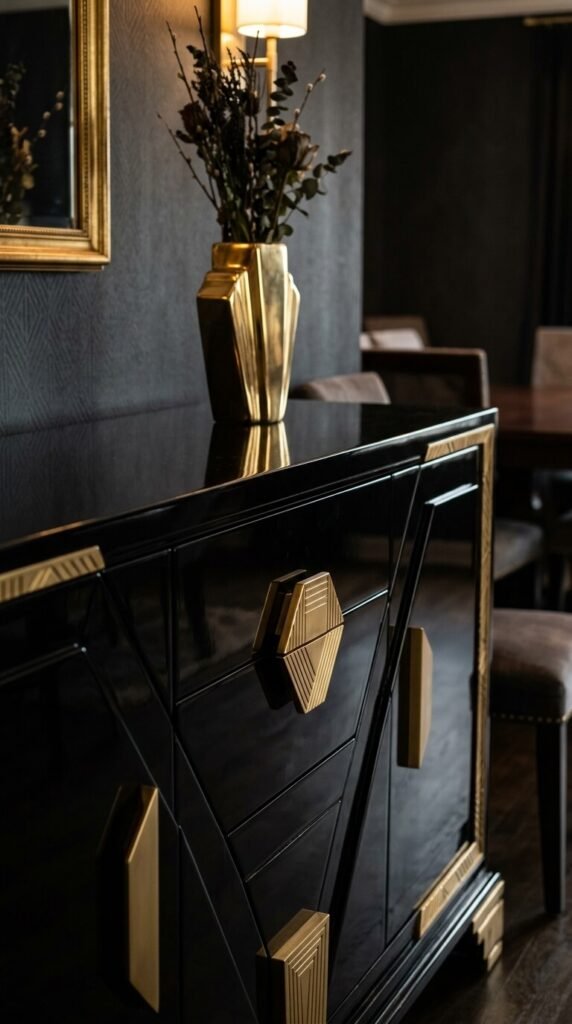
High-gloss black lacquered furniture with geometric gold hardware is the Art Deco furniture combination. The deep reflective black surface references the lacquerwork inspired by East Asian crafts that fascinated 1920s European designers. The gold hardware — angular pulls, stepped escutcheons, geometric knobs — provides the contrast. New black lacquer sideboards and dressers cost $300–$1,200. For a budget approach, repaint any glossy-surfaced furniture with black gloss spray paint ($8–$12 a can) and replace hardware with angular gold pieces from a hardware store at $3–$10 each. The transformation is immediate and dramatic. Black and gold together are Art Deco’s fundamental color pairing.
3. Velvet Upholstery in Jewel Tones
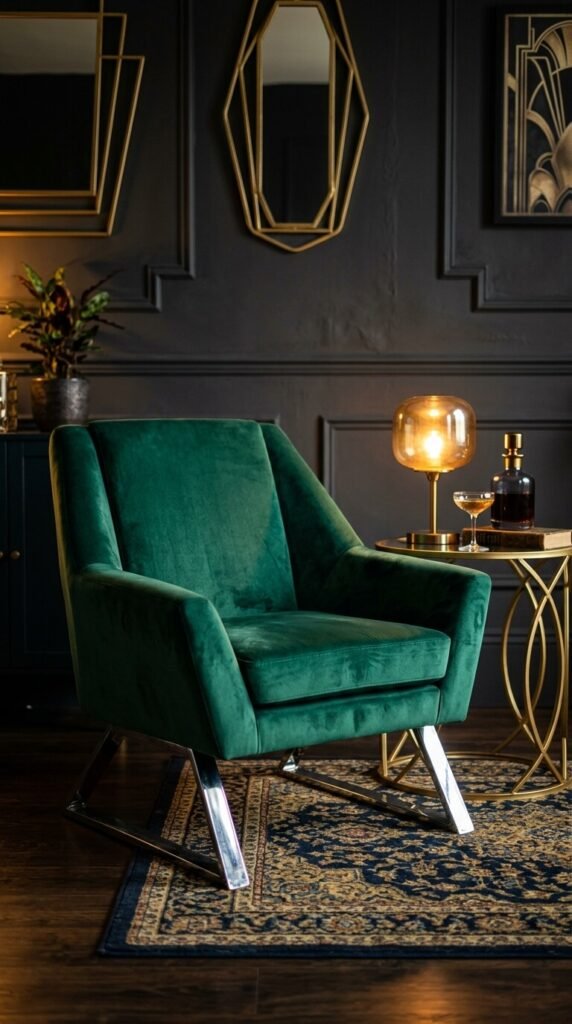
Jewel-toned velvet — emerald green, sapphire blue, deep burgundy, and rich amethyst — was the defining upholstery of Art Deco interiors. The sheen of velvet under directional lighting creates depth and drama. New velvet accent chairs with period-appropriate angular forms cost $200–$600. Velvet throw pillows in jewel tones cost $20–$50 each. For a budget approach, reupholster an existing chair in emerald or sapphire velvet using fabric at $15–$25 per yard from a fabric retailer. Add chrome or gold nail-head trim for the finishing detail. One velvet piece in a room already sets the Art Deco register unmistakably.
4. Geometric Chevron and Herringbone Rugs
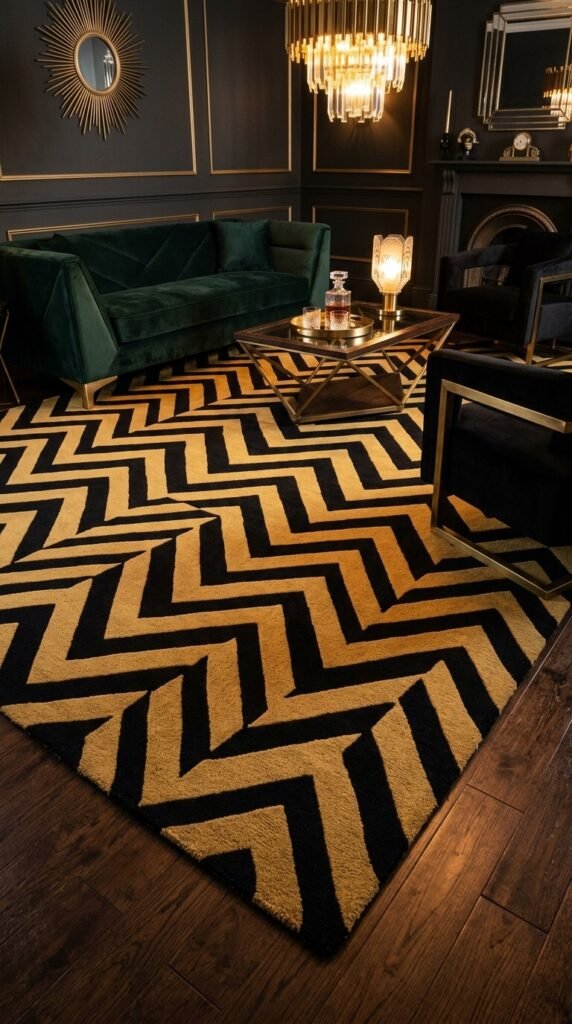
Geometric patterned rugs — chevron, herringbone, sunburst radiating from center, or stepped diamond patterns — in black and gold, navy and cream, or emerald and brass are the Art Deco floor treatment. The bold repeating geometry underfoot sets the visual rhythm for the entire room above it. New wool or wool-blend Art Deco pattern rugs cost $100–$500 depending on size. Machine-made versions from Ruggable and Wayfair cost $60–$200. Choose the largest size your space allows — geometric pattern reads as bolder and more intentional at scale. The rug is the foundation of every Art Deco room’s visual impact.
5. Stepped and Tiered Architectural Forms
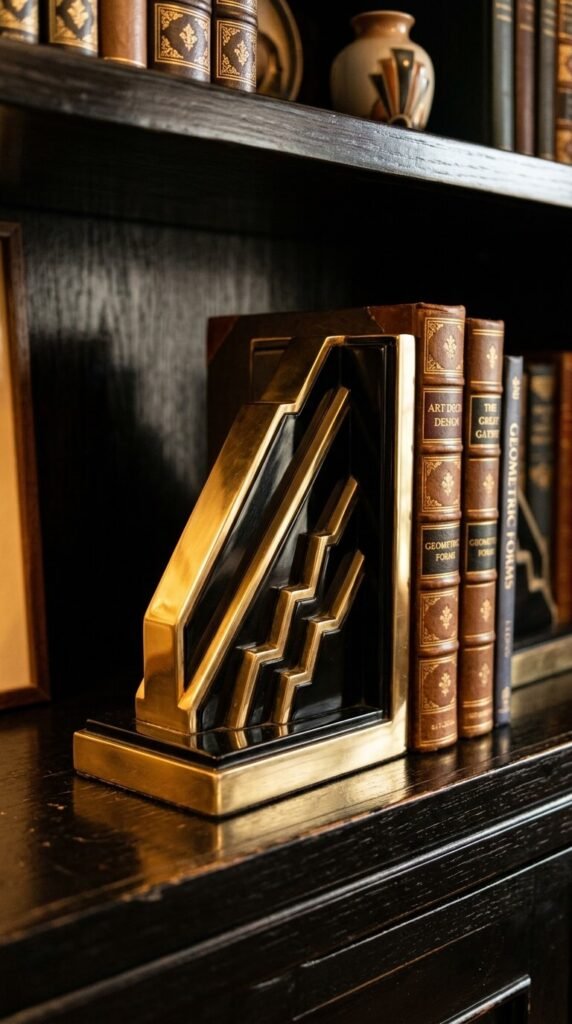
The stepped or tiered ziggurat form — stacked rectangular layers narrowing toward the top — is one of Art Deco’s defining geometric motifs, borrowed from Egyptian and Aztec architecture. It appears in bookends, lamps, picture frames, pedestals, and architectural details. New Art Deco-style stepped bookends in black and gold cost $20–$60 at HomeGoods and online. Step-cut side tables with tiered bases cost $80–$300. For a DIY approach, stack MDF boards cut in decreasing sizes, paint in gloss black, and add gold trim at each tier edge with a paint pen for under $20. Stepped forms on a shelf create strong vertical interest.
6. Crystal and Smoked Glass Decanters
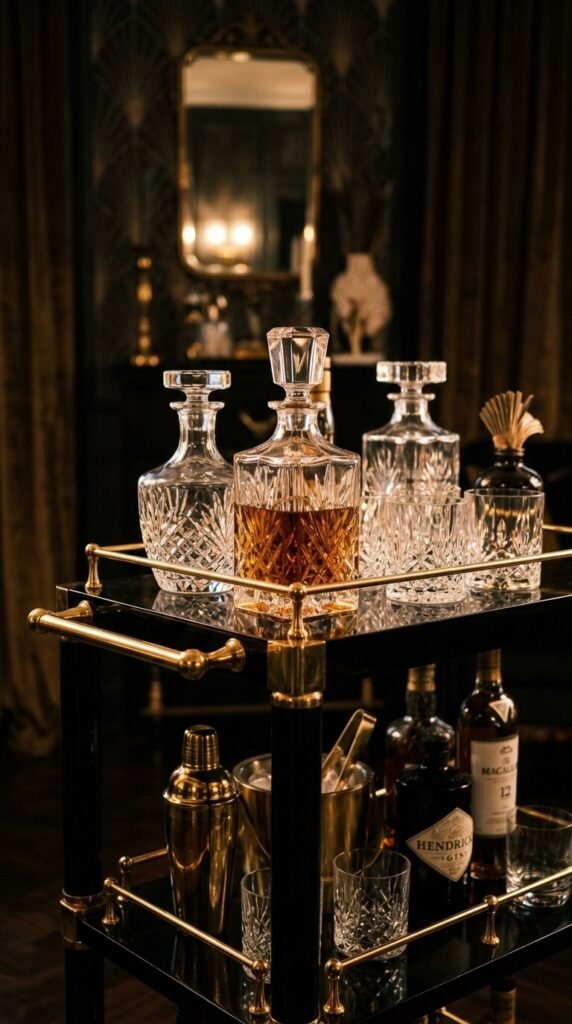
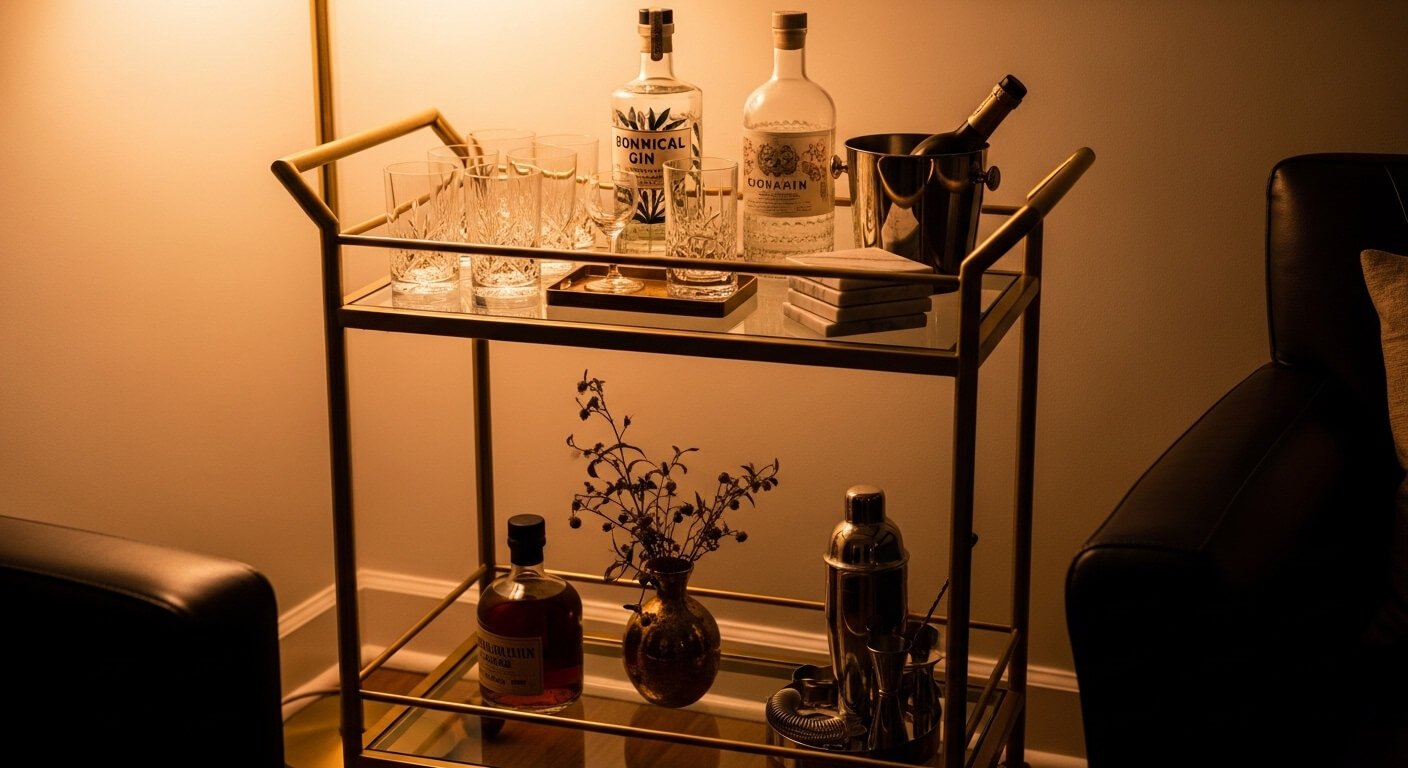
Cut crystal decanters and smoked glass barware displayed on a lacquered bar cart are a quintessential Art Deco still life. The faceted cuts in crystal catch directional light and multiply it into prismatic patterns — a trick the era’s designers exploited deliberately. Vintage cut crystal decanters from thrift stores and estate sales cost $10–$60 each. New Art Deco-inspired crystal decanters cost $30–$120. Style on a black lacquered bar cart with gold hardware alongside matching crystal glasses. Add a small gold tray and one gold cocktail shaker. This vignette needs no flowers, no plants, no soft elements — the crystal and gold do everything.
7. Fan-Vaulted and Geometric Ceiling Details
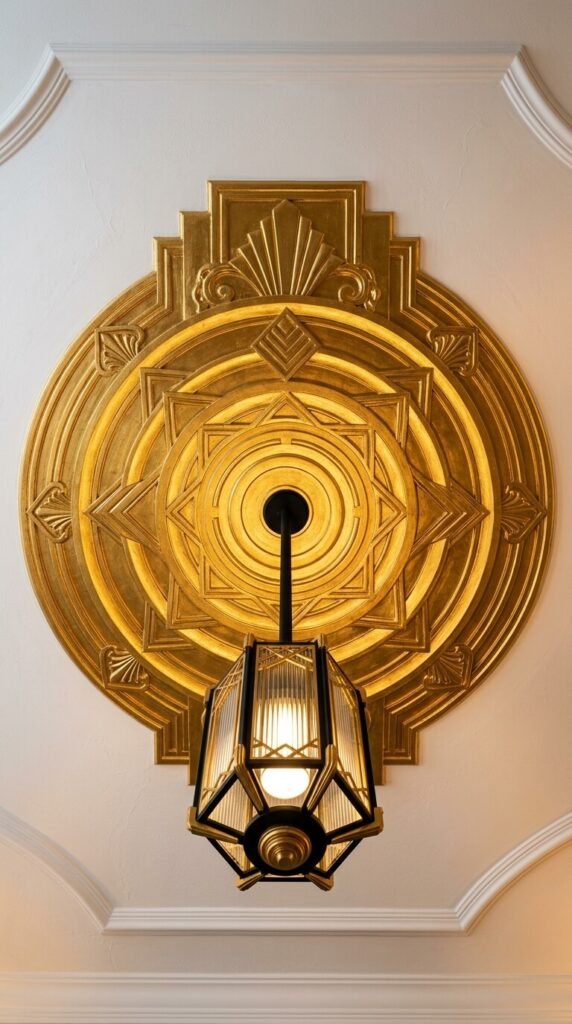
Geometric ceiling medallions — stepped concentric rings, fan-vault patterns, or radiating geometric forms — placed around a light fixture bring Art Deco character to a ceiling that otherwise has none. Polystyrene ceiling medallions cost $15–$60 at home improvement stores. Paint the raised geometric details in gold leaf paint ($10–$20 a jar) while leaving the background white or black. The medallion draws attention upward and frames the light fixture as an architectural event rather than a utility item. Install with ceiling adhesive and no special tools. This is one of the most dramatic low-cost Art Deco room enhancements available.
8. Black and White Marble Tile Floors
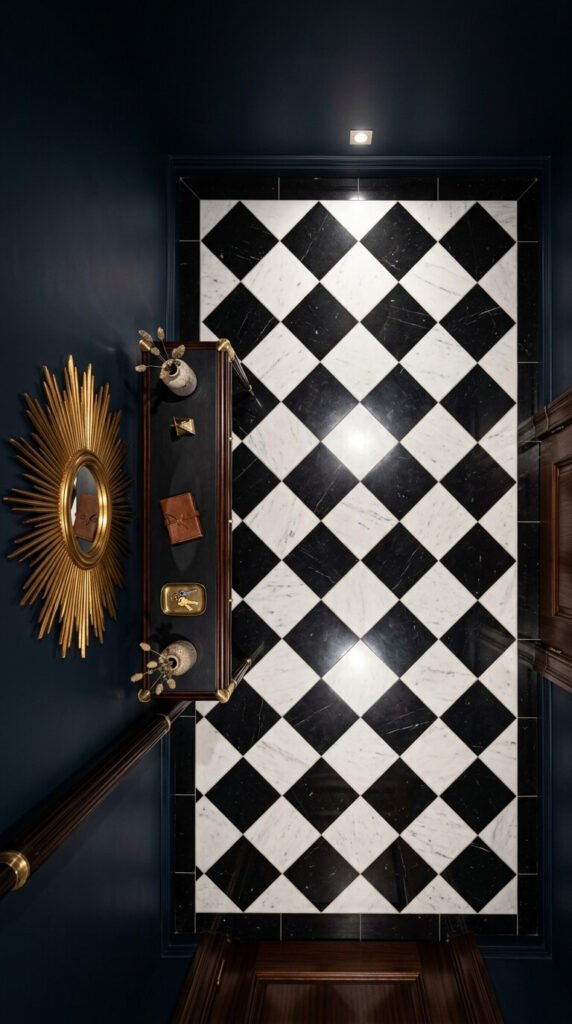
Black and white marble diamond tile — alternating black and white squares set on the diagonal — is the signature Art Deco floor in entryways, bathrooms, and kitchens. The diagonal orientation transforms a simple checkerboard into a dynamic geometric statement. Actual marble tile costs $5–$20 per square foot. High-quality porcelain marble-look tile costs $2–$8 per square foot. Peel-and-stick vinyl tile in black and white diamond pattern costs $1–$3 per tile — a full entryway costs $30–$80 in materials. The pattern is bold enough to be the room’s primary design statement. Keep walls neutral and furniture minimal and let the floor command the space.
9. Brass and Chrome Starburst Pendant Lights
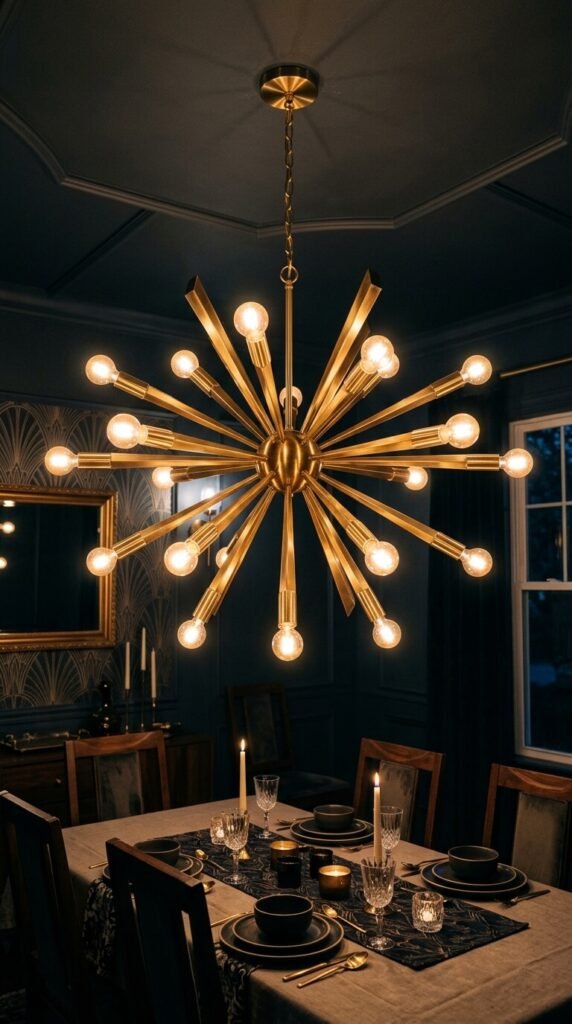
A brass or chrome starburst pendant — multiple angular arms radiating from a central sphere with a bulb at each tip — is the Art Deco lighting fixture that doubles as sculpture. New brass starburst pendants cost $80–$300 at most lighting retailers. This is a close relative of the mid-century Sputnik chandelier but with heavier arms and a more deliberately architectural presence. Hang above a dining table or in a dark entry hall where the warm glow from multiple bulbs creates maximum drama. Use Edison-style filament bulbs — the warm amber glow inside a brass fixture reads as unambiguously 1920s.
10. Ebonized and Lacquered Wood Accents
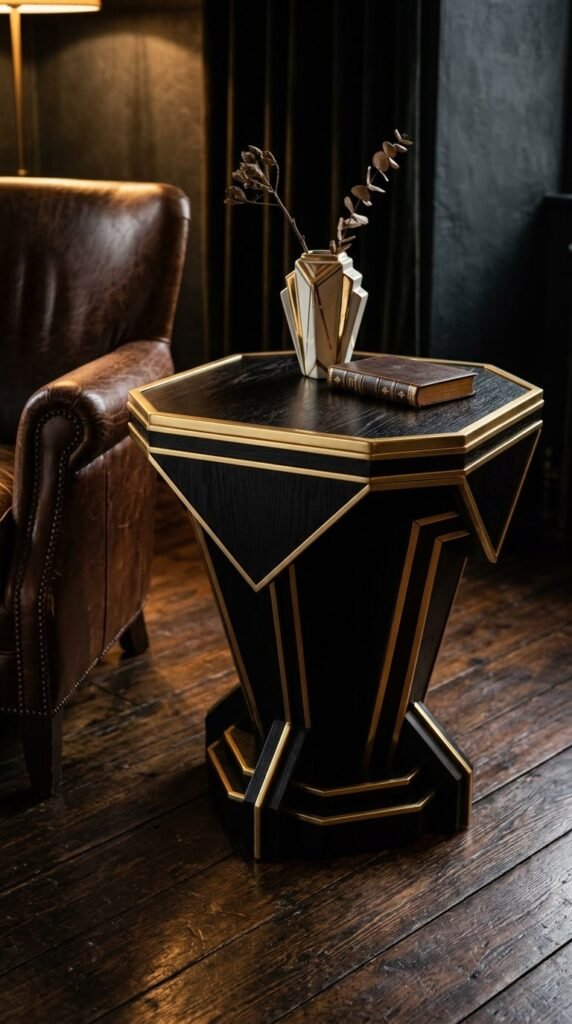
Ebonized wood — timber stained or dyed to a deep almost-black tone — was widely used in Art Deco furniture alongside lacquer. The dark surface appears almost liquid in certain light. Ebonize any wooden furniture piece yourself using black wood stain ($10–$20) or black iron mordant made by dissolving steel wool in white vinegar overnight ($2–$3 in materials). Apply with a cloth, let dry, and seal with matte varnish. The very dark tone contrasts dramatically with gold, brass, and jewel-tone upholstery — which is exactly how Art Deco designers used dark wood, as a foil for more luminous materials nearby.
11. Gold Leaf Decorative Objects and Frames
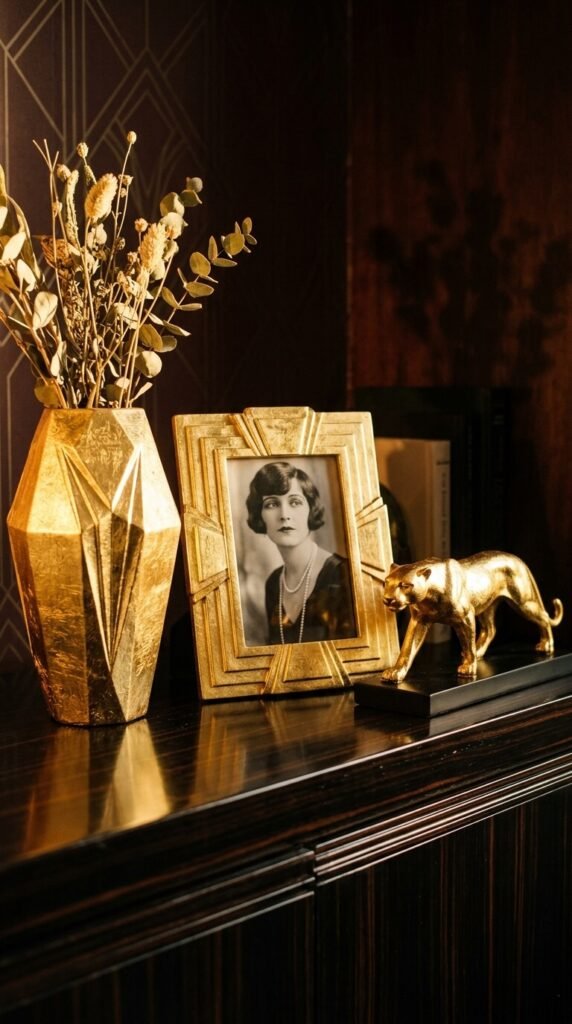
Gold leaf decorative objects — geometric vases, angular frames, stepped pedestals, and sculptural animals — are the currency of Art Deco accessorizing. Apply gold leaf to almost any object yourself: a thrifted vase, a wooden box, or a picture frame. Gold leaf sheets cost $8–$15 for a book of 25 sheets online. Apply with leafing adhesive ($5–$10), let cure 24 hours, and seal with a spray varnish. The result is convincingly rich and genuinely reflective. Group gold objects on a dark lacquered tray on a sideboard. The contrast of bright gold against deep black lacquer is the most characteristic Art Deco display arrangement.
12. Exotic Animal Motifs — Panthers, Peacocks, Gazelles
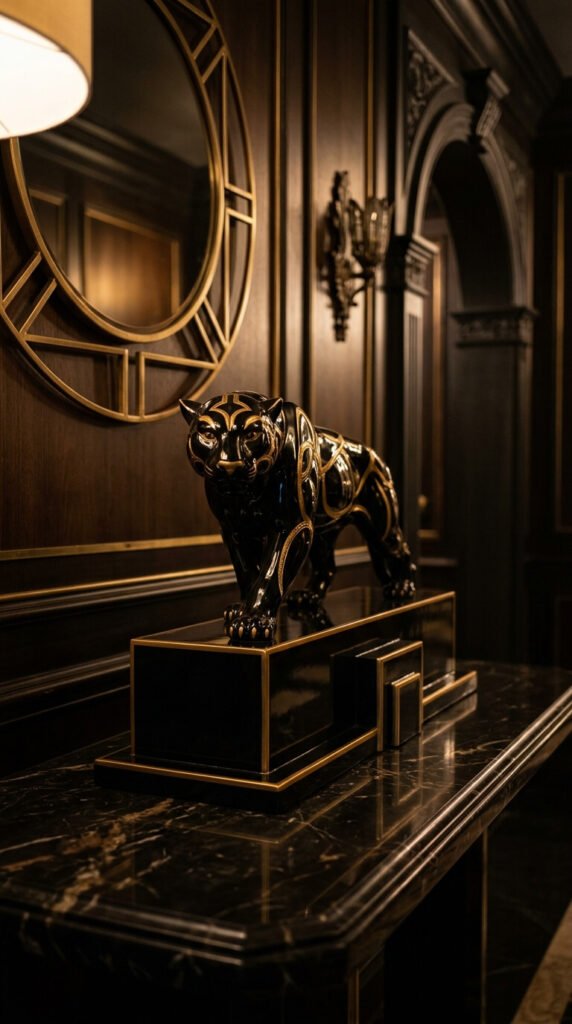
Art Deco designers were fascinated by exotic animal motifs — black panthers, peacocks, gazelles, and stylized eagles appeared on everything from furniture hardware to sculpture to wallpaper. A black panther figurine or a peacock decorative object signals Art Deco immediately. New Art Deco-style panther figurines cost $30–$150 at HomeGoods and online retailers. Thrift stores often carry older decorative animal sculptures for $5–$30. Display on a dark lacquered pedestal or surface. The animal motif adds organic life to an otherwise geometric room and references the era’s romanticization of Africa, Egypt, and the exotic East.
13. Mirrored Furniture Surfaces
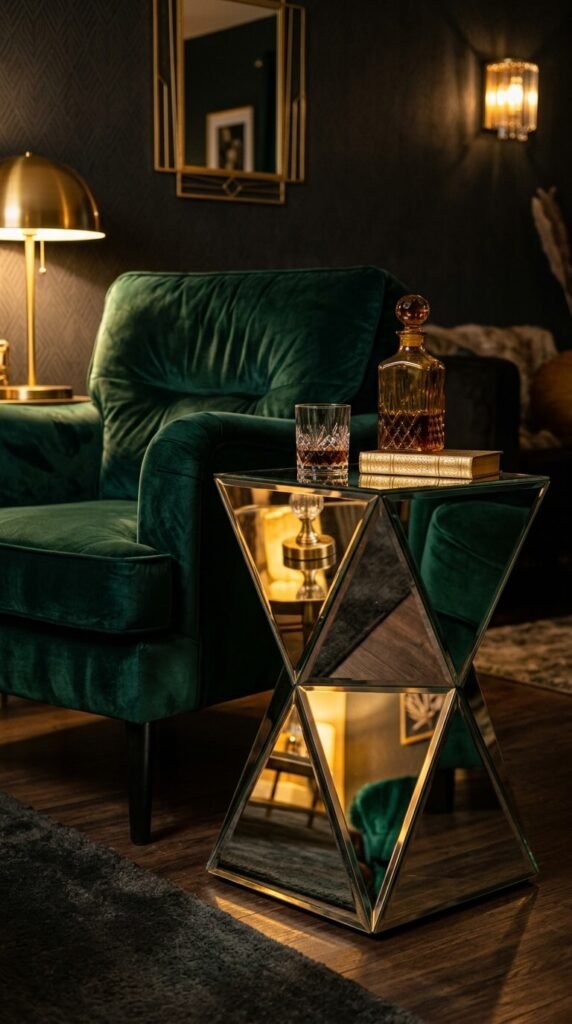
Mirrored furniture — side tables, dressers, and console tables with mirror-paneled surfaces — was a dramatic Art Deco innovation that made rooms appear larger and more luminous simultaneously. The reflective panels multiply every light source in the room. New mirrored side tables cost $60–$250 at most home decor retailers. Mirror panels can be cut to size at a glass shop for $15–$40 and attached to an existing table or dresser surface using mirror adhesive. A mirrored side table beside a velvet chair with a starburst pendant above creates a fully realized Art Deco vignette for well under $300 in total investment.
14. Sculptural Metal Wall Art
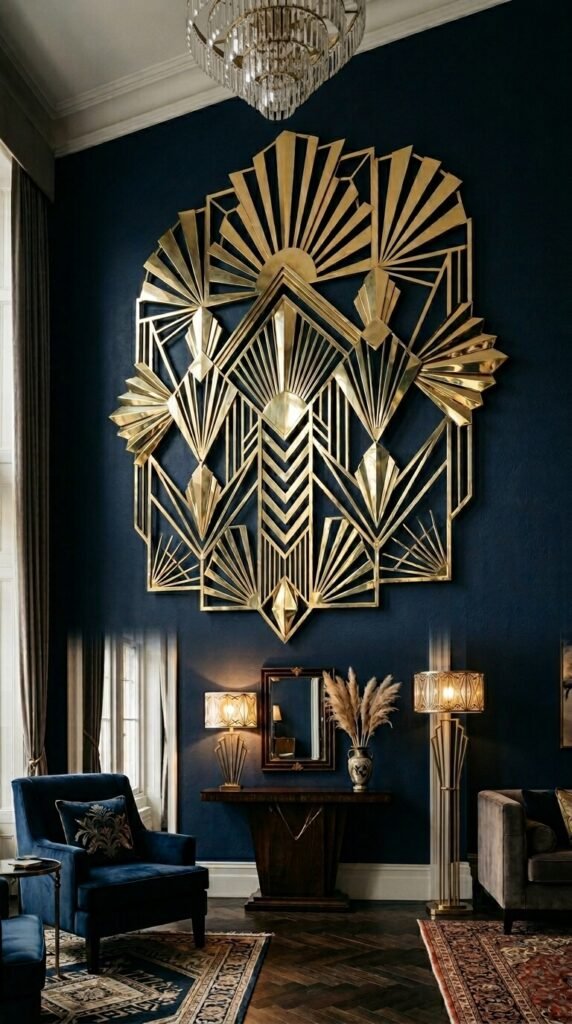
Geometric metal wall sculpture — brass fan shapes, sunburst formations, angular abstract compositions — brings Art Deco’s architectural confidence to a bare wall in a way that framed art alone cannot. New geometric metal wall art in brass or gold finish costs $40–$200 at most home decor and online retailers. Create a DIY version by arranging multiple smaller brass geometric shapes — available at craft stores for $2–$8 each — into a custom composition mounted on a dark painted wall. The key principle: symmetry and strong geometric form. Art Deco wall compositions are never casual or asymmetric.
15. Geometric Patterned Wallpaper in Black and Gold
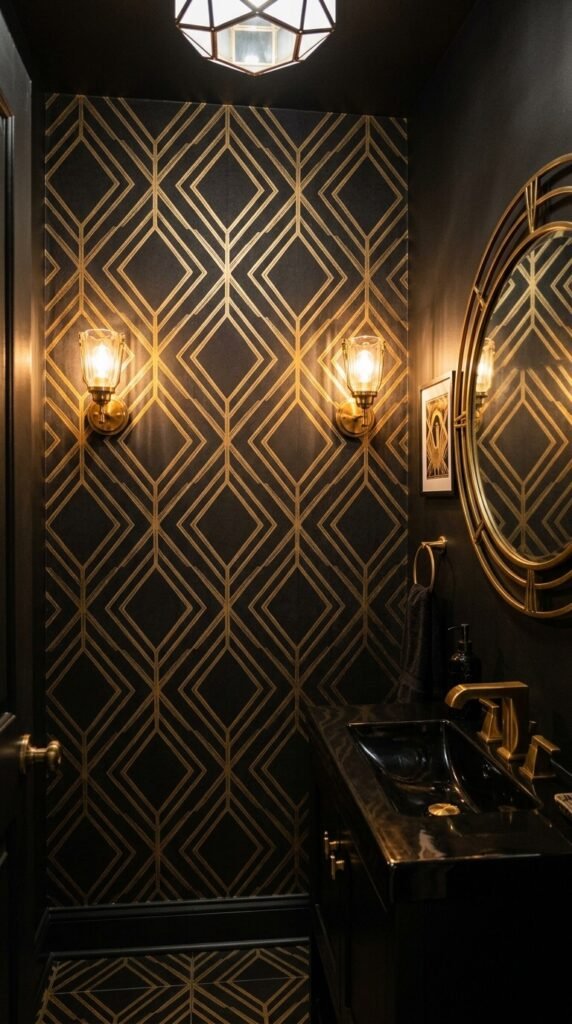
Black and gold geometric wallpaper — diamond lattice, fan scallop, stepped zigzag — transforms a room into a period statement with a single wall treatment. Peel-and-stick geometric wallpaper in Art Deco patterns costs $8–$20 per square foot from Spoonflower and Chasing Paper. Traditional wallpaper in Art Deco patterns from Cole & Son and Farrow & Ball costs more but lasts for decades. Start with a powder room or single accent wall to minimize commitment and cost. The bold pattern works best on dark backgrounds — black, deep navy, or forest green. A gold geometric pattern on a black wall is the purest Art Deco wall combination possible.
16. Cocktail Bar Carts With Gold Hardware
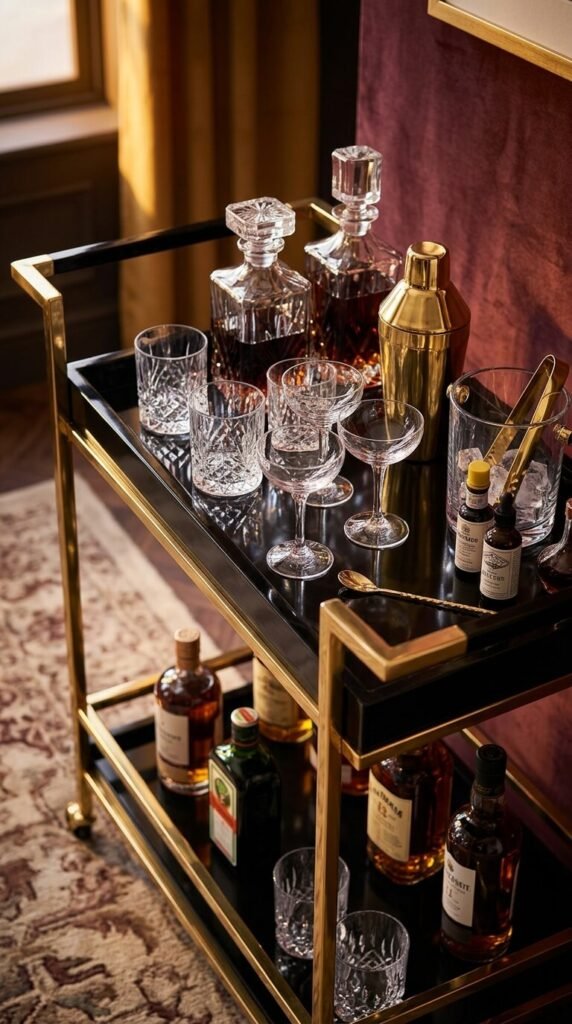
The Art Deco bar cart — black lacquered or dark wood frame with gold or chrome hardware — is a functional and decorative centrepiece. Stock it with cut crystal decanters, matching crystal glasses, a gold cocktail shaker, and a small gold ice bucket. New bar carts in Art Deco-appropriate finishes cost $80–$300. A secondhand cart can be transformed with black gloss spray paint and new gold casters from a hardware store for under $30. The cocktail cart was the social centerpiece of 1920s entertaining. Restoring it to that role in a contemporary room brings both the function and the atmosphere of the era back simultaneously.
17. Jade Green and Teal Ceramic Vases
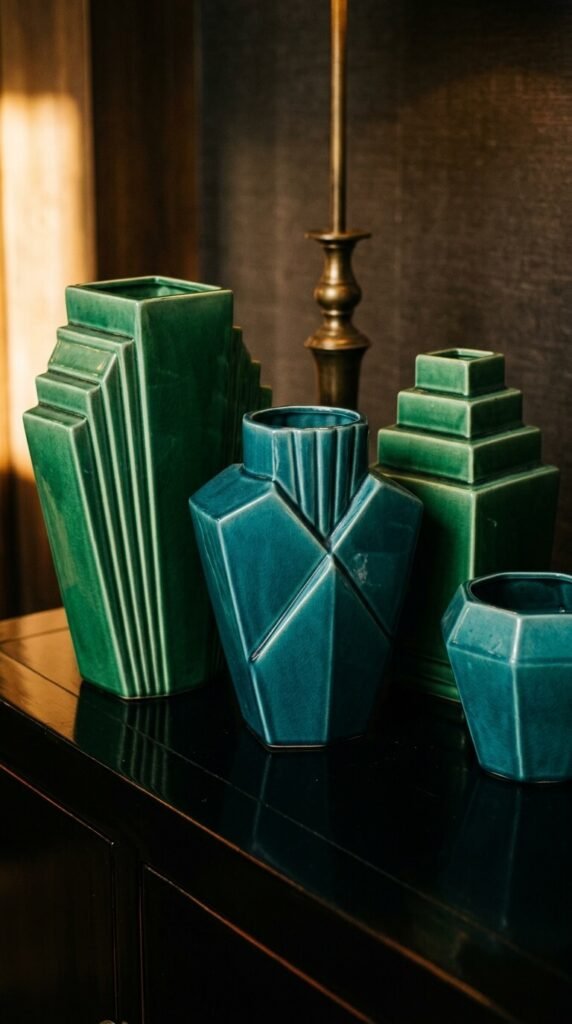
Jade green, deep teal, and turquoise ceramic vases with geometric or angular forms reference Art Deco’s fascination with ancient Egyptian and Chinese ceramic traditions. These colors — rich, exotic, and slightly metallic-looking — contrast beautifully with black and gold surfaces. New geometric ceramic vases in jade and teal tones cost $20–$80 at HomeGoods, CB2, and online retailers. Vintage glazed ceramics in these tones from thrift stores and estate sales cost $5–$30 each. Group three pieces in varying heights on a black surface. No flowers required — the forms and colors are sculptural enough to stand completely on their own.
18. Tassel and Fringe Trim Accents
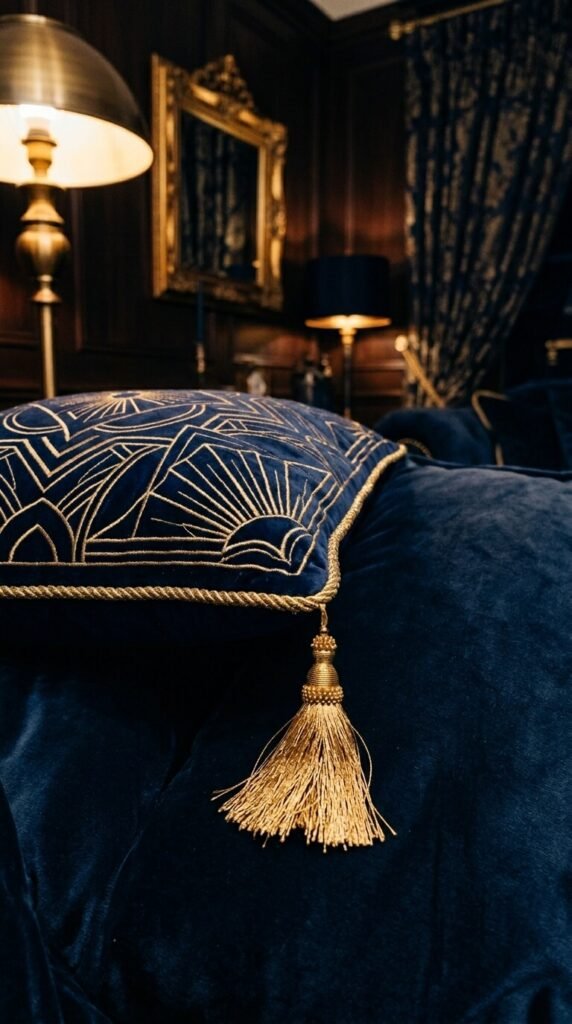
Gold tassel and fringe trim on velvet cushions, lampshades, and curtain tie-backs was a signature decorative detail of Art Deco interiors. The movement of fringe catches light and adds a theatrical quality to any textile surface. Add gold bullion fringe trim to the bottom edge of a throw pillow with fabric glue — trim costs $3–$8 per yard at fabric stores. Replace plain lamp shade trim with gold tassel fringe for $10–$20. Add tassel tie-backs to existing drapery for $15–$40 per pair. These small trim details cost almost nothing but dramatically increase the glamour register of any Art Deco-inspired room.
19. Fan-Shaped Decorative Objects and Furniture
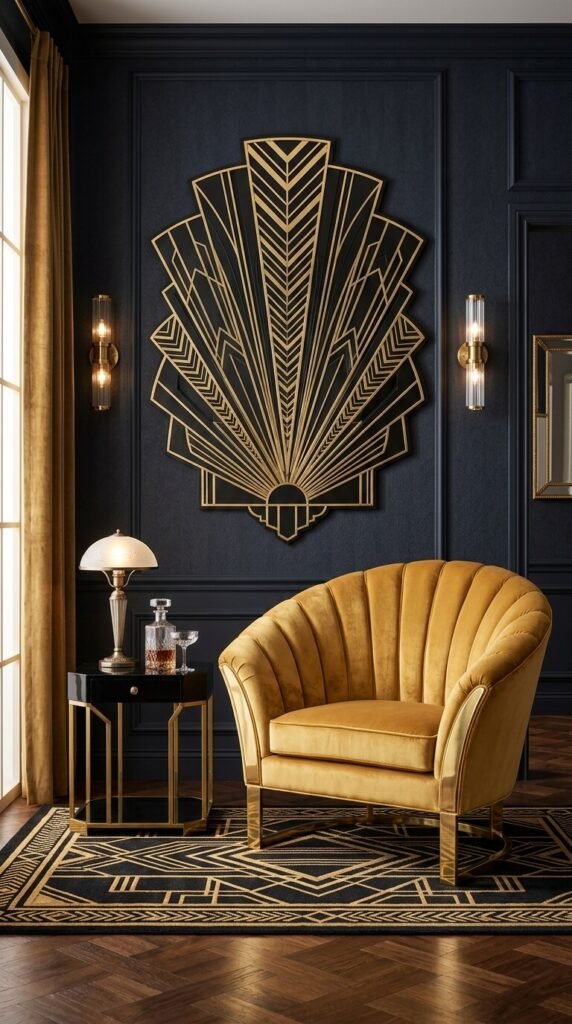
The fan or shell shape — a semicircle with radiating lines — is one of Art Deco’s most distinctive decorative motifs. It appears in furniture backs, wall panels, mirror frames, table lamps, and architectural details. Fan-backed accent chairs in gold velvet cost $200–$500. Fan-shaped wall decor objects in brass cost $30–$100 at most home decor retailers. A DIY fan wall panel can be made from wooden skewers arranged in a radiating semicircle on a painted MDF backing for under $15 in materials. The fan shape communicates Art Deco instantly even when used in a single piece among otherwise contemporary furnishings.
20. Marble With Bold Black Veining
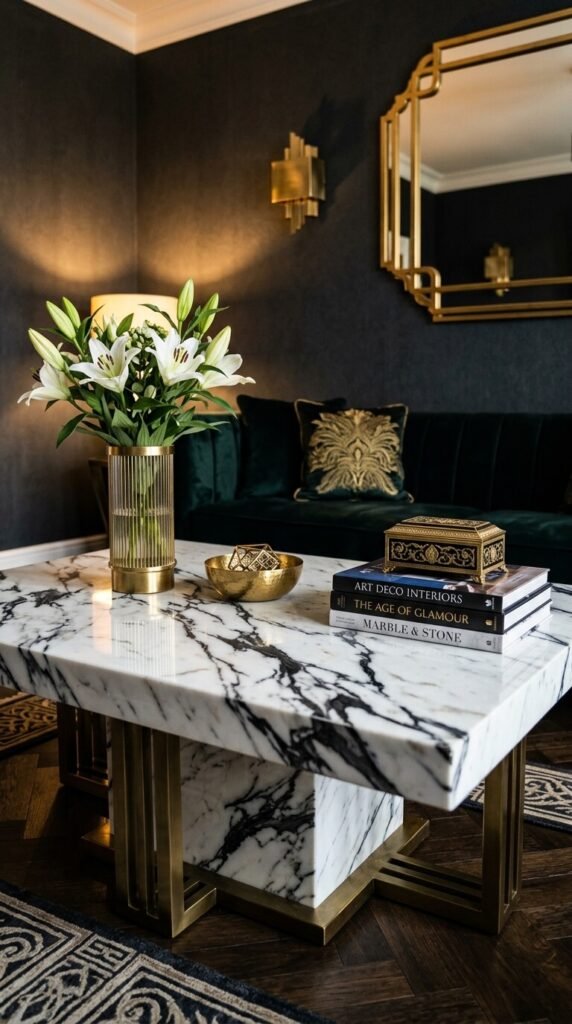
White marble with bold black or gold veining — calacatta gold or nero marquina — is the stone of choice for Art Deco surfaces. The boldness of the veining pattern suits the era’s appetite for drama. Marble coffee table tops, side table tops, and bathroom counters all reference the 1920s grand hotel aesthetic. Real marble coffee tables cost $300–$1,500. Marble-patterned porcelain tile for table-top resurfacing costs $2–$5 per square foot. Marble contact paper — a budget DIY option — costs $15–$30 per roll and transforms any flat surface. The pattern must be bold and graphic to read as Art Deco rather than generic modern marble.
21. Ornate Geometric Picture Frames
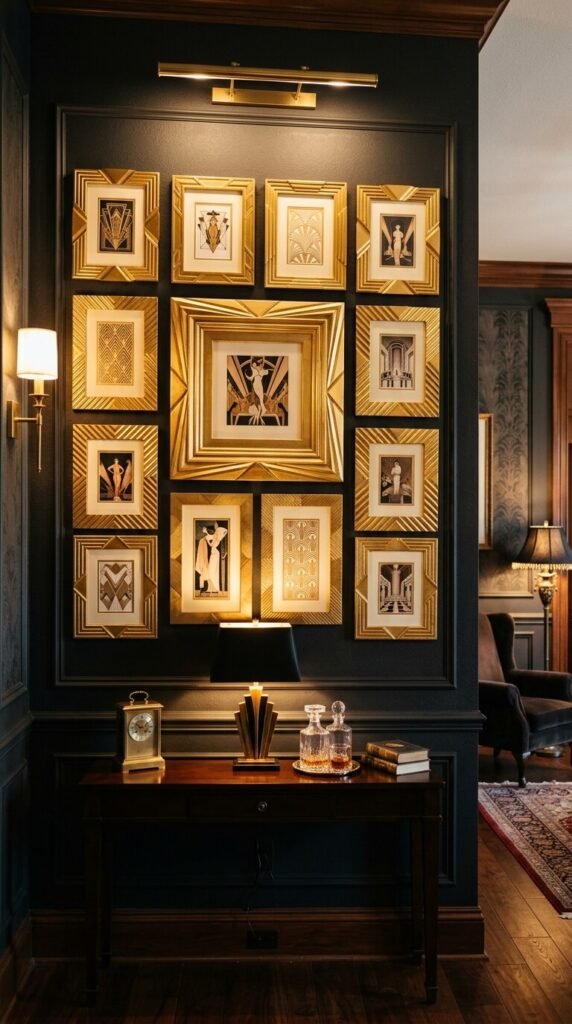
Geometric gold picture frames — stepped angular profiles, fan corner details, and fluted edges — carry Art Deco character even before considering what is inside them. Hang them in a strict symmetrical grid on a dark wall. Choose black and white photography, bold graphic prints, or abstract geometric art for the prints. New geometric gold frames cost $15–$60 each at craft stores and HomeGoods. A symmetrical grid of eight frames on a dark navy wall in matching stepped gold frames costs $80–$200 total in frames and prints. The precision of the grid arrangement reflects Art Deco’s fundamental belief that geometry and symmetry are beautiful in their own right.
22. Velvet Drapery in Midnight Blue or Emerald
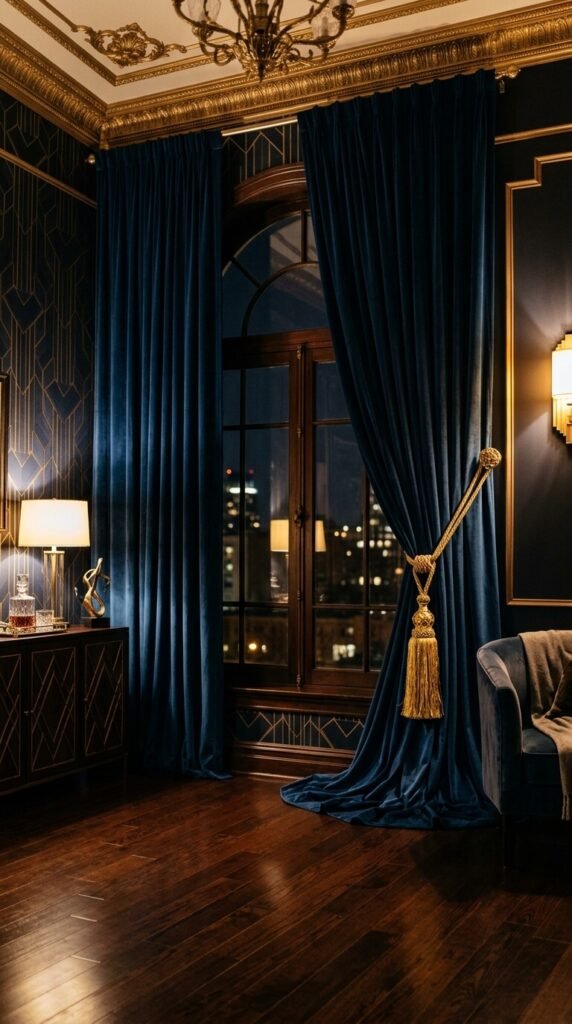
Floor-to-ceiling velvet drapery in midnight blue, emerald, or deep burgundy with gold tassel tie-backs creates the most theatrical window treatment in Art Deco interiors. The heavy fabric pools slightly on the floor. The gold tie-backs hold the drape open dramatically during the day. Velvet curtain panels in jewel tones cost $40–$120 per pair at most retailers. Gold tassel tie-backs cost $15–$40 per pair. Hang the rod at ceiling height for maximum drama. This window treatment transforms any room with large windows into something that feels like a 1920s cinema lobby — which is precisely the reference point Art Deco designers were working with.
23. Geometric Tile Patterns in Bathrooms
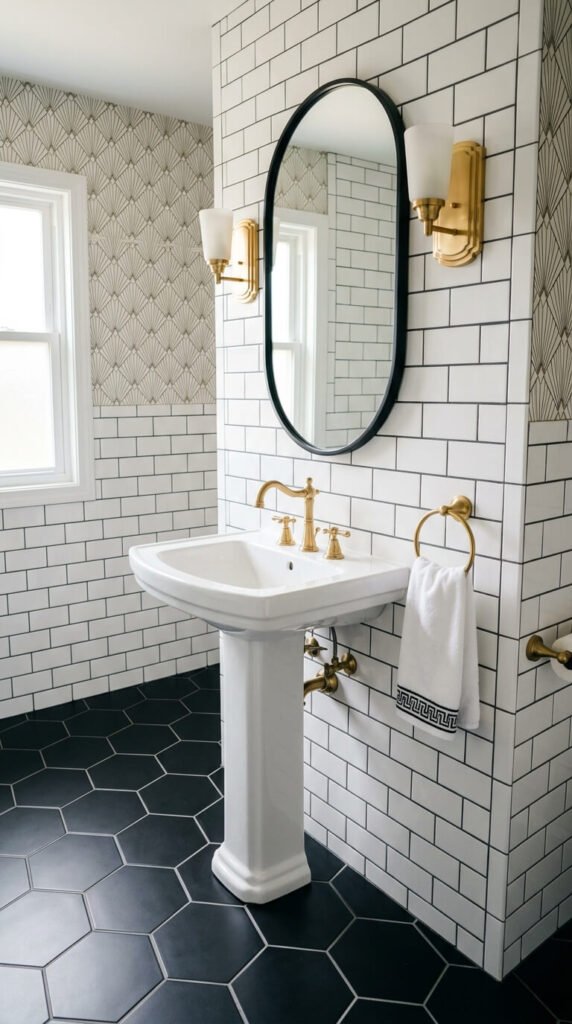
Geometric tile in Art Deco bathrooms — black hexagon floors, fan-shaped mosaic patterns, and diamond layouts with contrasting grout lines — creates period-authentic bathroom character at a manageable cost. Black hexagon floor tile costs $3–$8 per square foot. Fan-shaped mosaic tile sheets cost $5–$15 per square foot. Even a small bathroom floor can be tiled for $50–$200 in materials. Pair with a black-framed oval or octagonal mirror, gold faucet fixtures, and a pedestal sink. The combination of bold geometric floor tile, gold hardware, and a dark-framed mirror creates a complete Art Deco bathroom for a surprisingly modest total investment.
24. Sculptural Table Lamps With Geometric Bases
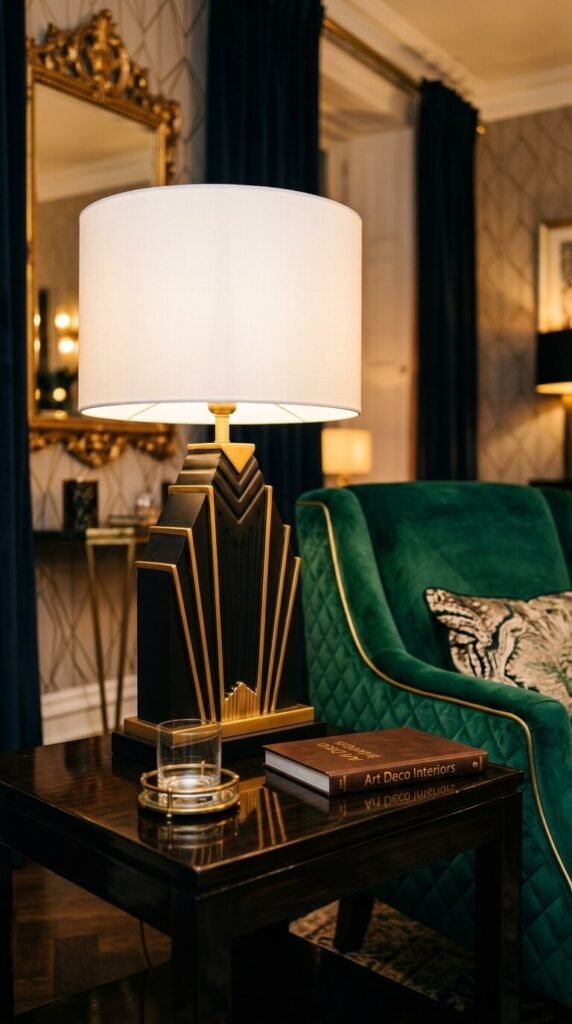
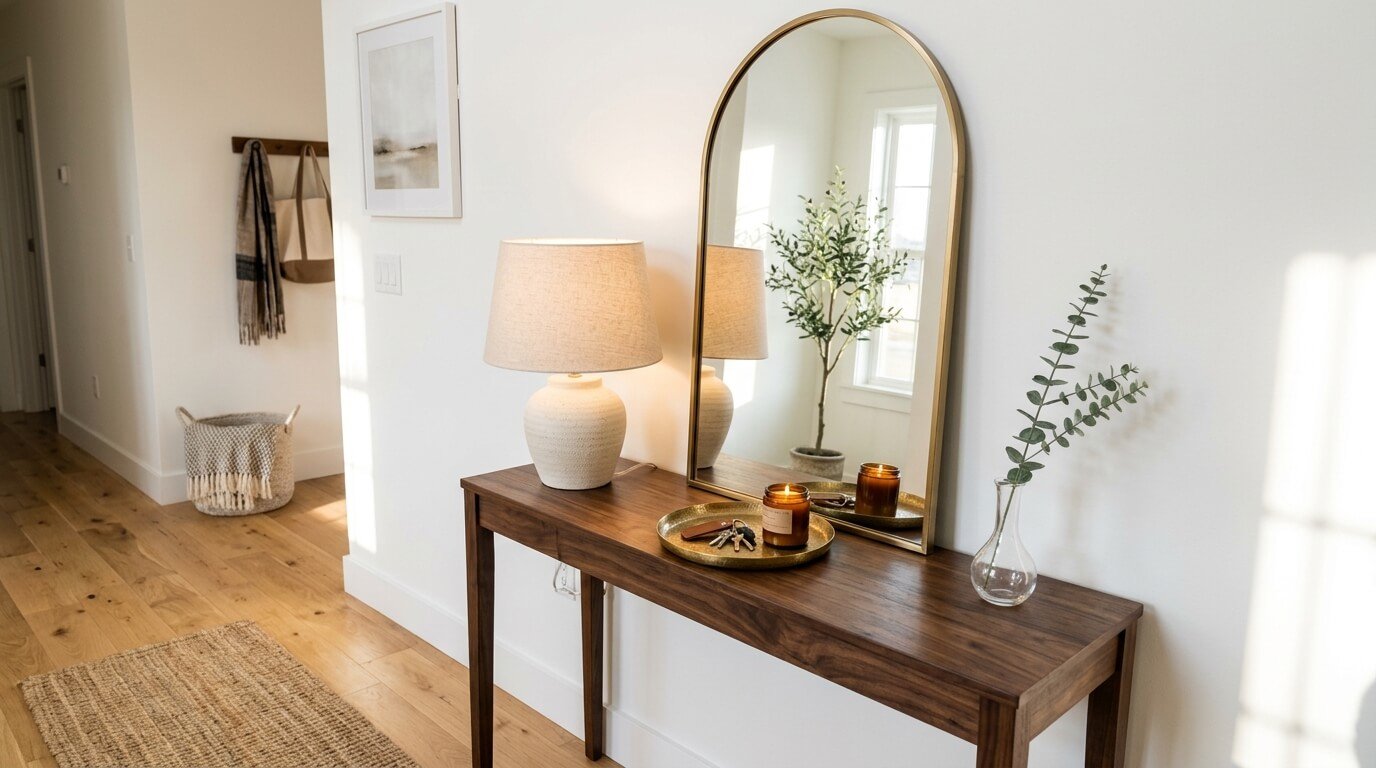
A table lamp with a stepped geometric base in black and gold, jade green, or polished brass is one of the most affordable ways to add Art Deco character to any surface. The base is the Art Deco element — the shade is secondary. New geometric base table lamps cost $40–$150 at most home decor retailers. Pair with a white or champagne drum shade for the cleanest look. Two matching geometric lamps on matching lacquered side tables flanking a sofa create a symmetrical Art Deco living room vignette that costs under $300 for the pair. The stepped silhouette of the lamp base does all the design communication.
25. Zigzag and Lightning Bolt Patterns
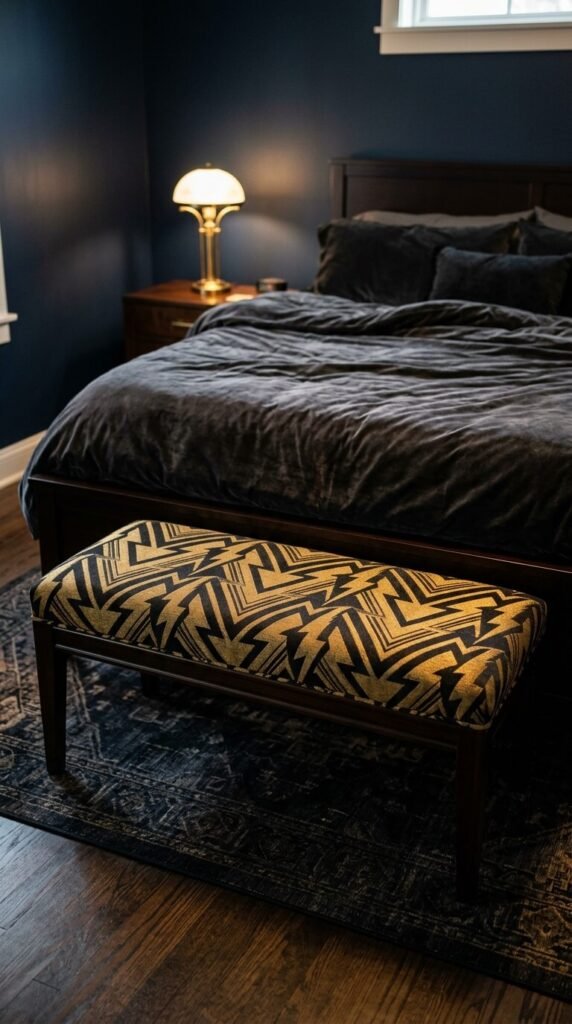
The zigzag or lightning bolt pattern — repeating angular lines in high-contrast colors — is one of the most energetic Art Deco graphic motifs. It appears on upholstery, wallpaper, rugs, and decorative objects. A bench or ottoman upholstered in a black and gold zigzag fabric becomes an instant Art Deco statement at the foot of a bed or in an entryway. Upholstery fabric in geometric zigzag patterns costs $15–$30 per yard at fabric retailers. Reupholster a basic bench seat for $30–$60 in materials. The boldness of the zigzag pattern means one piece in a room establishes the entire era’s visual language unmistakably.
26. Decorative Clocks With Stepped Profiles
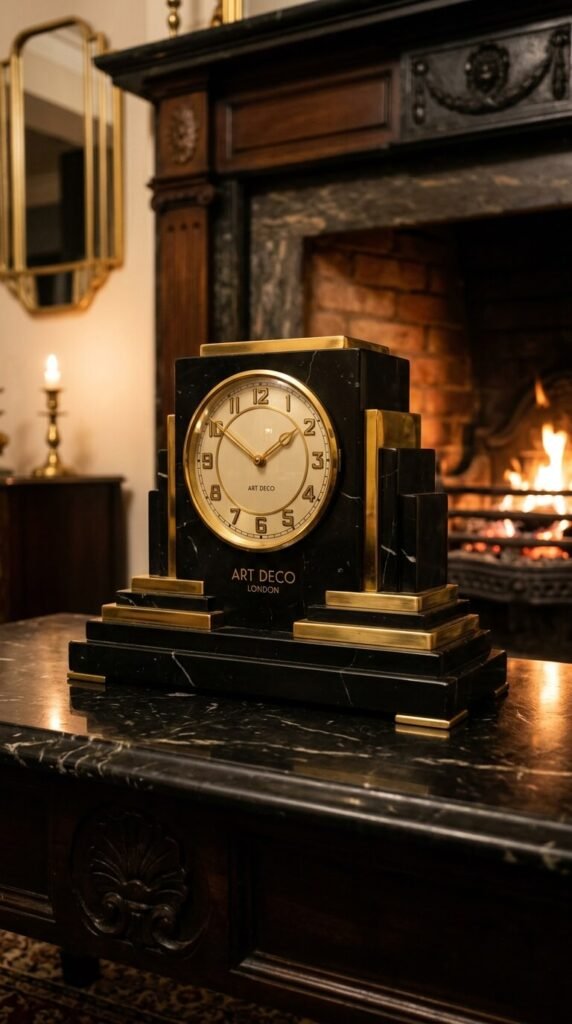
An Art Deco mantel clock — stepped marble body with gold numerals, a clean Roman numeral face, and geometric proportions — is a functional and commanding decorative object. These clocks were designed to be the focal point of a fireplace mantel and they fulfill that role just as effectively today. Antique Art Deco mantel clocks from estate sales and auction sites cost $80–$400 depending on condition and material. New reproduction Art Deco clocks in stepped marble or black resin with gold detail cost $40–$120. Place centrally on a mantel, flanked by gold candlestick holders. The bold stepped profile visible from across the room makes it more than a time-keeping device.
27. Black Painted Walls as a Design Statement
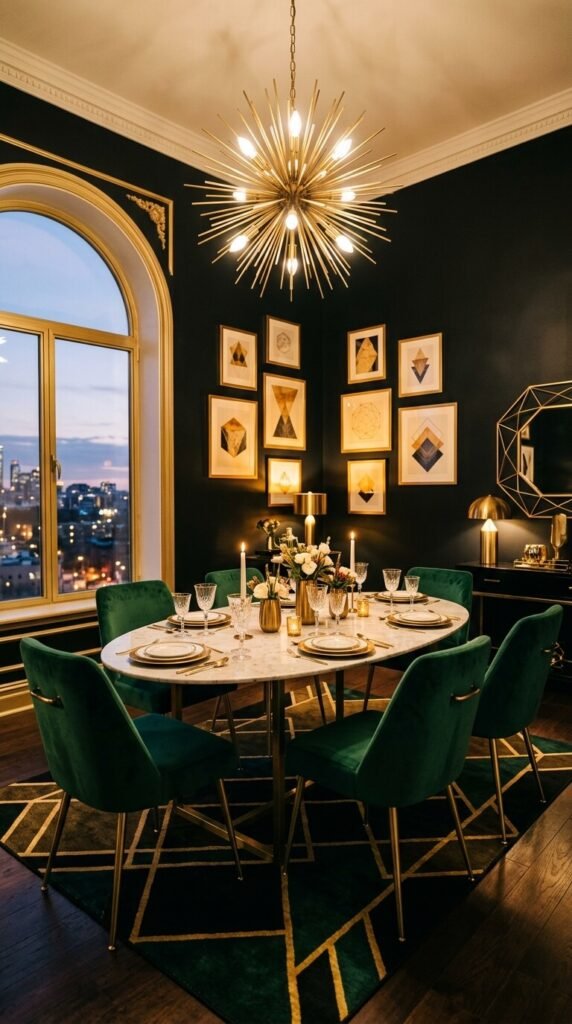
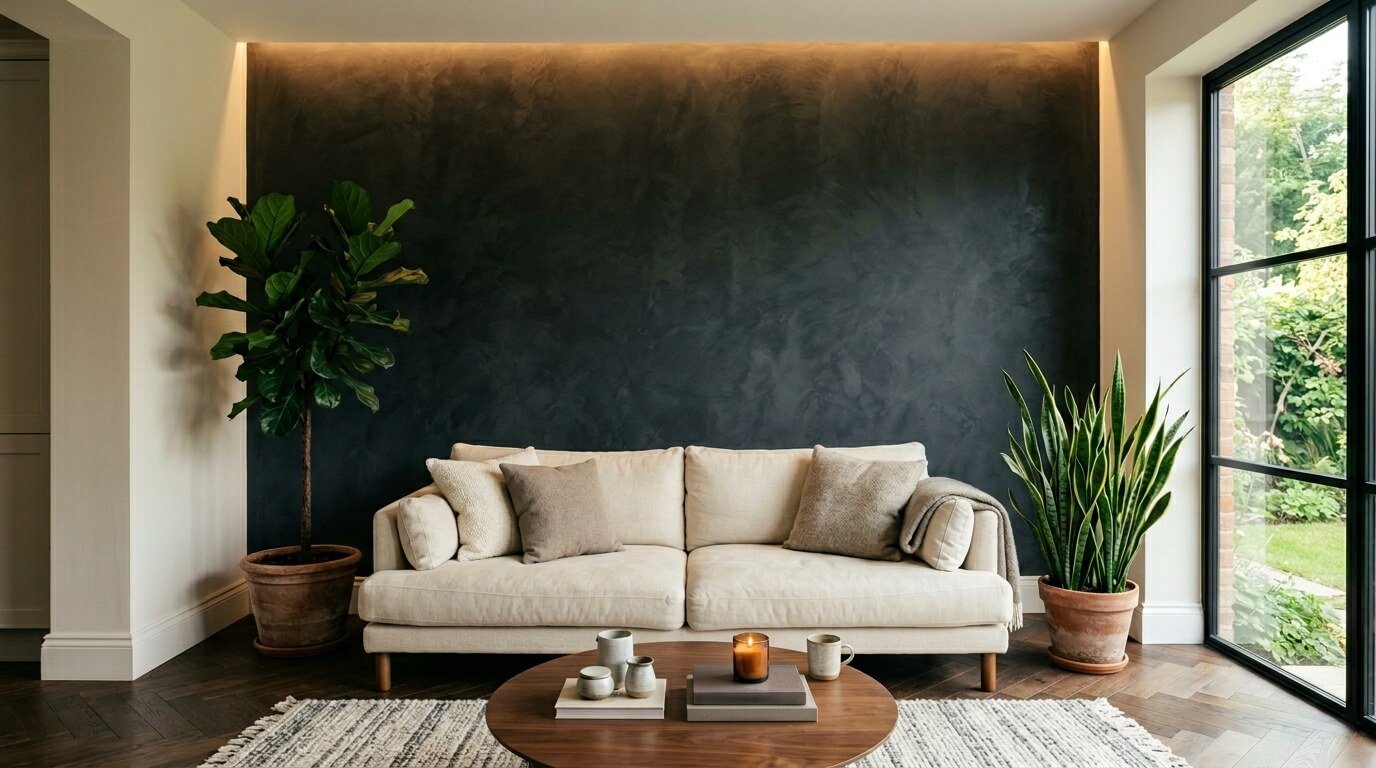
Matte or satin black painted walls are the ultimate Art Deco backdrop. They make gold accents glow, jewel-toned velvet vibrate with color, and crystal decanters catch every light source in the room. A full room painted in matte black costs $50–$150 in quality paint. One black accent wall behind a bed or sofa costs $15–$40 in materials. Use Farrow & Ball’s Pitch Black or Benjamin Moore’s Onyx for the richest depth. Layer gold frames, brass fixtures, emerald pillows, and mirrored accessories against the black. The drama of the combination requires almost no styling skill — the black wall does the heavy lifting on its own.
Conclusion
Art Deco decor asks only one thing of a room: that it commit to beauty without apology. The bold geometry, the rich materials, the gold and black contrasts, the jewel-toned velvets — none of these work at half-measures. But committing does not mean spending recklessly. A gold leaf vase from a thrift store, a geometric tile floor in a small bathroom, a pair of stepped table lamps flanking a sofa, a single wall painted matte black — each of these moves costs very little and delivers the era’s glamour immediately. Start with the one accent on this list that excites you most. Place it in your room. Step back. Then add the next piece. That is how the twenties come back to life — one deliberate, glamorous decision at a time.