26 Minimalist Floating Shelf Decor Displays That Look Effortless


Disclosure: As an Amazon Associate we earn from qualifying purchases. Some links on this page may be affiliate links — if you click through and make a purchase, we may receive a small commission at no extra cost to you.
Floating shelves are one of the most searched home decor topics for a reason — they work in any room, suit any budget, and can completely change how a wall feels. But getting them to look effortless is trickier than it seems. Too many objects and the shelf looks chaotic. Too few and it looks forgotten. The sweet spot is a styled display that feels calm, intentional, and personal. These 26 minimalist floating shelf decor ideas will show you exactly how to get there — with real, affordable objects and simple arrangements anyone can pull off.
1. The Rule of Three with Varying Heights
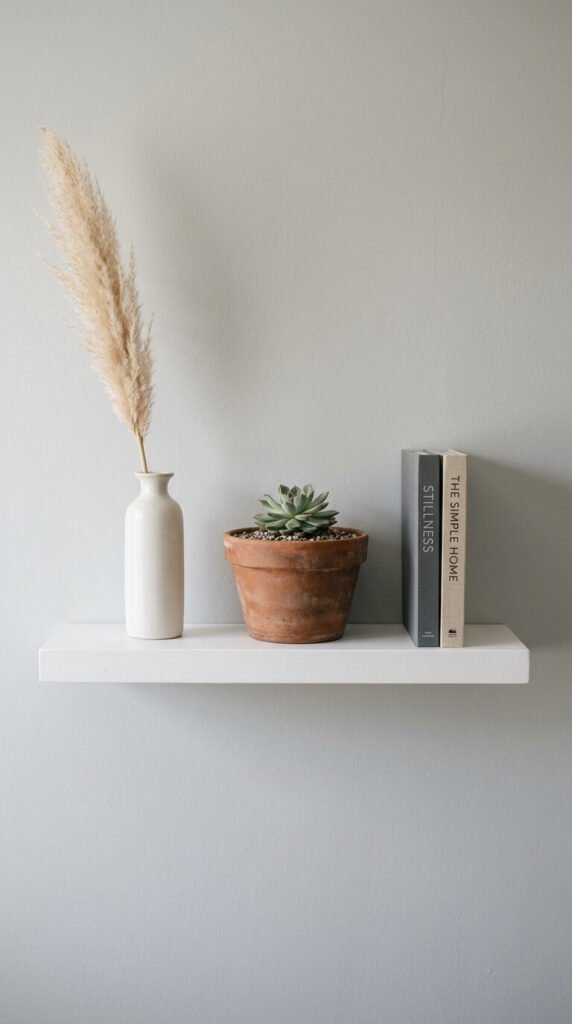
The rule of three is the simplest styling trick for floating shelf decor. Group objects in sets of three with different heights — one tall, one medium, one low. This creates visual rhythm without looking staged. A tall dried stem in a vase, a mid-height plant, and a short stack of books is a classic combo that costs almost nothing to pull together. Leave space between each object. That empty space is part of the design.
2. Monochrome Shelf in All White
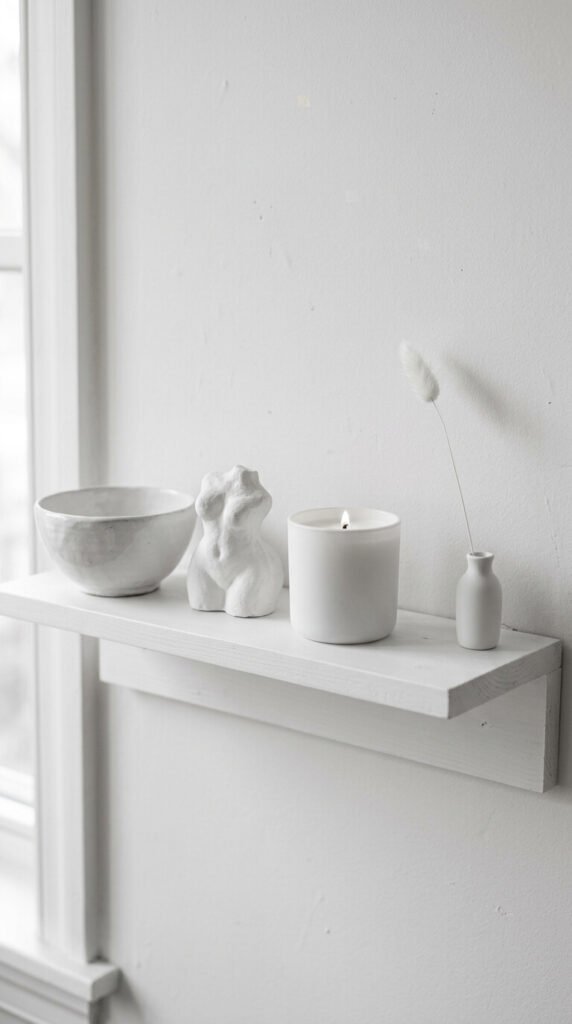
An all-white shelf reads as sculptural rather than plain. Choose objects in the same white or cream family — a matte vase, a plaster object, a white candle, a pale dried stem. The different textures do all the visual work. You do not need expensive pieces. Spray-paint thrifted ceramics in matte white for under $5 and suddenly they look like they belong in a design showroom.
3. Single Statement Plant as the Focal Point
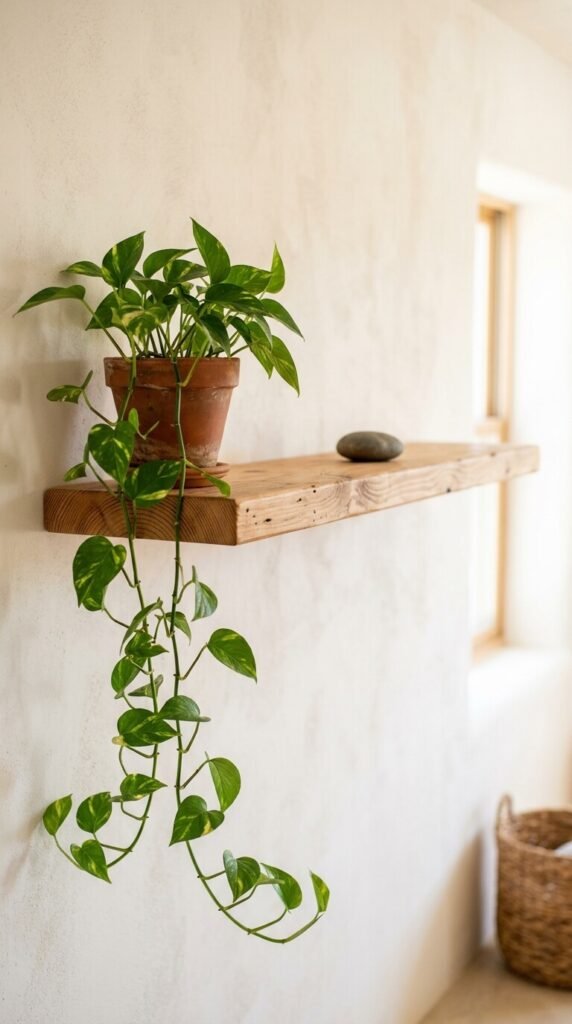
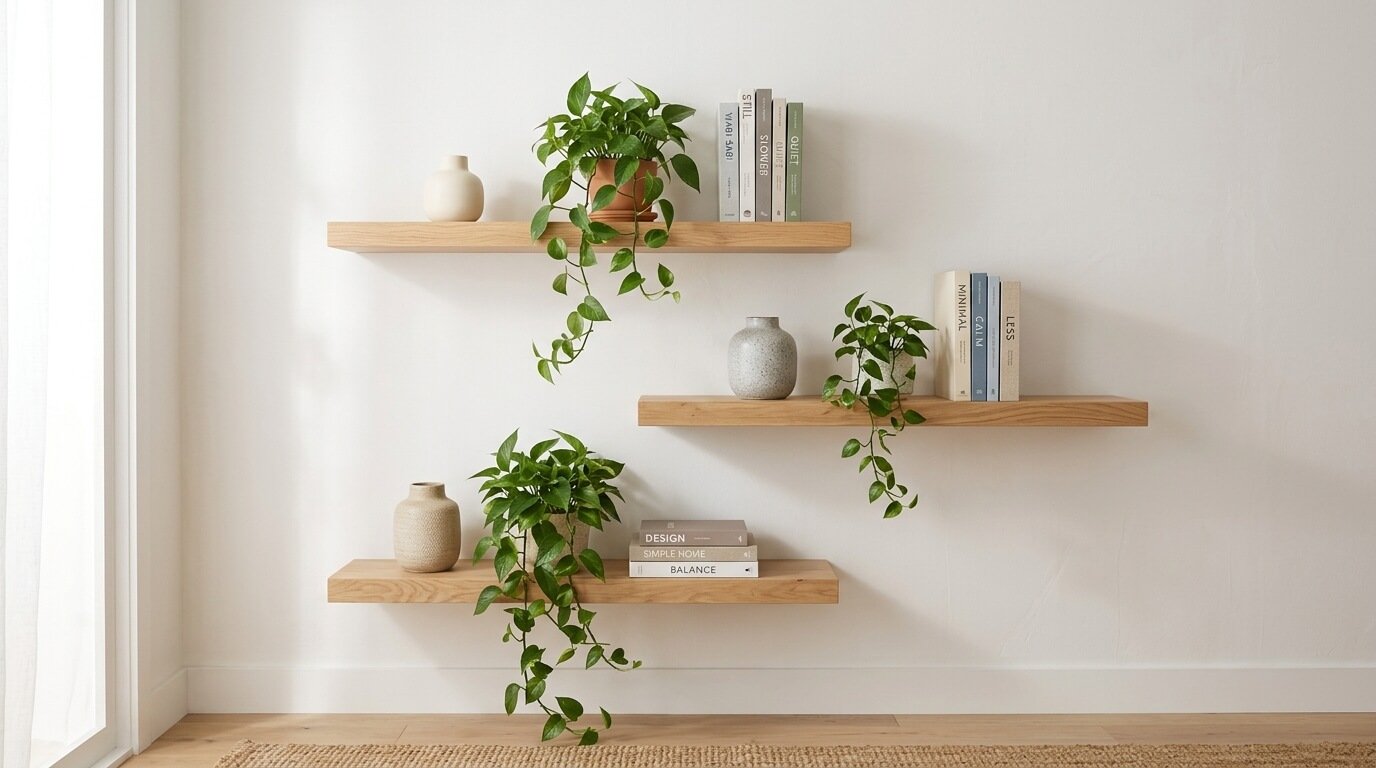
Sometimes one well-chosen plant is all a shelf needs. A trailing plant like a pothos or string of pearls spills over the shelf edge and adds life and movement without clutter. Place it at one end and leave the rest of the shelf mostly open. A small terracotta pot costs about $2. The trailing effect makes the whole wall feel alive. This works especially well on shelves set at eye level where the vines hang freely.
4. Curated Book Stack with a Small Object on Top
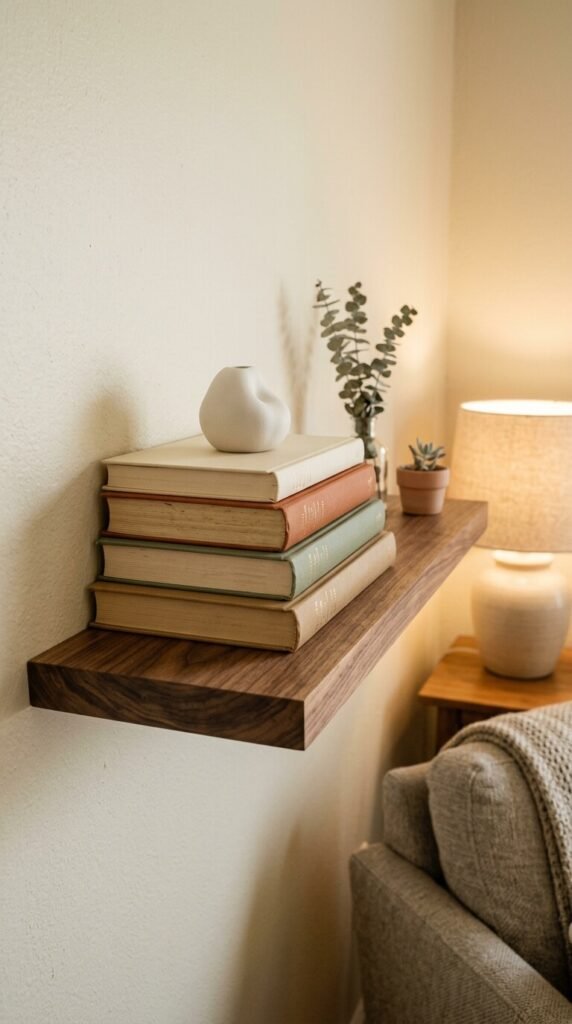
Stacking books horizontally and placing one small object on top is one of the cleanest shelf looks you can create. Remove the dust jackets to expose the cloth or board covers underneath — they tend to come in softer, more cohesive tones. Stack four or five books and sit a small ceramic piece, a smooth stone, or a single candle on top. It takes two minutes and costs nothing if you already own books.
5. Dried Botanicals in a Minimal Vase
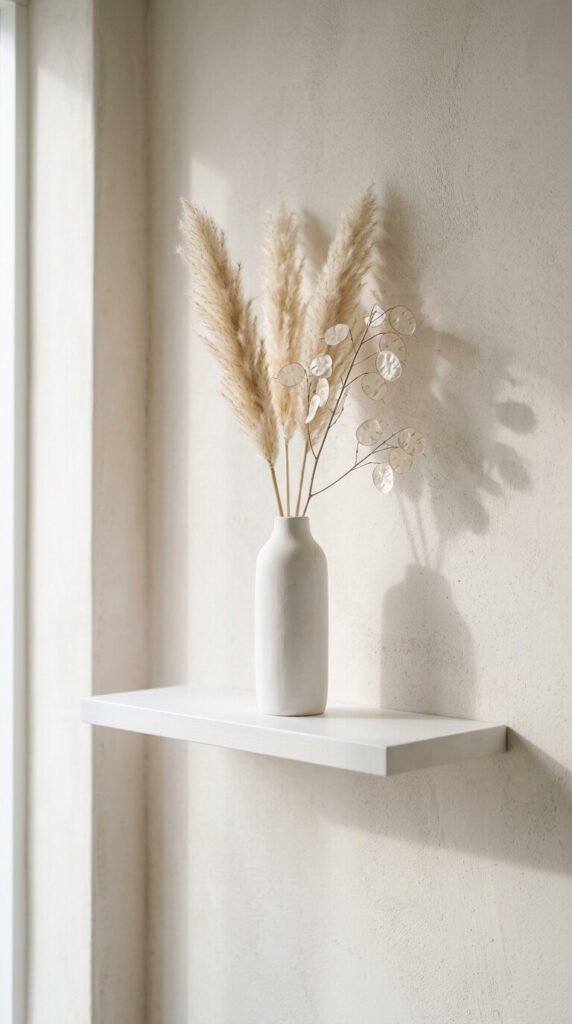
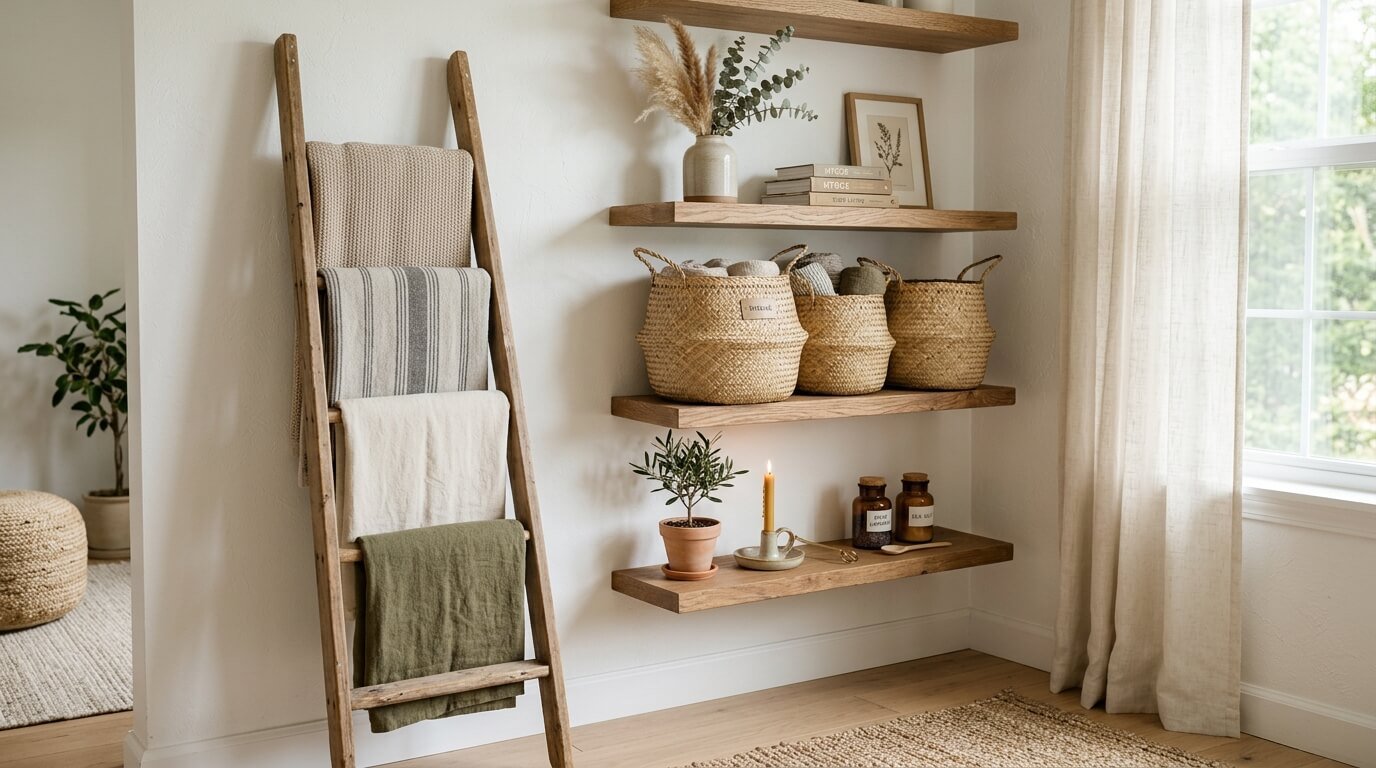
Dried botanicals are low-maintenance, long-lasting, and genuinely beautiful. A single tall vase with pampas grass, dried eucalyptus, or lunaria on an otherwise bare shelf looks intentional and organic. Dried stems last for years and never need watering. You can buy bundles at craft stores or farmers markets for $5–$15, or dry your own garden flowers. The key is using a vase with a narrow neck so the stems cluster naturally without spreading too wide.
6. Arched Mirror Leaning Against the Wall
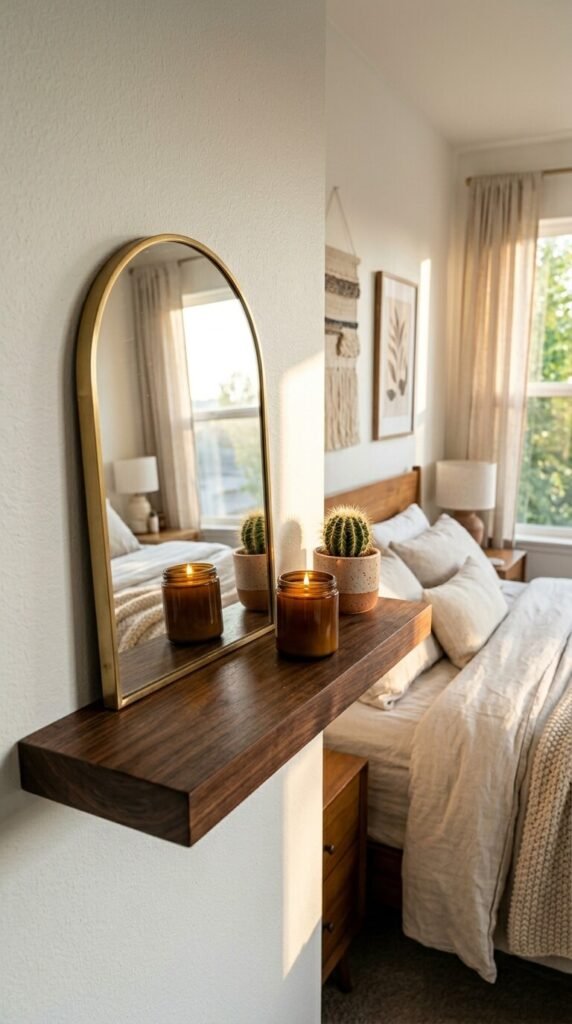
Leaning a small mirror at the back of a floating shelf adds depth and reflects light into the room. An arched or oval mini mirror works best for a minimalist look — it feels curated rather than decorative. You can find small decorative mirrors at discount stores for $10–$20. The reflection makes the shelf feel bigger and adds an element of visual surprise without crowding the display with extra objects.
7. Color-Coordinated Objects in Earthy Tones
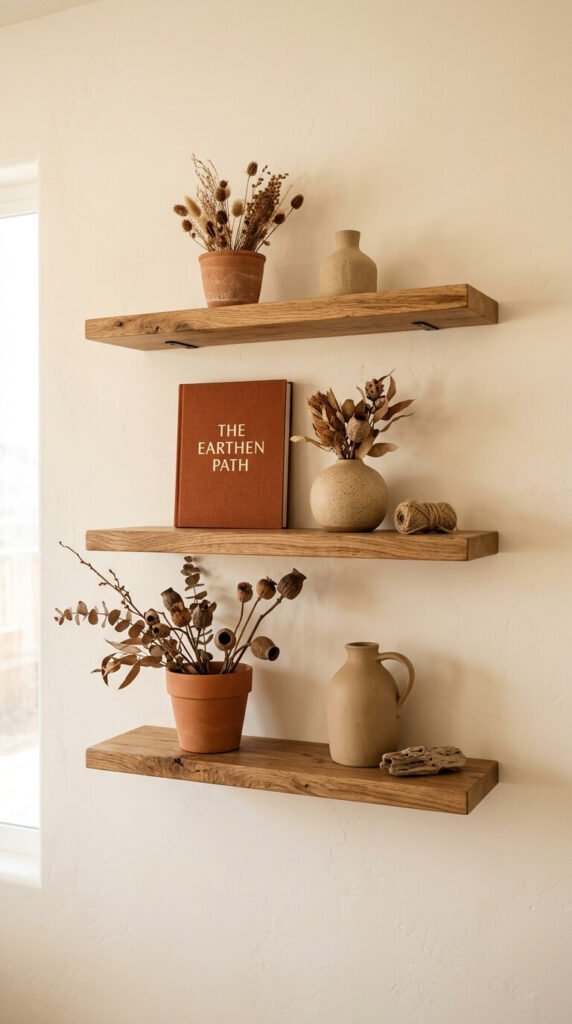
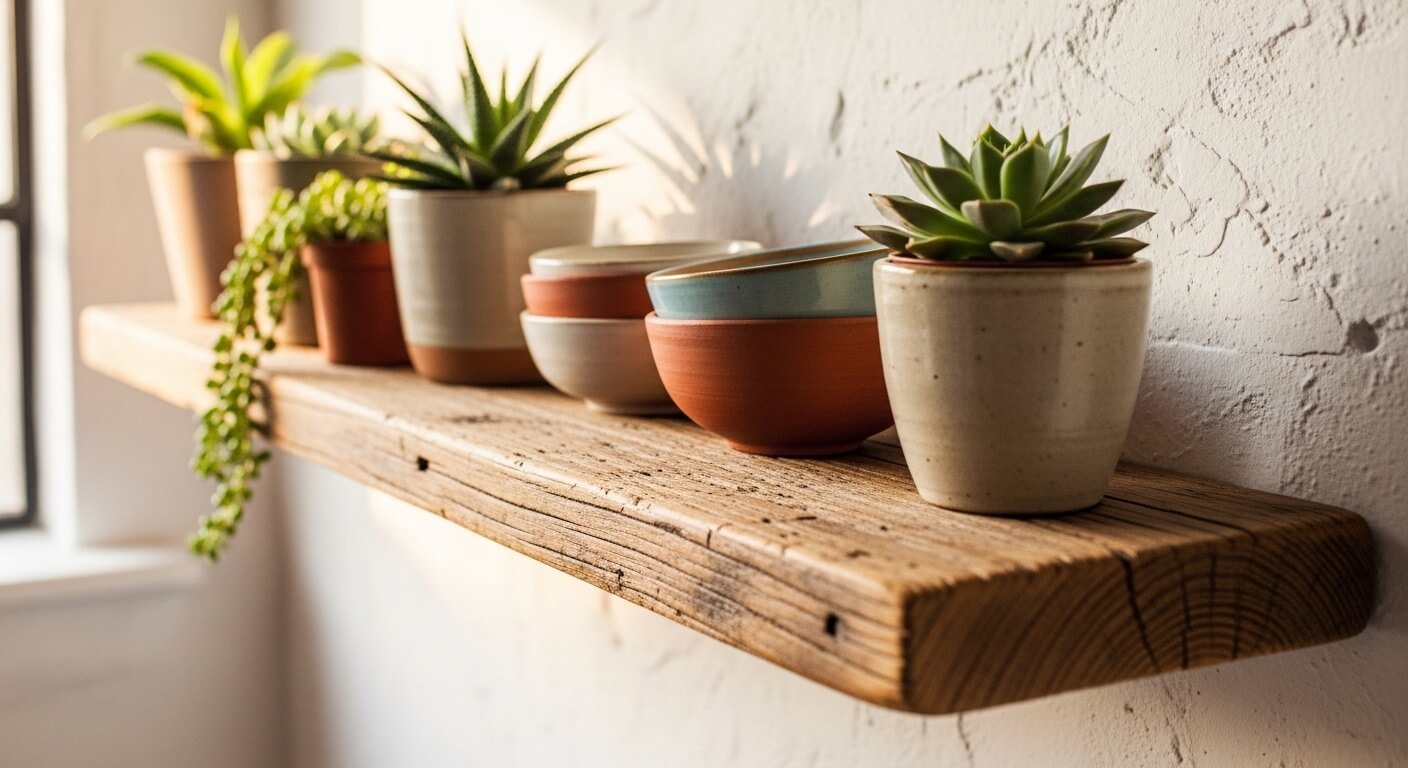
Choosing objects in the same color family pulls a shelf display together instantly. Stick to earthy tones — terracotta, sand, warm brown, soft rust — and the shelf feels curated even if the objects are completely mismatched in style. Mix textures freely: matte ceramics next to rough dried pods next to smooth stone. The color harmony does the cohesion work. Shop your own home first before buying anything new.
8. One Shelf, One Purpose: The Reading Nook Shelf
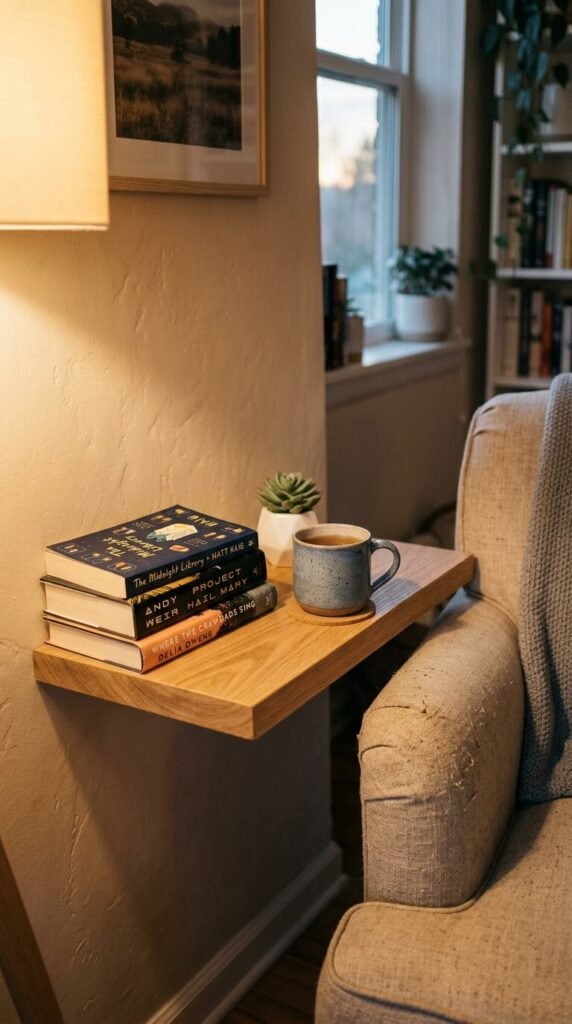
Giving a shelf one clear purpose makes it look deliberate. A shelf beside a reading chair can hold your current books, a tea mug, and one small plant — nothing more. That constraint is what makes it look effortless. It also stays tidy because everything on it has a clear reason for being there. Mount it at arm height from your chair so it functions as a side table replacement without taking up floor space.
9. Staggered Shelves at Different Heights
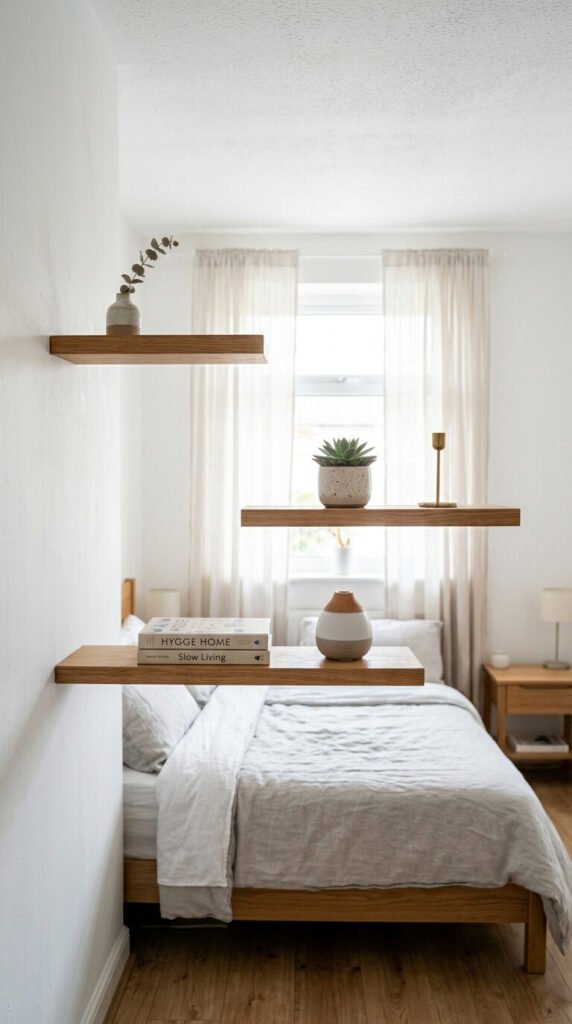
Instead of mounting shelves in a straight row, stagger them at different heights and horizontal positions. This creates a dynamic wall arrangement that looks gallery-like. Each shelf gets one or two objects maximum. The asymmetry feels considered and modern without requiring expensive art or many items. Use a level when installing each shelf so they look intentional rather than accidental. Plan your arrangement on the floor first before drilling.
10. Negative Space as a Design Choice
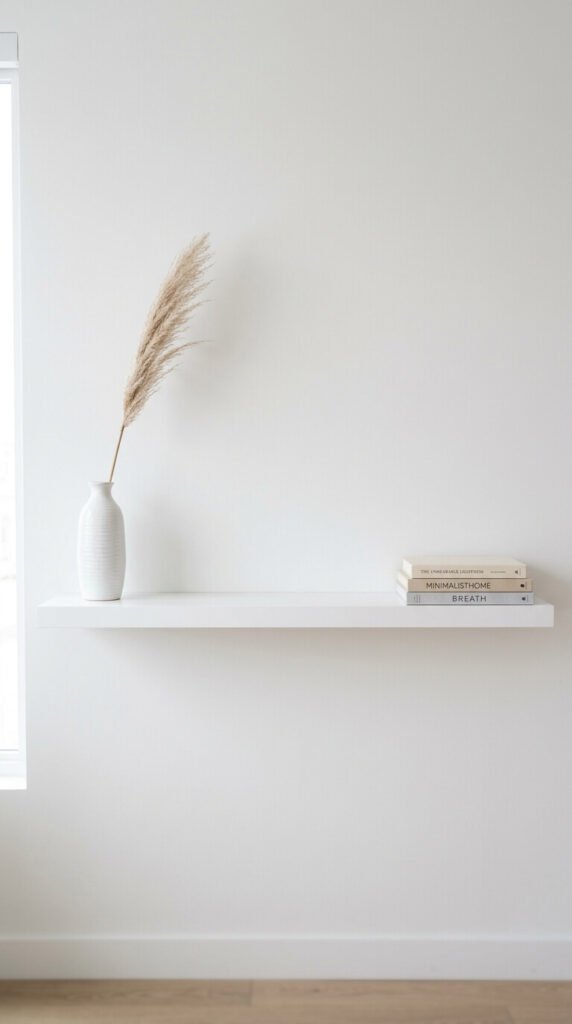
Most people overcrowd their shelves. Leaving a wide stretch of empty shelf space between two objects is a legitimate design choice — not laziness. The empty space gives your eye a place to rest and makes the objects you do display feel more important. Try placing one item on each end of a long shelf with nothing in the middle. It looks surprisingly finished and takes real confidence to leave alone.
11. Small Framed Art Leaning on the Shelf
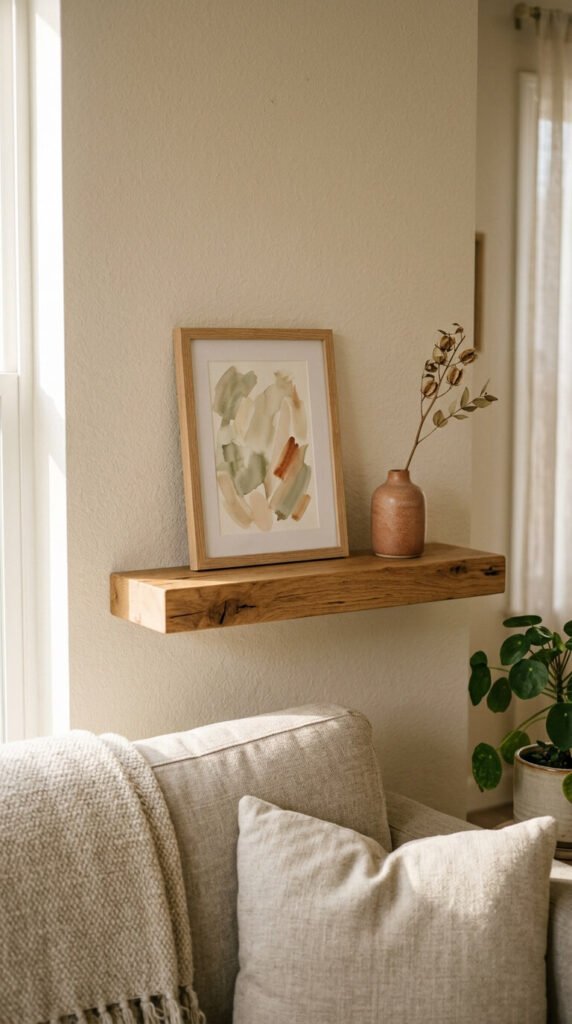
Leaning a small framed print against the wall on a shelf looks relaxed and gallery-inspired. Choose artwork with a muted palette so it works with the shelf objects rather than competing with them. A 5×7 or 4×6 frame keeps the scale right for most shelf depths. You can print free public domain art at home, frame it with a $3 frame, and have a shelf-worthy piece of art for almost nothing.
12. Sculptural Object as the Hero Piece
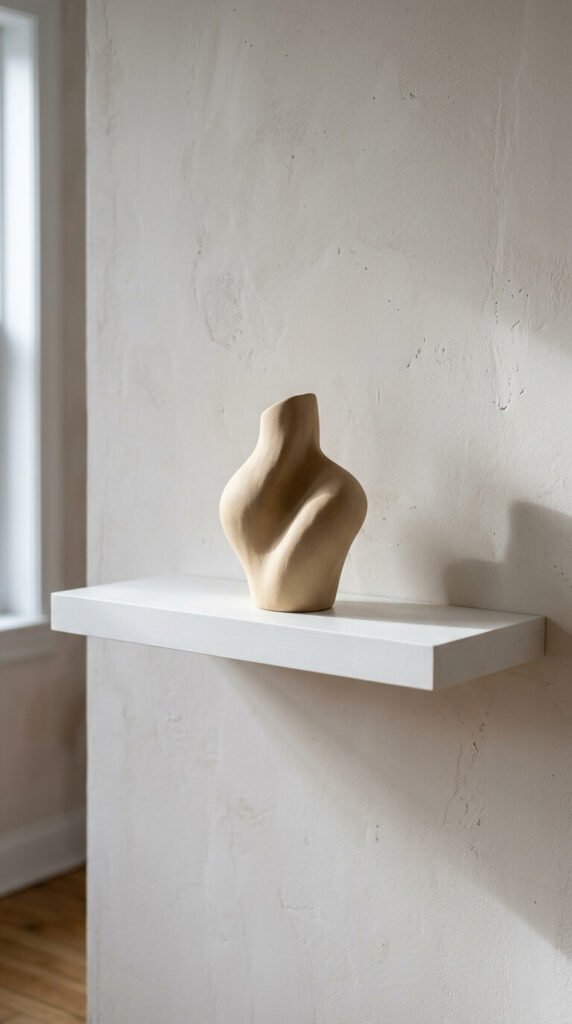
One sculptural object on an otherwise empty shelf is a statement. It only works if the object itself is interesting — an abstract ceramic, a hand-carved wooden form, a stone sphere, or a woven object with real texture. Place it slightly off-center and leave everything else bare. Thrift stores often have sculptural ceramic pieces that look far more expensive once isolated and given space to breathe. The shelf becomes a pedestal.
13. Plants Only: A Living Green Shelf
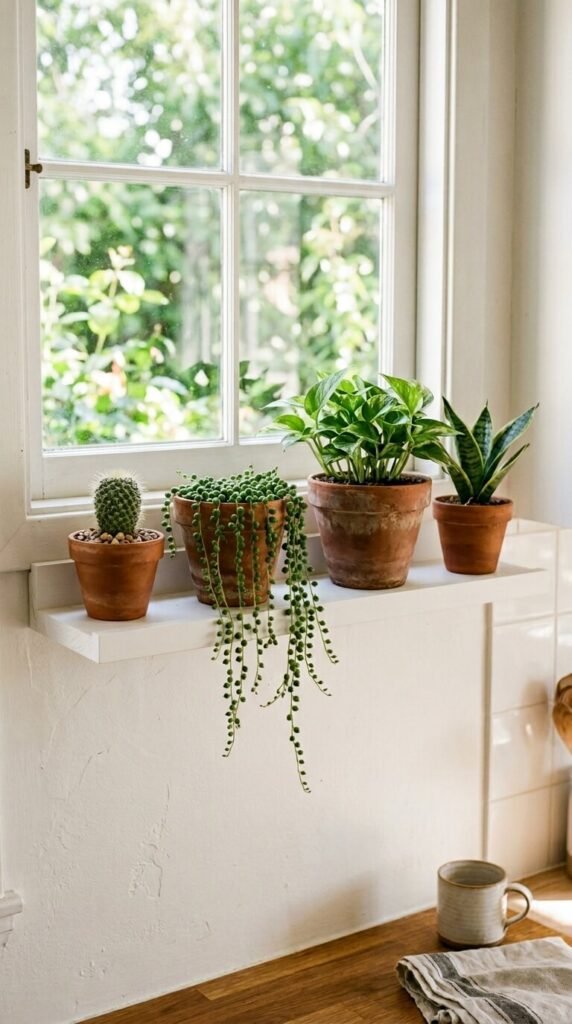
Committing to plants only on a shelf creates something that looks alive and cohesive. Mix plant types by texture and height — a spiky cactus, a round succulent, a trailing plant, and an upright snake plant give you variety without chaos. Keep all the pots in the same material (terracotta is ideal) so they read as a collection. A shelf of four small plants costs under $20 to put together and looks better every week as they grow.
14. Candle Grouping with Varied Heights
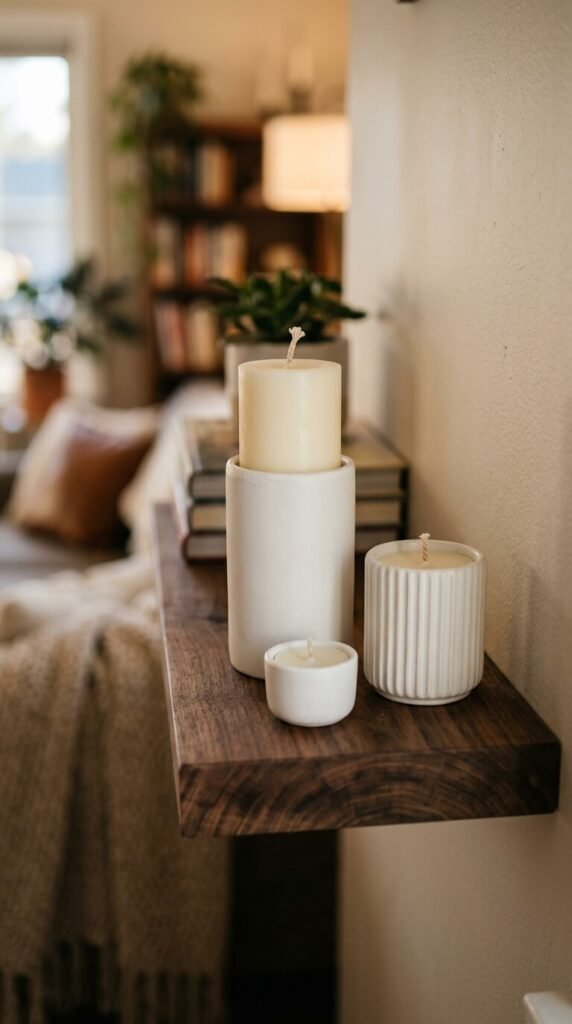
A grouping of candles in similar tones but different heights creates a warm, atmospheric shelf display. Use unscented candles in neutral wax colors — ivory, cream, or matte black — so the visual focus stays on the shapes. Cluster three candles close together at one end of the shelf. Add nothing else. This works in living rooms, bedrooms, and bathrooms equally well. Basic candle holders from discount stores cost $3–$8 each.
15. Vintage Object with Modern Shelf
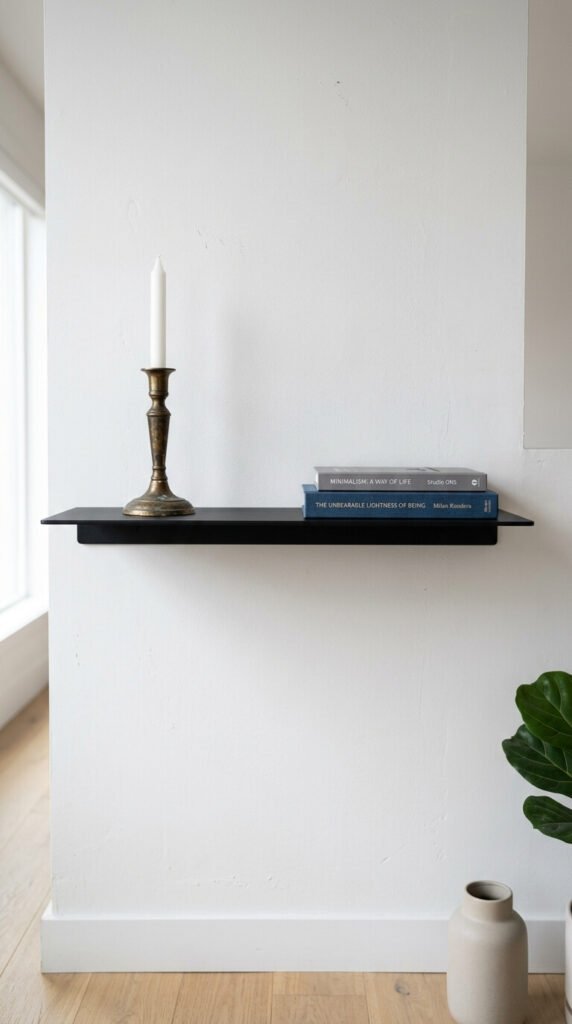
Pairing one vintage object with a modern shelf creates contrast that feels curated. The key is using just one vintage piece so it reads as a deliberate choice, not a thrift store haul. A brass candlestick, an old ceramic pot, or a small antique clock works well. The contrast between the clean shelf and the aged object gives the display character. Check estate sales and secondhand shops — interesting objects rarely cost more than $5–$10.
16. Corner Floating Shelf with a Single Plant
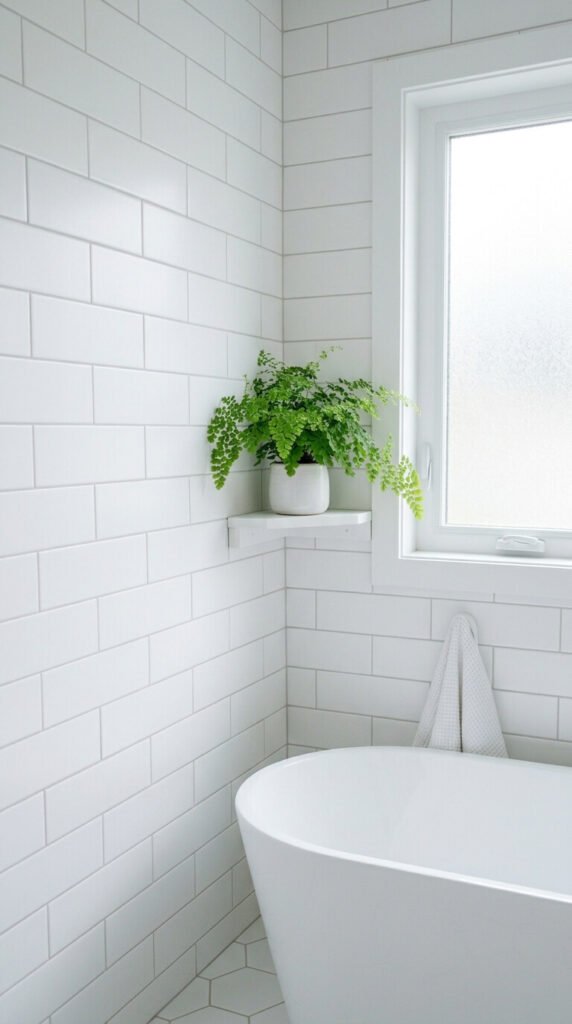
Corner shelves solve two problems at once — they use dead space and give you a home for a plant or small display. A single triangular corner shelf with one trailing or compact plant looks built-in and intentional. These shelves are inexpensive (often $15–$25) and easy to install. In a bathroom, a small fern or air plant thrives with the humidity. In a bedroom corner, a trailing pothos creates a soft, living architectural detail.
17. Earth-Toned Ceramics Collection
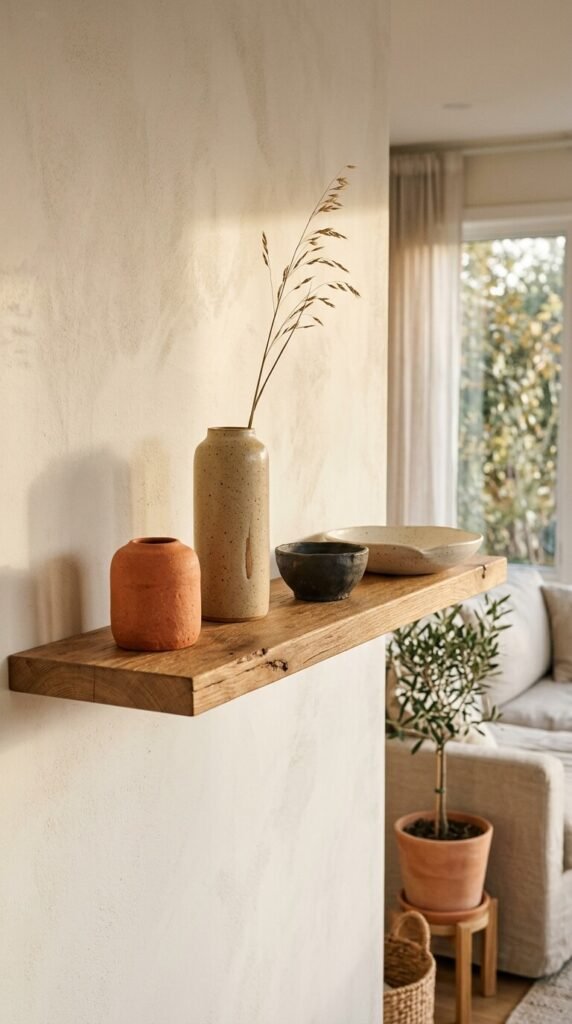
Collecting ceramics in earthy tones is one of the most satisfying and affordable ways to build a shelf display over time. You do not need a matching set. Mix shapes freely — a squat vessel, a tall cylinder, a low bowl — as long as the tones stay in the same warm earth family. Pick pieces up one at a time from thrift stores, pottery studios, or markets. The imperfect, handmade quality is what makes the display feel real.
18. Shelf Styling with a Single Trailing Vine
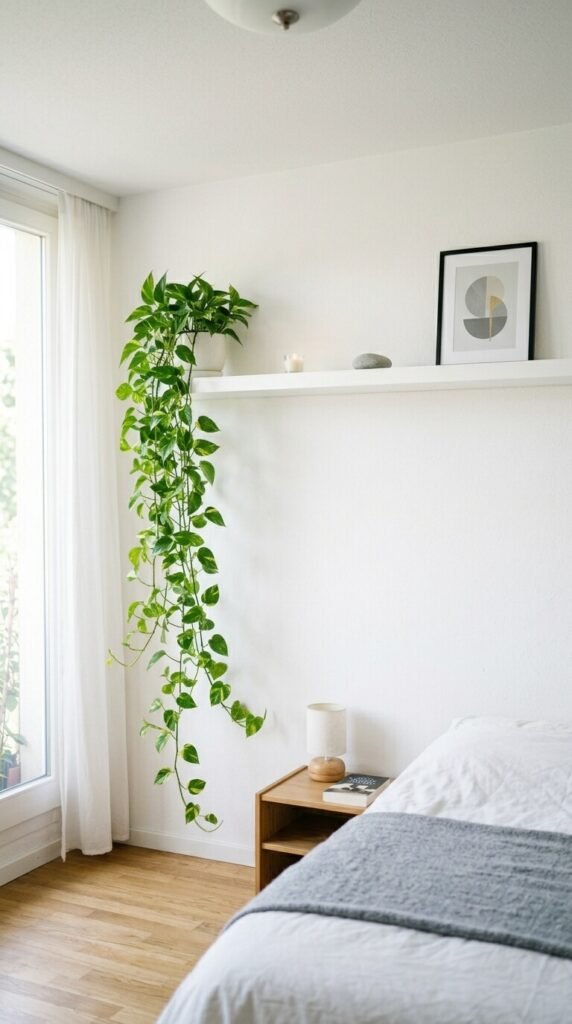
A long trailing vine changes the relationship between your shelf and your wall. Let the vine grow down the wall below the shelf rather than keeping it contained on top. The trailing leaves turn the wall itself into part of the display. A golden pothos is the easiest choice — it grows fast, tolerates low light, and a cutting costs almost nothing. Mount the shelf high enough so the trailing vines have room to move.
19. Minimal Shelf Above the Desk
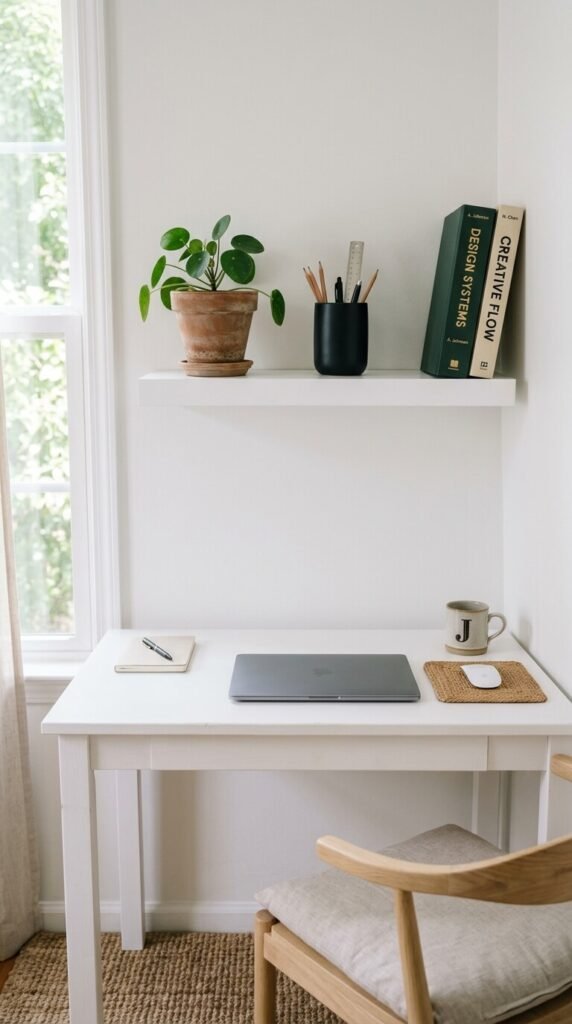
A shelf above your desk turns empty wall space into a functional display. Keep it to three items maximum — one plant, one functional piece like a pen holder, and one or two books. This keeps it usable without creating visual noise while you work. The shelf also prevents the desk surface from accumulating everything that would otherwise pile up there. Mount it high enough that you can work comfortably without bumping into it.
20. Repeating the Same Object in Different Sizes
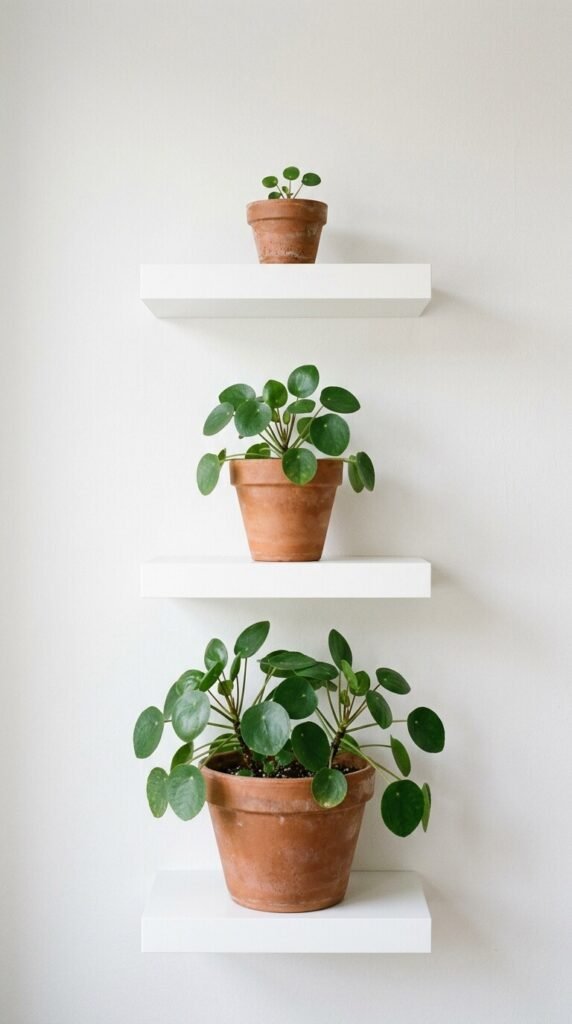
Repeating one object in graduated sizes creates a calm, graphic shelf display. Three of the same thing — pots, vases, stones — in small, medium, and large reads as an intentional collection. Place one on each of three vertically stacked shelves for a very clean, considered look. This works beautifully with terracotta pots, wooden spheres, or simple ceramic bottles. The repetition is the design — you do not need variety to make it interesting.
21. Shelf with a Small Framed Photo
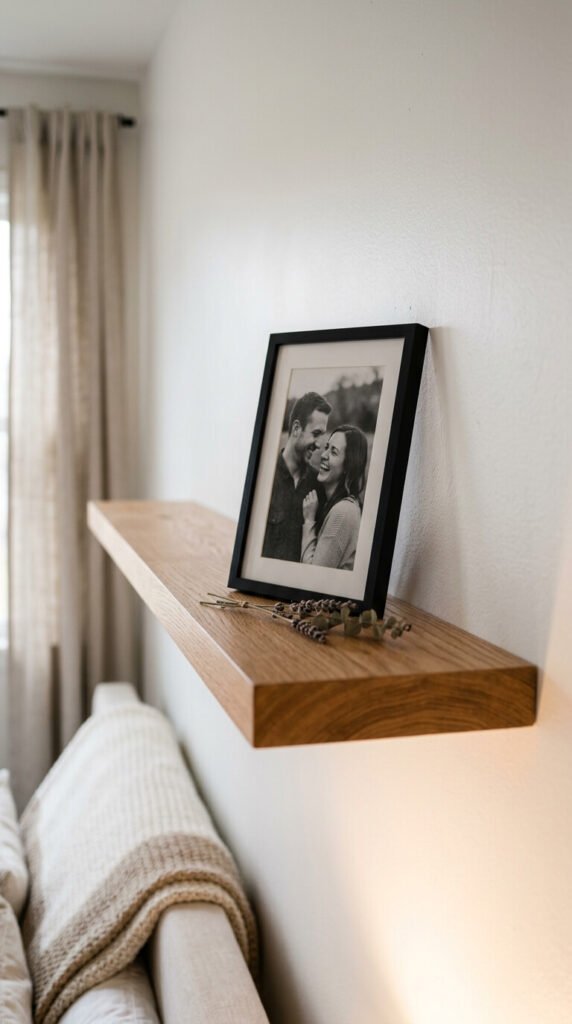
A small personal photograph on a shelf makes the whole display feel human. Use a 4×6 or 5×7 print in a thin simple frame and lean it rather than hanging it. Place one small dried flower or smooth pebble in front of it and leave the rest of the shelf bare. The display is personal without being sentimental clutter. Black and white prints tend to work best for minimalist shelves because they stay tonally calm regardless of the subject.
22. Shelf as a Scent Station
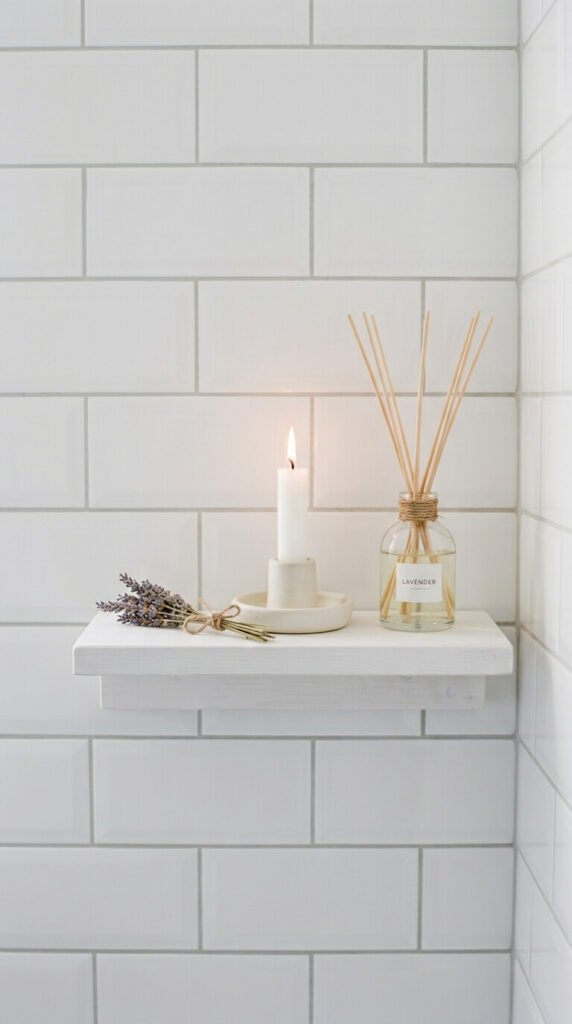
Dedicating one shelf entirely to scent creates a spa-like corner anywhere in your home. A reed diffuser, a candle, and a dried herb bundle is all you need. Choose objects in the same neutral tone so the shelf looks cohesive. This works especially well in a bathroom or bedroom. You can refill reed diffusers, swap out candles, and change the dried herbs seasonally. The whole setup costs under $25 to put together from scratch.
23. Shelf Styled with Only Natural Materials
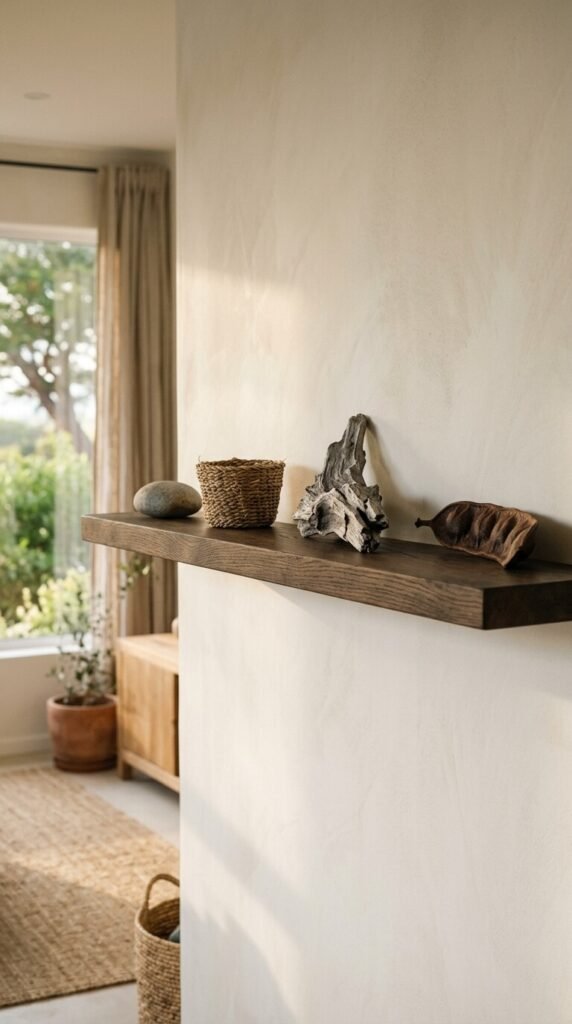
Limiting your shelf to only natural materials creates a display that feels grounded and organic. Wood, stone, dried botanicals, and woven fibers all work together effortlessly because they share the same earthy origin. You do not need to buy anything — a smooth stone from a walk, a piece of driftwood, a dried seed pod from the garden, and a small woven item you already own can make a complete display. It costs nothing and looks completely considered.
24. High Shelf for Overflow Books
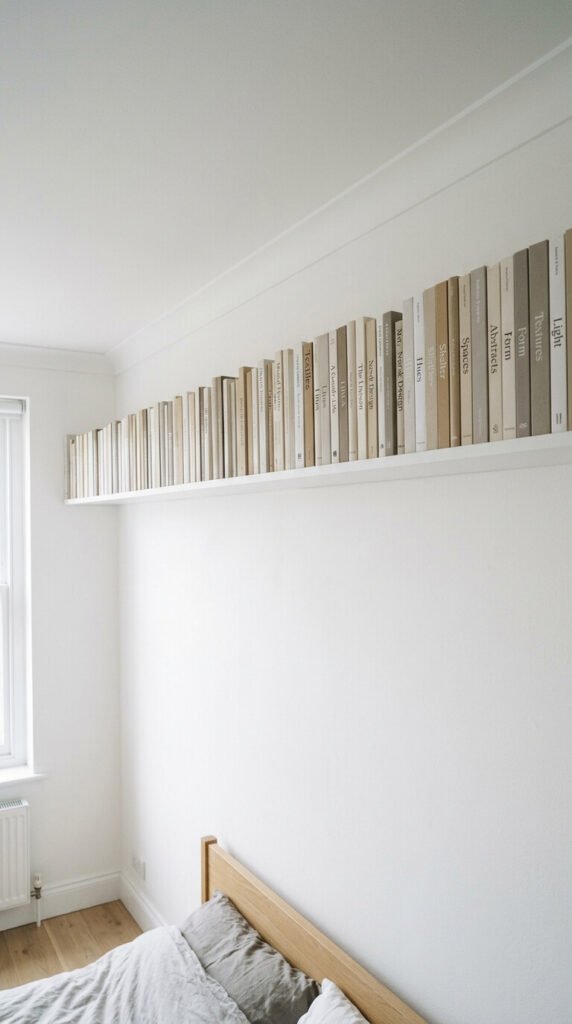
Mounting a long shelf high on the wall near the ceiling and filling it with books creates an architectural feature. Face the spines outward and arrange books by color — cream, tan, grey, and white tones work best for a minimalist look. The shelf disappears visually and the books become a textured border around the room. This is a great solution for overflow books that do not fit on lower shelves, and it draws the eye upward to make the room feel taller.
25. Paired Shelves Framing a Light Switch or Outlet
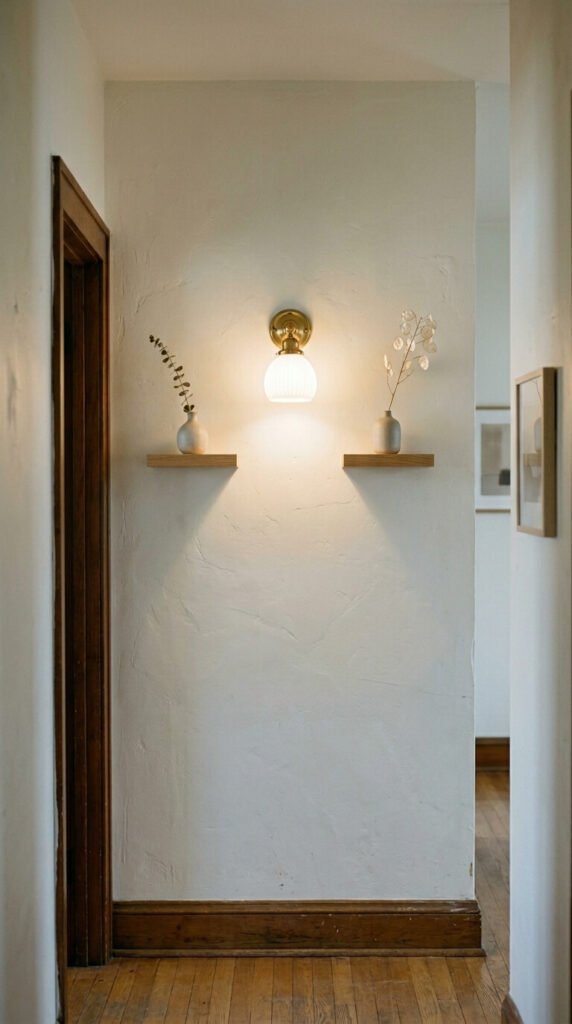
Mounting two small shelves symmetrically on either side of a sconce or wall light creates a built-in looking feature. Each shelf holds one identical or complementary object — a bud vase, a small plant, a candle — and the light between them acts as the focal point. This works in hallways, above beds, or flanking a fireplace. The symmetry reads as intentional architecture rather than added shelving. Keep the objects identical on both sides for the cleanest result.
26. Shelf as a Seasonal Display
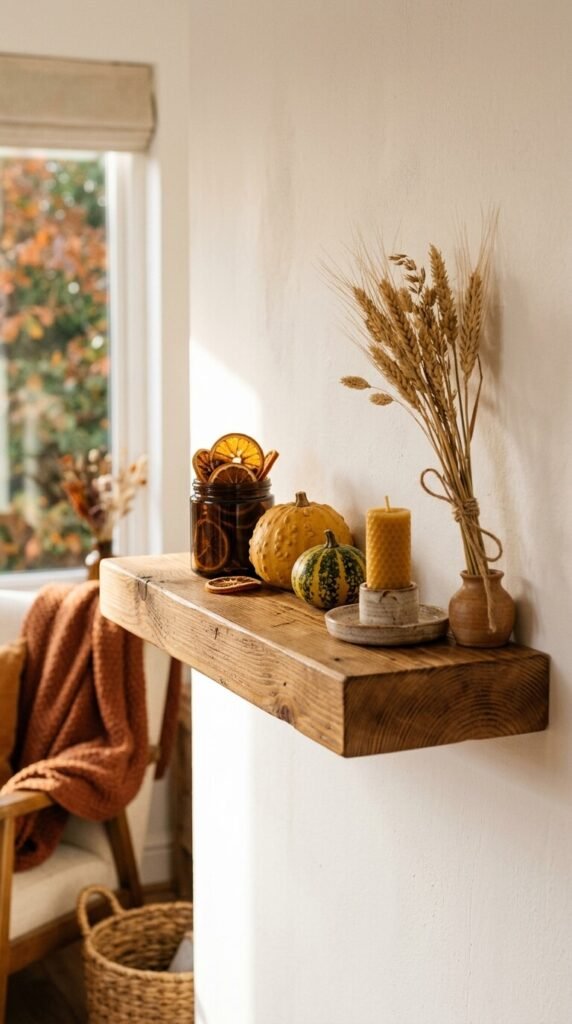
Treating one shelf as a rotating seasonal display gives you a reason to style it regularly without the pressure to make it permanent. Swap in seasonal objects four times a year — dried citrus and pinecones in winter, fresh branches in spring, shells in summer, gourds and dried grasses in autumn. Most seasonal items cost very little at farmers markets or can be collected on walks. The display always looks current and personal, and it never has time to go stale.
Conclusion
A great floating shelf display does not require expensive objects, a design background, or hours of arranging. It requires restraint. The shelves that look most effortless are the ones where someone made a decision to stop adding things. Start with one shelf. Pick three objects with different heights, limit yourself to one color family, and leave more space than feels comfortable. Then walk away. You will likely find it looks better than anything you have tried before. Once that one shelf feels right, the next one comes naturally.