26 Bold Maximalist Decor Layers That Embrace More-Is-More


Disclosure: As an Amazon Associate we earn from qualifying purchases. Some links on this page may be affiliate links — if you click through and make a purchase, we may receive a small commission at no extra cost to you.
Minimalism tells you to take things away. Maximalism tells you to keep going. More pattern, more color, more texture, more objects that mean something — stacked and layered and displayed with the full confidence of someone who refuses to apologize for having taste. Maximalist decor is not messiness dressed up in a design label. It is a deliberate, considered approach to abundance — rooted in Victorian parlors, Moroccan riads, and the studios of artists who understood that empty walls are wasted walls. The key difference between maximalism and chaos is intention. Every layer you add should be chosen, not accumulated. This guide walks through 26 specific, practical layers you can build into your home — from dark dramatic paint to stacked rugs to ceiling-height bookshelves overflowing with objects — with real prices, DIY tips, and the confidence to go further than you think you should.
1. Paint the Walls Dark and Commit Fully
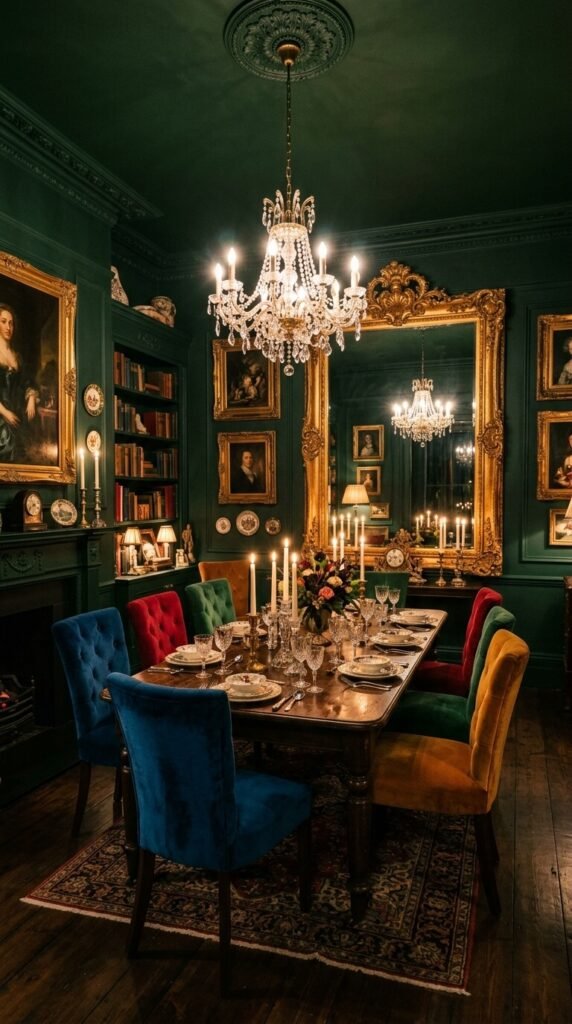
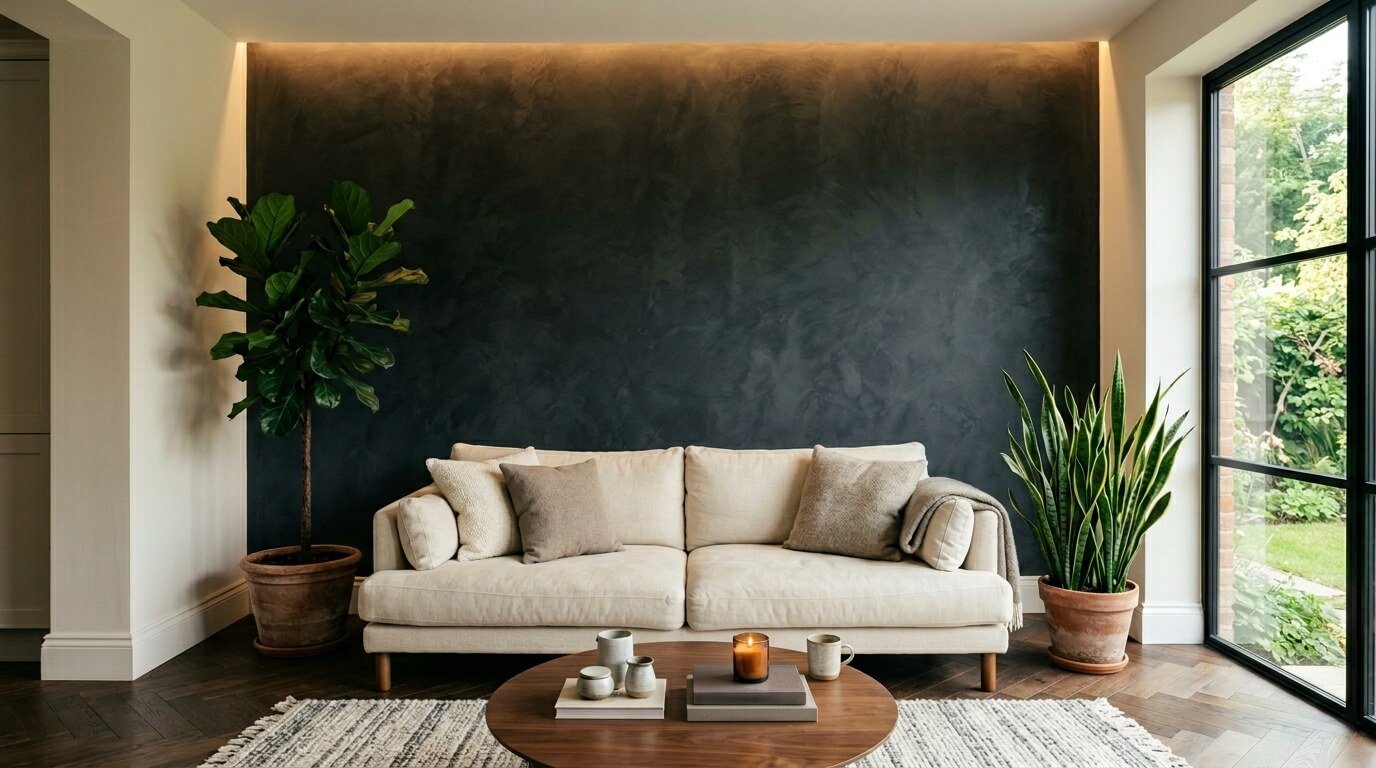
The single fastest move into maximalism is dark paint — on all four walls and the ceiling. Not an accent wall. All of them. Deep forest green, inky navy, oxblood, plum — pick one and go all the way. Dark rooms feel smaller, yes. In maximalism, that is the point. The room becomes a jewel box. Everything inside it glows. Paint costs $40–$60 per gallon. One gallon covers a small room completely. Tint the ceiling the same color as the walls to remove the visual break and make the room feel like a contained, immersive world.
2. Build a Floor-to-Ceiling Gallery Wall
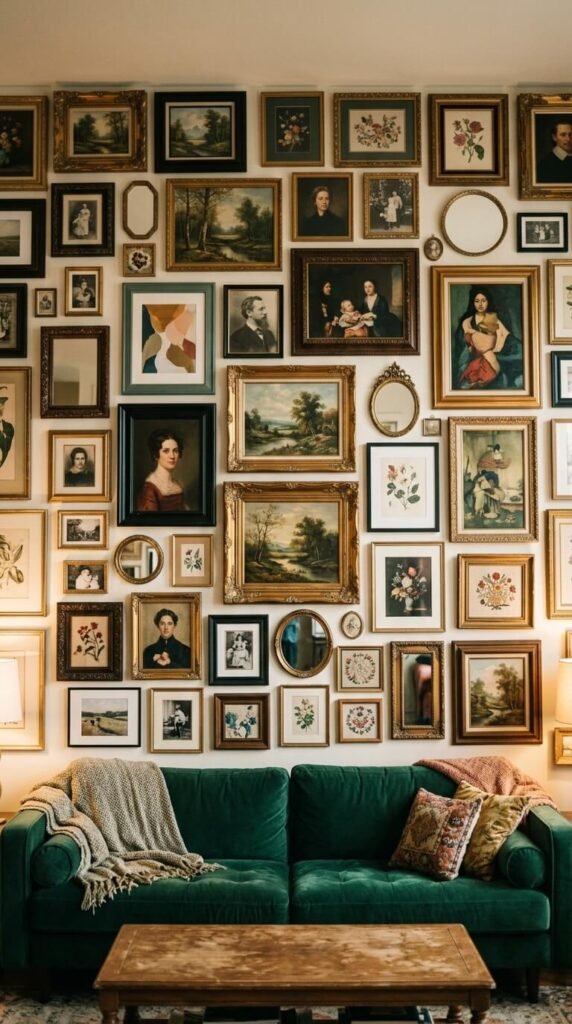
In maximalist design, a gallery wall does not stop at eye level. It goes floor to ceiling, edge to edge, leaving no bare wall visible. Mix frame sizes, styles, and finishes — gilded baroque beside simple black wood, large canvases beside small prints, a textile piece beside an oil painting. No wall should be visible between frames. Source frames at thrift stores for $2–$15 each, print large-scale art from free public domain archives like the Metropolitan Museum collection. A wall of 20–30 frames can cost under $150 when sourced secondhand and filled with downloaded prints.
3. Layer Three Rugs on the Same Floor
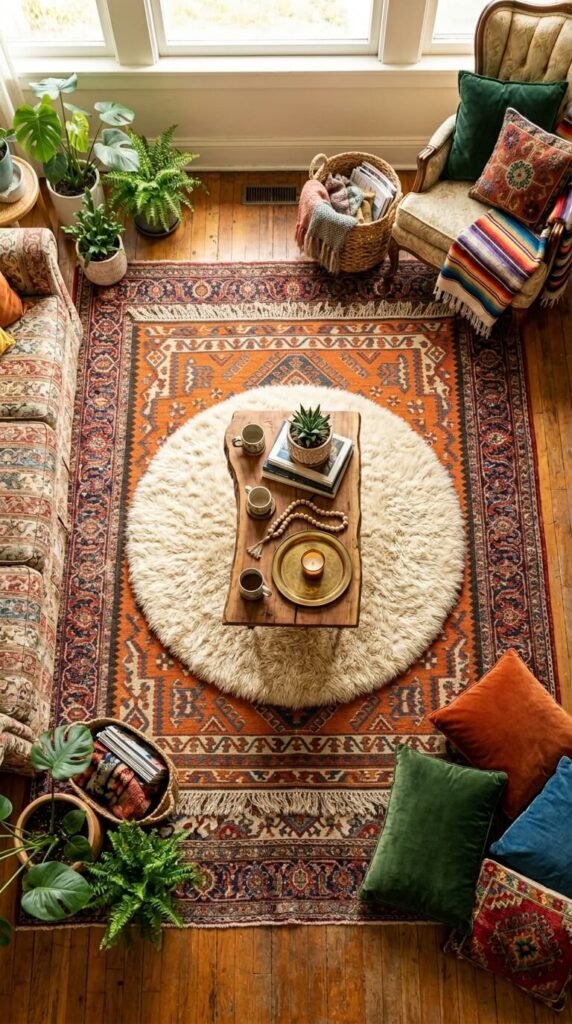
One rug is minimalist. Three rugs layered on the same floor is maximalist. Start with a large flat-weave or low-pile rug as the base. Layer a patterned kilim or Persian rug on top, offset slightly. Add a smaller round sheepskin or Moroccan Beni Ourain on top of that. Each layer should differ in texture, pattern scale, and color family — but share at least one connecting tone. The layering adds warmth, depth, and visual complexity that no single rug can achieve. Vintage kilims start at $80 online. Sheepskins run $30–$60. The layered effect costs far less than one large premium rug.
4. Fill Every Bookshelf to Maximum Capacity
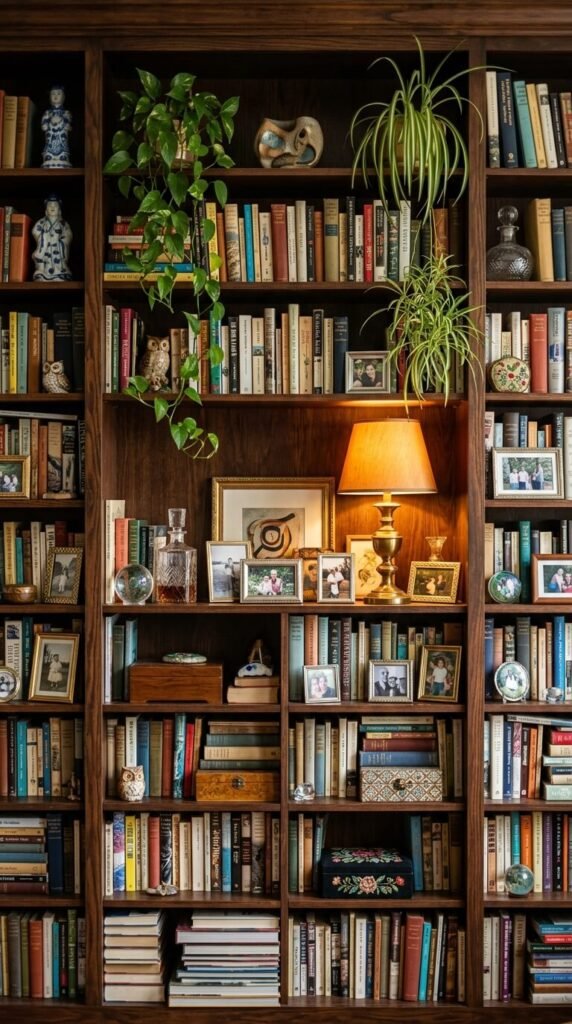
An empty shelf is a missed opportunity. In maximalist design, bookshelves are fully loaded displays — books stacked vertically, some horizontally as platforms for objects, small sculptures wedged between volumes, trailing plants spilling over edges, ceramic pieces and glass objects filling every gap. The rule is density without duplication: vary the height, material, and color of every object on every shelf. Color-coordinate book spines on one shelf, then completely abandon that idea on the next. The visual richness of a fully packed bookshelf is one of the most affordable maximalist statements you can make.
5. Mix Five or More Patterns in One Room
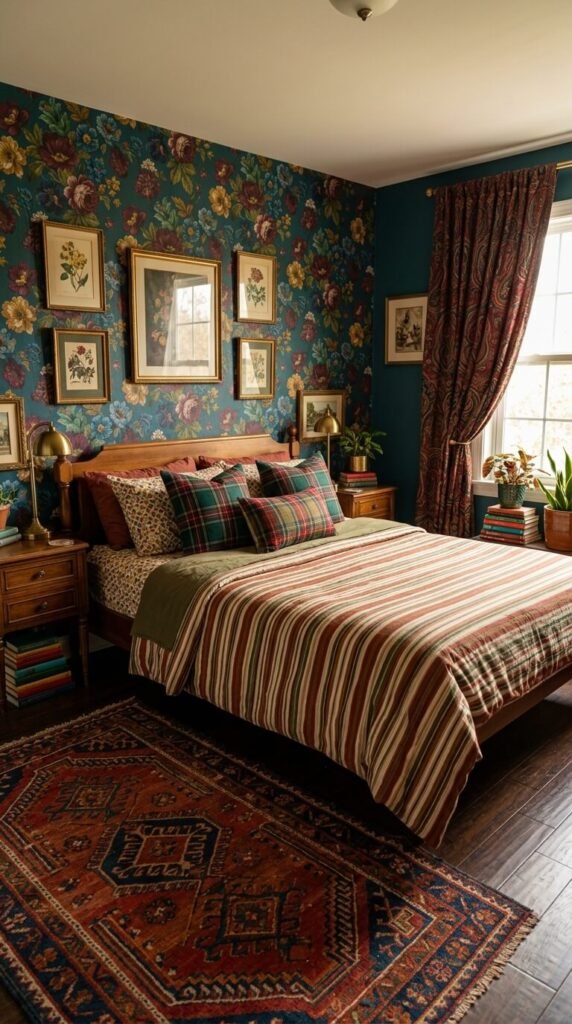
Mixing patterns is the technique that intimidates people most — and it is also the one that defines maximalism most clearly. The rule for making five or more patterns coexist is simple: connect them through color. If everything shares a warm jewel-tone palette — burgundy, gold, teal, burnt orange — you can mix florals, stripes, geometrics, plaids, and paisleys in the same room without visual chaos. Scale matters too: pair a large-scale pattern with a medium and a small. The variety in scale is what stops them from competing. Start with three patterns and add one more each week.
6. Install Wallpaper on the Ceiling
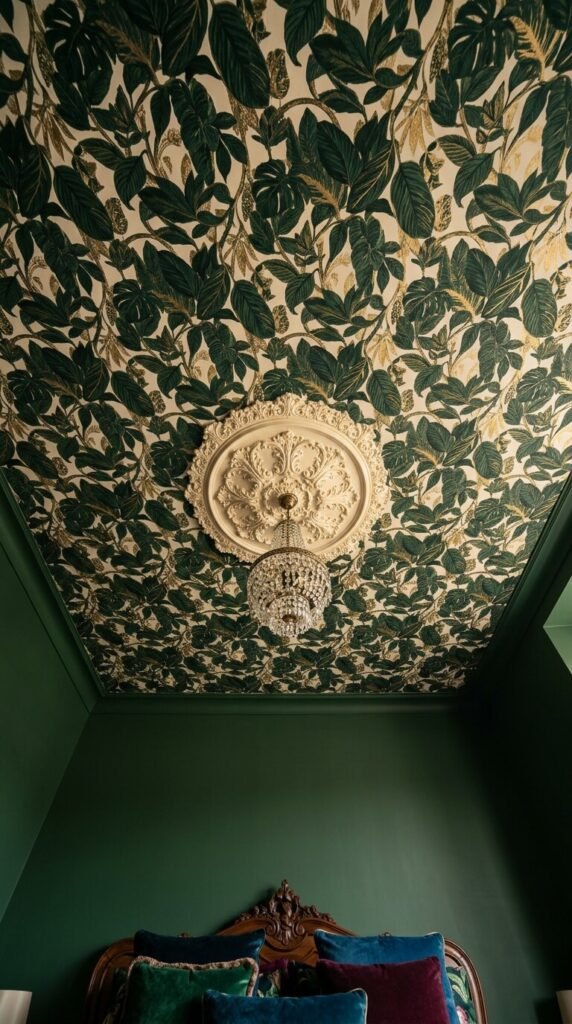
The ceiling is the most overlooked surface in any room — and in maximalism, that is unacceptable. Wallpapering the ceiling with a bold botanical, chinoiserie, or geometric pattern turns it into the fifth wall it always was. The effect is dramatic from the moment you walk in and extraordinary when lying in bed looking up. Peel-and-stick wallpaper makes ceiling application accessible without a professional — it costs $30–$80 for a standard bedroom ceiling. Choose a pattern that connects to at least one color already in the room. Dark botanical prints on a cream or black ground work particularly well overhead.
7. Hang Curtains High, Wide, and in Heavy Fabric
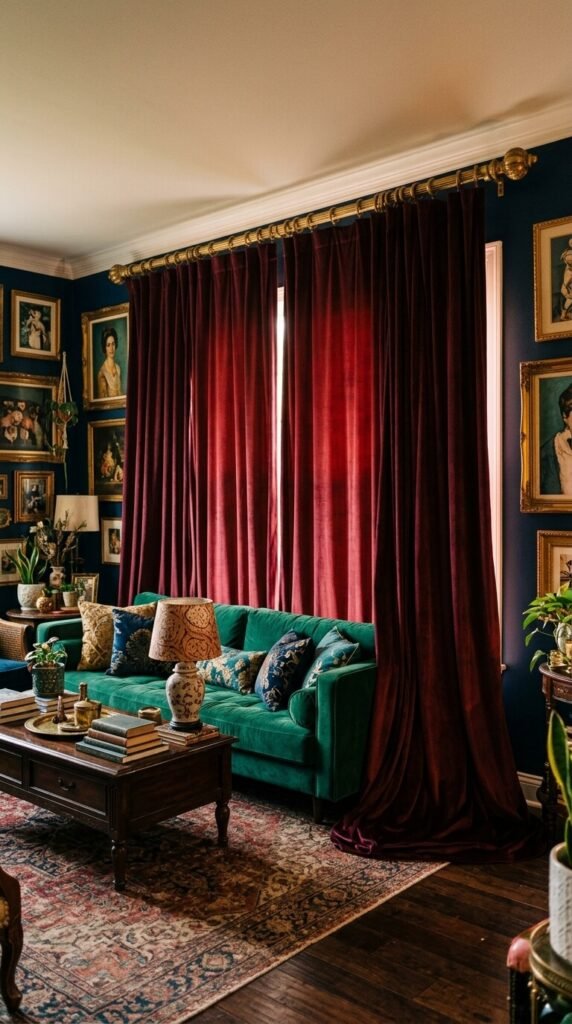
Curtains in maximalist rooms are theatrical, heavy, and deliberately oversized. Mount the rod as close to the ceiling as possible. Extend it 12–18 inches beyond the window frame on each side. Use enough fabric so the panels pool slightly on the floor. The weight of the curtain — velvet, brocade, or heavy linen — is part of the effect. Jewel tones work best: deep burgundy, forest green, inky navy, or burnt gold. Budget option: buy extra-long curtain panels from discount stores ($25–$45 per panel) and hem only if strictly necessary. Let the excess pool. That abundance is the point.
8. Create a Maximalist Mantle Display
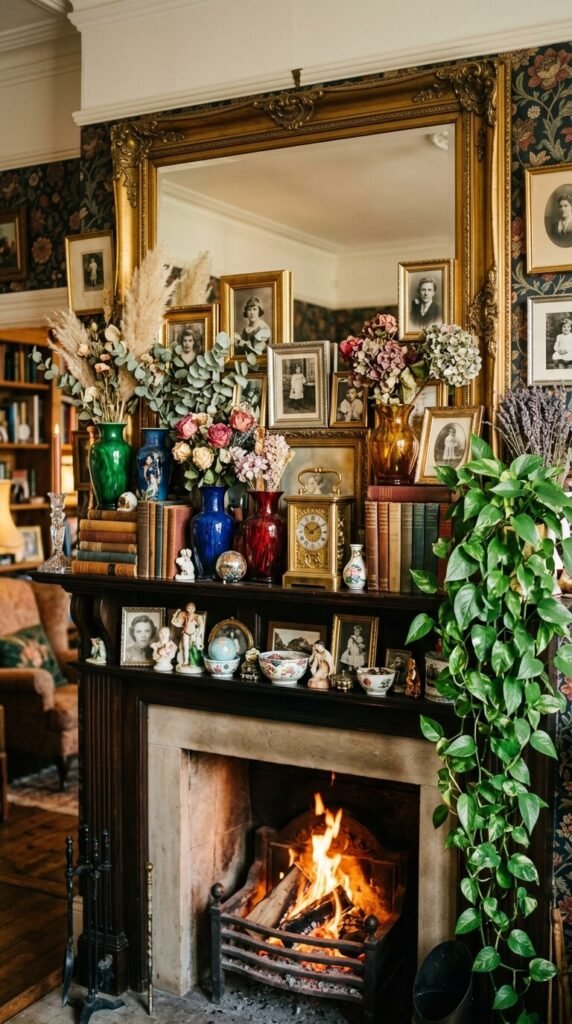
A bare mantle is the maximalist equivalent of a blank canvas — which is to say, an emergency. Cover the entire mantle shelf with layered objects at different heights: a large mirror or framed artwork leaning against the back wall, ceramic vases of varying heights in front, a stack of books as a platform for smaller objects, a brass clock, a trailing plant, dried flowers, and a few candles. The density should feel considered, not dumped. Work in odd numbers and connect objects through one repeating color. Change one or two pieces seasonally to keep it alive.
9. Upholster Walls With Fabric Panels
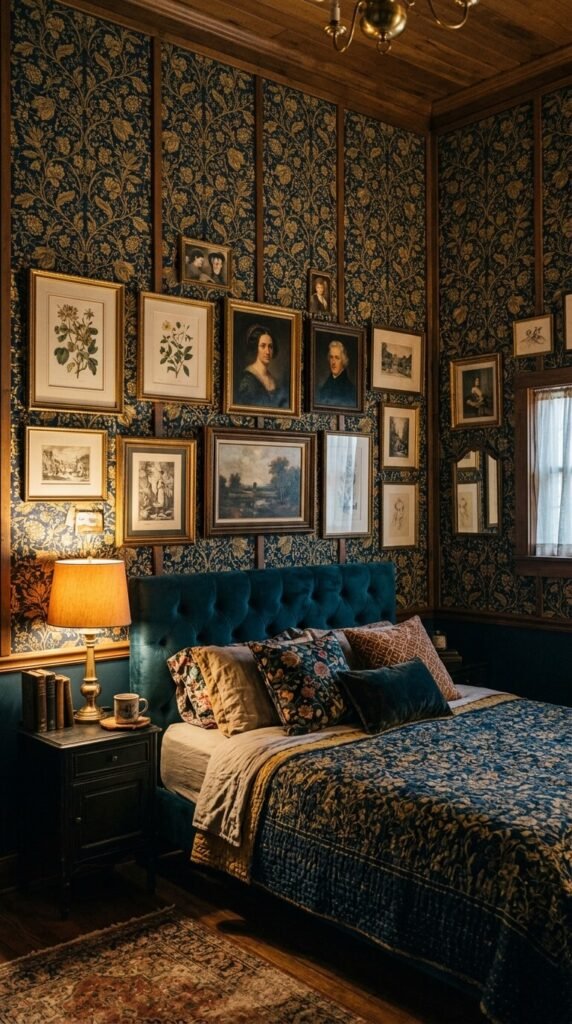
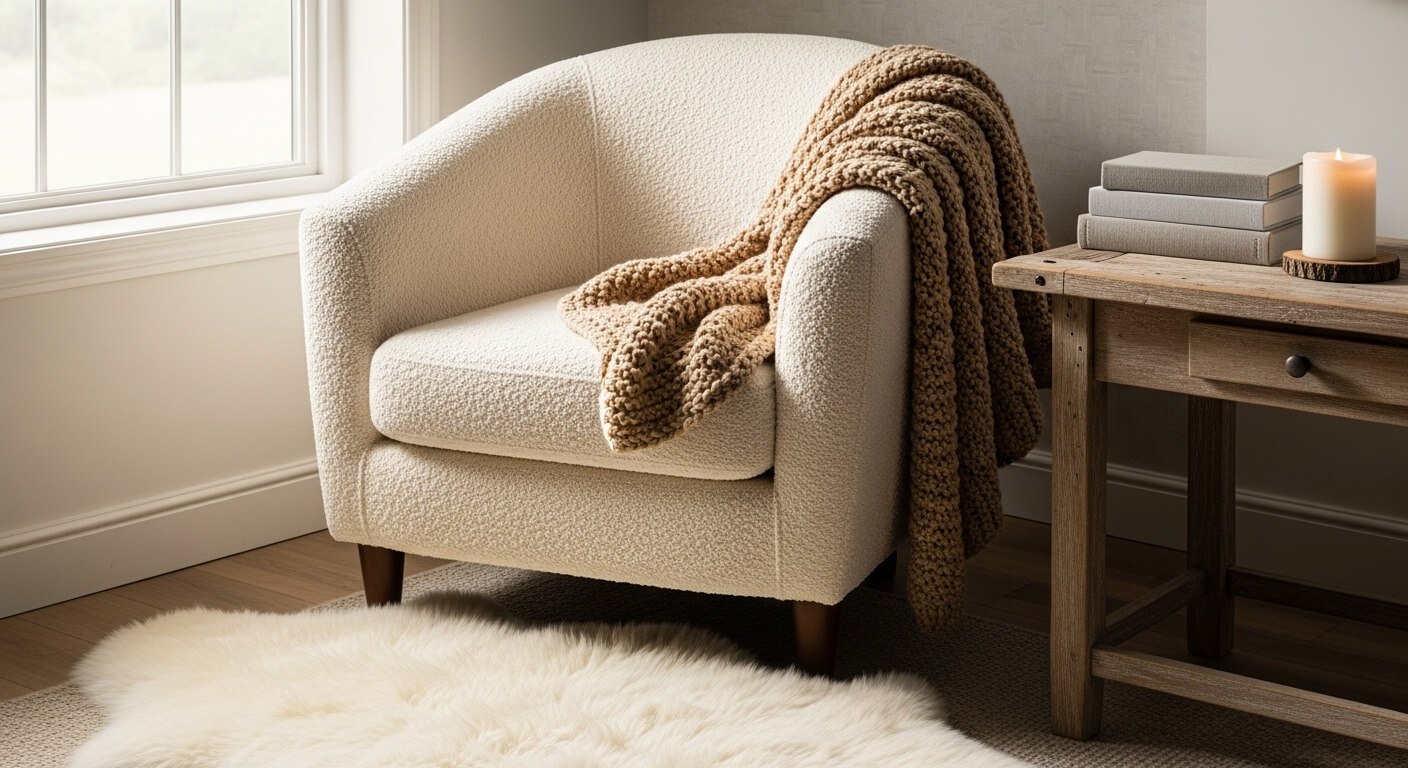
Fabric-upholstered wall panels are a maximalist technique with centuries of history in formal European interiors. The modern DIY version is simple: cut panels of patterned fabric to size, stretch them over thin wooden battens (furring strips from the hardware store, $3–$5 each), and mount the frames on the wall with picture hooks or adhesive strips. Total cost for a bedroom wall: $40–$80 in fabric plus $15 in wood. The result is a wall with texture, pattern, and acoustic warmth that paint cannot replicate. Hang framed art directly over the fabric panels for a full maximalist layer.
10. Stack and Display Ceramics as a Collection
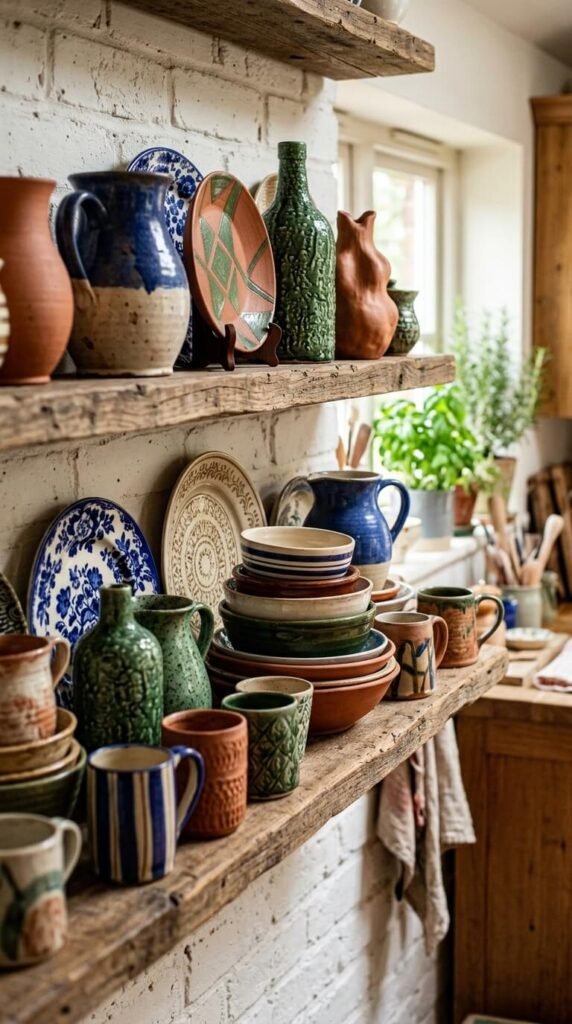
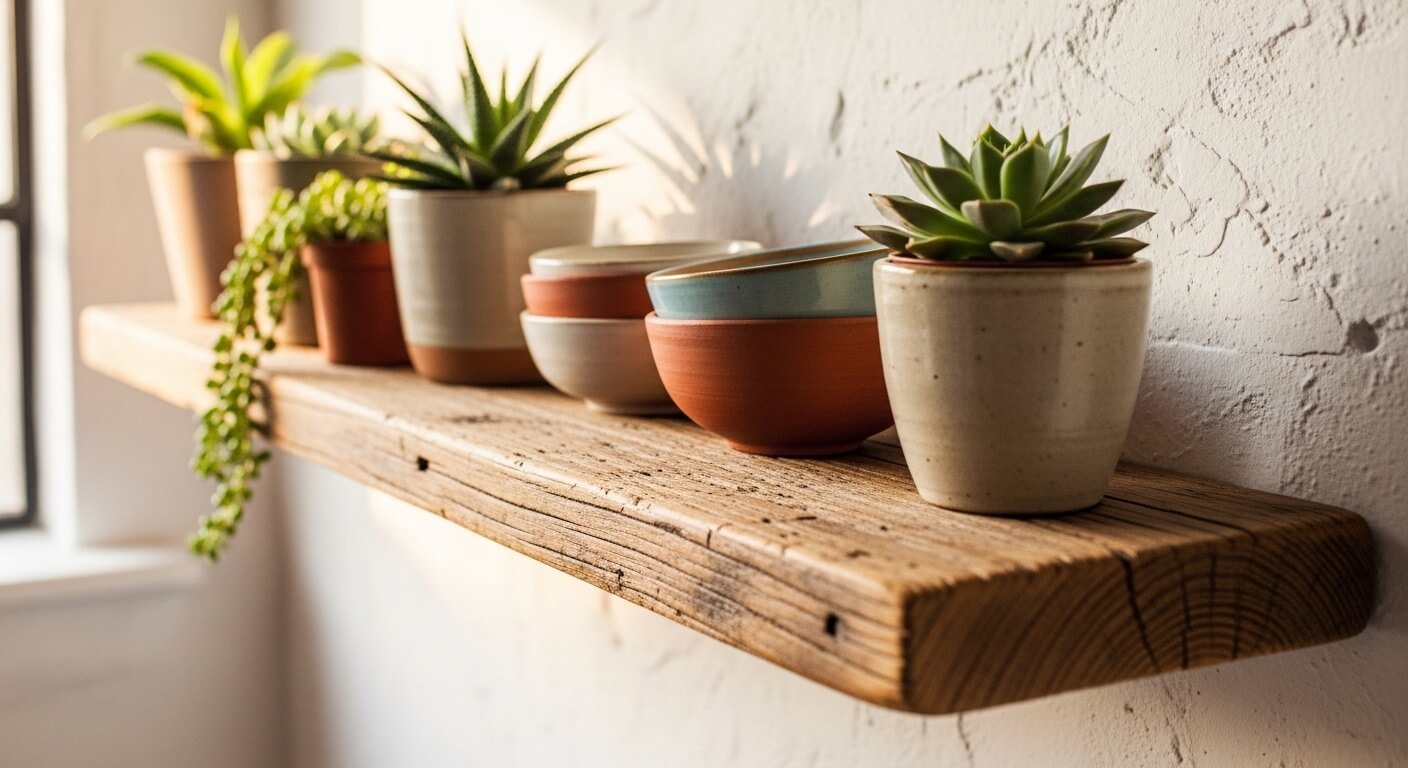
A displayed ceramic collection is one of the most classic maximalist moves. The key is quantity and cohesion: collect pieces across a shared color family — cobalt, terracotta, cream, and deep green — but vary the form wildly. Pitchers beside stacked bowls beside tall sculptural vases beside plates stood upright on small stands. Fill the entire shelf. Thrift stores and estate sales are the best sources for affordable ceramics — most pieces run $2–$10. Buy anything in your color family regardless of style. The collection becomes coherent through repetition of color even when every piece is completely different.
11. Layer Velvet, Silk, and Brocade on One Sofa
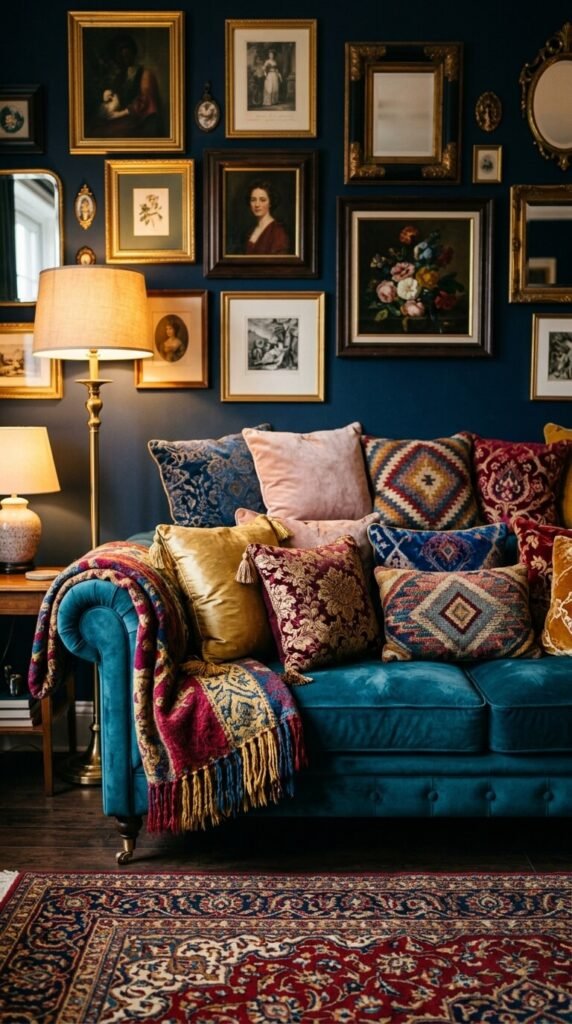
The sofa is the maximalist centerpiece. Layer three or more different fabric types in the cushions: velvet cushions beside silk ones beside brocade-covered ones beside a fringed wool throw draped over the arm. The mix of finishes — matte, shiny, textured — catches light differently throughout the day and creates a depth that matching cushion sets completely lack. Buy cushion inserts ($5–$8 each) and make covers from fabric remnants, or source individual cushion covers from different shops deliberately. The goal is collected-over-time rather than bought-as-a-set. Nothing should match exactly.
12. Go Bold With Patterned Tile in One Room
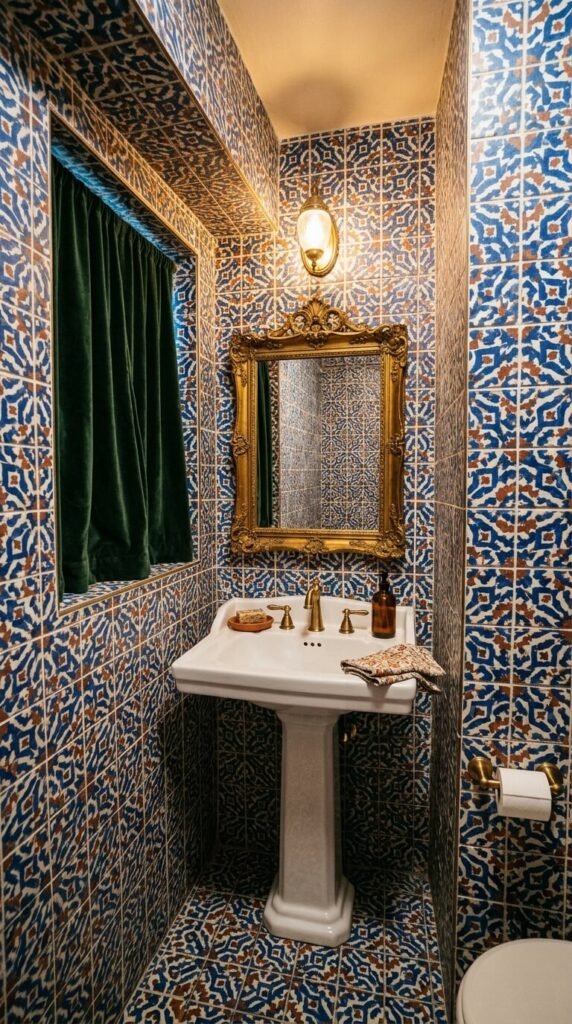
Encaustic patterned tile — used floor to ceiling in a small room — is one of the most committed maximalist moves available. A bathroom or powder room is the ideal space: small enough that the investment is manageable, contained enough that the pattern does not overwhelm. Patterned cement tile runs $4–$12 per square foot. A powder room floor costs $80–$200 in tile materials. Install it yourself with basic tile adhesive and grout to keep labor costs down. The density of pattern in a small space creates a jewel-box effect that reads as extremely high-end regardless of the tile’s actual price.
13. Hang Artwork at Every Possible Height
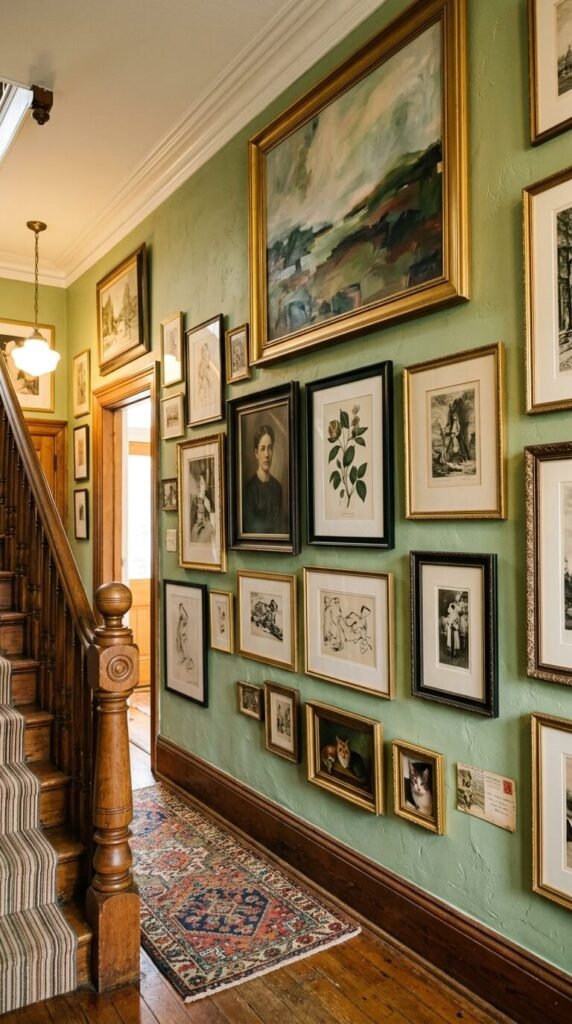
Conventional picture-hanging advice says eye level. Maximalism says use the entire wall height. Hang a large canvas high, close to the ceiling. Drop small framed pieces down near the baseboard. Cluster medium prints at different heights in between. The deliberate variation in hanging height creates a dynamic, living arrangement that no grid-based gallery wall can achieve. It feels like a collection that has grown over time — because it should. Use adhesive picture hooks ($8 for 30 hooks) for lower and lighter pieces so you can adjust without multiple nail holes. Move things until the arrangement feels alive.
14. Use an Ornate Chandelier in an Unexpected Room
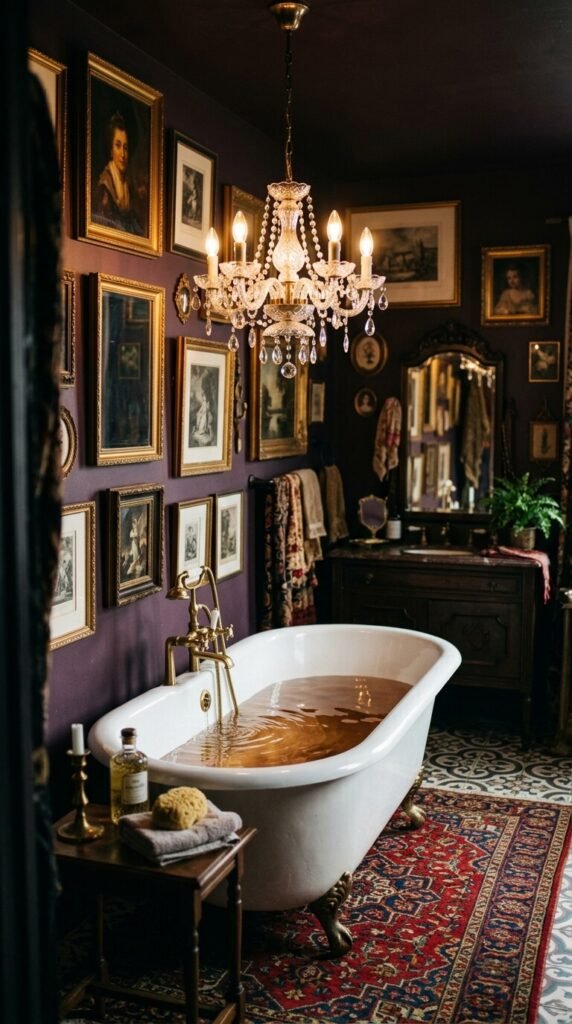
A crystal or ornate chandelier installed in an unexpected room — a bathroom, walk-in closet, or kitchen — is a maximalist power move. The surprise of grandeur in a utilitarian space is exactly the kind of contrast maximalism lives on. Chandelier-style pendant lights and flush mounts that read as ornate are available at home stores and online for $40–$150. They do not need to be hard-wired — plug-in chandeliers hang from a ceiling hook and run a cord along the ceiling to an outlet, hidden under cord cover strips. A clawfoot tub under a chandelier is one of the great maximalist bathroom moments.
15. Cover a Table in Layers of Cloth and Objects
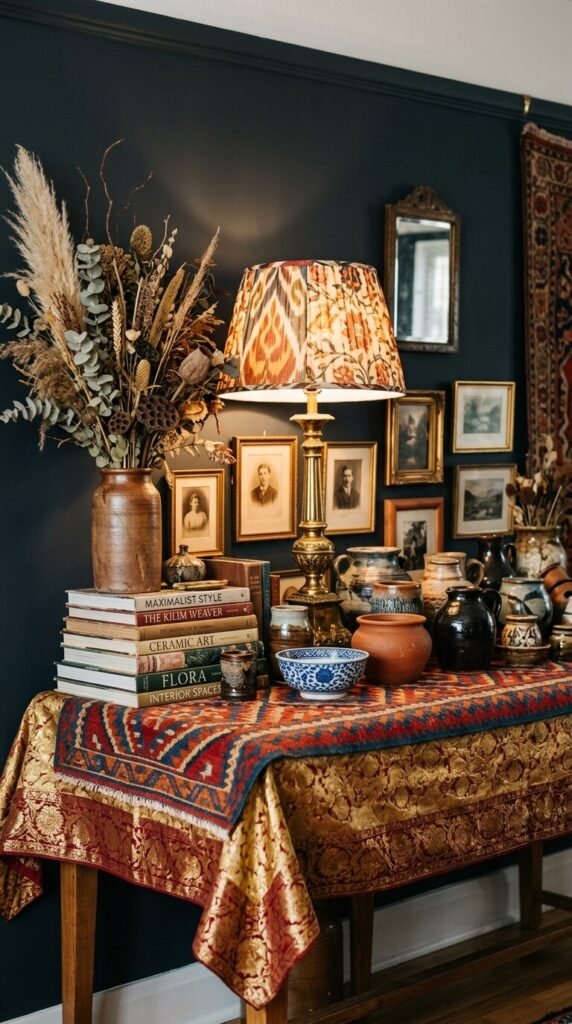
A console or side table in a maximalist room is a layered still life, not a surface for keys and mail. Start with a cloth base — a piece of brocade, a folded kilim, a velvet runner. Stack books as platforms. Add objects at varying heights: a tall ceramic vase, a medium brass lamp, a small framed print leaning against the wall behind. Fill every level. The cloth layer underneath softens the arrangement and unifies it. This table should take 20 minutes to compose and should feel like it took years to accumulate. That tension is the art.
16. Paint Furniture in High-Gloss Jewel Tones
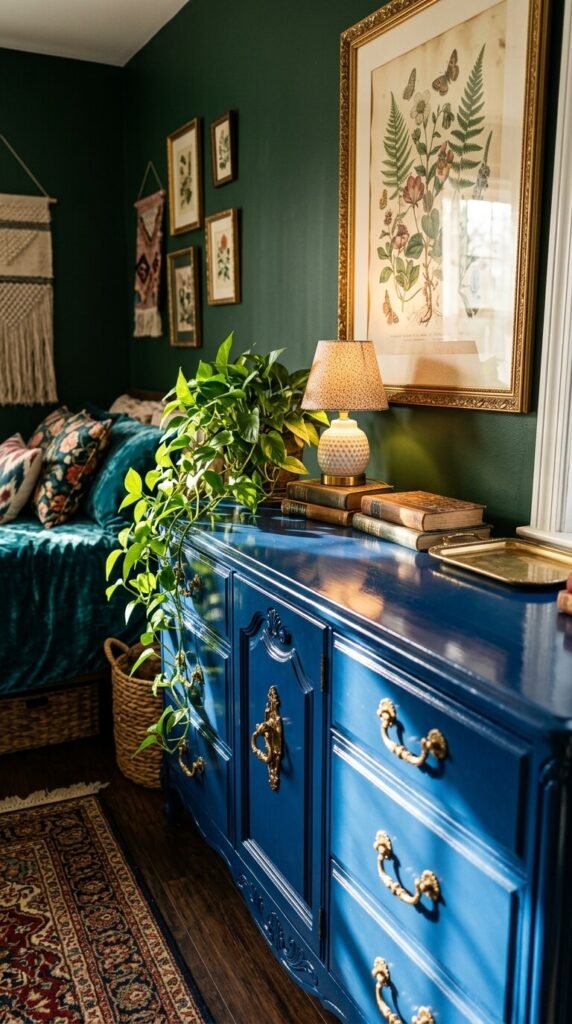
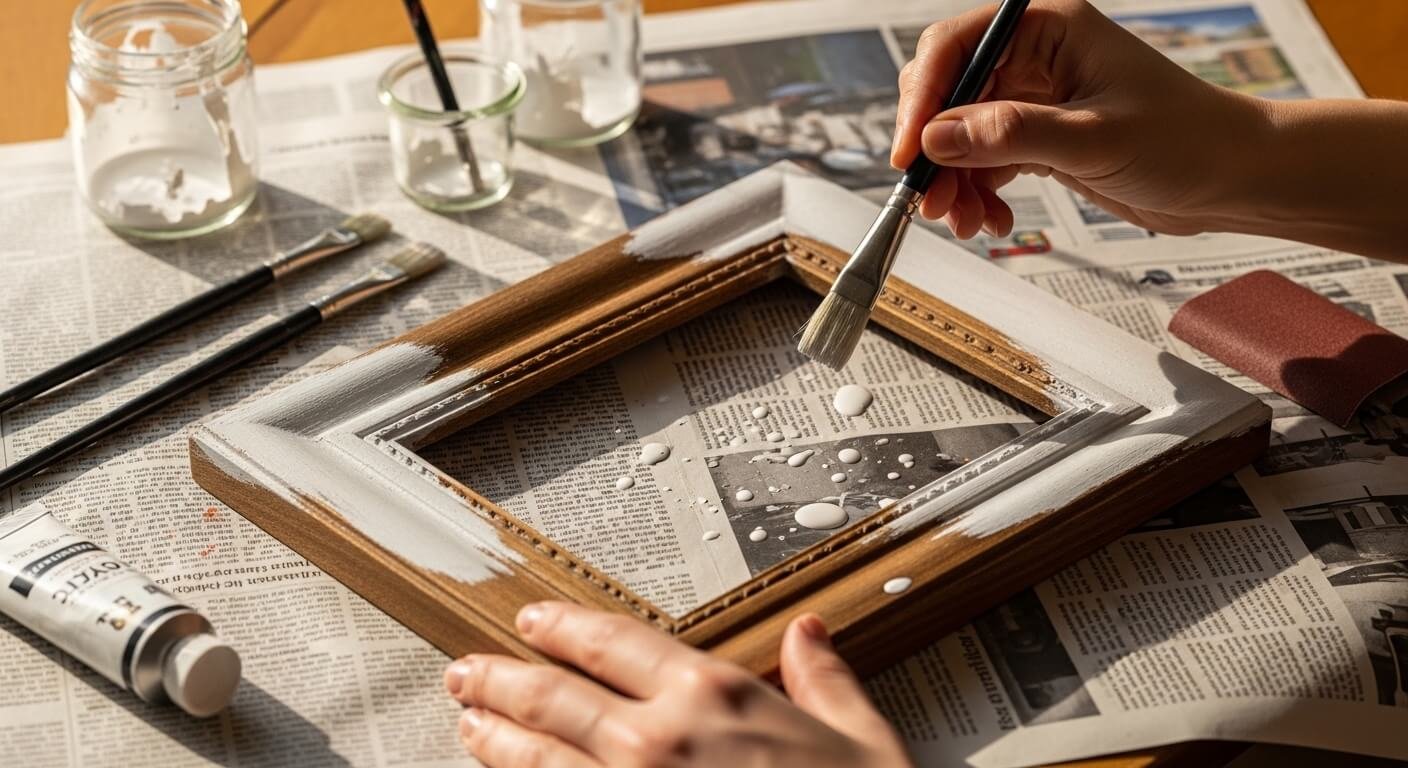
Plain wood or white-painted furniture has no place in a maximalist room. High-gloss paint in a jewel tone — cobalt blue, emerald green, deep burgundy, or lacquered black — turns a secondhand dresser into a statement piece. High-gloss paint reflects light and creates a lacquered, almost lacquerware quality. Sand the existing surface lightly, apply a bonding primer, and brush or roll two coats of high-gloss paint. Total cost: $25–$40 in supplies. A thrifted dresser at $20–$50 plus a coat of cobalt becomes a piece people will ask about. The glossier the finish, the more it earns its place in a maximalist room.
17. Drape Textiles From the Ceiling
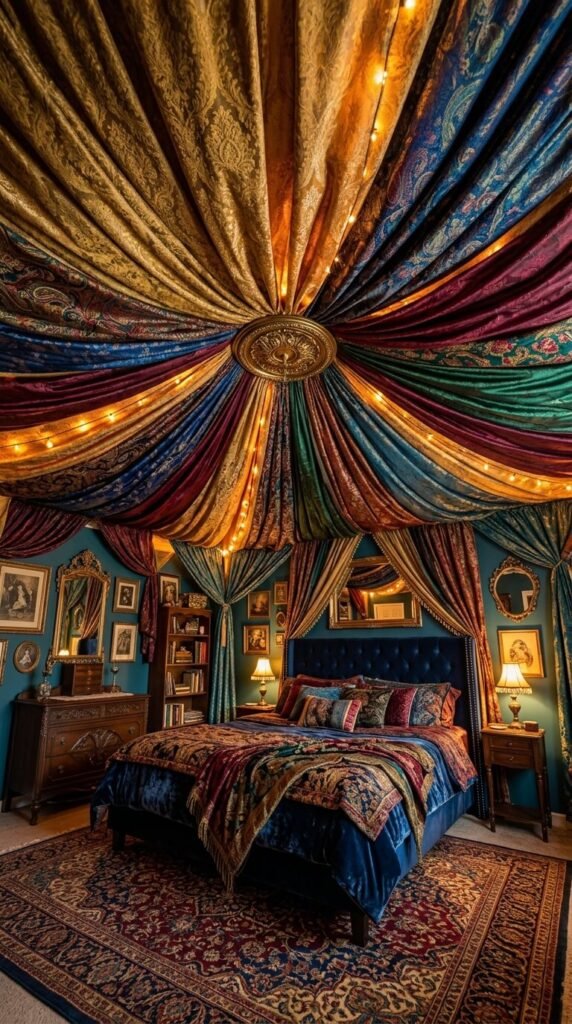
Draped ceiling textiles turn a room into a tent — and in maximalism, that is the goal. Fix a large ceiling hook above the center of the room. Thread three to five lengths of different fabric through a ring at the hook point and drape them outward to the four walls, fixing with small hooks near the ceiling edge. Use fabric lengths in different patterns and colors from the same family: brocade, silk, and velvet in gold, rust, and deep red. The fabric softens sound, adds color overhead, and creates a completely immersive room environment. Total fabric cost: $30–$80 depending on yardage.
18. Collect and Display Vintage Mirrors Densely
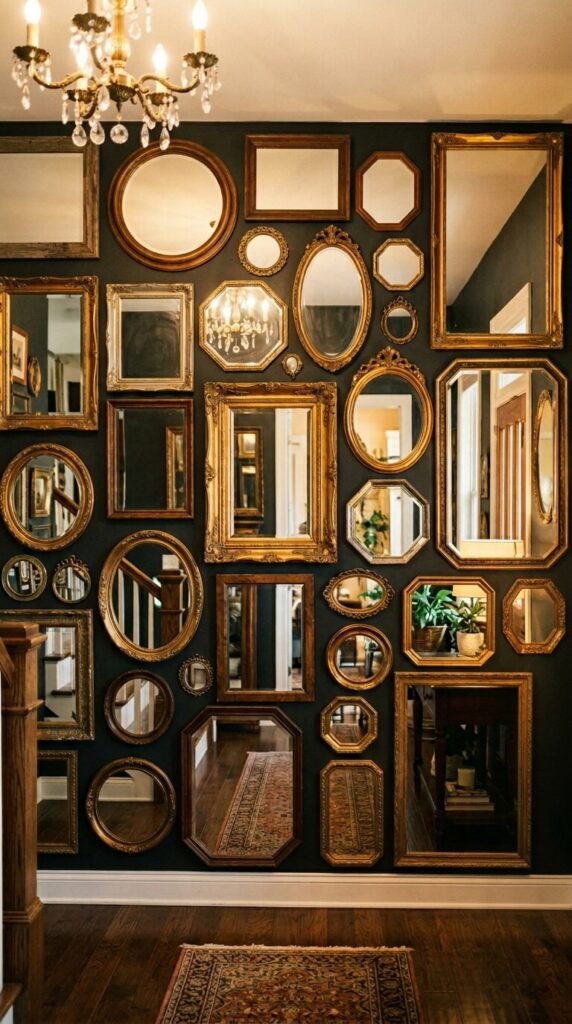
A wall of vintage mirrors is one of the most practical maximalist techniques — it adds pattern, reflection, and the appearance of depth simultaneously. Collect mirrors in mismatched shapes and frames: round, oval, rectangular, ornate gilded, simple dark wood, beveled antique. Arrange them edge to edge on one wall with as little bare wall showing between frames as possible. Thrift stores and estate sales regularly have mirrors for $5–$30 each. A collection of 12–15 mirrors covers a significant wall surface for $100–$200 total. The reflections multiply the room’s light and visual complexity at no extra cost.
19. Mix Antique and Modern Objects Deliberately
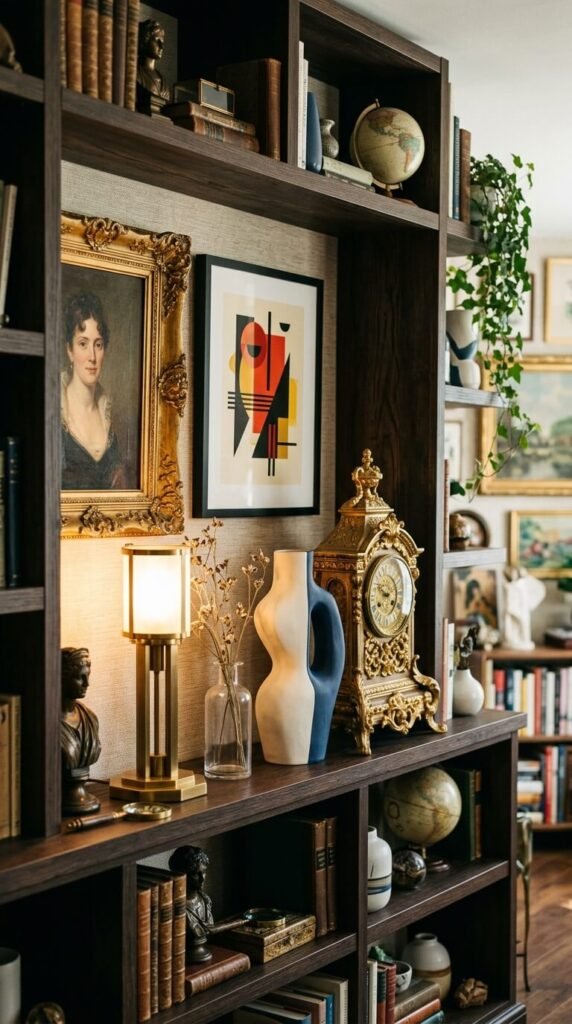
Maximalism is not a period style — it is a collecting philosophy. Mixing antique and contemporary objects deliberately creates visual dialogue that purely antique or purely modern rooms cannot achieve. Place a Victorian gilded clock beside a contemporary abstract ceramic. Hang an old oil portrait beside a modern graphic print. Put an Art Deco brass lamp on the same shelf as a contemporary glass vessel. The contrast makes each piece more visible and more interesting than it would be in a matched setting. Source antiques from estate sales and thrift stores; buy one or two contemporary pieces from independent makers annually.
20. Layer Throw Blankets on Every Seating Surface
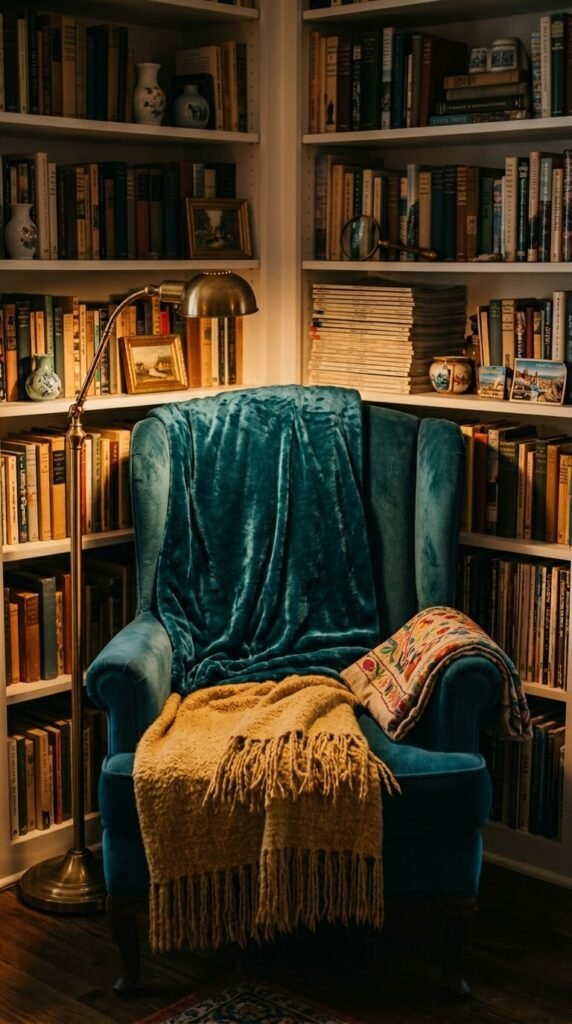
In a maximalist room, no chair or sofa sits without at least two or three throw blankets layered on or around it. Velvet draped over the back, fringed wool across the seat, embroidered linen folded over the arm. Each blanket should differ in texture and pattern but share at least one color with the others. The goal is abundant softness — the visual sense that warmth is always within reach. Source throw blankets from discount stores, thrift shops, and end-of-season sales. A good layered throw collection costs $50–$120 total for a full room and makes every seat look like an invitation.
21. Create a Dense Botanical Display
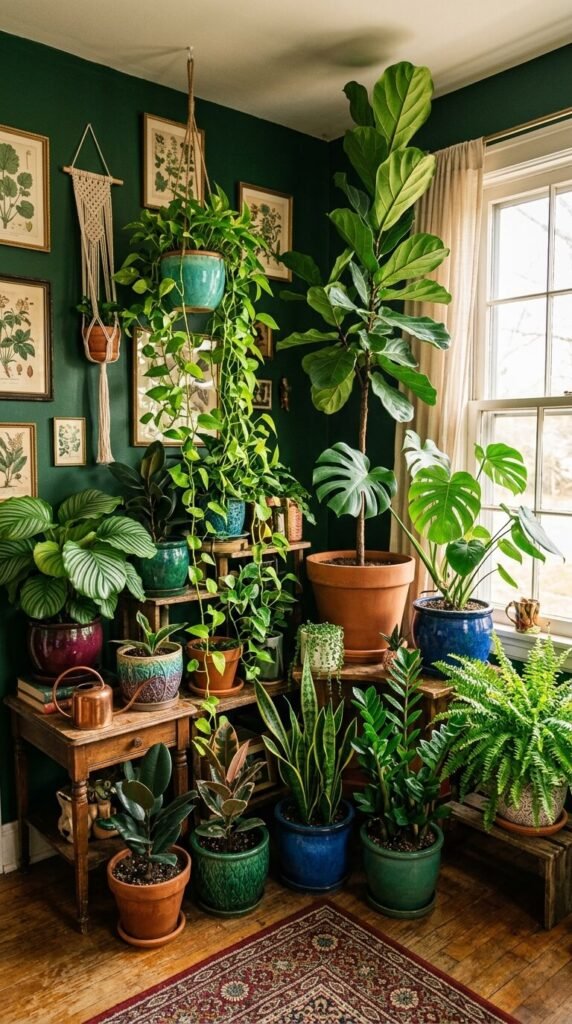
Grouping plants densely in one corner creates a lush, indoor-garden effect that sparse individual plants can never achieve. Cluster seven to ten plants of varying heights and species: a tall statement plant like a fiddle-leaf fig or bird of paradise as the background, medium plants like monstera and rubber trees in the middle, trailing plants like pothos and string of pearls at the front and edges. Use mismatched pots in complementary colors. Let the plants overlap slightly. The dense grouping also benefits the plants — they create their own microhumidity. Collect plants slowly from grocery stores and garden centers to keep costs low.
22. Use Tassels, Fringe, and Trim on Everything
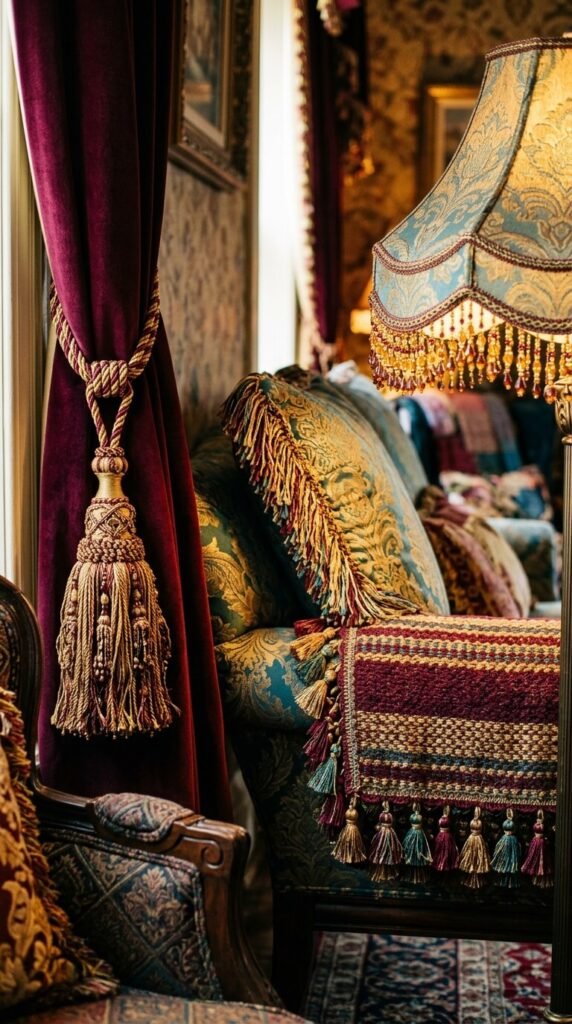
Trim details are the punctuation of maximalist design. Tassels on curtain tiebacks, fringe along cushion hems, beaded trim on lampshades, pom-pom edging on throw blankets — each one small on its own, transformative in combination. Buy trim by the yard at fabric stores ($3–$8 per yard) and hand-stitch or hot-glue it onto existing items. Re-trim a plain lampshade with beaded fringe for under $15. Add tassel tiebacks to existing curtains for $10. Edge a plain cushion cover with bullion fringe for $8. None of these projects takes more than 30 minutes. Together they give a room its maximalist texture layer.
23. Display Books With Spines Facing Out and Facing In
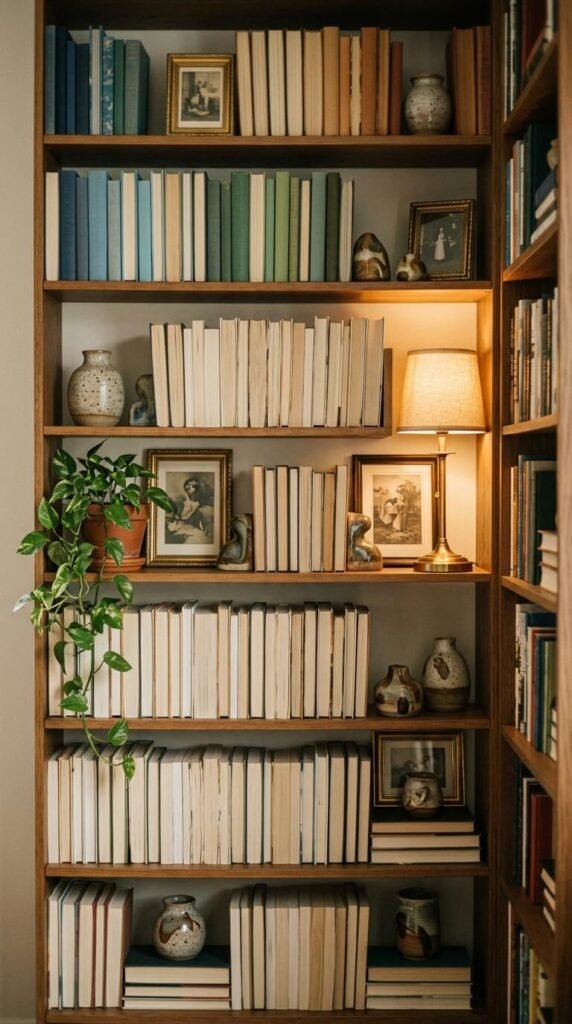
Mixing spine-out and pages-out book arrangements on the same shelf is a maximalist styling technique that creates instant textural variety. Spine-out gives color and text; pages-out gives a uniform cream texture. Alternate sections of each across a large bookshelf. The pages-out sections create a quiet visual rest between colorful spine sections. Fill every remaining gap with small ceramics, framed photos, or trailing plants. This technique is entirely free — it only requires rearranging what you already own. It is also one of those changes that makes visitors stop and look closely, which is exactly the response maximalism aims for.
24. Hang Tapestries and Textiles as Wall Art
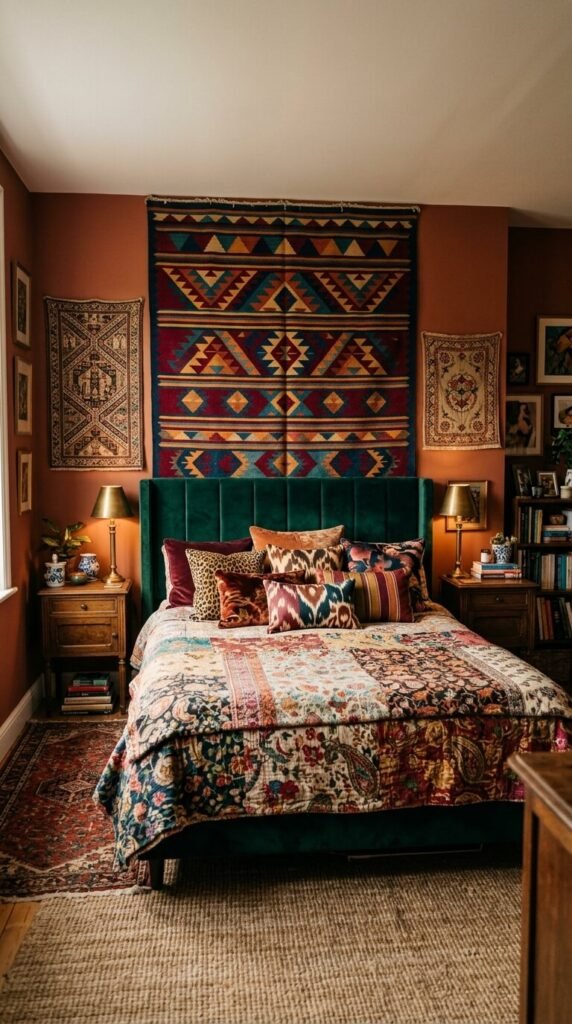
Textile wall hangings — tapestries, kilims, embroidered panels, woven pieces — add pattern and dimension that framed art cannot. They absorb sound, add warmth, and bring a material richness to walls that paint alone cannot achieve. Hang a large woven tapestry above a bed or sofa as a primary statement piece. Add smaller textile fragments on either side. A vintage kilim fragment hung on a wooden dowel costs $30–$70 and covers significant wall space. Tapestries from global craft markets and online artisan shops run $40–$120. The combination of different textile scales and techniques on one wall is a deeply maximalist effect.
25. Style Every Corner With a Curated Vignette
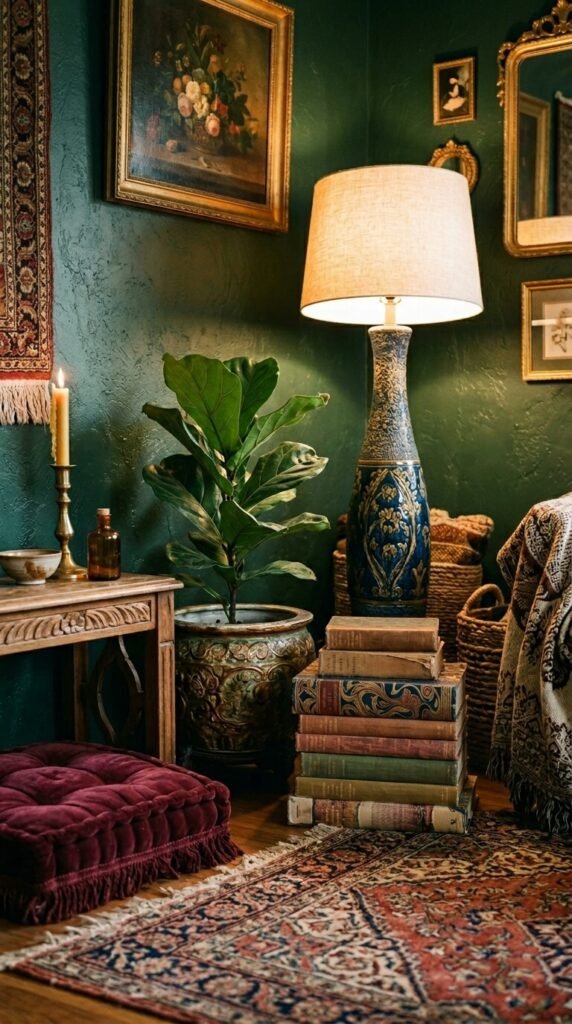
In minimalism, corners are left empty. In maximalism, every corner holds a curated vignette. A tall floor lamp beside a stack of oversized art books beside a sculptural ceramic pot beside a velvet floor cushion. The vignette should have height variation — something tall, something medium, something low — and at least three different materials. Arrange it densely enough that the objects feel like they belong together, not like they were abandoned there. Corners are the rooms within rooms of a maximalist home. When every corner is alive, the whole space feels inhabited rather than decorated.
26. Let Collections Grow and Show Them All
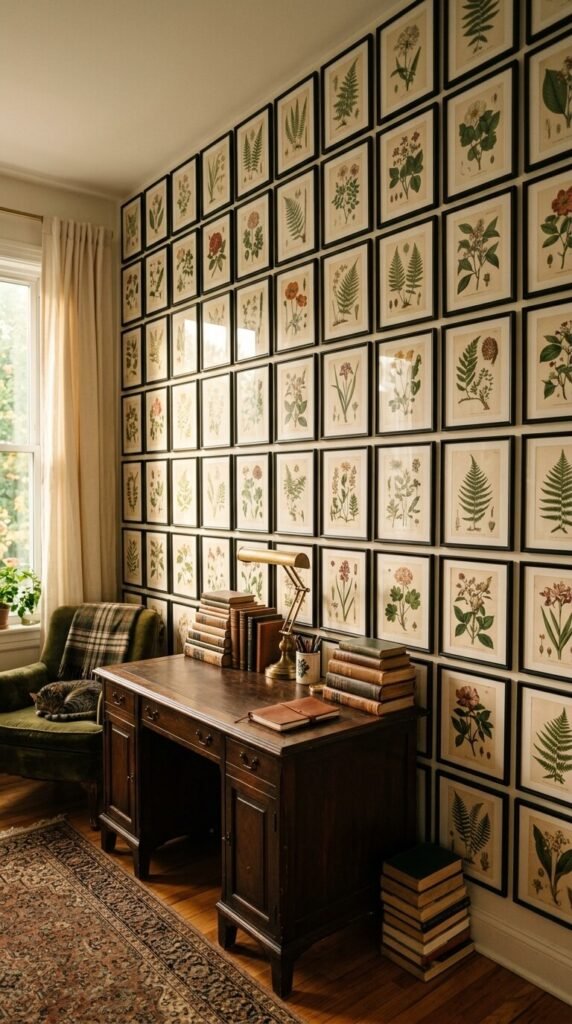
The final and most honest maximalist principle: collect things you love and show all of them. Not curated selections of your collection. Not the best three pieces on a floating shelf. All of them. Every botanical print, every ceramic bird, every vintage perfume bottle, every framed family photo in a mismatched frame. Collections displayed at full scale and full quantity become something greater than their individual parts — they become a portrait of a person. Group by type on dedicated walls or shelves. Use matching frames if you want visual unity; use mismatched ones if you want visual energy. Either way, show everything.
Conclusion
Maximalism is a permission slip. It gives you the right to keep the things you love, display them loudly, and stop apologizing for having too much color, too many patterns, or too many objects on a shelf. The rooms in this guide are not styled to impress — they are styled to express. Each layer you add, from a dark painted wall to a third rug to a tassel-trimmed lampshade, is a statement about what you value and how you want to live. You do not need a designer or a large budget. You need the willingness to go further than feels safe. That discomfort, the moment just before you think it might be too much, is exactly where maximalism begins. Keep going.