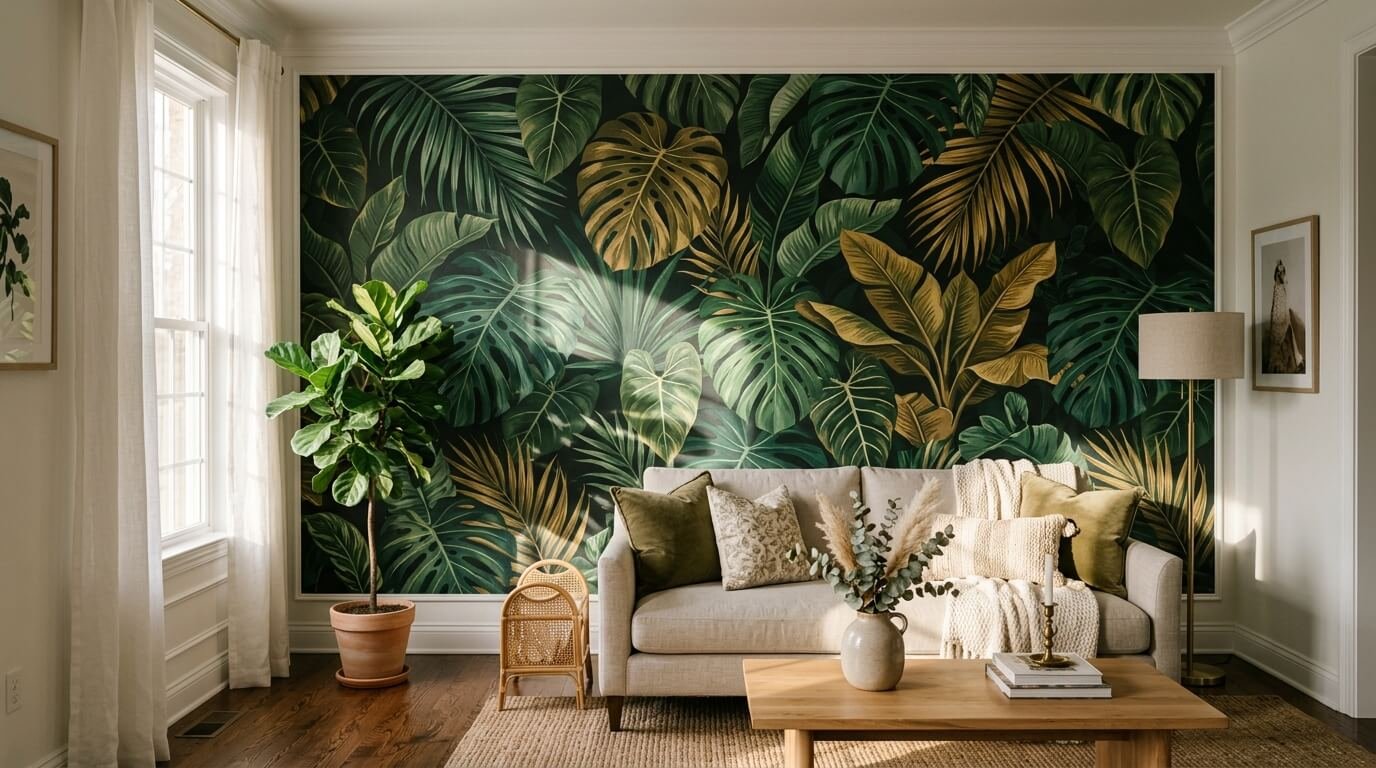
24 Zen Asian-Inspired Decor Touches That Bring Tranquility


Disclosure: As an Amazon Associate we earn from qualifying purchases. Some links on this page may be affiliate links — if you click through and make a purchase, we may receive a small commission at no extra cost to you.
Your home should feel like a place you actually want to come back to. Not a showroom. Not a catalog page. Just a calm, quiet space that slows you down the moment you walk in. Asian-inspired decor does exactly that. It draws from centuries-old design philosophies — Japanese wabi-sabi, Chinese minimalism, Balinese nature worship — to create interiors that feel grounded, intentional, and peaceful. You don’t need to redecorate everything. A few well-chosen touches are enough to shift the energy of an entire room. This guide walks you through 24 simple, affordable ways to bring that tranquility home.
1. Bring In a Low-Profile Floor Cushion Setup
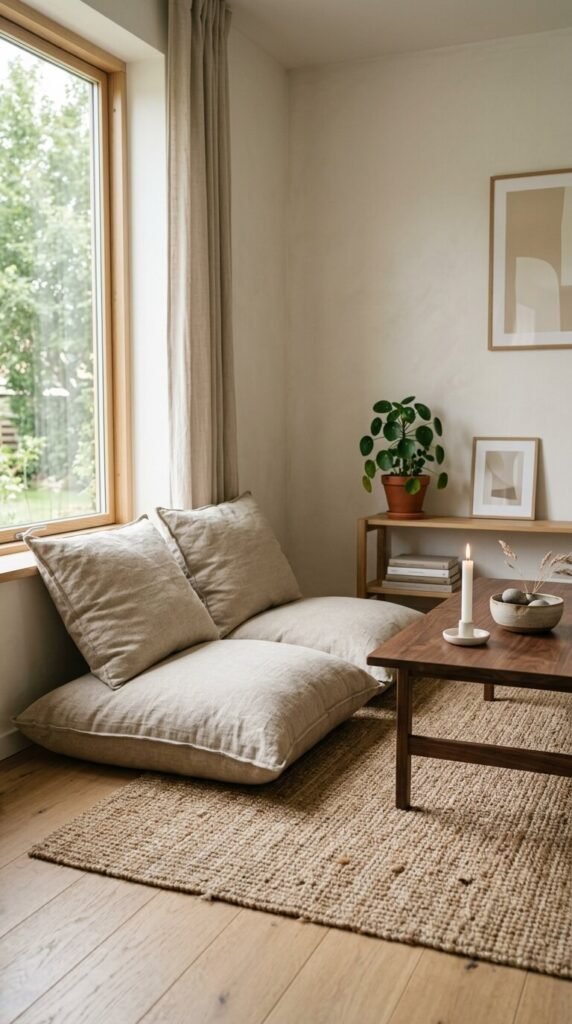
Swap out one seating area for floor cushions. This instantly signals a slower, more intentional way of living. Low seating is a hallmark of Japanese and Balinese interiors. It brings the body closer to the ground — literally and emotionally. Look for large square cushions in natural linen or cotton at home goods stores. Stack two for extra comfort. Pair them around a low wooden tray table. The whole setup costs under $60 and completely transforms a corner. It’s also a great reading or meditation nook.
2. Add a Bamboo or Rattan Room Divider
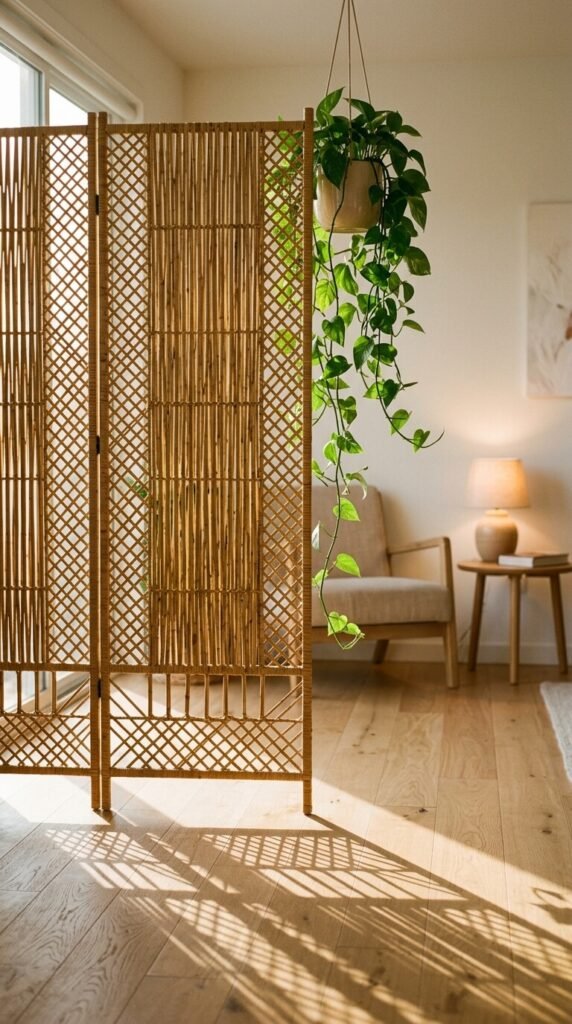
Room dividers create soft visual breaks without walls. A bamboo or rattan screen adds texture and warmth while staying light and airy. Natural materials are central to Asian design philosophy — they connect interiors to the outside world. You can find folding bamboo screens for $40–$80 online. Use one to section off a workspace, frame a reading corner, or add depth behind a sofa. They’re easy to move and require zero installation. The shadows they cast on walls are a bonus piece of art.
3. Display a Single Branch in a Tall Ceramic Vase
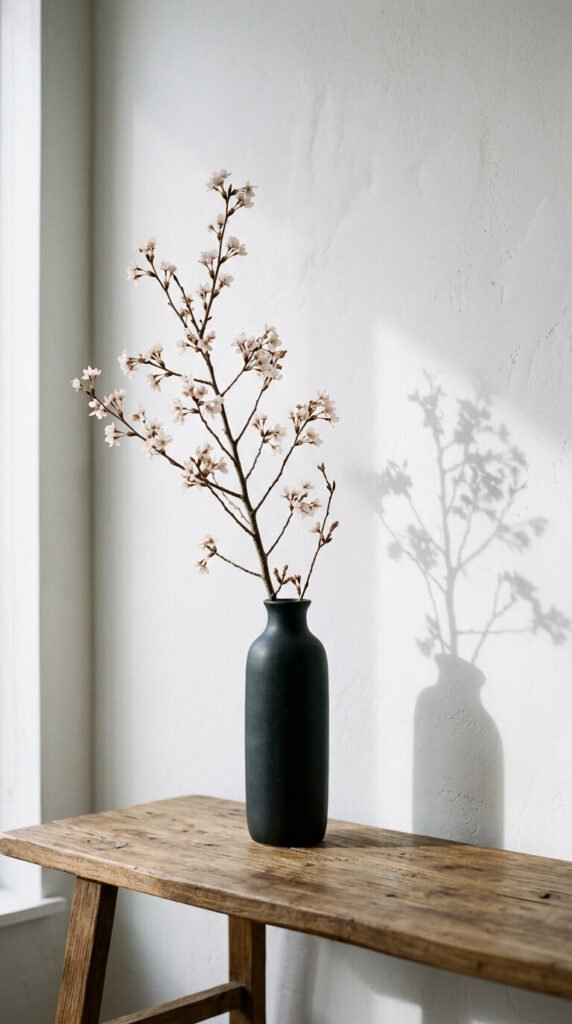
Forget full bouquets. One sculptural branch says more. This is the Japanese concept of ikebana — the art of flower arranging that values negative space as much as the plant itself. A bare cherry blossom branch, a single dried palm leaf, or a curving willow stem in a tall ceramic vase creates an instant focal point. Less is more. Dried branches last forever and cost almost nothing. Pick them up from your yard or a florist’s offcut bin. The empty space around them is part of the design.
4. Lay Down a Natural Fiber Rug
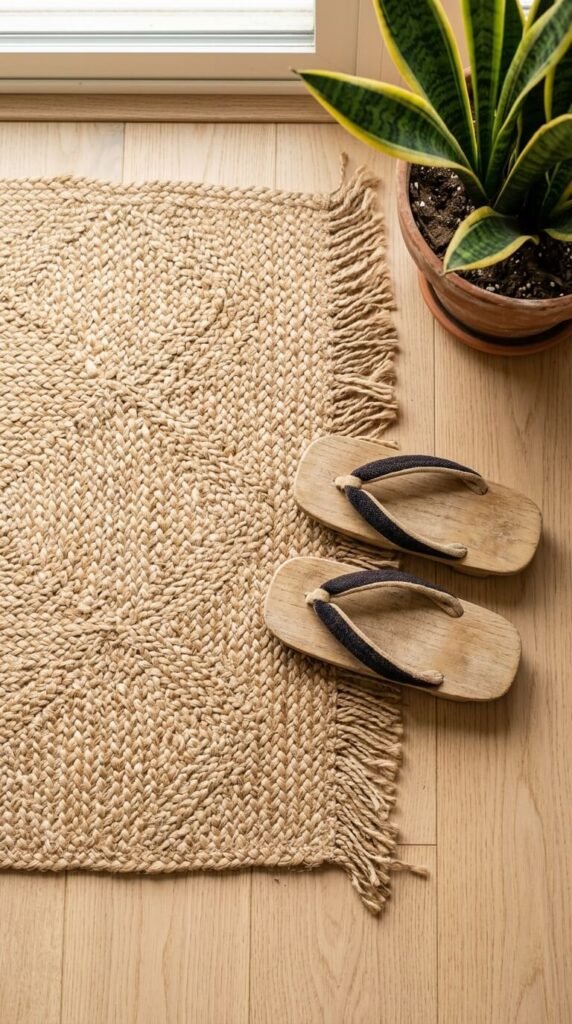
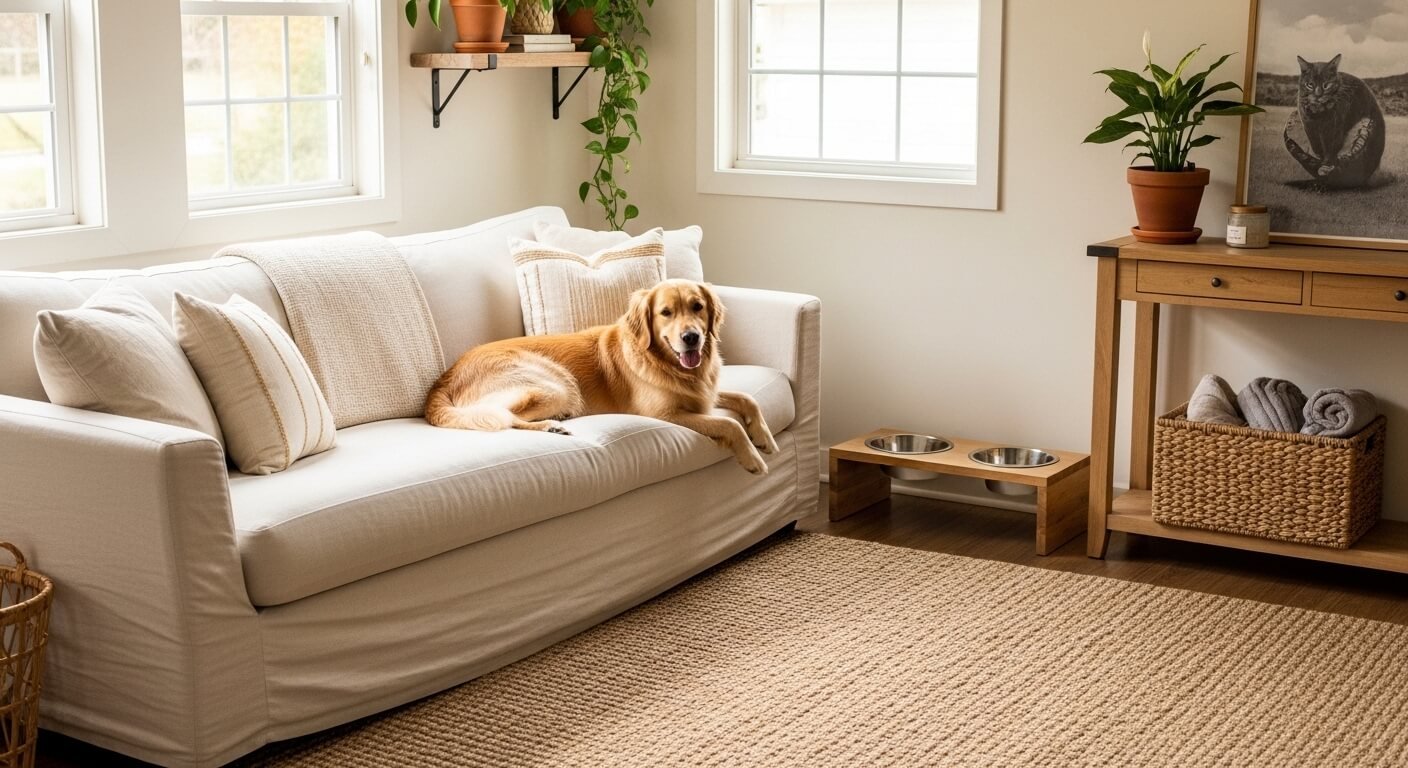
The floor matters more than most people think. A jute, sisal, or seagrass rug immediately grounds a room in natural texture. These materials are common in Japanese, Thai, and Balinese interiors because they feel connected to the earth. Natural fiber rugs are also durable and affordable — a good one runs $50–$120. They work beautifully under low furniture setups and beside floor cushions. Avoid synthetic rugs with busy patterns. The simpler the weave, the more calming the effect.
5. Hang a Shoji-Style Paper Lantern
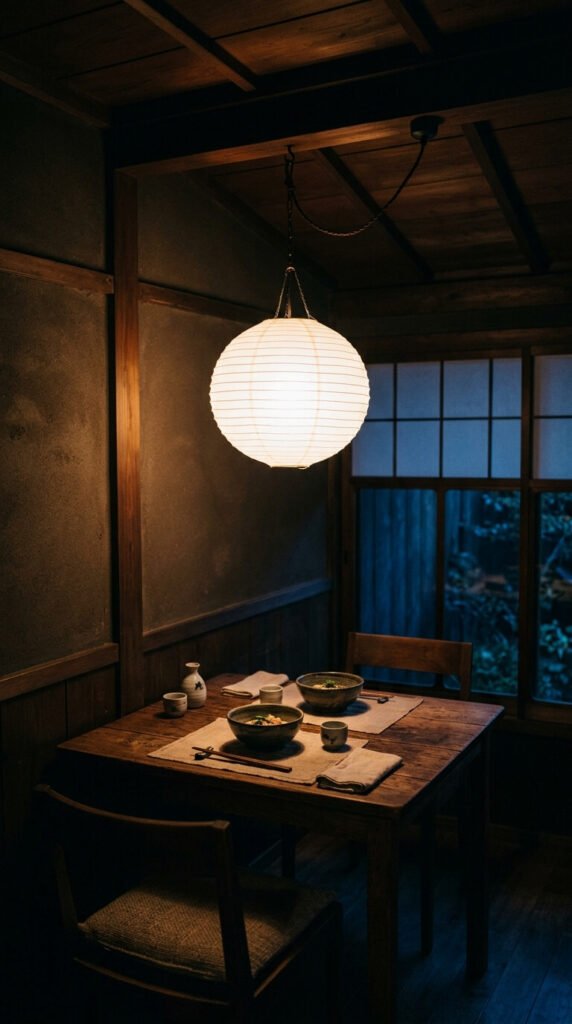
Lighting changes everything. A white rice paper lantern hanging overhead gives off the warmest, softest glow — nothing harsh, nothing fluorescent. Shoji-style lighting mimics the diffused light of Japanese paper screens. These lanterns are some of the cheapest decor wins out there — often under $15. They come in round, oval, and cylindrical shapes. Hang one over a dining table or in a bedroom corner. Pair it with a warm-toned Edison bulb. The room will feel completely different after dark.
6. Arrange River Stones on a Wooden Tray
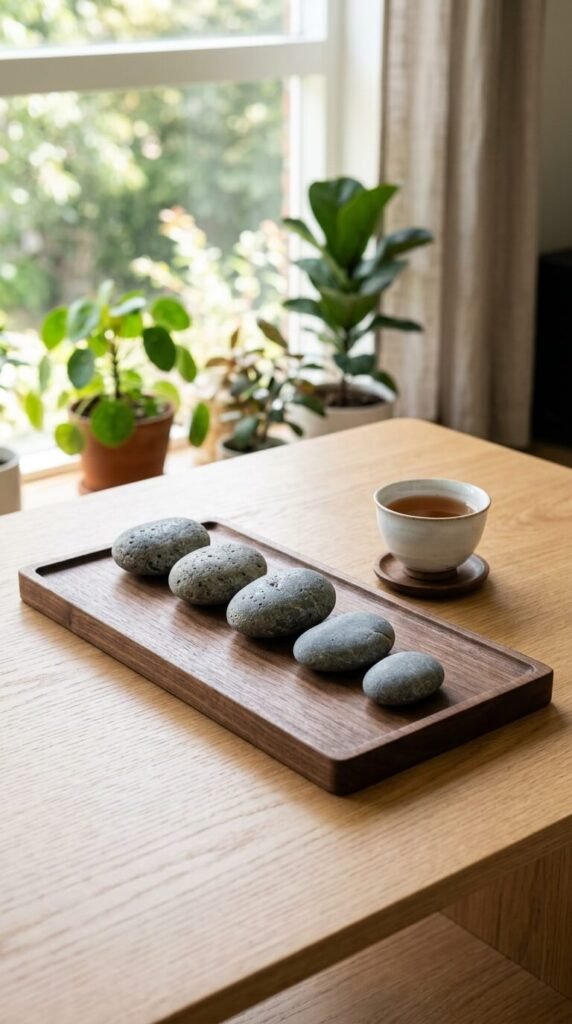
This is one of the easiest and cheapest decor moves you can make. Smooth river stones feel ancient and grounding. Arrange a handful on a wooden tray or saucer as a tabletop display. You can find river stones at craft stores, garden centers, or even collect them yourself. Grouped stones reference Zen rock gardens (karesansui) and bring a meditative quality to any surface. Add a small candle or single dried leaf beside them. The whole arrangement costs next to nothing and looks completely intentional.
7. Mount a Circular Woven Wall Hanging
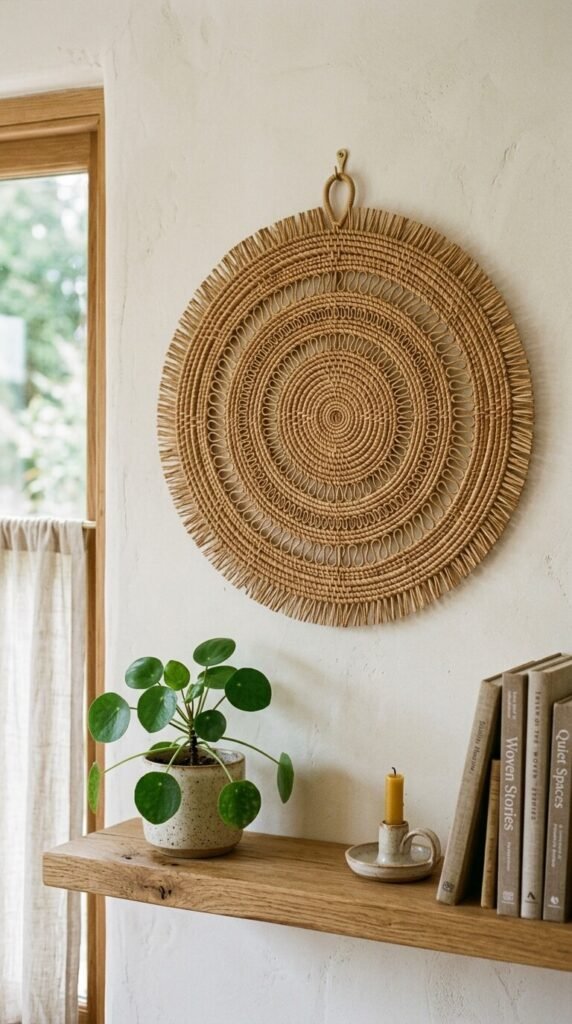
Round shapes are calming. They soften a room full of hard edges and right angles. A circular woven wall hanging — in bamboo, rattan, or macramé — acts like a focal point that doesn’t demand attention. Circular motifs appear throughout East and Southeast Asian art as symbols of wholeness and harmony. Look for handmade versions at artisan markets or online. Sizes from 12 to 24 inches work for most walls. Hang one above a bed, shelf, or entryway console for instant warmth.
8. Set Up a Small Tea Ceremony Corner
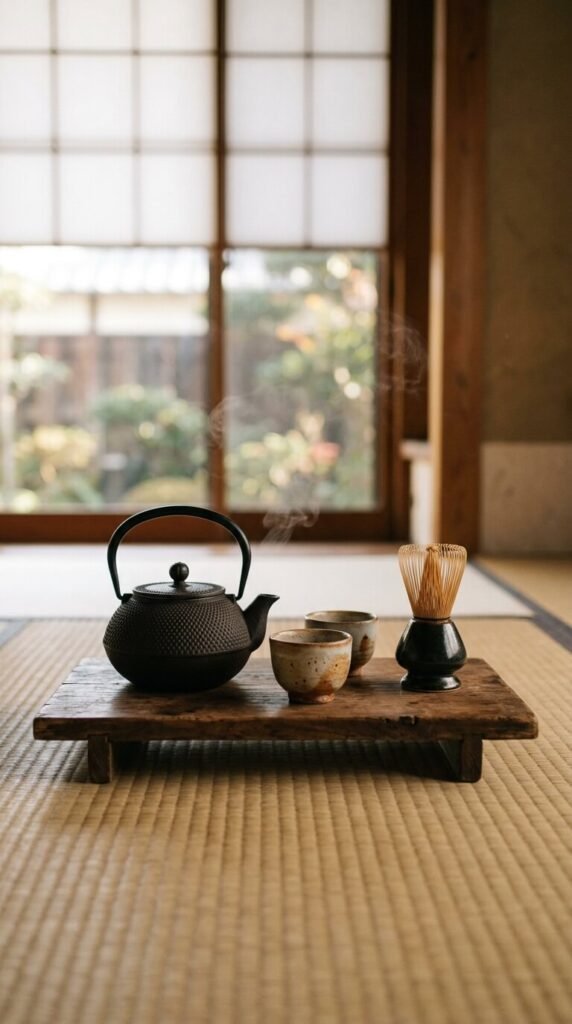
You don’t need a full tea room. Just a dedicated corner. Place a low tray on a shelf or tabletop with a small teapot, two ceramic cups, and a tin of loose-leaf tea. The Japanese tea ceremony (chado) is as much about the space as the drink. Creating this corner signals a place for slowing down. An iron tetsubin teapot costs around $25–$40. Handleless ceramic cups are widely available and inexpensive. The ritual of making tea there becomes a daily moment of quiet.
9. Use Shoji Screen-Inspired Window Treatments
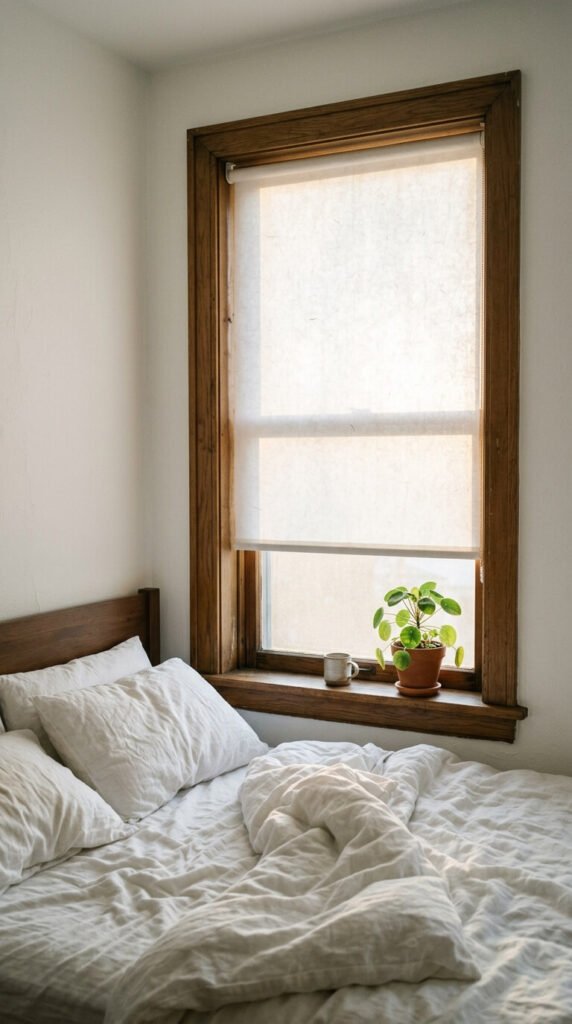
The way light enters a room shapes everything. Shoji screens traditionally use translucent rice paper to filter — not block — daylight. You can achieve the same effect with white linen curtains or rice paper roller blinds. Both are available at most home stores for $20–$60. They diffuse sunlight into a soft, even glow instead of harsh direct rays. This transforms the feeling of a room completely throughout the day. Pair with minimal window hardware — nothing ornate or heavy.
10. Place a Bonsai or Miniature Plant Display
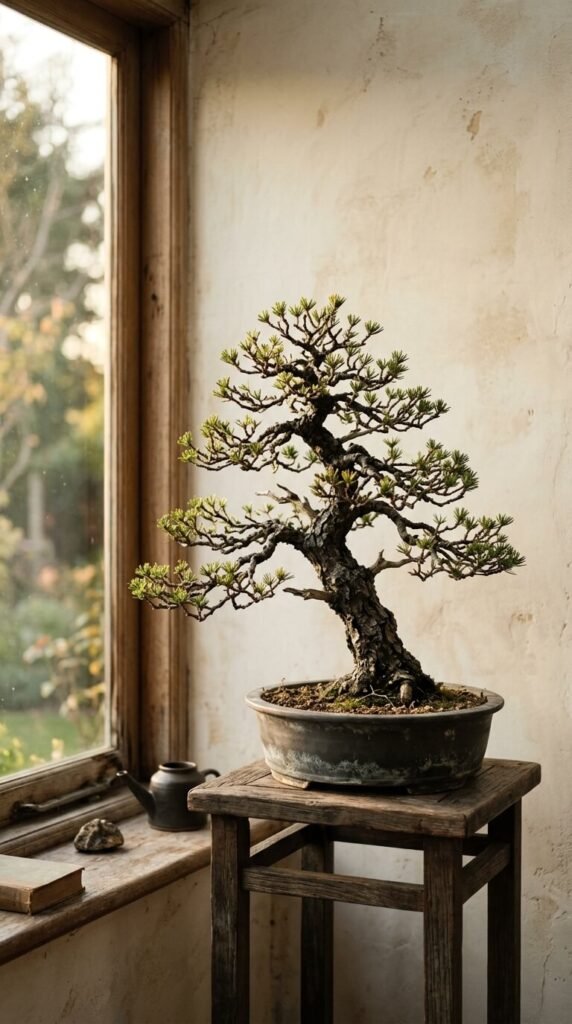
A bonsai tree is a living sculpture. It represents patience, care, and the beauty of slow growth — deeply rooted in Japanese tradition. Even a small juniper bonsai from a garden center ($20–$40) adds enormous character to a windowsill or shelf. Regular care becomes meditative practice. If bonsai feels like too much commitment, try a small jade plant or a Buddha’s hand succulent in a shallow ceramic pot. The shallow tray and sparse presentation is what creates the Zen aesthetic.
11. Incorporate Washi Tape or Printed Shoji Panels as Wall Art
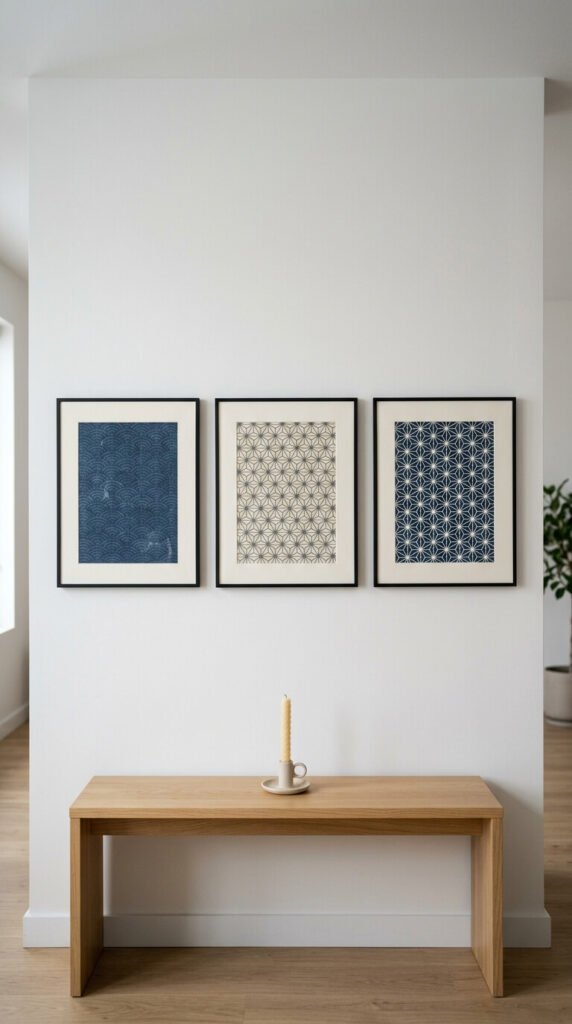
You don’t need expensive artwork. Washi paper — the handmade Japanese paper known for its delicate texture — makes beautiful wall art when framed simply. Print traditional patterns, brush stroke designs, or even solid-color washi sheets. Frame them in thin black or natural wood frames. Three matching frames in a row create a gallery-style effect that looks high-end for very little. Washi paper pads are available at craft stores for a few dollars. Frame them at home for a complete look under $30.
12. Use Dark Wood Accents Deliberately
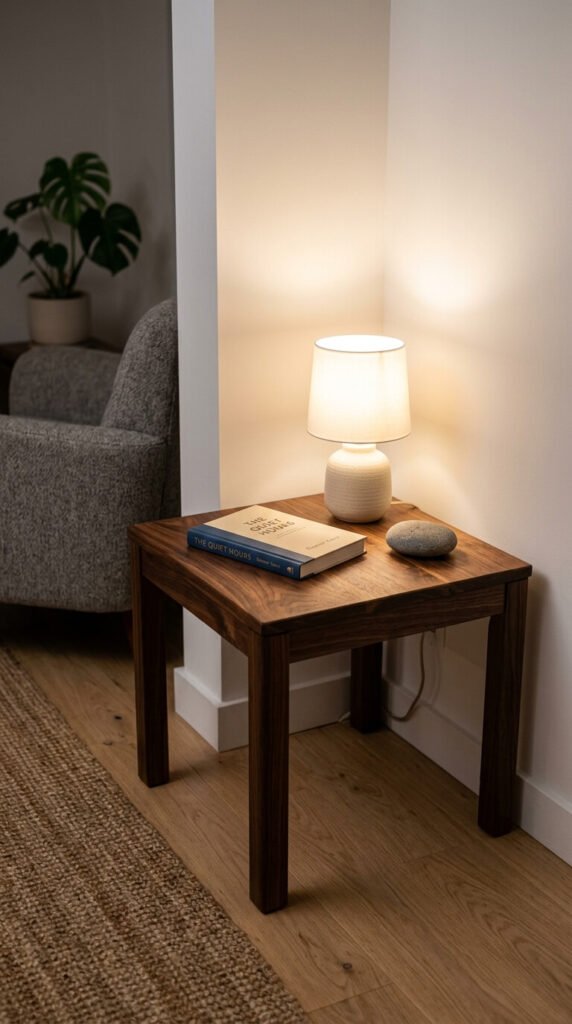
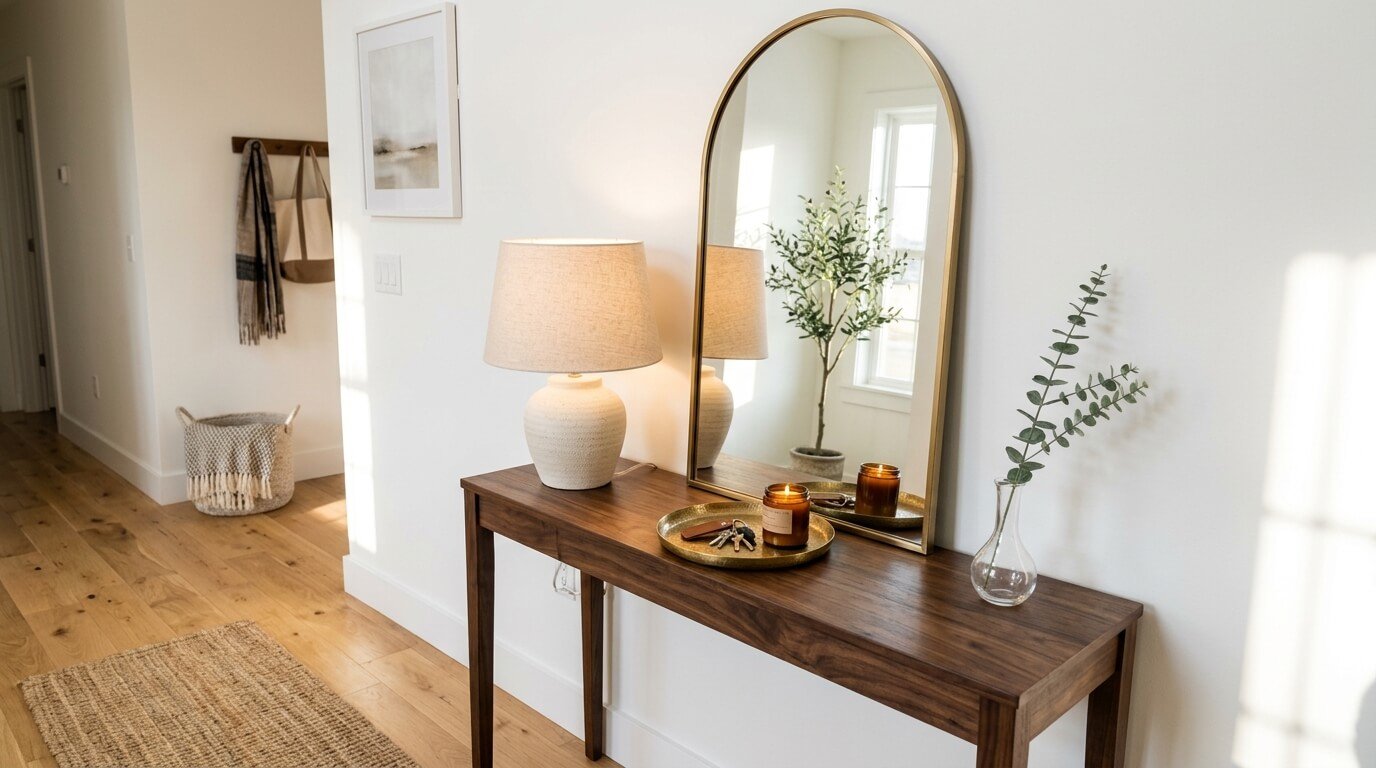
Dark wood — walnut, mahogany, ebony-stained pieces — adds depth and anchors a room without heaviness. Japanese interiors use dark wood sparingly but purposefully. A single dark wood side table or floating shelf against a white wall creates strong visual contrast that feels grounded rather than dramatic. You don’t need to replace all your furniture. One dark wood tray, stool, or console goes a long way. Thrift stores often have solid wood pieces you can refinish with a dark walnut stain for under $20.
13. Hang a Calligraphy Scroll or Ink Brush Print
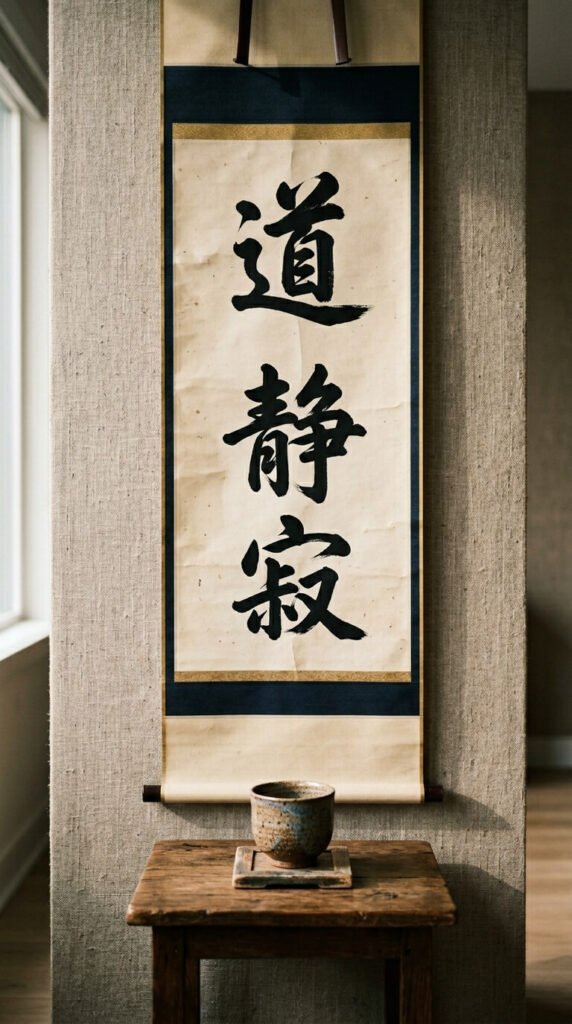
Asian calligraphy is one of the oldest art forms in the world. A vertical hanging scroll (kakemono) with a single ink brushstroke or kanji character brings artistic weight to a bare wall. You don’t need to know what it says — the visual rhythm of the brushstroke is the art. Reproduction calligraphy scrolls are available online for $15–$35. Look for single-character designs (peace, strength, water) in black ink on cream or aged paper. Hang it alone. Give it space to breathe.
14. Create a Sand and Stone Zen Garden on Your Desk
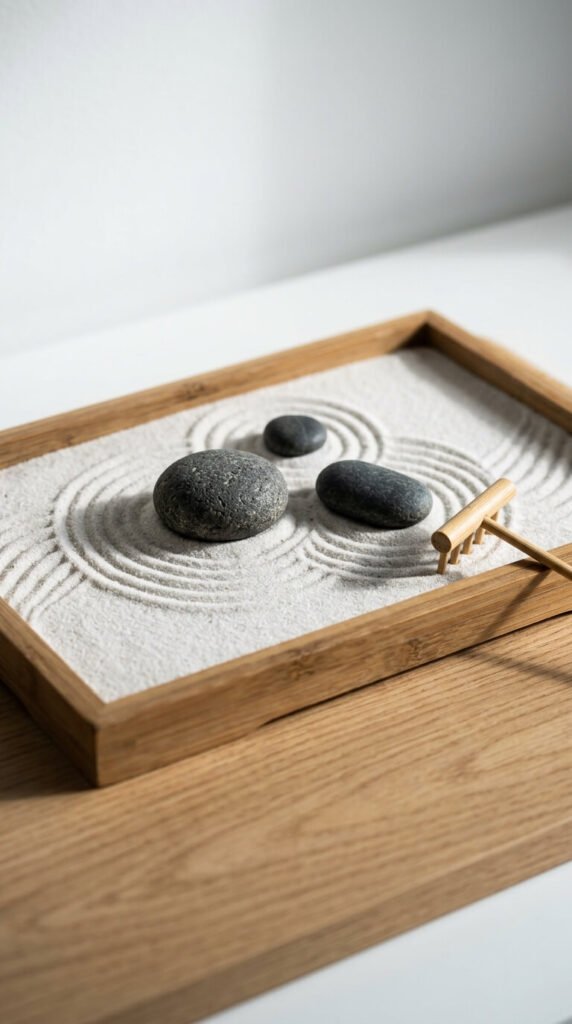
A desktop Zen garden is a small-scale version of the classic Japanese karesansui rock garden. Fine sand, a few stones, and a tiny bamboo rake are all you need. Raking the sand is a mindfulness practice — it takes 30 seconds and clears your head between tasks. Ready-made kits are available for $15–$25. Or DIY one with a shallow wooden tray, fine white sand from a craft store, and smooth pebbles. Keep it on your desk or beside your bed.
15. Display Ceramics With Wabi-Sabi Character
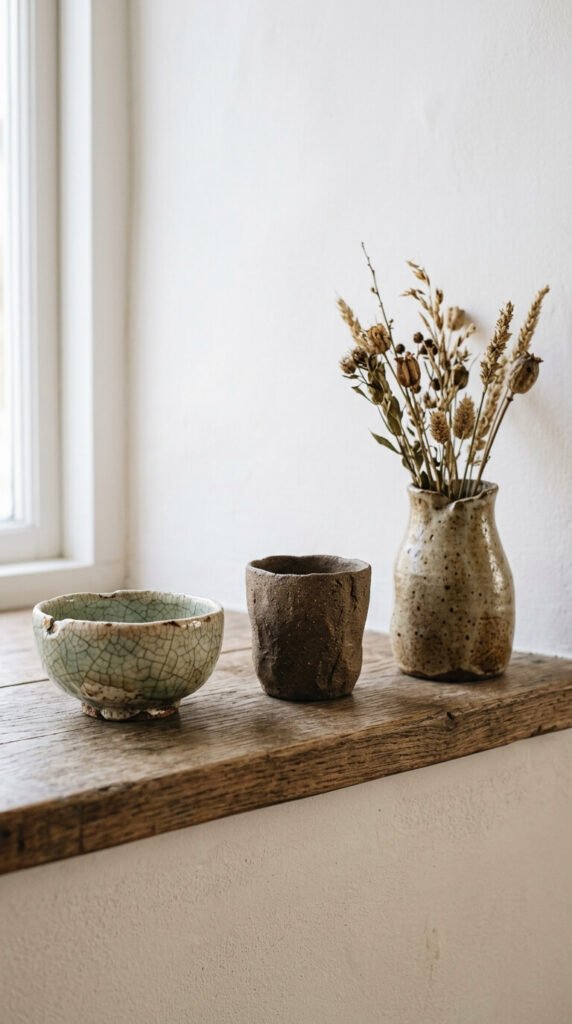
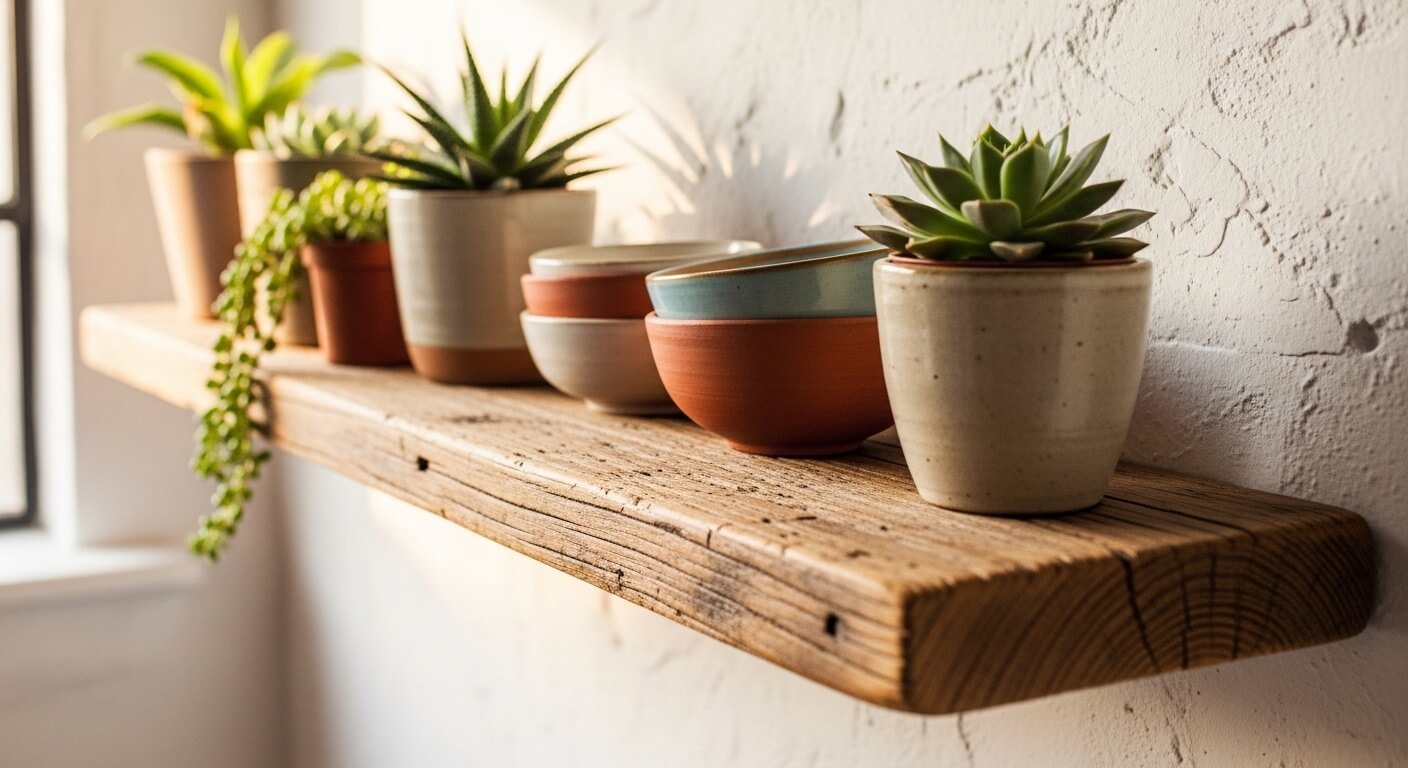
Wabi-sabi is the Japanese acceptance of imperfection. In decor, it means celebrating objects that are rough, asymmetric, cracked, or aged. Seek out hand-thrown ceramics with uneven glazes, irregular shapes, or visible tool marks. These tell a story. Avoid mass-produced, perfectly uniform pieces. Handmade ceramics from local potters or Etsy shops often run $15–$40. Display two or three together on a shelf with intentional spacing. The imperfection is the beauty. That’s the whole point.
16. Introduce Incense Into Your Daily Routine
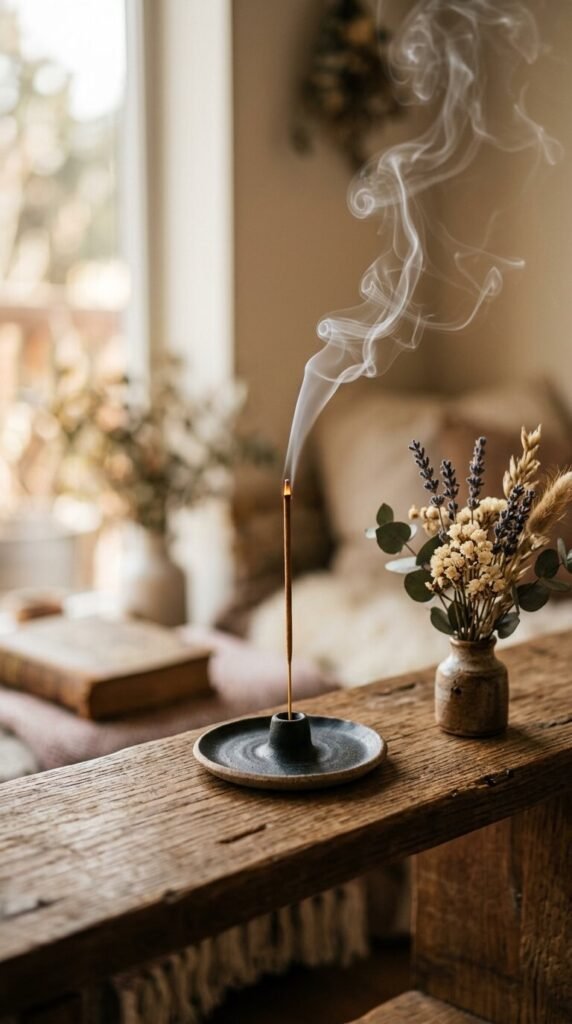
Scent is the fastest path to atmosphere. Burning incense is a practice shared across Japanese, Chinese, Indian, and Balinese spiritual traditions. Sandalwood, hinoki, and oud are the most commonly used scents in Asian sacred spaces — warm, woody, and grounding. A box of quality incense sticks costs $5–$15. Pair them with a simple ceramic or stone incense holder. Burn one stick each morning or evening. The ritual of lighting it matters as much as the scent itself.
17. Use a Tatami-Inspired Floor Mat in the Bedroom
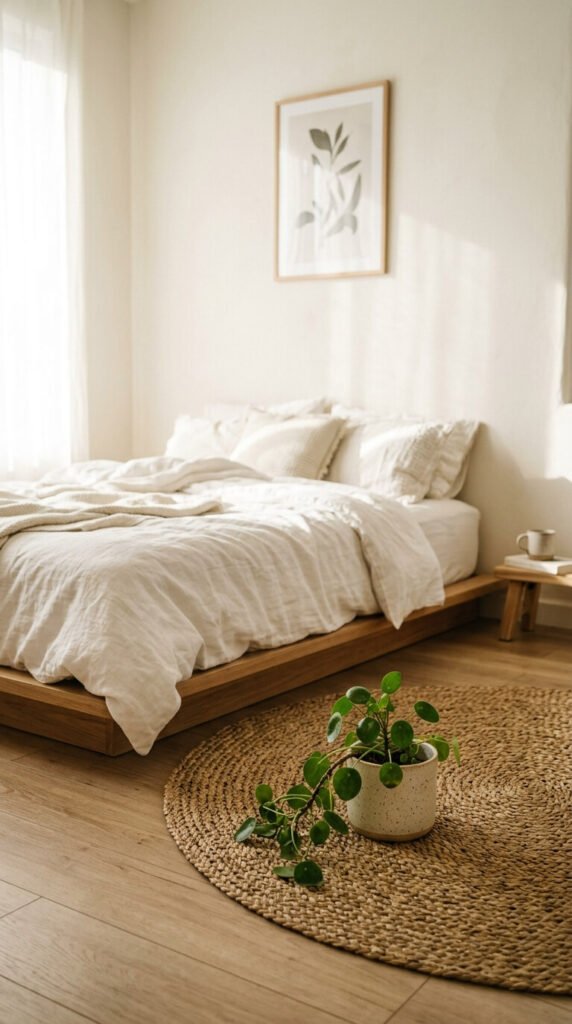
Tatami mats are made from woven rush grass and have been the foundation of Japanese interiors for centuries. You can bring that energy home with a natural seagrass or rush mat in the bedroom. Place one beside your bed as a landing spot for your feet each morning. It adds texture and warmth underfoot without covering the whole floor. Seagrass mats are available at garden and home stores for $20–$45. The natural smell is a quiet daily bonus.
18. Paint One Wall in a Muted Earth Tone
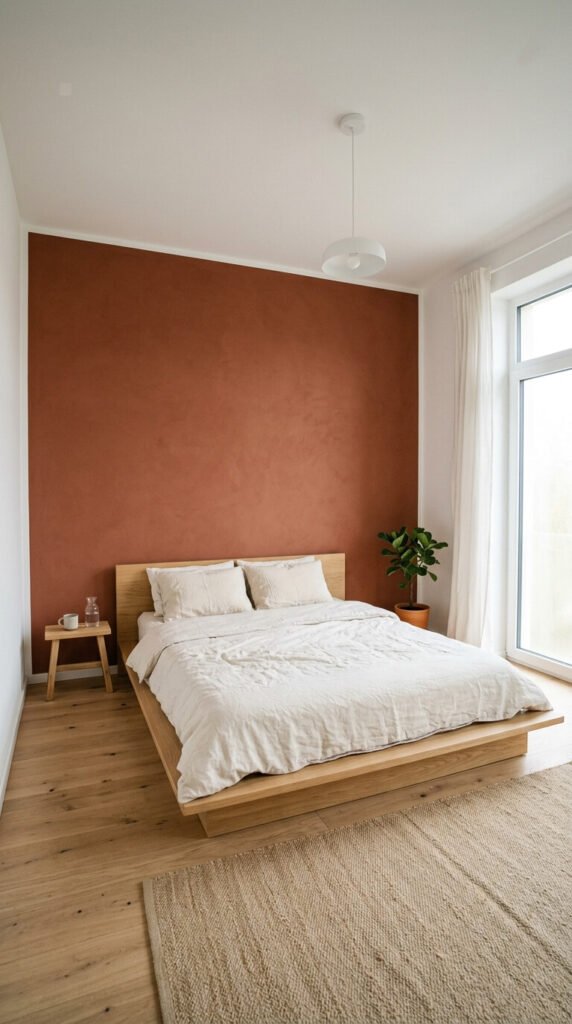
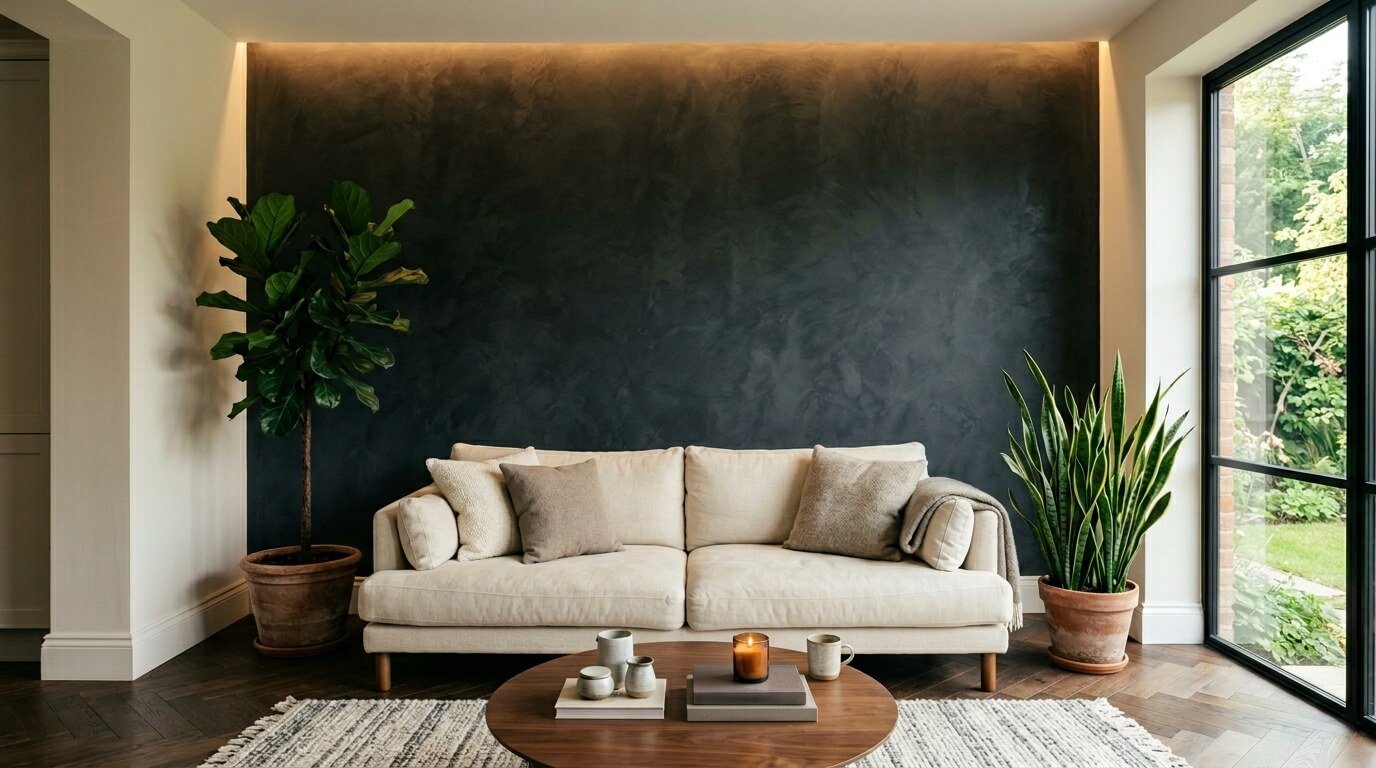
Color has enormous power. Asian interiors favor muted, earthy palettes — dusty terracotta, slate grey, warm ochre, deep moss green. Choose one wall and paint it a rich earth tone. Leave the rest of the room white or cream. The contrast creates depth without clutter. Most paint brands offer sample pots for $5–$8 so you can test before committing. No art needed on the accent wall — the color itself is the statement. It changes how every object in the room reads.
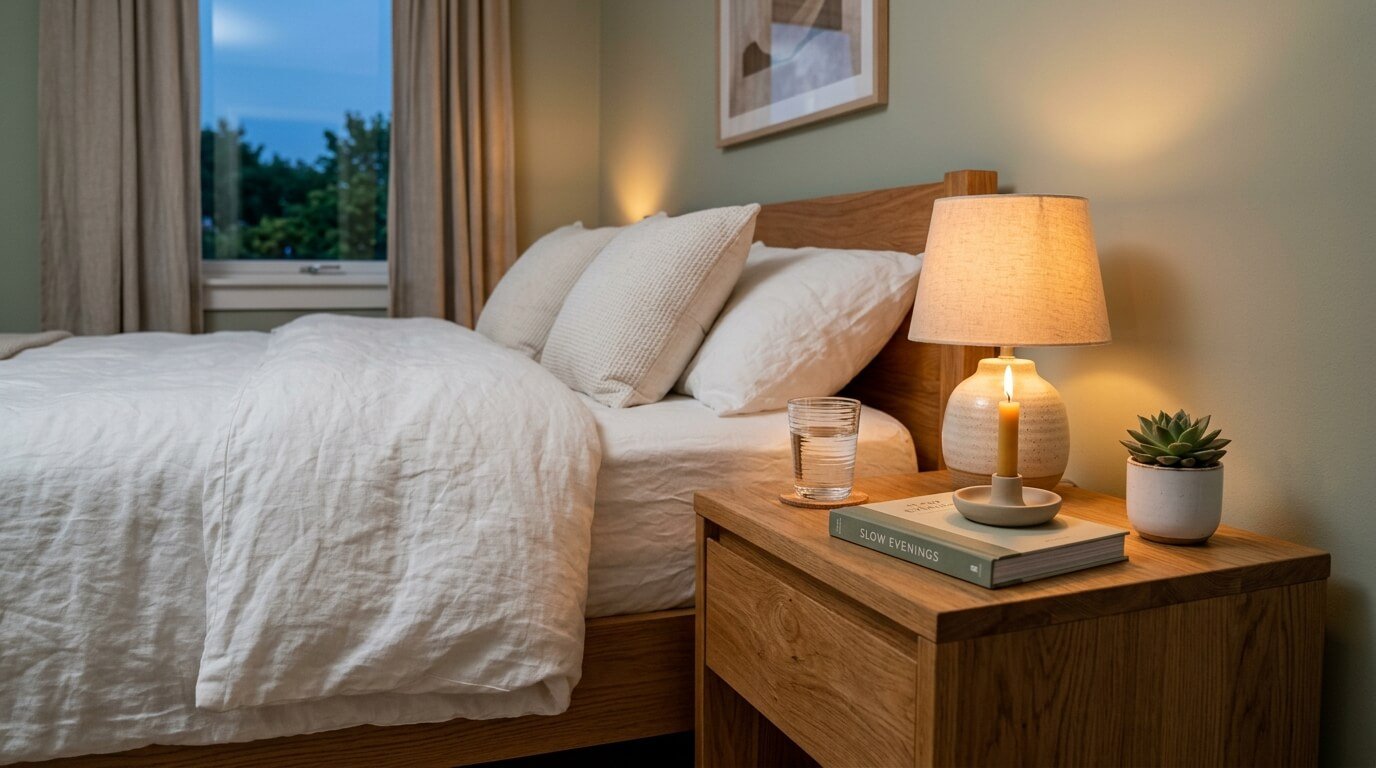
19. Place a Singing Bowl on Your Nightstand
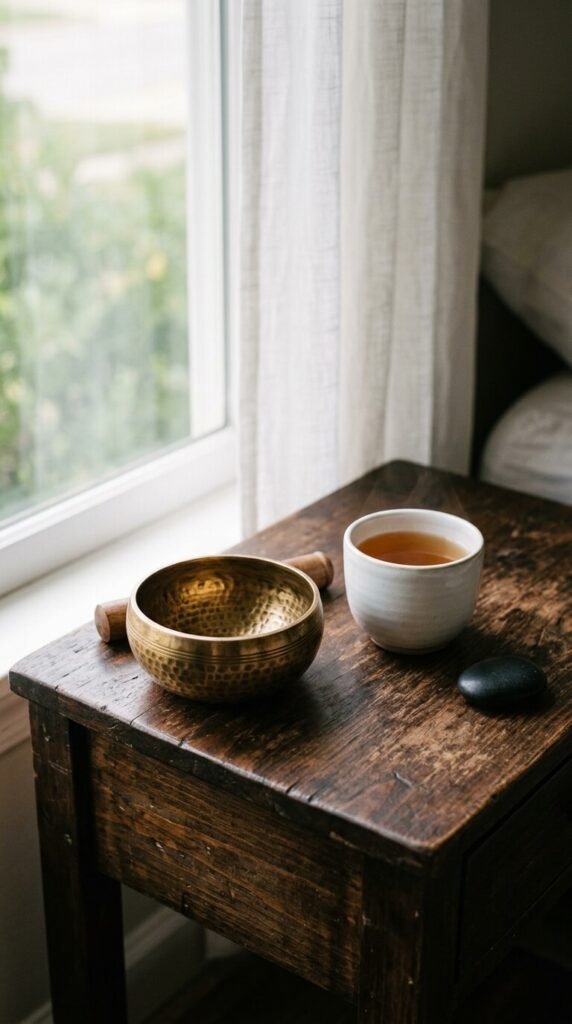
A singing bowl is both a functional object and a piece of sculpture. Originally used in Tibetan and Himalayan Buddhist practice, they’re now widely used as a mindfulness tool. Strike or rim the bowl with a wooden mallet to produce a clear, resonant tone. The sound naturally slows your breathing. Place one on your nightstand as a morning and evening ritual object. Brass or copper singing bowls cost $20–$50 and are beautiful to look at even when silent.
20. Frame Pressed Botanical Prints in Minimal Frames
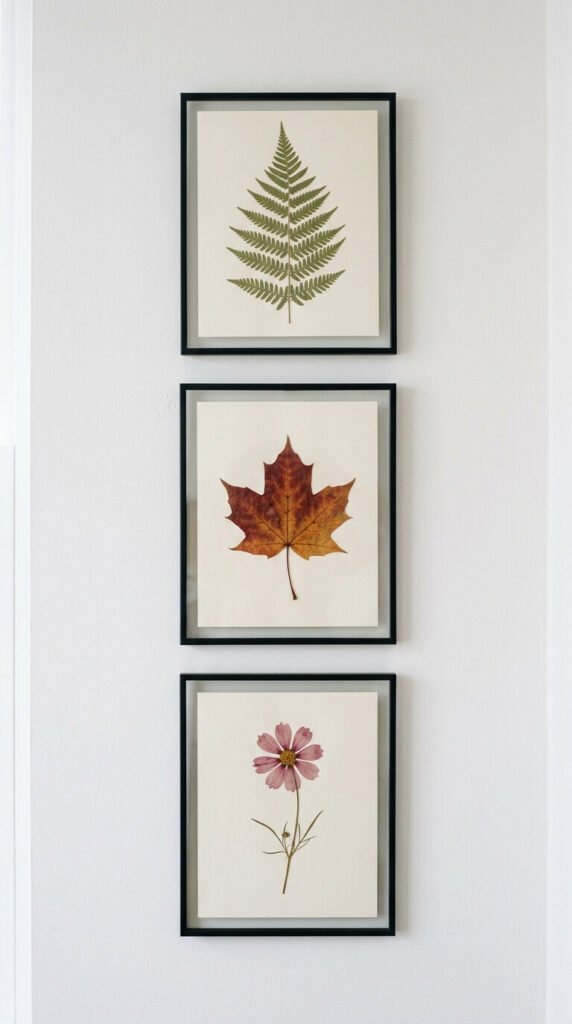
Pressed botanicals are a longstanding art form across East Asia, particularly in China and Japan where nature documentation was considered a spiritual practice. Press your own plants between heavy books for two weeks, then mount them on cream cardstock inside simple thin frames. Ferns, ginkgo leaves, and single blossoms work beautifully. Frame sets of three in matching minimal frames for a cohesive gallery. The total cost can be under $20. It’s personal, slow, and deeply connected to nature.
21. Introduce a Water Feature — Even a Small One
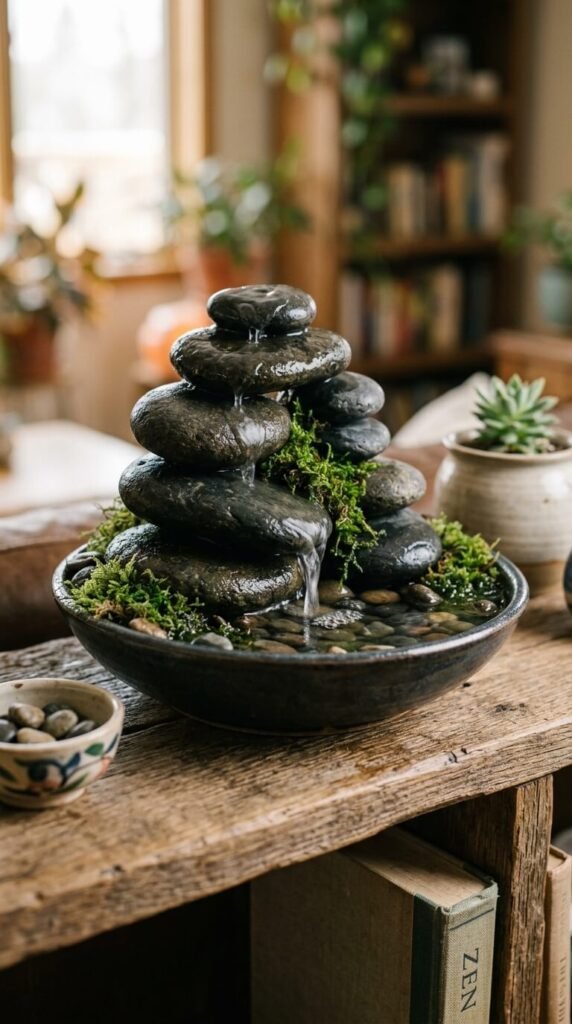
The sound of moving water is one of the most universally calming things in the world. It’s central to Chinese garden design and Japanese rock garden philosophy. A small tabletop fountain — stone, ceramic, or bamboo spout — brings that sound indoors. Plug-in tabletop water features run $30–$70. Place one on a shelf, desk, or bathroom counter. The sound masks background noise and creates an ambient layer of calm that you’ll notice immediately. Change the water weekly to keep it fresh.
22. Use Neutral, Undyed Textiles Throughout
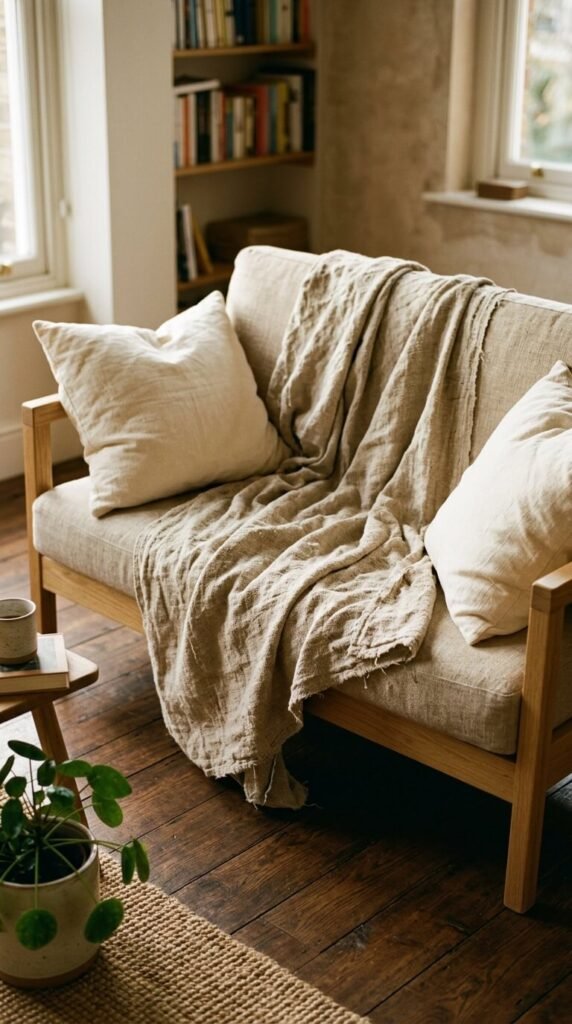
Color minimalism is deeply embedded in Japanese and Zen aesthetics. The idea is that undyed, natural materials let texture and form speak instead of color. Swap out bold-patterned throws and cushions for ones in natural linen, raw cotton, or undyed muslin. Creams, warm whites, and oatmeal tones work together effortlessly. These textiles also age beautifully — softening and becoming more characterful over time. Look for them at budget linen shops or discount fabric stores. Hemming your own cushion covers is a simple weekend project.
23. Build a Simple Altar or Intention Shelf
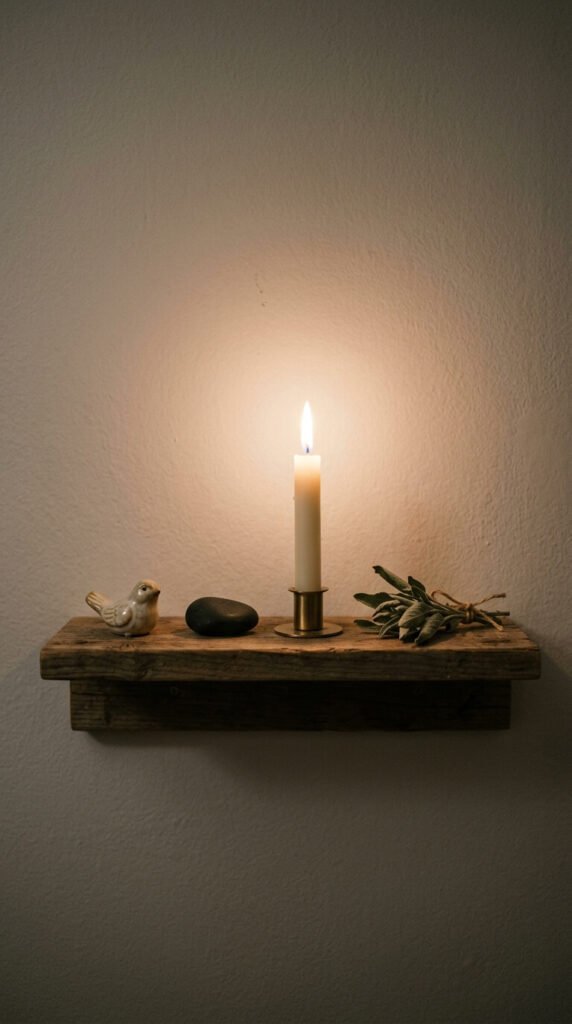
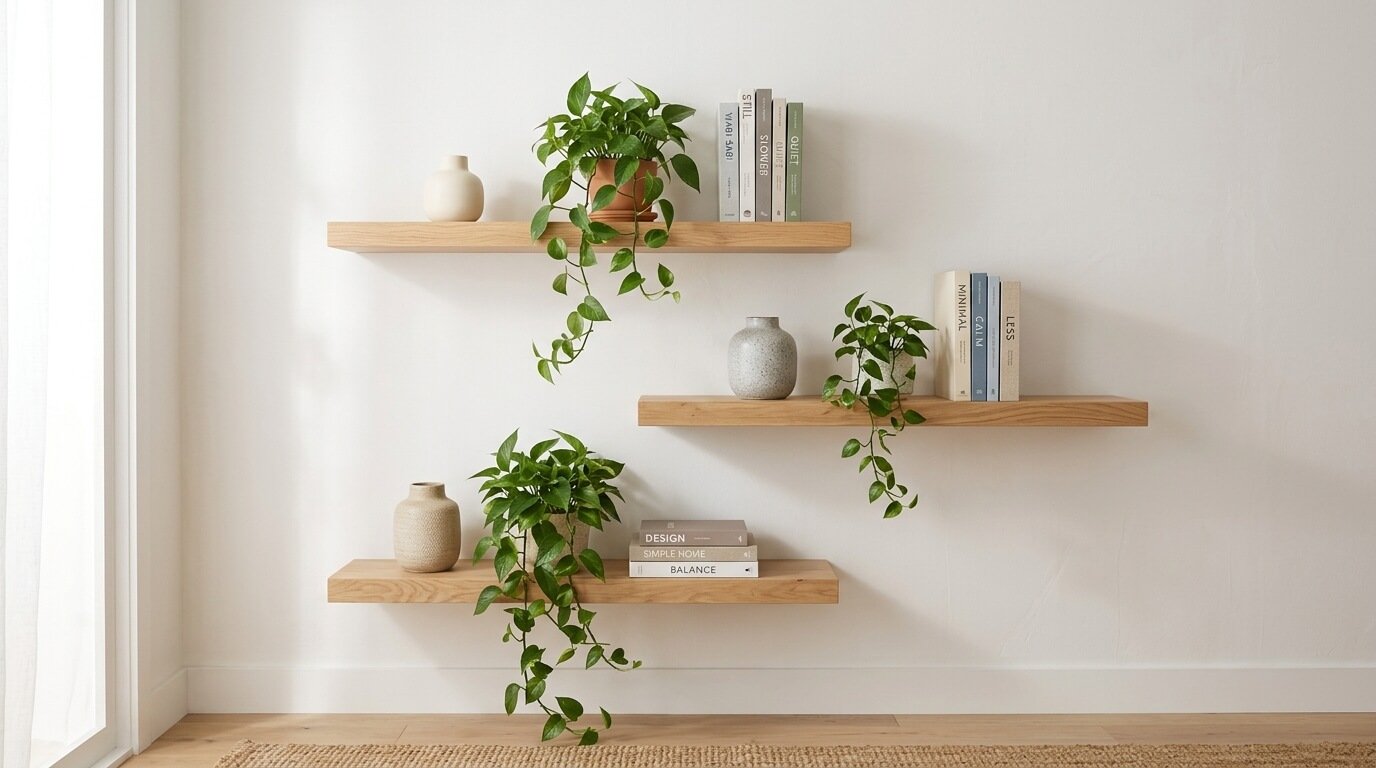
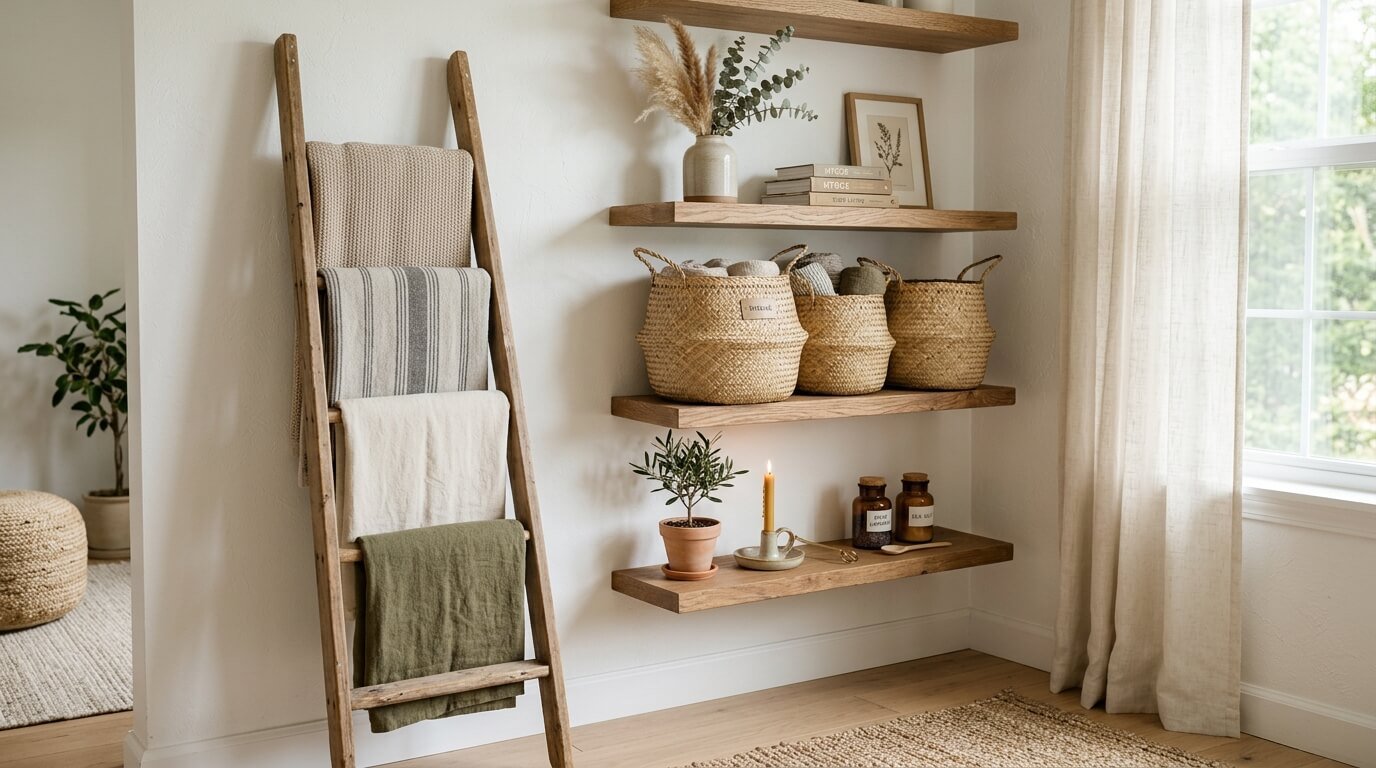
In many Asian homes — particularly in Bali, Japan, and Thailand — small altar shelves hold symbolic objects that center the space. You don’t need religious context to benefit from this idea. A small floating shelf with a few meaningful objects — a stone from somewhere you love, a candle, a single dried flower — creates a daily anchor point. Stand in front of it for 30 seconds each morning. The practice of curating these objects with intention is itself a form of slow design. Shelves run $10–$25 at most hardware stores.
24. Keep Surfaces Deliberately Empty
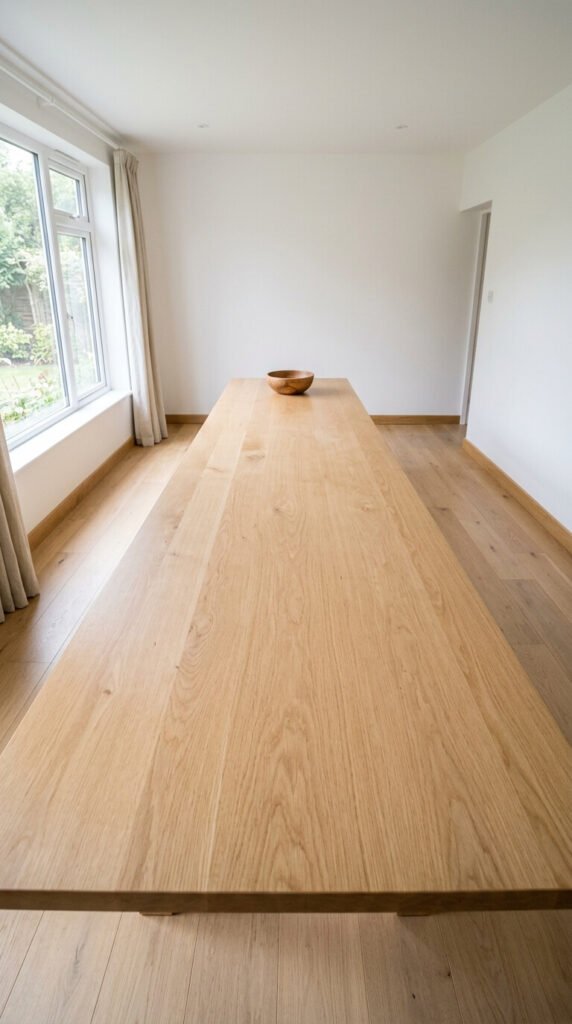
This is the hardest one — and the most powerful. Empty space is not wasted space. In Japanese design, ma refers to negative space: the deliberate gap between objects that gives them meaning. A completely clear table, a bare windowsill, a shelf with only one object — these are design choices, not oversight. Challenge yourself to remove one item from every surface in your home. Live with the emptiness for a week. You’ll find that what remains looks more intentional, more beautiful, and more you.
Conclusion
Tranquility is not something you buy all at once. It’s something you build — one small decision at a time. Every smooth stone, every diffused lantern, every cleared surface moves your home a little closer to the kind of calm that Asian design philosophy has practiced for centuries. The good news is that none of this requires a renovation or a big budget. Most of what’s described here costs under $50. Start with two or three items that feel right for your space. Notice how the room shifts. Then add one more. The most peaceful homes aren’t perfect — they’re intentional. And intention is something you already have.