22 Ornate Victorian Decor Details That Add Grandeur


Disclosure: As an Amazon Associate we earn from qualifying purchases. Some links on this page may be affiliate links — if you click through and make a purchase, we may receive a small commission at no extra cost to you.
Victorian interiors have a magnetic pull that modern minimalism simply cannot replicate. Every surface tells a story. Every corner holds something worth noticing. If you have ever walked into a beautifully restored Victorian home and felt that immediate sense of awe, you already know what these spaces are capable of. This guide breaks down 22 specific decor details — from ceiling medallions to velvet drapery — that bring that rich, layered, old-world grandeur into any home. Whether you are working with a tight budget or a full renovation, there is something here you can use today.
1. Ceiling Medallions
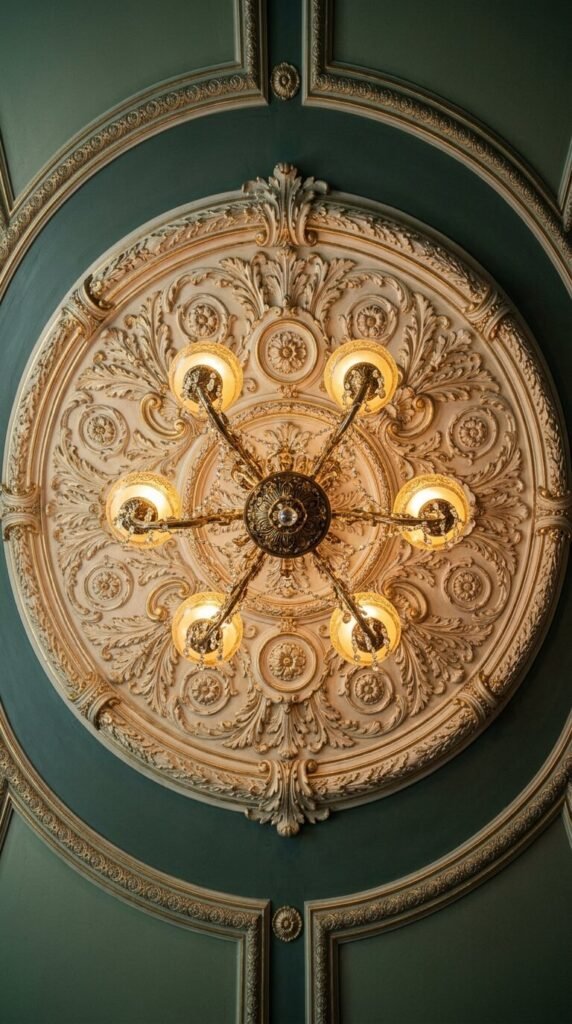
Ceiling medallions are one of the fastest ways to add Victorian character overhead. They frame a chandelier and draw the eye upward. Foam or polyurethane versions cost as little as $20–$60 and look nearly identical to plaster originals. Paint them in antique white or gold to match your trim. Installation is a simple DIY project with adhesive and a little caulk. Even in a modern room, a ceiling medallion signals craftsmanship. It makes the whole ceiling feel intentional.
2. Crown Molding with Dentil Details
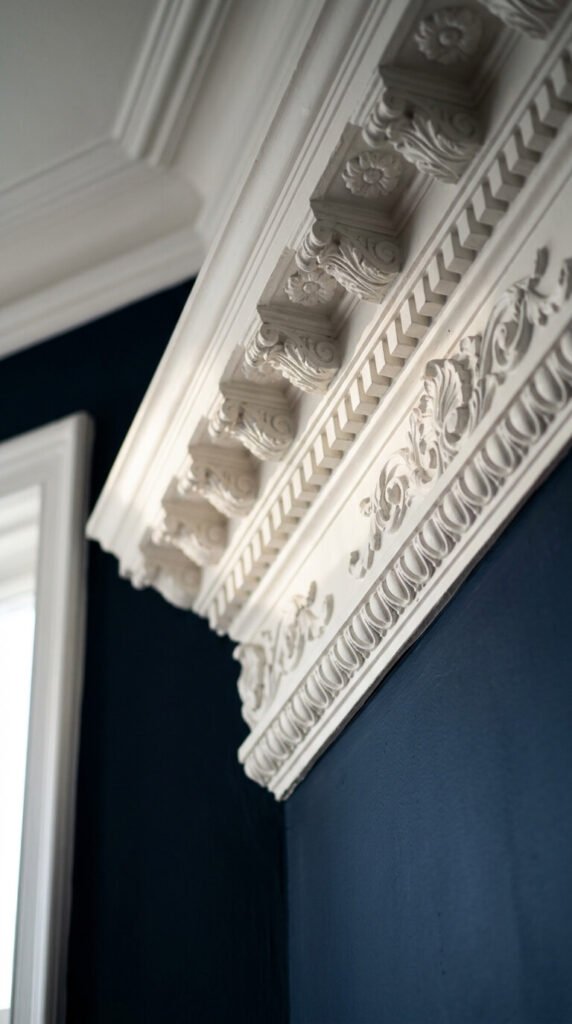
Standard crown molding is nice. Dentil crown molding is stunning. Those small, evenly spaced block details along the lower edge are a hallmark of Victorian architecture. You can find pre-cut dentil molding at most home improvement stores for under $3 per linear foot. Paint it bright white against a dark wall color for maximum drama. In older homes, simply replacing plain molding with dentil trim changes the entire personality of a room.
3. Velvet Drapery in Jewel Tones
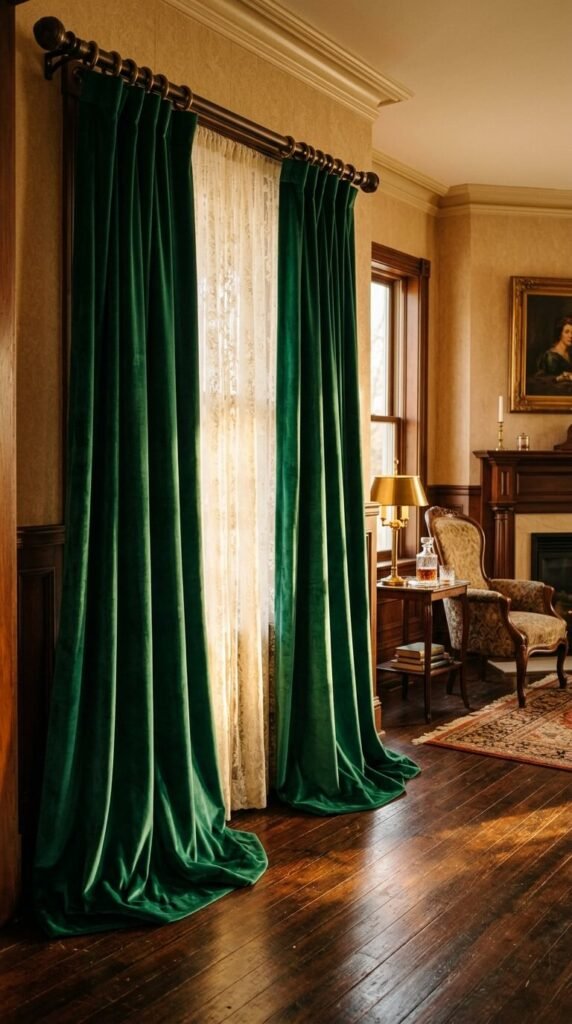
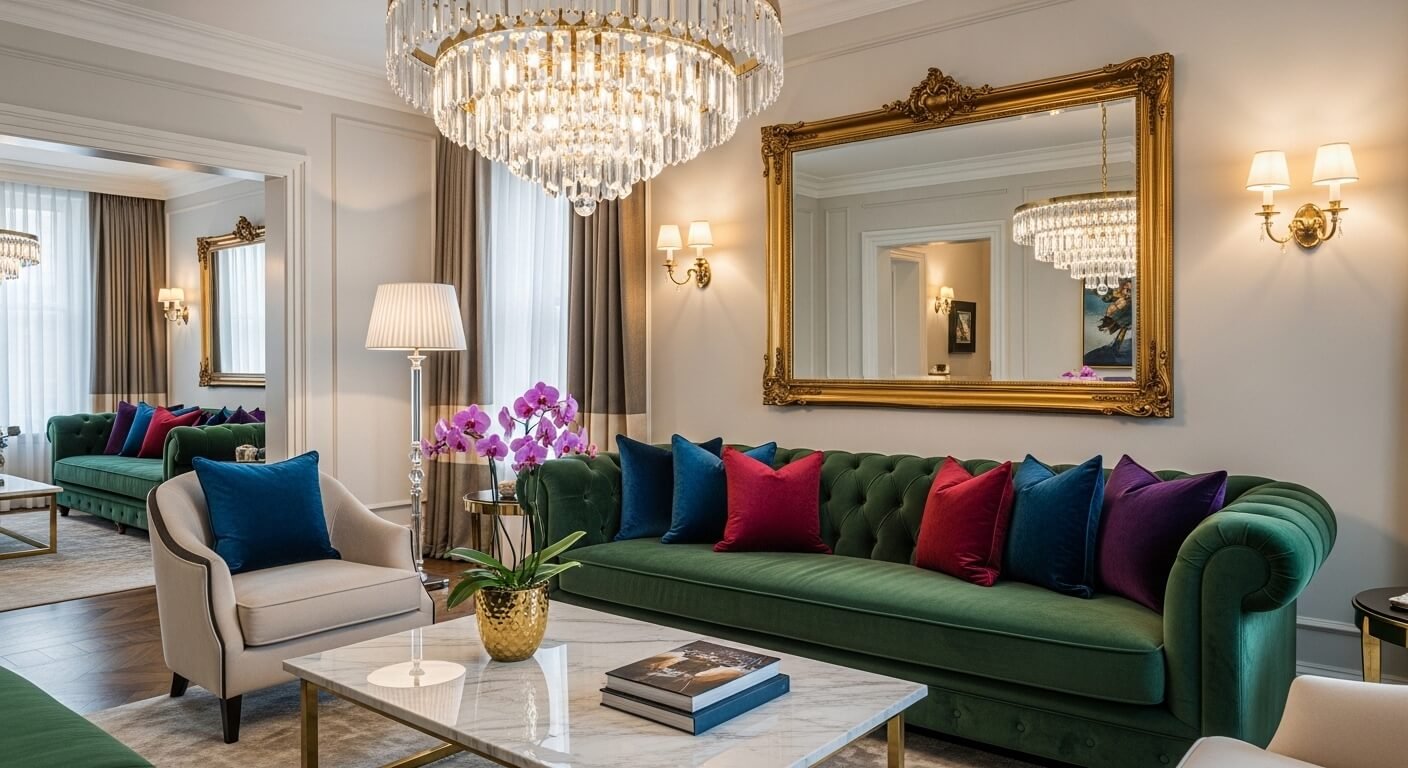
Nothing says Victorian like heavy velvet drapes in deep jewel tones — emerald, sapphire, burgundy, or plum. They absorb light and add instant warmth to any room. You do not need custom drapes. IKEA or Amazon carry velvet panels in the $30–$80 range per pair. Hang them high and let them pool slightly on the floor for that dramatic effect. Layer them over sheer white under-curtains to soften the look during the day.
4. Ornate Picture Rails and Gallery Walls
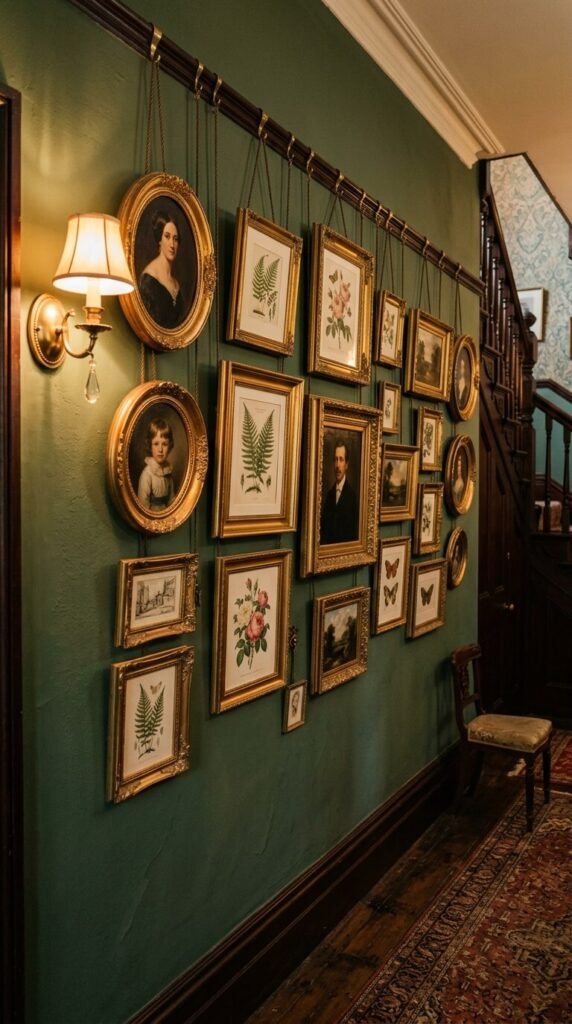
Victorian homes displayed art everywhere — and they did it using picture rails, a horizontal molding strip near the ceiling from which frames are hung with hooks and cord. This avoids wall damage and lets you rearrange easily. Install a simple picture rail molding and load it with gilded frames in mixed sizes. Fill them with free printable botanical illustrations, vintage maps, or family portraits. The asymmetry and layering are part of the charm.
5. Fireplace Mantels with Carved Columns
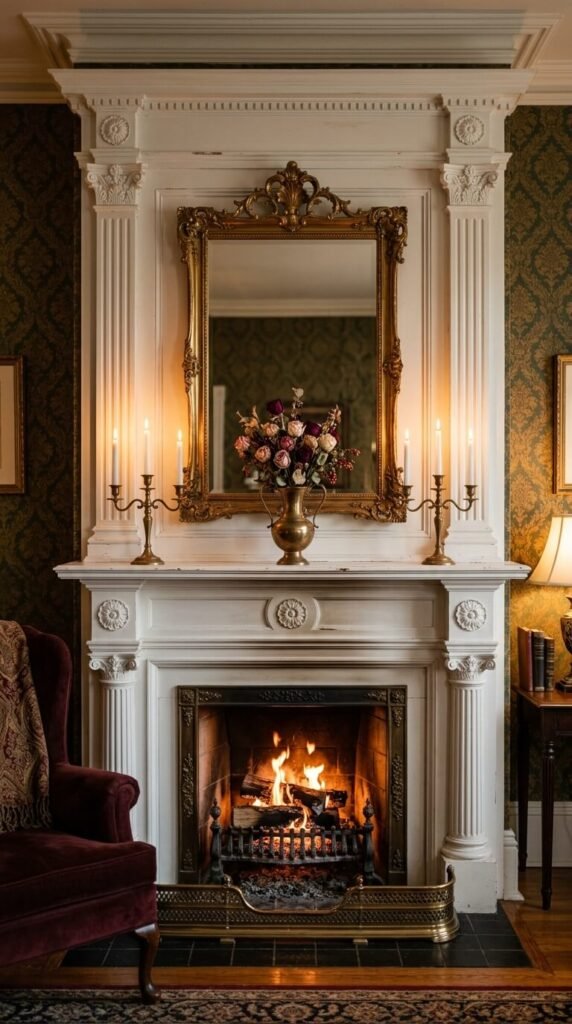
A Victorian fireplace mantel is often the focal point of an entire room. The key features are fluted columns (pilasters), carved rosettes, and a wide mantel shelf. Salvage yards and ReStore locations often sell antique mantels for $100–$400. Alternatively, decorative mantel surround kits at home improvement stores cost $150–$500 and can be painted to look like carved wood or marble. Style the shelf with a gilded mirror, candles, and dried botanicals.
6. Stained Glass Accent Panels
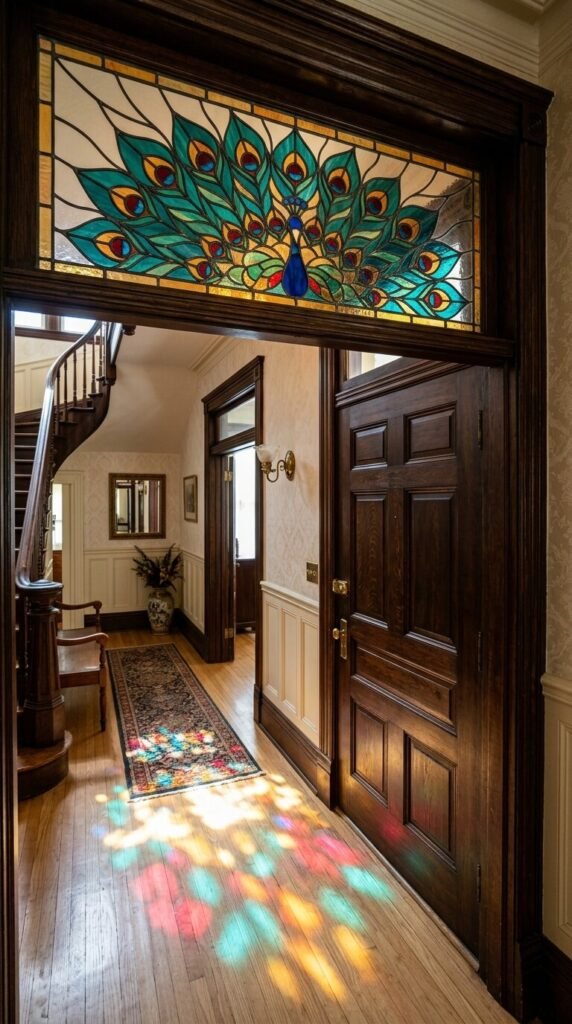
Stained glass was everywhere in authentic Victorian homes — in transoms, sidelights, and cabinet doors. You do not need to commission custom glasswork. Adhesive stained glass film costs $15–$40 per sheet and mimics the look convincingly on plain windows. For something more permanent, small stained glass panels from antique dealers or Etsy shops can be framed and hung in a window. Even one panel transforms a hallway or landing.
7. Wainscoting and Paneled Walls
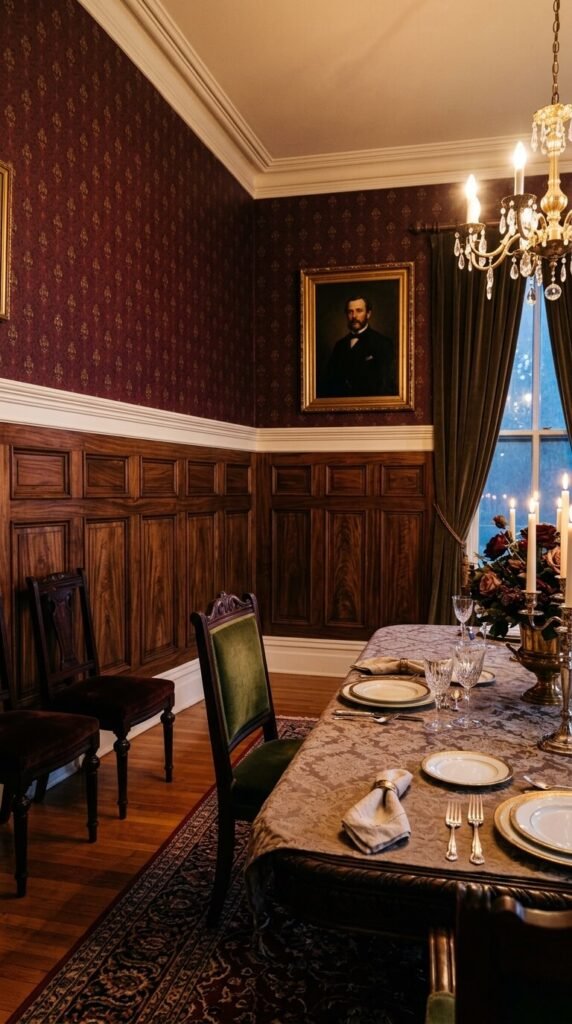
Wainscoting — wood paneling on the lower half of a wall — is one of the most iconic Victorian interior elements. Raised panel wainscoting with a chair rail on top is the traditional style. DIY-friendly beadboard wainscoting kits start at around $1–$2 per square foot. Paint it white for a classic look, or stain it dark walnut for a moody, library-style feel. Pair it with a bold wallpaper above the chair rail for full Victorian effect.
8. Patterned Encaustic or Tile Entryway Floors
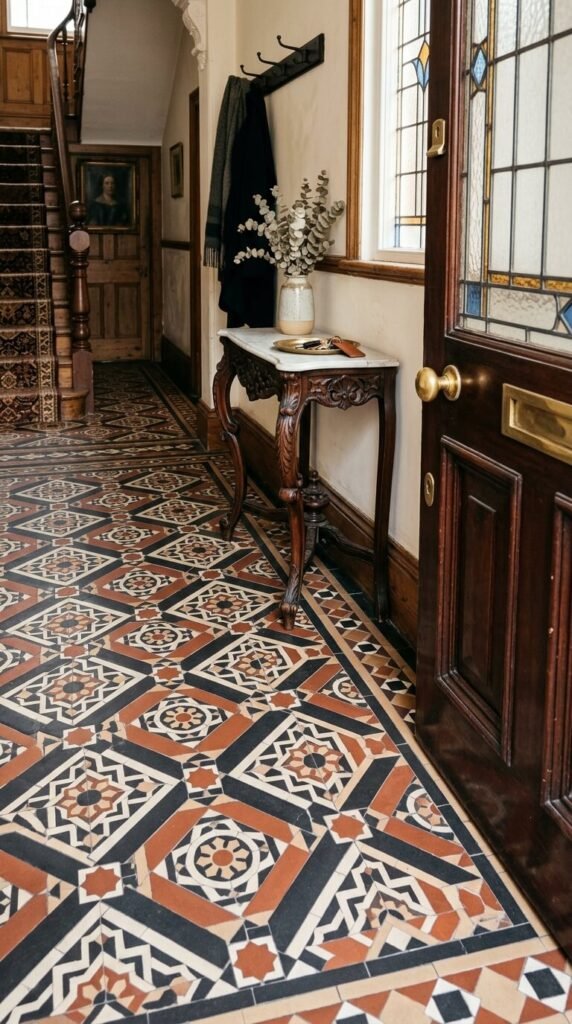
The moment a guest steps into a Victorian entryway with a geometric patterned tile floor, the tone is set. Black and white encaustic tile in geometric or floral patterns is the hallmark look. Reproduction cement tiles run $5–$12 per square foot. For a rental-friendly version, peel-and-stick encaustic-look vinyl tiles cost as little as $2 per square foot and are surprisingly convincing. Focus on the entry hall or a bathroom for maximum impact with minimal cost.
9. Dark, Rich Wall Colors
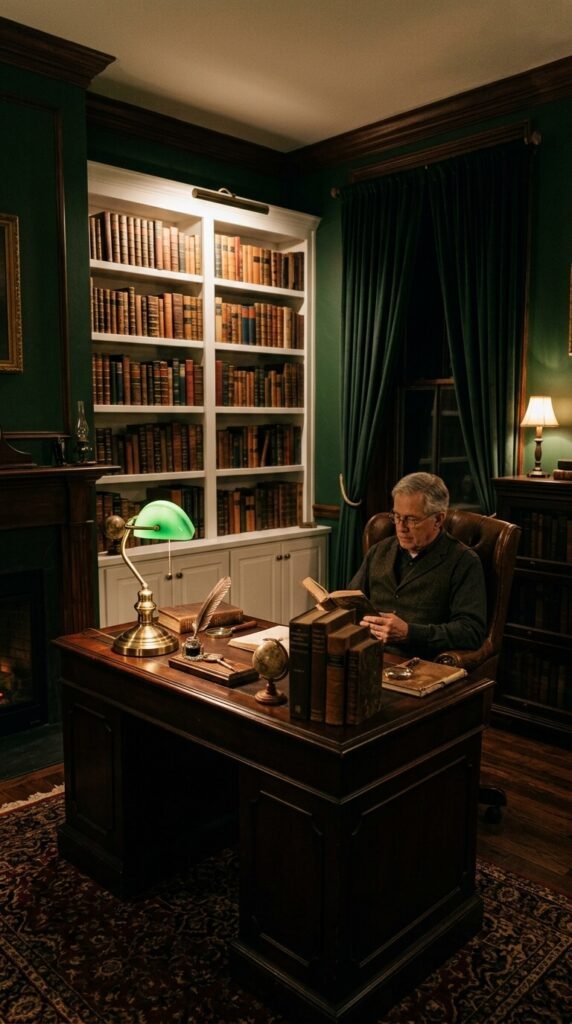
The Victorians were not afraid of dark walls. Forest green, oxblood red, midnight navy, and chocolate brown were common in parlors, libraries, and dining rooms. A single can of quality wall paint costs $35–$60 and completely reshapes a room’s personality. Dark walls make furniture pop, art stand out, and rooms feel more curated. Start with one accent wall if you are cautious. Most people quickly want to paint the rest.
10. Gilded and Ornate Mirrors
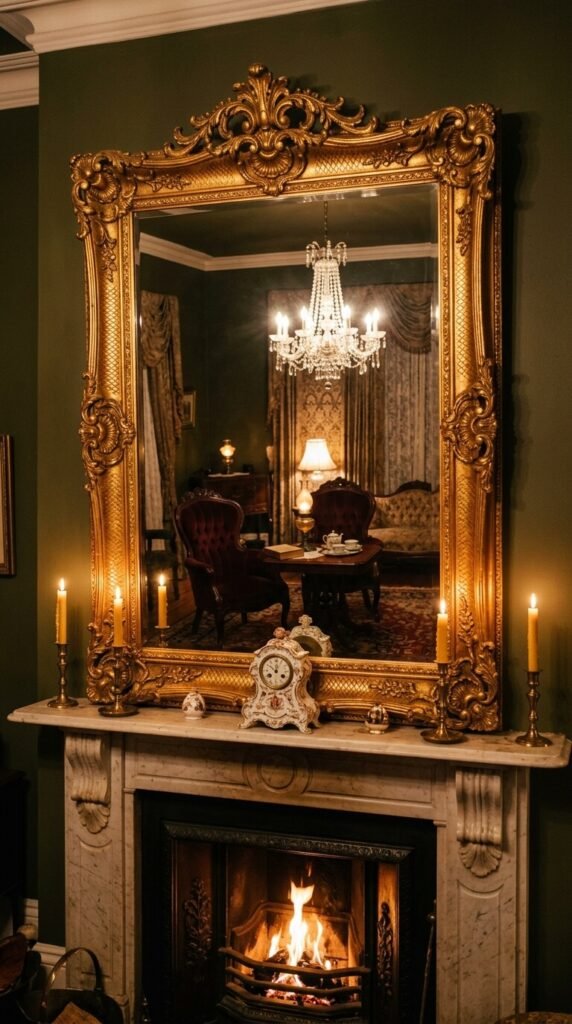
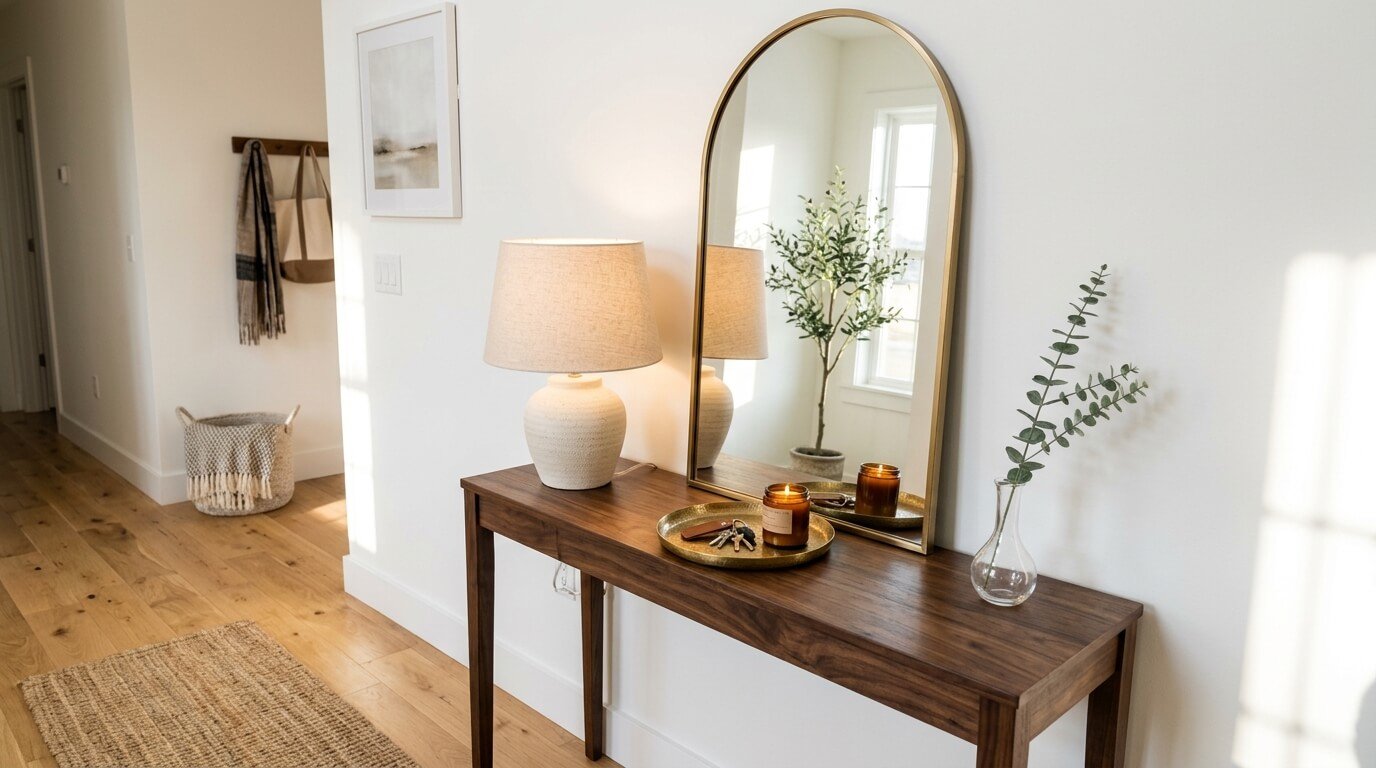
A heavily carved, gilded mirror is one of the most affordable ways to add Victorian grandeur. Antique shops and estate sales regularly have ornate mirrors for $50–$200. Thrift stores sometimes stock plain mirrors that you can regild yourself using gold leaf sheets or metallic spray paint — a DIY project that costs under $20. Size matters: go big. A floor-length or oversized wall mirror commands attention and bounces light around dark, moody rooms.
11. Tassels and Fringe on Upholstery
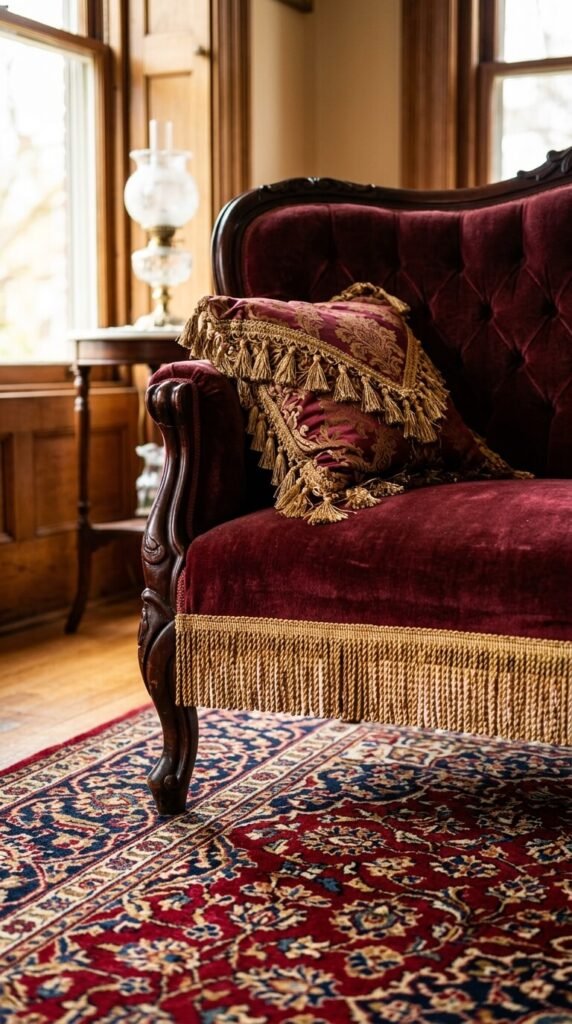
Tassels and bullion fringe trim are small details that read as unmistakably Victorian. Adding fringe to the hem of a sofa or chair is a simple upholstery project that costs $5–$20 in trim from a fabric store. You can hand-stitch or hot-glue it onto existing furniture. Tasseled throw pillows in jewel tones finish the look. These details signal the kind of careful, layered decorating that defines Victorian interiors without a full furniture replacement.
12. Crystal and Brass Chandeliers
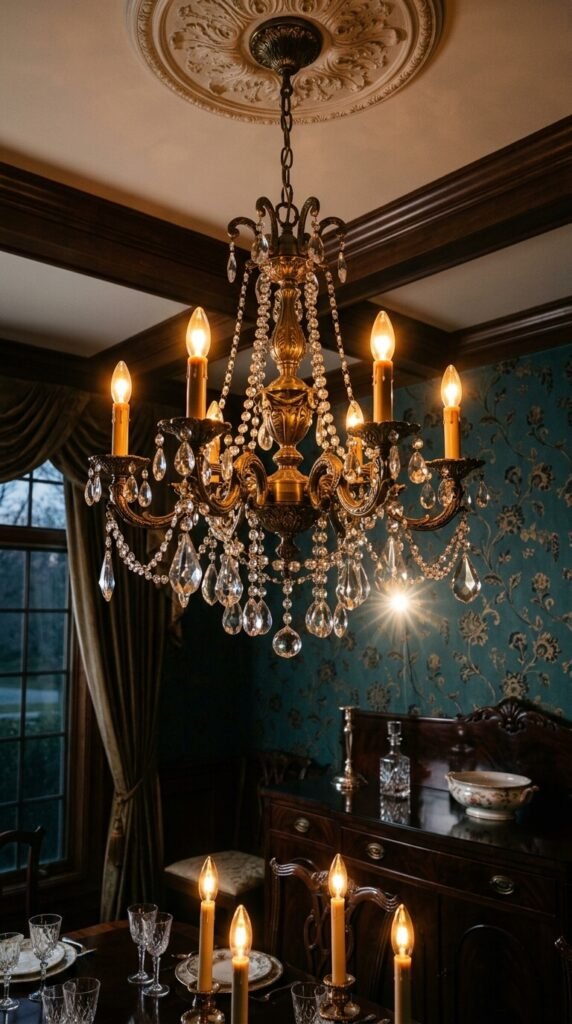
Lighting was a showpiece in Victorian homes. A brass or antique bronze chandelier with crystal drops sets the entire mood of a dining room or entry hall. You do not have to spend thousands. Amazon and Wayfair carry crystal chandelier options for $80–$250 that look far more expensive. Swap out harsh LED bulbs for warm amber filament bulbs to get the candlelight glow that makes Victorian-style rooms come alive at night.
13. Pocket Doors with Etched Glass
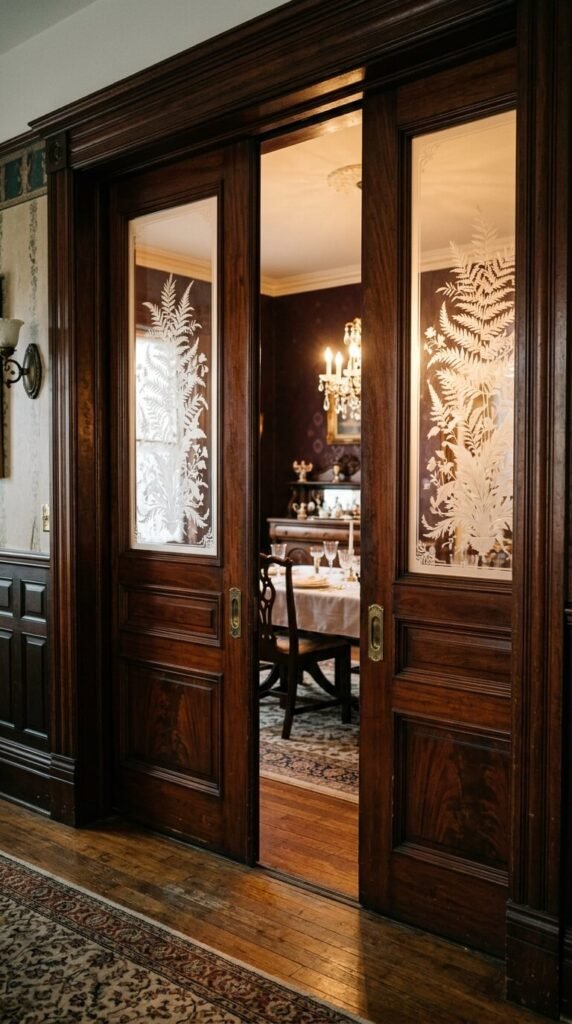
Pocket doors were a practical and elegant Victorian feature — allowing large entertaining rooms to be opened up or closed off. If your home already has pocket doors, restoring and upgrading them with etched glass inserts is a worthwhile investment. Glass etching spray costs around $10 and can create a frosted botanical design using adhesive stencils. If you are adding new doors, reproduction pocket door hardware kits run $200–$500 and dramatically change a room’s character.
14. Layered Persian and Oriental Rugs
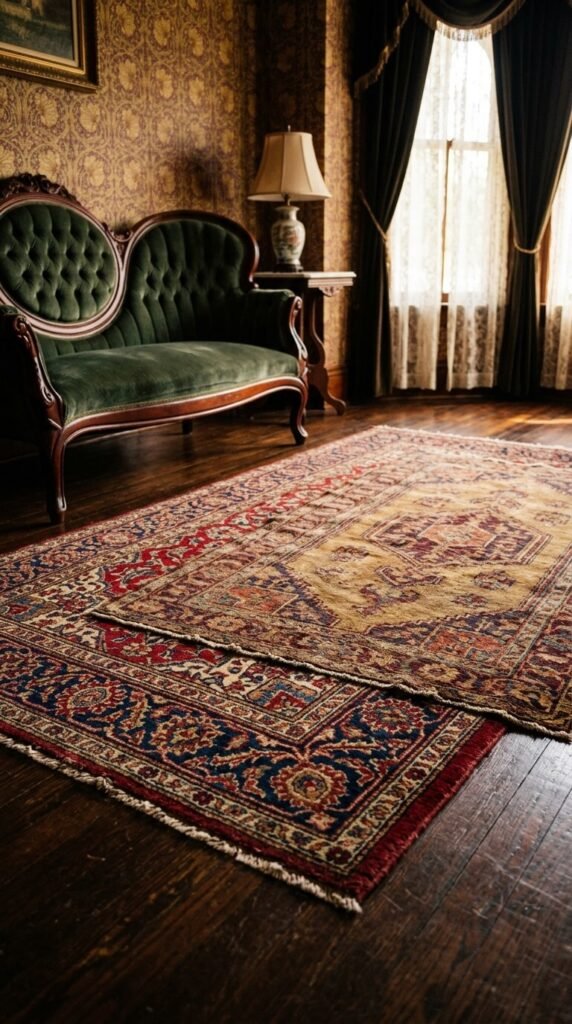
Victorians layered rugs without hesitation. Stacking a smaller, more ornate rug on top of a larger base rug adds depth and that collected, over-time aesthetic. Persian and Oriental-style rugs can be found at estate sales, thrift stores, and IKEA for $30–$300 depending on size. Look for rich red, navy, and gold tones with medallion or floral patterns. Worn and faded rugs are fine — in fact, they look more authentic than brand-new ones.
15. Botanical Print Collections
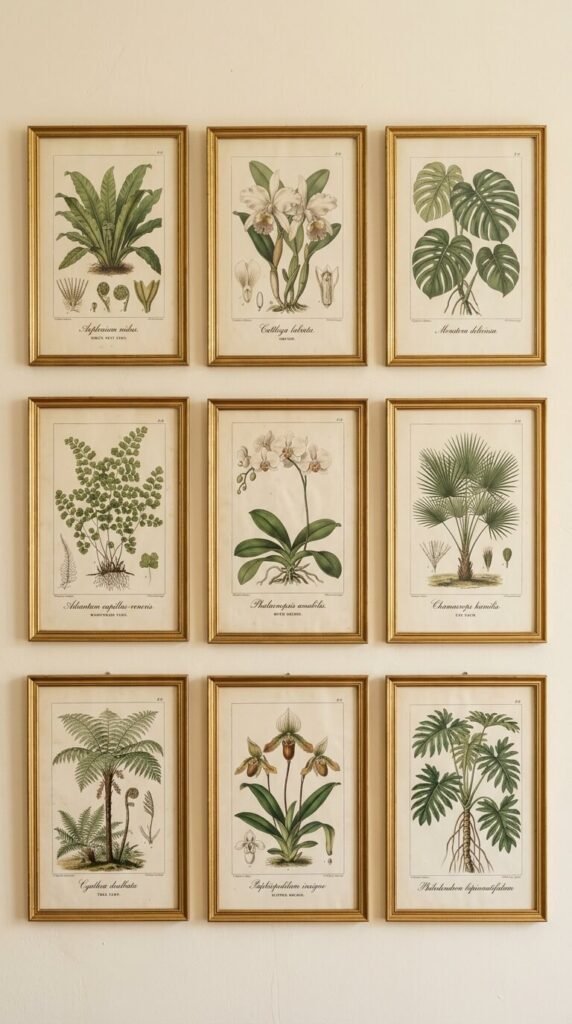
Botanical illustrations were wildly popular in the Victorian era — a reflection of the period’s obsession with natural history and exploration. Free public domain botanical prints from sites like Biodiversity Heritage Library or Rawpixel can be downloaded and printed at home or at a copy shop for under $5 per image. Frame them in matching gilded frames and hang in a grid. A set of nine above a sofa or sideboard looks like a deliberate, expensive design choice.
16. Clawfoot Bathtubs
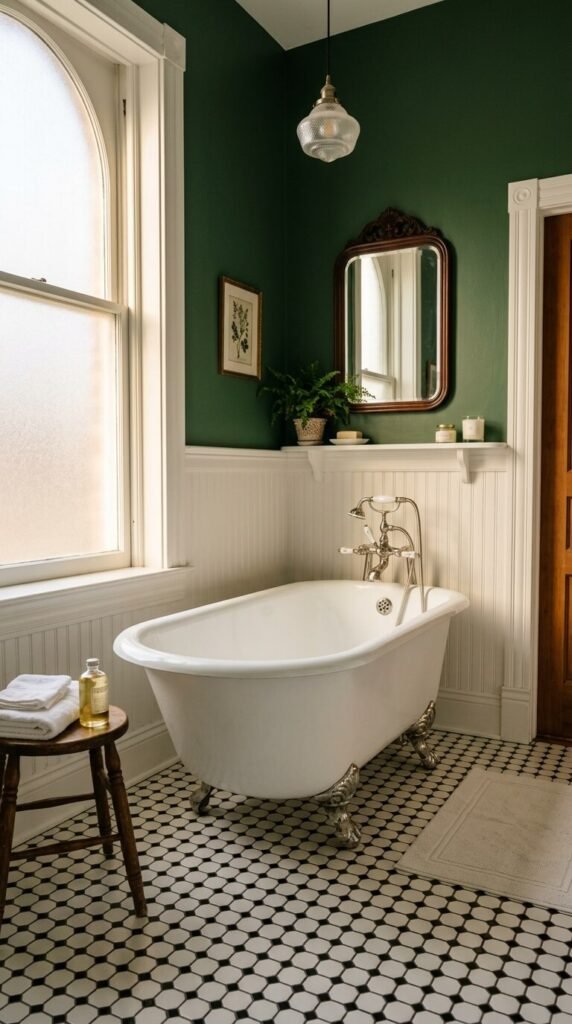
A clawfoot tub is the single most recognizable Victorian bathroom feature. Authentic cast iron versions show up at salvage yards for $200–$800 and can be reglazed. Modern reproductions in acrylic start around $600–$1,200 and are far lighter. Pair one with a telephone-style faucet in brushed nickel or oil-rubbed bronze. Even in a small bathroom, a clawfoot tub turns a functional space into something that feels like a private retreat from another century.
17. Dark Wood Built-In Bookshelves
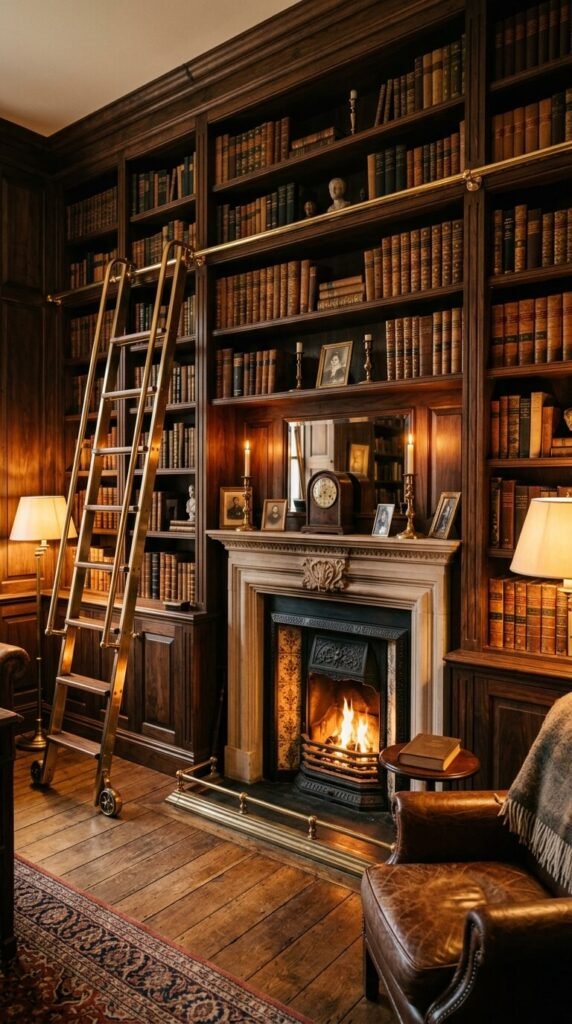
Floor-to-ceiling bookshelves in dark wood are a library fantasy rooted in Victorian domestic design. Dark walnut or mahogany stain on standard pine shelving creates that rich, expensive look at a fraction of the cost. Billy bookcases from IKEA, painted and trimmed with crown molding, are a widely used hack that reads as custom built-in. Style shelves with a mix of books, framed portraits, brass objects, and small dried arrangements — never purely books alone.
18. Wallpaper with Damask or Floral Patterns
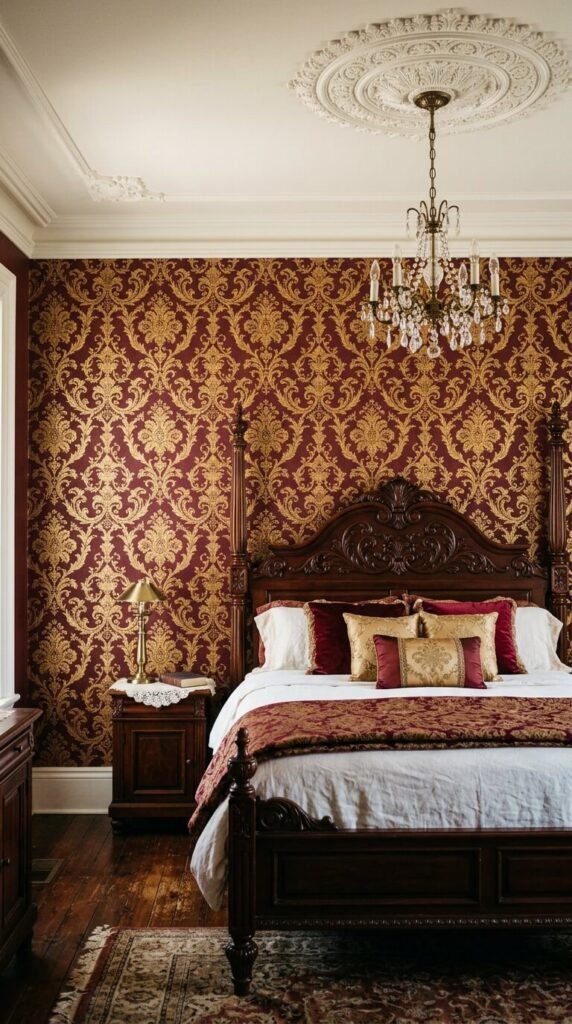
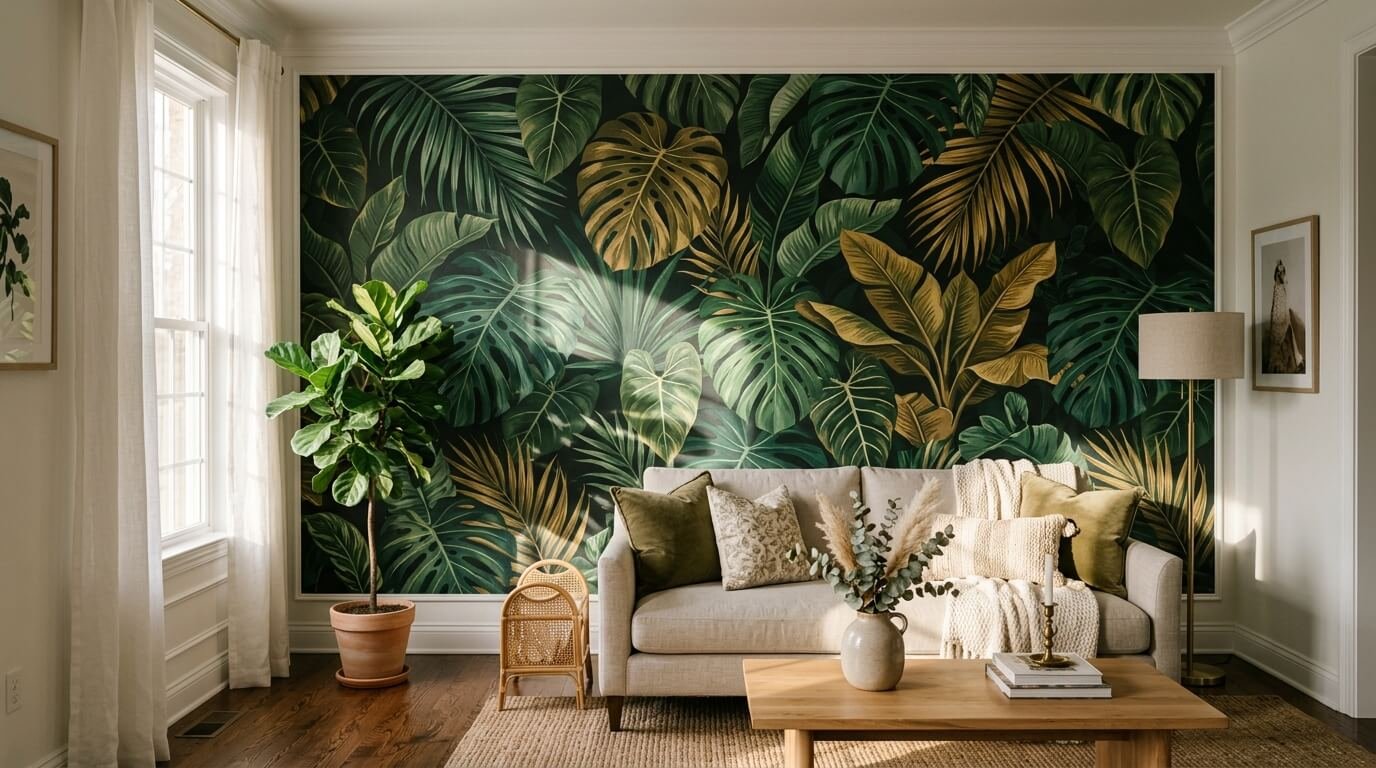
Bold, large-scale patterned wallpaper was a Victorian signature. Damask, floral, and paisley patterns in deep jewel tones or dark backgrounds were standard in dining rooms, parlors, and bedrooms. Modern peel-and-stick wallpaper makes this more accessible than ever — a single accent wall costs $50–$150 in materials. Look for papers with a textured or slightly embossed surface for a more authentic feel. Even one papered wall behind a bed or sofa changes the entire atmosphere of a room.
19. Transom Windows Above Doorways
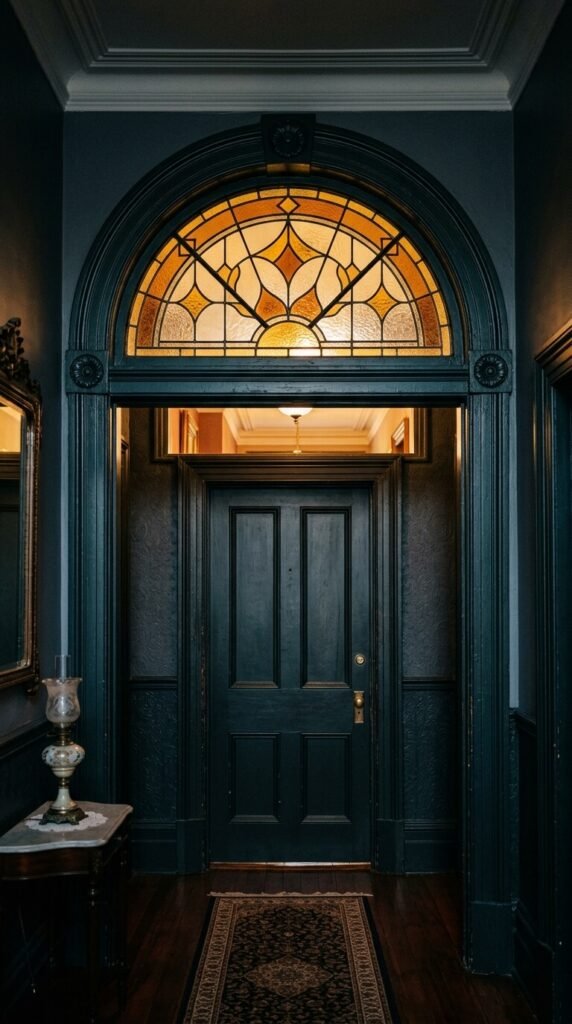
Transom windows — those narrow windows set directly above a door — allowed light and air to move through Victorian homes while maintaining privacy. In restoration or renovation, adding a decorative transom above an existing door is achievable with a trim carpenter in a weekend. For a simpler version, use a mirror or decorative lattice panel in a frame hung above a doorway to suggest the effect. It adds height and architectural interest immediately.
20. Marble or Marble-Look Surfaces
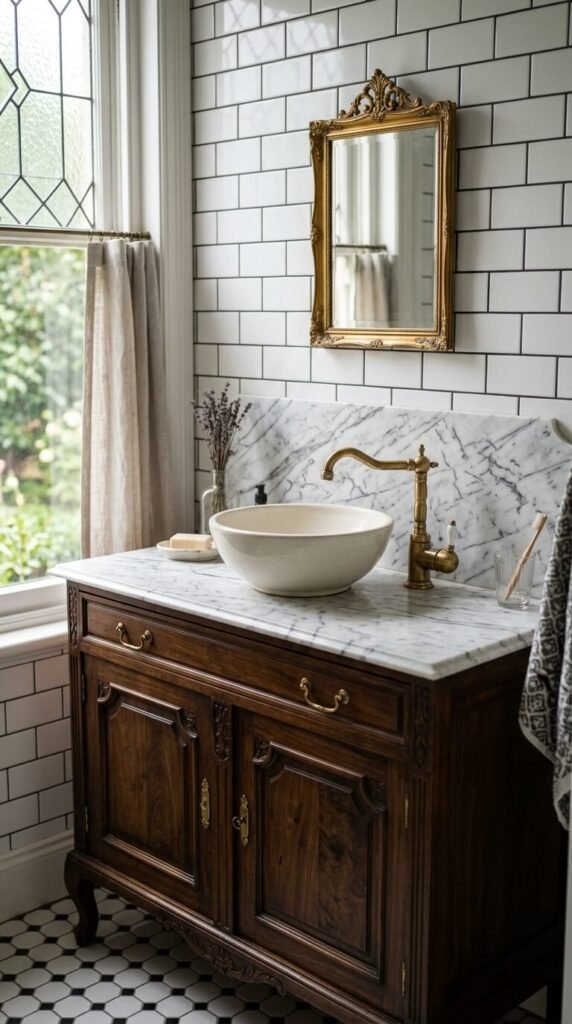
Marble was a status symbol in Victorian interiors — used on fireplace surrounds, bathroom vanities, and tabletops. Real marble remnants from stone yards can cost as little as $5–$15 per square foot for smaller pieces. Marble contact paper ($10–$25 per roll) is a convincing budget stand-in for shelves and tabletops. Look for warm white Carrara or dramatic black Nero Marquina patterns. Even a marble-topped side table or bathroom shelf adds immediate period credibility.
21. Brass Hardware Throughout
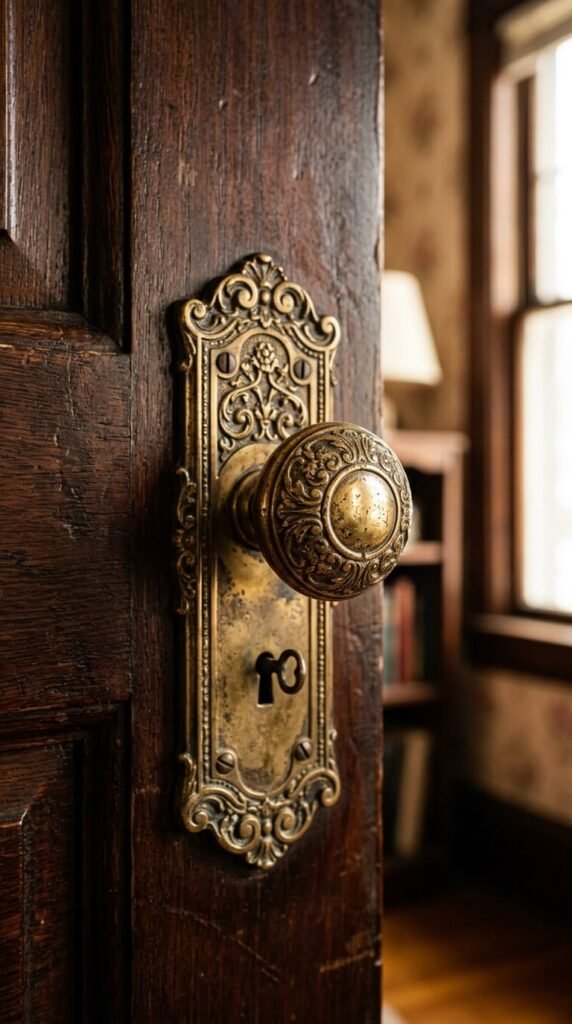
In Victorian homes, every piece of hardware was an opportunity for detail — door knobs, keyhole escutcheons, curtain rods, drawer pulls, coat hooks. Swapping out modern chrome or brushed nickel hardware for antique brass or unlacquered brass equivalents is one of the cheapest, highest-impact upgrades you can make. A single door knob set costs $15–$50. Do the whole house and the cumulative effect is significant. Unlacquered brass develops a patina over time that only adds to the authenticity.
22. Decorative Corbels and Bracket Shelves
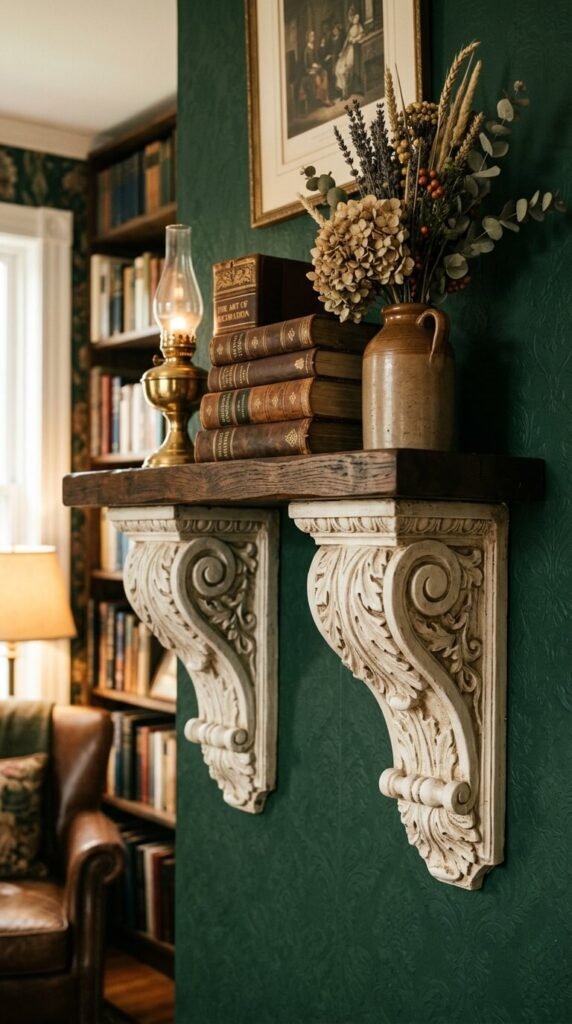
Corbels — those decorative carved brackets that appear to support shelves, mantels, or countertops — are a Victorian detail that most people walk past without naming, but always notice. Decorative wood or polyurethane corbels cost $15–$60 each at home improvement stores. Mount a pair on either side of a shelf to make even a simple board feel architectural. Paint them white to match trim, or pick them out in a contrasting color. They work in kitchens, libraries, entryways, and bedrooms equally well.
Conclusion
Victorian decor is not about recreating a museum. It is about layering — adding texture, warmth, craftsmanship, and a sense of history into spaces that too often feel blank and temporary. You do not need to do everything at once. Start with one ceiling medallion. Hang a set of botanical prints. Swap a door knob. Each small change pulls the room a little further in the right direction. The 22 details in this guide work in old houses and new ones, on generous budgets and tight ones. Pick the ones that excite you most and begin there. The grandeur follows.