29 Raw Industrial Decor Features That Showcase Urban Style

Disclosure: As an Amazon Associate we earn from qualifying purchases. Some links on this page may be affiliate links — if you click through and make a purchase, we may receive a small commission at no extra cost to you.
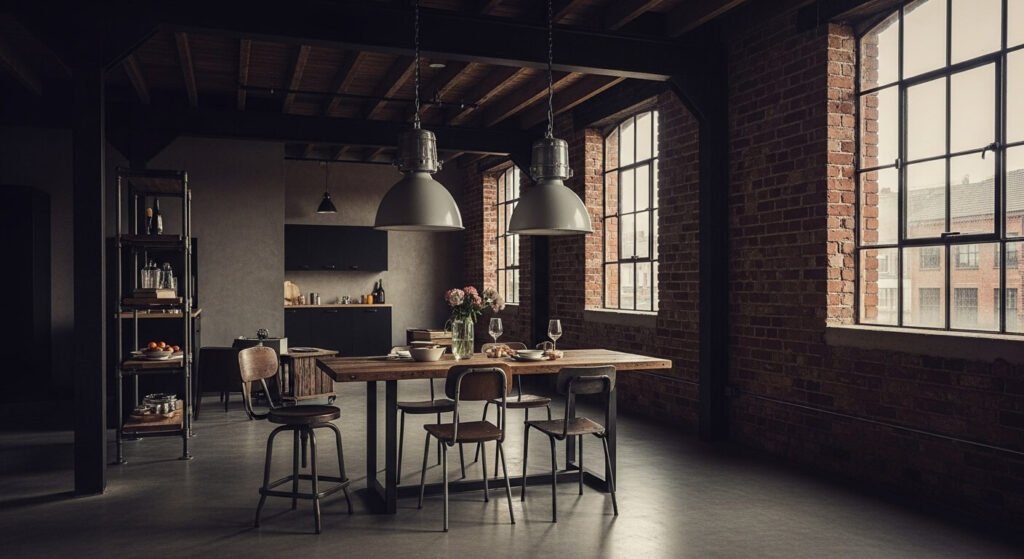
Industrial decor isn’t a trend — it’s a design language with real roots. It came out of converted factories, warehouses, and urban lofts where exposed structure became the aesthetic by necessity. Raw materials left visible. Pipes left showing. Concrete left bare. What started in New York and Chicago loft conversions has become one of the most requested home styles in cities everywhere. This list covers 29 raw, honest industrial decor features — from exposed brick to Edison bulb lighting — that bring genuine urban character into any space, at any budget.
1. Exposed Brick Walls
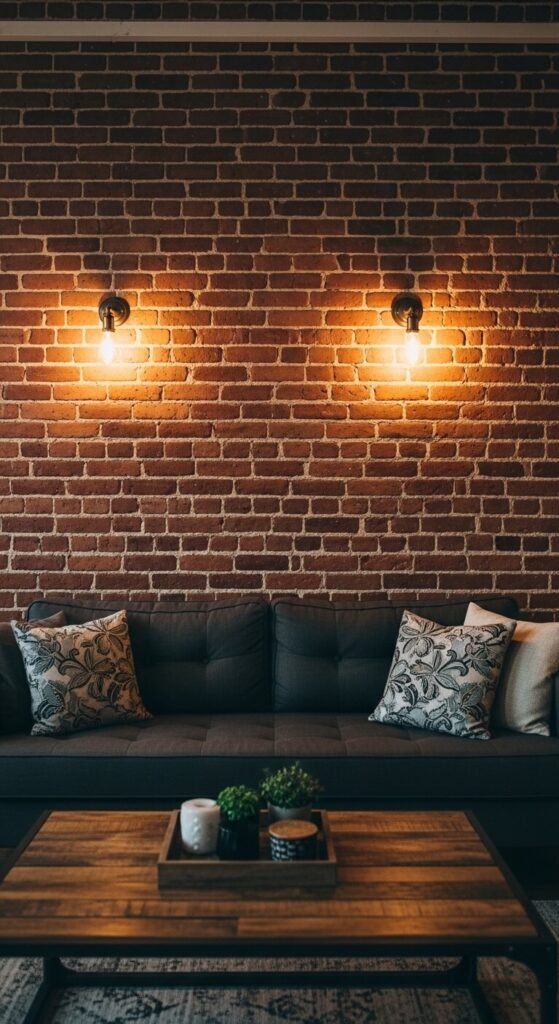
An exposed brick wall is the foundation of industrial style. Real brick carries texture, warmth, and history that no paint color or wallpaper can replicate. If you have brick under plaster, a contractor can remove the plaster for $300 to $800 depending on wall size. No real brick? Brick veneer panels from home improvement stores cost $3 to $8 per square foot and look convincing. For renters, peel-and-stick brick wallpaper runs $30 to $60 for a full wall. One exposed brick wall changes everything about how a room feels.
2. Edison Bulb Pendant Lights
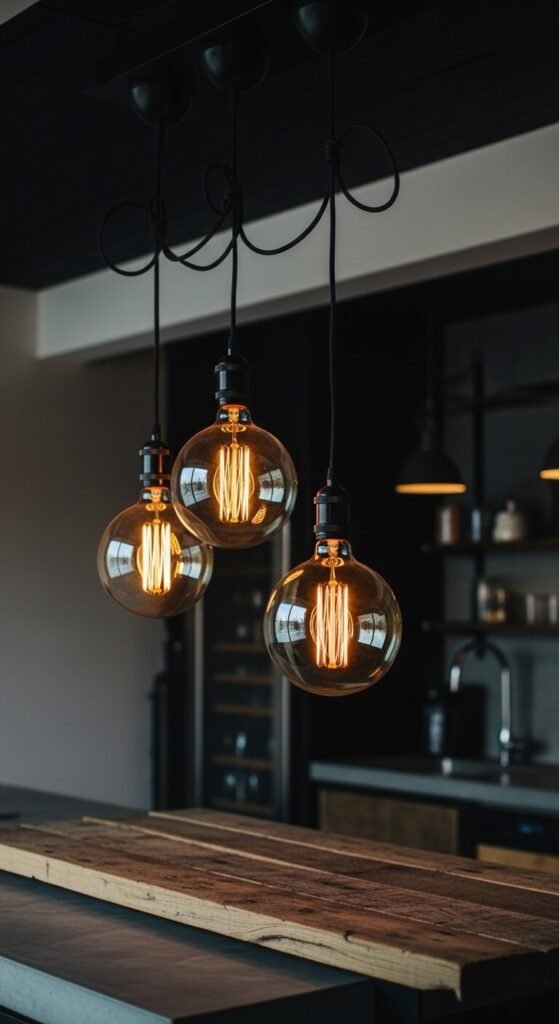
Nothing captures industrial lighting faster than an exposed Edison bulb. The visible filament, the amber glow, the raw socket hardware — it references factory floor lighting from a century ago. Individual Edison bulb pendants cost $15 to $40 each at home stores. Hang three over a kitchen island at staggered heights for a strong industrial statement. Use them with black metal cord and ceiling canopies — not white plastic hardware. A dimmer switch makes them work for both task lighting and evening atmosphere. Widely available, easy to install, immediately effective.
3. Black Steel Window Frames
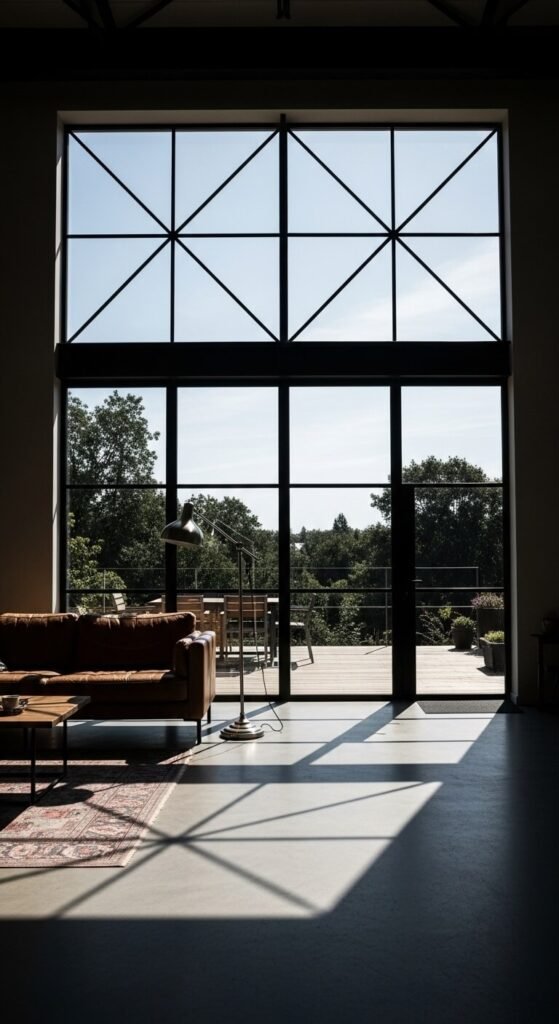
Black steel window frames are the architectural detail that defines the industrial loft look. The grid pattern of the frames casts strong geometric shadows across floors and walls throughout the day. True steel Crittall-style windows cost $500 to $2,000+ per panel installed. For a fraction of that cost, install black steel-look interior room dividers — partition walls with glass panels in a black frame grid — for $200 to $600. Even painting existing window frames in flat black paint ($5 to $15) gives a noticeably more industrial quality to any window in the room.
4. Exposed Concrete Floors
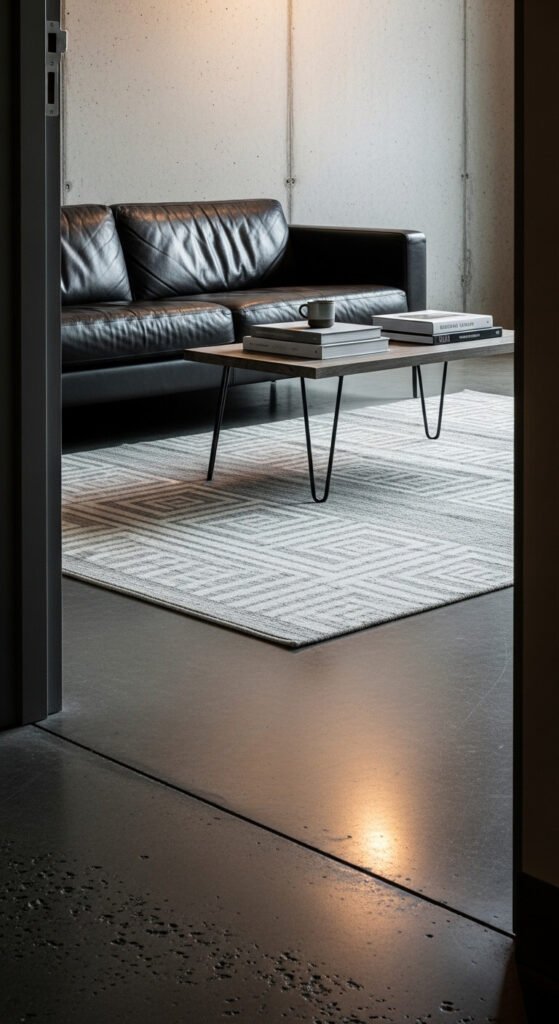
Polished or sealed concrete floors are the purest industrial flooring option. If your home already has a concrete subfloor, a concrete grinder and sealant can turn it into a finished floor for $2 to $5 per square foot. Polished concrete is durable, low maintenance, and gets better looking with age. For a softer version, concrete-look porcelain tile costs $2 to $6 per square foot and is warmer underfoot. Either way, add a large area rug to define seating zones and soften the acoustic hardness. The contrast between raw floor and soft textiles is part of the industrial look.
5. Pipe Shelving Units
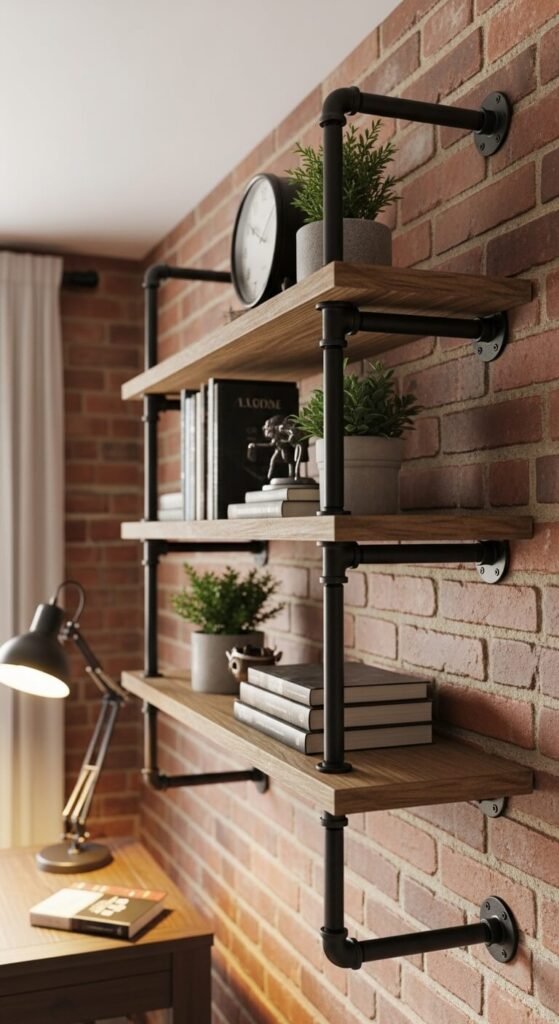
Pipe shelves are one of the most popular industrial DIY projects — and for good reason. They look custom, hold serious weight, and cost far less than built-in shelving. You need black iron pipe from a hardware store ($5 to $15 per section), flange fittings ($3 to $6 each), and wood planks for the shelves ($10 to $20 per board). A full wall shelving unit costs $80 to $150 in materials. Spray-paint the pipes matte black before assembly for a cleaner look. Mount flanges directly into wall studs. The result looks like something from an expensive loft renovation.
6. Reclaimed Wood Surfaces
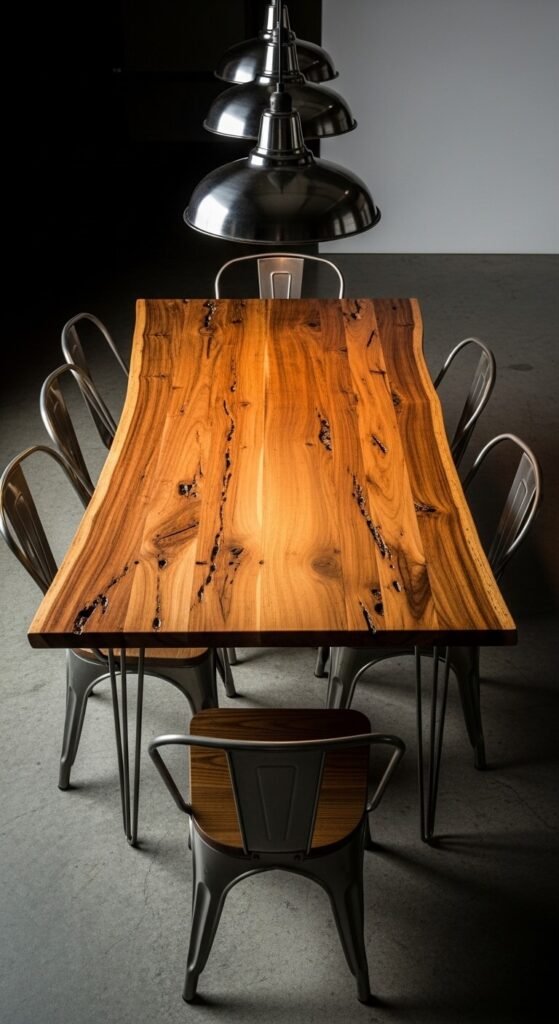
Reclaimed wood brings warmth and history into industrial spaces without softening the overall aesthetic. The nail holes, saw marks, and grain variation tell a story that new wood can’t fake. Reclaimed barn wood and timber sells for $3 to $8 per board foot at salvage yards. Use it for dining tables, kitchen countertops, floating shelves, or headboards. Pair it with metal legs — hairpin legs cost $40 to $80 for a set of four — for the classic industrial table combination. The contrast of aged wood and raw steel is the defining material pairing of this entire style.
7. Exposed Ceiling Ductwork
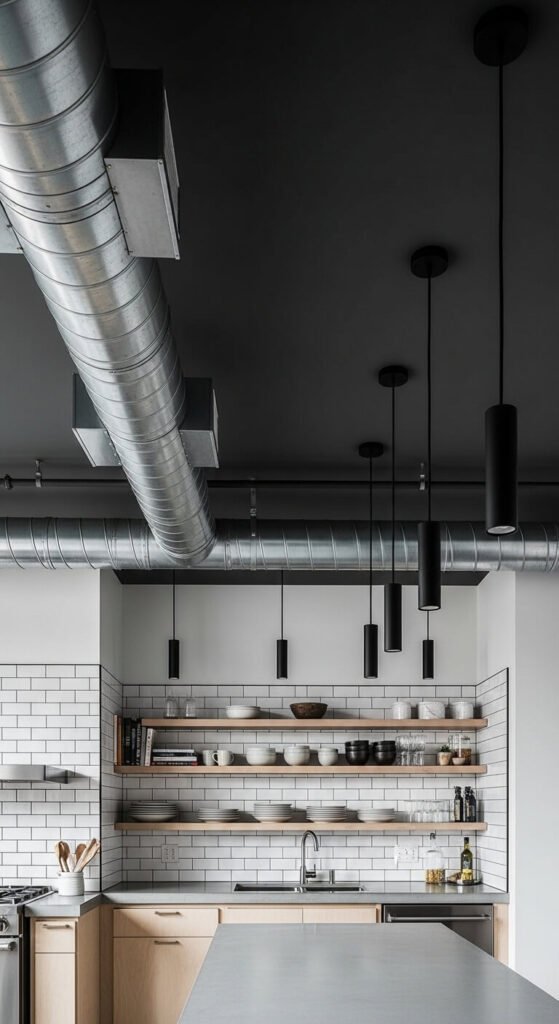
Leaving ductwork exposed — or painting it to become a feature — is classic industrial design. In homes where ductwork runs below the ceiling, removing drop ceiling tiles reveals the raw infrastructure above. Paint the exposed ceiling and ductwork the same dark color — flat black or dark charcoal — to make everything read as one intentional composition rather than unfinished construction. Spray paint for pipes and ducts costs $10 to $20 per can. The effect is dramatic. It makes ceilings feel taller and gives any room an immediate loft-conversion atmosphere.
8. Metal and Leather Seating
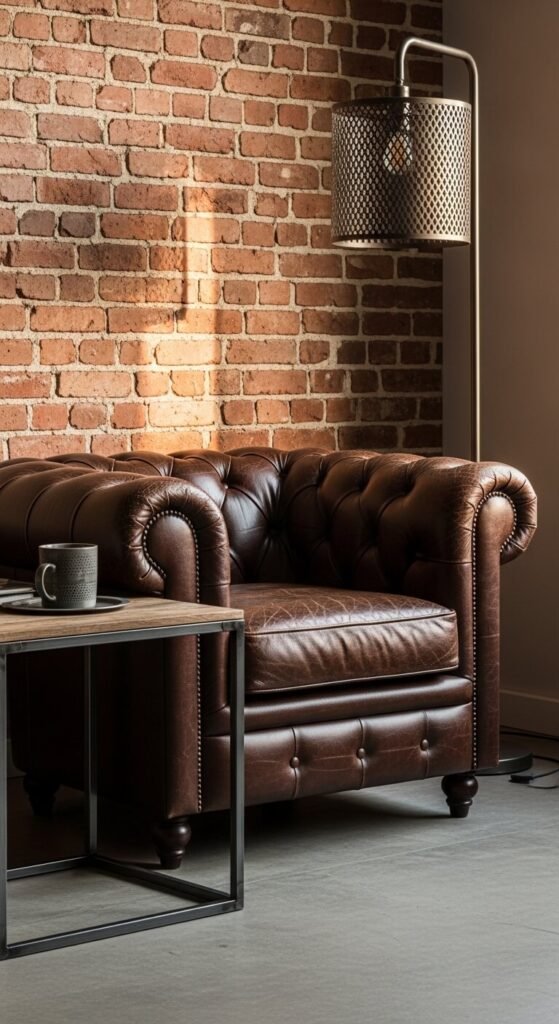
Dark leather and raw metal are the two upholstery materials of the industrial world. A leather sofa or armchair in cognac, dark brown, or black anchors a room in urban, masculine territory. Pair it with metal-frame side tables and steel-leg chairs. Look for secondhand leather furniture at thrift stores and Facebook Marketplace — leather improves with age and a good used piece often looks better than a new one. Metal-frame chairs from discount furniture stores run $40 to $80 each. The combination of leather and metal never needs softening — it already carries everything industrial style asks for.
9. A Matte Black Color Palette
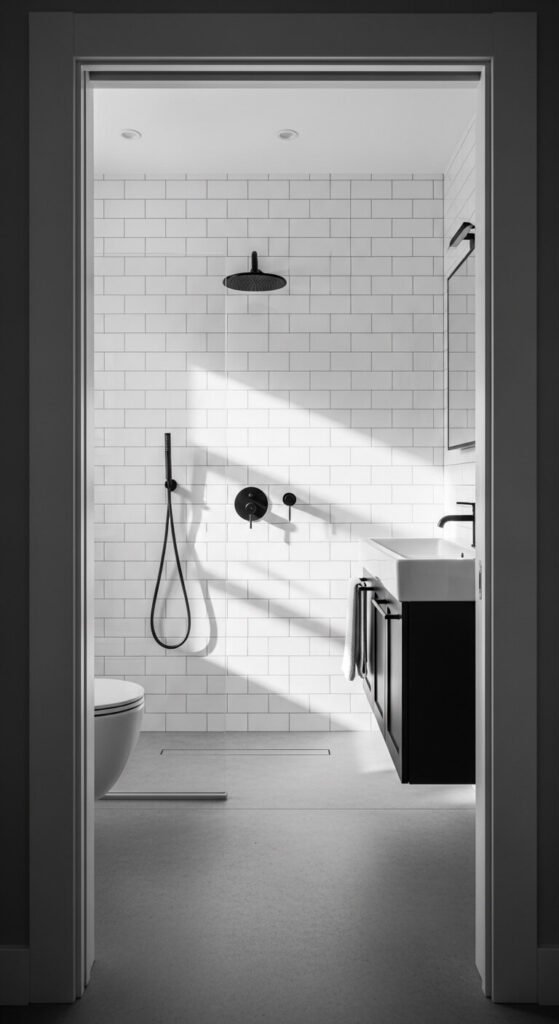
Matte black hardware and fixtures are the fastest way to give any room an industrial edge. Swap chrome or brushed nickel for matte black on faucets, cabinet handles, light switches, and door hardware. A set of matte black cabinet pulls costs $15 to $30. Replacing a bathroom faucet with a matte black version runs $40 to $100. These are small changes with a big visual payoff. Matte black reads as raw and deliberate — not polished or decorative. It works in kitchens, bathrooms, and any room where hardware is visible and frequently touched.
10. Concrete Countertops
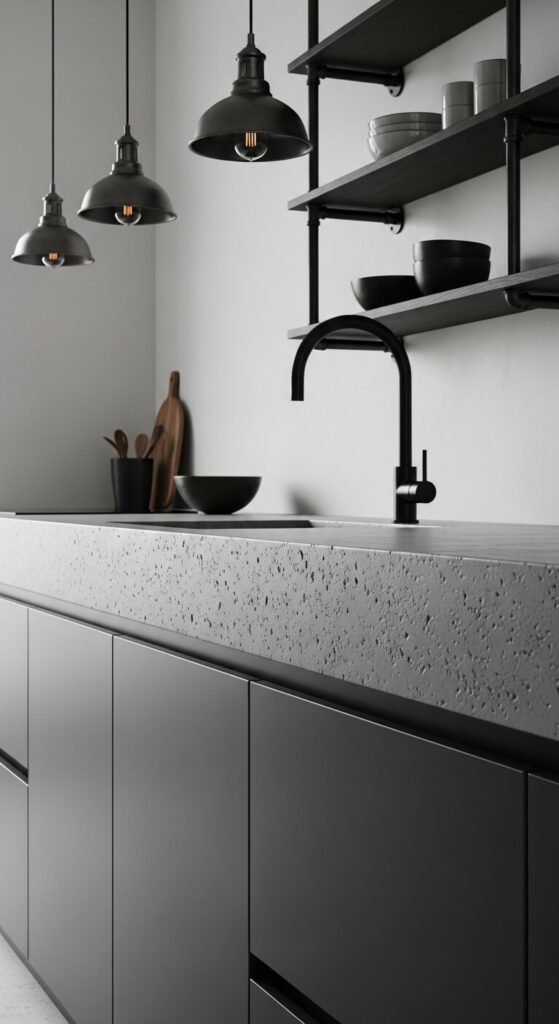
Concrete countertops are the most industrial surface choice in any kitchen or bathroom. They’re heavy, raw, and entirely customizable in thickness, color, and finish. A professionally poured concrete countertop costs $65 to $135 per square foot installed. For a budget version, concrete countertop overlay kits cost $50 to $100 and apply directly over existing laminate or tile. The overlay approach is DIY-friendly and renter-compatible if you don’t mind restoring the original surface later. Add a dark sealant for a matte, factory-floor finish that resists water and heat with proper maintenance.
11. Wire Mesh and Metal Grid Panels
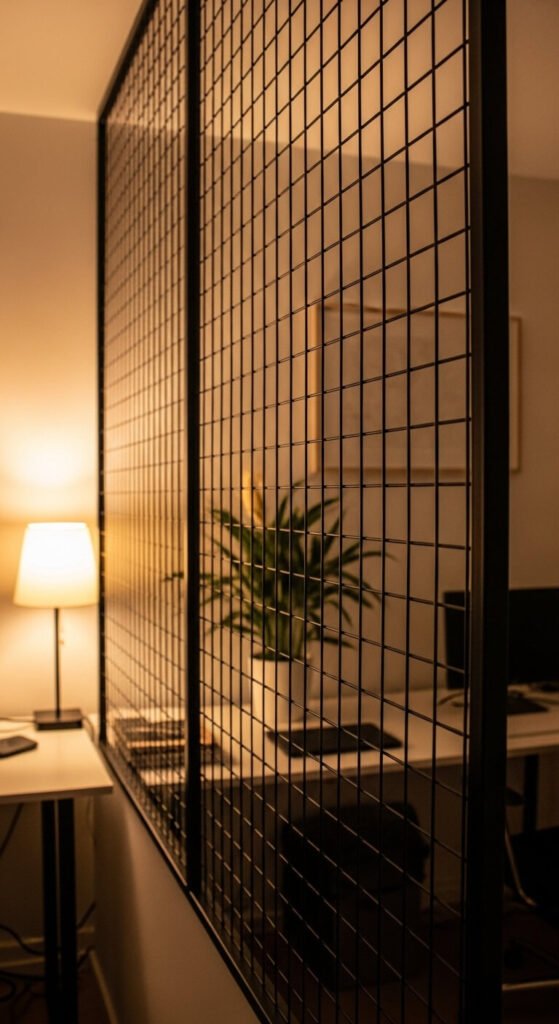
Wire mesh and metal grid panels add structure and visual interest without blocking light or closing off a space. Use them as room dividers, cabinet door inserts, or decorative wall panels. Replace solid cabinet doors with wire mesh panels for an open, industrial kitchen look — it costs $5 to $15 per panel in mesh plus cabinet hardware. Floor-to-ceiling grid room dividers work in studios and open-plan spaces to define zones. Buy metal grid panels from hardware stores for $10 to $25. Paint them matte black before installing for a finished, intentional look.
12. Factory-Style Floor Lamps
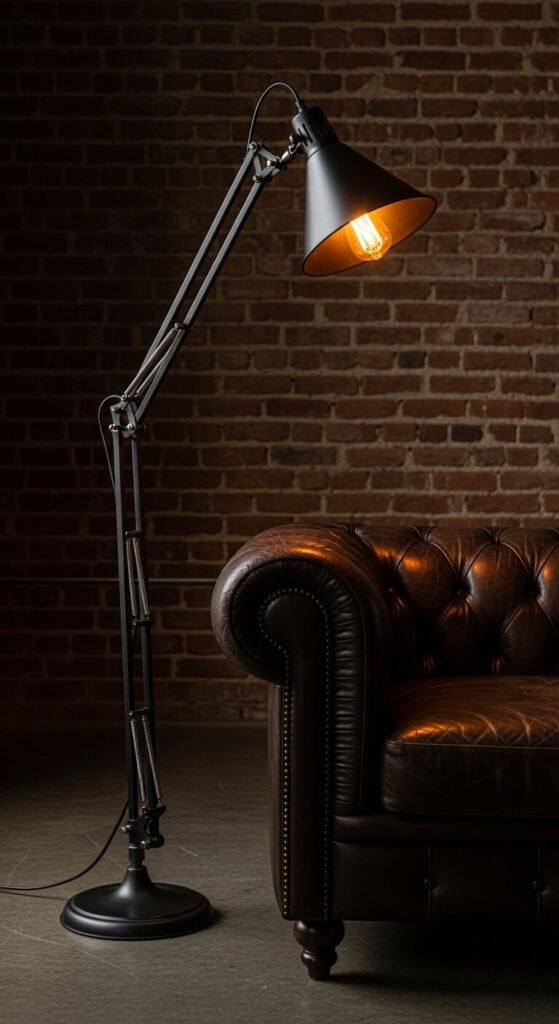
A factory-style floor lamp with an articulated arm or industrial shade sets the lighting tone for an entire room. These lamps reference the adjustable task lights used in machine shops and factories throughout the 20th century. Look for matte black or raw steel finishes with large cone or dome shades. New industrial floor lamps run $40 to $120 at discount furniture stores. Vintage industrial floor lamps appear regularly at estate sales and antique markets for $20 to $60. Pair with an Edison-style bulb at a lower wattage so the light quality stays warm and directional rather than harsh.
13. Subway Tile Backsplashes
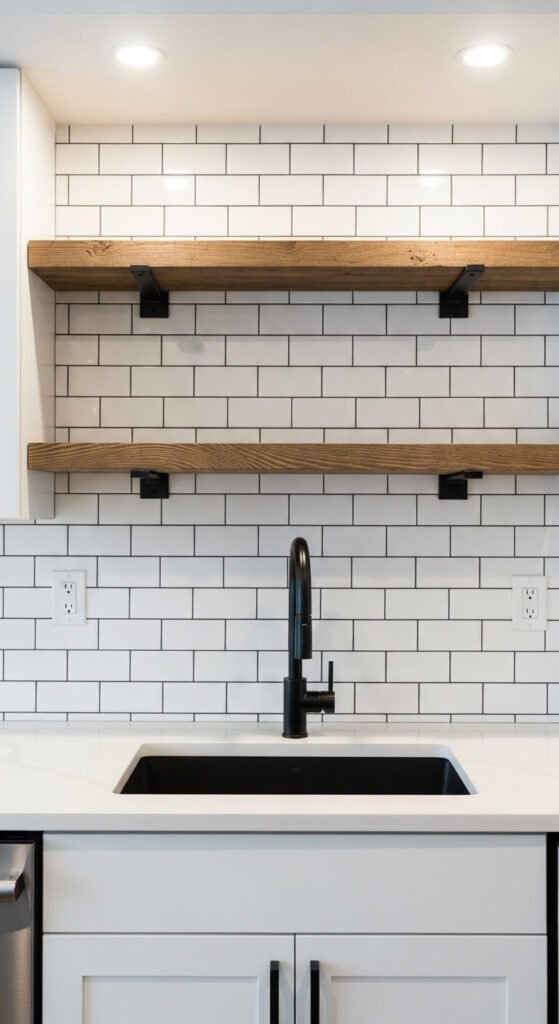
White subway tile with dark grout is the industrial kitchen and bathroom standard. The tile itself reads clean and utilitarian — it references early 20th-century factory buildings and New York subway stations. The dark grout makes the grid pattern visible and gives the whole surface a raw, graphic quality. Standard white subway tile costs $1 to $3 per square foot. Dark charcoal or black grout runs $5 to $15 per bag. A standard kitchen backsplash costs $50 to $150 in materials. It’s one of the most affordable material upgrades in any industrial-style home renovation.
14. Salvaged Industrial Furniture
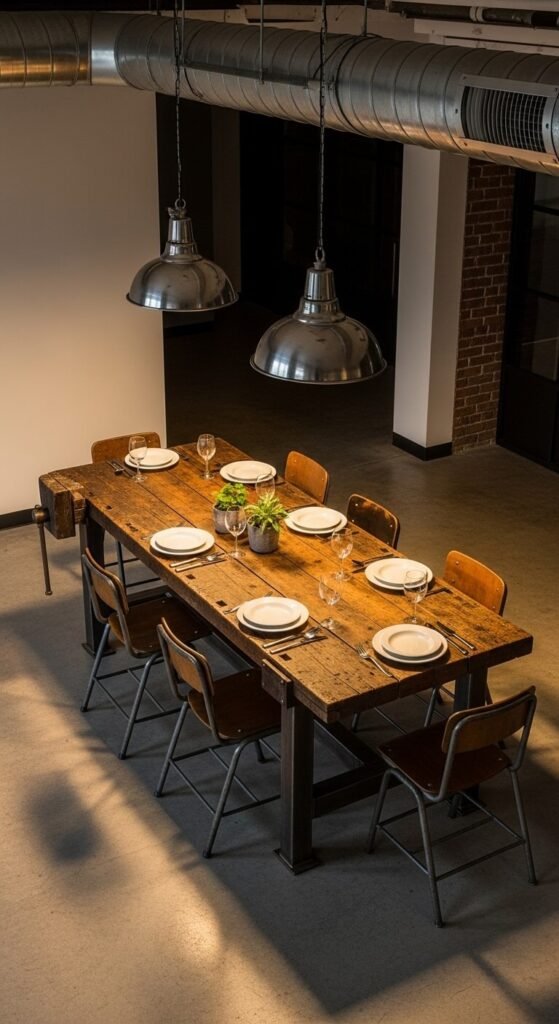
Salvaged factory furniture — old workbenches, factory carts, school lockers — brings authenticity that reproduction pieces can’t match. A real factory workbench repurposed as a dining table or kitchen island has visible wear, material history, and structural weight that manufactured “industrial style” furniture lacks. Check architectural salvage dealers, industrial auctions, and online marketplaces. Prices vary widely — $50 for a simple metal cart to $400+ for a large factory table. The imperfections are features. Scuffs, dents, and patina tell a real story and give a room genuine character rather than a manufactured aesthetic.
15. Barn Doors on Sliding Hardware
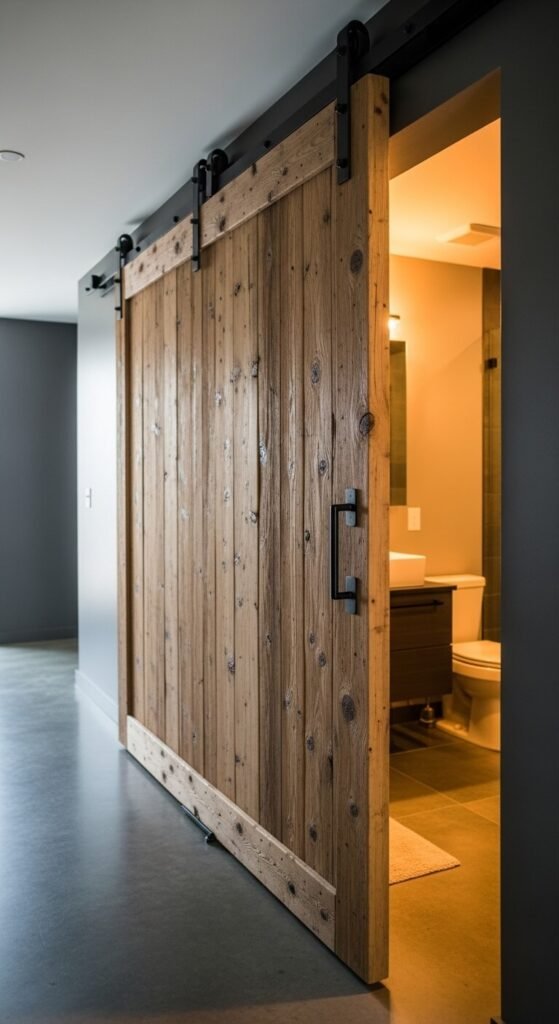
A sliding barn door on black steel track hardware is one of the most practical industrial design moves. It saves floor space, adds visual weight, and references warehouse and factory sliding doors directly. A reclaimed wood barn door costs $100 to $250. New unfinished solid wood doors can be stained and distressed for $50 to $100. Black steel barn door hardware kits run $60 to $120. The whole project costs $150 to $370 — far less than a built-in pocket door installation. Works on bedrooms, bathrooms, home offices, and pantries. The hardware is the star — leave it fully visible.
16. Wire Cage Light Fixtures
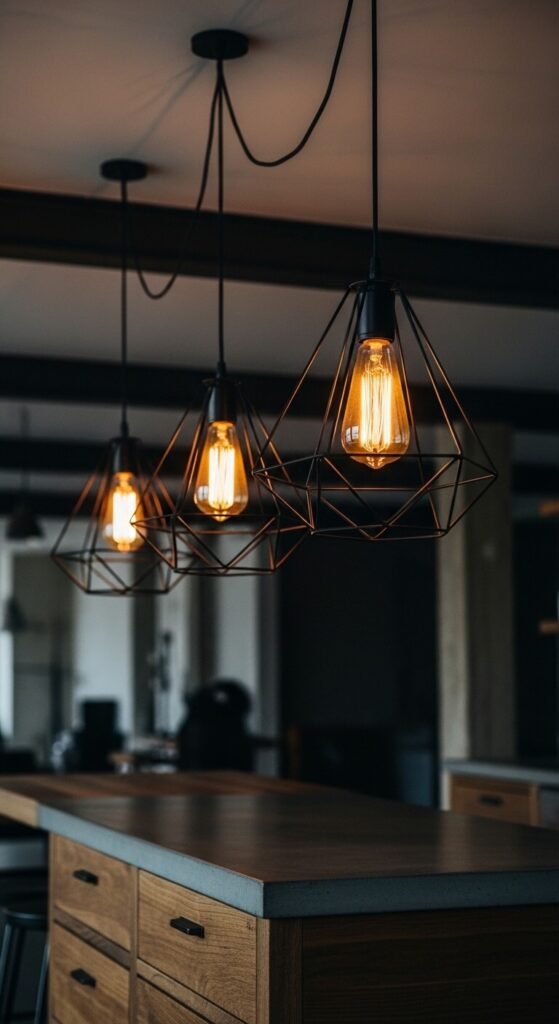
Wire cage light fixtures reference the protective lamp guards used in factories and on job sites for over a hundred years. The exposed bulb behind the cage is both decorative and deliberately raw. Single cage pendant lights cost $20 to $50 each online or at hardware stores. Install three over a kitchen island or dining table for a cohesive industrial lighting scheme. Wall-mounted cage sconces cost $15 to $35 each and work well in hallways and bathrooms. Use carbon filament or amber LED bulbs inside the cages — cool white bulbs destroy the warm factory atmosphere completely.
17. Metal Lockers for Storage
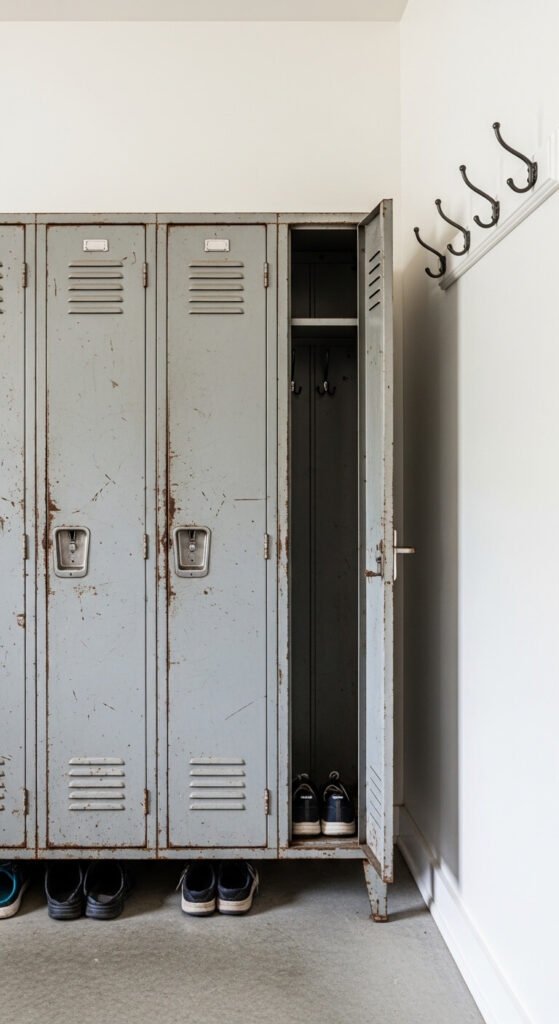
Vintage metal lockers are the most functional industrial storage piece you can add. They hold coats, shoes, sports gear, and daily-use items while looking completely at home in an industrial-style entryway or mudroom. Old school or gym lockers appear regularly at salvage dealers, school surplus auctions, and Facebook Marketplace for $20 to $80 each depending on condition. Leave the worn paint as-is — the chips and dents are the point. A row of three or four lockers creates a strong visual statement and keeps a mudroom or hallway organized without any built-in cabinetry.
18. Concrete or Cement Block Planters
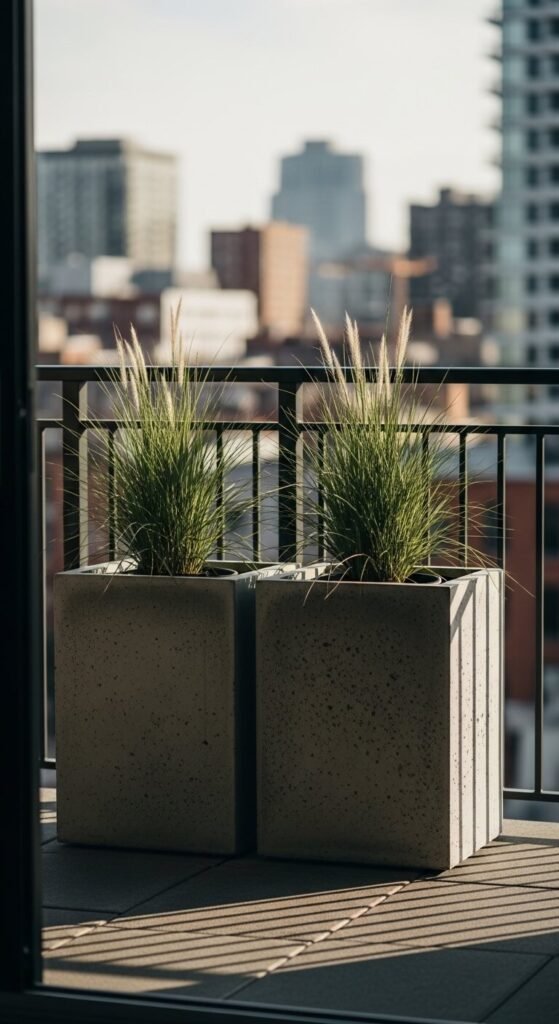
Concrete planters bring industrial texture outdoors — on balconies, patios, and entryways. Their weight and raw surface texture fit the industrial palette perfectly. New concrete planters from garden stores run $20 to $60 depending on size. DIY option: buy concrete mix for $8 to $12 per bag and cast your own planters using cardboard boxes or plastic containers as molds. The process takes about 30 minutes of hands-on time and 48 hours of curing. Plant ornamental grasses, succulents, or small trees to add life and contrast against the hard grey surface.
19. A Chalkboard or Blackboard Wall
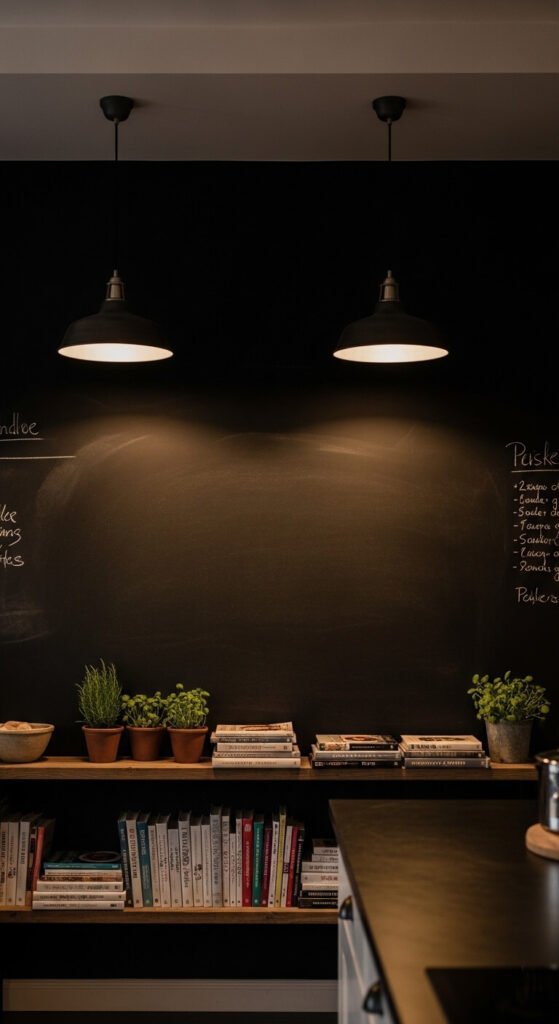
A chalkboard wall is a low-cost industrial accent that adds texture and function at the same time. The flat, matte black surface reads as raw and urban — it references blackboards from old factory meeting rooms and warehouse loading areas. Chalkboard paint costs $15 to $25 per quart, enough for one full wall. Apply two coats over any painted surface. Works in kitchens, home offices, kids’ rooms, and mudrooms. Leave it blank for pure black wall texture, or use it for weekly menus, notes, or sketches. Either way, it shifts the room’s mood toward something deliberately unfinished.
20. Open Kitchen Shelving
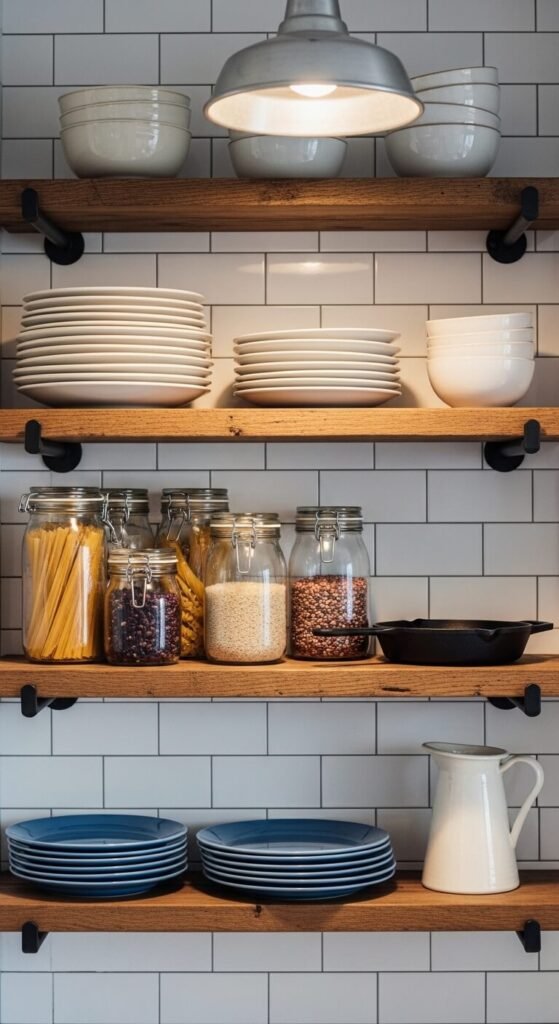
Open shelving replaces upper kitchen cabinets with raw, visible storage — a hallmark of industrial kitchens. The combination of black metal brackets and reclaimed wood planks is the standard industrial approach. Buy black shelf brackets for $8 to $20 each and cut wood planks to size for $10 to $20 per shelf. A full kitchen shelving wall costs $100 to $200 in materials. The catch: everything on the shelves is always visible. Keep dishware and supplies edited and consistent — mismatched clutter kills the look. Black, white, and natural wood items read best on industrial open shelving.
21. Raw Steel and Iron Accents
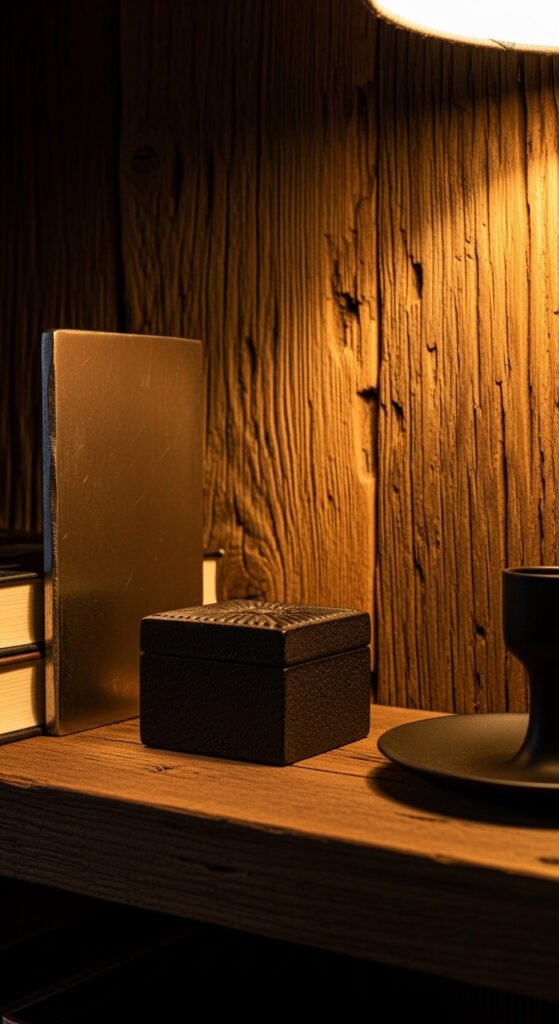
Raw steel and cast iron accessories add material density to shelves, mantels, and coffee tables that lighter materials can’t achieve. Look for raw steel bookends, cast-iron trivets, heavy iron candle holders, and steel trays. These items are often found at hardware stores and industrial supply outlets — not just home decor stores. A cast-iron bookend costs $15 to $30. A raw steel tray runs $20 to $40. The weight and finish of real metal is unmistakable next to painted or coated alternatives. These accents make a shelf look grounded rather than decorated.
22. Vintage Factory Clocks
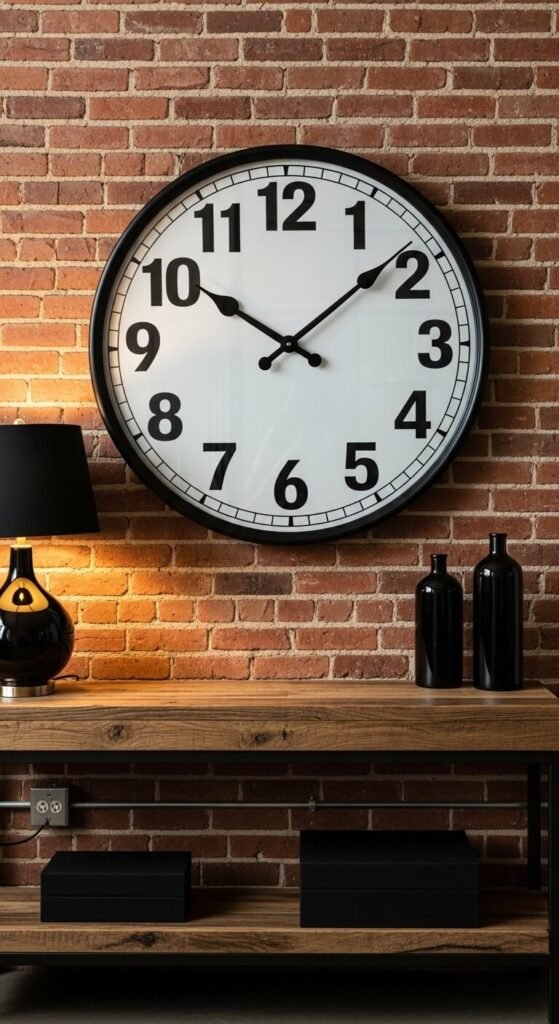
A large vintage factory-style clock makes a bold industrial statement without requiring any installation beyond a single wall hook. Round, utilitarian, and oversized — the factory clock references the timekeeping systems used in industrial workplaces throughout the 20th century. Look for reproduction factory clocks at home stores for $30 to $80. Vintage originals from industrial settings appear at antique markets and estate sales for $20 to $100. Choose one with a black metal frame, white or cream face, and simple bold numerals. No roman numerals, no ornate details — the plainer, the more industrial it reads.
23. Pegboard Tool Walls
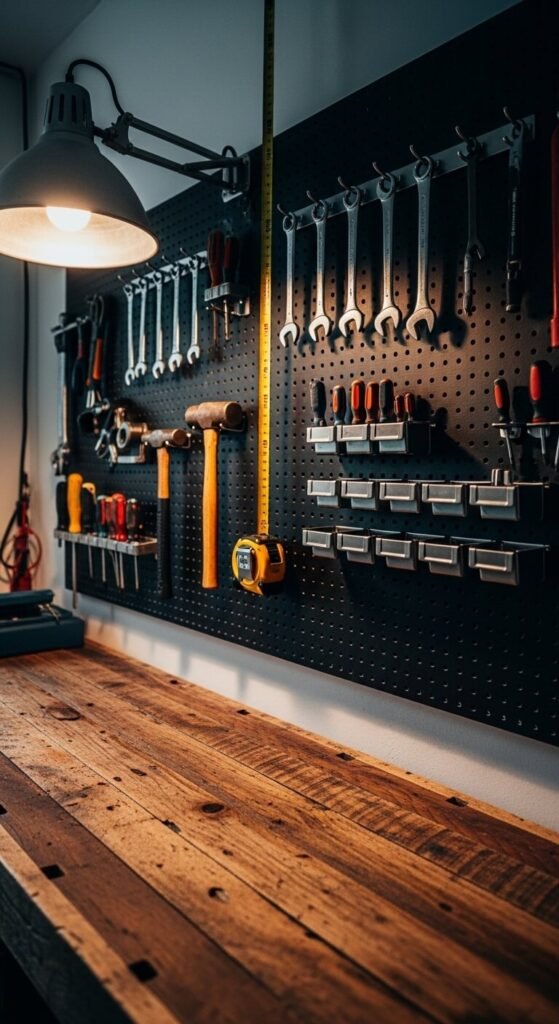
A pegboard wall in a home office, workshop, or kitchen brings raw utility directly into the decor. Paint the board matte black and use black or raw metal hooks. In a workshop, hang tools in a deliberate, organized grid. In a kitchen, hang pots, pans, and utensils. In a home office, use it for cables, headphones, and supplies. A 4×8 foot pegboard panel costs $15 to $20 at hardware stores. Paint and hooks add another $10 to $20. The industrial appeal is in the visibility — everything on the wall is in use, nothing is hidden, and the system is completely honest about its purpose.
24. Exposed Brick Fireplace Surround
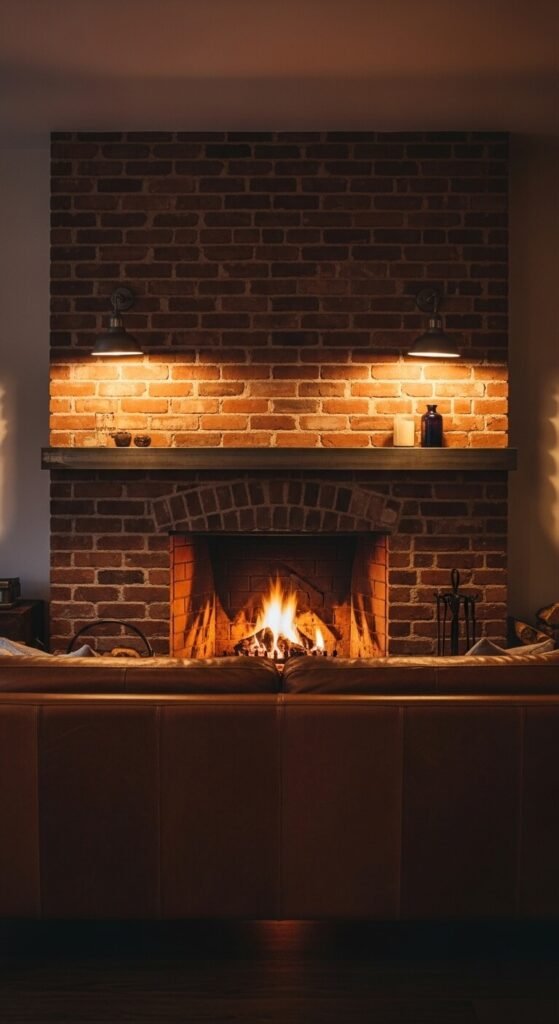
An exposed brick fireplace surround is the most dramatic industrial focal point in any living room. If your fireplace has been plastered over or tiled, removing the covering reveals the original brick underneath. A contractor charges $200 to $600 for this work, or you can DIY it carefully with a chisel and hammer over a weekend. Add a raw steel or reclaimed wood mantle shelf above for $50 to $150. Pair with industrial sconce lights on either side. This combination — brick, steel, and warm light — is the single richest industrial detail any living room can have.
25. Steel-Framed Glass Partitions
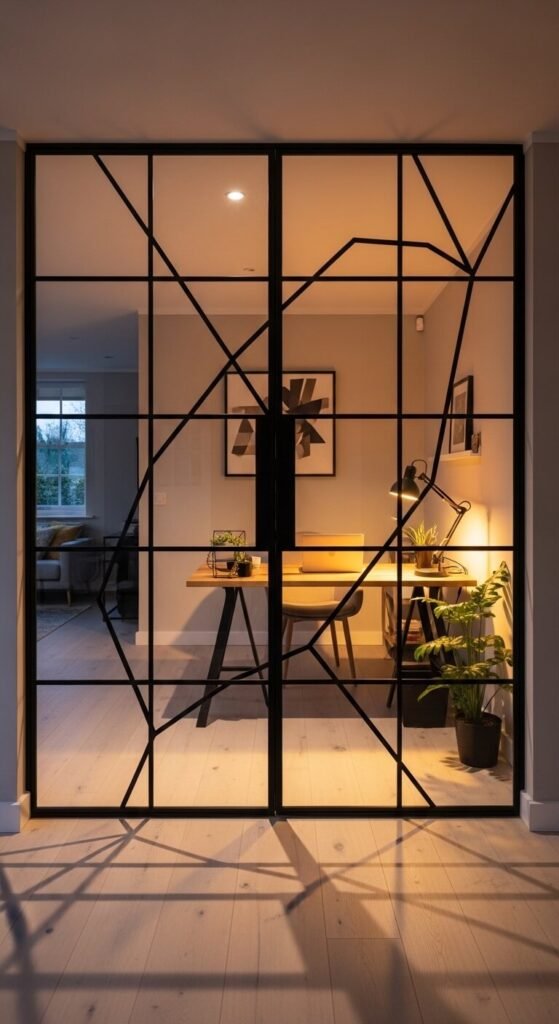
Steel-framed glass partitions divide open spaces while keeping them visually connected — exactly how industrial buildings used to separate work areas. Full floor-to-ceiling steel partitions cost $600 to $2,000 installed, depending on size and finish. For a more affordable option, freestanding black metal and glass room divider panels cost $150 to $400 online. These partition off a home office, dining zone, or bedroom area in a studio apartment. The black grid pattern stays visible from both sides, adding architectural structure to a space that would otherwise feel undivided and formless.
26. A Concrete or Stone Feature Wall
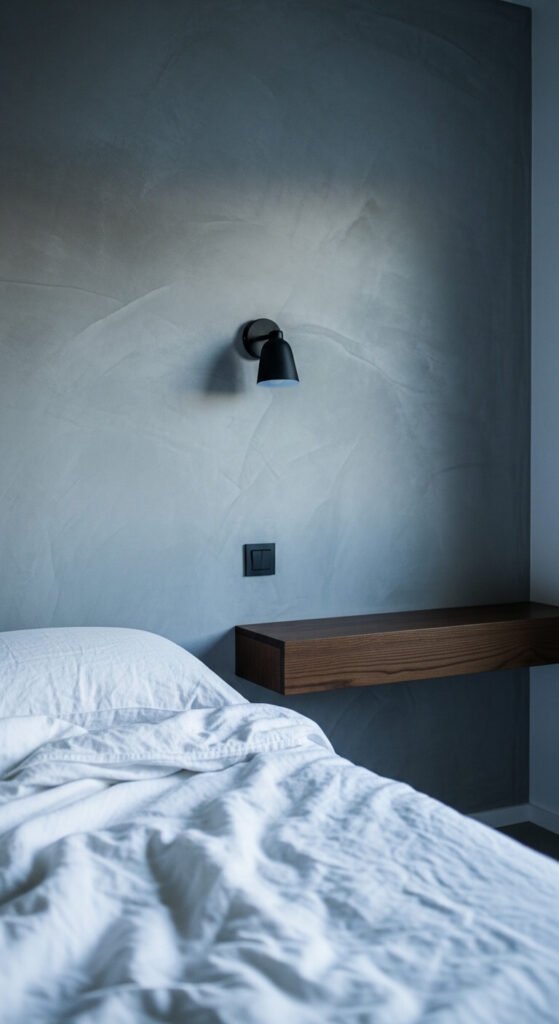
A concrete plaster or microcement wall finish gives any room the raw texture of a poured concrete surface without the structural complexity. Microcement is applied over existing walls like a thick coat of paint — it sets hard and can be sealed for durability. A microcement wall kit for one room costs $80 to $200. Professional application runs $10 to $30 per square foot. For a DIY budget version, a concrete-effect paint from hardware stores costs $25 to $40 per gallon. Apply with a spatula for texture variation. One concrete feature wall changes a room’s entire material register.
27. Industrial Bookshelf Ladders
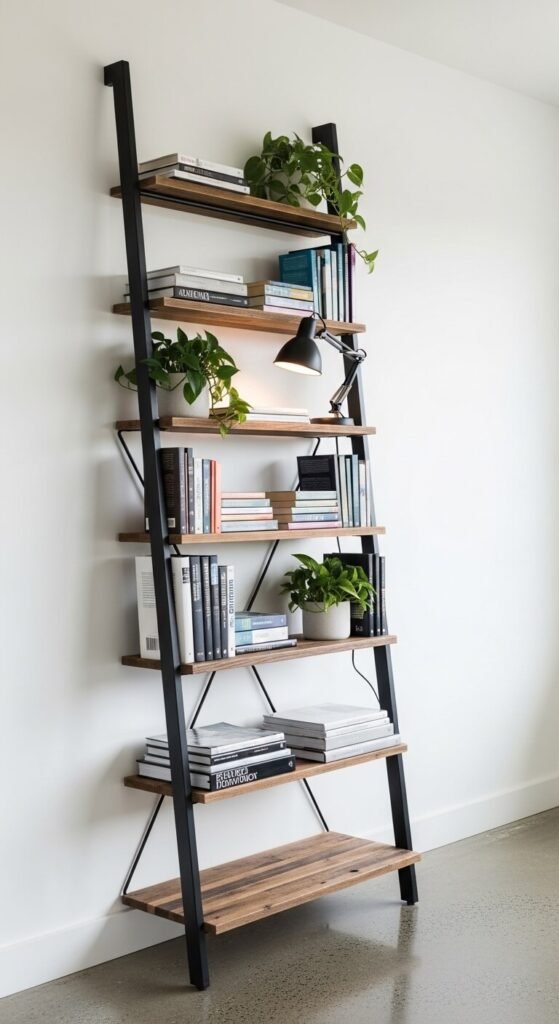
A leaning ladder shelf in black steel with wood shelves is one of the most functional industrial accent pieces for any room. It holds books, plants, and display items without requiring wall anchoring — ideal for renters. New ladder shelves run $60 to $150 at furniture stores. DIY version: buy black steel tubing from a metal supplier and cut reclaimed wood planks to size. Total material cost: $40 to $80. The angled lean adds visual dynamism to a flat wall. Use it in a home office, bedroom, or living room to add both storage and strong vertical interest.
28. Galvanized Metal Accessories
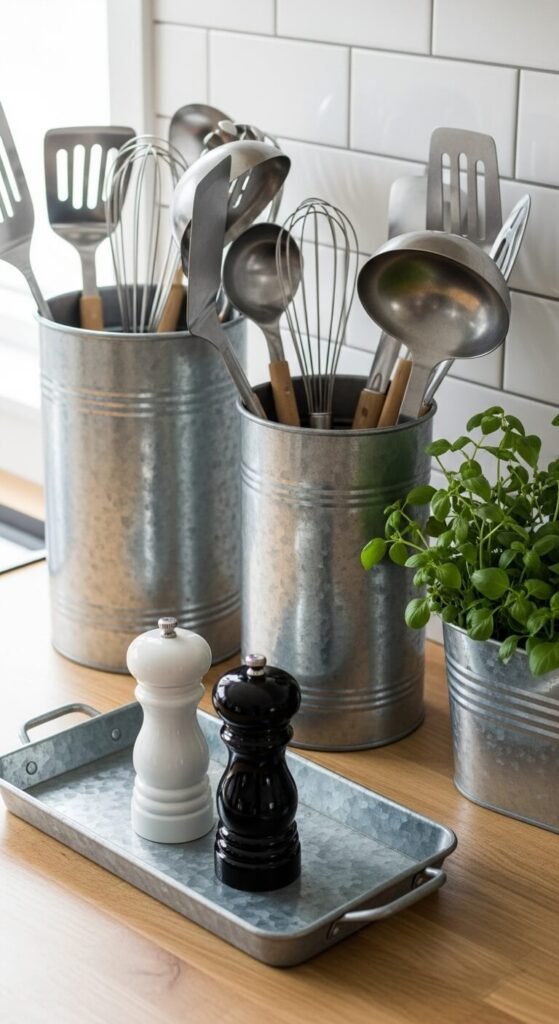
Galvanized metal accessories bring industrial utility into the smallest surfaces — kitchen counters, bathroom shelves, and office desks. The silver-grey, slightly rough finish of galvanized metal reads as functional and raw — the kind of material found in farm buildings, factories, and loading docks. Galvanized bins, trays, buckets, and canisters are widely available at hardware stores and farm supply stores for $3 to $20 each. Use them as kitchen utensil holders, bathroom storage, or desk organizers. They’re durable, rust-resistant, and cost a fraction of what equivalent “industrial decor” pieces sell for in home stores.
29. A Moody, Dark Color Palette
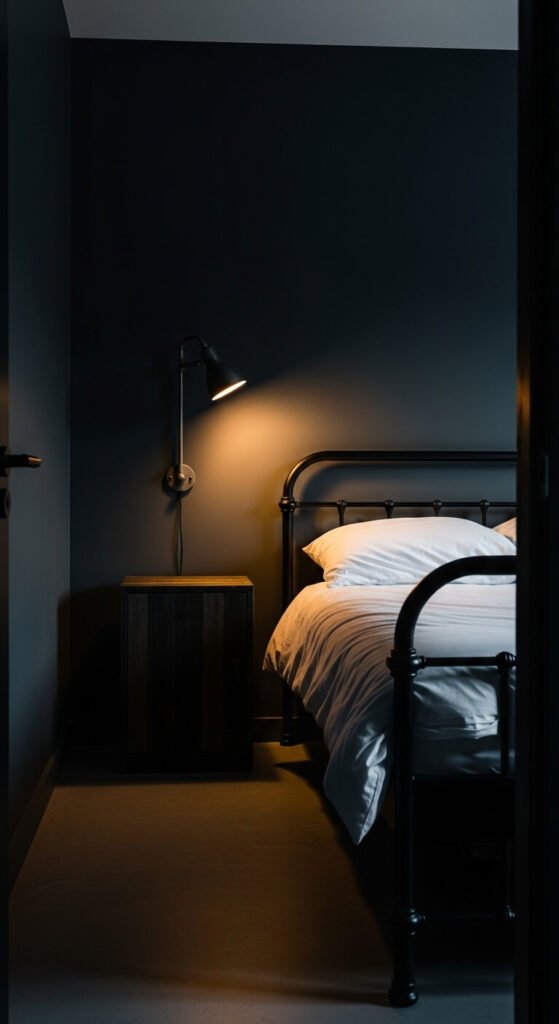
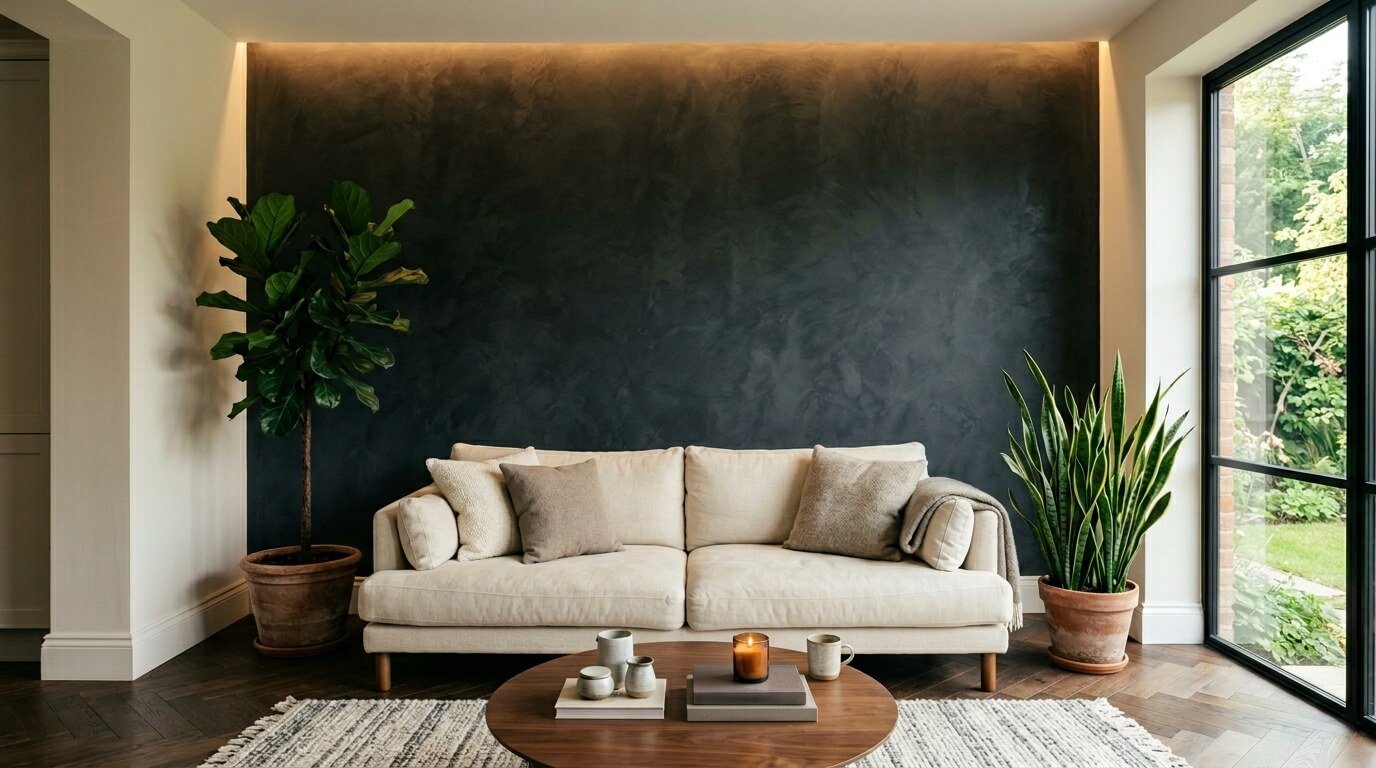
Dark walls — charcoal, slate, near-black — are the most atmospheric choice for industrial interiors. They make rooms feel deliberate and serious in a way that light neutrals simply don’t. A dark grey or charcoal accent wall costs $20 to $35 in paint. Going full dark on all four walls is bold but works extremely well with the right lighting — warm Edison bulbs, directed sconces, industrial floor lamps. White bedding or light linen textiles create contrast that stops the room from feeling heavy. The combination of dark walls, metal hardware, and warm light is the visual signature of serious industrial design.
Conclusion
Industrial decor is built on honesty. It doesn’t hide structure — it celebrates it. Exposed pipes, raw concrete, visible brickwork, and utilitarian hardware are the materials this style was born from, and they’re still the ones that make it work. You don’t need to gut a room or spend thousands to get there. Start with one strong element — a pipe shelf, a matte black hardware swap, a concrete paint wall — and build from that. Layer in reclaimed wood, metal accents, and warm Edison lighting over time. Each piece earns its place by being real, functional, and genuinely urban. Pick your starting point from this list and go from there.