26 Unique Eclectic Decor Mixes That Express Individuality

Disclosure: As an Amazon Associate we earn from qualifying purchases. Some links on this page may be affiliate links — if you click through and make a purchase, we may receive a small commission at no extra cost to you.
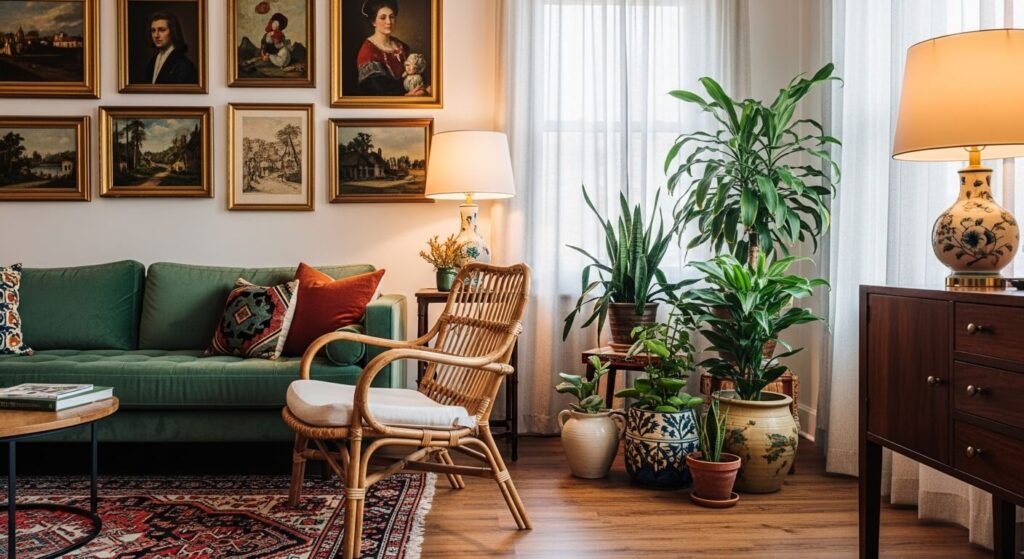
Eclectic decor is not the same as random. It’s the deliberate layering of things that mean something to you — a vintage chair from a grandmother’s house next to a bold modern print, a Moroccan rug under a mid-century coffee table, a shelf full of objects collected across years and countries. It’s a style that rewards personal history, thrift store patience, and the willingness to trust your own eye over a designer’s rulebook. This list covers 26 eclectic decor mixes that express real individuality — each one a practical, affordable way to build a home that looks like no one else’s.
1. Mismatched Vintage Frames in a Gallery Wall
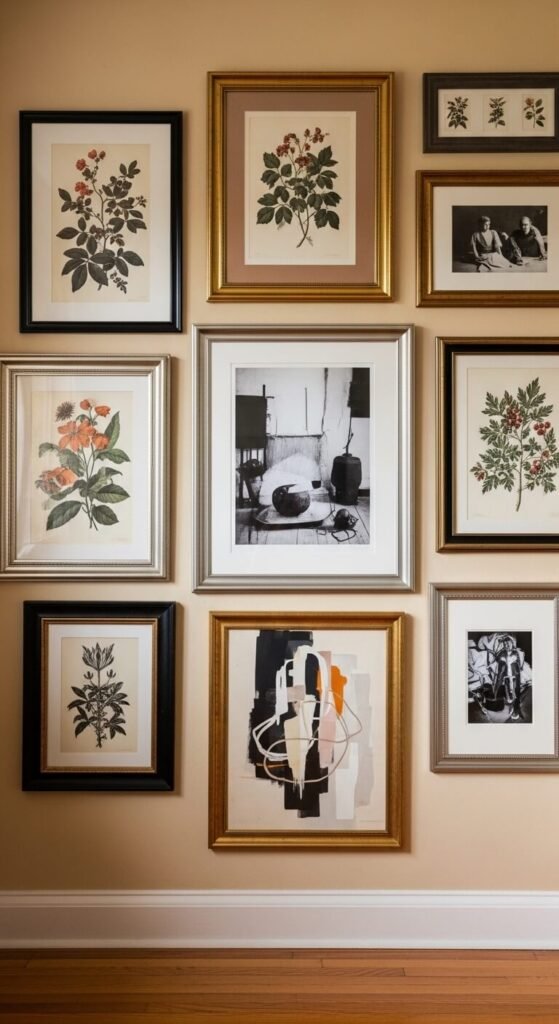
A gallery wall built from mismatched vintage frames is the defining move of eclectic decor. The frames don’t match — and that’s the whole point. Look for frames at thrift stores for $1 to $8 each. Mix ornate gold frames with plain black ones, small square frames with oversized rectangular ones. Fill them with whatever holds meaning: old postcards, botanical prints, personal photos, art market finds. Lay everything out on the floor first to test the arrangement before hanging. The mix of eras and sizes is what makes it feel personal rather than showroom-styled.
2. A Velvet Sofa Against a Patterned Rug
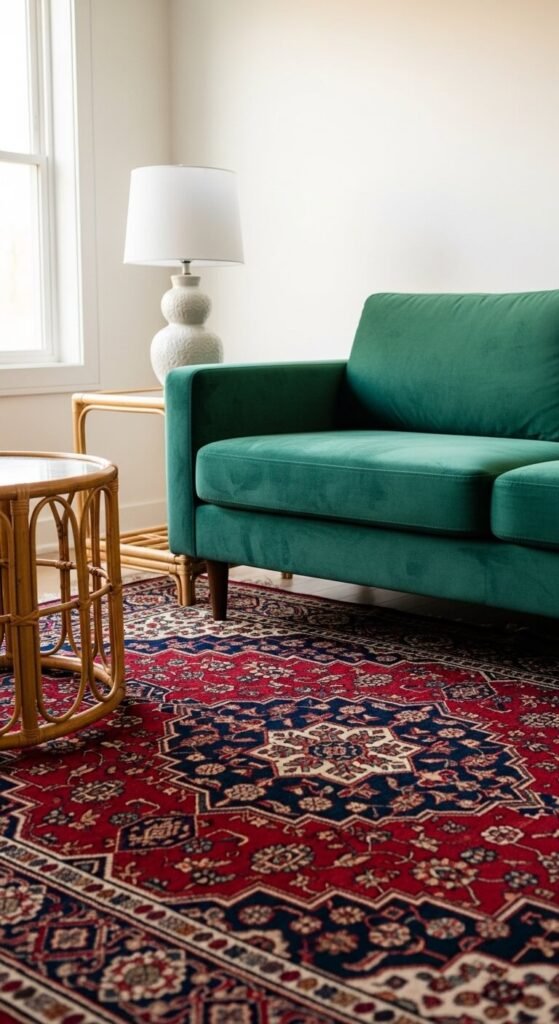
A bold velvet sofa paired with a patterned rug is a classic eclectic power move. The key is letting both items be strong — don’t neutralize one to accommodate the other. Jewel tones work best: emerald, sapphire, mustard, or burnt orange. Look for secondhand velvet sofas on Facebook Marketplace for $100 to $400. Vintage Persian or kilim rugs appear regularly at estate sales and antique markets for $50 to $200. The textures — soft velvet against flat woven pattern — are what make the combination work rather than clash.
3. Layered Rugs on Wood Floors
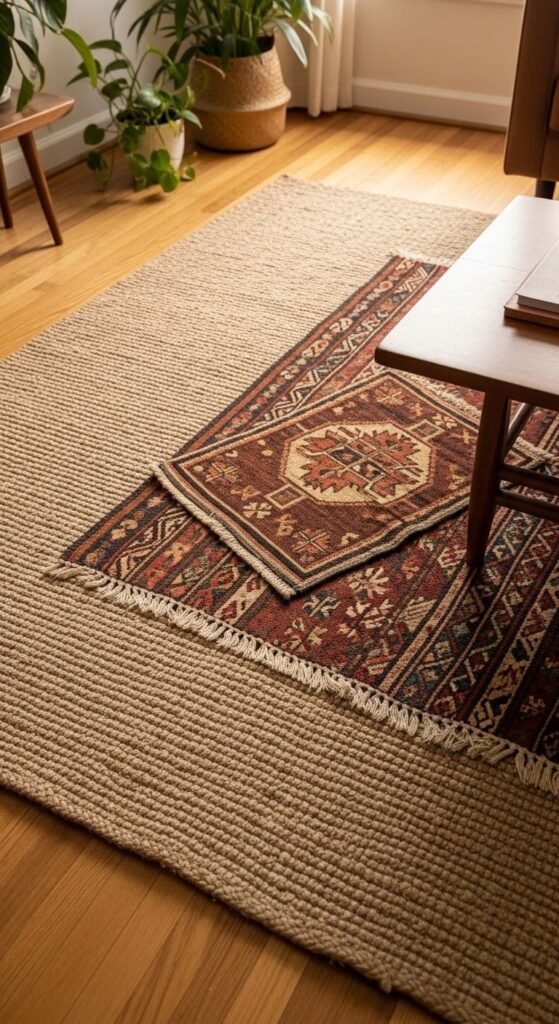
Layering two rugs creates depth and collected character that a single rug never achieves. Use a large, neutral base — natural jute or a plain sisal — and layer a smaller, patterned vintage rug on top. The base rug grounds the space while the top rug adds personality. Jute base rugs run $40 to $80 for a 5×7. A vintage kilim or patterned overlay costs $30 to $100 at thrift stores, markets, or online. Lay the top rug slightly off-center or at an angle — perfectly straight looks overly controlled for eclectic style.
4. Plants in Mismatched Ceramic Pots
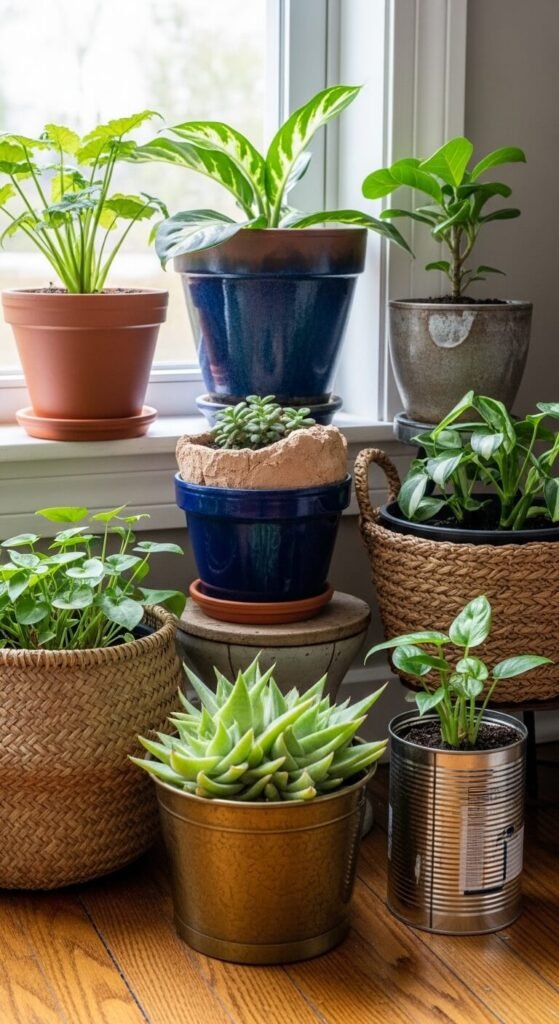
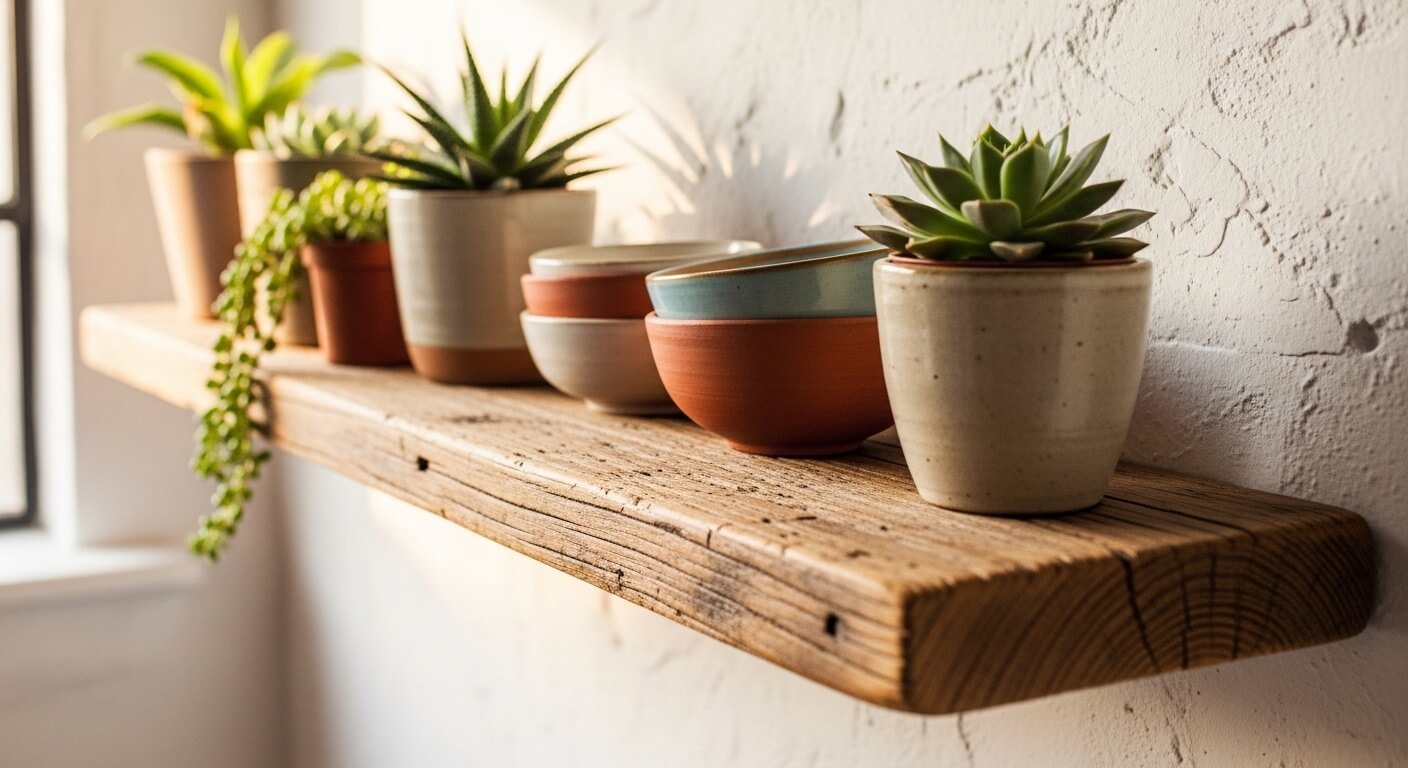
Eclectic plant styling means letting every pot be different. Glazed cerulean blue next to raw terracotta next to a woven basket planter — the variety is the look. Don’t buy matching sets. Collect pots from thrift stores ($1 to $5 each), garden centers, import stores, and market stalls. A painted terracotta pot you make yourself costs under $3 in materials. Group plants together in clusters of odd numbers — three or five — rather than lining them up evenly. Different heights, different textures, different colors all in one arrangement reads as intentionally eclectic rather than accidental.
5. Mixing Furniture from Different Eras
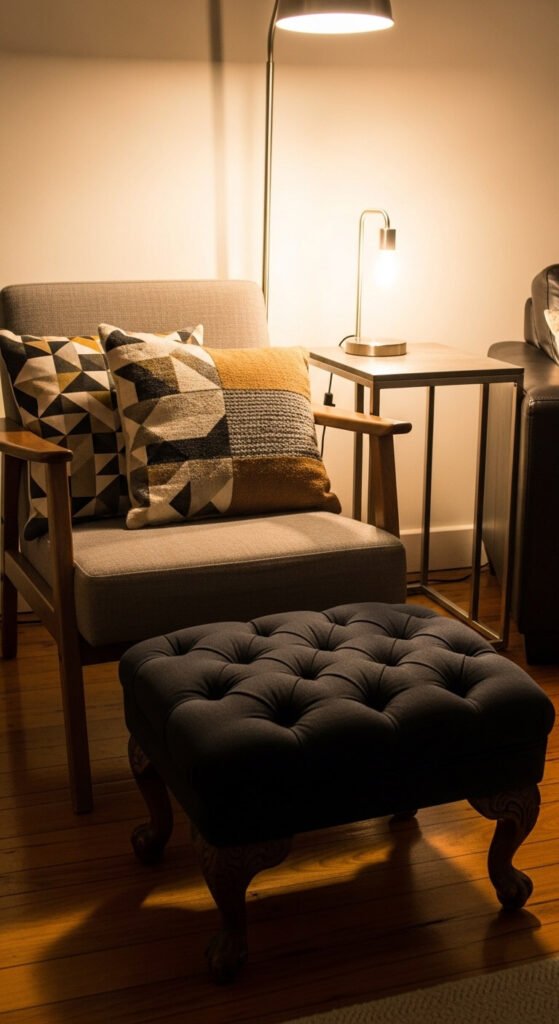
Mixing furniture from three or four different eras is the most direct expression of eclectic style. A mid-century armchair next to a Victorian footstool next to a contemporary shelving unit — each piece has its own design language, but they coexist through shared color or material. The unifying thread doesn’t need to be obvious. It might be warm wood tones across all three pieces, or the same upholstery color on two very different chairs. Shop thrift stores and estate sales for pieces from different decades and let your eye — not a style guide — decide what works together.
6. A Statement Ceiling in a Bold Color or Pattern
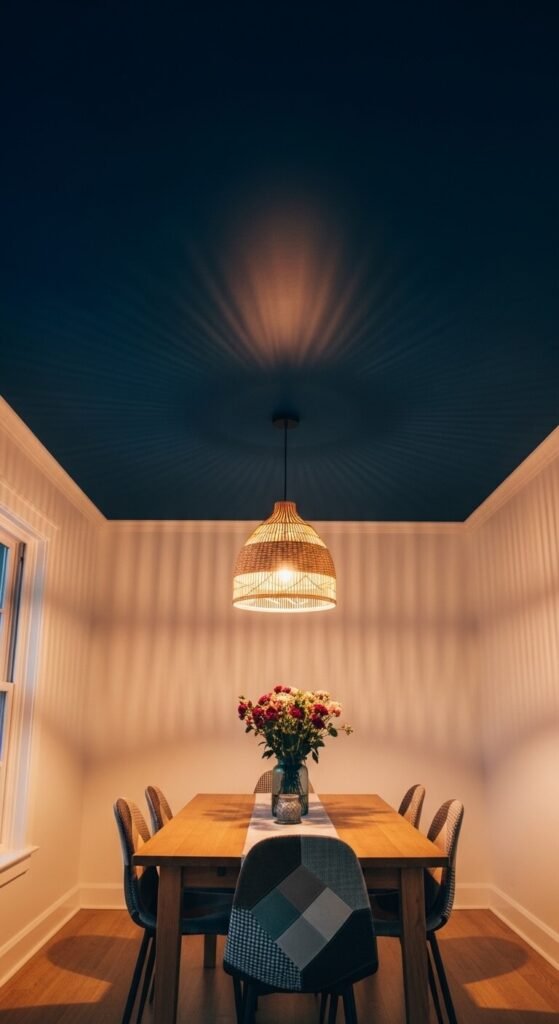
Painting the ceiling a bold, unexpected color is the most overlooked eclectic design move. While everyone focuses on walls, the ceiling is a fifth surface — and in eclectic rooms, it gets its turn. Deep navy, terracotta, forest green, or a rich jewel tone changes the energy of a room without touching the furniture or floor. One quart of ceiling paint costs $15 to $25. In a small room, that’s enough for the whole ceiling. Pair a bold ceiling with mostly white walls so the color registers as intentional rather than overwhelming.
7. Collected Objects from Travel on Open Shelves
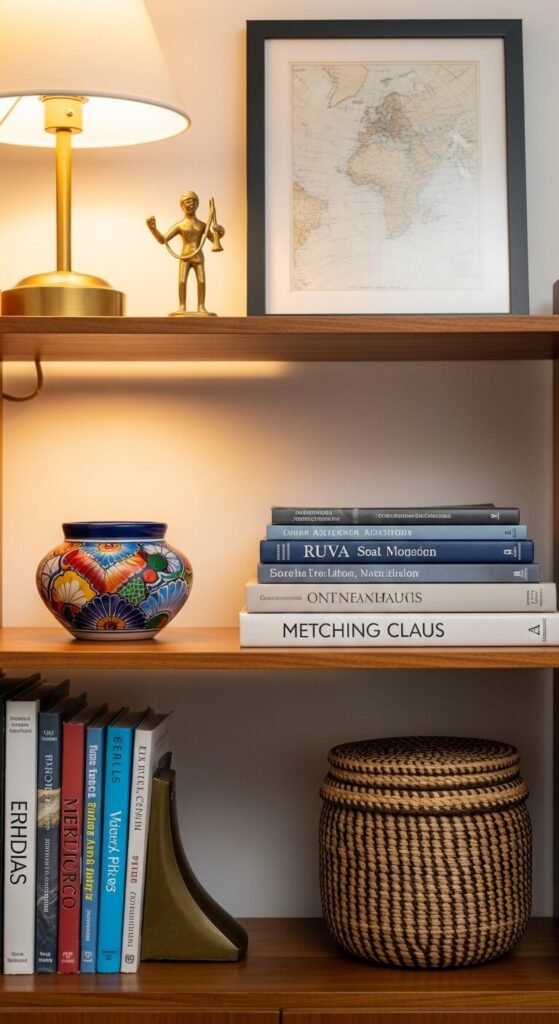
Open shelves styled with genuine travel objects tell a story no interior designer can fake. A brass figurine from a market in Marrakech, a painted bowl from Oaxaca, a woven piece from a local artisan — these objects have provenance. That’s what makes eclectic shelving feel lived-in rather than staged. Group objects in odd numbers. Mix textures — ceramic, wood, metal, textile. Add a few art books for height and color. The rule is simple: only keep objects that mean something. Meaningful things always look better than decorative filler.
8. Wallpaper in Just One Room
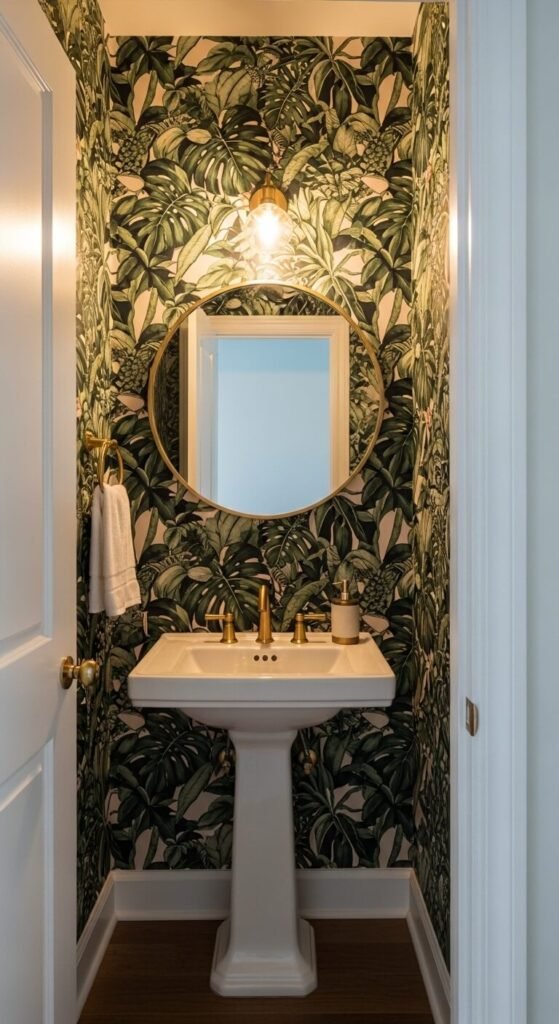
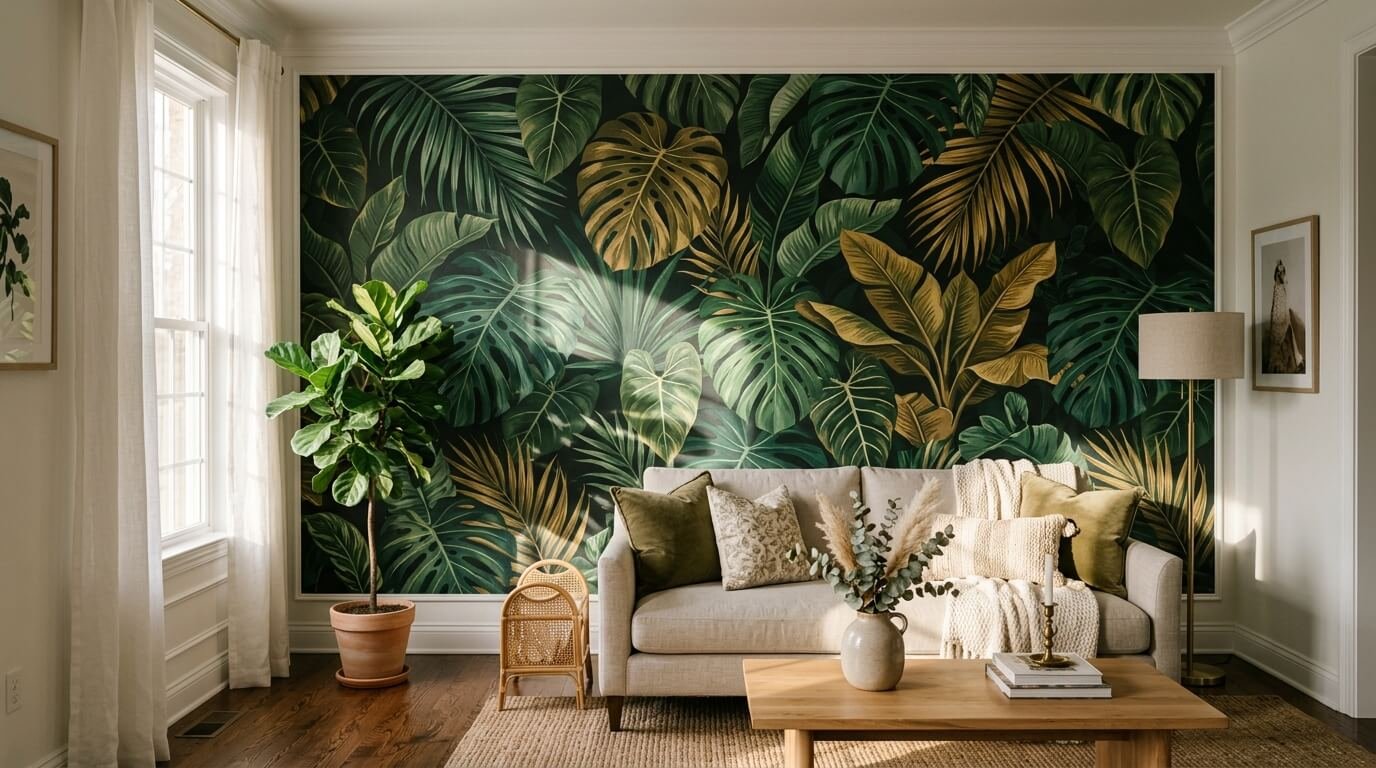
One boldly wallpapered room — especially a small one — is a signature eclectic move. A powder bathroom or entryway is the perfect place to go loud with pattern because the room is small and people only pass through it. Wallpaper for a small bathroom runs $50 to $150 for the full room. Peel-and-stick options are renter-friendly and cost about the same. Choose something you genuinely love — an oversized botanical, a bold geometric, a hand-painted chinoiserie pattern. Small rooms can hold big patterns in a way that larger rooms often can’t.
9. Vintage Lighting Mixed with Modern Fixtures
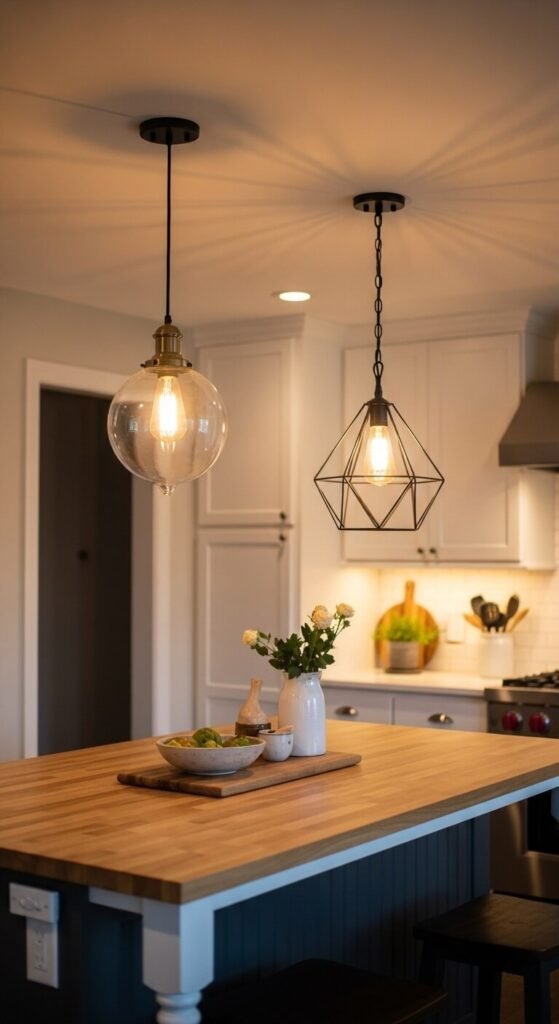
Mixing vintage and modern light fixtures in the same room is a distinctly eclectic approach to lighting. A 1960s glass schoolhouse pendant beside a contemporary black cage light — different decades, different design languages — works when both share similar warmth and scale. Vintage fixtures appear at antique stores, estate sales, and online for $20 to $80. Rewiring is straightforward for an electrician or handy DIYer. Don’t feel obligated to match. Two different fixtures above a kitchen island or dining table say more about personal taste than a matching set ever could.
10. A Maximalist Bookshelf Arrangement
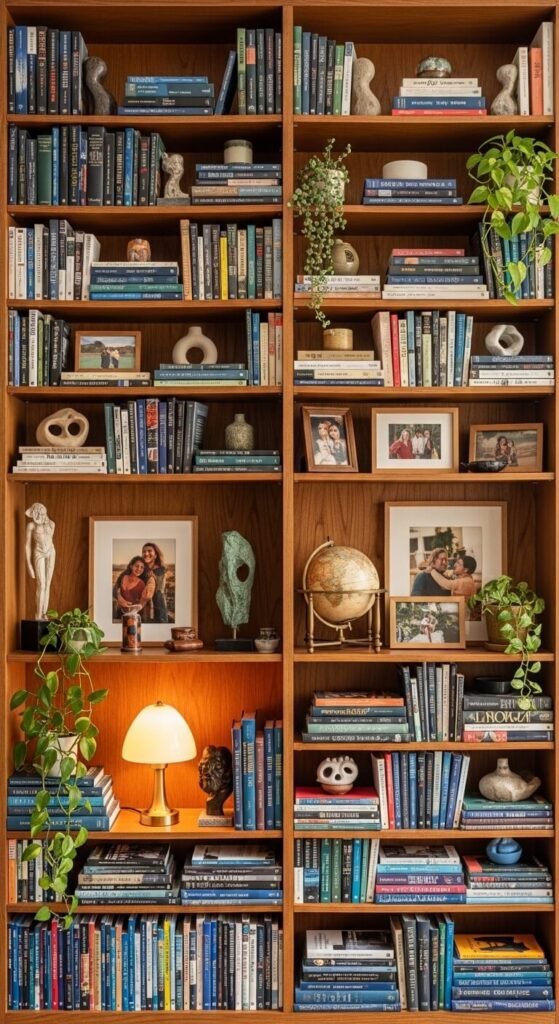
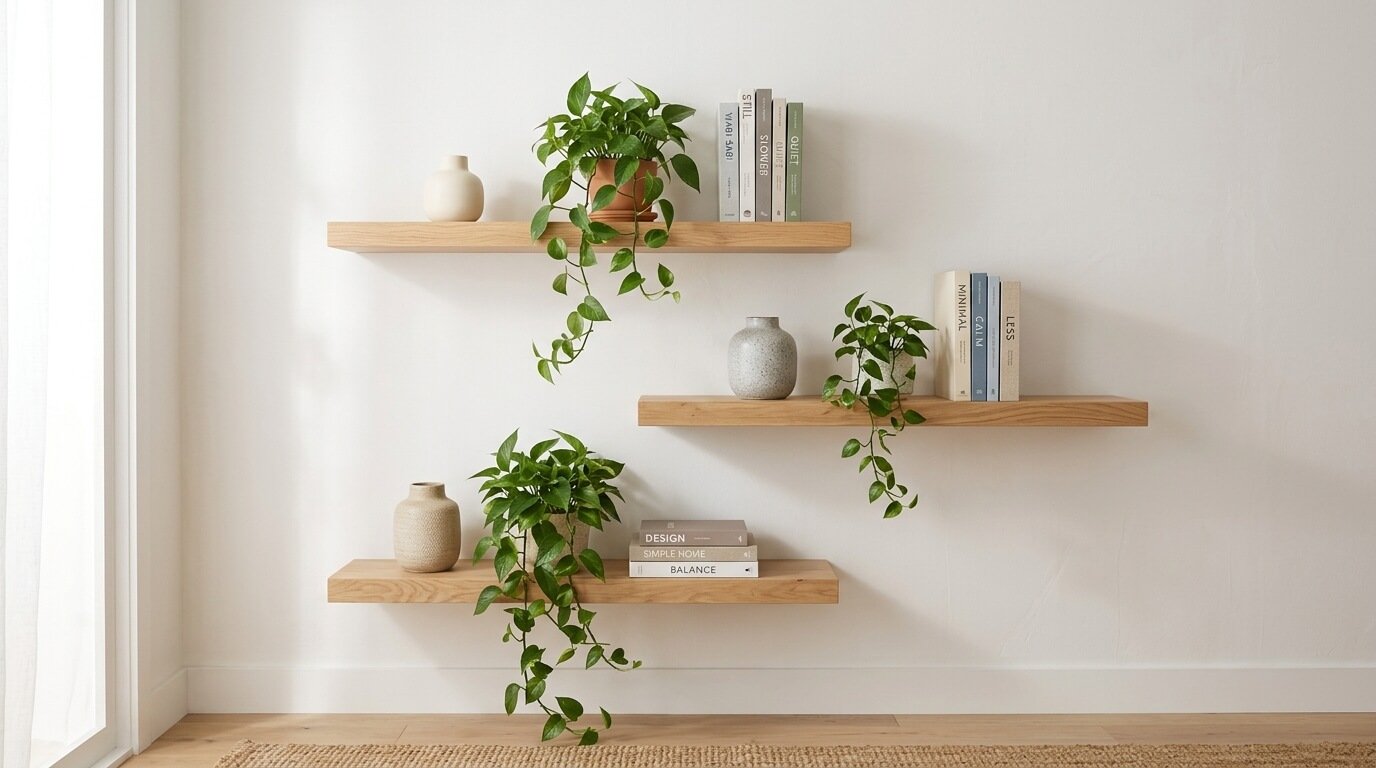
A maximalist bookshelf is one of the most personal things in any eclectic home. Books stacked horizontally, turned spine-in for color, and mixed with objects — ceramics, small art pieces, plants, photos — creates a surface that rewards long looking. There’s no kit to buy and no specific cost. Use what you own. The only rule: remove things that feel like filler. Every object should earn its place either through beauty, meaning, or both. Pull the shelf apart, edit it to what matters, and rebuild it. The result will look better than any styled version ever could.
11. An Antique Armoire in a Modern Room
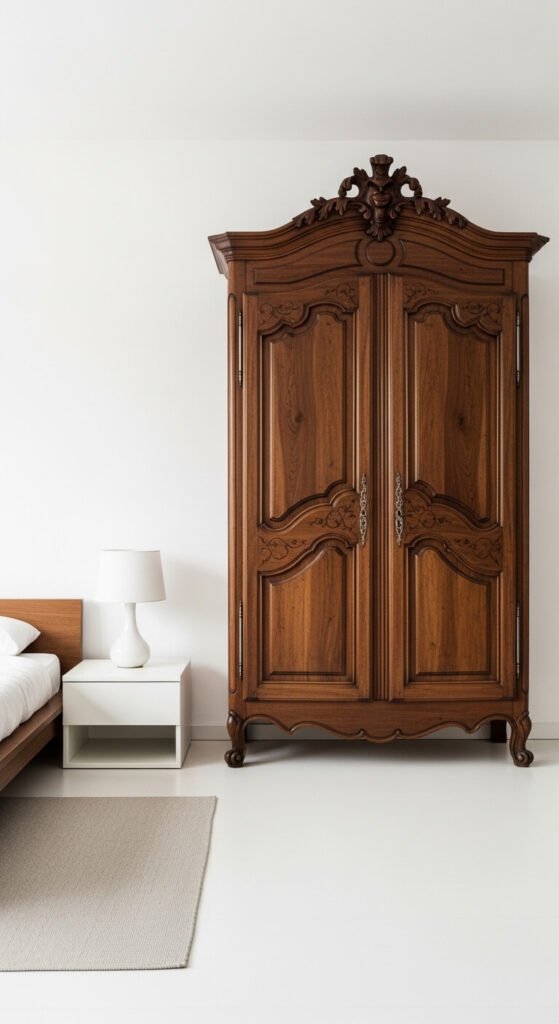
Placing an antique armoire in a modern or minimalist room creates the kind of contrast that makes both pieces more interesting. The ornate carving and dark patina of an old armoire reads even more dramatically against white walls and clean lines. Antique armoires appear at estate sales, antique markets, and online for $150 to $600 depending on condition. They work as wardrobes, linen storage, or home bars. Don’t try to match the rest of the room to the armoire — let it stand as the statement it is, surrounded by simpler pieces.
12. Global Textiles as Throws and Cushions
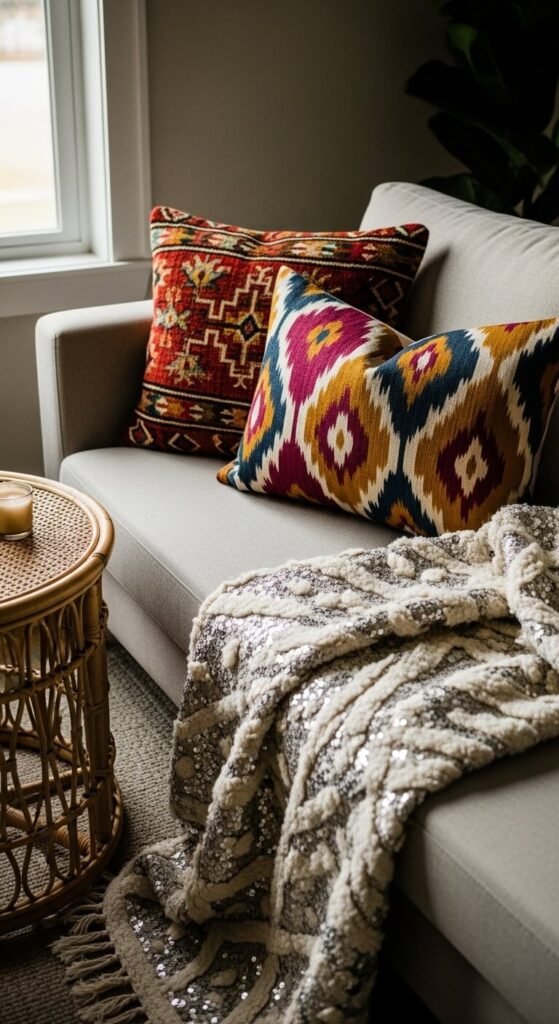
Global textiles — Moroccan wedding blankets, Indian block prints, Turkish kilims, West African kente fabric — bring pattern, color, and cultural history into a room all at once. A hand-stitched Moroccan pom-pom blanket costs $30 to $80 on Etsy from authentic sources. Block print cushion covers run $10 to $20 each. Mix two or three different textile traditions on the same sofa — the visual variety is what eclectic rooms are built on. Keep the sofa itself neutral so the textiles carry the visual weight without the room tipping into chaos.
13. A Repainted Thrift Store Furniture Piece
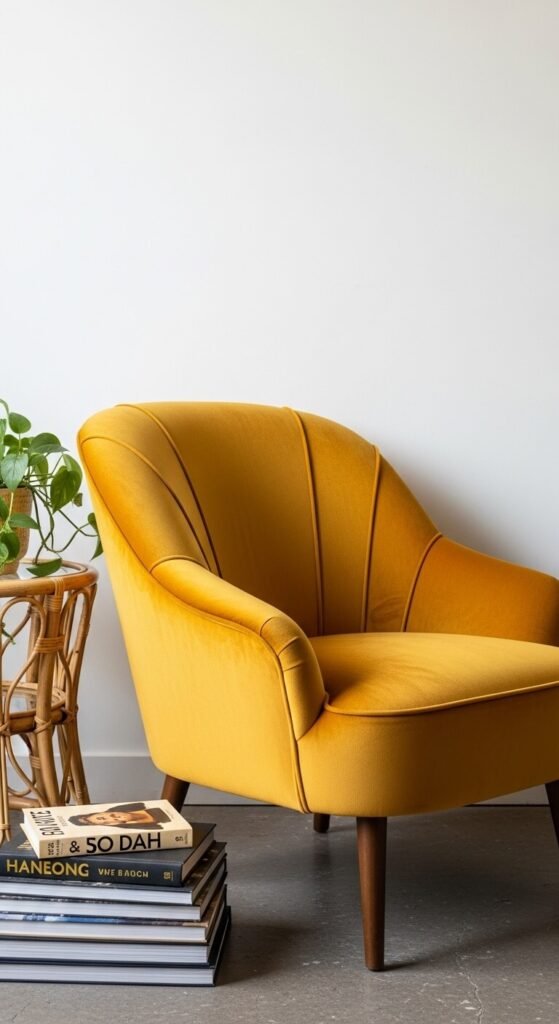
A single, boldly repainted or reupholstered thrift store piece becomes the personality of an entire room. Find a solid wood dresser at a thrift store for $20 to $40 and paint it in a color no one else would choose — cobalt blue, dusty rose, forest green. Reupholster a small chair or footstool in a bold fabric for $30 to $60 in materials plus a few hours of work. The transformation is the story. When people ask where you got it, “I painted it myself” is more interesting than any store name you could give them.
14. Stacked and Leaning Art
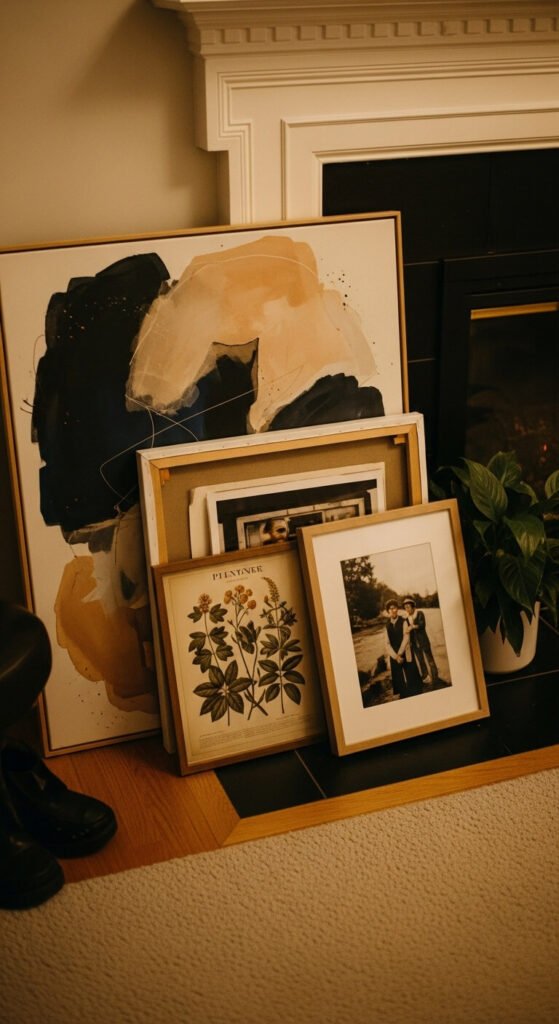
Leaning art against a wall instead of hanging it is one of the most relaxed, eclectic approaches to displaying pieces. Stack two or three frames of different sizes together — let the edges overlap. The casual arrangement feels lived-in and changeable in a way that rigidly hung art doesn’t. It also lets you swap pieces out easily without additional holes in the wall. Works best in living rooms, bedrooms, and home offices. Lean large pieces against the wall and smaller ones in front — varying heights create a natural, layered composition.
15. A Canopy or Draped Fabric Ceiling Treatment
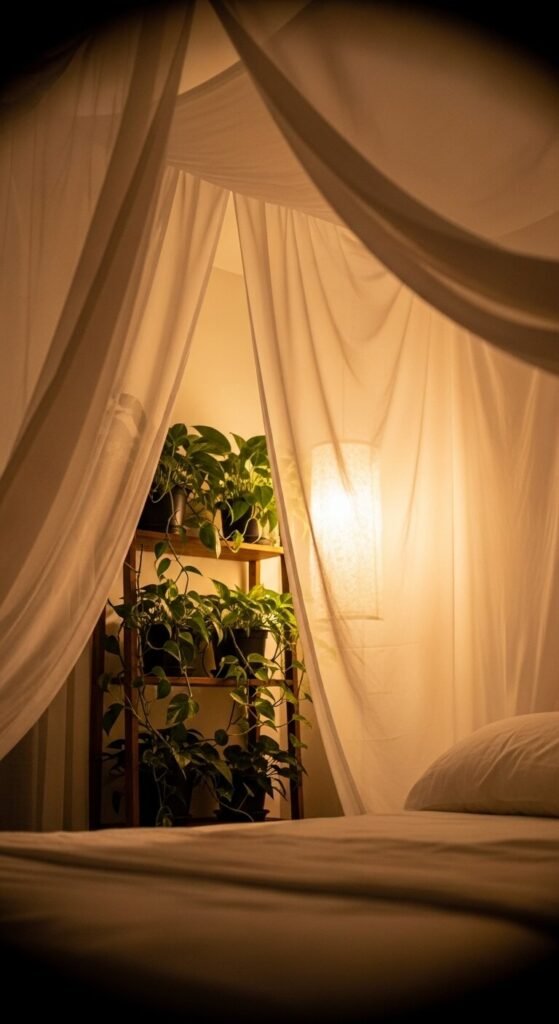
Draping fabric from the ceiling above a bed or seating area adds drama and warmth without permanent installation. Use sheer cotton, linen, or voile fabric — 4 to 6 yards is enough for a generous canopy. Attach a ceiling hook and gather the fabric from a central point or spread it from corner points for a tent effect. Fabric from a discount fabric store costs $3 to $8 per yard. Total project cost: $15 to $50. This is one of the few decor moves that changes how a room feels at night as well as during the day.
16. A Painted Accent Furniture Piece in an Unexpected Color
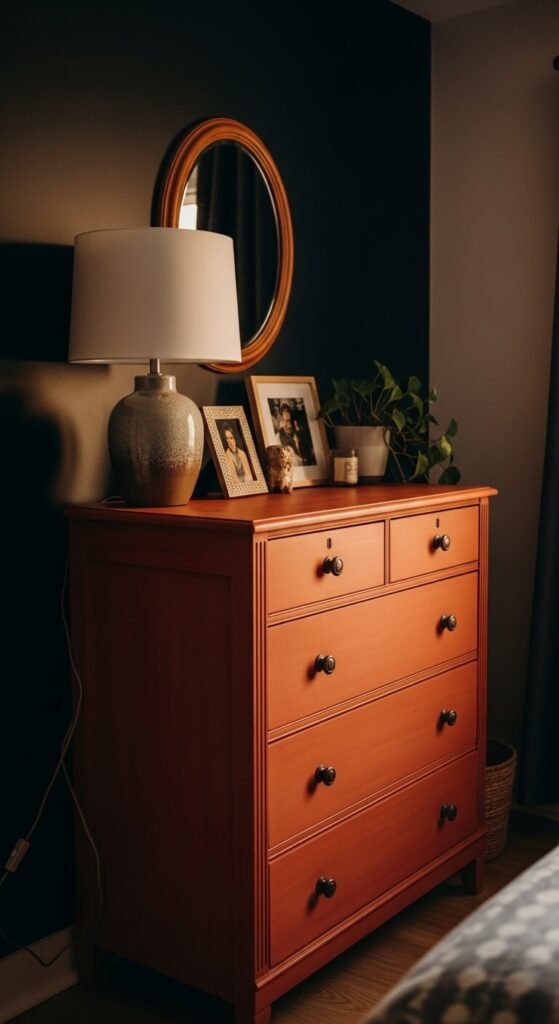
One painted furniture piece in a color that surprises is the fastest way to personalize a room. A secondhand dresser, side table, or bookshelf painted in terracotta, cobalt, sage green, or dusty blush becomes the room’s accent point. Find plain furniture at thrift stores for $10 to $40. A quart of furniture paint runs $15 to $25 and covers most small pieces with two coats. Sand lightly, apply paint, and seal with a matte topcoat. No one else has the same piece. That alone makes it a more personal choice than anything bought off a showroom floor.
17. Mismatched Dining Chairs Around One Table
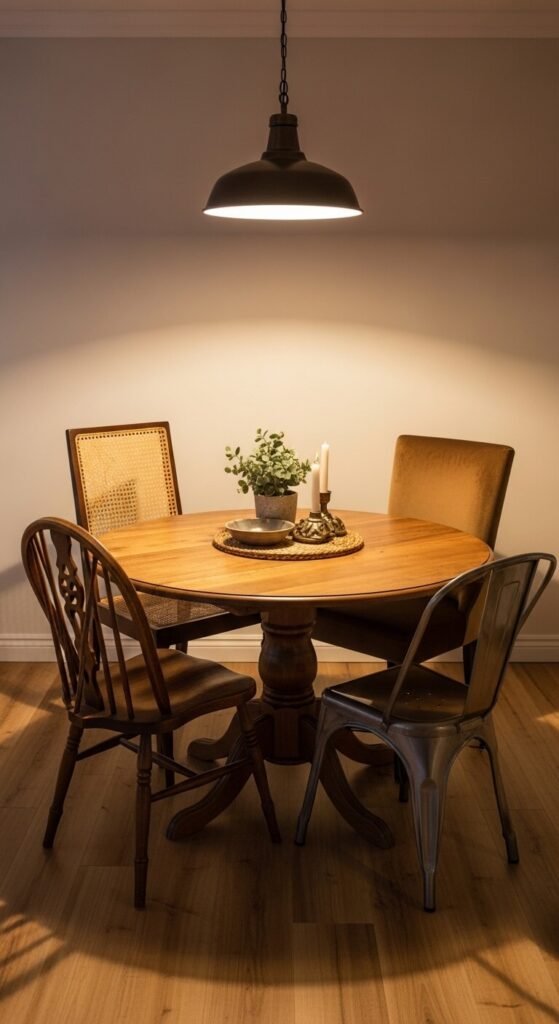
A dining table with completely mismatched chairs is one of the most inviting looks in eclectic decor. Each chair has its own history and personality, and guests naturally gravitate to the one that suits them. Collect chairs from thrift stores and estate sales for $5 to $30 each. The unifying element can be subtle — the same wood tone across three chairs, or painting the legs of all four chairs the same color to tie them together without making them match. The result is a table that looks collected over time rather than purchased as a set.
18. A Moroccan or Turkish Lantern Cluster
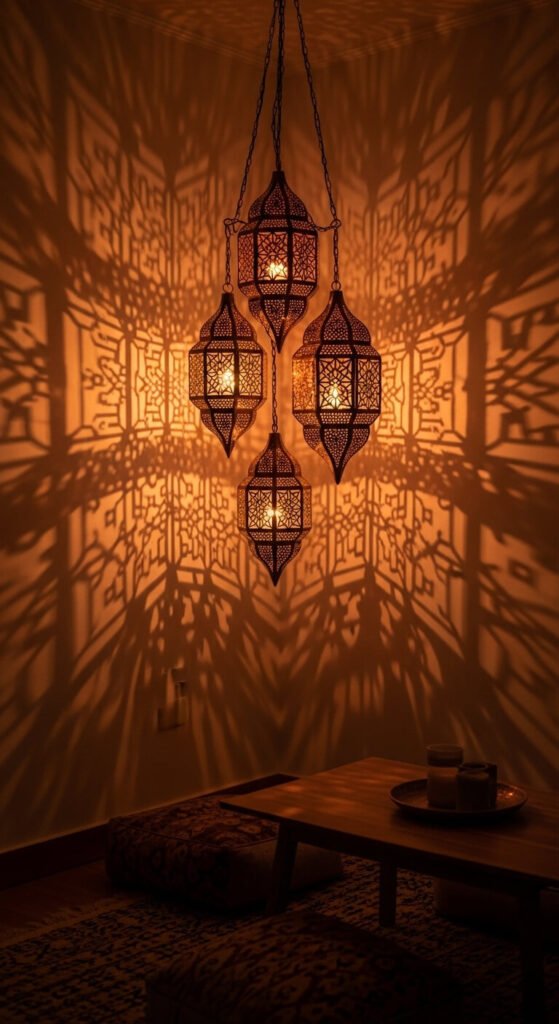
Hanging a cluster of Moroccan or Turkish pierced metal lanterns creates one of the most atmospheric lighting arrangements in any eclectic home. The cutout geometric patterns cast shadows across walls and ceilings when lit — the effect is completely unlike any standard fixture. Individual lanterns cost $15 to $40 each online or at import stores. Hang three at slightly different heights using S-hooks and ceiling hooks — no electrician required if you use battery-operated candles inside. Group them in odd numbers near a reading corner, dining area, or entryway for maximum visual drama.
19. Woven Wall Hangings and Fiber Art
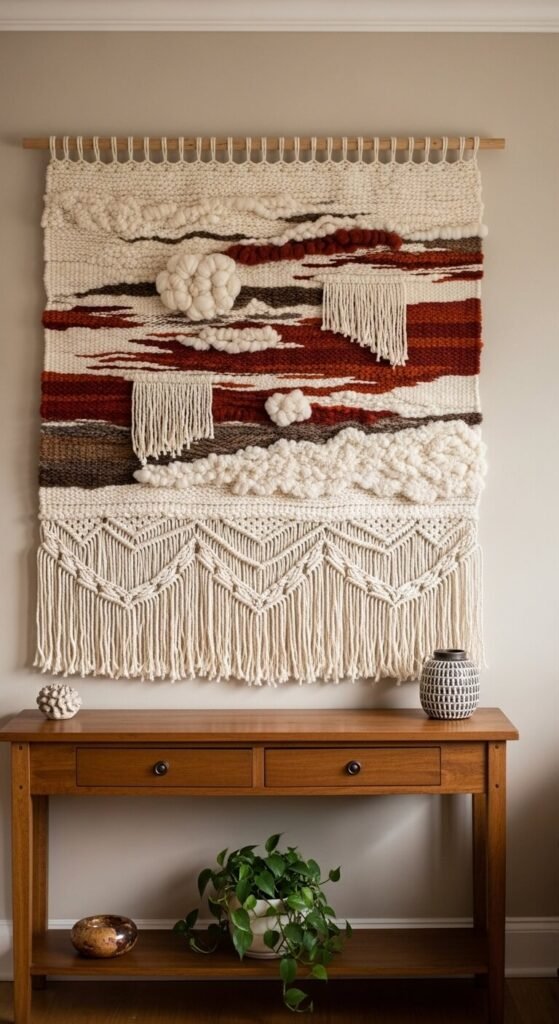
A large woven wall hanging fills vertical space with texture and warmth in a way that framed art alone can’t. Hand-woven fiber pieces in natural cotton, wool, and jute add depth through material rather than color. Look for weavings on Etsy from independent artists for $40 to $150 depending on size. Or make your own on a simple cardboard loom for $10 to $20 in yarn and supplies. Hang one large piece rather than several small ones — a single generous weaving reads as a considered design choice rather than filler for a bare wall.
20. A Reading Nook Built into a Tight Space
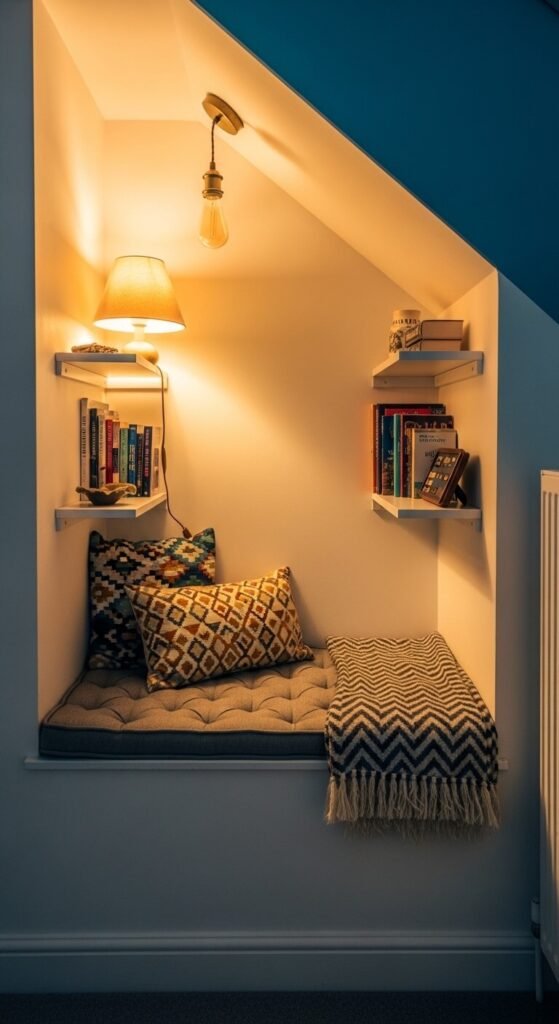
Turning a dead corner, alcove, or under-stair space into a reading nook is pure eclectic thinking. It’s not in any rulebook — you just decide that small space deserves a personality. Paint the inside of the nook a different color from the rest of the room. Add a cushion cut to fit the bench or floor for $20 to $50. Mount one or two small shelves above for $15 to $30 in materials. Hang a small pendant light or clip-on reading light. The contained space makes the bold color and pattern choices feel right in a way they might not in a larger room.
21. Antique Maps and Old Documents as Art
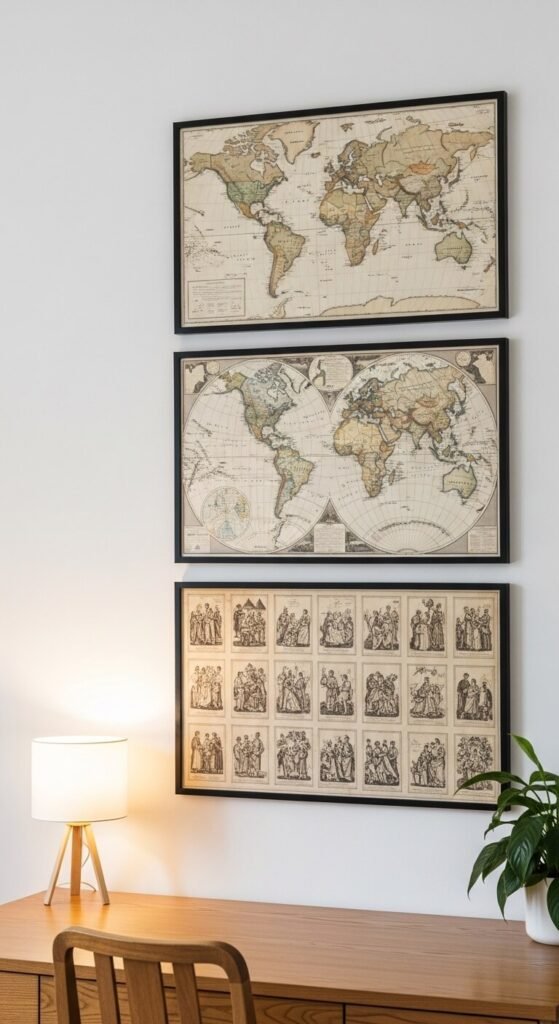
Vintage maps and antique documents make some of the best wall art available — and they’re often free or very cheap. Download historical maps, old botanical illustrations, and antique engravings from free archives like the David Rumsey Map Collection, the Library of Congress digital archive, and Rawpixel’s public domain section. Print at a local print shop for $5 to $15 per piece. Frame in simple thin frames. Large antique maps — printed at 24×36 inches — make a bold statement in hallways, offices, and dining rooms for a fraction of what art galleries charge.
22. A Headboard Made from Doors, Shutters, or Windows
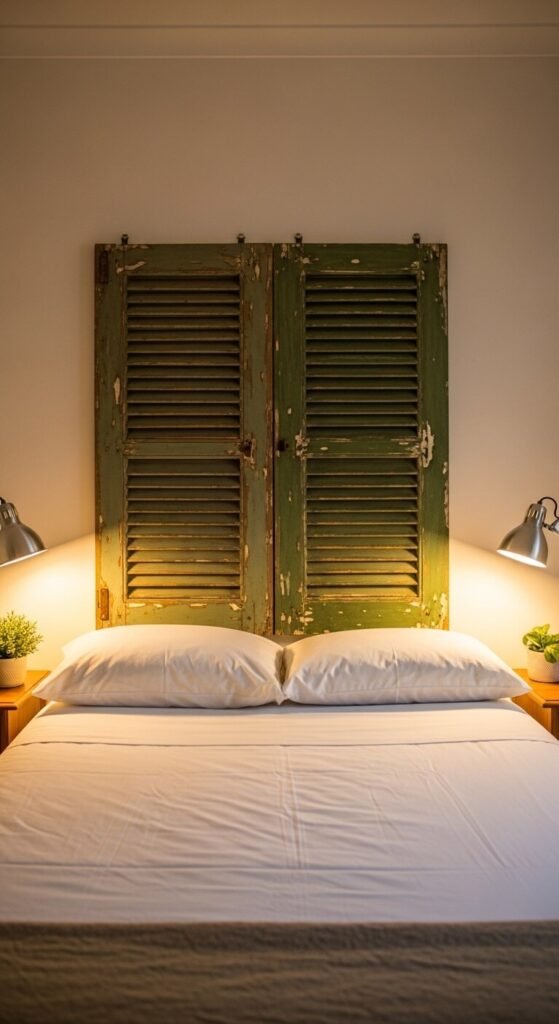
A headboard built from repurposed architectural salvage is the most eclectic bedroom upgrade available. Old shutters, a vintage door, a window frame, or a section of decorative wrought iron gate — all of these work as headboards when mounted to the wall behind the bed. Find architectural salvage at reclaim yards and antique dealers for $20 to $100. Mount flush to the wall using picture-hanging hardware or simple screws. The aged paint and worn material of salvaged pieces adds a layer of history to the bedroom that no manufactured headboard can replicate.
23. Collecting and Displaying One Type of Object
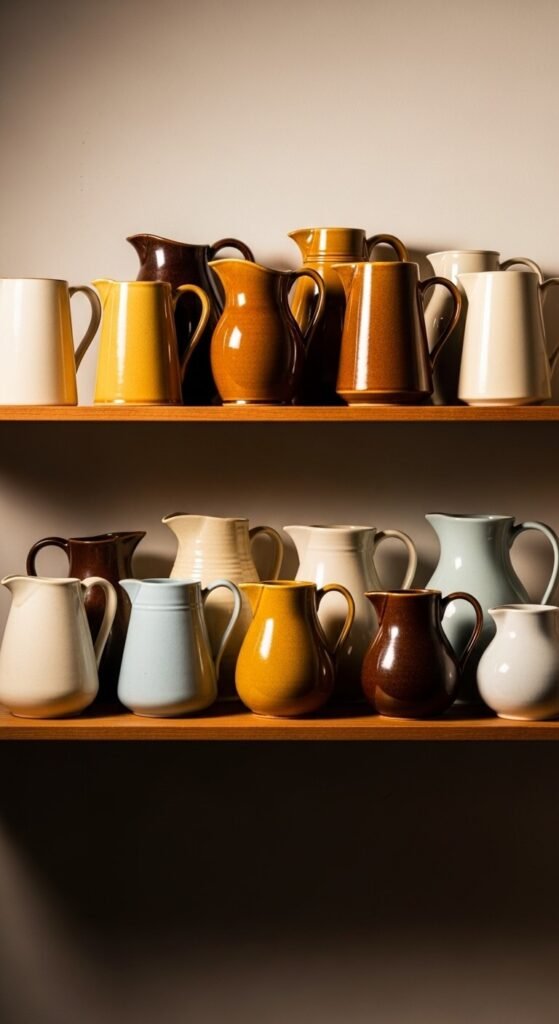
A curated collection of one type of object — vintage ceramics, old clocks, glass bottles, wooden carvings — reads as deeply personal when displayed together on a shelf or wall. The key is genuine collecting over time rather than buying a matching set. Thrift stores, antique markets, and flea markets are the right sources. Build the collection slowly. Ten slightly different objects of the same general type look far better than a set of matching decorative pieces. The variety within the theme is what transforms a shelf from decorated to collected.
24. Color Blocking with Paint Across Multiple Walls
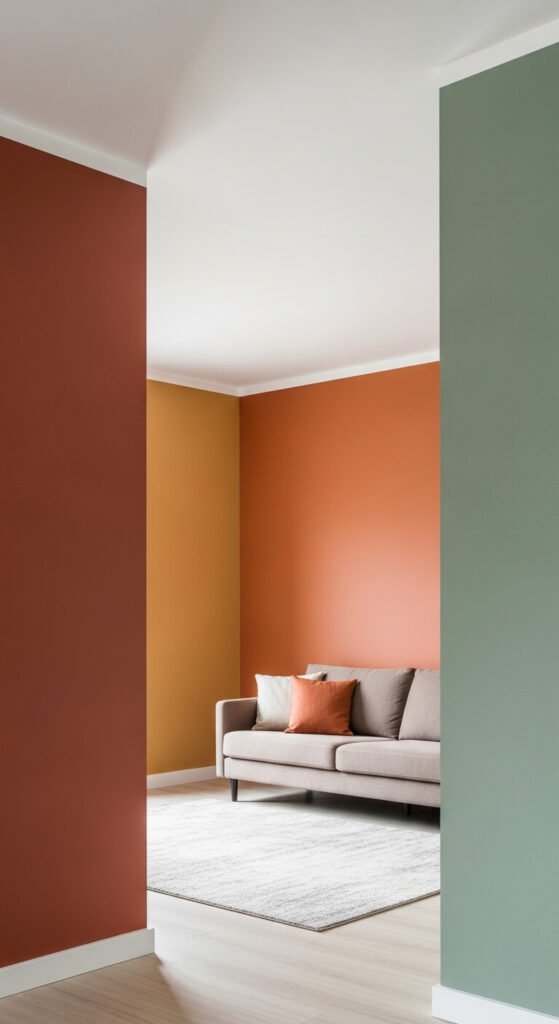
Color blocking across multiple walls — each wall a different but related color — is an eclectic move that takes confidence. Choose three colors from the same warm or cool family and assign each wall its own shade. Terracotta, ochre, and sage green work together. Deep teal, navy, and charcoal work together. Use one quart per wall — $15 to $25 each — and keep the ceiling and trim white to anchor the composition. The furniture stays neutral. This is about the architecture of color rather than pattern or texture, and it makes the room look like it came from someone with a very particular eye.
25. Mixing Metallics — Gold, Silver, Brass, and Copper
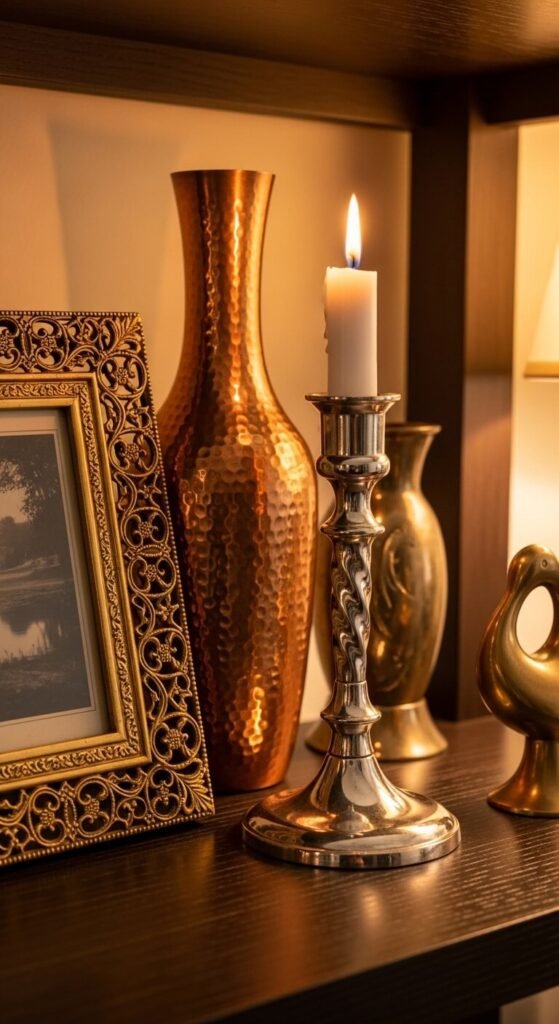
The old rule of matching all your metals is completely ignored in eclectic decor — and that’s a good thing. Gold, brass, copper, and silver together on the same shelf or in the same room adds depth that a single-metal scheme never achieves. Thrift stores are full of mixed-metal candlesticks, frames, and vessels for $2 to $15 each. The key is keeping the scale varied — a tall brass vase beside a small silver dish beside a low copper bowl. Different heights and sizes prevent the arrangement from looking cluttered rather than collected.
26. A Deeply Personal Entryway
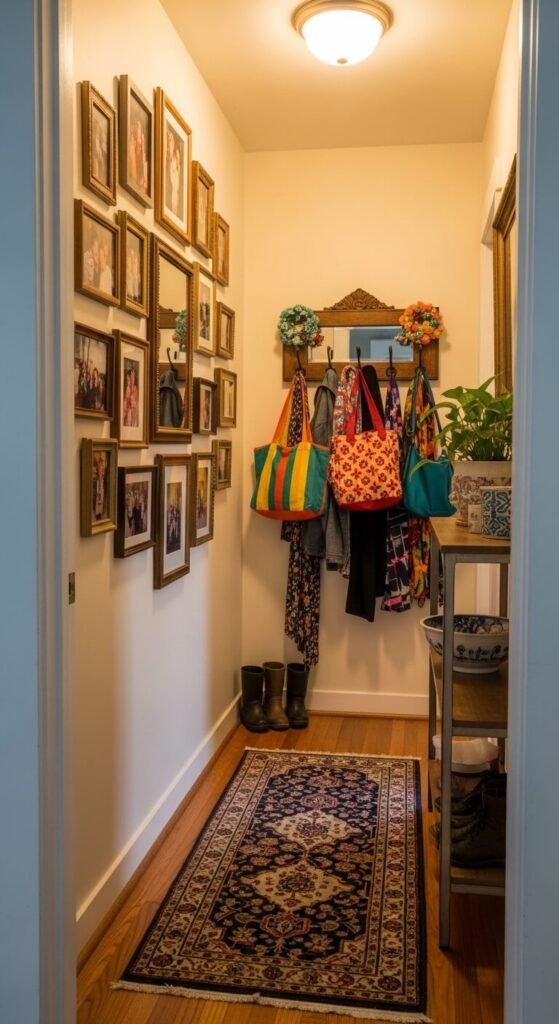
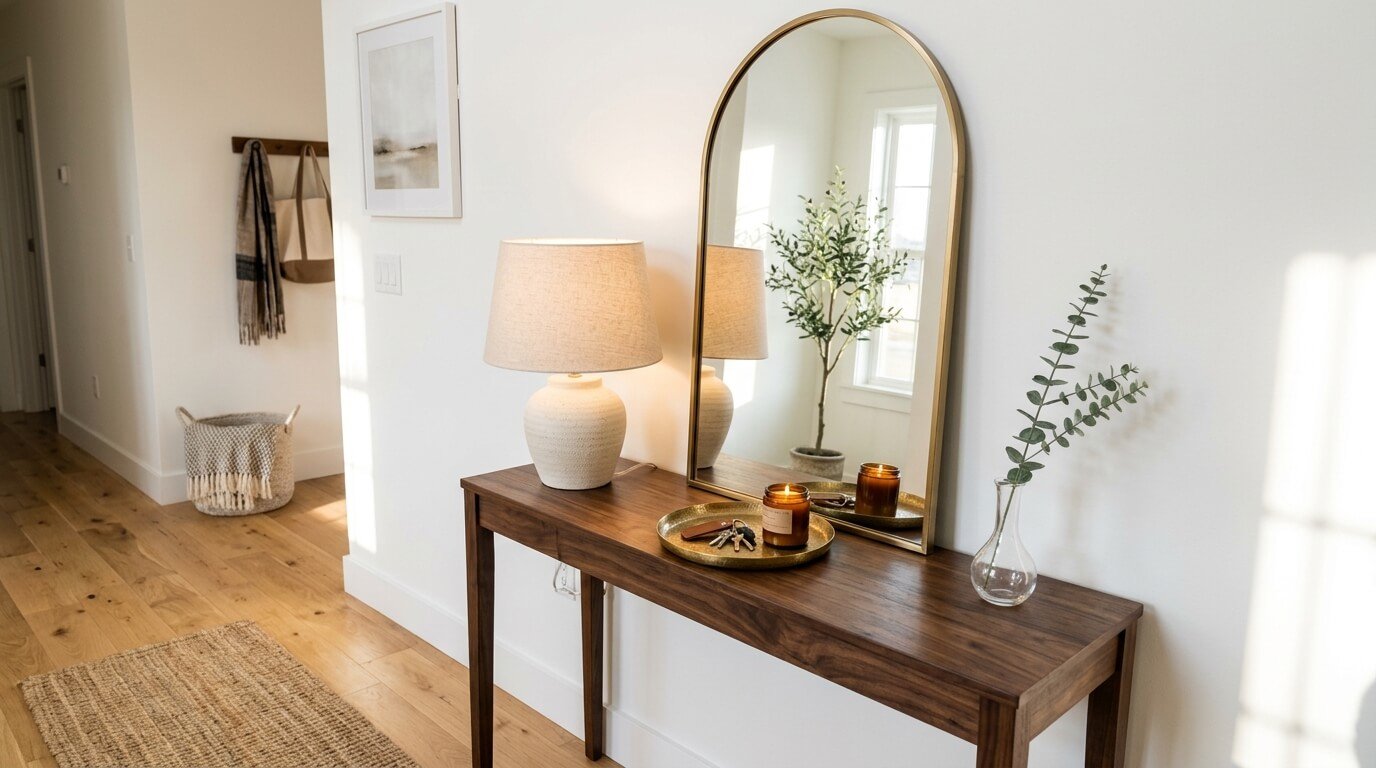
The entryway is the first room anyone sees — make it tell your story immediately. In eclectic homes, the entryway doesn’t follow a neutral, welcoming template. It’s already opinionated. A gallery of real family photos in mismatched thrifted frames. A vintage coat rack loaded with personality. A patterned runner that has nothing to do with what’s in the next room. A bold color on the entryway walls sets expectations before anyone sees anything else. Total cost for a complete eclectic entryway refresh: $30 to $80 if you shop secondhand and use what you already own.
Conclusion
Eclectic decor is the style that benefits most from time and confidence. The longer you live somewhere and the more you trust your own taste over trend cycles, the better an eclectic home gets. Start with one genuinely personal object — a piece from a trip, a thrifted find you love, a painting you made yourself — and let the room build from there. Layer rugs, mix metals, combine eras, paint one wall a color that makes you happy. None of this requires a designer or a significant budget. It only requires paying attention to what you actually love and giving it a place to live.