29 Natural Wood Decor Pieces That Ground Your Design


Disclosure: As an Amazon Associate we earn from qualifying purchases. Some links on this page may be affiliate links — if you click through and make a purchase, we may receive a small commission at no extra cost to you.
Natural wood decor has a grounding quality that no other material can replicate. It connects a room to the physical world — to growth, age, and organic process — in a way that manufactured materials simply cannot. A room with carefully placed natural wood pieces feels warmer, calmer, and more human in scale than one without them, regardless of the style or budget of the surrounding decor. Whether you are adding a single carved bowl to a minimalist shelf or building an entire room around live-edge furniture and raw timber, these 29 natural wood decor pieces offer specific, practical ways to bring that grounded, organic quality into your home.
1. Live-Edge Wood Coffee Table
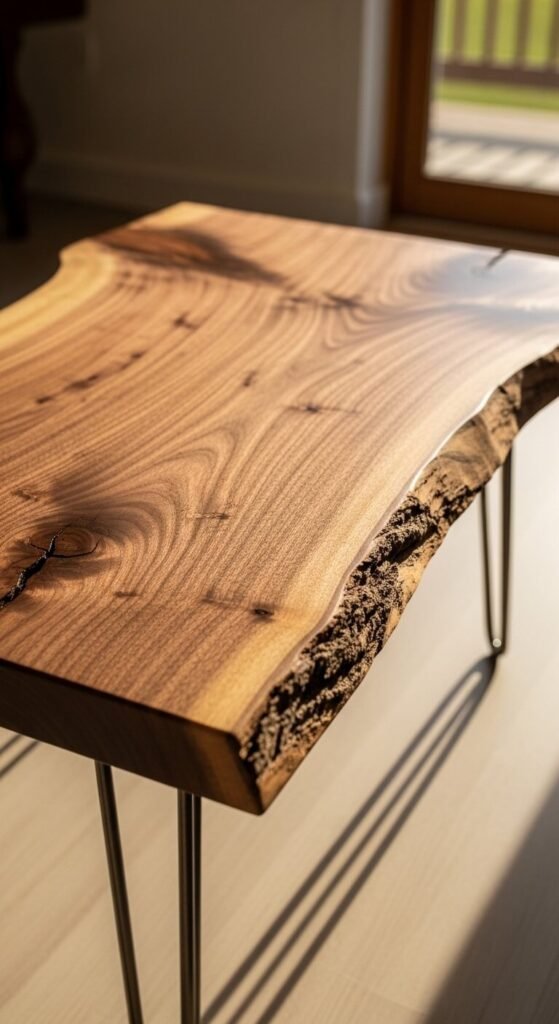
A live-edge wood coffee table — where the natural, bark edge of the timber slab is left intact — is the most impactful single natural wood piece you can introduce into a living room. The organic, irregular silhouette creates visual energy that a standard rectangular table cannot. Walnut, oak, and acacia are the most widely available live-edge slab species. Pair with simple steel or hairpin legs for a contemporary result; with turned wooden legs for a more traditional look. Budget tip: live-edge timber off-cuts from a local sawmill or wood supplier can be fitted with inexpensive hairpin legs for a custom table at a fraction of retail price.
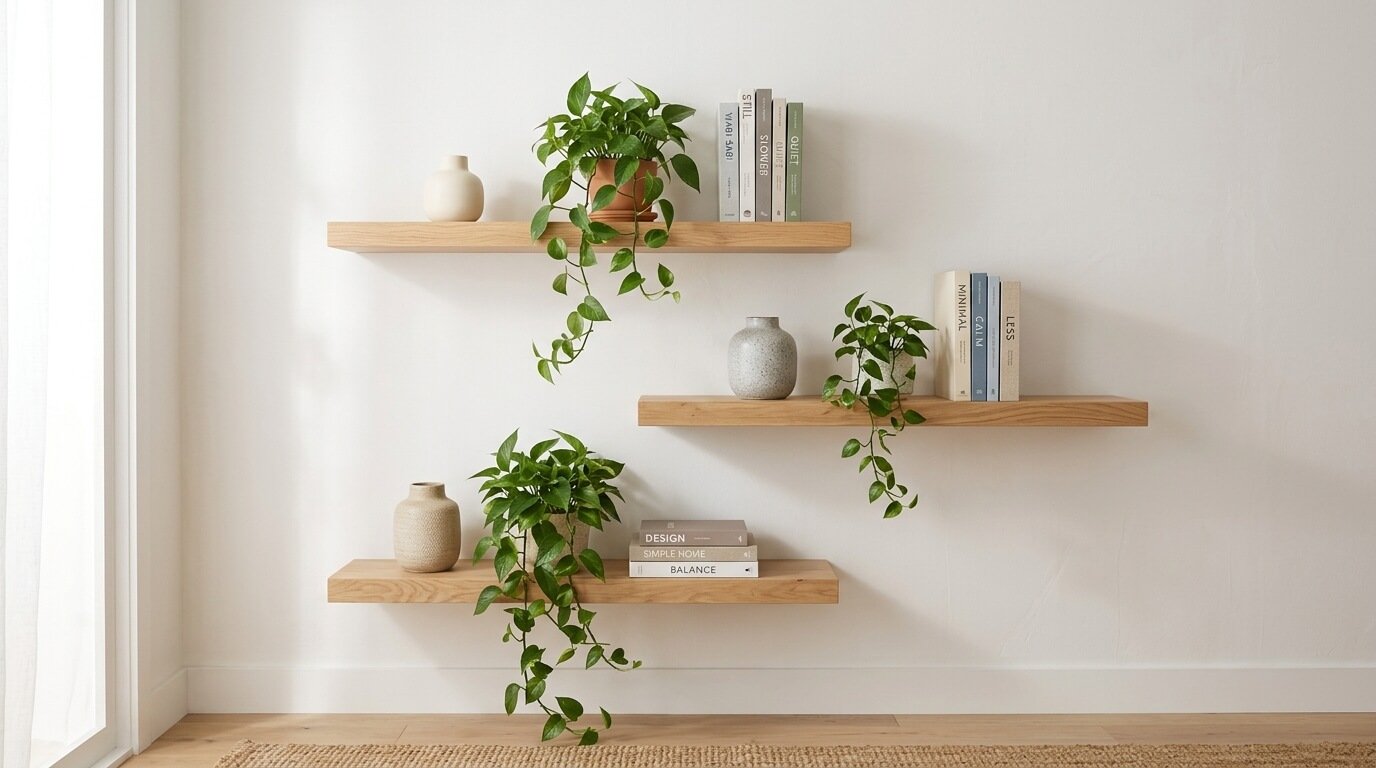
2. Wooden Floating Shelves
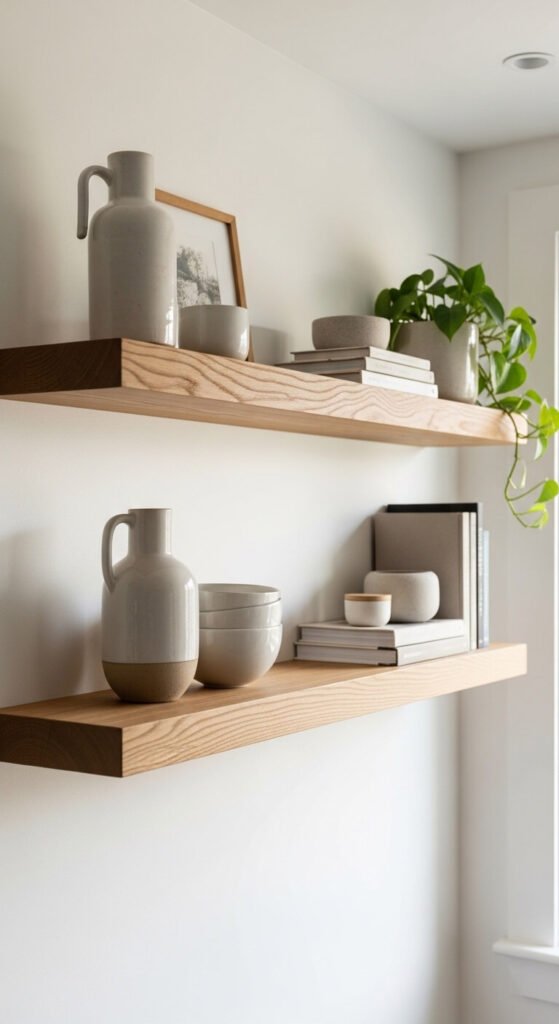
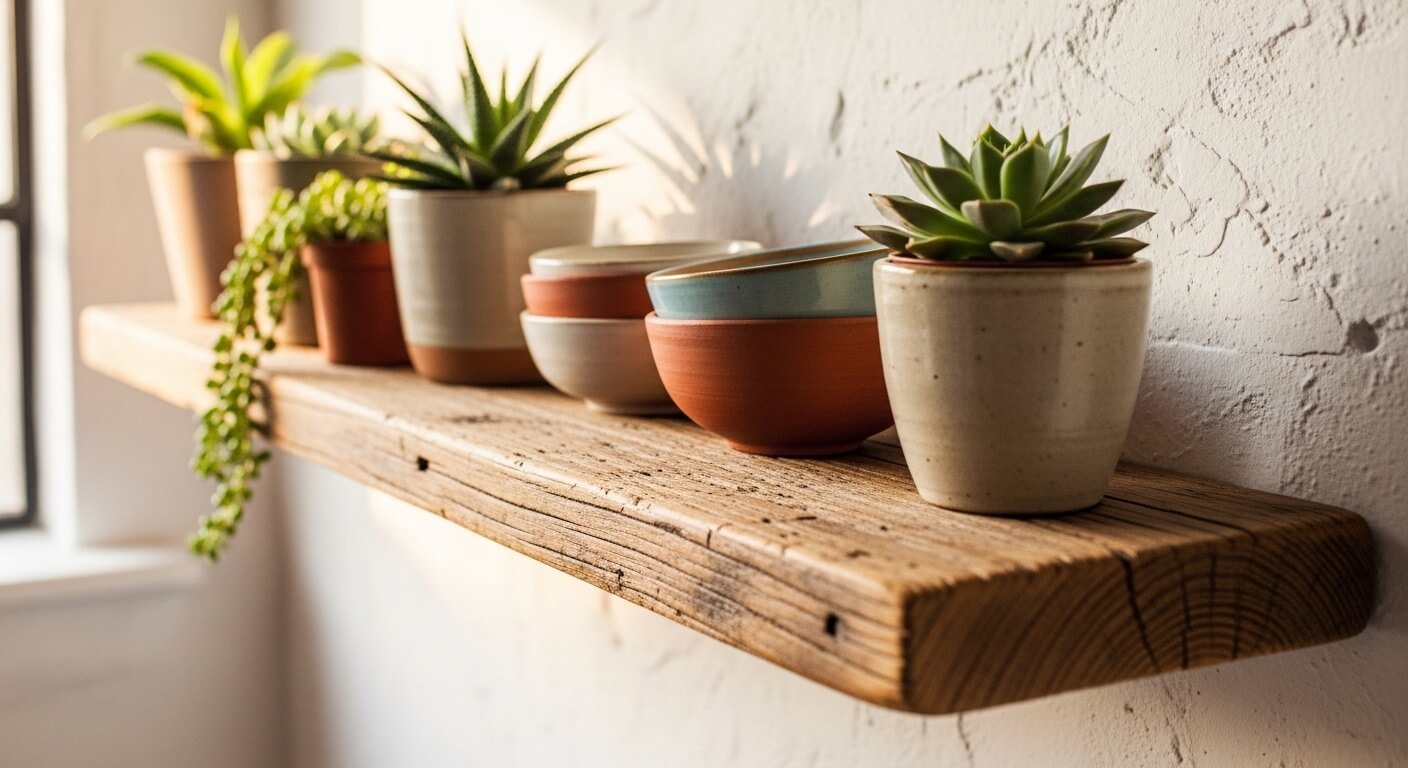
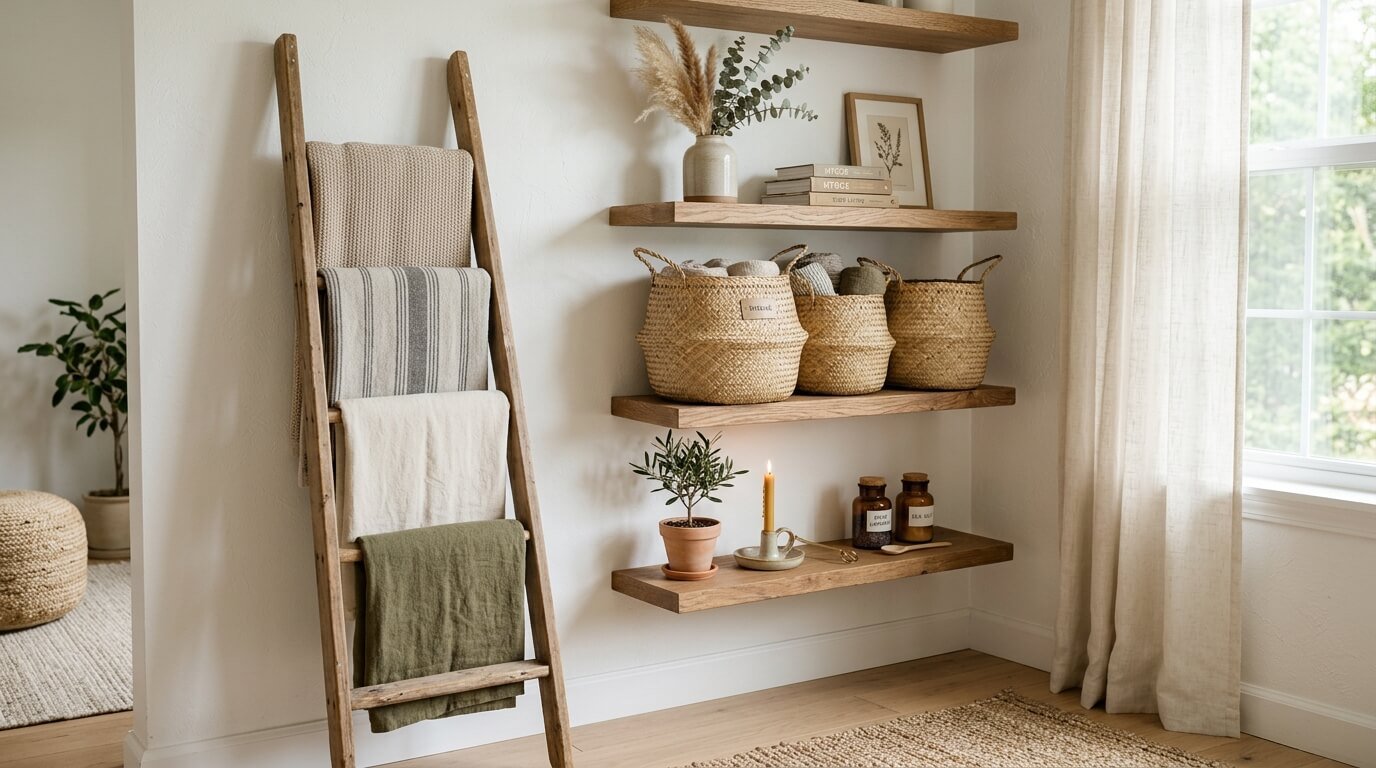
Solid wood floating shelves — in oak, walnut, or pine — add warmth and natural texture to a wall at a practical storage scale. The natural grain and color variation in solid timber make these shelves visually active even when empty. A natural oil finish rather than a heavy varnish keeps the wood looking organic and warm. Use a single species consistently throughout a room for visual coherence. Budget tip: unfinished pine shelving boards from a hardware store are extremely affordable and can be hand-oiled with linseed or tung oil at home to produce a beautiful natural finish that compares favorably with more expensive hardwood options.
3. Carved Wooden Bowl
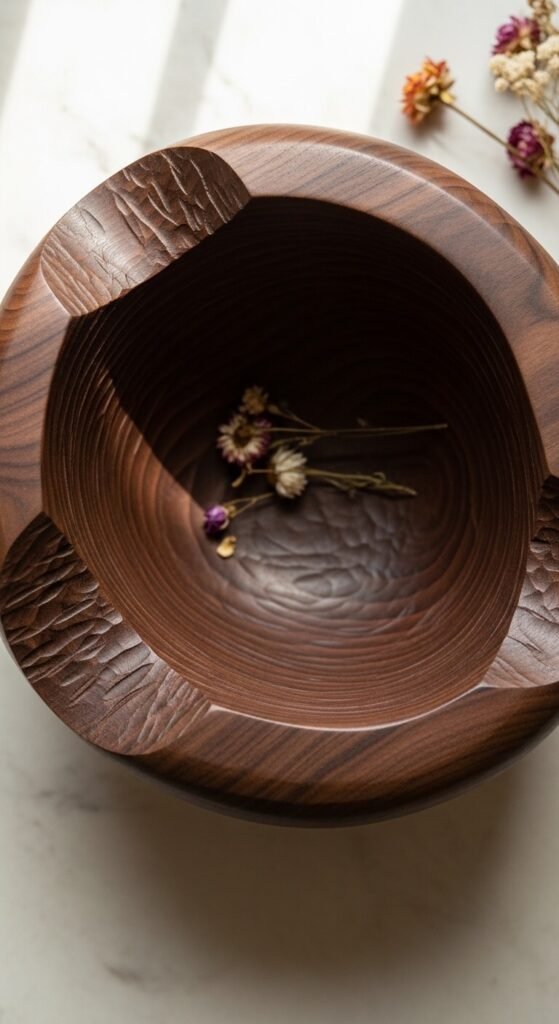
A large hand-carved wooden bowl on a coffee table, dining table, or kitchen counter functions simultaneously as a decorative object and a practical vessel. The combination of organic carved form and natural grain makes even an empty bowl visually rich. Look for bowls where the grain curves dramatically across the form — this signals that the bowl was carved from a single piece of wood rather than assembled from joined sections. Budget tip: hand-carved wooden bowls from African or Southeast Asian craft importers are available at very affordable prices and are typically made using traditional hand-carving techniques that produce genuinely beautiful results.
4. Raw Wood Dining Table
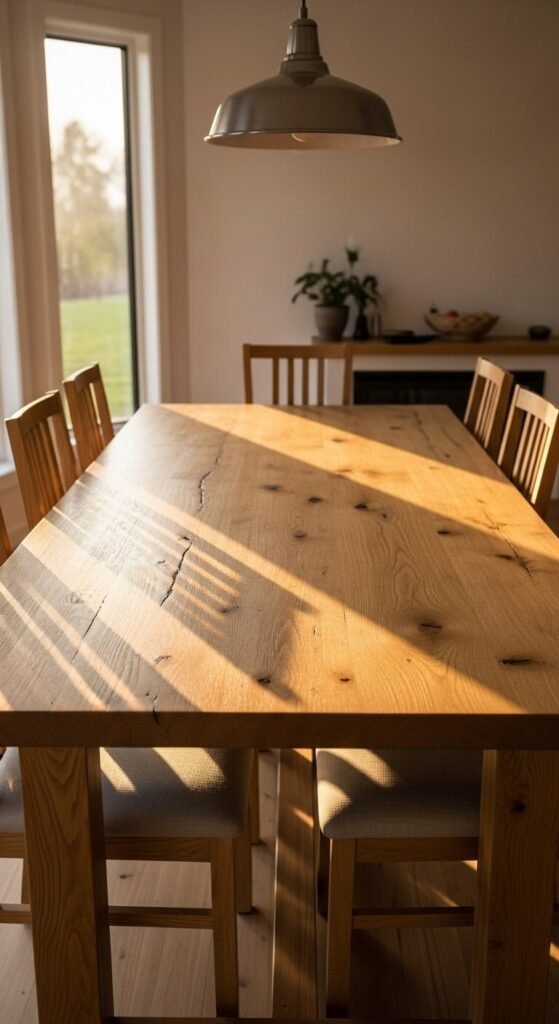
A solid wood dining table with a natural oil finish — showing the full grain, knots, and natural character of the timber — creates a grounded, warm center to any dining room. Avoid heavily lacquered or glass-top alternatives if natural warmth is the goal — they close off the wood and remove the tactile quality that makes timber tables so appealing. Oil and wax finishes keep the wood breathable and touchable. Budget tip: solid pine dining tables are significantly cheaper than oak or walnut alternatives and can be sanded and oiled at home for a beautiful, close-to-natural result — pine grain has its own warm, organic character.
5. Wooden Cutting Boards as Decor
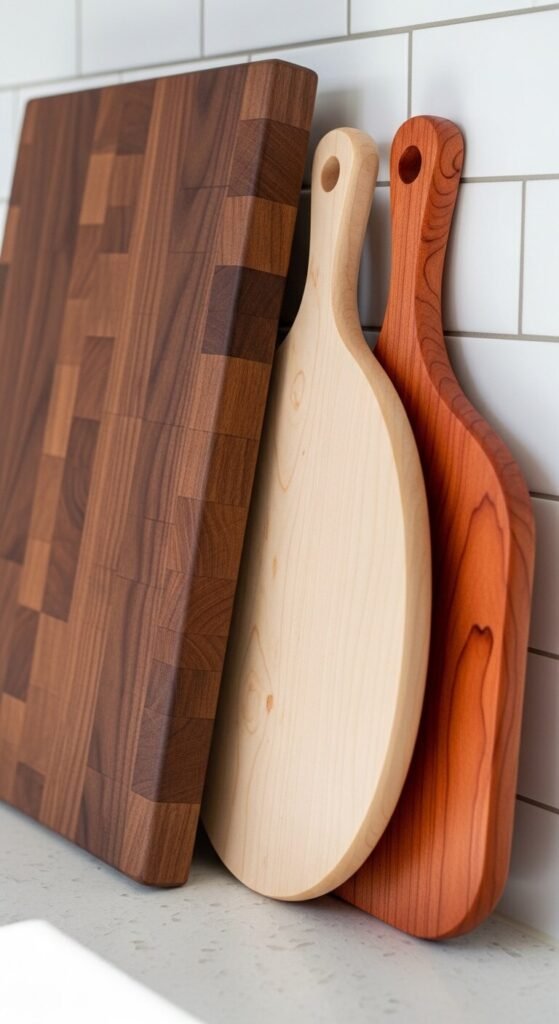
Wooden cutting boards displayed vertically on a kitchen counter are both functional tools and natural decor objects. A collection of two or three boards in different wood species — dark walnut, light maple, warm cherry — creates a warm, organic kitchen display with subtle color and grain variation. End-grain boards with their cross-cut surface pattern are particularly visually interesting. Stand them against the backsplash rather than storing them in a drawer. Budget tip: a single beautiful large end-grain board in walnut can be the focal kitchen surface piece — end-grain boards from wooden kitchenware suppliers are available at accessible prices and improve in appearance with regular oiling.
6. Driftwood Wall Art
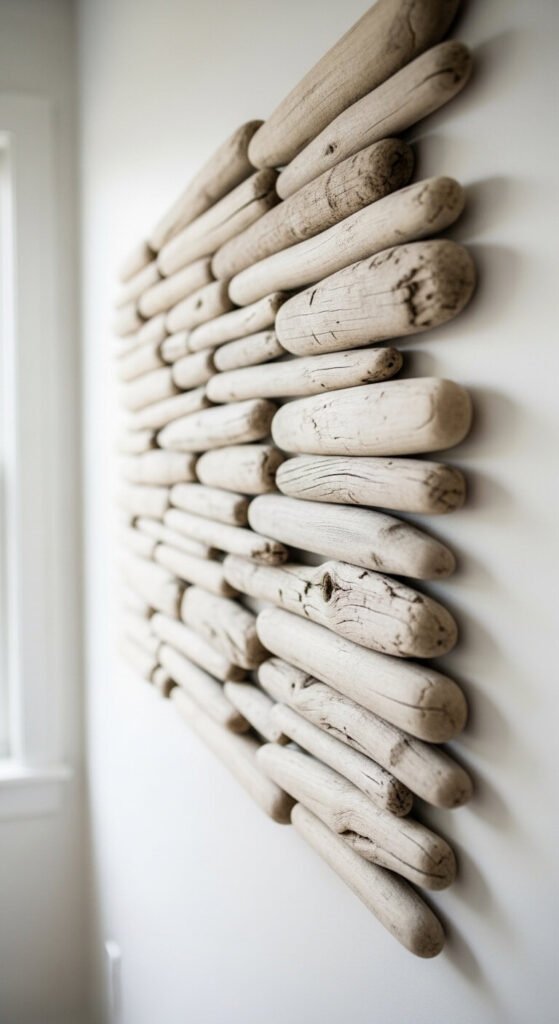
Driftwood wall art — assembled from bleached, smooth-surfaced pieces collected from beaches or purchased from craft suppliers — creates an organic, textural wall installation with a calm, coastal quality. Arrange pieces in a loose horizontal or vertical composition mounted directly on the wall using small nails or adhesive picture hooks. The pale, sun-bleached tones of driftwood work beautifully against both white walls and darker painted surfaces. Budget tip: driftwood collected personally from beaches is the most authentic and completely free material source — sort by size and tone, and arrange loosely without overworking the composition.
7. Wooden Stool as Side Table
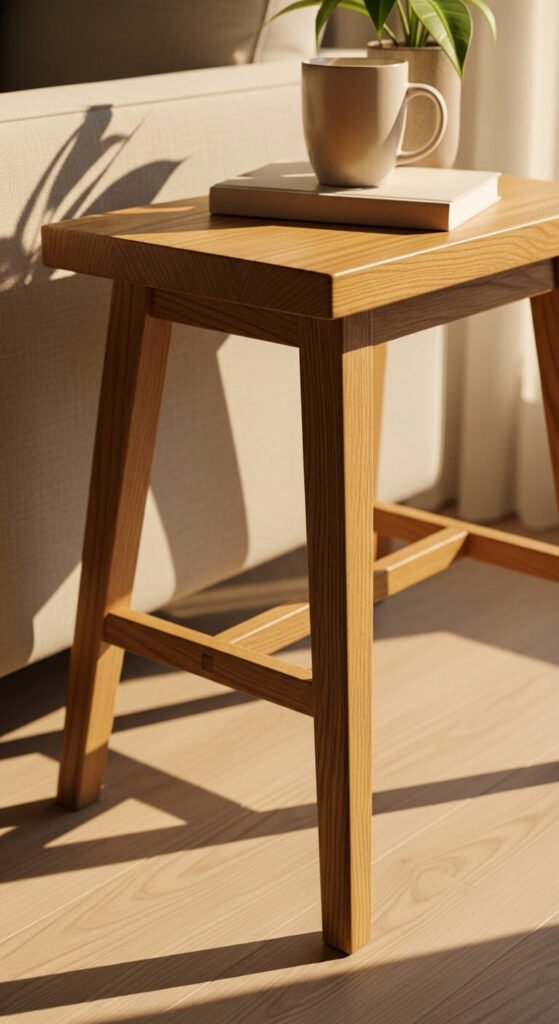
A solid wooden stool used as a side table beside a sofa or bed introduces natural wood at a functional scale without requiring a large furniture investment. Simple stool forms in solid oak, ash, or turned pine have an honest, utilitarian quality that reads as natural and grounded. A round top stool in a warm timber tone creates soft contrast against the straight lines of typical upholstered furniture. Budget tip: simple solid wooden stools from IKEA and similar flatpack retailers can be hand-oiled with linseed or tung oil immediately after purchase to significantly warm and deepen their appearance beyond the factory finish.
8. Tree Trunk Side Table
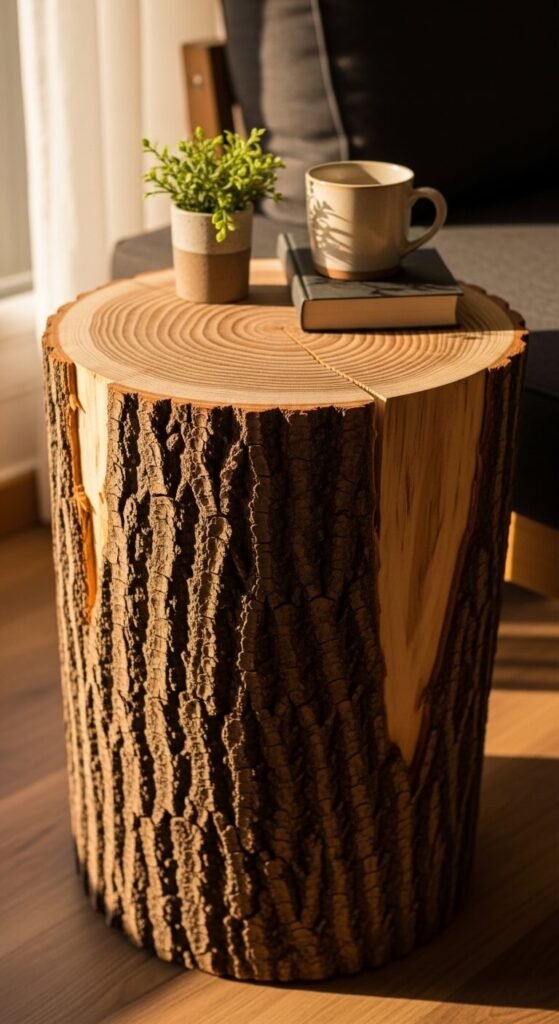
A natural tree trunk section used as a side table is one of the most direct and unmediated expressions of natural wood in home decor. The circular growth ring pattern visible on the flat top surface is a genuinely beautiful natural graphic. Source sections from a local tree surgeon, log supplier, or firewood merchant — species like oak, elm, and ash produce the most visually interesting rings. Sand the top surface flat and smooth, and apply a wax or oil finish. Leave the bark on the sides for the most natural, forest-like quality. Budget tip: tree sections from firewood suppliers cost very little or nothing.
9. Wooden Wall Panelling
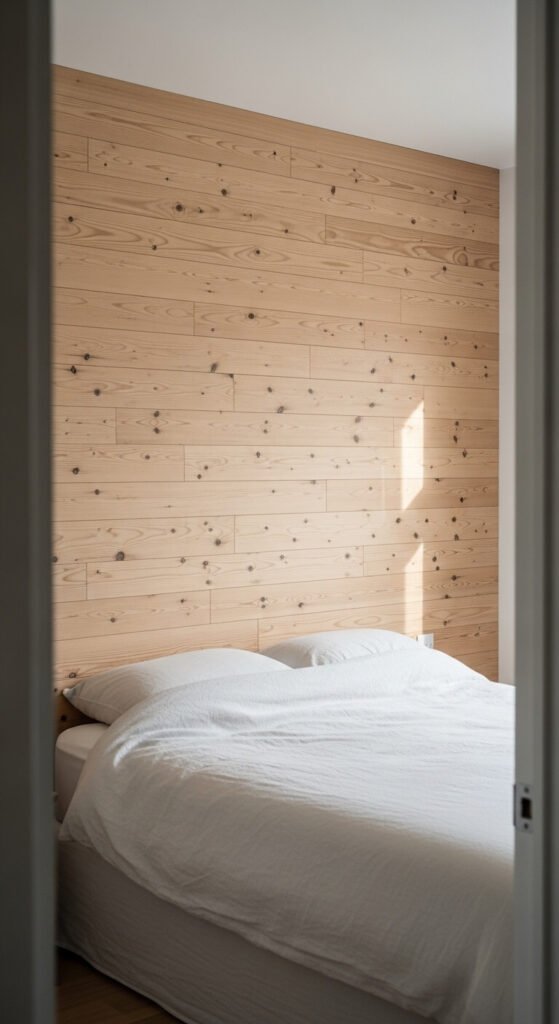
Natural wood wall panelling — horizontal tongue-and-groove boards in pine, oak, or cedar — on a single feature wall creates a warm, textural surface that flat paint cannot replicate. The individual board joints create a repeating linear shadow pattern that adds dimensional interest to the wall. Pair with plain white on the remaining walls to let the natural wood surface carry the visual work. Budget tip: tongue-and-groove pine cladding boards are among the most affordable natural wood products available from timber merchants — the raw boards can be installed DIY on battens screwed to the wall, then oiled or left natural for a Scandinavian-inspired result.
10. Wooden Kitchen Countertop
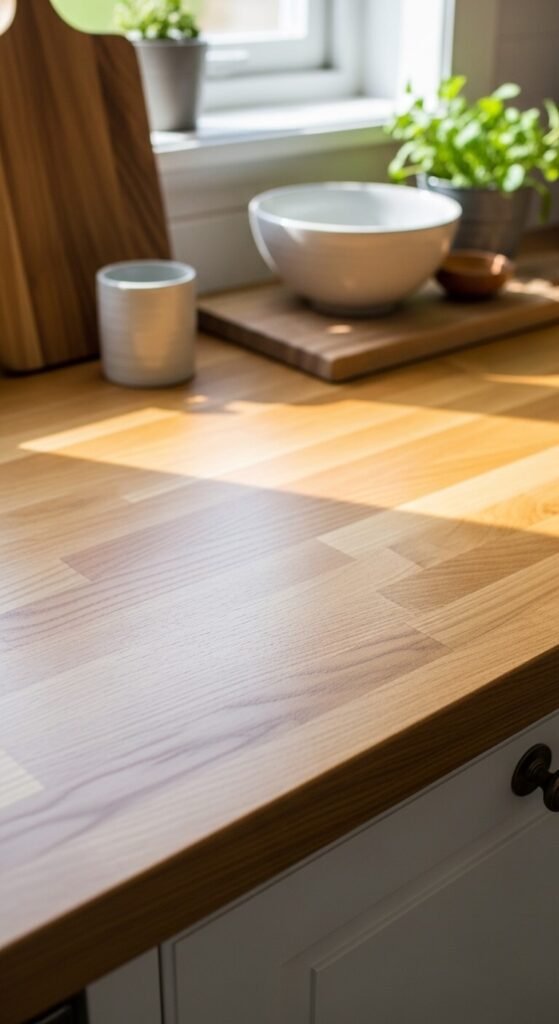
A solid wood kitchen countertop — in oiled oak, walnut, or butcher-block maple — brings warmth and natural character to a kitchen that stone or laminate surfaces can’t provide. Wooden countertops require regular oiling but reward that maintenance with a surface that improves in character over years of use, developing a patina of use that tells the story of the kitchen. Food-safe mineral oil or tung oil applied monthly keeps the surface protected. Budget tip: off-cuts from timber merchants or reclaimed wood from salvage dealers can be cut and joined into a custom countertop section at considerably lower cost than finished retail countertop products.
11. Wooden Picture Frame Collection
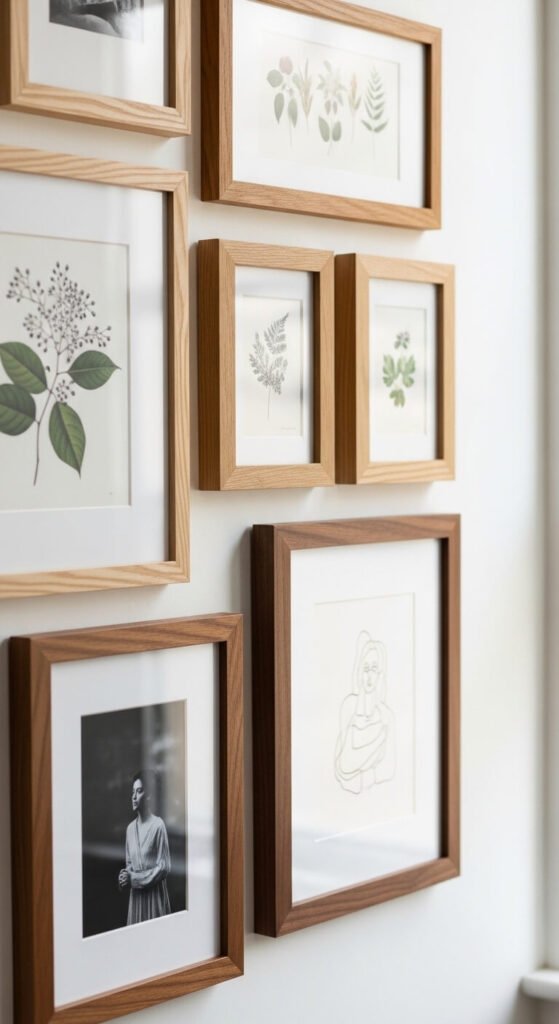
A gallery wall using natural wood frames in a mix of species — light ash, warm oak, dark walnut — creates tonal variation and warmth through the frames alone, regardless of the artwork inside. Use consistent simple flat profiles across all frames so the species variation reads as intentional rather than mismatched. Digital print downloads from independent artists printed at home give you flexibility to try different artwork without significant cost. Budget tip: plain pine frames from discount stores can be stained with wood dye in various tones to replicate the look of more expensive hardwood frames at a fraction of the cost.
12. Wooden Serving Board and Charcuterie Platter
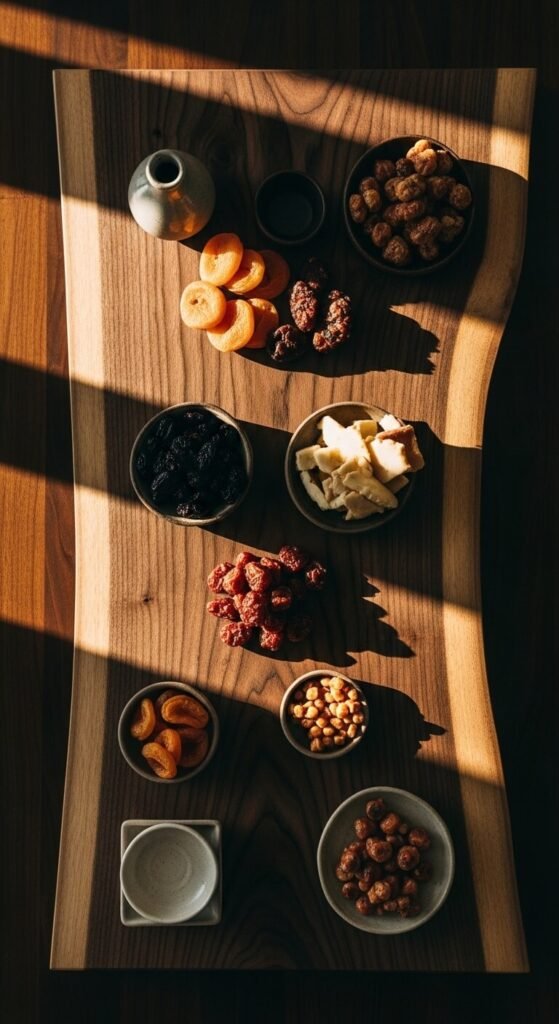
A large, beautiful wooden serving board used as a charcuterie platter or bread board is a functional kitchen piece that doubles as a natural wood decorative object when displayed on a kitchen counter or dining sideboard. Look for boards with irregular, hand-shaped edges and visible grain rather than perfectly machined rectangular forms. Dark walnut boards have the richest, most dramatic grain. Display upright on a small plate stand when not in use. Budget tip: a single piece of rough walnut timber from a hardwood supplier, cut and sanded to a serving board shape, costs far less than a finished retail board of equivalent quality.
13. Wooden Lamp Base
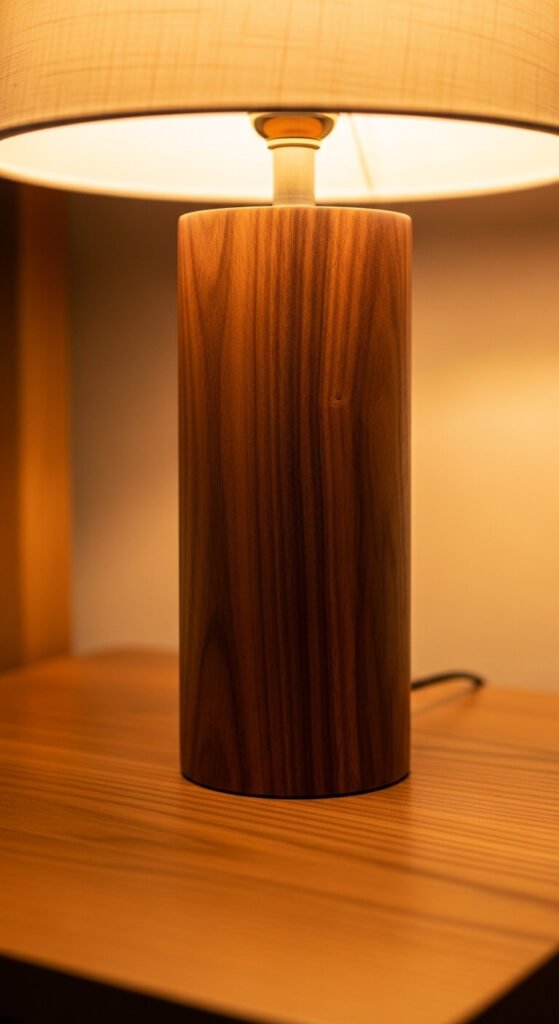
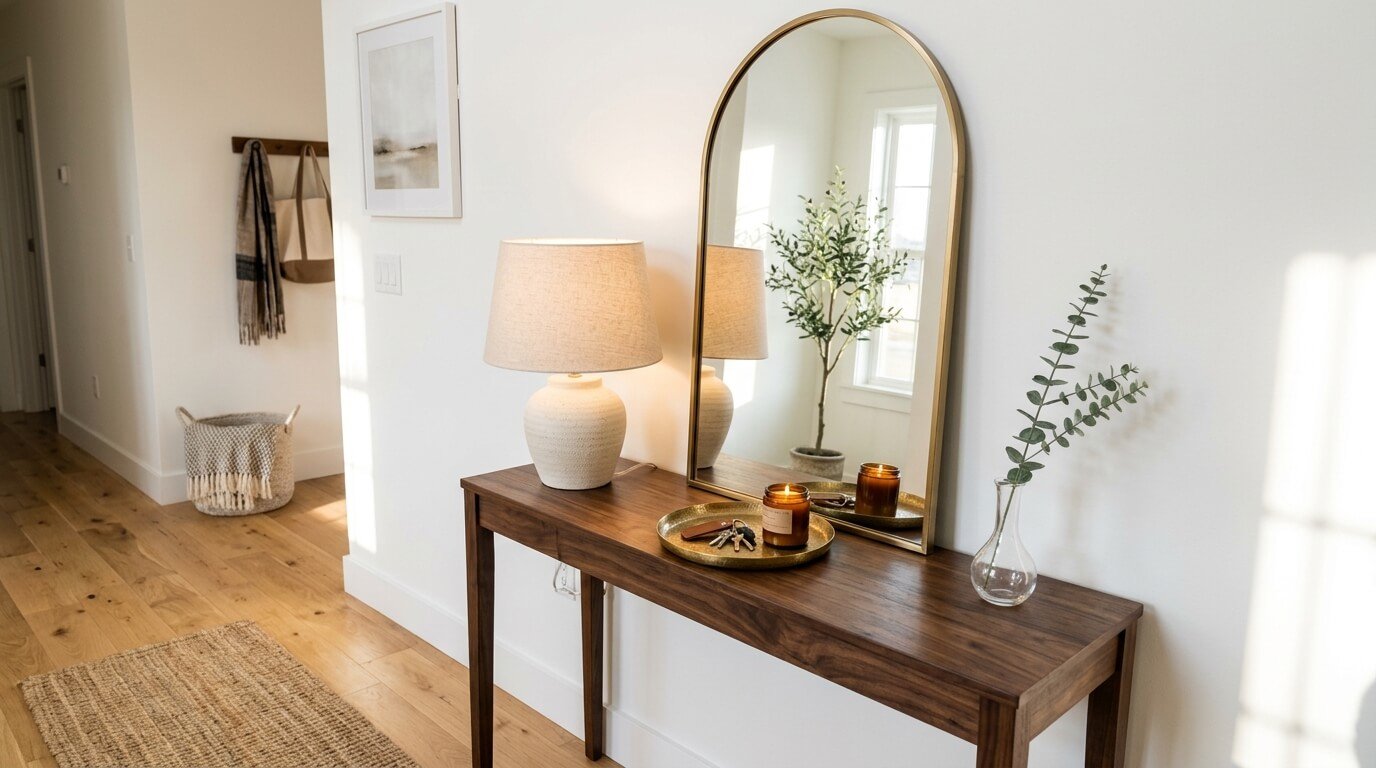
Turned wooden lamp bases in solid walnut, oak, or maple bring natural material warmth to a surface in a functional form. A simple cylindrical or tapered turned form with a clean natural wax or oil finish is the most contemporary interpretation. Pair with a simple cream or white linen shade to let the natural wood base be the focal element. Budget tip: vintage turned wooden lamp bases of genuine quality are widely available from estate sales and second-hand furniture dealers — often for very little cost. Pair with a new shade and a new cord for a completely fresh result at minimal combined investment.
14. Wood Slice Wall Art
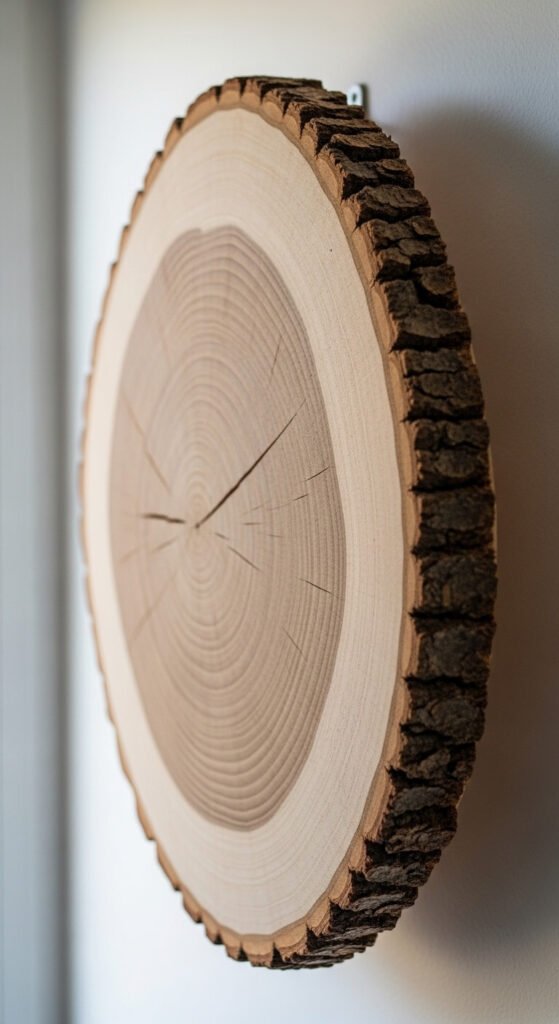
A large circular wood slice mounted directly on a wall as a decorative object makes a powerful, organic statement that requires no frame, no print, and no additional decoration. The concentric growth ring pattern is a genuinely beautiful natural graphic. Source large cross-section slices from sawmills, tree surgeons, or timber suppliers. Sand the face smooth and apply a clear matte wax or oil finish. Hang on a standard picture hook or wall-mount bracket. Budget tip: wood slices are available from online craft suppliers or tree surgeons who produce them as off-cuts — purchasing directly from these sources costs considerably less than finished retail wood slice art products.
15. Wooden Headboard
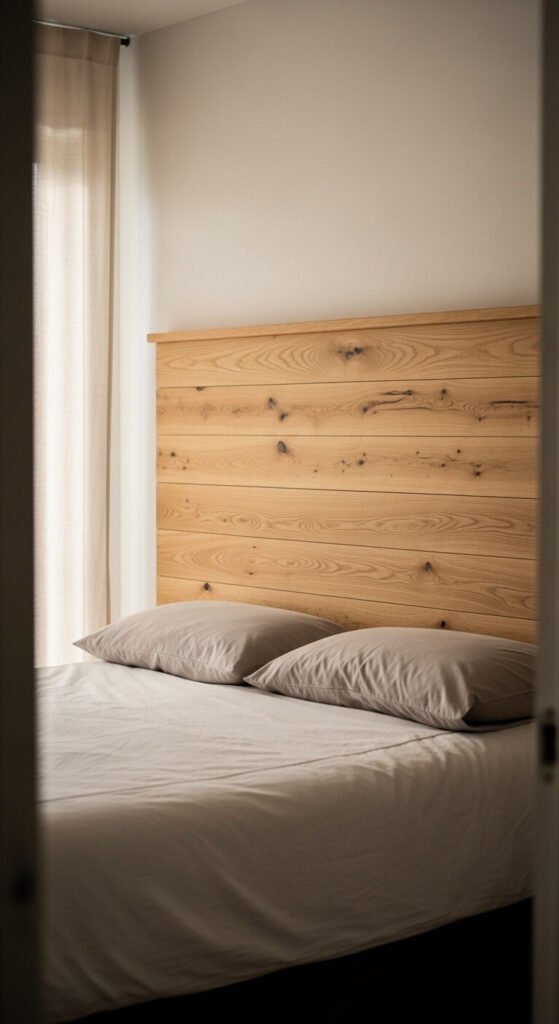
A natural wood plank headboard — either a panel of joined horizontal boards or a solid wood slab — creates a warm organic focal wall in a bedroom at relatively low cost. Horizontal oak or pine boards joined with a simple tongue-and-groove profile create a panelled effect that reads as both contemporary and warm. Apply a natural oil finish and leave knots and grain variation visible. Budget tip: a headboard made from standard tongue-and-groove pine cladding boards secured to a simple wooden batten frame and oiled at home costs a fraction of a comparable retail piece — the installation is a simple DIY project achievable in a weekend.
16. Wooden Fruit Bowl on Kitchen Counter
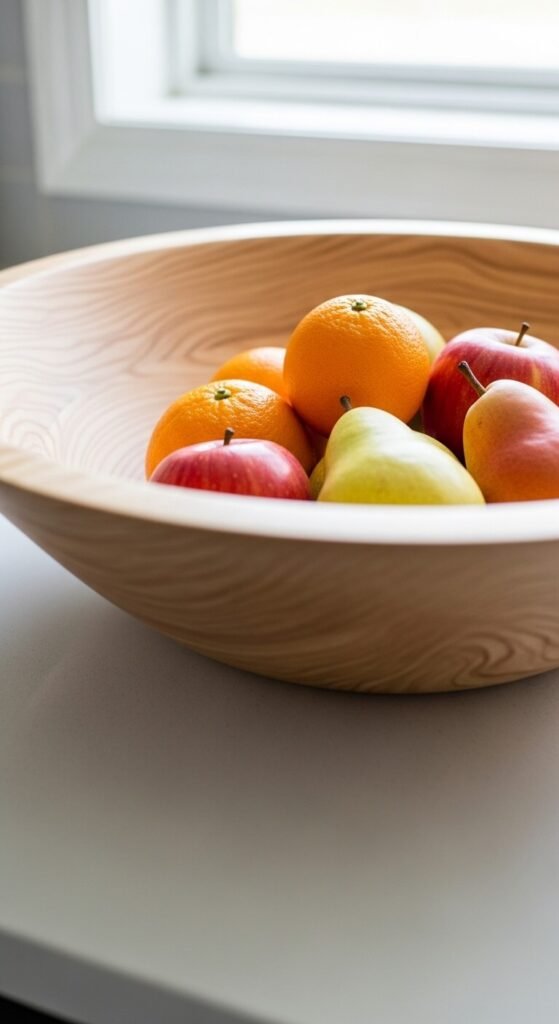
A large, natural wooden fruit bowl on a kitchen counter is a daily-use functional object that also contributes organic warmth to the kitchen. The combination of pale natural wood grain and colorful fresh fruit creates a genuinely beautiful everyday kitchen scene. Look for bowls with a wide, shallow form that displays the fruit generously rather than hiding it in a deep vessel. Light wood species — maple, ash, or sycamore — show fruit colors most clearly. Budget tip: wooden fruit bowls from cookware and kitchen accessory markets are available at very accessible prices — a simple turned bowl in any natural species works perfectly.
17. Wooden Staircase Handrail
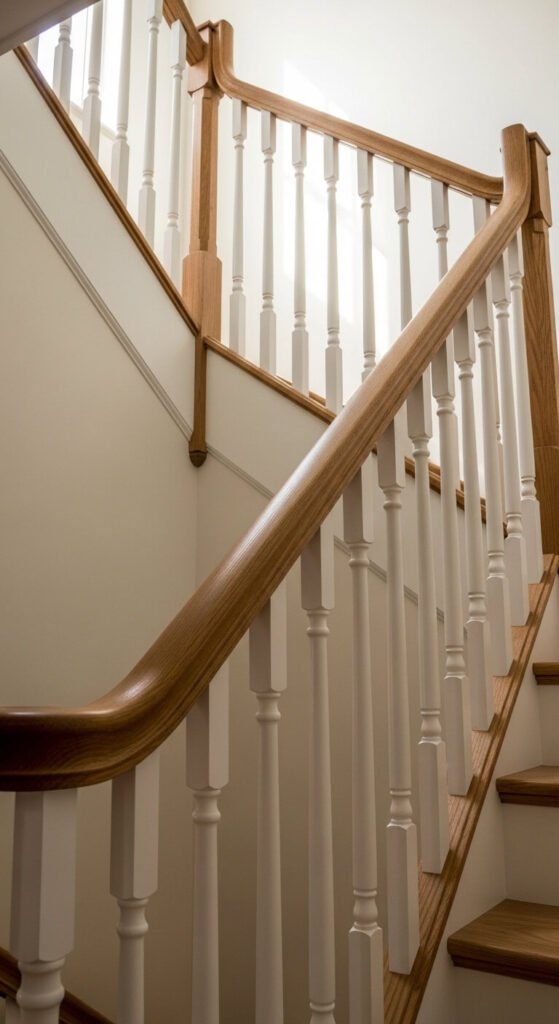
A solid wood handrail — particularly in oak or pine with a smooth, rounded profile — is the most handled architectural element in any home, and the tactile warmth of natural timber in your hand as you move through the house is one of the most consistently pleasant sensory experiences a home can offer. If existing handrails are painted timber, stripping back to natural wood and applying an oil or wax finish is an achievable DIY project. Budget tip: handrail profiles in pine and oak are widely available from timber merchants at accessible prices and can be fitted by a competent DIYer over a weekend.
18. Wooden Book Page Holders and Desk Objects
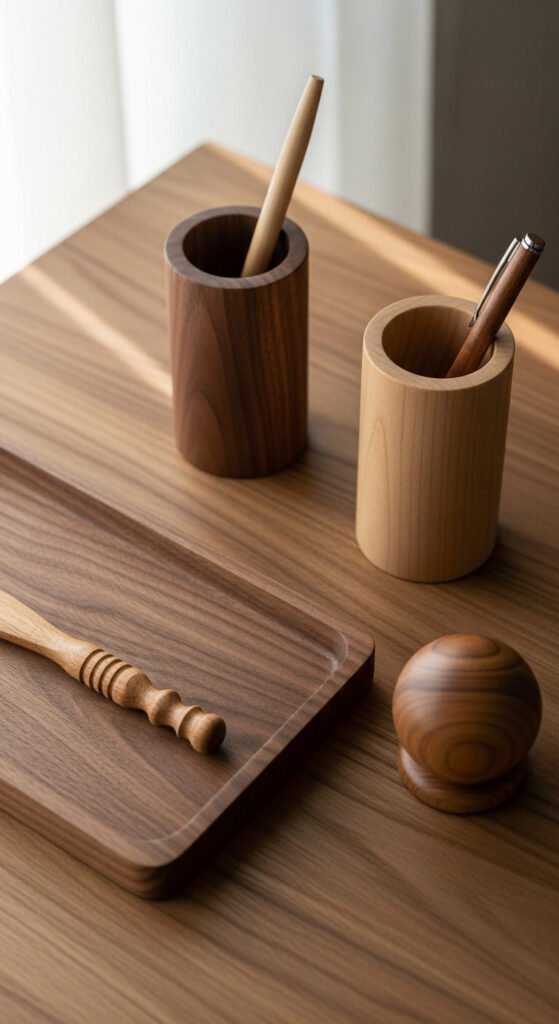
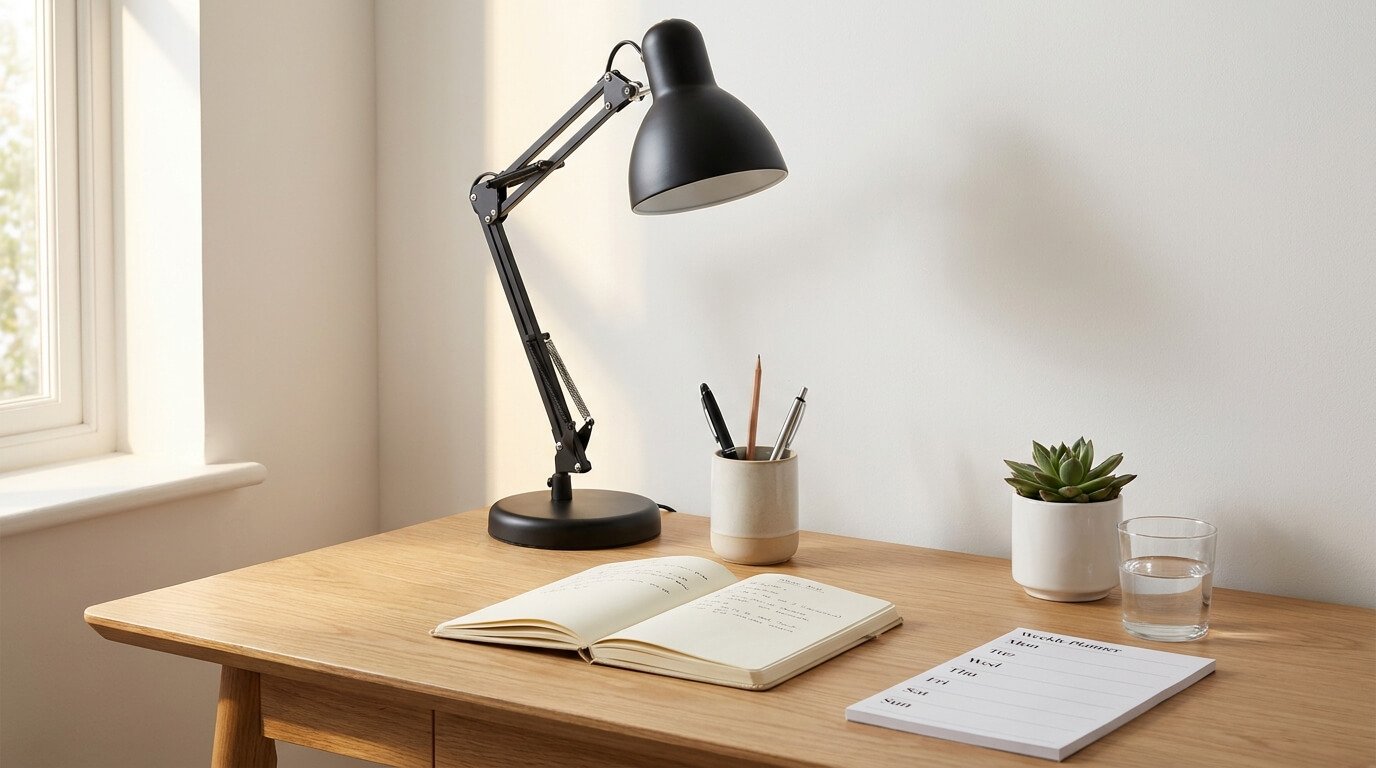
A curated set of natural wood desk accessories — a solid tray, a pen holder, a letter opener, and a small turned sphere as a paperweight — creates a warm, organic desk surface that makes daily work more pleasant. Mix dark walnut and light maple pieces for natural tonal variation across the collection. These objects are widely available from wooden kitchenware and stationery suppliers. Budget tip: simple wooden objects — small turned bowls, smooth spheres, and simple rectangular trays — can be made from off-cut timber pieces using basic tools. Sanding and oiling an off-cut piece of walnut into a desk tray form is a genuinely achievable entry-level woodworking project.
19. Reclaimed Wood Shelving Unit
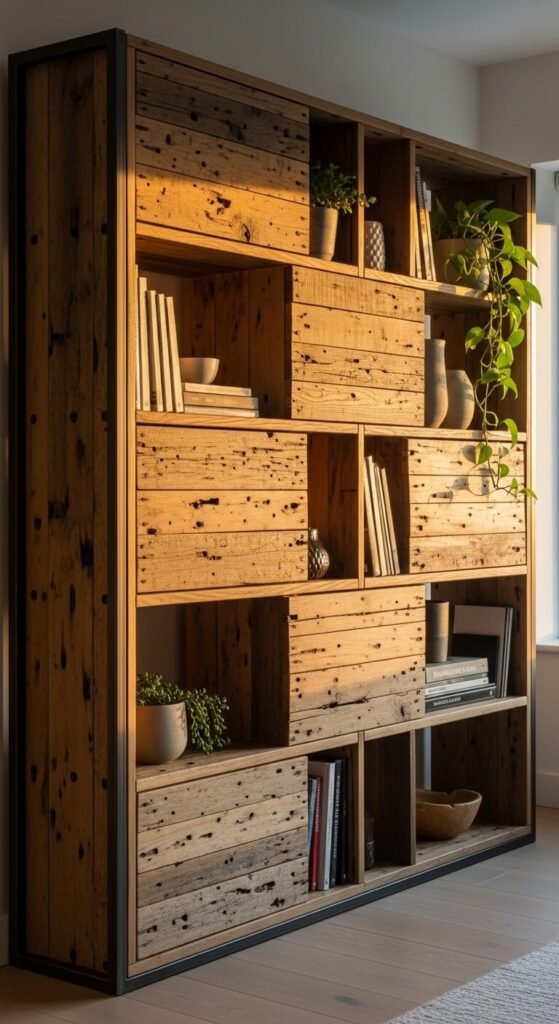
A freestanding shelving unit combining a dark steel frame with reclaimed timber shelf boards creates a piece that is visually rich in material contrast and natural aging character. Reclaimed timber — sourced from demolished buildings, old barns, or scaffold board stock — carries nail holes, saw marks, grain variation, and natural aging that give it a depth no new timber can replicate. These marks are the aesthetic value rather than flaws. Budget tip: scaffold boards and reclaimed floorboards from architectural salvage dealers are among the most affordable reclaimed timber options — they work beautifully as shelf boards on a purchased steel shelving frame.
20. Wooden Candle Holders
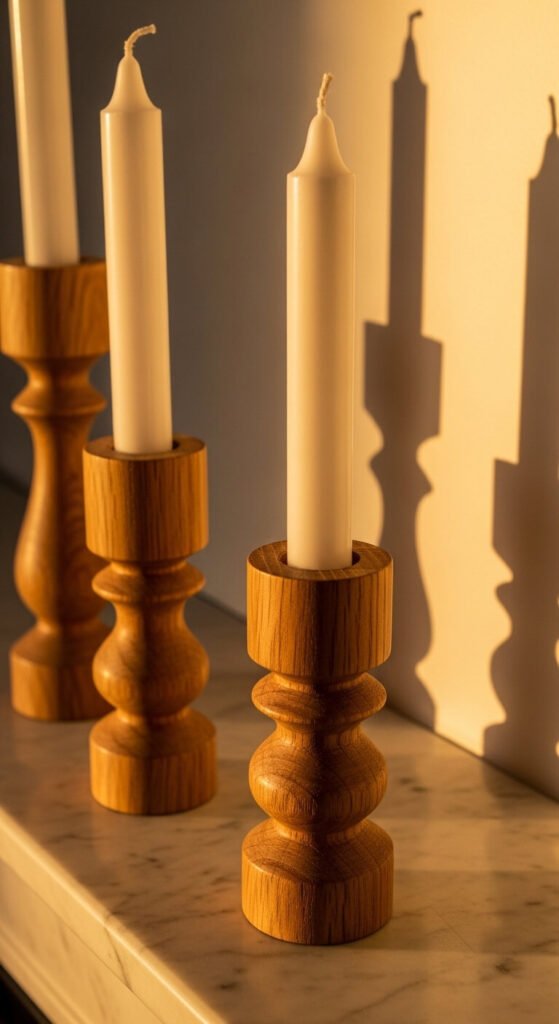
Turned wooden candle holders in oak, walnut, or ash create a warm, organic alternative to ceramic or metal holders on a mantelpiece or dining table. The cylindrical turned form is simple and allows the natural grain of the timber to be the primary visual element. A natural beeswax or oil finish keeps the wood warm in tone rather than sealed behind a plastic-looking lacquer. Budget tip: wooden candle holder forms are one of the simplest turning projects for anyone with access to a lathe — basic lathe tools and an off-cut of hardwood cost very little, and the result is a genuinely beautiful, custom object. Finished versions are also widely available at affordable prices.
21. Wooden Coat Rack
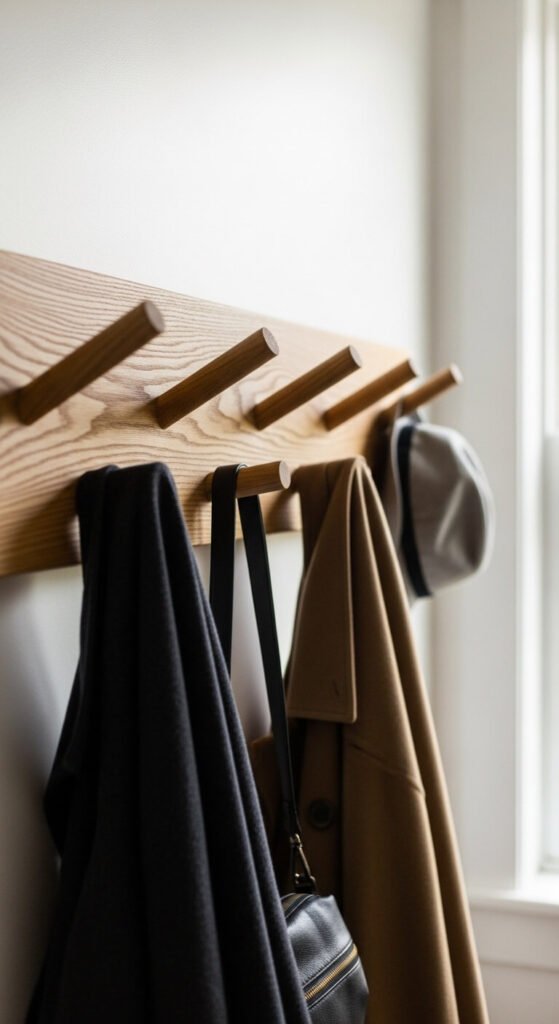
A solid wood coat rack with turned peg hooks — a simple plank with evenly spaced wooden pegs — is a functional hallway object that also adds natural warmth to an often-neglected transitional space. A plank in solid oak with honey grain and five or seven turned pegs creates a clean, Scandinavian-influenced result. Mount the plank flush to the wall with countersunk screws. Budget tip: this is one of the most achievable DIY natural wood projects available. A length of oak or pine shelf board, a set of purchased wooden peg hooks, and a drill produces a finished coat rack for under $30 in materials — far less than comparable retail pieces.
22. Wooden Serving Tray
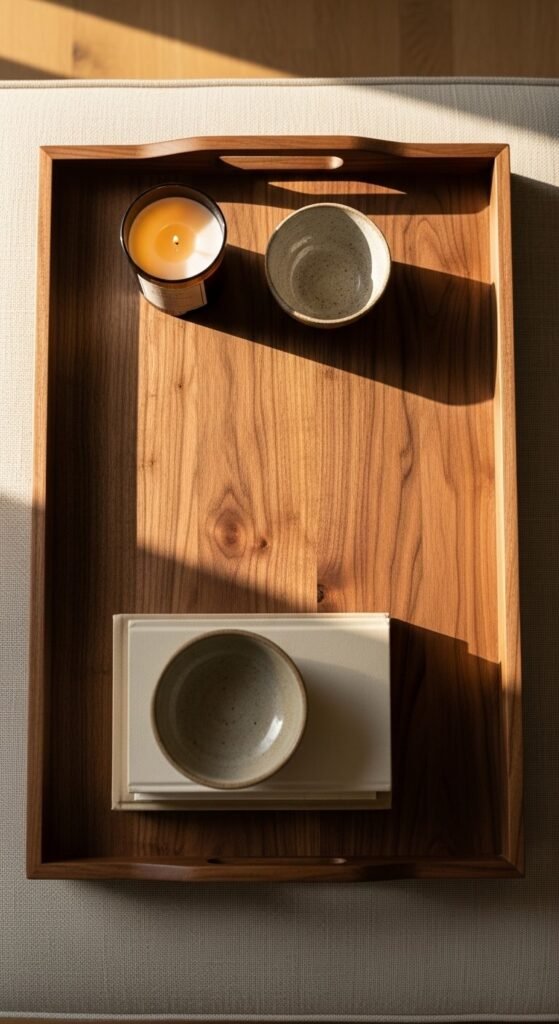
A large, flat wooden serving tray on a coffee table or ottoman creates a corralled surface area for organizing small objects — candles, remotes, books — while also functioning as a natural wood decor element. The flat wood grain visible across the tray face is the primary visual element. Dark walnut trays have the richest grain; light ash or maple trays create a brighter, more Scandinavian quality. Keep the finish natural — oil or wax — rather than sealed lacquer. Budget tip: a wooden serving tray is one of the most achievable beginner woodworking projects — a flat board, a jigsaw for handle holes, sandpaper, and oil produces a beautiful result at minimal material cost.
23. Wooden Bathroom Accessories
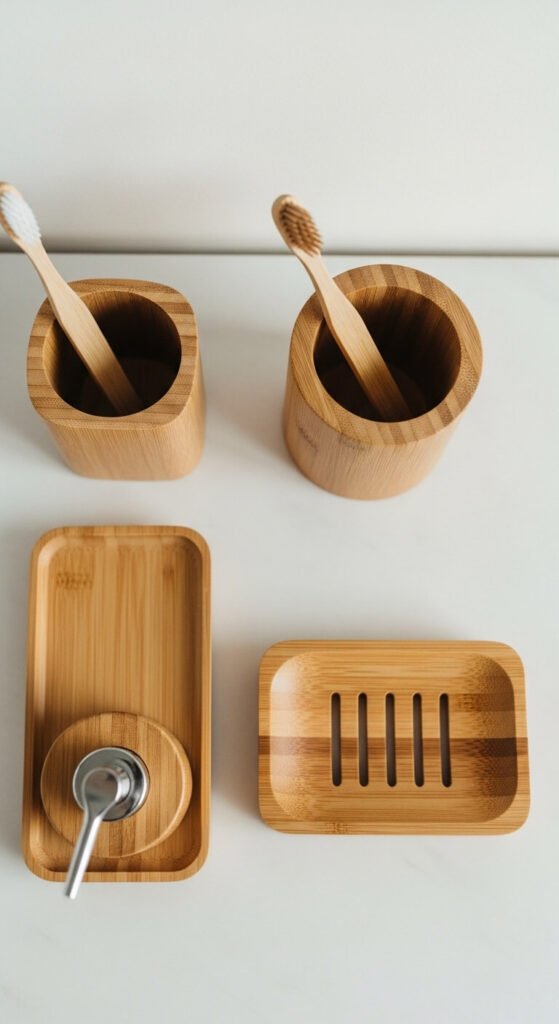
Coordinated wooden bathroom accessories — a soap dish, toothbrush holder, small tray, and pump bottle base — create a warm, spa-like vanity surface that cold ceramic or plastic alternatives can’t match. Bamboo and teak are the most moisture-resistant natural wood options for bathroom use — teak especially is naturally water-resistant and develops a beautiful silver-grey weathered tone over time. Keep the wood oiled regularly to maintain its water resistance. Budget tip: bamboo bathroom accessory sets are among the most affordable natural material home accessories available from most home goods retailers and online stores.
24. Wooden Floating Bathroom Vanity
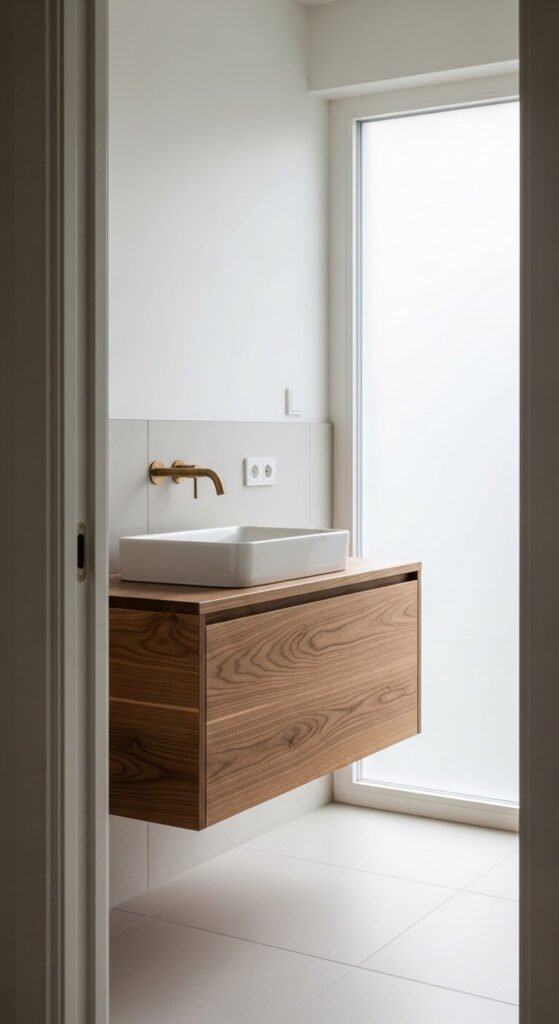
A floating solid wood vanity unit — a simple rectangular box in oiled oak or walnut mounted at wall height with a ceramic above-counter basin — creates one of the most beautiful bathroom focal elements possible. The combination of warm wood grain, white ceramic, and brushed metal fittings is a consistently successful material grouping. Floating the vanity leaves the floor clear, which makes the room feel larger. Budget tip: a simple floating vanity box can be constructed from solid timber boards by a competent carpenter or a confident DIYer — the basic form requires only four wood panels, joined and oiled, fitted with a wall-mounting bracket.
25. Wooden Garden Planter Boxes
Wooden garden planter boxes on a terrace or balcony extend the natural material palette outdoors. Cedar or untreated pine left to weather naturally develops a beautiful silver-grey tone over one to two seasons. Use with a food-safe timber treatment on the interior only if planting edibles. Simple rectangular forms with clean joints read as contemporary and architectural. Budget tip: basic rectangular garden planter boxes are among the simplest timber construction projects — four boards, a base panel, a few screws, and a drill produces a functional, beautiful planter at a fraction of retail cost using standard timber from a hardware store.
26. Wabi-Sabi Driftwood Centerpiece
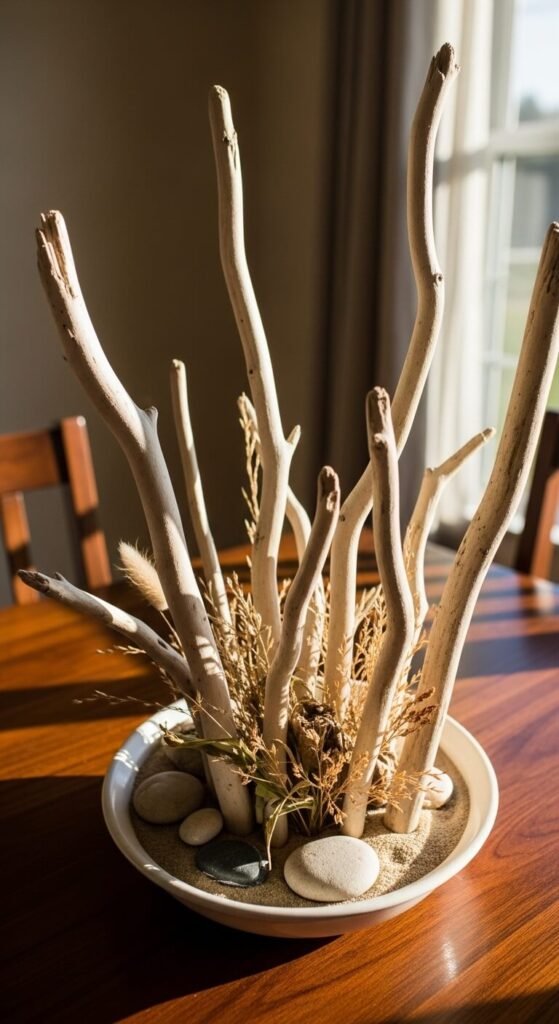
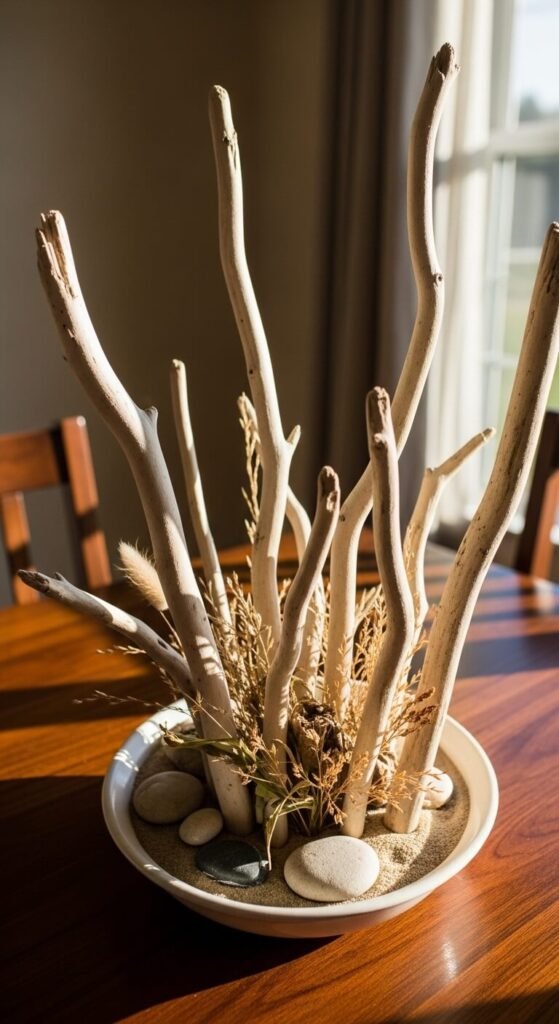
A wabi-sabi driftwood centerpiece — bleached driftwood branches arranged in a low ceramic bowl with dried grasses and natural pebbles — creates a dining table installation that reads as meditative and deeply natural. The bleached, weathered surfaces of driftwood and the dried organic quality of the grasses embody the wabi-sabi principle of finding beauty in impermanence and natural aging. This centerpiece costs essentially nothing to create from collected natural materials. Budget tip: beach-collected driftwood, dried grasses from a meadow, and pebbles from a riverbed are all free. The ceramic bowl can be found at a thrift store for very little cost.
27. Wood Block Risers and Display Pedestals
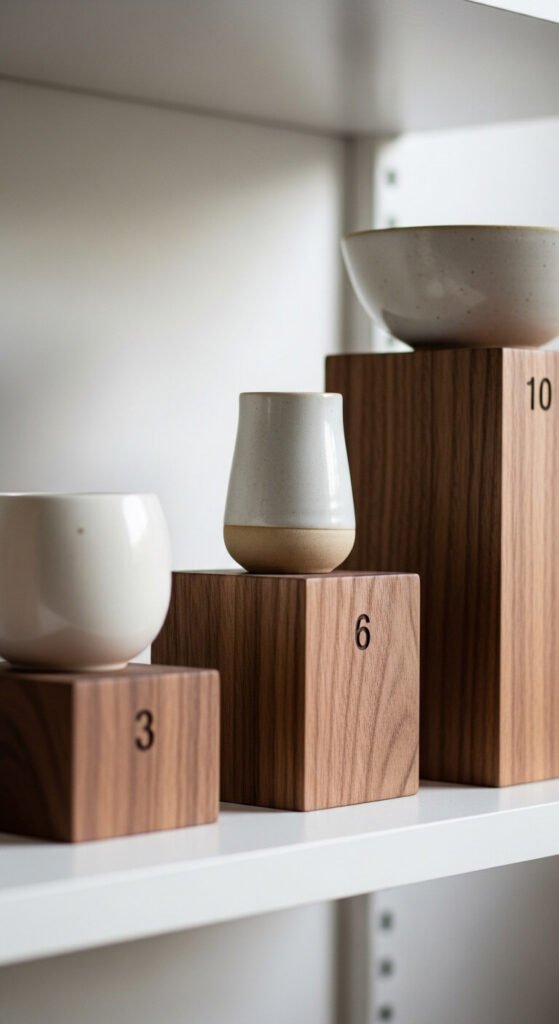
Simple natural wood blocks used as display risers on shelves and surfaces create height variation and depth in a styled arrangement at virtually zero cost. A set of three rectangular walnut or oak blocks in different heights turns a flat shelf arrangement into a layered, three-dimensional composition. These blocks can be cut from timber off-cuts with a handsaw and lightly sanded — no finishing required. Budget tip: a single off-cut of solid hardwood from a timber merchant or woodworking shop can be cut into a complete set of three or five display risers for almost nothing — one of the most cost-effective natural wood styling tools available.
28. Wooden Mobile and Hanging Sculpture
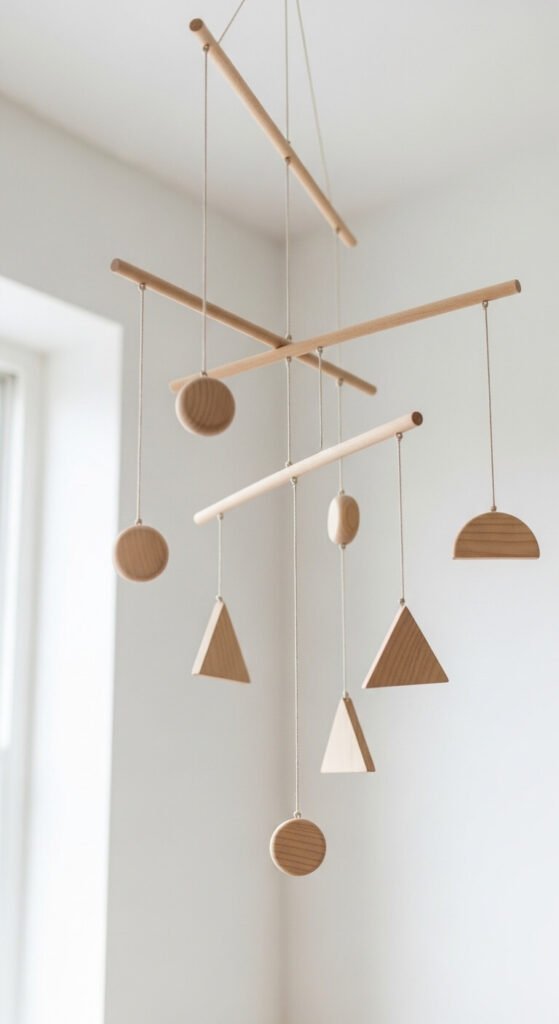
A natural wood hanging mobile — made from wooden dowel rods balanced in a cascading structure with small geometric wooden shapes suspended from thin cord — creates a three-dimensional, kinetic natural wood installation that adds movement and warmth to a room. These are both decorative objects and calming visual elements. Simple wooden dowels, small geometric wood shapes, and thin linen cord are the only materials required. Budget tip: a complete DIY wooden mobile requires only wooden dowels, small wood shapes, and cord from a craft store — total material cost is minimal, and the construction requires no tools beyond scissors.
29. Wooden Tactile Objects on Coffee Table
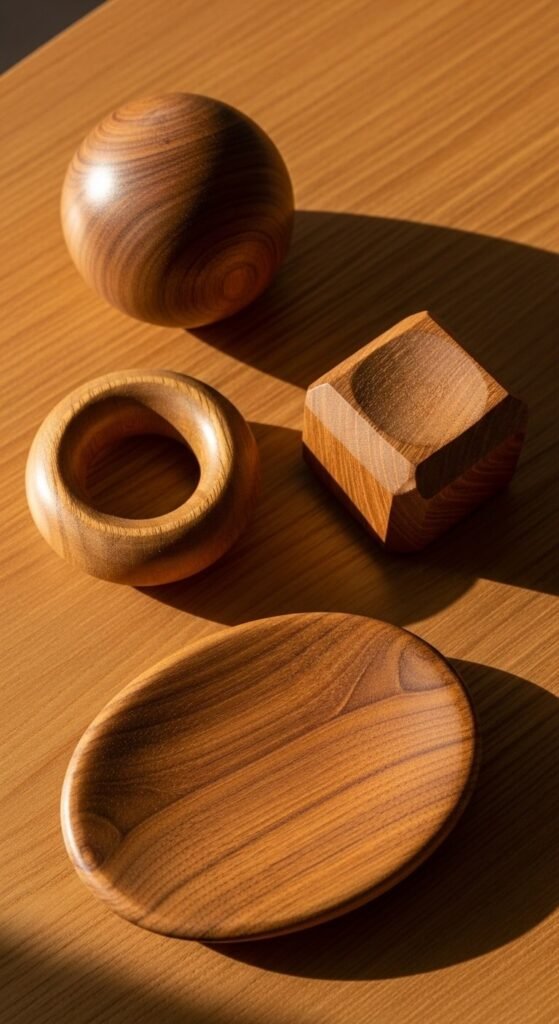
A small collection of smooth, tactile natural wood objects — a turned sphere, a carved cube, a smooth ring — arranged on a coffee table creates a surface grouping that invites handling as much as viewing. Tactile objects make a room feel more lived-in and human rather than showroom-perfect. Use three to five pieces in different wood species for natural tonal variation. Budget tip: small wooden spheres, cubes, and geometric forms are available from craft and hobby suppliers at very low prices — a set of five small geometric wood objects costs almost nothing and creates a beautifully natural, considered coffee table arrangement when grouped with intention.
Conclusion
Natural wood decor works because it connects a room to something authentic — the grain, the knots, the patina, and the weight of timber all communicate material honesty that manufactured surfaces and synthetic finishes cannot replicate. Every piece on this list works on the same principle: the more you allow natural wood to show its true character — its irregularities, its aging, its variation — the more grounded and genuinely beautiful your space becomes. Start with one or two pieces that you can touch and handle daily — a carved bowl, a floating shelf, a candle holder. Let those pieces show you how much warmth and depth a single natural material can bring to a room, and build from there.