28 Retro Mid-Century Decor Finds That Stay Forever Stylish

Disclosure: As an Amazon Associate we earn from qualifying purchases. Some links on this page may be affiliate links — if you click through and make a purchase, we may receive a small commission at no extra cost to you.
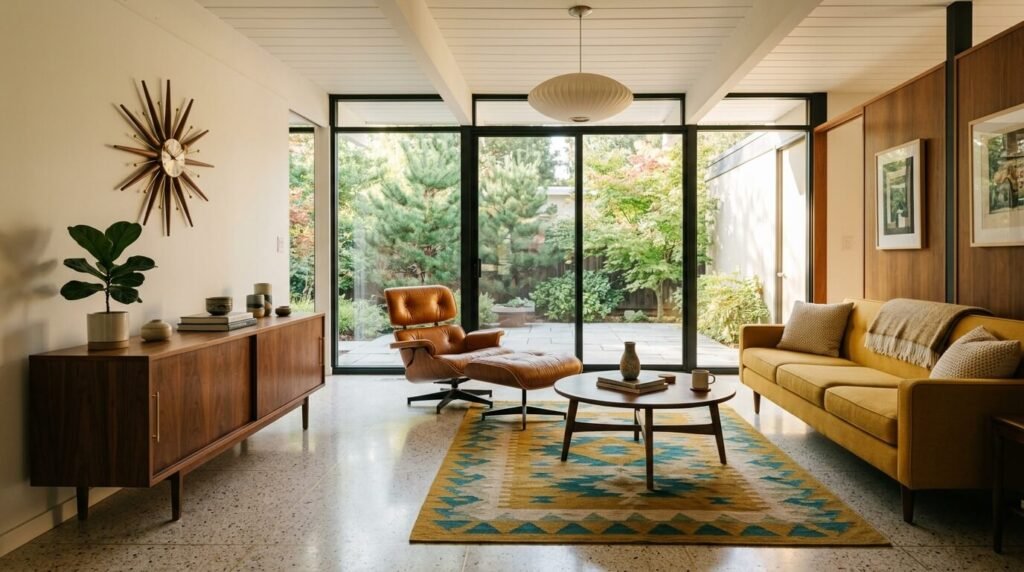
Mid-century modern decor has been popular since the 1950s and shows absolutely no signs of slowing down. The clean lines, warm wood tones, organic shapes, and bold accent colors from that era feel just as relevant today as they did in a 1962 living room. Whether you’re furnishing a whole space or just adding a few well-chosen pieces, mid-century design rewards even the smallest investment. You don’t need a big budget or a design degree. You just need to know what to look for. Every item on this list is a genuine mid-century classic — something that looks good now, looked good then, and will still look good decades from now.
1. The Eames Lounge Chair and Ottoman
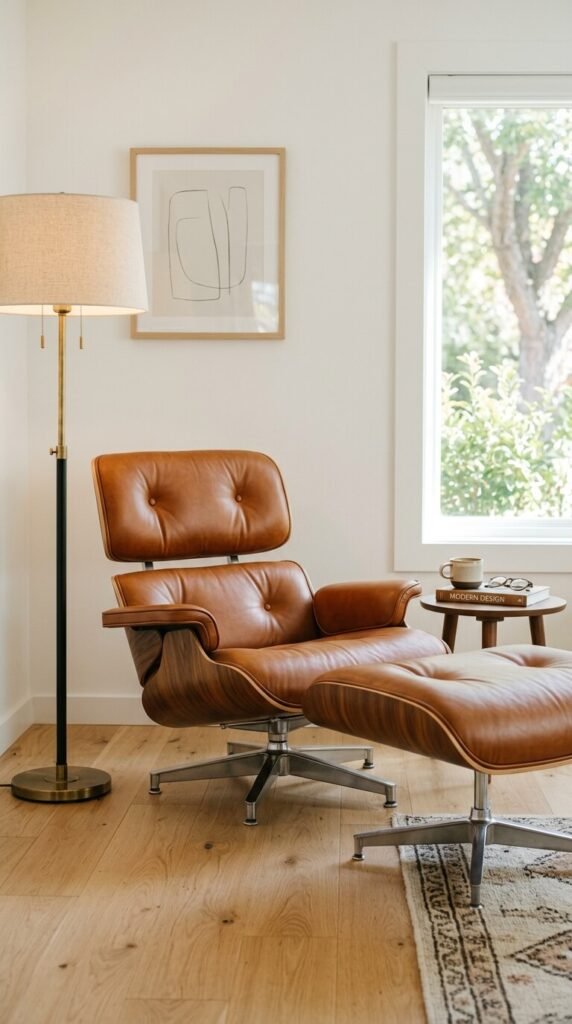
The Eames lounge chair is the single most recognized piece of mid-century furniture ever made. Molded plywood shell, leather cushions, and a swiveling base — it’s been in continuous production since 1956. The original from Herman Miller is expensive, but high-quality reproductions are available for $400–$800. Look for versions with genuine leather and actual plywood shells, not fiberglass. Place it beside a floor lamp in a reading corner for the most iconic mid-century setup. This chair earns its price over decades of daily use and never stops looking appropriate in any well-designed room.
2. Sunburst Wall Clock
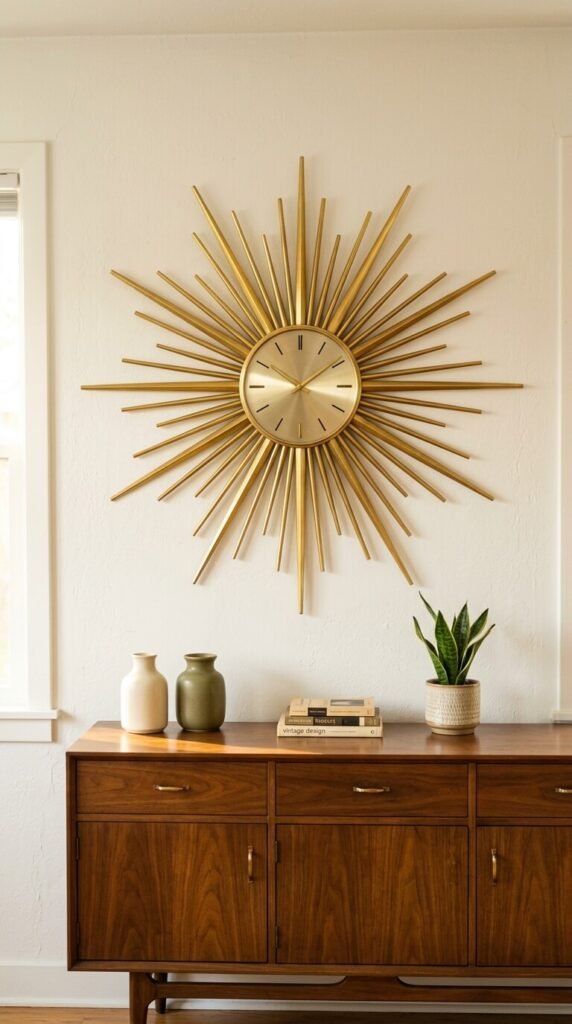
A sunburst wall clock is one of the easiest mid-century statement pieces you can add to any room. Sputnik-inspired rays radiating from a central clock face — it looks bold, graphic, and perfectly of the era. New versions are widely available on Amazon and at home goods stores for $30–$80. Vintage originals from the 1950s–60s can be found at thrift stores and estate sales for $20–$150. Hang it above a credenza, a sofa, or on a blank entryway wall. It fills vertical space confidently without requiring any surrounding furniture to complete the look.
3. Walnut Credenza With Tapered Legs
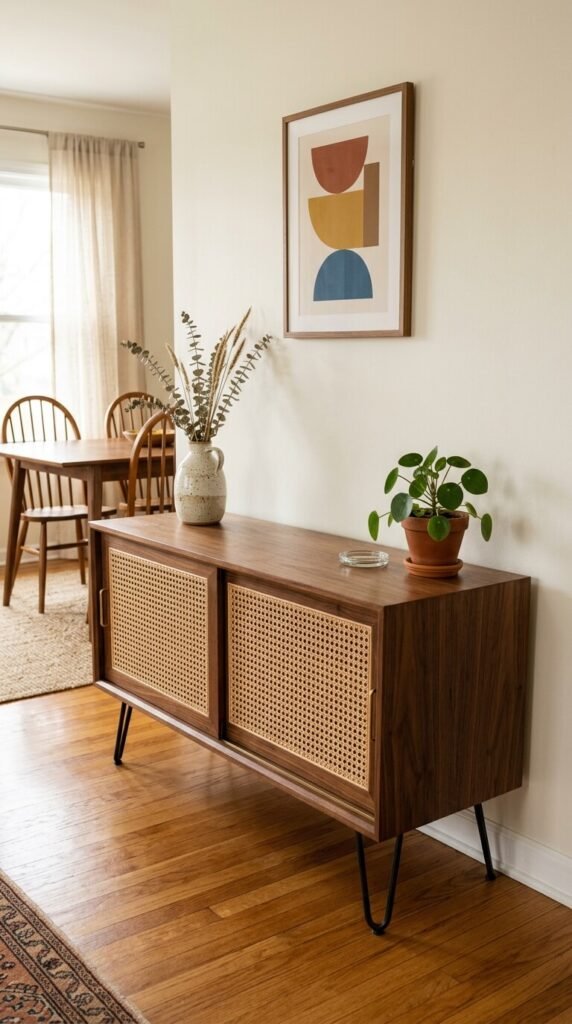
A walnut credenza on tapered wooden legs is the defining piece of mid-century storage furniture. It sits low to the ground, has clean lines, and works in almost any room — living room, dining room, bedroom, or entryway. New versions with walnut veneer cost $300–$700 at retailers like West Elm and Article. Solid walnut vintage originals from thrift shops or estate sales can run $100–$600 depending on condition. Style it with a table lamp, a small plant, and one decorative object on top. That’s all it takes to anchor a whole room.
4. Hairpin Legs on Everything
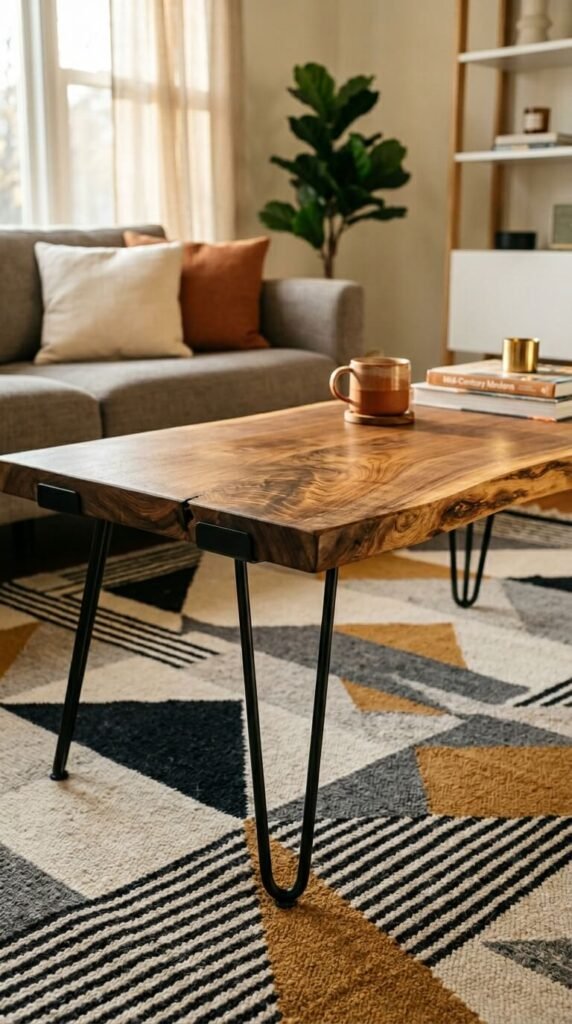
Hairpin legs — thin, bent steel rods welded into a simple V shape — are one of the most affordable ways to add mid-century character to any piece of furniture. A set of four costs $20–$40 online. Attach them to an old tabletop, a wooden board, or a reclaimed plank and you have an instant mid-century coffee table or side table. They also work on benches, desks, and shelves. Black powder-coated steel is the most classic finish. This is one of the best budget DIY moves in mid-century decorating. Simple, strong, and immediately recognizable.
5. Sputnik Chandelier
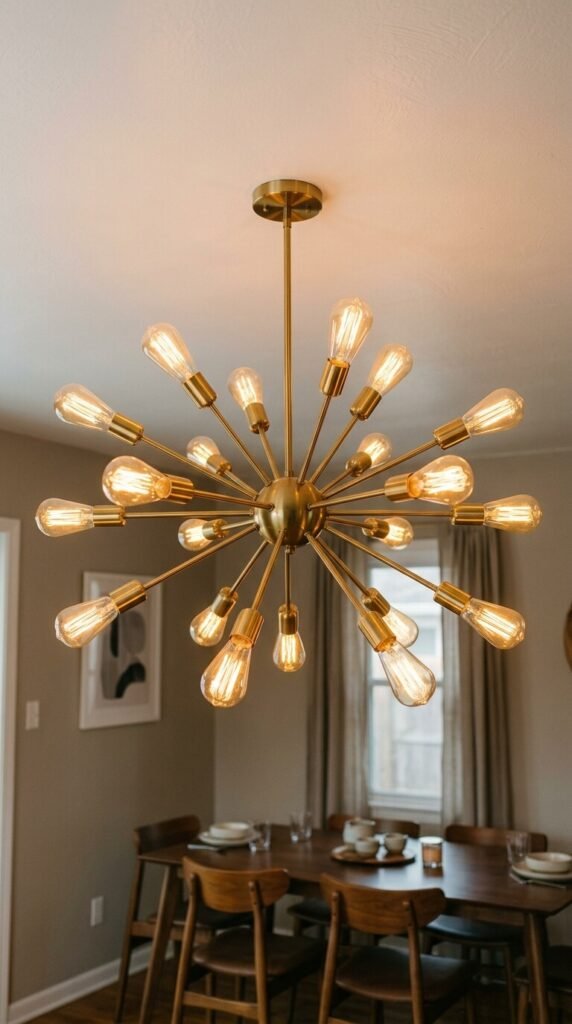
A Sputnik chandelier — multiple arms radiating from a central sphere with a bare bulb at each tip — is the most dramatic mid-century lighting piece you can hang. It looks like a satellite crossed with a work of modern art. New versions in brass or matte black cost $80–$300 at most lighting retailers. Hang it over a dining table or in an entryway for maximum impact. The bare Edison bulbs glow warmly at dinner. The sculptural form reads as art during the day. One chandelier can define the entire style direction of a room.
6. Tulip Dining Table
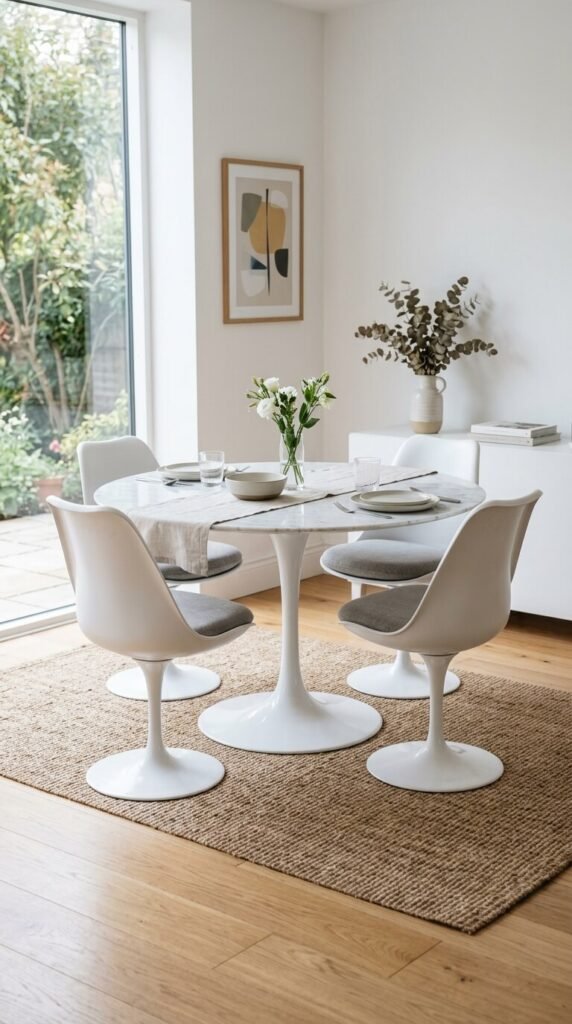
Eero Saarinen’s Tulip table from 1956 has a single pedestal base and a round top — no legs to bump into, no visual clutter underneath. It looks just as modern today as it did when it was designed. Licensed reproductions with genuine aluminum bases start at around $500. Budget fiberglass versions are available for $200–$400. The round top works especially well in smaller dining areas because it doesn’t feel visually heavy. Pair with matching Tulip chairs or mix with bentwood or molded plastic chairs for a collected, eclectic mid-century look.
7. Molded Plastic Shell Chairs
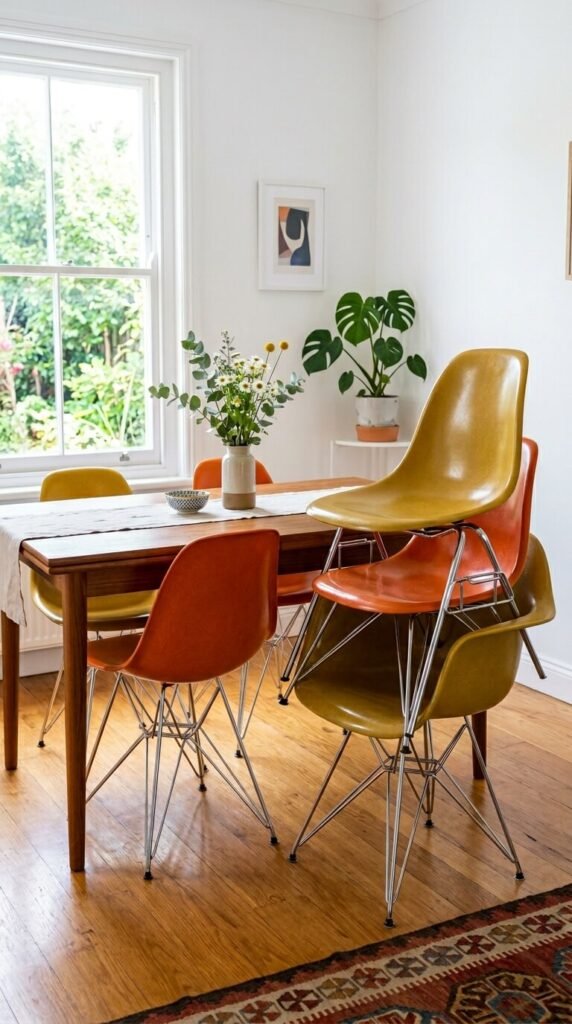
The molded plastic shell chair — originally designed by Charles and Ray Eames — comes in dozens of colors and base styles. Wire bases, rocker bases, wooden dowel bases, and stacking bases are all available. New licensed versions from Herman Miller start at $200–$400 per chair. Quality reproductions cost $60–$150 each. Bold colors like mustard yellow, orange, and avocado green are the most authentically mid-century. Mix two or three colors around a dining table for a collected, playful look. These stack easily, clean with a damp cloth, and last for decades with no maintenance required.
8. Organic-Shaped Ceramic Vases
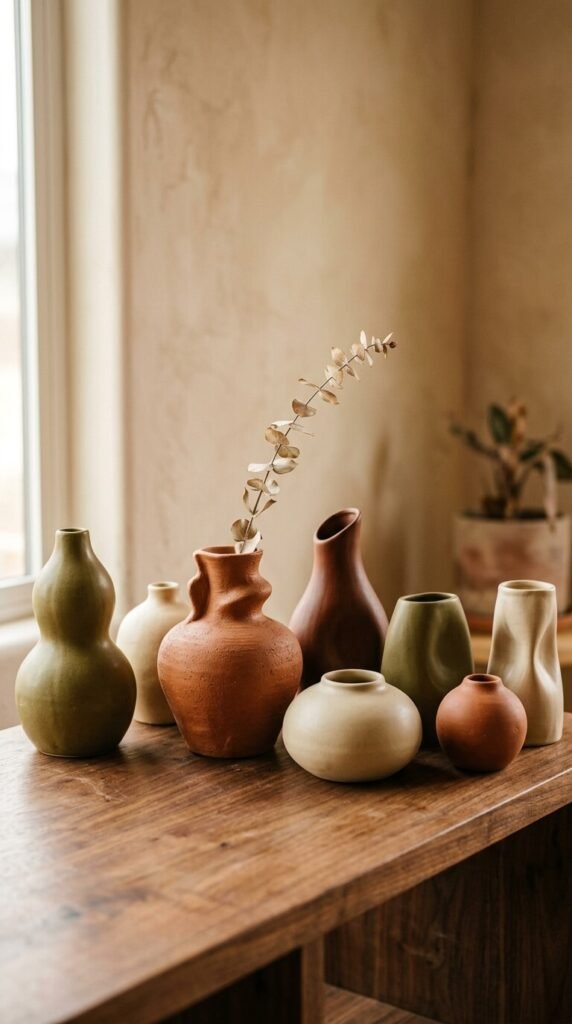
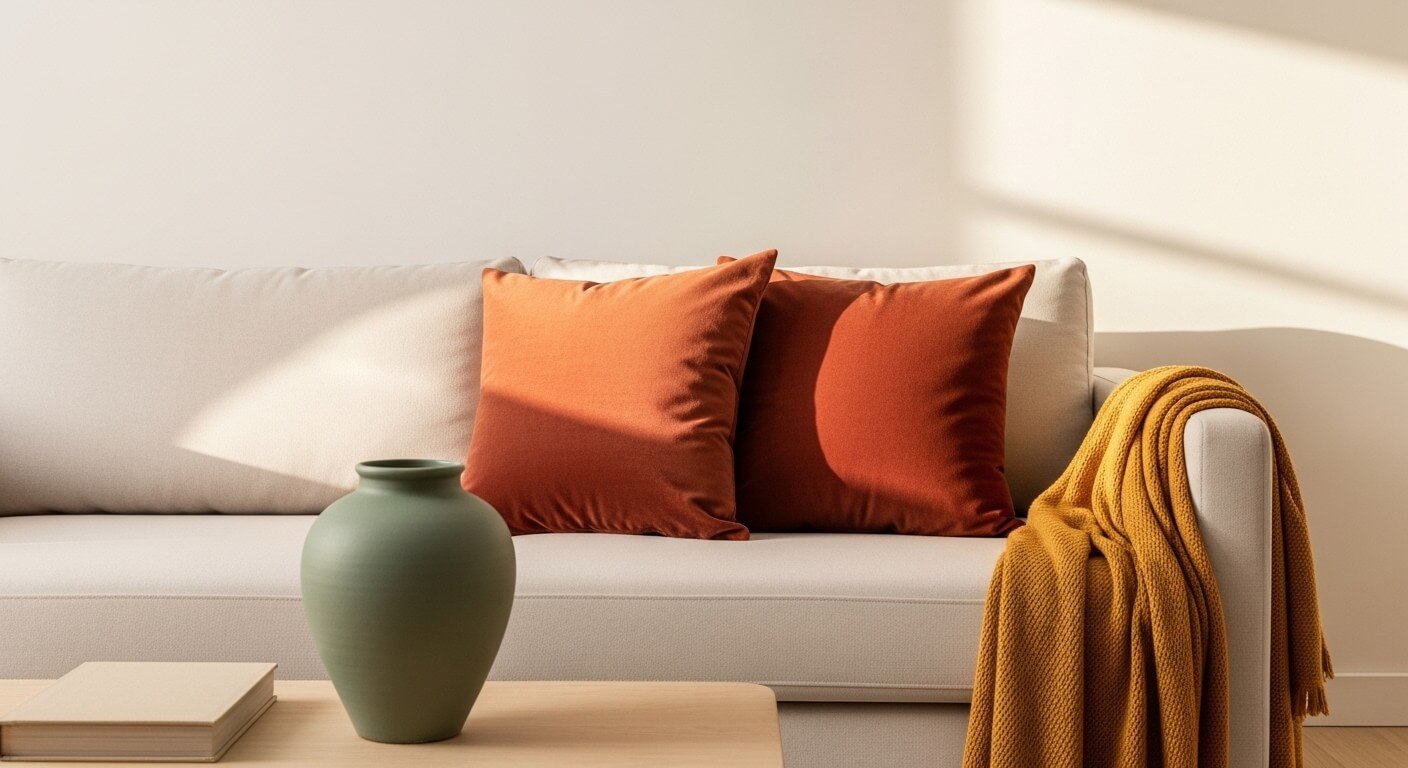
Mid-century ceramics favor organic, irregular shapes over symmetrical forms — think elongated necks, bulbous bases, and matte earth tones. Look for them at thrift stores, antique markets, and vintage shops for $5–$30 each. New versions with the same organic quality are widely available at H&M Home, Target, and ceramic artisan shops for similar prices. Group three to five vases in varying heights on a shelf or credenza. Use muted colors: terracotta, olive green, cream, and warm brown. No flowers needed — these look complete on their own as sculptural objects.
9. Arc Floor Lamp
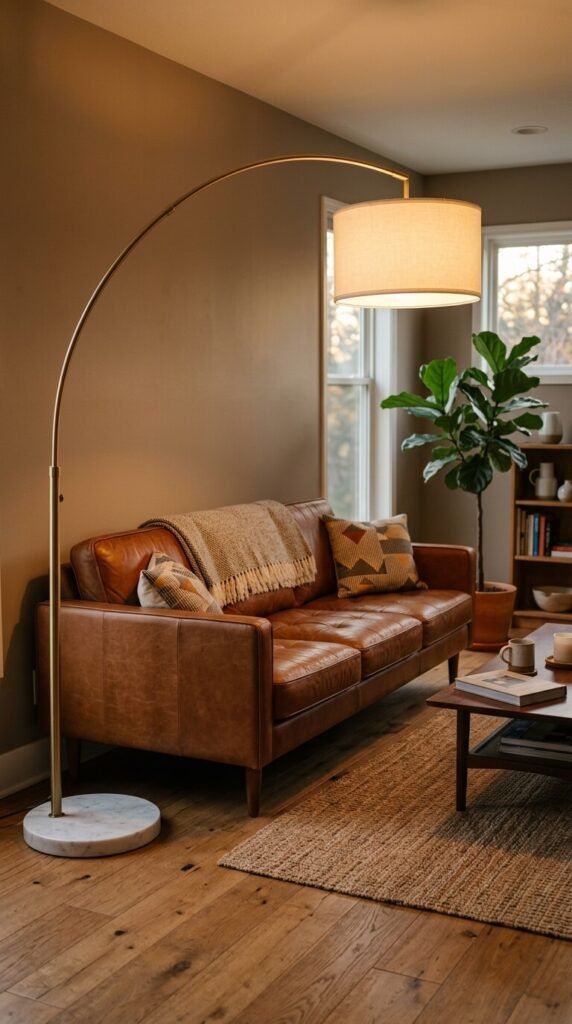
An arc floor lamp — a long curved arm extending over a sofa or chair from a weighted base — is a mid-century lighting essential. It provides reading light without requiring a side table and creates an immediate sense of drama in any seating area. Marble-base arc lamps are the most classic version. New versions cost $80–$300 at most furniture retailers. The arc shape also allows light placement in the center of a room without ceiling fixtures. Position it so the shade hangs directly over a chair or one end of a sofa. It changes the entire mood of a room at night.
10. Teak and Rosewood Side Tables
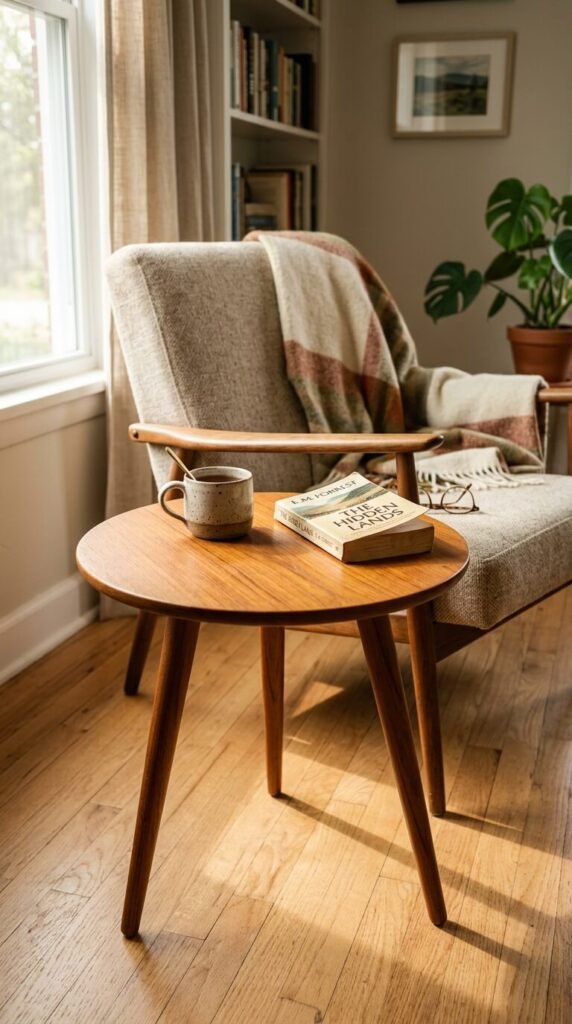
Solid teak or rosewood side tables with tapered splayed legs are among the most collectable and affordable mid-century finds. Thrift stores and estate sales regularly turn up small teak side tables for $15–$80. Online marketplaces like Facebook Marketplace and Craigslist are excellent sources. Sand lightly and apply teak oil to restore dried-out wood to its original warm glow for about $10 in supplies. These small tables work beside a bed, a sofa, or a reading chair. The warm wood grain and clean leg detail look correct in any room styled around mid-century design.
11. Geometric Wool Area Rugs
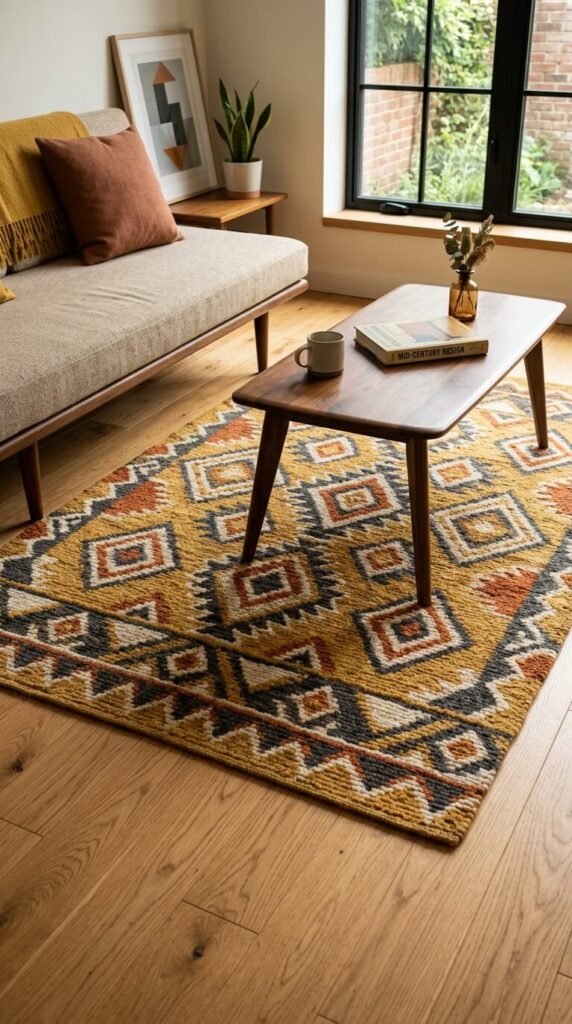
Mid-century rugs favor bold geometric patterns in warm, earthy tones — diamonds, chevrons, and abstract shapes in mustard yellow, rust orange, avocado, and cream. IKEA’s STOCKHOLM rug line often includes affordable geometric options for $100–$200. Vintage wool rugs from the 1950s–70s turn up regularly at estate sales for $50–$300. New wool or wool-blend reproductions are available at Ruggable and Wayfair. A geometric rug anchors the whole room and brings in color and pattern without overwhelming the furniture. It’s often the piece that makes a mid-century space feel intentional and complete.
12. Terrazzo Accessories
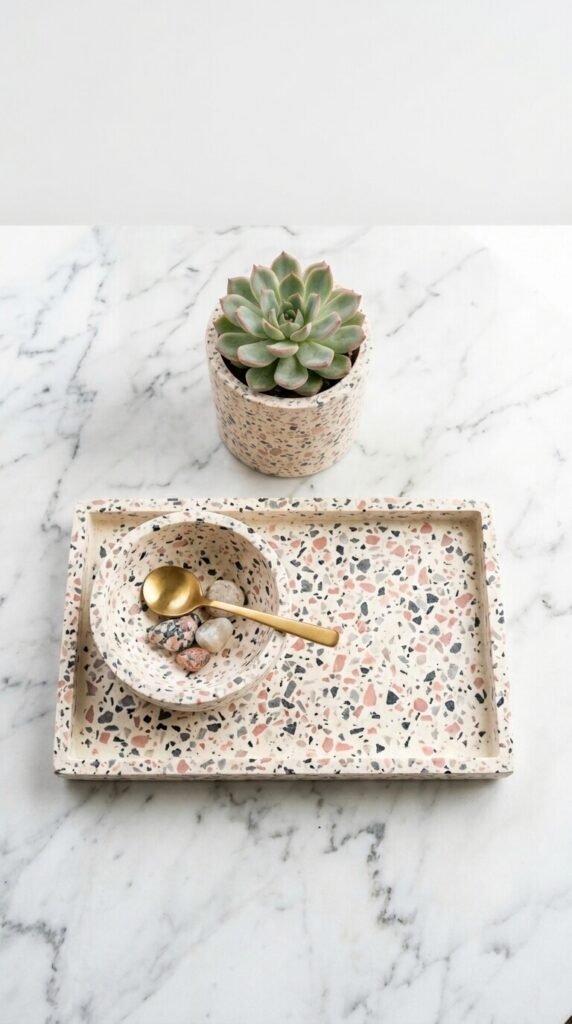
Terrazzo — concrete embedded with colored stone chips — was everywhere in mid-century homes, from floors to countertops to decorative accessories. Today, terrazzo-pattern accessories are widely available and very affordable. Small terrazzo trays, bowls, planters, and coasters cost $10–$40 at H&M Home, Target, and CB2. Look for pink, sage green, or warm gray terrazzo for the most mid-century color palette. These small pieces add texture and pattern to a surface without demanding much space. A terrazzo tray on a coffee table or a terrazzo planter on a shelf immediately reads as thoughtful and retro.
13. Cane and Rattan Furniture Accents
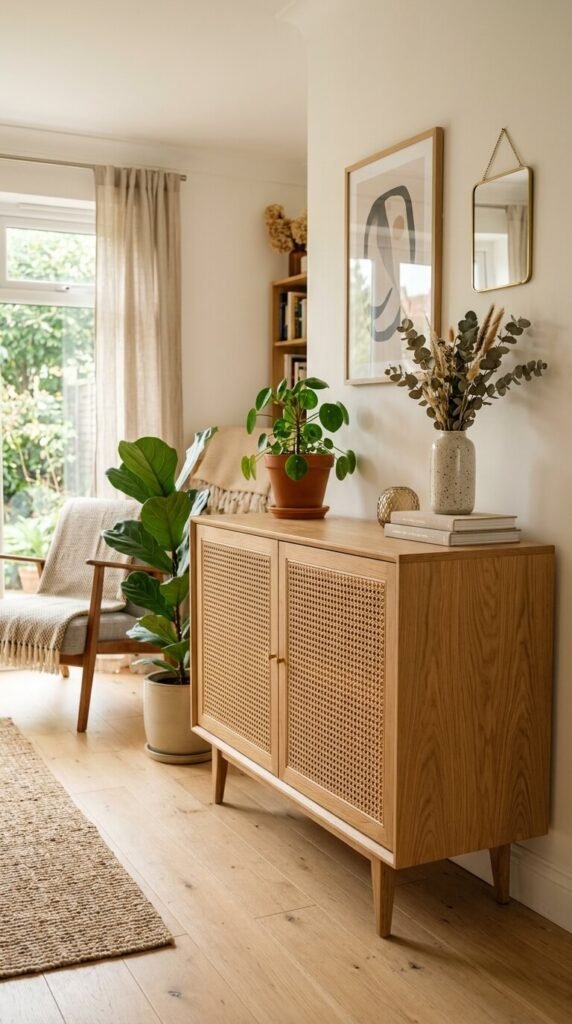
Cane and rattan — woven plant fiber used in chair backs, cabinet doors, and headboards — were staples of mid-century furniture design. Cane-front credenzas, rattan accent chairs, and cane headboards are all widely available at retailers like West Elm and IKEA for $100–$600. Vintage cane pieces from thrift stores cost $20–$150 and often just need a light clean with a damp cloth. The natural texture adds warmth and visual interest without color. It works especially well alongside walnut and teak wood tones for a layered, organic mid-century look.
14. Atomic Age Starburst Patterns
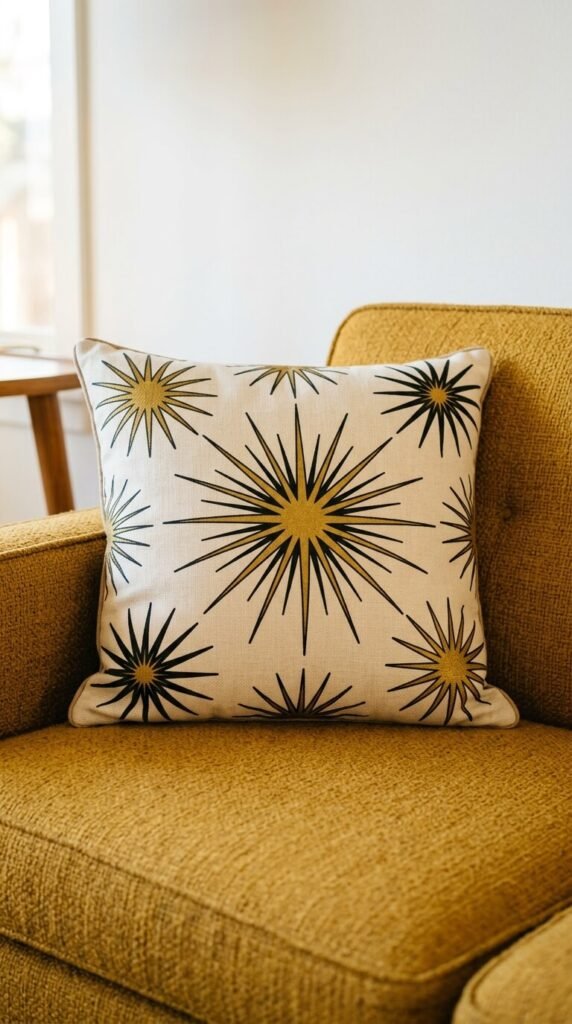
The atomic starburst motif — a jagged, asymmetric star shape — was one of the defining graphic patterns of the 1950s and early 60s. It appeared on everything from wallpaper to textiles to dinnerware. Today, starburst-pattern throw pillows, cushion covers, and table runners bring this graphic energy into a room instantly. Look for them at Etsy from independent textile makers for $20–$50 per piece. Vintage starburst curtain panels and tablecloths turn up at thrift stores for a few dollars. A pair of starburst pillows on a sofa is all you need to establish a mid-century pattern language in a neutral room.
15. Molded Plywood Furniture
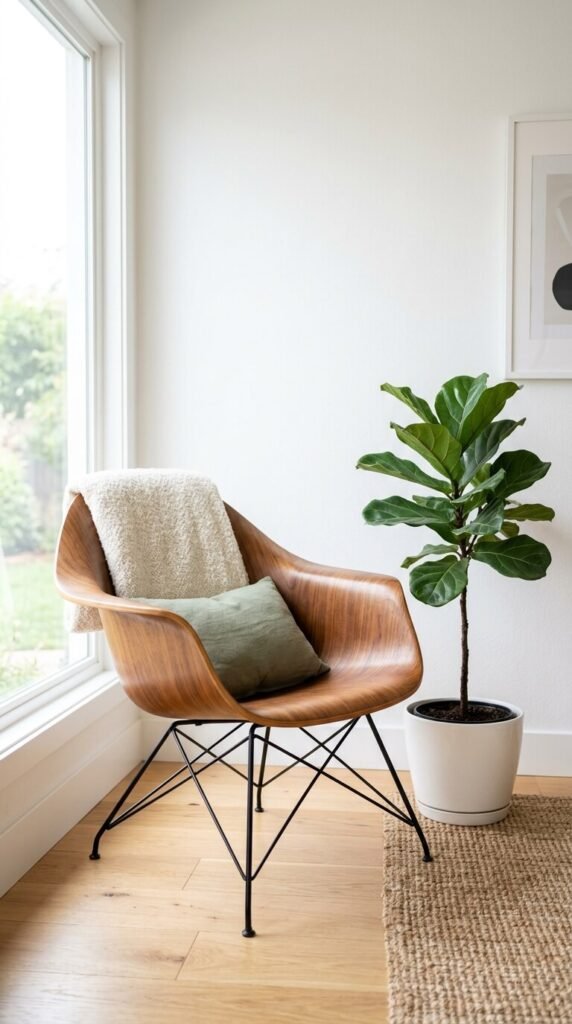
Molded plywood — wood bent and shaped under heat and pressure into curves — was a breakthrough material for mid-century designers. The Eames DCW (Dining Chair Wood) is the most famous example. Quality reproductions of classic molded plywood chairs start at $150–$400. IKEA’s bentwood and plywood pieces also carry this aesthetic at a lower price point. The appeal is in the organic curves that appear in the seat and back — no sharp edges, no flat planes. The material looks warm and natural while the form looks deliberately modern. A perfect combination for mid-century spaces.
16. Low-Profile Sofas With Wooden Legs
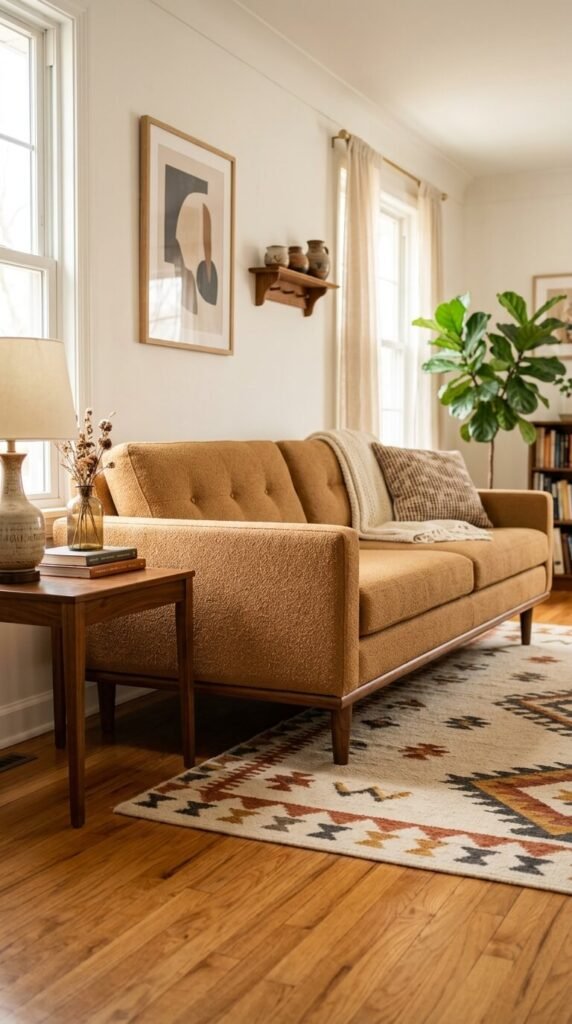
A low-profile sofa with exposed tapered wooden legs is the mid-century living room centerpiece. The key features are the low seat height, straight clean arms, and visible leg detail — no skirted bases, no rolled arms. New versions from Article, West Elm, and IKEA’s LANDSKRONA range cost $500–$1,500. The fabric color matters enormously: camel, mustard yellow, olive green, or warm gray are all authentically mid-century. Avoid white or black. Set the sofa on a geometric rug and place a sunburst clock above it for an instantly recognizable mid-century living room look.
17. Macramé Wall Hangings
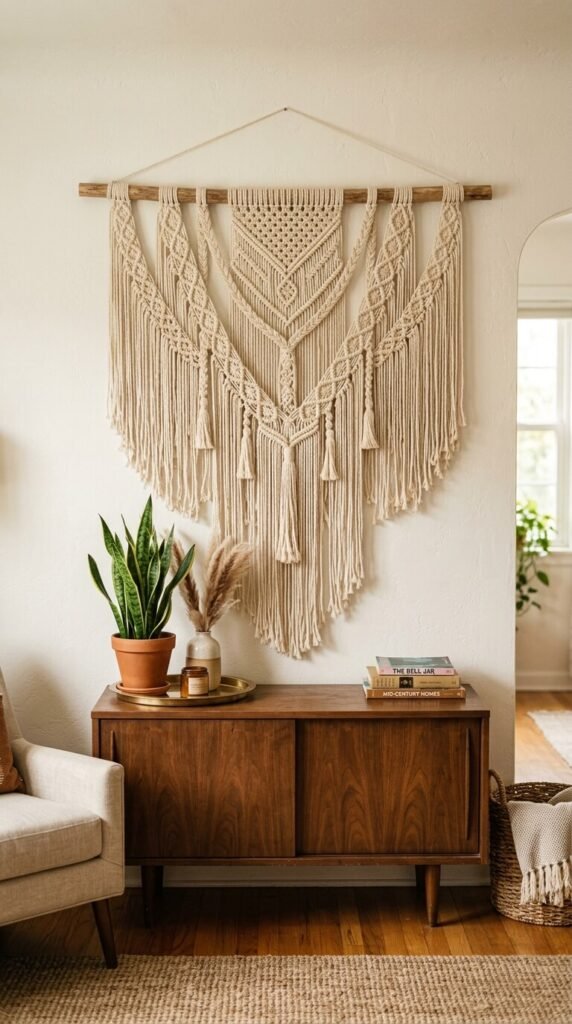
Macramé — knotted fiber art — was enormously popular in the late 1950s through the 1970s as a wall-hanging medium. Large macramé pieces in natural cotton cord add texture, warmth, and handcrafted character to a neutral wall. New macramé wall hangings are widely available on Etsy for $30–$150 depending on size. Making your own with a basic knot tutorial and $15 in cotton rope produces a genuinely beautiful result. Hang above a credenza or bed for the most impact. The organic texture contrasts well with the clean lines of mid-century furniture and adds warmth to any wall.
18. Globe Pendant Lights
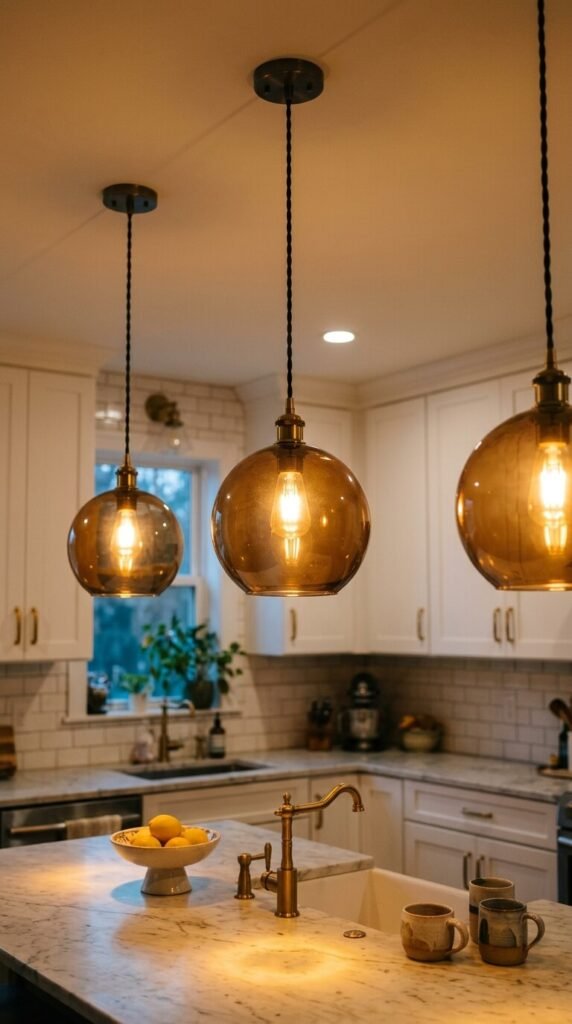
Globe pendant lights — spherical glass shades hanging from a single cord — are a mid-century lighting staple that works in kitchens, dining areas, and bedrooms. Amber or smoked glass adds the most period-appropriate warmth. New globe pendants cost $30–$150 per light at most lighting retailers and big-box stores. Hang two or three at varying heights over a kitchen island for maximum impact. Clear glass globes work in brighter, more contemporary rooms. Amber or bronze glass works better in warmer, more traditionally mid-century spaces. An affordable way to add overhead lighting character without a major electrical project.
19. Abstract and Organic Wall Art
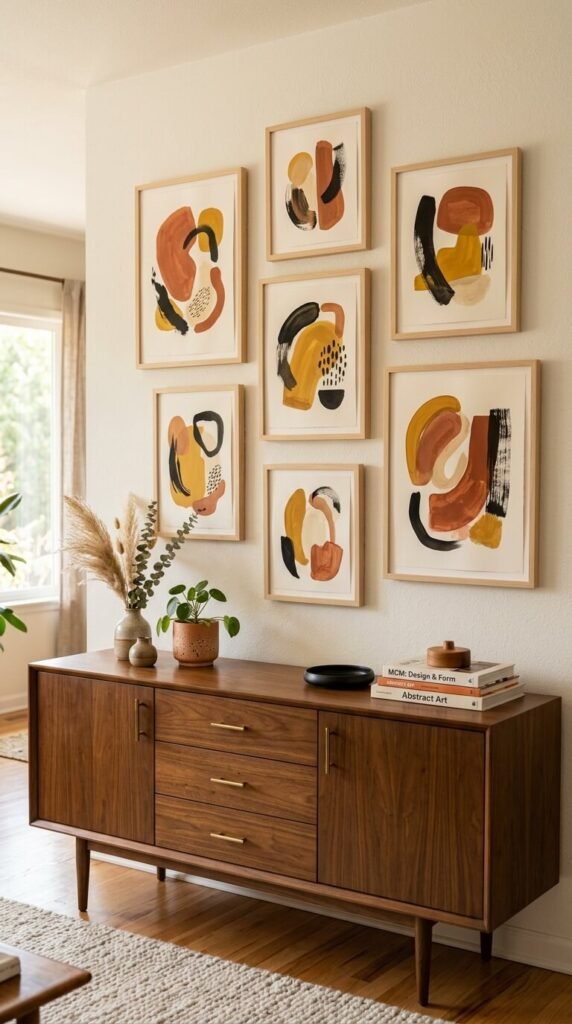
Mid-century wall art favors abstract organic shapes, biomorphic forms, and bold limited color palettes — think the work of Alexander Calder, Joan Miró, and Hans Arp. You don’t need originals. Print-on-demand services like Society6 and Redbubble offer mid-century abstract prints for $15–$50 unframed. Frame in thin natural wood or black frames for the right look. Group three to five pieces above a credenza or sofa. Warm earthy tones — terracotta, mustard, olive, black — work best together. This is the fastest and most affordable way to establish the mid-century visual language in any room.
20. Eames Elephant and Toys
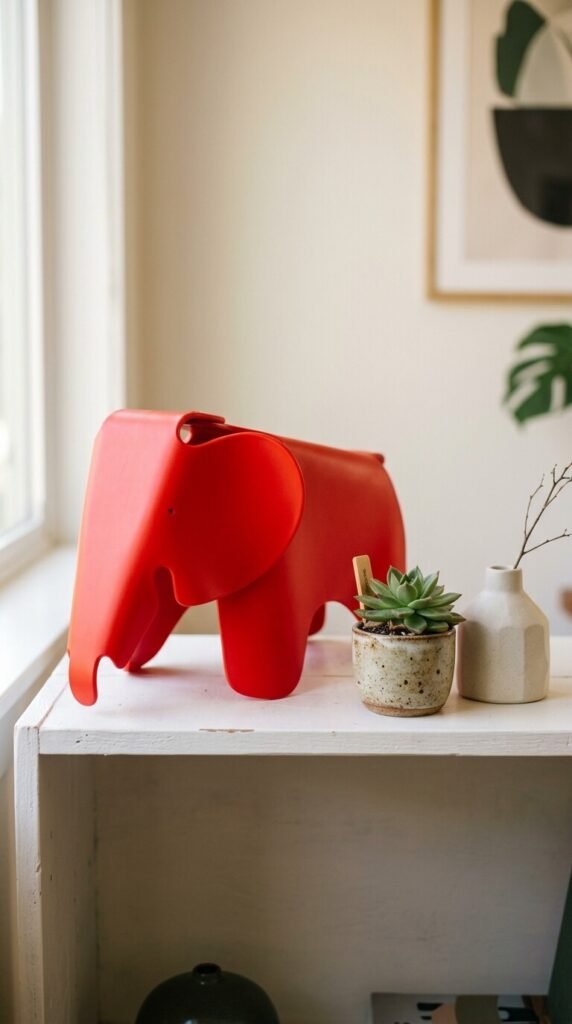
The Eames Elephant — a small, sculptural elephant in molded plastic designed by Charles and Ray Eames — is a collector’s item and one of the most charming mid-century objects available today. Reproductions are sold through Vitra for around $100–$150. It works on shelves, desks, and in children’s rooms as both a toy and a design object. The bold primary colors — red, yellow, blue — are perfectly mid-century. A single Eames toy on a shelf communicates an understanding of mid-century design history in a way that larger furniture pieces sometimes don’t.
21. Terrarium and Glass Geometric Plant Holders
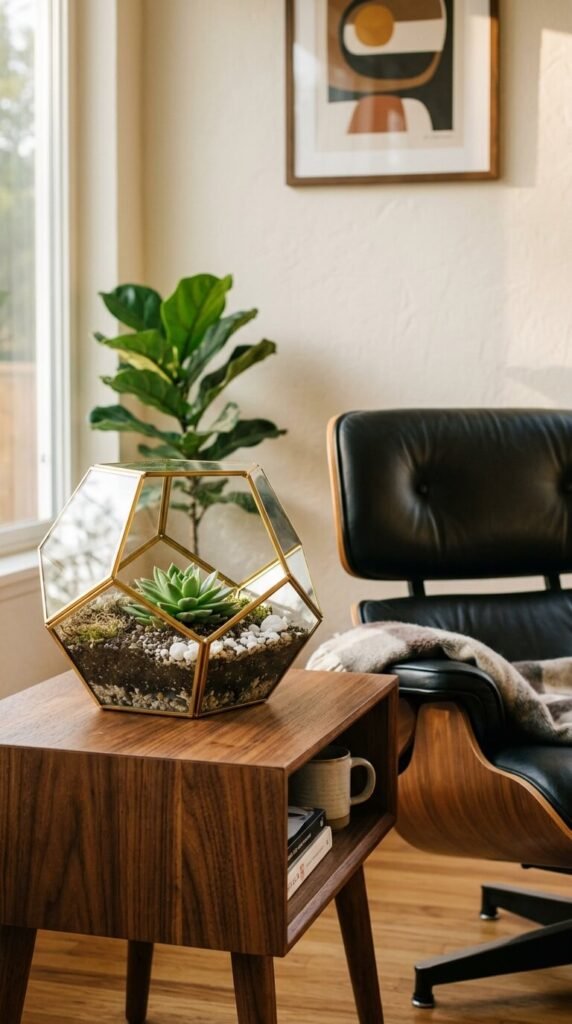
Geometric brass and glass terrariums echo the angular, space-age geometry that defined mid-century design. They’re widely available at IKEA, HomeGoods, and Amazon for $20–$60. Fill with small succulents, air plants, or moss. The brass frame catches light and adds warmth. These work on side tables, credenzas, windowsills, and shelves. The geometric form is bold enough to read as a decorative object even when empty. A group of two or three in different sizes creates an interesting display. They require almost no plant care and keep the organic-meets-geometric aesthetic of mid-century decor feeling alive.
22. Bertoia Wire Chairs
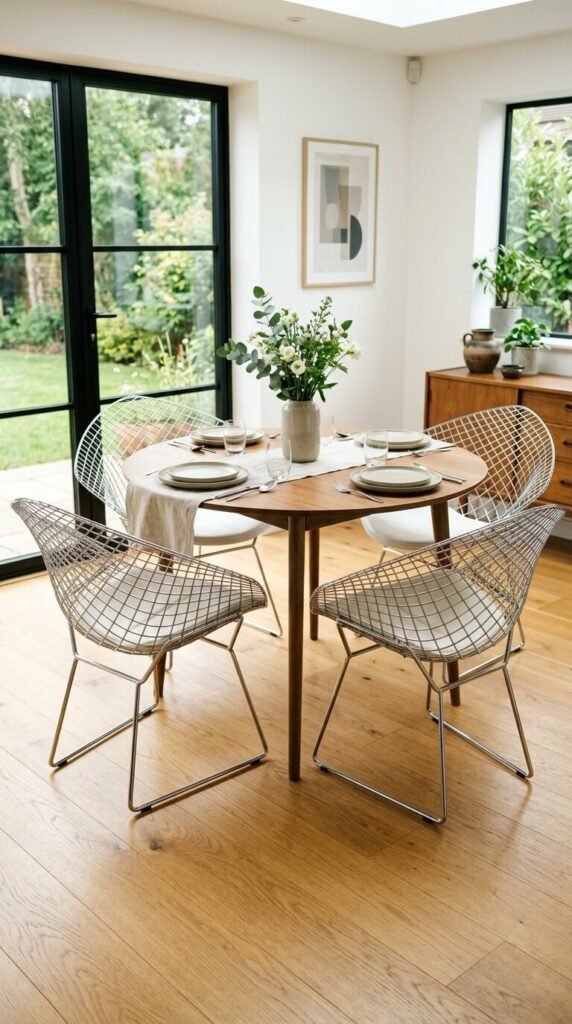
Harry Bertoia’s Diamond Chair from 1952 is essentially a sculpture you sit in. The welded wire grid structure is open, airy, and lets light pass through it — making it one of the least visually heavy chairs ever designed. Licensed versions from Knoll start at $700–$1,000 per chair. Quality reproductions are available for $100–$300. The chrome wire base with a simple seat cushion is the most classic version. These work well in spaces where you want seating that doesn’t visually block the room. A pair of Bertoia chairs reads as sophisticated, collected, and architecturally aware.
23. Lava Lamps and Colored Glass Accessories
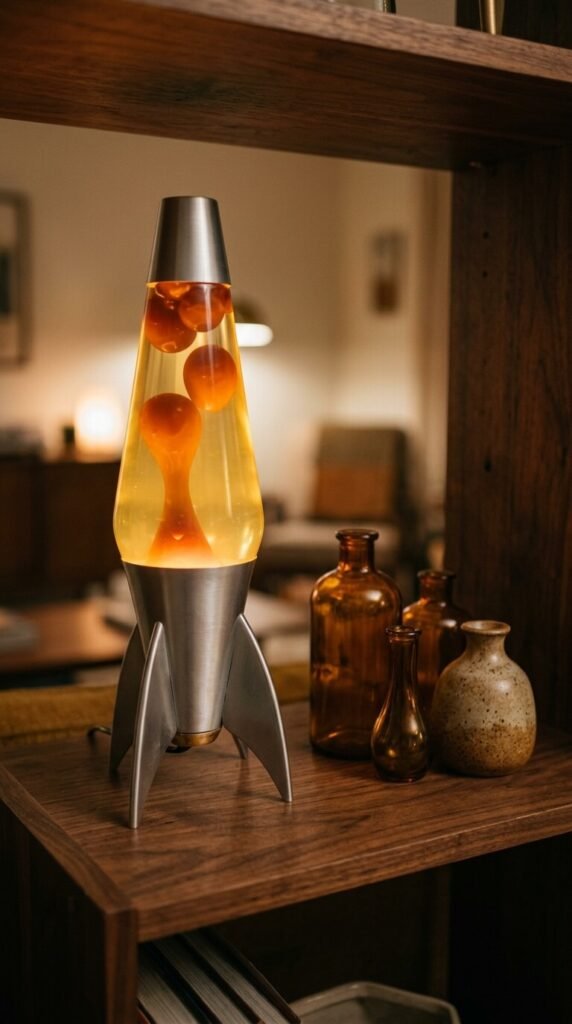
The lava lamp — colored wax rising and falling in a heated liquid-filled glass vessel — was invented in 1963 and has never fully gone away. New versions cost $20–$50 at most home goods retailers. Beyond the novelty appeal, colored glass accessories from the mid-century era — amber apothecary bottles, green Depression glass, cobalt blue vases — add color and warmth to shelves and windowsills. Collect vintage colored glass at thrift stores for $2–$15 per piece. Group by color family on a shelf. The way light passes through colored glass creates an effect that no opaque object can replicate.
24. Capiz Shell and Paper Pendant Lights
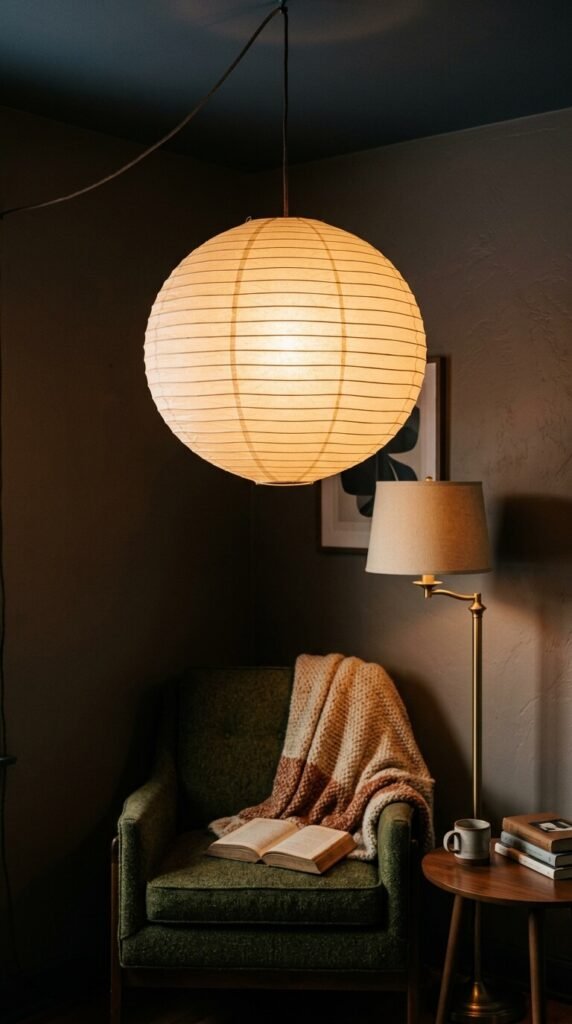
Isamu Noguchi’s Akari paper pendant lights — first designed in 1951 — are among the most affordable and recognizable mid-century lighting options available. The original Akari lamps are made from washi paper and bamboo and cost $100–$400 from authorized retailers. Near-identical paper pendant lights are available at IKEA and Amazon for $10–$40. The warm, diffused glow through the paper shade creates an atmosphere no hard shade can match. These work in any room — bedrooms, reading corners, dining areas. A single paper pendant above a chair transforms the quality of light in that space entirely.
25. Record Players and Hi-Fi Equipment as Decor
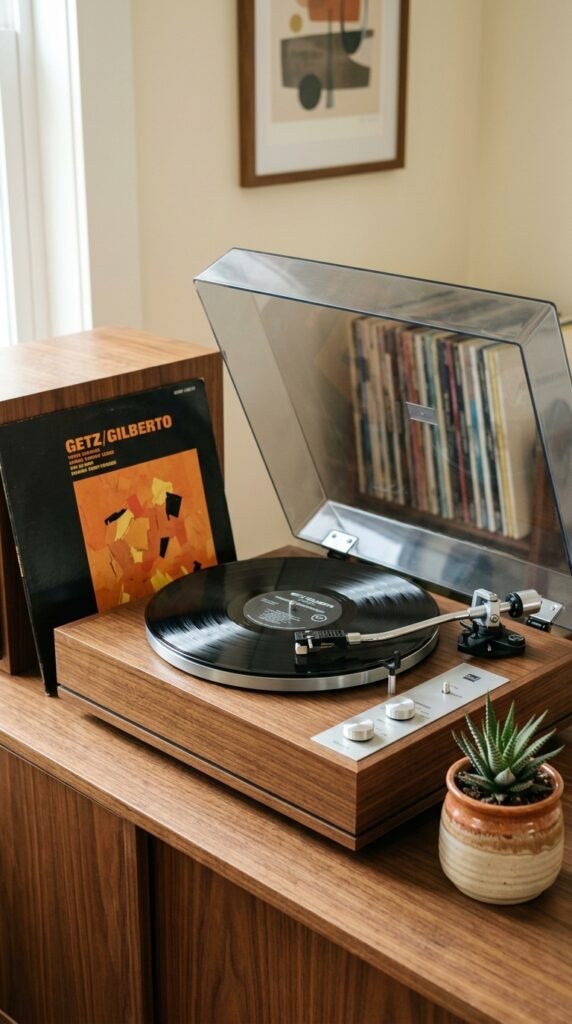
A turntable on a credenza is one of the most authentic mid-century still-life compositions possible. Record players were central objects in mid-century living rooms — they sat on the credenza and were treated as furniture. Entry-level turntables from Audio-Technica and Fluance cost $100–$200 and work with any speaker system. Pair with a small collection of vinyl records stored vertically in a crate beside the credenza. The wood veneer casing of most entry-level turntables looks authentically period-appropriate. This is both a functional object and a decorative statement that communicates a genuine relationship with mid-century culture.
26. Floating Wall Shelves in Walnut
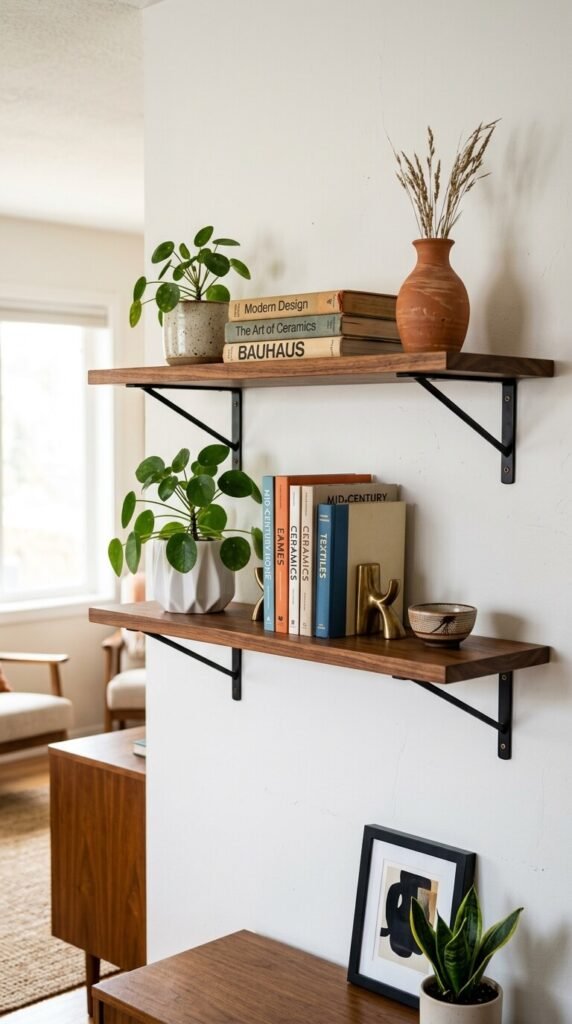
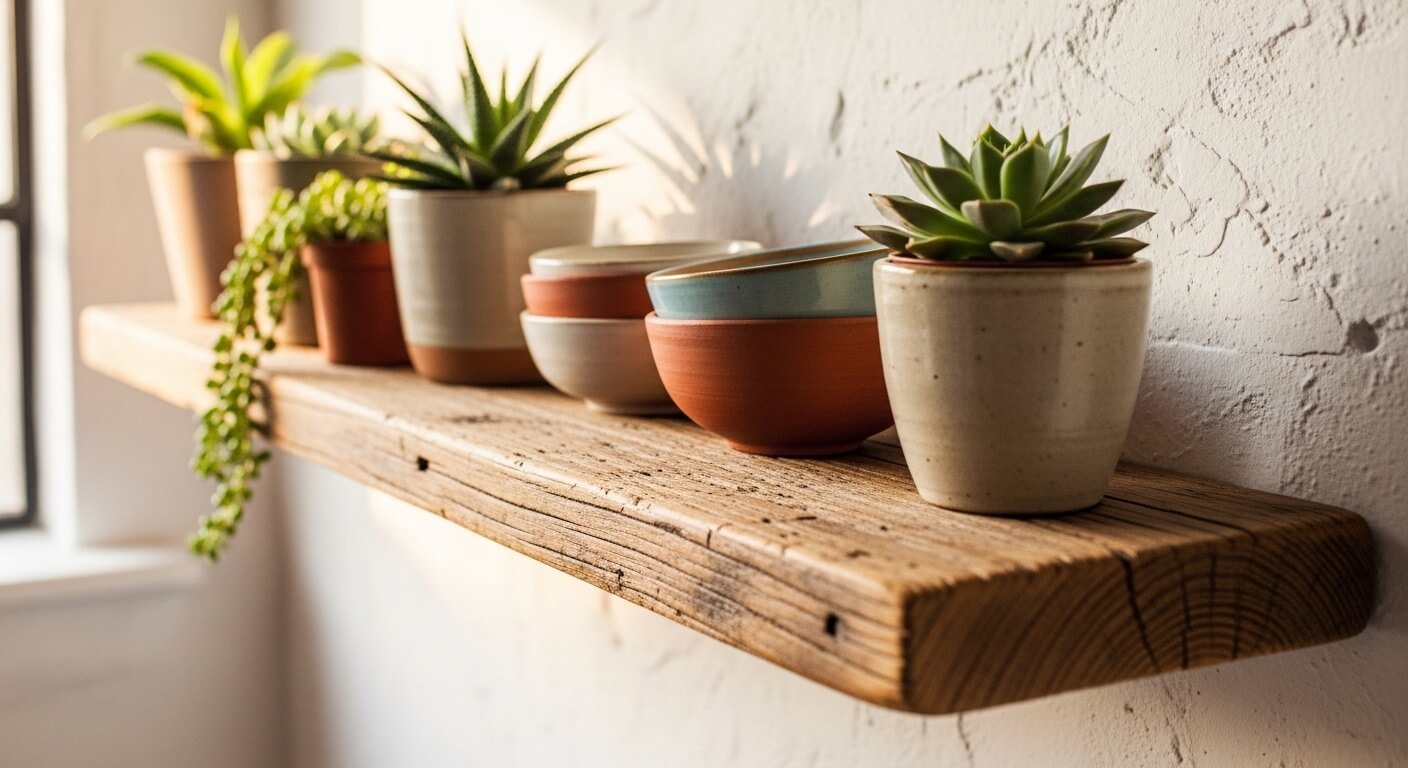
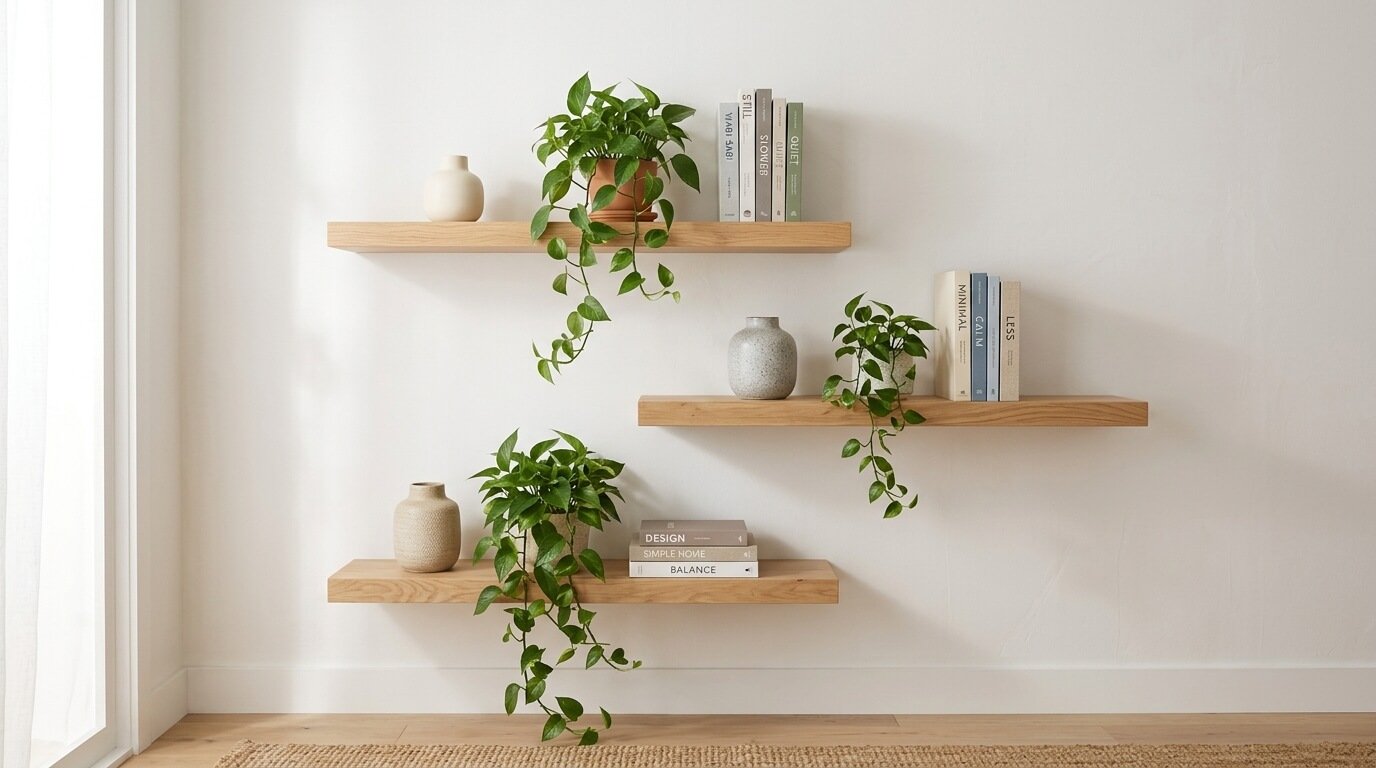
Floating shelves in walnut veneer or solid walnut with angled metal brackets are a mid-century storage staple. They show off curated objects without visual clutter. IKEA’s LACK and BERGSHULT shelves can be paired with period-appropriate brackets for a budget-friendly version — total cost around $30–$60 per shelf. Solid walnut floating shelves from Etsy makers run $80–$200. Style each shelf with three to five objects maximum: a ceramic vase, a small plant, a few books. Resist overcrowding. The negative space between objects is as important as the objects themselves in mid-century display styling.
27. Tulip and Flower-Shaped Accent Chairs
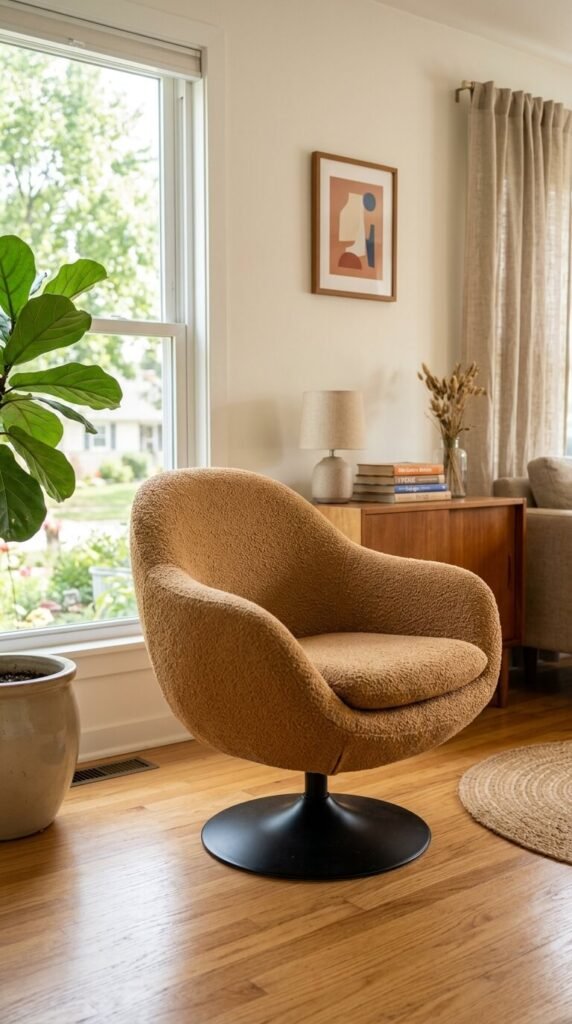
The egg chair, tulip chair, and ball chair — round, enveloping forms on pedestal or swivel bases — are among the most distinctive mid-century silhouettes. They communicate a sense of comfort, playfulness, and design confidence. Quality reproductions start at $300–$700. Budget versions in boucle or bouclé-style fabric are available for $150–$400. Place one in a reading corner or beside a window as a destination seat — the kind of chair you specifically choose to sit in. The rounded form provides a strong visual counterpoint to the clean horizontal lines of sofas and credenzas in the same room.
28. Potted Plants as Architecture
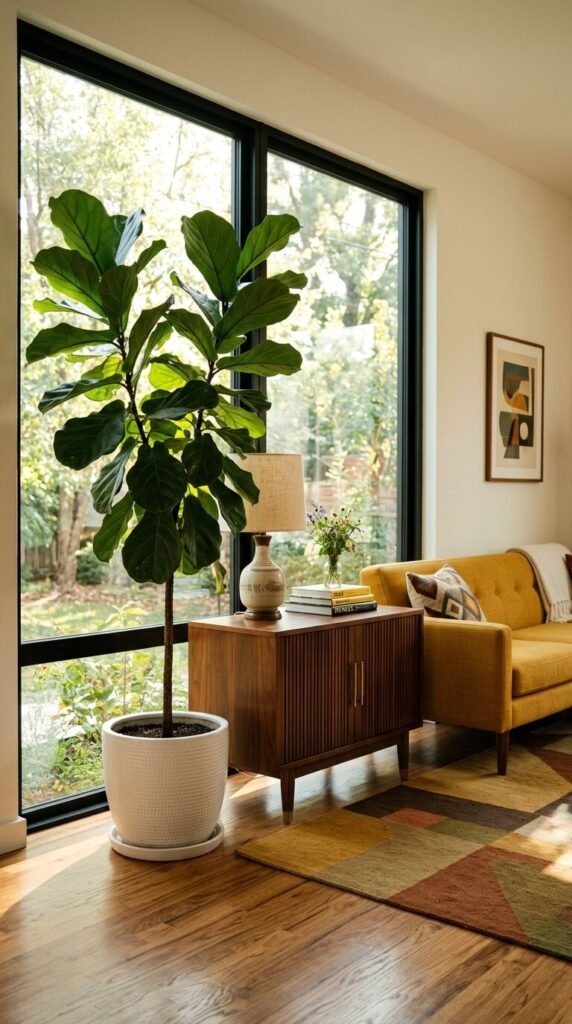
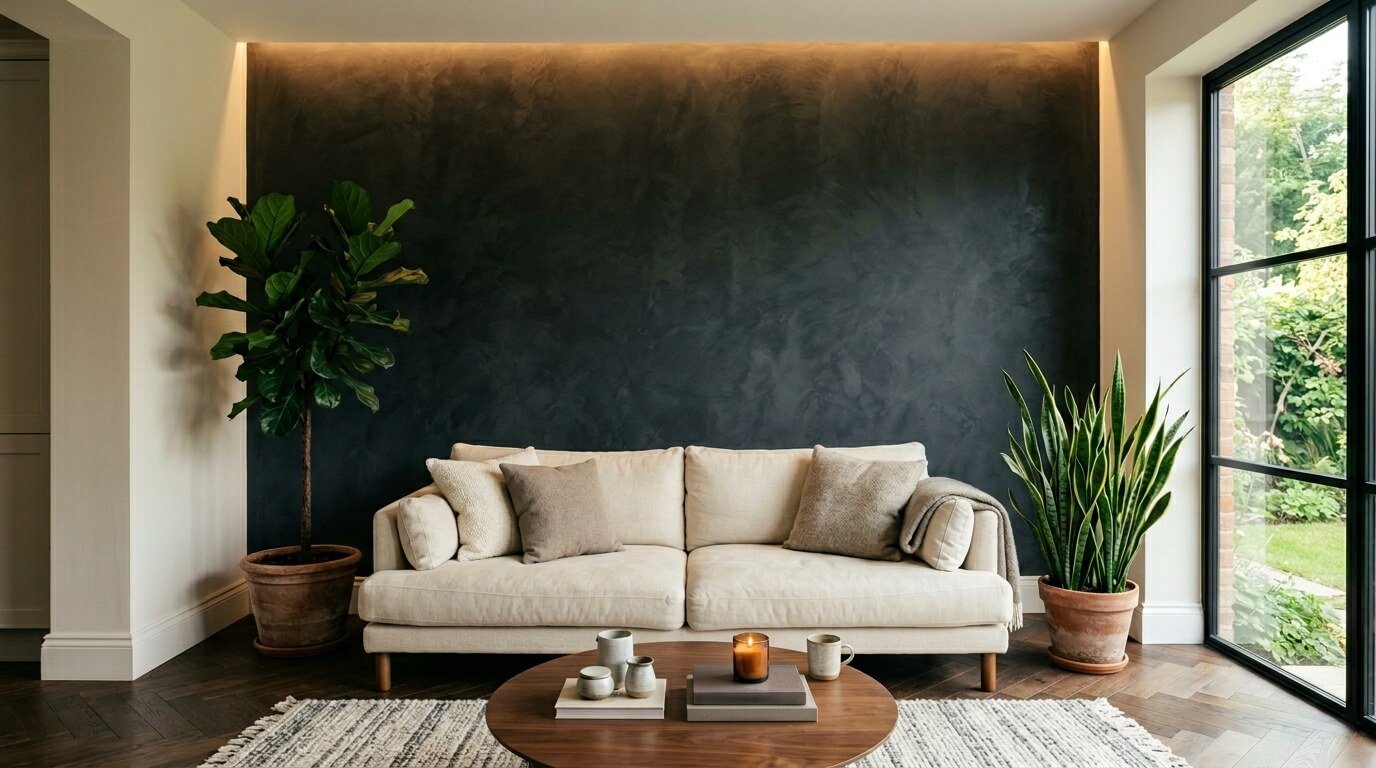
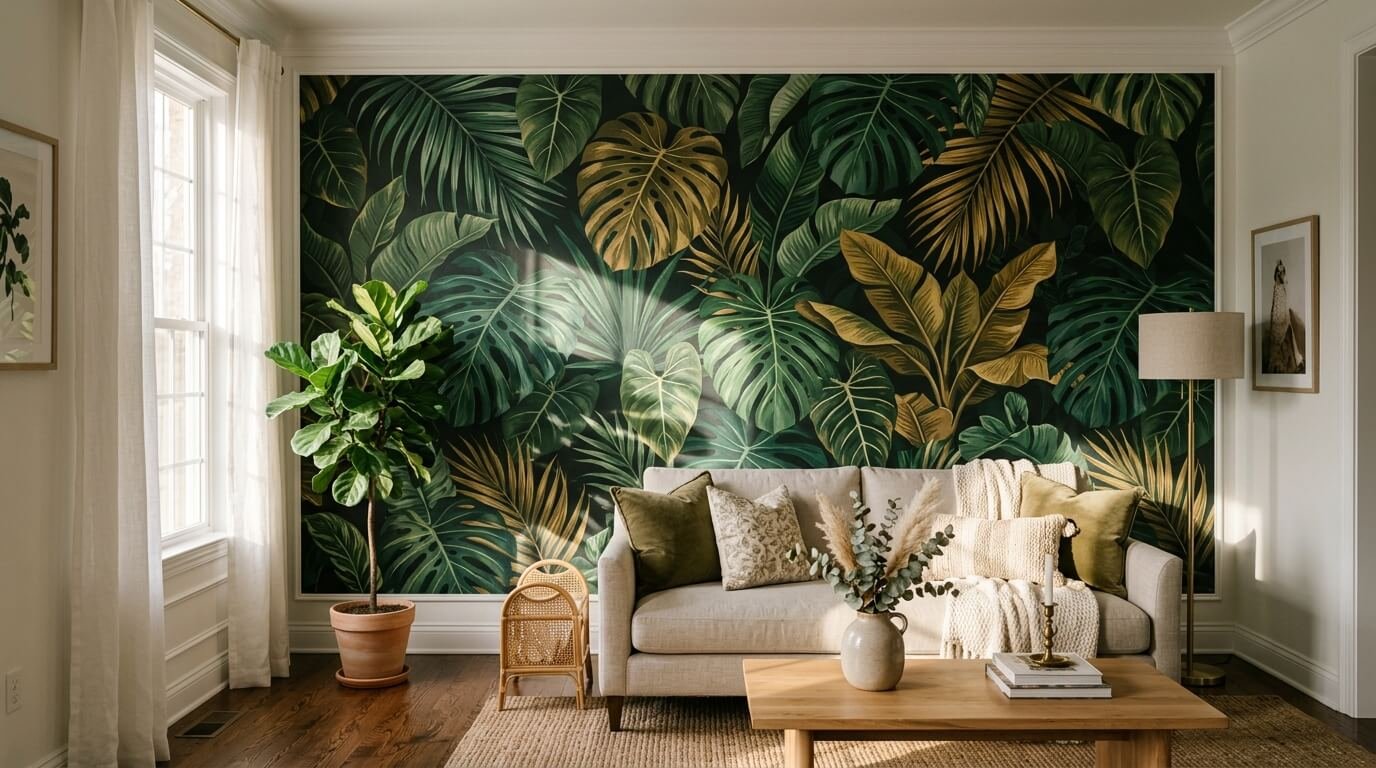
Mid-century interiors treated large potted plants as architectural elements — not decorations, but structural contributors to the room’s composition. A tall fiddle leaf fig, rubber plant, or monstera in a simple white or terracotta pot beside a window or in a corner adds height, life, and organic form that no furniture piece can replicate. Large ceramic pots cost $20–$60 at most home goods stores. The plants themselves cost $15–$80 depending on size. Place one in every major room. The combination of the organic plant form against the clean geometric lines of mid-century furniture is one of the most visually satisfying design contrasts in interior design.
Conclusion
Mid-century modern design endures because it solved real problems beautifully. Clean lines that don’t date. Warm wood tones that work with almost any color. Organic forms that feel human and welcoming. And a commitment to function that makes every piece feel purposeful rather than decorative. You don’t need to buy everything at once or spend a fortune to bring this aesthetic into your home. A sunburst clock here, a walnut credenza there, a set of hairpin legs on a table you already own — each piece builds on the last. Start with one item from this list that fits your current space and budget, and see how quickly the rest of the room begins to follow its lead.