27 Romantic French Country Decor Ideas That Feel European

Disclosure: As an Amazon Associate we earn from qualifying purchases. Some links on this page may be affiliate links — if you click through and make a purchase, we may receive a small commission at no extra cost to you.
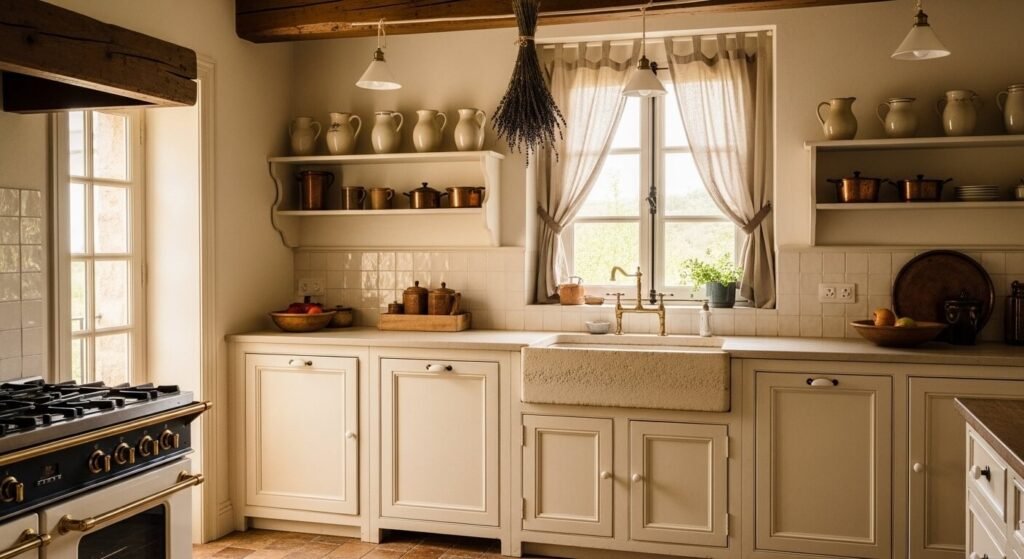
French country decor is the style of slow mornings, stone floors, and linen curtains moving in the breeze. It comes from the farmhouses and châteaux of Provence, Normandy, and the Loire Valley — places where beauty grows gradually and nothing looks like it was styled the same afternoon it was bought. The palette is soft: cream, sage, dusty rose, faded blue, and warm terracotta. The materials are honest: aged wood, hand-thrown pottery, wrought iron, and washed linen. This list covers 27 French country decor ideas that bring genuine European warmth into any home — practically and affordably.
1. Distressed White or Cream Painted Furniture
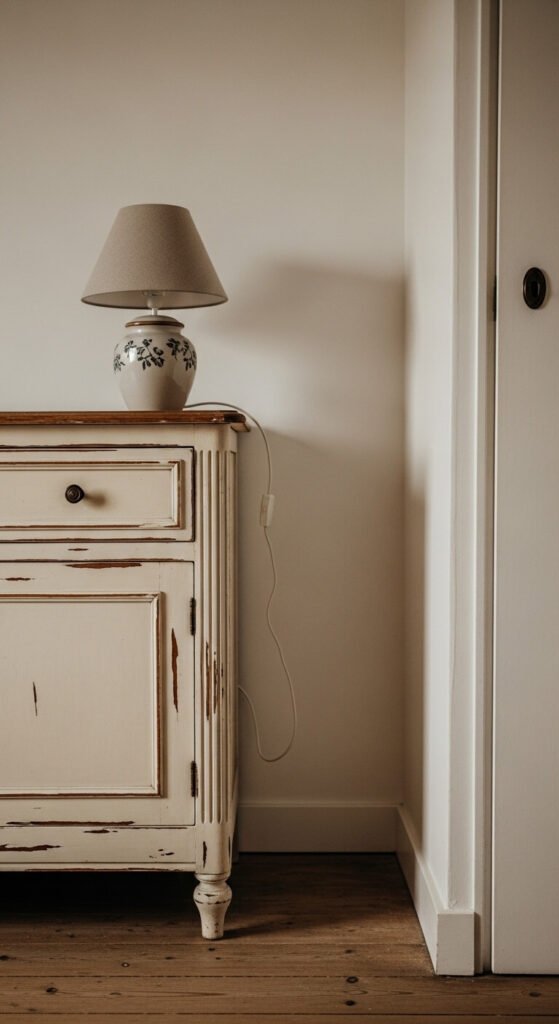
Distressed cream or white painted furniture is the most recognizable furniture finish in French country style. The worn edges that reveal bare wood beneath suggest age, use, and provenance. To achieve this at home, paint any solid wood furniture in chalk paint ($20 to $30 per quart) and sand the edges lightly after drying. No primer required with chalk paint. A secondhand dresser from a thrift store costs $20 to $50 before painting. Seal with a matte wax finish — not gloss — to protect the surface while keeping the chalky, aged look completely intact.
2. Open Shelving with Aged Ceramics
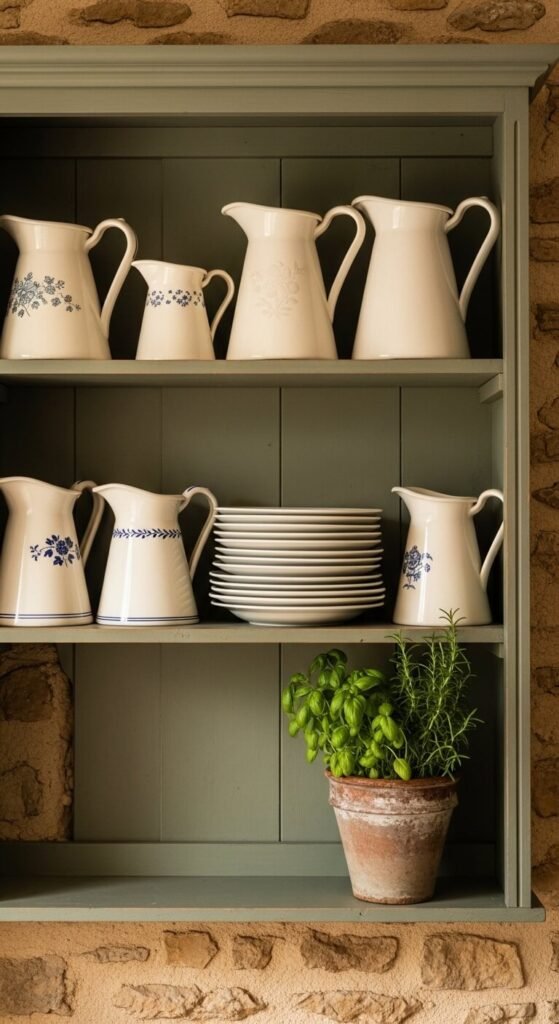
Open shelving styled with aged ceramics is one of the defining looks of a French country kitchen. Mismatched pitchers, hand-thrown bowls, and faience-style plates in cream, cobalt, and soft yellow read as collected over years rather than bought as a set. Shop thrift stores and antique markets for old ceramic pieces at $2 to $15 each. Display with fresh or dried herbs, a small vase of wildflowers, and a few worn linen towels draped over the shelf edge. Nothing should match exactly — the variation is precisely what makes this shelving feel authentically European.
3. Linen Curtains in Soft, Washed Tones
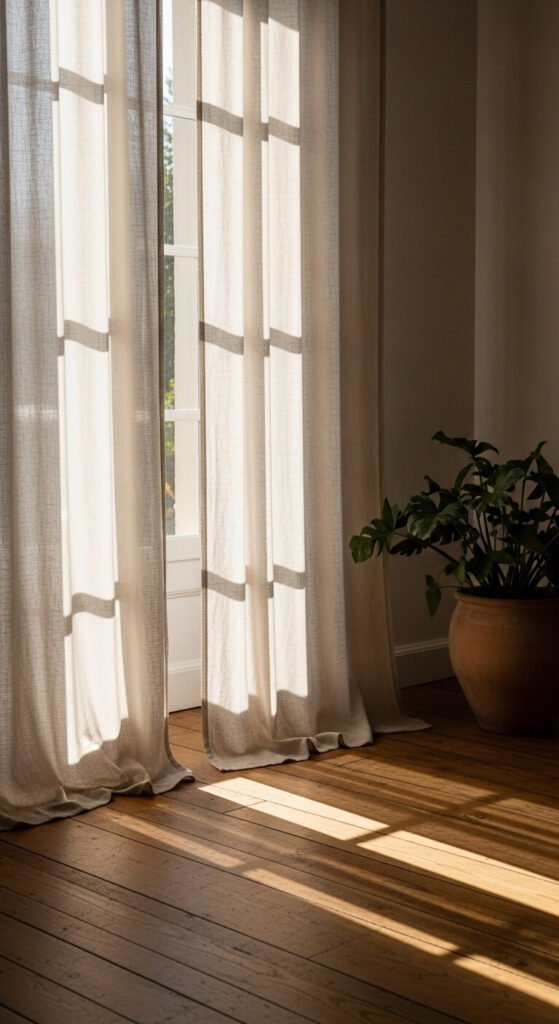
Washed linen curtains in ivory, dusty blush, or soft sage are the window treatment of French country rooms. The fabric’s natural texture and slightly imperfect drape look exactly right alongside aged wood and stone surfaces. Ready-made linen curtain panels from online stores cost $25 to $60 per panel. For a renter-friendly option, clip-ring panels hang from an iron rod without any hardware installation beyond two brackets. Hang the rod high — close to the ceiling — and let the panels fall slightly past the floor for the casual pooled look associated with French provincial interiors.
4. A Stone or Farmhouse Sink
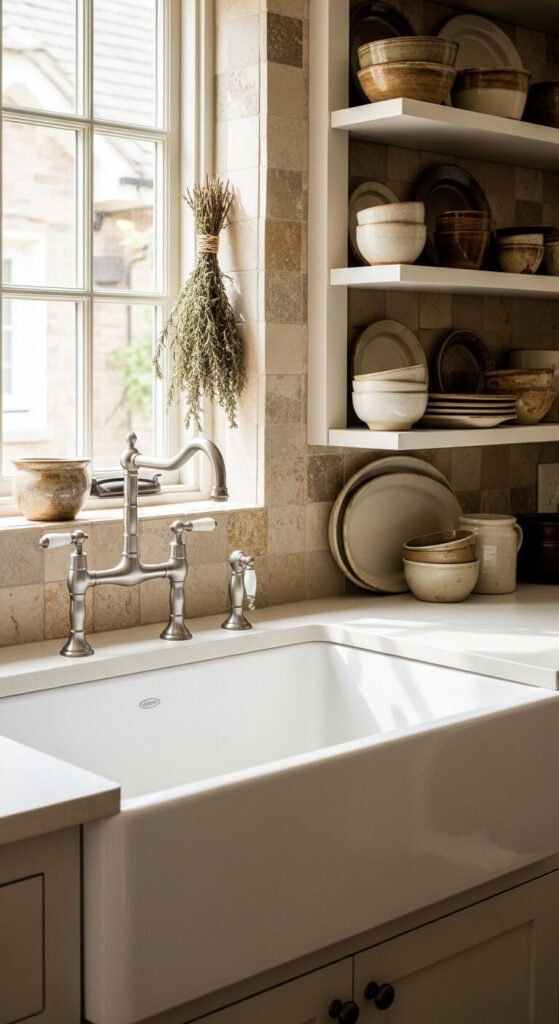
A farmhouse apron-front sink is the most functional French country kitchen detail — and one of the most recognizable. The deep basin and exposed front apron reference the working sinks found in rural French farmhouses for centuries. New fireclay farmhouse sinks run $300 to $800. Porcelain versions cost $200 to $500. This is a longer-term investment, but it changes the feel of the entire kitchen in a way that no accessory swap can replicate. Pair with a simple bridge faucet in brushed nickel or aged brass and leave the surrounding cabinetry clean and unfussy.
5. Dried Lavender Bundles
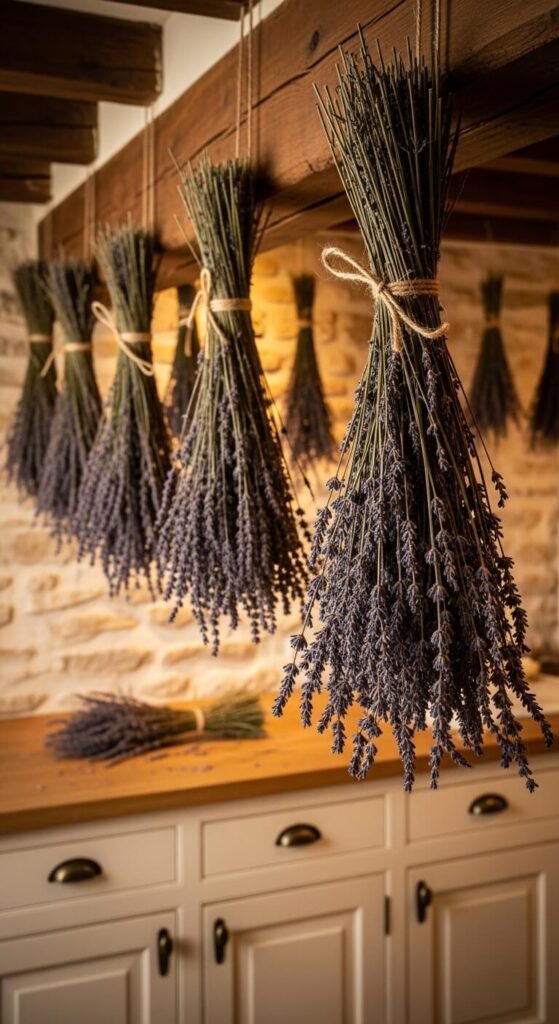
Dried lavender is the scent and symbol of Provence — and hanging it from a beam or hook costs almost nothing. Buy dried lavender bundles at craft stores, farmers markets, or online for $5 to $15 per bunch. Tie each bundle with natural twine and hang it upside down from a ceiling hook, curtain rod, or wooden beam. Three or five bundles grouped together look more intentional than a single one. The lavender slowly releases its scent as it dries further. It’s one of the few decor details that engages two senses at once — visual and aromatic.
6. Toile de Jouy Fabric and Wallpaper
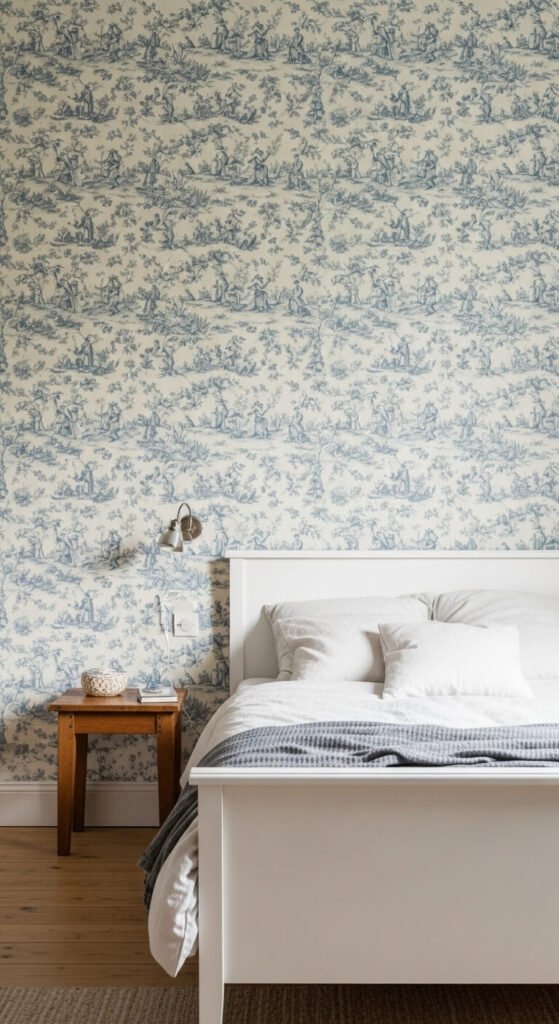
Toile de Jouy — the scenic pastoral print in two tones — is the most distinctly French textile pattern in existence. It originated in Jouy-en-Josas near Paris in the 18th century and hasn’t changed since. Use it as wallpaper on one bedroom accent wall, as pillow covers, or as a table runner. Toile wallpaper costs $40 to $90 per roll. Toile fabric from craft stores runs $8 to $20 per yard and makes excellent curtains or cushion covers. Keep the rest of the room simple and neutral — toile is strong enough to carry the room entirely on its own.
7. Wrought Iron Accents and Hardware
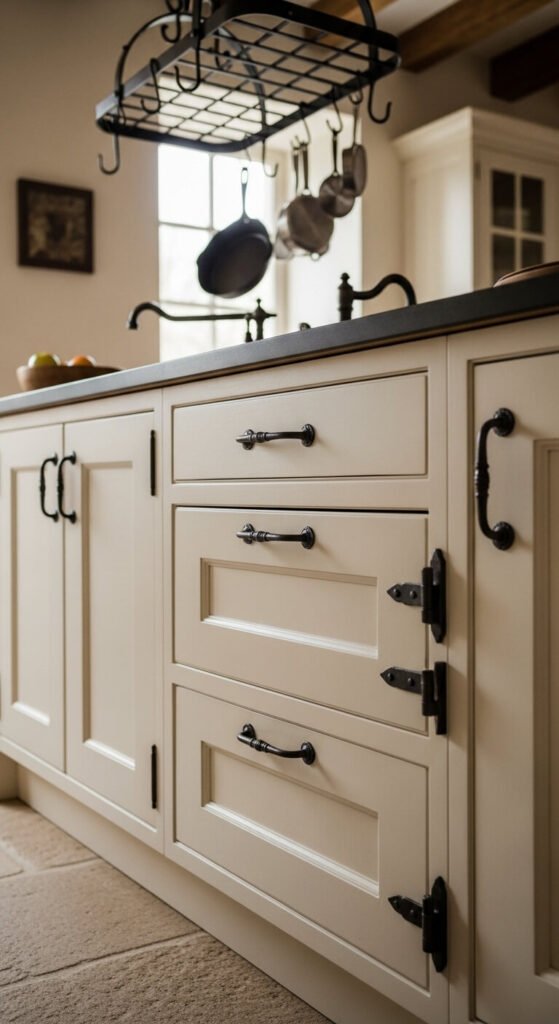
Wrought iron hardware is the detail that anchors French country style to its rural, artisan roots. Cabinet handles, curtain rods, pot racks, candle holders, and stair railings in black or aged iron reference the blacksmith work found throughout Provence and the Loire Valley. A full set of wrought iron cabinet pulls costs $20 to $50. An iron pot rack for the kitchen runs $60 to $150. The contrast of dark iron against cream or white painted surfaces is one of the most classic French country material pairings — simple, honest, and completely timeless.
8. A Vintage French Armoire
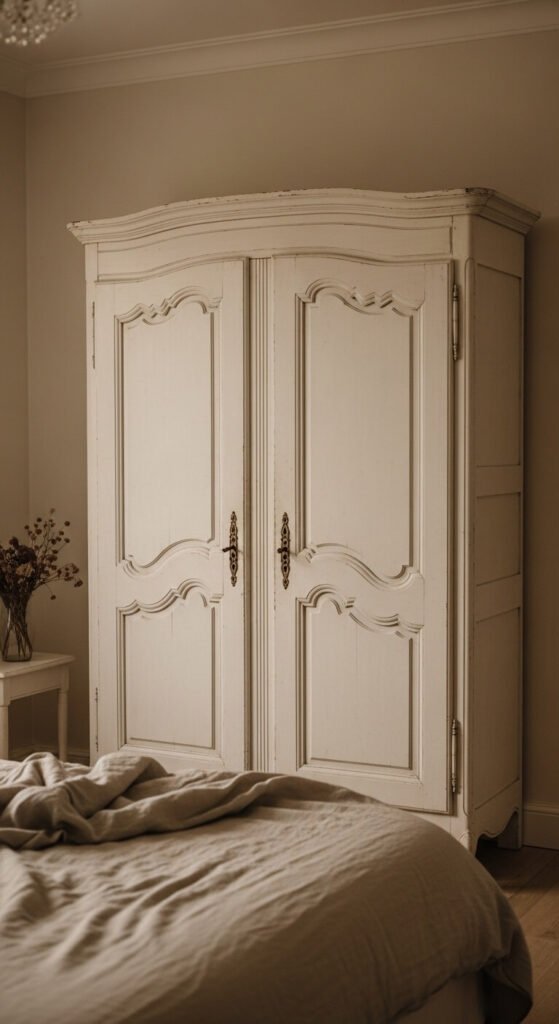
A vintage French armoire — carved panels, tapered legs, aged painted finish — is the furniture centerpiece of French country style. It works as a wardrobe, linen closet, or china cabinet depending on the room. Look for these at antique dealers, estate sales, and online marketplaces for $200 to $800 depending on condition and size. A plain solid wood armoire bought secondhand for $50 to $100 can be transformed with chalk paint and new wrought iron hardware. The carved details and generous scale of a real French armoire give a bedroom a feeling of permanence that flat-pack furniture never achieves.
9. A Provençal Color Palette
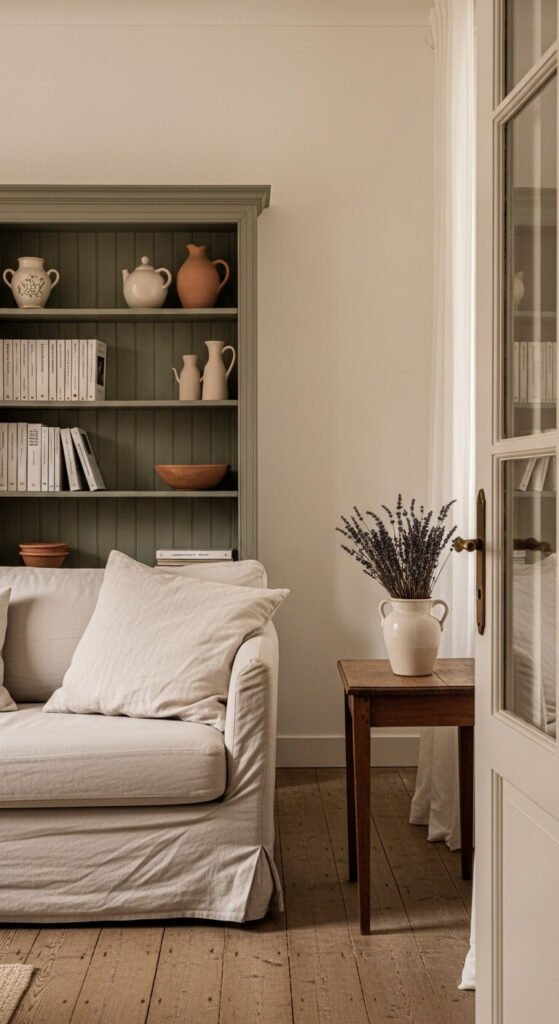
The Provençal palette — dusty sage, faded terracotta, soft lavender, aged cream, and sunbaked yellow — is warm, earthy, and completely distinct from both the cold greys of Scandinavian style and the bright whites of Mediterranean decor. Use these colors in layers: cream walls, sage green on a painted bookcase, terracotta in ceramic accessories and throw pillows. Paint costs $15 to $25 per quart. You don’t need to repaint the whole room — a sage-painted shelf or terracotta lamp base introduces the palette alongside what’s already there.
10. A Rustic Wooden Farmhouse Table
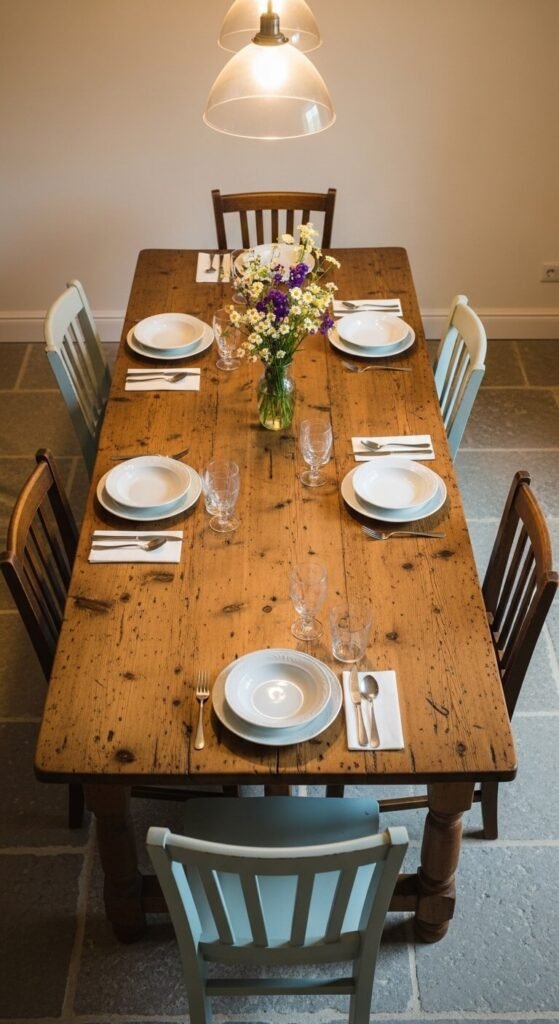
A long, thick-topped rustic wood farmhouse table is the social and visual anchor of a French country home. The wood grain, the wear marks, and the generous length all signal a table that has hosted decades of meals. Look for secondhand farm tables at antique markets and estate sales for $150 to $400. New reclaimed wood farmhouse tables start at around $400 to $800. For a DIY version, build a simple trestle table from pine boards for $80 to $120 in materials. Surround it with mismatched chairs — painted and unpainted, wood and rush-seat — rather than a matched set.
11. Rush Seat and Ladder-Back Chairs
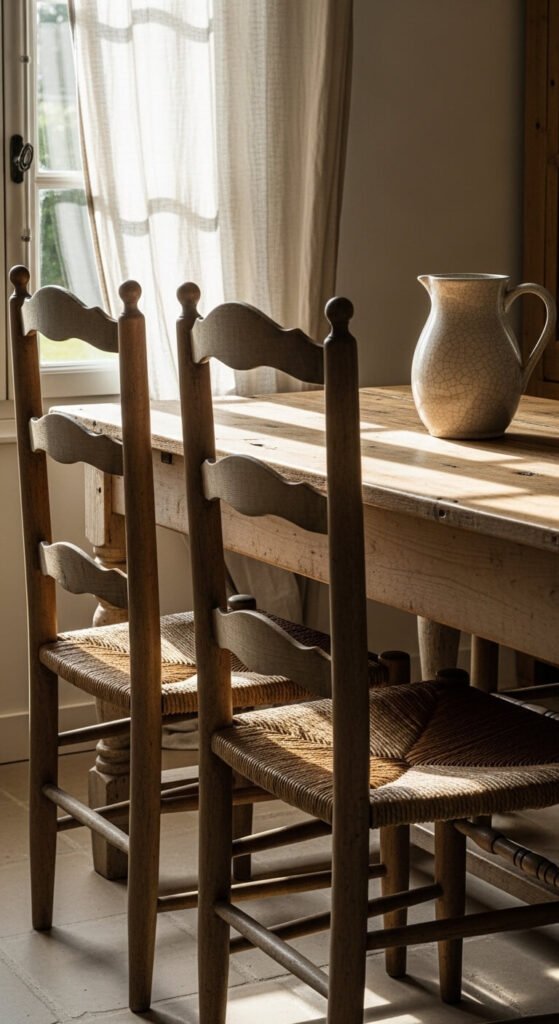
Rush seat ladder-back chairs are the most quintessentially French country dining chair. They reference the simple provincial furniture made in rural France for centuries — entirely functional, entirely beautiful. New ladder-back rush seat chairs cost $60 to $120 each at furniture and import stores. Look for vintage versions at thrift stores and estate sales for $10 to $40 each. Rush seats can be re-woven if worn — kits cost $15 to $25. Mix painted versions with natural wood ones around the same table. The variety reads as French farmhouse rather than formal dining room.
12. Copper Pots and Cookware as Decor
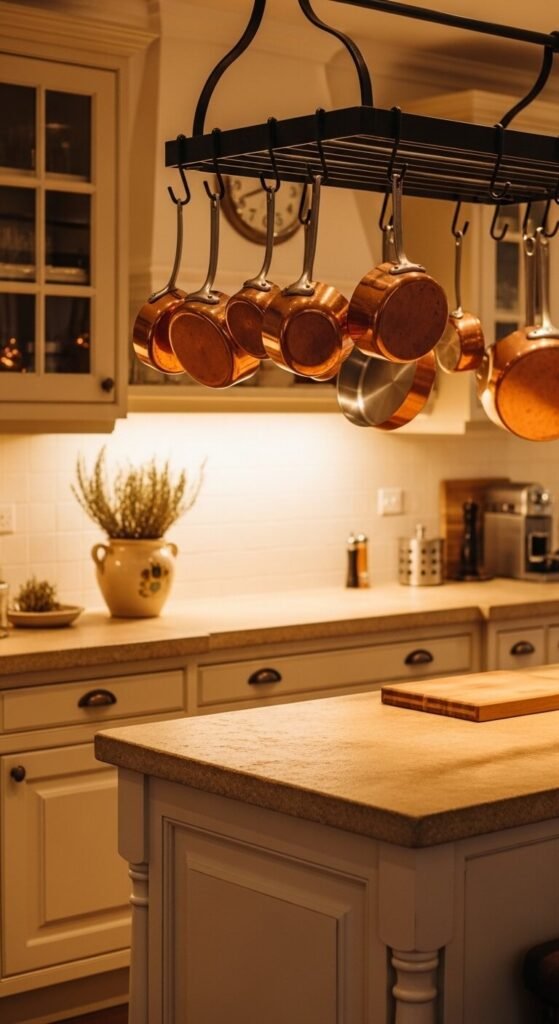
Copper pots and pans hung on a wall or pot rack are both functional kitchen tools and genuinely beautiful objects. The warm reddish-gold color of copper against cream walls or aged stone references professional French kitchens and country farmhouses alike. A set of vintage copper pots at a flea market or antique store costs $30 to $100 depending on size and condition. New copper cookware runs higher. Display them on a black iron pot rack ($60 to $150) above an island or stove. The combination of copper and iron is one of the richest material pairings in French country kitchens.
13. Floral Fabrics in Soft, Faded Colors
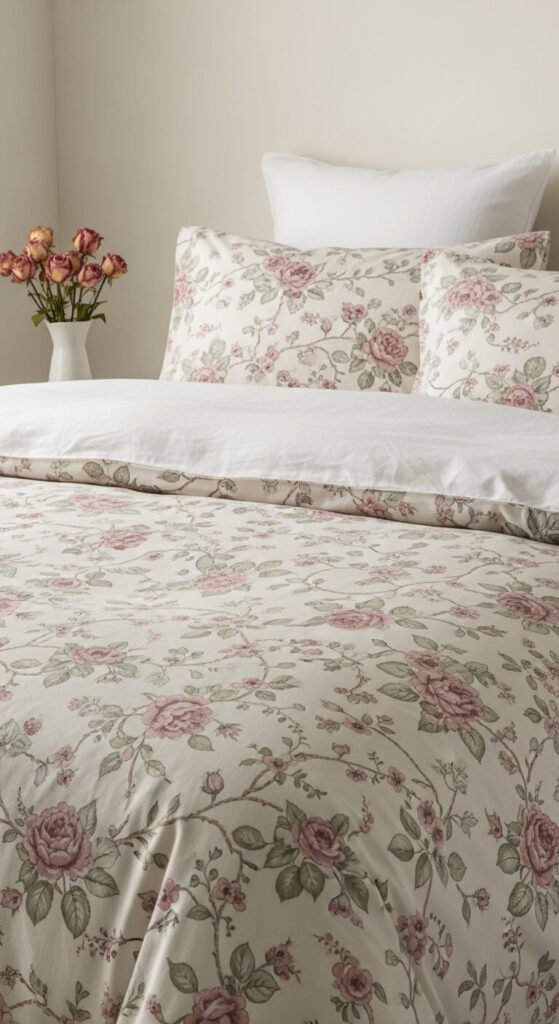
Soft floral fabrics — roses, vines, and garden botanicals in faded, dusty tones — are core to the French country bedroom and living room aesthetic. The key word is faded: not bright, not graphic, but muted as though the fabric has been washed in sunlight for several years. Look for floral duvet covers and pillow fabrics at discount home stores for $30 to $80. Floral fabric from a craft store runs $8 to $15 per yard for curtains or cushion covers. Combine with plain linen pieces — not everything should be patterned. One floral and two linens per room is the right balance.
14. Stone and Terracotta Flooring
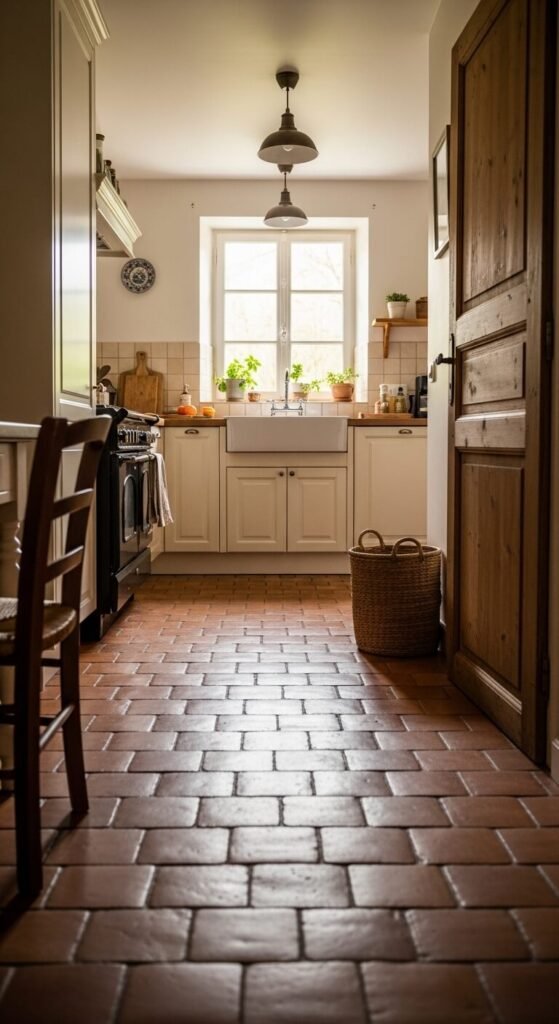
Terracotta tiles are the flooring of Provence. The warm orange-red clay tiles found in farmhouses throughout southern France have been made the same way for centuries. New terracotta tile runs $3 to $8 per square foot. For existing flooring, a terracotta-look porcelain tile costs $2 to $6 per square foot and works over any subfloor. For renters, peel-and-stick terracotta floor tiles are available for $1 to $3 per tile. The aged, slightly uneven quality of real terracotta is the goal — if it looks too perfect and uniform, it loses the provincial character entirely.
15. A Painted French Dresser as a Bathroom Vanity
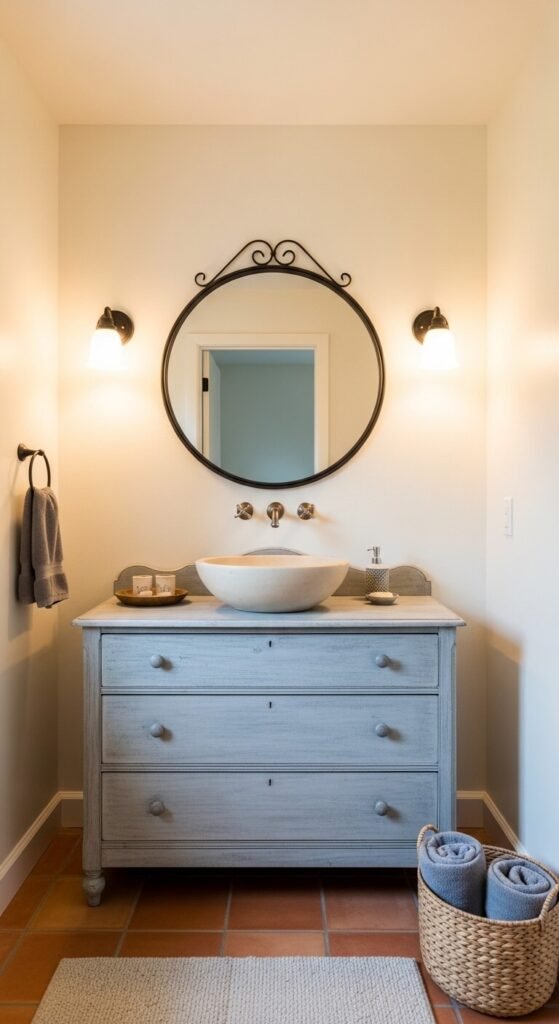
Converting a vintage dresser into a bathroom vanity is one of the most effective French country DIY projects. A secondhand solid wood dresser costs $30 to $80 at thrift stores. A plumber cuts the top for a vessel sink, seals the interior, and connects the plumbing — typically $100 to $200 in labor. Paint the dresser in chalk paint in aged blue-grey or dusty sage. Add wrought iron handles. The result looks like a custom piece worth three to four times what you spent. Pair with a simple iron-framed mirror and linen hand towels draped loosely through the drawer pulls.
16. Woven Baskets for Storage
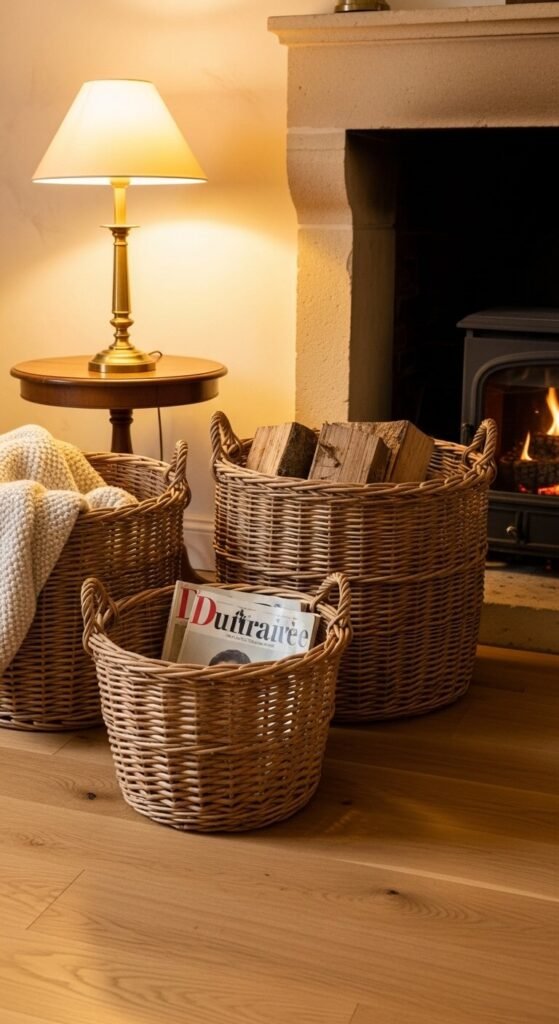
Woven baskets in natural rattan, wicker, or seagrass are the storage solution of French country interiors — practical and completely in keeping with the organic material palette. Use them for throws, firewood, laundry, bread, or as general catch-all storage throughout the house. A set of three graduated baskets costs $20 to $50 at discount home stores or thrift shops. Leave the lids off and let the contents show — a loosely folded linen throw in a basket is decorative in its own right. Baskets also travel from room to room easily as your storage priorities shift.
17. Reclaimed Wood Ceiling Beams
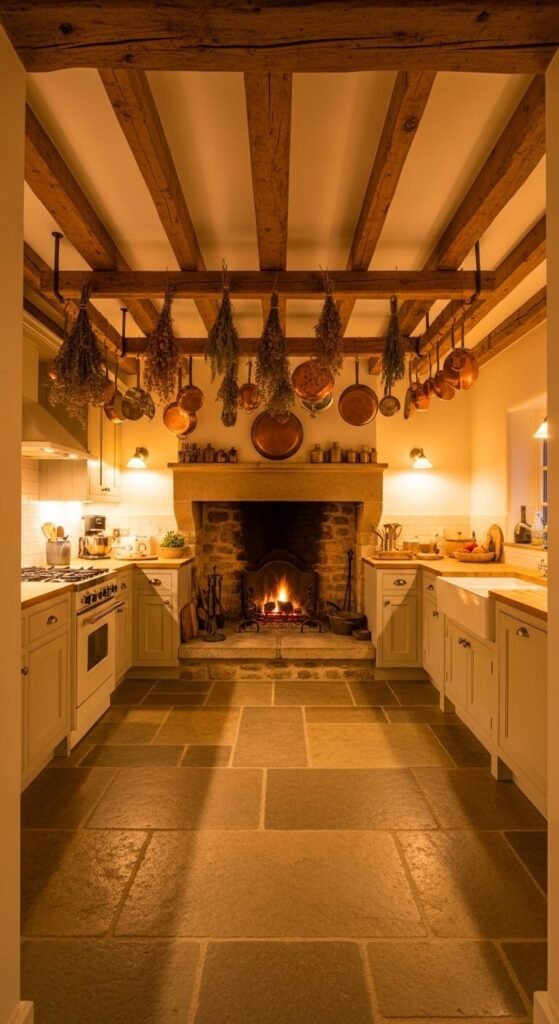
Exposed ceiling beams in aged or reclaimed wood are the architectural detail most associated with French farmhouses. They reference the original timber-frame construction of rural buildings throughout France. Real structural beams are permanent and require a contractor. Decorative faux wood beam wraps are the practical alternative — they install over existing ceilings with adhesive and screws and cost $30 to $80 per 8-foot section. Paint them in a warm oak or walnut stain. Hang dried herbs, copper pots, or iron hooks from them for an authentic farmhouse atmosphere that reads immediately as French country.
18. A Vintage French Clock
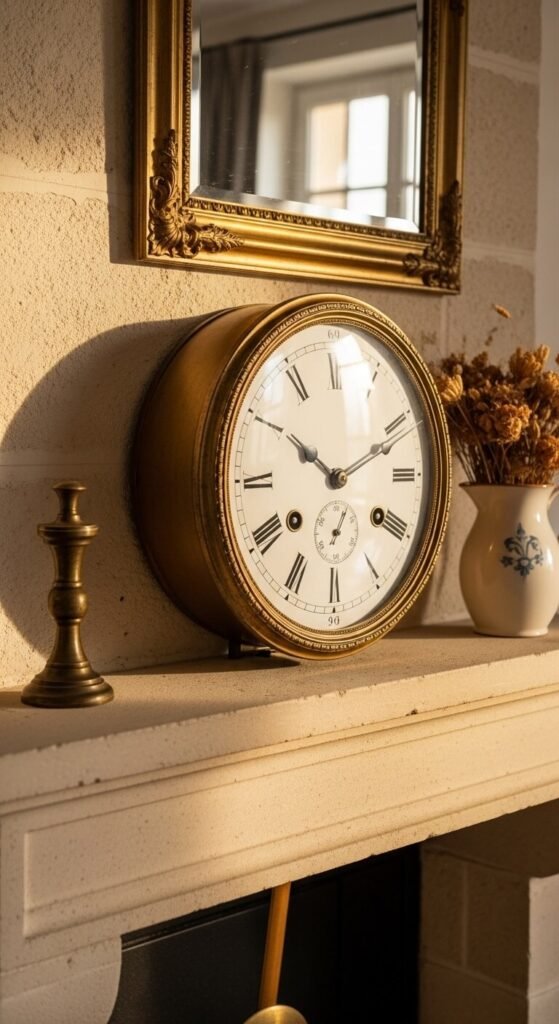
A large vintage French mantel or wall clock — Roman numerals, gilded case, pendulum movement — is the timepiece of French country rooms. It reads as both decorative and functional, referencing the clocks found in Parisian apartments and Provençal farmhouses alike. Look for vintage French-style mantel clocks at antique dealers and estate sales for $40 to $150. New reproduction versions from discount home stores run $30 to $80. Place it on a mantel, sideboard, or kitchen shelf as the central object in a styled vignette. Surround it with ceramics, dried florals, and a candle for the complete French effect.
19. Dried and Fresh Wildflower Arrangements
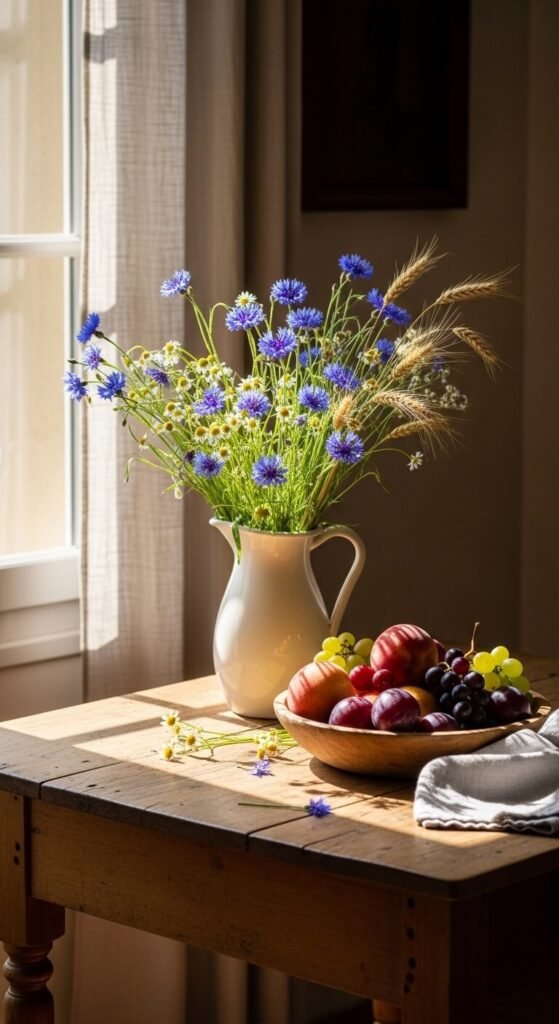
A loose arrangement of wildflowers or dried botanicals in a ceramic pitcher is the most French country floral styling possible. Nothing stiff or symmetrical — just flowers gathered and placed as though cut from a garden that morning. Buy wildflower bunches from farmers markets for $5 to $10. Grow your own from seed packets ($2 to $4) in a small pot or garden bed. For year-round display, dried pampas grass, wheat stalks, and cotton stems from craft stores cost $8 to $20 per bunch. Use ceramic pitchers and clay pots as vases rather than glass — it keeps the look grounded and provincial.
20. A Stone or Brick Fireplace
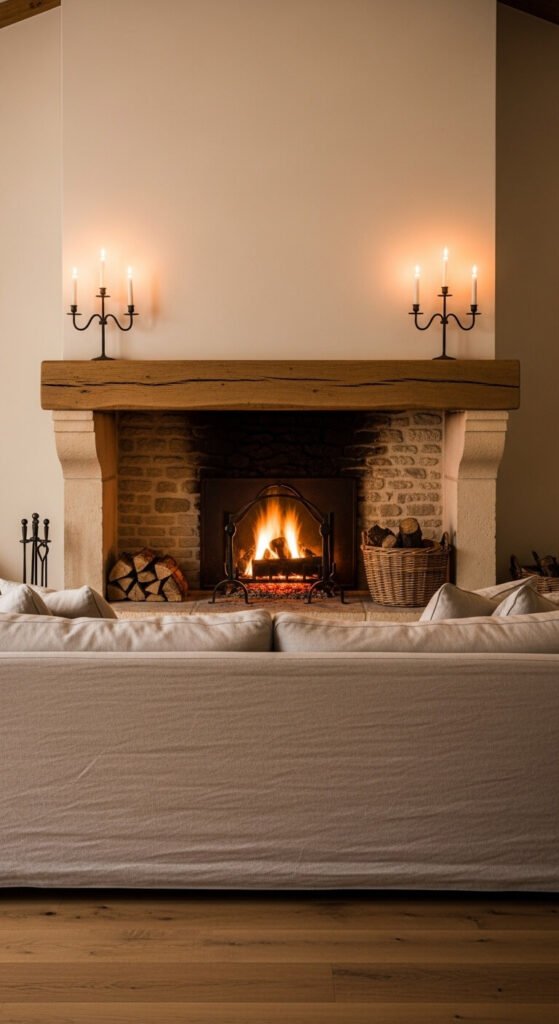
A stone fireplace is the heart of any French country room. The irregular texture of natural stone, the thick oak or stone mantel shelf, and the cast iron firebox door or simple iron grate all contribute to an interior that feels genuinely rural and warm. If you have an existing fireplace, a stone or brick veneer surround costs $300 to $800 installed. Style the mantel with an aged clock, iron candlesticks, a small ceramic, and a dried floral arrangement. Even without a working fire, a well-dressed fireplace surround anchors a living room in French country character completely.
21. Grain Sack and Ticking Stripe Textiles
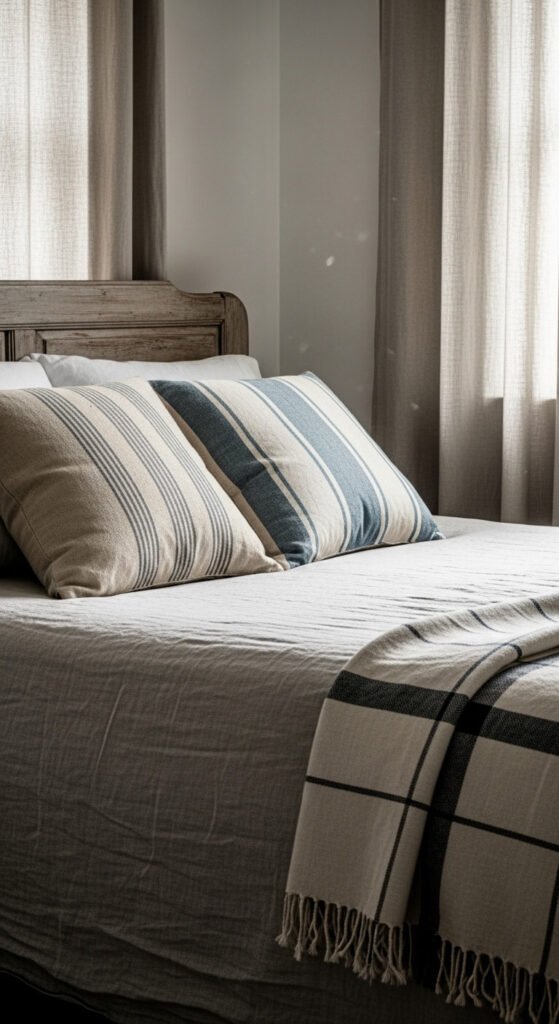
Grain sack and ticking stripe fabrics are the most authentically French country textiles available. Grain sacks were the working fabric of rural France — thick, plain-woven linen bags used for grain, often stamped with a simple stripe. The two or three-color stripe in navy, grey, or red on a natural linen ground is immediately recognizable. Grain sack pillow covers cost $15 to $35 on Etsy. Ticking stripe fabric from a craft store runs $6 to $12 per yard for curtains or cushions. These fabrics work especially well in bedrooms and kitchens where their utilitarian origin fits the working room character.
22. Painted Ladder Shelf for a Bathroom or Bedroom
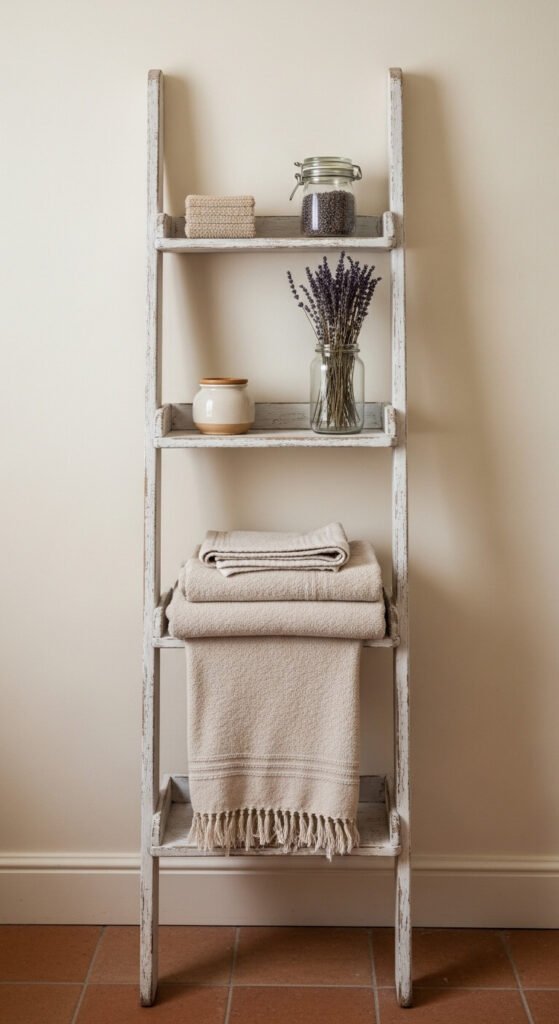
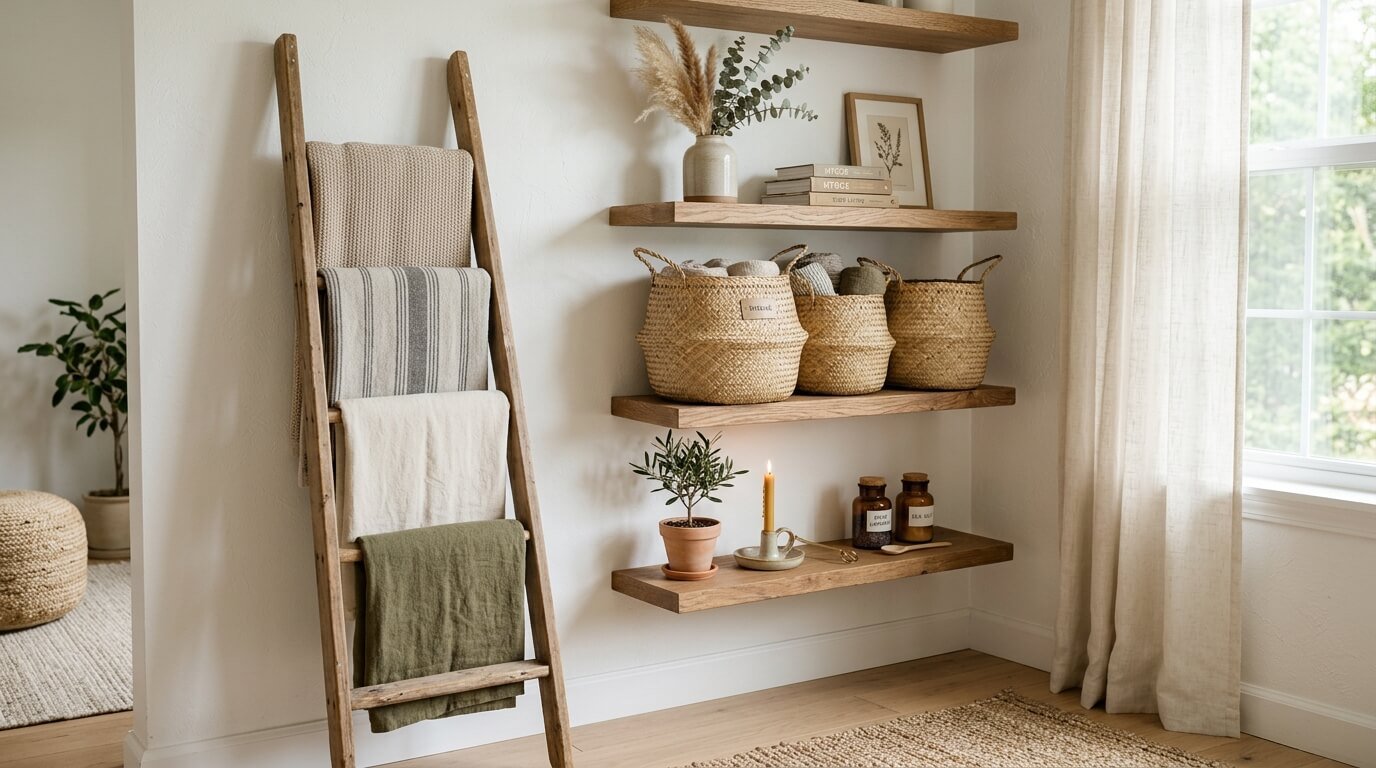
A painted ladder shelf in cream or soft grey works as a towel rack, linen storage, and display surface all at once in a French country bathroom or bedroom. Buy a plain wood ladder shelf for $40 to $80 at furniture stores, or build one from pine boards and dowels for about $20 in materials. Paint in chalk paint, sand the edges lightly, and seal with matte wax. Drape folded linen towels over the rungs and add a small ceramic pot or dried lavender bunch on a shelf. The result looks both functional and completely intentional.
23. A French Country Kitchen Herb Garden
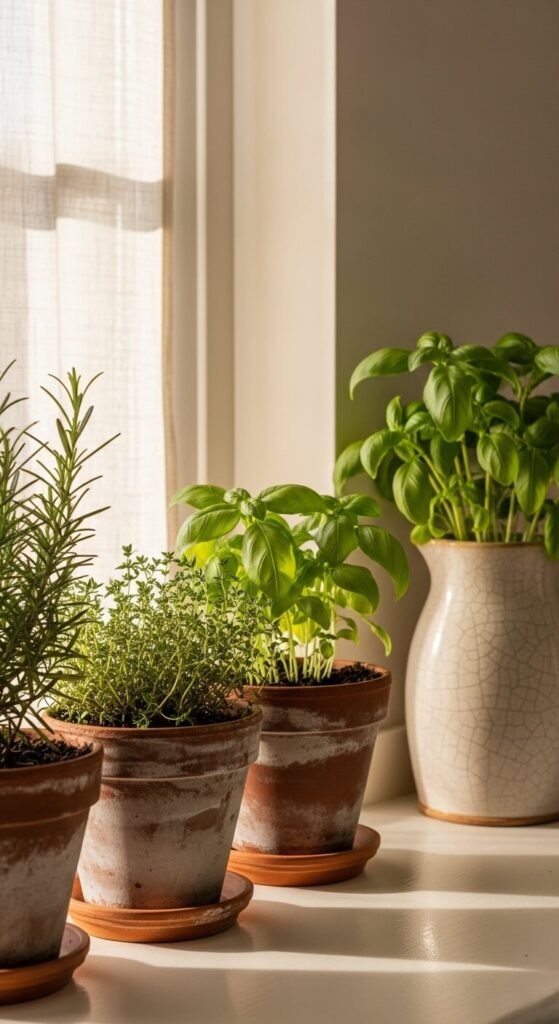
A row of herbs in terracotta pots on a kitchen windowsill is one of the most practical French country details you can add today for almost nothing. Rosemary, thyme, lavender, and basil are the Provençal kitchen herbs. Small terracotta pots cost $1 to $3 each at garden centers. Herb seedlings run $2 to $4 per plant. Arrange three to five pots in a row on the sill — slightly different heights and stages of growth look more authentic than perfectly uniform rows. This is one decor detail that genuinely improves your cooking at the same time as it improves your kitchen.
24. Aged Wood Floating Shelves
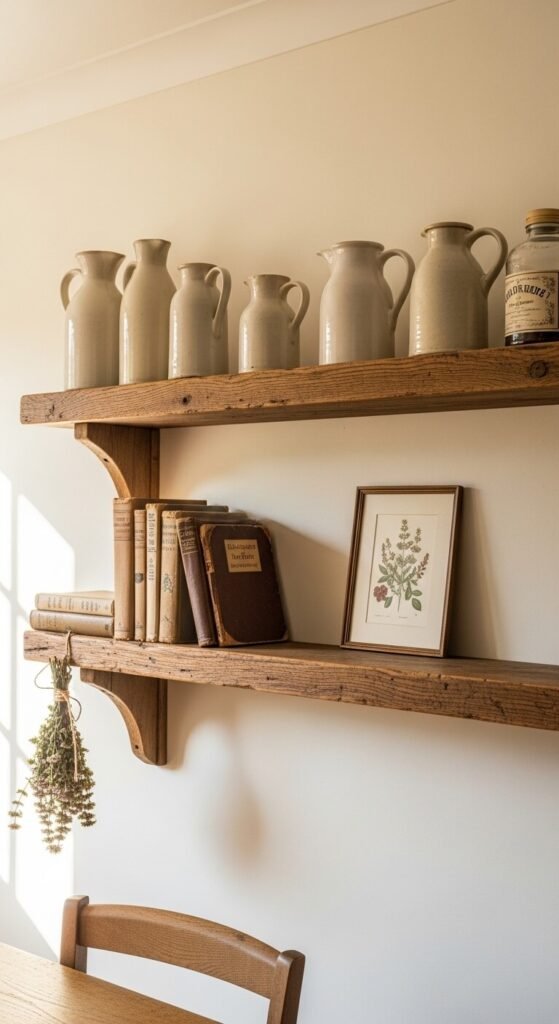
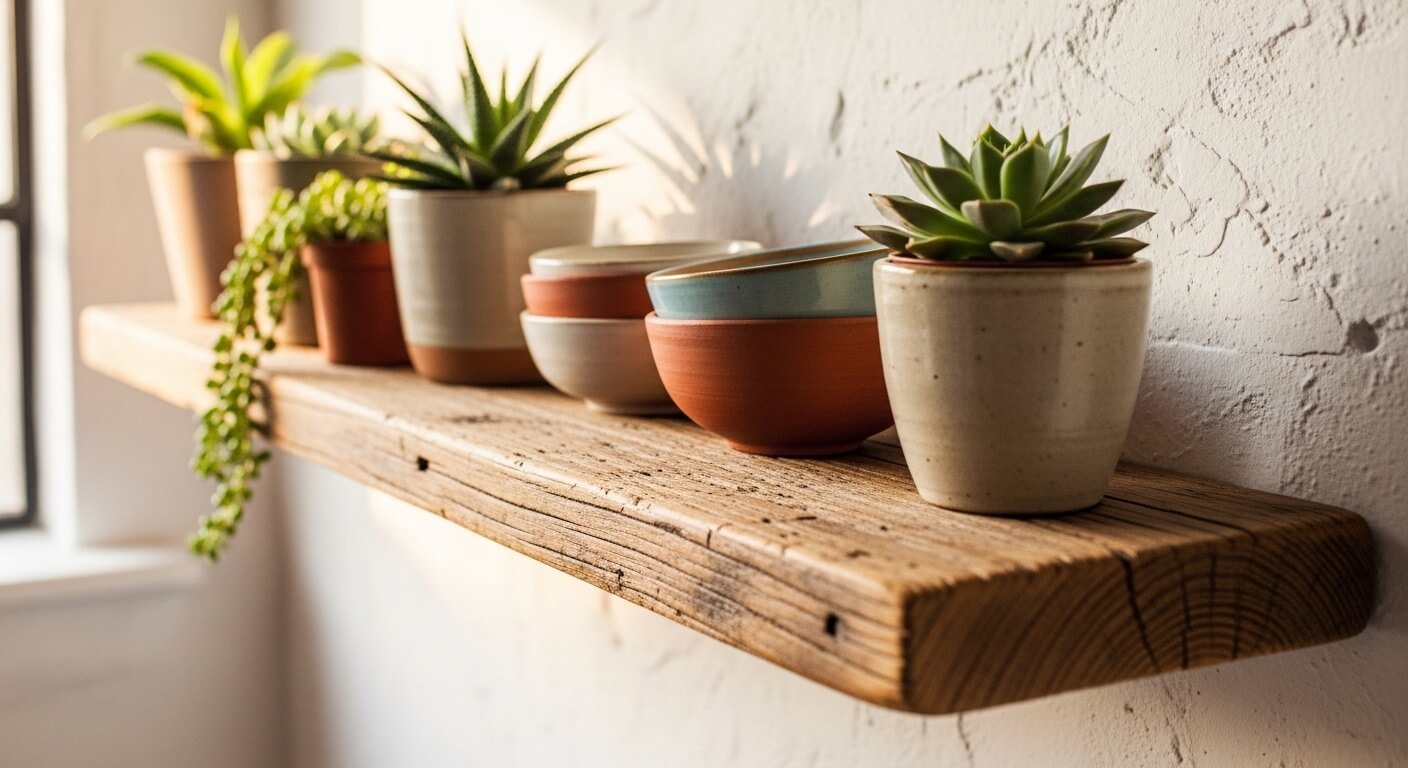
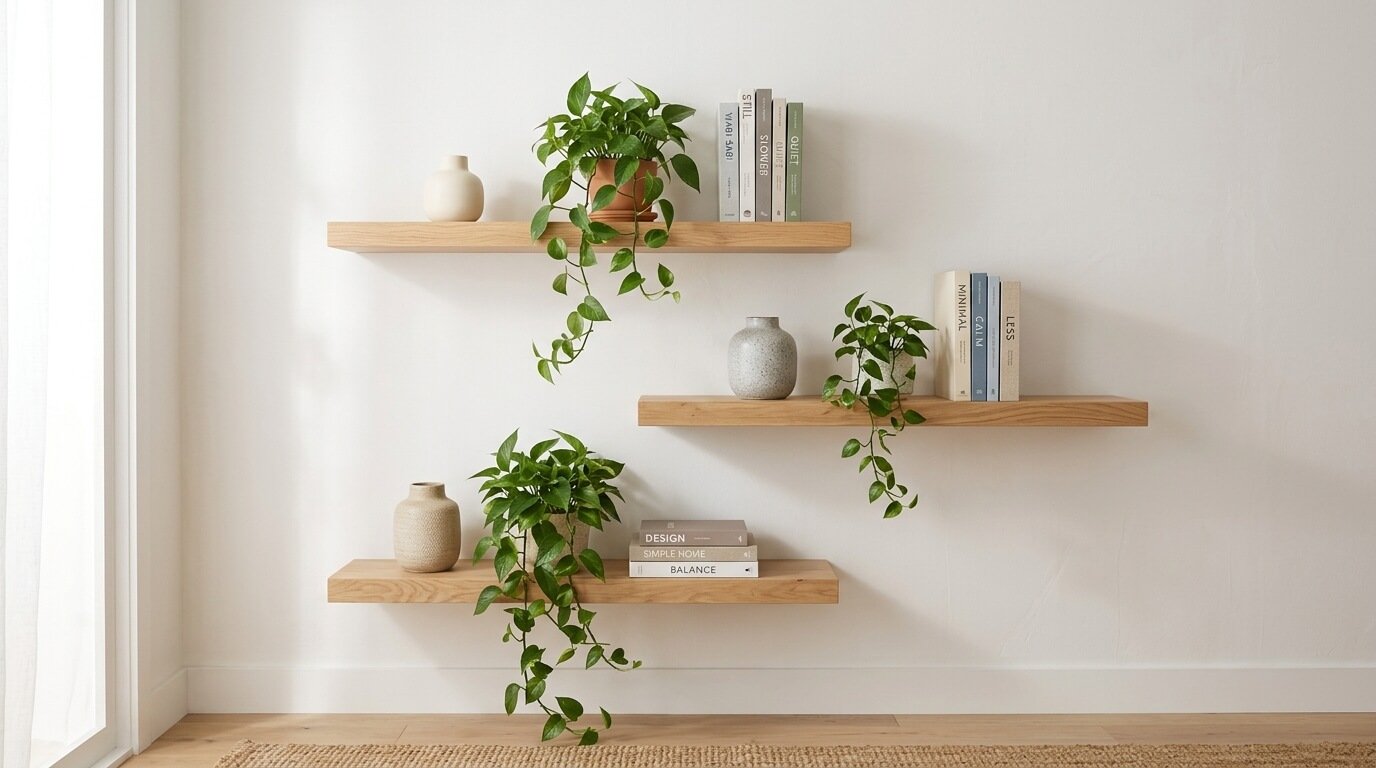
Aged wood floating shelves in warm oak or walnut tones carry exactly the right material weight for French country walls. The grain and color of old wood reads as authentic even in a newly renovated room. Buy live-edge or reclaimed wood planks at lumber yards or salvage dealers for $15 to $40 per board. Mount on simple iron brackets ($8 to $15 each). Style with a mix of ceramics, cookbooks, dried botanicals, and one or two small framed prints — the combination of objects from different categories is what gives the shelf its collected, lived-in French character.
25. A Clawfoot or Freestanding Bathtub
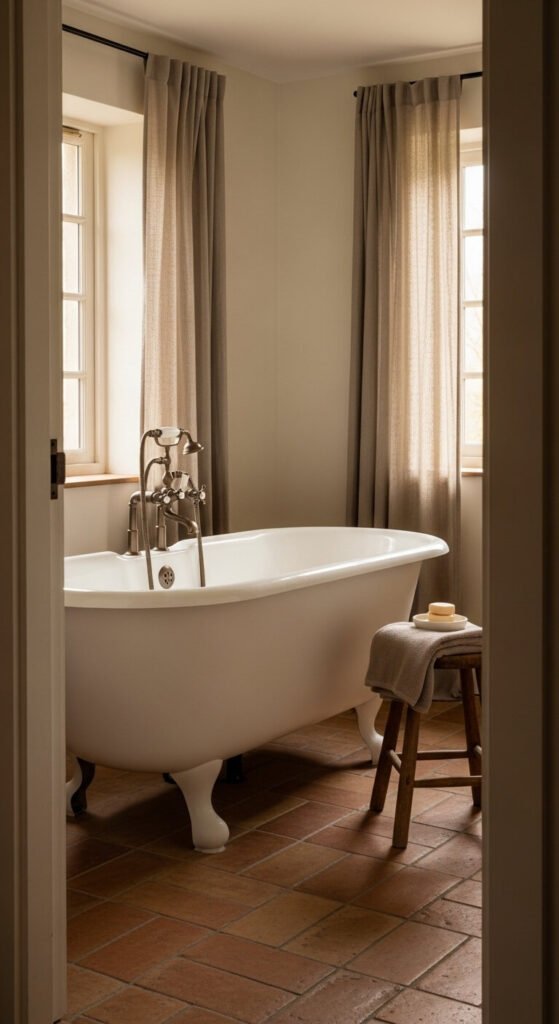
A clawfoot or freestanding bathtub is the most romantic fixture in any French country bathroom. The exposed form of the tub — legs, curves, and all — references the bathing rooms of Parisian apartments and country châteaux. New reproduction clawfoot tubs cost $600 to $1,500. Vintage cast iron versions appear at architectural salvage yards and plumbing reclaim dealers for $200 to $600. Refinishing a vintage tub costs $300 to $500 at a specialist — still far cheaper than new. Pair with oil-rubbed bronze fixtures, a linen bath mat, and a simple wooden stool for a bathroom that looks genuinely European.
26. Scalloped and Carved Wood Details
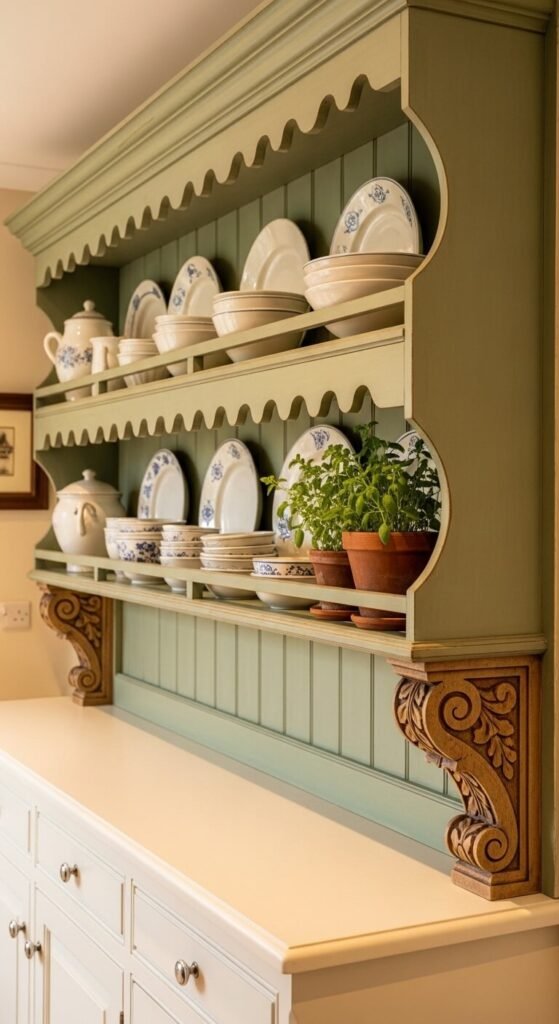
Scalloped shelf edges and carved corbels are the woodworking signature of French provincial cabinetry. The curved, decorative edge on a shelf bracket or cabinet trim references the artisan woodworking traditions of rural French furniture makers. Add scalloped trim to existing plain shelves using a jigsaw — cut a gentle wave or scallop pattern along the front edge of a pine board. Iron-on wood trim with carved patterns costs $5 to $15 per length from lumber and craft stores. Paint the finished shelf in chalk paint. The carved detail alone transforms a plain shelf into something that reads as genuinely French country.
27. A Styled French Country Mantel or Sideboard
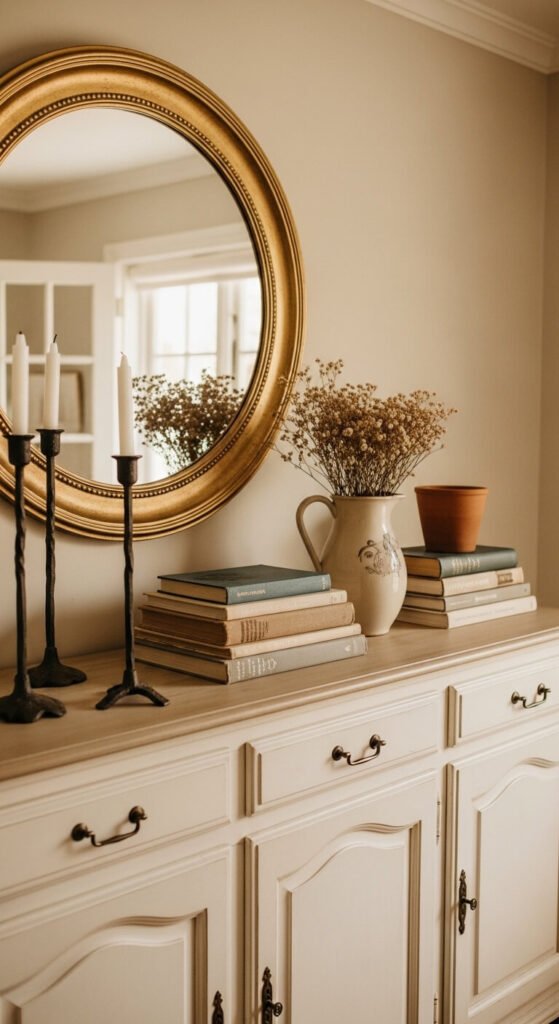
A carefully styled mantel or sideboard is where French country decor becomes a composed tableau. The combination of aged mirror, iron candlesticks, ceramic pitcher, dried flowers, and a worn book stack creates a surface that looks assembled over years rather than styled in an afternoon. Start with an anchor piece — a large mirror or clock — and build outward with odd-numbered groupings. Use items from different material categories: metal, ceramic, wood, textile, dried botanical. Keep the heights varied. There’s no formula, but there is a feeling — warm, layered, imperfect, and completely unhurried.
Conclusion
French country decor is built on patience and authenticity. It doesn’t come together overnight, and that’s exactly the point. The style rewards slow accumulation — a ceramic pitcher from a market, a linen curtain panel, a thrifted armoire painted over a weekend, dried lavender hung from a beam. Each piece earns its place by being honest about what it is: a useful object, a natural material, a color borrowed from the Provençal landscape. Pick two or three ideas from this list that fit your space and budget today. Layer in the next piece when the time is right. A French country home is never finished — and that’s what makes it feel like it was always there.