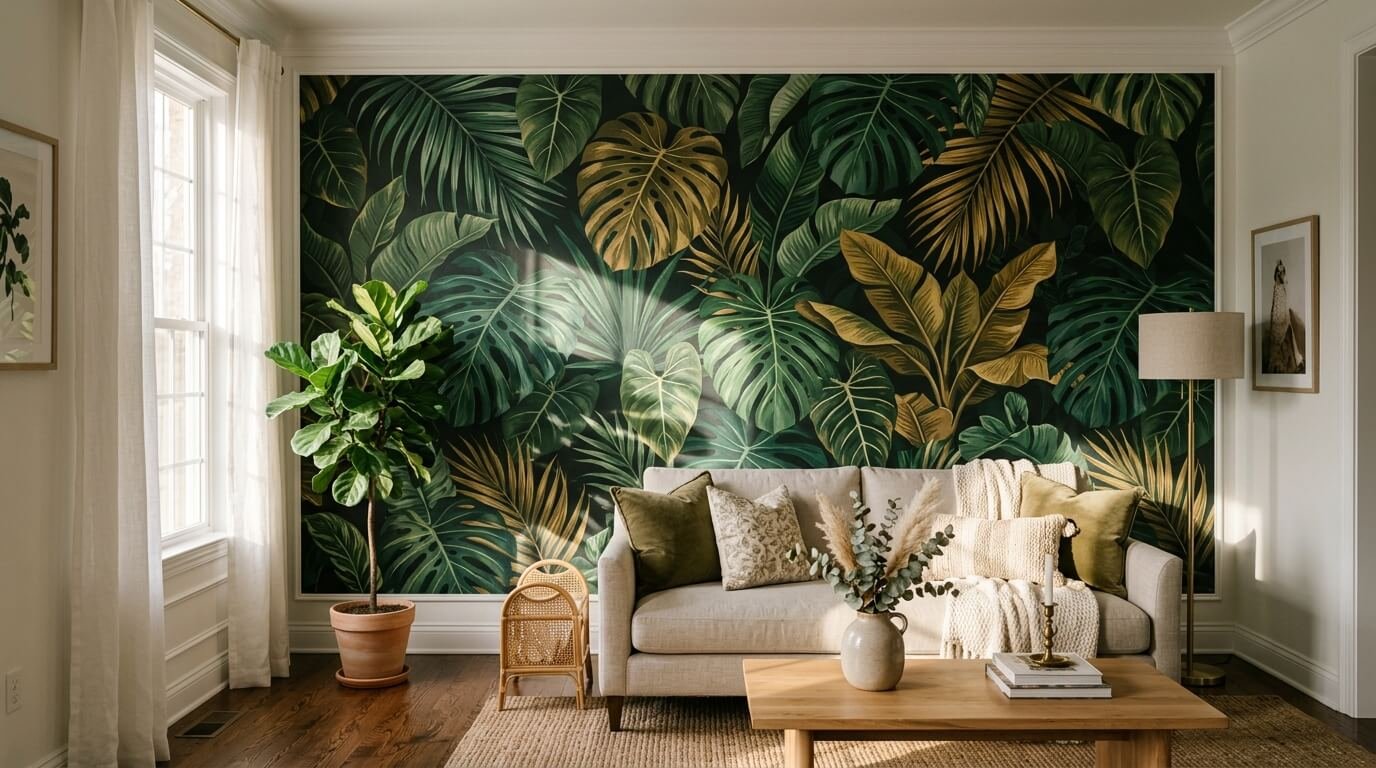
26 Balanced Transitional Decor Blends That Bridge Styles

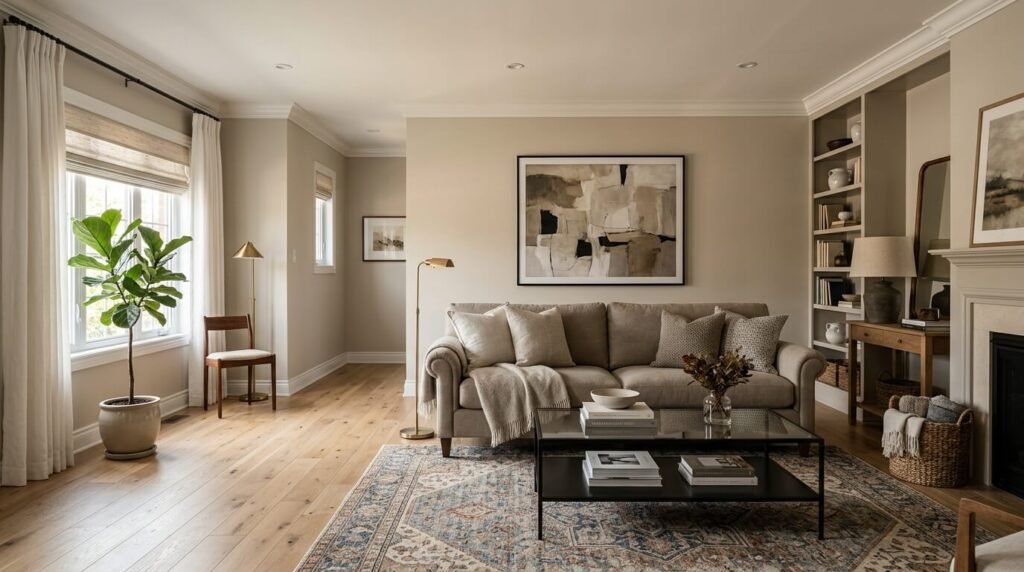
Disclosure: As an Amazon Associate we earn from qualifying purchases. Some links on this page may be affiliate links — if you click through and make a purchase, we may receive a small commission at no extra cost to you.
Transitional decor occupies the most livable ground in interior design. It is the space where classic proportions meet clean contemporary lines, where warm traditional materials sit beside modern finishes, and where nothing feels either too stiff or too stark. It is not a compromise — it is a deliberate design philosophy that creates rooms which appeal to nearly everyone and age well over time. Whether you are working with a traditionally styled home you want to modernize, or a contemporary space that feels cold and needs warmth, transitional decor gives you the tools to bring both worlds together without losing the best of either. Every element on this list works precisely because it can live in both worlds at once.
1. Rolled-Arm Sofas in Neutral Linen or Velvet
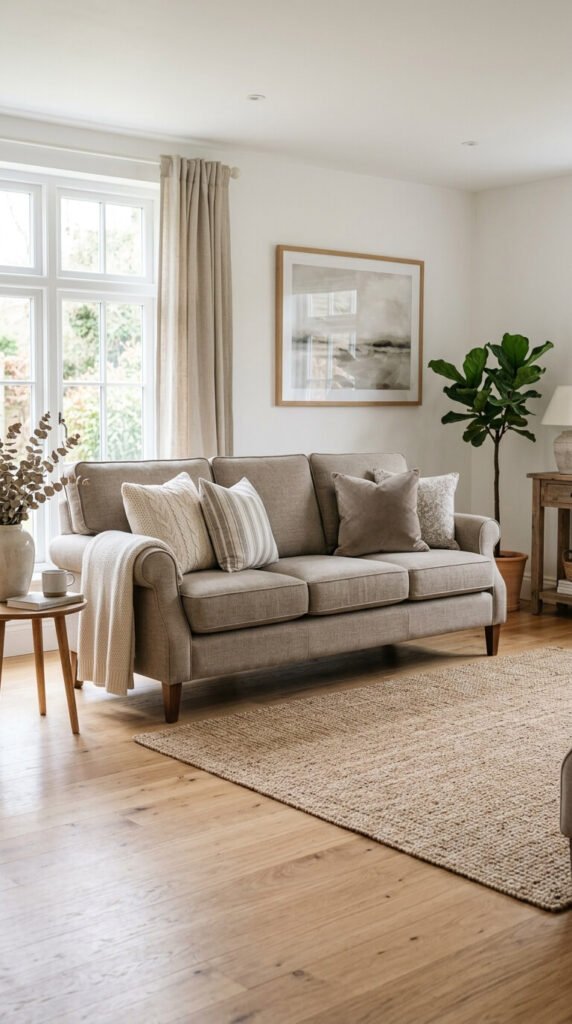
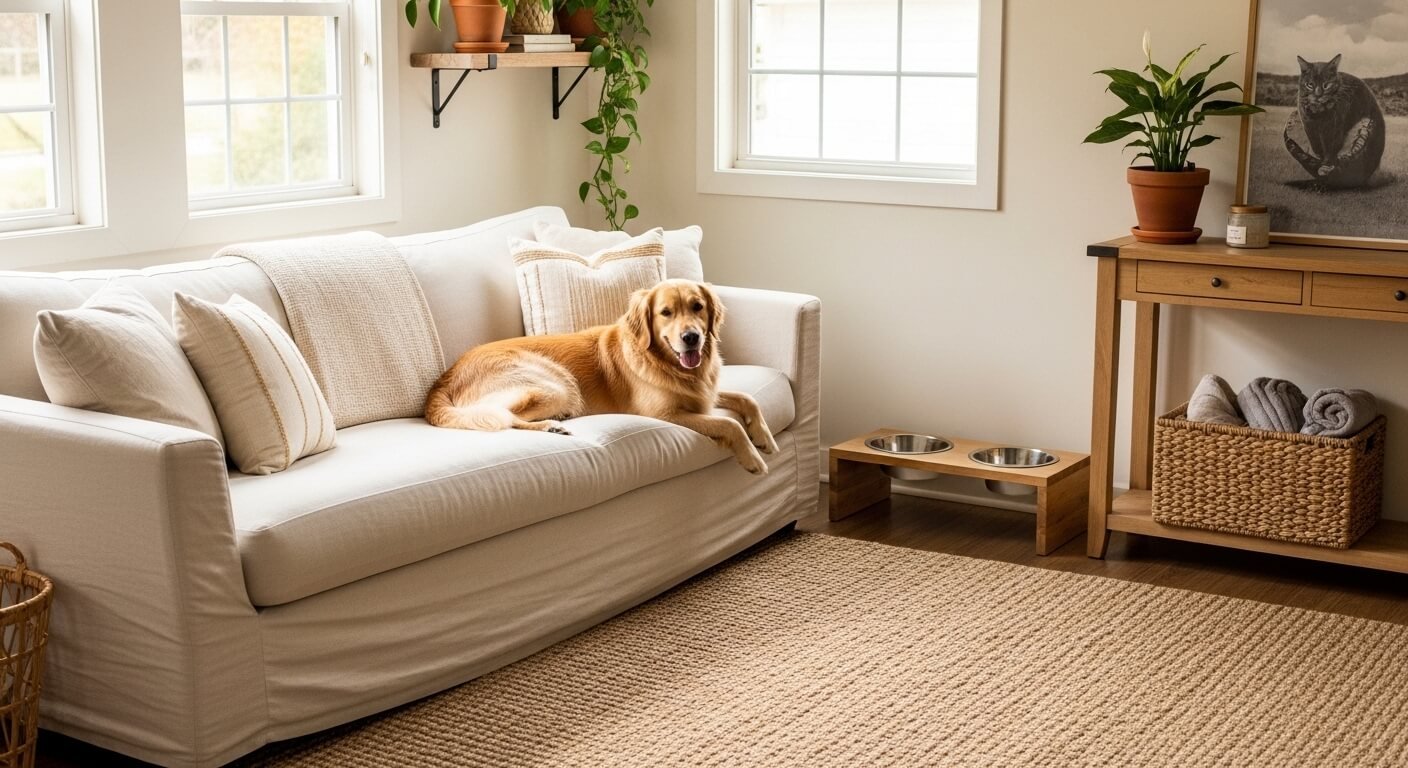
The rolled-arm sofa sits at the exact intersection of traditional and contemporary. The rolled arms reference classic upholstery tradition. The clean back, straight skirt-free base, and tapered legs bring it firmly into the present. New rolled-arm sofas in linen or velvet cost $600–$2,000 at retailers like Pottery Barn, Crate & Barrel, and Article. Budget versions with correct proportions are available from Wayfair for $400–$700. Choose warm neutrals: greige, oat, warm ivory, or soft gray. This sofa works equally well beside an ornate Persian rug or a simple jute one. It is the single most broadly appealing sofa silhouette in residential design.
2. Warm Neutral Walls With One Bold Accent
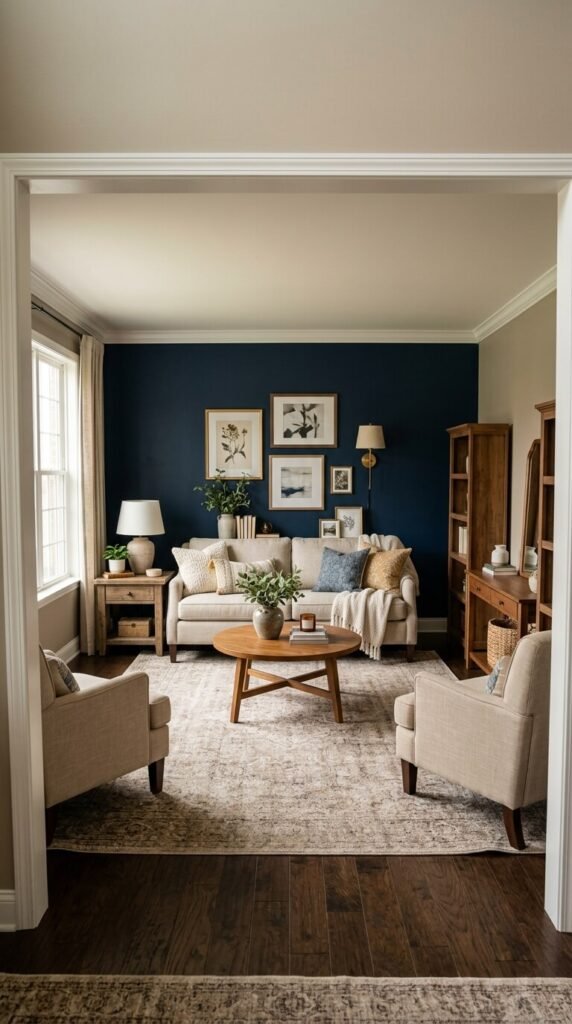
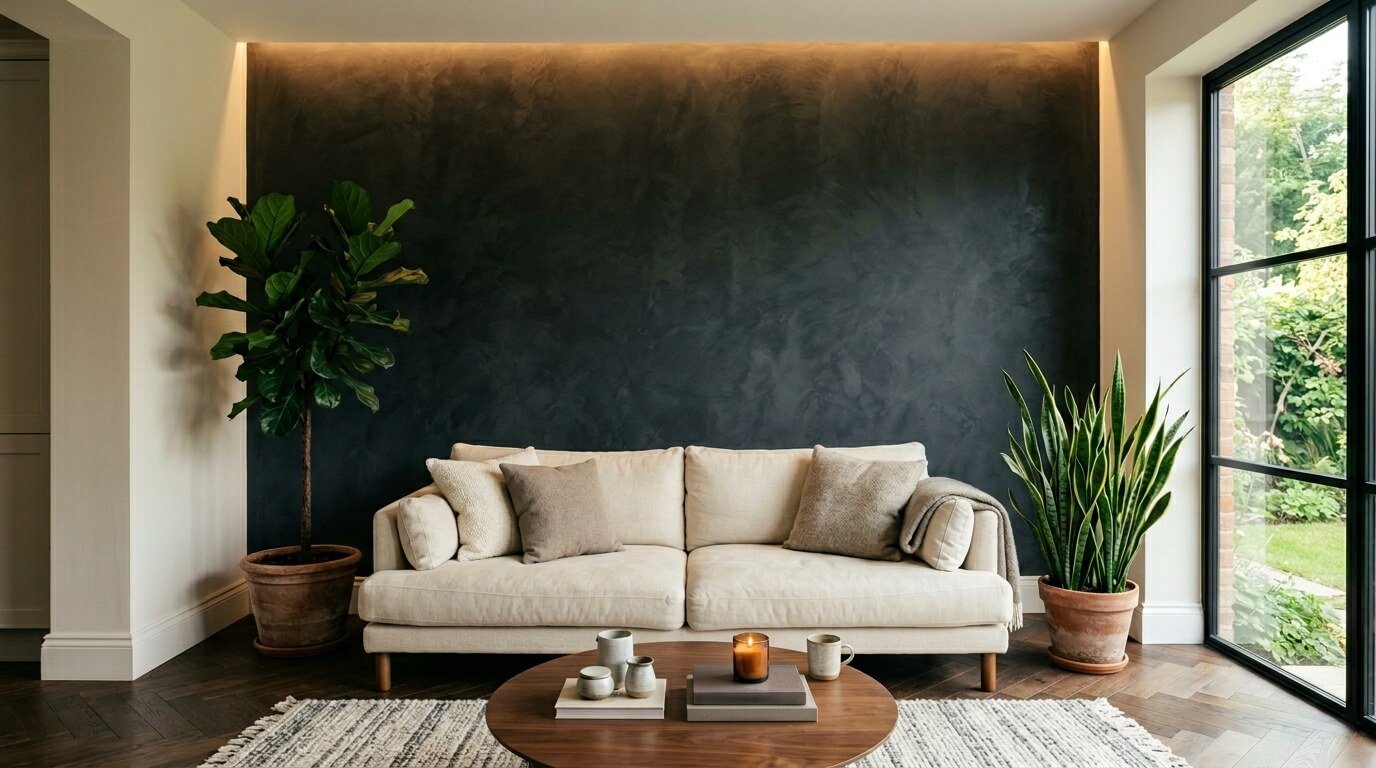
Transitional rooms use warm neutral wall colors as a background that neither reads as traditionally formal nor aggressively contemporary. Greige, warm white, and soft taupe satisfy both camps. Add visual interest with a single deep accent wall — navy, charcoal, forest green, or dusty sage — behind the main sofa or bed. Benjamin Moore’s Revere Pewter and Sherwin-Williams’ Accessible Beige are go-to transitional wall colors. A full room paint costs $50–$150 in materials. The neutral-plus-one-accent formula works in every room type and creates the kind of visual depth that an all-neutral approach lacks without going too far in any design direction.
3. Clean-Lined Furniture With Traditional Proportions
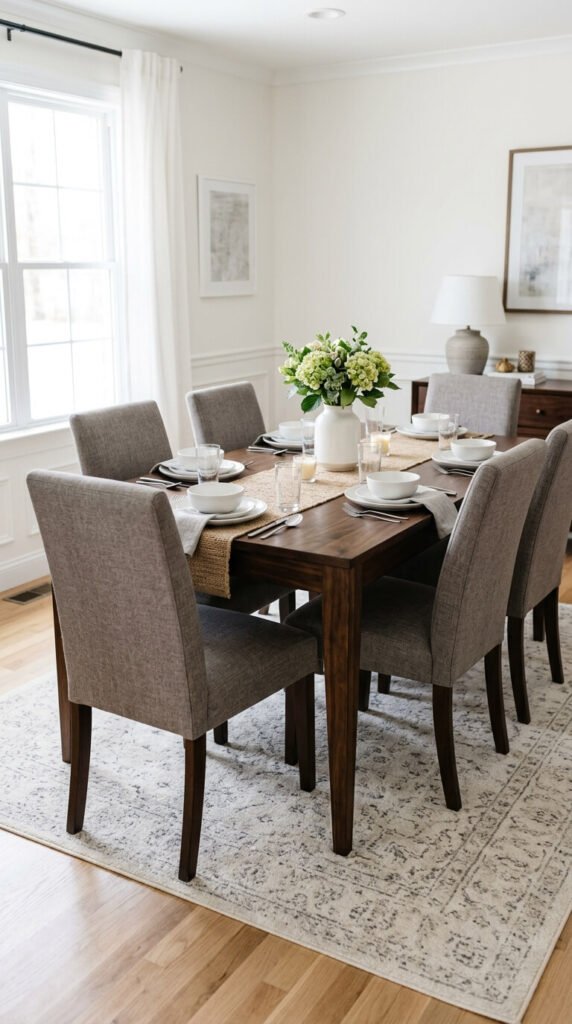
The defining furniture principle of transitional design is traditional proportions expressed with clean lines. A dining table with a straight apron and tapered legs. A dresser with simple bracket feet and minimal hardware. A headboard with a simple panel shape rather than deep button tufting. These pieces feel familiar and substantial without the ornamental carving of fully traditional furniture. Retailers like Pottery Barn and Restoration Hardware specialize in exactly this approach. Budget versions are available at Wayfair and World Market for $200–$800. Look for pieces where the silhouette is classic but no decorative carving or embellishment is present on the surface.
4. Persian Rugs on Light Oak Floors
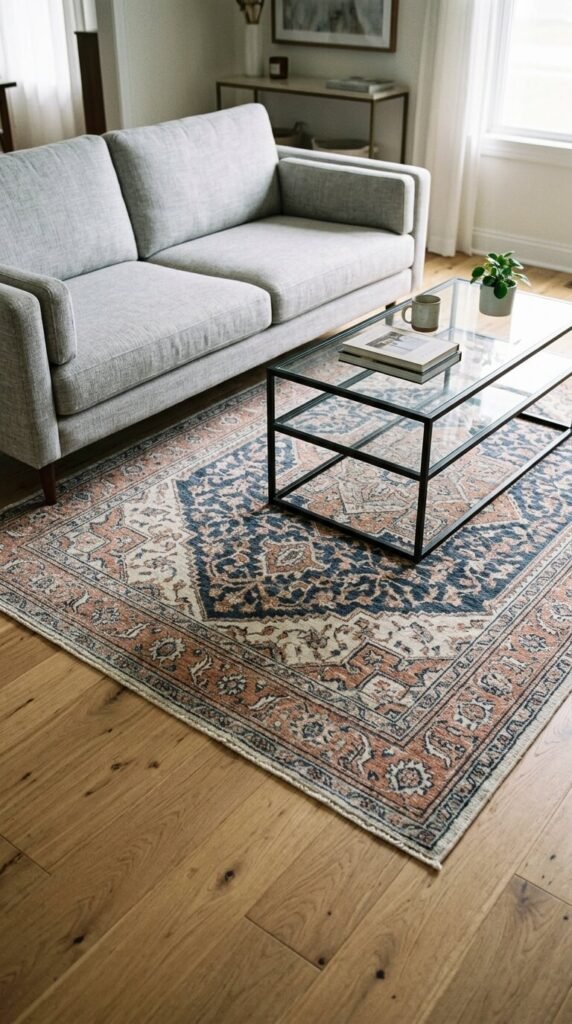
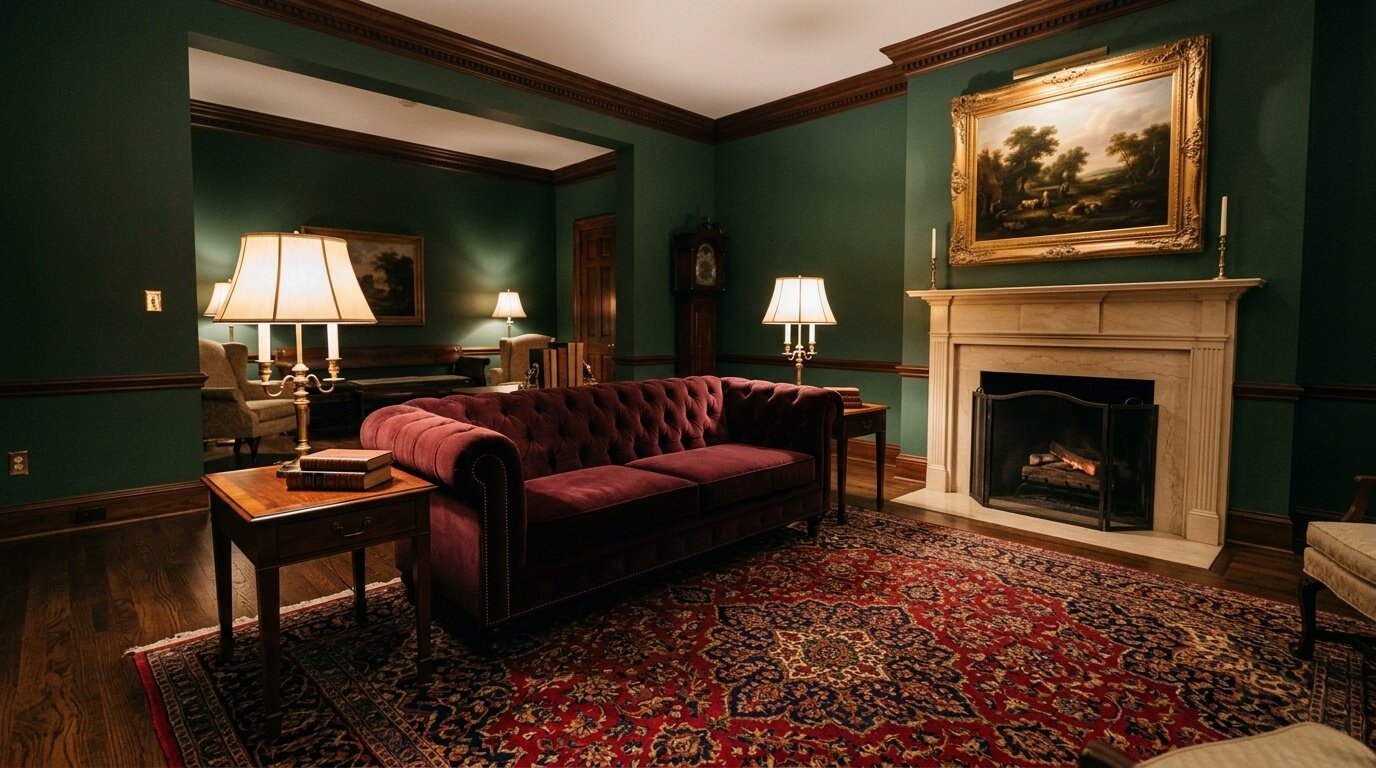
A traditional Persian or Oriental-pattern rug placed beneath clean contemporary furniture is one of the most effective transitional design moves available. The rug carries the warmth, pattern, and heritage of traditional design. The furniture above it remains modern. The contrast between the patterned rug and the clean-lined sofa is exactly the tension that makes transitional rooms interesting. New machine-made Persian-pattern rugs from Loloi and Safavieh cost $80–$400. Vintage rugs from estate sales and online marketplaces cost $50–$400. Choose muted, slightly faded colorways rather than bright ones — they read as more contemporary even with a traditional pattern.
5. Mixed Wood Tones Done Deliberately
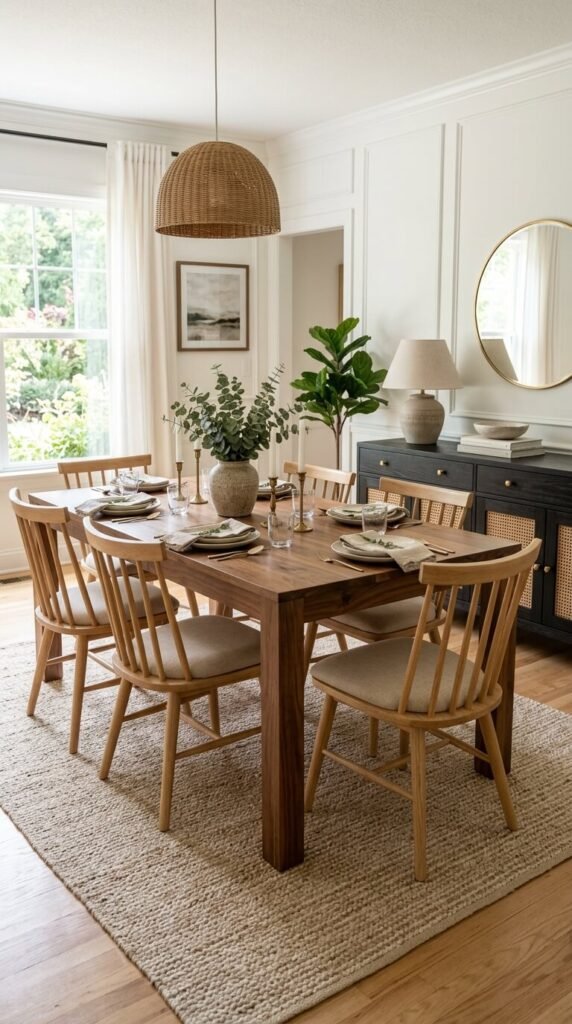
Transitional interiors deliberately mix two or three wood tones in a single room — something traditional design avoids and minimalist design resists. A walnut dining table paired with lighter oak chairs and a darker ebonized sideboard looks collected and intentional. The key is contrast: do not mix similar tones — mix light, medium, and dark. This approach works because each wood tone plays a different role in the visual hierarchy of the room. Buy furniture without worrying about matching — choose each piece for its own merit. Mixing wood tones also makes thrifted and vintage pieces far easier to incorporate into a cohesive room.
6. Upholstered Parsons Chairs at the Dining Table
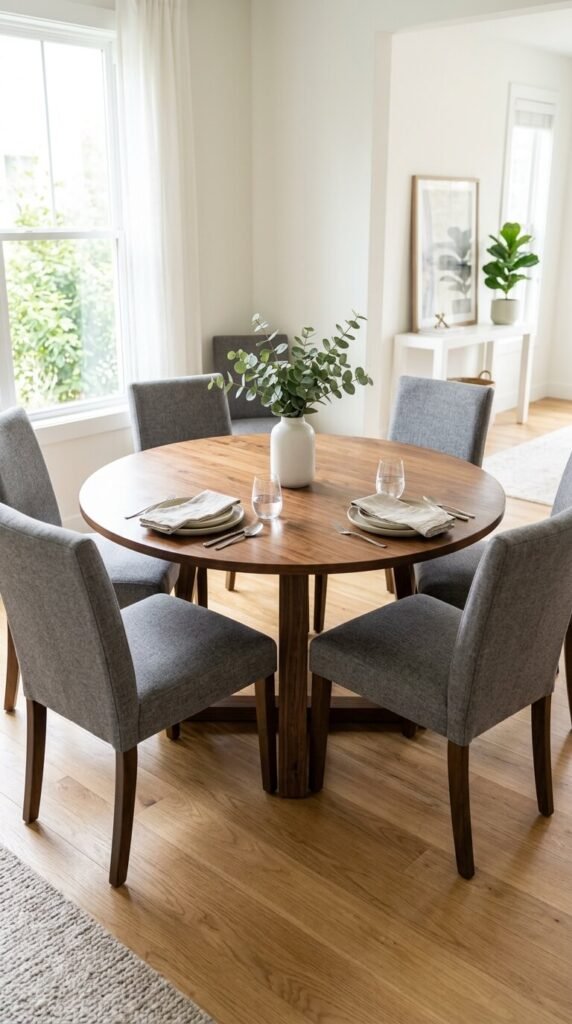
Parsons dining chairs — fully upholstered, no exposed wood frame, simple block legs — are the transitional dining chair by definition. The shape is architectural and contemporary. The upholstered surface and the padded seat reference traditional comfort. They work at any table style. New fabric parsons chairs cost $80–$250 each at IKEA, Wayfair, and Pottery Barn. Choose fabric in a neutral: warm gray, oat, or greige. Buy slipcovers online for $20–$50 per chair to update color easily. A set of four parsons chairs transforms a dining table from purely contemporary to balanced and welcoming without a single traditional ornamental detail in sight.
7. Linen Drapery With Traditional Hardware
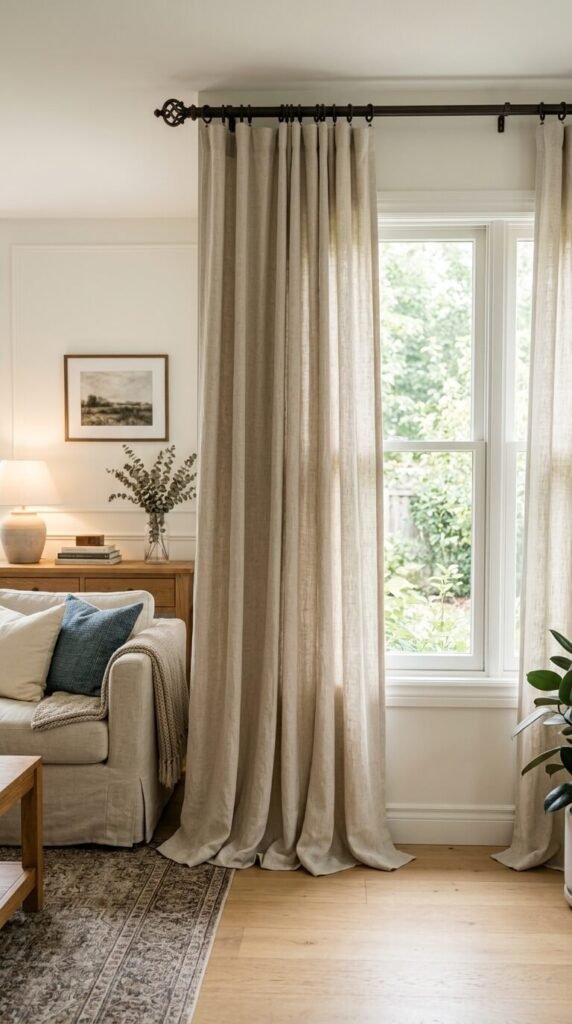
Natural linen curtains hung on traditional-style hardware — a dark bronze or oil-rubbed bronze rod with classic finial ends — captures both design registers at once. The linen fabric reads as relaxed and contemporary. The traditional hardware adds formality and structure. Hang the rod close to the ceiling for the most transitional result. New linen curtain panels cost $25–$80 per pair at IKEA. Traditional-style curtain rods in bronze cost $30–$80 at most home goods stores. The combination of casual linen fabric with formal hardware proportions is one of the easiest transitional moves in window treatment design.
8. Abstract Art in Traditional Frames
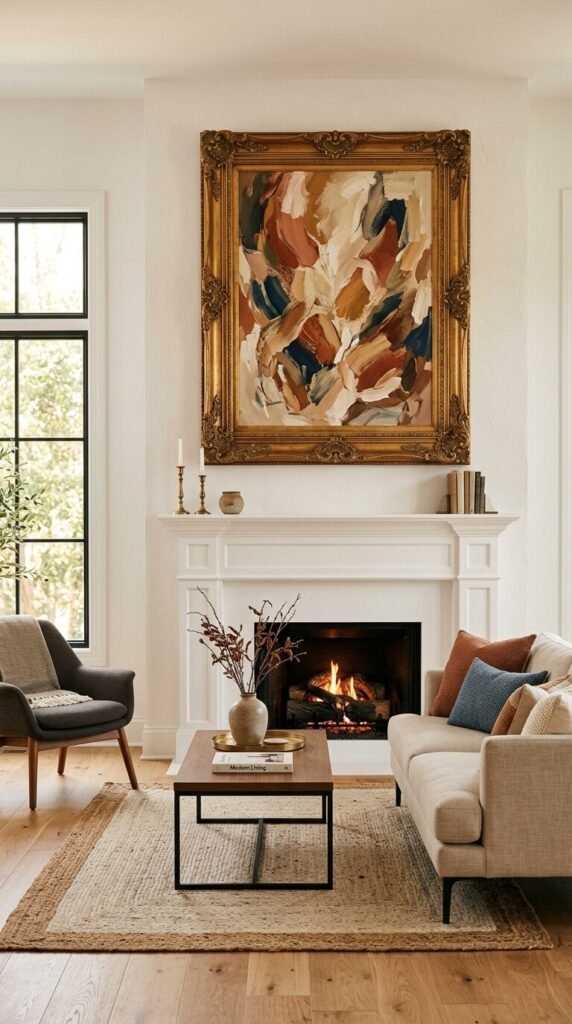
Hanging a contemporary abstract painting inside an ornate traditional gilt frame is one of the most intentional transitional design moves possible. The contemporary art inside the classical frame creates a visual conversation that neither fully traditional nor purely modern rooms can achieve. Buy abstract prints from Society6 or Etsy for $15–$50 and frame them in ornate frames from thrift stores or HomeGoods for $10–$80. The mismatch is the point. It signals an understanding of both design worlds and a confidence in combining them. This approach works above a fireplace, behind a sofa, or anywhere a strong wall anchor is needed.
9. Mixing Metal Finishes Intentionally
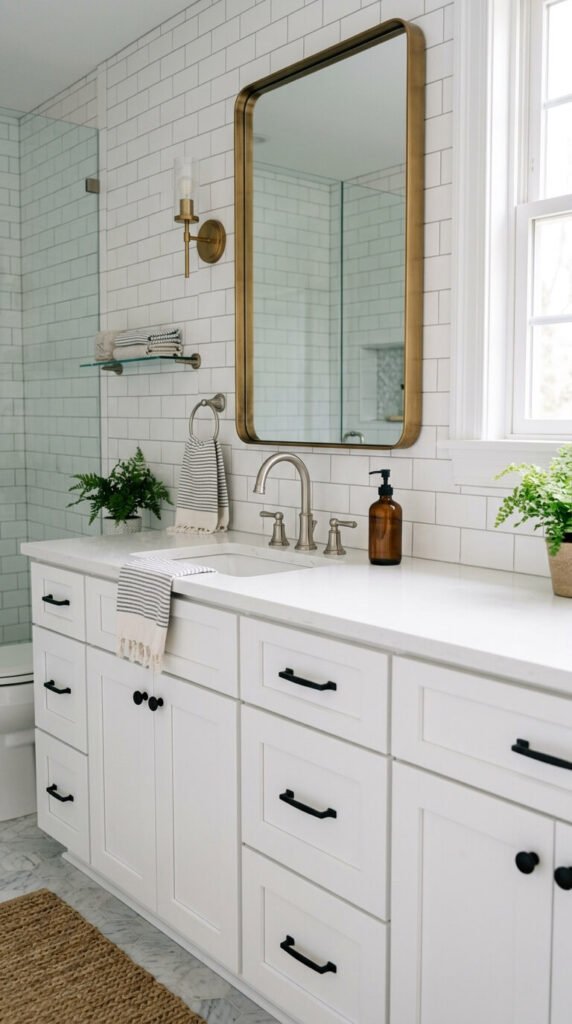
Transitional rooms use two or three metal finishes together — something that would be wrong in a purely traditional or minimalist space. Brushed nickel, matte black, and aged brass coexist comfortably in a transitional room because each one connects to a different design tradition. Repeat each metal at least twice in the same room so the mix looks deliberate. Replace outdated all-chrome hardware in a kitchen or bathroom with a mixed set: brushed brass drawer pulls, matte black cabinet knobs. The hardware change costs $60–$200 for an average kitchen and immediately updates the room’s design register.
10. Crown Molding in Contemporary Rooms
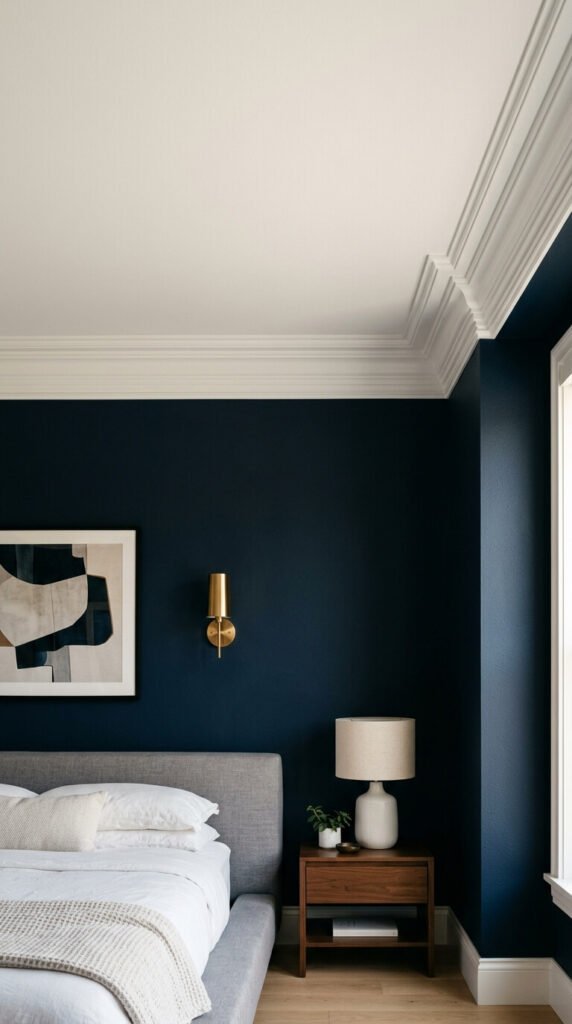
Crown molding in a contemporary room is a transitional signature. The molding brings traditional architectural formality to a space that is otherwise modern in furniture and finish. It adds visual weight to the ceiling line and makes a room feel more complete. Polystyrene crown molding costs $1–$3 per linear foot and installs with adhesive and paint — a full room can be done for $60–$120 in materials. Paint the molding in the same color as the ceiling to reduce its formality, or in crisp white for maximum architectural definition. This single architectural addition shifts a contemporary room toward something more layered and considered.
11. Tufted Ottoman Coffee Tables
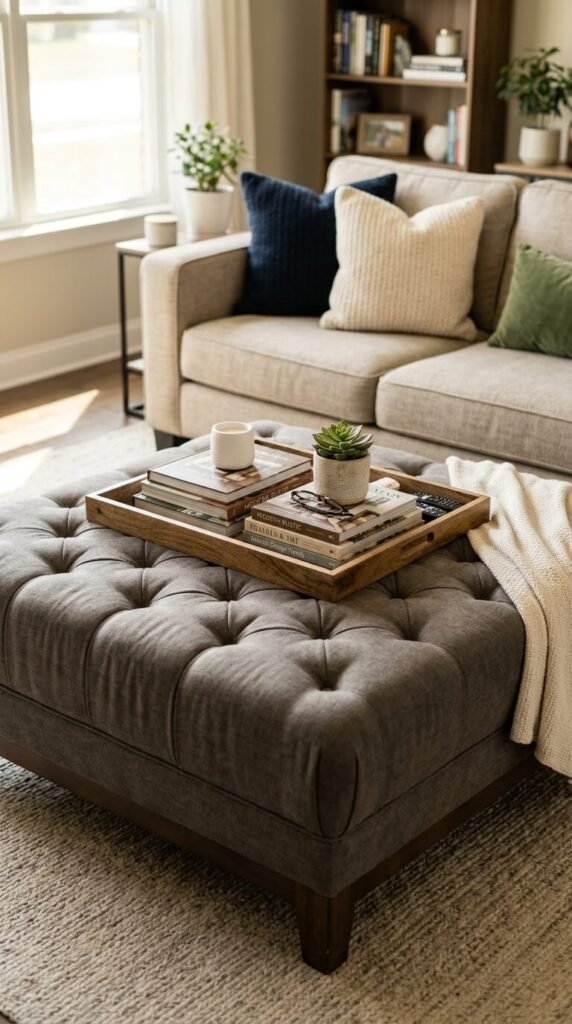
A tufted upholstered ottoman used as a coffee table sits squarely between traditional and contemporary design registers. The tufting references classic upholstery. The clean block form and simple leg reference contemporary design. Style the top with a simple rectangular tray, a stack of books, and one object — this prevents the ottoman from reading as merely traditional. New square tufted ottomans with wooden legs cost $100–$400 at most home goods retailers. The upholstered coffee table also softens a room where every other surface is hard — wood, glass, metal — adding tactile variety at the center of the seating arrangement.
12. Glass and Metal Coffee Tables
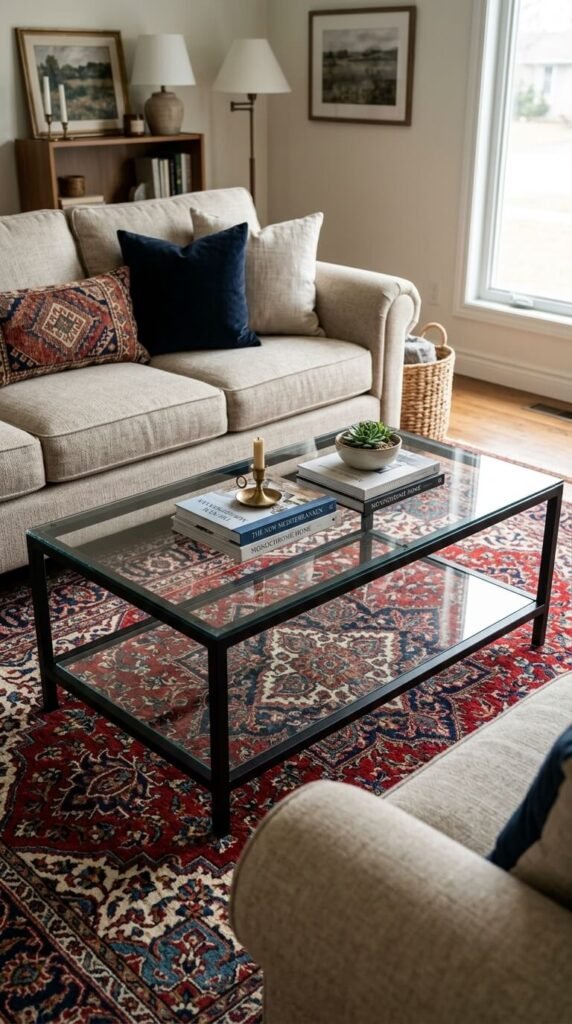
A glass and metal coffee table is one of the most effective single pieces of transitional furniture. The glass top lets the rug pattern below show through — connecting traditional floor covering with a modern table. The metal frame adds a contemporary industrial note. New glass and metal coffee tables cost $150–$600 at Wayfair, CB2, and West Elm. The glass surface also makes the room feel more open and less furniture-heavy, which is especially valuable in smaller spaces. Pair with an upholstered sofa above and a patterned rug below for the complete transitional layered look.
13. Drum Pendant Lights
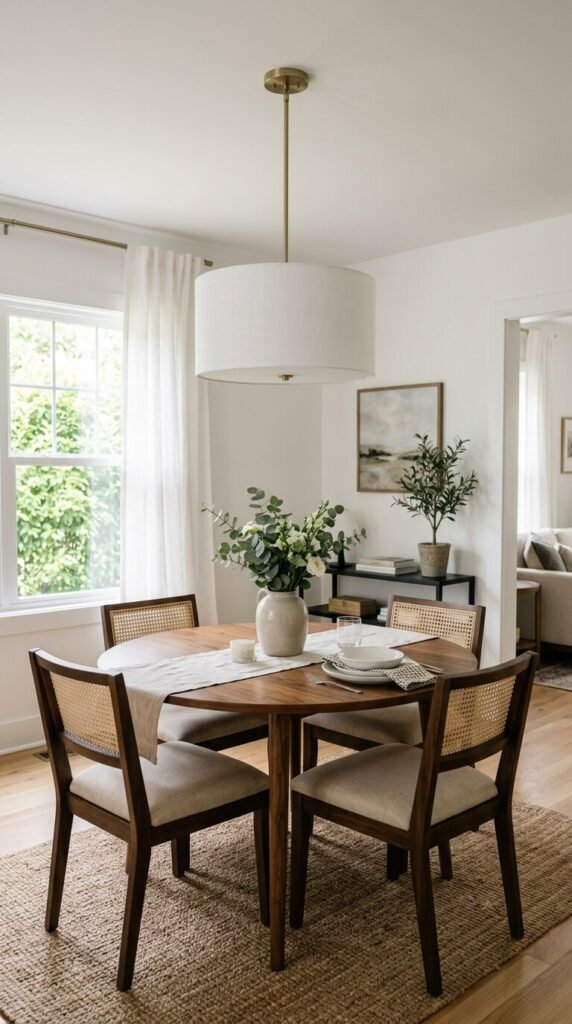
The drum pendant — a cylindrical shade with clean edges and a simple interior — is the transitional lighting fixture. It has no ornate metalwork, no crystal drops, no bare industrial bulbs. It is simply a clean, well-proportioned shade that works in almost any context. White or off-white linen drum pendants cost $50–$200 at most lighting retailers. Hang above a dining table or kitchen island with the bottom of the shade at 30–34 inches above the table surface. This pendant type works beside traditional furniture and contemporary furniture equally. It asks almost nothing of the room while providing exactly the right amount of overhead visual weight.
14. Wainscoting Painted in a Contemporary Color
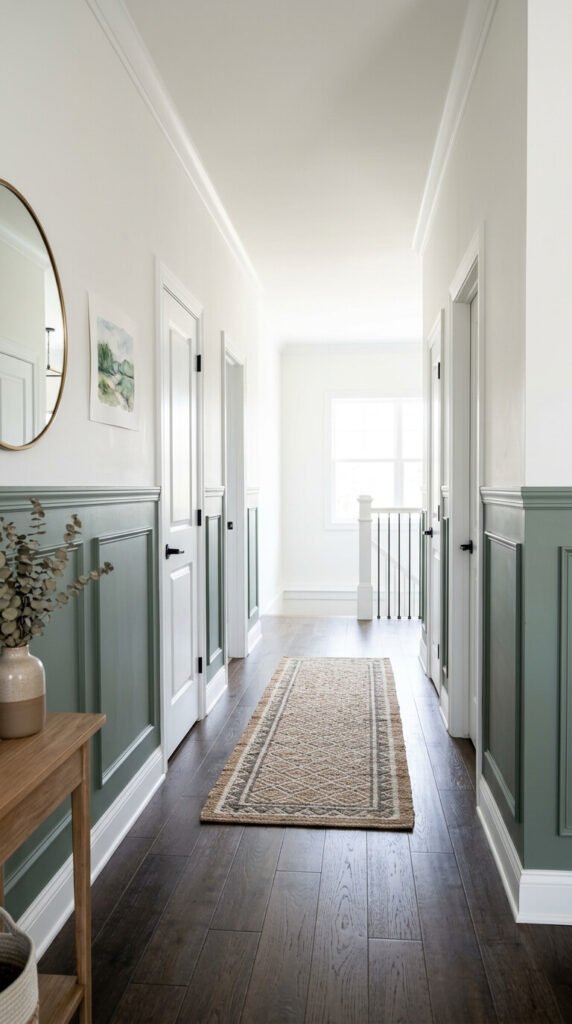
Wainscoting is a traditional architectural element. Paint it in a contemporary color — deep dusty sage, charcoal, navy, or warm terracotta — and the room occupies both worlds at once. The paneled form references colonial and Victorian interiors. The color brings it firmly into the present. Board-and-batten wainscoting costs $200–$500 in materials for an average room as a DIY project. Use a dark or saturated paint color on the wainscoting and white or light paint above the rail. The two-tone treatment adds tremendous depth to an entryway, dining room, or hallway for a very low material cost.
15. Layered Lighting With Multiple Sources
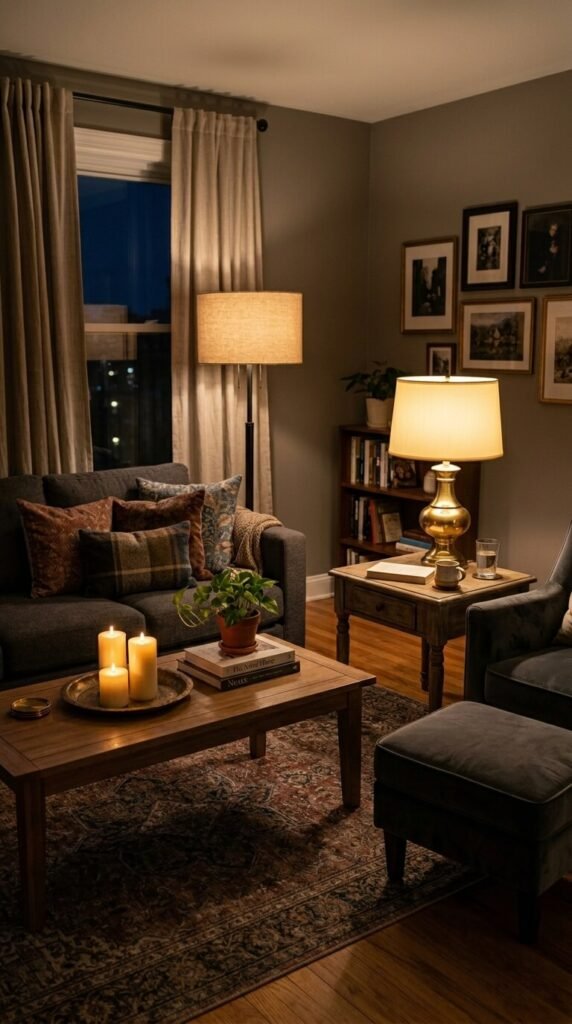
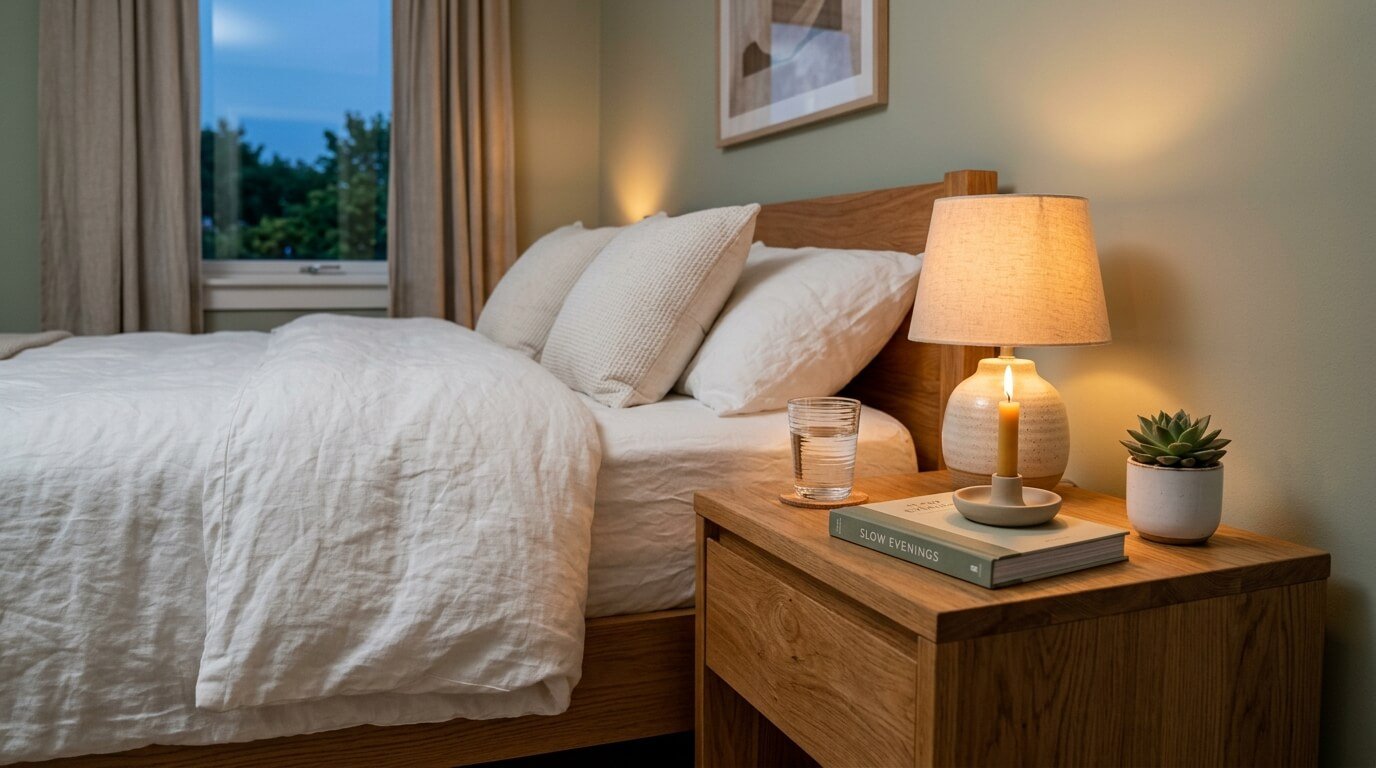
Transitional rooms use multiple light sources at varying heights operating simultaneously rather than a single overhead fixture. A traditional brass table lamp beside a contemporary floor lamp with a drum shade and candles on the coffee table creates a warm, layered evening atmosphere. This approach works because each fixture type comes from a different tradition — and together they feel completely natural. A good table lamp costs $60–$200. A floor lamp costs $60–$200. Candles and holders cost $15–$40. Total investment under $500 transforms how any room feels after dark. Turn off the overhead light entirely and see the immediate difference.
16. Upholstered Headboards With Simple Panels
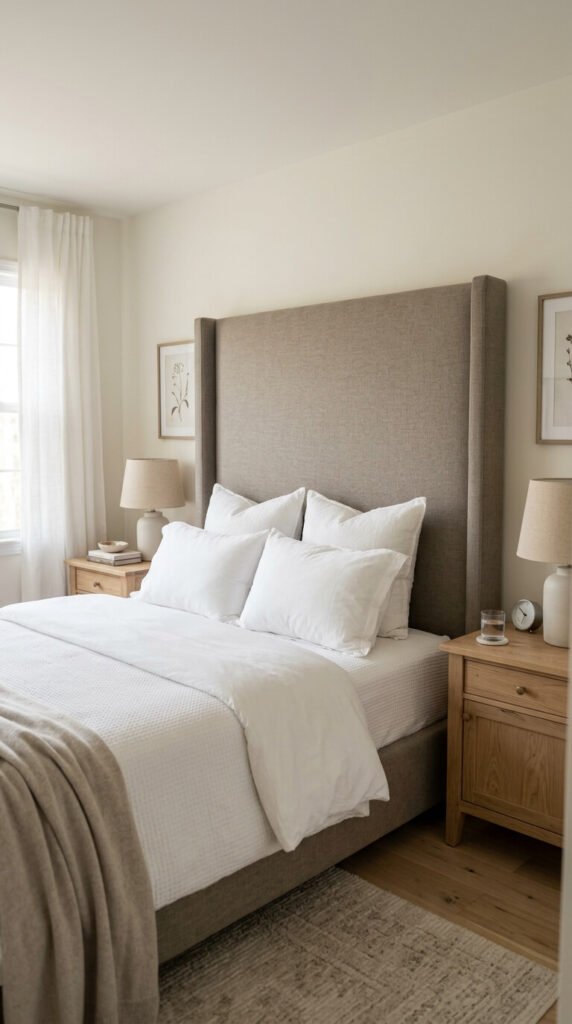
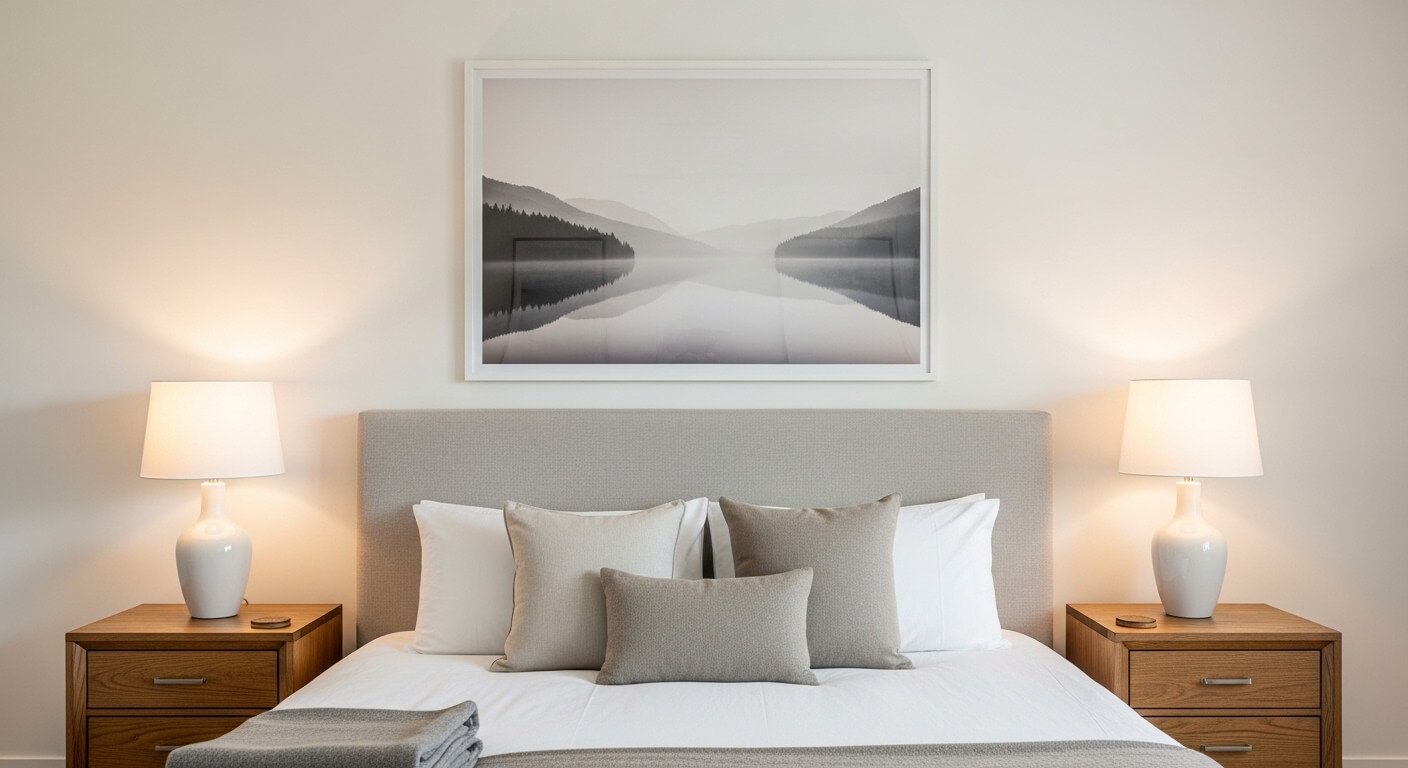
A tall upholstered panel headboard is the transitional bedroom centerpiece. It has the presence and height of a traditional carved headboard without any ornamental detail. The upholstered surface adds warmth and softness. The clean rectangular form is contemporary. New upholstered headboards in greige, oat, or warm gray linen cost $150–$500. DIY versions — a piece of plywood, foam batting, and fabric — cost $50–$100 in materials and take one afternoon. Mount the headboard directly to the wall at ceiling height for maximum drama. This single bedroom piece does more to create a room that feels complete than almost any other bedroom change.
17. Warm Hardwood Floors as the Foundation
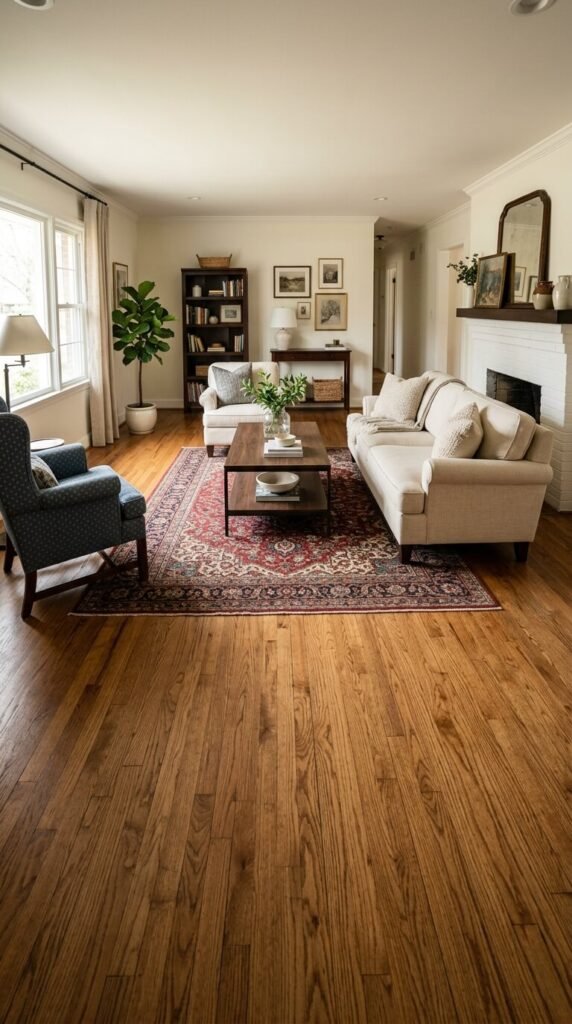
Medium-toned warm oak or walnut hardwood floors are the universal transitional floor finish. They are warm enough for traditional rooms and clean enough for contemporary ones. They work with Persian rugs and jute rugs equally. Engineered hardwood in warm oak costs $3–$8 per square foot — a significant investment, but one that never becomes dated. If full floor replacement is not in budget, add a large natural wood-tone area rug on top of existing floors to bring the same warmth. The floor tone is the foundation of the entire room’s warmth register. Get this right and every other element works harder.
18. Symmetrical Arrangements With Modern Objects
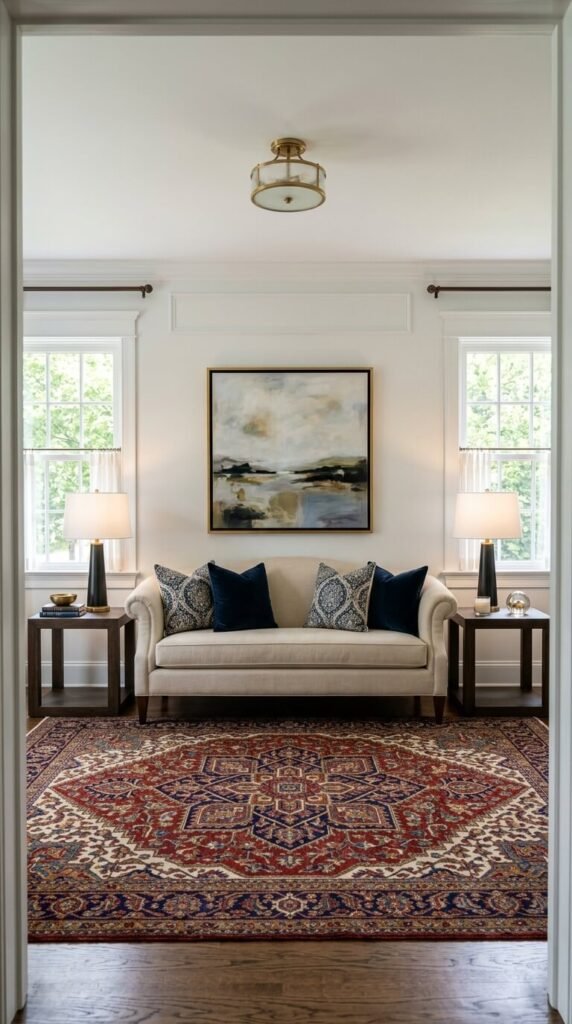
Symmetrical furniture arrangements are a traditional design principle. Apply them using contemporary objects — matching contemporary table lamps, clean-lined side tables, geometric throw pillows — and the room reads as transitional. The symmetry provides the structure and formality. The object style provides the contemporary update. A pair of matching contemporary table lamps costs $60–$200 combined. A pair of matching side tables from IKEA costs $80–$160. This formula — traditional arrangement principles applied to modern objects — is the simplest and most reliable framework for achieving a transitional look in any seating arrangement.
19. Natural Stone and Marble Accessories
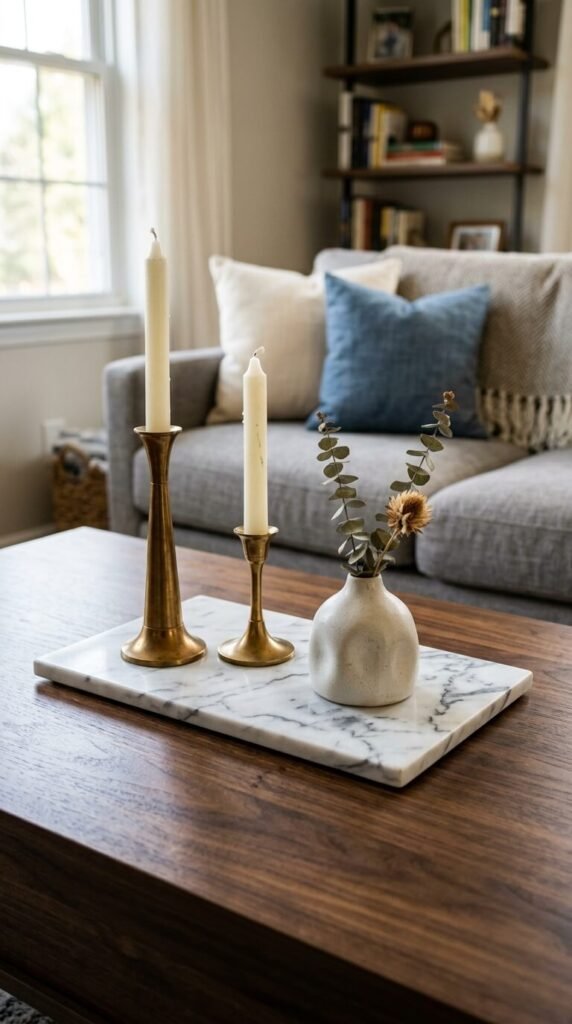
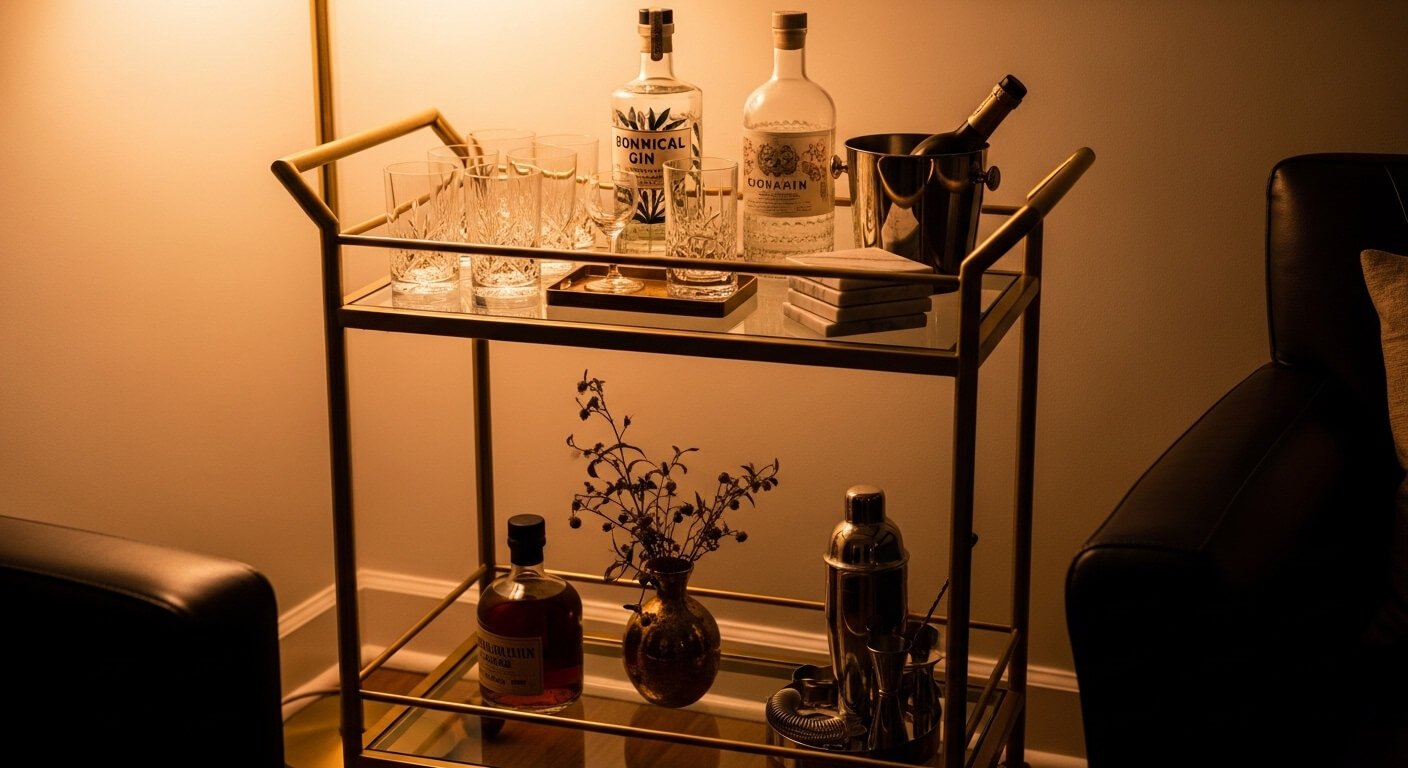
White marble and natural stone accessories — trays, coasters, side table tops, and bathroom accessories — work in transitional rooms because stone itself has no design era. It is both ancient and contemporary simultaneously. White marble with gray veining is the most broadly applicable. Marble trays cost $20–$60 at HomeGoods and Target. Small marble coasters cost $15–$40 for a set. A marble tray on a coffee table holding a candle and one small ceramic object creates an instantly styled, transitional vignette. The material contrast between cold stone and warm wood below it is one of the most reliably attractive combinations in interior design.
20. Shiplap and Paneled Accent Walls
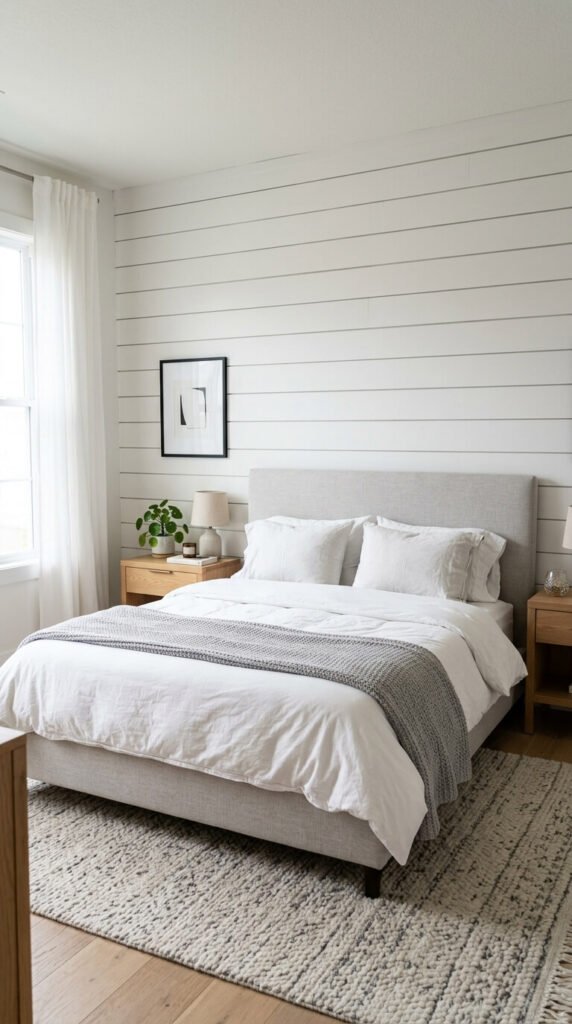
White shiplap — horizontal painted boards with a thin reveal between them — adds architectural texture and warmth to a wall without committing to either traditional paneling or contemporary flat paint. It reads as relaxed and slightly rustic while remaining clean and neutral enough for contemporary surroundings. Shiplap boards from a home improvement store cost $1–$3 per linear foot. A full accent wall in a bedroom or living room costs $100–$300 in materials. Paint white or in a warm neutral. The horizontal lines also make a room feel wider. This wall treatment is one of the most popular transitional solutions for blank feature walls.
21. Botanical and Nature-Inspired Art
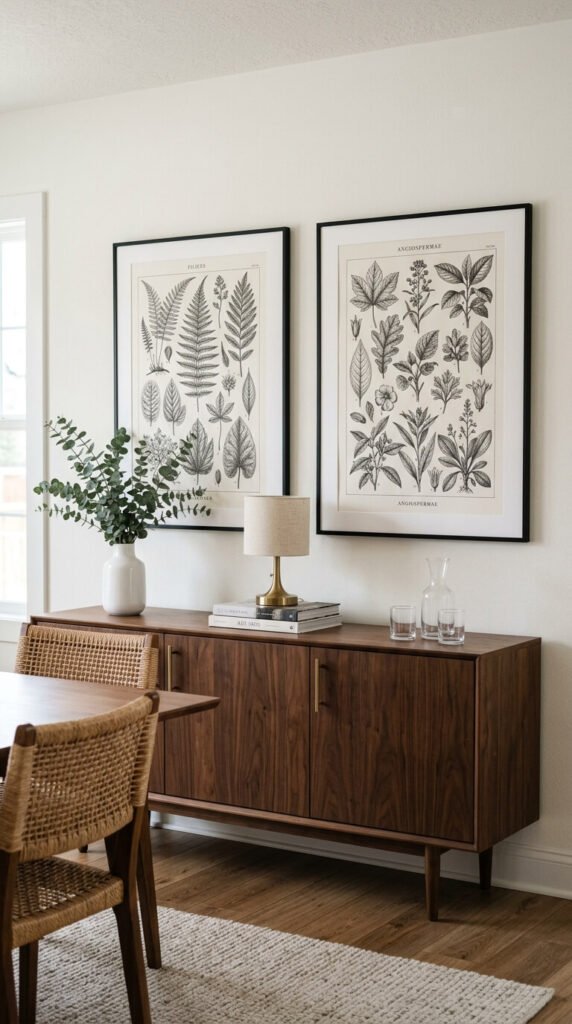
Botanical illustration prints — detailed scientific-style drawings of plants, leaves, and flowers — occupy the exact midpoint between traditional and contemporary art. The illustration style is classical and heritage-rich. The thin black frame and monochromatic treatment make them read as contemporary. Sets of four botanical prints in matching thin frames cost $30–$150 at HomeGoods and online retailers. Print vintage botanical illustrations downloaded from public-domain archives for $5–$10 each in materials. Hang a symmetrical pair above a credenza or sideboard. This approach satisfies the traditional preference for representational art and the contemporary preference for clean graphic forms simultaneously.
22. Coastal-Inspired Natural Textures
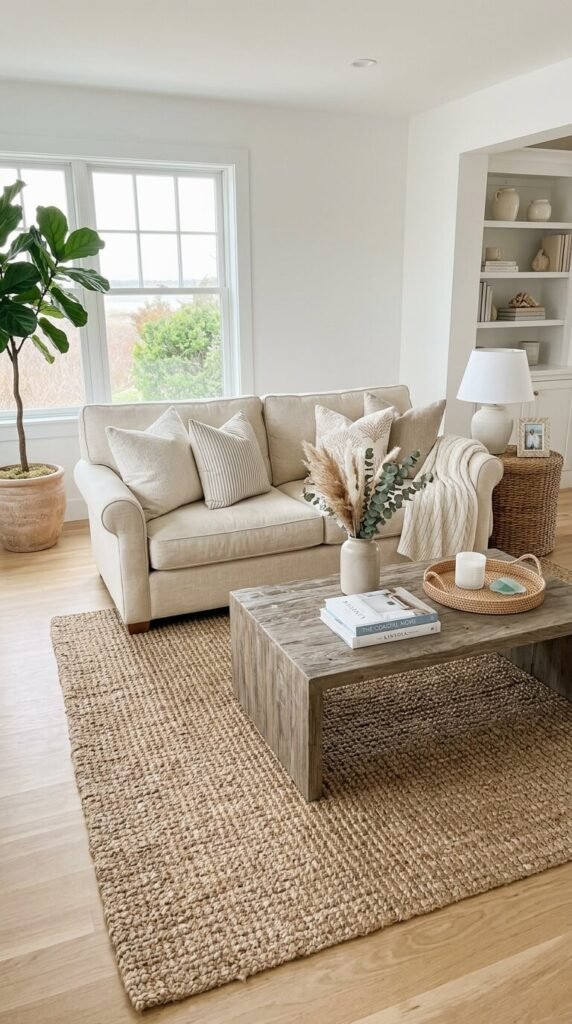
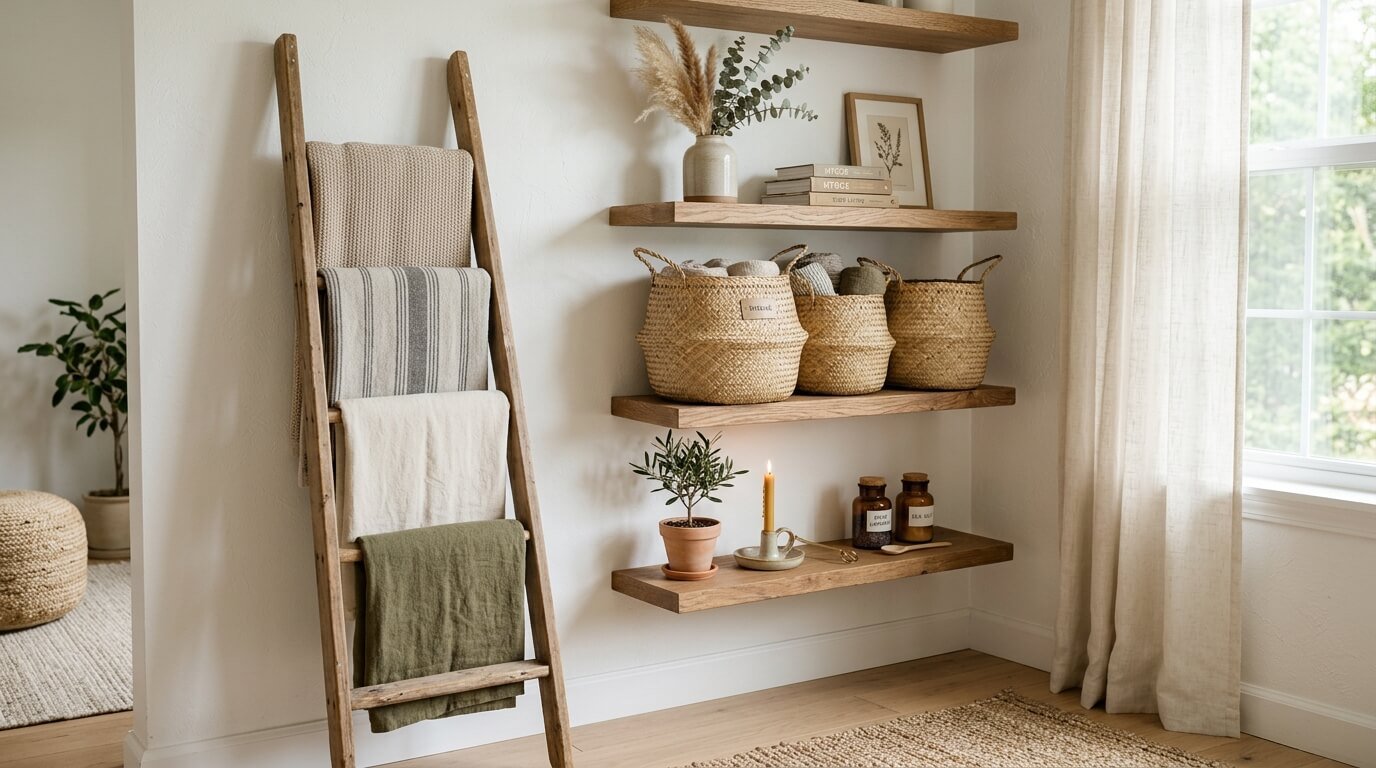
Natural textures — jute, seagrass, sisal, and woven rattan — appeal to transitional design because they are warm like traditional materials and low-profile like contemporary ones. They add texture without pattern or color. A jute rug from IKEA or Target costs $60–$200 in large sizes. A seagrass side table costs $50–$150. A woven rattan tray costs $20–$40. Layer these natural fiber elements across different surfaces in a room for a cohesive textural story. Natural materials also age well — a jute rug looks better with use rather than worse. This is the opposite of most synthetic materials, which show wear immediately.
23. Two-Tone Kitchen Cabinets
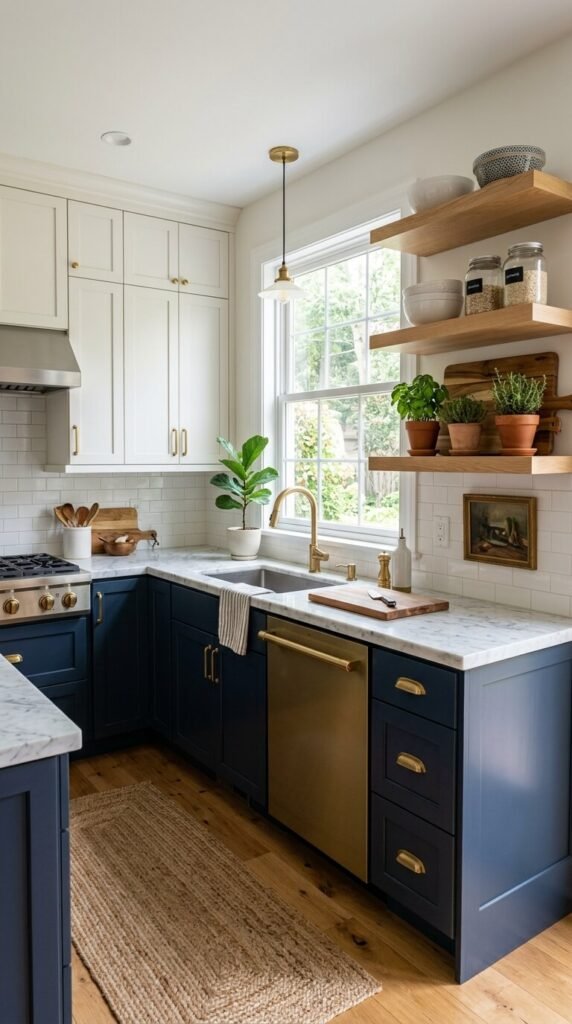
Two-tone kitchen cabinets — white or cream upper cabinets paired with a darker color on the lowers — is one of the most widely used transitional kitchen approaches. White uppers keep the space light. Dark lowers ground it and add visual weight. Navy, charcoal, sage green, and forest green are all popular lower cabinet colors. This treatment works because it combines the traditional preference for full cabinetry with the contemporary interest in color and contrast. Repainting existing cabinets costs $200–$600 in materials for an average kitchen. The two-tone look requires no cabinet replacement — just paint and new hardware.
24. Console Tables as Entryway Anchors
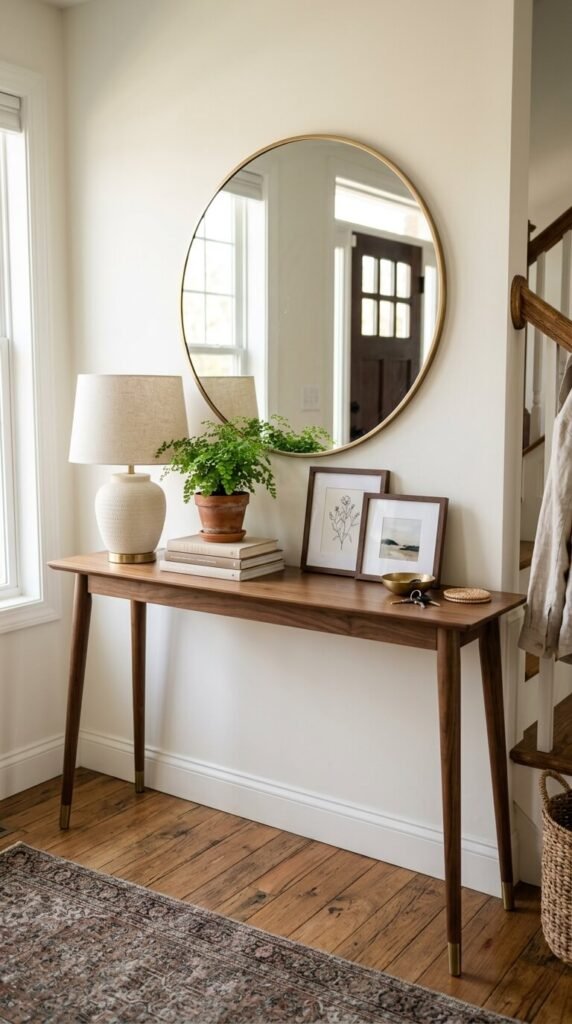
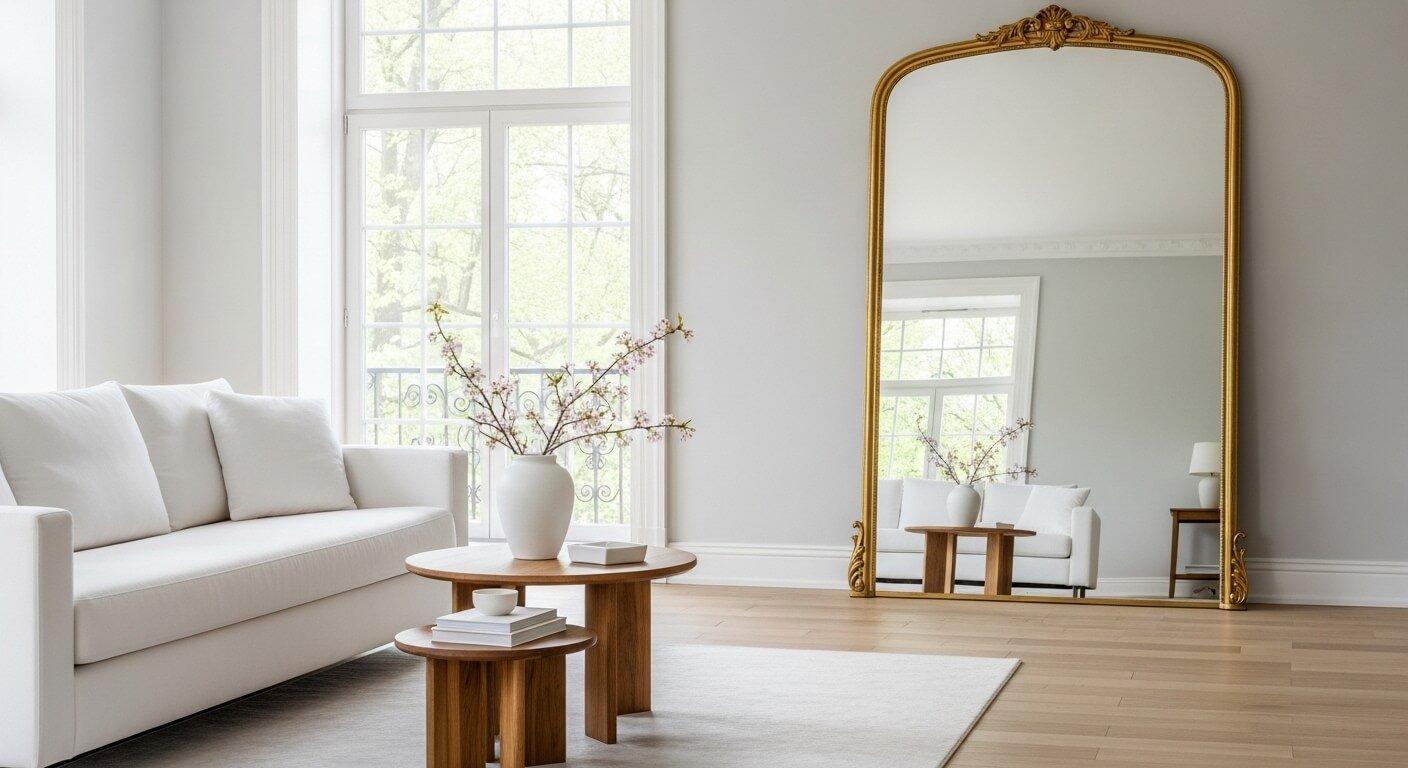
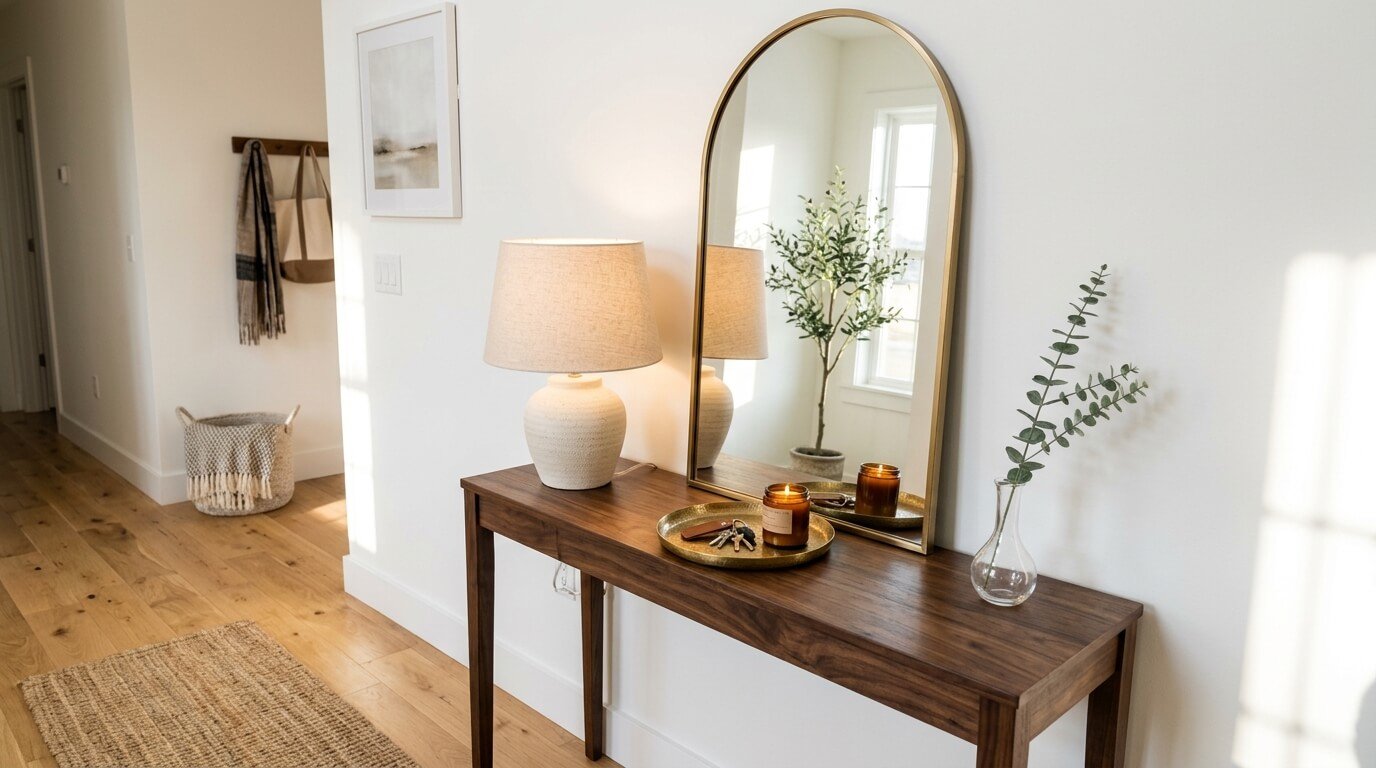
A console table in a transitional entryway anchors the first impression of a home. Use a dark walnut table with tapered legs — a traditional form with a clean modern silhouette. Hang a round mirror above it — contemporary shape over traditional console. Style the surface with a lamp, a small plant, and one tray of keys and mail. New walnut console tables cost $200–$600. A round wall mirror costs $40–$200. The entry should tell visitors something about the style of the whole home within three seconds of walking in. A well-considered transitional entryway vignette does exactly that.
25. Velvet Accents in Muted Tones
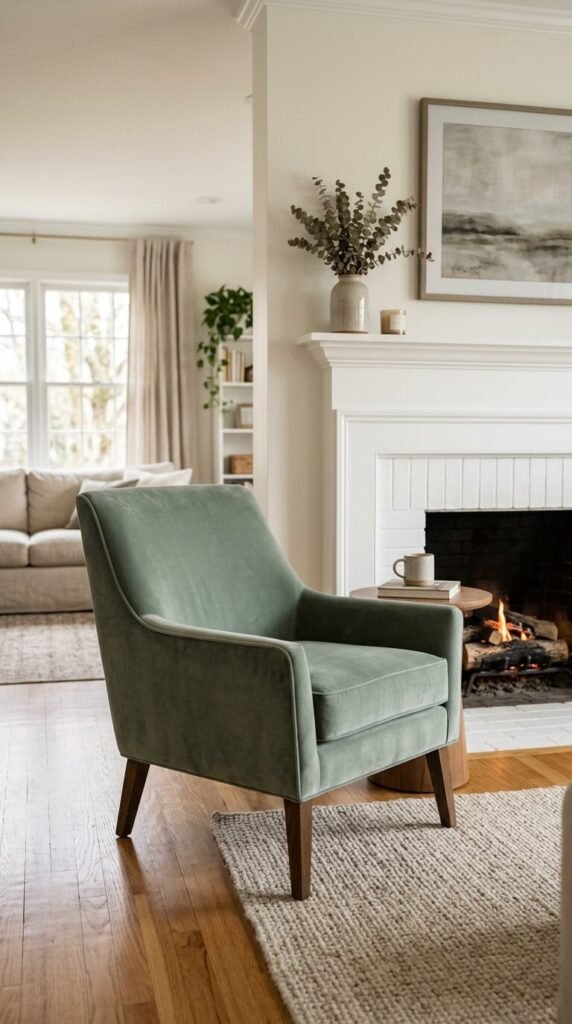
Velvet in muted, dusty tones — dusty sage, slate blue, warm terracotta, or mushroom — is a transitional fabric that works because it is both luxurious and restrained. The sheen and texture of velvet reference traditional upholstery. The muted, unsaturated color reads as contemporary. A velvet accent chair costs $150–$500. Velvet throw pillows cost $20–$50 each. Velvet is more durable than it looks — modern performance velvet fabrics are easy to clean and long-lasting. Add one velvet piece to a room dominated by linen and natural materials. The contrast in texture and sheen gives the room a richness that natural fibers alone cannot deliver.
26. Book Collections as Decor Elements
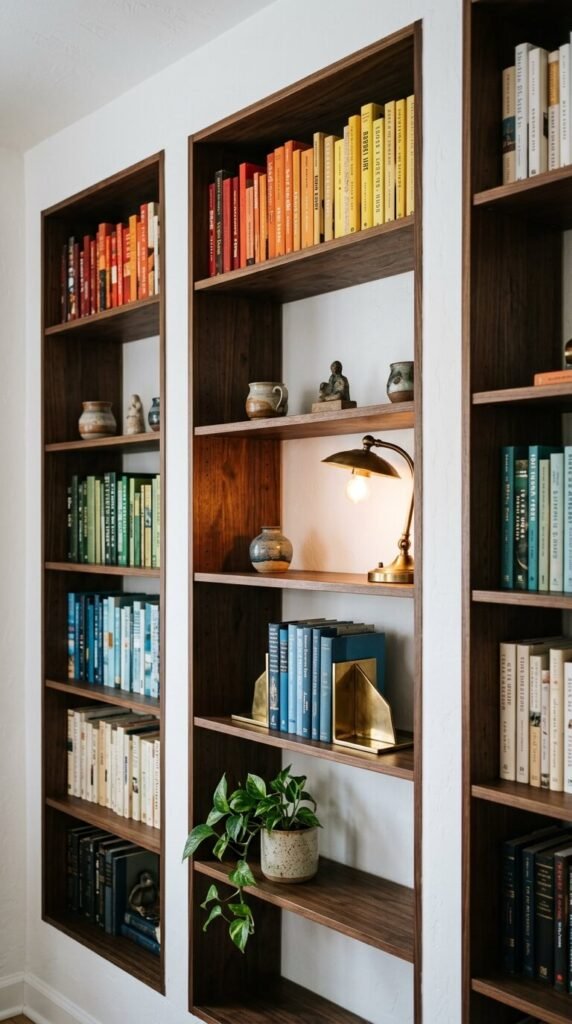
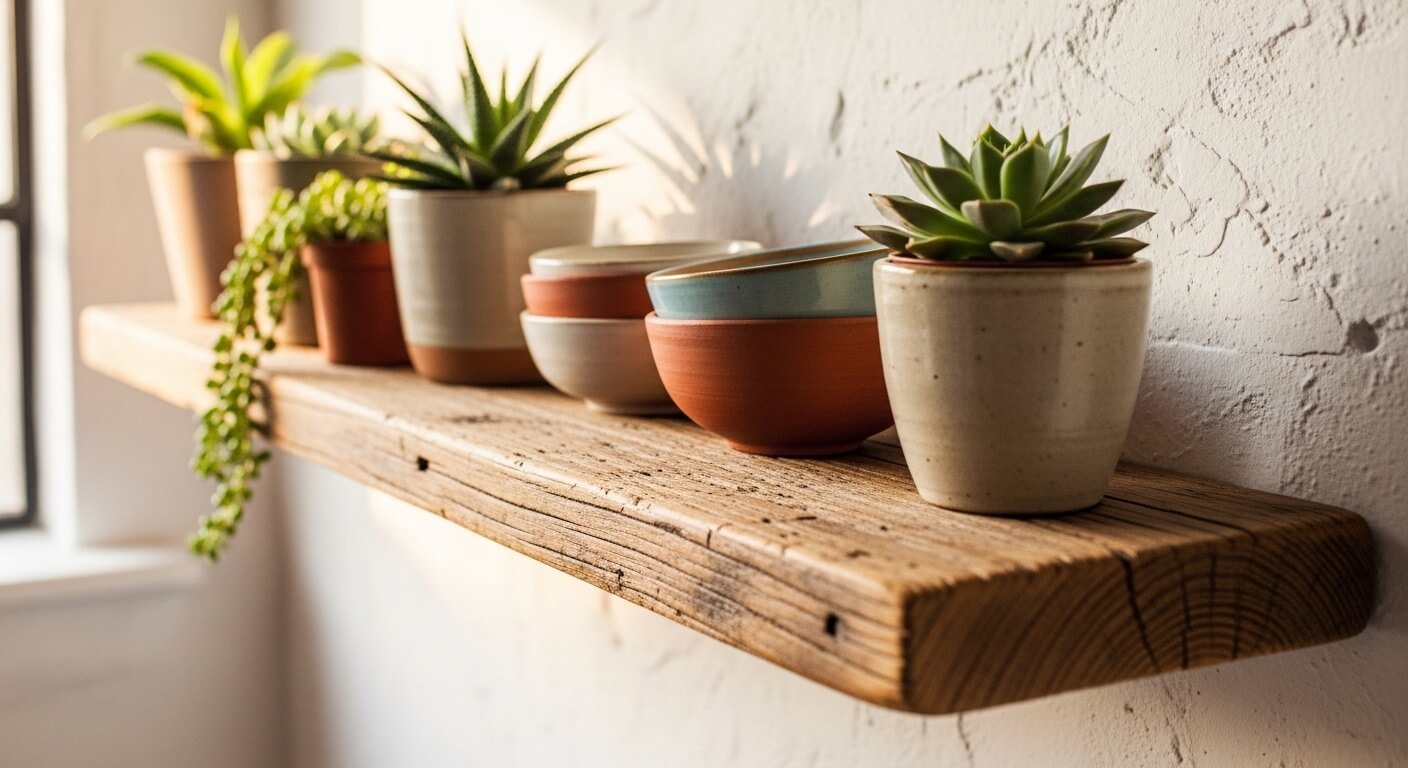
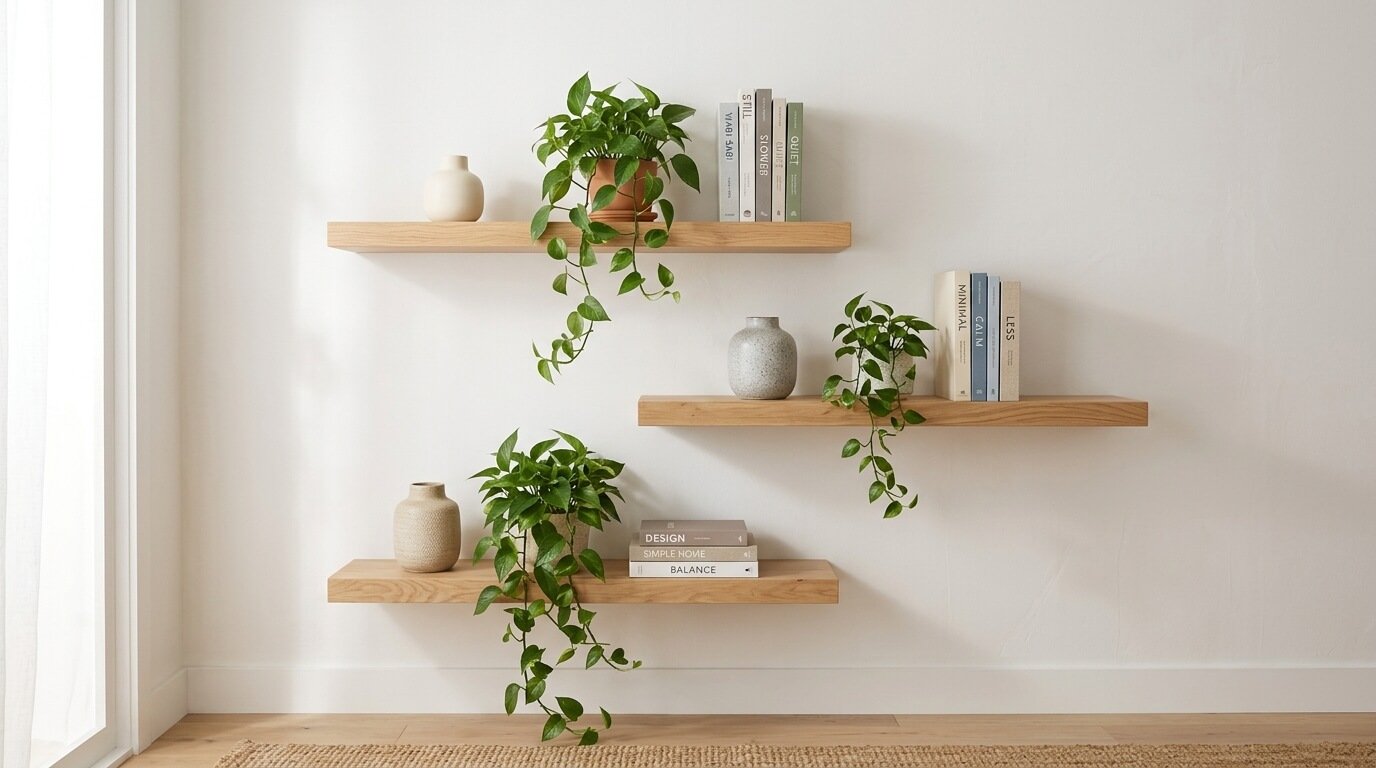
Books displayed openly on shelves serve as both traditional heritage elements and contemporary design tools. In traditional interiors, books signal scholarship. In contemporary interiors, books add color, texture, and personal identity. Organize books by color or height for the most considered contemporary look while keeping the traditional sense of accumulation and learning intact. Add brass bookends at $15–$50 per pair, small ceramics between groupings, and one or two trailing plants. A single well-styled bookshelf communicates more about the character of a home than any purely decorative display. It says the room belongs to someone who actually lives in it.
Conclusion
Transitional decor works because it does not ask you to choose between warmth and modernity, between heritage and contemporary living. It asks you to do both at once — and gives you the tools to pull it off without a decorator or a large budget. A rolled-arm sofa on a Persian rug, a traditional crown molding in a contemporary painted room, abstract art in an ornate frame, velvet beside linen — these pairings work precisely because the contrast between them is intentional, not accidental. Start with one pairing from this list that fits the room you are working with right now. Add the second element. Step back. That gap between the two design registers is where transitional rooms become interesting — and where homes start to feel genuinely personal rather than pulled from a catalog.