24 Refined Traditional Decor Elements That Honor Heritage

Disclosure: As an Amazon Associate we earn from qualifying purchases. Some links on this page may be affiliate links — if you click through and make a purchase, we may receive a small commission at no extra cost to you.
Traditional decor is not about being stuck in the past. It is about honoring the craftsmanship, materials, and design principles that have proven themselves across centuries. Carved wood, layered textiles, symmetrical arrangements, quality upholstery, and collected objects with personal meaning — these are the elements that give a home its sense of history and permanence. Whether you are furnishing a Victorian brownstone, a colonial farmhouse, or a modern apartment where you want warmth and weight, traditional decor delivers a sense of rootedness that no trend-driven style can replicate. Every item on this list is a genuine traditional decor element — one that honors heritage and looks completely right regardless of what decade you are living in.
1. Chesterfield Sofas and Tufted Upholstery
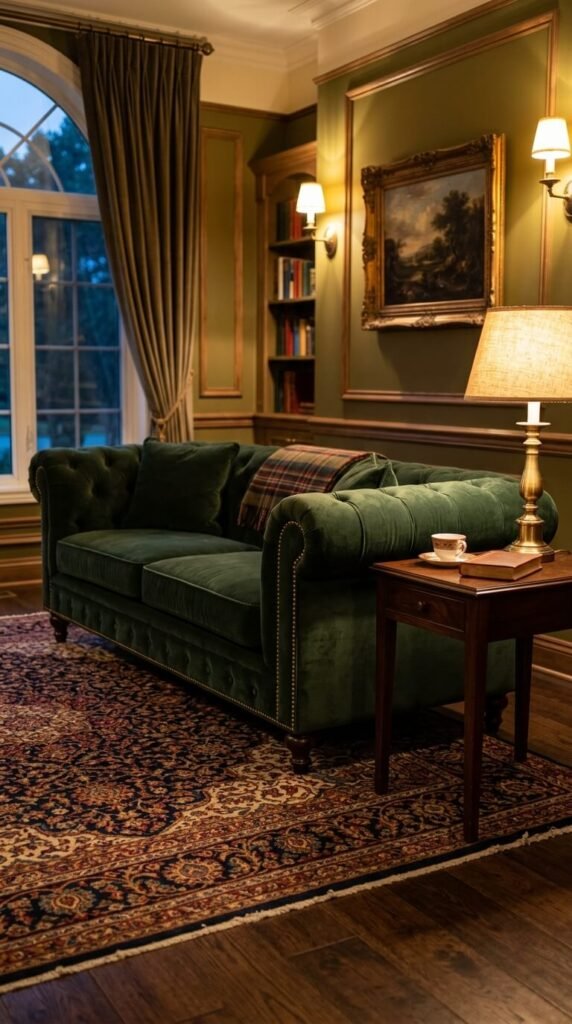
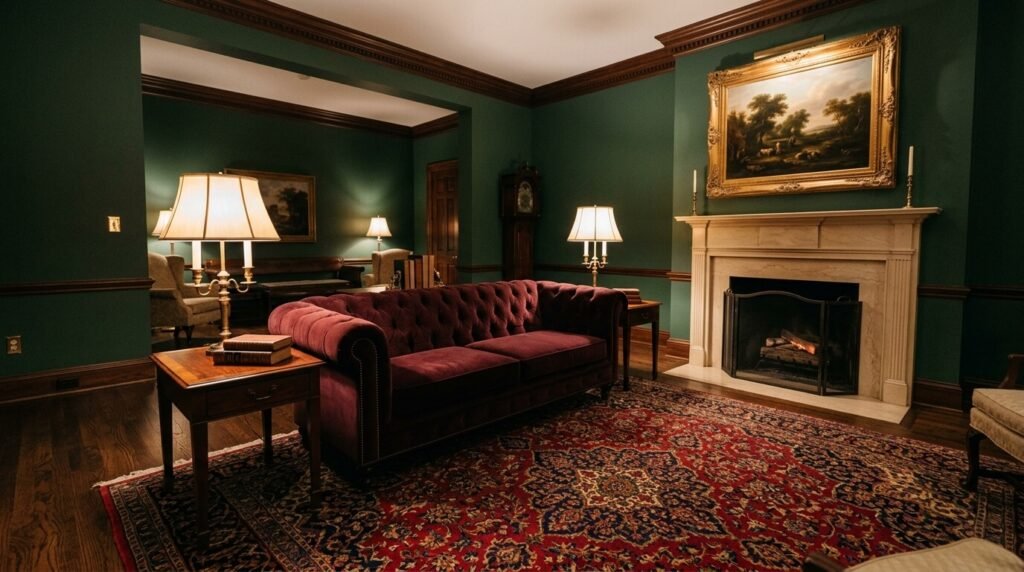
The Chesterfield sofa — deep-button tufted back, rolled arms at the same height as the back, nailhead trim — has been a symbol of quality upholstery since the 18th century. New Chesterfields in genuine leather cost $800–$3,000. Quality velvet versions start at $500–$1,200. Budget reproductions with correct proportions are available from Wayfair and Amazon for $400–$700. Dark jewel tones — hunter green, burgundy, navy — are the most traditionally correct fabric choices. Place on a Persian rug with a dark wood coffee table in front. The Chesterfield immediately establishes the register of the entire room.
2. Persian and Oriental Wool Rugs
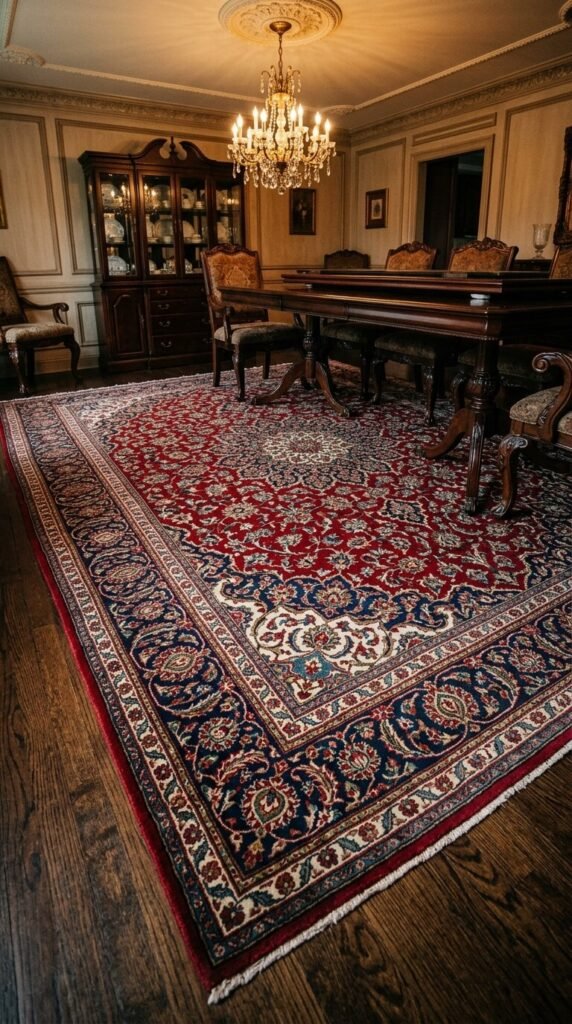
A hand-knotted Persian or Oriental wool rug is the single most important piece of floor covering in traditional decor. The floral medallion patterns, the deep jewel tones, and the wool pile texture carry centuries of craft history. New hand-knotted Persian rugs cost $300–$3,000 depending on size and origin. Machine-made Persian-pattern rugs from Loloi and Safavieh cost $80–$400 and look very similar at normal viewing distance. Vintage rugs from estate sales and antique markets cost $50–$500 for genuine pieces. Place one under every seating arrangement. The rug ties every traditional room together more than any other single element.
3. Crown Molding and Architectural Trim
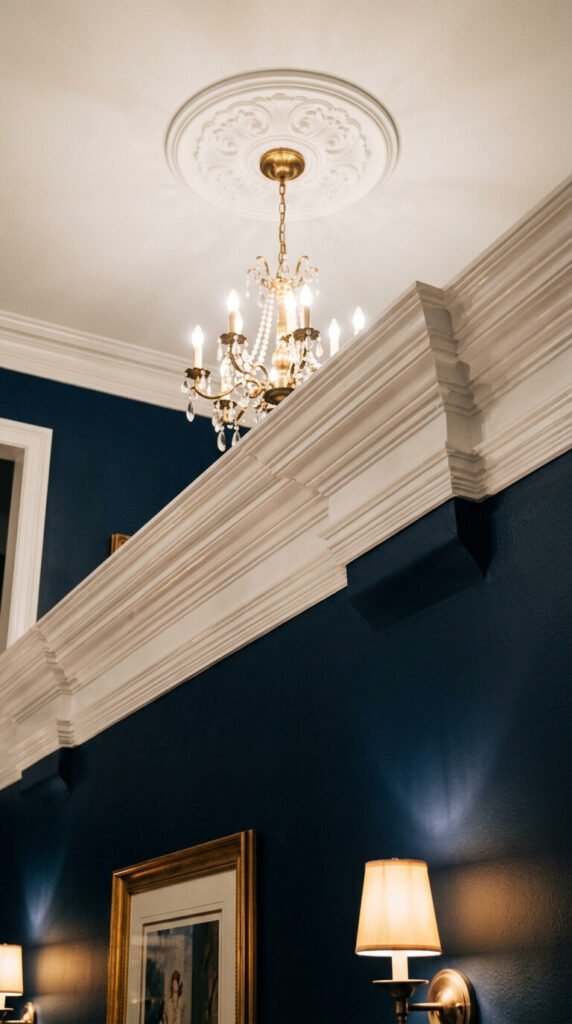
Crown molding — the decorative trim where ceiling meets wall — is one of the defining architectural features of traditional interiors. It adds visual weight to a room and signals quality construction. Pre-painted polystyrene crown molding costs $1–$3 per linear foot and installs with adhesive and paint — a full room can cost under $100 in materials. Proper wood molding costs $3–$8 per foot but requires more skill to install. Ceiling medallions around light fixtures cost $20–$80 and add the same formal quality. These architectural additions raise the perceived value of any room permanently.
4. Mahogany and Walnut Carved Furniture
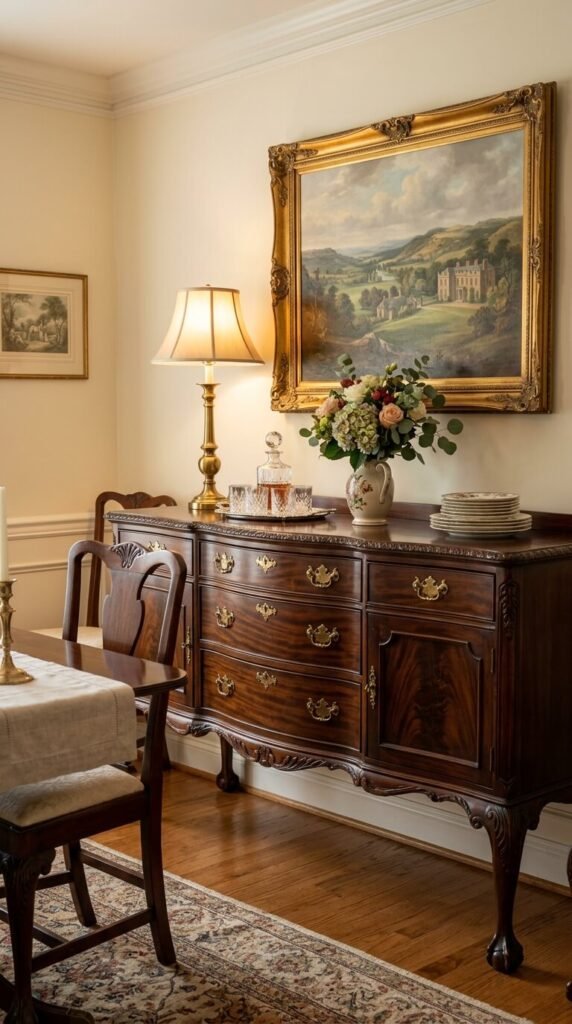
Carved mahogany and walnut furniture — cabriole legs, claw feet, decorative aprons — represents the highest tradition of Western furniture making. Antique mahogany sideboards and dining tables turn up regularly at estate sales and auction houses for $200–$1,500. Reproduction carved furniture from quality manufacturers costs $500–$3,000. Budget versions with correct proportions and dark wood finishes are available at Wayfair for $200–$600. The key features to look for are cabriole legs (curved legs ending in a pad or claw foot) and brass hardware. Both signal traditional style immediately regardless of the piece’s age.
5. Oil Paintings in Ornate Gold Frames
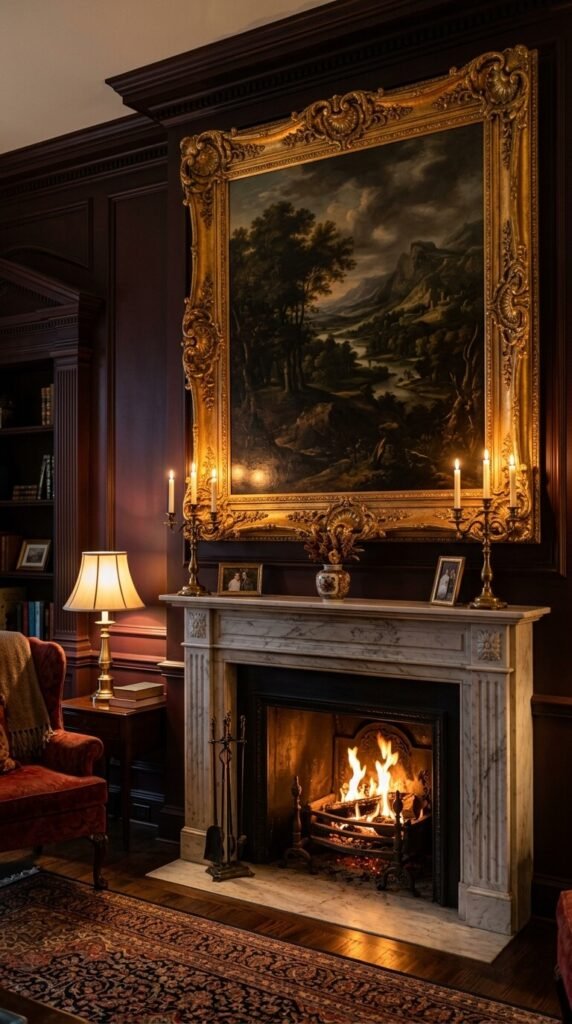
Oil paintings in ornate gilt frames are the defining wall treatment of traditional interiors. They don’t need to be originals or expensive. Thrift stores, estate sales, and antique markets regularly carry framed oil paintings for $20–$200. Reproductions of classical landscapes, portraits, and still lifes are available at HomeGoods and TJ Maxx for $30–$100. The frame matters as much as the painting — look for carved gilded frames with depth and detail. Hang one large painting above a fireplace or use a salon-style grouping of smaller framed pieces on a dark accent wall.
6. Brass and Crystal Chandeliers
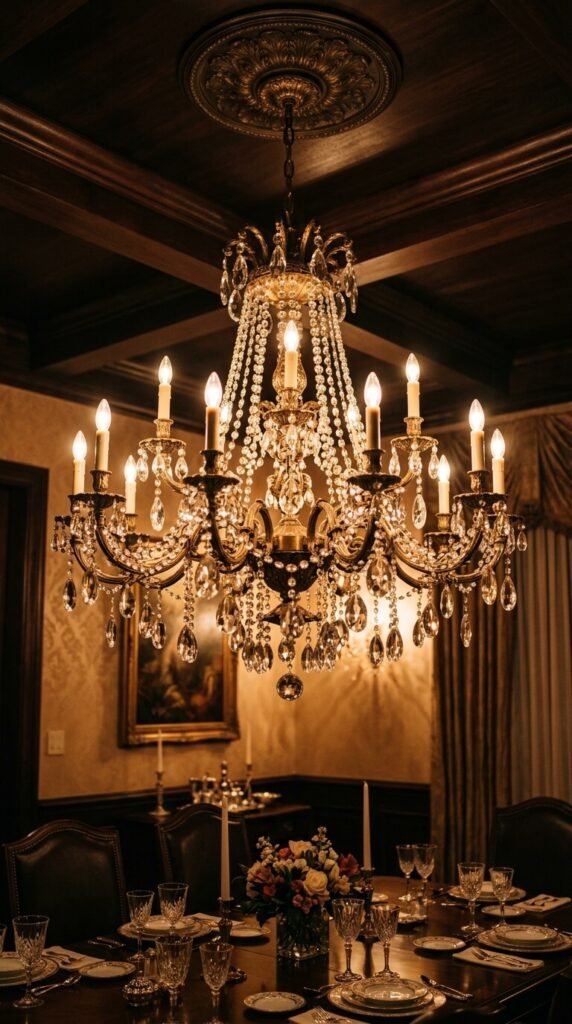
A brass chandelier with crystal drops is the traditional dining room and entryway lighting fixture. Crystals refract light and create dancing reflections on walls and ceilings. New brass and crystal chandeliers cost $100–$600 at most lighting retailers. Vintage crystal chandeliers from estate sales and thrift stores cost $50–$400. Install a dimmer switch — chandelier light at low intensity creates an atmosphere no overhead fixture can match. The warm glow of brass paired with the sparkle of crystal achieves a level of evening ambience in a dining room that no other light source replicates as effectively.
7. Wainscoting and Paneled Walls
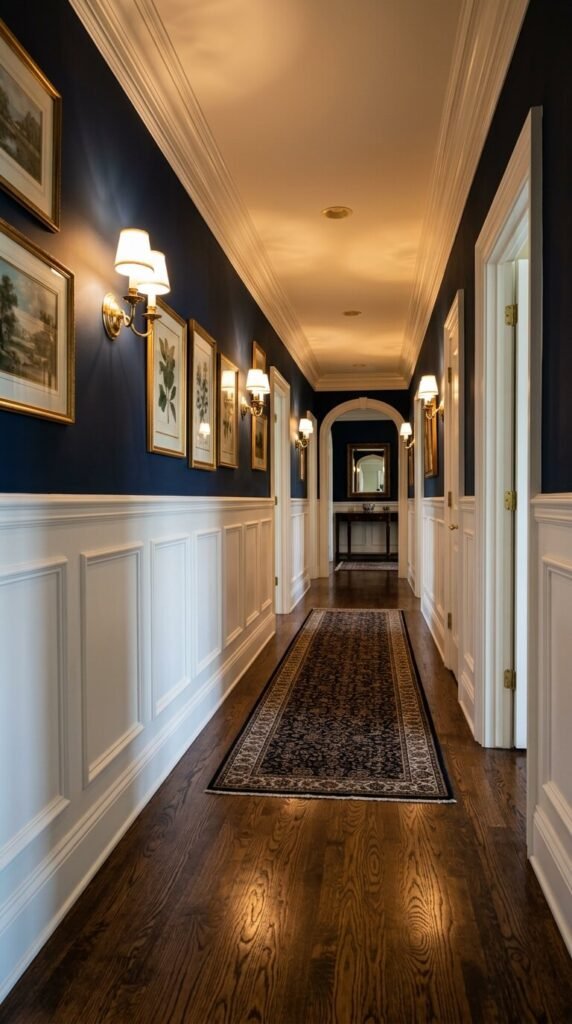
Wainscoting — wood paneling applied to the lower third of a wall — is a hallmark of traditional American and British interior architecture. It adds visual structure, depth, and formality to any room. Board-and-batten wainscoting (vertical boards with horizontal caps) costs $200–$500 in materials for an average room and is manageable as a DIY project. Raised panel wainscoting is more complex but kits are available at Home Depot for $150–$400. Paint in crisp white or cream for the most traditional result. Pair with wallpaper or a deep paint color above the rail for a complete formal room treatment.
8. Wingback Chairs
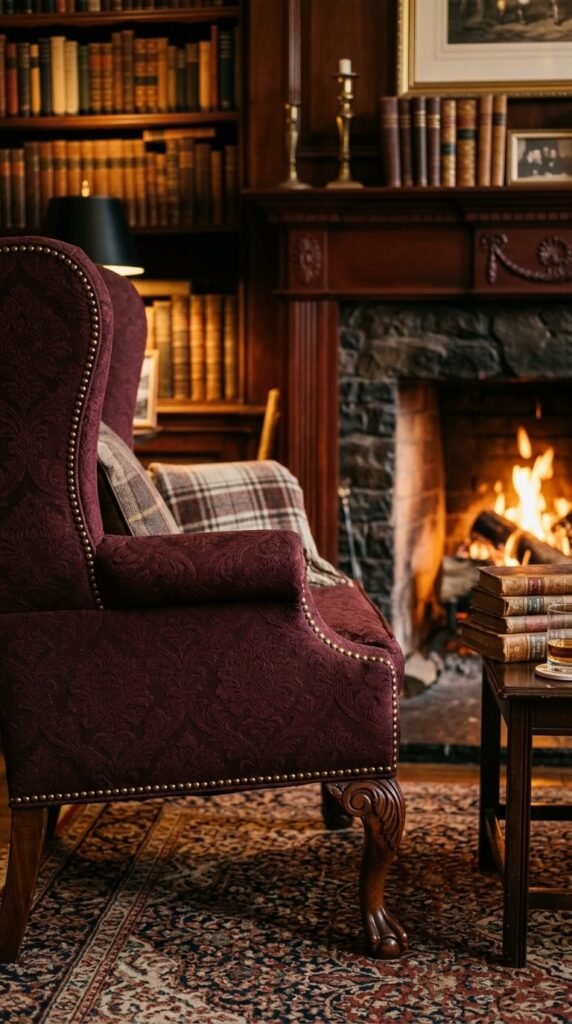
The wingback chair — high back with wing-shaped side panels, rolled arms, and exposed carved legs — has been a library and study staple since the 17th century. The wings were originally designed to block fireplace drafts. New wingback chairs in quality upholstery cost $300–$900. Budget versions with correct proportions are available from Amazon and Wayfair for $150–$400. Damask, velvet, and wool plaid are the most traditionally appropriate fabrics. Place flanking a fireplace or in a study corner. A pair of wingback chairs with a small table between them creates a formal conversation area with immediate heritage character.
9. Four-Poster and Canopy Beds
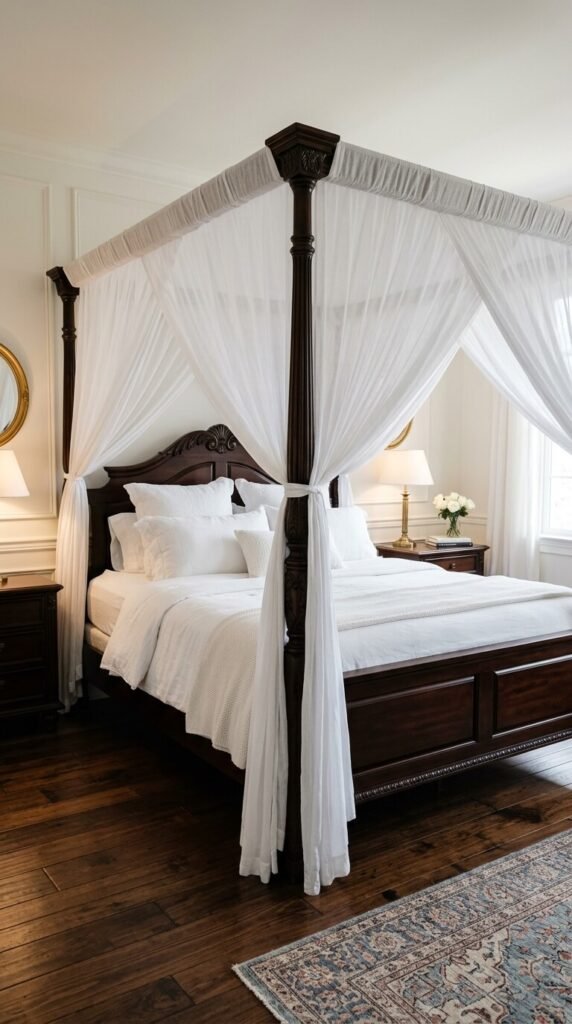
A four-poster or canopy bed creates an immediate sense of ceremony and permanence in a bedroom. The tall carved posts anchor the room vertically and make the bed the clear architectural centerpiece. New four-poster beds in solid wood cost $600–$2,500. Vintage mahogany four-posters from estate sales cost $200–$800. Dress the posts with simple white cotton canopy panels for a romantic effect — curtain panels from IKEA cost $15–$30 each. A four-poster bed with white bedding, dark wood floors, and a Persian rug beside it creates a bedroom that looks designed with intention and genuine care.
10. Fireplace Mantels and Hearth Displays
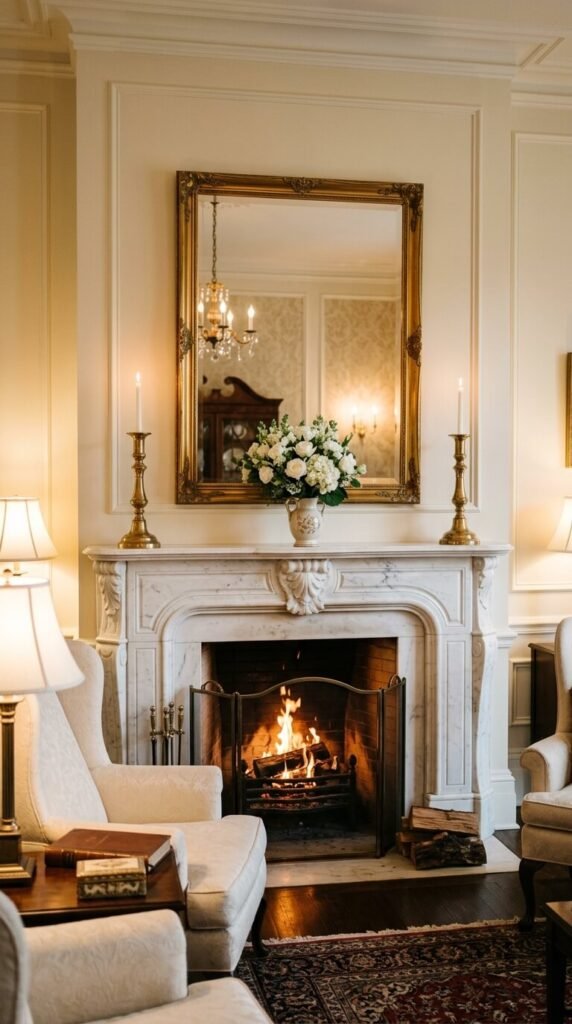
The fireplace mantel is the focal point of a traditional living room. Even a non-working fireplace benefits from a proper mantel treatment. Style the mantel shelf symmetrically: a large mirror or painting in the center, matching candlestick holders on either side, and one central object at the middle. Marble mantels cost $500–$3,000 installed. Painted wood surrounds cost $200–$800. For a budget approach, install a pre-made mantel surround for $150–$400 from a home improvement store and paint it white. A properly styled mantel creates an immediate sense of order and formality in any room.
11. Toile de Jouy Fabric and Wallpaper
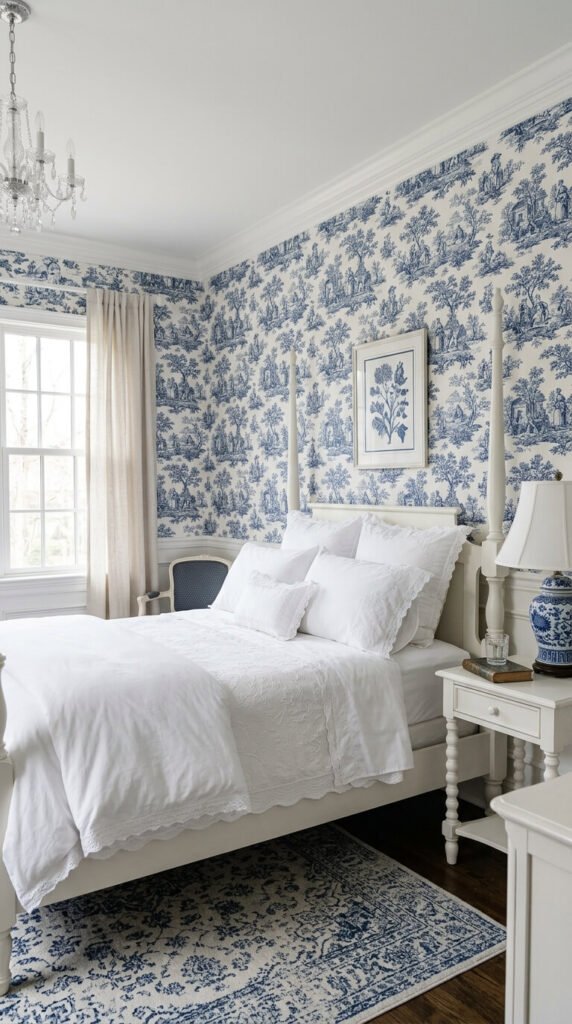
Toile de Jouy — a French fabric and wallpaper pattern depicting pastoral or classical scenes in a single color on a white or cream ground — is one of the defining textile patterns of traditional European interior design. Toile wallpaper costs $30–$80 per roll at most wallpaper retailers. Toile fabric for cushions and curtains costs $15–$40 per yard. Use one pattern throughout a bedroom — toile wallpaper, toile curtains, toile throw cushions — for a deeply traditional French country or colonial American aesthetic. Blue-and-white toile is the most classic colorway.
12. Brass and Silver Candlestick Holders
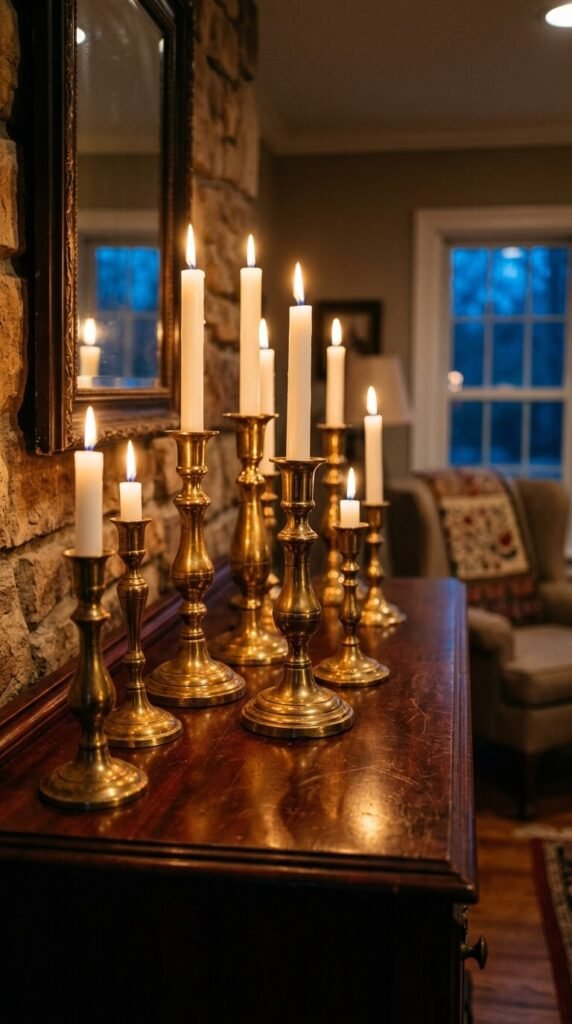
Brass candlestick holders in varying heights are one of the most versatile and affordable traditional decor elements. A grouping of three to five candlesticks of different heights creates immediate visual interest on a mantel, dining table, or sideboard. New brass candlestick holders cost $10–$60 each at HomeGoods, antique shops, and online. Vintage solid brass pieces from thrift stores often cost $2–$15 each and look far better than new reproductions. Pair with long white or ivory taper candles. The warm candlelight in an evening room creates an atmosphere that no electric lighting can reproduce.
13. Damask and Brocade Drapery
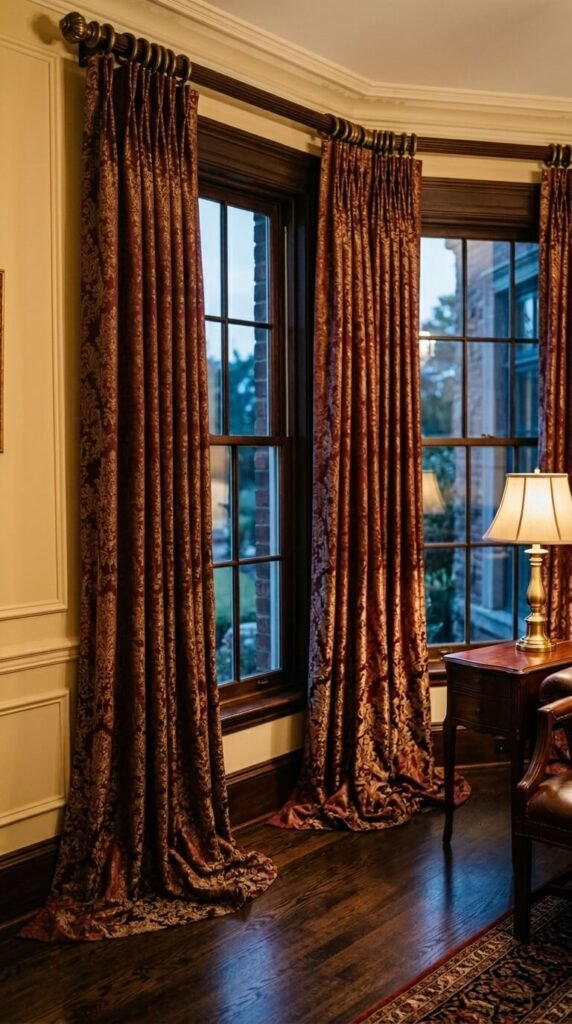
Floor-to-ceiling drapery in damask or brocade — woven fabrics with raised patterns in the weave itself — is the defining window treatment of traditional interiors. The drapery should touch or slightly pool on the floor for the most formal effect. Hang the rod close to the ceiling to maximize perceived window height. Custom damask drapery costs $200–$800 per panel. Ready-made damask curtain panels are available from Amazon and Wayfair for $40–$120 per pair. Use brass curtain rings and wooden rods for hardware. The weight and movement of floor-length drapery adds formality and visual warmth to any room.
14. Oriental Blue and White Porcelain
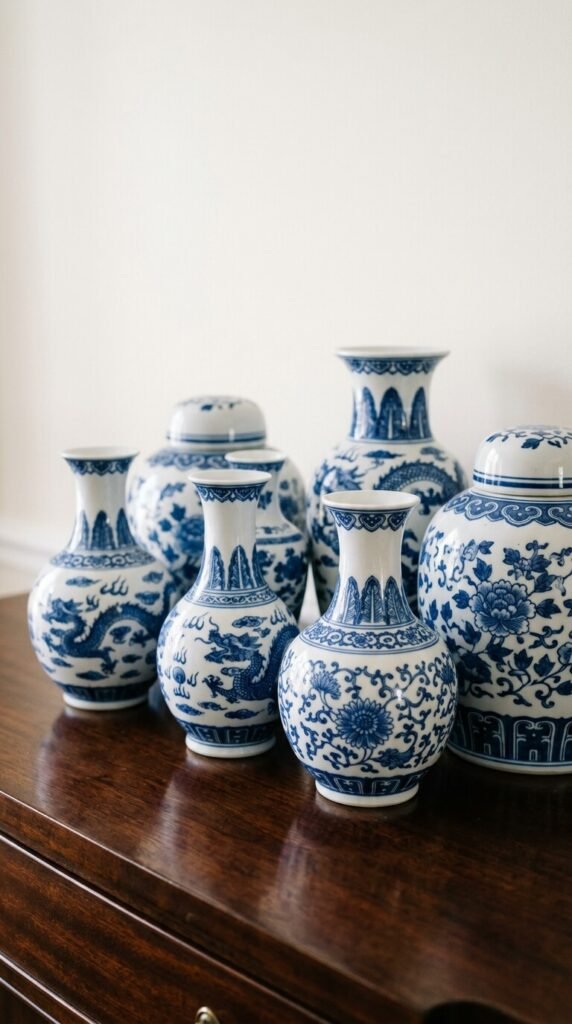
Blue and white Chinese porcelain — ginger jars, vases, and decorative plates — has been displayed in European and American traditional interiors since the 17th century. It represents one of the longest-running decorative traditions in Western home design. New reproduction blue and white ginger jars cost $20–$80 at HomeGoods and TJ Maxx. Antique pieces from estate sales and antique markets cost $50–$500 depending on age and quality. Display a grouping of three to five pieces in varying heights on a sideboard or in a glass-front cabinet. The cobalt blue and white palette looks correct against almost any dark wood.
15. Library Shelving and Leather-Bound Books
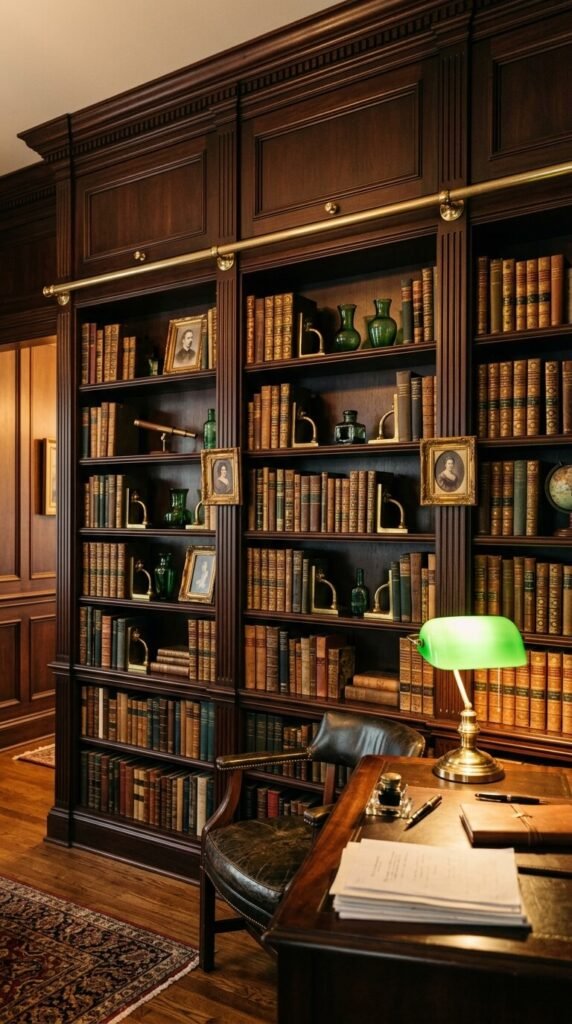
Built-in wood bookshelves lined with books are the defining feature of a traditional study or library. The books themselves become texture and color on the wall. Collect leather-bound books at estate sales and used bookshops for $1–$10 each — the content is secondary to the visual effect. Brass bookends keep groupings tidy and cost $15–$50 at HomeGoods or antique shops. Install simple stock cabinet shelving from Home Depot and paint in dark green, navy, or black for a library aesthetic at a fraction of custom cost. The combination of books, brass, and dark wood creates the richest traditional interior of all.
16. Symmetrical Furniture Arrangements
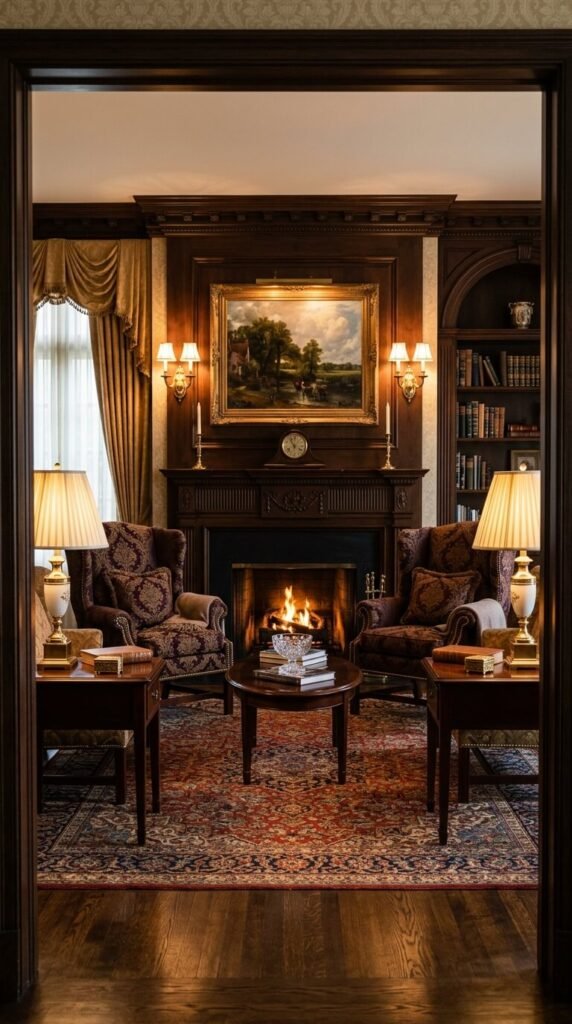
Traditional interiors are built on strict symmetry — matching lamps on matching side tables, pairs of chairs flanking a fireplace, matching pillows on a sofa. Symmetry communicates order, intention, and formality. It costs nothing to achieve if you already have furniture. The key is identifying the room’s central axis — usually the fireplace, a window, or the sofa — and arranging everything in mirror pairs from that point. Matching lamps and lampshades are the most important element. A pair of identical table lamps cost $60–$200 combined at most home goods stores. Symmetry alone transforms how formal and considered a room feels.
17. Wallpaper With Classical Patterns
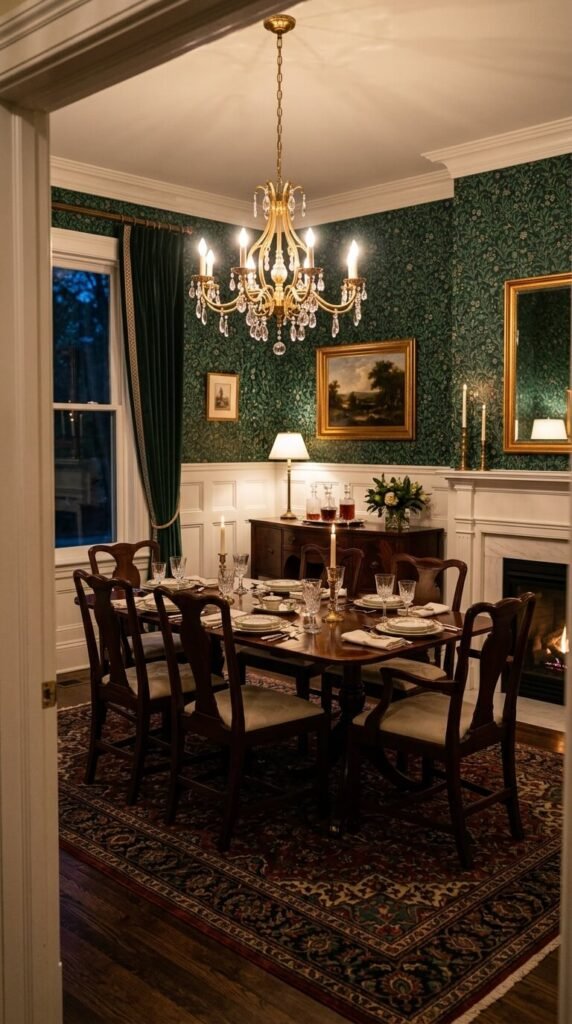
Traditional wallpaper — botanical prints, damask repeats, stripes, and small-scale geometrics — adds a layer of pattern and color that paint cannot achieve. Dark wallpaper in a dining room is one of the most classic traditional design moves: it makes the room feel intimate and jewel-box-like at dinner. Peel-and-stick wallpaper has made this fully renter-friendly. Good peel-and-stick traditional patterns from Spoonflower and Chasing Paper cost $10–$25 per square foot. Traditional wallpaper from Schumacher and Farrow & Ball costs more but is exceptionally beautiful. Start with one accent wall or a powder room to learn the process.
18. Antique Mirrors With Carved Frames
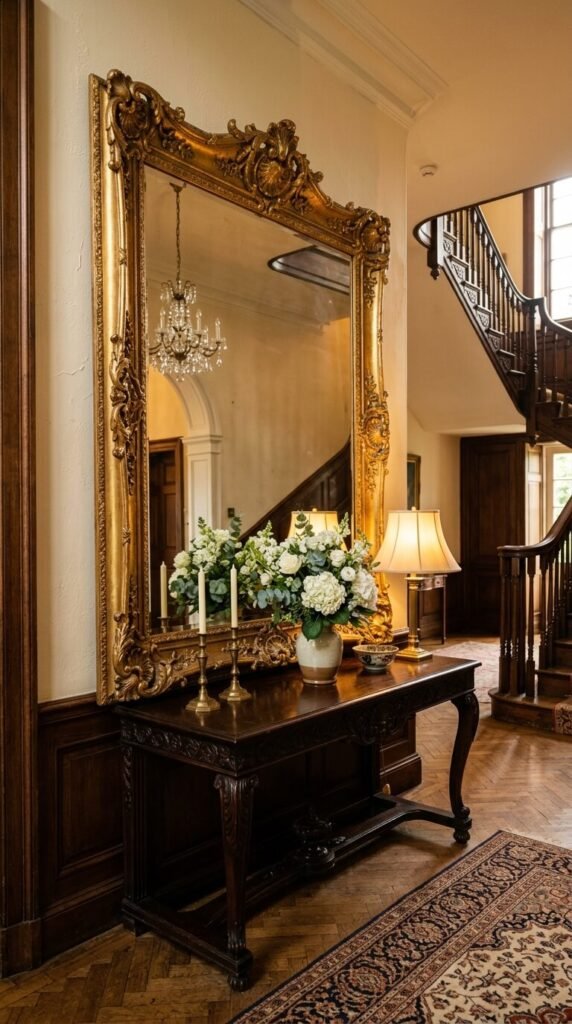
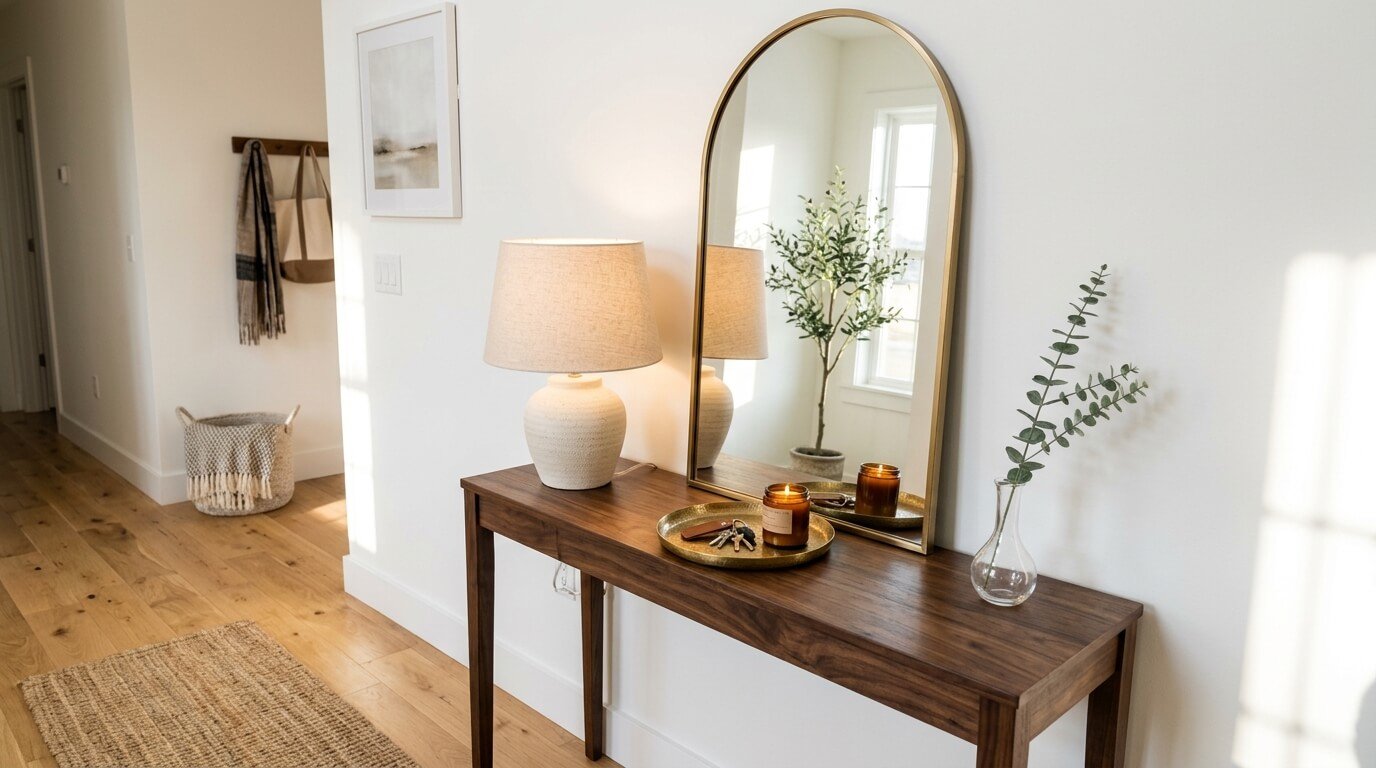
An antique or reproduction mirror in a carved gilded frame reflects light, makes rooms feel larger, and adds instant traditional character. Full-length antique mirrors from estate sales cost $50–$400. New reproduction carved gilt mirrors cost $80–$400 at HomeGoods, TJ Maxx, and online retailers. Hang above a console table in an entryway with candlesticks on either side for a complete traditional vignette. Hang above a fireplace mantel as the classic over-mantel treatment. The carved frame does the decorative work — the mirror itself simply amplifies the light and space already in the room.
19. Tapestries and Needlepoint Textiles
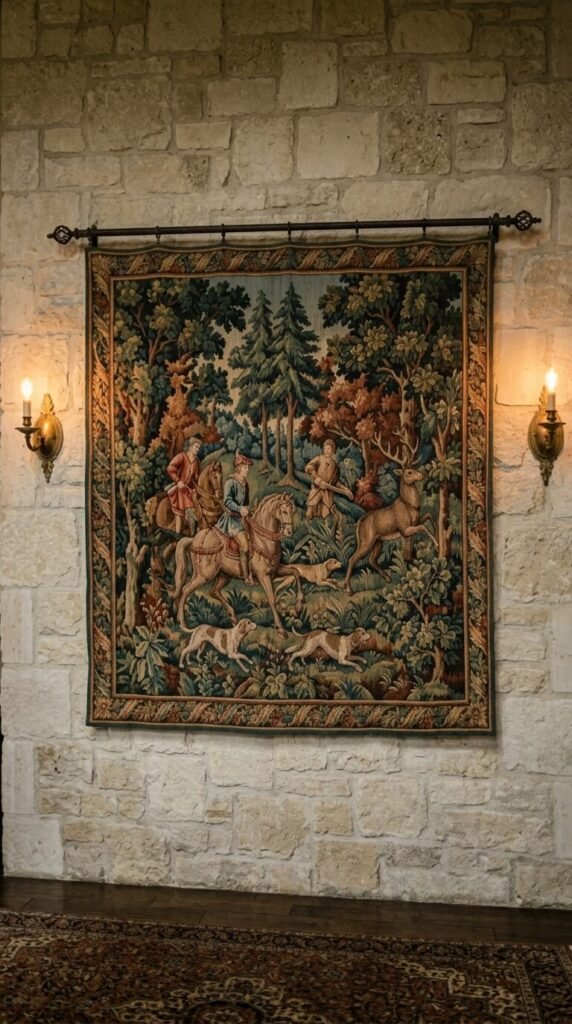
Woven tapestries and needlepoint textiles are among the oldest forms of wall decoration in Western interiors. A large tapestry on a stone or plaster wall adds immediate heritage and warmth. Reproduction tapestries depicting hunt scenes, garden views, or heraldic subjects cost $50–$300 at museum shops and online. Needlepoint pillows — hand-stitched wool on canvas — are an affordable traditional textile accent, available at antique markets for $10–$50 each. Start an embroidery or needlepoint project yourself — kits cost $20–$60 and the finished piece carries personal meaning that a purchased object never can.
20. Grandfather Clocks and Mantel Clocks
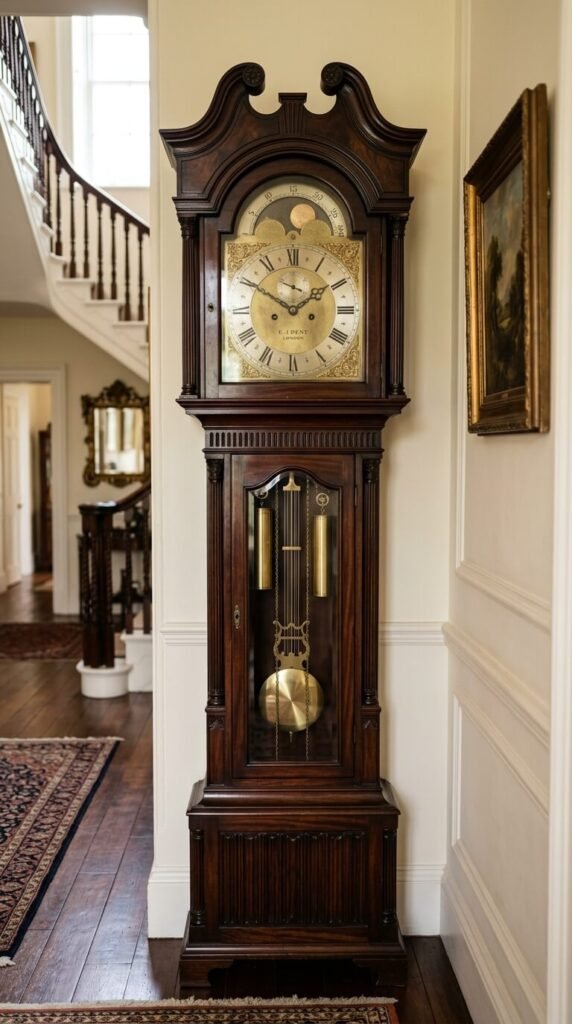
A grandfather clock in a hallway or study is one of the most commanding traditional decor statements possible. The mechanical movement, the pendulum’s rhythm, and the chime on the hour create an atmosphere no decorative object can replicate. Antique grandfather clocks from estate sales cost $300–$2,000. New reproduction clocks cost $400–$1,500. Mantel clocks — smaller versions for shelf or fireplace display — are more affordable at $50–$300 for quality reproduction pieces. The presence of a working mechanical clock in a traditional room signals an appreciation for craftsmanship that no digital device can replace.
21. Leather-Bound Albums and Memory Collections
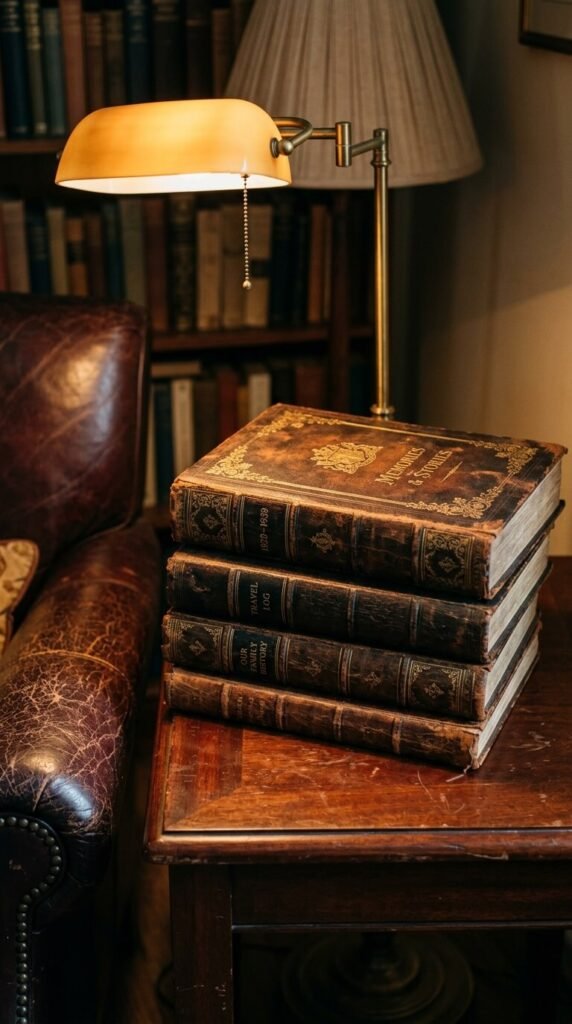
Leather-bound photograph albums and journals displayed on shelves and side tables bring personal history into a traditional interior. These objects connect the design of the room to the actual lives lived inside it. New leather albums cost $20–$60 at stationery shops and online. Vintage leather photograph albums from antique markets cost $5–$30 and can be re-filled with current photographs. Stack two or three on a side table or shelf beside a reading lamp. They invite conversation, communicate permanence, and remind visitors that the room belongs to real people with real heritage — not a stage set.
22. Hunting and Botanical Prints in Matching Frames
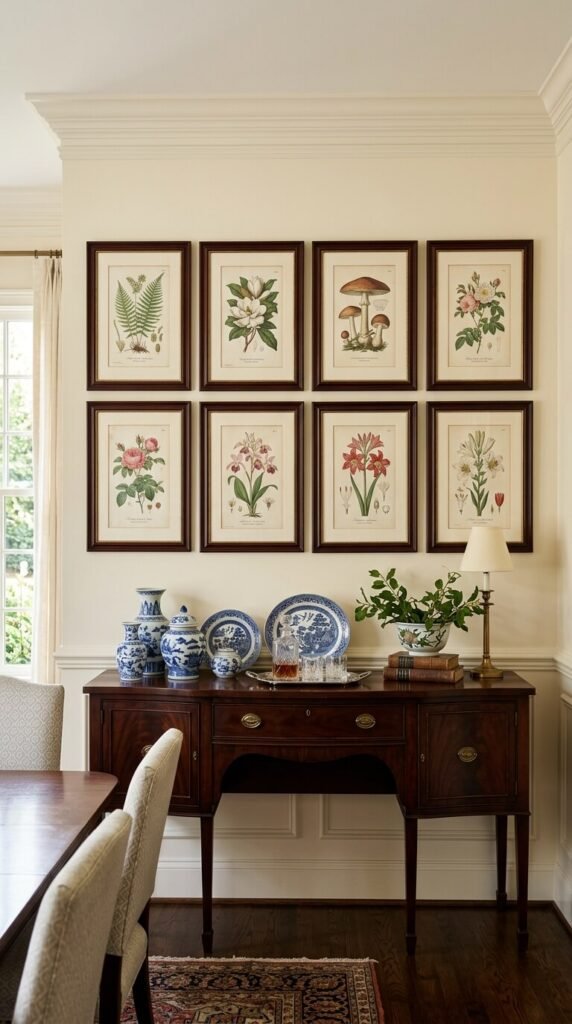
A gallery wall of matching framed prints — botanical illustrations, hunting scenes, architectural drawings, or bird illustrations — is a traditional decor staple. The key is consistency: identical frames, identical mats, precise spacing. New botanical or bird print sets are available at HomeGoods, Pottery Barn, and online for $30–$150 for a set of four. Frame vintage prints from estate sales or auction sites in matching frames for a more personal collection. Arrange in a strict grid above a sideboard or along a staircase wall. The uniformity of the frames gives even an eclectic print collection a formal, considered appearance.
23. Silver and Pewter Tableware on Display
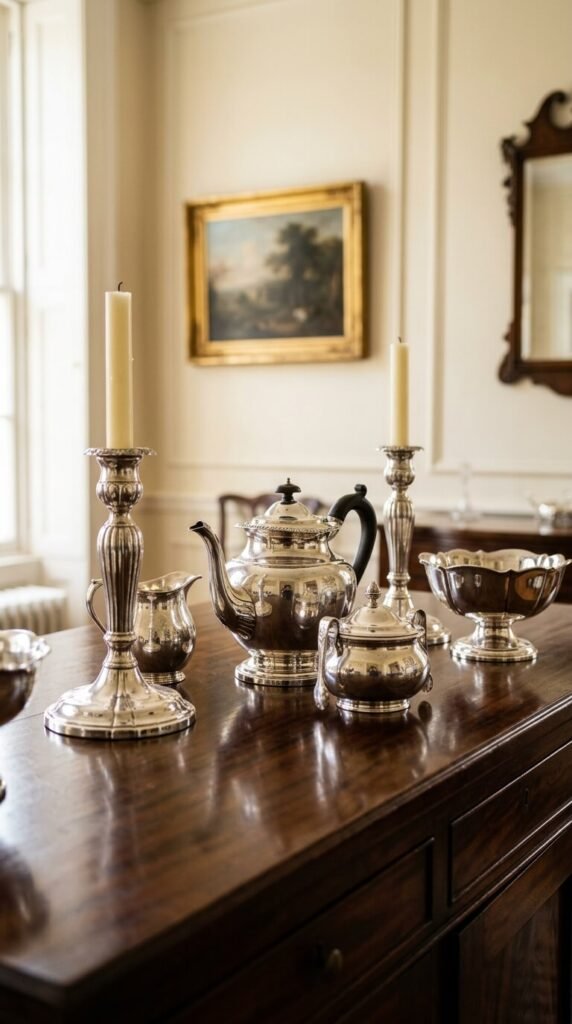
Sterling silver and pewter tableware displayed in open sideboards or on dining room surfaces is a longstanding traditional decorating practice. Silver serving pieces, tea services, and candelabras signal formal hospitality and family heritage. Antique silver at estate sales costs $20–$200 for individual pieces. New silver-plated items from companies like Reed & Barton cost $30–$150. Polish with a silver cloth before display — the shine is the entire point. Group related pieces together: a tea service on a tray, a set of candlesticks flanking a central bowl. Display silver as if every piece is waiting for a guest.
24. Heraldic and Crested Decorative Objects
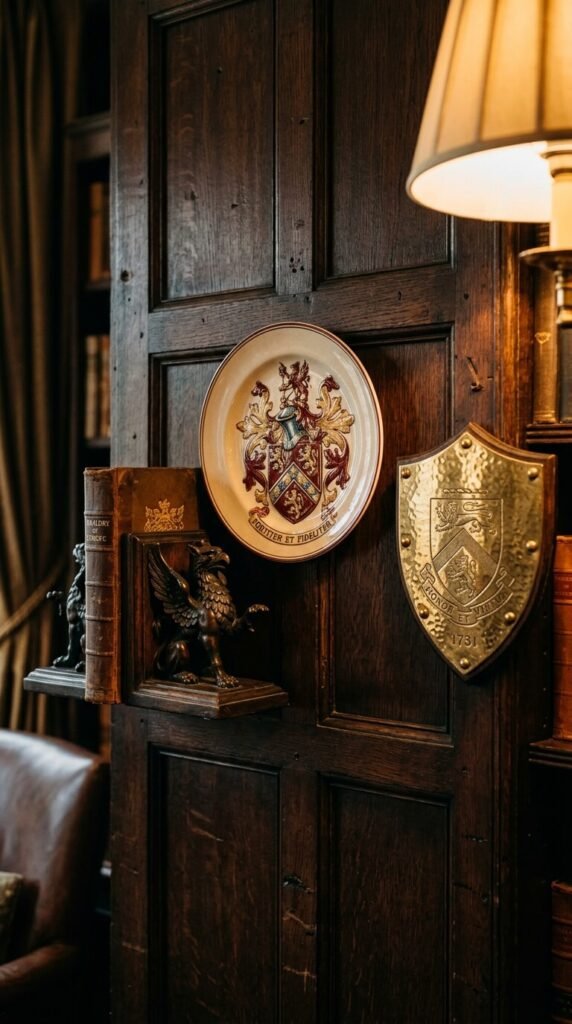
Heraldic motifs — coats of arms, crests, shields, and emblems — connect a home to lineage and institutional tradition. These objects don’t require a personal coat of arms. Heraldic ceramic plates, crested bookends, and armorial shields communicate a respect for lineage and craft. Heraldic decorative plates from antique markets cost $10–$60 each. Engraved brass plaques and shield replicas cost $20–$80. Group heraldic objects in a study, library, or formal hallway. You can commission a personal family crest from a heraldic artist for $100–$300 — a one-time investment that becomes a family heirloom displayed for generations.
Conclusion
Traditional decor asks more of a room than most design styles. It asks for real materials, genuine craftsmanship, and objects that carry meaning. The payoff is a home that feels permanent, considered, and deeply personal — a space where every piece has a reason for being there and where the room as a whole feels like it belongs to someone with actual taste and history. You don’t need to spend a fortune or buy everything at once. A carved mahogany side table from an estate sale, a pair of brass candlesticks from a thrift store, a framed botanical print in a proper mat — these small, affordable moves accumulate into something genuinely beautiful. Start with one piece that speaks to you, place it correctly, and let the room build from there.