
There’s a kind of magic that happens in the hour before noon when sunlight pours through a well-styled windowsill. The light filters through green leaves, glows through a glass bottle, catches the edge of a smooth stone — and suddenly that narrow ledge of wood or plaster becomes the most beautiful inch of real estate in your entire home. Windowsills are the most underutilized surfaces in most houses, treated as nothing more than a ledge for dust and the occasional forgotten hair tie. But styled with intention, a windowsill becomes a living, light-filled vignette that changes with the time of day, the season, and the angle of the sun.
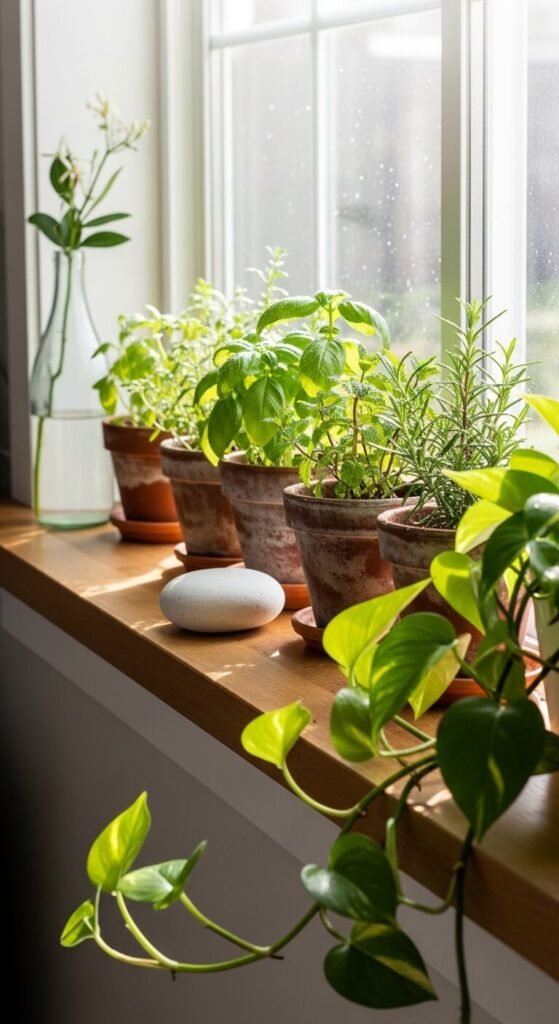
The best part? A windowsill costs almost nothing to style beautifully. Here’s exactly how to do it.
Understand Your Light Before You Style
The most important thing to know before placing a single object on your windowsill is which direction your window faces — because that determines everything from which plants will thrive there to what time of day your vignette will look its most magical.
North-facing windows:
- Receive indirect, consistent light throughout the day
- Perfect for shade-tolerant plants like ferns, pothos, and peace lilies
- Decor with reflective surfaces — glass, mirrors, metallic objects — will help bounce and amplify the gentler light
South-facing windows:
- Receive the most direct sunlight over the longest period
- Ideal for sun-loving plants like succulents, cacti, herbs, and trailing vines
- Be mindful of objects that can fade — some fabrics and dyed materials don’t love prolonged direct sun
East-facing windows:
- Receive beautiful, gentle morning light that’s warm and golden
- Great for plants that like morning sun but prefer shade in the afternoon
- The best window for watching your decor glow — that morning backlight is photographer-worthy
West-facing windows:
- Catch the warm, golden light of late afternoon and evening
- Ideal for plants that want afternoon warmth
- Colored glass objects and crystal pieces placed here will scatter rainbow light across the room as the sun moves lower
Once you know your light, every choice that follows becomes significantly easier and more successful.
The Plants: Choosing What Grows and Glows
Plants are the heart of a well-styled windowsill — and the right ones do double duty, looking beautiful while genuinely thriving in the light they’re given. The key is matching the plant to the window, not forcing a plant into conditions it can’t sustain.
For bright, sunny windowsills:
- Succulents and cacti — architectural, low-maintenance, and they look incredible backlit
- Fresh herb gardens — basil, thyme, rosemary, and mint are functional, fragrant, and genuinely beautiful in a row of terracotta pots
- Trailing string of pearls — drapes beautifully over the edge of a sill and catches light in a way that looks almost otherworldly
- Aloe vera — structural, useful, and sculptural in the right pot
For lower-light windowsills:
- Pothos — the most forgiving trailing plant alive; will drape elegantly over any edge in almost any light condition
- Snake plant — tall, architectural, and tolerates almost anything
- Small ferns — lush and feathery, they add a softness that no other plant quite replicates
- Air plants — require no soil, minimal water, and look stunning displayed in small glass vessels or shells
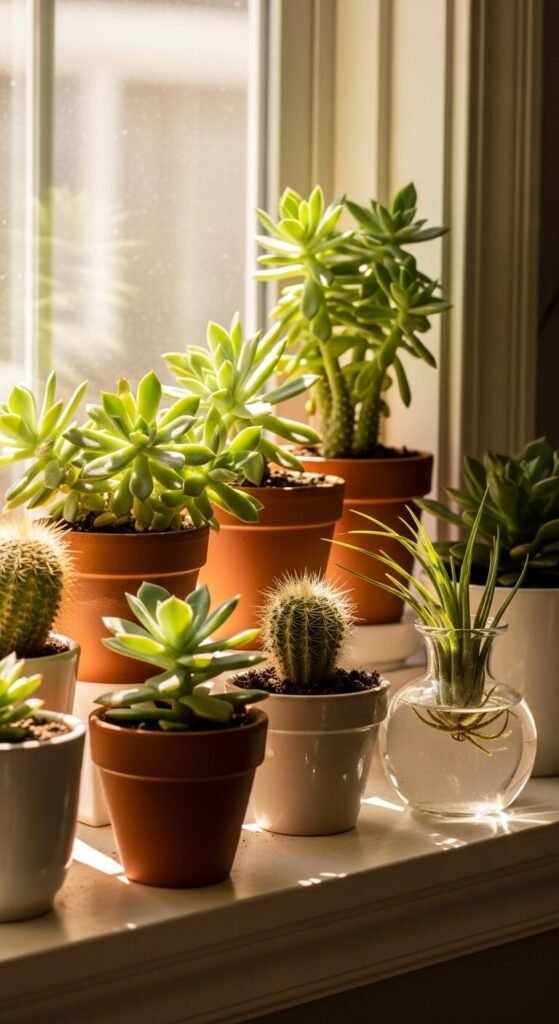
The Decor: Objects That Earn Their Place in the Light
Plants alone make a beautiful windowsill — but the right supporting objects turn it into a true vignette. The magic word here is light interaction. The best windowsill decor objects are ones that do something interesting when the sun hits them.
Objects that catch and play with light beautifully:
- Colored or clear glass bottles and vessels — scatter colored light across nearby walls and surfaces when the sun shines through them directly
- Crystal or prism objects — hang a small crystal from the window latch or place one on the sill and watch it throw rainbows across the room in direct sunlight
- Smooth stones and pebbles — simple, grounding, and they warm beautifully in the sun; collected from a beach or riverbank they also carry personal meaning
- Shells — translucent shells backlit by sun glow in a way that looks almost like stained glass
- Small ceramic objects — a hand-thrown bowl, a tiny sculptural piece, or a simple bud vase add texture and personality without competing with the plants
Objects to use with restraint:
- Books and paper items — direct sun will fade and warp them over time
- Candles in direct sun — they soften and melt quickly; save these for windowsills that get indirect light only
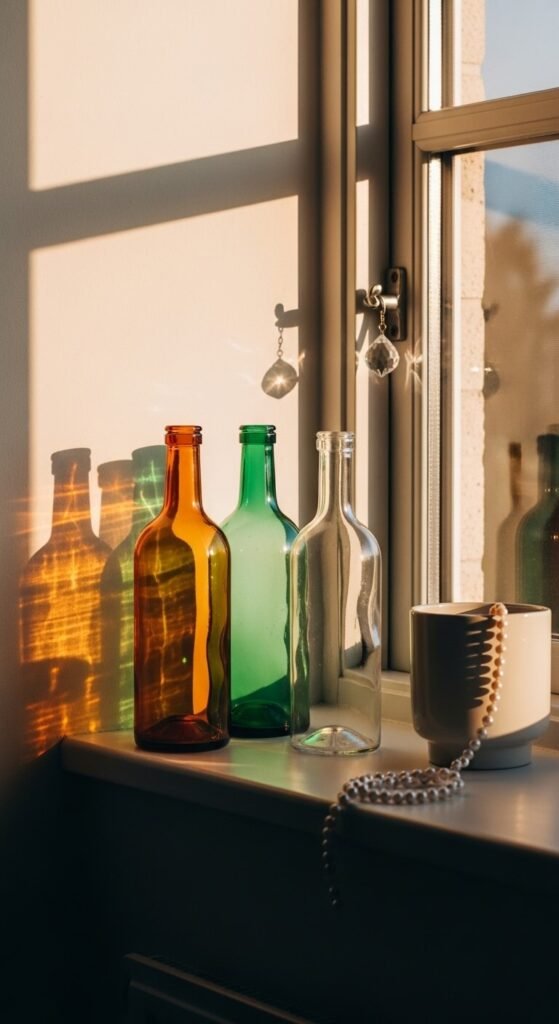
How to Compose a Windowsill Vignette
Knowing what to put on a windowsill is only half the art — knowing how to arrange it is the other half. A few simple composition principles make all the difference between a windowsill that looks curated and one that just looks like a collection of stuff.
Vary the height: Place taller objects — a slender bottle, a tall succulent, a potted herb — beside shorter, rounder ones. That variation in height creates visual rhythm and prevents the arrangement from looking flat.
Work in odd numbers: Groups of three or five feel more natural and balanced than even pairs. Three plants, two decorative objects, and one functional item (a small tray or dish) is a classic formula that almost always works.
Let something trail or spill: A trailing plant that drapes over the edge of the sill connects the arrangement to the room below and softens the hard line of the ledge. It’s the detail that makes a windowsill look styled rather than simply stacked.
Leave breathing room: Not every inch needs to be filled. Negative space between objects gives each piece room to be appreciated — and it keeps the arrangement looking intentional rather than crowded.
Layer depth when the sill allows: On a deeper sill, place taller items toward the back and smaller items toward the front. That sense of layered depth makes the arrangement look lush and considered from across the room.
Seasonal Refreshes That Keep It Feeling Fresh
One of the most joyful things about a windowsill vignette is how easily and inexpensively it can be refreshed with the seasons.
- Spring: Fresh herb seedlings, a small vase of tulips or daffodils, a pastel ceramic piece
- Summer: Sun-loving succulents at their peak, a seashell collection, a bright citrus-colored vessel
- Autumn: A small potted mum, pinecones, a warm amber glass bottle, dried seed pods
- Winter: Forced bulbs in glass vases, a small evergreen cutting in water, white and silver objects that catch the lower winter light beautifully
Swapping out one or two pieces with the seasons keeps the windowsill feeling alive and connected to the world just outside the glass.
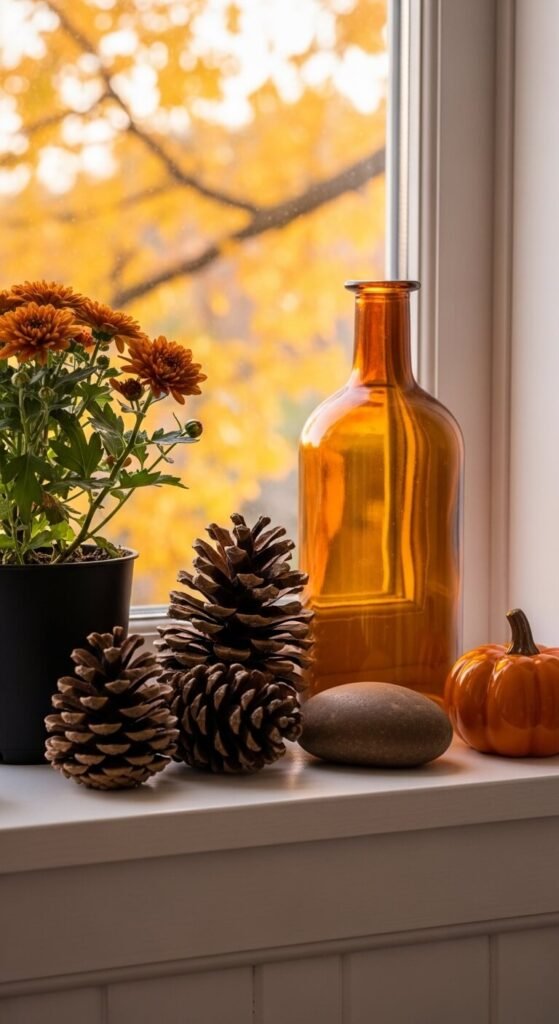
Your Most Beautiful Inch of Real Estate
Every window in your home is a frame — and what you place in that frame is entirely up to you. A few plants chosen for the light, a handful of objects that glow and sparkle in the sun, and a little intentional arrangement are all it takes to turn a forgotten ledge into the first thing you notice when you walk into the room.
Save this guide for your next slow weekend morning, share it with someone whose windowsills are crying out for attention, and go find the light your plants and decor have been waiting for. 🌿☀️