
Open shelving is one of those design choices that looks absolutely stunning in every kitchen photo you’ve ever saved — and slightly chaotic in real life. Sound familiar? The difference between an open shelf that looks like a Pinterest dream and one that looks like a yard sale isn’t the shelf itself. It’s what goes on it, how it’s arranged, and — most importantly — what gets edited out. The good news? With a few simple principles, you can make your open kitchen shelves look intentional, beautiful, and effortlessly organized every single day.
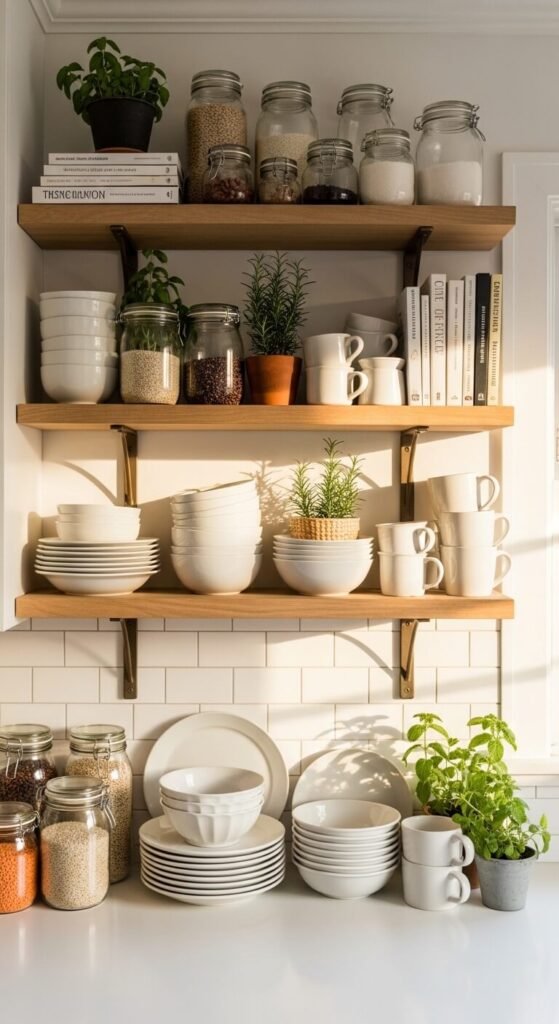
Edit Ruthlessly Before You Style
Here’s the hard truth: open shelving is not the place for everything. The first step to beautiful open shelves isn’t buying anything new — it’s getting rid of what doesn’t belong.
Before a single item goes back on the shelf, pull everything off and ask yourself:
- Is this something I use regularly or something I genuinely love looking at?
- Does it look good enough to be on display — or is it chipped, mismatched, or just ugly?
- Would I be comfortable with a guest seeing this?
If the answer to any of those is no, that item lives in a cabinet from now on. Open shelves should hold only your best — your most beautiful, your most useful, or ideally both. The ugly measuring cups, the mismatched plastic containers, the random collection of takeout menus — they all go behind closed doors.
Stick to a Tight Color Palette
The fastest way to make open shelves look messy isn’t clutter — it’s too many competing colors. When the eye doesn’t know where to land, everything reads as chaos.
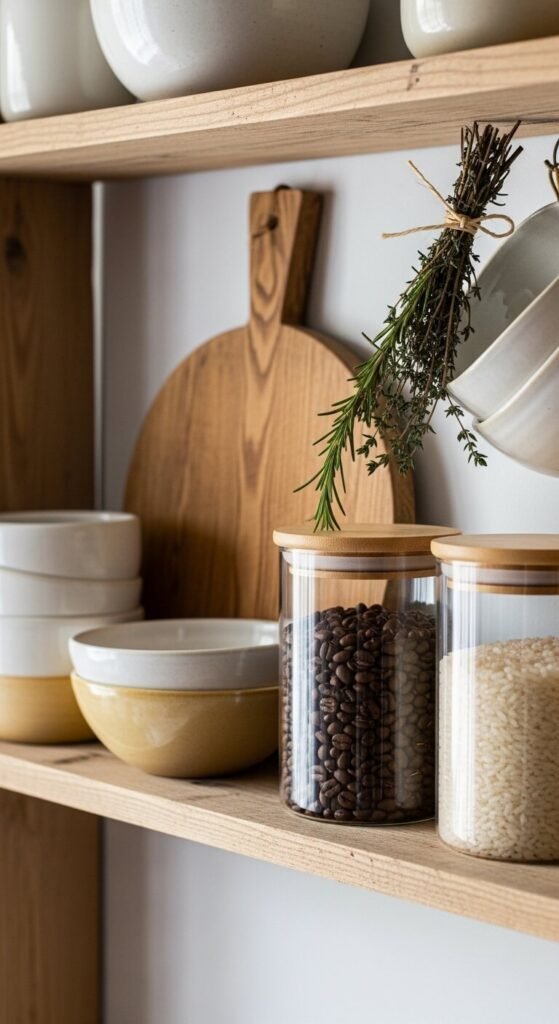
Choose a color palette of two to three tones maximum and stick to it throughout your entire display:
- White, cream, and natural wood — the classic, works in almost every kitchen style
- Black, white, and brass — sleek, modern, and endlessly sophisticated
- Earthy tones — terracotta, warm beige, sage green, and raw linen for a more organic feel
- All-white — the cleanest look of all; incredibly serene when done well
This doesn’t mean everything has to match exactly. It means the overall impression from across the room should feel pulled together, not scattered.
Mix Heights, Shapes, and Textures Intentionally
A shelf full of things that are all the same height and size is boring — but a shelf with zero visual rhythm is overwhelming. The sweet spot is a thoughtful mix that creates movement without confusion.
Think of your shelf like a still life painting. You want:
- Tall items — a pitcher, a bottle of olive oil, a large jar, or a potted herb to draw the eye upward
- Medium items — stacked plates, bowls, or a small vase to fill the middle ground
- Low items — a small dish, a single cup, or a folded cloth napkin to anchor the base
- Varying shapes — round bowls next to rectangular books next to a cylindrical jar creates natural tension and interest
- One or two textures — a woven placemat, a wooden board, or a linen cloth adds warmth among the hard surfaces
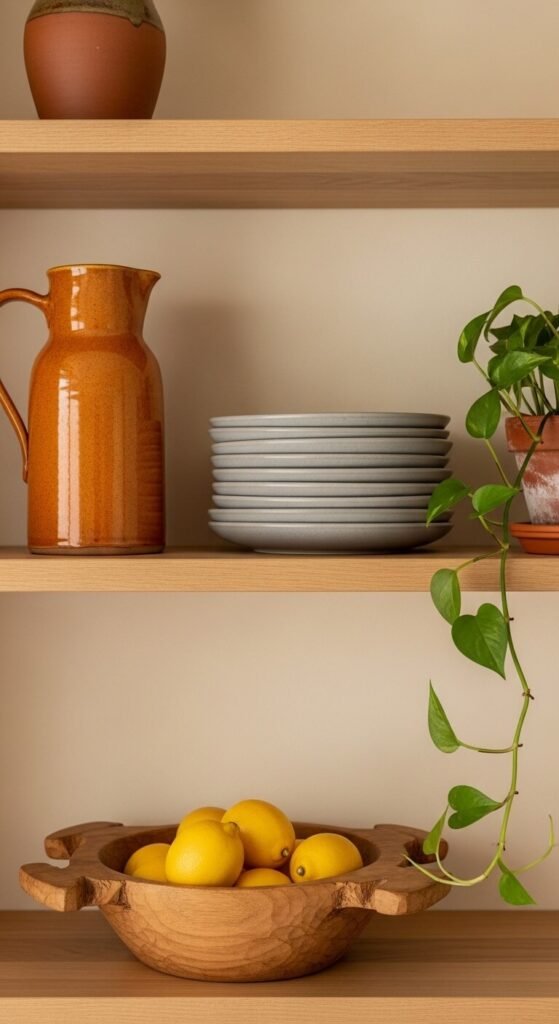
The rule of odd numbers applies here too — groups of three objects almost always look more natural and dynamic than groups of two or four.
Use Everyday Items as the Foundation
The biggest mistake people make when styling open shelves? Treating them like a display cabinet full of things they never touch. The best-looking kitchen shelves are built around items you actually use every day — they just happen to be the most beautiful versions of those things.
Start with your everyday essentials as your base layer:
- Dishes — stack your most beautiful plates, bowls, and mugs front and center
- Glassware — uniform glasses or mason jars lined up neatly look clean and purposeful
- Pantry staples — decant rice, pasta, coffee, and grains into matching glass or ceramic canisters
- Cookbooks — a small curated stack adds height, personality, and color
- Cutting boards — lean a beautiful wooden board against the wall as both a tool and a sculptural object
Then — and only then — layer in purely decorative pieces: a small plant, a candle, a piece of pottery, a bunch of dried herbs. Decoration should complement function, not replace it.
Keep It Clean and Commit to Maintenance
This is the part no one talks about enough: open shelves require more maintenance than closed cabinets. Kitchen dust, grease, and steam are real — and they collect quickly on anything left out in the open.
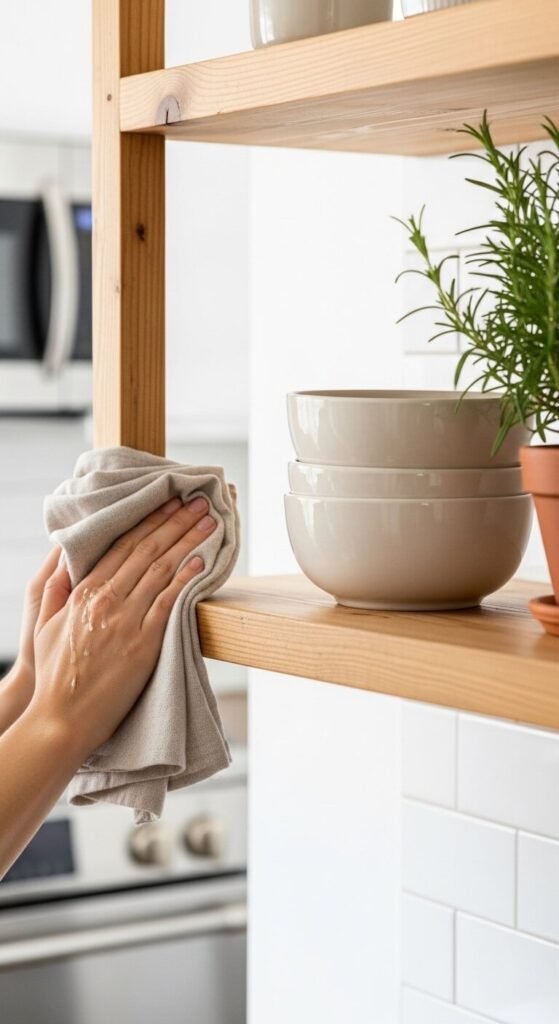
Set yourself up for success with these habits:
- Dust and wipe shelves down weekly — it takes less than five minutes if you do it consistently
- Wash displayed items regularly — even items that aren’t actively used collect a film over time
- Re-edit every season — swap in seasonal items (a bowl of citrus in winter, fresh herbs in summer) and remove anything that’s drifted in and doesn’t belong
- Resist the urge to fill gaps — empty space on a shelf isn’t a problem to solve. It’s breathing room, and it makes everything around it look more intentional.
The commitment to maintenance is what separates a kitchen that always looks styled from one that starts out beautiful and slowly slides into visual chaos.
The Takeaway
Beautiful open kitchen shelves aren’t about having the most stylish stuff — they’re about showing less, choosing better, and maintaining it consistently. Edit down, stick to a palette, mix your heights thoughtfully, and let your everyday items do the heavy lifting.
Save this article before your next kitchen refresh — and the next time you stand in front of your open shelves feeling overwhelmed, come back to these principles. A few small edits can change everything. 🍋✨