
An upholstered ottoman without a tray on it is a surface that invites everything and organizes nothing — the remote, the magazine, the glass of water, the phone charger, and eventually every small item that migrated from every other surface in the room. A tray changes all of that. It creates a defined, stable working surface on the soft ottoman top, corrals the objects on it into a single intentional composition, and transforms what would otherwise look like a dumping ground into a genuinely styled moment that anchors the center of the living room. The tray is not just decorative. It is the difference between a living room that looks assembled and one that looks designed. And the good news is that styling a tray on an ottoman correctly takes about five objects and about three minutes.
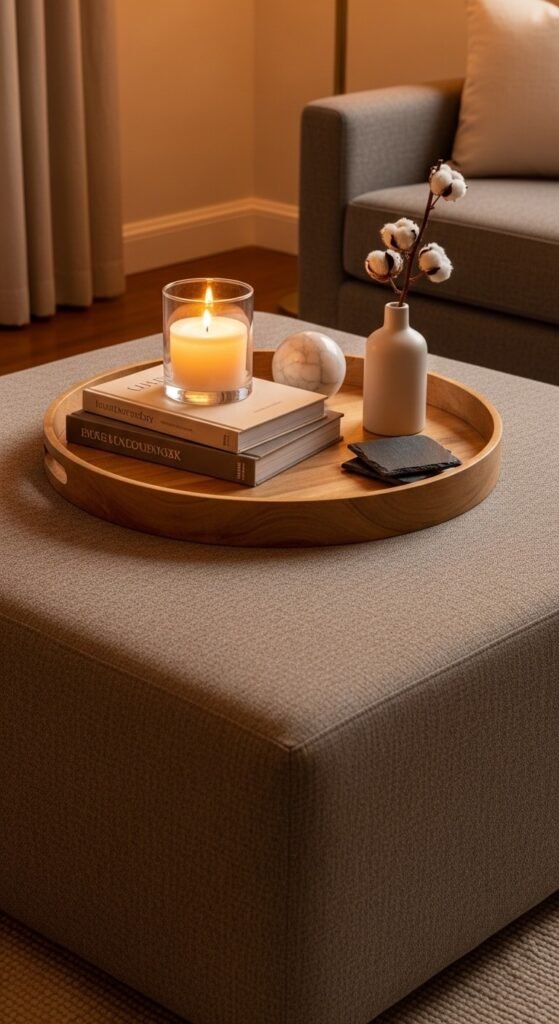
Here is exactly how to choose the right tray, pick the right objects, and arrange them in a way that looks deliberately designed rather than casually assembled.
Choose the Right Tray Size and Material
The tray is the foundation of the entire display — and its size and material relative to the ottoman surface determines whether the arrangement reads as proportional or awkward.
Size rules:
- The tray should cover approximately 50 to 70 percent of the ottoman’s top surface — large enough to feel anchored and substantial, small enough to leave some of the ottoman’s fabric visible on at least one or two sides
- For a square ottoman (typically 36 to 48 inches wide), a 20 to 24-inch round tray or a 16 to 22-inch square tray sits in the correct proportion
- For a rectangular ottoman, a long rectangular tray running lengthwise down the center creates the most balanced look
Material pairings that work:
- Round wooden tray on a fabric ottoman — the warm wood against the upholstered surface creates a material contrast that reads immediately as intentional
- Rattan or woven tray on a linen or textured fabric — organic against organic, but different enough in texture to be visually interesting
- Lacquered or painted tray in a contrasting color — a black lacquer tray on a cream ottoman, a white tray on a charcoal ottoman
- Marble or stone tray on a velvet ottoman — the cool hard stone against the soft nap of velvet creates the most luxurious contrast available at any price point
The Five-Object Formula That Always Works
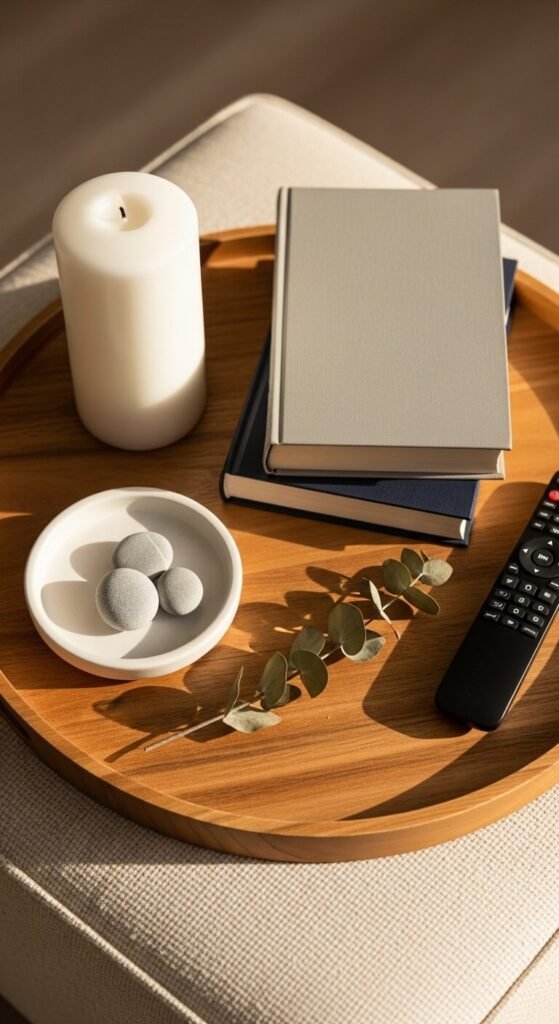
Every great ottoman tray display follows the same five-element structure — one object from each category, arranged together:
- One tall element — a candle, a small vase with a stem, a single decorative bottle. This provides height and gives the eye somewhere to travel upward.
- One medium element — a stack of two to three books with coordinating spine colors. Books are the most versatile medium element — they provide color, height, and a flat platform for placing a second object on top.
- One low flat element — a coaster, a small ceramic dish, a marble sphere, or a small decorative object. This anchors the front of the tray and keeps the display from feeling top-heavy.
- One organic element — a small plant, a dried stem laid flat, a pine cone, a smooth stone from a meaningful place, or a single flower in a small vessel. This is the detail that makes the tray feel considered rather than generic.
- One functional element — the remote, a coaster in active use, a small candle lighter, or a book that is genuinely being read. Including one real-life object prevents the tray from looking like a showroom display rather than a home.
Keep the total to five objects. Six is occasionally acceptable. Seven begins to look crowded regardless of how well each object was chosen individually.
Arrange Objects by Height — Tallest to Shortest
Height variation is what gives the ottoman tray its visual depth and prevents the display from reading as flat and one-dimensional.
The arrangement sequence:
- Place the tallest object — toward the back of the tray or slightly off-center
- Position the medium book stack beside it — with or slightly in front of the tallest element
- Place the low flat object at the front of the tray, nearest to where people sit
- Tuck the organic element beside or between the existing objects — not placed rigidly, but nestled
- Place the functional element wherever it is most practically accessible — often the front corner
The spacing rule: Leave visible tray surface between objects — do not push everything together until they are touching. The tray itself is part of the display. The breathing room between objects is what makes each one readable as a deliberate choice.
Seasonal Updates That Take Two Minutes
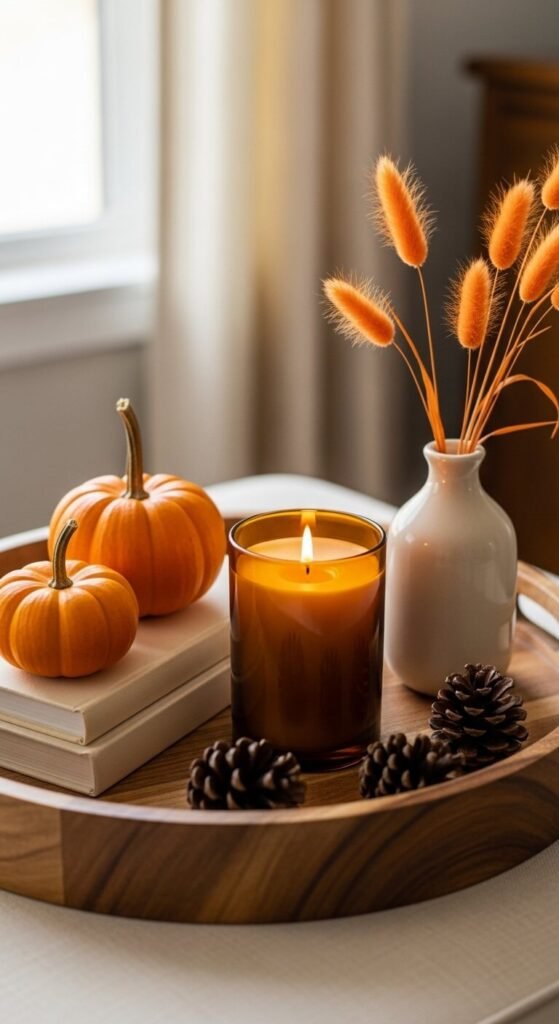
The best ottoman tray is one you update four times a year — keeping the tray and the book stack constant while swapping the three or four remaining elements with the season.
The two-minute seasonal swap:
- Autumn: Replace the candle with an amber or dark amber version, add one or two mini pumpkins, tuck a pine cone beside the stack
- Winter/Christmas: Add a small sprig of pine or holly, swap to a red or deep green candle, add a small wrapped gift or a cinnamon stick bundle
- Spring: Replace the dark organic element with a small bud vase of fresh tulips or a small potted herb, swap to a cream or pale pink candle
- Summer: Add a small seashell, a white candle, and a small trailing succulent
The total cost of four seasonal refreshes: $10 to $20 per season, since you are only replacing three or four objects while keeping the tray and books constant.
The Ottoman Tray Is the Living Room’s Anchor
A styled ottoman tray does what no other single living room accessory quite manages — it defines the center of the room as a designed space. The sofa, the rug, and the coffee table all contribute to the room’s shape. But the tray says someone lives here who pays attention to the details.
It takes three minutes to style. It costs between $20 and $60 total for the tray and objects combined, sourced from a discount home store or already owned. And the room looks entirely different with it than without it — every single time.
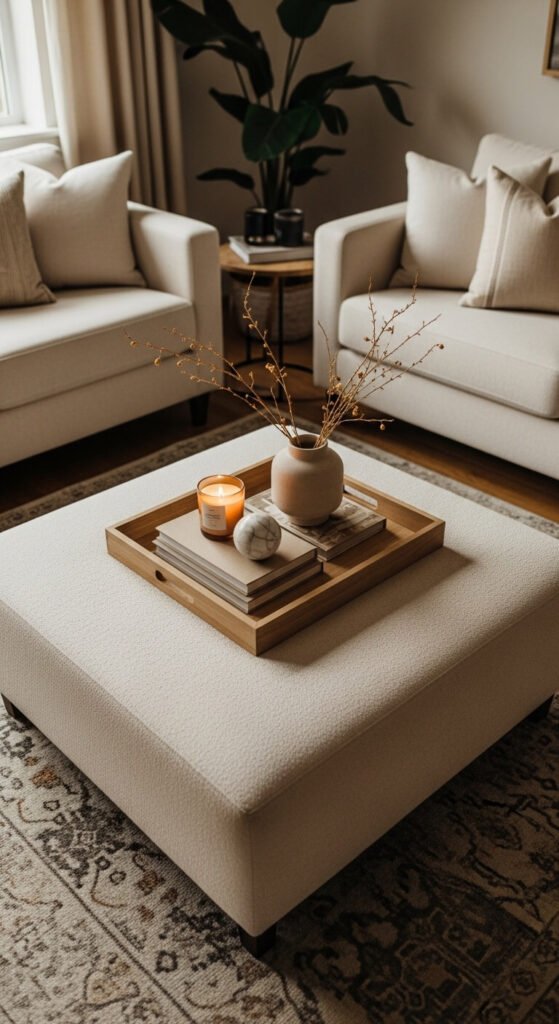
Save this and pin it as your tray styling guide — because five objects on a tray in the right order is one of the fastest ways to make any living room look completely put together.