
The dining table is the one piece of furniture in a home that earns its place twice — once as furniture and once as a stage. A bare table tells guests that dinner is practical. A styled table tells them it was thought about. The difference between a table that looks like a surface and a table that looks like a destination comes down to a handful of decisions, none of which require expensive china, fresh flowers from a florist, or hours of preparation. The most beautifully styled dining tables are the ones that look considered without looking labored — and that balance is completely achievable with what most people already own.
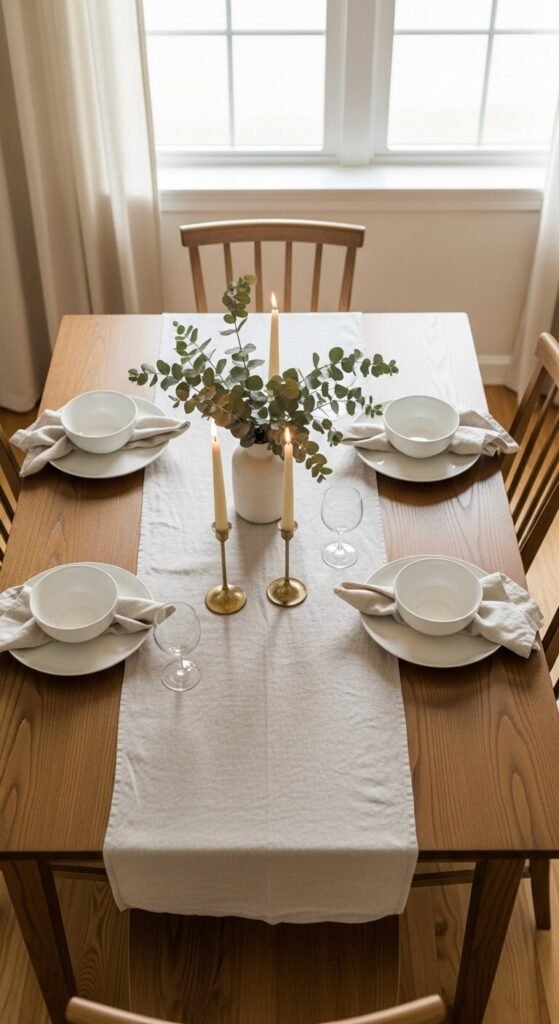
Here is the system that works every time.
Start with the Center First
The centerpiece anchors everything — it is the element the eye lands on first and the one that sets the tone for the whole table.
The most common centerpiece mistake is going too tall. A centerpiece that rises above eye level when seated blocks conversation across the table and makes dinner feel like a meeting with a partition. Keep it low.
What works:
- A low, wide vase with dried eucalyptus, pampas grass, or seasonal branches — dried botanicals require no water and last indefinitely
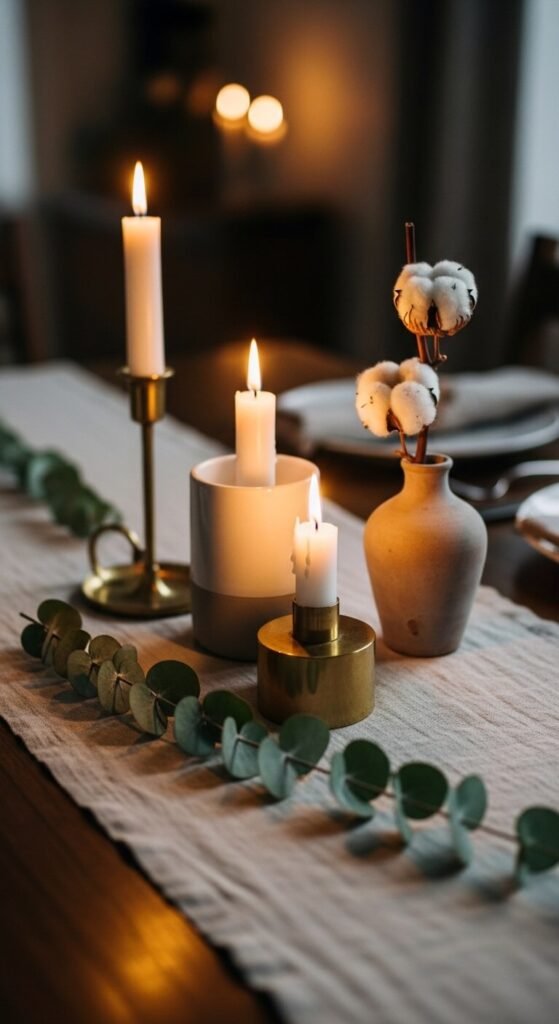
- A cluster of three candles at different heights — two tapers in candlesticks and one short pillar candle create a triangular arrangement that reads as intentional
- A long wooden tray running down the center holding a few small objects — a candle, a small plant, a stack of books — grouped inside the tray so the display reads as one unified element
The centerpiece should leave room for serving dishes. A runner of natural linen or jute running lengthwise down the table beneath the centerpiece grounds the whole arrangement and gives it a base that ties the center together.
Set a Place Setting That Looks Complete
You do not need matching sets to create a beautiful place setting. You need consistency and intention.
The everyday elegant place setting:
- Plate — centered, leaving roughly an inch from the table edge
- Napkin — folded simply in a rectangle and placed to the left of the plate, or on top of it
- Cutlery — fork on the left of the plate, knife and spoon on the right. This is the only rule that genuinely matters
- Glass — placed just above the knife, at the top right
That is the complete structure. From there, small details create the shift from functional to elegant:
- A linen napkin rather than paper transforms the table more than almost any other single change
- Matching napkin rings — a set of four costs $12 to $20 and makes folded napkins look deliberate
- A charger plate beneath the dinner plate adds visual weight and a finished look
You do not need a full twelve-piece place setting. Four matching dinner plates, four linen napkins, and consistent glassware create a table that looks considered.
Use Candlelight as a Non-Negotiable
This is the one styling element that has the most impact for the least cost — and the one most reliably skipped.
Candles at a dining table do three things simultaneously:
- They lower the ambient light level when the overhead is dimmed, making every face at the table look significantly more flattering
- They signal to guests that the meal was prepared with care
- They create a focal point that makes the table feel alive even before the food arrives
Use taper candles in simple candlesticks for the most formal-adjacent look. Use pillar candles in glass hurricane holders for something more casual and wind-resistant at an outdoor table.
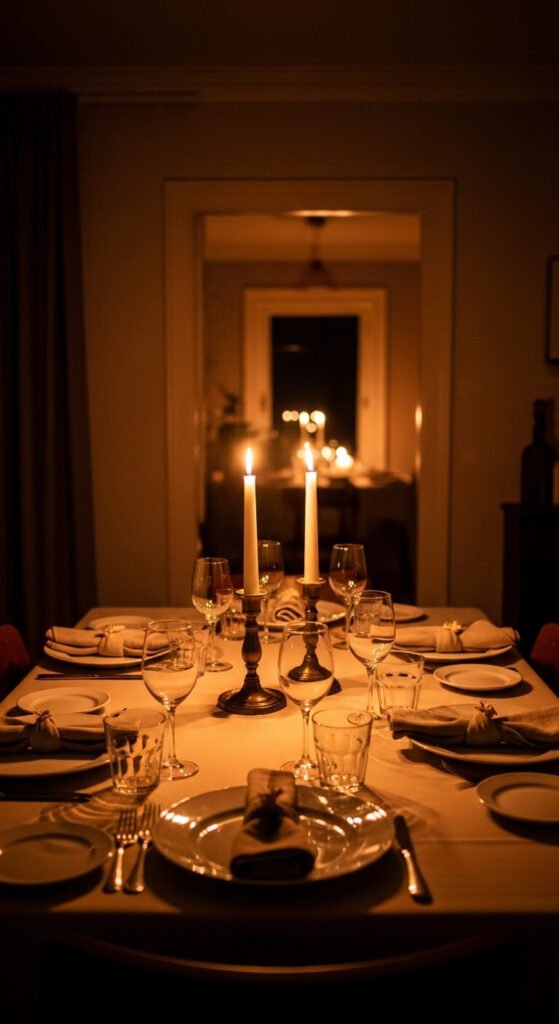
Light them before guests sit down. A table that is already glowing when people pull out their chairs communicates something that cannot be replicated by rushing to light them at the table.
Add a Texture Layer
The most beautifully styled tables always have multiple materials working together — not just ceramic and glass, but something softer, something organic, something with variation.
Easy texture additions:
- A linen or cotton table runner rather than a full tablecloth — it frames the table without covering the wood surface, which is almost always more beautiful than a cloth
- Natural fiber placemats — woven rattan or jute rounds under each plate add warmth and individual definition to each seat
- A ceramic or terracotta vase rather than glass — matte surfaces add depth that reflective materials alone cannot provide
The rule of thumb for texture at a table: at least three different materials should be touching the table surface — something matte, something natural, something textile.
Keep It Consistent for Every Meal
The single biggest obstacle to an everyday styled table is the belief that it requires a special occasion. It does not.
A styled table takes three minutes once the system is in place:
- Place the runner down the center
- Set the centerpiece (which stays there all week)
- Set the plates, napkins, and cutlery
- Light the candles
That is the entire process. The table does not need to change between Tuesday pasta and Saturday dinner with guests. Consistency is the point — a table that is always set tells everyone who sits at it that the meal matters regardless of the day.
Save this and pin it as your go-to table styling guide — because a beautiful table every night costs nothing and changes everything about how dinner feels.