
You know those bookshelves that look like they belong in a magazine spread—perfectly curated, beautifully balanced, effortlessly chic? And then there’s your bookshelf: a chaotic jumble of books crammed in every which way, random objects piled haphazardly, and an overall vibe that screams “I gave up.”
Here’s the secret that design influencers don’t always share: the best bookshelves aren’t perfectly pristine. They’re styled yet approachable, organized yet personal, beautiful yet functional. They look like real people actually use them—because they do.
The magic is in finding that sweet spot between “Instagram-perfect” and “I actually live here.” You want a bookshelf that looks intentional and pulled-together, but still feels warm, collected, and authentically you. It’s totally achievable, and it doesn’t require color-coding by spine or hiding all your actual books. Let’s break down exactly how to create bookshelf styling that’s both gorgeous and genuinely livable.
Start With The 70/30 Rule (Books Vs. Objects)
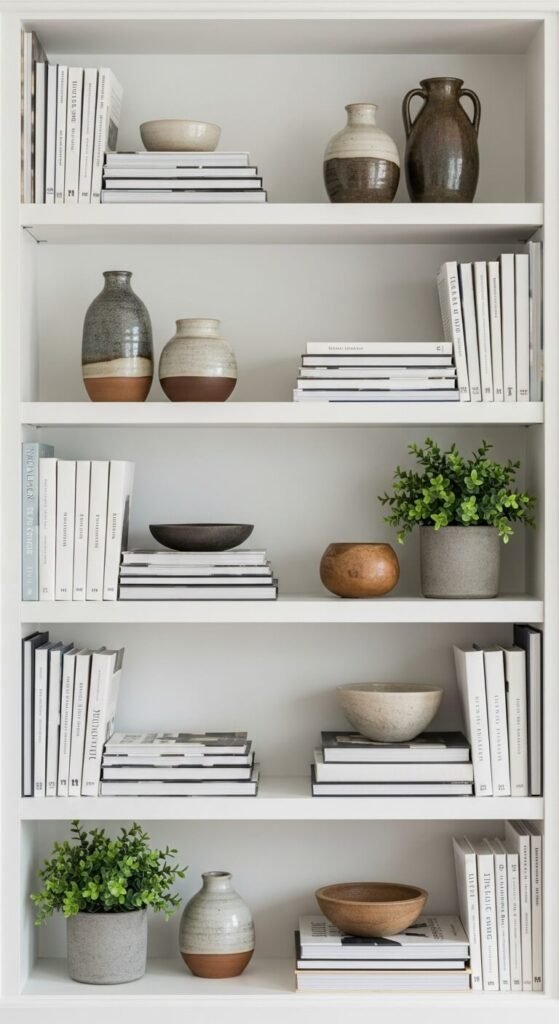
The foundation of lived-in bookshelf styling is balance. Your shelves should be roughly 70% books and 30% decorative objects—not the other way around.
Why this ratio works:
- Keeps the “bookshelf” identity clear
- Prevents the overly-staged look of too many accessories
- Maintains functionality while adding visual interest
- Feels collected over time rather than styled in one afternoon
If your ratio is flipped (70% decor, 30% books), your bookshelf becomes a display unit and loses that cozy, lived-in feeling. Books should dominate—they’re the foundation that makes everything else look intentional rather than cluttered.
Mix Vertical And Horizontal Book Stacking
This is the easiest way to instantly upgrade your bookshelf styling. Combining vertical and horizontal stacks creates visual rhythm and breathing room.
The stacking strategy:
Vertical books (standing upright):
- Group 5-10 books together between bookends
- Create “sections” within each shelf
- Makes titles easy to read and access
- Use for your most-reached-for books
Horizontal books (stacked flat):
- Stack 3-5 books per pile
- Place objects on top of stacks
- Break up the vertical lines
- Use for oversized or coffee table books
The pattern:
- Vertical group → horizontal stack → vertical group
- Or: horizontal stack on left, vertical books in middle, object on right
- Vary the pattern across shelves for interest
This mix is what makes bookshelves look designed rather than just filled. It creates natural pauses and prevents that “books jammed in a line” look.

Apply The Rule Of Three To Decorative Objects
When adding non-book items, group decorative objects in odd numbers—especially threes—for arrangements that feel balanced and intentional.
Object grouping guidelines:
Three-object vignettes:
- Vary heights (tall, medium, short)
- Mix textures (ceramic, plant, metal)
- Create triangular sight lines
- One vignette per shelf maximum
What to include:
- Small plants (real or faux)
- Vases or ceramics
- Picture frames
- Candles
- Sculptural objects
- Personal mementos
- Baskets (great for hiding clutter)
What to avoid:
- Too many small tchotchkes
- Everything the same height
- More objects than books
- Anything that looks like it came from a gift shop yesterday
The three-item grouping creates intentional moments throughout your bookshelf without overwhelming it with accessories. These become the visual “punctuation” between sections of books.
Leave Strategic Negative Space
This is what separates styled bookshelves from cluttered ones. Empty space is not wasted space—it’s essential for that organized yet lived-in look.
How to incorporate breathing room:
- Leave some shelves only 60-70% full
- Don’t fill every vertical inch
- Allow space between object groupings
- One shelf can have just a single stack of books and one object
Why negative space matters:
- Lets the eye rest
- Makes styled elements stand out more
- Prevents overwhelming visual chaos
- Creates that “curated” rather than “stuffed” feeling
- Makes it easier to add and remove books as needed
If every shelf is packed to the edges, even beautiful styling reads as cluttered. Empty space is the secret ingredient that makes everything else look intentional.

Color Coordinate Loosely (Not Obsessively)
Rainbow bookshelves look amazing in photos but are impossible to use in real life. A softer approach to color coordination maintains visual harmony without sacrificing functionality.
Practical color strategies:
Group by general color tones:
- Warm tones together (reds, oranges, yellows)
- Cool tones together (blues, greens, purples)
- Neutrals as anchors (whites, creams, blacks, browns)
Alternate color groupings across shelves:
- One shelf: mostly warm tones
- Next shelf: neutrals
- Following shelf: cool tones
- Creates rhythm without rigid organization
Or try the “bookend” method:
- Darker books on the ends of vertical groups
- Lighter books in the middle
- Creates natural framing
Skip full rainbow organization:
- Too time-consuming to maintain
- Makes finding books frustrating
- Feels overly styled, not lived-in
The goal is gentle color flow that’s pleasant to look at but doesn’t require reorganizing every time you buy a new book or finish reading something.
Add Layers Using The Back-To-Front Technique
Flat shelves are boring shelves. Creating depth by layering objects from back to front adds dimension and that collected-over-time feeling.
Layering approach:
Back layer (against the wall):
- Larger books standing vertically
- Artwork or prints leaning against the back
- Larger decorative objects
Middle layer (a few inches forward):
- Horizontal book stacks
- Medium-sized objects
- Smaller framed photos
Front layer (near the shelf edge):
- Smallest decorative items
- Objects that balance the composition
- Items you interact with frequently
This front-to-back depth prevents the museum display look and creates visual interest from multiple angles. It also allows you to see several elements at once instead of everything being hidden behind the front row.
Include Personal And Meaningful Items
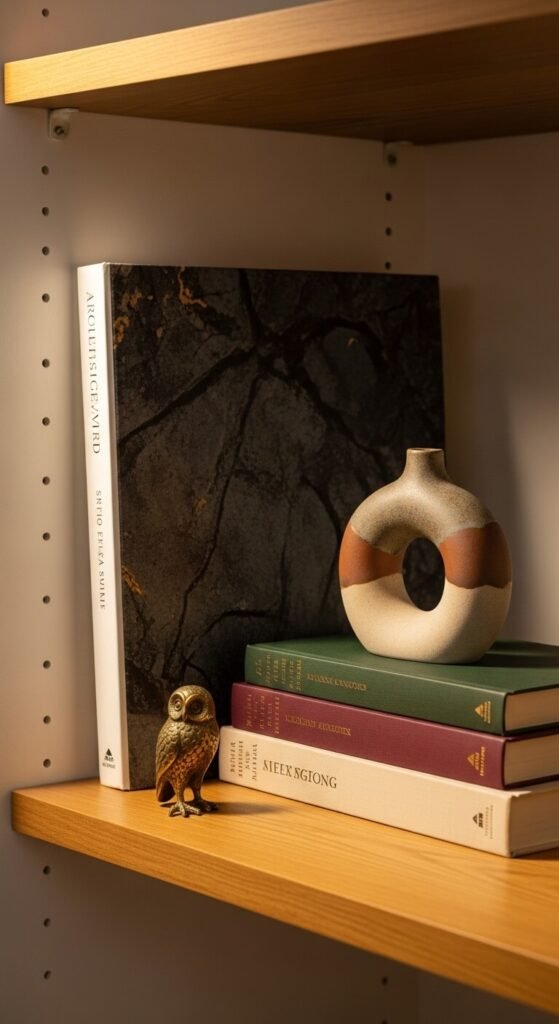
The “lived-in” part of your bookshelf comes from personality. Incorporating personal objects makes your bookshelf uniquely yours instead of looking like a staged photo shoot.
Personal touches that work:
- Travel souvenirs with meaning
- Family photos in simple frames
- Handmade ceramics or gifts
- Collections you genuinely love
- Vintage finds from thrift stores
- Objects that tell your story
The balance:
- Mix personal items with neutral decor
- Don’t display everything you own
- Choose items that are visually interesting, not just sentimental
- Rotate personal items seasonally
These meaningful pieces are what prevent your bookshelf from looking like it came from a catalog. They’re the difference between “styled by a designer” and “styled by someone who actually lives here and has a life.”
Use Bookends As Functional Decor
Bookends serve double duty: keeping books upright AND adding visual interest. Choose bookends that enhance your aesthetic rather than cheap plastic ones that detract from it.
Bookend options:
Sculptural:
- Abstract shapes
- Animal figures
- Architectural forms
- Natural elements (agate slices, geodes)
Functional:
- Heavy vintage books themselves
- Decorative boxes
- Small planters with succulents
- Interesting rocks or stones
Material choices:
- Brass or gold (warm and vintage)
- Marble or stone (modern and substantial)
- Wood (natural and timeless)
- Ceramic (artisanal and unique)
Bookends should feel like part of your decor scheme, not just functional necessities. When they’re beautiful, they become styling elements that happen to keep your books organized.
Organize By Category, Not Perfection
The secret to a usable bookshelf is loose organization that groups similar books together without being obsessive about it.
Practical organization:
By genre or subject:
- Fiction together
- Cookbooks together
- Design/photography books together
- Personal development or business books together
By size within categories:
- Taller books together
- Standard-size novels together
- Oversized books stacked horizontally
Current reads accessible:
- Keep books you’re reading now at eye level
- Create a “currently reading” shelf
- Don’t hide your most-used books for aesthetics
This gentle organization maintains that lived-in feel while keeping things tidy enough to find what you need. You’re not running a library—you’re styling a home bookshelf that gets regular use.
Adjust And Edit Regularly
Great bookshelf styling isn’t a one-and-done project. The lived-in look requires occasional editing and adjustment as your collection evolves.
Maintenance approach:
Monthly mini-edits:
- Remove books you’ve finished and donated
- Add new books to appropriate spots
- Dust and straighten objects
- Swap out one or two decorative items
Seasonal refreshes:
- Rotate decorative objects (cozy for fall, fresh for spring)
- Adjust plant selection
- Update personal photos
- Reassess what’s working and what isn’t
Annual overhaul:
- Pull everything off
- Donate books you won’t read again
- Deep clean shelves
- Start fresh with your styling formula
The beauty of the “lived-in” aesthetic is that it’s meant to evolve. Your bookshelf should grow and change with you, not remain frozen in styled perfection forever.
Ready to transform your bookshelf from chaotic to curated? Start by pulling everything off one shelf and applying the 70/30 rule with vertical and horizontal book mixing. Remember: organized doesn’t mean perfect—it means intentional, functional, and authentically you. Save this guide for your next Sunday afternoon bookshelf refresh—your newly styled shelves are going to look amazing and actually work for your real life! 📚✨