
Walk into any high-end interior design magazine spread and you’ll notice something: they’re layering rugs. What looks like a single perfectly-chosen rug is actually two (or sometimes three!) rugs stacked strategically to create depth, texture, and that effortlessly luxe vibe.
This designer trick has been a secret weapon for years, and it’s easier than you think. Layering rugs solves so many decorating dilemmas—it makes small rugs work in larger spaces, adds pattern without overwhelming a room, and creates visual interest that a single rug just can’t achieve.
Plus, it’s budget-friendly. Instead of investing in one expensive oversized rug, you can layer a cheaper base rug with a smaller statement piece on top. The result? A custom, designer look that makes your space feel instantly more curated and intentional.
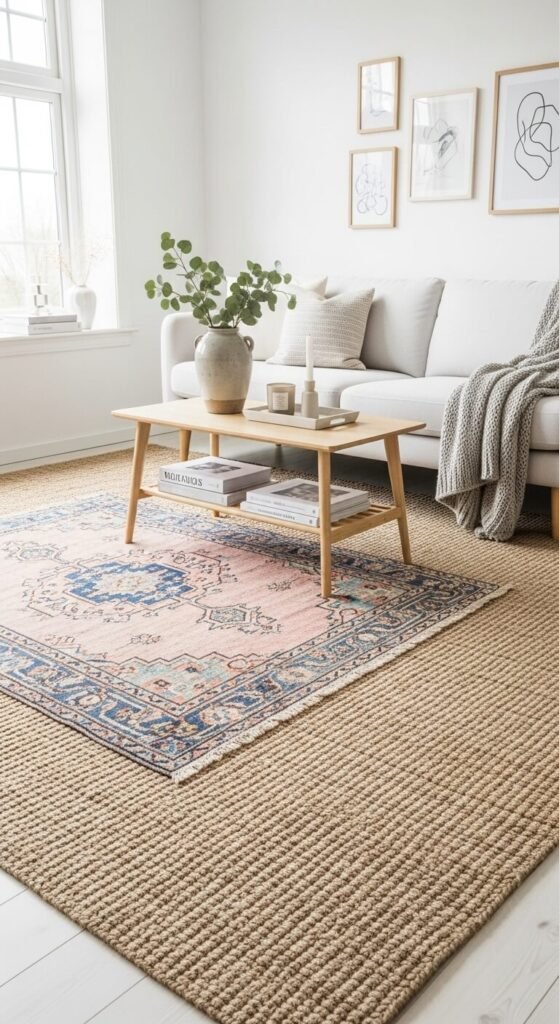
Choose Your Base Rug First (This Is Your Foundation)
The base rug is your anchor—it provides the foundation that everything else builds upon. This rug should be large, neutral, and relatively inexpensive since most of it will be covered.
Perfect base rug options:
- Natural fiber rugs (jute, sisal, seagrass)
- Neutral flatweave rugs in cream, beige, or gray
- Simple solid-colored low-pile rugs
- Inexpensive large-scale rugs from discount stores
Size matters here: Your base rug should extend beyond your furniture arrangement. For living rooms, this typically means 8×10 feet or larger. It should peek out from under your layered rug on all sides, creating a frame effect.
Think of this base layer like primer before paint—it’s essential, but it doesn’t need to be fancy. Save your budget for the statement rug that goes on top.
Select A Smaller Statement Rug For Your Top Layer
This is where personality comes in. Your top rug is the star of the show—it’s where you add color, pattern, and visual interest.
Top layer rug ideas:
- Vintage or antique rugs with rich patterns
- Bold geometric designs
- Colorful kilim or Turkish rugs
- Moroccan-style rugs with tribal patterns
- Faux animal hide or cowhide rugs
- Overdyed rugs in jewel tones
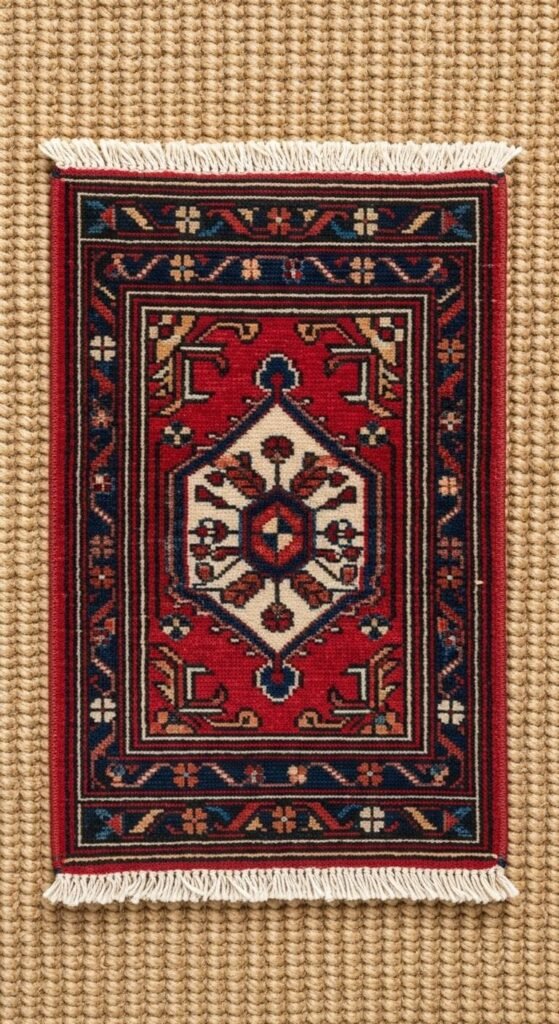
This rug should be noticeably smaller than your base—typically 5×7 or 6×9 if your base is 8×10 or larger. You want at least 8-12 inches of the base rug visible on all sides to create that layered, intentional look.
The top rug does most of the decorative heavy lifting, so this is where you can splurge a bit or choose something with real personality and character.
Master The Size And Proportion Formula
Getting the sizing right is crucial—this is what separates “intentional designer choice” from “I accidentally put two rugs in the same spot.”
The golden ratio: Your top rug should be 60-70% the size of your base rug.
Sizing examples:
- 8×10 base rug → 5×7 or 6×8 top rug
- 9×12 base rug → 6×9 or 7×10 top rug
- 10×14 base rug → 7×9 or 8×10 top rug
The base rug should be visible on all sides—aim for equal borders of 8-12 inches minimum. If you can’t see the base rug clearly, your top rug is too large and the layering effect is lost.
Too small of a top rug looks like an afterthought. Too large and it defeats the purpose. Getting this proportion right is what makes the whole look work.
Contrast Textures For Maximum Impact
This is where layering really shines. Mixing different textures creates dimension that makes your space feel rich and intentionally designed.
Winning texture combinations:
Rough + Smooth: Natural jute base with a smooth, flat-weave kilim on top
Chunky + Delicate: Thick braided jute base with a delicate vintage Persian rug
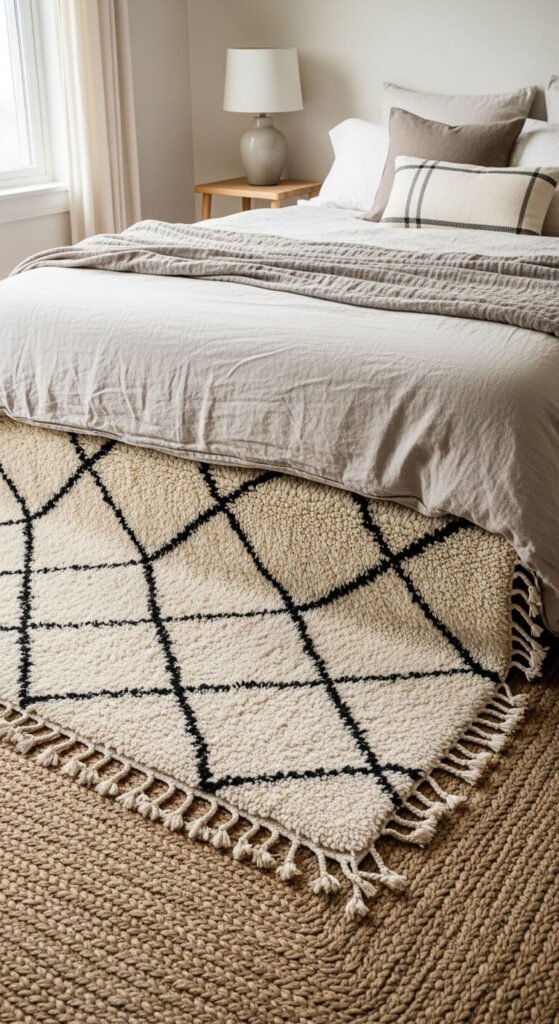
Natural + Plush: Seagrass base with a soft, plush Moroccan shag rug
Flat + Textured: Simple cotton dhurrie base with a high-pile or shag rug on top
The contrast is what your eye notices and what creates that designer-level sophistication. Two similar textures layered together look muddy and confused—you want clear differentiation.
Play With Pattern And Color Strategically
The fun part! This is where you can get creative, but there are some guidelines to keep you from going overboard.
If your base rug is neutral (which it should be), your top rug can be:
- Bold and patterned (geometric, tribal, floral)
- Solid but in a strong color
- Subtly patterned in complementary tones
Color coordination tips:
- Pull colors from other elements in the room (throw pillows, artwork, curtains)
- Use the 60-30-10 rule: base rug is 60% neutral, top rug adds the 30% secondary color
- Don’t be afraid of color—this is your chance to add personality
- Vintage rugs with multiple colors are perfect because they tie lots of elements together
Avoid layering two busy patterns—one rug should be relatively simple to let the other shine. Think: neutral base, patterned top OR patterned base, solid color top (though the first option is much more common).
Anchor With Furniture To Make It Intentional
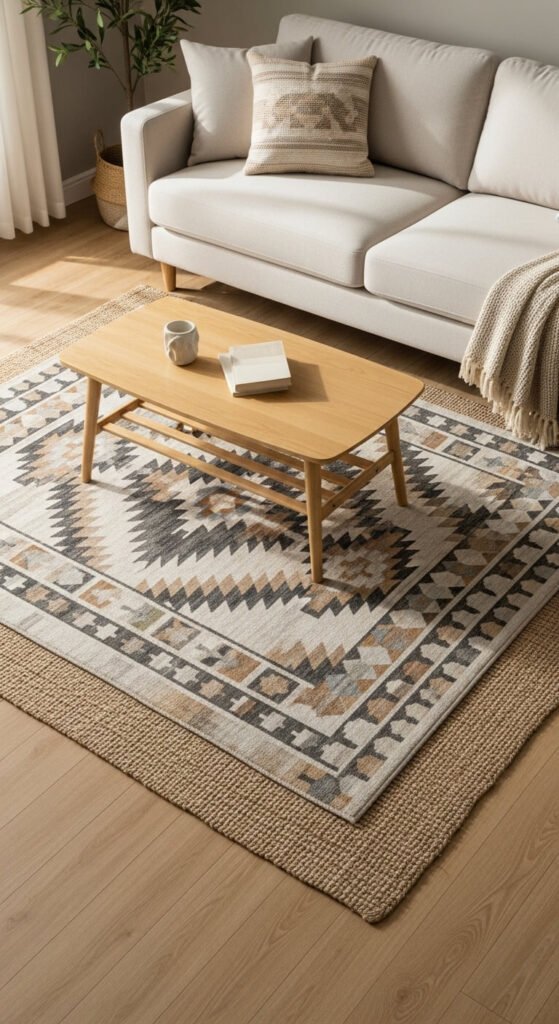
Furniture placement is what makes layered rugs look purposeful instead of random. At least the front legs of your furniture should rest on the top rug.
Living room arrangement:
- Coffee table centered on top rug
- Front legs of sofa and chairs on top rug
- Side tables can sit on base rug
- Leave equal space visible around furniture
Bedroom arrangement:
- Bed legs on or just in front of top rug
- Layer at the foot of the bed or on one side
- Nightstands can sit on base rug
Dining room arrangement:
- All chair legs should fit on top rug when pulled out
- Table centered on top rug
- Base rug extends well beyond dining area
When furniture anchors your layered rugs, it looks like you designed the whole vignette together—which is exactly what you want.
Know When And Where To Layer Rugs
Rug layering works brilliantly in some spaces and not at all in others. Choose your locations strategically.
Best spaces for layered rugs:
- Living rooms (the most popular choice)
- Bedrooms (especially at the foot of the bed)
- Home offices (under a desk area)
- Entryways (smaller scale)
- Dining rooms (when you want extra texture)
Spaces to avoid:
- High-traffic hallways (tripping hazard)
- Bathrooms (water and multiple rugs don’t mix)
- Kitchens (too difficult to keep clean)
- Children’s play areas (safety concern)
Consider your lifestyle too. If you have toddlers who are still mastering walking or elderly family members who visit, you might want to skip this trend in heavily trafficked areas. Safety always comes first.
Use Rug Pads To Keep Everything In Place
Here’s a rookie mistake: layering rugs without proper grip underneath. Rugs that shift and slide ruin the look and create a safety hazard.
Rug pad strategy:
- Place a non-slip pad under your base rug
- Add a thinner pad between your base and top rug if needed
- Choose pads specifically designed for hardwood or tile (depending on your floor)
- Trim pads so they’re slightly smaller than your rugs (they shouldn’t show)
Quality rug pads are worth the investment. They protect your floors, extend the life of your rugs, and keep everything exactly where you placed it. No adjusting needed every time someone walks across the room.
This small detail makes the difference between layered rugs that look professional versus ones that look sloppy and poorly executed.
Experiment With Unconventional Layering
Once you master the basics, you can break the rules a bit. Creative layering can produce stunning results.
Try these unconventional approaches:
- Layer THREE rugs (large base, medium middle, small top—very maximalist)
- Use an animal hide or sheepskin as your top layer
- Layer a round rug over a rectangular base
- Place a runner over a larger rug in an entryway
- Layer two vintage rugs of similar size slightly offset for a collected look
The key is maintaining that clear visual distinction between layers. If you can’t tell there are multiple rugs, the effect is lost.

Budget-Friendly Layering Strategy
The beauty of rug layering? It’s actually more affordable than buying one expensive large rug.
Smart shopping approach:
- Invest $100-200 in a large neutral base rug (IKEA, Rugs USA, HomeGoods)
- Splurge on a smaller vintage or unique top rug ($150-400)
- Total investment: $250-600 for a designer look
Compare this to a single high-quality 9×12 designer rug that can cost $1,000-3,000+, and you’re getting more visual interest for significantly less money.
Plus, you can swap out your top rug seasonally or when you want a refresh without replacing the entire foundation. It’s a much more flexible and budget-conscious approach to rug decorating.
Ready to layer your way to a designer look? Start by choosing your large neutral base rug, then have fun selecting a smaller statement piece that brings personality and color to your space. Remember: contrast in texture and proper proportions are what make this trend work. Save this guide for your next rug shopping trip—your floors are about to get a major upgrade! 🏡✨