
Walk into a room that feels instantly warm, polished, and right — and chances are, it is not the furniture doing that work. It is the lighting. Specifically, it is layered lighting — multiple light sources working at different heights and intensities to create depth, warmth, and atmosphere that a single overhead fixture can never achieve on its own.
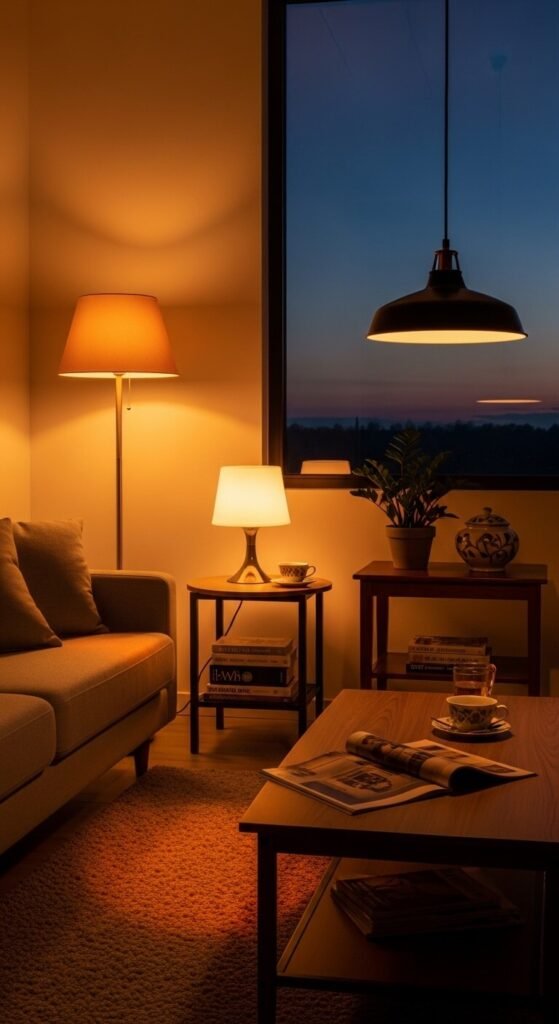
The good news is that layering lighting is not complicated or expensive. It is a few simple principles applied consistently, room by room. Here is exactly how to do it.
Understand the Three Layers
Every well-lit room uses three types of light — and the goal is to have all three working together:
- Ambient light — the general, overall illumination of the room. This is usually your ceiling fixture or recessed lights.
- Task light — focused light for specific activities. Think reading lamps, under-cabinet kitchen lights, or a desk lamp.
- Accent light — decorative light that highlights objects, creates warmth, or adds visual interest. String lights, picture lights, and candles all fall here.
Most rooms only have ambient light — one overhead fixture switched on at full brightness. The result is flat, shadowless, and oddly unflattering. Adding task and accent layers immediately changes how the room feels.
Start with Ambient Light on a Dimmer
Your first move in any room is to install a dimmer switch on your main overhead fixture. This one change — costing $10 to $25 — gives you immediate control over the room’s base brightness.
- In the morning, full brightness works for getting ready or moving around.
- By evening, dimming to 30–40% creates a completely different, warmer atmosphere.
- Use warm white bulbs at 2700K for every fixture — cool white at 4000K or above makes rooms feel clinical regardless of the dimmer setting.

Add Task Lighting Where You Actually Use It
Look at where you spend time in each room and place a light source there specifically:
- Living room: A floor lamp beside the reading chair or sofa. An arc lamp that reaches over the seating area works especially well.
- Bedroom: Bedside table lamps or plug-in wall sconces at shoulder height — not ceiling height.
- Kitchen: Under-cabinet LED strips illuminate the countertop where you prep food.
- Home office: A desk lamp aimed at the work surface, not the screen.
Task lights do not need to be expensive. A simple ceramic table lamp from a discount home store costs $20 to $40 and does the same job as a designer version.
Layer in Accent and Ambient Warmth
This is the layer that most people skip — and it is the one that makes the biggest difference to atmosphere.
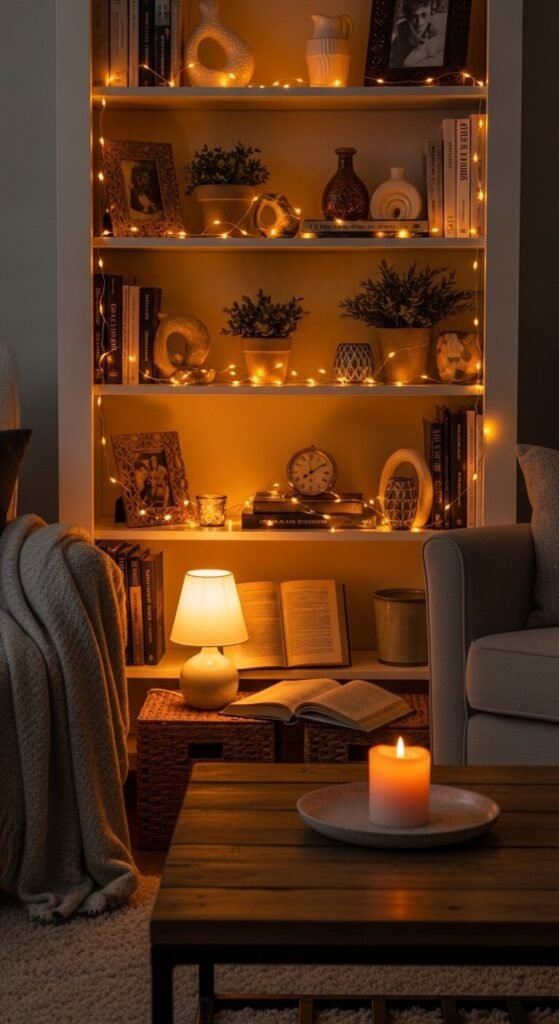
Accent lighting options that cost almost nothing:
- String lights on a timer — draped across a shelf, wound through a bookcase, or hung above a bed. A warm globe string light set costs $12 to $20 and transforms a room on its own.
- LED candles — battery-operated with a flicker setting. Place in a fireplace, on a coffee table tray, or along a mantel.
- A picture light above a significant piece of art.
- Under-bed LED strips in the bedroom for a low, soft ambient glow at floor level.
Match Light Layers to the Time of Day
The real power of layered lighting is being able to shift the room’s atmosphere throughout the day without moving a single piece of furniture.
- Morning: Full ambient light on. Task lights on. Accent lights off.
- Afternoon: Ambient dimmed slightly. Natural light does most of the work.
- Evening: Ambient dimmed to 25–40%. Task lights on as needed. All accent lights on.
- Late evening: Ambient off entirely. Only task and accent lights on.
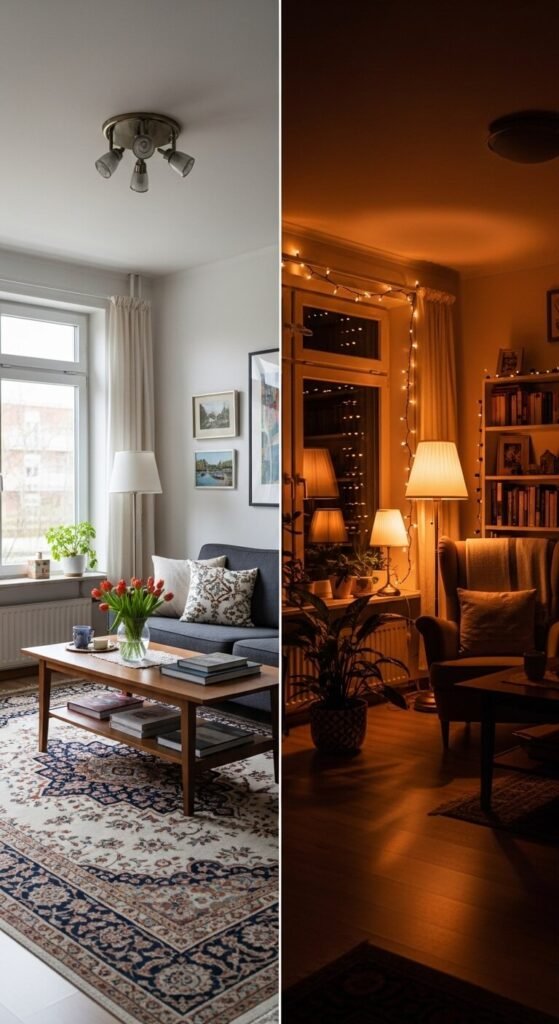
Use smart plugs with timers on your accent lights so they switch on automatically at sunset — you get the full atmosphere every evening without remembering to flip a switch.
The One Rule That Covers Every Room
If the room feels flat, cold, or like a waiting room — the overhead light is doing all the work. Turn it off. Switch on every other light source in the room instead. That single experiment will show you immediately what layered lighting actually feels like, and why it is the change that makes every room feel genuinely designed.
Save this guide and share it with anyone who has ever wondered why their room never feels quite right after dark — this is almost always the reason, and the fix is simpler than they think.