
A home full of vintage pieces has a quality that no amount of new furniture can replicate — a sense of accumulated life, of objects that have been somewhere before arriving here, of rooms that look like they were built over time by a person with specific tastes rather than assembled in an afternoon from a single catalog. But the line between vintage character and thrift store clutter is real and worth respecting. The difference between a home that looks curated and one that looks hoarded is not the age of the objects — it is how those objects are placed, how many share a surface, and whether each piece has been chosen deliberately or simply not yet thrown away. Decorating with vintage finds is one of the most character-rich and cost-effective approaches to interior design. The skill is in the editing.
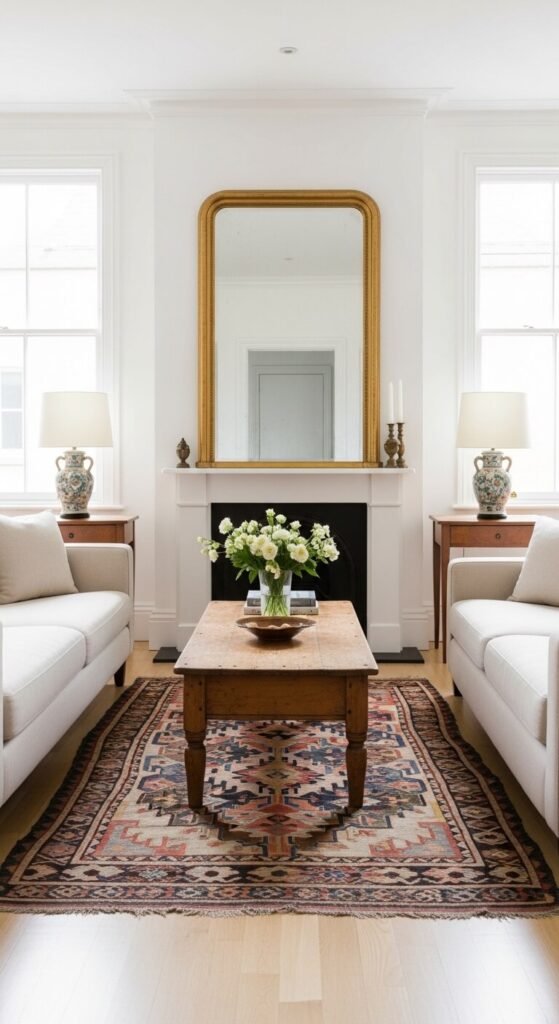
Here is exactly how to use vintage finds to add genuine character without crossing into clutter.
Lead with One Significant Vintage Statement Piece
The most effective way to introduce vintage character into a room is to lead with one large, significant piece that anchors the room’s personality — and then build the rest of the room around it.
This is the opposite of the approach most people take when decorating with vintage finds. Most people accumulate many small pieces and scatter them across a room. The result is visual noise without a focal point.
Choose one of these as your anchor:
- A large vintage mirror with an interesting frame — gilded, carved wood, or ornate plaster
- A vintage rug with a strong pattern — a Persian, kilim, or Moroccan that defines the floor plan
- A vintage piece of furniture — an armchair in a worn leather, a wooden side table with visible age and patina, a painted cabinet in a color no longer made
- A vintage artwork — a framed oil painting or a set of antique botanical prints
One large vintage anchor piece communicates deliberate choice. Ten small vintage pieces communicate accumulated collecting. The anchor is the piece the room introduces itself through.
Use Vintage Pieces as Functional Objects, Not Just Decoration
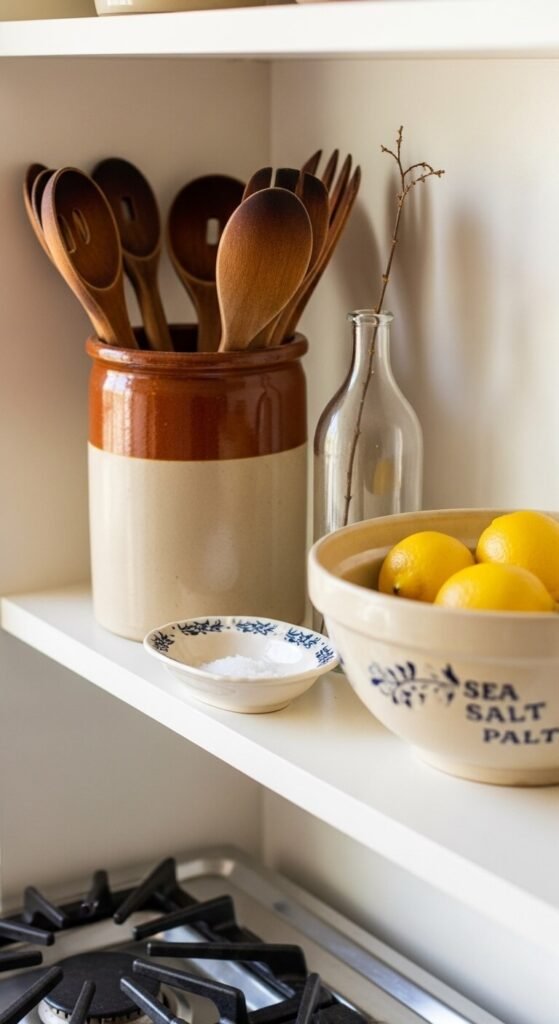
The quickest way vintage pieces tip into clutter is when they are clearly not being used for anything — objects that exist only to be looked at, with no function to justify their presence on the surface they occupy.
Vintage pieces that earn their place through function:
- A vintage crock or ceramic jug used to hold kitchen utensils
- An old glass bottle used as a bud vase or oil decanter
- Antique ceramic bowls used for fruit, keys, or jewelry
- Vintage frames around current photographs or meaningful art
- An antique tray used as a coffee table styling tray
- Vintage scales, tins, and canisters used for actual kitchen storage
The function rule: if you can remove the piece and the surface it sits on works just as well without it, the piece does not yet have sufficient justification to stay. Give vintage objects a job.
Edit Ruthlessly — Then Display Selectively
The difference between curated and cluttered is almost always just quantity. Most surfaces can support one or two vintage pieces displayed intentionally. The same surface with five vintage pieces begins to look like a charity shop display.
The editing process:
- Gather all the vintage pieces you own or are considering into one room
- Keep only those that belong to a coherent color palette or material story — warm wood tones, aged metals, terracotta and cream ceramics, or jewel-toned glass
- From what remains, select only the pieces that would be genuinely missed if removed
- Display no more than three vintage pieces per surface
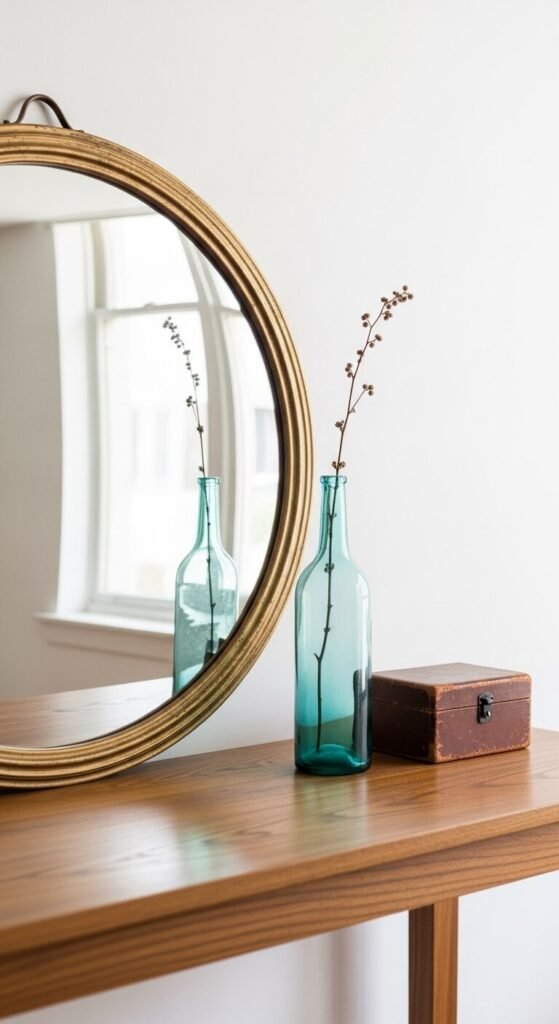
The test for each piece: Hold it, look at it, and ask whether you would pay for it again at the price you paid. If the answer is uncertain, the piece does not belong in a prominent display position.
Mix Vintage with Contemporary Intentionally
Vintage pieces look most interesting — and most intentional — when placed alongside contemporary pieces rather than surrounded exclusively by other vintage finds. The contrast between old and new makes both more perceptible.
Pairings that consistently work:
- Vintage wooden side table beside a contemporary linen sofa — the worn wood grain against the clean fabric shows both materials at their best
- Antique mirror above a simple contemporary fireplace — the ornate frame against the plain surround creates a focal point that neither could achieve alone
- Vintage ceramic lamps on a modern bedside table — the ceramic’s handmade, slightly irregular quality reads as more beautiful against the precision of a manufactured contemporary surface
- A vintage rug under modern furniture — the most universally effective vintage-contemporary pairing. A beautiful old rug makes new furniture look more interesting and new furniture makes an old rug look more valuable.
The mix communicates that you collected over time rather than bought all at once — which is the quality that makes a home feel genuinely lived in rather than recently installed.
Maintain a Color and Material Throughline
Vintage pieces from completely different eras, origins, and styles can coexist beautifully in the same room — as long as they share a common color or material thread.
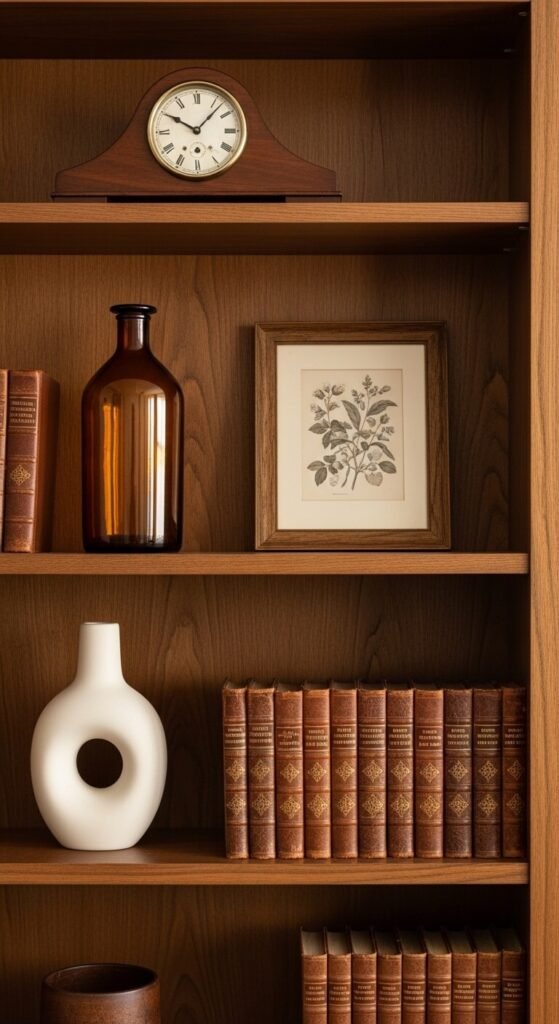
The easiest coherent vintage palettes:
- Warm amber and brown — old glass, worn leather, dark wood, vintage brass
- Cream and terracotta — aged earthenware, faded linens, raw ceramics, natural wicker
- Jewel tones — vintage cobalt blue glass, deep green pottery, amber bottles on a windowsill
- Black and aged gold — vintage gilt frames, aged iron, dark glass, antique lacquerware
Pick one palette and let that be the filter through which you accept or reject each new vintage find.
The Character Is Already in the Object
Vintage pieces do not need to be styled into significance — their history, wear, and specific qualities do that work automatically. Your job is simply to give them enough space to be seen, enough function to justify their presence, and enough restraint in the objects around them to let their character speak without competition.
A room with three carefully chosen vintage pieces that each earn their place has more genuine character than a room with thirty that cancel each other out.
Save this and pin it as your vintage decorating guide — because a home with history in it feels more alive, and the best homes are always the ones that look like someone interesting actually lives there.