
A great vase might be the most underrated object in home decorating. It takes up almost no floor space, costs very little, and has the remarkable ability to change the entire energy of a surface — adding height where a room feels flat, color where a space feels dull, and organic texture where everything has started to feel too rigid and polished. Whether it’s holding a lush arrangement of fresh stems or standing completely empty on a shelf, the right vase in the right spot is decoration in its purest, most effortless form. Here’s how to use them brilliantly.
Build a Collection With Intention
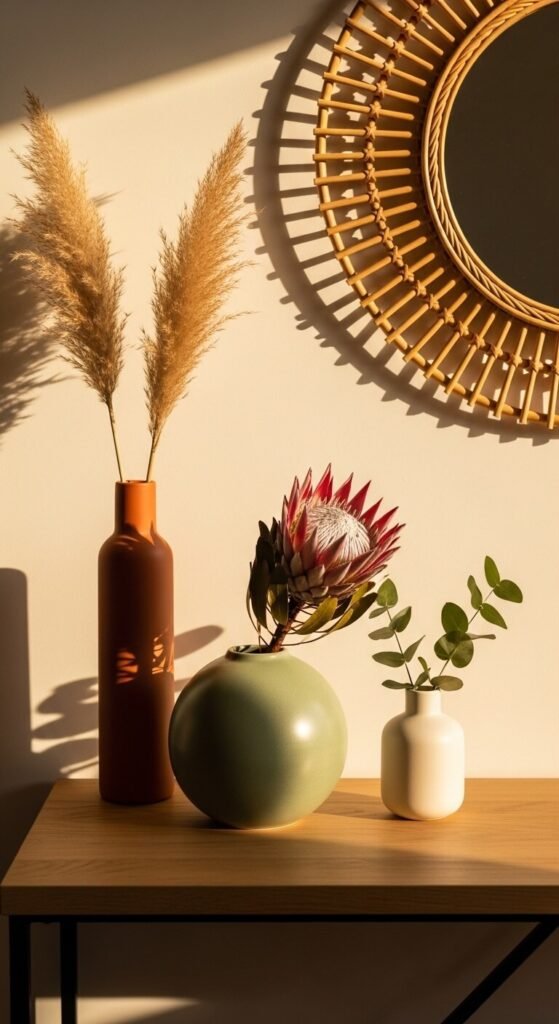
The most beautifully styled vase groupings aren’t random accumulations — they’re small, curated collections with a unifying logic. Before you start shopping, think about what makes a group of vases feel cohesive without being matchy.
The secret is to vary one thing at a time:
- Same material, different shapes — all ceramic, but one tall and cylindrical, one round and squat, one angular and modern
- Same color palette, different materials — cream tones in glass, ceramic, and raw clay for a tone-on-tone display with rich textural contrast
- Same shape family, different sizes — three slim bud vases in a row at different heights, or three bulbous forms staggered from large to small
Avoid buying vases that are too similar in size and shape — they’ll compete with each other rather than complement. And avoid buying too many at once. The best collections are built slowly, with pieces gathered from different places over time. That sense of provenance is exactly what gives a grouping its soul.
Master the Art of Grouping
A single vase sitting alone on a surface can look intentional — or it can look forgotten. The difference is usually context. But vases grouped together almost always look deliberate, styled, and considered. Grouping is one of the fastest ways to elevate any surface in your home.
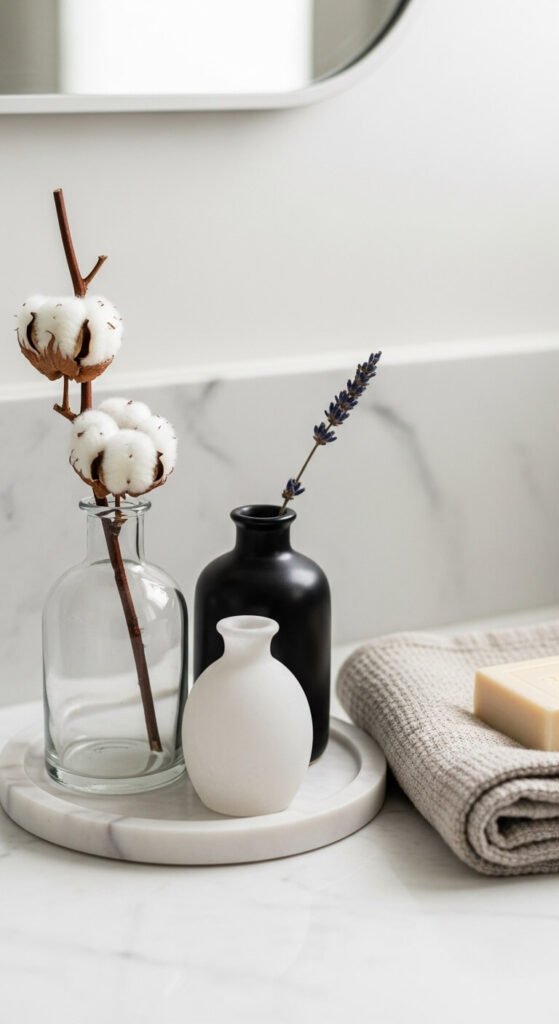
A few grouping rules that consistently work:
- Odd numbers always — three or five vases read as a styled grouping; two or four can look symmetrical and stiff. Three is the magic number for most surfaces.
- Vary the height dramatically — the visual tension between a tall vase and a low one is what creates energy. Aim for at least a 50% height difference between your tallest and shortest piece.
- Let them touch or overlap slightly — vases spaced too far apart look like they belong to different displays. Bringing them close together, even letting one partially overlap another, creates a composed, intentional grouping.
- Use a tray to anchor the group — a small marble, wooden, or ceramic tray underneath a vase grouping ties it together and signals that the arrangement was deliberate.
Choose What Goes Inside — Or Nothing At All
Here’s something liberating about vases: they don’t need to have flowers in them to look beautiful. An empty vase with an interesting silhouette, a gorgeous glaze, or a sculptural form is a decorative object in its own right — no florist required.
But when you do want to fill them, here’s how to choose what goes inside:
Fresh stems that make the biggest impact:
- Oversized blooms — peonies, ranunculus, dahlias — that spill generously over the rim
- Single-stem drama — one large protea, one magnolia branch, one bird of paradise
- Garden-gathered wildflowers — loose, imperfect, and full of character
Dried and preserved options that last indefinitely:
- Pampas grass — soft, voluminous, and beautiful at any height
- Dried cotton branches, seed pods, and wheat stems — earthy and textural
- Eucalyptus — retains its color and scent for weeks after cutting
- Bunny tail grass — delicate and whimsical in small bud vases
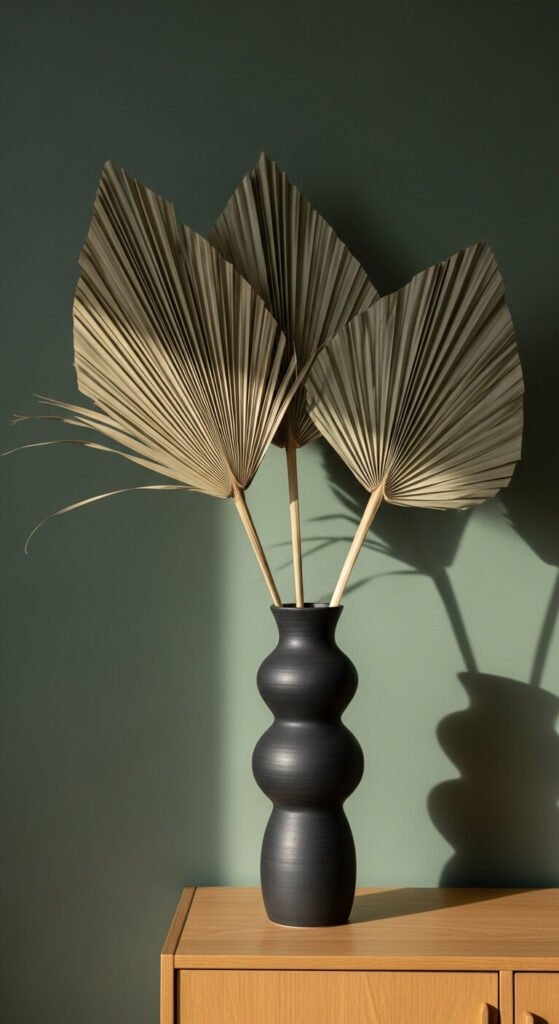
The empty vase rule: If a vase has a truly beautiful form — an interesting neck, a hand-thrown dimpled surface, an unusual glaze — let it stand empty. Group it with one or two others, place it on a tray, and let the object itself be the art.
Place Vases Where They’ll Do the Most Work
Not every surface benefits from a vase — but almost every room has at least one spot where the right vase would change everything. Knowing where to place them is half the styling battle.
The highest-impact locations:
- Entryway console table — the first thing anyone sees when they walk in. A tall vase with dramatic dried stems makes an immediate impression.
- Dining table centerpiece — one large vase or a loose grouping of three at varying heights. Keep them low enough to see over during a conversation.
- Kitchen countertop — a simple bud vase with a single fresh stem beside the coffee maker or near the sink brings life into an otherwise utilitarian area.
- Bathroom countertop or ledge — one small vase on a tray beside the sink is a tiny luxury that makes the whole room feel more considered.
- Bedroom nightstand — a small vase with a single bloom or a sprig of dried botanical is the quiet, personal detail that transforms a functional bedside into a retreat.
- Fireplace mantel — two tall vases at either end bookending the display create structure and height that other objects rarely deliver.
Match Vase Style to Your Room’s Aesthetic
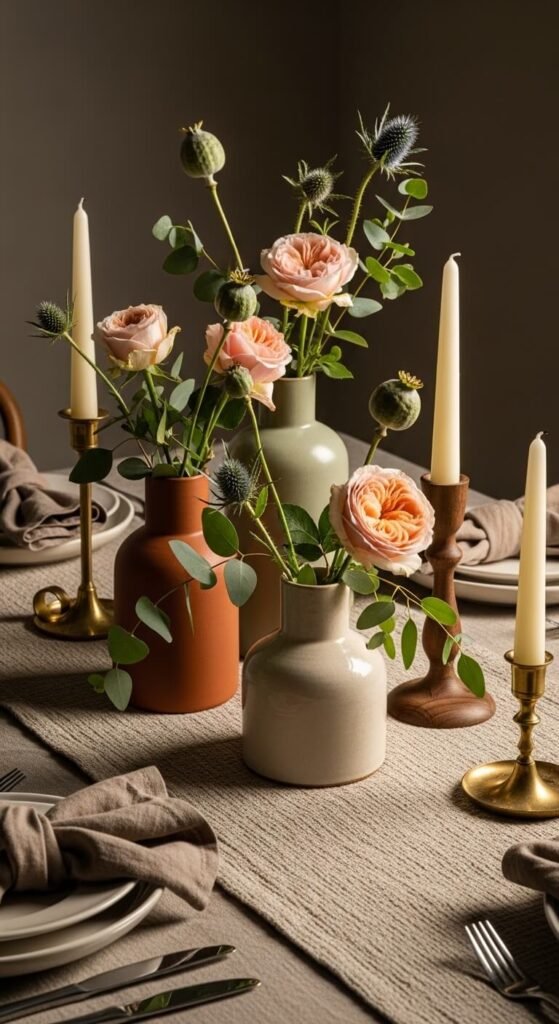
A sleek, minimal glass cylinder will look out of place in a warmly layered bohemian room. A rough-textured hand-thrown clay vase will feel similarly jarring in a crisp, contemporary space. Matching vase style to room aesthetic isn’t about being restrictive — it’s about making choices that feel intentional.
Some reliable style pairings:
- Modern or minimalist rooms — clean geometric forms, monochrome glazes, glass, and polished stone
- Organic and Japandi spaces — hand-thrown ceramic, wabi-sabi imperfections, natural clay, matte finishes in earth tones
- Bohemian and eclectic rooms — rattan-wrapped glass, painted terracotta, hammered metal, and globally-inspired forms
- Traditional and classic rooms — porcelain, cut glass, urns, and vessels with classic proportions in white, navy, or soft greens
- Coastal and relaxed spaces — driftwood tones, seafoam glazes, textured glass, and pale sandy ceramics
The Takeaway
Vases are one of the most versatile, affordable, and quietly powerful tools in home decorating. They add height without bulk, color without commitment, and life without permanence. Build a small collection slowly, group them with intention, and put them in the spots where they’ll genuinely change the room.
Save this article for your next thrift store browse or market visit — because once you know how to use vases well, you’ll never walk past a beautiful one without immediately knowing exactly where it belongs. 🌿✨