
Here’s a decorating secret that the most beautiful rooms all share: it’s rarely about expensive furniture or rare finds. It’s about texture. The way a chunky knit throw catches the light, the way a velvet cushion looks impossibly lush against a linen sofa, the way raw wood and smooth stone sit side by side and just work — that layered, tactile quality is what separates a room that looks designed from one that merely looks decorated. And the best part? You don’t need to spend a fortune to achieve it.
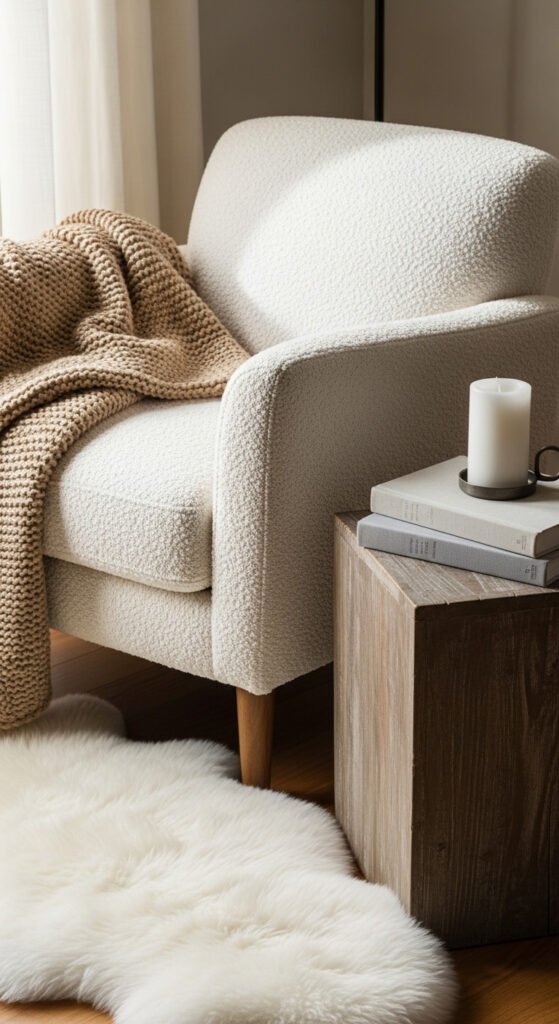
Here’s exactly how to build that rich, textural depth in your own home.
Start With a Textural Foundation: Your Floors and Walls
Texture begins underfoot and behind you — before a single piece of furniture is placed. If your floors and walls are smooth and flat, you’re starting on a blank canvas. That’s fine, but you’ll need to work harder everywhere else.
A few easy ways to add foundational texture:
- Layer rugs — a flat-weave base rug topped with a smaller, plush or shaggy rug instantly adds dimension
- Limewash or plaster-effect paint — the most transformative wall treatment you can apply with minimal effort; it catches light throughout the day and gives walls a beautifully imperfect, ancient quality
- Exposed natural materials — raw brick, stone cladding, or even a single panel of reclaimed wood adds instant warmth and character
- Woven wall hangings — a large macramé or fabric wall piece works as both art and texture
Even small changes here create a ripple effect across the whole room.
Choose Fabrics That Do the Heavy Lifting
Fabrics are your most powerful — and most flexible — texture tool. The right combination of fabric types can make an ordinary room feel like a boutique hotel suite.
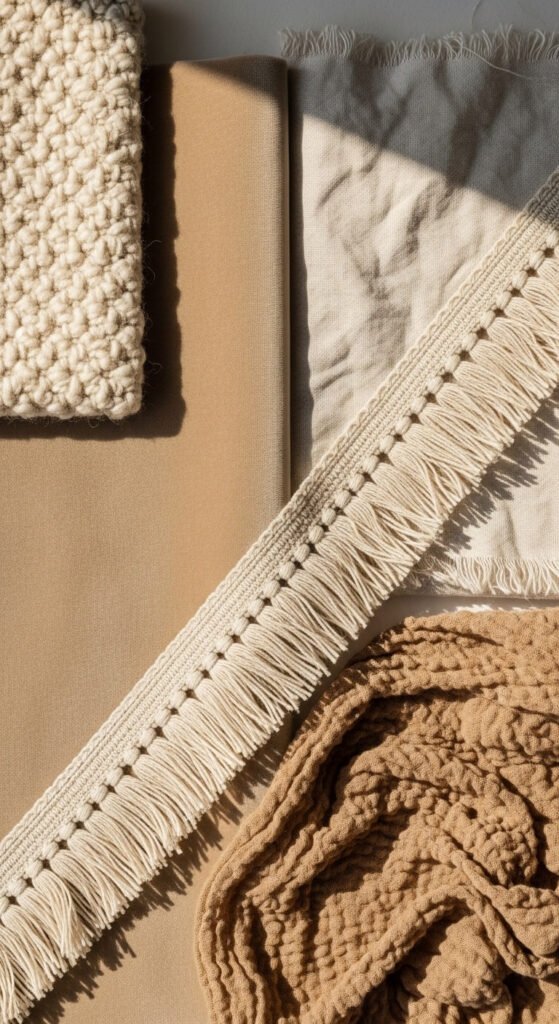
The key is contrast. Pair fabrics with opposing textures so each one highlights the other:
- Velvet alongside linen — the smooth sheen of velvet pops beautifully against linen’s natural, matte roughness
- Boucle alongside leather — softness and structure in perfect tension
- Chunky knit alongside silk or satin — relaxed cosiness meets quiet luxury
- Sheer voile curtains alongside heavy woven drapes — layers of light and weight that give windows enormous depth
A practical rule: aim for at least three different fabric textures in any one room. One tends to feel flat, two can feel intentional but sparse, and three or more starts to feel genuinely layered and rich.
Layer Textiles in Threes (Just Like Styling)
Much like the triangle rule for visual balance, textiles work best when layered in groups. Think of each seating area or sleeping space as its own little textural moment to build.
For a sofa, try this formula:
- One smooth or structured cushion (leather, velvet, or tightly woven cotton)
- One tactile or embellished cushion (boucle, fringe, embroidery, or chunky knit)
- One soft throw draped loosely over the arm or back (waffle cotton, cashmere, or a chunky wool knit)
For a bed:
- Start with crisp linen sheets as your base
- Add a quilted or waffle-weave coverlet in the middle
- Finish with a chunky knit blanket folded at the foot and a mix of cushions in at least two different fabrics
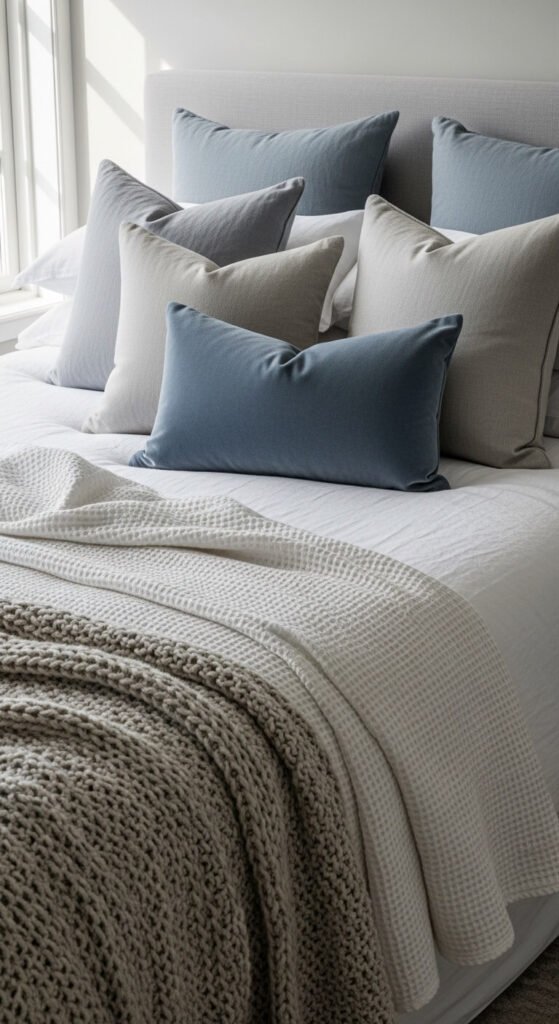
This approach turns any ordinary bed or sofa into something that looks and feels genuinely considered.
Bring in Hard Materials for Contrast
Soft fabrics alone can make a room feel one-note — almost too cosy. The trick is to balance all that softness with harder, more structural materials that provide contrast and grounding.
Great hard-texture pairings include:
- Unglazed ceramic and stoneware — matte, tactile, and earthy next to soft textiles
- Rattan and wicker — open, airy weave that adds texture without visual weight
- Rough-hewn or reclaimed wood — grain, knots, and imperfections that smooth surfaces can’t replicate
- Hammered or brushed metals — aged brass, blackened steel, or brushed bronze add edge and warmth
- Woven baskets and storage — functional and deeply textural
Think of hard materials as the punctuation in your room — they give the softer elements room to breathe and make the whole composition more interesting.
Use Light to Reveal Texture
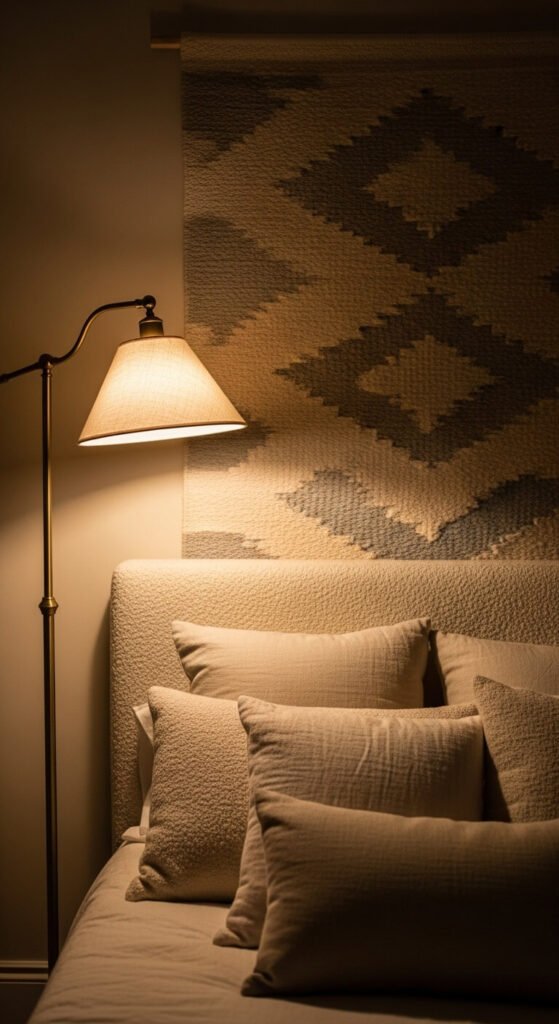
Here’s a tip most people miss entirely: texture only comes alive with the right lighting. Flat overhead lighting flattens everything. Directional, low, or warm light throws shadows across textured surfaces and makes them visually sing.
To maximise the effect:
- Use table and floor lamps instead of relying solely on ceiling lights
- Position lighting at an angle to walls or shelving to catch texture
- Choose warm-toned bulbs (2700K–3000K) — they enhance the richness of natural materials beautifully
Texture Is the Soul of a Beautiful Room
A room without texture is just a room. A room with texture is an experience — one that invites you in, makes you want to touch things, and simply feels better to be inside. Start small if you need to: one new throw, a different rug, a ceramic vase swapped for a woven basket. Layer slowly and trust the process.
Save this article and pin your favourite tips — your richest, most beautiful room is just a few textures away! 🧶