
There’s something about terracotta that just feels like home. That sun-baked, clay-kissed warmth has been grounding interiors for centuries — and right now, it’s having its biggest moment yet. Whether you’re starting from scratch or simply want to inject more soul into a room, terracotta tones are your secret weapon for spaces that feel cozy, intentional, and beautifully alive.
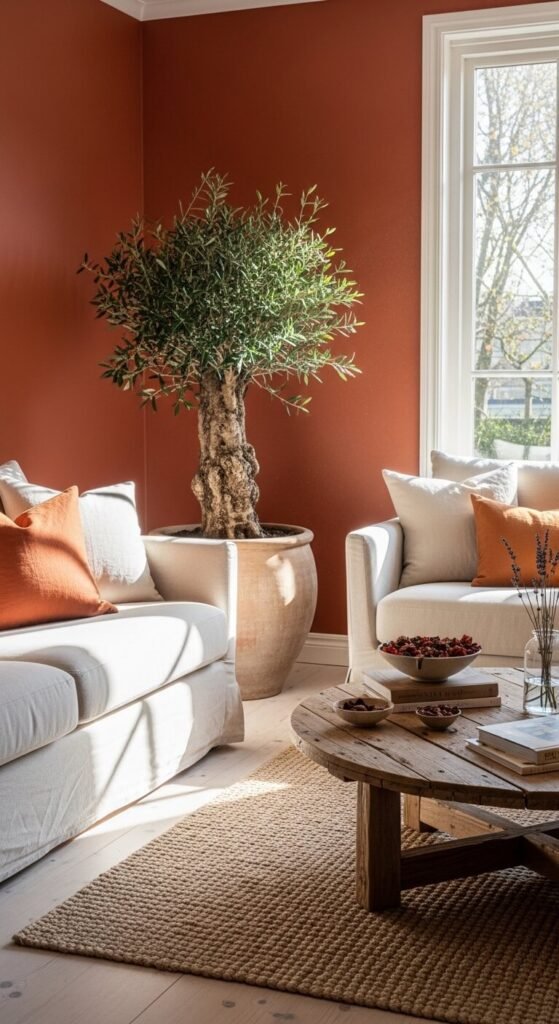
Ready to bring the warmth in? Here’s exactly how to do it.
Start With the Right Shade of Terracotta
Not all terracottas are created equal. The family ranges from soft, dusty peach to deep burnt sienna, and choosing the right one sets the entire mood of your space.
- Light terracotta (think sun-bleached clay): Perfect for small rooms or spaces with limited natural light — it warms without overwhelming.
- Mid-tone terracotta (the classic): Ideal for living rooms and bedrooms where you want that signature earthy glow.
- Deep, burnt terracotta: Best used as an accent — a single wall, cabinetry, or a statement piece of furniture.
A simple trick: pull a paint swatch and hold it against your existing floors and furniture in natural daylight. Terracotta can lean orange or pink depending on the light, so always test before you commit.
Layer It Through Textiles First
If painting feels like too big a commitment, textiles are the easiest, most affordable way to introduce terracotta into any room.
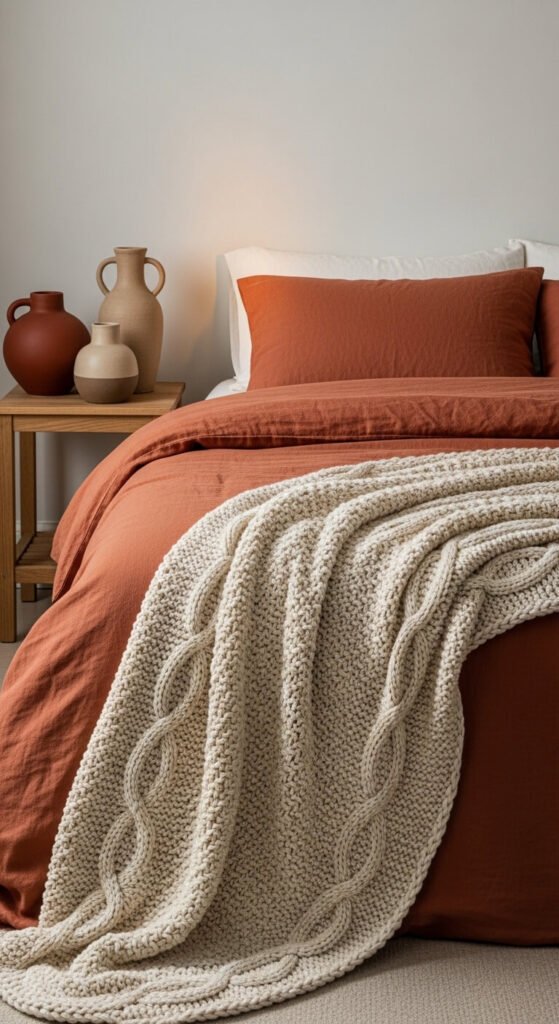
Start with one anchor piece — a terracotta linen duvet, a rust-toned area rug, or a set of velvet cushions. From there, layer in complementary tones like:
- Warm cream and off-white
- Dusty sage green
- Camel and cognac leather
- Warm chocolate brown
The key is to keep things in the same warmth family. Cool greys and stark whites will fight with terracotta rather than complement it.
Bring In Earthy Materials and Textures
Terracotta is inherently tied to the earth, so the materials you pair it with matter enormously. Raw, natural textures amplify that grounded, organic feeling you’re going for.
Great pairings include:
- Unglazed ceramic and clay pottery — the most natural companion to terracotta tones
- Rattan and wicker — adds lightness and an artisanal feel
- Raw linen and jute — tactile, warm, and unpretentious
- Weathered wood — especially olive, walnut, or reclaimed timber
- Hammered brass or aged bronze — metallic accents that feel warm, not flashy
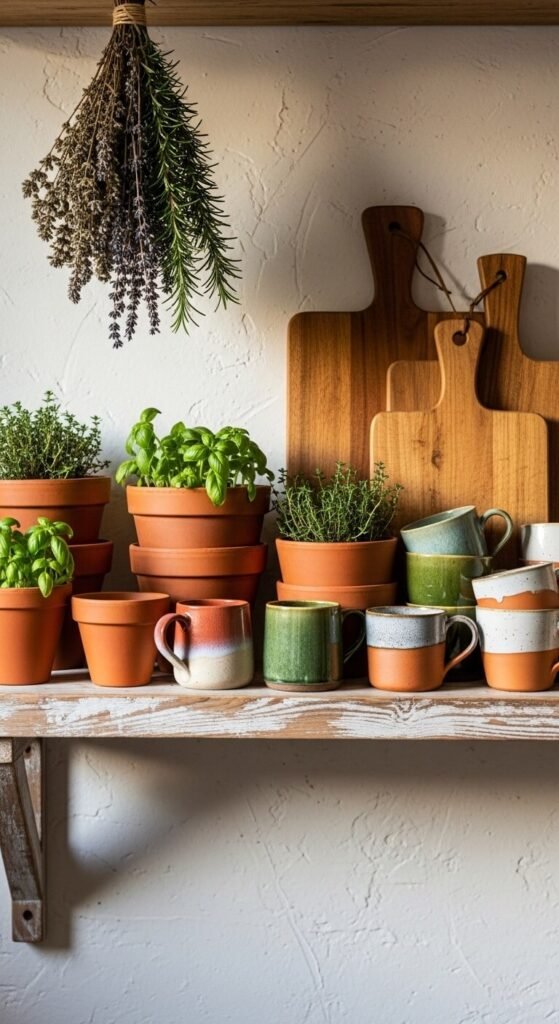
Avoid sleek chrome or cool-toned metals — they’ll make the whole palette feel disconnected.
Use the 60-30-10 Rule to Keep Balance
One of the most common decorating mistakes with a bold tone like terracotta is using too much of it. The 60-30-10 rule is your best friend here:
- 60% — Your dominant neutral (warm white, linen, or greige walls and large furniture)
- 30% — Terracotta as the secondary tone (rugs, curtains, upholstery, or an accent wall)
- 10% — Accents in contrasting or complementary tones (plants, brass hardware, dark wood details)
This ratio keeps the space feeling rich and intentional without tipping into overwhelming territory.
Don’t Forget the Power of Plants
Nothing completes an earthy, terracotta-toned room quite like greenery. The deep green of tropical leaves or the silvery-green of eucalyptus creates a natural contrast that makes terracotta sing.
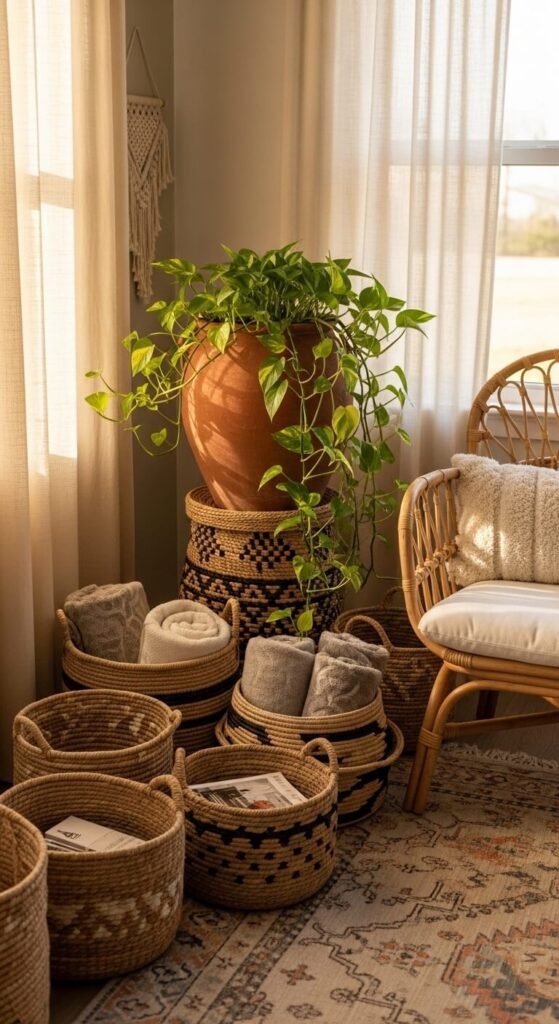
Go for lush, full plants like:
- Monstera
- Fiddle-leaf fig
- Olive tree
- Trailing pothos
Place them in — you guessed it — unglazed terracotta pots for a fully cohesive look.
Pull It All Together
Terracotta isn’t a trend. It’s a timeless, endlessly versatile tone that connects your space to something ancient, warm, and deeply human. The secret to getting it right is layering slowly — start with a pillow, add a pot, test a paint colour — and let the palette build naturally around you.
Save this article for your next room refresh, and pin your favourite tips to come back to when inspiration strikes! 🌿