
There’s something magical about walking into a room filled with lush, thriving plants. The air feels fresher, the space looks more alive, and somehow everything just feels more peaceful and put-together.
But here’s the thing: most people either under-do it (one lonely plant on a side table) or over-do it (a chaotic jungle with no rhyme or reason). Decorating with plants is an art form, and when done right, it can completely transform even the most boring room into a vibrant, Instagram-worthy green oasis.
You don’t need to be a master gardener or have a huge budget. You just need to know a few strategic placement tricks and design principles that make your plant collection look intentional, cohesive, and absolutely stunning.
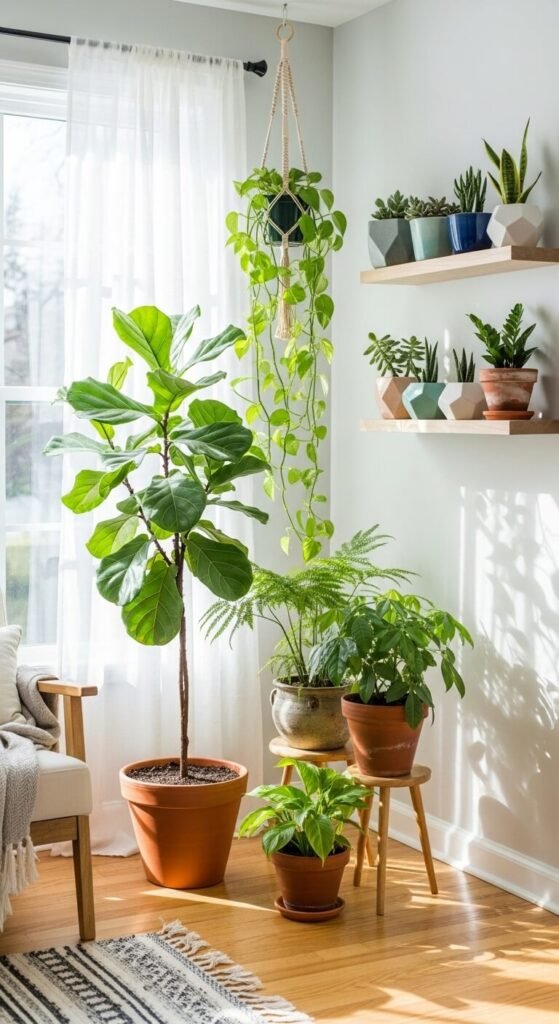
Layer Your Plants At Different Heights
The secret to creating that “wow” factor with plants? Vertical variation. Think of your plants like you would furniture—you need tall pieces, medium pieces, and low pieces to create visual interest.
Here’s how to layer effectively:
Floor level: Large statement plants (fiddle leaf fig, bird of paradise, monstera) Mid-level: Plants on stands, shelves, or furniture (pothos, snake plant, prayer plant) Eye level: Hanging plants or wall-mounted planters (string of pearls, ivy, philodendron)
This creates depth and makes your eyes travel throughout the space rather than focusing on one flat plane. Even a small apartment can feel lush when you use vertical space strategically.
Pro tip: Use plant stands of varying heights to create this layered effect even when you don’t have built-in shelving.

Group Plants In Odd Numbers
Remember the rule of three from styling coffee tables? It works beautifully with plants too. Grouping plants in clusters of 3, 5, or 7 creates visual impact that a single plant just can’t achieve.
This works because:
- Odd numbers feel more natural and organic
- Groupings create a focal point
- Multiple plants add lushness without overcrowding
- It allows you to mix different plant types and textures
Try grouping plants of different heights and leaf shapes together. A tall snake plant paired with a bushy fern and a trailing pothos creates more interest than three of the same plant lined up in a row.
Choose Planters That Match Your Aesthetic
Your plants might be gorgeous, but if they’re sitting in mismatched plastic nursery pots, they’ll never look cohesive or intentional.
Pick a planter style and stick with it:
Modern minimalist: White ceramic pots, concrete planters, sleek black containers
Bohemian: Woven baskets, macrame hangers, terracotta with texture
Scandinavian: Light wood stands, simple white or gray pots, natural materials
Industrial: Metal planters, wire baskets, galvanized containers
You don’t need all matching planters, but they should feel like they belong in the same family. Stick to 2-3 materials or colors throughout your space for a pulled-together look.

Create A Plant Shelf Or Plant Corner
Instead of scattering plants randomly throughout your home, designate a specific area as your plant zone. This creates a dramatic focal point and makes your plant collection look like an intentional design choice.
Ideas for plant displays:
- Floating shelves with plants at staggered heights
- A ladder shelf dedicated to your plant collection
- A corner with a mix of floor plants and hanging plants
- A windowsill styled as a mini greenhouse
- A bookshelf with plants interspersed between books
This concentrated approach has more visual impact than spreading five plants across five different rooms. You’re creating a moment in your space that draws the eye and becomes a conversation piece.
Mix Plant Types For Texture And Interest
A room full of the same type of plant—no matter how beautiful—can look monotonous. Variety is what makes plant displays compelling.
Combine different leaf types:
- Large, dramatic leaves: Monstera, fiddle leaf fig, rubber plant
- Cascading, trailing vines: Pothos, string of pearls, philodendron
- Architectural, upright: Snake plant, ZZ plant, cactus
- Bushy, full: Ferns, calathea, peperomia
- Delicate, airy: Maidenhair fern, asparagus fern, baby’s tears
This mix creates visual texture that keeps things interesting. Your eye moves from the bold statement leaves to the delicate trailing vines, creating a dynamic, layered look.

Use Plants To Define Spaces
Plants aren’t just decoration—they’re functional design tools that can actually create rooms within rooms and define different zones in open-concept spaces.
Strategic placement ideas:
- A tall plant between your living and dining areas as a natural divider
- A row of plants along a windowsill to create privacy
- Plants flanking a doorway to frame the entrance
- A plant behind your desk to define your workspace
- Hanging plants to lower the visual ceiling in tall rooms
This is especially useful in apartments or studios where you need to create separation without walls. Plants do this job beautifully while adding life and color to your space.
Don’t Forget About Light Requirements
Here’s the reality check: you can’t just put any plant anywhere and expect it to thrive. Matching plants to their light needs ensures your green oasis stays green (and doesn’t become a plant graveyard).
Quick light guide:
Bright, direct light (south-facing windows): Cacti, succulents, fiddle leaf fig, jade plant
Bright, indirect light (near windows but not in direct sun): Monstera, rubber plant, most tropical plants
Medium light (a few feet from windows): Pothos, philodendron, prayer plant
Low light (north-facing or far from windows): Snake plant, ZZ plant, cast iron plant
Choose plants that will actually survive in your space. A thriving pothos in medium light looks infinitely better than a struggling fiddle leaf fig that needs more sun.
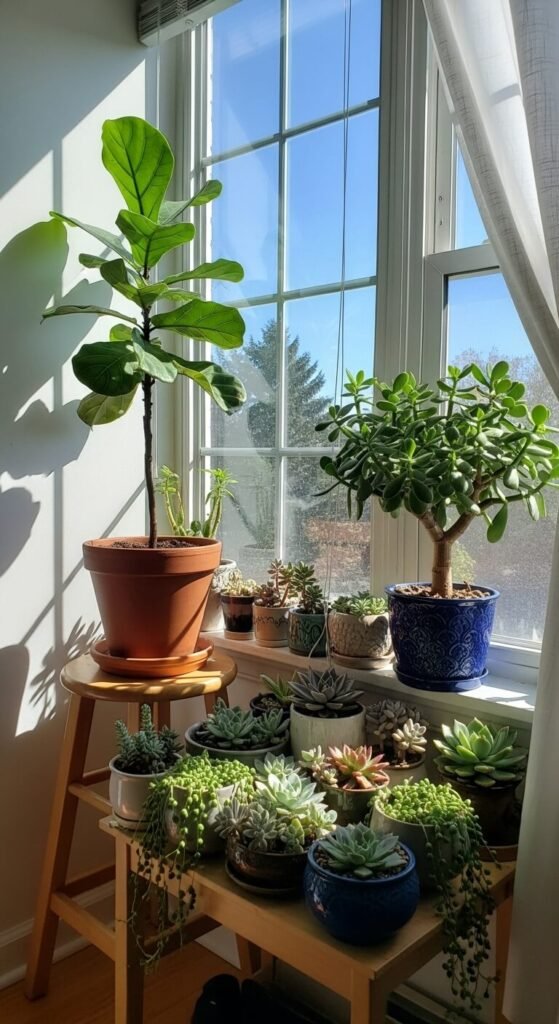
Add Height With Plant Stands And Shelves
If you’re working with limited floor space, going vertical is your best friend. Plant stands and wall-mounted shelves let you create that lush, layered look without sacrificing precious square footage.
Investment-worthy pieces:
- Tiered plant stands (holds 3-4 plants in a compact footprint)
- Mid-century style single plant stands (elevate special plants)
- Floating shelves dedicated to plants
- Wall-mounted planters and pockets
- Ceiling hooks for hanging plants
Even the smallest apartment can accommodate 10-15 plants when you think vertically. Plus, elevated plants draw the eye upward, making your ceilings feel higher and your space feel larger.
Style Plants With Other Decor Elements
Plants don’t have to stand alone. Integrate them with your existing decor for a more curated, design-forward look.
Try these combinations:
- Plants paired with books on shelves
- A plant next to a favorite piece of art
- Small plants grouped with candles on a tray
- Trailing plants above floating shelves filled with decor
- Plants flanking a mirror or wall art
This integration makes your plants feel like part of your overall design scheme rather than an afterthought. Everything works together to create a cohesive, beautifully styled space.
Ready to create your own green oasis? Start with 3-5 plants that suit your light conditions, choose cohesive planters, and use these layering techniques to create visual impact. Remember: it’s not about having the most plants—it’s about placing them strategically for maximum effect. Save this guide for your next plant shopping trip, and watch your space transform into the lush, peaceful sanctuary you’ve been dreaming of! 🌿