
Mirrors are the ultimate decorating secret weapon. They’re not just for checking your outfit before you leave the house—strategically placed mirrors can completely transform a room, making it feel twice as large, flooding it with natural light, and adding instant elegance.
But here’s the catch: mirrors placed randomly can actually make a space feel disjointed and awkward. The difference between amateur mirror placement and designer-level mirror styling comes down to understanding a few key principles.
When you know where to place mirrors, what size to choose, and how to style them intentionally, you unlock their full potential. These reflective surfaces become architectural elements that amplify light, create the illusion of more space, and elevate your entire design scheme. Let’s dive into exactly how to use mirrors like a pro.
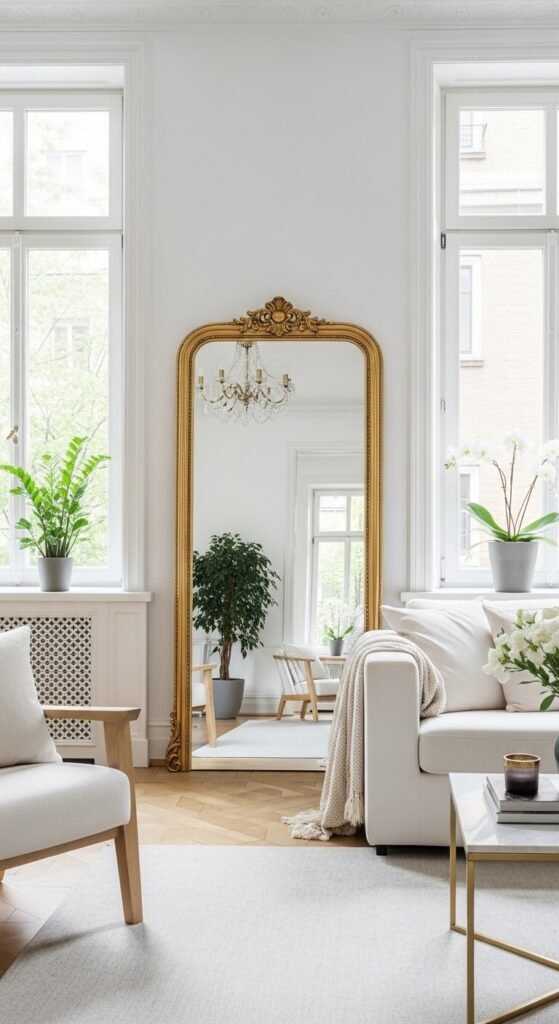
Position Mirrors Opposite Windows For Maximum Light
This is Mirror Placement 101, and it’s the most impactful trick you’ll learn. Placing a mirror directly across from a window bounces natural light throughout your room, effectively doubling the brightness.
Why this works:
- Reflects incoming sunlight to darker corners
- Creates the illusion of a second window
- Makes small or dim rooms feel instantly brighter
- Brings the outdoors in by reflecting plants and sky
The key is positioning: the mirror should catch the window’s reflection when you’re standing in the room’s main viewing area. Don’t just hang it on any opposite wall—make sure it’s actually capturing and reflecting that precious natural light.
Pro tip: In rooms with multiple windows, position your mirror to reflect the window with the best view or most interesting light patterns.
Choose Oversized Mirrors For Small Spaces
When it comes to making a room feel larger, bigger is definitely better with mirrors. A large mirror creates a stronger visual impact than several small ones scattered around.
Size guidelines:
Small rooms (under 150 sq ft):
- Use one large mirror (minimum 30×40 inches)
- Floor-to-ceiling mirrors create dramatic expansion
- Oversized leaning mirrors open up the space
Medium rooms (150-250 sq ft):
- Go for 36×48 inches or larger
- Can use one large or a grouping of medium mirrors
Large rooms:
- Statement mirrors of 40×60 inches or bigger
- Multiple large mirrors in different areas
Tiny decorative mirrors scattered around actually make a room feel cluttered and choppy. One substantial mirror creates clean lines and a focal point that expands the space visually.
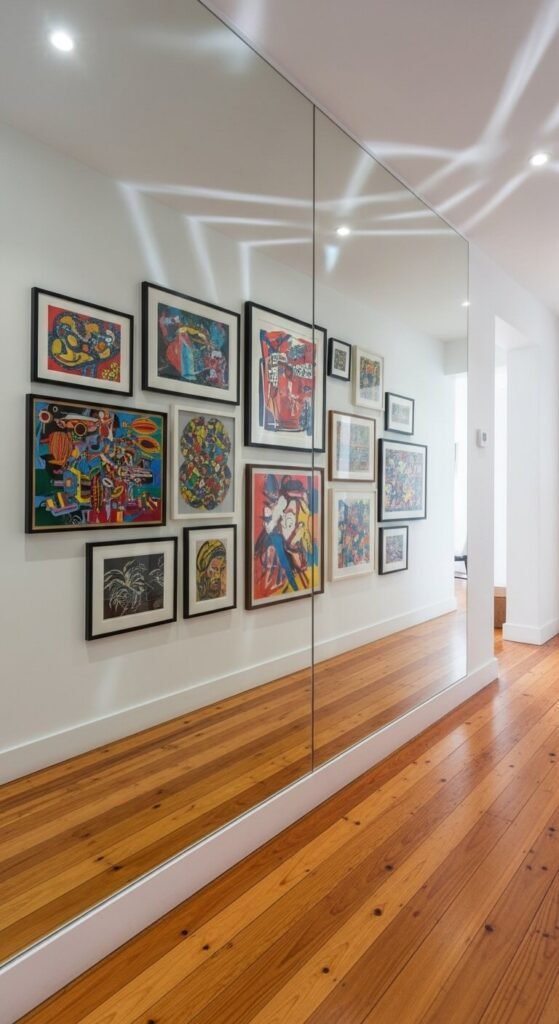
Lean Mirrors Against Walls For Casual Elegance
There’s something effortlessly chic about a mirror that’s not hung but rather leaned casually against a wall. This styling technique has taken over designer spaces for good reason.
Benefits of leaning mirrors:
- No nail holes in your walls (perfect for renters)
- Easy to reposition and experiment with placement
- Creates a relaxed, lived-in aesthetic
- Works beautifully in bedrooms, entryways, and living rooms
- Allows for layered styling with objects in front
Styling tips: Lean your mirror on a console table, dresser, or directly on the floor. Layer smaller objects or artwork in front of the bottom edge for that collected, curated look. Just make sure larger floor mirrors are secured to the wall with safety brackets to prevent tipping.
This approach works especially well with ornate vintage mirrors or oversized modern pieces.
Use Mirrors As Art In Unexpected Places
Stop thinking of mirrors as purely functional. Decorative mirrors are stunning art pieces that happen to reflect light and space as a bonus.
Creative mirror placement ideas:
- Above a fireplace mantel as the focal point
- As a dining room centerpiece on the wall
- Grouped in a gallery wall mixed with art
- In the kitchen to reflect light and add dimension
- Behind open shelving to create depth
- In a reading nook to amplify a cozy corner
Choose mirrors with interesting frames—ornate gold, rustic wood, modern black metal, or unique shapes like sunburst or arch designs. The frame becomes the art, and the reflective surface adds functionality.

Create Gallery Walls With Mixed Mirror Shapes
Who says gallery walls have to be all art? Mixing mirrors with artwork creates incredible visual interest and adds depth to your display.
Gallery wall mirror tips:
- Mix round, rectangular, and uniquely shaped mirrors
- Vary frame styles but keep a cohesive color palette
- Include both mirrors and artwork for balance
- Use odd numbers (3, 5, or 7 pieces total)
- Keep consistent spacing (2-3 inches between pieces)
The reflective surfaces break up the wall’s flatness and catch light from different angles throughout the day. This creates a dynamic, ever-changing display that static art alone can’t achieve.
Start with your largest mirror as the anchor piece, then build around it with smaller mirrors and complementary artwork.
Avoid These Common Mirror Placement Mistakes
Even with the best intentions, certain mirror placements can backfire. Know what to avoid to prevent awkward reflections and missed opportunities.
Don’t do this:
Facing your bed directly: Seeing yourself first thing in the morning or catching movement in the night can be unsettling. Place mirrors beside the bed or on perpendicular walls instead.
Reflecting clutter: If your mirror shows a messy kitchen counter or pile of mail, it’s amplifying chaos instead of beauty. Be mindful of what’s being reflected.
In direct sunlight paths: While reflecting light is good, mirrors in the path of intense direct sun can create harsh glare and hot spots.
Too high on the wall: The center of your mirror should be at eye level (around 57-65 inches from the floor). Hanging too high makes the room feel disconnected.
Facing other mirrors: Creating an infinite reflection tunnel might sound cool but actually feels disorienting and chaotic.

Layer Mirrors With Other Decor Elements
Mirrors don’t need to stand alone. Styling around mirrors creates a curated, intentional look that feels pulled together.
Layering ideas:
- Candles or lamps on either side (the reflection doubles their glow)
- Plants in front of leaning mirrors (greenery gets reflected)
- Books or decorative objects on a console below
- Sconces flanking a wall-hung mirror
- Small framed photos leaning against a larger mirror
This layering creates depth and makes your mirror feel like part of a complete vignette rather than just a functional piece stuck on the wall. It’s the difference between “mirror on wall” and “beautifully styled moment.”
Consider Mirror Shapes For Different Effects
The shape of your mirror impacts how it reads in a space. Different shapes create different visual effects and suit different design styles.
Shape guide:
Round mirrors: Soften angular rooms, work in any style from modern to traditional, create a focal point without harsh lines
Rectangular/Square: Classic and versatile, best for traditional or modern spaces, easy to pair in groupings
Arched mirrors: Add architectural interest, suit farmhouse or Mediterranean styles, create elegance and height
Irregular/Organic shapes: Modern and artistic, become statement pieces, work best as solo focal points
Sunburst/Decorative shapes: Vintage or glamorous vibes, strong style statement, work best in curated, cohesive spaces
Choose shapes that complement your existing furniture and architectural elements. Round mirrors soften rooms full of straight lines, while geometric mirrors enhance modern minimalist spaces.
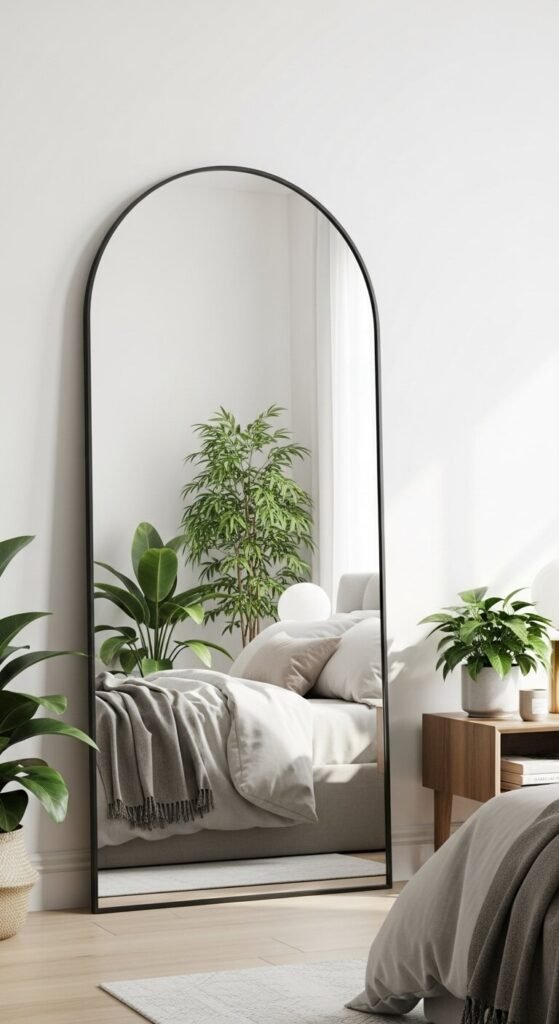
Use Mirrors In Dark Or Windowless Rooms
Some spaces—like interior bathrooms, hallways, or basement rooms—lack natural light entirely. Mirrors in these spaces are absolute game-changers.
Strategies for dark rooms:
- Hang mirrors to reflect artificial light sources (lamps, sconces)
- Use multiple mirrors to bounce light around the space
- Position mirrors to reflect the brightest adjacent room
- Choose mirrors with metallic or light-colored frames to enhance brightness
- Place mirrors near doorways to capture light from other rooms
Even without windows, you can create the illusion of brightness and openness. The key is reflecting whatever light you do have—whether it’s from lamps, overhead fixtures, or adjoining spaces.
A well-placed mirror can make a windowless powder room feel twice as large and surprisingly bright.
Style Mirrors At Different Heights For Visual Interest
Flat, one-dimensional spaces are boring. Varying the heights of mirrors creates layers and draws the eye throughout the room.
Height variation techniques:
- One large wall-hung mirror with a smaller leaning mirror nearby
- Tall floor mirror beside a medium-height wall mirror
- Mirrored tray on a coffee table with wall mirror above
- Layered look with one mirror slightly higher/lower than another
This three-dimensional approach to mirror placement creates a more dynamic, professionally designed feel. Your eye travels around the room naturally rather than landing on one flat plane.
Ready to transform your space with strategic mirror placement? Start by positioning one mirror opposite your brightest window and notice the immediate difference in light and space. Remember: bigger is better, placement matters more than quantity, and what your mirror reflects is just as important as the mirror itself. Save this guide for your next mirror shopping trip—your small, dim rooms are about to feel bright, spacious, and absolutely stunning! ✨