
Macrame has had quite the glow-up. What was once associated with your grandmother’s owl wall hanging has evolved into one of the most coveted texture elements in modern interior design — and for very good reason. Those intricate knots, those soft cotton fringes, those organic, handcrafted forms bring something to a room that no mass-produced item ever could: soul. Whether your space leans coastal, bohemian, Scandinavian, or somewhere beautifully in between, macrame has a way of softening hard lines, adding warmth to neutral palettes, and making a room feel genuinely lived-in and layered without a single extra piece of furniture.
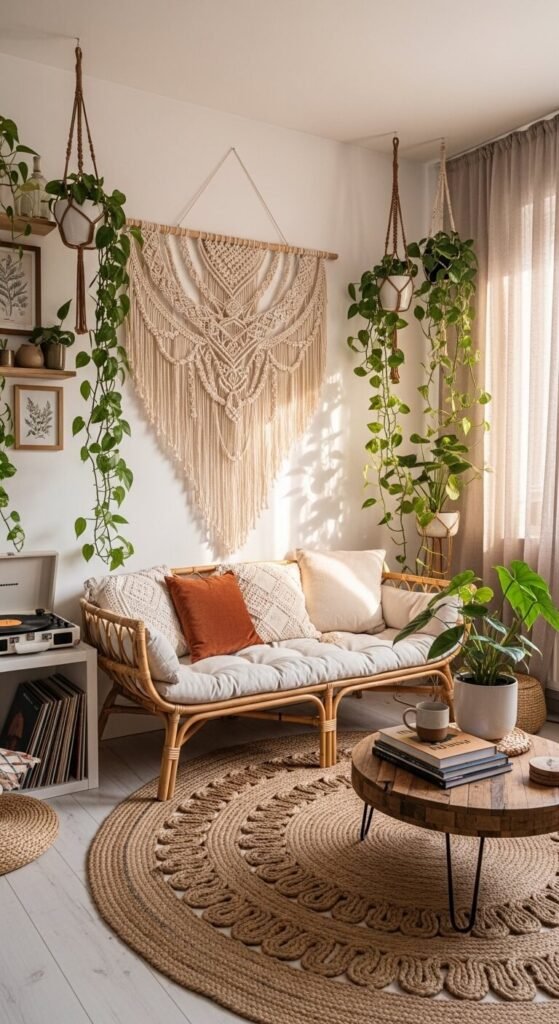
The best part? It works in almost any room, at almost any budget, and in more ways than most people realize. Here’s how to decorate with macrame beautifully — and keep it feeling fresh and intentional rather than overdone.
Why Macrame Works in Modern Interiors
Before diving into the how, it helps to understand why macrame has stayed so relevant despite trends cycling through at lightning speed.
It comes down to a few things:
- Texture on texture — macrame adds a dimensional, tactile quality that flat artwork and smooth surfaces simply can’t replicate
- Natural materials — cotton, jute, and hemp cord feel inherently organic and grounding in a world of synthetic everything
- Handmade quality — in an era of algorithmic sameness, something knotted by hand carries a warmth and individuality that resonates deeply
- Neutral versatility — most macrame is made in natural cream, ivory, or tan tones that complement virtually every color palette
- Scale flexibility — from a tiny plant hanger to a floor-to-ceiling wall installation, macrame works at every size and in every budget
It also photographs beautifully — which, in the age of Pinterest and Instagram, is never a small thing.
The Macrame Wall Hanging: The Statement Piece
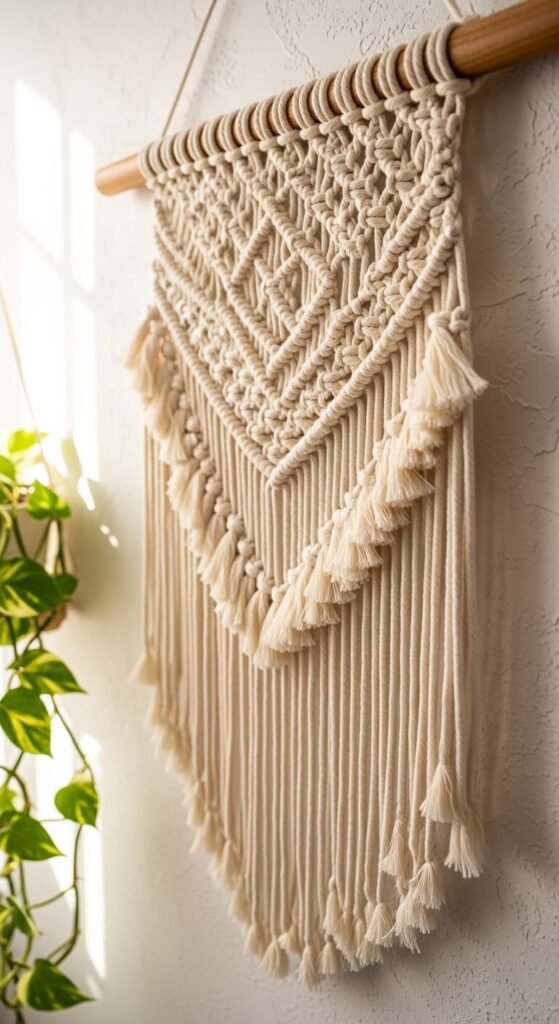
The wall hanging is the most iconic macrame piece, and when it’s chosen and placed well, it can anchor an entire room. Think of it the way you’d think of a large painting — it’s a focal point, a conversation starter, and an instant personality injection.
How to choose the right one:
- Scale matters enormously — a wall hanging should be substantial enough to feel intentional; for above a sofa or bed, aim for a piece at least 24 to 36 inches wide
- Match the complexity to your room — a heavily decorated room calls for a simpler, more minimal macrame design; a neutral room can handle something with more intricate knotwork and fringe
- Consider the length — long, floor-grazing pieces add drama; shorter, wider pieces feel more grounded and modern
Best places to hang it:
- Above the sofa as a textile alternative to canvas art
- As a headboard alternative or above an existing headboard in the bedroom
- On a large empty dining room wall for an unexpected, warm focal point
- In an entryway to welcome guests with immediate texture and personality
Plant Hangers: Small Piece, Big Impact
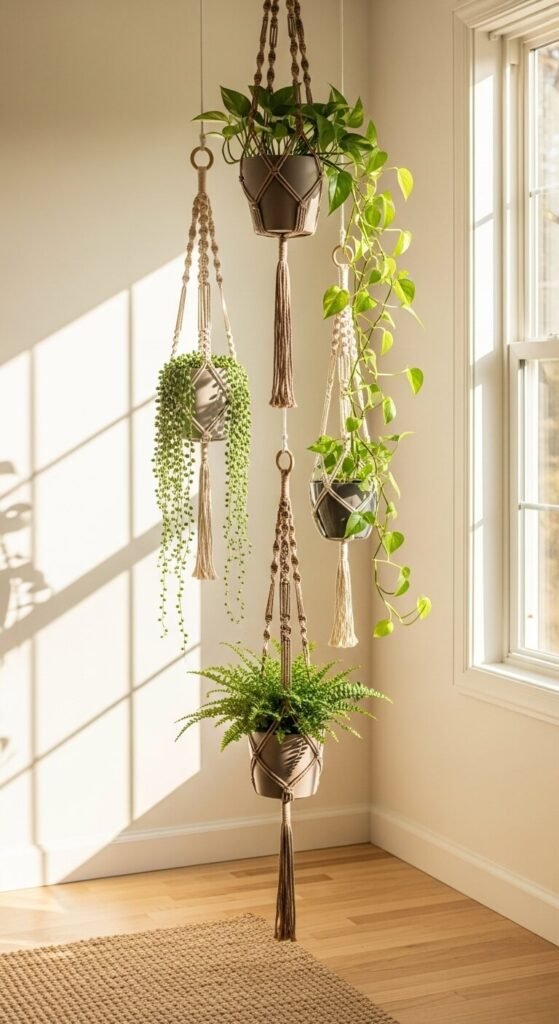
If you’re new to macrame or working with a tighter budget, plant hangers are the perfect entry point. They’re widely available, relatively inexpensive, and they do double duty — adding both macrame texture and living greenery to a space in a single move.
How to style them well:
- Hang at varying heights — a cluster of two or three plant hangers at different lengths creates a dynamic, layered moment in any corner or window area
- Choose plants that trail or drape — string of pearls, pothos, ivy, and tradescantia all spill beautifully from a hanging pot
- Group near natural light — the combination of macrame cord, trailing greenery, and window light is one of the most effortlessly beautiful arrangements in home decorating
- Mix pot styles — a terracotta pot in a macrame hanger hits differently than a white ceramic one; experiment with what suits your overall palette
One well-placed plant hanger in a bare corner can completely transform the feeling of a room — and it takes about ten minutes to install.
Macrame Beyond the Wall: Unexpected Places to Use It
Most people stop at wall hangings and plant hangers, but macrame is far more versatile than that. Some of the most beautiful uses are the ones people don’t immediately think of.
Unexpected macrame moments worth trying:
- Table runner — a macrame runner down the center of a dining table adds incredible texture and works beautifully for everyday use or entertaining
- Chair or headboard — a macrame panel hung behind a chair or draped over a headboard adds a soft, bohemian canopy effect
- Mirror frame — macrame-framed mirrors are one of the most on-trend pieces in the market right now; the knotted surround turns a simple mirror into a genuine statement
- Curtain or room divider — a macrame panel hung in a doorway or open shelving unit creates a soft, textural boundary without blocking light
- Shelf fringe — small macrame fringe pieces draped over the edge of a floating shelf add micro-texture to a styled vignette
The key is restraint. Pick one or two of these applications per room — macrame is a supporting character that elevates everything around it, not a leading one that competes for attention everywhere.
How to Mix Macrame With Other Textures
Macrame is a team player, and it looks its absolute best when layered with complementary textures. The more you mix, the richer and more intentional the result.
Textures that pair beautifully with macrame:
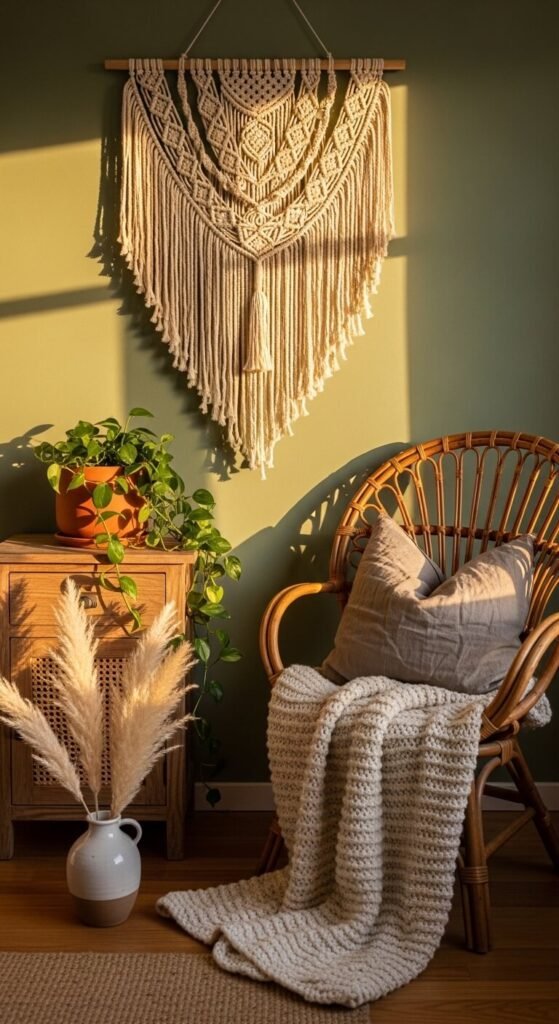
- Rattan and cane — both are natural, woven, and organic; the combination feels inherently cohesive and grounded
- Linen and cotton textiles — soft, natural-fiber cushions and throws let macrame’s texture take center stage without competing
- Raw wood — wooden furniture, dowel rods, and driftwood pieces feel completely at home alongside macrame’s earthy quality
- Terracotta and ceramic — the warmth of clay tones plays perfectly against natural cotton cord
- Dried botanicals — pampas grass, dried eucalyptus, and bunny tail grass sit in the same organic family as macrame and look beautiful grouped together
What to avoid: Pairing macrame heavily with very sleek, polished, or ultra-modern materials — glass, chrome, and lacquered finishes — creates a visual tension that neither element wins.
Let the Knots Do the Talking
Macrame is one of those rare decor elements that simultaneously feels timeless and completely of the moment — and when it’s used with intention, it elevates everything around it. Start with one piece in one room, live with it for a week, and notice how it changes the feeling of the space. Chances are, you’ll be reaching for a second piece before long.
Save this guide for your next decorating refresh, share it with a fellow texture lover, and go find the macrame piece your walls have been waiting for. 🪢🌿