
If brass is sophisticated and gold is glamorous, copper is something altogether more alive. It glows like an ember, deepens with age, and carries a warmth that no other metal in the decorating palette quite replicates. A room with copper accents feels like it’s lit from within — there’s a richness to the light it catches and the warmth it radiates that makes any space feel more inviting, more considered, and genuinely more beautiful. And unlike trends that arrive loudly and leave just as fast, copper has proven its staying power across every style of interior — from industrial loft to bohemian cottage to sleek Scandinavian minimalism — because its warmth is simply too good to resist.
The key to decorating with copper beautifully — rather than overwhelmingly — is understanding how to introduce it in layers, how to pair it with other materials, and where in your home it makes the biggest impact. Here’s everything you need to know.
Why Copper Works Across Every Design Style
Before diving into placement and pairing, it helps to understand why copper is so remarkably versatile when so many bold metals feel style-specific.
Copper works because of its unique position on the warm end of the metallic spectrum:
- It bridges natural and metallic — copper looks equally at home alongside raw wood and linen as it does next to polished marble and lacquer; it has an organic quality that most metals lack
- It plays well across palettes — whether your room is predominantly dark and moody, light and airy, or richly jewel-toned, copper finds its place
- Its patina tells a story — unlike metals that look tired when they age, copper develops a living finish that becomes more beautiful and characterful over time
- It reads as warm in every light — morning sun, lamplight, candlelight; copper doesn’t have a bad angle or an unflattering hour
The one thing copper asks in return is restraint. It’s a rich, attention-grabbing material — a little goes a long way, and knowing when to stop is as important as knowing where to start.
The Best Places to Introduce Copper First
If you’re new to decorating with copper and not sure where to begin, start with the places that deliver the highest visual impact with the lowest commitment. These are the touch points that accumulate into a cohesive, warm-toned story throughout the home.
Kitchen and dining:
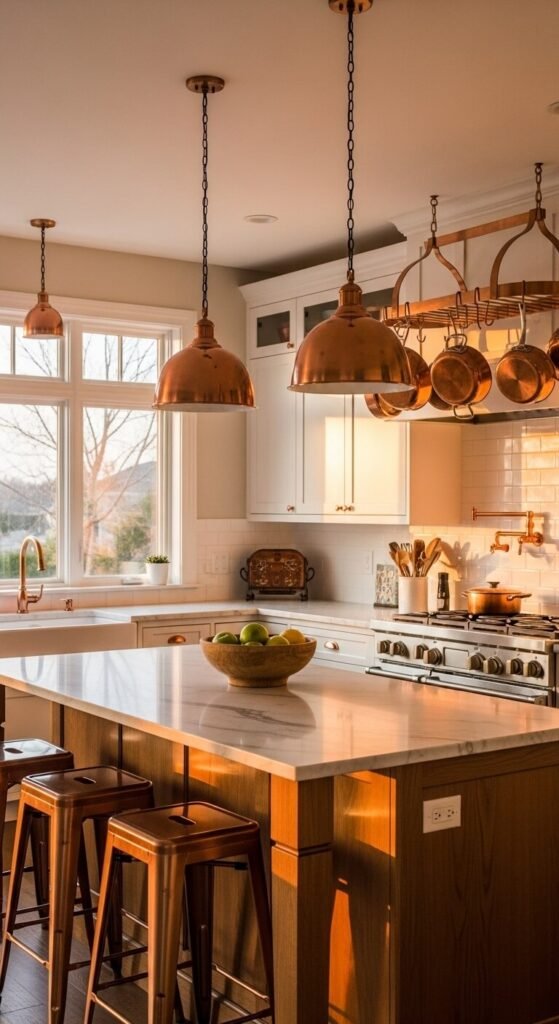
- Copper pendant lights above an island or dining table — one of the single most transformative copper introductions; the warm glow of copper lighting makes food look better and dinner feel more like an occasion
- Copper cookware and pots displayed on open shelving or a pot rack — functional and deeply beautiful; a row of copper pots is one of the most timeless kitchen display choices
- Copper cabinet hardware — pulls and knobs in a brushed or aged copper finish update a kitchen instantly without a single cabinet replacement
Living room:
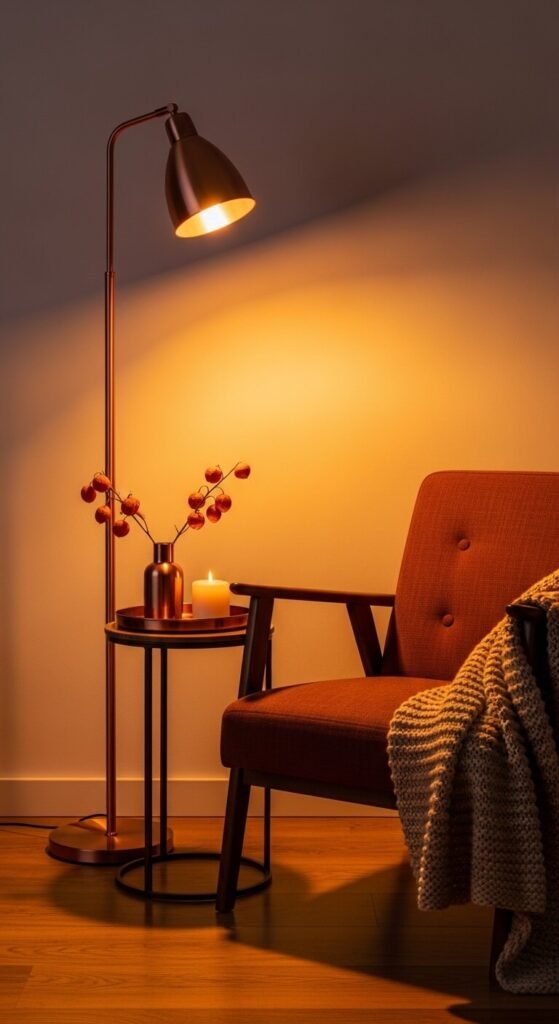
- Copper table or floor lamp — a slim copper lamp base beside a sofa or armchair adds warmth to the corner without dominating the room
- A copper vase or vessel on a coffee table or styled shelf
- Copper picture frames within a gallery wall — interspersed among other finishes for a layered, collected look
Bathroom:
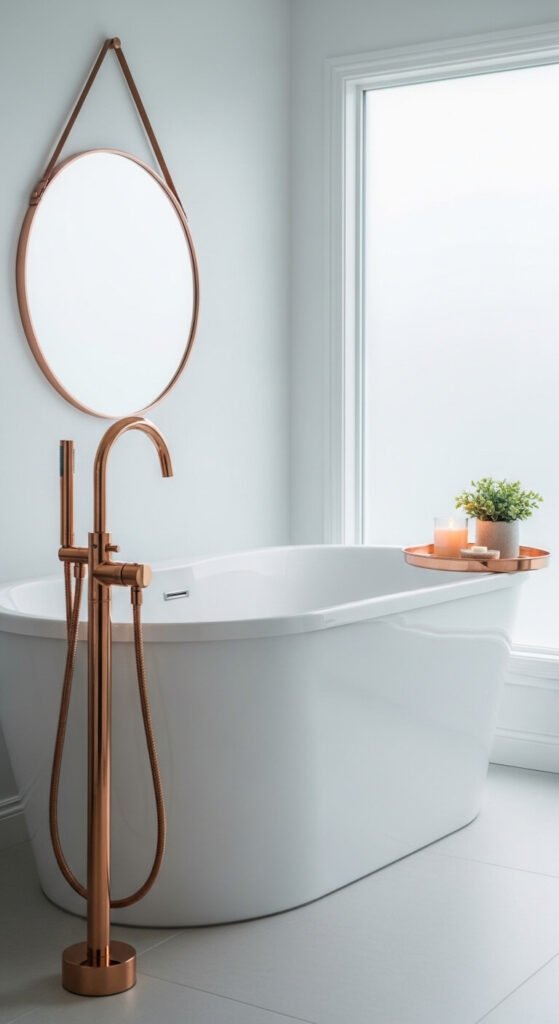
- Copper faucets and fixtures — one of the most luxurious-feeling copper applications; a copper tap above a white sink feels genuinely spa-like
- A copper mirror frame above the vanity — warm, reflective, and endlessly elegant
Decorative Copper Objects That Build a Cohesive Story
Beyond hardware and fixtures, decorative copper objects are the most flexible way to build copper into your home. They can be moved, grouped, layered, and refreshed without any installation — which makes them accessible for every budget and every living situation.
Decorative copper pieces worth investing in:
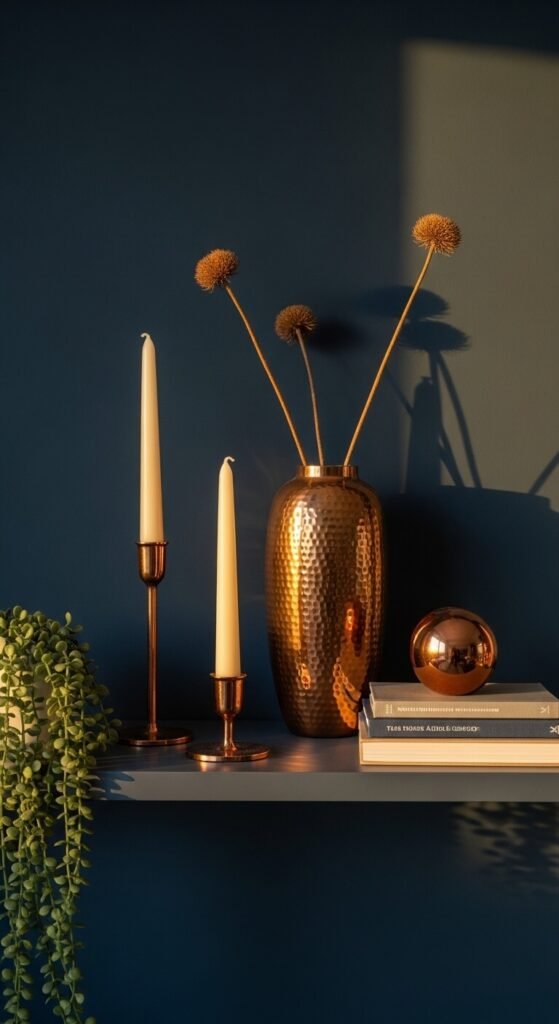
- Hammered copper vases — the texture catches light in a way that smooth finishes don’t; place them in a group of two or three at varying heights for maximum impact
- Copper candle holders and taper stands — grouped on a tray or mantel, copper candlesticks are one of the most classically warm table and shelf arrangements
- Copper trays — on a coffee table, a nightstand, or a bar cart, a copper tray corrals smaller objects while adding material richness to the surface
- Copper planters and cache pots — greenery in a copper pot has a warmth and beauty that white or terracotta pots simply can’t match
- Copper geometric sculptures or abstract objects — these add personality and visual interest to a shelf or table without requiring a specific function
How to Mix Copper With Other Metals and Materials
One of the most common concerns about copper is whether it can coexist with other metals already in a space — and the answer is absolutely yes, as long as you follow a few simple principles.
Copper’s best metal companions:
- Matte black — the most striking copper pairing; the contrast between warm copper and flat black is bold, dramatic, and very contemporary
- Brushed gold or brass — warm on warm creates a luxurious, layered effect; keep these two in different zones of the room rather than side by side to prevent competition
- Aged bronze — copper’s close cousin; the two blend beautifully in an eclectic, collected arrangement and both improve with the patina of age
- Avoid pairing copper directly with chrome or polished nickel — the cool tones of silver-family metals fight against copper’s warmth rather than complementing it
Material pairings that bring out copper’s best:
- Dark walnut and warm wood tones — the richness of dark wood alongside copper creates a deeply warm, almost autumnal palette
- Marble — white or grey marble against copper is one of the most elegant material combinations in interior design; the cool stone and warm metal balance each other perfectly
- Deep jewel tones — emerald, sapphire, burgundy, and plum all pair magnificently with copper; the colors feel richer and the copper feels more intentional
- Natural linen and cotton — soft, organic textiles ground copper’s shine and prevent a room from feeling too hard-surfaced and metallic
Keeping Your Copper Looking Its Best
Copper is a living material, and how you care for it determines the finish you end up with over time.
- Embrace the patina — unlacquered copper develops a natural darkening and deepening that most decorators find more beautiful than the original bright finish; many people intentionally seek aged copper pieces for exactly this quality
- Polish when desired — if you prefer a bright, warm shine, a simple copper polish applied occasionally will bring pieces back to their original glow
- Lacquered copper — many decorative pieces come with a lacquer coating that prevents tarnishing indefinitely; this is the lower-maintenance option for those who want consistent shine without any upkeep
- Keep copper away from moisture for extended periods — while copper handles humidity well, prolonged exposure in bathrooms without proper ventilation can speed the patina process faster than most people prefer
Let Copper Warm Your World
Copper doesn’t demand attention the way gold does or assert itself the way chrome can. It simply glows — quietly, warmly, and with a richness that accumulates gradually as you add piece after considered piece. It makes every room it touches feel more alive, more layered, and more worth spending time in.
Save this guide for your next decorating refresh, share it with someone whose home needs a little more warmth and shine, and go find the copper piece that starts your collection. The glow is absolutely waiting for you. 🟤✨