
Books are the most underrated decorating tool in your entire home. Not just for reading — though obviously, yes — but for styling. A well-placed stack of books can anchor a vignette, add height to a flat surface, inject color into a neutral room, and tell the story of who you are without saying a single word. The best part? You probably already own everything you need. You’ve just never thought about it this way.
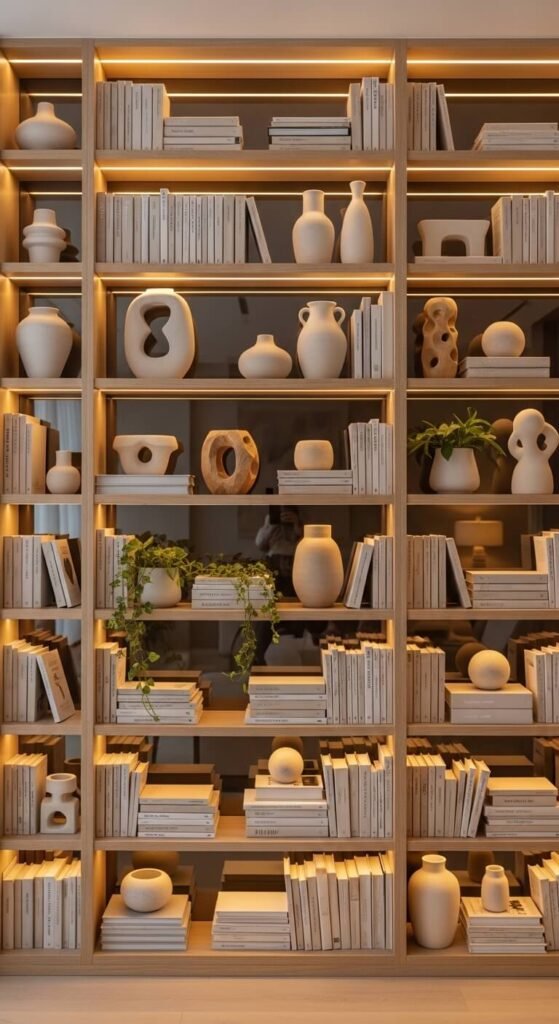
Start With What You Already Own
Before you buy a single thing, do a full book audit. Gather every book in your home — from the bedroom nightstand, the kitchen counter, the office shelf — and lay them out together.
- Sort by color to see what palette you’re naturally working with.
- Identify your largest and most beautiful hardcovers — these are your hero pieces.
- Set aside any books with spines that are torn, faded, or visually jarring — they can live in a drawer or basket instead.
You’ll almost certainly have more to work with than you realized. Books you forgot you owned suddenly become décor assets. It’s one of the most satisfying home edits you can do.
Use the Stack as a Design Element
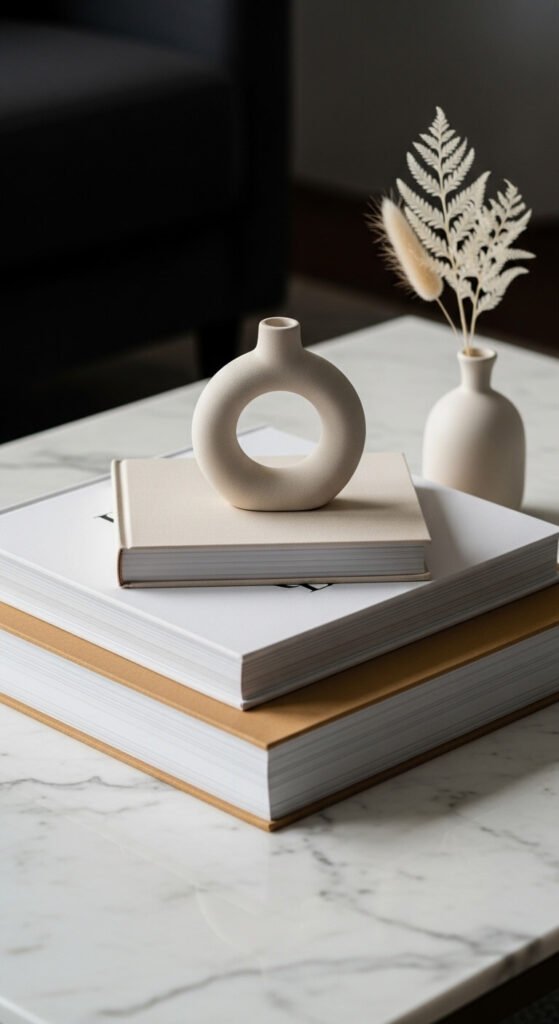
Stacking books horizontally — rather than standing them upright — is one of the simplest and most versatile styling moves you can make.
- On a coffee table: A stack of 3–4 large hardcovers creates the perfect riser for a candle, a small plant, or a sculptural object on top.
- On a nightstand: Two stacked books adds height variation and looks far more intentional than a single flat surface.
- On a shelf: Alternate between vertical rows and a horizontal stack to break up the monotony and create visual rhythm.
Always stack with the largest book on the bottom, graduating to the smallest on top. It looks balanced, purposeful, and quietly sophisticated.
Style Shelves Like a Designer (Not a Librarian)
A shelf packed spine-to-spine with books from wall to wall looks like a library — which is great if that’s the vibe you want, but not so great if you’re going for curated living space.
Here’s the designer approach:
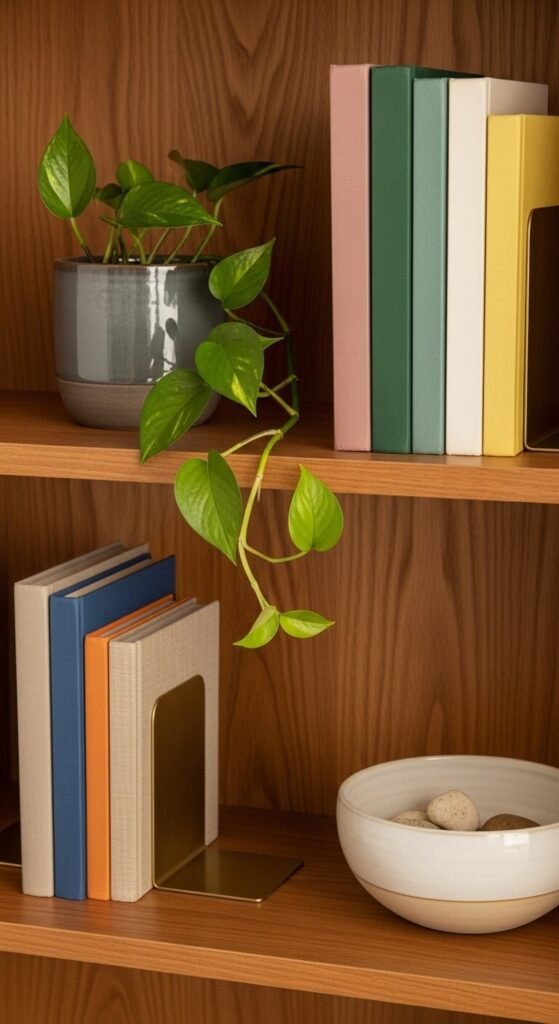
- Group books in clusters of 5–8, then break with an object, a plant, or an empty stretch of shelf.
- Mix orientations — some vertical, some horizontal — within each cluster.
- Vary the heights of your clusters so the shelf has a natural, organic rhythm rather than a straight flat line.
- Use books as risers — place a small object on top of a horizontal stack to create a layered, dimensional look.
- Leave intentional negative space. An empty section of shelf isn’t neglect — it’s breathing room.
The goal is a shelf that looks collected over time, not staged all at once.
Play With Color — Or Go Tone-on-Tone
Color is one of the most powerful tools books give you as a decorator.
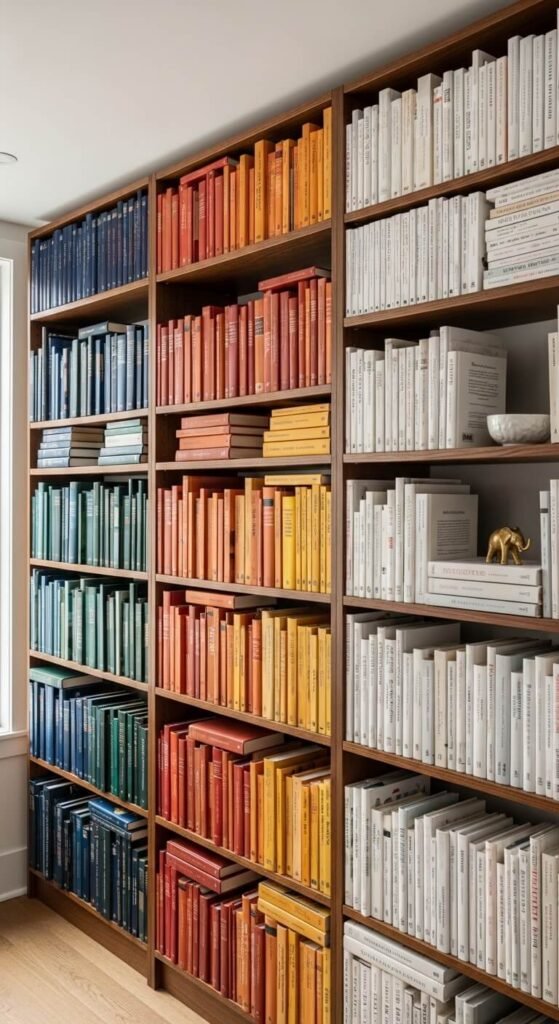
The color-grouped approach:
- Arrange books by spine color across a shelf for a visually striking, intentional look.
- Works especially well in maximalist or eclectic spaces that love personality and pattern.
The tone-on-tone approach:
- Gather all your cream, white, tan, and linen-toned books together and style them as a cohesive neutral cluster.
- Add depth with a warm wood object or a single dark accent piece within the arrangement.
- This approach feels serene, sophisticated, and works beautifully in minimalist or Scandinavian-inspired spaces.
Can’t decide? Mix both. Color-group one shelf, go tone-on-tone on another, and let the contrast between the two become part of the design.
Bring Books Into Unexpected Spaces
The living room bookshelf is the obvious choice — but books are adaptable, and they belong in more rooms than you think.
- Kitchen: A small stack of beautiful cookbooks on the counter adds warmth and practicality. Style with a linen tea towel and a small herb plant nearby.
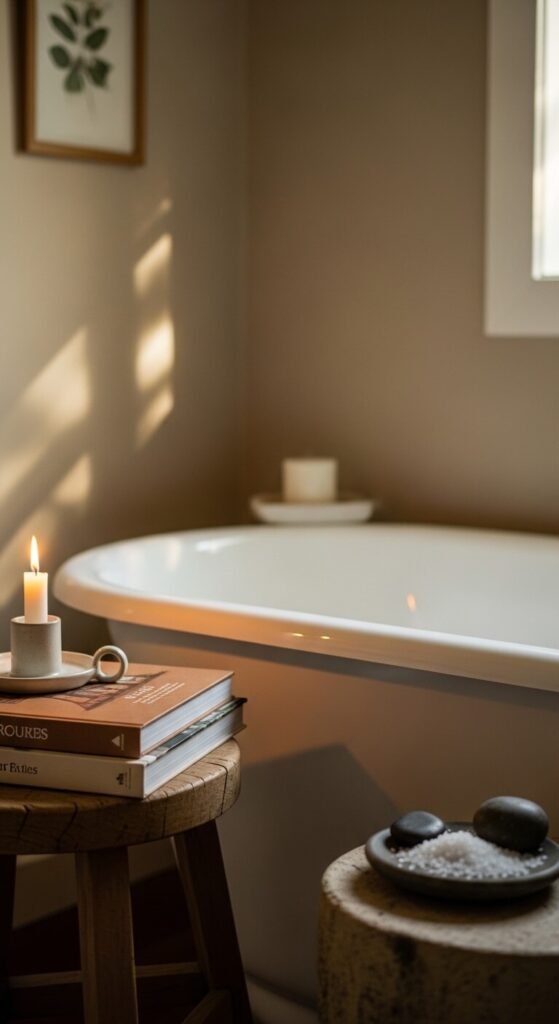
- Bathroom: A couple of coffee table books on a stool or shelf next to the bathtub adds instant spa-like sophistication.
- Entryway: A single beautiful oversized book on a console table, styled with a candle and a small object, creates a welcoming, layered first impression.
- Bedroom floor: A tall, casual stack of books on the floor beside a chair or in a corner adds that effortlessly lived-in, intellectual energy that makes a room feel real.
Add Objects to Complete the Story
Books alone make a shelf look like storage. Books with objects make it look like décor.
The rule of thumb: for every cluster of books, add at least one non-book element to anchor the arrangement.
Great companions for books include:
- Small plants — trailing ivy, succulents, or a tiny potted fern
- Candles — tapered, pillar, or vessel candles in matte ceramic holders
- Sculptural objects — abstract shapes, found stones, geodes, or ceramic figures
- Framed art or photos leaning casually against the shelf back
- Baskets or boxes to add texture and hide anything you don’t want displayed
The objects tell the human story. The books provide the intellectual backbone. Together, they create a shelf that feels alive.
The Takeaway
Books are not just things you read — they’re one of the most powerful, personal, and affordable decorating tools you own. Stack them, group them by color, mix them with objects, and bring them into rooms where you’d least expect them. The result is a home that looks layered, collected, and unmistakably yours.
Save this article for your next shelf styling session — and go finally give those books the home they deserve. 📚