
Most people avoid black in their home decor out of a specific fear — that it will make the room feel dark, heavy, oppressive, or smaller than it actually is. That fear is almost always wrong. Black used thoughtfully does the opposite: it grounds a room, creates contrast that makes surrounding colors appear more vivid, adds a sense of depth and sophistication, and signals a design confidence that no neutral palette can replicate alone. The key word is thoughtfully. A room painted entirely black in the wrong conditions will feel like a cave. The same room with black used in the right places — hardware, frames, a single accent wall, furniture legs, curtain rods — feels dramatic in the best possible way. The difference is not the color. It is the placement.
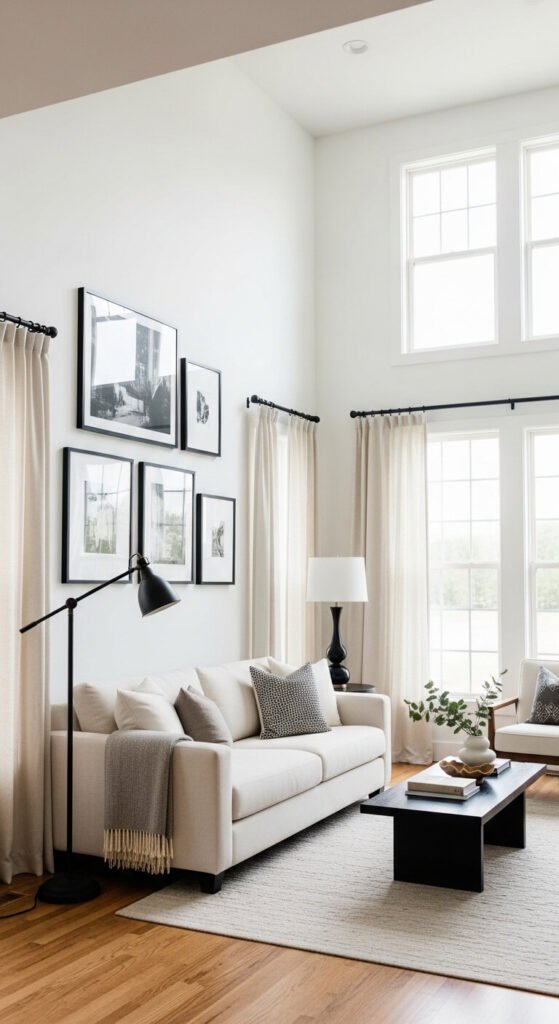
Here is exactly how to use black to add drama to any room without ever making it feel dark.
Start with Black as Hardware, Not Paint
The lowest-commitment and highest-impact way to introduce black into a room is through hardware — the small, functional metal pieces that every room already has.
What to swap to matte black:
- Door handles and knobs
- Cabinet pulls and drawer hardware
- Curtain rods and rings
- Light switch plates and outlet covers
- Towel rails and bathroom fixtures
- Picture frame hooks and shelf brackets
This costs almost nothing per piece. A matte black cabinet pull costs $3 to $8. A set of matte black door handles is $15 to $40 per door. A black curtain rod and ring set costs $20 to $60.
The collective effect of switching all hardware in a room to matte black is dramatic and immediate — the room gains a consistent graphic element that runs through every functional surface, tying the space together with a design thread that most rooms without it conspicuously lack.
Matte black over gloss black: In almost every domestic setting, matte black is the right choice. It absorbs light rather than reflecting it, which prevents hardware from feeling harsh or industrial. Gloss or polished black works in very specific, intentionally sleek contexts — but it reads as colder and more commercial in most home environments.
Use Black Frames for Gallery Walls
Black frames on a gallery wall create the most consistent and graphically powerful art display possible — they unify any collection of art, photography, and prints into a single cohesive statement regardless of how different the images inside them are.
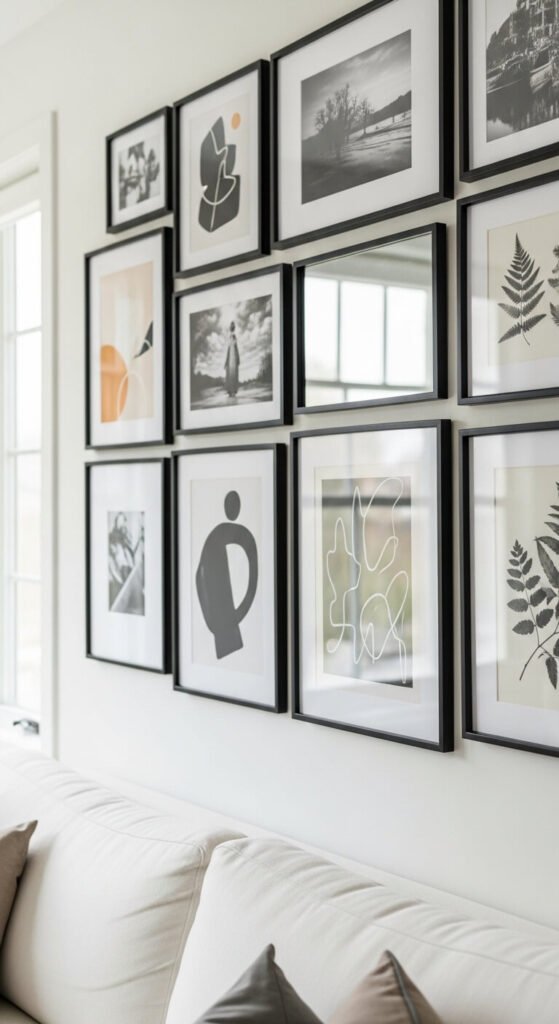
- Use identical frames — the same thin matte black profile across all sizes creates cohesion. Mix frame widths and the effect becomes fragmented rather than unified.
- Mix art confidently — black frames allow you to hang a $5 print beside a $300 original photograph and have both look equally considered
- IKEA’s RIBBA and RÖDALM frames in black are the best budget option — individual frames cost $5 to $12 each and are available in multiple sizes
A full gallery wall of 8 to 10 matching black frames costs $50 to $100 total — and transforms the most prominent wall in a room into its clearest, most confident design statement.
Try One Black Accent Wall (Not Four)
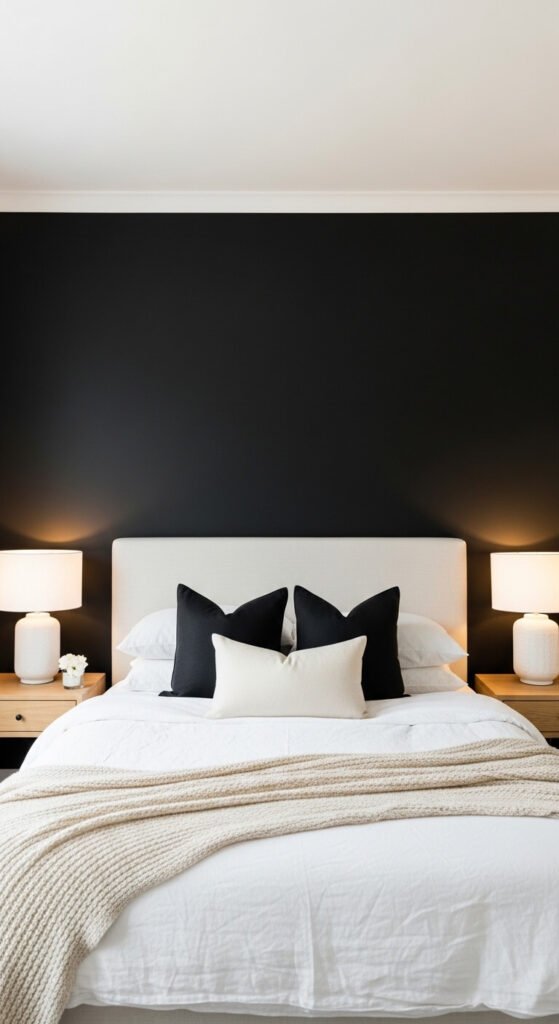
Painting one wall black — the wall behind the bed headboard, the wall behind the sofa, or the wall containing the fireplace — creates a focused, dramatic moment in the room without enclosing the entire space in darkness.
One black accent wall in a room with white or light-colored walls on the other three sides actually makes the room feel larger, not smaller — because the deep recession of the dark wall creates an illusion of depth that pushes that wall visually backward.
Which wall to choose:
- Behind the bed — the most popular black accent wall placement. It frames the headboard, makes the bed feel like the room’s architectural centerpiece, and looks genuinely luxurious against white or cream bedding.
- Behind the sofa — creates a strong backdrop for the room’s primary seating area and makes the gallery wall above the sofa more visually dramatic
- The fireplace wall — the fireplace already contains black or dark tones. Painting the entire wall black unifies the fireplace with the wall and creates a seamless focal point.
Farrow & Ball “Railings,” Dulux “Jet Black,” and Benjamin Moore “Black” are all excellent matte black paint options for accent walls.
Add Black Through Furniture Details
Large furniture pieces in black can feel oppressive in a small room. But black as a furniture detail — legs, frames, trim — creates grounding and graphic interest without visual weight.
Black furniture details that work:
- Hairpin legs on a coffee table or side table — thin black steel legs make the furniture appear to float rather than sit heavily on the floor
- Black iron bed frames — a thin profile black iron bed frame is one of the most universally appealing bedroom choices at any price point
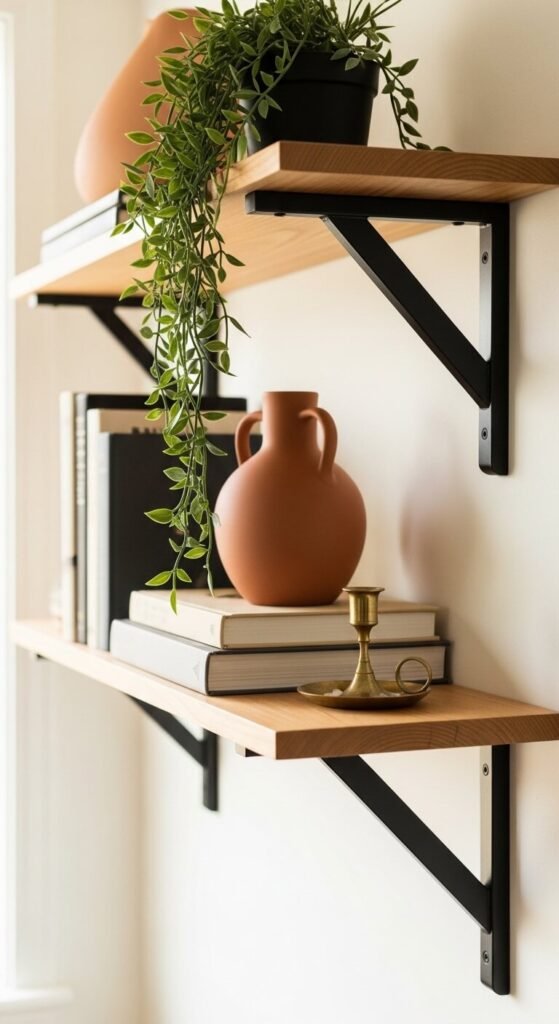
- Black shelving brackets exposed on floating shelves
- Black trim on upholstered furniture — a sofa or headboard with a thin piped black edge creates definition without changing the furniture’s overall tone
The rule with black furniture details is thin over thick — thin black elements (legs, wires, frames, trim) read as graphic and intentional. Thick black surfaces (large solid black furniture) require more careful placement and more light in the surrounding space.
Balance Black with Light and Warmth
Black in a room performs best when it has two specific partners: natural light and warm materials.
Natural light: Black absorbs light, so rooms where you plan to use black most confidently should have good natural light sources. South and west-facing rooms are the best candidates for black accent walls or significant black furniture pieces.
Warm materials: Pair black with natural wood, terracotta, warm linen, brass, and living plants. These warm organic materials prevent black from reading as cold or industrial. A black wall beside a warm wood floor looks designed. The same black wall beside a cool grey concrete floor reads as clinical.
The balance rule: For every black element you add, ensure a warm, natural material is visible in the same eyeline — a black curtain rod with warm linen panels, a black coffee table with a natural wood tray on top, a black gallery wall above a camel linen sofa.
Black Is a Neutral — Use It Like One
The most important reframe in decorating with black is treating it as a neutral rather than a bold color choice. Black is the grounding neutral that defines edges, creates contrast, and gives other colors in the room permission to shine more brightly because of the dark backdrop they are viewed against.
Start small. Swap the hardware. Frame the art. Paint one wall. And watch every other color in the room become more vivid, more intentional, and more alive in contrast.
Save this and pin it as your guide to decorating with black — because drama and light are not opposites, and this is exactly how to have both.