
Let’s get real for a second: you don’t need to spend thousands of dollars to make your home look expensive. Some of the most stunning spaces you’ve admired on Instagram were decorated on shoestring budgets—you just couldn’t tell.
The secret? Luxury is about curation, not cost. It’s about making smart choices, understanding what creates visual impact, and knowing where to splurge versus save. A few well-chosen budget pieces styled intentionally will always look better than a room full of random expensive items thrown together.
Whether you’re decorating your first apartment or refreshing your current space, these proven strategies will help you create that high-end, designer look without the designer price tag. Your friends will never guess how little you actually spent.
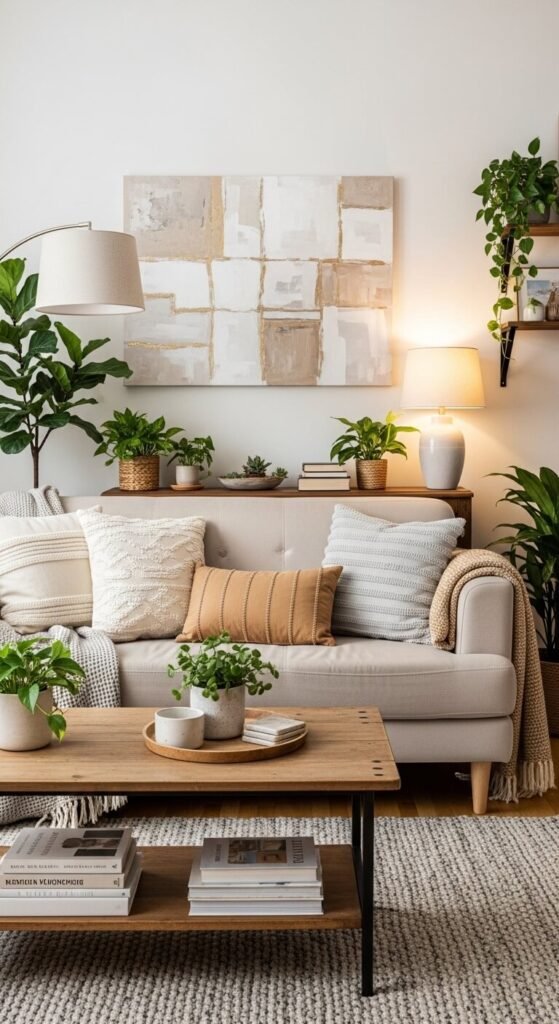
Stick To A Cohesive Color Palette
This is the fastest way to make any space look more expensive. Luxury spaces always have a unified color story—usually 2-3 main colors plus neutrals.
Choose your palette:
- Start with one neutral base (white, beige, gray, or black)
- Add one main accent color (navy, emerald, terracotta, dusty pink)
- Include one metallic (brass, gold, black metal, or silver)
- Stick to this palette throughout the room
Why this works: When everything coordinates, your brain reads the space as “intentionally designed” rather than “randomly collected.” Even budget pieces look more expensive when they’re part of a cohesive color scheme.
Avoid the temptation to buy something just because it’s on sale. If it doesn’t fit your palette, it’ll cheapen the look of your entire room.
Invest In One Statement Piece Per Room
You can’t afford to furnish an entire room with high-end pieces, and that’s totally fine. The trick is investing in one showstopper and filling in around it with budget finds.
Statement piece ideas:
- A beautiful area rug (this anchors the whole room)
- A unique vintage mirror or piece of art
- One quality upholstered chair or sofa
- An eye-catching light fixture
- A stunning headboard or bed frame
When you have one piece that genuinely looks expensive, everything else around it gets elevated by association. It’s like wearing designer shoes with a basic outfit—the quality piece lifts everything else.
Save money on: side tables, shelving units, decorative accessories, throw pillows, and smaller accent pieces. These are easy to find affordably and can be swapped out easily.
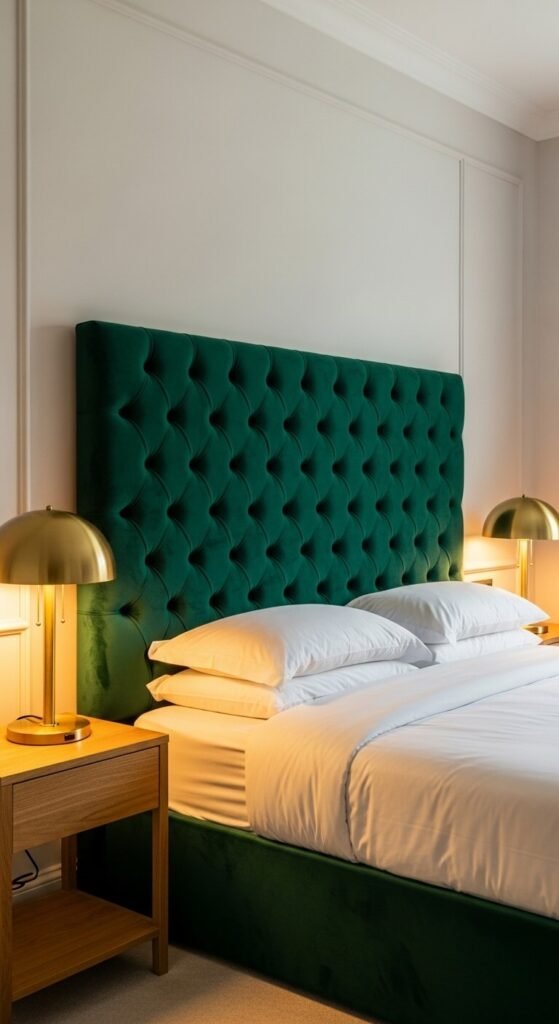
Master The Art Of Layering Textures
Here’s a secret: texture is what makes rooms feel expensive, even more than the actual cost of items. Mixing different materials creates visual richness that screams luxury.
Layer these textures:
- Soft (velvet pillows, chunky knit throws, linen curtains)
- Smooth (ceramic vases, glass accessories, lacquered trays)
- Natural (jute rugs, wooden furniture, woven baskets)
- Metallic (brass candleholders, gold picture frames, metal planters)
- Rough (concrete planters, exposed brick, textured wall art)
A $30 velvet pillow next to a $15 chunky throw on a $200 sofa creates a richer, more luxurious look than a $500 leather sofa with nothing else. It’s all about the mix.
Pro tip: Thrift stores and discount home stores (HomeGoods, TJ Maxx) are goldmines for textured accessories at budget prices.
DIY Your Art And It’ll Look Custom
Gallery-quality art is expensive, but creating your own abstract art or framing affordable prints can look just as good—sometimes better.
Budget art ideas:
- Abstract paintings (anyone can create these with acrylics)
- Frame pages from vintage books or botanical prints
- Print high-resolution images from free stock photo sites
- Create line drawings or minimalist designs
- Frame beautiful fabric or wallpaper samples
The key: invest in nice frames. Cheap art in quality frames looks expensive. Expensive art in cheap frames looks cheap. Simple black or natural wood frames in consistent sizes create that gallery wall aesthetic for a fraction of the cost.
Even better: Large-scale art makes the biggest impact. One oversized piece looks more expensive than multiple small pieces.
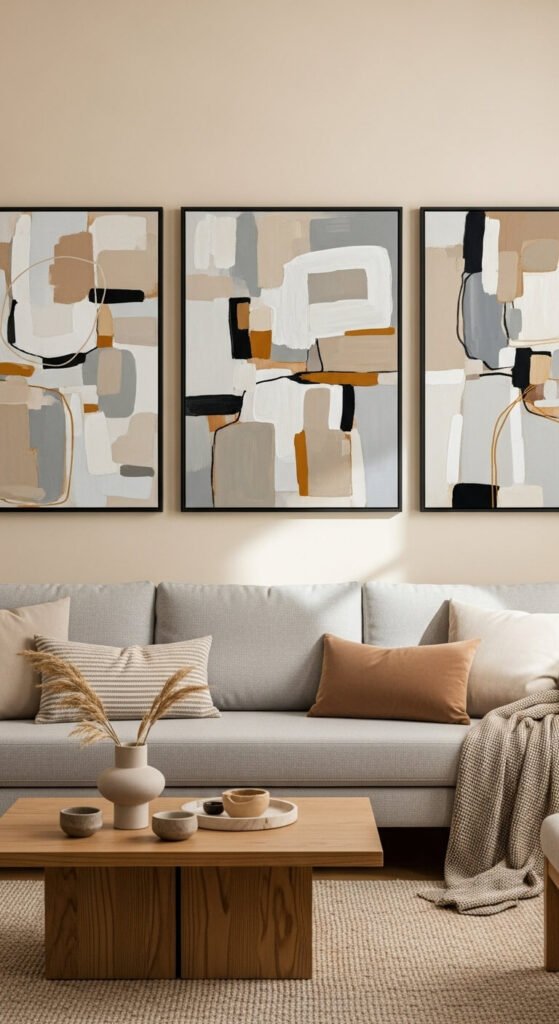
Edit Ruthlessly And Embrace Negative Space
Want to know what luxury homes have in common? They’re not cluttered. Empty space is actually a luxury aesthetic choice.
The editing process:
- Remove anything that doesn’t serve a purpose (functional or beautiful)
- Clear surfaces of excessive knick-knacks
- Leave breathing room between furniture pieces
- Display only your favorite items, not everything you own
- Create vignettes with 3-5 items max, then leave space
This costs you nothing and instantly makes your space look more expensive. Overcrowded rooms look chaotic regardless of how much the items cost. Sparse, intentional styling looks luxurious even with budget pieces.
Think: museum, not flea market.
Upgrade Your Hardware And Fixtures
This is a small investment that makes a massive impact. Swapping out builder-grade hardware for something more elevated transforms your space instantly.
Quick upgrades:
- Replace cabinet knobs and drawer pulls (brass, matte black, or brushed nickel)
- Swap light switch covers for modern ones
- Change out dated light fixtures
- Install new curtain rods (wood or brushed metal, not plastic)
- Replace door handles and hinges
These changes cost $50-200 total but make your space look like it underwent a major renovation. It’s one of the highest ROI decorating moves you can make on a budget.
Bonus: When you move, you can take these with you and reinstall the originals.
Shop Secondhand For High-Quality Basics
Here’s the truth: vintage and secondhand furniture is often better quality than new budget furniture, and it costs the same or less.
Where to find gems:
- Facebook Marketplace and Craigslist (for solid wood furniture)
- Estate sales (for unique vintage pieces)
- Thrift stores (for decorative accessories and frames)
- Habitat for Humanity ReStore (for fixtures and architectural elements)
- Online consignment shops (for designer pieces at fraction of cost)
What to buy secondhand: Solid wood furniture, vintage mirrors, picture frames, vases, lamps, rugs, and architectural elements.
What to buy new: Upholstered items (for hygiene), mattresses, and anything fabric-based (unless you can thoroughly clean it).
A solid wood vintage dresser for $100 will outlast and outclass a $300 particleboard dresser from a big box store every single time.

Add Luxe Lighting On A Budget
Lighting is one of the most underrated elements of creating a luxury look. The right lighting can make budget furniture look expensive and transform the entire mood of a room.
Affordable lighting upgrades:
- Add dimmer switches to existing fixtures ($15-25 each)
- Use multiple light sources at different heights (floor lamp, table lamp, overhead)
- Replace dated light fixtures with modern options (look for sales)
- Add LED strip lights behind furniture or under shelving
- Use warm-toned bulbs (2700K-3000K) instead of harsh cool white
Luxury spaces are never lit by a single harsh overhead light. They have layered lighting that creates ambiance and warmth.
Affordable hack: String lights in glass jars or behind sheer curtains create instant mood lighting for under $20.
Style With Fresh Greenery
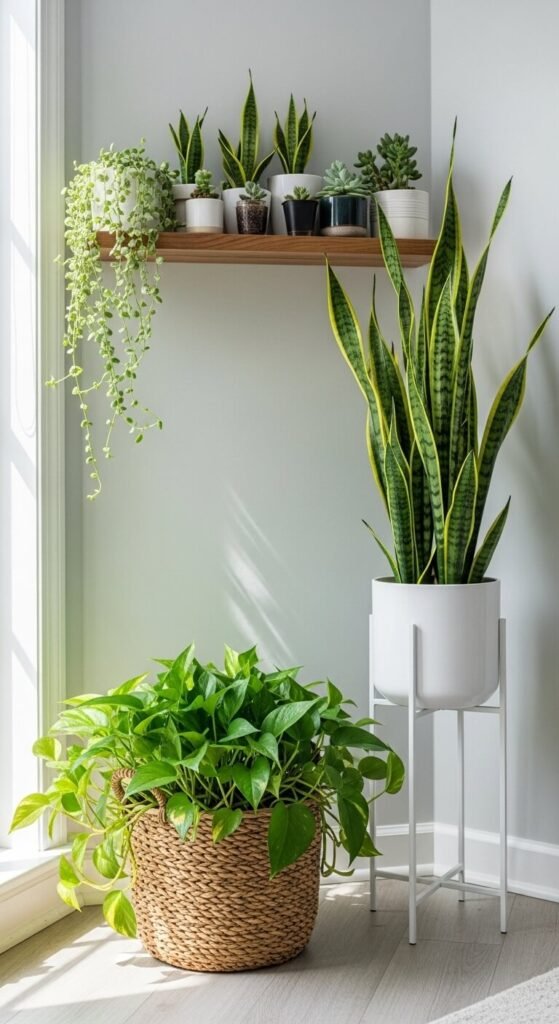
Nothing says “I have my life together” quite like thriving plants. Greenery adds life and luxury to any space, and plants are surprisingly affordable.
Budget plant styling:
- Start with easy, inexpensive plants (pothos, snake plant, spider plant)
- Use cuttings from friends’ plants (free!)
- Place plants at varying heights throughout the room
- Use interesting vessels you already own as planters
- Group 3-5 small plants together for impact
Even a $5 plant in a $3 thrifted pot looks expensive when styled intentionally. Plants add that “designer touch” that elevates everything around them.
Pro tip: If you can’t keep plants alive, high-quality faux plants (especially faux fiddle leaf figs and eucalyptus) look great and require zero maintenance.
Keep It Clean And Well-Maintained
This is free and makes the biggest difference. A spotless, well-maintained space looks more expensive than a messy space with designer furniture.
Maintenance musts:
- Vacuum and dust regularly
- Keep surfaces clear and clutter-free
- Fix small issues immediately (burned out bulbs, loose handles)
- Steam or iron curtains and throw pillows
- Keep windows clean for maximum natural light
- Touch up paint scuffs on walls
A $50 IKEA bookshelf that’s clean, organized, and well-styled looks better than a $500 designer shelf that’s cluttered and dusty. Never underestimate the power of cleanliness in creating a luxury aesthetic.
Ready to create your luxury-on-a-budget space? Start with these strategies one at a time, beginning with choosing your cohesive color palette and ruthlessly editing what you have. Remember: luxury is about intention, not expense. Your dream space is absolutely achievable on your budget—you just need to work smarter, not spend more. Save this guide for your next decorating project and prove that style has nothing to do with your bank account! ✨