
There is a specific feeling that the best autumn homes produce — the feeling that the room itself has put on a heavier sweater. The colors are warmer. The textures are deeper. The light feels more deliberate because there is less of it. And somewhere in the room, a candle is burning in a scent that makes the whole house feel like it is settling in for something slow and good. Decorating for fall is not about buying a collection of ceramic pumpkins or draping fake leaves across every horizontal surface. It is about shifting the room’s material palette toward warmth, heaviness, and the specific golden-amber tones that every human nervous system is apparently pre-wired to find comforting as the days shorten. The good news is that most of this shift costs almost nothing — because the best fall decor is swap-based, not purchase-based.
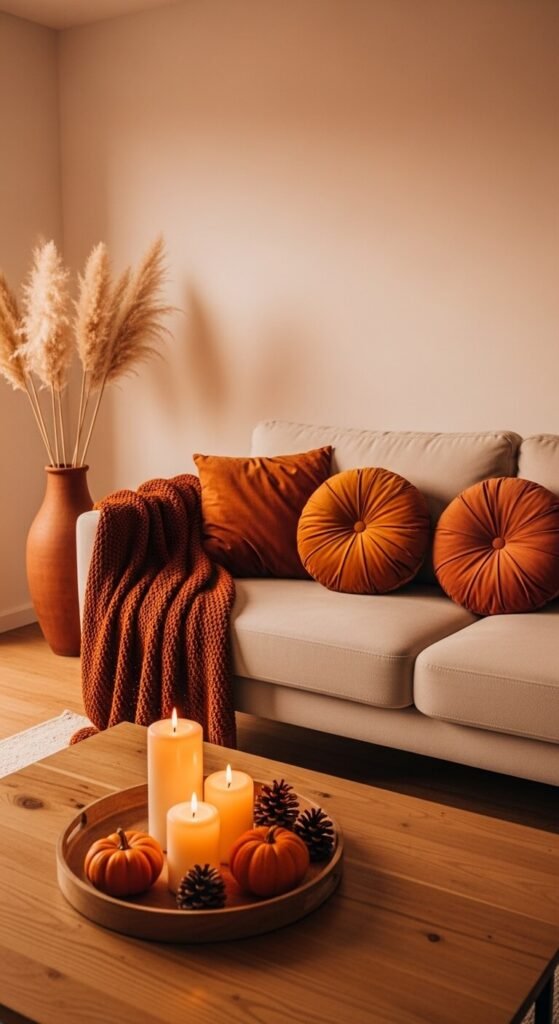
Here is exactly how to bring autumn into every room of your home with cozy, layered touches that actually feel like the season.
Swap the Textiles First
The fastest way to shift a room from summer to autumn is through the textiles — the cushions, throws, and rugs that cover the room’s soft surfaces. These cost nothing to change if you already have seasonal alternatives, and cost very little to add if you do not.
The autumn textile formula:
- Throw blankets: Replace lightweight cotton or linen throws with a chunky knit, a sherpa-lined fleece, or a thick wool-blend throw in rust, camel, deep amber, or burnt sienna. A single chunky knit throw in a warm autumn tone costs $20 to $40 and immediately communicates the season change.
- Cushion covers: Swap summer linen covers for velvet, boucle, or heavy-woven covers in the same autumn palette. Cushion insert swaps cost $10 to $25 per cover and completely change the sofa’s seasonal register.
- Rug layering: Add a second, smaller rug over an existing rug for the layered, cocooning look most associated with autumn interior styling. A smaller printed vintage-style rug placed over a jute base rug creates warmth and pattern without replacing the main rug.
Store the summer textiles in a labeled vacuum bag. They take up minimal space and the seasonal swap takes less than ten minutes.
Bring in the Autumn Color Palette
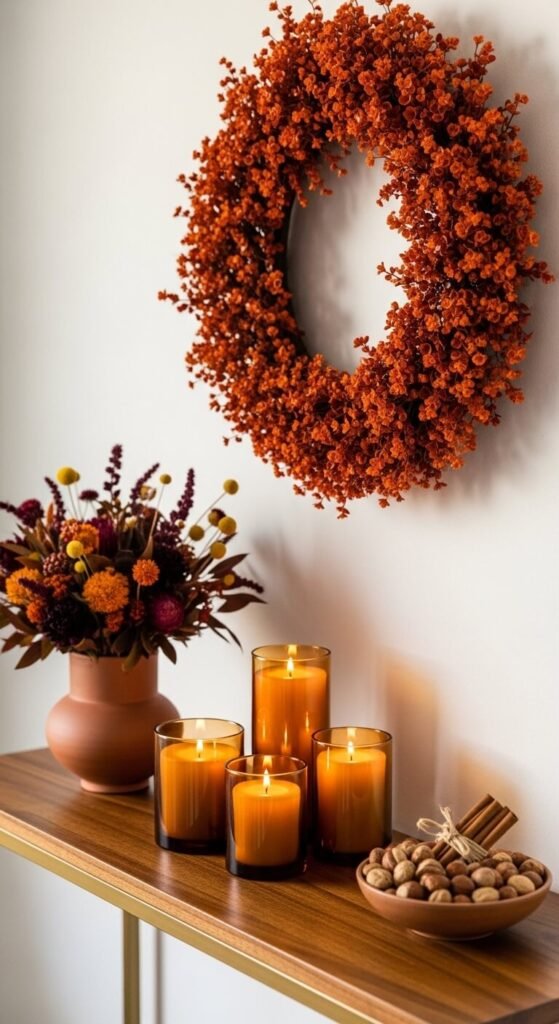
Autumn’s color palette works in decor because the human brain processes warm tones — amber, rust, terracotta, deep burgundy, forest green — as inherently warming and comfortable. These colors do not need to be on walls. They need to be on objects, in textiles, and in the organic elements brought into the room.
The autumn palette without buying anything new:
- Pull existing cushions, vases, and objects in rust, amber, mustard, and deep green to the front of displays
- Move cool-toned objects (blues, grays, light pastels) to storage or secondary rooms for the season
- Group warm-toned books together on shelves and move cool-spined books to less prominent positions
Organic elements that bring autumn color for almost nothing:
- Dried seed heads, dried wheat, or dried pampas grass in a tall vase — free if foraged, $5 to $15 if purchased
- Branches with autumn leaves arranged in a wide ceramic vessel
- A bowl of seasonal gourds, pumpkins, and squash from a farmers market
- Pine cones gathered from a local park and arranged in a wooden bowl
Layer Candles Throughout the Room
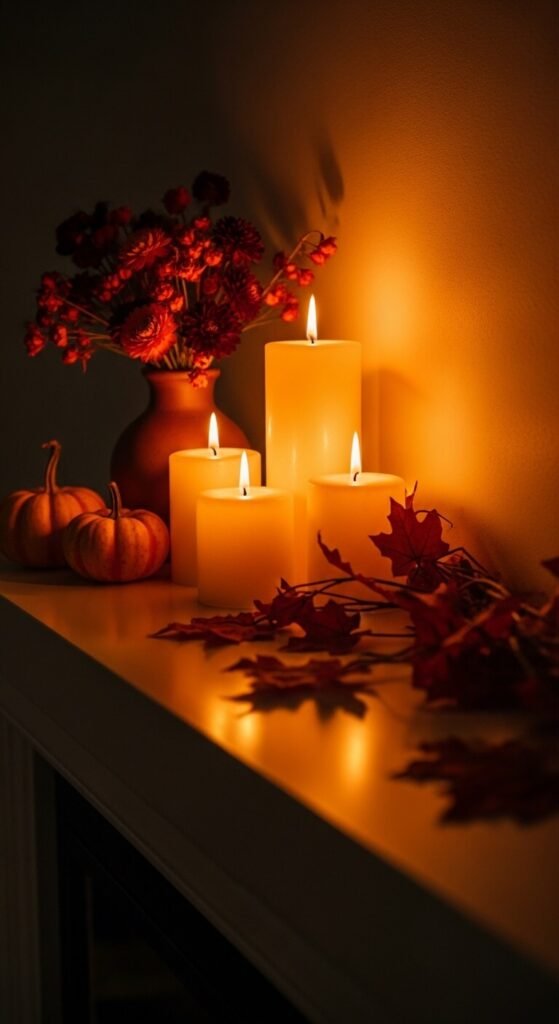
No single element transforms a room’s autumn atmosphere as immediately as candles — and autumn is the season where multiple candles in the same room, all lit simultaneously, create the most spectacular effect.
Autumn candle placement:
- Three candles on the coffee table tray — varying heights, all white or ivory wax so the flame color rather than the candle color is the visual focus
- One on each side of the fireplace mantel — flanking the central mantel arrangement with candlelight
- A tall pillar candle on the console or entry table — a single large candle at the front door signals the season immediately to every person who enters
- Two taper candles at the dining table — autumn is the season for making every dinner feel slightly more ceremonial
Scent: An unscented candle provides warmth but no scent signal. For autumn, a candle scented with clove, amber, sandalwood, cedar, or cinnamon completes the sensory experience that visual decor alone cannot achieve. The scent of autumn in a home — warm, slightly sweet, slightly woody — is as powerful a seasonal signal as any visual element.
Style the Entry for Immediate Impact
The entry is the room that sets the seasonal tone before anyone has seen anything else in the house. An autumn-styled entry communicates that the whole home has made the seasonal shift — even if only one or two changes have been made inside.
Fast autumn entry styling:
- A wreath on the front door — dried botanical wreaths in deep orange, rust, and burgundy tones cost $20 to $50 from garden centers and online. A DIY wreath of foraged branches, dried seed heads, and ribbon costs $5 to $10.
- A lantern with a pillar candle on the porch or just inside the front door
- A seasonal doormat in a warm color or autumn pattern — $15 to $30 from most home stores
- A small pumpkin or gourd cluster beside the door — three miniature gourds from a farmers market cost $3 to $6 and signal the season instantly
Celebrate the Season on the Dining Table
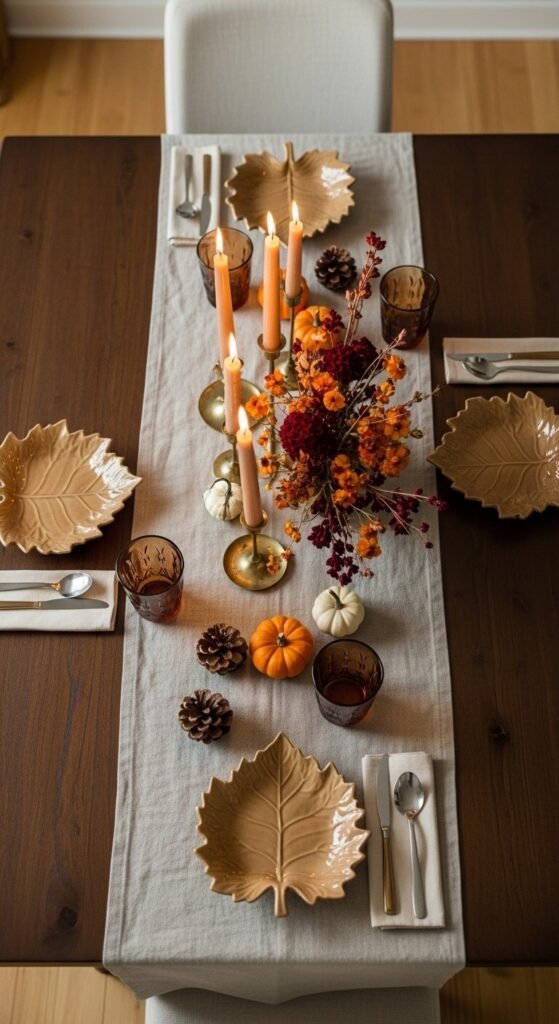
The dining table is where autumn feels most like a celebration — because autumn meals gather people around warmth and food in a way that summer’s casual outdoor eating does not.
A simple autumn table:
- A linen or burlap runner down the center
- Three taper candles in brass or iron candlesticks lit before the meal begins
- A low arrangement of seasonal flowers, foliage, or dried botanicals — kept below eye level so conversation across the table is unobstructed
- Mini pumpkins, gourds, and pine cones scattered naturally along the runner as informal table decoration
- Deep-toned linen napkins in rust, burgundy, or forest green
Autumn Lives in the Details
The rooms that feel most genuinely autumnal are not the ones with the most decorations — they are the ones where every small decision has been made in the same seasonal direction: the candle, the throw, the bowl of pumpkins, the scent, the copper tones in the light at four o’clock in the afternoon.
You do not need to buy autumn. You need to invite it in through the textures, the warmth, and the light that is already there — just waiting to be arranged correctly.
Save this and pin it as your fall decorating guide — because autumn is the season that most rewards a home that is ready for it.