
Your entryway speaks before you do. It’s the first thing guests see when they walk through your door, the last thing you see when you leave for the day, and the space that sets the emotional tone for everything that follows. A beautiful, thoughtfully decorated entryway doesn’t just look good — it feels good. It tells people they’ve arrived somewhere worth being. The best part? Entryways are almost always small, which means a little effort goes an extraordinarily long way. You don’t need a grand foyer or a designer budget. You just need the right elements, placed with intention.
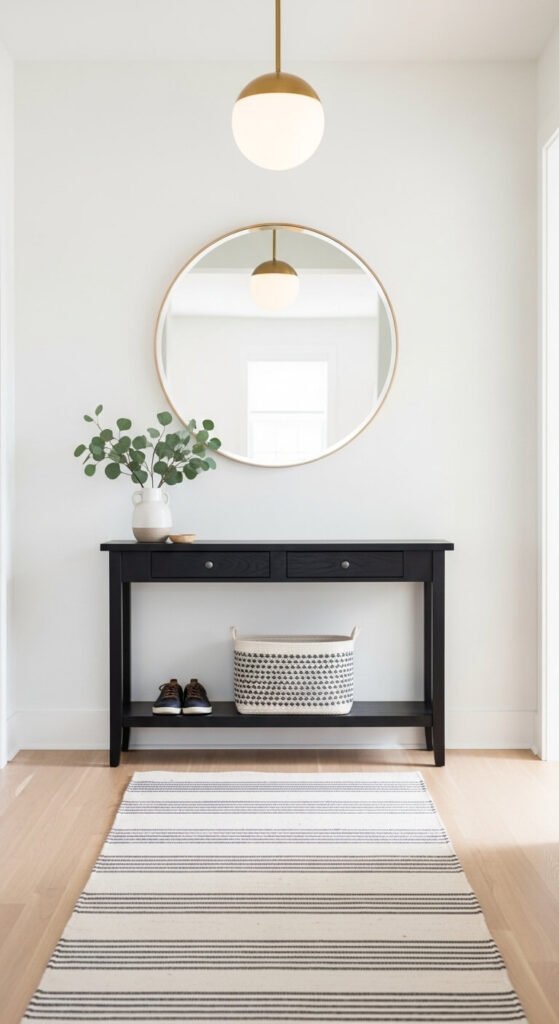
Whether your entryway is a sweeping foyer or a narrow strip of floor between the front door and the living room, this guide walks you through how to make it feel warm, functional, and completely inviting.
Start With the Foundation: Flooring and Light
Before adding a single decorative element, assess two things that will shape everything else — what’s underfoot and how the space is lit. These are the foundational layers that either make an entryway feel welcoming or undermine everything you layer on top.
Flooring:
- A rug or runner is almost always the first move in an entryway — it defines the space, adds warmth, protects the floor, and introduces pattern or color immediately
- Choose a durable, easy-to-clean material like wool, polypropylene, or flatweave cotton — entryways take more foot traffic than any other area in the home
- Size matters: the rug should be wide enough that both feet land on it when someone steps inside; a rug that’s too small looks like an afterthought
- Pattern and texture here are your friend — a geometric print, a classic stripe, or a simple border adds visual interest in a small space without overwhelming it
Lighting:
- If your entryway has overhead lighting, consider swapping a dated fixture for something with personality — a statement pendant, a small chandelier, or a cluster of bulbs makes an immediate impact
- Wall sconces flanking a mirror or console add warmth and a sense of symmetry that feels polished and considered
- A table lamp on a console introduces the softest, most welcoming light of all — the kind that glows warmly when you come home after dark
The right light in an entryway is the difference between a space that feels like a corridor and one that feels like a destination.
The Console Table: Your Entryway’s Best Friend
If your entryway has room for only one piece of furniture, make it a console table. Slim, long, and low, a console table does the most work of any piece in this space — it gives you a surface for keys and mail, a backdrop for decor, and an anchor for everything you build around it.
Choosing the right console:
- In a narrow entryway, look for tables no deeper than 12 to 14 inches — anything deeper will interrupt the flow of traffic
- Height matters: standard console height is 28 to 32 inches, which works well with most mirrors and feels comfortable for dropping items when you walk in
- Material sets the tone immediately — a dark walnut console feels warm and grounded, a white lacquer one feels bright and modern, a rattan or cane style reads as relaxed and bohemian
How to style the top:
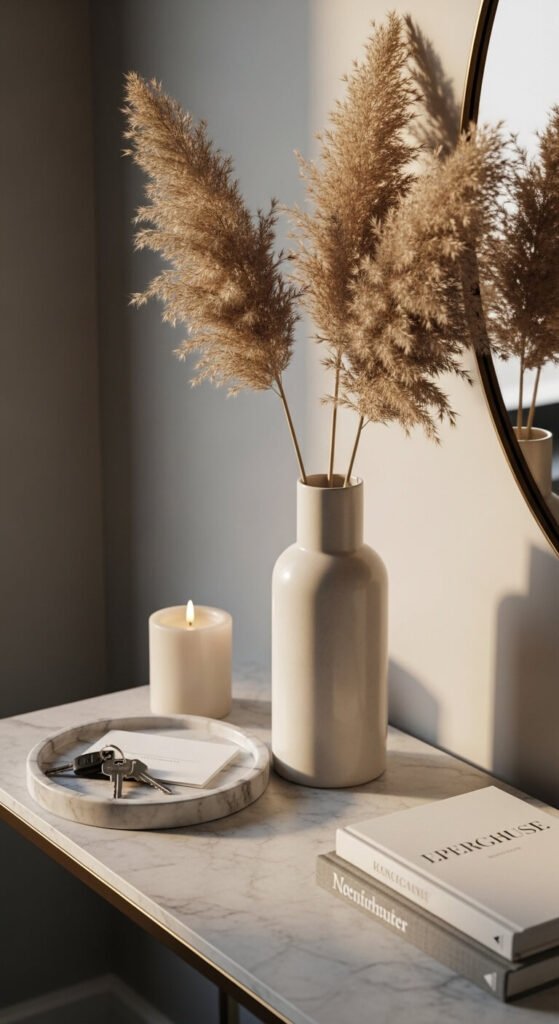
- Keep it edited — a lamp or vase, a small tray for keys, and one decorative object is usually enough
- A tray is your best organizing tool — it corrals everyday items like keys, sunglasses, and mail without making the surface look cluttered
- Fresh or faux stems in a vase add life and make the whole arrangement feel cared for
A Mirror Is Non-Negotiable
Every entryway needs a mirror — full stop. It serves multiple functions simultaneously: it bounces light, makes the space feel larger, gives you a final check before you leave the house, and provides an instant focal point on an otherwise bare wall.
Mirror styles and placements that work beautifully:
- Large round mirror centered above a console — the most universally flattering combination in entryway design; the circular shape softens the rectangular lines of the table and the architectural box of the space
- Arched mirror for a more romantic, architectural quality that works in traditional and modern homes alike
- Full-length leaning mirror if floor space allows — practical, elegant, and it makes a narrow entryway feel significantly wider
- Ornate vintage frame for a collected, layered look that adds character and history to a new-build space
The mirror should be roughly two-thirds the width of the console beneath it — the same proportion rule that applies to art above furniture everywhere else in the home.
Make It Functional Without Making It Feel Like a Mudroom
The biggest challenge in entryway design is balancing beauty with the reality of daily life. Shoes get dropped, bags get dumped, mail gets piled. The goal is to build in enough practical organization that the space functions smoothly — without it looking like a storage unit.
Functional elements that still look beautiful:
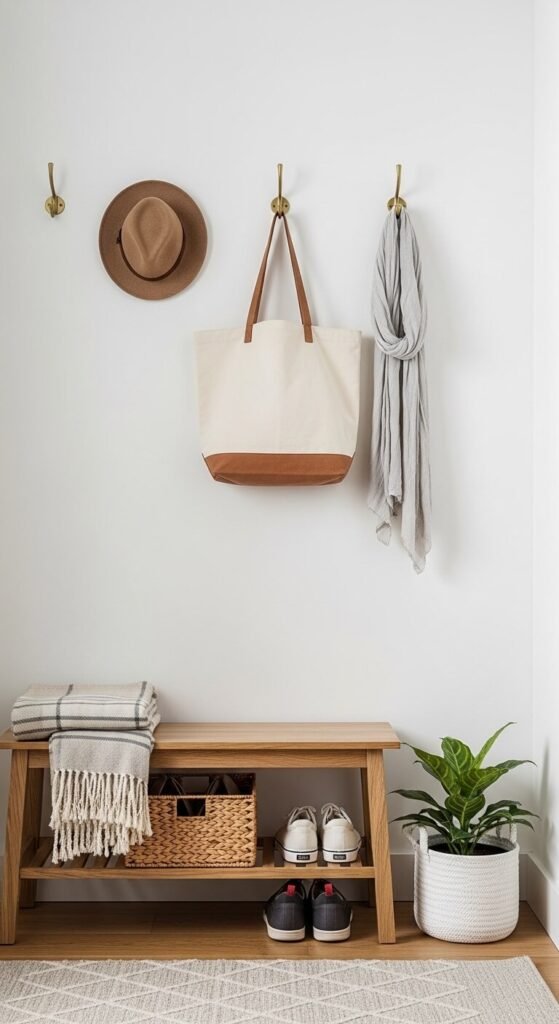
- A row of hooks on the wall — choose hooks in a finish that matches your other hardware (brass, matte black, nickel) and space them evenly; they’re practical and they look intentional
- A woven basket or tray beneath the console for shoes — corrals the clutter visually while adding texture
- A small bench or upholstered stool for sitting while removing shoes — doubles as a surface for bags and adds a welcoming, considered touch
- A wall-mounted key organizer in a style that suits the room — keeps daily essentials accessible without cluttering the console surface
The Finishing Touches That Make It Feel Like Home
Once the foundation is in place, a few carefully chosen finishing details transform a functional entryway into one that genuinely moves people.
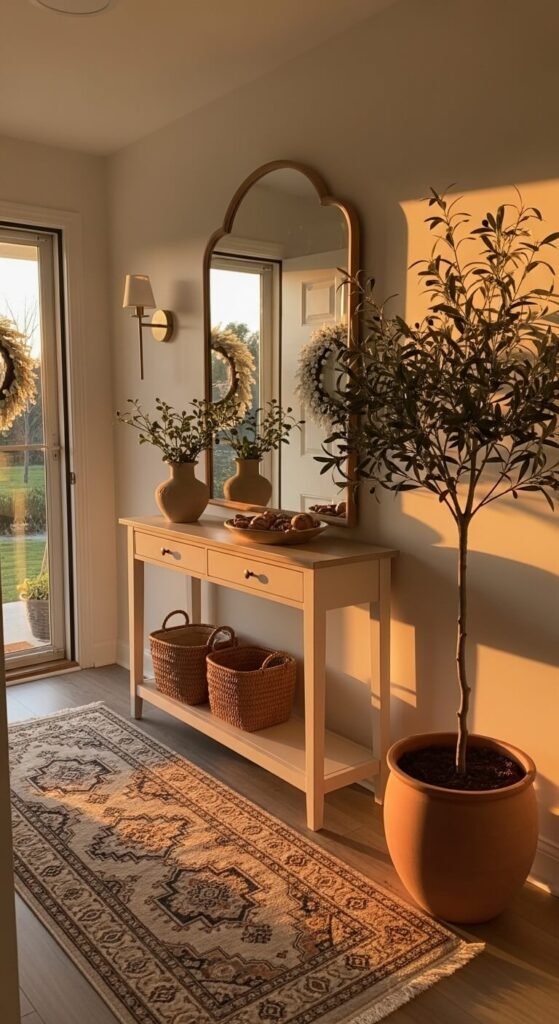
- A plant or fresh greenery — even a single small potted plant or a vase of stems makes a space feel alive and tended; a tall fiddle leaf or olive tree if space allows makes an immediate statement
- A scented candle or diffuser — the sense of smell is the fastest route to emotion; a signature scent in the entryway creates an invisible but powerful welcome
- Personal touches — a piece of art that means something to you, a small sculpture from a trip, a family photograph in a beautiful frame; the entryway should feel like the beginning of your story, not a hotel lobby
- Seasonal updates — swapping one small element — a wreath, a stem color, a candle scent — with the seasons keeps the entryway feeling fresh and alive all year long
First Impressions Are Everything — Make Yours Count
Your entryway has one job: to make people feel like they’ve arrived somewhere wonderful. With the right rug, the right light, a console that works as hard as it looks good, a mirror that opens up the space, and a few personal touches that feel unmistakably you — it will do exactly that every single time.
Save this guide for your next entryway refresh, share it with someone who’s been treating their front hallway like a waiting room, and go create the welcome your home deserves. 🚪✨