
Every home has one. That corner beside the fireplace that collects dust and good intentions. The strange angle behind the door where nothing seems to fit. The dead space between two windows that’s too narrow for furniture and too visible to ignore. Awkward corners are the decorating world’s great unsolved puzzles — and most people solve them the same way: by pretending they don’t exist. But here’s what those overlooked angles actually are, once you learn to see them differently: opportunity. Some of the most charming, most personal, and most photographed moments in beautifully designed homes live in corners that someone refused to leave empty.
This guide walks you through every type of awkward corner and exactly how to handle each one — so not a single square inch of your home goes to waste.
Step One: Diagnose Your Corner’s Personality
Not all awkward corners are awkward for the same reason — and the right solution depends entirely on understanding what makes your specific corner challenging. Before reaching for furniture or decor, take a moment to categorize what you’re actually working with.
Common corner types and their challenges:
- The too-narrow corner — enough wall space to feel visible but not enough floor space to fit standard furniture; needs a vertical solution
- The dark corner — no natural light source nearby; the space feels gloomy and recedes visually no matter what you put in it
- The odd-angle corner — not a standard 90 degrees; standard furniture butts awkwardly against the walls and nothing fits flush
- The behind-the-door corner — functional dead space that opens and closes with the door; needs flexible, low-profile solutions
- The too-far-from-everything corner — physically disconnected from the rest of the room’s arrangement; needs its own reason for being
Once you’ve identified your corner type, the solution becomes much more obvious — because each challenge has a specific set of answers that work beautifully.
Solution One: Create a Destination With Seating
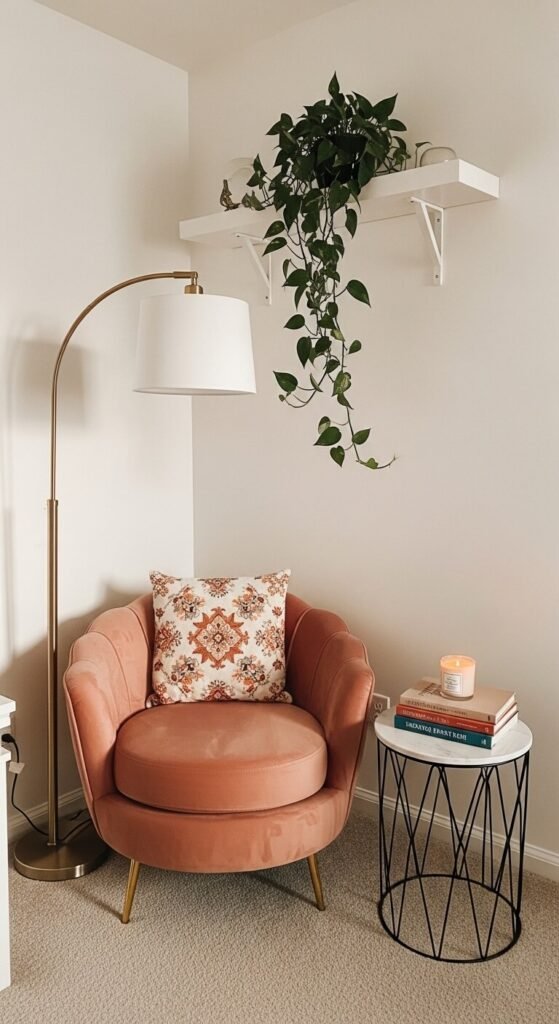
The most powerful thing you can do with an awkward corner is give it a purpose — and the most universally successful purpose is seating. A chair in a corner does something remarkable: it transforms dead space into a destination. Suddenly that corner isn’t a problem to be solved. It’s the best seat in the house.
Seating options sized for corners:
- A round-backed accent chair — the curved shape works beautifully in corners because it doesn’t need to align flush with both walls; it floats naturally in the angle
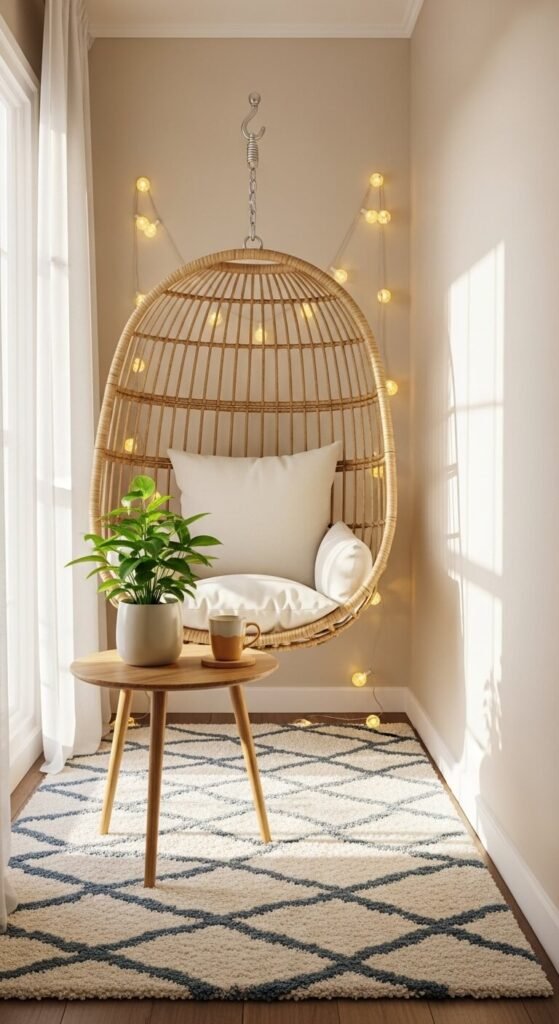
- A hanging egg chair — suspends from a ceiling hook and takes up virtually no floor footprint; ideal for narrow corners with higher ceilings
- A floor cushion or large pouf — the lowest-profile seating option available; works in tight corners and adds a relaxed, bohemian quality
- A small loveseat or chaise — if the corner is generous enough, an angled chaise or settee creates a genuinely luxurious nook
Add a floor lamp for light, a small side table for function, and a throw for comfort — and your most neglected corner becomes the spot everyone gravitates toward.
Solution Two: Go Vertical With Shelving
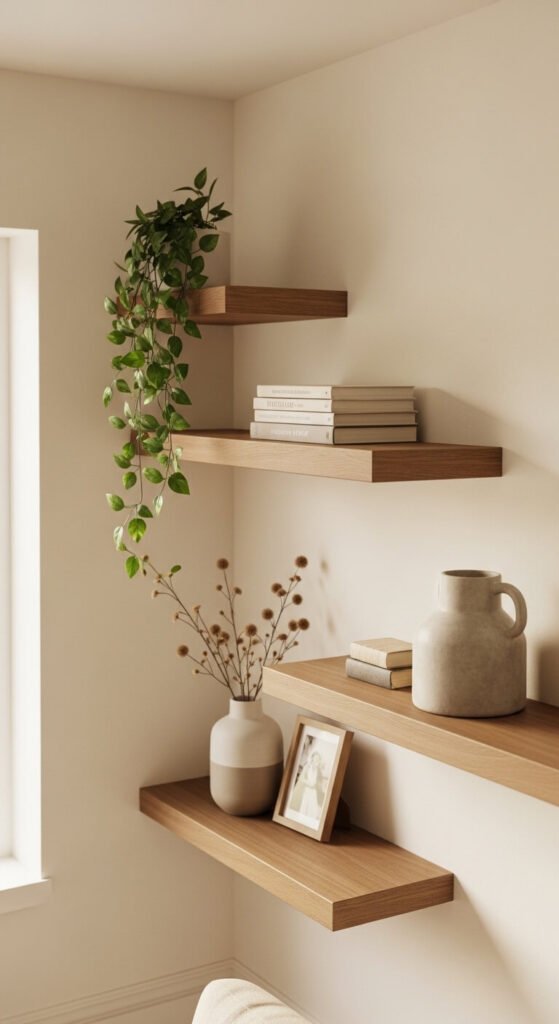
When floor space is limited, vertical space is your greatest untapped resource. Tall shelving or a cluster of floating shelves draws the eye upward, fills the corner without crowding it, and turns empty wall space into a display opportunity.
Vertical shelving approaches that work in corners:
- Corner shelving units — specifically designed to fit the 90-degree angle; they maximize every inch of a corner without protruding into the room
- Staggered floating shelves — installed at different heights in an asymmetric arrangement; feels more organic and styled than a rigid unit
- A tall, slender bookcase — even a narrow standard bookcase placed in a corner adds enormous visual presence and storage
- Ladder shelving — leans against the wall at a slight angle; perfect for corners that feel too tight for freestanding units
What to display on corner shelves:
- Books arranged by color or size for visual cohesion
- A mix of plants at different heights — trailing ones on upper shelves, upright ones below
- Personal objects, small sculptures, and meaningful pieces
- Baskets on lower shelves for concealed storage that keeps the corner tidy
Solution Three: Make Light the Feature
Dark corners resist decoration because everything placed in them disappears visually. The answer isn’t to ignore the darkness — it’s to make light itself the decorative element.
Lighting solutions that transform dark corners:
- A tall arc floor lamp — positions light above and over the corner, illuminating a wide area and making the corner feel intentional and warm
- A tall torchiere lamp — directs light upward to bounce off the ceiling, which brightens the whole corner without harsh direct light
- String lights or fairy lights — draped along the wall, clustered in a large glass vase, or wound around a small indoor tree; creates an atmospheric, warm glow that makes a dark corner feel cozy rather than dim
- A plug-in wall sconce — requires no hardwiring; simply plugs into an outlet and mounts on the wall to create the look of a built-in light fixture at a fraction of the cost
- Backlit shelving — LED strip lights installed behind shelves create a dramatic, gallery-style effect that makes even the darkest corner feel curated and designed
Once light is introduced, every other decorating decision in that corner immediately becomes easier and more successful.
Solution Four: Use a Statement Plant or Sculptural Object
Sometimes the most elegant solution to an awkward corner is the simplest one — a single object large enough and beautiful enough to make the corner feel complete without complicating it.
Statement pieces that command a corner:
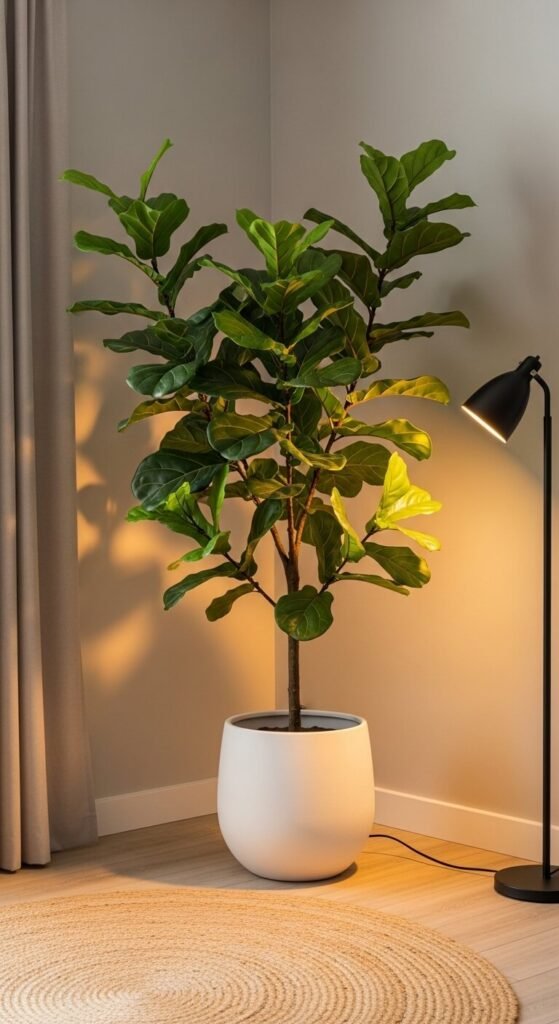
- A large floor plant — a fiddle leaf fig, olive tree, monstera, or bird of paradise fills a corner with life, height, and organic beauty; this is the single most transformative one-piece solution in home decorating
- A tall dried floral arrangement — pampas grass, dried palm, or eucalyptus in a large floor vase adds drama and texture without the maintenance of a live plant
- A sculptural floor vase — oversized ceramic, stone, or woven vessels have enough visual weight to anchor a corner entirely on their own
- A tall decorative ladder — leaned against the corner wall and draped with throws, plants, or hanging baskets; functional, beautiful, and endlessly adaptable
The Corner Deserves Its Moment
Every corner in your home is asking the same question: what am I for? Your job as the decorator is simply to answer it. Whether you give it a chair and make it a retreat, shelves and make it a display, light and make it a glow, or a single magnificent plant and make it a focal point — any answer is better than the silence of an empty corner being quietly ignored.
Save this guide for the next time you walk past that corner and think “I really need to do something with that,” share it with someone mid-renovation, and go turn your most awkward angle into your favorite detail. 🌿✨