
Small spaces have a way of making you feel like the walls are closing in — especially when they’re cluttered, dark, or decorated without much thought. But here’s what most people get wrong: the problem is rarely the size of the room. It’s the decisions made inside it. The right furniture scale, the right colors, the right light — and a 400-square-foot apartment can feel just as open and relaxed as a room twice the size. This guide covers the specific, practical moves that actually work, with zero gut renovation required.
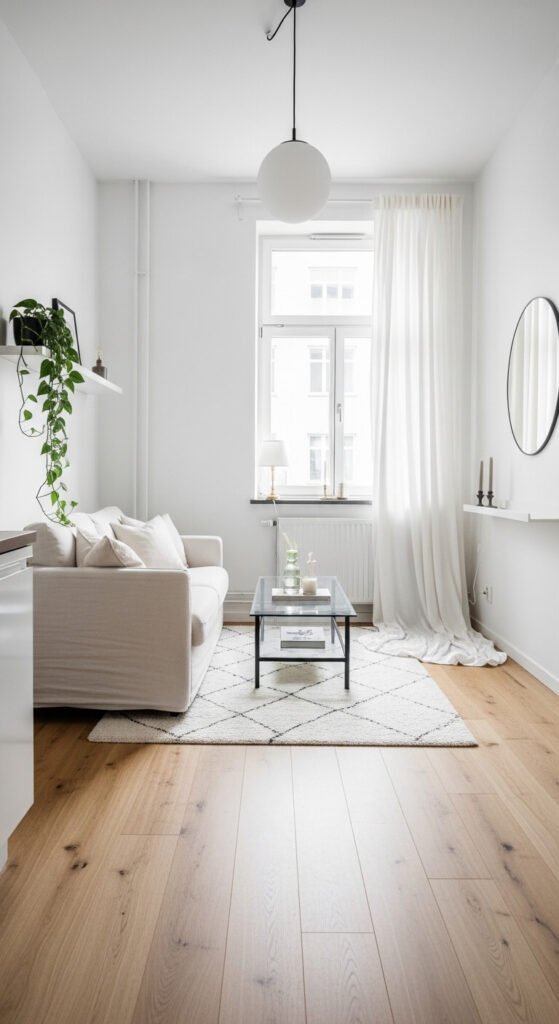
Paint Everything Light — Including the Ceiling
Color is the single most powerful tool you have in a small space, and it costs almost nothing to change. Dark or saturated walls absorb light and visually push surfaces closer together. Light walls reflect light and push them apart.
The most effective palette for opening up a small room:
- Warm white or soft cream — not stark white, which can feel cold. Warm undertones make a room feel sunny even without direct light
- Very pale greige or linen — adds warmth without sacrificing brightness
- Soft pale blue or sage — works beautifully in rooms with good natural light
And don’t stop at the walls. Painting the ceiling the same color as the walls — or even one shade lighter — removes the visual “lid” effect that makes rooms feel boxed in. It’s one of the most underused tricks in small space decorating.
Let the Light In — All of It
Natural light is the most powerful space-expander available, and most people accidentally block it. Heavy curtains, dark blinds, and furniture placed too close to windows all cut the light before it reaches the rest of the room.
Simple fixes that make an immediate difference:
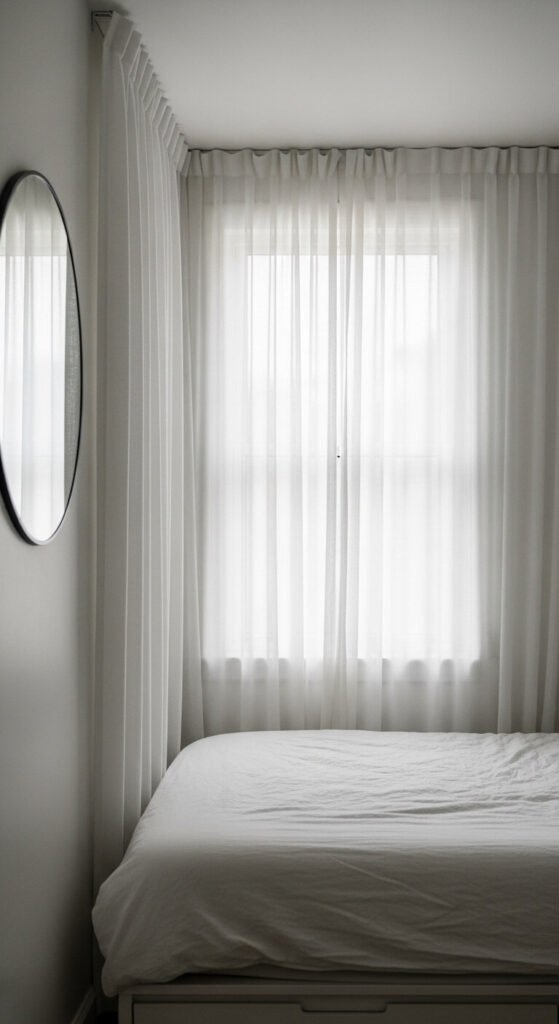
- Swap heavy drapes for sheer linen or cotton panels — they soften the window without blocking light
- Hang curtain rods close to the ceiling, not just above the window frame. Curtains that run from ceiling to floor make windows look taller and the room feel higher
- Keep window sills clear — plants, candles, and objects on sills block the light source from entering the room
- Use mirrors strategically — a large mirror on the wall opposite or adjacent to a window bounces light deeper into the space
Choose Furniture That Works With the Space, Not Against It
Scale is everything in a small room. Oversized furniture doesn’t just take up physical space — it visually dominates and crowds a room even when there’s technically room to walk around it.
What to look for when furnishing small spaces:
- Legs on everything — sofas, chairs, and side tables with visible legs let light and sightlines pass underneath, making the room feel less heavy and more open
- Glass and lucite surfaces — a glass coffee table or acrylic side table takes up visual zero space while still being fully functional
- Low-profile furniture — pieces that sit closer to the floor keep more of the wall visible above them, which adds perceived height
- Dual-purpose pieces — an ottoman with storage, a bed with built-in drawers, a dining bench that tucks under the table when not in use
Avoid: large sectionals, bulky entertainment centers, and any piece that touches multiple walls. The more floor you can see, the bigger the room will feel.
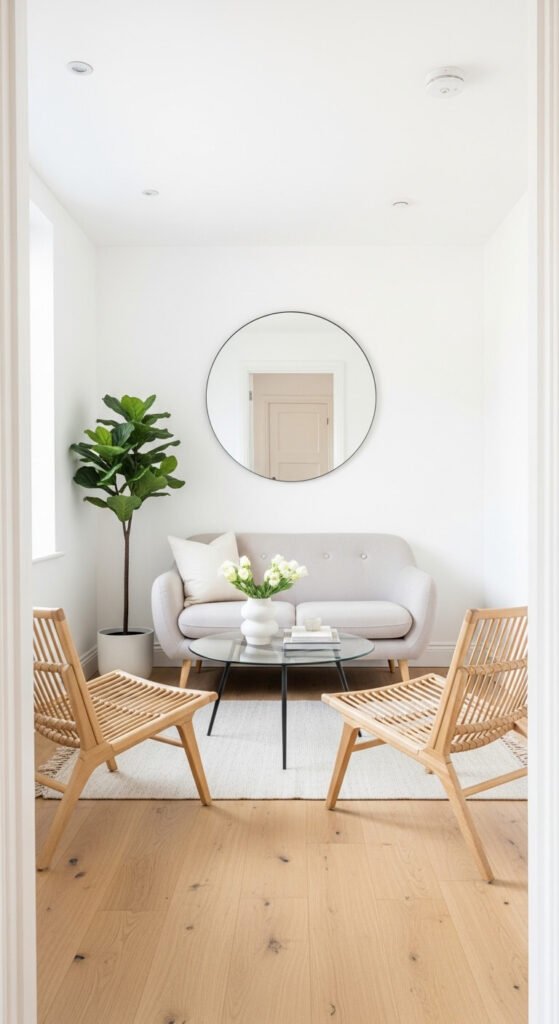
Use Vertical Space to Draw the Eye Up
When floor space is limited, go vertical. Drawing attention upward creates the impression of height and makes the room feel larger in a dimension you haven’t been using.
Easy ways to use vertical space:
- Floating shelves mounted high on the wall, close to the ceiling — display plants, books, and objects up there to pull the eye upward
- Floor-to-ceiling curtains as mentioned above — one of the fastest vertical tricks available
- Tall, slim furniture — a narrow bookcase that reaches the ceiling does far less visual damage than a wide, low one
- Vertical artwork or prints — portrait orientation elongates a wall and adds height. A single large piece almost always reads better than a cluster of small ones
The goal is to stop the eye from traveling only sideways across a small room. Give it somewhere to go up, and the space opens dramatically.
Declutter Ruthlessly and Store Smartly
No amount of good decorating survives clutter. In a small space, visual noise is magnified — every surface pile, every exposed cord, every overstuffed corner reads as chaos and makes the room feel smaller and more stressful.
The most effective approach:
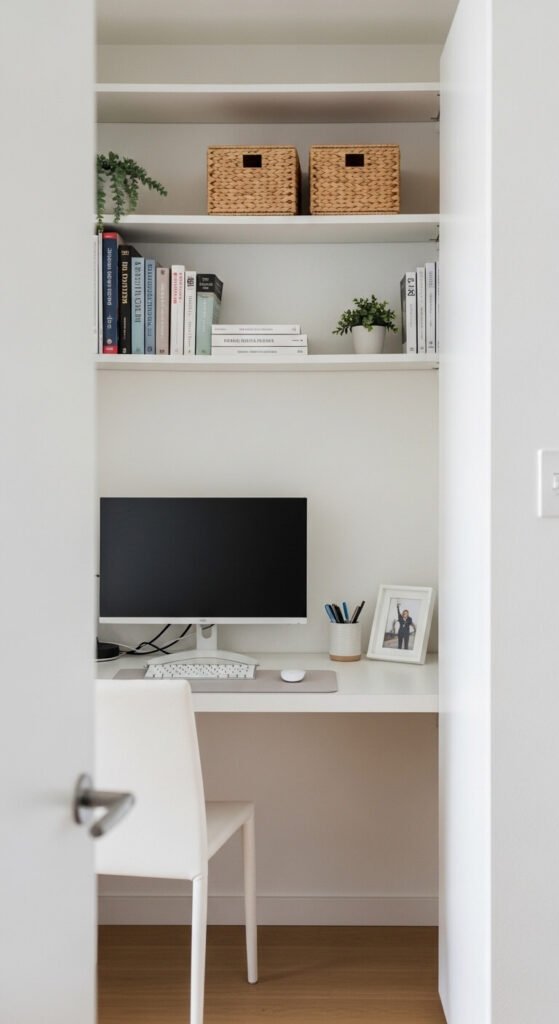
- Clear every horizontal surface down to one to three intentional objects maximum
- Store everyday items out of sight — baskets, lidded boxes, under-bed storage, and closed cabinetry all help
- Use the “one in, one out” rule — every new item that comes into a small space should replace something that leaves
- Contain cables and cords — a single tangle of visible cords under a desk or behind a TV adds surprising visual weight
A small space that’s thoughtfully edited looks intentional and calm. The same space full of stuff just looks small.
Your Small Space Has More Potential Than You Think
The rooms that feel the most open and livable aren’t the biggest ones — they’re the most intentional ones. Light walls, real natural light, right-sized furniture, vertical interest, and a cleared-out simplicity — these are the moves that change how a space actually feels to be in every single day.
You don’t need more square footage. You need a better plan for the square footage you already have.
Save this article for your next room refresh — and share it with anyone who’s been feeling cramped and doesn’t know where to start.