
Small bedrooms don’t have to feel cramped or claustrophobic. With the right design tricks, you can transform even the tiniest space into a room that feels open, airy, and surprisingly spacious. The secret isn’t knocking down walls or buying smaller furniture—it’s all about smart styling choices that trick the eye and maximize every inch.
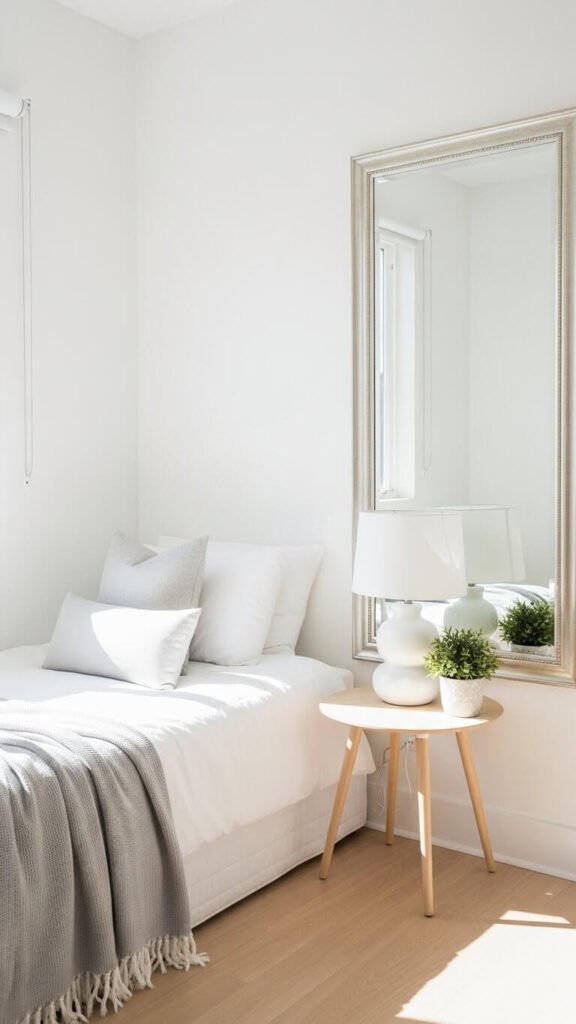
Ready to make your small bedroom feel like it doubled in size overnight? These proven techniques will change how you see your space—and how your space feels to everyone who enters.
Choose Light Colors For Walls And Bedding
Light colors reflect more light, making rooms feel larger and brighter. Paint your walls in soft whites, creams, pale grays, or light pastels. These shades recede visually, pushing walls back and creating the illusion of more space.
Extend this color strategy to your bedding and textiles:
- White or cream duvet covers
- Light gray or beige throw pillows
- Soft pastel curtains that match your wall color

Avoid dark, heavy colors that absorb light and make walls feel closer. If you love bold colors, add them through small accessories like artwork or a single throw pillow—not on large surfaces.
Hang Mirrors Strategically
Mirrors are the ultimate space-expanding tool. A large mirror reflects light and creates depth, essentially doubling your visual space.
Best mirror placement strategies:
- Hang a full-length mirror on the wall opposite your window to bounce natural light around
- Lean an oversized mirror against the wall behind your dresser
- Position a mirror to reflect the most attractive part of your room, not clutter

Skip tiny decorative mirrors scattered around—one large statement mirror creates more impact than multiple small ones.
Keep Your Bed Low To The Ground
Low-profile beds make ceilings appear higher and create more visual breathing room above your furniture. Platform beds, Japanese-style futons, or beds with short legs work perfectly.
When your bed sits closer to the floor:
- The wall space above looks more expansive
- Your room feels less crowded with furniture mass
- You create better visual flow from floor to ceiling
Choose a headboard that doesn’t extend too high up the wall, or skip it entirely for maximum openness.
Maximize Vertical Storage
When floor space is limited, go up. Use your walls for storage instead of cluttering the floor with furniture.
Smart vertical storage ideas:
- Floating shelves above your bed or desk
- Wall-mounted nightstand alternatives
- Hooks behind the door for bags and robes
- Tall, narrow bookcases instead of wide, short ones
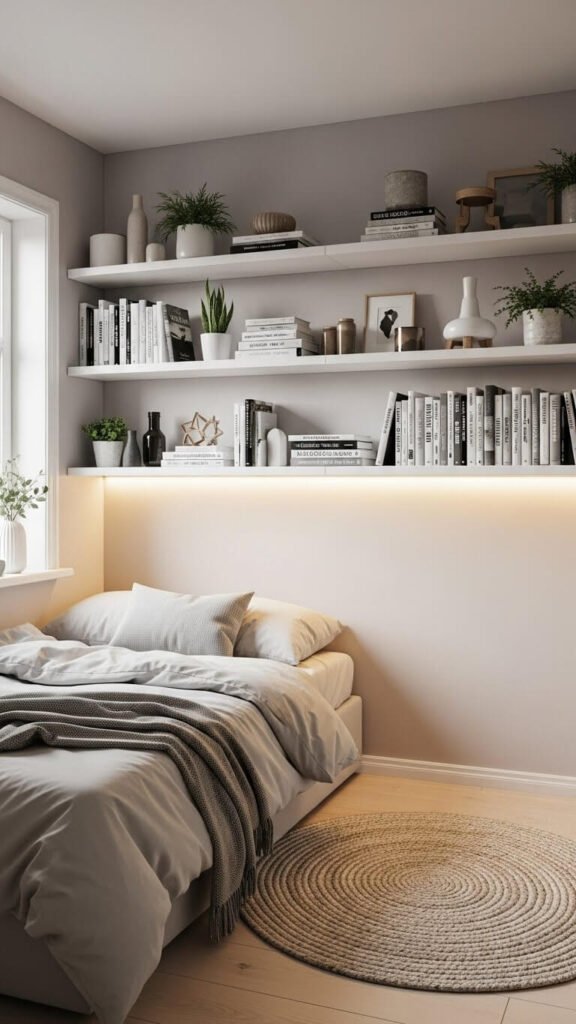
The more clear floor space you maintain, the larger your room will feel. Every piece of furniture sitting on the floor takes up visual real estate.
Choose Furniture With Legs
Furniture that sits directly on the floor creates visual weight and blocks light flow. Pieces with visible legs allow you to see underneath and through them, creating airiness.
Better furniture choices for small bedrooms:
- Beds with 6-8 inch legs instead of platform bases that touch the floor
- Nightstands with slender legs rather than solid boxes
- Chairs with exposed legs versus upholstered sides that reach the ground
This simple change lets your eye travel across the floor uninterrupted, making the entire room feel more open.
Use Sheer Curtains Or Skip Them
Heavy drapes make small rooms feel closed in. Replace them with sheer, light-filtering curtains that let natural light flood your space while maintaining privacy.
Window treatment tips:
- Mount curtain rods at ceiling height to make walls look taller
- Extend rods 6 inches past the window frame on each side
- Choose white or light neutral colors that blend with walls

If your window offers privacy, consider skipping curtains entirely. Unobstructed windows maximize natural light—the best tool for making small spaces feel larger.
Limit Decorative Items
Every object you display takes up visual space. In small bedrooms, less truly is more. Keep surfaces mostly clear and choose only meaningful decorative pieces.
Clutter-free guidelines:
- Display 3-5 items maximum on your dresser
- Keep nightstands functional with just a lamp and one small item
- Use a single piece of artwork instead of gallery walls
- Store items in drawers rather than leaving them out
Clear surfaces create visual calm and make your room feel spacious rather than cramped.
Create A Focal Point
Give the eye somewhere to land instead of bouncing around a cluttered space. A clear focal point organizes your room visually and makes it feel more intentional.
Easy focal points for small bedrooms:
- An upholstered headboard in a soft neutral color
- One piece of oversized artwork above your bed
- A textured accent wall behind your headboard
- A beautiful window dressed simply
When you create one area that draws attention, the rest of your room fades into the background, making the space feel larger overall.
Conclusion
Your small bedroom has more potential than you think. Start with these space-expanding techniques—paint your walls a light color, add a large mirror, and clear your surfaces. Even implementing just two or three of these strategies will make a noticeable difference in how spacious your room feels.
The key is working with your space, not against it. Choose furniture and decor that enhance openness rather than filling every corner. Your small bedroom can feel like a peaceful, airy retreat with just a few smart changes.
Save this guide and tackle one tip at a time—you’ll be amazed at how much bigger your bedroom can feel without changing its actual size!