
The most expensive nursery mistake is decorating for the newborn. Themed nurseries with tiny cartoon animals, matching mobiles, and pastel everything look genuinely sweet for about fourteen months — and then the child starts forming opinions. By age three, the theme is outdated. By age five, your daughter is asking why her room still has ducklings on the wall. The smarter approach is designing a room that is calm and beautiful for the newborn stage but built on a foundation that can evolve quietly as the child grows — simply by swapping accessories, changing artwork, and adding furniture rather than repainting, rebuying, and starting over every few years.
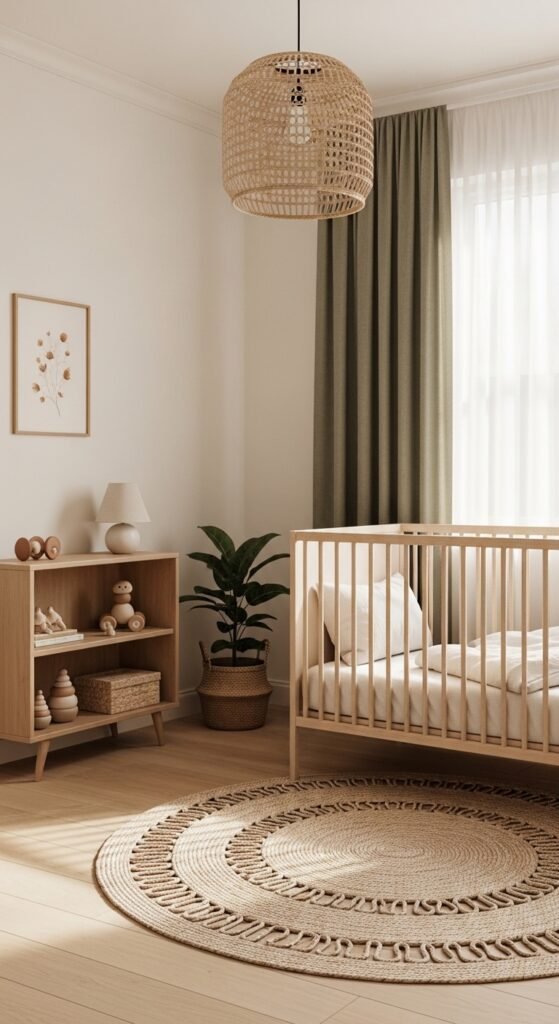
A nursery that grows with your child is not a compromise. It is a more thoughtful — and ultimately more cost-effective — design decision. Here is exactly how to build one.
Choose a Neutral Foundation That Ages Gracefully
The wall color and major furniture pieces are the most expensive and least flexible elements in the room. Get these right from the beginning and everything else becomes interchangeable.
Wall colors that work from newborn through teenage years:
- Warm white or cream — the most universally adaptable; works with every color accent you add over the years
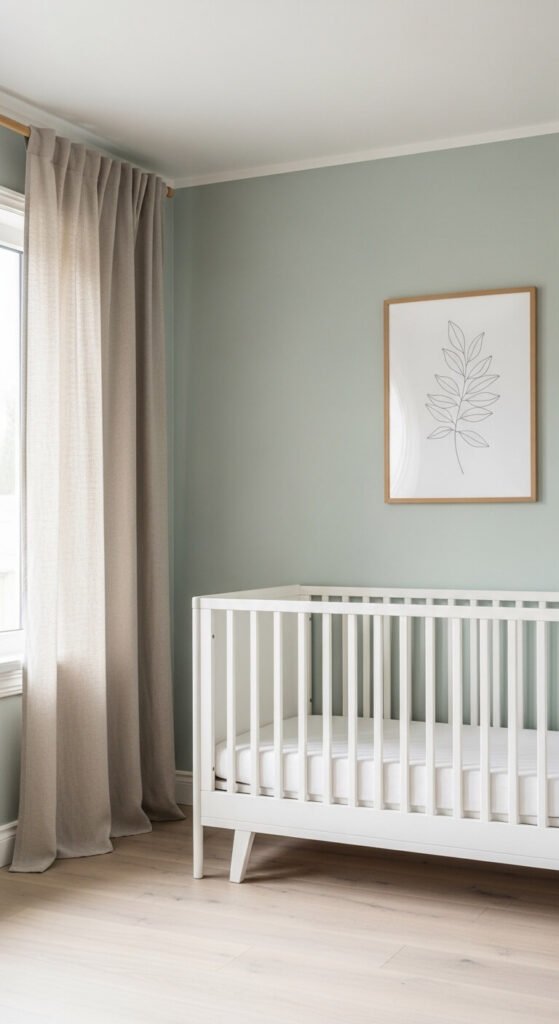
- Soft sage green — calm enough for an infant, interesting enough for an older child, sophisticated enough for a teenager
- Dusty blue or slate — not gender-specific and genuinely beautiful in natural light at every age
- Warm greige — the most neutral choice; a completely blank canvas that works with any theme at any stage
Avoid bright primaries — red, bright yellow, electric blue — which feel stimulating rather than calm for infant sleep and look dated quickly as the child grows.
Invest in Furniture That Converts and Lasts
The crib and storage are the two pieces worth spending money on — because convertible versions of both pay for themselves several times over.
Crib buying advice:
- Choose a convertible crib that transitions to a toddler bed, then a daybed, and sometimes a full-size bed frame. A quality convertible crib costs $250 to $500 and replaces three to four separate furniture purchases.
- Look for natural wood in a finish that matches the broader room palette — white, natural, or warm walnut all work across every age stage.
Storage that evolves:
- A low open bookcase at the baby stage holds toys and books accessibly. At the school stage, the same shelves hold chapter books, trophies, and collections. At the teenage stage, they hold books, plants, and personal objects.
- A simple dresser in white or natural wood works from birth through adulthood. It is the one piece that genuinely never needs replacing.
Build the Personality Layer with Swappable Accessories
Here is the design logic that makes a grow-with-your-child nursery work: keep the fixed elements neutral and invest the personality budget in things that cost very little to change.
Swappable elements that build the room’s character:
- Wall art — a single large framed print above the crib costs $15 to $40 to replace. Change it when interests change. An animal print at two becomes a world map at seven becomes a sports poster at twelve — all in the same frame.
- Cushions and throw — new cushion covers on existing inserts cost $10 to $20 and completely shift the room’s color story.
- Rug — a neutral jute or simple geometric rug works at every stage. Swap only when it wears out, not when tastes change.
- Curtains — start with simple white or cream linen and add a blackout lining for sleep quality. These stay through every childhood stage without looking dated.
Design the Room in Zones, Not Themes
A themed nursery decorates around a concept — the jungle, the stars, the ocean. A zone-based nursery decorates around how the room is actually used. The zones stay relevant at every age even as the furniture and accessories within them change.
The three zones every child’s room needs:
- Sleep zone — the crib or bed, blackout curtains, a sound machine, minimal stimulation. This zone stays calm and quiet at every age.
- Play or creativity zone — a mat, a low table, accessible storage for toys and art supplies. As the child grows, this becomes a homework station and eventually a creative workspace.
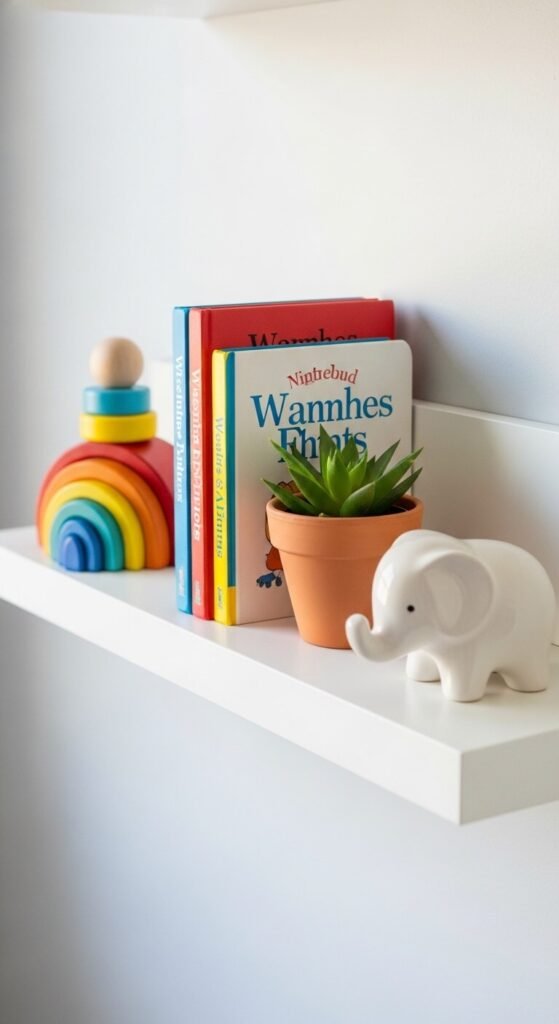
- Reading zone — a small chair and a low bookcase accessible to the child. Start with board books in a basket. Add chapter books. Add a proper reading light. The zone stays; only the books change.
Designing in zones rather than themes means the room always makes functional sense — which is something a child notices and appreciates far more than a coherent visual theme ever delivers.
Add the Child to the Room Gradually
One of the best things about a neutral foundation nursery is that the child gets to participate in it as they grow. When you leave space in the design rather than filling every wall and surface from day one, there is room for the child’s personality to genuinely appear.
Practical ways to let the room evolve with the child:
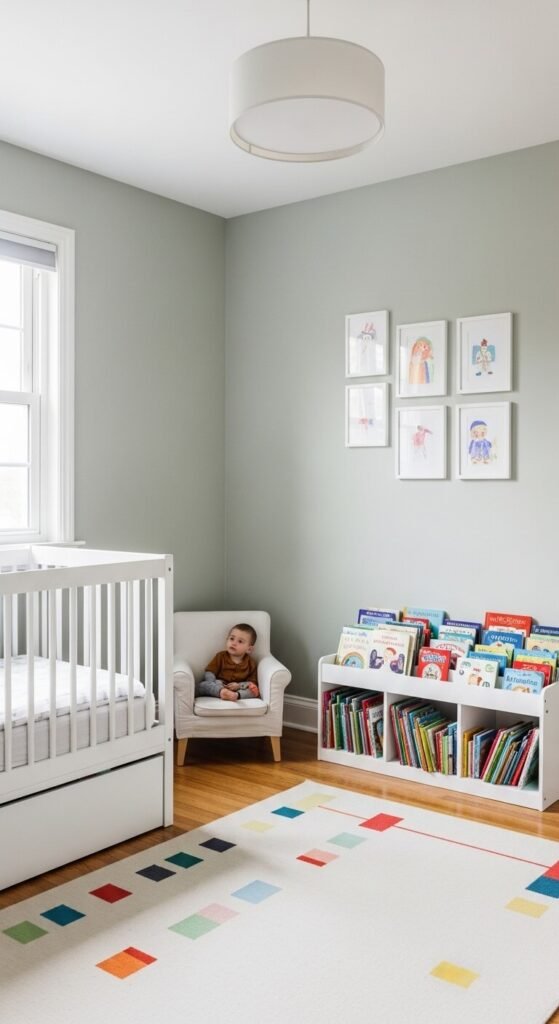
- Reserve one wall for a rotating gallery of their artwork in simple matching frames — start when they are old enough to scribble and continue for years
- Leave the bookcase half-empty in the early years so books and objects can accumulate naturally
- Let the child choose one accent color for their cushion or throw by age three or four — the act of choosing creates ownership of the space
The Room That Never Needs Replacing
A neutral foundation, convertible furniture, and a swappable accessory layer is the formula for a room that costs less over time than a themed nursery — because it never needs a full overhaul.
The child grows. The artwork changes. The books multiply. A few accessories swap out. But the room that made you feel calm when you rocked a newborn at 3 a.m. is the same room where a ten-year-old reads under a lamp, the same room where a teenager eventually puts their own posters on the wall — because you gave them something worth keeping.
Save this and pin it before you start decorating — because building it right from the beginning means you never have to start over.