
You could have the most comfortable mattress in the world and still sleep badly — because what surrounds you while you sleep matters just as much as what you sleep on. Light, color, temperature, clutter, and even the materials you choose for your bedding all directly affect your brain’s ability to shift into sleep mode. Sleep researchers and environmental psychologists have studied this for decades, and the findings are remarkably consistent: the right bedroom environment measurably improves both how quickly you fall asleep and how deeply you stay there.
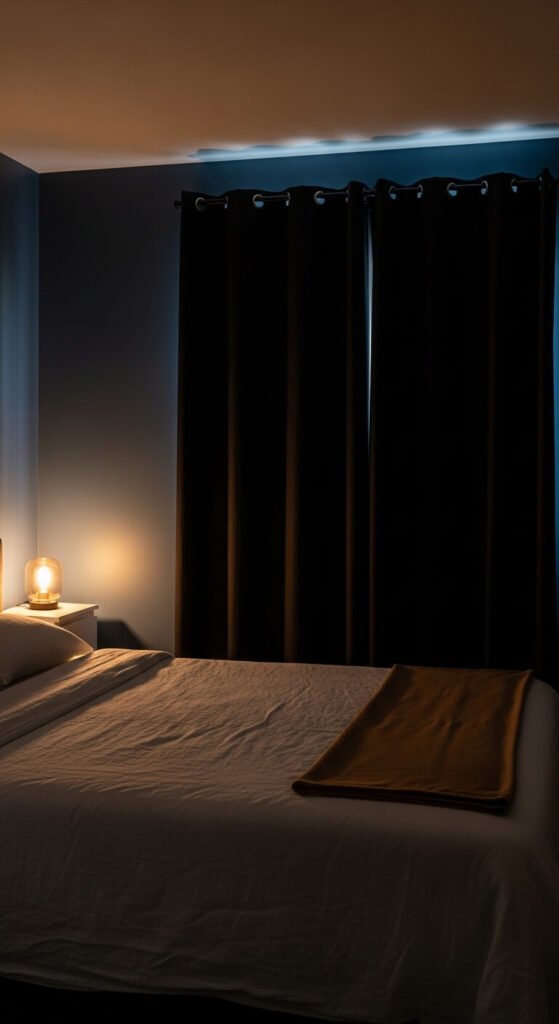
Here is what the science says — and exactly how to apply it.
Choose Colors That Calm the Nervous System
Color has a measurable effect on cortisol levels — the stress hormone that keeps you awake. High-stimulation colors like bright red, vivid orange, and saturated yellow are associated with increased alertness. That is great for a kitchen. It is not great for a bedroom.
The colors most consistently linked to lower heart rate and faster sleep onset are:
- Soft navy and deep blues — linked to lower blood pressure in multiple environmental studies
- Muted sage and grey-greens — associated with calm and restoration
- Warm greige and cream — neutral enough to be visually unstimulating without feeling sterile
- Dusty mauve and soft blush — gentle enough not to register as stimulating to the nervous system
The key word in every case is muted. Saturated, vivid versions of any color — even blue — read as stimulating rather than calming. Choose paint tones with grey or brown undertones rather than pure, bright versions of any color.
Control Light More Aggressively Than You Think You Need To
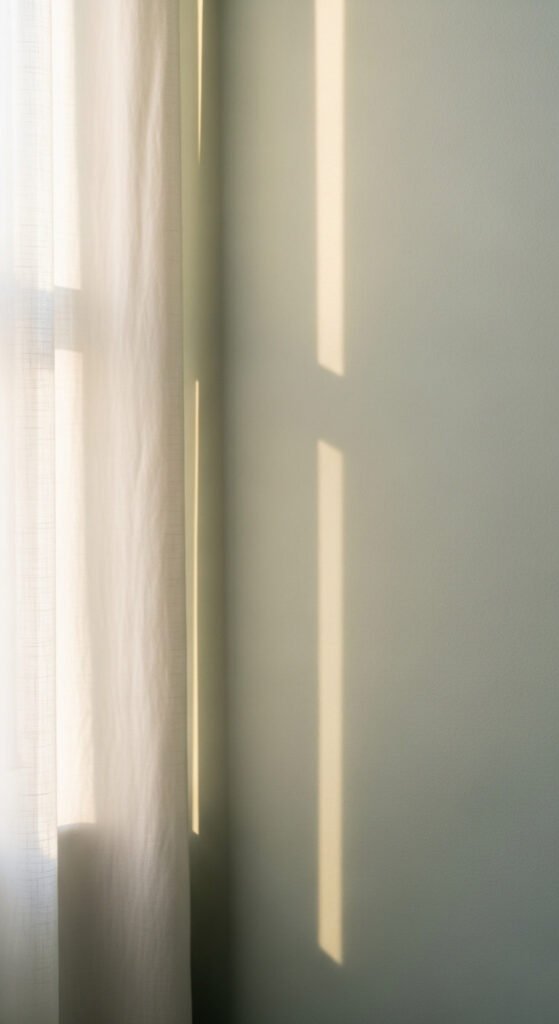
Light is the single most powerful signal your brain receives about whether it is time to be awake or asleep. Even low levels of light exposure — a streetlight through thin curtains, the glow of a standby light on a device — suppress melatonin production and delay sleep onset.
What actually works:
- Blackout curtains or blinds — not “room darkening” or “light filtering,” but genuine blackout. The difference in sleep quality is measurable.
- Warm bulbs at 2200K to 2700K in every bedroom fixture — cooler color temperatures above 3000K are biologically alerting even at low brightness
- A dimmer switch on every bedroom light so brightness can be reduced progressively in the hour before bed
- No screens with LED blue-light exposure within 60 minutes of sleep — this is the most consistently supported finding in sleep light research
A set of blackout curtain panels costs $25 to $60 and is one of the highest-return sleep investments available.
Manage Temperature Through Textiles
Core body temperature drops naturally as part of the sleep-onset process — and a room that is too warm disrupts this process. Research consistently identifies 65 to 68°F (18 to 20°C) as the range most conducive to sleep for most adults.
You may not be able to control your thermostat that precisely, but your textile choices give you significant control:
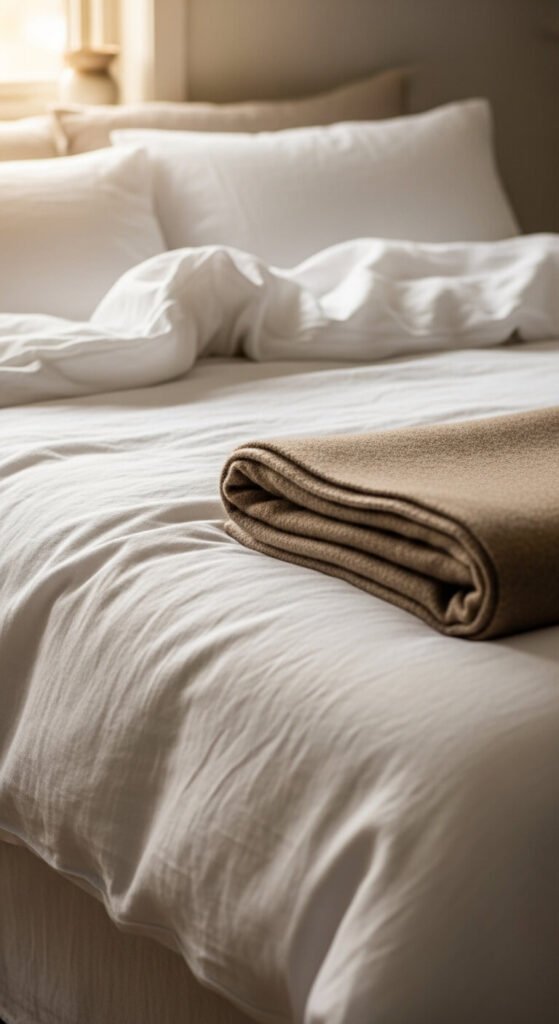
- Natural linen bedding regulates temperature more effectively than polyester or microfiber — it breathes in both directions, cooling when warm and retaining heat when cool
- A medium-weight cotton or wool blanket as a secondary layer that can be added or removed during the night without fully waking
- A cooling mattress protector if you consistently sleep warm
Reduce Visual Clutter Deliberately
A 2015 study published in Sleep found that people who described their bedrooms as cluttered reported significantly more sleep difficulties than those who described a tidy bedroom environment. The reason is straightforward: visual clutter keeps the brain’s threat-detection systems mildly active — the opposite of the relaxed, low-vigilance state that precedes sleep.
Practical applications:
- Remove or conceal all work-related items — a laptop on a bedroom desk registers as a work cue even when not in use
- Use a storage ottoman or closed wardrobe rather than visible open storage for clothing
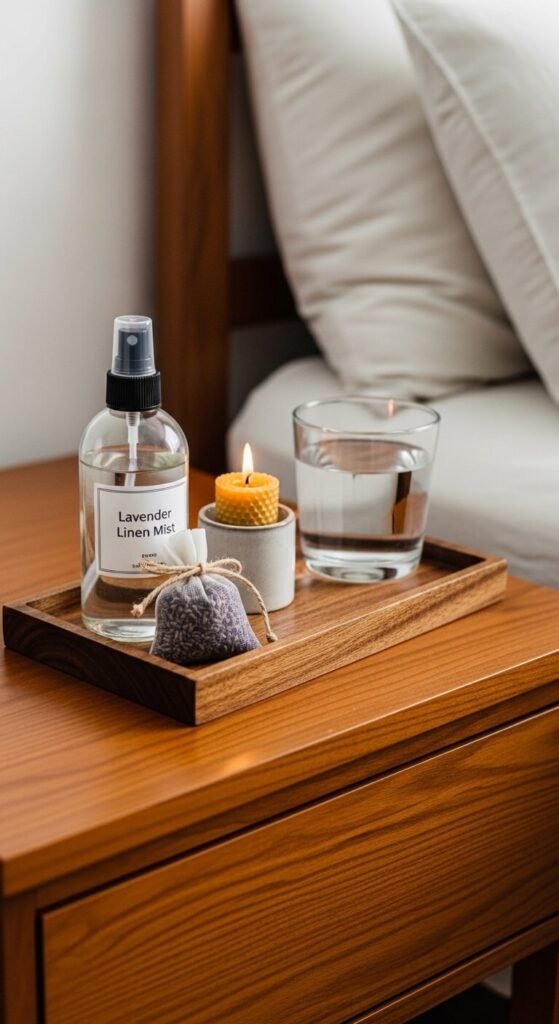
- Limit the bedside table to five objects or fewer — a lamp, a glass of water, one book, and one or two personal items
- Keep the floor clear, particularly the area visible from the pillow
You do not need a completely sparse room. You need a room where the eye can rest without encountering unresolved tasks or visual complexity.
Add Scent as a Sleep Cue
Multiple controlled studies support lavender specifically as a sleep-promoting scent — it lowers heart rate and blood pressure in measurable ways when inhaled before and during sleep.
Simple ways to add it:
- A lavender linen spray applied to pillowcases 30 minutes before bed
- A dried lavender sachet inside the pillowcase
- A battery-operated diffuser with lavender essential oil set to run for 60 minutes at bedtime
The scent also works as a consistent environmental cue — over time, the association between lavender and sleep deepens and the onset of drowsiness when the scent appears becomes more reliable.
The Bedroom Has One Job
Every science-backed sleep design principle points to the same conclusion: the bedroom works best when it is used for one thing. The more exclusively your brain associates the bedroom with sleep — rather than with work, screens, scrolling, eating, or high-stimulation activities — the more reliably it shifts into sleep mode when you enter the space.
Decorate accordingly. Make the room dark, cool, quiet, and visually calm. Keep it clear of work and devices. Add warmth through texture and soft light rather than through activity. Give your brain the environment it actually needs to do its best work — which happens entirely while you are unconscious.
Save this article and pin it as a reference for your next bedroom refresh — because better sleep might be one paint color, a pair of blackout curtains, and a dimmer switch away.