
Ever walked into a room and felt instantly at ease — without quite knowing why? Or stepped into a space that looked perfectly styled online but felt oddly off in person? The difference almost always comes down to one thing: visual balance. It’s the invisible force that makes a room feel harmonious, intentional, and complete. And the best part? Once you understand the trick designers use, you’ll never look at a room the same way again.
Let’s break it down — step by step.
Understand the Two Types of Balance
Before you move a single cushion, you need to know what kind of balance you’re working with. Designers typically use two approaches:
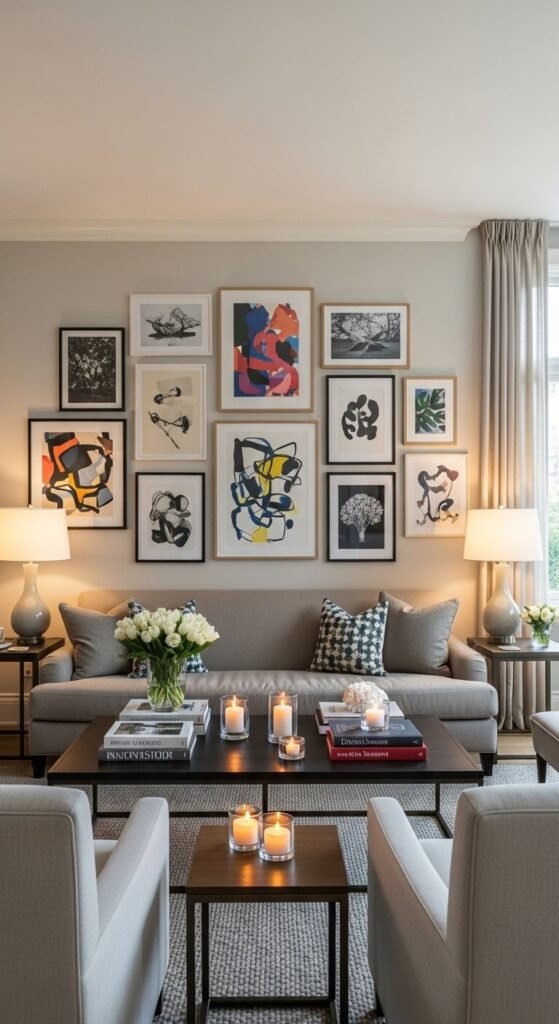
Symmetrical Balance This is the classic, formal style — think matching nightstands, identical lamps, mirrored furniture arrangements. It feels ordered, calm, and instantly polished. Great for bedrooms and traditional living rooms.
Asymmetrical Balance This is where the real designer magic happens. Instead of matching objects, you balance visual weight — using different items that carry the same sense of presence. A tall floor lamp on one side balanced by a cluster of smaller objects on the other, for example. It feels dynamic, collected, and effortlessly stylish.
Most well-designed rooms actually use a blend of both.
Learn to “Read” Visual Weight
Visual weight is the designer’s secret language. It’s not about actual, physical heaviness — it’s about how much attention an object draws to itself. Here’s what makes something visually heavy:
- Dark colours weigh more than light ones
- Large or bulky shapes outweigh small, slim ones
- Busy patterns or textures feel heavier than smooth, plain surfaces
- Bold, saturated colours command more attention than muted tones
- Isolation — a single object alone on a shelf reads heavier than the same object in a group
Once you can “read” a room this way, creating balance becomes intuitive. You’re essentially playing a game of visual seesaw.
The Designer’s Core Trick: The Triangle Rule
Here’s the specific technique professional designers return to again and again — the triangle rule, also called the odd-number grouping method.
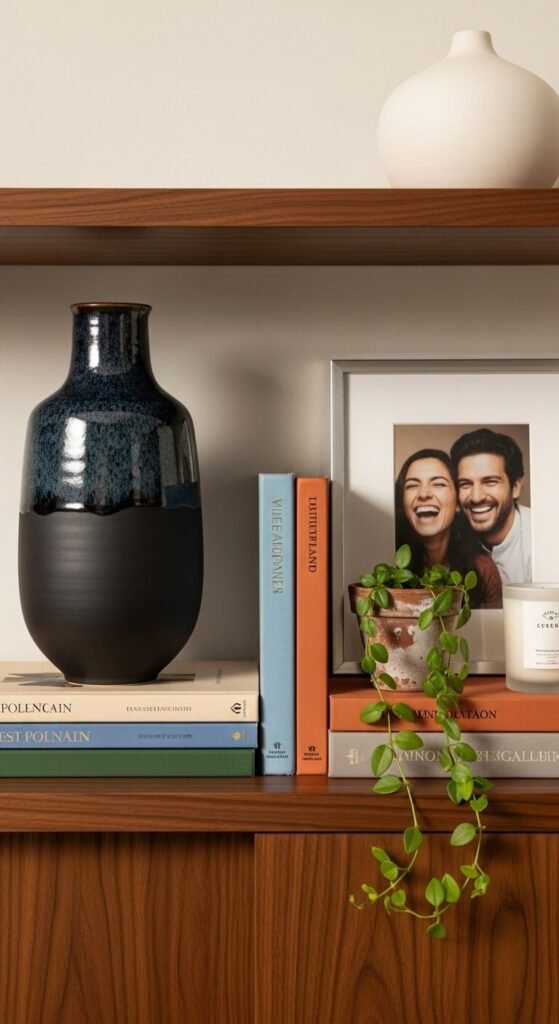
When styling any surface or arranging objects in a space, group items in threes and position them at varying heights to form an invisible triangle. This creates movement, draws the eye naturally across the arrangement, and feels far more interesting than a flat, even lineup.
How to apply it:
- Use one tall item (a lamp, vase, or tall plant)
- One medium item (a stack of books, a framed print, a bowl)
- One low item (a candle, small sculptural object, or trailing greenery)
Place them in a loose triangular formation rather than a straight line. That’s it. That single shift will make your shelves, mantels, and side tables look like they were styled by a professional.
Apply Balance Across the Whole Room
Zoom out and apply the same thinking to the entire room, not just individual surfaces.
A few practical guidelines to follow:
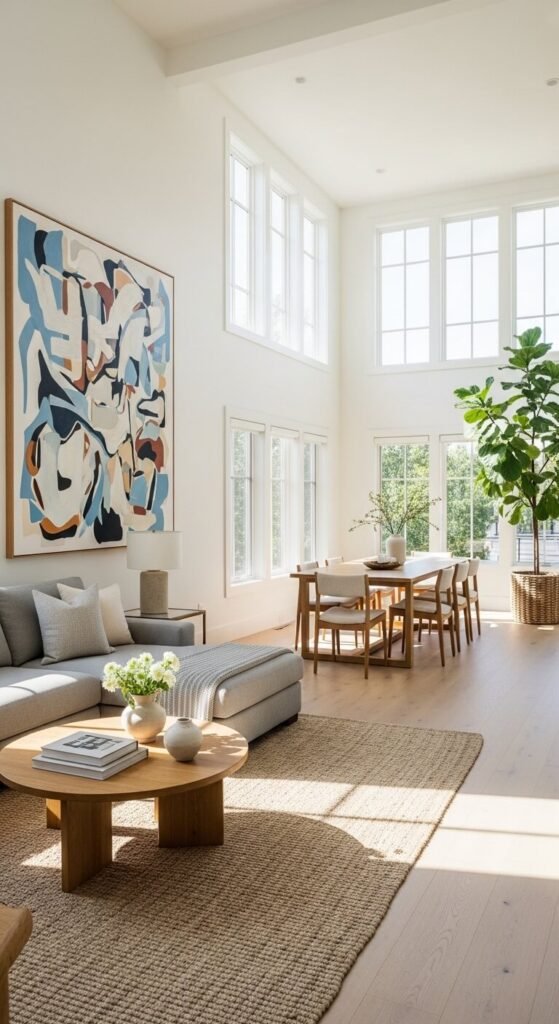
- Anchor heavy furniture symmetrically — centre your sofa on a wall or rug, and balance large pieces like wardrobes or bookshelves on opposite sides of the room.
- Distribute colour throughout — if you have a terracotta cushion on the left side of the sofa, echo that tone somewhere on the right — a candle, a book cover, a small vase.
- Don’t let one area hoard all the detail — if your mantelpiece is heavily styled, keep the surfaces nearby simpler so the eye has somewhere to rest.
- Think vertically, too — balance isn’t just left-to-right. A room with all low furniture and no tall elements feels flat and unresolved. Add height with plants, floor lamps, or tall art.
Fix an Unbalanced Room in Minutes
Sometimes a room just feels wrong and you can’t pinpoint it. Run through this quick checklist:
- Is all the visual weight on one side of the room?
- Are all your objects the same height on a shelf or mantel?
- Is there one very dominant colour with nothing to echo it elsewhere?
- Are your largest furniture pieces pushed to the edges, leaving the centre empty?
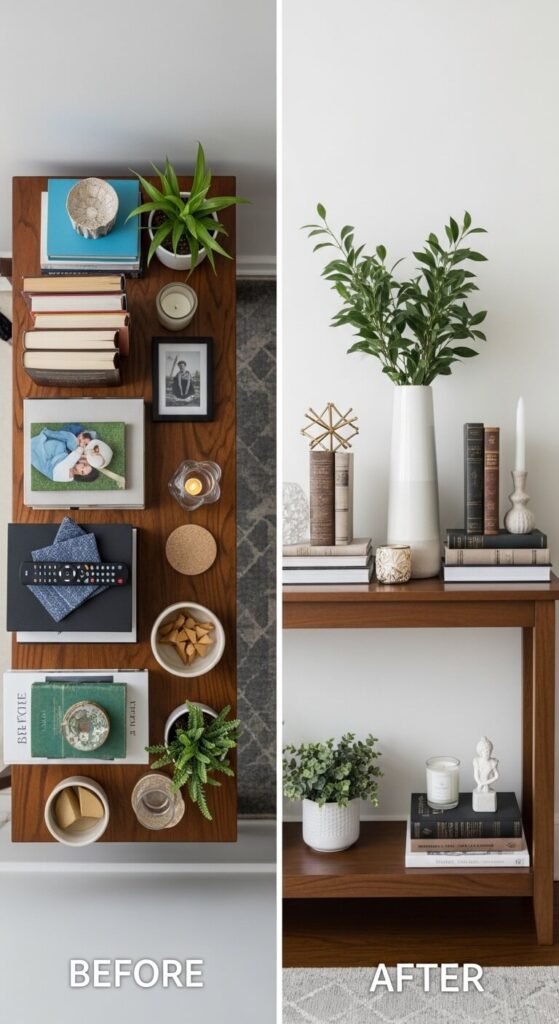
Fix just one of those issues and watch the whole room shift.
Balance Is the Foundation of Every Beautiful Room
Visual balance isn’t about perfection or strict rules — it’s about creating a space that feels right to anyone who walks into it. Once you train your eye to spot visual weight and use the triangle rule, decorating stops feeling like guesswork and starts feeling like second nature.
Save this article and pin your favourite tips — your most balanced, beautiful room is only a few thoughtful tweaks away! 🏡