
Two rooms can have identical furniture, identical paint colors, and identical floor plans — and one will feel cold and flat while the other feels warm, layered, and genuinely inviting. The difference is almost never the objects themselves. It is the surfaces those objects are made from and how those surfaces interact with light. Texture is the quality of a surface that the eye reads as dimension even in a photograph and the hand reads as depth when touched. A room without texture registers as visually thin no matter how expensive the furniture is. A room with layered texture registers as rich, considered, and deeply comfortable, even when most of the individual pieces cost almost nothing. Adding texture is not expensive. It is intentional.
Here is exactly how to build texture into every surface of a room deliberately and affordably.
Start with the Soft Furnishing Layer
Soft furnishings — the textiles in a room — are the fastest, most affordable, and most reversible way to introduce texture. They are also where most rooms are most texturally deficient.
The target: at least four different textile textures in the same room.
A typical living room might have: a flat microfiber sofa, flat polyester cushions, a flat polyester rug, and polyester curtains. Everything is smooth. Everything reflects light the same way. The room feels finished but somehow lifeless.
Replace or add these:
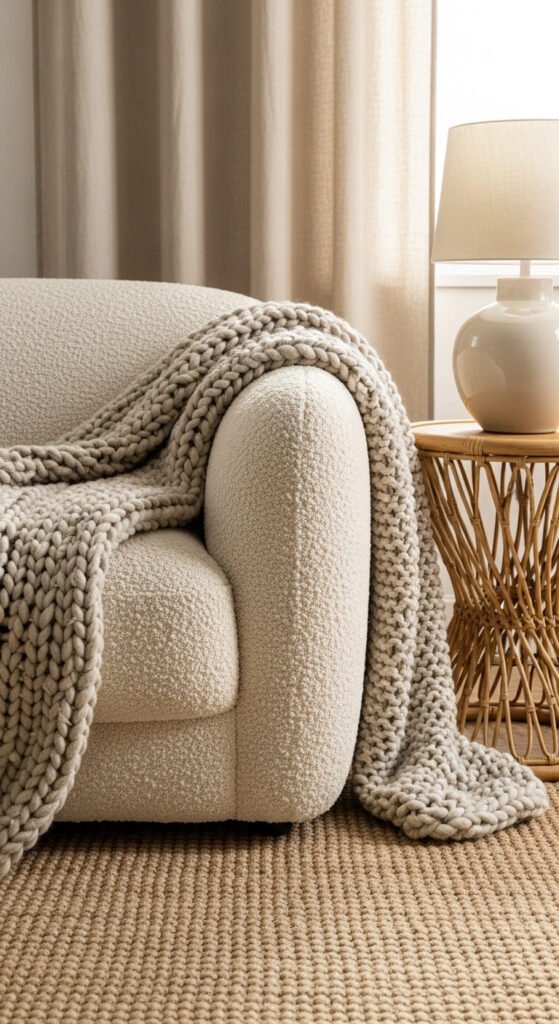
- A bouclé, linen, or velvet sofa — fabric with a visible surface quality that changes in different lights
- A chunky knit or woven throw draped over the sofa arm — the contrast between the sofa fabric and the throw texture creates immediate visual depth
- A natural fiber rug — jute, sisal, or seagrass beneath the sofa adds an organic, slightly rough texture at floor level that grounds the room
- Linen curtains rather than polyester — the natural irregular weave of linen has a texture that sheer polyester entirely lacks
Budget note: You do not need to replace your sofa. Changing the cushion covers to a textured fabric — bouclé or linen — changes the sofa’s visual quality significantly for $20 to $60 per cover. Adding one chunky knit throw costs $15 to $40 and changes the room’s softness immediately.
Layer Natural Materials at Different Heights
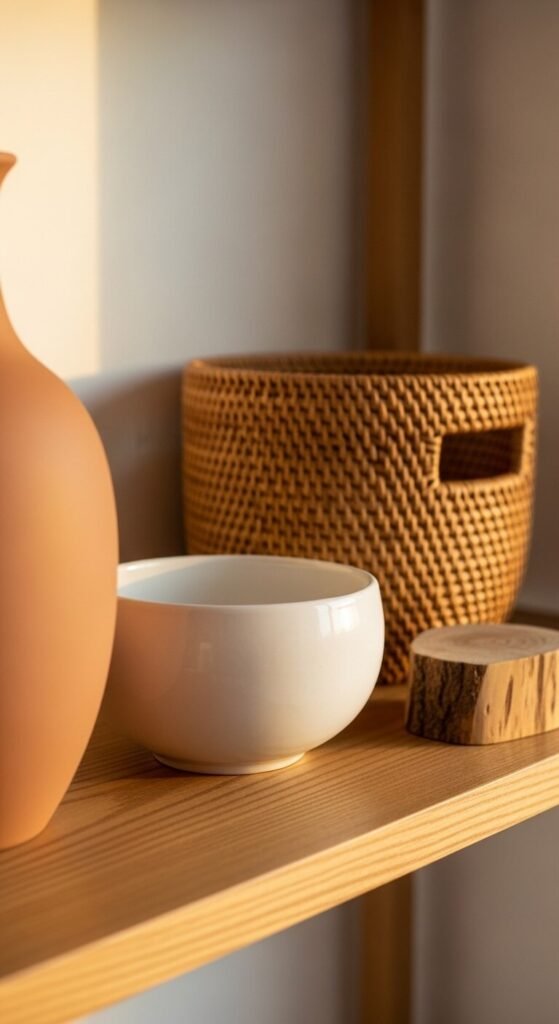
Texture comes from material variation, not just softness. Hard materials with visible surface quality — rattan, wood grain, unglazed ceramics, woven baskets — create texture in the object layer of a room that soft furnishings cannot provide.
The rule: no two adjacent objects should share the same material.
- A smooth ceramic vase beside a woven rattan basket
- A matte plaster lamp beside a polished brass candlestick
- A rough terracotta pot beside a smooth white ceramic dish
The contrast between adjacent materials makes both more perceptible. A smooth ceramic vase on its own reads as simply white. The same ceramic vase beside a rough woven basket reads as smooth, glossy, and refined — because the contrast gives the eye something to compare it against.
Best natural material additions:
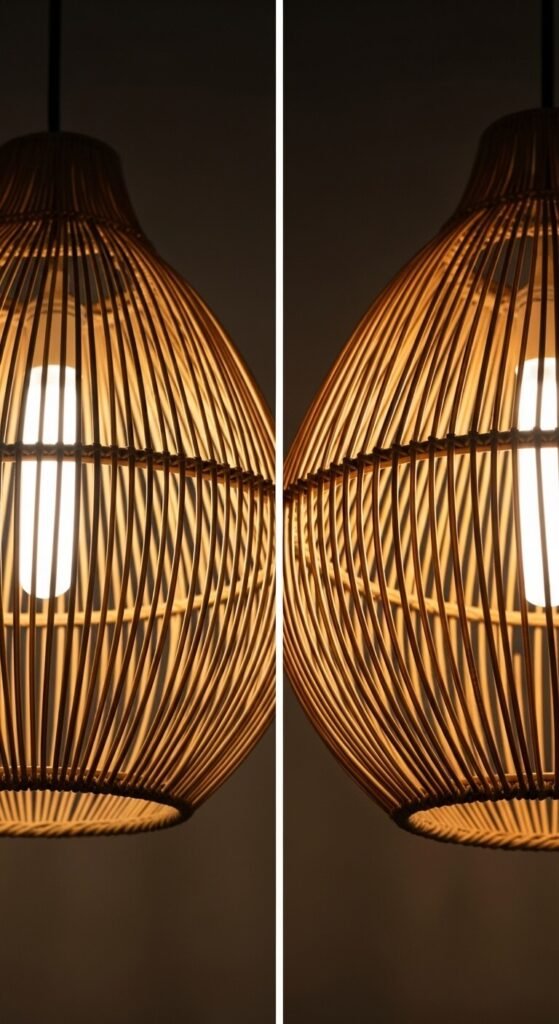
- Rattan and woven pieces — baskets, pendants, trays, and mirrors in rattan add organic warmth and visible surface complexity
- Unglazed ceramics — terracotta pots, matte stoneware vases, rough-fired vessels
- Raw or live-edge wood — a live-edge wood shelf bracket or a natural wood coffee table tray shows the grain and irregularity that processed wood does not
- Linen and cotton rope — used as plant hangers, wrapped lamp bases, or as a detail in wreaths and door hangings
Bring Texture to the Walls
Walls are the largest surface in any room — and in most rooms they are the least texturally interesting surface. A flat paint finish on plasterboard provides no texture at all. Even small wall texture additions create a disproportionate impact on the overall sensory quality of the space.
Wall texture options at different budgets:
- Textured wallpaper — grasscloth, linen-weave, or embossed geometric wallpapers add immediate surface depth. A single accent wall costs $60 to $150 in materials.
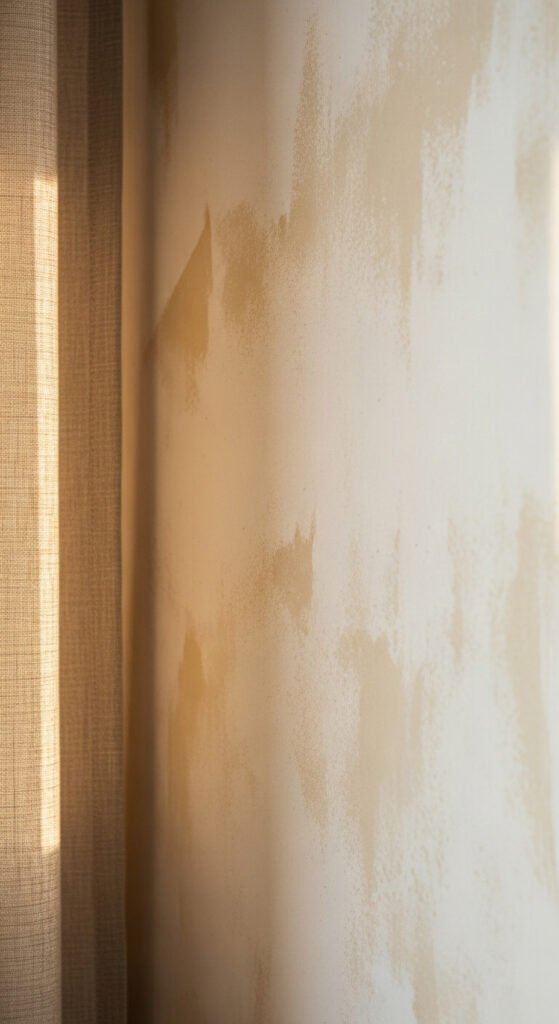
- Limewash paint — produces a soft, variegated surface with visible brush marks and tonal variation. A single can costs $40 to $80 and covers one standard bedroom wall.
- Roman clay or Venetian plaster finish — applied in layers that create a soft, irregular sheen. More expensive but extremely beautiful.
- Hanging textile art — a large woven wall hanging or macramé piece adds fiber texture directly to the wall at the same height as artwork.
Use Light to Reveal Texture
Texture without directional light is significantly less visible. The reason textured surfaces look so beautiful in morning and afternoon natural light is because the light source is angled — it rakes across the surface, casting small shadows in every groove, bump, and weave that reveal the three-dimensional quality of the material.
How to use light to reveal texture:
- Position lamps at a low angle rather than directly overhead — floor lamps and table lamps at seated eye level cast directional light that rakes across textured surfaces
- Place rattan, woven, and rough-surface objects near windows — the natural side light reveals their surface in a way that overhead light does not
- Use warm bulbs (2700K) — warm light creates more visible shadow in textured surfaces than cool white light, which flattens texture significantly
A textured room photographed in overhead fluorescent light looks flat. The same room photographed in warm afternoon window light looks like a magazine spread. The texture was always there — the light made it visible.
The Room Changes When the Surfaces Do
You do not need new furniture, a bigger budget, or a renovation to add texture to a room. You need a chunky knit throw on the sofa, a jute rug on the floor, a terracotta pot beside the ceramic vase, a woven basket instead of a plastic box, and a lamp positioned to the side rather than directly overhead.
Each individual change costs $10 to $40. The collective effect of making five or six simultaneous small texture changes in one room is a room that suddenly feels rich, layered, and genuinely designed — even though nothing structural changed at all.
Save this and pin it as your texture guide — because the difference between a flat room and a rich one is surfaces, and surfaces are the most affordable thing you can change.