
There’s a reason certain rooms make you exhale the moment you walk in. The furniture feels right. The walls feel right. Everything seems to exist in quiet agreement with everything else. More often than not, the invisible force behind that sense of ease is symmetry. It’s one of the oldest, most instinctive principles in design — and one of the most powerful. A symmetrical room doesn’t just look beautiful. It feels calm, ordered, and deeply restful in a way that’s hard to put your finger on but impossible to ignore. Here’s how to bring that quality into your own home, one balanced decision at a time.
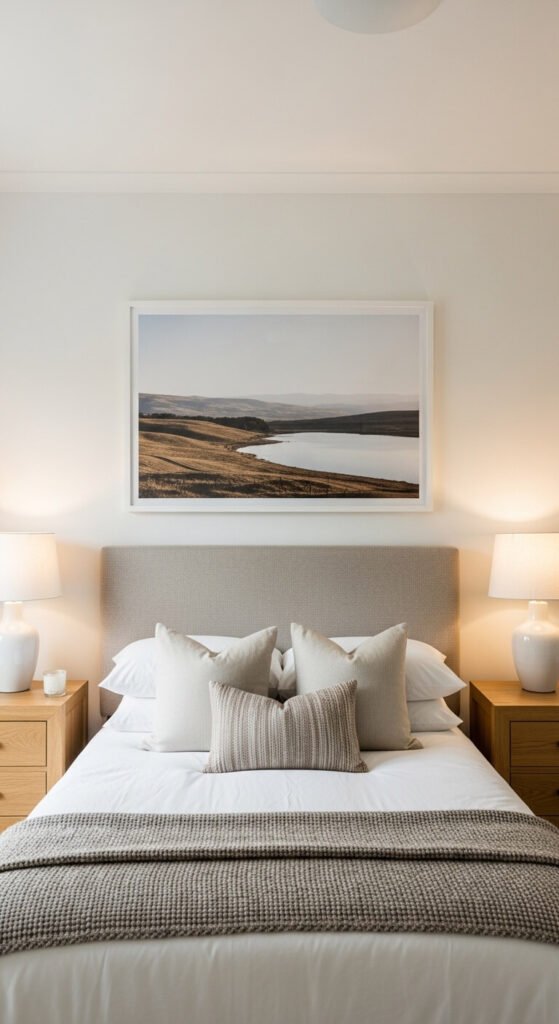
Understand the Two Types of Symmetry
Before you start rearranging furniture, it helps to know that symmetry in interior design comes in two distinct forms — and choosing the right one for your space makes all the difference.
Bilateral symmetry (also called mirror symmetry) is the classic approach. One side of a room, piece of furniture, or arrangement is a near-perfect reflection of the other. Think: matching nightstands flanking a bed, identical sconces on either side of a fireplace, or two matching armchairs facing a sofa. It’s formal, calming, and unmistakably intentional.
Approximate symmetry (sometimes called informal symmetry) follows the same visual weight principle without requiring exact matching. Two different lamps of similar height on either side of a sofa. A tall plant on the left balanced by a stack of books and a smaller object on the right. The result feels balanced but slightly more relaxed and collected — better suited to informal, layered spaces.
Both are valid. Both create calm. The key is choosing deliberately rather than arriving at one by accident.
Start With Your Focal Point
Every symmetrical room has an anchor — a focal point that the symmetry radiates outward from. Getting this right is the foundation everything else depends on.
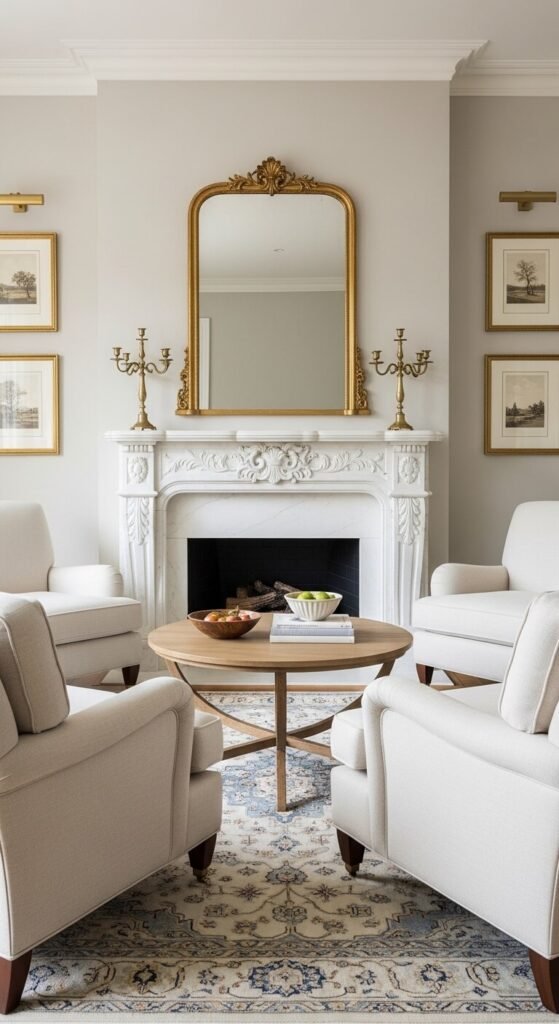
The most natural focal points in any room:
- The bed — in a bedroom, the headboard wall is your symmetry anchor. Center the bed precisely on the wall, then build out from there.
- The fireplace — a fireplace demands symmetry almost by its very nature. Pair matching chairs, sconces, or plants on either side and let the mantel become a balanced display.
- A large window — center your sofa or bed in front of a primary window and frame it with matching curtain panels hung at identical heights.
- A statement piece of furniture — a large sideboard, a console table, or a bookcase can serve as your anchor when a more architectural feature isn’t available.
Once your focal point is identified, every symmetrical decision you make should radiate outward from that center line — left mirroring right, near mirroring far.
Use Pairs Wherever Possible
The simplest, most reliable way to create symmetry in any room is to shop and style in pairs. Two of something almost always looks more intentional than one — and it creates the visual balance that makes a space feel settled and complete.
Some of the most impactful places to introduce pairs:
- Bedside lamps — matching lamps on matching nightstands is the single most transformative symmetry move in a bedroom
- Accent chairs — two chairs facing each other or flanking a sofa anchor a living room seating arrangement beautifully
- Sconces — a pair of wall sconces flanking a mirror, a bed, or a fireplace elevates a room from decorated to designed
- Decorative objects on a mantel or console — two matching candlesticks, vases, or sculptural pieces bookending a central object
- Potted plants — identical planters at each side of a doorway, entryway, or bed create a sense of formal elegance that almost nothing else can
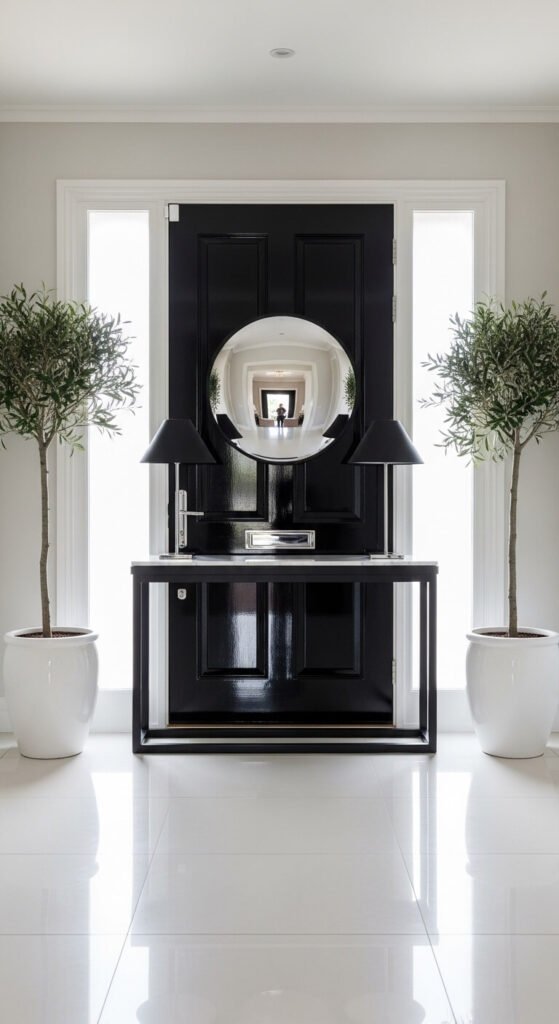
You don’t need to spend more to style in pairs — in fact, buying two of a simpler, less expensive piece almost always looks better than buying one statement piece and leaving the other side empty.
Balance Your Walls Symmetrically
Walls are where symmetry pays some of its highest visual dividends — and also where asymmetry tends to cause the most subtle but persistent visual discomfort. A lone picture frame floating off-center, a single sconce with nothing balancing it on the other side, a gallery wall that crowds one half of a wall while leaving the other half bare — these things create a low-level tension that you feel even if you can’t identify it.
Some wall symmetry moves that immediately bring calm:
- Center every large piece of art directly above the furniture it relates to — a sofa, a headboard, a console table. The center of the art should align with the center of the piece below it.
- Hang curtain rods at identical heights on both sides of a window, with panels the same length, the same fabric, the same fullness.
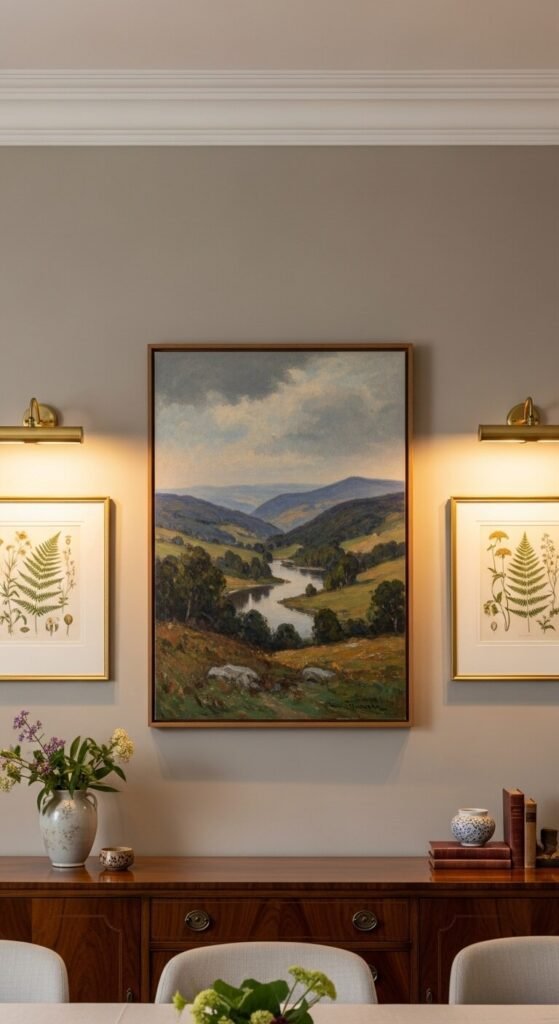
- Create a symmetrical gallery wall by using a center line — either a single large piece flanked by smaller works, or a perfectly mirrored arrangement of frames that expands outward from a central axis.
- Flank a mirror or large artwork with matching sconces at identical heights on either side. It’s a small move with a dramatically polished result.
Know When to Break the Rules
Here’s the thing about symmetry: used exclusively, it can tip from calm into cold. The most beautiful rooms use symmetry as a foundation but allow a few intentional asymmetries to keep things feeling human and alive.
A few places where breaking symmetry actually strengthens it:
- One side of the mantel can hold something slightly different — a taller object, an unexpected texture — while the overall arrangement remains balanced in visual weight
- A single statement plant placed to one side of a seating arrangement adds organic energy without disrupting the room’s overall sense of order
- A throw blanket draped casually over one arm of a sofa softens a perfectly paired arrangement and makes it feel lived in
Symmetry is the structure. Those small asymmetries are the personality. Together, they create a room that feels both calm and genuinely, warmly inhabited.
The Takeaway
Symmetry isn’t about being rigid or formal — it’s about giving your eye a place to rest. When the two sides of a room agree with each other, the whole space feels quieter, more considered, and deeply calming to spend time in.
Save this article for your next room refresh — then pick one focal point, introduce one pair, and feel the difference a little balance makes. Your most calming room yet is closer than you think. 🪞✨