
Walk into any room that feels “off” and you’ll usually find the same problem — your eye doesn’t know where to land. It bounces around the space, finds nothing to settle on, and your brain registers the room as unsettling without quite knowing why. The fix? A strong focal point. One intentional anchor that says look here first — and suddenly everything else in the room falls into place around it.
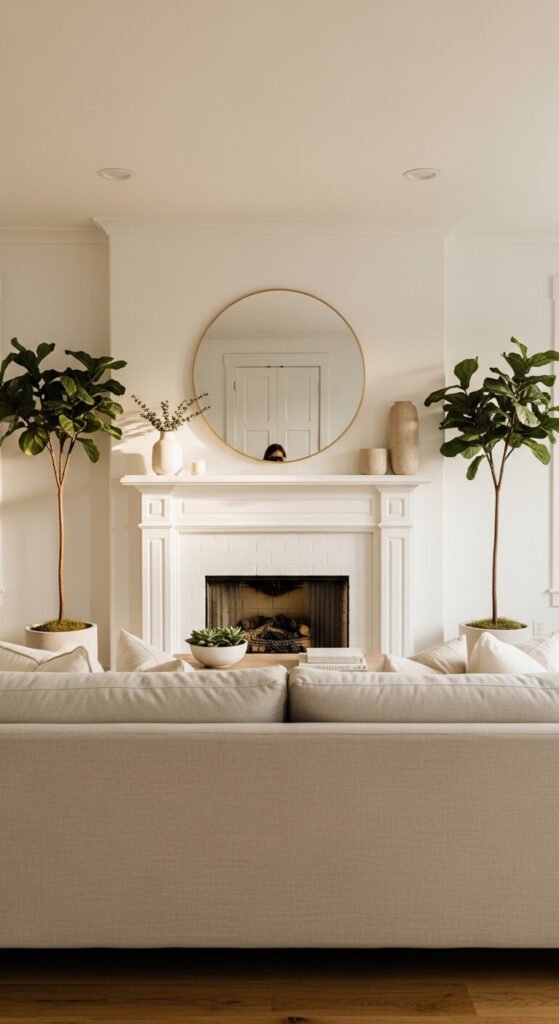
Creating a focal point isn’t reserved for magazine-worthy spaces or professionally designed rooms. It’s a technique anyone can use — in any room, at any budget — and the results are immediate and dramatic.
What Exactly Is a Focal Point?
A focal point is the first thing your eye travels to when you enter a room. Every well-designed space has one. It gives the room a sense of purpose and hierarchy — a visual starting point from which everything else is organized.
Common natural focal points include:
- A fireplace
- A large window with a view
- An architectural feature like a coffered ceiling or exposed brick wall
- A statement piece of furniture
But here’s the thing — if your room doesn’t have a natural focal point, you can absolutely create one from scratch. That’s where the real fun begins.
Choose Your Focal Wall First
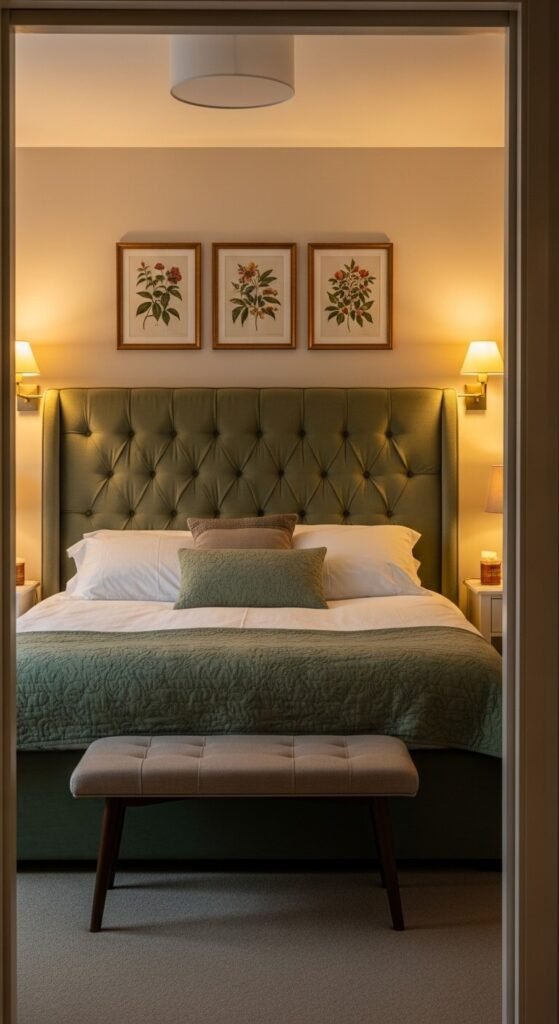
Before you buy a single thing, decide which wall should anchor the room. In most cases, it’s the wall you see first when you walk through the door. In a bedroom, it’s almost always the wall behind the bed. In a living room, it’s the wall the seating naturally faces.
Once you’ve identified that wall, commit to it. Everything in the room should be oriented toward this wall — furniture arranged to face it, lighting aimed at it, and accessories layered onto or beside it.
Build Height and Visual Weight
The most effective focal points have vertical height that draws the eye upward and visual weight that commands attention. A focal wall that stops at furniture height feels incomplete. One that reaches toward the ceiling feels dramatic and intentional.
Ways to add height to a focal point:
- Hang artwork high — the center of a large piece should sit roughly at eye level, but the top can reach toward the ceiling
- Use a tall mirror — especially above a fireplace or console table
- Add a floor-to-ceiling bookshelf or built-in unit
- Mount floating shelves in a vertical column rather than a single horizontal row
- Lean a large oversized frame or canvas against the wall for casual, proportional impact
The goal is to create a composition that feels balanced but interesting — symmetry works, but so does a well-considered asymmetry.
Layer in Texture, Light, and Color
A focal point isn’t just a piece of furniture or a single artwork. It’s a layered composition that includes texture, light, and color working together. Think of it like styling a vignette — each element supports the others.
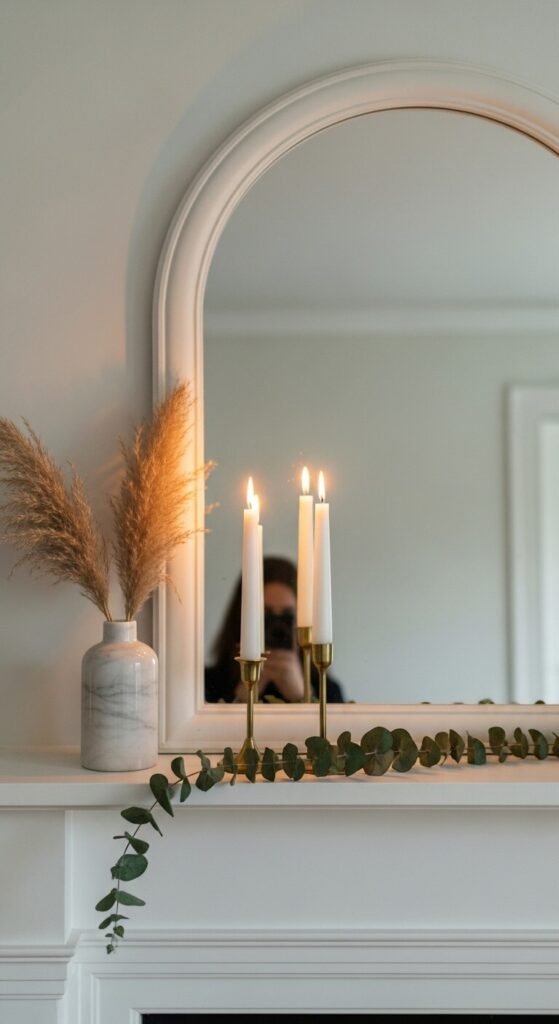
A fireplace mantle becomes a focal point when you layer:
- A large mirror or artwork above it
- Candles or sculptural objects at varying heights on the mantle shelf
- Greenery or dried botanicals tucked at each end
- A lit fire or candle grouping that adds actual warmth and movement
Even a blank wall becomes a focal point when you combine:
- A bold paint color or wallpaper on that wall only
- A large-scale piece of artwork or a gallery arrangement
- A console table or bench below it
- A pair of sconces or a floor lamp on either side
Direct Furniture Toward the Focal Point
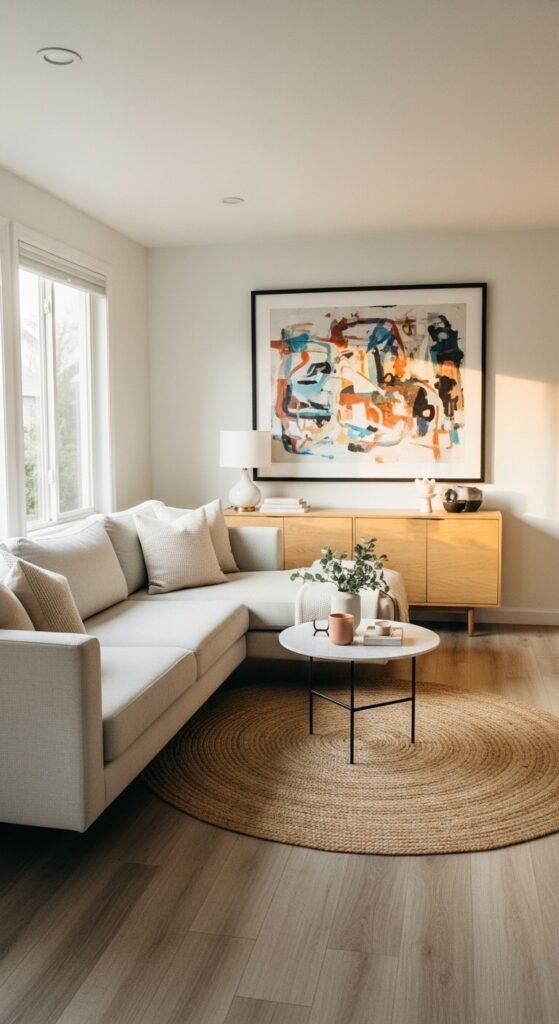
All the work you put into creating a focal point disappears if your furniture arrangement ignores it. The seating should face it. The rugs should anchor toward it. The lighting should highlight it.
Avoid the common mistake of pushing all furniture against the walls — floating a sofa or pair of chairs toward the focal wall creates a conversation area that visually reinforces the anchor rather than fighting it.
One Room, One Focal Point
The last rule — and it’s the most important one — is this: every room gets one focal point. Not two. Not three. One.
When two walls compete for attention, the eye gets confused and the room feels chaotic. If you have a fireplace and a large TV wall in the same room, pick one to anchor and subordinate the other with simpler styling.
Less competition means more impact — and a room that finally feels finished.
Start Designing Yours Today
Creating a focal point is genuinely one of the most satisfying decorating projects you can take on because the results are visible immediately. Choose your wall, build upward, layer in texture and light, and point your furniture toward it.
Your room has been waiting for this one thing. Now go give it somewhere to look.
Save this article and come back to it when you’re ready to tackle your next room — the transformation might surprise you.