
Every room has a wall with potential — the one your eye lands on the moment you walk in, the one behind the sofa, the one your bed is pushed against. That wall isn’t just a background. It’s an opportunity. A feature wall done well can completely transform a room without touching a single piece of furniture, expanding the square footage, or blowing the budget. It adds depth, personality, and that elusive “designed” quality that makes a space feel intentional rather than assembled. And with so many approaches available — from a single bold paint color to textured panels to peel-and-stick wallpaper — there’s a version of a feature wall for every style, every skill level, and every rental situation.
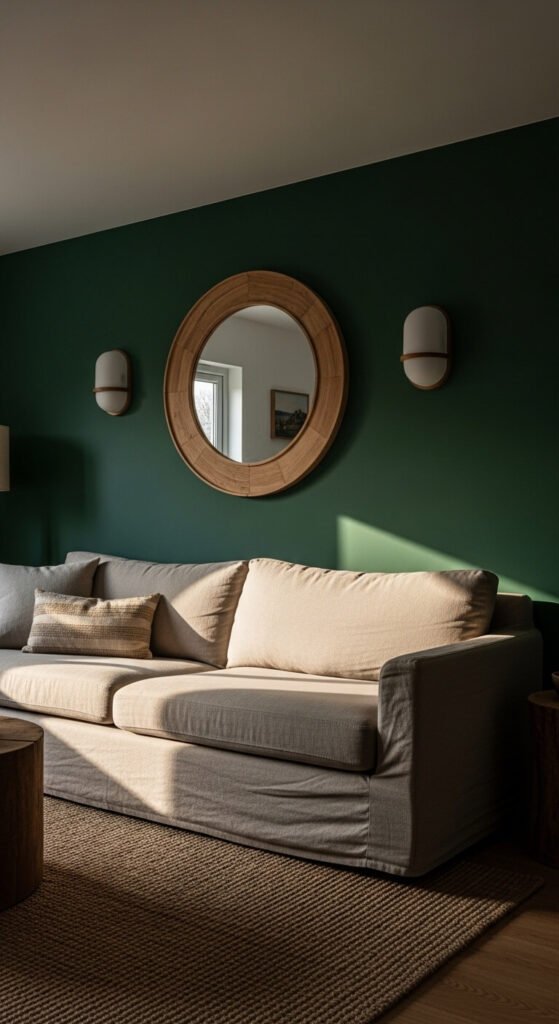
Here’s how to create a feature wall that stops people in their tracks — whichever method you choose.
Step One: Choose the Right Wall
Before selecting a material or color, you need to identify which wall actually deserves the feature treatment. Not every wall is a feature wall candidate — and choosing the wrong one is one of the most common mistakes people make.
The right wall is almost always:
- The first wall you see when entering a room — the natural focal point
- The wall behind the sofa in a living room, creating a backdrop for the main seating area
- The wall behind the bed in a bedroom — the headboard wall is the most natural and satisfying feature wall in any home
- A wall with existing architectural interest like a fireplace, alcove, or built-in shelving that already draws the eye
- A wall that faces the main viewing direction — where you sit, where you sleep, where you eat
Avoid featuring:
- Walls broken up by too many doors or windows — the interruptions make any treatment look disjointed
- Walls that are very narrow or awkwardly proportioned
- Multiple walls in the same room — one feature wall per room, always; two competing walls create visual chaos
Option One: Paint — The Most Accessible Transformation
A single wall in a bold, beautiful color remains one of the most powerful and most budget-friendly feature wall treatments available. It requires no special skills, no contractor, and no permanent commitment — just a roller, a couple of hours, and the courage to go darker or bolder than feels completely safe.
Paint approaches that create genuine impact:
- A deep, saturated single color — forest green, navy, terracotta, charcoal, dusty rose; dark colors recede and create intimacy, making the feature wall feel like an enveloping backdrop
- Color drenching — paint the wall, ceiling, trim, and any built-ins in the same shade for a dramatic, enveloping effect that feels completely intentional
- Geometric shapes and color blocking — use painter’s tape to create arches, rectangles, or horizontal bands in two complementary colors
- Limewash or textured paint — these specialty finishes add a mottled, aged quality that looks far more expensive and hand-crafted than standard flat paint
Pro tip: Always go at least two shades darker than feels comfortable when choosing a feature wall color. What looks dramatic on a paint chip almost always settles into something perfectly livable on an actual wall.
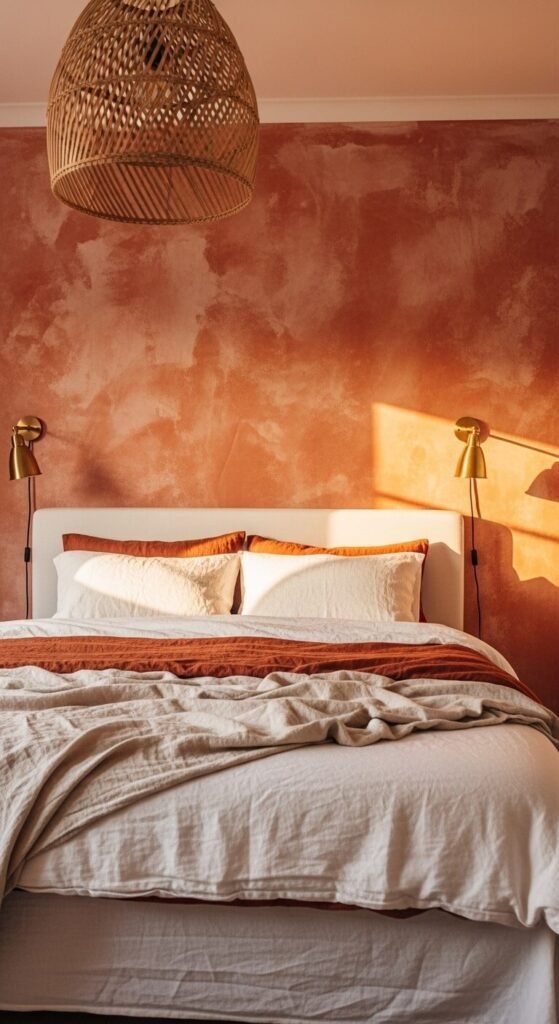
Option Two: Wallpaper — Pattern, Personality, and Drama
Wallpaper has made one of the most triumphant comebacks in interior design — and today’s options are so far beyond the dated florals of decades past that it almost deserves a new name. A single wallpapered wall can introduce pattern, color, texture, and personality in a way that paint simply cannot replicate.
Wallpaper styles that work beautifully as feature walls:
- Large-scale botanicals — lush leaf prints in deep greens and earthy tones feel luxurious and bring the outside in
- Abstract and painterly patterns — watercolor washes, gestural marks, and ink-blot style prints feel artistic and current
- Classic stripes — wide vertical stripes in two tones make ceilings feel higher and add a tailored, timeless quality
- Grasscloth and textured wallpaper — not technically a print but an incredibly sophisticated texture that adds depth without pattern
- Geometric and tile-inspired prints — graphic and bold, these work especially well in kitchens, bathrooms, and dining rooms
For renters or commitment-phobes: Peel-and-stick wallpaper has improved dramatically in quality and now comes in hundreds of genuinely beautiful patterns. It applies cleanly, removes without damage, and opens up the feature wall option to anyone — renter, first-time decorator, or simply someone who likes to change things up.
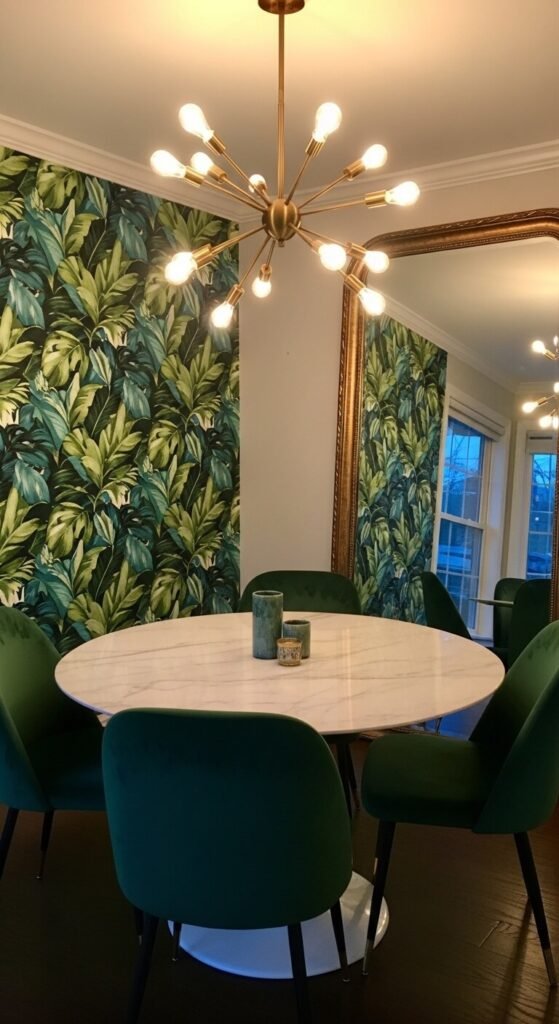
Option Three: Unique Materials — Texture That Changes Everything
When paint and wallpaper feel too expected, materials take a feature wall from beautiful to genuinely unforgettable. Texture adds a three-dimensional quality that photographs stunningly and transforms how a wall feels in person — not just how it looks.
Materials worth considering:
- Shiplap or wood planks — horizontal or vertical wood boards painted or stained in a chosen color add architectural warmth that works in farmhouse, coastal, and modern spaces alike
- Board and batten — a classic combination of flat boards and vertical battens creates shadow lines and structural interest that looks completely custom
- Brick or stone veneer — thin brick or stone panels that adhere directly to drywall and require no structural work; the effect is raw, industrial, and deeply characterful
- Fluted or reeded panels — one of the most on-trend architectural details right now; vertical channels create a rippling light-and-shadow effect that looks expensive and feels very contemporary
- Cork tiles — functional and beautiful; cork panels create a warm, organic texture that works especially well in home offices and studies
- Fabric-covered panels — upholstered wall panels in linen, velvet, or boucle bring a soft, bedroom-appropriate luxury that no other material can match
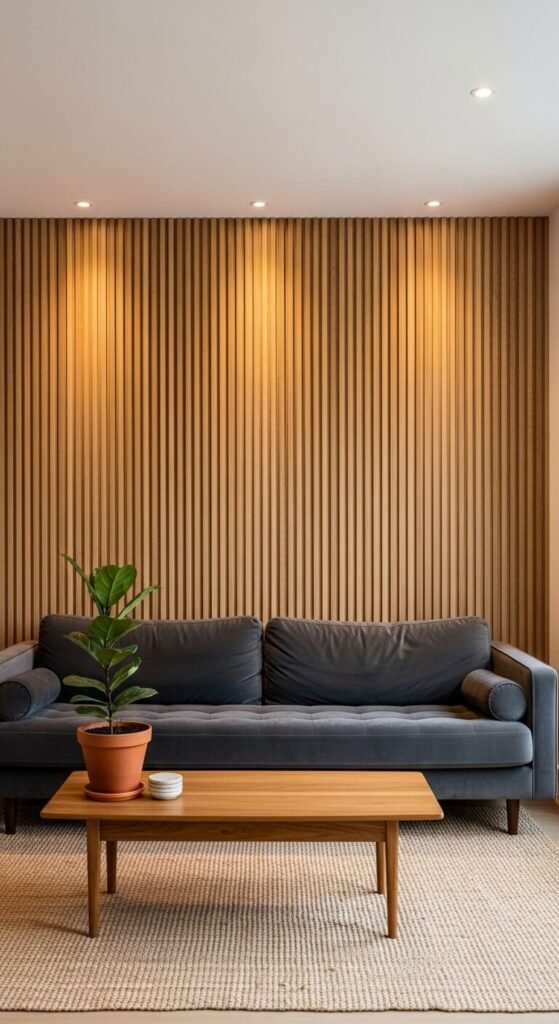
Finishing Touches That Make a Feature Wall Sing
No matter which approach you choose, a few finishing details elevate the result from good to genuinely stunning.
- Center something on it — a mirror, a piece of art, a sconce, or a floating shelf; a feature wall with nothing on it can feel unfinished
- Light it intentionally — wall sconces flanking a feature wall, picture lights above art, or recessed lighting directed at the wall all make the treatment look dramatically more polished
- Let the furniture anchor it — pull the sofa or bed close enough to feel connected to the feature wall rather than floating away from it
- Keep the opposing walls calm — the feature wall earns its name by contrast; keep the other three walls simple, neutral, and quiet
One Wall Can Change Everything
You don’t need to redecorate the whole room to transform how it feels. A single wall — painted deep and bold, papered in something lush, or clad in beautiful texture — can rewrite the entire atmosphere of a space in a weekend. Choose your wall, commit to your treatment, and watch what happens when one surface finally gets the attention it deserves.
Save this guide for your next weekend project, share it with a friend who’s been staring at four identical white walls, and go make one of them extraordinary. 🎨✨