
You finally found the piece. The colors are right, the style is right, the price is right — so you order it, hang it up, and step back to find a postage stamp floating on an ocean of wall. Or worse, a canvas so enormous it swallows the entire room whole. Wrong art size is one of the most common and most fixable decorating mistakes people make — and it almost always comes down to skipping one simple step before buying. Once you know the rules, choosing the right size becomes completely instinctive, and every piece you hang will look like it was made for exactly that spot.
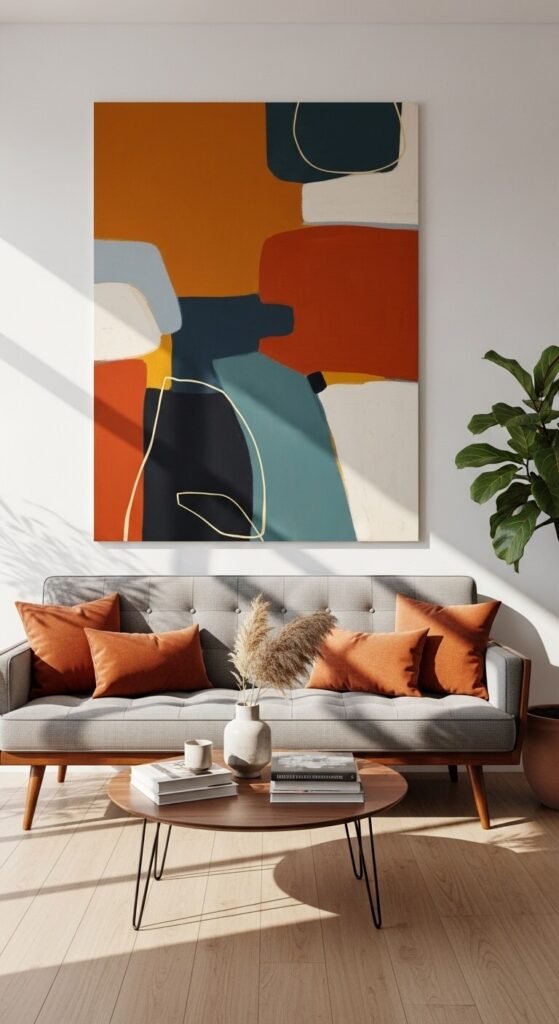
This guide gives you the exact measurements, the practical tricks, and the room-by-room guidance you need to nail art sizing every single time — no guesswork, no returns.
The Golden Rule of Wall Art Sizing
Before diving into specific rooms and scenarios, there’s one overarching principle that applies almost universally — and internalizing it will save you from the most common sizing mistakes.
Your art should fill roughly two-thirds to three-quarters of the available wall space.
That means:
- Art hung above a sofa should span two-thirds of the sofa’s width — not edge to edge, not tiny and centered, but generously proportioned to the furniture beneath it
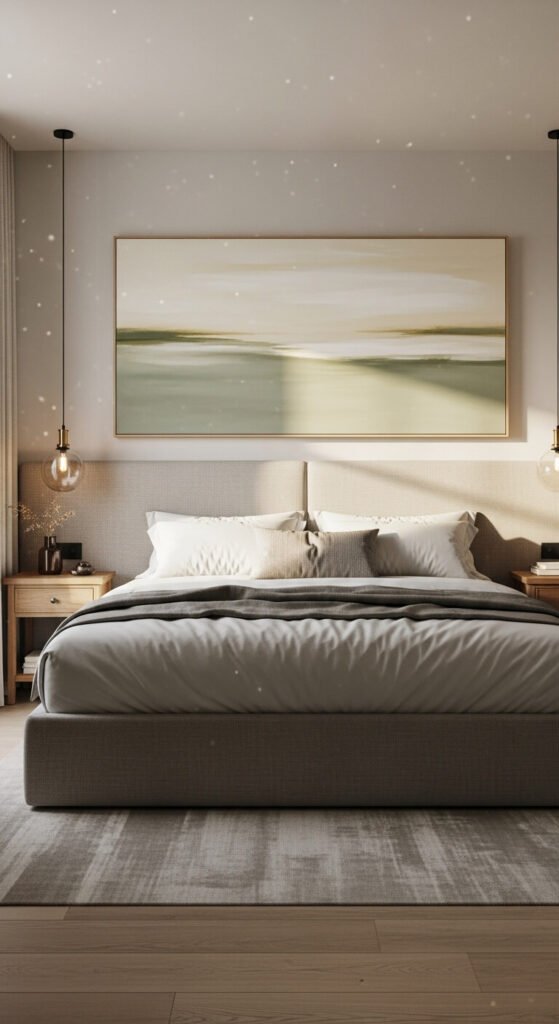
- Art hung above a bed should be roughly the same width as the headboard, or span two-thirds of the bed width at minimum
- Art on a large empty wall should fill at least half to two-thirds of that wall’s width to feel intentional rather than lost
The two-thirds rule works because it creates visual balance — the art feels connected to the space around it without competing aggressively with everything else in the room. It’s the sweet spot between “too small” and “overwhelming.”
How to Measure Before You Buy
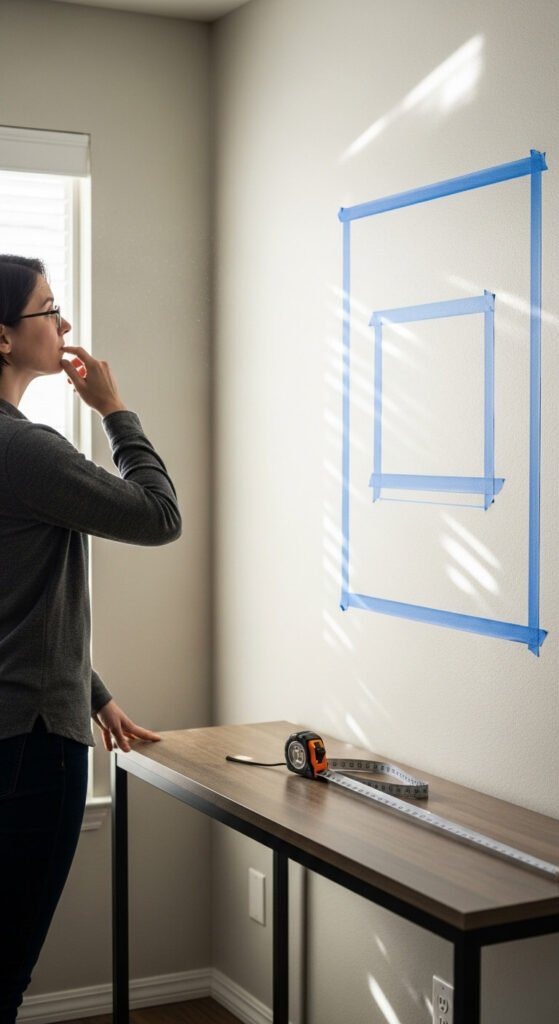
This is the step most people skip, and it’s the one that makes all the difference. Before ordering or purchasing any piece of art, spend five minutes with a tape measure and painter’s tape. It will save you every time.
The painter’s tape method:
- Measure the wall space or furniture the art will relate to
- Calculate two-thirds of that measurement for your ideal art width
- Cut strips of painter’s tape to mark out that exact size on the wall
- Step back from across the room and assess — adjust until it feels right
- Note the dimensions and shop with those specific numbers in mind
This method is transformative because it lets you see the actual size in your actual room before committing to anything. What sounds large on paper often looks perfect on the wall — and what sounds modest can look startlingly small.
One more crucial measurement: the height at which you hang the art matters just as much as the size. The center of any artwork should sit at approximately 57 to 60 inches from the floor — this is standard gallery height and the level at which the human eye naturally rests. When art hangs too high, the whole room feels off even if you can’t immediately identify why.
Room-by-Room Sizing Guide
Above the Sofa
This is the most common art placement in any home — and the most frequently sized incorrectly.
- Ideal width: Two-thirds of the sofa length. For a 84-inch sofa, aim for a piece roughly 56 inches wide.
- Ideal height from sofa back: 6 to 8 inches above the top of the sofa
- Gallery wall alternative: If using multiple pieces, the total arrangement should still follow the two-thirds rule as a collective unit
The most common mistake here is going too small. When in doubt, size up — a slightly generous piece reads as bold and intentional. A slightly small piece just looks like a mistake.
Above the Bed
The bed wall is often the most dramatic focal point in a bedroom, and art plays a starring role.
- Single piece: Should be roughly the width of the headboard or span two-thirds of the total bed width; for a king bed that’s typically 60 to 70 inches wide
- Diptych or triptych: Two or three panels together should collectively match the headboard width
- Hanging height: 4 to 6 inches above the headboard for the most grounded, intentional look
On a Large Empty Wall
Large blank walls are both an opportunity and a challenge. The instinct to hang something small and centered is almost always wrong.
- Single large piece: Go genuinely big — for a wall 10 feet wide, a piece 5 to 6 feet wide is not too much
- Gallery wall: Build an arrangement that collectively fills at least half the wall’s width; leave generous breathing room around the outer edges
- Lean large pieces against the wall on a console or floor — creates a relaxed, layered effect that sidesteps the hanging challenge entirely
In a Narrow Hallway
Hallways require a slightly different approach because of how little lateral space there is to work with.
- Vertical pieces work better than horizontal ones in narrow corridors — they draw the eye up and make the ceiling feel higher
- Smaller pieces in a linear arrangement — a column of three or four small prints — work beautifully and add rhythm to the walk through
- Keep art at standard eye level even in narrow spaces; the temptation to hang higher to “open up” the hallway usually backfires
When Bigger Is Almost Always Better
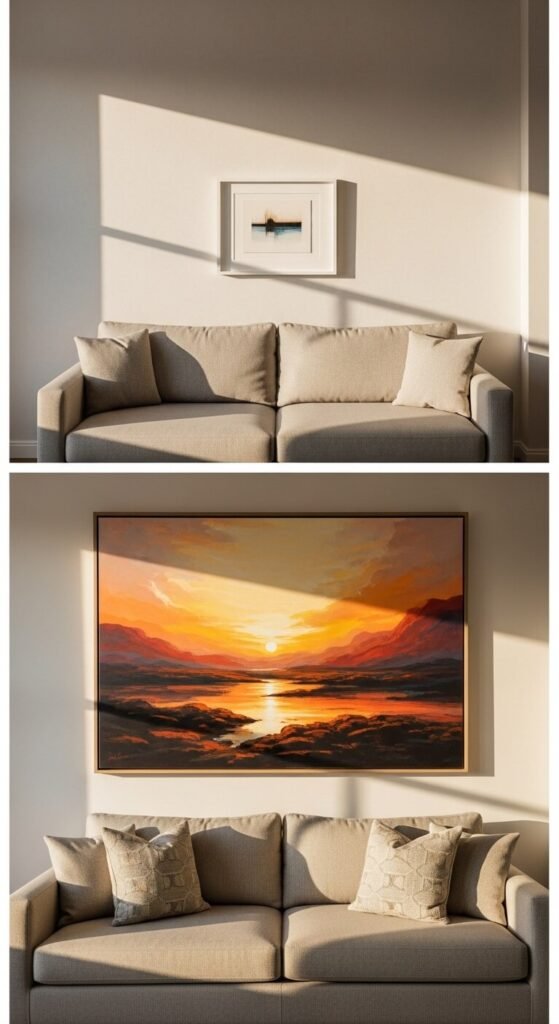
If you take one practical shortcut from this entire guide, let it be this: most people consistently choose art that is too small. It’s the single most universal art-sizing mistake in home decorating.
When you’re standing in a store or scrolling online, a piece that measures 24 by 36 inches looks substantial. On a wall, above a sofa, in a real room — it disappears.
A few signs your art might be too small:
- There’s more empty wall visible than artwork
- The piece looks like it’s floating with no connection to the furniture below it
- Guests don’t notice it or comment on it
- You find yourself wanting to add more pieces around it to “fill the space”
When in doubt, go one size larger than feels comfortable. You’ll almost never regret it.
The Right Size Changes Everything
A perfectly sized piece of art doesn’t just decorate a wall — it completes a room. It makes the furniture below it feel intentional, the space around it feel considered, and every person who walks in feel the difference even if they can’t articulate exactly why. Measure first, trust the two-thirds rule, and give yourself permission to go bigger than feels safe.
Save this guide before your next art purchase, share it with someone who’s been living with a postage-stamp canvas for too long, and go hang something that finally fills the wall the way it deserves. 🖼️✨